
Add GIZMOCHINA as Preferred Source on Google
As an Amazon Associate, Gizmochina earns from qualifying purchases. Links on this page may earn us a commission at no extra cost to you.
If you’re in the market to upgrade your smartphone, the options are overwhelming. Whether you’re looking for top performance, the best camera, sleek design, or durability, there’s a phone to meet every need.
However, if you want a device that offers a balance of all these features, your choices will likely narrow down to flagship models. These phones offer the best of everything—performance, camera quality, design, you name it.
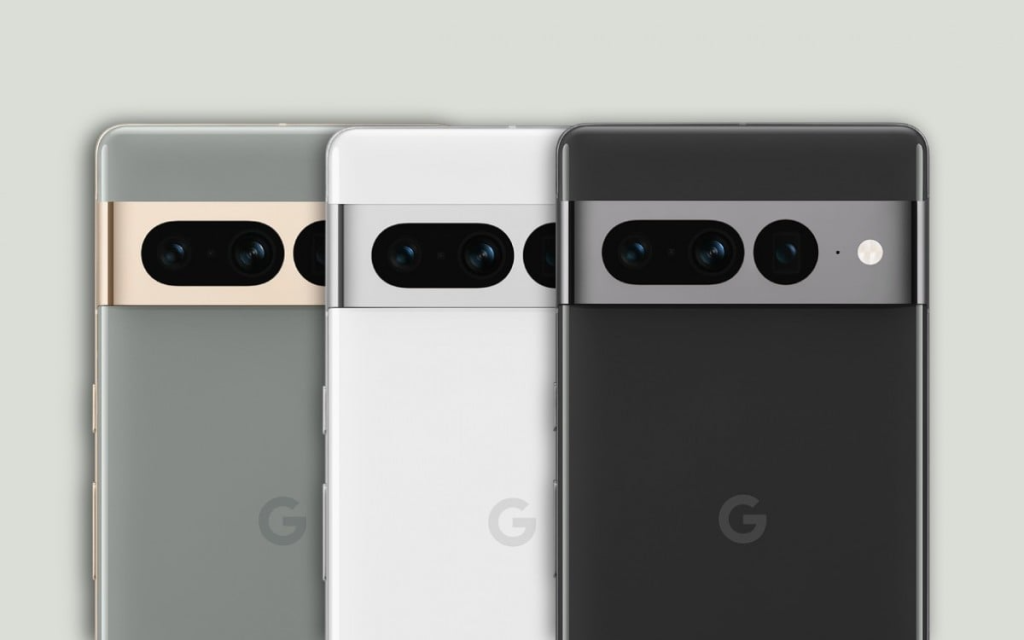
But a brand-new flagship comes with a flagship price tag and that’s not within everyone’s budget. This often leads many to consider a mid-range phone instead.
However, another option is to choose a previous-generation flagship, which can cost significantly less. But is going for an older flagship really better than buying a brand-new mid-range phone? Let’s compare the key aspects of both to see which one is worth your investment.
1. Design
First impressions matter, and nowhere is that more true than with smartphones. A phone’s design is the first thing that grabs our attention, and flagships excel at making that impact. They’re crafted with premium materials like glass back and metal frames and are meticulously designed to feel luxurious from the moment you pick them up.
Some brands even maintain a consistent design language for their flagships to make them easily recognizable. Apple’s iPhones, for instance, from the 11 series to the current 15 series, share a mostly similar look. Similarly, the latest Galaxy S-series phones—the S22 Ultra, S23 Ultra, and S24 Ultra—feature a very similar design.
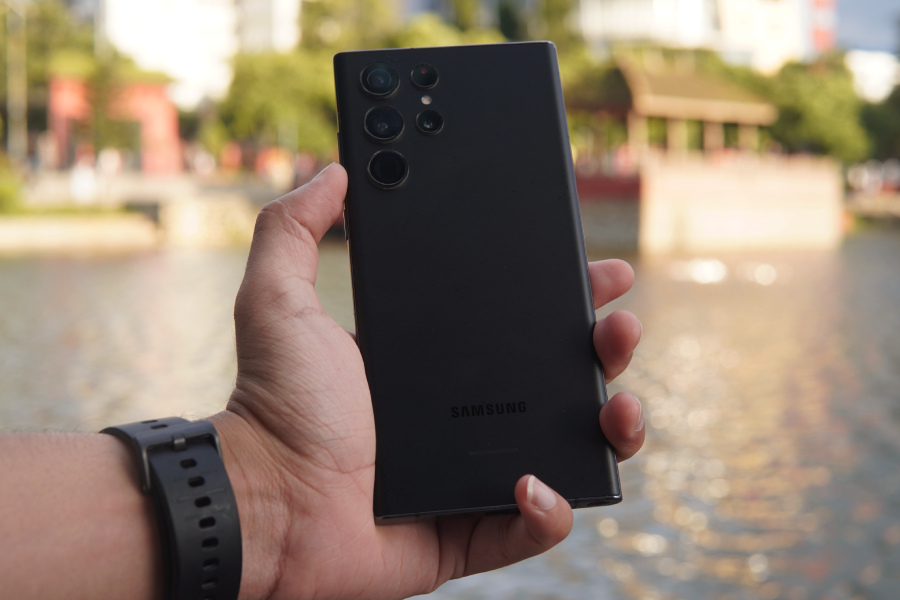
This design consistency makes these phones instantly recognizable as top-of-the-line devices. Even if a brand changes things up in the next iteration, the designs have been repeated enough by now that it’s easy to identify them as flagships.
Mid-range phones have also come a long way in recent years, with manufacturers pushing the envelope in terms of design. Brands like Xiaomi, Realme, and Samsung’s A-series offer devices that borrow design cues from their flagship counterparts.
For instance, it’s common for a mid-range phone in 2024 to have features like narrow bezels and official IP dust and water resistance, which were once considered as flagship.
However, being mid-range means there will certainly be cost-cutting, and it often comes in terms of build quality. Most mid-range phones use plastic instead of glass and even those with a glass back typically have plastic frames.
That’s not to say plastic means poor quality; in fact, plastic can withstand falls better than glass. Still, it is unlikely to give the premium hands-on feel of a flagship phone.
Flagships also tend to have better display protection, often featuring newer layers like Corning Gorilla Glass Victus or Victus 2. While Gorilla Glass protection is now common even in mid-range phones, it’s usually of older generations like Gorilla Glass 3 or 5.
However, none of these are entirely shatterproof or scratch-resistant, so many users still prefer to use a screen protector, making this less of a deciding factor.
All in all, flagship phones still have the upper hand in design, making them the winner in this category.
Winner: Old Flagship


Please Note: When you buy something using the links in our articles, we may earn a small commission at no cost to you.
2. Display
Display quality is often one of the most noticeable differences between flagships and mid-range phones. But it’s no longer just bout the traditional difference between AMOLED and IPS LCD displays—AMOLED screens have become quite common even in the mid-range segment now.
The difference is the underlying display tech like LTPO (Low-Temperature Polycrystalline Oxide). LTPO panels, still primarily reserved for premium phones, allow the display to dynamically adjust its refresh rate, going as low as 1Hz to improve battery efficiency.
While variable refresh rates are a notable advancement, their impact on everyday use is less significant than it might seem. Mid-range phones that consistently run at 120Hz, like the Samsung Galaxy A54, offer similarly smooth animations and scrolling experiences.

The real difference lies in overall panel quality. Flagship phones, even older ones, consistently deliver superior viewing experiences due to higher-quality materials and more precise color calibration. These displays excel in color accuracy, viewing angles, and brightness, areas where mid-range devices may fall short.
Brightness used to be a major distinguishing factor between flagships and mid-range phones. Higher peak brightness was once exclusive to top-tier models, but mid-range phones are increasingly catching up—some even surpass flagships in this regard.
For instance, the Galaxy S23 Ultra has a peak brightness of 1,750 nits, while the mid-range Redmi Note 13 Pro Plus offers 1,800 nits. As mid-range phones close the gap in brightness, this factor may soon cease to be a real differentiator.
However, flagship displays still hold an edge due to their fine-tuned performance and advanced features like LTPO technology. By a close margin, in display quality, older flagships still come out on top.
Winner: Old Flagship
3. Camera
Camera is one area where we think even a one- or two-year-old flagship phone still outperforms mid-range models. Premium phones typically feature a versatile camera setup, often with superior main and ultrawide sensors. You’ll also likely find a telephoto lens for capturing incredibly detailed portrait shots.
Beyond hardware, flagship models benefit from advanced computational photography algorithms. This enables them to excel in challenging situations, delivering images with impressive detail, dynamic range, and low-light performance.
Mid-range phones have also made impressive progress in camera technology. It’s not rare to find a phone with a 108MP higher-resolution cameras in this segment, and they often perform well in well-lit conditions. However, it’s clear that mid-range phones still can’t match the quality or hardware versatility of a flagship camera.
Winner: Old Flagship
4. Performance
It’s no surprise that the once-glaring performance gap between flagship and mid-range phones is narrowing by each passing year now. Flagship phones were traditionally associated with smooth user experience and superior gaming capabilities. But chipmakers like Qualcomm and MediaTek are making efforts to steadily bridge that gap.
Take the recently released Snapdragon 7+ Gen 3 — it boasts the same Cortex-X4 performance core as the top-of-the-line Snapdragon 8 Gen 3, albeit clocked slightly lower. Processors like this make most smartphone tasks, including heavy gaming, a breeze on mid-range devices.
Sure, flagships still offer a slight performance edge. However, for everyday use, the difference is increasingly negligible. Additionally, mid-range phones are no longer skimping on RAM and storage. Modern devices offer generous amounts of both, often adopting faster options that keep things running smoothly.
Winner: Tie
5. Software
Software updates and security patches are critical for ensuring a phone’s longevity and security. Historically, flagship models have led the way in terms of extended software support.
Devices like the Samsung Galaxy S23 Ultra and the Pixel 7 Pro benefits from regular updates, including major OS upgrades and security patches. These updates are prompt, reflecting the premium status of these devices and the manufacturers’ commitment to delivering a superior user experience.
The mid-range segment is also catching up in this area. Samsung and Google, for instance, offer Galaxy A54 and Pixel 7a four major OS upgrades and five years of security patches, similar to the S23 Ultra and Pixel 7 Pro.
This extended support helps narrow the gap between flagship and mid-range models. However, as we said earlier, flagship devices typically receive updates first, and mid-range phones sometimes experience delays.
Smaller brands like OnePlus and Motorola have also improved their update policies but generally focus on their recent flagship models for the most extended support.
Therefore, flagships have a slight edge due to the current landscape of updated policies. This could change in the future, but for now, security-conscious users might lean towards older flagships.
Winner: Old flagship
6. Battery and Charging
Over time, older flagships naturally experience battery degradation, which can lead to reduced battery life. In comparison, it’s natural for newer mid-range phones, with their fresh batteries, to offer better battery life.
The latter also benefit from lower-powered processors and Full HD displays, resulting in better battery efficiency compared to older flagships with power-hungry QHD screens and high-end processors.
That said, mid-range phones often have slower charging speeds compared to premium models. Wireless charging support is also rare in the mid-range segment.
Ultimately, the choice depends on your priorities. Mid-range devices excel in battery life, but if fast charging and wireless charging are crucial, older flagships might still offer those benefits.
Winner: Tie
7. Conclusion
When deciding between an older flagship phone and a new mid-range device, your choice will depend on your priorities.
If premium build quality, superior display technology, and better camera performance are important to you, an older flagship phone is likely the better choice. These devices still offer a high-end experience that newer mid-range phones struggle to match.
On the other hand, for better battery life, and reliable performance, a new mid-range phone can also serve that purpose very well. Ultimately, it’s up to you to weigh your needs and make the decision that best suits them.
