Add GIZMOCHINA as Preferred Source on Google
As an Amazon Associate, Gizmochina earns from qualifying purchases. Links on this page may earn us a commission at no extra cost to you.
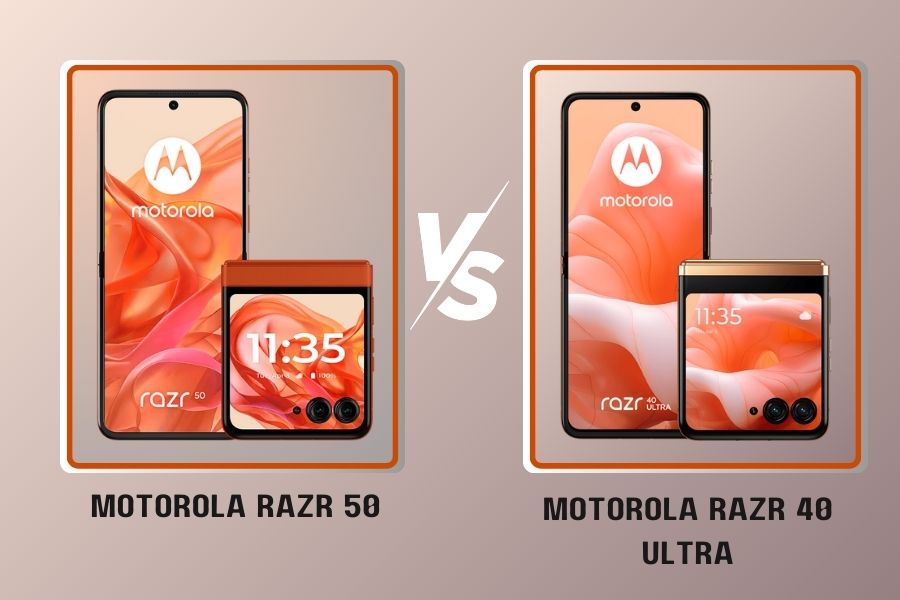
Motorola‘s Razr series is a compelling option for those seeking a nostalgic flip phone experience with modern capabilities.
The company recently launched the Razr 50 in India, priced at Rs 69,999. Interestingly, last year’s Razr 40 Ultra also launched at the same price, but it’s now available for Rs 45,000.
So, which clamshell from Motorola offers better value—the older model or the latest release? Let’s dive in and find out.
1. Display
Both phones boast near-identical 6.9-inch main displays with high resolution, but the Razr 50 edges out the 40 Ultra in a few key areas. The Razr 50’s main display features a brighter peak brightness of 3000 nits compared to the 40 Ultra’s 1400 nits.
The new phone also has a slightly larger 3.6-inch display compared to the 40 Ultra’s 3.2-inch panel. This translates to a more usable experience for checking notifications, interacting with widgets, or even composing quick messages without unfolding the phone.
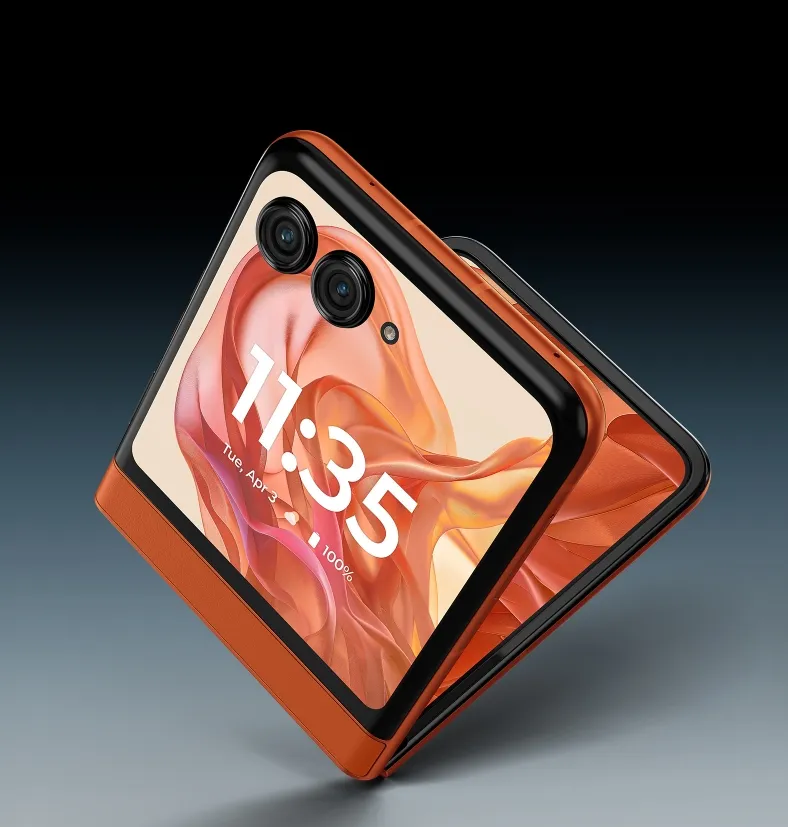
The Razr 40 Ultra takes the lead in terms of refresh rate. Its main screen refreshes at 165Hz compared to 120Hz on the Razr 50, and the cover panel has a refresh rate of 144Hz versus 90Hz on the Razr 50.
While higher refresh rates lead to smoother animations, this may not be a key factor for most users since the Razr series is not aimed at gamers.
Otherwise, both of them use a LTPO AMOLED panel and have HDR support with 10-bit color depth. The cover screens on both models also come protected by Gorilla Glass Victus.
| Preview | Product | |
|---|---|---|

|
Motorola razr 50 (Spritz Orange, 8GB RAM, 256GB Storage) | 3.6″ External AMOLED Display | 6.9″… | Check Price on Amazon |
Please Note: When you buy something using the links in our articles, we may earn a small commission at no cost to you.
2. Performance
As for the performance, the Razr 50 houses the MediaTek Dimensity 7300X, a 4nm chipset, compared to the Snapdragon 8+ Gen 1 (also 4nm) in the Razr 40 Ultra. However, the Snapdragon-powered Razr 40 Ultra clearly has the edge here with its flagship CPU and GPU setup.
So there’s no doubt that the Razr 40 Ultra delivers better performance, even when you think of gaming sometimes. Additionally, it comes with faster LPDDR5 RAM and UFS 3.1 storage, compared to the LPDDR4X RAM and UFS 2.2 storage on the Razr 50, ensuring smoother overall performance on the Ultra model.
3. Camera System
The Razr 50 features a dual camera system with a 50MP main sensor and a 13MP ultrawide sensor. The Razr 40 Ultra also has a dual camera setup, but with a lower resolution 12MP main sensor and the same 13MP ultrawide sensor.
The Razr 50 further stands out with a 50MP selfie camera, compared to the 12MP selfie camera on the Razr 40 Ultra.
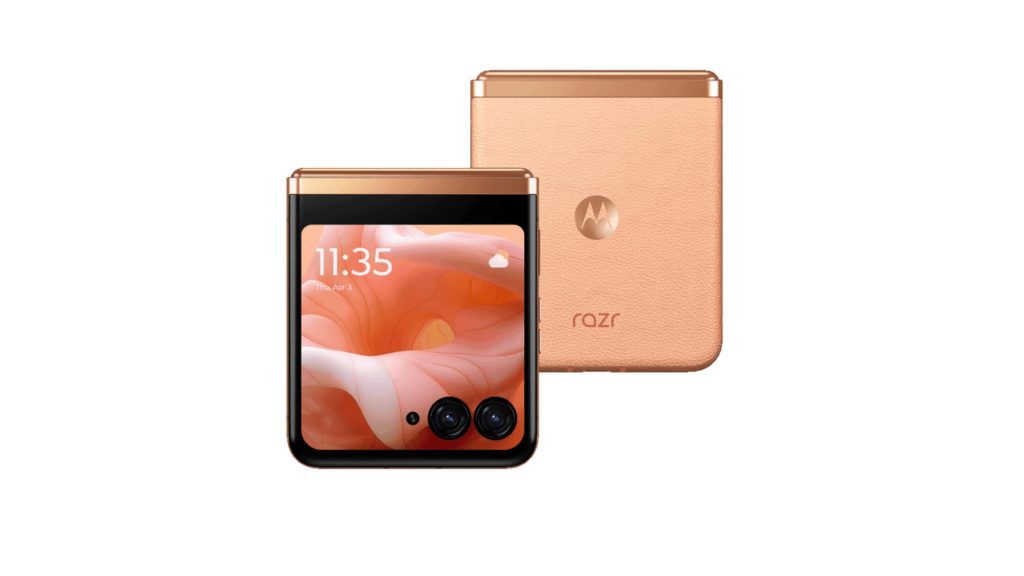
While the megapixel count isn’t the sole indicator of camera quality, the Razr 50 might offer a slight edge in capturing detail. However, it’s best to check reviews for a clearer assessment. Note that both phones lack a dedicated telephoto lens, but it’s a common omission in flip phones for now.
4. Battery and Charging
In terms of battery, the Razr 50 packs a slightly larger 4200mAh battery compared to the 3800mAh battery in the Razr 40 Ultra. On paper, the Razr 50 should offer better battery life, thanks to its larger battery and more efficient mid-range SoC. Again, this is something reviews would need to confirm.
Both phones offer wired fast charging at 30W, but the Razr 40 Ultra falls behind with only 5W wireless charging compared to the Razr 50’s 15W.
5. Durability and Design
Both phones sport a similar design language with a foldable display and a premium build quality. The Razr 50 has a slightly lighter weight and uses a more eco-friendly silicone polymer back compared to the Razr 40 Ultra’s glass back. The hinge is of stainless steel material on both, so should offer a durable folding unfolding experience.
The Razr 50 also has an IPX8 water-resistant design, allowing it to withstand submersion in up to 1.5 meters of water for 30 minutes. In comparison, the Razr 40 Ultra only has a water-repellent coating, so it’s less resistant to accidental splashes.
6. Software
The Razr 50 comes pre-installed with the newer Android 14. The Razr 40 Ultra was launched with Android 13 and is promised three major Android upgrades. It recently received one of those updates and now runs Android 14.
However, Motorola is infamous for being very slow regarding its updates, and no surprise, that it affected the Razr 40 Ultra as well. It only received the Android 14 update in August 2024. Hopefully, Motorola will improve this going forward. By the way, the Razr 50 also comes with a promise of three years of updates.
7. Conclusion
The Razr 50 offers more practical upgrades compared to the Razr 40 Ultra, including a larger cover screen, bigger battery, and water resistance thanks to its proper IP rating.
The Razr 40 Ultra still has its strengths, like a higher refresh rate for both the main and cover screens, along with a more powerful processor. However, in terms of practicality, the Razr 50 clearly comes out ahead. What gives the Razr 40 Ultra an edge right now, though, is its price.
At just Rs 45,000, it’s Rs 25,000 cheaper than the Razr 50, making it a great deal. So, if you’re looking to try a flip phone, the Razr 40 Ultra might be the better choice.