
Add GIZMOCHINA as Preferred Source on Google
Qualcomm has yet to announce the Snapdragon 8 Gen 4, which reportedly delivers a significant performance improvement over last year’s Snapdragon 8 Gen 3. However, Weibo tipster “The Undead” (translated from Chinese) has already revealed the clock speeds of a version of the Snapdragon 8 Gen 5 chipset.
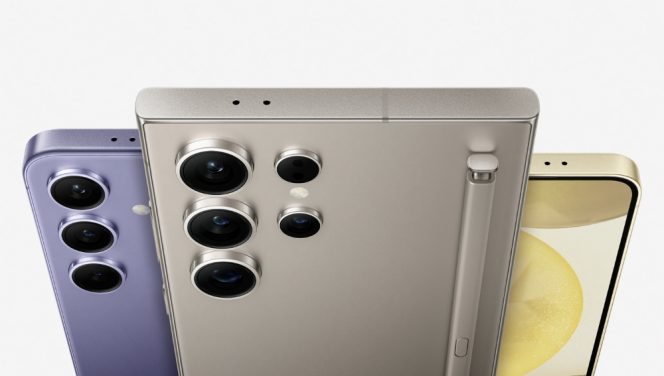
The Snapdragon 8 Gen 5 reportedly retains the 2+6 core architecture of the upcoming Snapdragon 8 Gen 4. According to the tipster, the performance cores could reach clock speeds as high as 5GHz, while the six efficiency cores may peak at 4GHz. Not to mention, it hints at impressive performance gains for 2025 and 2026 flagships such as the Galaxy S26 Ultra.
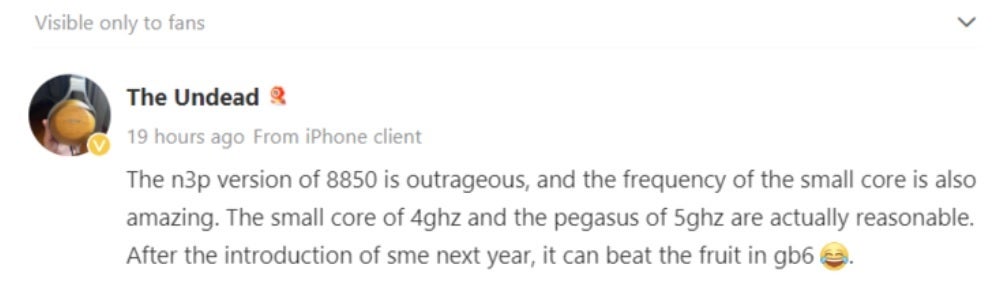
He also added that the Snapdragon 8 Gen 5 will be the first Snapdragon chip built on TSMC’s third-generation 3nm (N3P) process node. It apparently promises significant power and efficiency improvement. These speeds, however, represents the TSMC-manufactured variant of the chip.
Qualcomm will reportedly adopt a dual-sourcing strategy for the Snapdragon 8 Gen 5
Interestingly, Qualcomm is reportedly planning to source the Snapdragon 8 Gen 5 from both TSMC and Samsung Foundry. Samsung’s version of the chip will use the company’s 2nm (SF2) process node.
While exact clock speeds for the Samsung-built variant remain undisclosed, recent developments in Samsung’s 4nm-based Exynos 2400 chipset suggest that the company is making strides in process technology.
Qualcomm’s decision to collaborate with Samsung Foundry is noteworthy, considering past challenges. Samsung previously manufactured the Snapdragon 888 and Snapdragon 8 Gen 1, both of which suffered from overheating issues and suboptimal yield rates. These setbacks prompted Qualcomm to switch back to TSMC for later chips. It led to significant performance and power efficiency improvements in the Snapdragon 8 Gen 2 and last year’s Snapdragon 8 Gen 3.
Since the release of the Snapdragon 8 Gen 1, Qualcomm has relied on TSMC for its chips, delivering significant performance and efficiency gains with each new generation. It will be interesting to see whether Samsung Foundry can overcome its past hurdles and match the performance of TSMC’s version of the Snapdragon 8 Gen 5 chipset.


Comments