
Add GIZMOCHINA as Preferred Source on Google
You’ve probably seen Apple’s Center Stage feature on Mac computers, which tracks user movement and adjusts the frame accordingly. Recently, Lenovo unveiled its Auto Twist AI concept laptop, which does something similar but better—it can move the lid on its own, without being constrained by the webcam’s field of view.
Now, Motorola has filed a patent with the US Patent Office for a motorized hinge mechanism intended to automatically adjust the angle of the device.

This could be a major development, and here’s why
While this isn’t a new concept, a couple of things make this development noteworthy.
First, the Lenovo laptop with a similar mechanism showcased at IFA last month has a much larger form factor. This gives Lenovo more room to pack the necessary components and implement this attention-grabbing feature.
However, in a folding phone, the hinge already takes up considerable space—so much so that these devices often have much lower battery capacities compared to bar phones. Remember phones with pop-up selfie cameras? One major reason manufacturers abandoned that design was the lack of space for the motorized camera mechanism.
If Motorola can manage to fit all the necessary components into a folding phone and offer a device that not only takes selfies while sitting on a table but also adjusts its tilt to keep you in the frame during video calls as you move, it would be a significant achievement.
The mechanism:
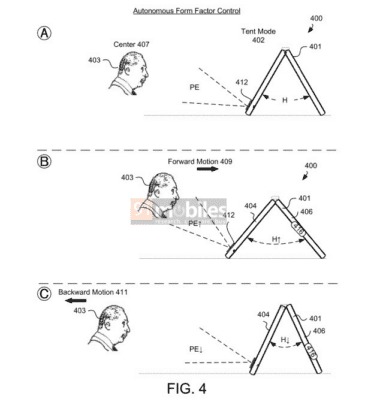
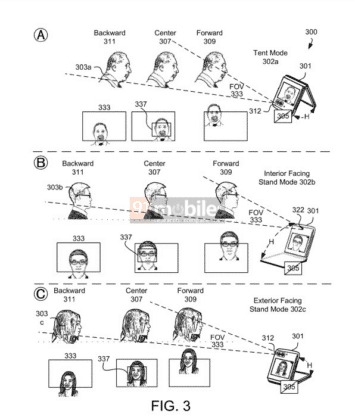
The patent, titled “Autonomous Form Factor Control of a Foldable Mobile Device,” reportedly involves the use of “special materials” that can change shape, along with small motors to aid in hinge movement.
In addition, the phone will likely use machine learning techniques, similar to the devices mentioned earlier, to track user movement.
According to a report from 91Mobiles, the special material is a Shape Memory Alloy that changes shape when heat is applied, which can be generated using electrical energy from the battery. That said, the phone is still in its early stages of development, and there’s no certainty it will reach the market.
(Source)




Comments