
Add GIZMOCHINA as Preferred Source on Google
Tesla‘s highly anticipated robotaxi, teased for years as both “Cybercab” and “Robotaxi,” finally made a physical appearance at an event on Thursday night.
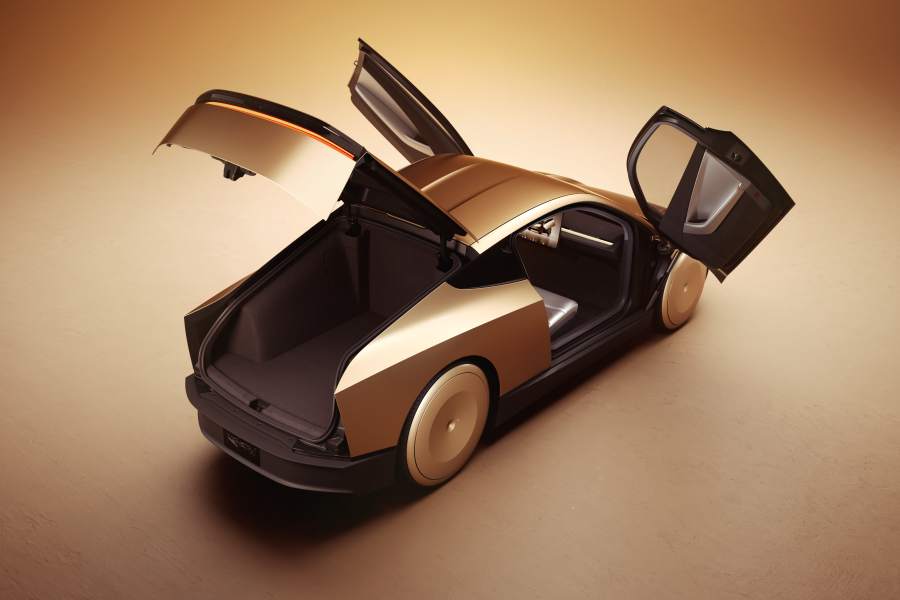
The sleek, two-seater vehicle boasts futuristic looks and features like butterfly doors and wireless charging, but the standout feature is its lack of a steering wheel.
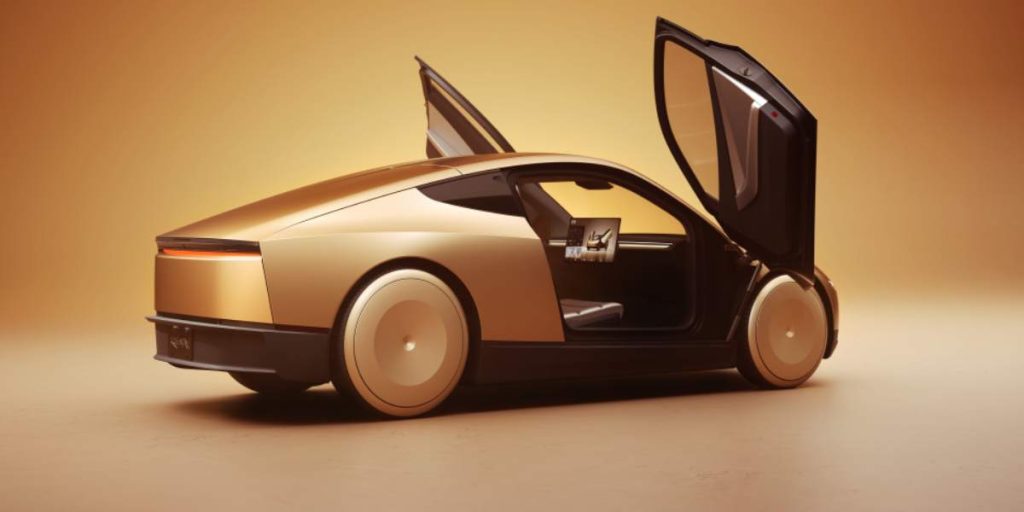
It’s designed for a world where passengers relax and let the car handle the driving. However, there are some doubts in terms of its self-driving capabilities. Let’s get into the details.
Cybercab steals the spotlight
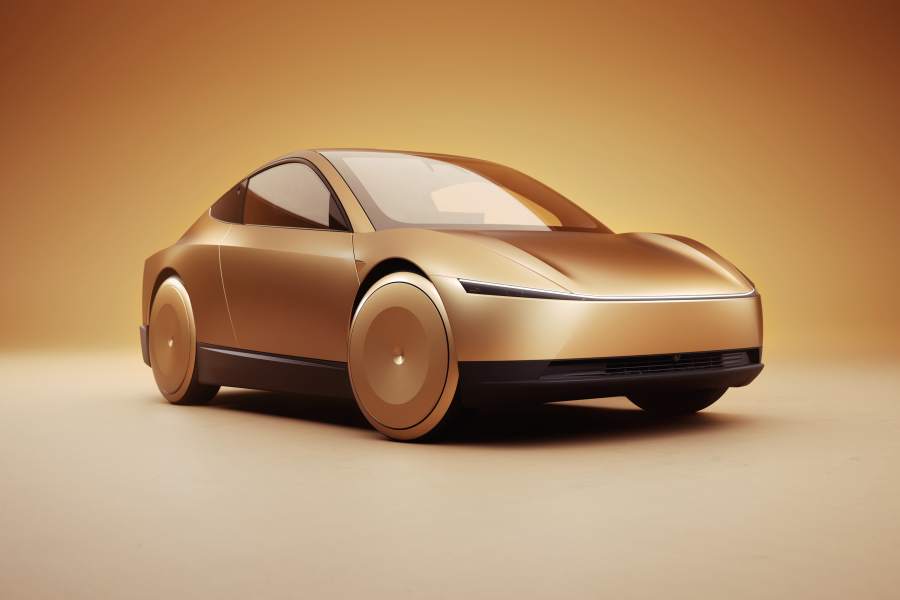
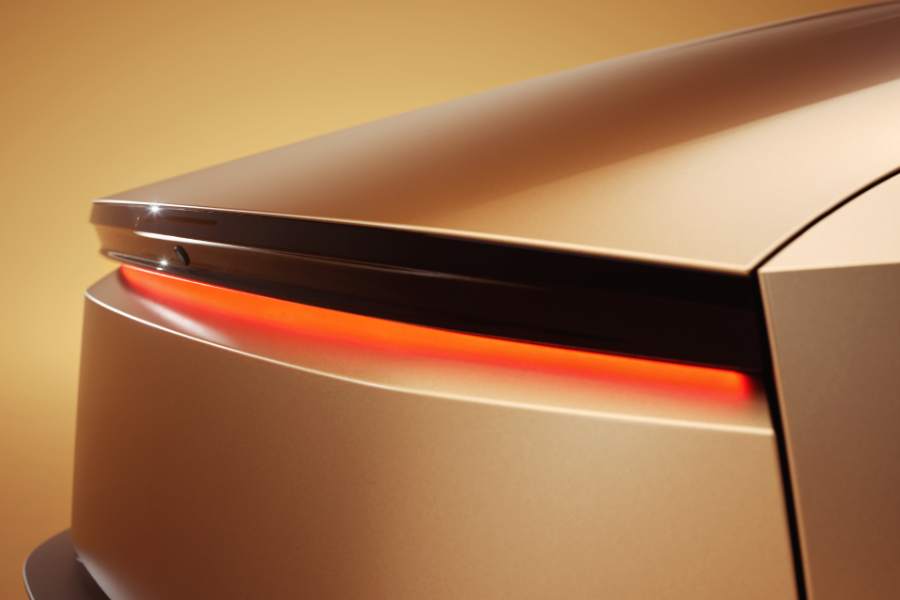
First things first, the Cybercab is a real head-turner. It made its debut in a gold-finished exterior that features a light bar seemingly housing matrix headlights, reminiscent of the Cybertruck.
And it’s not just the steering that’s missing from this guy, it doesn’t have a pedal or even a rear window. It’s designed to rely entirely on cameras and sensors for a 360-degree view of its surroundings. n fact, Tesla CEO Elon Musk made a dramatic entrance on the event stage inside the Cybercab itself.
Inside, passengers are greeted by a lounge-like atmosphere and you’ll have a ample cargo space thanks to a large hatchback trunk.
One of the most interesting features of the Cybercab is the wireless induction charging. With no charging port, it’s the first Tesla vehicle to support this technology. However, the event didn’t shed light on the technical details like the battery size of the Cybercab or how fast it charges.
Inductive charging is a wireless method of charging electric vehicles (EVs) that uses electromagnetic fields to transfer energy from a charging pad to the battery.
Musk says, “The robotaxi has no plug. It just goes over the inductive charger and charges. So, yeah, that’s kind of how it should be.”
Tesla Cybercab drives autonomously?
Now, let’s address the elephant in the room — the self-driving technology itself. Tesla has been promising fully autonomous driving capabilities for years, yet current models with the “Full Self-Driving (FSD)” package still require human supervision. This casts a shadow over the Cybercab’s complete lack of driver controls.
Musk assures that the Cybercab utilizes the latest Tesla AI5 computer and relies solely on camera systems. He also reiterated his intention to activate unsupervised Full Self-Driving on current models next year in specific regions.
But to be honest, this same promise has been made annually for the past five years. Additionally, data suggests Tesla needs a significant improvement in disengagement rates (the frequency a human driver has to take control) before unsupervised driving becomes a reality. So we are not highly optimistic about Musk’s claim yet.
Tesla Cybercab Price and Availability
As for the price and availability, Musk says that the Cybercab production would begin sometime “before 2027” and it will have a price tag under $30,000.
Yet, we can’t ignore the fact that Tesla’s second-generation Roadster, unveiled in 2017, has yet to enter series production. So there’s no guarantee that the Cybercab won’t face a similar fate. The expectations are high, but only time will tell if Tesla and Musk can deliver on these promises.
(Source)


Comments