Add GIZMOCHINA as Preferred Source on Google
As an Amazon Associate, Gizmochina earns from qualifying purchases. Links on this page may earn us a commission at no extra cost to you.
Flagship smartphones have always sparked debates about value and performance, and the battle gets even tougher when you consider comparisons between Apple and Android phones.
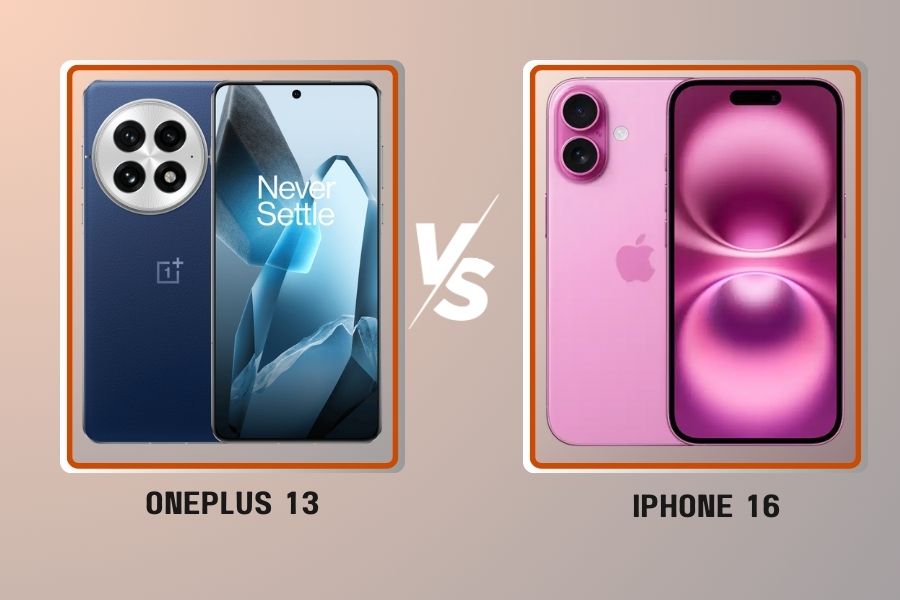
Today, we have a similar comparison as we take a closer look at the recently launched OnePlus 13 and Apple’s iPhone 16, both of which are priced similarly in India. While both devices offer premium features, their approaches differ significantly. Let’s dive into a detailed comparison to see how these two devices stack up against each other.
1. Price in India
The OnePlus 13 is priced at Rs 69,999 for its 12GB RAM and 256GB storage variant, continuing OnePlus’ tradition of undercutting flagship competitors. On the other hand, the iPhone 16’s 128GB model officially costs Rs 79,900 but is available at Rs 70,900 on Vijay Sales, thanks to ongoing discounts. This narrow Rs 900 difference means price won’t likely be the deciding factor for most buyers.
| Preview | Product | |
|---|---|---|

|
Apple iPhone 16 (128 GB) – Black | Check Price on Amazon |

|
OnePlus 13| Smarter with OnePlus AI (12GB RAM, 256GB Storage Midnight Ocean) | Check Price on Amazon |
Please Note: When you buy something using the links in our articles, we may earn a small commission at no cost to you.
2. Design
Design preferences often come down to personal taste, and both phones bring unique aesthetics to the table. The iPhone 16 sticks to Apple’s signature boxy design with slightly curved edges for enhanced grip. Its compact and lightweight form factor makes it easy to handle, and it’s available in a variety of colors, including green, blue, pink, and white.
The OnePlus 13, while similar to its predecessor, introduces flat sides and a sleeker, more modern look. The rear panel options include leather or glass finishes, and a circular camera module houses four sensors. Both devices excel in build quality, but the iPhone’s compact size may appeal to those seeking a smaller device, whereas the OnePlus 13 offers a larger, more premium feel.
3. Display
The display is where the OnePlus 13 takes a clear lead. It features a larger 6.82-inch QHD+ LTPO 4.1 AMOLED screen with a 120Hz refresh rate. The iPhone 16, in contrast, sports a smaller 6.1-inch OLED display limited to 60Hz.
In terms of brightness, the OnePlus 13’s 4500nits peak brightness far surpasses the iPhone’s 2000nits, making it more suitable for outdoor usage. Although the higher pixel density on the OnePlus 13 gives it an edge, the difference in sharpness is negligible during everyday use. Both displays deliver vibrant and accurate colors, ensuring a high-quality viewing experience.
4. Performance and Software
Under the hood, the OnePlus 13 is powered by the Snapdragon 8 Elite chipset, which outperforms Apple’s A18 Bionic in multi-core benchmark tests. On Geekbench, the OnePlus 13 scored 9125 compared to the iPhone 16’s 8393. However, real-world performance will likely be virtually identical, as both devices can handle intensive tasks and gaming seamlessly.
The software experience is where the decision becomes more subjective. The OnePlus 13 runs on Android 15 with OxygenOS 15 and promises four years of platform updates and extensive customization options. Its near-stock Android feel, coupled with practical AI features of its own and from Google makes it highly adaptable to user preferences.
The iPhone 16 is powered by iOS 18 and delivers a seamless, privacy-focused experience. You get features like Face ID and five years of software support, it’s a reliable choice for long-term use. While customization is limited compared to Android, Apple’s ecosystem integration remains unmatched.
5. Camera Performance
The OnePlus 13 features a versatile triple-camera setup:
- 50 MP wide-angle
- 50 MP periscope telephoto with 3x optical zoom
- 50 MP ultrawide
This setup excels in capturing detailed, vibrant images and offers superior zoom capabilities. Its Hasselblad Color Calibration enhances color accuracy, making it a favorite for scenic shots.
The iPhone 16 sports a dual-camera system:
- 48 MP wide-angle
- 12 MP ultrawide
While less versatile on paper, the iPhone delivers consistent performance in dynamic range and excels in video recording. Apple’s computational photography ensures natural-looking photos, while smoother zoom transitions enhance videography.
6. Battery and Charging
Battery life is another area where the OnePlus 13 outshines the iPhone 16. With a 6,000mAh battery, the OnePlus 13 easily lasts 1.5 days of moderate usage. In comparison, the iPhone 16’s 3,500mAh battery might only provide close to a full day of usage, thanks to Apple’s software optimizations.
OnePlus has a clear advantage in terms of charging too. It supports 100W fast charging and includes a charger in the box, while the iPhone 16 is limited to 20W charging and does not come with a charger. For users who value quick top-ups, the OnePlus 13 is the obvious choice.
7. Final Thoughts
Choosing between the OnePlus 13 and iPhone 16 ultimately boils down to individual priorities. The OnePlus 13 offers a better display, longer battery life, faster charging, and superior customization options, making it an excellent choice for Android enthusiasts and power users.
Meanwhile, the iPhone 16’s compact design, robust ecosystem, and superior video capabilities cater to those deeply invested in Apple’s ecosystem or who prioritize simplicity and security.
Both phones are strong contenders in the flagship market. Consider what matters most to you—be it software, design, or battery life—and you’ll find either device more than capable of meeting your needs.
Don’t miss a thing! Join our Telegram community for instant updates and grab our free daily newsletter for the best tech stories!