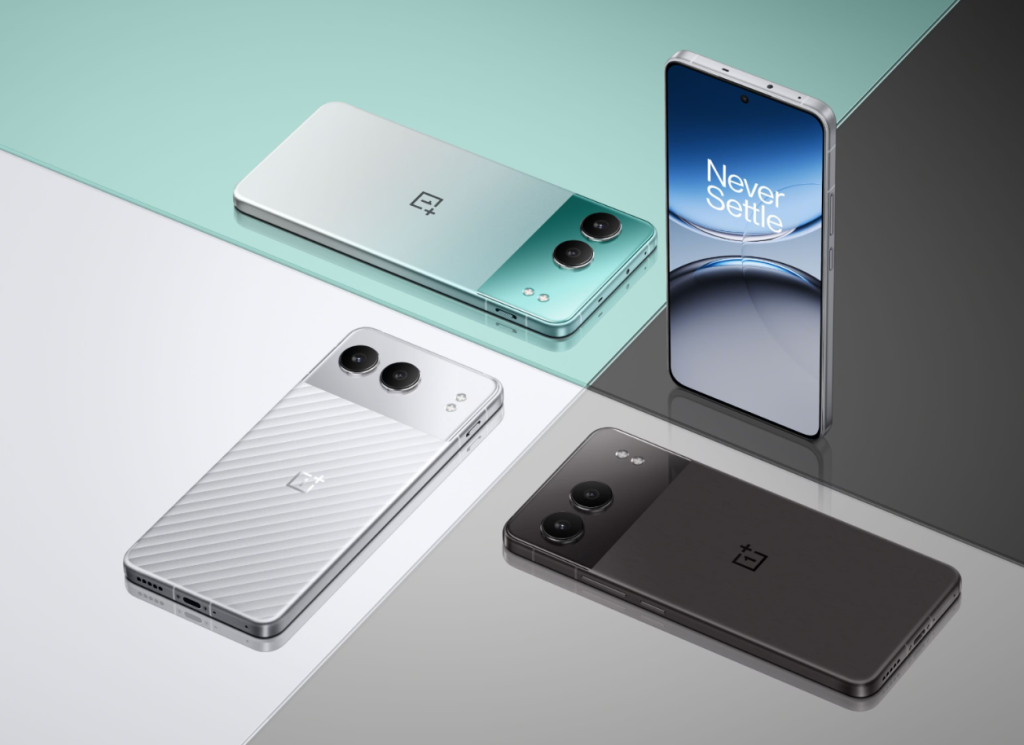
There are tons of reasons why you might want to choose the latest flagship from Samsung, OnePlus, or Google. And honestly, the situation stays the same every year. Flagship brings new features— actually, they have to! — whether it’s in hardware or software, to be able to sell well in the market.
But not everyone wants or even needs it. if you take a step back and look at mid-range phones in 2025, you’ll see that they offer features and performance comparable to flagship phones from just two years ago. And this isn’t just a coincidence.
It’s the result of advancements in SoCs, paired with software optimizations and the growing need for relatively good hardware to appeal to a mass audience.
If you’re wondering how devices priced under $500 today can outperform premium models from 2023, here’s a breakdown of what’s changed—and why it matters.
One of the biggest factors driving the performance leap in mid-range phones is the evolution of processors. Take MediaTek’s Dimensity 8200 Ultra or Qualcomm’s Snapdragon 7 Plus Gen 3 for that instance—these chips now rival older flagship SoCs like the Snapdragon 8 Gen 2.
For instance, here’s a benchmark comparison of the Snapdragon 7 Plus Gen 3 against 8 Gen 2.
Geekbench 6
Snapdragon 7+ Gen 3
Snapdragon 8 Gen 2
Single-core
1,747
1,934
Multi-core
4,511
5,367
AnTuTu Score
14,56,859
15,35,770
The reason? Improvements in manufacturing processes. Like 2023 flagship chips, the mid-range SoCs of 2025 use the 4nm manufacturing process. These advancements bring better power efficiency, faster clock speeds, and more capable GPUs. As a result, mid-range devices now handle tasks like gaming, video editing, and AI-assisted features without breaking a sweat—areas where older flagship devices might start showing their age.
2. Memory and Storage Have Caught Up
Another area where mid-range phones have gained ground is memory and storage technology. Phones released in 2025, even in the sub-$500 segment, now feature LPDDR5X RAM and UFS 4.0 storage—a significant upgrade over the LPDDR5 and UFS 3.1 found in many 2023 flagship devices.
This upgrade has a tangible impact on everyday performance. Apps load faster, multitasking feels smoother, and large file transfers are quicker. Combined with optimized software, mid-range phones now deliver an experience that feels flagship-level to most users.
3. Software Optimization Levels the Playing Field
In 2025, software has become as important as hardware when it comes to delivering performance. Android manufacturers have shifted their focus to better optimization, ensuring that even mid-range devices can run smoothly for years.
Samsung’s One UI, Google’s Pixel software, and Xiaomi’s HyperOS have all seen major improvements, particularly in memory management and AI-based resource allocation.
Furthermore, mid-range phones from brands like Samsung and Google now come with long-term software support—up to four major Android updates and five years of security patches. This wasn’t the case for many 2023 flagship phones, which often lacked extended update commitments.
4. Display Technology No Longer Defines Premium
Flagship phones from 2023 undoubtedly offered excellent displays, with features like high peak brightness and adaptive refresh rates. However, in 2025, these once-premium features are now standard in the mid-range category.
Consider today’s mid-range phones: many offer OLED displays with 120Hz refresh rates and HDR10+ support. For context, these specs are on par with the displays of 2023 flagships like the Galaxy S23 or OnePlus 11.
5. Battery Tech and Charging Speeds Have Improved
In the past, flagship phones often justified their high price tags with superior battery performance and charging speeds. But in 2025, mid-range phones are dominating this space. Brands like Realme, iQOO, and Redmi now offer mid-range devices with 5,000mAh batteries and 120W fast charging as standard.
In comparison, many 2023 flagship phones, while respectable, often maxed out at 80W charging or lower. Additionally, the efficiency of today’s mid-range SoCs means these phones last longer on a single charge compared to older flagship devices, despite similar battery sizes.
6. Camera Features Are Now More Accessible
Camera quality is another area where mid-range phones have improved significantly. While 2023 flagship devices like the Pixel 7 Pro or iPhone 14 Pro boasted impressive cameras, mid-range devices in 2025 are quickly catching up, thanks to advanced image processing and hardware trickle-down.
For example, mid-range phones now feature large 50MP sensors with OIS, AI-driven computational photography, and advanced low-light performance. While older flagships still have the edge in telephoto and ultrawide capabilities, the gap is no longer as wide as it once was. For casual users, the difference in quality is often negligible.
7. Market Strategy
Much of this shift can be attributed to how smartphone brands are positioning their mid-range lineups. Companies like Xiaomi are increasingly pushing flagship-tier features into their more affordable devices to compete in crowded markets like India and Southeast Asia.
This trickle-down strategy is particularly noticeable in areas like build quality and design. Mid-range phones in 2025 are adopting premium materials like glass and metal, once reserved for flagship models. Some even offer IP68 water resistance—a feature that was rare in mid-range devices just two years ago.
8. Why Older Flagships Still Have Some Advantages
Despite all these improvements, it’s important to note that older flagship phones still have a few advantages. Their designs often feel more refined, with slimmer profiles and better materials. Camera systems, while aging, typically offer greater versatility, especially with telephoto lenses. Moreover, flagship devices generally feature better haptics and stereo speakers.
9. The Bigger Picture
The rise of mid-range phones isn’t just about better specs—it’s about changing consumer expectations. Today’s buyers demand more for less, and manufacturers are responding by packing their mid-range devices with flagship-level features. The result? A market where you no longer need to spend $1,000 to get a high-performance phone.
That said, whether you should choose a 2025 mid-range phone over a 2023 flagship depends on your priorities.
We use cookies on our website to give you the most relevant experience by remembering your preferences and repeat visits. By clicking “Accept”, you consent to the use of ALL the cookies.
This website uses cookies to improve your experience while you navigate through the website. Out of these, the cookies that are categorized as necessary are stored on your browser as they are essential for the working of basic functionalities of the website. We also use third-party cookies that help us analyze and understand how you use this website. These cookies will be stored in your browser only with your consent. You also have the option to opt-out of these cookies. But opting out of some of these cookies may affect your browsing experience.
Necessary cookies are absolutely essential for the website to function properly. This category only includes cookies that ensures basic functionalities and security features of the website. These cookies do not store any personal information.
Any cookies that may not be particularly necessary for the website to function and is used specifically to collect user personal data via analytics, ads, other embedded contents are termed as non-necessary cookies. It is mandatory to procure user consent prior to running these cookies on your website.