Add GIZMOCHINA as Preferred Source on Google
As an Amazon Associate, Gizmochina earns from qualifying purchases. Links on this page may earn us a commission at no extra cost to you.
Smart glasses aren’t just a tech gimmick anymore—in 2025, they’re smarter, sleeker, and far more useful than their earlier iterations. What used to be bulky experiments have evolved into real-world wearables with functional cameras, voice assistants, and even augmented reality (AR) overlays. Whether you’re capturing moments hands-free, translating foreign text on the fly, or navigating city streets with digital directions floating in your view, smart glasses with built-in cameras are finally ready for the spotlight.
We’ve rounded up the best smart glasses with cameras available or announced in 2025, diving into the features that actually matter: camera performance, comfort, battery life, smart features, and how well they blend into everyday life. From Meta and Ray-Ban’s fashion-first approach to TCL’s futuristic AR spectacles, here are the most compelling options on the market.
1. Ray-Ban Meta Smart Glasses (2nd Gen)

Meta and Ray-Ban’s second-gen collaboration nails the wearable balance of tech and style. These are the most approachable smart glasses you can buy—they look like actual Ray-Bans, yet pack some serious smarts.
The dual 12MP cameras can shoot 1080p video up to 60 seconds and take surprisingly sharp first-person photos. Perfect for social moments, the camera is tailored more for lifestyle than pro use, and that’s fine. What sets these glasses apart is the seamless integration with Meta’s social ecosystem. Snap a pic and it’s already halfway to your Instagram story.
Battery life hits about four hours per charge, extendable up to 32 hours with the sleek charging case. Open-ear audio with five microphones allows for music, calls, and Meta AI voice commands. You can literally ask it to describe what you’re seeing—a neat but occasionally spotty trick.
These glasses are a hit for a reason: they blend fashion and function, and they do it better than any others in the space. They’re not perfect—the camera won’t beat your phone’s, and privacy concerns still linger—but they are the most mainstream-friendly option by far.
2. Solos AirGo Vision
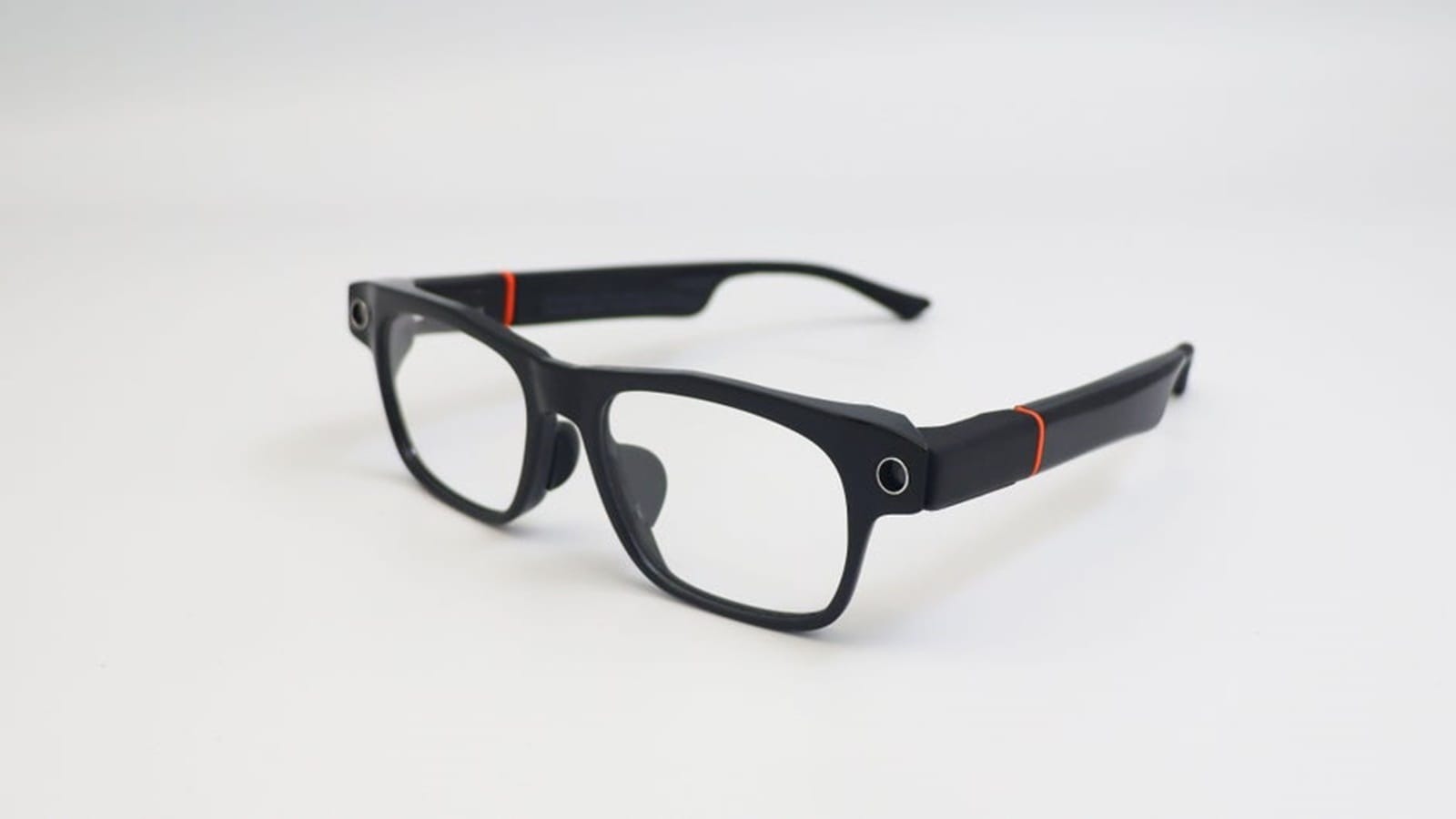
Solos AirGo Vision throws out the rulebook with a design focused entirely on AI. Forget video capture—this pair has dual 5MP cameras meant for visual queries, not cinematography. They don’t record video, only stills, and even then, it’s mostly so ChatGPT (GPT-4o, to be specific) can analyze your surroundings.
The standout feature? Built-in ChatGPT vision. You ask what you’re looking at, and it responds with contextual info: that’s a 19th-century cathedral, that’s the price of this menu item in dollars, that’s how you walk to the nearest pharmacy. This is AI-first eyewear that sees the world and narrates it back to you.
Battery life is excellent—10 hours for music, up to 16 hours if you’re mostly using it for AI queries. You can detach the camera arms for a more incognito look, a clever privacy move that’s lacking on other models.
Downsides? Audio quality is thin, and the cameras are barely usable for personal photos. But for travelers, language learners, or accessibility needs, AirGo Vision is quietly revolutionary.
3. Rokid Glasses
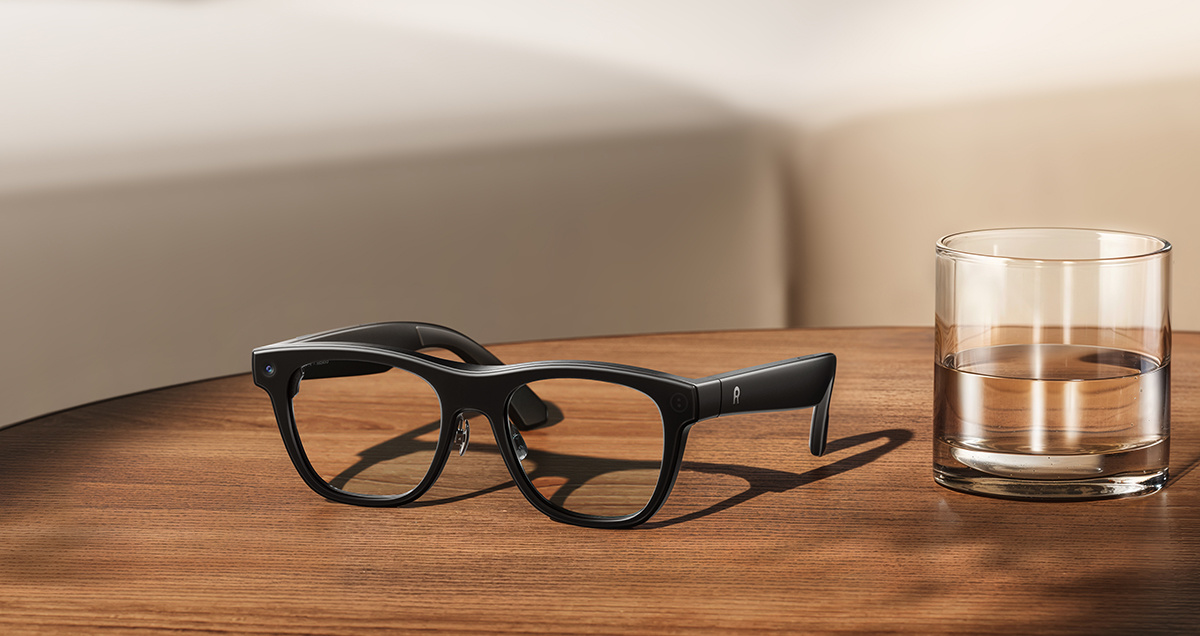
Rokid isn’t as well-known as Meta or TCL, but their 2025 smart glasses might be the best-kept secret in the space. These are everyday AR glasses built for utility: light, wearable, and filled with just enough smart features to feel futuristic without overstepping into gimmick territory.
Their single 12MP camera captures photos and videos while supporting visual search and live translation. They’re not trying to be cinematic—they’re trying to be helpful, and they succeed. The green monochrome AR HUD subtly overlays text, arrows, or captions in your field of view. Think subtitles for real life, or arrows guiding you to your meeting room.
The weight? Just 49 grams. The battery lasts all day with the help of a case that can top them up ten times over. They don’t look like a headset; they look like, well, glasses. And they work.
Voice assistant support, posture tracking, teleprompter mode—there’s a whole productivity toolkit here. And while the AR display isn’t as immersive as TCL’s full-color panels, it’s far more practical for everyday use. Rokid hits the sweet spot between utility and wearability.
4. TCL RayNeo X3 Pro
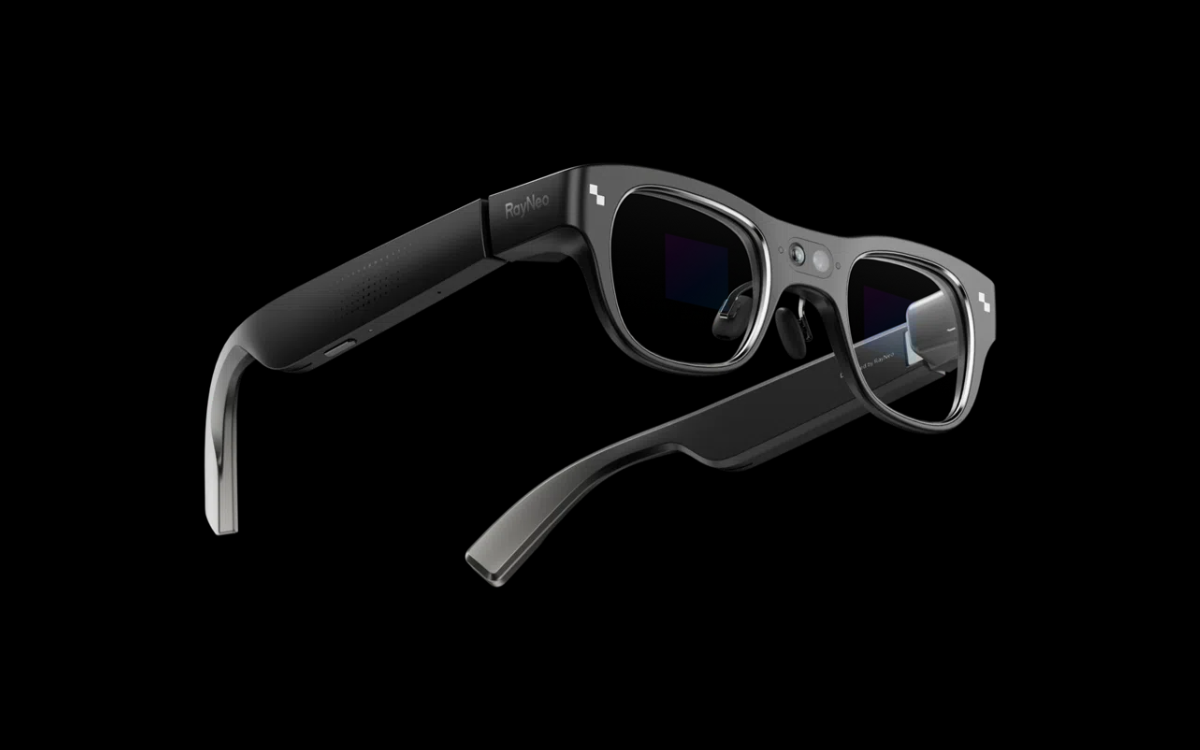
The RayNeo X3 Pro is the smart glasses equivalent of a concept car you can actually drive. These are high-end AR glasses with a focus on vivid, immersive visuals. They aren’t trying to disappear on your face—they’re trying to show you the future.
With an estimated 12MP camera and support for AR scene recognition, real-time translation, and environment scanning, the X3 Pro is more HoloLens than Wayfarer. It runs a standalone Android-based OS and doesn’t need your phone to function. You can speak, swipe, and summon floating UIs in your field of vision. The 2500-nit micro-LED display is easily the best here, bright enough for daylight and colorful enough to render rich AR overlays.
The catch? Battery life is short. Like, 30-45 minutes of active use short. It’s a portable powerhouse, not a 9-to-5 companion. But if you want the most futuristic smart glasses on the market, this is the one.
For more daily updates, please visit our News Section.
Stay ahead in tech! Join our Telegram community and sign up for our daily newsletter of top stories! 💡