Add GIZMOCHINA as Preferred Source on Google
Motorola’s Edge series phones look a lot similar on the surface, but dig a little deeper, and you’ll find they cater to different audiences in the market. The new Edge 60 Fusion and Edge 60 Stylus are two such examples.
Both are built on a familiar Motorola template. They both have a big p-OLED screen, decent cameras, flashy Pantone colors, and clean Android software. But there are some meaningful differences tucked beneath their spec sheets.
Here are five ways the Edge 60 Stylus sets itself apart from the Edge 60 Fusion. And why those differences might actually matter, depending on how you use your phone.

1. The Stylus Actually Matters
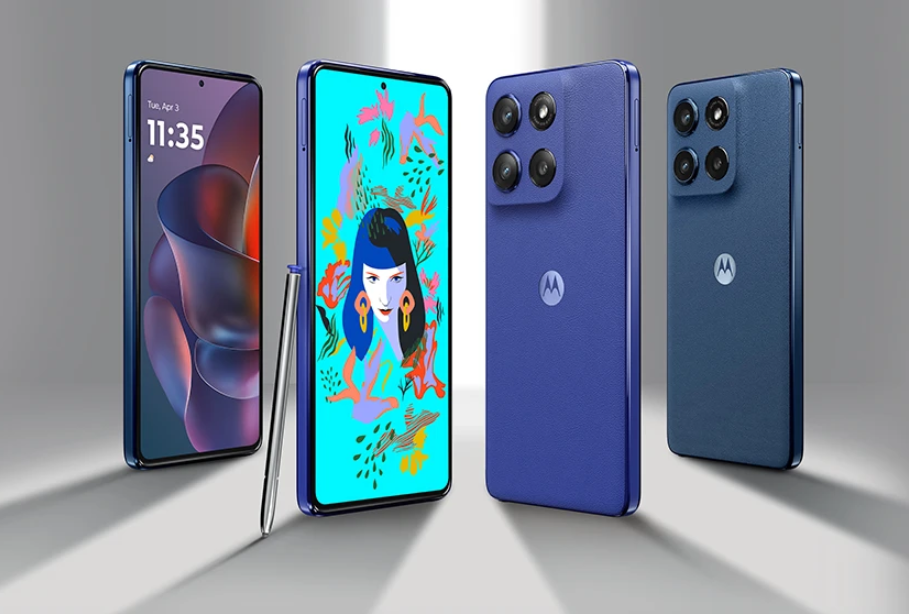
As expected from the name, the Edge 60 Stylus includes a built-in stylus. It’s housed in the bottom corner of the phone and comes with software enhancements that let you jot down notes, sketch, or navigate with a bit more precision than your finger allows.
Motorola has been trying to make the stylus stick on mid-range phones for a while now. We usually see it with the Moto G Stylus line, but this time, Motorola brought stylus support to the Edge series with the Edge 60 Stylus.
The Edge 60 Fusion, on the other hand, doesn’t support stylus input at all. If you don’t care about handwritten notes or precise selection, it won’t be a dealbreaker for you.
But if the idea of a digital pen sounds remotely useful, or even just like a nice option to have, it’s only available on the Stylus variant.
There’s no silo or support for aftermarket pens on the Fusion. This makes the Stylus feel less like a variant and more like a purpose-built device.
2. Performance Goes in Slightly Different Directions
Under the hood, the two phones take diverging paths on silicon. The Edge 60 Fusion comes with MediaTek’s Dimensity 7300 globally, or the slightly bumped Dimensity 7400 in India. Meanwhile, the Stylus model relies on Qualcomm’s Snapdragon 7s Gen 2.
In daily use, there isn’t a huge gap in raw power. Both chipsets are built on a 4nm process and use similar Cortex-A78 performance cores. However, there are slight variations in clock speed—2.5 GHz (Fusion global), 2.6 GHz (Fusion India), and 2.4 GHz on the Stylus—and even greater variation in GPU output.
The Fusion’s Mali-G615 may also edge out Qualcomm’s Adreno 710 in some synthetic tests, especially for gaming. But most users probably won’t notice the difference outside of benchmark sheets.
The devices come with Android 15 pre-installed and are promised for up to two years of platform and 3 years of security patch updates.
3. Display Differences That Aren’t Obvious
On paper, the display specs are nearly identical. Both devices sport 6.7-inch p-OLED panels with a 1220 x 2712 resolution and support for 120Hz refresh. They each claim HDR support and peak brightness levels that most users won’t reach in day-to-day use.
But there are some differences. The Edge 60 Fusion gets Gorilla Glass 7i protection on the front. In comparison, the 60 Stylus settles for older Gorilla Glass 3. That means the Fusion is theoretically more resistant to scratches and small drops, even if the real-world difference is minor.
Brightness also tips slightly in the Fusion’s favor at peak output. It hits 4500 nits at peak versus 3000 nits on the Stylus. These numbers don’t really mean better outdoor visibility, but on paper, the Fusion’s screen is better protected and potentially brighter.
4. Audio and Ports
Audio hardware is one of the more concrete differentiators here. The Edge 60 Stylus includes a 3.5mm headphone jack, along with support for 24-bit/192kHz high-resolution audio. Whereas, the Edge 60 Fusion drops the headphone jack entirely.
Both phones have stereo speakers with Dolby Atmos, so external audio output should be comparable. But if you still value wired headphones or don’t want to deal with Bluetooth latency for voice calls, the Stylus might have a real edge here.
5. Battery Features
The Edge 60 Fusion comes with a 5200 mAh battery (or 5500 mAh in India), while the Stylus gets a slightly smaller 5000 mAh cell. Both charge at 68W over USB-C, and you can expect similar charging times. But the Stylus also has 15W wireless charging support.
This makes the Stylus one of the few midrange phones in its price range to support both fast wired and wireless charging. It’s not the fastest wireless standard, but it’s better than nothing. And the Fusion, for whatever reason, decided to offer nothing in this area.
6. Conclusion: Two Phones With Just Enough Difference
There’s no obvious winner between the Motorola Edge 60 Fusion and Edge 60 Stylus. Instead, what you get is a slow branching of two devices built on the same chassis, catering to different types of users.
The Stylus targets those who still want pen input, a headphone jack, and wireless charging. The Fusion leans into a slightly sleeker body, a longer update promise, and a marginally better screen.
Neither phone breaks new ground, but they don’t really need to. If you already know which features matter to you, the choice is simple. If not, you’re likely to be fine with either. Just don’t expect either one to surprise you.
Tech enthusiast? Get the latest news first! Follow our Telegram channel and subscribe to our free newsletter for your daily tech fix!
For more daily updates, please visit our News Section.