Add GIZMOCHINA as Preferred Source on Google
At Computex 2025, the tech industry’s biggest players put forward their boldest visions for the future of artificial intelligence, both at the cloud and at the edge.
But it wasn’t just the usual suspects like Nvidia and Intel grabbing attention. From MediaTek’s AI ambitions to a neuromorphic chip developed by German researchers, this year’s event revealed a diverse and evolving AI silicon landscape.
Here’s a closer look at the most compelling AI chips and architectures introduced at the show.

1. Nvidia Unveils Grace Blackwell and NVLink Fusion
Nvidia introduced its Grace Blackwell NVL72 architecture at Computex 2025, positioning it as a new standard for high-performance AI computing. The hybrid architecture combines GPUs and CPUs in a tightly fused package and is capable of running trillion-parameter models, real-time inference, and large-scale scientific workloads.
The company also launched NVLink Fusion, a next-generation interconnect designed to enable high-speed chip-to-chip communication. Nvidia confirmed that companies like MediaTek, Qualcomm, and Marvell will adopt NVLink Fusion for building semi-custom AI compute solutions. The move opens Nvidia’s ecosystem to external partners and expands the reach of its AI infrastructure technology.
2. MediaTek’s Custom AI Ambitions and 2nm Leap
MediaTek announced its plan to tape out its first 2nm chip with TSMC in September 2025. According to the company, the new chip will offer up to 15% better performance and 25% greater power efficiency than current 3nm chips. MediaTek aims to use the new node for both mobile devices and high-performance AI applications.
The company also highlighted its collaboration with Nvidia on the DGX Spark, a compact AI supercomputer for developers. MediaTek contributed a custom 20-core CPU architecture to the system and is using its ASIC expertise to design chips tailored for AI model training and inference. MediaTek’s IP in high-speed I/O, SerDes, and optical interfaces supports this initiative.
3. Intel Expands AI and GPU Lineup with Arc Pro and Gaudi 3
Intel introduced the Arc Pro B50 and B60 GPUs, designed for AI inference and workstation-grade computing. The B60 GPU includes 24GB of memory, while the B50 version ships with 16GB. Both models support multi-GPU scaling and are optimized for applications in architecture, engineering, and design.
Intel also showcased Project Battlematrix, a workstation-class platform supporting up to eight Arc Pro B60 GPUs and capable of running AI models with up to 150 billion parameters. The platform is based on Intel Xeon processors and targets AI developers and researchers.
In addition, Intel rolled out new deployment options for its Gaudi 3 AI accelerators. The Gaudi 3 PCIe cards support scalable inference in existing data centers, while rack-scale configurations support up to 64 accelerators per rack and 8.2TB of high-bandwidth memory.
4. TUM Introduces Cloud-Free AI Chip Inspired by the Human Brain
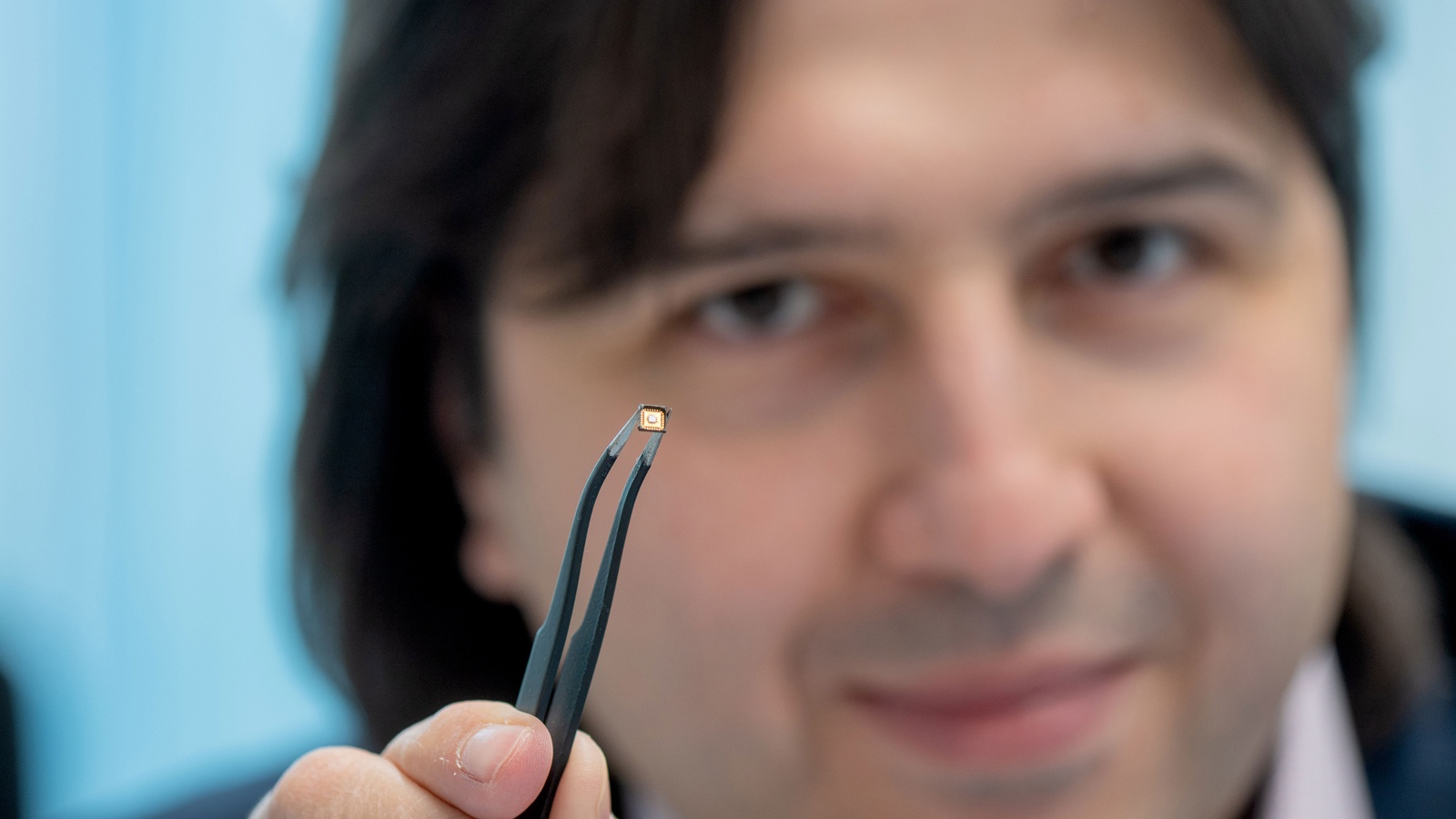
Researchers from the Technical University of Munich (TUM) revealed the AI Pro chip, a neuromorphic processor that does not require cloud connectivity or internet access. The chip performs real-time, on-device inference using a memory-compute integrated architecture. It employs hyperdimensional computing, allowing it to recognize patterns using limited training data.
Professor Hussam Amrouch led the development of the chip, which consumes only 24 microjoules per task, significantly less than conventional AI processors. The AI Pro chip targets specific applications in healthcare, robotics, and autonomous navigation where local processing and data security are essential.
5. Qualcomm Previews Snapdragon X2 and Teases September Launch
Qualcomm did not launch new chips at Computex but used the stage to confirm the dates for its next major event. The company announced that the annual Snapdragon Summit will take place from September 23 to 25 in Hawaii. Qualcomm is expected to launch the Snapdragon 8 Elite 2 for smartphones and possibly introduce the Snapdragon X2 Elite for Windows laptops.
CEO Cristiano Amon said Qualcomm plans to expand its presence in the PC market, aiming for more than 100 Snapdragon-powered laptop models by next year. He also highlighted the growth of native Arm-compatible apps, claiming that over 1,400 games now run on Snapdragon devices.
6. The AI Chip Race Isn’t Slowing Down
Between Nvidia’s rack-scale ambition, MediaTek’s 2nm plan, Intel’s workhorse GPUs, and TUM’s sci-fi-like brain chip, Computex 2025 made one thing abundantly clear: the AI chip market isn’t just booming — it’s evolving. Fast.
And the conversation is no longer about which chip is faster. It’s about where those chips live, how they connect, and what new kinds of intelligence they can unlock.
For more daily updates, please visit our News Section.
Stay ahead in tech! Join our Telegram community and sign up for our daily newsletter of top stories!