Add GIZMOCHINA as Preferred Source on Google
As an Amazon Associate, Gizmochina earns from qualifying purchases. Links on this page may earn us a commission at no extra cost to you.
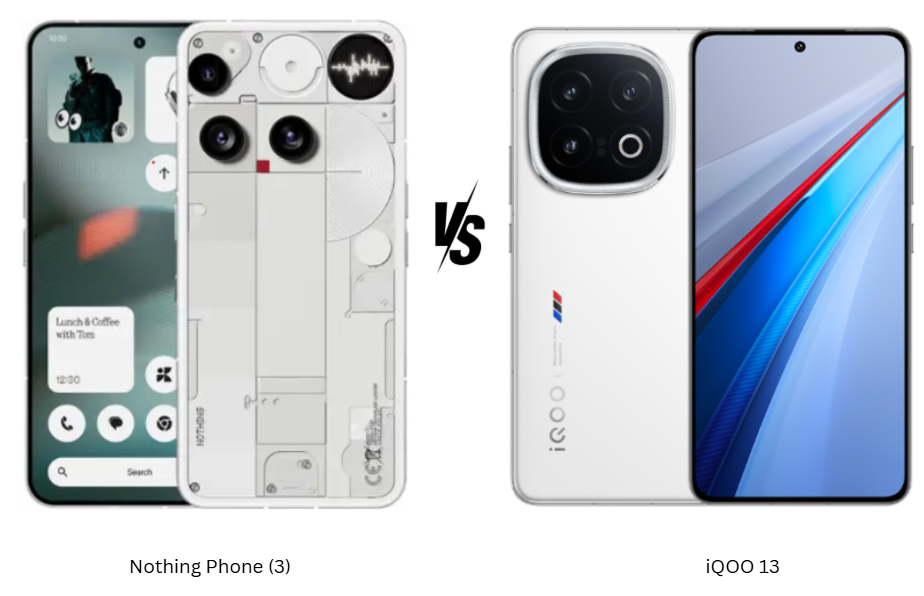
The Nothing Phone (3) and iQOO 13 represent two bold takes on the modern flagship, offering distinct priorities, design innovation versus raw performance. While the Nothing Phone (3) focuses on aesthetic appeal and a unique user experience, the iQOO 13 aims to dominate with specs and speed at a lower price. This comparison is important for buyers torn between a visually standout phone and a performance-first powerhouse, especially in a market where features increasingly overlap.
1. Design and Display

Build and Feel:
Both phones feature premium materials, but the Nothing Phone (3) emphasizes aesthetic uniqueness with its transparent back and 489-LED Glyph interface. It uses Gorilla Glass 7i on the front and Victus on the back for protection, paired with an aluminum frame and full IP68 certification. Meanwhile, the iQOO 13 also offers top-tier durability with an IP68/IP69 rating and a combination of glass and aluminum alloy or fiber back, but lacks the design distinctiveness of the Glyph system.
Verdict: The Nothing Phone (3) wins in terms of uniqueness and flair, while theiQOO 13 is built for ruggedness with IP69 protection.
Display Quality:
The iQOO 13 delivers a superior visual experience with a larger 6.82″ LTPO AMOLED panel, sharper 1440p resolution, 144Hz refresh rate, and impressive 2592Hz PWM for eye comfort. The Nothing Phone (3) also offers an excellent OLED panel with a 120Hz refresh rate, 1B colors, HDR10+, and 4500 nits peak brightness, but its resolution and PWM rate are slightly lower.
Verdict: iQOO 13 has a better display overall with its sharper resolution, smoother 144Hz refresh rate, and higher PWM dimming.
| Preview | Product | |
|---|---|---|

|
Nothing Phone (3), White (12GB, 256GB) | Check Price on Amazon |
Please Note: When you buy something using the links in our articles, we may earn a small commission at no cost to you.
| Preview | Product | |
|---|---|---|

|
iQOO 13 5G (Ace Green, 12GB RAM, 256GB Storage) | Snapdragon 8 Elite Mobile Platform | World’s First… | Check Price on Amazon |
Please Note: When you buy something using the links in our articles, we may earn a small commission at no cost to you.
2. Specifications

Performance:
The iQOO 13 is equipped with the newer Snapdragon 8 Elite chipset (4.32GHz Oryon cores) paired with Adreno 830 GPU, offering a significant leap in raw CPU and GPU performance. The Nothing Phone (3) uses the Snapdragon 8s Gen 4, which is efficient and capable but falls behind in power and thermal headroom.
Verdict: iQOO 13 is the more powerful device for gaming and heavy multitasking due to its flagship Snapdragon 8 Elite chipset.
Battery and Charging:
iQOO 13 packs a massive 6150mAh (global) or 6000mAh (India) battery and supports blazing-fast 120W charging, achieving a full charge in 30 minutes. In contrast, the Nothing Phone (3) offers 5150/5500mAh batteries with 65W wired charging, 15W wireless, and reverse wireless capabilities. While the iQOO wins on capacity and speed, the Nothing Phone offers more versatility.
Verdict: iQOO 13 leads in battery size and wired charging speed, but Nothing Phone (3) offers more flexible charging features, including wireless and reverse wireless.
3. Camera

Main and Secondary Lenses:
Both phones feature triple 50MP setups, but their tuning is different. The iQOO 13 includes a 50MP wide, 50MP 2x telephoto, and 50MP ultrawide, capturing sharper details and offering high-speed video up to 8K. It also includes a color spectrum sensor for better color reproduction. The Nothing Phone (3) has a similar triple layout with 3x periscope telephoto and a wider ultrawide angle, but lacks 8K and a color sensor.
Verdict: iQOO 13 edges ahead with 8K video, superior color handling, and more professional tuning, making it the better choice for enthusiasts.
Selfie Camera:
The Nothing Phone (3) boasts a 50MP front camera with 4K@60fps video support, ideal for vloggers and high-res selfies. The iQOO 13 offers a 32MP selfie sensor, still solid but limited to 4K@30/60fps. The higher megapixel count gives Nothing an edge for detail-rich self-portraits.
Verdict: Nothing Phone (3) wins the selfie game with its higher resolution and full 4K60 support.
4. Pricing
The iQOO 13 is priced around $600, while the Nothing Phone (3) comes in at $799. For $200 less, iQOO 13 offers a stronger chipset, a larger and sharper display, better thermal efficiency, and faster charging. Nothing Phone (3), however, justifies the premium with its unique design, wireless charging, and higher-res front camera.
Verdict: iQOO 13 offers significantly better value for money, delivering top-tier specs at a more accessible price.
5. Conclusion
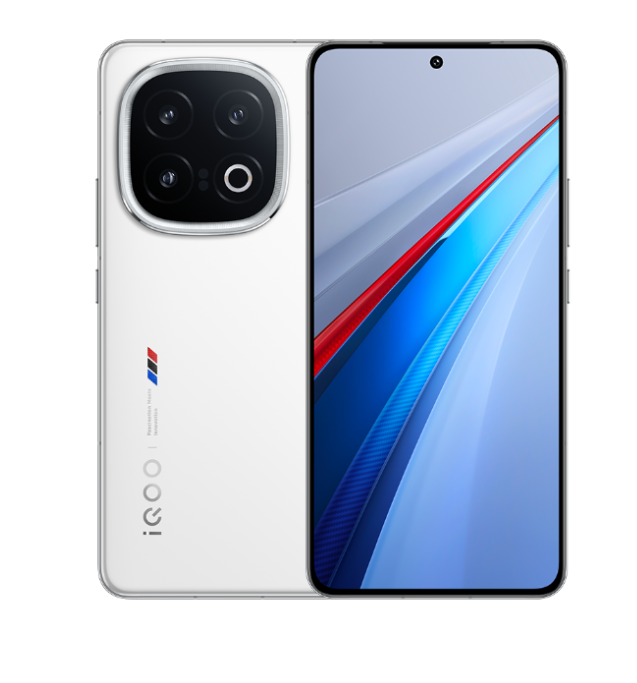
The Nothing Phone (3) stands out with its Glyph interface, wireless charging, and highly capable selfie camera. It also promises 5 years of major Android updates. On the other hand, iQOO 13 offers a top-end Snapdragon 8 Elite chip, ultra-fast 120W charging, 8K video, better PWM, and a larger 2K 144Hz display, all for less money. The inclusion of an IR blaster, 24-bit audio, and Hi-Res features enhances its utility.
Verdict: Choose the Nothing Phone (3) for standout design, software longevity, and content creation. Go for the iQOO 13 if you want flagship-level performance, a superior display, and better value under $600.
Read More:
- Huawei Pura 80 Ultra vs Pro: Is the $500 Extra Really Worth It?
- OPPO Reno 13A vs Vivo T3: Which Budget Phone Makes the Smarter Choice?
- OnePlus Nord 5 vs OPPO Reno 14: Which Is The Best All-Rounder?