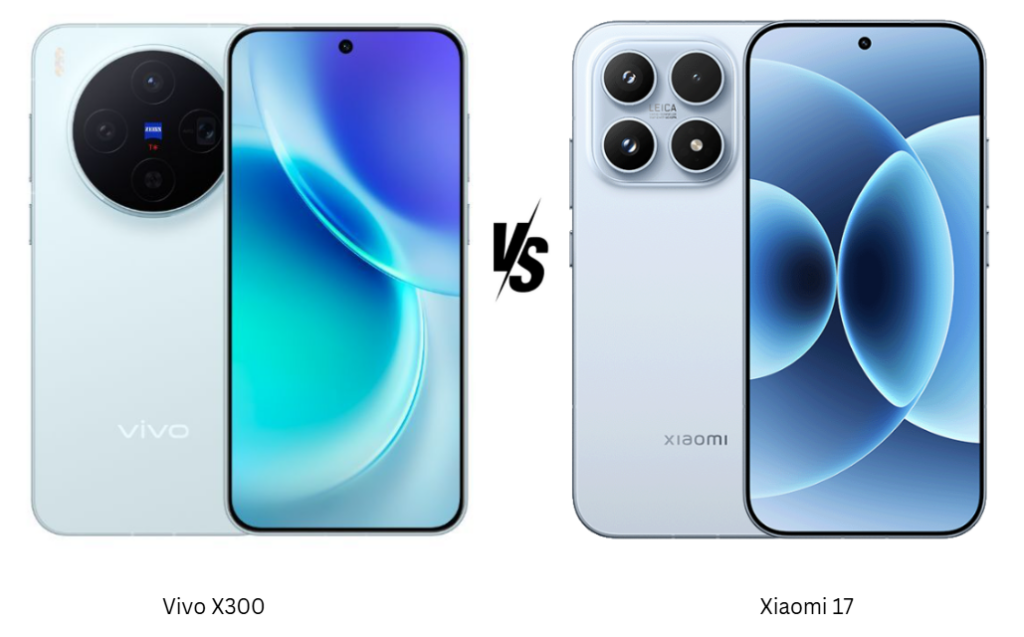
Vivo X300 and Xiaomi 17 represent two of the most advanced Android flagships of 2025, each pushing boundaries in design, performance, and camera innovation. This comparison matters because both phones redefine value in the premium segment, Vivo focusing on imaging excellence and craftsmanship, while Xiaomi targets power efficiency and all-day performance. With prices close and features overlapping, choosing between them highlights how differently two brands approach the future of smartphones.
Major Differences:
Category
Vivo X300
Xiaomi 17
Winner
Processor & Performance
MediaTek Dimensity 9500 (3nm) – Powerful but slightly behind Snapdragon in gaming and AI performance
Snapdragon 8 Elite Gen 5 (3nm) – Superior GPU and AI efficiency
Xiaomi
Battery & Charging
6510 mAh, 90W wired, 40W wireless
7000 mAh, 100W wired, 50W wireless
Xiaomi
Camera System
Zeiss triple setup with 200MP periscope zoom and cinematic color grading
Leica triple setup with realistic tones and balanced color science
Build and Feel: Both phones feature premium designs, but their approach differs. The Vivo X300 sports a larger, more solid aluminum frame with a glossy glass back that feels luxurious but slightly heavier. It also carries IP68/IP69 protection, making it one of the few smartphones resistant to high-pressure water jets, a durability edge. Xiaomi 17, meanwhile, is slimmer and lighter, wrapped in Dragon Crystal Glass that provides extra shatter resistance. It feels more compact and comfortable for one-handed use. The Vivo X300 appeals to those who prefer a sturdy, professional build, while Xiaomi 17 favors sleek ergonomics and pocket-friendly convenience. Overall, Xiaomi 17 wins in comfort, while Vivo X300 wins in toughness.
Display Quality: Vivo X300’s 6.78-inch LTPO AMOLED panel offers ultra-bright 4500 nits peak brightness and superior HDR capabilities like Dolby Vision and HDR Vivid, delivering vivid color accuracy and excellent sunlight visibility. Xiaomi 17’s 6.3-inch LTPO AMOLED is smaller but equally premium, with 3500 nits brightness and Dolby Vision support. Both have 120Hz refresh rates and 2160Hz PWM dimming for eye comfort. Vivo’s larger screen provides a more immersive experience, especially for gaming and media, while Xiaomi’s is sharper per inch. For cinematic visuals, Vivo X300 takes the lead; for compact precision, Xiaomi 17 shines.
Verdict: Vivo X300 is better suited for users who prioritize immersive visuals, ruggedness, and professional-grade durability. Xiaomi 17 stands out for minimalists wanting a lighter phone with similar display excellence but easier handling.
2. Specifications
Performance: Under the hood, Xiaomi 17 wields Qualcomm’s Snapdragon 8 Elite Gen 5, a powerhouse offering class-leading CPU and GPU speeds, ensuring unmatched gaming, multitasking, and AI efficiency. Vivo X300, powered by the Dimensity 9500 chip, also performs impressively with its 3nm architecture and strong AI computation. However, the Snapdragon’s Adreno 840 GPU edges out for gaming performance and long-term stability. Xiaomi’s thermal efficiency also contributes to sustained peak performance. Vivo’s performance feels smoother in daily multitasking thanks to software optimization under OriginOS 6, but Xiaomi’s raw power and flagship efficiency make it more future-proof for heavy users and gamers.
Battery and Charging: Xiaomi 17 packs a massive 7000 mAh Si/C battery, one of the largest in its segment, offering extended screen time for multimedia and gaming. Its 100W wired and 50W wireless charging are incredibly fast, ensuring a near-full charge in minutes. Vivo X300, though slightly smaller with a 6510 mAh battery, still performs well with 90W wired and 40W wireless charging. Both support reverse charging. While Vivo’s battery life is solid, Xiaomi clearly dominates in endurance and speed. For power users, the Xiaomi 17 offers unmatched convenience and longevity, making it ideal for travel or long workdays.
Verdict: When it comes to performance and battery, Xiaomi 17 leads with its stronger chipset and larger, faster-charging battery. Vivo X300 remains efficient and balanced but caters more to everyday users rather than performance enthusiasts.
3. Camera
Main and Secondary Lenses: Vivo X300 boasts a Zeiss-powered triple camera setup with a stunning 200MP periscope telephoto lens, offering 3.7x optical zoom and macro capabilities. Its wide and ultrawide lenses deliver exceptional clarity and cinematic color grading, enhanced by Zeiss T* coating for realistic tones. Xiaomi 17, co-engineered with Leica, features a balanced triple 50MP setup that emphasizes natural color science and accurate skin tones. While Xiaomi’s images look truer to life, Vivo’s combination of sharpness, contrast, and zoom versatility makes it more dynamic for photography enthusiasts. The X300 also supports advanced video formats like 4K@120fps and Dolby Vision HDR, ideal for creators.
Selfie Camera: Both phones feature 50MP front cameras with 4K video support. Vivo’s autofocus delivers sharper details and consistent exposure, especially in varying light. Xiaomi 17, however, benefits from Leica tuning and better HDR handling, producing more natural tones. For vlogging and selfies, Xiaomi’s camera feels more balanced, while Vivo’s is more detailed and vibrant.
Verdict: Vivo X300 dominates in rear camera versatility and zoom performance, making it a better choice for professionals and content creators. Xiaomi 17 excels in realistic imaging and selfie performance. Both are exceptional, but Vivo edges ahead overall for photography depth and flexibility.
4. Pricing
At approximately $650, the Vivo X300 is slightly cheaper than the $700 Xiaomi 17, despite its flagship-grade Zeiss optics and premium design. Xiaomi 17 justifies its higher tag with a bigger battery, faster charging, and superior processor performance.
Verdict For users seeking a camera-first, visually rich smartphone, the Vivo X300 offers outstanding value at a lower price. Those who prioritize performance longevity, battery dominance, and balanced everyday use will find the Xiaomi 17 worth the extra $50.
Disclaimer: Prices are approximate and may vary based on country, region, and applicable taxes.
5. Conclusion
Both the Vivo X300 and Xiaomi 17 bring distinct strengths, Vivo with its photography prowess and design ruggedness, Xiaomi with its performance and power efficiency. Unique features like Vivo’s satellite connectivity and Zeiss lens tuning contrast with Xiaomi’s 7000 mAh battery and Leica partnership. Each caters to a different audience: Vivo for creators and media lovers, Xiaomi for power users and travelers.
Verdict: Vivo X300 wins for camera innovation and durability, while Xiaomi 17 triumphs in raw performance and battery life. Choosing between them depends on whether photography or power matters more to the user.
We use cookies on our website to give you the most relevant experience by remembering your preferences and repeat visits. By clicking “Accept”, you consent to the use of ALL the cookies.
This website uses cookies to improve your experience while you navigate through the website. Out of these, the cookies that are categorized as necessary are stored on your browser as they are essential for the working of basic functionalities of the website. We also use third-party cookies that help us analyze and understand how you use this website. These cookies will be stored in your browser only with your consent. You also have the option to opt-out of these cookies. But opting out of some of these cookies may affect your browsing experience.
Necessary cookies are absolutely essential for the website to function properly. This category only includes cookies that ensures basic functionalities and security features of the website. These cookies do not store any personal information.
Any cookies that may not be particularly necessary for the website to function and is used specifically to collect user personal data via analytics, ads, other embedded contents are termed as non-necessary cookies. It is mandatory to procure user consent prior to running these cookies on your website.