
Add GIZMOCHINA as Preferred Source on Google
We make most of our smartphone reviews based on the Chinese versions of these devices. The reason is simple: the Chinese models are always released first, while the global versions usually take a few more months to arrive. In our review comment sections, we often see people asking whether the Chinese version will work properly in their country. Coincidentally, we have both the Chinese and global versions of the OnePlus 15 here. Using them as examples, I’ll show you exactly what the real differences are between the Chinese edition and the global edition.
Accessories
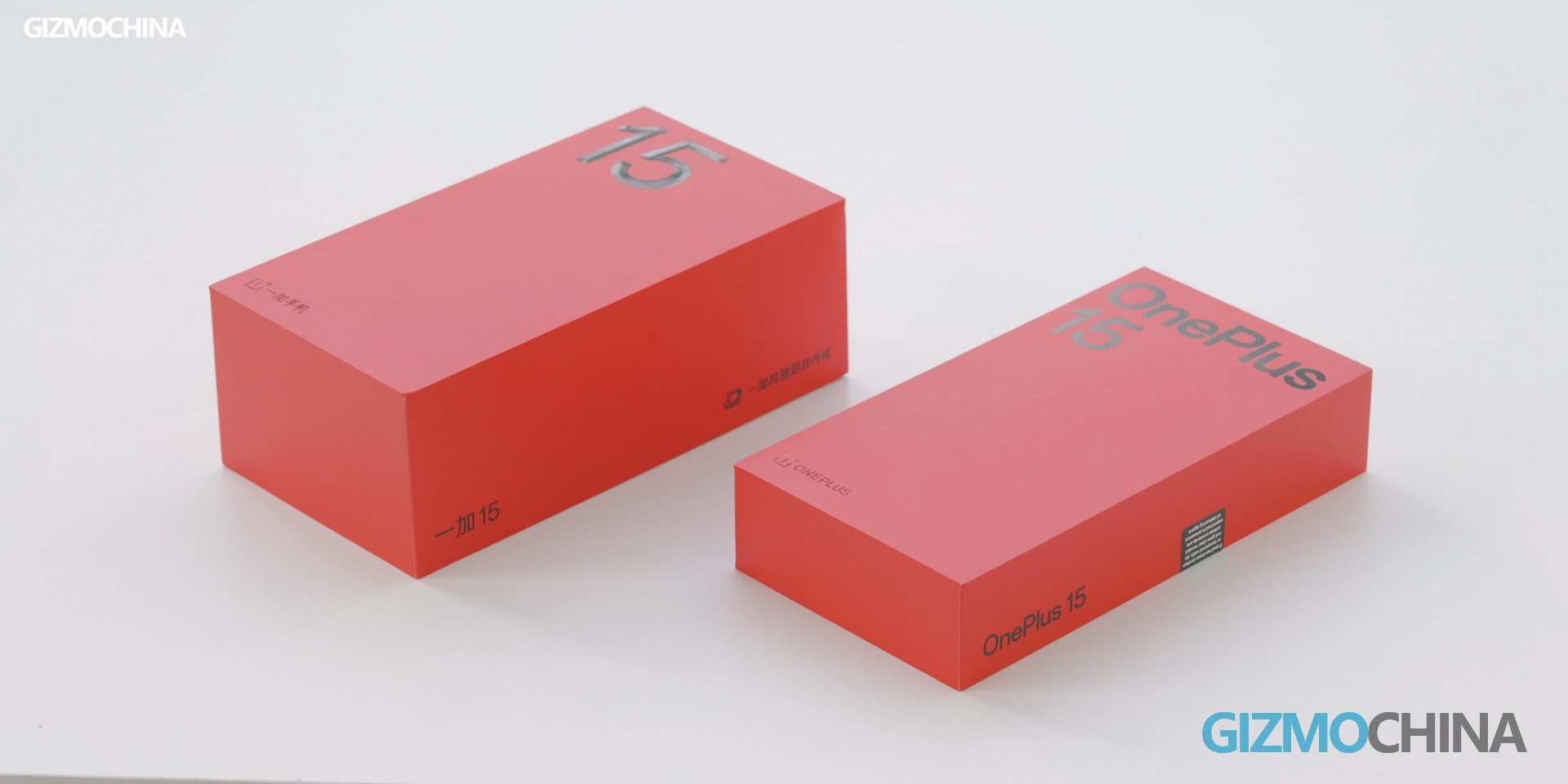
First of all, the size of the packaging alone already hints at a difference in included accessories. Inside the box of the Chinese OnePlus 15, you get a phone case, a 120W charger, and a cable. However, the global version only includes the cable and a stack of manuals.
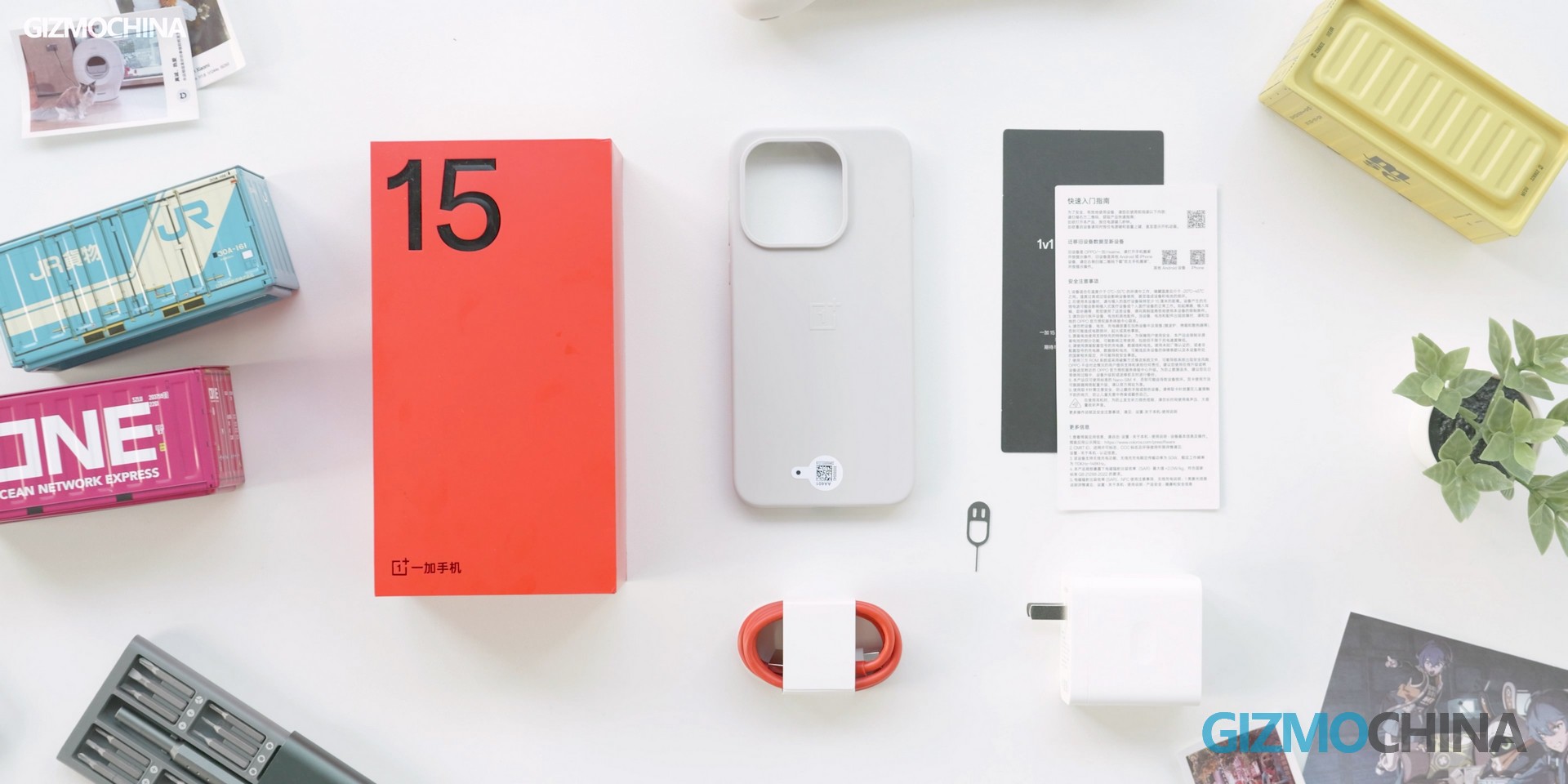
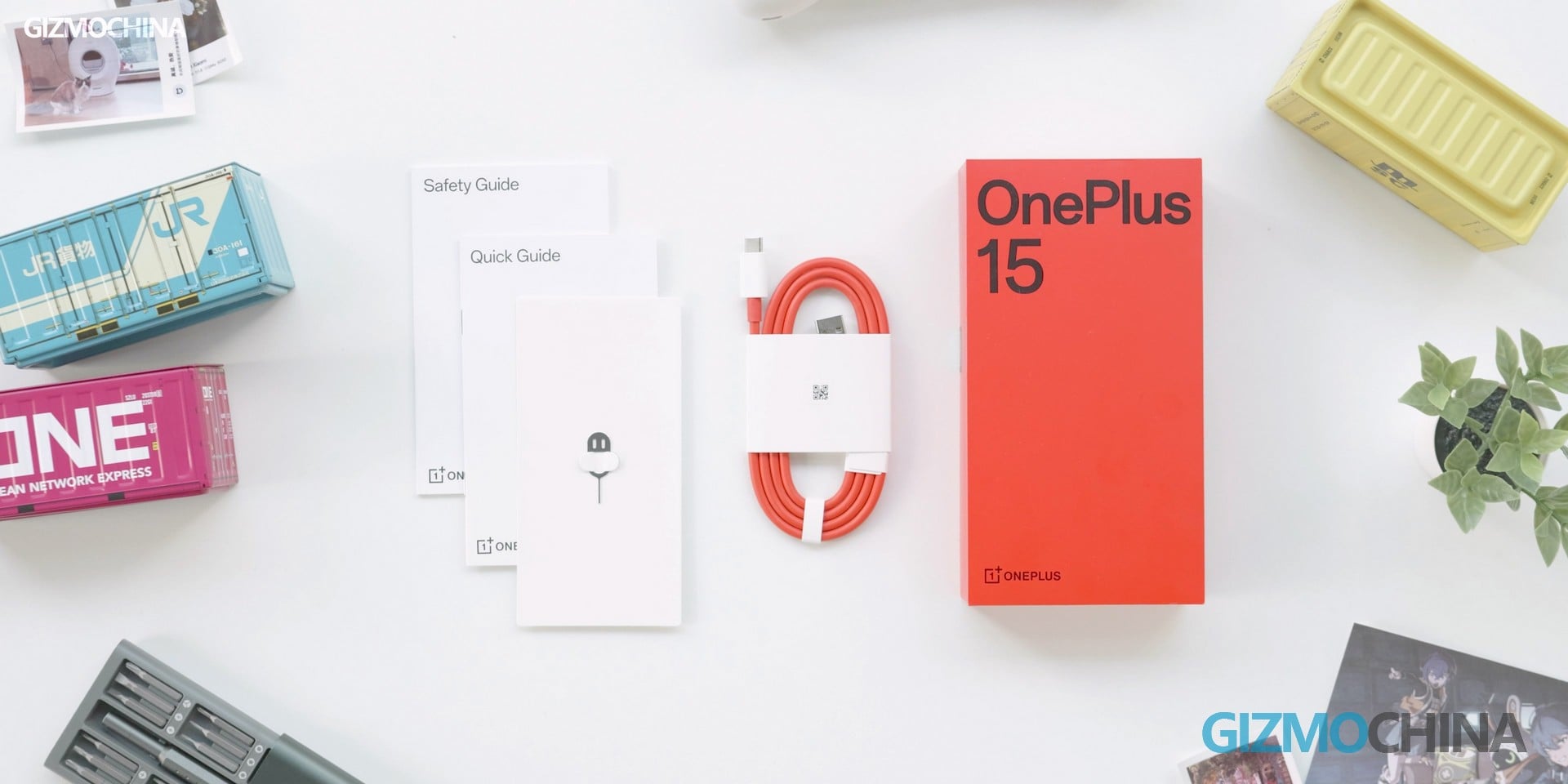
Of course, not every global variant of every phone comes with fewer accessories. Usually, only the models sold in Europe and North America remove the charger. These regions have stricter ESG regulations that require smartphone companies to reduce carbon emissions as much as possible. So, for this European OnePlus 15, the lack of a charger and case is probably due to those regulations.
Software
The most obvious difference is that one phone runs OxygenOS while the other runs ColorOS. Anyone familiar with OnePlus knows that, aside from the home UI being closer to stock Android, most of the features and operation logic are basically the same. For other brands, the differences are even smaller—many of them use identical icons and system names.
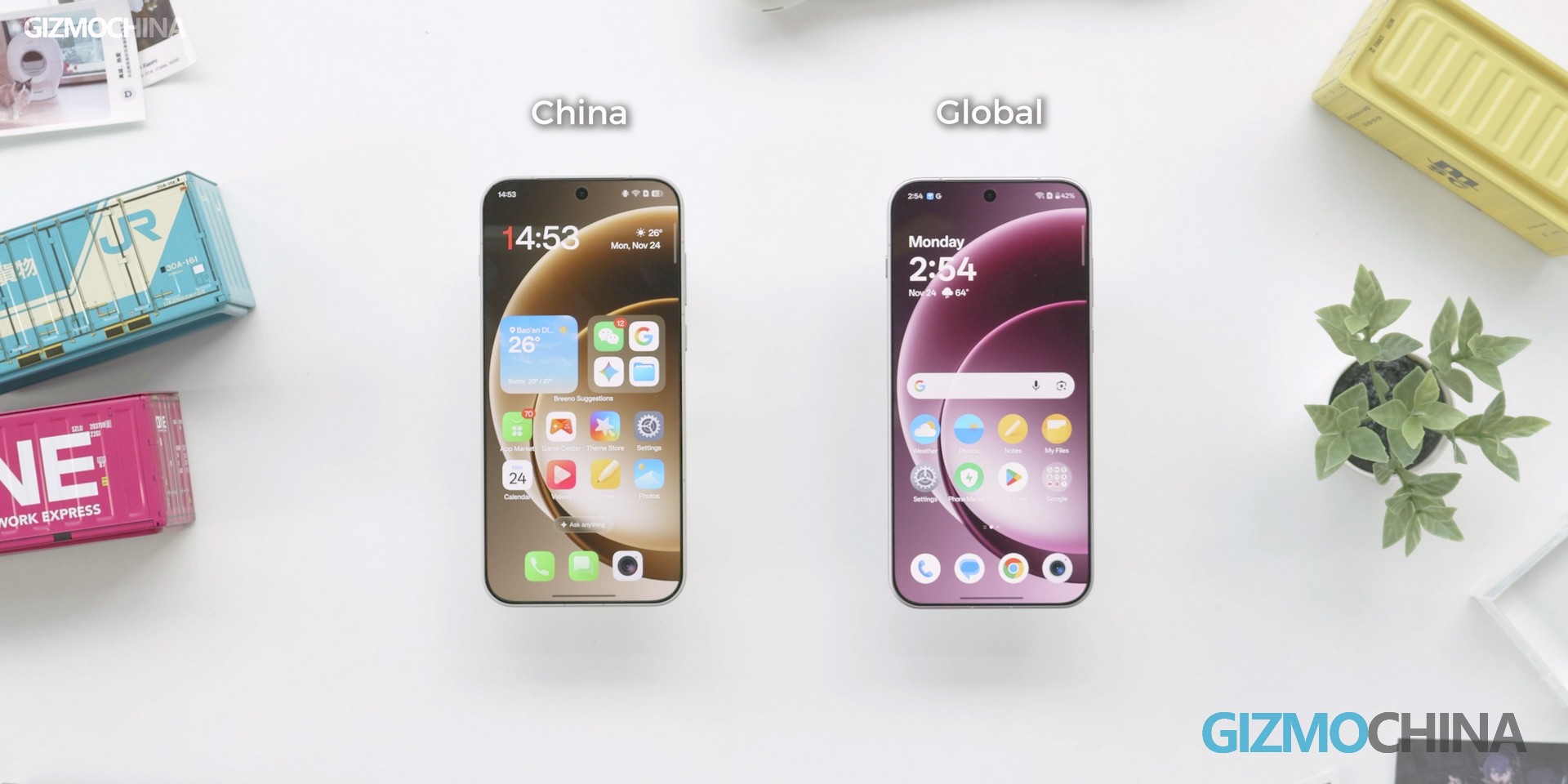
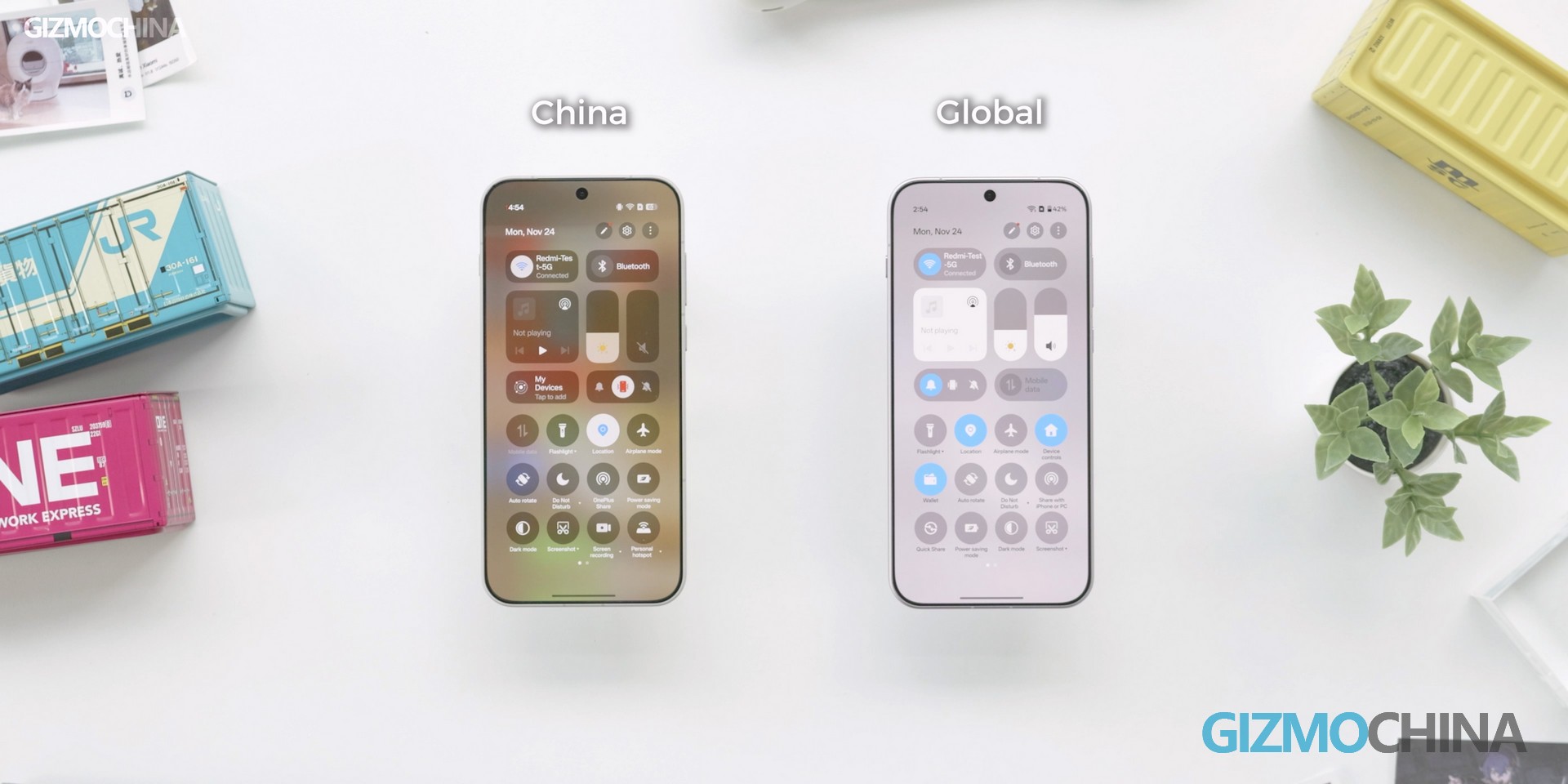
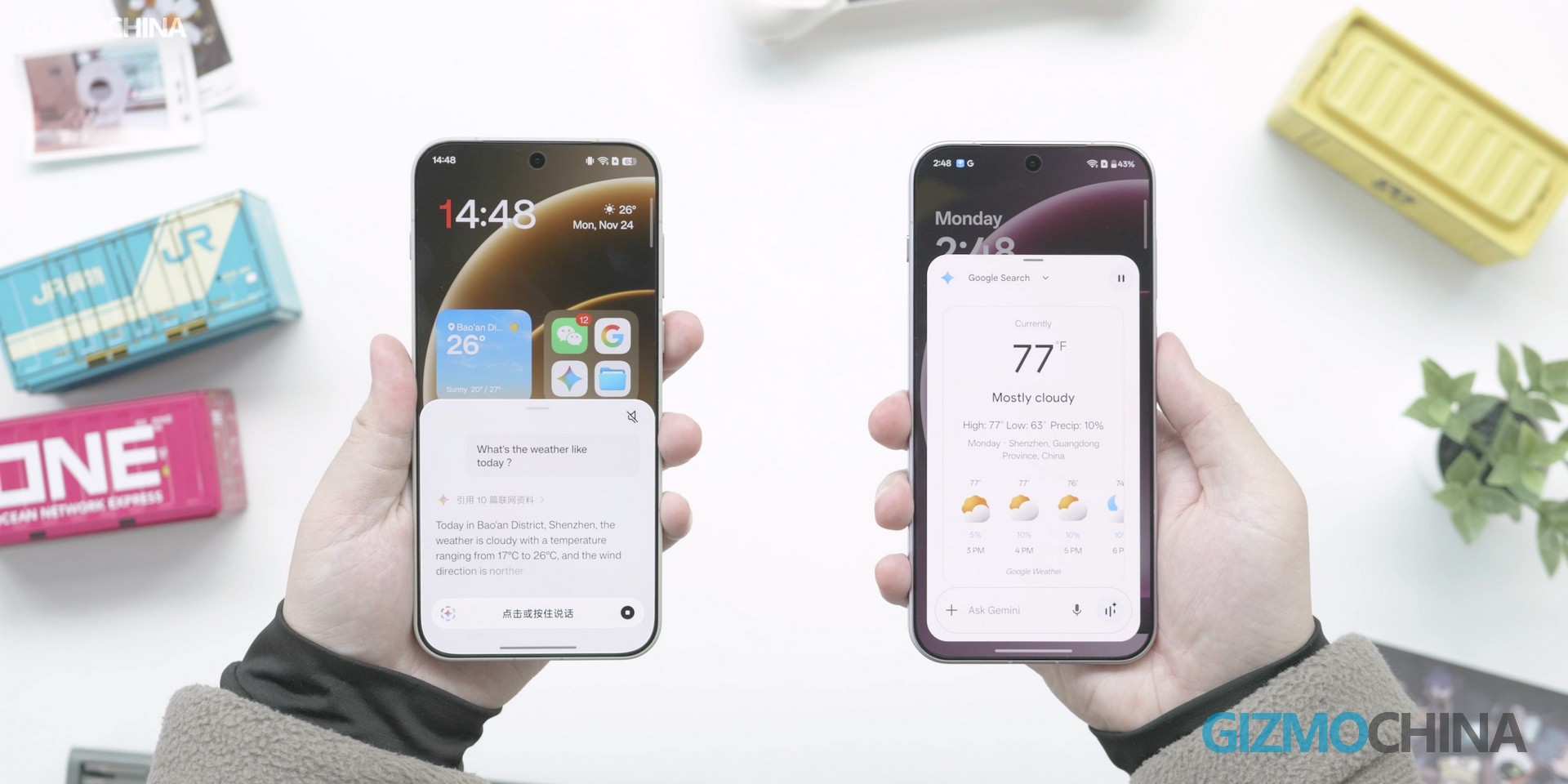
However, the global versions may miss certain features for various reasons. For example, the AI features here aren’t as complete as on the Chinese version. There are also differences in voice assistants and LLMs. Chinese phones each have their own native voice assistant, while global phones almost always use Google Assistant or Gemini. Of course, you can install Gemini on a Chinese phone as well, but you won’t be able to wake it up as quickly as the global version.
Network Signal
In my opinion, the biggest obstacle when using a Chinese phone in another region is the network bands. Chinese models usually lack several major North American bands, such as B12/B13/B17, which can lead to noticeably worse coverage in areas with weak signals compared to phones purchased locally. That said, as long as you’re outside of North America, you’ll find almost no difference. Meanwhile, the global version—just as the name suggests—can communicate normally almost anywhere. Whether you buy it in Europe or the Americas, you won’t run into issues.
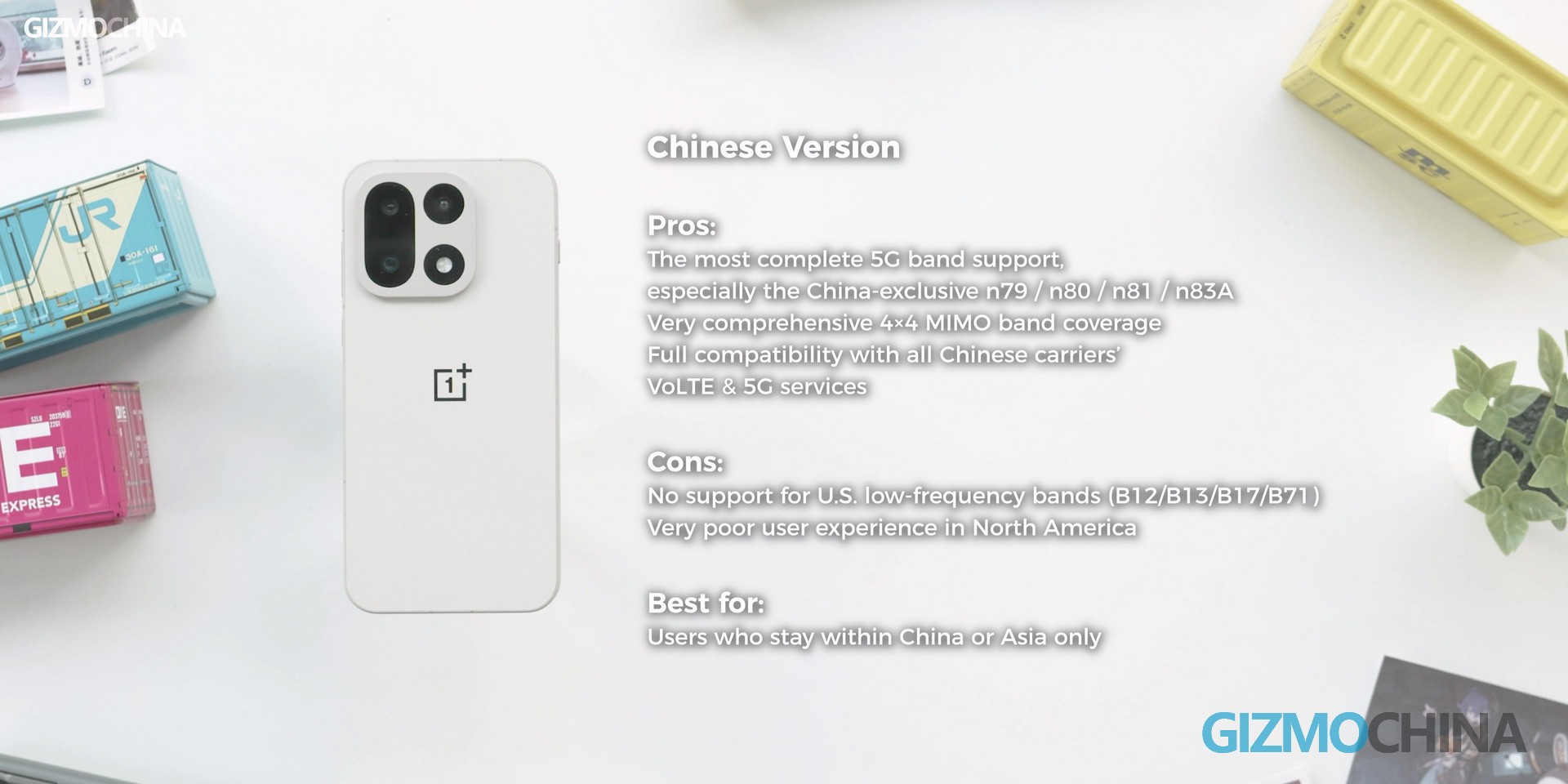
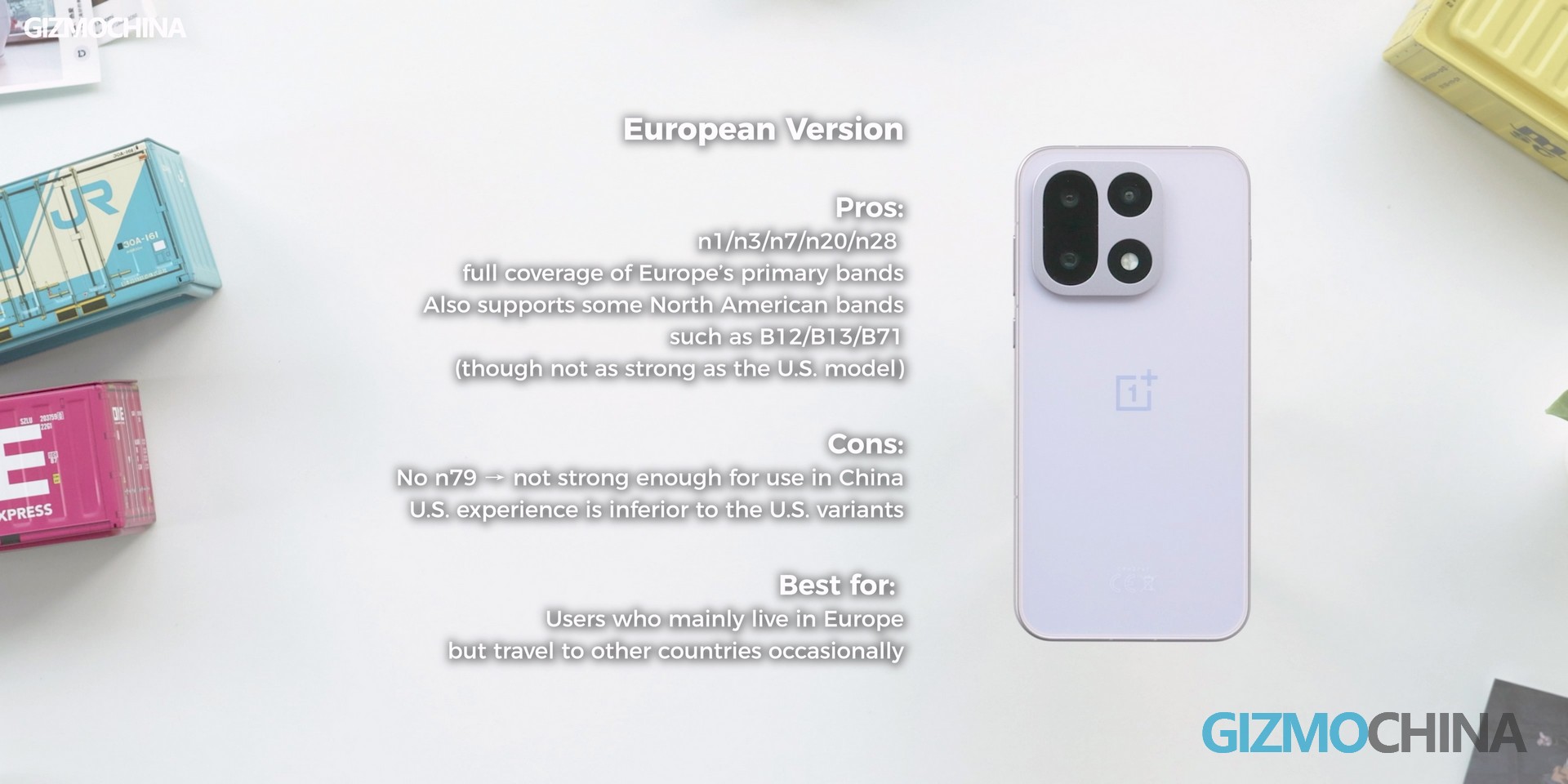
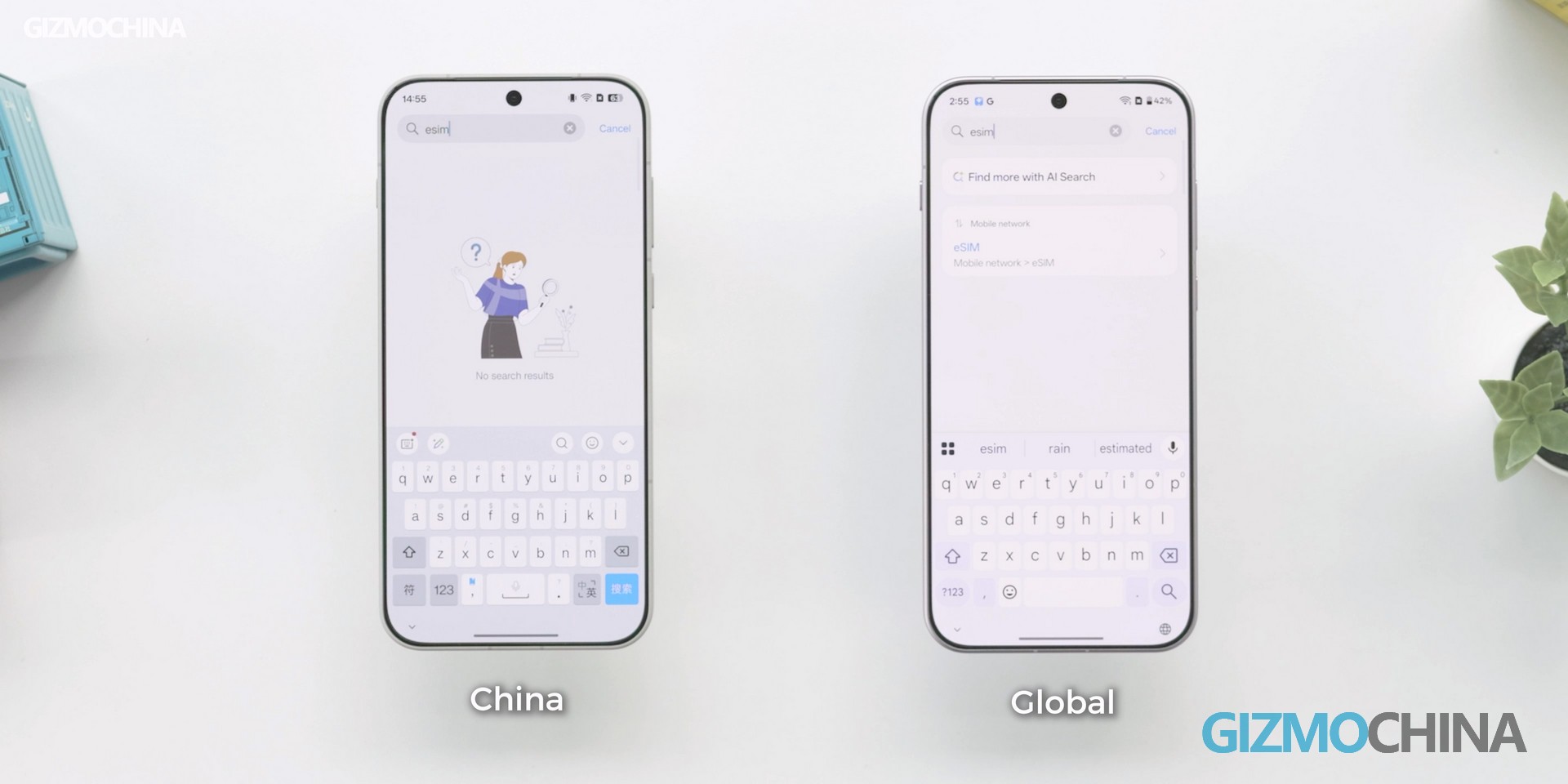
Aside from network bands, there’s also the matter of eSIM. The Chinese OnePlus 15 doesn’t support eSIM, which is pretty inconvenient for users who already rely on it. The global version not only supports two nano-SIM cards but also two eSIM profiles. People who travel frequently for work or leisure will probably appreciate the global OnePlus 15 a lot more.
Battery
In general, Chinese and global versions of the same phone try to keep the hardware as identical as possible. It helps control production costs and avoids confusing consumers. OnePlus did a great job here—whether Chinese or global, every configuration of the OnePlus 15 is exactly the same. But if you’re buying a phone from another brand, there’s one thing you must pay attention to: the battery.
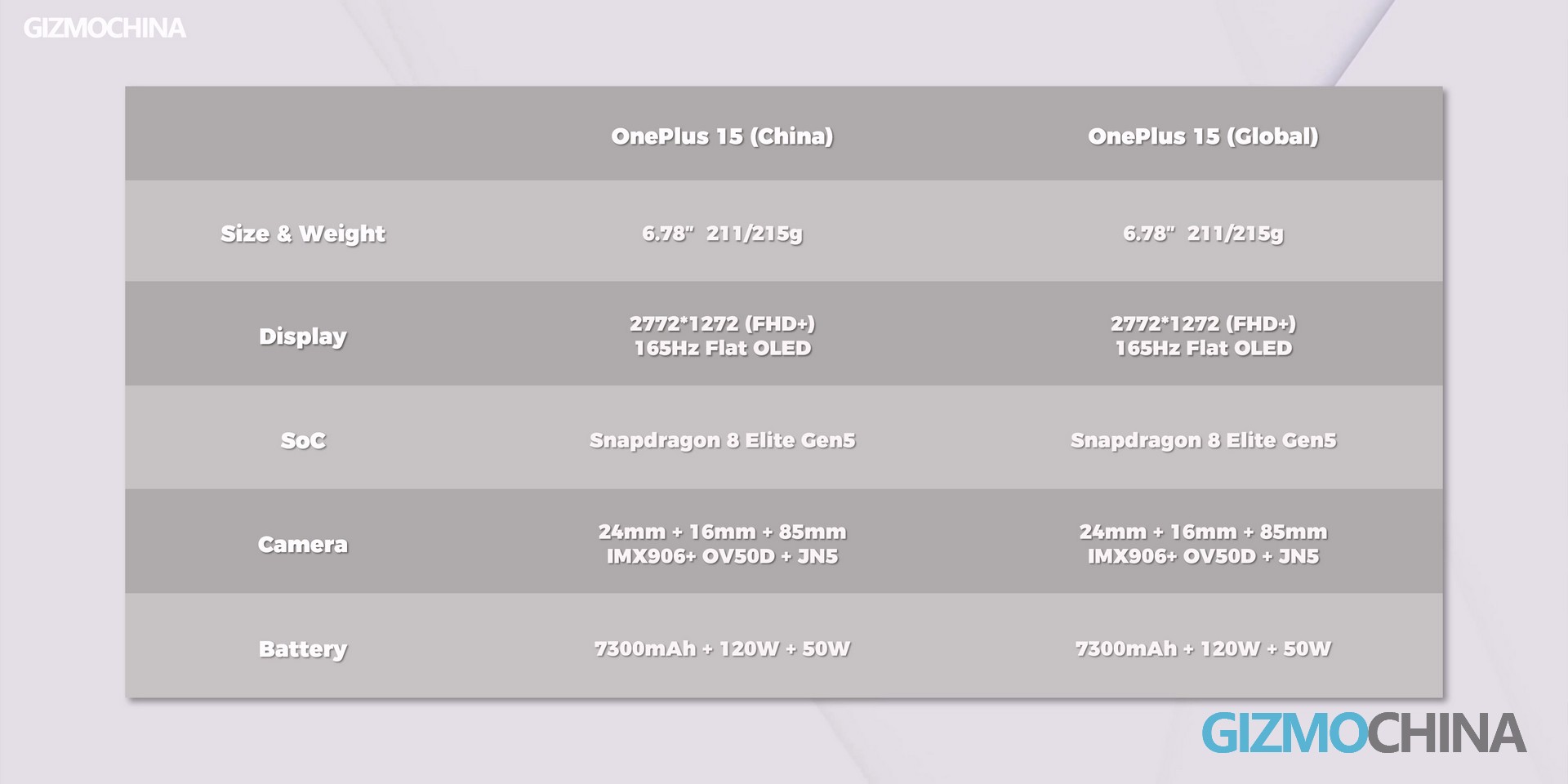
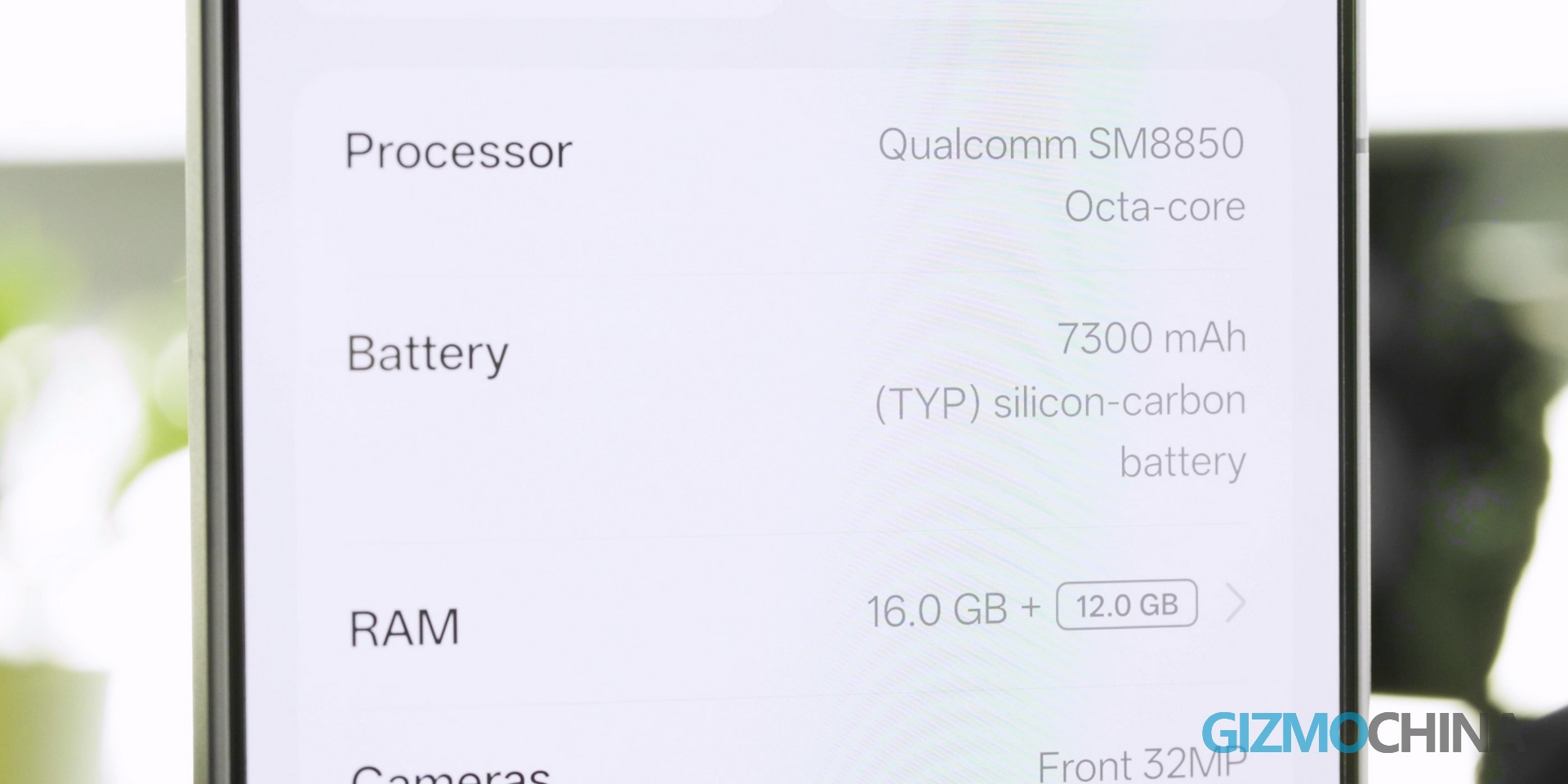
Because of certain European regulations, many brands make the battery slightly smaller on units not sold in China. For example, the vivo X300 sold in Europe, and the global versions of the POCO X7 series all have smaller batteries than their Chinese counterparts. So when I learned that every regional version of the OnePlus 15 still has the full 7300mAh battery, I was genuinely curious how they managed to get around those rules. In any case, you guys finally get to enjoy ultra-long battery life without compromise.
Warranty & Update Cycle
So what about the warranty? Can a Chinese phone be repaired under warranty in another country? Unfortunately, most brands—including OnePlus—require you to ship the device back to China for warranty repairs. Even if you’re willing to pay a local repair center, they may not want to take the risk. In this regard, the global version has a clear advantage.
The same applies to system maintenance. Global versions usually have longer software support cycles. For example, global OnePlus 15 users get 4 major OS updates and 6 years of security patches. But the security patch updates for the Chinese version lag behind the global version by one year. Some brands are even worse. They don’t even disclose the maintenance cycle for their Chinese models. If you bought the Chinese version, all you can do is hope they keep updating the system before your device eventually breaks.
Price
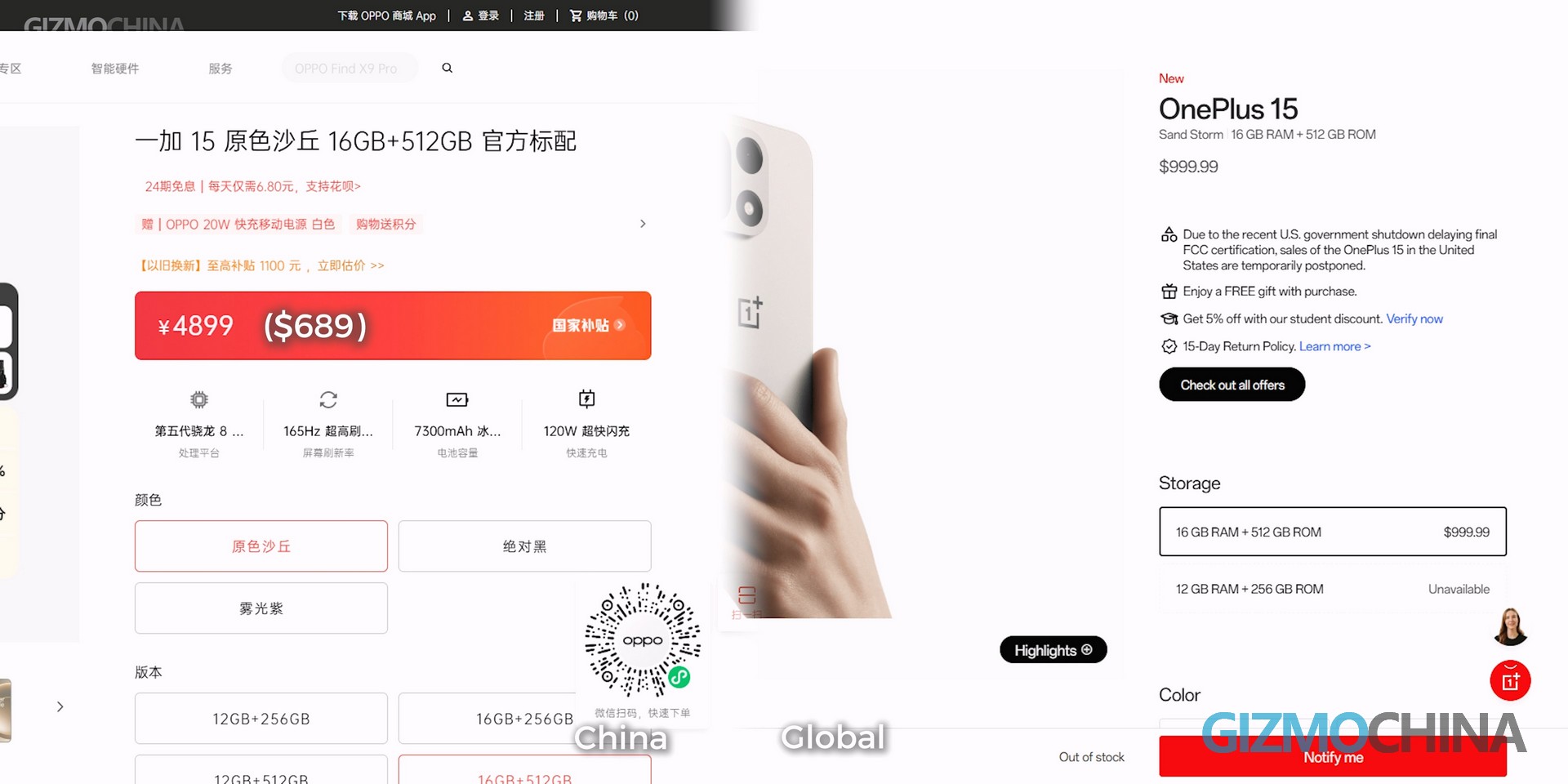
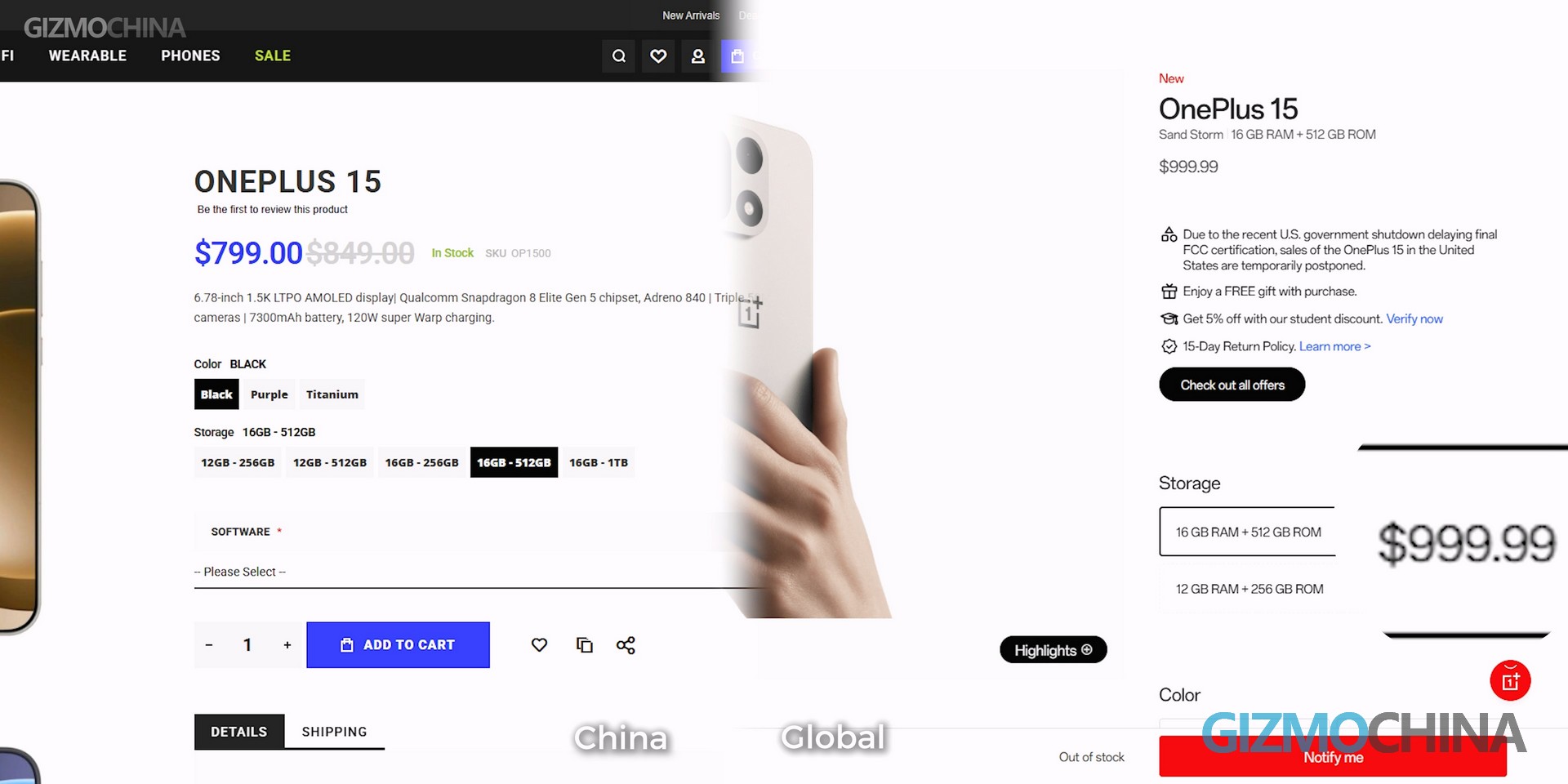
If you only compare official retail prices, the Chinese versions are always unbelievably cheaper. Even if you need a third-party site like GeekWills to help you buy and ship the device, the final cost is still far lower than the global version. This is why, despite all the drawbacks mentioned earlier, there are still many people willing to go out of their way to purchase the Chinese version.
And if you’re not a fan of the Chinese software build, you can root the phone and flash it to the global ROM. The OnePlus 15 has practically no restrictions on unlocking the bootloader, which is a huge advantage compared to many other brands.
Conclusion
Honestly, the conclusion is pretty clear. If your budget allows, the global version is definitely the more convenient and hassle-free choice. As a benchmark for global smartphones, the OnePlus 15 proves that global models can indeed offer the same battery capacity as the Chinese version. The large battery is no longer a China-exclusive advantage.
However, the Chinese version might be a little troublesome to use in your country, but the main benefit is that it’s cheaper—much cheaper, incredibly cheaper. And if you’re able to flash the global ROM, many of the issues disappear entirely.



Comments