In 2026, the mini PC is no longer an underpowered alternative to full-sized towers. These machines have grown into serious AI workhorses, packing massive power into palm-sized enclosures.
But under the surface, there’s a deep divide in philosophy, one that boils down to Intel’s modular vision versus Apple’s vertically integrated approach. Picking the right mini desktop today is more about how you think than what you do.
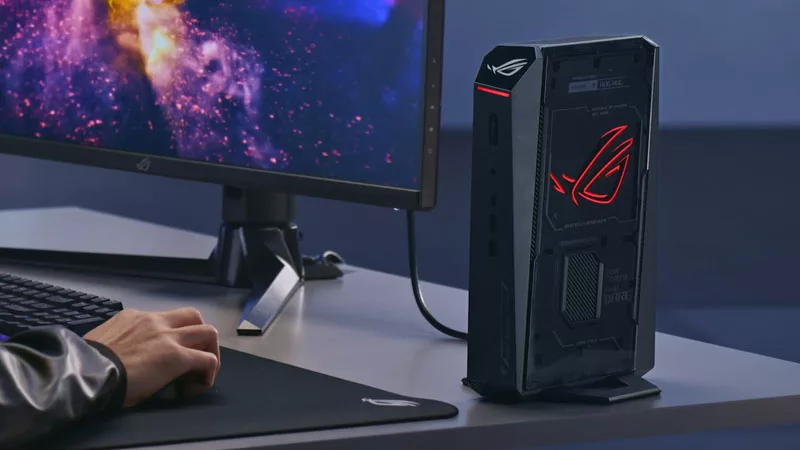
Mini PCs built around Intel’s Core Ultra Series chips push the boundaries of what a compact Windows machine can be. Brands like Asus, Geekom, and Minisforum are leading this charge, combining powerful AI acceleration with user-serviceable internals and open standards.
The biggest draw? Modularity. Most Intel-based mini PCs support up to 96GB of DDR5 RAM and include dual M.2 slots. That means you can build local AI datasets, train models, or edit 8K footage without ever touching the cloud. If you’re experimenting with open-source LLMs, the ability to expand RAM and storage as demands grow is a serious hedge against obsolescence.
You also get access to GPU freedom. Thanks to Thunderbolt 5 and Oculink support, these machines can connect to external graphics cards, turning a quiet productivity cube into a full-blown gaming or rendering rig. Apple still can’t match this level of expandability.
On the AI front, Intel leans into openness. Whether you’re working in PyTorch, TensorFlow, or ONNX, the ecosystem supports everything from Windows-native tools like DirectML to frameworks like OpenVINO on Linux. And for enterprise users in engineering or finance who still rely on legacy Windows apps, this is the no-compromise route.
2. Apple Silicon Mac Mini
Apple takes the opposite route: control everything, optimize everything. The M5-series Mac Mini, built on Apple’s newest unified silicon, isn’t modular, but it doesn’t need to be.
Unified memory is the ace here. Instead of separating RAM between CPU, GPU, and neural engines, Apple’s architecture allows them to share one high-bandwidth pool. The result is shockingly efficient performance across AI tasks, 4K editing, and music production, even at lower spec tiers.
Mac Minis also run cool and whisper-quiet under heavy workloads. Where Intel mini PCs crank up fans during AI image generation, Apple Silicon hums along silently. If you’re working in a studio or shared workspace, that matters.
Developers and creatives already embedded in Apple’s world will find even more polish. Final Cut Pro, Logic, Xcode, and Adobe’s Mac-optimized suite fly on these machines. And if you’re building for iOS or visionOS, a Mac is not just preferred, it’s essential.
3. Which One Should You Choose?
Both platforms are more powerful than ever, but your choice should reflect how you work, not just how fast a benchmark runs.
Go with an Intel Ultra Mini PC if you need customization, frequent upgrades, or a platform that supports everything from gaming to enterprise software. It’s the more flexible path, especially for those running local AI models or experimenting with external GPUs.
Choose the Apple Mac mini if you want a system that just works. The unified experience, quiet operation, and creative tool optimizations make it the ideal choice for video editors, musicians, and app developers.
For more daily updates, please visit our News Section.
We use cookies on our website to give you the most relevant experience by remembering your preferences and repeat visits. By clicking “Accept”, you consent to the use of ALL the cookies.
This website uses cookies to improve your experience while you navigate through the website. Out of these, the cookies that are categorized as necessary are stored on your browser as they are essential for the working of basic functionalities of the website. We also use third-party cookies that help us analyze and understand how you use this website. These cookies will be stored in your browser only with your consent. You also have the option to opt-out of these cookies. But opting out of some of these cookies may affect your browsing experience.
Necessary cookies are absolutely essential for the website to function properly. This category only includes cookies that ensures basic functionalities and security features of the website. These cookies do not store any personal information.
Any cookies that may not be particularly necessary for the website to function and is used specifically to collect user personal data via analytics, ads, other embedded contents are termed as non-necessary cookies. It is mandatory to procure user consent prior to running these cookies on your website.