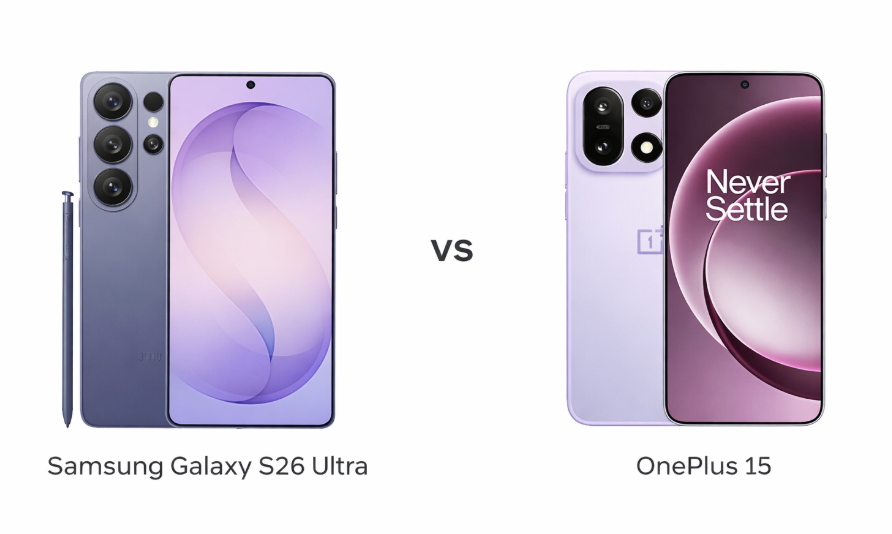
Choosing between two flagship smartphones isn’t just about specs anymore; it’s about priorities. The Samsung Galaxy S26 Ultra and OnePlus 15 represent two very different approaches to what a premium phone should be. One pushes boundaries with features, cameras, and productivity tools, while the other focuses on speed, battery, and real-world value. This comparison matters for buyers who want the best performance for their money without missing out on flagship essentials, making the decision more about lifestyle fit than raw power.
The Samsung Galaxy S26 Ultra leans into a premium, ultra-refined identity with its Gorilla Armor 2 protection, Armor aluminum frame, and the added functionality of the S Pen. It feels purpose-built for productivity and durability, with subtle refinements like anti-reflective coating and a privacy display enhancing usability. The OnePlus 15, meanwhile, offers a more versatile design approach with multiple back materials and a rugged IP68/IP69K rating. It feels slightly more experimental and modern, especially with its micro-arc oxidation finish on select variants.
Display Quality
Samsung delivers a sharper QHD+ panel with higher peak brightness and better outdoor visibility, making it ideal for media and productivity. The OnePlus 15 counters with a smoother 165Hz refresh rate and Dolby Vision support, which feels more fluid and visually vibrant during gaming and scrolling.
Verdict
Samsung wins for clarity and premium feel, while OnePlus appeals more to users who prefer fluid visuals and a slightly more dynamic display experience.
2. Specifications Including Battery
Performance
Both devices are powered by the Snapdragon 8 Elite Gen 5, ensuring top-tier flagship performance. The Galaxy S26 Ultra has a slight edge with higher clock speeds and deeper software optimization through One UI, making it feel more stable under heavy multitasking. The OnePlus 15, however, feels faster in short bursts thanks to its aggressive tuning and lighter OxygenOS, which often translates into quicker app launches and smoother animations.
Battery and Charging
Battery is where OnePlus clearly dominates. Its massive 7300mAh battery, paired with 120W wired and 50W wireless charging, delivers unmatched endurance and speed. The Galaxy S26 Ultra’s 5000mAh battery is reliable and efficient, but its charging speeds feel conservative in comparison.
Verdict
Samsung offers balanced, consistent performance, but OnePlus wins decisively with battery life and charging, making it more practical for heavy users.
3. Camera
Main and Secondary Lenses
The Galaxy S26 Ultra stands out with its 200MP main sensor and versatile quad-camera system, including dual telephoto lenses for 3x and 5x zoom. This setup delivers superior flexibility, especially for long-range photography and detail capture. The OnePlus 15 takes a more balanced approach with three 50MP sensors, offering consistent color science and strong overall performance, though it lacks the same zoom versatility.
Selfie Camera
OnePlus takes the lead in selfies with its 32MP front camera, delivering sharper and more detailed shots. Samsung’s 12MP sensor is reliable and optimized for video, but it feels less impressive on paper and in detail-heavy scenarios.
Verdict
Samsung wins for overall camera versatility and zoom performance, while OnePlus stands out for balanced imaging and better selfie output.
4. Pricing
The Samsung Galaxy S26 Ultra sits at around $1300 (₹1,40,000), firmly positioned as an ultra-premium flagship. The OnePlus 15, priced at approximately $900 (₹80,000), undercuts it significantly while still offering flagship-level hardware.
Is the price justified?
Samsung justifies its price with premium materials, S Pen functionality, superior display resolution, and a more versatile camera system. It targets users who want an all-in-one powerhouse with long-term software support.
OnePlus 15, however, feels like exceptional value, delivering comparable performance, a much larger battery, and faster charging at a far lower price. It often feels like the smarter buy for most users unless specific Samsung features are essential.
Verdict
Samsung is justified for premium buyers, but OnePlus delivers far better value for money overall.
Disclaimer: Prices are approximate and may vary based on country, region, and applicable taxes.
5. Conclusion
The Galaxy S26 Ultra differentiates itself with the S Pen, advanced display technologies, Samsung DeX, and long-term software support, making it ideal for productivity-focused users. The OnePlus 15 focuses on raw practicality, massive battery, ultra-fast charging, smoother display, and a clean, fast UI experience. These differences make each device feel tailored for different priorities rather than direct competitors in every aspect.
Verdict
The Samsung Galaxy S26 Ultra is the better choice for users seeking a premium, feature-rich flagship with top-tier cameras and productivity tools. The OnePlus 15, however, stands out as the more sensible flagship, offering incredible battery life, speed, and value.
For most users, OnePlus feels like the smarter upgrade, while Samsung remains the aspirational all-rounder.
We use cookies on our website to give you the most relevant experience by remembering your preferences and repeat visits. By clicking “Accept”, you consent to the use of ALL the cookies.
This website uses cookies to improve your experience while you navigate through the website. Out of these, the cookies that are categorized as necessary are stored on your browser as they are essential for the working of basic functionalities of the website. We also use third-party cookies that help us analyze and understand how you use this website. These cookies will be stored in your browser only with your consent. You also have the option to opt-out of these cookies. But opting out of some of these cookies may affect your browsing experience.
Necessary cookies are absolutely essential for the website to function properly. This category only includes cookies that ensures basic functionalities and security features of the website. These cookies do not store any personal information.
Any cookies that may not be particularly necessary for the website to function and is used specifically to collect user personal data via analytics, ads, other embedded contents are termed as non-necessary cookies. It is mandatory to procure user consent prior to running these cookies on your website.




Comments