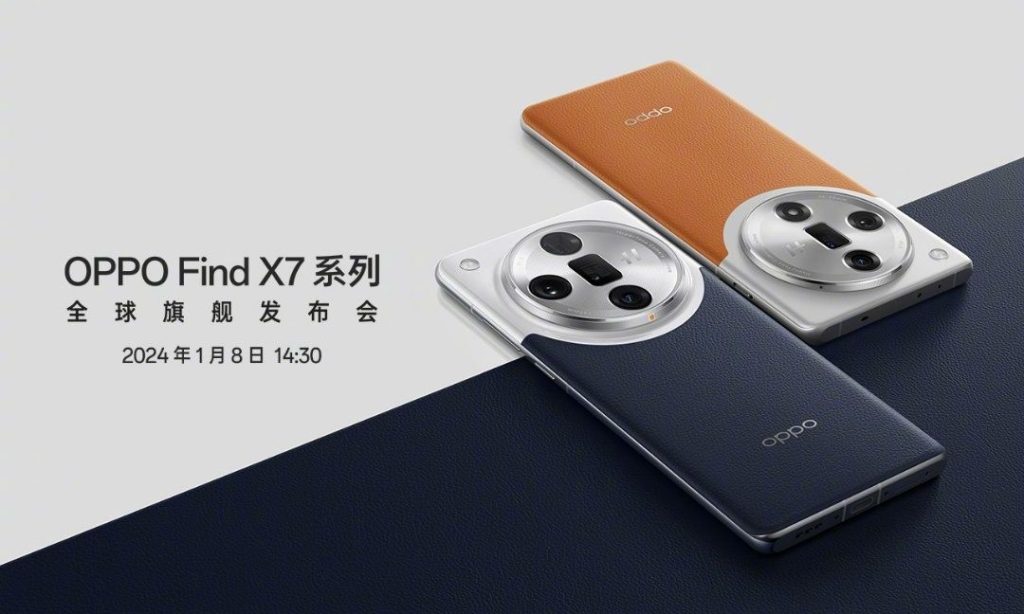
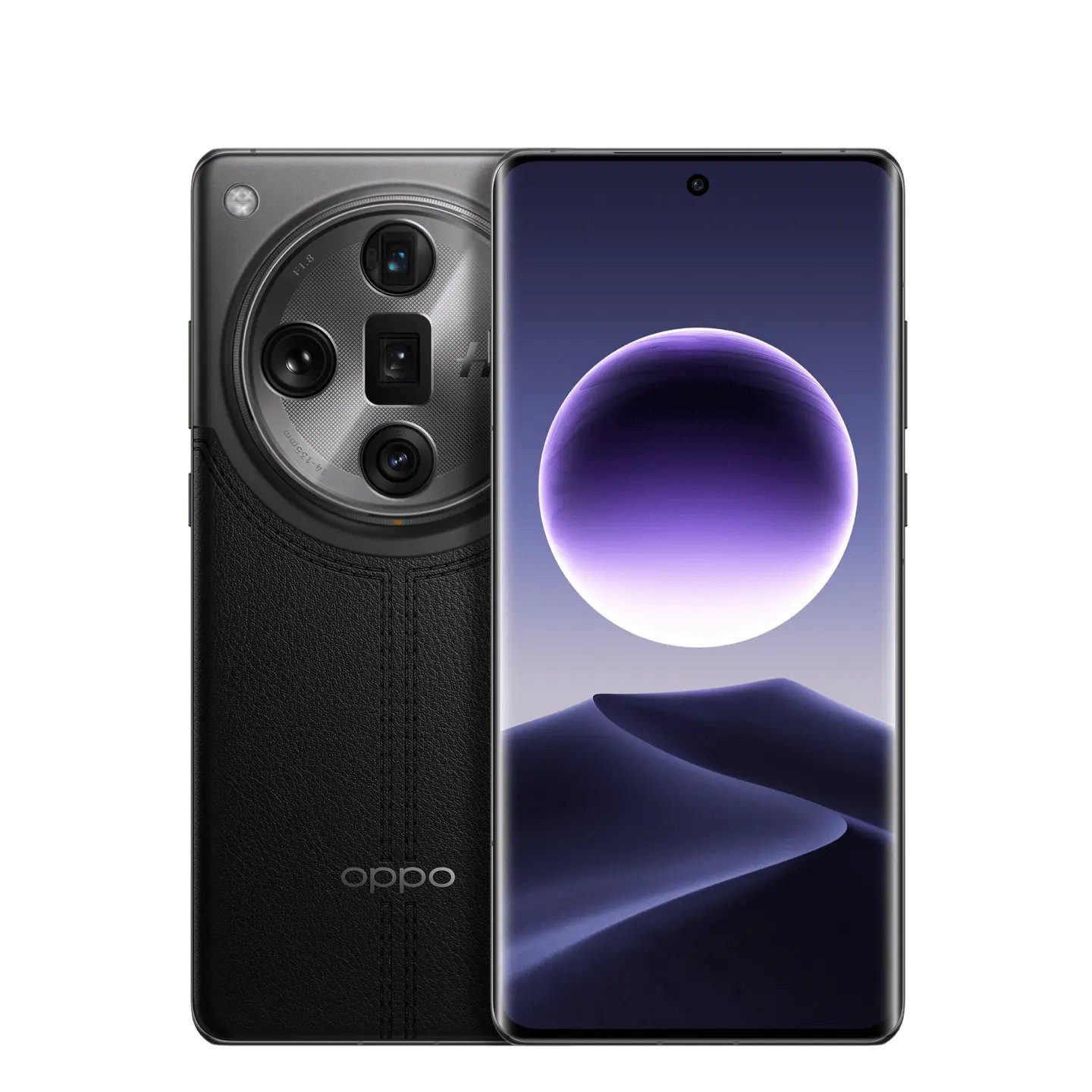
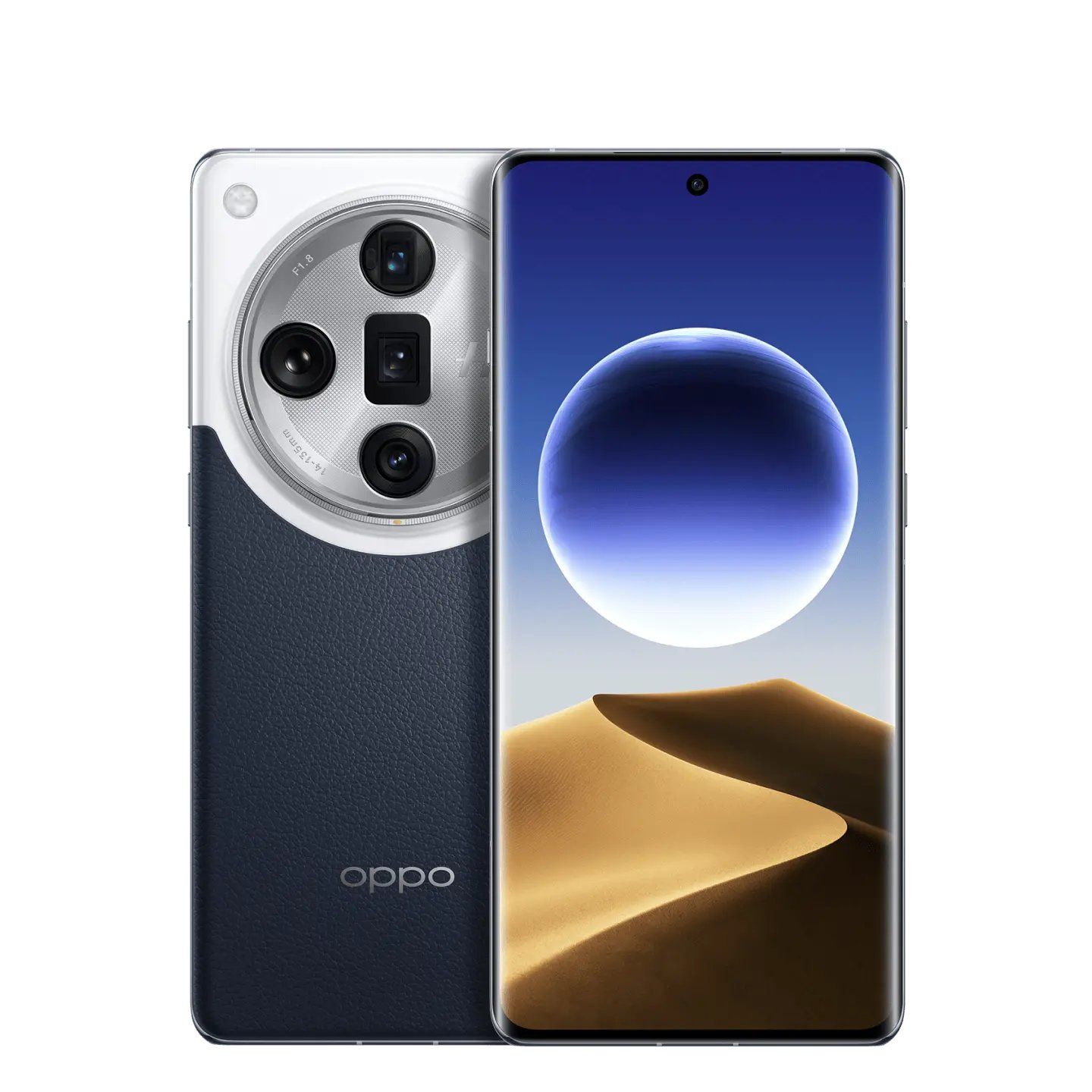
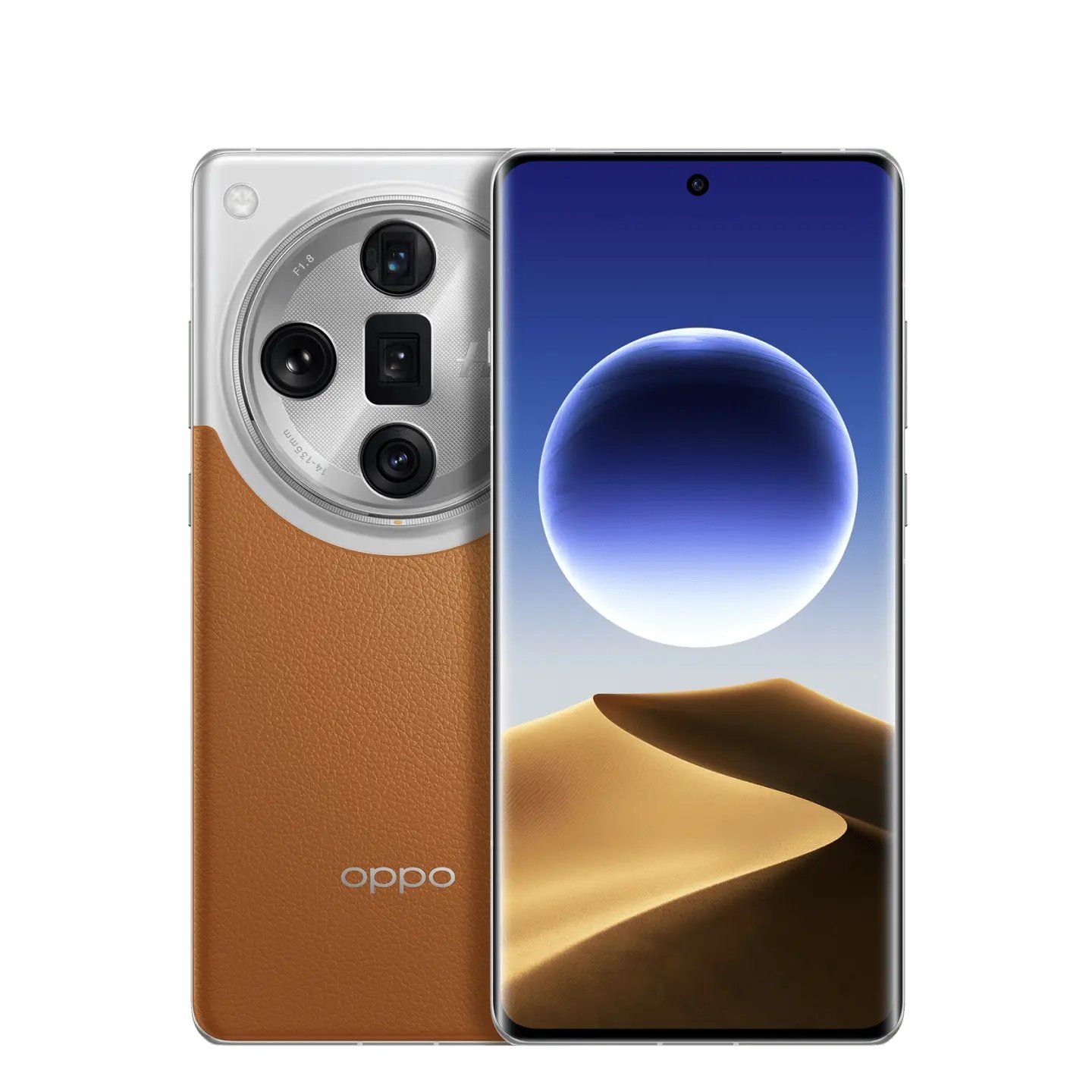
Oppo has officially confirmed that it will unveil the Find X7 series of smartphones at 2:30 pm (local time) on Jan. 8, 2024, in China. In addition, the Find X7 and Find X7 Ultra smartphones are now listed on Oppo China’s online store for reservations. The official listings have confirmed the configurations and color options of both smartphones well ahead of the official announcement.
Oppo Find X7 series launch date
Oppo Find X7
Reports have revealed that the Find X7 will come equipped with the Dimensity 9300 chipset. The official listing reveals that it will come in four configurations, such as 12 GB RAM + 256 GB storage, 16 GB RAM + 256 GB storage, 16 GB RAM + 512 GB storage, and 16 GB RAM + 1 TB storage.
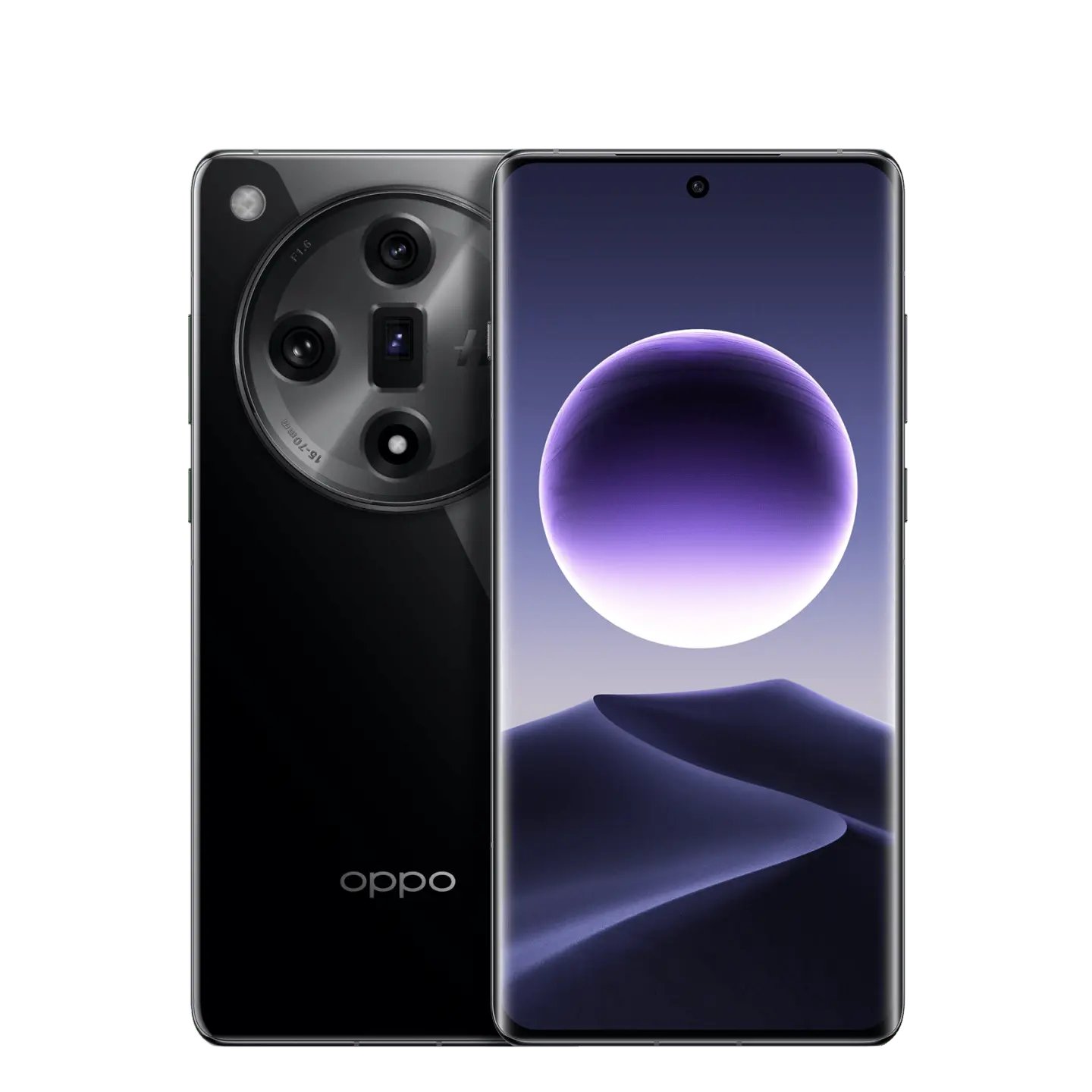
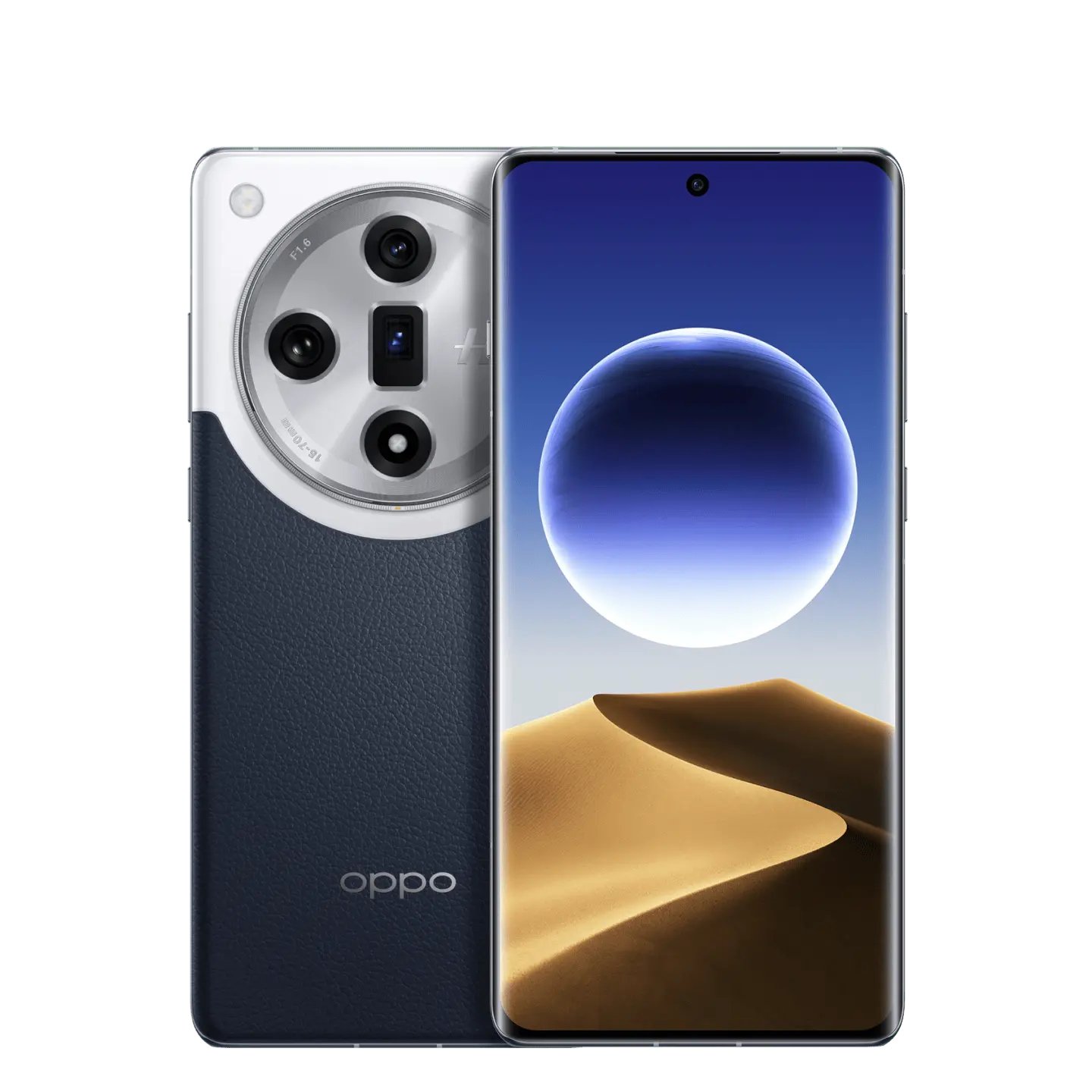
The Find X7 will be available in four shades, such as Starry Sky Black, Sea and Sky, Desert Moon Silver, and Smokey Purple.
Oppo Find X7 Ultra
The Find X7 Ultra is expected to come equipped with the Snapdragon 8 Gen 3 SoC. It will be available in three variants, such as 12 GB RAM + 256 GB storage, 16 GB RAM + 256 GB storage, and 16 GB RAM + 512 GB storage.
Find X7 Ultra: Pine Shadow InkFind X7 Ultra: Sea and SkyFind X7 Ultra: Desert Moon Silver.
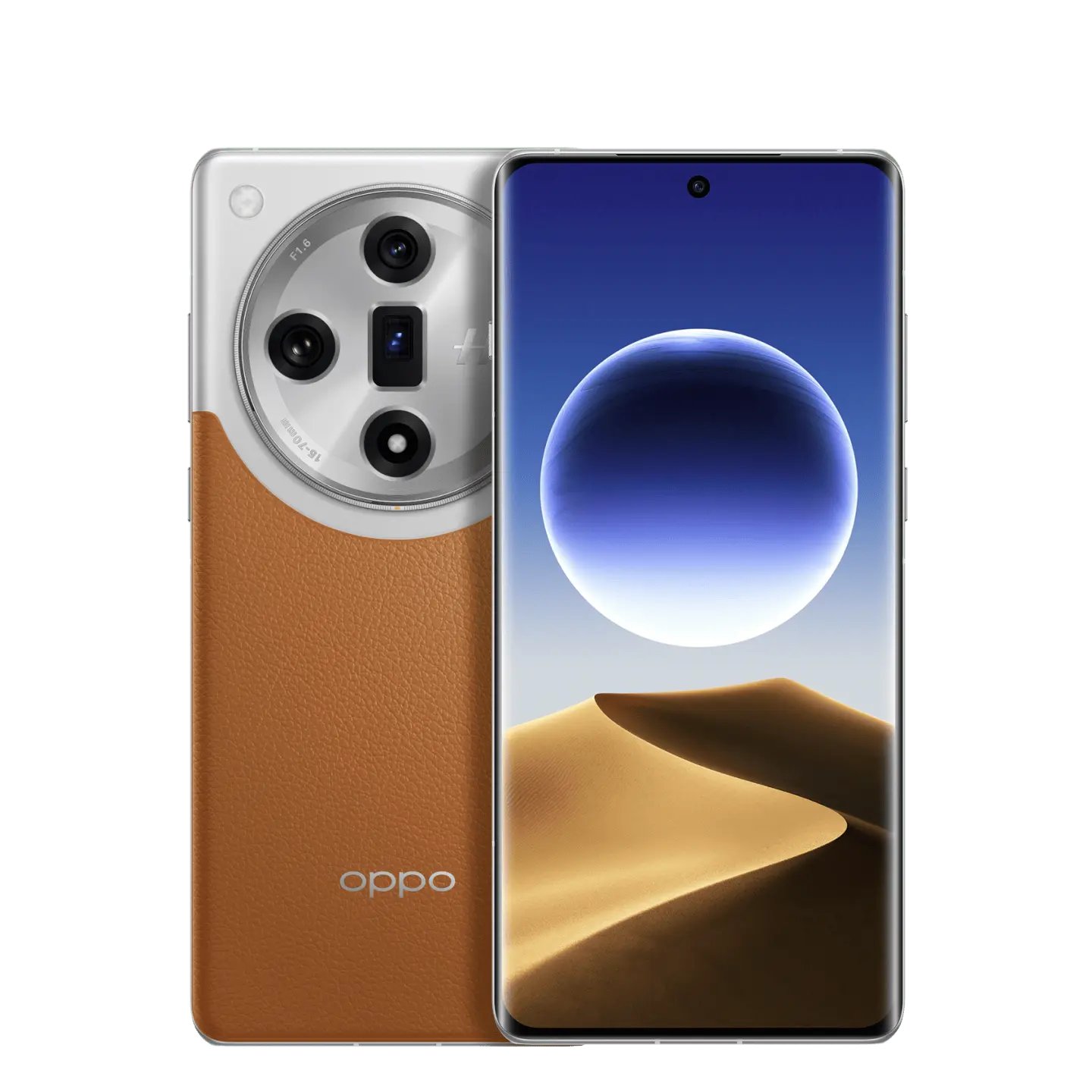
When it comes to color options, the Find X7 Ultra will come in choices such as Pine Shadow Ink, Sea and Sky, and Desert Moon Silver.
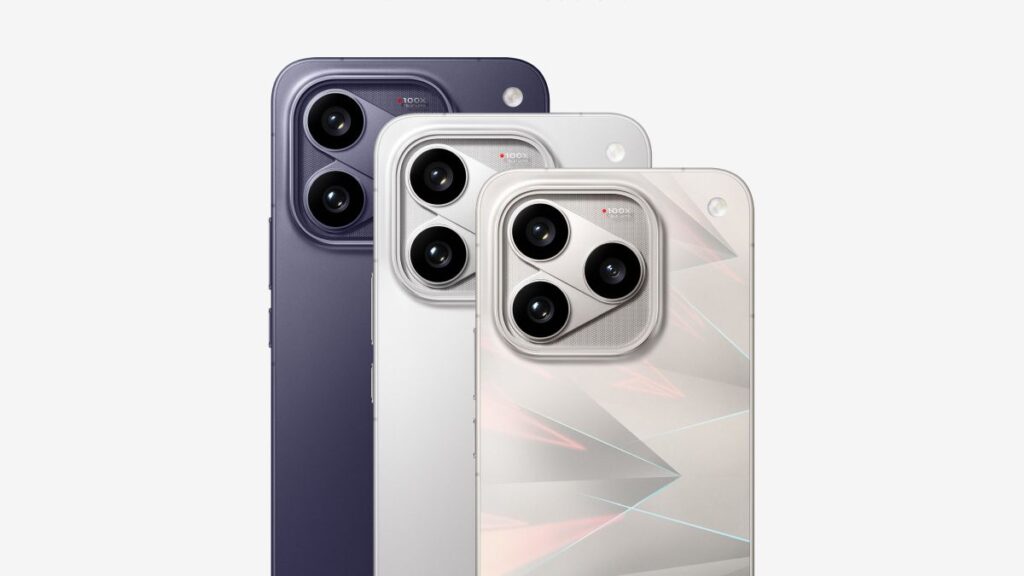
The Find X7 and Find X7 Ultra have a similar design, with the front featuring a punch-hole display with curved edges and a dual-tone back panel with a massive camera module. The Find X7 has a triple-camera unit, whereas the Find X7 Ultra has a quad-camera system. The Ultra variant will be the world’s first smartphone to feature dual periscope telephoto cameras. In addition, it will also be the first-ever phone to feature the one-inch Sony LYT-900 50-megapixel camera sensor as the primary snapper.
It is said that there will be a third device called the Oppo Find X7 Ultra Satellite Communication Version, which will come with support for two-way satellite communication. The rest of its specs will be identical to the Find X7 Ultra.
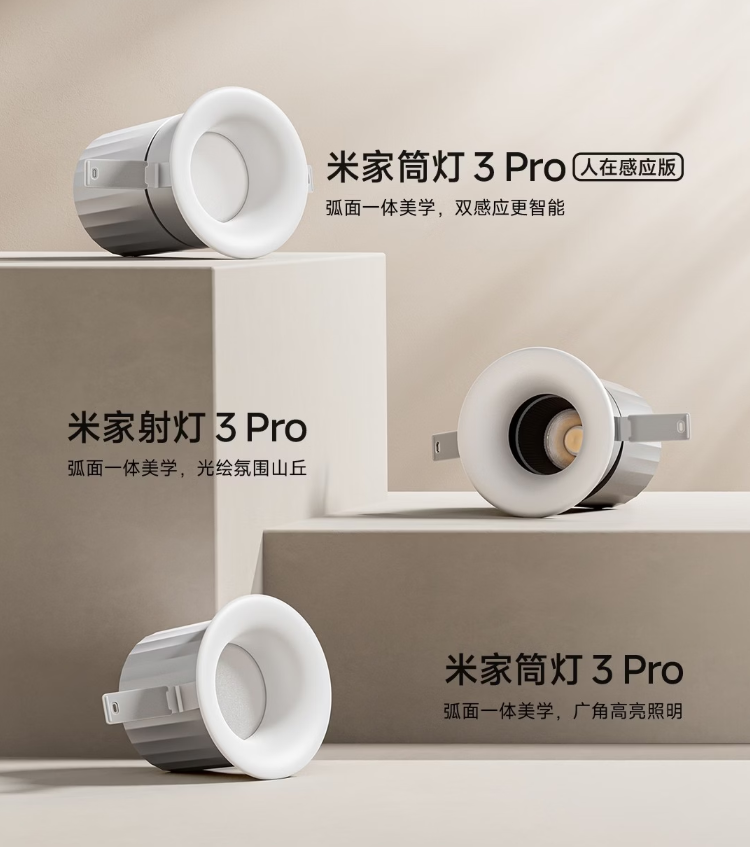
Xiaomi has released three new ceiling fixtures under its Mijia smart home brand: the Mijia Downlight 3 Pro, the Mijia Spotlight 3 Pro, and a radar-equipped Presence-Sensing Edition of the downlight. The new series focuses on practical hardware upgrades, including higher lumen output, improved anti-glare designs, and the adoption of Xiaomi’s faster Mesh 2.0 connectivity standard.
Specifications
The standard Mijia Downlight 3 Pro operates on a 12W LED setup that outputs 660 lumens. This is a 65% increase in brightness compared to the previous generation. It uses an 80-degree beam angle to provide general room illumination and minimize shadows.
For users needing directional lighting, the Mijia Spotlight 3 Pro uses a 13W module that outputs 550 lumens. It features a narrower 36-degree beam angle and a physical tilt mechanism that can be adjusted between 0 and 15 degrees to highlight specific areas like shelves or wall art. To reduce glare, the spotlight recesses the light source by 45mm into a black anti-glare ripple structure, achieving a unified glare rating (UGR) of 10 or lower.
The third model, the Mijia Downlight 3 Pro Presence-Sensing Edition, shares the same 12W, 660-lumen specifications as the standard downlight but integrates a 24GHz radar and an ambient-light sensor. Instead of relying solely on manual switches or app controls, this model detects when someone enters or leaves a room, automatically turning the light on or off. It can also be configured to trigger a larger group of connected lights simultaneously, which is useful for hallways and entryways.
Across all three models, Xiaomi is using full-spectrum LEDs with a color rendering index of Ra97. Users can adjust the color temperature from 2700K to 5700K and utilize stepless dimming. The lights also feature a gradual power-on and power-off function to prevent abrupt lighting changes.
On the software side, the series utilizes Xiaomi’s newer Mesh 2.0 module. When paired with a compatible Mesh 2.0 gateway, the company states that multi-device response speeds are 50% faster and network pairing time is reduced by 80% compared to the older Mesh 1.0 standard. The fixtures integrate with the Mijia app for grouping and automation, support XiaoAI voice commands, and include a dedicated low-brightness night-light mode.
Pricing
The Mijia Downlight 3 Pro is priced at 152 yuan ($22), while the Mijia Spotlight 3 Pro costs 176 yuan ($26). The Presence-Sensing Edition is available for 199 yuan ($30).
For more daily updates, please visit our News Section.
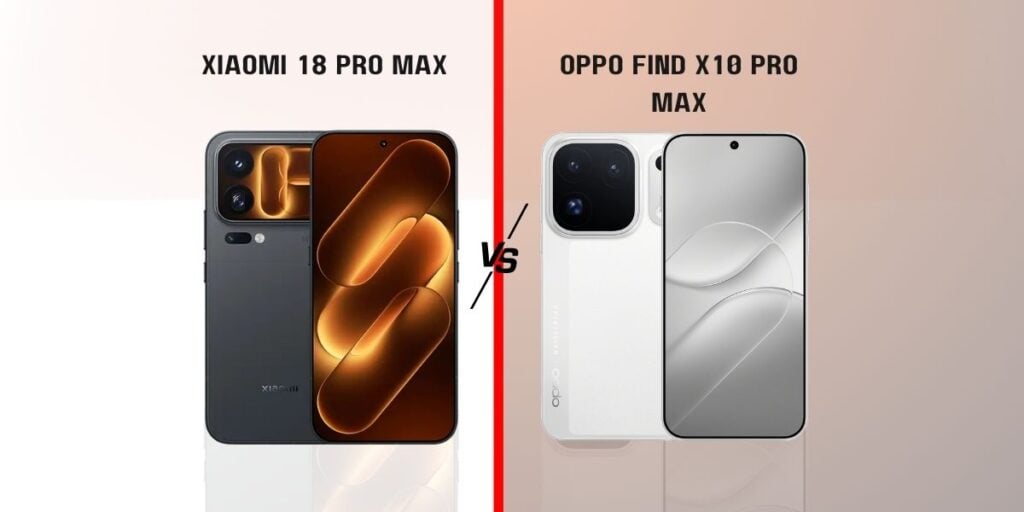
China has had back-to-back flagship launches this week. Oppo introduced the Find X10 Pro Max on September 22 with three 200MP cameras, while Xiaomi followed less than 24 hours later with the 18 Pro Max. Instead of adding another telephoto camera, Xiaomi has put a second screen on the back of the phone.
Both phones come with new 2nm chips, batteries larger than 8,000mAh, and a long list of high-end features. Both are chasing the same buyer, but the experience of using each one ends up pretty different once you dig into the specifics.
The Find X10 Pro Max keeps the squircle-shaped camera housing that Oppo introduced with the Find X9 series. The rear camera system is divided into a large square section for the three cameras and a separate vertical pill for the LED flash.
The Moon White version gets Oppo’s camera-splicing design, with a single piece of glass using two different textures. The Warm Orange and Light Titanium versions instead have a sanded finish. All three models also feature a Hasselblad logo inspired by the material sections found on classic film cameras.
The Xiaomi 18 Pro Max takes a much more unusual approach. Its rear panel houses a 2.9-inch AMOLED display that supports up to a 120Hz refresh rate and reaches 4,000 nits of brightness. Instead of being just another decorative part of the phone, the screen can be used for different tasks.
Users can upload a photo of themselves, a pet, or a favorite character, and Xiaomi’s AI can create a custom avatar for the rear display. The screen also supports more than 100 app cards at launch, covering productivity, entertainment, and AI-generated cards created from a text description.
Xiaomi is also selling NFC-enabled plush toys that attach to the back of the phone and change the appearance of the rear display. There’s also a voice assistant that works through the rear screen. It can hold conversations, remember previous context, and control Mi Home devices without requiring you to turn the phone around.
The front display uses a 19.6:9 aspect ratio with a 1.9mm corner curvature radius. The phone is available with either a fiberglass or glass back. Fiberglass versions come in Black, White, and Iced Peach Pink and weigh 235 grams, while the glass versions, including Galaxy Blue, weigh 240 grams.
There’s also a transparent edition with a red-tinted see-through back. It’s limited to the 16GB RAM and 1TB storage configuration and marks the first transparent special edition from Xiaomi since the Mi 10 Ultra in 2020.
2. Three 200MP cameras vs a different optical setup
The Find X10 Pro Max’s biggest camera feature is its three 200MP sensors. They cover the ultra-wide, main, and telephoto cameras, making it the first phone to use 200MP sensors across all three focal lengths.
The main camera uses a 1/1.3-inch sensor with an f/1.5 aperture and a 24mm equivalent focal length. Oppo claims up to 17 stops of dynamic range, while CIPA 6.5 stabilization is used to keep shots steady.
The telephoto camera has a 1/1.56-inch sensor with an f/2.1 aperture and a 70mm equivalent focal length. It supports macro photography from as close as 10cm and has a CIPA 7.5 stabilization rating.
The 1/1.56-inch ultra-wide camera has an f/2.2 aperture and a 124-degree field of view. Oppo says it can capture 202% more light than the previous generation.
Oppo has also added a second-generation Danxia color lens that works separately from the main imaging sensors. It tracks 24 spectral sampling channels and is designed to help with color reproduction in both photos and videos.
Xiaomi uses a different camera setup. The main camera combines a 200MP Light Hunter 960L sensor, measuring 1/1.28 inches, with what Xiaomi calls a Leica Optics Summilux high-speed lens. The lens uses a 1G+6P glass-plastic construction designed to reduce internal reflections.
The lens also has several coating layers, including MgF₂ for curved-surface glare, LSC to reduce fogging, and ALD/PVD/SWC coatings intended to reduce ghosting.
The periscope telephoto camera also has a 200MP sensor, this time measuring 1/1.56 inches with an f/2.4 aperture. It offers 3.2x native optical zoom, up to 12.8x lossless zoom, a 75mm equivalent portrait mode, and 12cm macro focusing through a floating dual-lens focus system.
The ultra-wide camera is a 50MP unit with an f/2.4 aperture and a 102-degree field of view. It also supports autofocus from as close as 5cm.
Xiaomi’s camera software takes a different route as well. The company says its first end-to-end large-scale imaging model was trained using millions of real camera photos. The system processes raw sensor data in the cloud rather than handling the entire process on the phone.
The resulting “A Legendary Moment” system includes depth-of-field effects based on real 75mm and 2035mm lens optics. It also includes three shooting styles: Legendary CCD, which was trained using hundreds of thousands of CCD camera photos; a black-and-white film mode with film-spectrum calibration and a custom grain algorithm; and Contemporary Classic, which is designed for more neutral everyday photos.
Oppo is relying more heavily on its Hasselblad partnership and preset shooting profiles such as Master Mode and XPan Mode.
3. Two different 2nm chips
Both phones are among the first flagships to use 2nm processors, although they use chips from different companies.
The Find X10 Pro Max comes with MediaTek’s Dimensity 9600 Pro, built using TSMC’s 2nm process. It uses a 2+3+3 all-big-core CPU layout.
The Xiaomi 18 Pro Max uses Qualcomm’s Snapdragon 8 Elite Extreme Gen 6, also built on TSMC’s 2nm process. It has a 2+6 all-big-core design and uses Qualcomm’s fourth-generation Oryon CPU architecture, with clock speeds reaching up to 5GHz.
Xiaomi says the chip can maintain an average frame rate of 59.26fps for one hour at the highest graphics settings, with the phone reaching a maximum temperature of 43.6°C during the test.
The Pro Max also uses a ring-shaped cold-pump vapor chamber covering 5,513mm² to help manage heat during demanding workloads.
4. Battery and charging
Xiaomi has the larger battery of the two. The 18 Pro Max comes with an 8,500mAh silicon-carbon battery, compared with the 8,000mAh cell inside the Find X10 Pro Max.
Both companies use stacked silicon-anode battery technology and an irregular internal design to fit more capacity into the available space.
Xiaomi’s battery has up to 32% silicon content and an energy density of 946Wh/L. The company says it can retain more than 80% of its capacity after 2,000 full charge cycles. Oppo, meanwhile, has given the Find X10 Pro Max a five-year battery durability claim.
Charging speeds are relatively close. Xiaomi supports 100W wired charging and 50W wireless charging, while Oppo offers 80W wired and 50W wireless charging.
The Xiaomi phone also supports the 100W PPS universal fast-charging standard, which allows it to reach higher charging speeds with a wider range of compatible third-party chargers.
5. Software and AI assistants
The Find X10 Pro Max runs ColorOS 17 and includes several AI tools. Xiao Bu Space can bring together information such as flight bookings, while AI Notes can automatically summarize meetings. AI Tap can also use the camera to identify objects and provide information about them.
Xiaomi’s 18 Pro Max runs HyperOS 4 with Super Xiao AI 2.0. The assistant can handle more complex tasks across different apps.
For example, Xiaomi says you can tell it to find an activity for the children over the weekend, and it can search saved information for a suitable option before adding it to your calendar. Another example lets the assistant prepare your car when you tell it you’re about to leave.
Super Xiao Ai can also maintain shared context across devices. You can start a task on a Mac, move to the phone, and continue the same conversation with the previous context available. Some of these more advanced functions require the “Expert Mode” tier, which is accessed through a points system.
Both Oppo and Xiaomi have also added features designed to work with Apple’s ecosystem.
Oppo Connect can mirror iPhone calls and messages on the Find X10 Pro Max and sync activity data from an Apple Watch.
Xiaomi supports two-way notification syncing with an iPhone for apps such as WeChat and QQ. It can also mirror the phone’s desktop to an iPad, allowing files to be moved using drag and drop. The Xiaomi phone can even be unlocked through an iPad using Face ID or Touch ID.
6. Price and availability
In China, the Oppo Find X10 Pro Max starts at 6,799 yuan (around $1,006) for the 12GB/256GB version. The 16GB/1TB model costs 8,999 yuan (around $1,332). Sales began on September 24.
The Xiaomi 18 Pro Max starts at 6,999 yuan (around $1,045) for 12GB/256GB and goes up to 9,999 yuan (around $1,492) for 16GB/1TB.
The transparent special edition is only available with 16GB RAM and 1TB storage and costs 10,999 yuan (around $1,639). Sales began immediately after Xiaomi’s launch event.
Xiaomi has also officially confirmed that the 18 Pro series will launch globally later this year. That’s different from the Xiaomi 17 Pro and 17 Pro Max, which remained exclusive to China. Oppo has not yet made a similar global availability announcement for the Find X10 Pro Max.
7. Two flagships with very different priorities
The Find X10 Pro Max and Xiaomi 18 Pro Max share some major hardware trends, including 2nm processors, huge batteries, and high-resolution cameras. But the differences become much clearer once you look beyond the basic specifications.
Oppo has built the Find X10 Pro Max around three 200MP cameras, giving the main, telephoto, and ultra-wide cameras the same headline resolution. Its design also stays closer to the traditional flagship-phone layout.
Xiaomi has taken a different route with the 18 Pro Max. The rear display changes how the back of the phone can be used, while the camera system combines a 200MP main sensor and periscope camera with a 50MP ultra-wide. Its software also puts more emphasis on AI-assisted photography and an assistant that can carry out tasks across apps.
The two phones therefore offer different approaches to the same premium flagship market. The Find X10 Pro Max puts more hardware into its camera system, while the Xiaomi 18 Pro Max uses the rear display and software features to create a different phone experience.
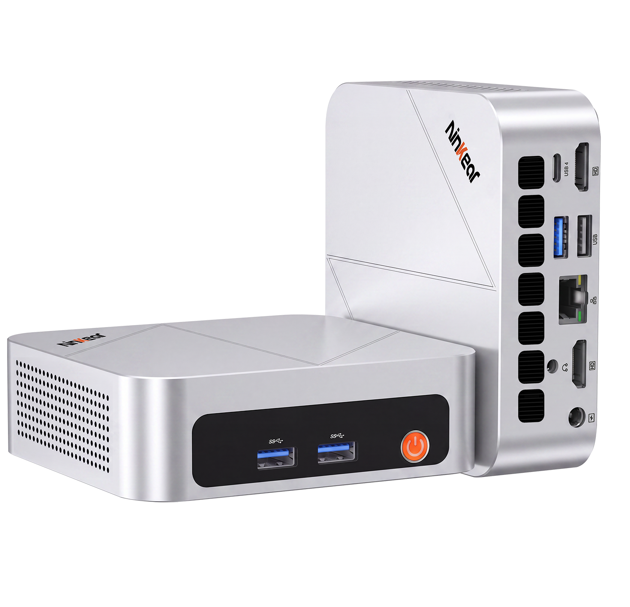
Ninkear has introduced the MBOX18, a new Mini PC designed to deliver everyday desktop performance in an ultra-compact form factor. The system is powered by the Intel Core 3 processor 304, based on Intel 18A technology, and combines a 15W processor with integrated graphics, an NPU for AI features, fast connectivity and expandable storage.
With its 0.36L metal chassis and 478g weight, the MBOX18 is aimed at users who want a capable Windows PC without the size of a traditional desktop tower. Ninkear is targeting remote workers, students, home users and small businesses that need a compact computer for everyday productivity.
Intel Core 3 304 Brings Intel 18A Technology
The main highlight of the MBOX18 is its Intel Core 3 processor 304, which uses a five-core, five-thread hybrid architecture and reaches speeds of up to 4.3GHz. The processor features 6MB of cache and a 15W TDP, making it suitable for office work, web browsing, entertainment and everyday multitasking.
The processor is based on Intel 18A process technology, which Ninkear highlights as a key part of the MBOX18’s next-generation platform. The system also features integrated Intel Graphics with one Xe-core and speeds of up to 2.3GHz.
The 15W design also helps keep the Mini PC focused on efficient everyday computing. It is not positioned as a gaming-focused machine or a high-performance workstation, but rather as a compact system for common desktop workloads.
15 TOPS NPU Adds Practical AI Features
The MBOX18 also includes a 15 TOPS NPU with Intel AI Boost. Instead of positioning its AI hardware for demanding local AI workloads, Ninkear focuses on practical features that can improve video meetings.
The NPU can accelerate features such as background blur, automatic framing, eye-contact correction and noise reduction. These capabilities could be useful for remote workers, students and anyone who regularly joins online meetings.
This gives the MBOX18 some on-device AI capabilities while keeping the primary focus on everyday Windows computing.
0.36L Metal Design With VESA Mounting
The MBOX18 is designed to take up very little space. Its chassis measures 116 x 107 x 36mm and has a volume of approximately 0.36 liters, while the Mini PC weighs 478 grams.
Its aluminium-alloy metal body gives it a compact desktop design that can fit easily into smaller workspaces. Ninkear also includes a VESA mount, allowing the MBOX18 to be attached behind a compatible monitor and effectively removed from the desktop.
The system uses a single-fan active cooling design. While the product is marketed with an ultra-quiet focus, no specific noise measurement is provided in the supplied specifications, so its noise level cannot be quantified from the available information.
Triple-Display Support and 40Gbps USB4
Connectivity is another important part of the MBOX18. The Mini PC supports three independent displays through two HDMI connections and USB4, with support for up to 4K at 120Hz or 8K at 60Hz.
The USB4 connection supports transfer speeds of up to 40Gbps, giving users a high-speed option for compatible peripherals and external storage. The system also includes three USB 3.2 Gen 2 ports with 10Gbps speeds and one USB 2.0 Type-A port.
For networking, the MBOX18 offers Gigabit Ethernet, Wi-Fi 6 and Bluetooth 5.3. There is also a 3.5mm audio jack, providing a broad selection of connectivity without requiring a separate hub for basic desktop accessories.
12GB LPDDR5x Memory and Expandable Storage
The MBOX18 comes with 12GB of LPDDR5x memory and a 512GB M.2 PCIe SSD in its default configuration. Storage options include 512GB, 1TB and 2TB, while two M.2 2280 PCIe 3.0/4.0 slots are available. One slot is occupied by the primary SSD, while the second is available for expansion.
The memory is soldered to the motherboard and cannot be upgraded, so buyers should choose the appropriate configuration upfront. The available storage expansion provides more flexibility for users who need additional space for applications, documents or media.
The Mini PC ships with Windows 11 and WPS Office pre-installed, allowing users to get started with documents, spreadsheets, presentations and other everyday tasks without purchasing additional office software.
The Ninkear MBOX18 brings Intel 18A technology, practical AI features and versatile connectivity to a compact Mini PC designed for modern everyday computing. To learn more about the MBOX18, its specifications and features, visit Ninkear’s official product page. You can also check its availability and purchase it through Ninkear’s official store.
Vivo has announced the fourth edition of its Imagine Smartphone Photography Awards in India. The competition continues to focus on smartphone-based visual storytelling and creative expression. This year’s edition introduces a new format alongside the existing photography categories.
Vivo Imagine 2026 adds a short film category
The fourth edition is being held in association with National Geographic Creative Works under the theme “How Far Your Curiosity Can Take You?” Entries opened on September 23 and will remain open until November 1, 2026. The awards now feature six categories, including five photography categories covering Portrait, Nature & Landscape, Night & Light, Motion, and Street & Culture.
The new Short Film category carries the theme “My City” and marks Vivo Imagine’s move into mobile videography. It is aimed at creators who use smartphones to tell stories through short-form video, complementing the competition’s focus on still photography.
The Grand Winner will receive Rs 5 lakh, while winners across all six categories, including the Grand Winner, will receive a Vivo X300 Ultra smartphone. The winning entries and creators will be recognised at the conclusion of Vivo Imagine Season 4 in November.
Jury, activities and how to participate
The judging panel includes photographers Auditya Venkatesh, Vineet Vohra, Rakesh Pulapa, and Aamir Wani. Beyond the competition, Vivo says the fourth edition will include photo walks, masterclasses, photography tips, and learning sessions led by its professional photographers across India.
Participants can submit photographs or short videos captured on a Vivo smartphone through the official Vivo Imagine website. Following the audit process, the jury will evaluate the entries before the category winners and Grand Winner are announced in November 2026. The previous edition received more than 63,000 entries from across India, with Soumayan Biswas winning the Grand Prize of Rs 5 lakh.
Oppo is rolling out new photo management features with the latest ColorOS 16 update. The changes are focused on making it easier to organize, browse, and manage photos directly from the Photos app. The update also adds improvements for text extraction, album privacy, and file selection.
ColorOS 16 adds new photo management tools
One of the most useful additions is the ability to change the date and time associated with a photo. Users can correct inaccurate timestamps or reorganize older memories by adjusting the capture time directly from the Photos app.
The update also lets users hide customized albums from the main Photos view, offering an additional way to keep certain collections out of sight. Meanwhile, the new Batch Favourites option allows multiple photos to be added to Favorites at once, reducing the number of taps needed when organizing a large library.
Oppo is also adding a Scan Text feature that can extract text from photos for copying, editing, or sharing. When working with documents, the tool can additionally rotate and straighten images and remove glare or shadows to create cleaner digital copies.
Photos and Albums now offer Immersive and By Date viewing modes, giving users more flexibility when browsing their libraries. The September ColorOS 16 update also includes improvements to Private Safe and photo selection, with better file organization across different formats and measures aimed at reducing accidental selections.
Oppo says the new features are part of its ongoing ColorOS 16 improvements, although availability may vary depending on the device and region. The update builds on the existing photo management experience by adding more control over how memories are organized, displayed, and accessed.
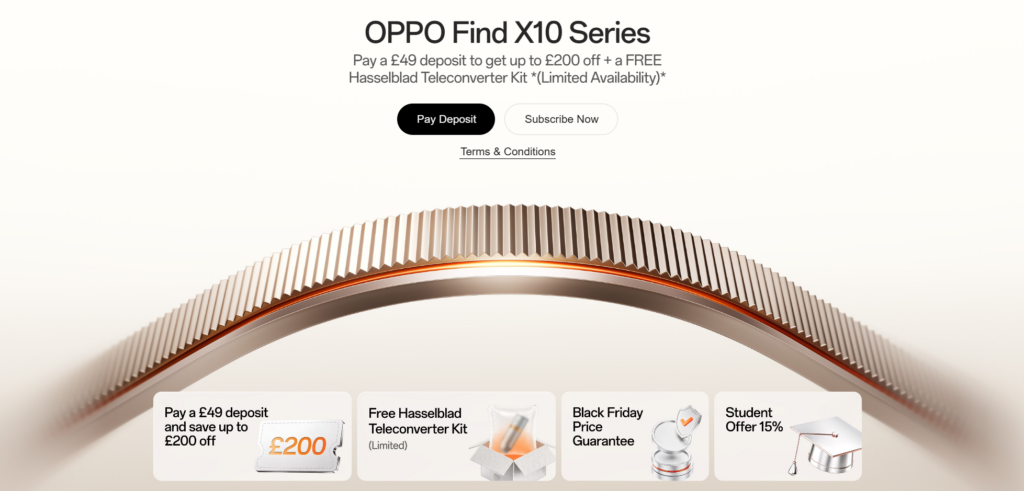
Oppo has opened early blind pre-orders for the Find X10 and Find X10 Pro Max in the UK, shortly after unveiling the new series in China. The offer lets buyers reserve either phone before the official UK launch date is confirmed. Oppo is also bundling discounts and free accessories to attract early buyers.
Oppo offers up to £200 off and free gifts
UK customers can place a £49 deposit to secure an early-bird offer on the upcoming phones. The Find X10 comes with a discount of up to £150, while the Find X10 Pro Max gets up to £200 off. Buyers can also choose one free gift from the Hasselblad Teleconverter Kit, Oppo Watch X3, or Oppo Pad 5 Wi-Fi, subject to availability.
Oppo is also promising a Black Friday price guarantee, meaning customers will receive the difference if the phone is offered at a lower price during Black Friday. The early-bird promotion further includes a 15% student discount, while Oppo’s promotional material highlights signature-on-delivery service.
The company has not yet confirmed the UK launch date or final retail pricing for either phone. However, the official UK store has already created product pages for the Find X10 Pro Max and the Find X10, confirming that the two models are headed to the market.
Find X10 and Find X10 Pro Max UK variants revealed
Oppo’s UK store lists the Find X10 in Glacier Blue, Mist Grey, and Glow Coral, with 12GB of RAM and either 256GB or 512GB of storage. The Find X10 Pro Max will be offered in Titanium Grey and Lunar White with 12GB of RAM and 512GB of storage.
The Find X10 series was unveiled in China alongside the Find X10E, but the UK early-bird program currently focuses on the Find X10 and Find X10 Pro Max. Oppo has already confirmed that the Pro Max will launch internationally, with the phone set to feature MediaTek’s Dimensity 9600 Pro chipset.
The £49 deposit is used to secure the early-bird benefits, with the remaining balance due after the launch according to the promotional terms shown on Oppo’s UK store.
Samsung is making UPI payments more convenient for Galaxy smartphone users in India. The latest Samsung Wallet update introduces fingerprint authentication for eligible transactions. The company is also running a new campaign with offers on its TVs and soundbars.
Samsung Wallet adds fingerprint authentication for UPI
With the new Samsung Wallet feature, Galaxy users can authorize UPI payments of up to Rs 10,000 using the fingerprint sensor on their device. This removes the need to manually enter a UPI PIN for every eligible transaction, potentially making everyday payments quicker.
The authentication takes place through the smartphone’s on-device biometric hardware, rather than requiring users to enter their UPI credentials manually. Samsung says the approach can also help prevent PINs from being exposed in public places and reduce failed transactions caused by incorrectly entered PINs. The feature links the biometric security already available on supported Galaxy devices with UPI payments within the specified transaction limit.
Samsung launches ‘Thank You India’ campaign
Samsung India has also announced its ‘Thank You India’ campaign to mark 20 years in the television industry and 12 years in the soundbar market. As part of the campaign, consumers purchasing select Samsung Vision AI Big TVs can receive free soundbars worth up to Rs 1.10 lakh, along with other benefits.
The campaign includes a 1-year Accidental Damage and Liquid Damage warranty, a 3-year comprehensive warranty, and up to 20% cashback. Samsung is also offering an affordability scheme with 0% down payment and EMI options for up to 30 months.
Additional offerings include Samsung TV Plus with more than 200 streaming TV channels, Samsung Care+ for after-sales support, and Samsung Finance+ with paperless financing and zero-interest plans. Samsung Art+ provides access to artwork from artists around the world, while compatible TVs can receive up to seven years of OS upgrades.
The campaign covers Samsung’s TV lineup from 32-inch models up to 115-inch screens, alongside its Vision AI features, SmartThings ecosystem and lifestyle-focused designs. Samsung says its ‘Made for India’ Plus strategy also brings together TV+, Care+, Art+, Sound+, Security+, Trade-in+, Finance+ and long-term OS upgrades.
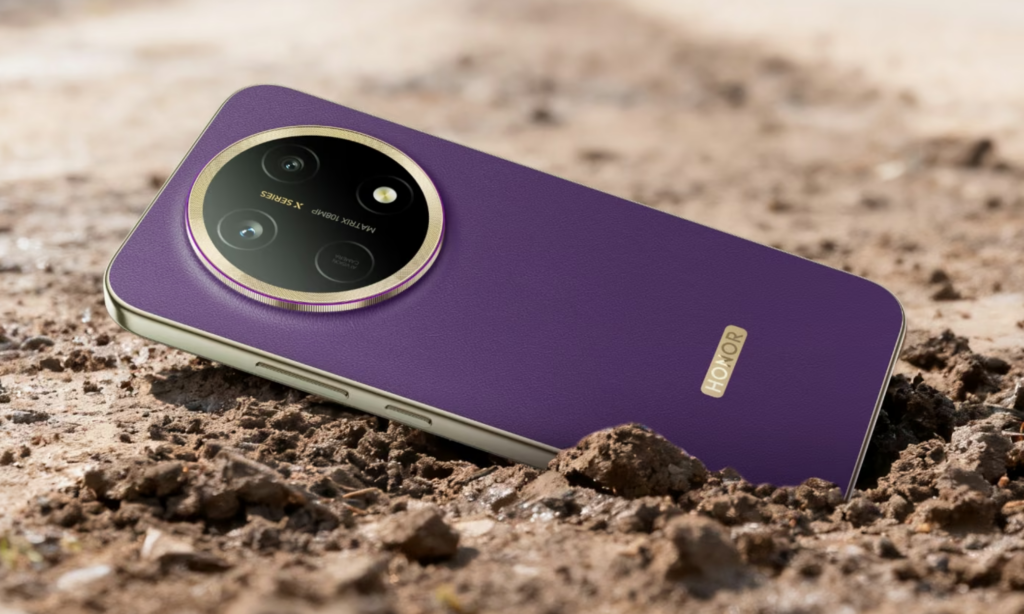
Honor has launched the X9e Pro in Malaysia, bringing a rugged midrange smartphone with a huge 11,000mAh battery, 10,000-nit display, reinforced drop protection and underwater photography. It also combines a Snapdragon 6 Gen 5 chip with a 108-megapixel OIS camera, making durability and long-term usability central to its appeal.
Honor X9e Pro specifications and features
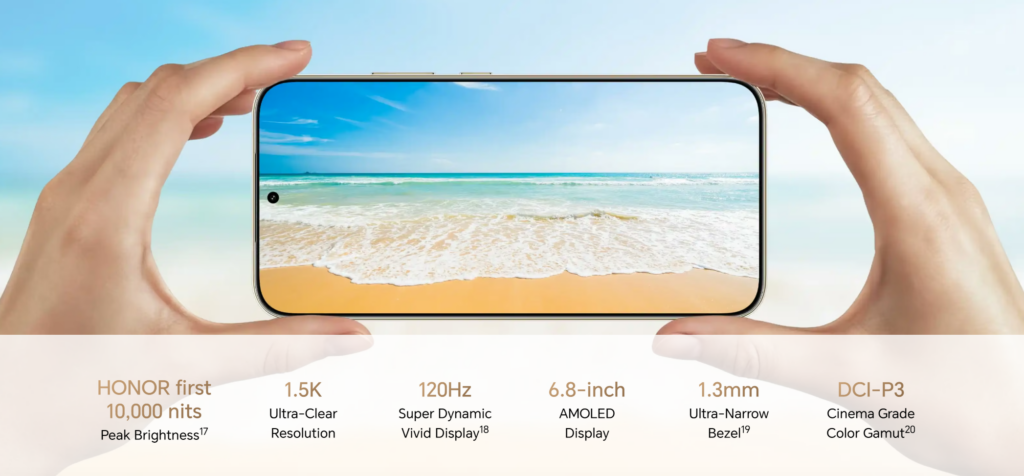
The Honor X9e Pro features a 6.8-inch AMOLED display with 2788 x 1280 resolution, a 120Hz refresh rate and up to 10,000 nits peak brightness. The panel covers 100% of the DCI-P3 color gamut and uses Gorilla Glass Victus 2. Honor also claims the phone can withstand drops from up to 3 metres, while its IP66, IP68, IP69 and IP69K ratings enable protection against water and dust. It can be submerged to depths of up to 10 metres under controlled conditions.
Honor X9e Pro
Powering the phone is the Snapdragon 6 Gen 5 paired with 8GB of RAM and 256GB or 512GB of storage. Honor’s RAM Turbo technology can expand the available memory to 24GB using storage.
A 108-megapixel main camera with OIS and CIPA 6.0 stabilisation leads the rear setup, alongside a 5-megapixel ultrawide camera. The phone also supports 4K video recording and an underwater camera mode. A 16-megapixel front camera handles selfies and video calls.
Honor X9e Pro
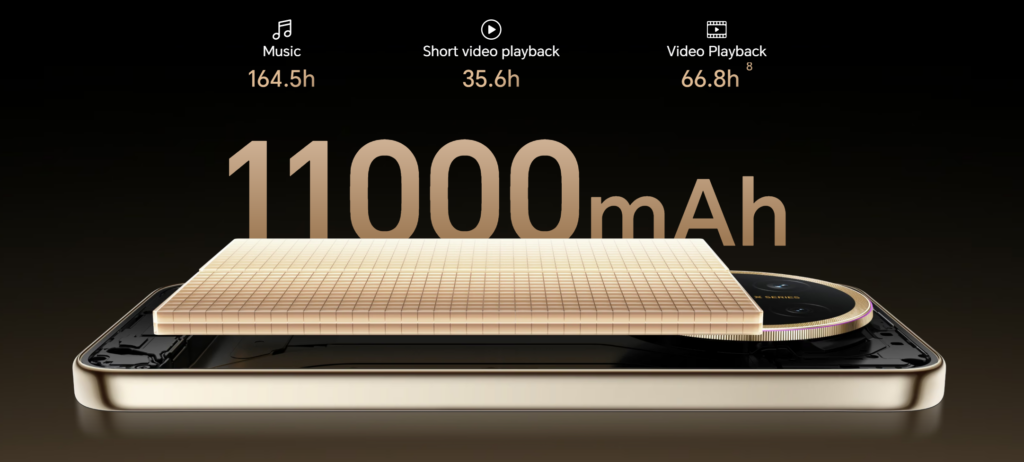
The massive 11,000mAh battery supports 80W wired charging and 27W reverse charging. Honor also says the battery is designed to retain its health for up to six years under its stated testing conditions. On the connectivity front, the device offers 5G, Wi-Fi 6E, Bluetooth 6.0, NFC, GPS, dual Nano-SIM support and a USB Type-C 2.0 port. To sum up, this phone is a tweaked version of the Honor X80 Pro Max, which debuted a few weeks ago in China.
Honor X9e Pro price and availability
Honor X9e Pro
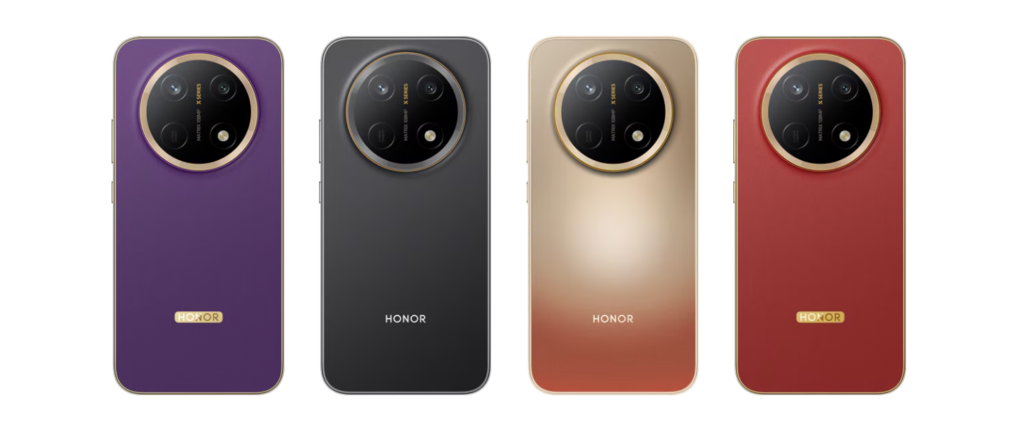
In Malaysia, the X9e Pro starts at MYR 1,899 (~$465) for the 8GB+256GB model, while the 8GB+512GB version costs MYR 2,399 (~$590). It is available in Royal Purple, Midnight Black, Dawn Gold and Reddish Brown. Preorders run until Oct. 8 and include MYR 1,626 (~$400) worth of free gifts, including an Honor Tab X7 tablet.
With the Pro models now confirmed for a global release, more details about their international launch should emerge in the coming weeks.
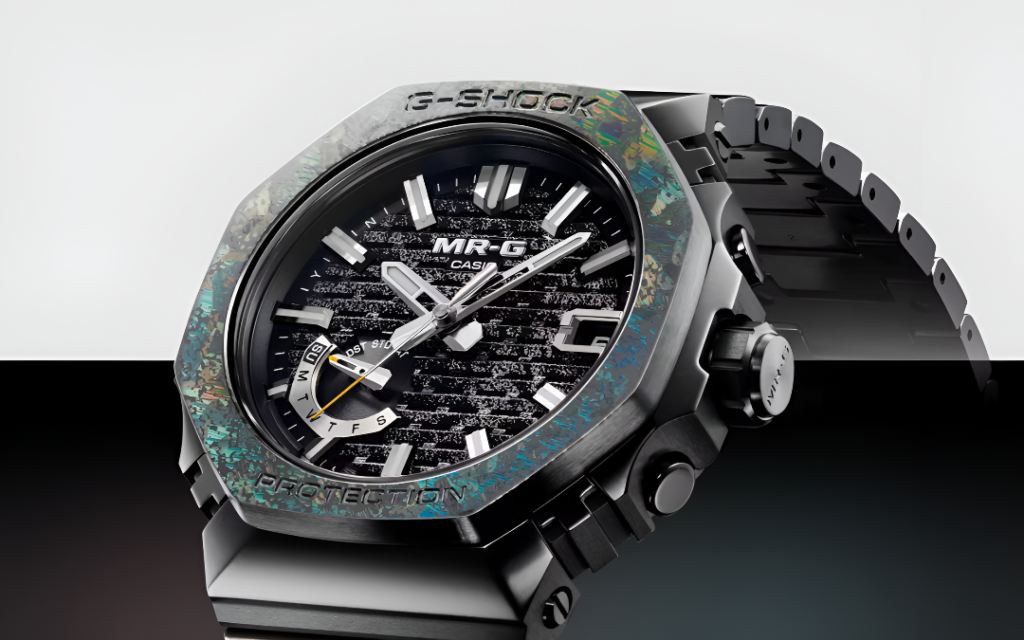
Casio is releasing a new limited-edition G-Shock, the MRG-B2100HR-1A, this November 2026. Designed to mark the 30th anniversary of the company’s MR-G line, the watch combines traditional Japanese metalworking with modern laser processing.
It will be restricted to a production run of 800 units worldwide, each engraved with a serial number, and carries a suggested retail price of ¥1,100,000 (~$6,928) in Japan.
Design Details
Casio partnered with Hiroto Rakusho, a metal leaf artisan based in Kyoto, to apply platinum leaf to the watch’s latticework dial. Because the foil stamping is done by hand, the texture and light reflection on each of the 800 units will vary slightly.
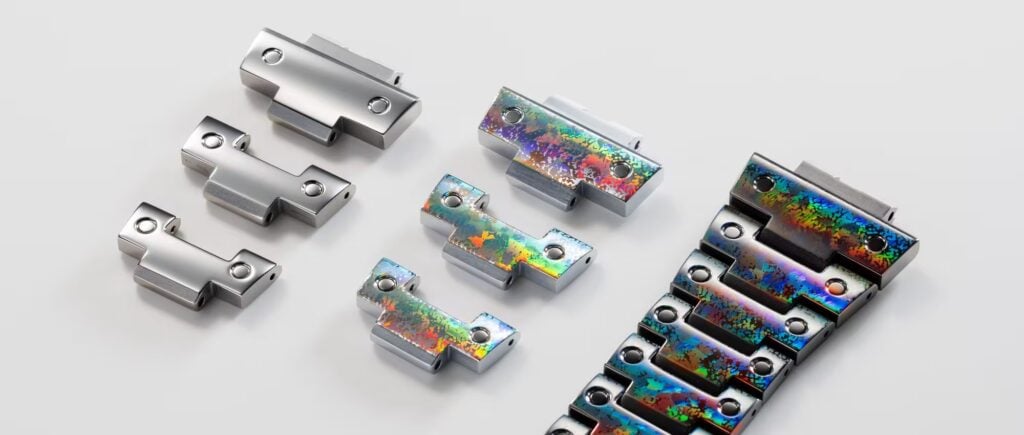
For the bezel and bracelet, Casio is using a structural color technique rather than traditional pigments or dyes. The company uses an ultrashort-pulse laser to cut microscopic textures into the metal surface. These micro-structures reflect light to create a color-shifting effect that changes depending on the viewing angle, a process similar to how light interacts with certain minerals or butterfly wings.
The watch is constructed from a mix of high-hardness alloys. The top bezel is made of Cobarion, a cobalt-chrome alloy that is significantly harder than standard titanium. The bracelet uses DAT55G titanium, while the main case, case back, and buttons are machined from Ti64 titanium.
To maintain the standard G-Shock shock resistance with a full-metal exterior, the bezel is split into 27 separate components with built-in buffers. The entire exterior is then finished with a diamond-like carbon (DLC) coating to prevent scratching.
Internally, the MRG-B2100HR-1A functions like a standard connected G-Shock. It runs on Casio’s Tough Solar power system, which provides up to five months of battery life on a single charge under normal use.
The watch uses Bluetooth to automatically sync the time through the Casio Watches smartphone app, while Multi-Band 6 radio control provides another option for accurate timekeeping. It also features 200-meter water resistance, sapphire crystal glass, and an LED backlight.
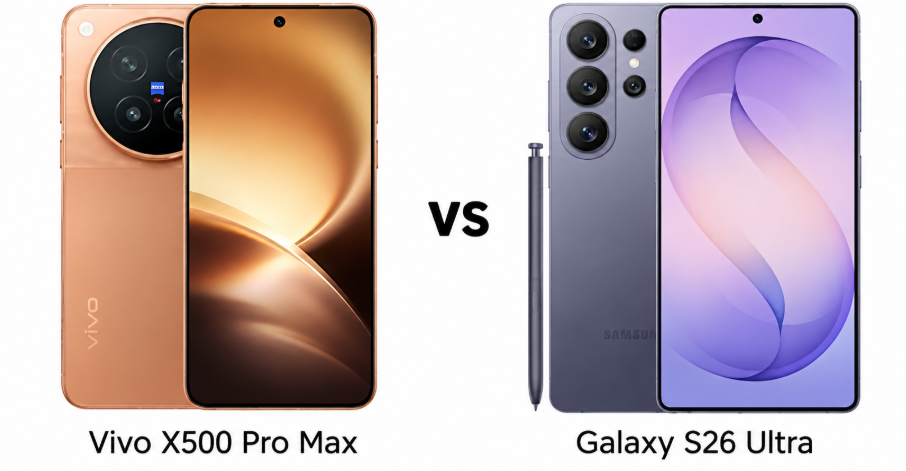
Vivo X500 Pro Max and Samsung Galaxy S26 Ultra take different approaches to the premium smartphone formula. Vivo pushes a huge battery, fast charging, a high-resolution display, and an aggressive Zeiss camera setup, while Samsung focuses on long-term software support, S Pen functionality, a versatile quad-camera system, and productivity features. This comparison looks at where each flagship has the stronger overall package.
Major Features:
Category
Vivo X500 Pro Max
Samsung Galaxy S26 Ultra
Winner
Design & Build
Glass or glass-fiber reinforced plastic back, aluminum frame, IP68/IP69
Gorilla Armor 2 front, Gorilla Glass Victus 2 back, Armor Aluminum 2, IP68, S Pen
Samsung — More premium materials and S Pen support
The Vivo X500 Pro Max combines a glass or glass-fiber reinforced plastic back with an aluminum frame, IP68/IP69 protection and an ultrasonic fingerprint sensor. It also adds stereo speakers and an infrared port. Samsung uses Armor Aluminum 2, Gorilla Armor 2 protection, Gorilla Glass Victus 2 and IP68 certification, while retaining the S Pen. Samsung’s construction feels more productivity-focused, whereas Vivo’s IP69 rating adds useful protection against high-pressure water jets.
Display Quality
Vivo gets a 6.85-inch LTPO AMOLED panel with 144Hz refresh rate, Dolby Vision, HDR10+ and up to 4,400 nits peak brightness. Samsung counters with a 6.9-inch Dynamic AMOLED 2X panel, 120Hz refresh rate, HDR10+, 2,600-nit peak brightness and an anti-reflective coating. Vivo’s higher refresh rate and Dolby Vision are appealing for media, but Samsung’s anti-reflective treatment and Privacy Display make the Galaxy more versatile.
Verdict
Samsung offers the more complete design package thanks to S Pen support, Armor Aluminum 2 and anti-reflective display technology, while Vivo stands out with IP69 protection and a faster 144Hz panel.
2. Specifications Including Battery
Performance
The Vivo X500 Pro Max uses the 2nm Dimensity 9600 Pro with up to 16GB RAM and UFS 4.1 storage, while the Galaxy S26 Ultra uses the 3nm Snapdragon 8 Elite Gen 5 with up to 16GB RAM and UFS 4.X storage. Both are built for demanding workloads, but Samsung adds DeX and Wireless DeX for desktop-style productivity. Vivo’s newer 2nm platform and larger memory options make it especially interesting for performance-focused users.
Battery and Charging
Vivo has a major hardware advantage with its 8,000mAh silicon-carbon battery, 90W wired charging and 40W wireless charging. Samsung uses a 5,000mAh battery with 60W wired charging and 25W Qi2.2 wireless charging. The X500 Pro Max is clearly designed around endurance and rapid top-ups, while Samsung prioritizes a more established ecosystem. For heavy daily use, Vivo’s battery capacity is considerably more compelling.
Verdict
Vivo wins the hardware battle with its 8,000mAh battery, 90W charging, and 2nm chipset, while Samsung remains stronger for desktop productivity through DeX and its mature software ecosystem.
3. Camera
Main and Secondary Lenses
Vivo pairs a 50MP main camera with a large 200MP periscope telephoto offering 3.5x optical zoom and a 50MP ultrawide with autofocus. Zeiss optics, T* coating, laser autofocus and advanced Log video features further strengthen its imaging credentials. Samsung uses a 200MP main camera alongside 3x and 5x telephoto cameras plus a 50MP ultrawide. Samsung therefore offers greater native zoom flexibility, while Vivo’s 200MP periscope looks particularly ambitious.
Selfie Camera
Vivo equips the X500 Pro Max with a 50MP autofocus selfie camera capable of 4K video recording. Samsung uses a 12MP autofocus front camera with 4K recording and HDR10+ support. On paper, Vivo has the stronger selfie hardware and should appeal more to users who frequently shoot detailed portraits or video from the front camera. Samsung’s lower-resolution sensor remains sufficient for everyday calls and social content.
Verdict
Vivo gets the edge for selfie hardware and specialized imaging features, while Samsung offers the more versatile rear-camera system through its dedicated 3x and 5x telephoto cameras.
4. Pricing
The Vivo X500 Pro Max is priced around $1,000 / ₹100,000, placing it below the Samsung Galaxy S26 Ultra at approximately $1,300 / ₹140,000. That creates a meaningful price gap between two phones aimed at the same premium flagship segment. Vivo therefore brings substantially more battery capacity and faster charging without reaching Samsung’s pricing level.
Is the price justified?
The Galaxy S26 Ultra’s premium is easier to justify for users who value seven major OS updates, S Pen functionality, DeX, UWB and Samsung’s broader productivity ecosystem. Vivo counters with 8,000mAh battery capacity, 90W charging, a 144Hz display and an ambitious camera setup. For hardware-focused buyers, the X500 Pro Max appears to deliver more flagship specifications for the money.
Verdict
Vivo offers stronger value based on the supplied pricing, combining a huge battery, fast charging, high-end cameras and a 144Hz display at a notably lower price.
5. Conclusion
The Vivo X500 Pro Max differentiates itself with an 8,000mAh silicon-carbon battery, 90W wired charging, 144Hz LTPO AMOLED display, Zeiss camera technology and a 200MP 3.5x periscope camera. Samsung answers with the S Pen, Privacy Display, DeX, Wireless DeX, UWB and seven major Android updates. These features reveal two very different flagship philosophies: Vivo emphasizes hardware and endurance, while Samsung emphasizes productivity, software longevity and ecosystem integration.
Verdict
Vivo X500 Pro Max is the overall winner for its combination of battery endurance, charging speed, display hardware, camera capabilities, and lower price. Galaxy S26 Ultra remains the better fit for S Pen productivity and long-term software support.
FAQs
1. Which phone has the better camera zoom? The Galaxy S26 Ultra offers more versatile zoom with dedicated 3x and 5x telephoto cameras.
2. Which phone is faster for gaming? Both deliver flagship performance, but the Dimensity 9600 Pro gives the Vivo X500 Pro Max a strong performance-focused profile.
3. Which phone charges faster? The Vivo X500 Pro Max supports 90W wired charging, compared with 60W on the Galaxy S26 Ultra.
4. Which phone offers better value for money? The Vivo X500 Pro Max offers more hardware for its lower price, particularly in battery capacity and charging speed.
5. Which phone is better for long-term software support? The Galaxy S26 Ultra supports up to seven major OS updates, exceeding Vivo’s five-update commitment.
Disclaimer: Prices, specifications, and availability may vary by region and retailer. Recommendations in this article are based on editorial opinion, feature-based value, and market positioning at the time of writing. Readers are advised to do their own research before making a purchase.
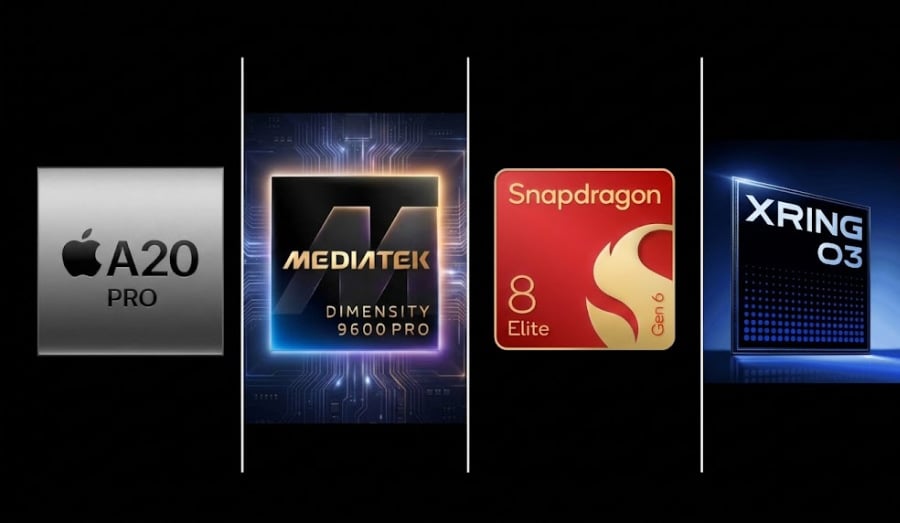
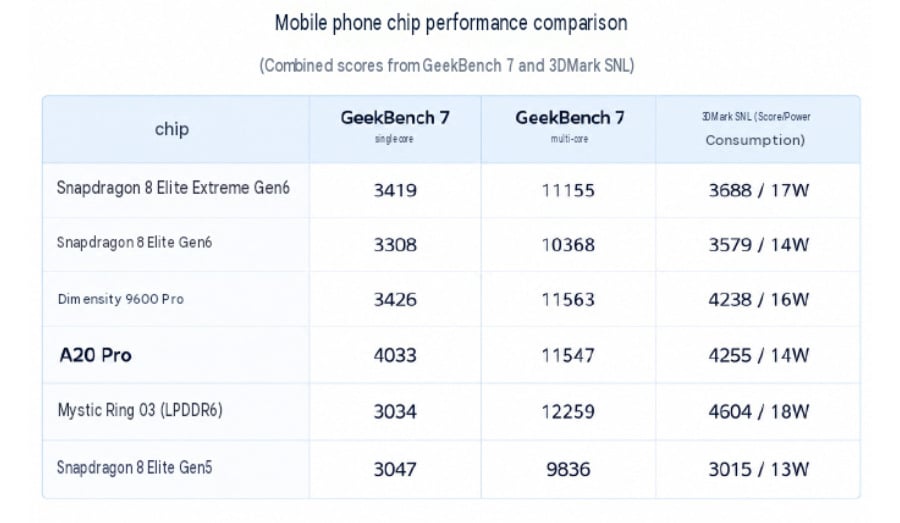
Digital Chat Station has shared two charts comparing this year’s flagship mobile chips, bringing together the latest silicon from Qualcomm, MediaTek, Apple and Xiaomi.
The comparison includes the Snapdragon 8 Elite Extreme Gen 6, Snapdragon 8 Elite Gen 6, Dimensity 9600 Pro, Apple A20 Pro and Xiaomi XRING O3. Last year’s Snapdragon 8 Elite Gen 5 is also included as a reference point. The first chart covers Geekbench 7 and 3DMark Steel Nomad Light (SNL), while the second looks at performance in three games.
CPU: A20 Pro leads single-core, XRING O3 tops multi-core
The Apple A20 Pro takes the lead in Geekbench 7 single-core testing with a score of 4,033. That’s about 18% higher than the Dimensity 9600 Pro, which comes next with 3,426.
The Snapdragon 8 Elite Extreme Gen 6 is close behind at 3,419, followed by the Snapdragon 8 Elite Gen 6 at 3,308. The Snapdragon 8 Elite Gen 5 scores 3,047, while the Xiaomi XRING O3 comes in at 3,034.
The multi-core results look different. Xiaomi’s XRING O3 takes the top spot with 12,259 points, followed by the Dimensity 9600 Pro at 11,563 and the A20 Pro at 11,547. The Snapdragon 8 Elite Extreme Gen 6 scores 11,155, while the Snapdragon 8 Elite Gen 6 and Snapdragon 8 Elite Gen 5 score 10,368 and 9,836, respectively.
The XRING O3 uses a 10-core CPU and is built on a 3nm process, while the new Qualcomm, MediaTek, and Apple chips are all based on 2nm manufacturing. The chart also notes that the XRING O3 was tested with LPDDR6 memory. Our earlier comparison between the XRING O3 and Snapdragon 8 Elite Gen 5 has more details about Xiaomi’s chip.
Compared with the Snapdragon 8 Elite Gen 5, the Snapdragon 8 Elite Extreme Gen 6 is about 12% faster in single-core and 13% faster in multi-core testing. That is close to the 13% CPU improvement Qualcomm quoted in its Snapdragon 8 Elite Extreme Gen 6 launch details.
The standard Snapdragon 8 Elite Gen 6 scores about 3% lower than the Extreme version in single-core and around 7% lower in multi-core testing.
Graphics: XRING O3 has the highest score, while A20 Pro uses the least power
The XRING O3 also records the highest score in 3DMark Steel Nomad Light, reaching 4,604 points. It draws 18W during the test, however, which is the highest power consumption among the chips in the chart.
The A20 Pro and Dimensity 9600 Pro are close behind, scoring 4,255 and 4,238 points while using 14W and 16W, respectively. The Snapdragon 8 Elite Extreme Gen 6 scores 3,688 at 17W, while the Snapdragon 8 Elite Gen 6 reaches 3,579 at 14W. The older Snapdragon 8 Elite Gen 5 scores 3,015 at 13W.
Looking at performance per watt changes the order. The A20 Pro delivers roughly 304 points per watt, followed by the Dimensity 9600 Pro at around 265 points per watt. The XRING O3 and Snapdragon 8 Elite Gen 6 are both near 256 points per watt.
The Snapdragon 8 Elite Extreme Gen 6 works out to about 217 points per watt, which is lower than the Snapdragon 8 Elite Gen 5 at around 232 points per watt. Based on the raw SNL scores, the three Snapdragon chips sit behind the A20 Pro, Dimensity 9600 Pro and XRING O3.
Gaming: frame rates are close, but power and temperatures differ
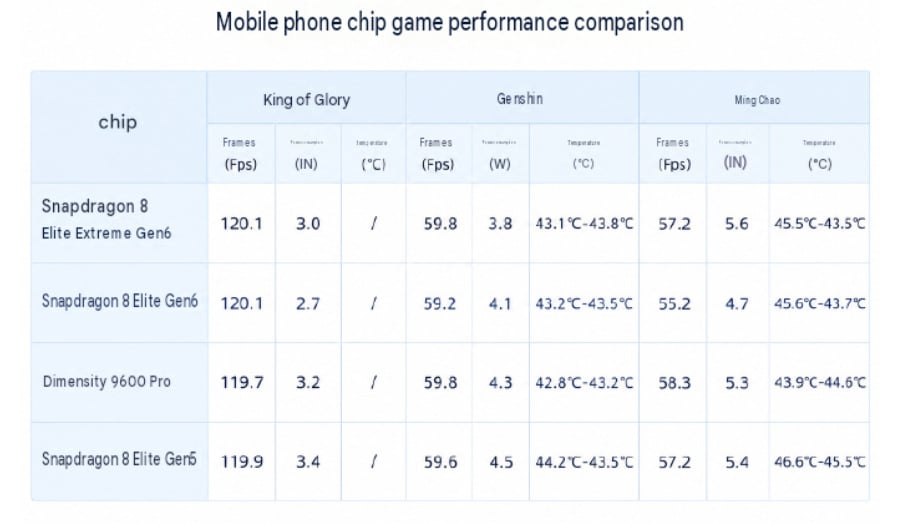
The second chart compares four chips in Honor of Kings, Genshin Impact and Wuthering Waves. It includes the Snapdragon 8 Elite Extreme Gen 6, Snapdragon 8 Elite Gen 6, Dimensity 9600 Pro, and Snapdragon 8 Elite Gen 5. The A20 Pro and XRING O3 are not included in the gaming tests.
In Honor of Kings, all four chips stay around 120fps, with results ranging from 119.7 to 120.1fps. Power consumption varies more, with the Snapdragon 8 Elite Gen 6 using 2.7W, followed by the Snapdragon 8 Elite Extreme Gen 6 at 3.0W, Dimensity 9600 Pro at 3.2W, and Snapdragon 8 Elite Gen 5 at 3.4W. The chart does not include temperature figures for this game.
Genshin Impact produces similarly close frame rates, with all four chips landing between 59.2 and 59.8fps. The Snapdragon 8 Elite Extreme Gen 6 uses the least power at 3.8W. The Dimensity 9600 Pro records the lowest temperature, ranging from 42.8°C to 43.2°C, while the Snapdragon 8 Elite Gen 5 is the warmest and uses 4.5W.
Wuthering Waves shows a larger gap between the chips. The Dimensity 9600 Pro records the highest frame rate at 58.3fps while using 5.3W. The Snapdragon 8 Elite Extreme Gen 6 reaches 57.2fps at 5.6W, while the Snapdragon 8 Elite Gen 5 delivers the same 57.2fps at 5.4W.
The Snapdragon 8 Elite Gen 6 records 55.2fps at 4.7W, the lowest power consumption but also the lowest frame rate in this test. The Snapdragon 8 Elite Gen 5 reaches the highest temperature in Wuthering Waves, with the chart listing a range of 46.6°C to 45.5°C.
What to keep in mind
Digital Chat Station hasn’t said which phones ran these tests. Cooling design, power limits, and software tuning all change results from one phone to the next, so treat these numbers as a rough guide and wait for reviews of shipping phones before you decide. Several phones with the Snapdragon 8 Elite Extreme Gen 6 are already confirmed, and you can check the full list of upcoming phones with the chip to see what’s coming.
For more daily updates, please visit our News Section.
Casio has officially expanded the availability of its G-Steel GST-B1000 series, bringing two new analog models to the US market. Originally launched in Japan this past August, the GST-B1000-1A and GST-B1000-2A are now available stateside directly through the company’s website.
Design Details
The watch features a slimmer and lighter design, with Casio reducing the thickness to just 11.6mm through adhesive glass bonding and a more compact internal module. It combines a stainless steel bezel with Casio’s Carbon Core Guard structure for added durability.
Instead of a metal bracelet, the GST-B1000 models use a bio-based resin (urethane) band, which helps keep the overall weight down to just 58 grams while supporting Casio’s growing use of bio-based plastics.
The release includes two visual variants. The GST-B1000-1A features a standard black dial, while the GST-B1000-2A opts for a blue dial treated with a vapor deposition finish that shifts depending on the lighting.
The analog display is straightforward, utilizing a three-hand setup alongside two sub-dials that indicate the 24-hour time and the day of the week, plus a standard date window. For visibility in low light, the hands are treated with Neobrite, supplemented by a white LED Super Illuminator.
On the technology front, the GST-B1000 relies on the Tough Solar charging system, which can power the watch for about five months on a single charge under normal use, or up to 18 months with the power-saving feature enabled.
They also include Bluetooth connectivity. By pairing the watch with the Casio Watches smartphone app, you get automatic time adjustments, easy access to alarm and timer settings, and a built-in phone finder tool.
Standard G-Shock durability metrics remain intact, including 200-meter water resistance and standard shock resistance. The watches also feature a mineral glass crystal, a screw-lock crown, a 30-minute countdown timer, and a daily alarm.
Pricing and Availability
Both the black dial GST-B1000-1A and the blue dial GST-B1000-2A are priced at $385. They are available for purchase now through the Casio US website.
For more daily updates, please visit our News Section.
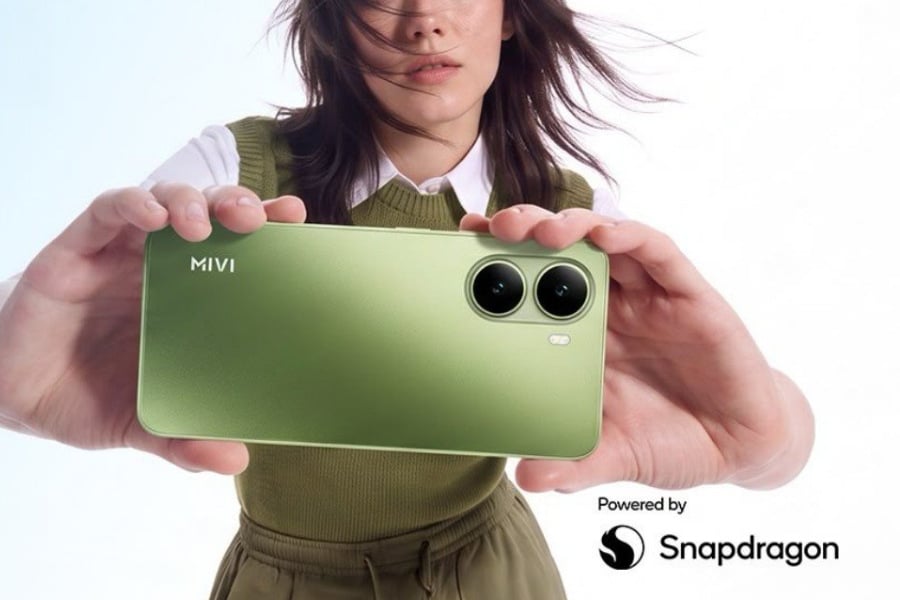
The Mivi One 5G runs Android 16 with a stock Android interface. Mivi says the phone will receive software updates up to Android 18. It has a 6.745-inch HD+ display with a 90Hz refresh rate and 2.5D cover glass.
Powering the phone is the 4nm Snapdragon 4 Gen 2 chipset, paired with up to 8GB of RAM and 128GB of storage. Mivi claims the phone can score around 490,000 points on AnTuTu, although this figure comes from the company and has not been independently verified.
For photography, the phone has a 50-megapixel main rear camera with PDAF. There is also a second rear camera, although Mivi has not shared its specifications. An 8-megapixel camera on the front handles selfies and video calls.
Mivi has also included a ClearTalk feature powered by its Neural Voice Engine. It is designed to reduce background sounds such as traffic, wind, conversations, and music during calls, making it easier for the other person to hear your voice.
The Mivi One 5G packs a 6,000mAh battery with support for 18W charging. The phone measures 9.15mm in thickness and weighs 210 grams. It also has an IP64 rating for protection against dust and water splashes.
Mivi One 5G price and availability in India
The Mivi One 5G is available in three RAM configurations, with 128GB of storage included in all three models:
Where to buyMivi One 5GLatest price on AmazonCheck price →
4GB RAM: Rs. 14,999
6GB RAM: Rs. 15,999
8GB RAM: Rs. 16,999
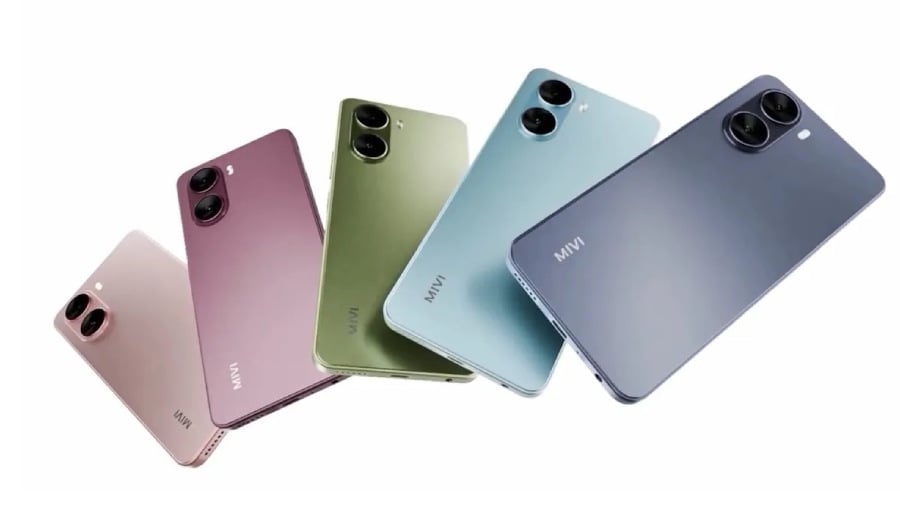
The phone comes in Blue, Burgundy, Pink, Green, and Navy Blue. The first sale will begin on Flipkart on October 8.
During the Flipkart Big Billion Days sale, the effective prices will drop to Rs. 11,999 for the 4GB model, Rs. 12,999 for the 6GB model, and Rs. 13,999 for the 8GB version. These prices include the applicable sale discounts and bank offers, so the final amount will depend on the payment card used.
Mivi is offering the usual one-year warranty with the phone. The company says it has more than 500 service centres across India and offers free pickup and drop service across more than 19,000 PIN codes.
Honor has revealed the price of the Magic 9 just days before its September 28 launch. Li Jian, CEO of Honor, announced the pricing this afternoon as the company marked the tenth anniversary of the Magic series.
Li Jian described the Honor Magic 9 as an example of the company’s approach to trying new ideas in technology. He also presented it as a product for both new and longtime Magic series users as Honor marks a decade of the lineup.
There are three prices to keep in mind. Honor lists the Magic9 at 6,499 yuan (about $961), which the company calls the “lowest price in the industry.” This is likely the phone’s regular starting price. A special price marking the Magic series’ 10th anniversary brings the cost down to 5,999 yuan (about $887).
Buyers who qualify for China’s national subsidy can get the phone for 5,499 yuan (about $813). That’s 1,000 yuan (about $148) less than the regular starting price.
The Magic 9 lineup is expected to include some significant hardware upgrades. According to reports, the Super Edition will have a built-in active cooling fan to help maintain performance during demanding tasks. The phones are also expected to use Qualcomm’s Snapdragon 8 Elite Gen 6 processor alongside Honor’s in-house H1 chip.
Moments after Qualcomm unveiled the powerful 2nm Snapdragon 8 Elite Extreme Gen 6 chipset, major smartphone brands rushed to announce their upcoming flagships rocking the same chipset. Xiaomi didn’t waste any time launching the Xiaomi 18 Pro Max in China just a few hours after the chip was announced.
If you’re planning to get your hands on a Snapdragon 8 Elite Extreme Gen 6-powered phone, we’ve compiled a list of devices confirmed to ship with this chipset.
Every phone confirmed to launch with the Snapdragon 8 Elite Extreme Gen 6 SoC
Xiaomi 18 Pro Max is the first phone to get the Snapdragon 8 Elite Extreme Gen 6 chipset. It’s built around a 6.9-inch LTPO AMOLED screen with 4000nits of peak brightness. The smaller 2.9-inch AMOLED screen on the rear side also offers the same peak brightness and LTPO support.
As for the optics, the Xiaomi phone offers a triple camera setup, featuring a 200MP primary shooter, a 200MP periscope telephoto lens with 3.2x optical zoom, and a 50MP ultrawide unit. It has a 50MP selfie camera, though you can also use the rear camera and secondary display to capture much better selfies. The device packs an 8,500mAh battery with support for 100W wired, 50W wireless, and 27W reverse wireless charging.
Xiaomi 18 Pro Max has been launched in China, and the brand has confirmed it will be available globally, including in India. Xiaomi India’s X account also confirms this, with a global launch teased to be “coming soon”.
That’s when the Magic9 Pro Max will launch in China, but the global launch has not been announced yet. That might happen soon after it’s launched in China.
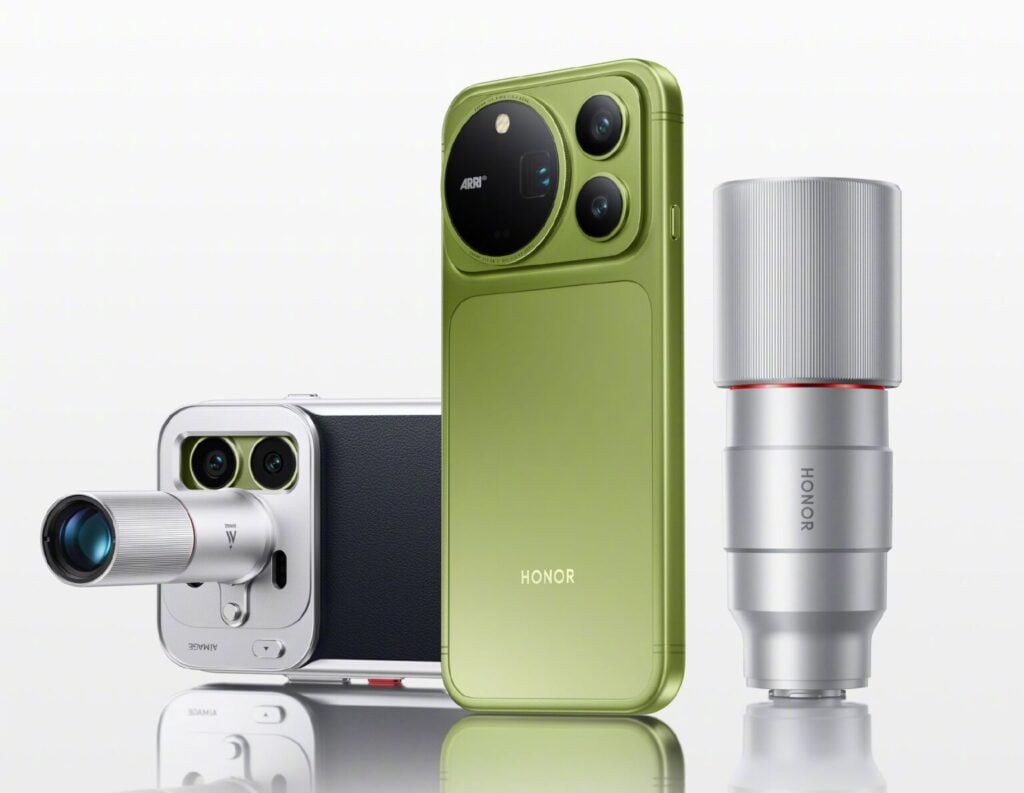
The smartphone will feature a brand-new triple rear camera layout that includes two 200MP sensors: a 1/1.28-inch primary sensor with an f/1.57 aperture and a 1/1.4-inch super-night telephoto sensor with an f/2.6 aperture. The camera has been developed in partnership with ARRI (the legendary German cinema camera maker) to bring professional film-style color science and video tools to the device. Details about the third sensor haven’t been announced yet.
The smartphone could carry a 55MP selfie camera, a 6.8-inch OLED screen, and an 8800mAh battery. Honor has confirmed that the phone will be offered in four memory/storage combinations: 12GB+256GB, 12GB+512GB, 16GB+512GB, and 16GB+1TB. The color options will be: Moss Green, Silver, and Shadow Black.
The upcoming iQOO 16 will launch in China next week, featuring Qualcomm’s powerful Snapdragon 8 Elite Extreme Gen 6 mobile chipset. The brand has revealed some of its specs through teasers, and leaks have spilled the rest of the details.
The iQOO 16 will feature a reworked camera island design, featuring three sensors. According to recent leaks, the camera island will have three 50MP sensors. The company says iQOO 16 will be the first phone to offer a 2K resolution panel with a 165Hz refresh rate, developed jointly with Samsung. The screen size is tipped to be 6.85 inches.
The smartphone is said to have a Q4 gaming chip, with upgraded vibration motors and speakers for a better gaming experience. It could come with an 8,400mAh battery and support for 100W wired and 50W wireless charging.
OnePlus has confirmed that the OnePlus 16 will launch soon with the Snapdragon 8 Elite Extreme Gen 6 SoC, but it hasn’t announced a launch date yet. Rumors suggest the phone could be unveiled in China later this month, with a global launch likely to happen next month.
The OnePlus 16 is confirmed to feature a triple-camera setup with a 200MP primary camera, a 50MP periscope telephoto lens with 3x optical zoom, and a 50MP ultrawide camera. The selfie camera will also have a 50MP resolution. The phone will also get new shooting modes for better control over the final output.
Leaked specs include a 6.78-inch flat AMOLED display with a 185Hz refresh rate, up to 16GB of LPDDR5X RAM, up to 1TB of UFS 4.1 storage, and a 9,000mAh battery.
The phone will launch in China in October. We’ll have the exact launch date soon, but the global launch hasn’t been announced yet.
RedMagic has teased several details of the RedMagic 12 Pro+, such as ultra-narrow 0.96mm bezels and RedMagic’s ninth-generation Under-Display Camera (UDC) system. The phone will shift to softer, rounded corners for improved handheld ergonomics during extended gaming sessions.
The smartphone is said to house an 8,400mAh battery with 120W wired and 80W wireless charging. It could feature a triple-camera setup on the rear, led by a 50MP main sensor. The device is expected to be available with up to 24GB of LPDDR5X RAM and up to 1TB of UFS 4.1 storage.
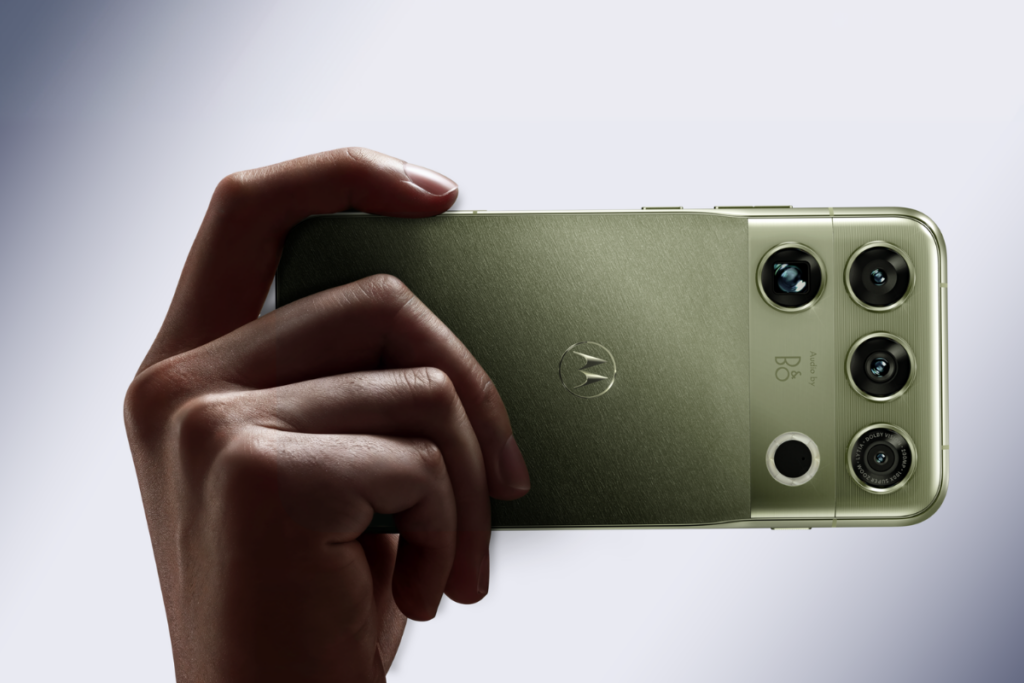
Motorola unveiled the Signature 27 at the Snapdragon Summit, marking a big shift in the company’s approach. The brand has largely avoided bringing top-tier chips to its phones, but that has now changed. The Signature 27 is just the start. We believe future Signature phones will continue in this direction.
Motorola has revealed key details about the device, but the exact global release date and pricing details are due to be announced later this year. The Signature 27 features an unusual rear camera design, with a 50MP main camera and a 200MP periscope telephoto lens. Details about the other two sensors and the selfie camera haven’t been announced yet.
The phone will have an ArcticMesh cooling system featuring a vapor chamber that is 40 percent larger than the previous generation. Audio gets a premium boost through a partnership with Bang & Olufsen.
Next year will bring a lot more smartphones powered by the Snapdragon 8 Elite Extreme Gen 6 chipset, including the Galaxy S26 Ultra. We’ll continue to track the latest developments on the topic and post them on this website.
Alongside the latest VR, Meta unveiled the Muse Charm at today’s Connect event. Mark Zuckerberg introduced it as a small, always-on handheld device for talking to Muse, Meta’s AI assistant. It’s aimed at people who don’t wear Meta’s smart glasses, and Zuckerberg described it as a quick way to reach Muse without putting on a pair. Meta’s glasses lineup includes the Meta Ray-Ban Display, which it launched last year.
Meta says it will release the Muse Charm before the December holidays. It hasn’t announced a price and says it will share more details later.
Meta also announced several updates to Muse itself. You’ll be able to make video calls with a customizable AI avatar that responds in real time. The Muse agent is also getting its own email address, so it can complete tasks and communicate with you directly.
Who made it and how it looks
According to Bloomberg’s Mark Gurman, the Muse Charm came out of Meta’s new design lab, which is reportedly led by Alan Dye, Apple’s former UI design chief.
The Muse Charm looks like a 90s electronic pet. It has a roughly 2-inch OLED display and runs a new operating system. When you power it on, a virtual Muse avatar appears in the center of the screen, and you can change its appearance, clothing, and voice.
You can wear the Muse Charm on a wristband, keep it in your pocket, or attach it to a bag or keychain with a lanyard. The casing is semi-transparent, so you can see the internal circuitry through the back and sides. One interesting feature is that two Muse Charm devices recognize and interact with each other when their owners are close together.
Inside, the Muse Charm has a 5G modem, so you can reach Muse even if you don’t have Wi-Fi. According to the report, it works like a phone in other ways but can’t make phone or video calls. It has a fingerprint sensor for unlocking.
You get cameras on the front and back for photos and videos. Their main job is to give Muse visual information to analyze, and you can view what you’ve captured on the device. The Muse Charm also plays music and video, and it has a speaker, a microphone, and a USB-C port for charging.
Timing and price
Meta originally planned to release the Muse Charm in 2027. Sources say Zuckerberg pushed the team to move it up to 2026 so it would be available by the end of the year. The same sources say it will be priced similarly to a smartwatch. Meta hasn’t finalized the details for mobile carrier access.
For more daily updates, please visit our News Section.
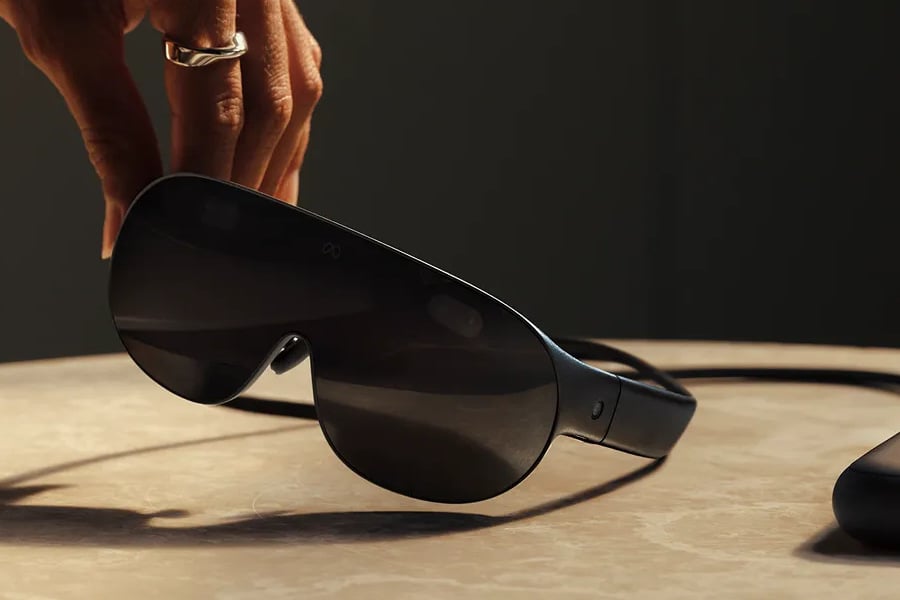
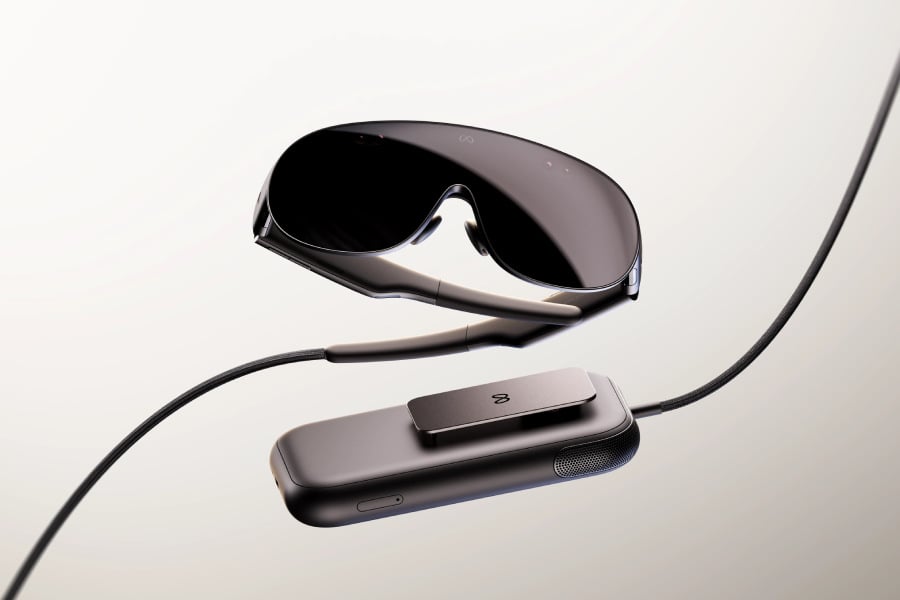
Meta has announced the Meta VR Glasses at its Connect conference. The headset weighs about 100 grams, costs $1,299.99, and goes on sale in spring 2027.
The weight is roughly one-fifth of the Meta Quest 3, which comes in at around 515 grams. The Apple Vision Pro is more heavier at over 600 grams. The Meta VR Glasses look a lot like the lighter Vision Pro that Bloomberg’s Mark Gurman described, a project Apple has reportedly shelved in favor of smart glasses. Meta now has a product in that space before Apple does.
Two pieces, not one
The Meta VR Glasses are split into the glasses and a separate computing unit. The glasses hold the display and sensors. The computing unit holds the processor, storage, and battery, and it connects through optical cables. You can clip it to a pocket or drop it in a bag, which is how Meta keeps the weight on your face so low.
The screen is a 5K Micro-OLED panel with 37 pixels per degree, paired with small pancake lenses. The Meta Quest 3 launched with LCD panels at 2064 × 2208 per eye, so Meta has moved to the same panel type the Apple Vision Pro uses. Meta also supports Dolby Vision and Dolby Atmos spatial audio.
Inside the computing unit is Qualcomm’s new Snapdragon Reality Elite processor. The battery plays high-resolution media for up to 3 hours and charges at 45W.
You control the Meta VR Glasses with your voice, your eyes, and hand gestures, and Meta has built its AI agent into the operating system. You can ask it to start a movie, open an app, rearrange your workspace, or run a search.
What you can do with it
The Meta VR Glasses are the first VR device with IMAX Enhanced certification. Starting in November, Disney+ subscribers in select regions can watch 3D versions of films like The Avengers and Black Panther. Viewing environments include Tatooine and Avengers Tower. The Disney Immersive Cinema by ILM app adds VR-enhanced versions of Avengers: Infinity War and Star Wars: Episode IV – A New Hope. Prime Video, YouTube, DIRECTV, AMC+, Crunchyroll, Plex, and ESPN are also on board.
Where to buyMeta Quest 3Browse the range on AmazonShop now →
Sports fans get an “Immersive Sports” experience built with ESPN, with 8K live streams and a 180° view. Meta says you’ll have access to more than 100 events a year from partners including MLB, NBC Sports, TNT Sports, and UFC.
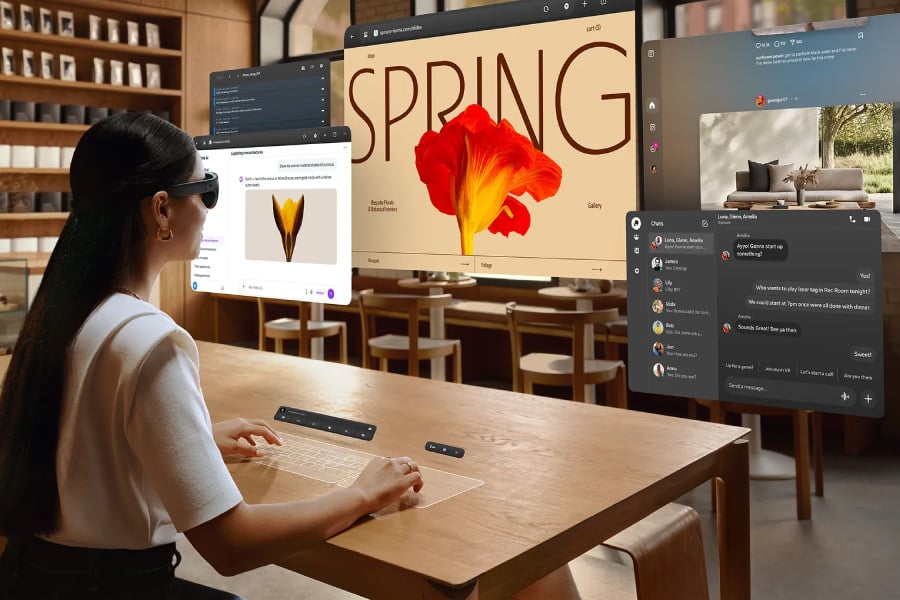
For work, you get a large virtual screen and can open several screens at once. Any flat surface can become a keyboard and touchpad, and full-color passthrough lets you keep seeing your desk, your phone, and the room around you.
More than 75 games with gesture-only controls will be available at launch, and Xbox Cloud Gaming will let you stream more. Meta also announced holographic calls, which create an avatar that follows your facial expressions and movements and places the other person with spatial audio. For now, this only works in select apps such as WhatsApp and Zoom.
Price and availability
At $1,299.99, the Meta VR Glasses cost more than twice the Meta Quest 3’s $499.99 launch price and far less than the $3,499 Apple Vision Pro. You’ll have to wait until spring 2027 to buy one.
For more daily updates, please visit our News Section.
OnePlus is gradually revealing details about the OnePlus 16, which is set for an October announcement in China. So far, the brand has confirmed details about its display and chipset, and its latest teaser has now revealed the camera specifications and professional imaging modes. This suggests the OnePlus 16 could be a significant upgrade over the OnePlus 15 in terms of imaging capabilities.
OnePlus 16 camera gets a major upgrade
The OnePlus 16 will feature a 200-megapixel primary camera with a large 1/1.4-inch sensor and an f/1.6 aperture. It will be joined by a 50-megapixel periscope telephoto camera offering 3x optical zoom and 6x lossless zoom, while another 50-megapixel sensor will serve as the ultra-wide camera with a 116-degree field of view. The front camera will also use a 50-megapixel sensor with autofocus.
This represents a notable change from the OnePlus 15, which uses a triple 50-megapixel rear camera setup. The move to a much larger 200-megapixel primary sensor gives the OnePlus 16 a different hardware approach, while the company is also adding new shooting options designed to give users greater control over the final image.
OnePlus has confirmed three new imaging modes for the phone. Master Mode is designed to produce a film-inspired look with more natural light rendering, while High-Pixel Mode focuses on maximum detail and clarity. The 65:24 Widescreen Mode takes a much wider aspect ratio for a more cinematic presentation.
OnePlus 16 specifications
The OnePlus 16 recently appeared on AnTuTu with a score of 5,384,433 points. The tested configuration featured the Snapdragon 8 Elite Extreme Gen 6, 16GB of LPDDR5X RAM, 1TB of UFS 4.1 storage, and Android 17-based ColorOS 17, with the benchmark identifying an 185Hz display refresh rate.
Battery capacity is set to reach 9,000mAh, based on current information, while China’s 3C certification has confirmed support for 100W wired charging. The phone is also expected to support 50W wireless charging, which would retain the wireless charging capability of its predecessor while delivering a considerably larger battery.
With its upgraded camera hardware, new imaging modes, high-end chipset and larger battery, the OnePlus 16 appears to be a substantial step forward from the OnePlus 15. The phone is expected to debut in China in October, with details about its availability in other markets still to be confirmed.
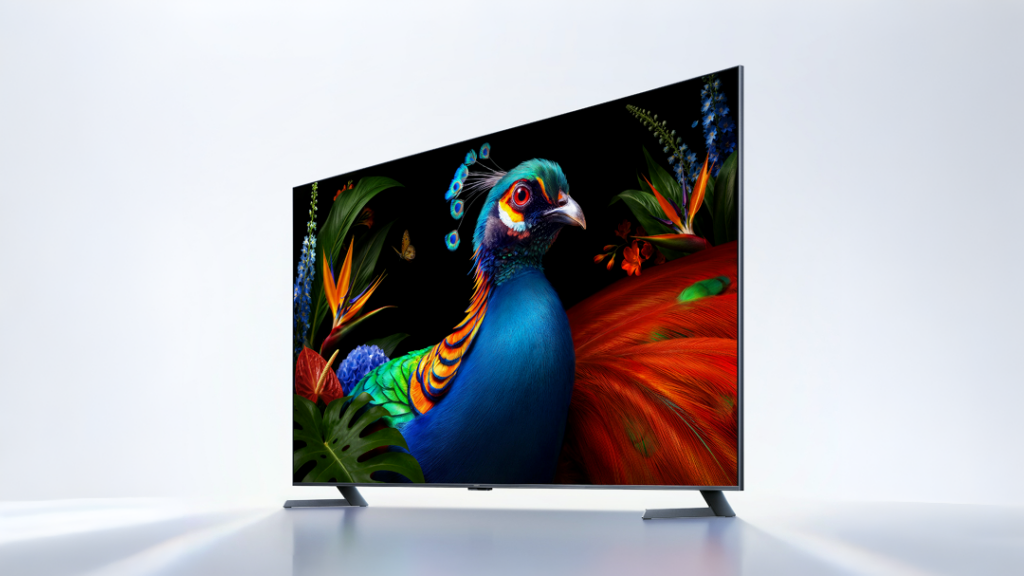
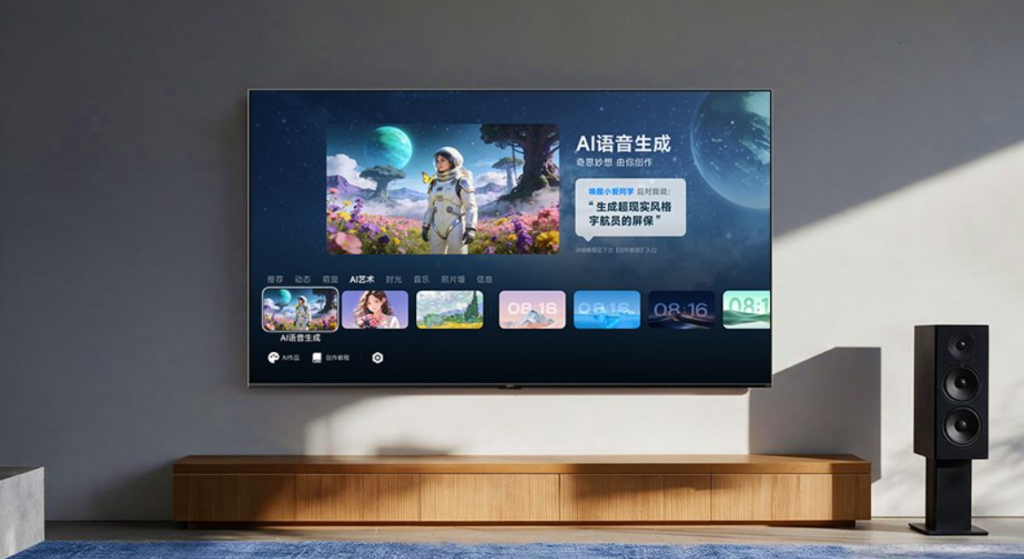
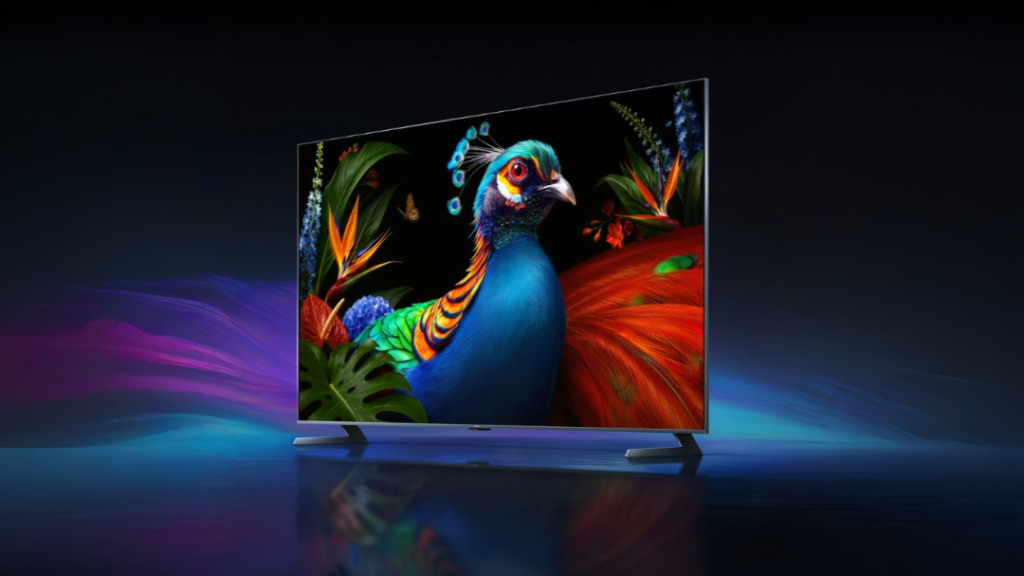
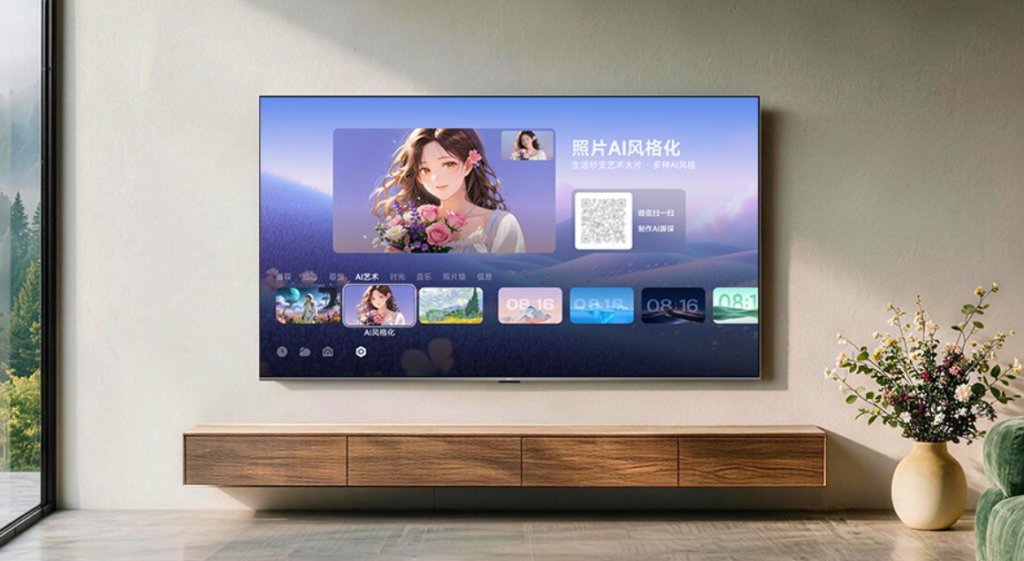
Xiaomi has introduced the Supreme Edition of its TV S Pro RGB-Mini LED 2027 lineup. It serves as a hardware revision to the standard 2027 models announced alongside it, focusing specifically on increasing peak brightness and expanding the built-in speaker system.
Xiaomi TV S Pro RGB-Mini LED 2027 Supreme Edition Specs
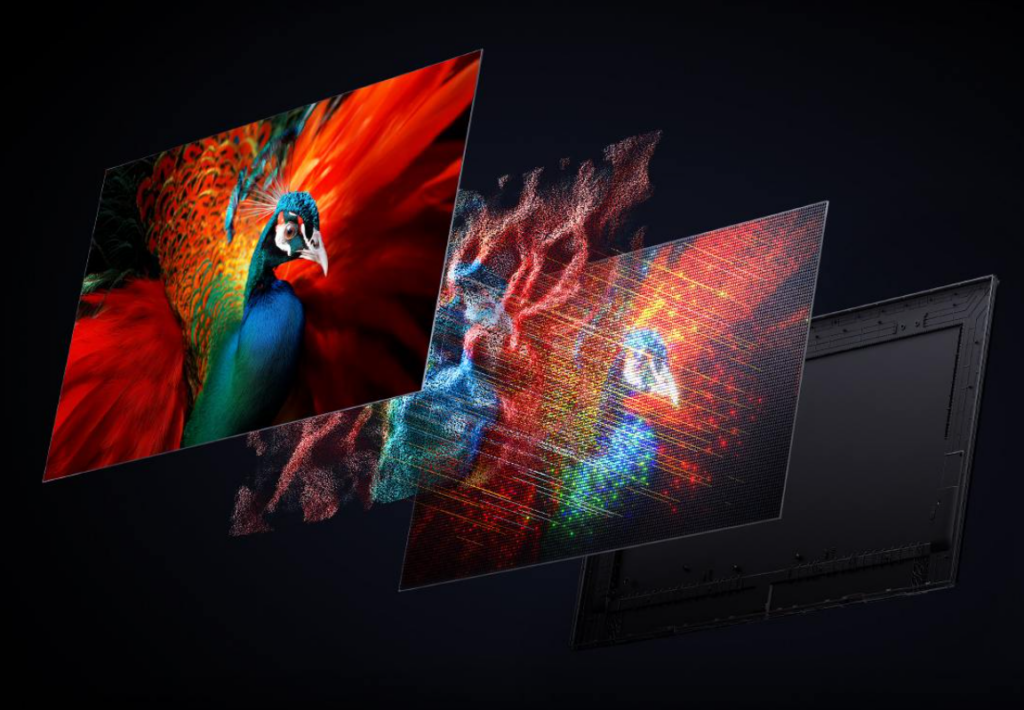
The television uses an RGB-Mini LED panel with individual red, green, and blue light sources. Xiaomi claims it covers 100% of the BT.2020 color gamut while reducing power consumption by around 30% in single-color scenes.
The Supreme Edition increases peak brightness by 500 nits over the standard version, reaching 5,500 nits. The screen also includes a 0.5% low-reflection coating to reduce glare in bright rooms. Picture processing is handled by the company’s XM9000 chip, which manages color accuracy and contrast between the backlight and LCD layers.
For audio, the Supreme Edition replaces the standard model’s 130W 2.1.2-channel system with a 170W 4.1.2-channel setup. This adds dedicated left and right surround channels to the upward-firing speakers and subwoofer. The system is tuned by Harman and supports Dolby Atmos.
Where to buyXiaomi TV S Pro 2027Browse the range on AmazonShop now →
For gaming, the panel has a native 4K 180Hz refresh rate, which can operate at 360Hz in a specific competitive mode. It supports VRR, AMD FreeSync Premium Pro, and includes four HDMI 2.1 ports, one of which supports eARC.
The TV runs on a quad-core Cortex-A73 processor with 4GB of RAM and 64GB of storage, using HyperOS 4. It also includes a millimeter-wave radar that detects viewer position to adjust picture and audio settings automatically. The remote connects via Bluetooth, charges via USB-C, and includes NFC for casting.
The metal chassis measures 49.7mm thick on the 65-inch model and 54.9mm on the 98-inch model. Both are compatible with a flush wall mount that leaves a 5mm gap.
The TV S Pro RGB-Mini LED 2027 Supreme Edition is launching in China with the following pricing:
Xiaomi has launched its new TV S Pro RGB-Mini LED 2027 lineup, marking the debut of the company’s first RGB-Mini LED TV. The new series is available in four screen sizes, ranging from 65 inches to a massive 98 inches.
Xiaomi TV S Pro RGB-Mini LED 2027 Specifications
Instead of using a traditional white backlight that passes through a color filter, these new models rely on separate red, green, and blue light sources. Xiaomi says this hardware adjustment allows the display to cover 100% of the BT.2020 color space. This direct RGB lighting approach reduces power consumption by about 30% in single-color scenes when compared to its previous 2026 models.
The panels are built for high brightness and precise local dimming, with a rated peak brightness of 5,000 nits. The 65-inch model includes 2,160 local dimming zones, while the 98-inch version increases that count to 4,860 zones. To help manage glare in bright rooms, the screens feature a low-reflection coating, which brings the overall screen reflection rate down to a stated 1.8%.
For gaming and video playback, the TVs support a 4K resolution at a native 180Hz refresh rate. They include standard features expected for modern consoles and PCs, such as Variable Refresh Rate (VRR), MEMC motion smoothing, and AMD FreeSync Premium Pro. Connectivity options include four HDMI 2.1 ports (one with eARC support), Wi-Fi 6, Ethernet, and standard USB inputs.
Inside, the televisions are powered by a quad-core Cortex-A73 processor, 4GB of RAM, and 64GB of storage, running on HyperOS 4 software. The system also integrates a millimeter-wave radar sensor designed to detect where viewers are sitting to adjust the picture accordingly.
For audio, the TVs feature a 130W 2.1.2-channel speaker system with upward-firing channels and a built-in subwoofer, along with Harman tuning. The included Bluetooth remote also features NFC for casting and supports USB-C charging.
The design is straightforward, featuring a metal frame and a relatively thin profile, the 65-inch model is 49.7mm thick, while the 98-inch is 54.9mm. Both are compatible with a slim wall mount that leaves a 5mm gap from the wall.
The Xiaomi TV S Pro RGB-Mini LED 2027 is available now in China. Pricing for the four configurations is as follows:
We use cookies on our website to give you the most relevant experience by remembering your preferences and repeat visits. By clicking “Accept”, you consent to the use of ALL the cookies.
This website uses cookies to improve your experience while you navigate through the website. Out of these, the cookies that are categorized as necessary are stored on your browser as they are essential for the working of basic functionalities of the website. We also use third-party cookies that help us analyze and understand how you use this website. These cookies will be stored in your browser only with your consent. You also have the option to opt-out of these cookies. But opting out of some of these cookies may affect your browsing experience.
Necessary cookies are absolutely essential for the website to function properly. This category only includes cookies that ensures basic functionalities and security features of the website. These cookies do not store any personal information.
Any cookies that may not be particularly necessary for the website to function and is used specifically to collect user personal data via analytics, ads, other embedded contents are termed as non-necessary cookies. It is mandatory to procure user consent prior to running these cookies on your website.