Advertisement

Keychron launches V10 Max mechanical keyboard with Gasket, Gateron Jupiter switches & more

Keychron, a well-known manufacturer of mechanical keyboards, has launched its latest premium offering, the Keychron V10 Max in the Chinese market. The keyboard is priced at 498 Yuan ($69). Let’s check out its key specs.

Keychron V10 Max Keyboard

Keychron V10 Max Specifications:

The V10 Max features a 75% Alice layout which includes the functional keys and a knob on the top-right. Alice keyboards are characterized by their split layout with a curved design that follows the natural typing arc of human hands. This unique layout helps reduce strain during prolonged typing sessions and is popular among keyboard enthusiasts for both aesthetics and comfort.

The keyboard utilizes a gasket mount design, a popular choice among enthusiasts, that reduces typing noise and provides a softer typing experience. Keychron has also included sound-absorbing foam and double-shot PBT keycaps for further enhanced comfort and durability.

The V10 Max comes with extensive customizability. Users can choose from a variety of keycaps, switches, and even customize the knob to match their preferences. The keyboard comes with Windows and Mac support and offers full compatibility with popular customization software like QMK and VIA, allowing users to program macros and create unique layouts.

Keychron V10 Max Keyboard

The V10 Max offers a versatile connection experience with both 2.4 GHz wireless and Bluetooth 5.1 connectivity. The 2.4 GHz connection boasts a 1000 Hz polling rate, ensuring ultra-low latency for competitive gaming. Additionally, Bluetooth 5.1 allows for seamless connection to up to three devices simultaneously, making it ideal for multi-tasking across different platforms.

The V10 Max comes with Keychron’s exclusive Gateron Jupiter mechanical switches. These pre-lubed switches offer a lifespan of up to 80 million keystrokes and a unique tactile bump similar to popular Panda switches. The keyboard also boasts south-facing RGB LED lights, designed to offer better illumination with the included high-quality PBT keycaps.

The keyboard features hot-swappable sockets, allowing users to easily install or change switches without soldering, further enhancing customization options. The PCB supports both 3-pin and 5-pin MX mechanical switches, providing compatibility with a wide variety of options.

The Keychron V10 Max comes equipped with screw-in PCB stabilizers for a wobble-free typing experience on larger keys. It also boasts a long-lasting 4000 mAh battery, offering up to 225 hours of wireless use with backlighting off. The keyboard is available in a black color scheme and is constructed with ABS plastic and a PC mounting plate.

RELATED:

Vivo X100 Ultra: All expected upgrades over the X100 Pro

Vivo debuted its X100 series smartphones in November last year. The series at the time featured two models: the vanilla X100 and the X100 Pro. However, Vivo has plans to launch another model in the lineup called the Vivo X100 Ultra. As the name suggests, this will be a higher-tier model when compared to the Vivo X100 Pro. If you are wondering what will be different onboard the Ultra model compared to the Pro, here’s everything we know so far.

Vivo X100 Pro

1. Better camera sensors

The Vivo X100 Pro has received praise from users and the tech community alike for its highly capable camera system. However, Vivo plans to dial it up to 11 on the camera hardware front with the X100 Ultra model. As per leaks, the X100 Ultra will be using the new Sony LYT-900 50 MP camera sensor, instead of the IMX989 sensor on the X100 Pro. Just like the Pro model, this sensor will also come fitted with optical image stabilization to eliminate shakiness from pictures and videos. The X100 Ultra’s primary camera will also support variable aperture.

The 50 MP Samsung JN1 ultra-wide sensor will be replaced with the 50 MP Sony IMX598 sensor, while the 50 MP telephoto sensor is rumored to be replaced with a massive 200 MP periscope telephoto camera with up to 4.3x optical zoom, up to a 200x digital zoom, and a focal length of 100mm. For comparison, the X100 Pro is capable of 3x optical zoom and 100x digital zoom.

2. Flagship Snapdragon processor

Both the X100 and X100 Pro devices were launched with the MediaTek Dimensity 9300 Processor, however, the X100 Ultra is rumored to feature Qualcomm’s flagship Snapdragon 8 Gen 3 processor. Both of these processors are neck and neck in terms of raw performance, however, over the years, the Snapdragon chips have garnered a reputation for being more efficient and having better image signal processing. So it’s likely that we could see better battery performance and imaging from the X100 Ultra.

3. Satellite communication

Vivo has confirmed that the X100 Ultra smartphone will launch with satellite communication capabilities. That being said, it is currently unclear if it will feature one-way or two-way satellite communication.

For those unaware, one-way satellite communication is basically for sending emergency messages or SOS when cellular service is dead. Whereas two-way allows for more interactive features like texting. You can check out our detailed explainer on satellite connectivity on smartphones to know more about it.

4. Vivo’s in-house Imaging tech

As we know, Vivo partnered with Zeiss back in December 2020, and ever since then, it has used the Zeiss-designed lenses for its flagship camera phones. Recent Vivo X series flagships, including the X100 Pro, have also utilized Zeiss’s special T* coating on their lenses which reduces reflections and improves light transmission. Additionally, Zeiss also worked with Vivo to develop unique image processing algorithms that replicate the classic “ZEISS look” known for its natural colors and soft bokeh.

All that being said, the upcoming Vivo X100 Ultra is said to come with Vivo’s own BlueImage self-developed imaging branding. Although the brand has not revealed the complete details of what this branding means for the X100 Ultra, however, it could mark the end of Vivo’s collaboration with Zeiss.

This situation is quite similar to Huawei’s self-developed imaging technology XMAGE, which was introduced in 2022, after the end of Huawei’s six-year collaboration with camera giant Leica.

RELATED:

Canon’s new VR headset brings live concerts to your living room

Canon is breaking new ground in the realm of virtual reality with the development of a hybrid display VR headset designed to revolutionize music experiences. This new tech will transport users who are sitting in their living room, into the heart of live concert halls, redefining the way we enjoy live performances.

The headset, equipped with over 50 cameras, records live music events from multiple angles, creating an unparalleled mixed-reality experience. Users can immerse themselves in performances, enjoying dynamic views from different perspectives without being at the venue and going through the traditional venue constraints.

This groundbreaking technology builds upon Canon’s MReal X1 headset, first introduced in 2022. During demonstrations, wearers were treated to captivating scenes that mirrored their movements, replicating the thrill of attending a live concert.

According to reports from NHK World News, Canon Japan is at the forefront of this innovation, aiming to offer users a concert hall-like experience from the comfort of their own space. Canon’s Muraki Junya emphasizes that the technology breaks free from the limitations of conventional concert attendance, allowing viewers to explore different positions and interact with performances on a whole new level.

The headset, based on Canon’s MReal X1 platform, boasts an impressive 58-degree x 60-degree field-of-view, providing users with an expansive canvas for their musical adventures. While still in the prototype stage, the headset holds promise for transforming the way we engage with live entertainment.
While Canon has not yet announced a commercial release timeline, enthusiasts eager to delve into mixed reality can explore entry-level options such as the Meta Quest 3 or await the arrival of the Varjo XR-4. With Canon’s hybrid display VR headset on the horizon, the future of concert experiences is poised to reach new heights of immersion and excitement.

Related:

(via)

Lenovo’s YOGA 27 2024 All-in-one Desktop Now Available for Purchase, 32GB RAM+1TB Storage Starts at 7,999 Yuan ($1,104)

The wait is over! The Lenovo YOGA 27 2024 all-in-one desktop is now available for purchase on JD.com. This stylish all-in-one machine boasts a powerful AMD Ryzen 7 8845H processor with a maximum performance release of up to 80W. The desktop was previously released earlier this month, read the coverage here. It comes in two configurations:

  • 32GB RAM + 1TB storage: 7,999 yuan ($1,104)
  • 32GB RAM + 2TB storage + RTX 4050 graphics card: 11,999 yuan ($1,656)

Even in beast mode, the noise level stays low at 33 dBA

The YOGA 27 prioritizes performance cooling. It utilizes a console-like cooling system with three different fan modes accessible via a convenient Fn+Q shortcut key combination: quiet mode, balanced mode, and beast mode. Even in beast mode, the noise level stays relatively low at a maximum of 33 dBA.

The 27-inch display features a 2560 x 1440 resolution, 100% sRGB color gamut, and an impressive 95% DCI-P3 color gamut. Factory calibration ensures exceptional color accuracy with an average ΔE of less than 2. This versatile display even supports USB-C video input and can deliver up to 95W of power via PD reverse charging. It can also function as a hub, allowing you to connect peripherals like a keyboard, mouse, audio devices, and even a camera.

Thermal design

For added convenience, the YOGA 27 features a lifting and rotating bracket with a 73mm height adjustment range and a tilt range of -5° to 10°. This allows you to use the device in portrait mode if desired. The entertainment experience is further enhanced by a pair of integrated 5W JBL speakers.

RELATED:

(Via)

ASUS’s New 27-inch Gaming Monitor, the ROG XG27UCS is Now on the Shelves for 2,999 Yuan ($414)

Asus has put out a monitor on sale that can make you even better at gaming: the ROG Jueshen XG27UCS. This is a 27-inch gaming monitor available on JD.com for 2,999 yuan. The monitor was earlier announced last month and now, it’ll be hitting the shelves.

The monitor has a 4K panel with 160Hz refresh rate for smooth, clear visuals.

This feature-packed gaming monitor boasts a stunning 4K (3840 x 2160) IPS panel with a blazing-fast 160Hz refresh rate, ensuring silky smooth visuals and rapid response times in even the most action-packed games. The 1ms GtG response time minimizes ghosting and blur, while 95% DCI-P3 color gamut coverage and 450 nits peak brightness deliver vibrant colors and impressive contrast. VESA DisplayHDR 400 certification further enhances the visual experience with deeper blacks and brighter whites.

This monitor boasts a compact footprint, saving valuable desk space.

The ROG XG27UCS isn’t just about raw specifications; it prioritizes a tear-free gaming experience. Variable refresh rate (VRR) technology synchronizes the monitor’s refresh rate with your graphics card’s frame rate, eliminating stuttering and tearing for a buttery-smooth gameplay experience. To further combat visual artifacts, the monitor supports NVIDIA G-SYNC and ELMB Sync technology.

The design of the ROG XG27UCS prioritizes both functionality and aesthetics. The new space-saving stand frees up desk real estate, while a built-in groove cleverly doubles as a mobile phone stand. A USB-C port offers convenient connectivity for data transfer and even delivers up to 15W of power to your devices.

ROG Jueshen XG27UCS monitor

Asus hasn’t forgotten about the competitive gamer. The ROG XG27UCS boasts AI-powered GamePlus technology that analyzes the in-game scene and adjusts the reticle for improved aiming accuracy. Dynamic ShadowBoost technology selectively brightens dark areas of the image without affecting brighter areas, giving you a clear advantage in low-light in-game scenarios.

The monitor comes equipped with DisplayPort 1.4, HDMI 2.1, and USB-C (with DP Alt Mode) ports, providing versatile connectivity options. For added peace of mind, each ROG XG27UCS undergoes meticulous factory calibration to ensure color accuracy. Users can even access the calibration report through the on-screen display (OSD) menu.

RELATED:

(Via)

Samsung Galaxy Z Fold 6, Z Flip 6 Color Options, Storage Variants Tipped

Leaks and rumours have revealed plenty of details about Samsung’s sixth-generation Galaxy Z foldable. Leaked CAD-based renders reveal no changes on the Z Flip 6 whereas the Z Fold 6 will have a boxier design and sharp corners. The foldable phones have also been spotted on the 3C certification website indicating at an unchanged battery charging speed. Now, DSCC’s (Display Supply Chain Consultants) Ross Young has revealed the colour variants as well as storage options on the upcoming Samsung foldables. 

Samsung Galaxy Z Flip 6, Fold 6 colour options, storage variants tipped

The Galaxy Z Flip is usually offered in a fun and vibrant color options. Samsung will continue the same tradition with the Z Flip 6. As per Young, it will be made available in a total of seven colors including Crafted Black, Light Blue, Mint, Peach, Silver Shadow, White, and Yellow. It’s worth noting that four of these hues were tipped previously and the executive now says that the Light Green and Silver will be marketed as Mint and Silver Shadow. Additionally, these colors are already found on the Z Flip 5. It remains to be seen if the South Korean brand will adopt a darker or lighter hue on Flip 6. 

The Crafted Black, Peach, and White options are expected to be available in select markets or in limited quantities. Notably, the Lavender/Purple color which has been a staple on the Z Flips is missing.

As for the Galaxy Z Fold 6, the colors are still the same as previously reported. But the Dark Blue will be marketed as Navy and Silver as Silver Shadow. There will also be a new Light Pink hue along with low-volume colors Crafted Black and White. 

Ross Young also reports that Samsung will continue to offer the Galaxy Z Flip 6 and Fold 6 in 256GB and 512GB storage options. The latter will also be available in a higher 1TB configuration. 

Related:

Microsoft aims to boost the development of AI with Samsung and other South Korean tech giants

Microsoft is looking forward to hosting a meeting with top executives from four big South Korean tech companies at the MS CEO Summit 2024. The summit is scheduled for May 14, 2024. It will reportedly be a closed-door discussion with the big companies – Samsung, SK Hynix, LG Electronics, SK Telecom, and Microsoft.

Microsoft could source hardware key to AI development and install its AI services into their products

Microsoft Logo

Both Bill Gates and CEO Satya Nadella will be present in the discussions with the top executives of the overseas companies. Notably, Kyung Kye-hyun, the head of Samsung Electronics Device Solutions Division, Kwak Noh-jung, chief executive of SK Hynix, Cho Joo-wan, CEO of LG Electronics, and Ryu Young-sang, CEO of SK Telecom are invited to attend the meeting.

The goal of this meeting will be to explore opportunities to strengthen their partnership and boost the development of artificial intelligence. Discussions with Samsung and SK Hynix will likely center on the supply of high bandwidth memory chips (HBM) that are one of the key equipment in the development of artificial intelligence. Samsung and SK Hynix are the two biggest memory chipmakers.

Aside from memory chips, high-performance solid-state drives compute express link drives can also be a part of the deal. These are also some of the important hardware components required in the development of large language models. This is reportedly unusual for Microsoft, which goes to show how important it is for Microsoft to boost its AI capabilities.

Other than sourcing memory chips, the company may also engage in discussions with its guests such as Samsung and LG Electronics to install its AI services into their products. It will not only get them new customer and product categories for their AI technologies to operate but also strengthen the partnership.

Samsung is working on two new AI accelerators – the Mach-1 and Mach-2 that. These two new products will soon enter mass production. It could be possible that Microsoft will use one or both of the chips in the future. On the other side, even if Samsung has already been a user of Microsoft’s software products for a while, the Galaxy AI is heavily backed by Google’s Gemini. Features from Microsoft’s offering may also make their way to Galaxy going forward.

Speaking of SK Telecom, they invested $100 million in AI startup Anthropic to develop a large language model (LLM) specifically for telcos.

Related:

Lava ProWatch Zn, ProWatch Vn With 60Hz Display, 110 Sports Modes Launched In India

Lava is entering the smartwatch market with two new models These include the ProWatch Zn and ProWatch Vn. The former is the more premium offering among the two. Both wearable devices pack a few health features. There are only slight differences. Read on to know what the ProWatch Zn and ProWatch Vn offers out of the box

Lava ProWatch Zn and ProWatch Vn specification and features 

Beginning with the Lava ProWatch Zn, it has a circular dial with a rotating crown and a physical button on the right side. The device is IP68 water and dust-resistant. It sports a 1.43-inch OLED display bearing a resolution of 466 x 466 pixels, a 60Hz refresh rate and 600 nits peak brightness. The display is shielded by Gorilla Glass 3 against accidental damage.  
As for the Lava ProWatch Vn, it features a rectangular dial with a large 1.96-inch LCD screen and a resolution of 320×386 pixels. There is a 60Hz refresh rate for a lag-free experience. This one also has an IP67 rating.

Coming to the Health-centric features the Lava ProWatch Zn and Vn are equipped with a heart rate monitor, SpO2 sensor, and stress and sleep tracker. Both wearable devices are capable of tracking more than 110 sports modes. 

The Lava ProWatch Zn and Vn feature a Realtek chipset for Bluetooth calling directly from the smartwatch. Software-wise both run on the company’s proprietary OS. They pack features like a notification display, camera and music control. There’s built-in games as well. The ProWatch Zn is backed by a 350 mAh battery that is claimed to offer 7 days of usage. Meanwhile, the ProWatch Vn has a 230 mAh unit with five days battery life. 

The Lava ProWatch Zn carries a special launch price tag of Rs 2,999 for the metallic strap the ProWatch Vn cost Rs 1,999 as a special launch price. Both smartwatches come with a 24-month warranty and can be purchased from Amazon and retail stores starting April 26.  

Related:

Xiaomi Smart Band 9: What you need to know about the next-gen wearable

The Xiaomi Smart Band 9 is expected to be the company’s next gen wearable product. The Chinese tech giant unveiled the Smart Band 8 back in 2023, and it appears that its successor is set to launch soon. We have covered the upcoming smart band recently, so here’s what to expect from the Xiaomi Smart Band 9.

Xiaomi Smart Band 8

1. Xiaomi Smart Band 9: Bigger Display & Battery?

To recall, the Xiaomi Smart Band 8 was announced with a 1.6-inch AMOLED panel that offers Always on Display. The successor to this could likely offer a taller screen. While no official word is available as of right now, the Smart Band 9 may also offer an oval display. Similarly, even the battery pack might get a bump over its predecessor, which was powered by a 190mAh battery pack. This would enable it to offer long battery life. This is still just speculation, so take this information with a pinch of salt for now.

2. NFC & Non-NFC Versions

Xiaomi’s upcoming Smart Band 9 model was first spotted last month getting a radio certification. This database revealed that the Smart Band 9 will arrive in an NFC and non-NFC-enabled option. It was also seen in two model numbers, namely “M2345B1” and “M2346B1.”

3. Smart Fitness & Health Tracking

Last year’s Xiaomi Smart Band 8 launched with various trackers for health and fitness. It came with SpO2 blood oxygen mapping, sleep tracking, heart rate monitoring, female menstrual cycle tracking, and VO2 stress levels mapping. For fitness, it supports over 150 sports modes, which includes an Interactive Boxing Mode that lets you track data related to somatic senses or somatosensory systems while in boxing action. Xiaomi’s Smart Band 9 is expected offer these trackers as well.

4. Global Release

So far, the brand’s Smart Band 9 has been spotted on multiple regional certifications, like the UAE’s TDRA and Indonesia’s Telecom certification. In other words, the company is likely planning on releasing the Smart Band 9 across the globe. The Smart Band 8 went global months after its original Chinese release in regions like Europe. Meaning, a similar launch strategy would follow for the newer edition.

5. Is Xiaomi Smart Band 9 Pro in the works?

Only the brand’s Smart Band 9 has surfaced online. There has been no sighting of a Smart Band 9 Pro model. However, we suspect that it is quite likely that a higher-end variant will launch as well. Xiaomi unveiled the Smart Band 8 Pro a couple of months after the base model’s release. So we can expect more details regarding the Smart Band 9 Pro model to surface in the coming months.

6. Launch Date & Pricing

Xiaomi released the Smart Band 8 in China back in April 2023. So we can expect the Smart Band 9’s release to be right around the corner. Unfortunately, there have been no reports or announcements regarding its release date. The Smart Band 8 originally launched for 239 Yuan or roughly 34 US Dollars, so there could be a slight price hike with the next gen Smart Band 9.

RELATED:

Redmi Pad SE with 11″ LCD display, Snapdragon 680 processor & an affordable price tag launched in India

Redmi has just launched a new affordable tablet in the Indian market called the Redmi Pad SE. This new tablet is the successor of the Redmi Pad, which launched back in October 2022.

Redmi Pad SE

Redmi Pad SE specs:

The Redmi Pad SE offers an 11-inch 8-bit LCD screen with a resolution of 1920 x 1200 pixels. It has a 90Hz refresh rate paired with a 180Hz touch sampling rate and 400 nits of peak brightness. The display comes with TUV Rheinland Blue light and Flicker Free certifications which ensures reduced eye strain over prolonged use.

Redmi Pad SE

The tablet is powered by a Snapdragon 680 processor, which is a slight downgrade compared to the Helio G99 available on the 2022 Redmi Pad. It has three RAM options:  4GB / 6GB / 8GB of LPDDR4X RAM, paired with 128GB eMMC 5.1 storage and a microSD card slot that supports memory expansion up to 1TB.

Redmi Pad SE specs

The tablet has a large 8,000mAh battery, with the brand claiming a video playback time of more than 28 hours. It supports 10W charging via a USB Type-C port. It also has a 3.5mm audio jack. For audio, it features a quad-speaker setup with Dolby Atmos tuning as well as Hi-Res audio support.

On the software front, the device features an Android 13-based MIUI for Pad and has AI face unlock. There are two cameras on the tablet, an 8MP one on the rear and a 5MP sensor on the front. As for connectivity, it has dual-band Wi-Fi (2.4GHz and 5GHz) along with Bluetooth 5.0. It weighs 478 grams and measures 255.53 × 167.08 × 7.36mm.

Pricing & availability

The prices of the Redmi Pad SE in India are as follows:

  • 4GB RAM + 128GB storage: Rs 12,999
  • 6GB RAM + 128GB storage: Rs 13,999
  • 8GB RAM + 128GB storage: Rs 14,999
  • Redmi Pad SE Cover: Rs 1,299

The tablet will be available from April 24 onwards exclusively on Amazon, Flipkart, Mi eStore, and various retail channels. As a special launch promotion, customers purchasing the Redmi Pad SE can enjoy a flat discount of Rs 1,000 when using ICICI Bank cards for transactions.

RELATED:

iQOO Quest Days bring maximum savings on iQOO 12 5G, Z9 5G, Neo 9 Pro, Z7 Pro 5G, and others

iQOO is bringing a few new smartphones and other electronics to the market soon. As per leaks and rumors, the company is working on the iQOO 13 series, Z9, and Z9 Turbo, the iQOO Z9X global launch, and Magnetic Cooling Back Clip. Amid all the new announcements, the iQOO is here with some good discounts on the majority of its new smartphones. The buyers can save maximum on smartphones like iQOO 12 5G, iQOO z9 5G, iQOO Neo 9 Pro, iQOO Z7 Pro 5G, and others. Below we have detailed discounts on each smartphone:

Deals at iQOO Quest Days in India

iQOO is offering up to Rs 23,000 discount on smartphones from April 22 to April 28 on Amazon India. The users can avail Rs 3000 Instant discount on SBI and ICICI Bank Cards. Moreover, there’s an option of No-cost EMIs for a 9-month tenure. Below are Dedicated Discounts on respective smartphones:

iQOO 12 5G

The smartphone which usually retails for Rs 59,999, is now available for Rs 50,999. There’s a Rs 2000 Instant Discount, and an additional Rs 2000 off on Exchange. The users can avail up to 9 months of No-cost EMIs.

In terms of specifications, the smartphone bundles SNapdragon 8 Gen 3 SoC, and bundles Supercomputing Chip Q1.

Please Note: When you buy something using the links in our articles, we may earn a small commission at no cost to you.

iQOO Z9 5G

The smartphone is available for Rs 17,999, inclusive of Rs 2000 Instant discount. It also brings free Vivo Earphones worth Rs 599. There’s an option of up to 3 Months of No-cost EMI. It is hard to miss such a sweet deal if looking for a good camera smartphone.

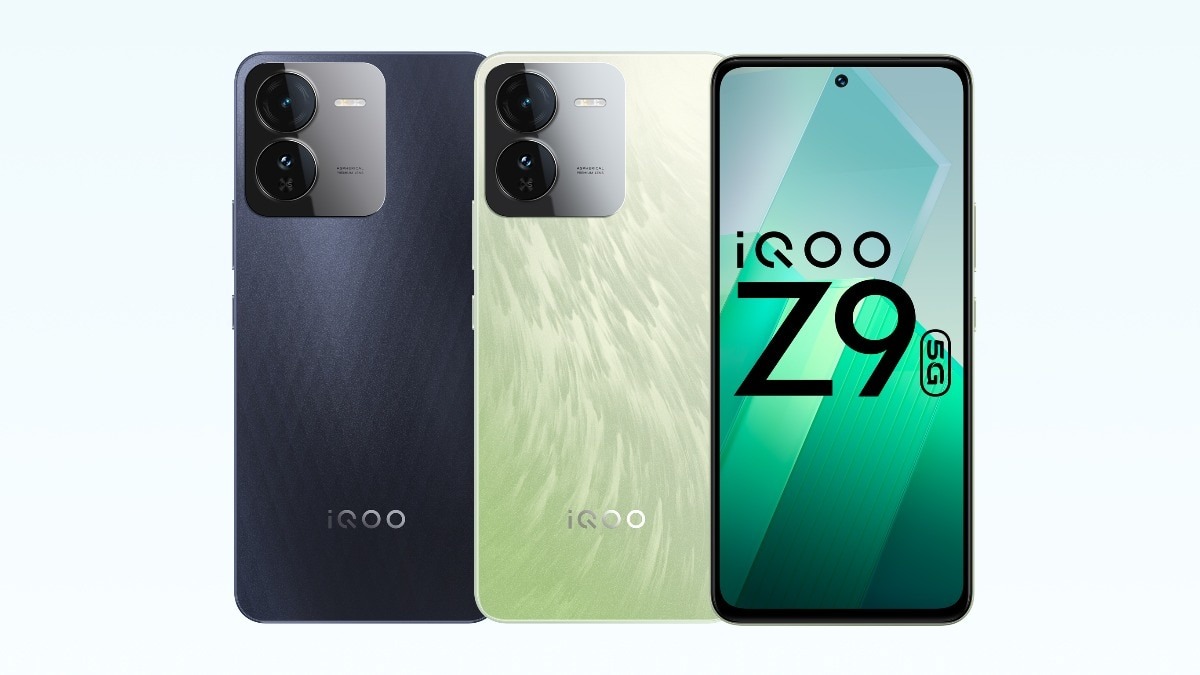
iQOO Z9 5G comes with a Dimensity 7200 5G Processor, Sony IMX882 OIS cameras, 120Hz AMOLED display, and 44W fast charging support. It is a full-package smartphone that can be yours at such an exciting price.

Please Note: When you buy something using the links in our articles, we may earn a small commission at no cost to you.

iQOO Neo 9 Pro

iQOO Neo 9 Pro is now available for Rs 32,999 with a Rs 2000 Instant Discount. The users can get up to Rs 4000 additional off if you change their old smartphones. Moreover, there’s an option of up to 6 months of No-cost EMI.

The smartphone couples SNsapdraon 8 Gen 2 SOC, and supports 120W FlashCharge technology. It comes with a Q1 supercomputing chip. In the camera segment, the smartphone features a 50MP Sony IMX920 sensor, and an 8MP ultra-wide sensor.

Please Note: When you buy something using the links in our articles, we may earn a small commission at no cost to you.

iQOO Z7 Pro 5G

The smartphone is retailing at the price of Rs 21,999 with a Rs 2000 Instant Discount via the ICICI and SBI cards. The users can also avail a 3-month no-cost EMI.

The smartphone comes with MediaTek Dimensity 7200 5G SoC and features a 3D Curved AMOLED display. It bundles a 64MP AURA Light OIS camera. There’s a 4600 mAh battery with 8GB RAM and 66W Flash Charge.

Please Note: When you buy something using the links in our articles, we may earn a small commission at no cost to you.

iQOO Z6 Lite 5G

It is an affordable entry-level smartphone, which is retailing for the price of Rs 11,999. The smartphone was launched at the price of Rs 19,999.

It comes with Qualcomm Snapdragon 4 Gen 1 SoC, 120Hz Full HD+ display, and offers up to 6GB RAM. It ships with a Travel Adapter.

Please Note: When you buy something using the links in our articles, we may earn a small commission at no cost to you.

iQOO Z7s Lite 5G

iQOO Z7s Lite with 8 GB RAM and 128GB storage is on sale for Rs 14,999. The smartphone bundles a Rs 1000 Instant Discount via Credit cards.

It is paired with a Snapdragon 695 SoC, 64MP OIS camera, and 44W Flash Charging.

Please Note: When you buy something using the links in our articles, we may earn a small commission at no cost to you.

Related:

Moto g64 5G vs POCO X6 Neo Comparison: Which Phone Offers Better Value?

Motorola and POCO have recently launched their new mid-range 5G smartphones, the Moto g64 5G and POCO X6 Neo, respectively. Both phones offer attractive features at competitive prices. Let’s delve deeper into their specifications and see which one might be the better choice for you.

moto-g64-5G

1. Display

The Moto g64 5G sports a 6.5-inch FHD+ (2400 x 1080 pixels) LCD display with a 120Hz refresh rate and 240Hz touch sampling rate. It boasts a maximum brightness of 560 nits and comes protected by Corning Gorilla Glass 3.

The POCO X6 Neo flaunts a larger 6.67-inch FHD+ (2400 x 1080 pixels) Super AMOLED display with a 120Hz refresh rate and a staggering 240Hz touch sampling rate. Additionally, it boasts a peak brightness of 1000 nits and is shielded by the more robust Corning Gorilla Glass 5.

Here, the POCO X6 Neo takes the clear lead. AMOLED displays offer superior contrast, deeper blacks, and better viewing angles compared to LCD panels. The higher peak brightness ensures better readability under direct sunlight, while the additional touch sampling rate might benefit gamers seeking a more responsive touch experience.

2. Performance

The Moto g64 5G is powered by the MediaTek Dimensity 7025 processor, a 6nm chipset paired with IMG BXM-8-256 GPU. It comes in two RAM configurations: 8GB with 128GB storage and 12GB with 256GB storage, expandable further via a microSD card.

The POCO X6 Neo equips the MediaTek Dimensity 6080 processor, which is essentially a rebranded Dimensity 810 chipset built on a 6nm architecture. It boasts the Mali-G57 MC2 GPU and is available in similar RAM and storage options (8GB/128GB and 12GB/256GB), with microSD card support for additional storage.

On paper, the POCO X6 Neo seems to have a slight edge with the Dimensity 810 being a more powerful chipset compared to the Dimensity 7025. However, real-world performance differences might be negligible for most users. Both processors should handle everyday tasks and even some light gaming with ease.

3. Software

The Moto g64 5G runs the cleaner and more stock-like Android 14 with My UX on top. Motorola promises an assured update to Android 15 and 3 years of security updates.

The POCO X6 Neo comes with the MIUI 14 based on Android 13 out of the box. But the device is upgradable to HyperOS based on Android 14 which has been rolling out since last week. While HyperOS offers extensive customization options, it can also feel bloated with additional apps and features compared to My UX.

The choice here depends on your preference. If you prefer a clean and bloatware-free experience, the Moto g64 5G might be better. If you enjoy extensive customization options, the POCO X6 Neo could be more appealing.

4. Camera

The Moto g64 5G features a triple camera system on the back. The primary sensor is a 50MP unit with f/1.8 aperture and OIS (Optical Image Stabilization). It’s accompanied by an 8MP ultra-wide/macro/depth sensor with f/2.2 aperture. The front-facing camera boasts 16MP resolution with f/2.4 aperture.

The POCO X6 Neo takes a more minimalist approach with a dual camera setup. The main attraction is a powerful 108MP sensor with f/1.7 aperture, likely offering exceptional detail in good lighting conditions. It’s accompanied by a 2MP depth sensor for portrait mode effects. The front-facing camera on the POCO X6 Neo settles for a 16MP sensor with f/2.4 aperture.

While the megapixel count on the POCO X6 Neo’s main sensor is significantly higher, megapixel count alone doesn’t guarantee superior image quality. The Moto g64 5G’s OIS could be beneficial for capturing sharper images and videos in low-light conditions. Overall camera performance will depend on factors like sensor size, image processing, and software optimization, which can only be definitively judged through detailed reviews and comparisons.

5. Battery

The Moto g64 5G packs a massive 6000mAh battery with support for 30W turbo charging. The phone comes bundled with a 33W charger.

The POCO X6 Neo houses a 5000mAh battery with support for 33W fast charging.

The Moto g64 5G boasts a larger battery capacity, potentially translating to longer battery life on a single charge. However, the difference might not be significant in daily usage. Additionally, the POCO X6 Neo’s faster charging speed could be more convenient for quickly topping up the battery when needed.

6. Design and Build

The Moto g64 5G features a plastic back with a PMMA (polymethyl methacrylate) finish. It has a side-mounted fingerprint sensor and a water-repellent coating for basic dust and splash resistance (IP52).

The POCO X6 Neo opts for a more premium-feeling glass back. It also integrates a side-mounted fingerprint sensor and boasts a slightly better IP54 rating for dust and water resistance.

The design choice depends on your preference. The Moto g64 5G might be lighter and less prone to shattering if accidentally dropped. However, the POCO X6 Neo offers a more premium aesthetic and slightly better water resistance.

7. Price

The Moto g64 5G starts at Rs. 14,999 for the 8GB RAM and 128GB storage variant. The 12GB RAM and 256GB storage model costs Rs. 16,999.

The POCO X6 Neo starts at a similar price of Rs. 15,999 for the 8GB RAM and 128GB storage option. The 12GB RAM and 256GB storage variant retails for Rs. 17,999.

8. Verdict

No easy decision here! It all boils down to your priorities. If a clean, bloatware-free software experience with guaranteed updates (Android 14 to 15) is important, the Moto g64 5G is a strong contender. Plus, its massive 6000mAh battery means you can worry less about running out of juice, and the OIS camera might take better pictures in low-light conditions.

On the other hand, if a stunning AMOLED display with higher peak brightness is a must-have, the POCO X6 Neo steals the show. It also boasts a slightly faster processor on paper. And let’s not forget the premium glass back design and IP54 rating.

RELATED:

Redmi Buds 5A With 25dB ANC, Google Fast Pair Launched In India

At the Xiaomi Smarter Living 2024 event held today, the company announced a new tablet, TWS earphones, a vacuum cleaner, and a garment steamer. The newly launched audio device is the Redmi Buds 5A. It joins the Redmi Buds 5 that was released earlier in February this year. The latest offering cuts down slightly on the specifications and features compared to the other model. Read on to know what it offers out of the box. 

Redmi Buds 5A specifications and features 

The Redmi Buds 5A has the same in-ear design with a stem and silicon ear tips. The earbuds are IPX4 certified whereas the case is IP54 rated. 

In terms of audio, the Redmi Buds 5A are equipped with a 12mm dynamic driver. It offers active noise cancellation of up to 25 dB for filtering out any unwanted noise. There is environmental noise cancellation as well for crystal clear quality on calls. The transparency mode helps the user to stay aware of their surroundings. The TWS earphones feature a 60ms low latency mode.  

The Redmi Buds 5A supports Bluetooth 5.4 connectivity. It also features Google Fast Pair which ensures the earbuds connect quickly with a compatible device once the storage case is opened. The audio device is backed by a 440mAh battery unit that is claimed to last 30 hours with the pebble-shaped case. Each earbud has a 34mAh cell that is rated to offer up to 5 hours of usage. 

The Redmi Buds 5A are priced at Rs 1,499 and offered in Black and White colours. They will be available for purchase from Flipkart, Amazon, and Xiaomi stores starting April 29. 

Related:

UFS 4.0 is now 15% faster, with Kioxia’s new chips

One of the most crucial components in smartphones is undoubtedly the storage chip, and with UFS 4.0, the storage on phones has never been this fast, but there’s always room for improvement. The modern UFS chips perform as fast as an SSD, yet Kioxia has managed to make UFS 4.0 even faster.

Kioxia’s new UFS chips offer 50% faster random write in 18% smaller area

Kioxia, a company founded by Toshiba, specializes solely in storage and memory solutions. The chips introduced by Kioxia come with storage capacities of 256GB, 512GB, and 1TB. Kioxia unveiled the THGJFMT1E45BATV, THGJFMT2E46BATV, and THGJFMT3E86BATZ chips. We can say that Android phones packing just 128GB of storage are quickly becoming outdated, if they’re rocking UFS 4.0 tech for sure.

The dimensions of the 256GB and 512GB chips are 9.0 x 13.0 x 0.8mm, while the 1TB chip’s dimensions are 9.0 x 13.0 x 0.9mm. Kioxia equipped the new UFS 4.0 chips with BiCS Flash 3D NAND, making them 18% smaller compared to the previously introduced 11mm x 13mm chips.

The write speed of the new UFS chips has increased by 15%, and the random write speed has surged by a whopping 50%, also with a 30% increase in random read speed. However, the maximum read upper limit remains unchanged, capped at 4640MB/s. These speed improvements were based on comparison with Kioxia’s previously released 512GB chip (THGJFLT2E46BATP).

Kioxia announced that the production of the 256GB and 512GB variants of these new chips will commence this month, while the 1TB variant will start production in June.

(source)

Related:

POCO Pad: Upcoming HyperOS tablet certified with 33W charging & 8MP cameras

We already know POCO is working on its first ever tablet model. But ahead of any official announcement, this tablet was spotted on major certifications, which revealed some of its key specs. The device could be dubbed the POCO Pad, so here are all the details.

POCO Pad visits FCC & Camera FV-5

POCO Pad

POCO Pad is the Chinese brand’s first tablet and it was spotted on FCC carrying the 2405CPCFBG model number. This listing confirms that it will run on HyperOS 1.0 and WiFi 6. The database confirmed that it will ship with Xiaomi’s 33W charging adapter. Unfortunately, this was all the information revealed by this listing. On the other hand, the Camera FV-5 sighting reveals more details regarding its cameras.

Xiaomi Poco Pad

The POCO Pad may feature an 8-megapixel camera on the rear that offers EIS (Electronic Image Stabilization) and an f/2.0 aperture. Meanwhile, the front packs another 8-megapixel camera with an f/2.3 aperture. To recall, the POCO Pad is expected to be a rebranded Redmi Pad Pro. That tablet model also came with 33W wired fast charging and HyperOS custom skin. This device also comes with the Qualcomm Snapdragon 7s Gen 2 SoC that is paired with 8GB of RAM.

POCO Pad

One of its notable aspects is the quad speaker setup, which arrives with Dolby Atmos audio. A massive 10,000mAh battery pack powers this tablet as well. It sports a tall 12.1-inch LCD panel that offers a 120Hz refresh rate, 2.5K resolution, and Corning Gorilla Glass 3.

RELATED:

(Via)

Realme C65 5G Set To Launch In India On April 26, With A Starting Price Of Rs 9,999

Realme has officially confirmed the launch date of its upcoming C-series smartphone in India. It is set to arrive in the country later this week. The Realme C65 5G will debut as the successor to the last year’s C64. The company has put up a microsite of the device revealing its key specifications and also revealing its price. Read on to learn the details below. 

Realme C65 5G India launch date revealed 

The Realme C65 5G is scheduled to launch in India on April 26 at 12 pm IST. The microsite confirms that the device will have a boxy design with a side-mounted fingerprint scanner embedded in the power button. The back panel has a circular camera module housing a 50MP main sensor and a secondary lens. The smartphone will be available in Black and Green color options. 

The Realme C65 5G will have a centre-aligned punch-hole cutout. Realme says that the upcoming offering is the first phone in the segment to feature a 120Hz display and only 1nit low blue light certification. It is also the first in the segment to be IP64 certified dust and water-resistant. 

The Realme C65 5G is also confirmed to be the first phone in the world to be powered by a MediaTek Dimensity 6300 processor. The company is touting the device as the ‘fastest entry-level 5G from Rs 9,999. We assume this is for the base RAM and storage configuration which has not been revealed yet. The leaked marketing material revealed that the smartphone will be backed by a 5,000mAh battery with support for 15W charging and up to 6GB RAM and 128GB storage. 

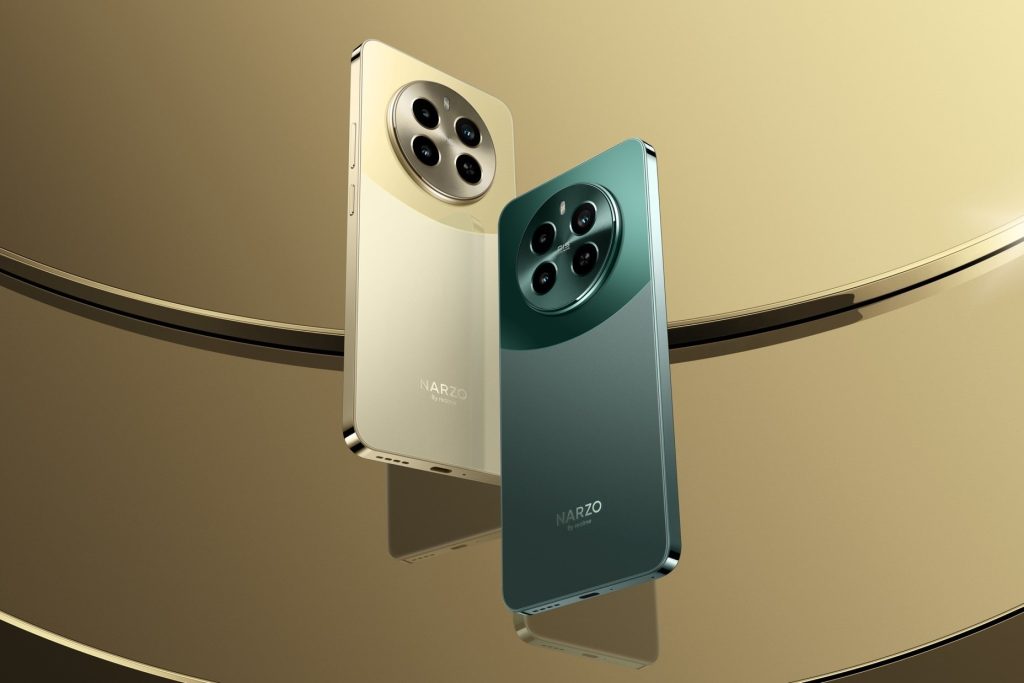
Additionally, for those unaware, the brand is also announcing Narzo 70 series phones in India tomorrow.

Related:

Pixel 7 Pro retails for an exciting price of $530; Moto Razr+ available for $699

Google’s Pixel smartphones and other Pixel devices have a dedicated fan base, and people often recommend them if they want to experience some outstanding features with the vanilla Android experience. The camera prowess and the new AI features integration make the Pixel smartphones irresistible. The Pixel smartphone becomes more valuable if any sale or discount is applicable. Similarly, the Pixel 7 Pro unlocked smartphone is retailing now for the exciting price of $530.

Grab Pixel 7 Pro Deal here

Launched in October 2022, the Pixel 7 Pro smartphone is still popular among users, who want to have an excellent camera, stock Android and years of updates. It is an impressive choice as a mid-range smartphone. The 256GB variant was launched for $999, with discounts and a usual price cut, it is now retailing for $530 on Amazon.

Alongside the exquisite AI premium features, the smartphone features capable hardware coupled with an in-home Tensor G2 chip. It features a 67-inch QHD+ display that offers a 120Hz refresh rate. In the camera department, there’s a 50MP primary sensor, a 12MP ultrawide camera, and an improved 48MP telephoto zoom lens. However, interested buyers can also choose 512GB Storage and 12GB RAM options.

Motorola Razr+ Smartphone Sale Details

On the other hand, Motorola is also offering a massive discount on the Motorola Razr+ smartphone launched earlier this year. The smartphone is available for $699 on Amazon, which is $300 down from the usual price of $999.

Grab Moto Razr+ Deal Here

The flip smartphone offers a folding experience and features an additional cover display which measures 3.6 inches in size and offers a 144Hz refresh rate. Further, the large, foldable display measures 6.9-inch in size and offers Full HD+ resolution at 165Hz refresh rate. Moreover, the smartphone is powered with Snapdragon 8+ Gen 1 SoC, 8GB RAM, and 256GB storage.

Related:

Please Note: When you buy something using the links in our articles, we may earn a small commission at no cost to you.

HMD Pulse Pro listed online: Upcoming budget phone’s specs, price, & launch date revealed

HMD recently announced the Boring phone in collaboration with Heineken and Bodega. Now, a new smartphone is also in the works, with a fresh listing confirming a bunch of information like its specs, pricing, and launch date. So here is everything you need to know.

HMD Pulse Pro listing surfaces online

HMD Pulse Pro

The company is gearing up to launch a new HMD Pulse series that will consist of the Pulse and Pulse Pro models. Thsee devices are set to launch in India as well. But now, we have finer details regarding the Pulse Pro thanks to a Finnish retailer called Gigantti. Looking at the listing, the HMD Pulse Pro will sport a 6.56-inch IPS LCD panel that offers HD+ resolution and a 90Hz refresh rate.

Under the hood, it is equipped with the UNISOC T606 SoC that is paired with 6GB of RAM and 128GB of internal storage. This can be further expanded by up to 256GB via a microSD card slot. A large 5,000mAh battery pack will power this device via a USB Type-C port. The rear packs a 50-megapixel main and 2-megapixel depth sensor, while the front houses a 50-megapixel selfie shooter.

HMD Pulse Pro

Other notable features include Bluetooth 5.0, NFC, side mounted fingerprint scanner, and IP52 rating. The HMD Pulse Pro was listed with a 179 EUR price tag, which is roughly around 190 US Dollars or 15,900 INR. It can be seen in a long Black color option. In other words, it has a mid range price tag. The retailer listed the device with a release date of 24th April 2024.

RELATED:

(Via)

Lenovo IdeaPad Pro 5i: Brand’s latest laptop arrives in India for your creative endeavors

Lenovo has officially released its first creator laptop with Intel’s new AI powered processors in India. The model in question is the IdeaPad Pro 5i, which was first announced back in December 2023. However, the Indian variant comes with refreshed specs like the Intel Core Ultra series CPU. So let’s check it out.

Lenovo IdeaPad Pro 5i: Specs

The company’s new laptop is built for creators and sports a 14-inch OLED display that offers a 120Hz refresh rate, 100% DCI-P3 color gamut, and 2.8K resolution. This panel also arrives with TUV EyeSafe certification. For audio, there is even Dolby Atmos support. Under the hood, it is equipped with the Intel Core Ultra 9 185H processor that is paired with up to 32GB of RAM and up to 1TB of storage.

Lenovo Ideapad Pro 5i

A large 84Wh battery pack powers this device, which supports Rapid Charge Express that allows 3 hours of backup in just 15 minutes. Lenovo aims to ensure that your productivity stays unhindered with cooling capabilities of up to 115W TDP. The IdeaPad Pro 5i also meets the MIL-STD-810H military-grade standard, despite weighing just 1.46 kilograms. This makes it quite portable and versatile.

Pricing and Availability

Lenovo has unveiled the IdeaPad Pro 5i Creator laptop in India in a lone Artic Grey color option. It has a price tag of 109,990 INR in the region and is available for purchase via the brand’s official website, its exclusive Lenovo stores, and leading e-commerce platforms and offline retailers as of today. Buyers can even get free repair with an Accidental Damage protection plan.

RELATED:

Xiaomi CEO aims to sell more than 100,000 Xiaomi SU7 cars by 2024

Xiaomi Auto began the delivery of its highly anticipated electric car, the SU7 earlier this month. The delivery ceremony was held at Xiaomi Automobile Factory in Yizhuang, Beijing, where Xiaomi’s founder and CEO Lei Jun opened the doors of each SU7 car and handed them over to their owners. The company planned to sell only 5000 units globally in the first batch.

Xiaomi Auto aims to sell more than 100,000 SU7 cars by 2024

Now a post from Lu Weibing, President of Xiaomi Group and General Manager of Xiaomi Brand reveals that Xiaomi CEO has set a sales target of more than 100,000 units of the Xiaomi SU7 car in 2024.

Lu Weibing revealed the latest delivery results of Xiaomi SU7. As of April 20, the number of Xiaomi SU7 orders has exceeded 70,000 units. “Today, Mr. Lei announced at the Xiaomi Investor Conference that as of April 20, the number of Xiaomi SU7 orders has exceeded 70,000 units!”

Xiaomi Auto has commenced the delivery of the SU7 car starting with Beijing and Shenzhen. Reportedly a nationwide delivery will be opened in the near future.

Lei Jun previously noted that the SU7 delivery centers cover 29 cities across the country, which reportedly covers the main markets for electric vehicles. Reports also hint that the delivery centers will cover 40 cities by the end of 2024.

At this point, Xiaomi Auth has a total of 59 stores across 29 cities covering Beijing, Shanghai, Guangzhou, Tianjin, Changsha, Taiyuan, Shenzhen, Wuhan, Hangzhou, Chengdu, and more.

Speaking of the car itself, it comes in three different variants – the SU7, SU7 Pro, and the SU7 Max. The prices of the three variants of the car are – CNY 215,900 (~$29,797), CNY 245,900 (~$33,938), and CNY 299,900 (~$41,391) respectively.

Related: