Advertisement

Elon Musk Announces the Tesla Robotaxi on X, Launches on the 8th of August

Tesla and its fans must be crazy with excitement right now. The reason? New potential electric vehicles. Rumors have been surfacing about two new additions to the Tesla lineup: a more affordable electric car, often referred to as the “$25,000 Tesla” (estimated price around 181,000 yuan), and a fully autonomous vehicle designed without a steering wheel or pedals. Today, on the X social media platform, Elon Musk himself made an appearance, announcing plans to unveil a Tesla Robotaxi on August 8th.

The robotaxi is expected to have a design similar to that of the Cybertruck

This autonomous vehicle aligns with comments Musk made in Walter Isaacson’s biography, where he hinted at a next-generation Tesla with a possible 2024 launch. The biography even included “early design drawings” of the Robotaxi, suggesting an aesthetic similar to the Cybertruck.

Elon Musk

While details remain scarce as of now, Tesla enthusiasts are most likely eagerly awaiting more information about both the Robotaxi and the rumored affordable electric car. August 8th promises to be a big day for Tesla, potentially unveiling not just one, but two significant additions to the electric vehicle lineup. Elon Musk likes to be a little theatrical with his releases and rollouts, and we can expect the same on this date. The company has to push harder than ever right now, considering other Brands and their EV divisions are catching up. Let’s see what Tesla has been cooking as of late.

RELATED:

(Via)

Alienware M16 R2 Indian pricing & launch date officially announced; features Core Ultra 9 185H CPU & RTX 4070 GPU

After its initial teaser last week, the Alienware M16 R2 Gaming Laptop is now set to launch on Amazon India on April 9, 2024, with pre-orders now open. Ahead of the official launch, the brand has revealed this laptop’s different price points and configurations.

Alienware M16 R2

Pricing & configurations:

The highest-priced variant priced at Rs 2,12,990 comes with an Intel Core Ultra 9 185H processor, 32 GB of RAM, a 1 TB SSD, and an NVIDIA RTX 4070 GPU with 8 GB GDDR6 memory. Following closely behind is another variant featuring the same processor but with 16 GB of RAM and an NVIDIA RTX 4070 GPU, available for Rs 1,91,990. Next, priced at Rs 1,60,990, is the variant sporting an Intel Core Ultra 9 185H processor, 16 GB of RAM, a 1 TB SSD, and an NVIDIA RTX 4060 GPU with 8 GB GDDR6 memory. Finally, the most budget-friendly option priced at Rs 1,50,990 is the variant with an Intel Core Ultra 7 155H processor, 16 GB of RAM, a 1 TB SSD, and an NVIDIA RTX 4050 GPU with 6 GB GDDR6 memory.

Alienware m16 R2 laptop specs:

The Alienware m16 R2 has a 16-inch QHD+ screen with a high refresh rate of 240Hz. It also offers NVIDIA G-SYNC support for smooth, tear-free gaming. The laptop has a new cooling system that improves airflow by 43%, keeping the laptop cool during long gaming sessions.

The laptop’s AI engine, designed to boost efficiency and speed, adjusts to the gamer’s usage patterns in real time. The laptop also has an AlienFX RGB backlit keyboard and a wide range of ports as listed below:

  • 1 x RJ-45 port
  • 1 x Global headset jack
  • 1 x Power/DC-in port
  • 1 x Type-C port (Thunderbolt 4.0, USB 4 Gen 2, 15W (3A/5V) Power Delivery, and DisplayPort 1.4 to iGPU)
  • 1 x Type-C port (USB 3.2 Gen 2, DisplayPort 1.4 to dGPU)
  • 1 x HDMI 2.1 port to dGPU Output
  • 1 x microSD card reader
  • 1 x Type-A USB 3.2 Gen 1 port with PowerShare technology
  • 1 x Type-A USB 3.2 Gen 1 port

Please Note: When you buy something using the links in our articles, we may earn a small commission at no cost to you.

RELATED:

(via)

Think Your YouTube Viewing is Private? Authorities Ordered Google to Reveal Viewers’ Identities

If you care about the privacy of your personal data, you might as well throw away your smartphone and other devices and move to a cabin in the woods. There’s no real privacy anymore. Because big data companies like Google know everything about us. Even what we own, what we do, even what we might do in the future.

It’s comforting to think they don’t share this stuff with anyone, including the government, unless there’s a good reason, right? Well, think again. It turns out that the US government can order Google to give them all your information just because you watched a video on YouTube. Here are re the details…

Caught Watching: Authorities Target YouTube Viewers

According to recent reports, the US government recently asked Google to share personal information about some of its users. You might think these users are involved with crime after reading this. However, it’s impossible to know for sure because the authorities didn’t know the specific people they were targeting.

Instead, they wanted personal information from everyone who watched certain videos published between January 1 and 8, 2023. This information includes names, addresses, telephone numbers, what the users were doing on Google, and even their IP addresses. The whole reason for this mess is to catch someone online with the username “elonmuskwhm”.

This person is wanted for money laundering and running an illegal money transmitting business. To find him, authorities had undercover agents to send out tutorials via YouTube on mapping via drones and augmented reality software. You might think this is normal for catching criminals. But, the videos were public and for example on of them was watched by over 30,000 people.

That means the data of potentially tens of thousands of users was exposed through these videos, which were accessible to anyone, including you. This tactic raises questions about the balance between online investigations and user privacy. Unfortunately, Google had to disclose those data. That’s precisely why if privacy of personal data matters to you, the only thing you can do is to live in a hut deep in the forest.

RELATED:

Samsung to introduce the upcoming Galaxy Watch FE

Samsung is one of the world’s biggest phone manufacturers. Alongside phones, they also make smartwatches, headphones and more. Especially the Galaxy Watch series is very popular.

Galaxy Watch FE

One reason these watches sell well is because they’re packed with cool features. Now, rumors are circulating about Samsung’s newest smartwatch, the Galaxy Watch FE (Fan Edition). It’s expected to have similar features to the Galaxy Watch 4. Android Headlines has found some surprising information.

Galaxy Watch FE is set to launch in global markets, including the U.S. and Korea. The model numbers are SM-R866F, SM-R866U, and SM-R866N. When we check the model numbers, they are very similar to the model number of the Galaxy Watch 4, which indicates that a new Watch 4 version is coming soon. Just know that the Watch 4 has the model number SM-R860F.

People think the Galaxy Watch FE will look a lot like the Galaxy Watch 4 with its round shape and rotating bezel. The smartwatch will probably run on Google Wear OS.

On the bright side, the Galaxy Watch FE is expected to offer all these special features at a lower price. That’s why it’s called the Fan Edition. For Samsung fans who want the latest tech without spending tons of money. With its premium features and affordable price, the Galaxy Watch FE is sure to be a hit with smartwatch fans everywhere.

Related:

Snapdragon 7+ Gen 3 vs. Snapdragon 8 Gen 2! Which Performance Beast is Right for You?

Choosing the perfect Android smartphone can be a difficult task with so many options on the market. It’s tough to decide between phones from different brands, and even tougher to figure out whether a slightly older flagship processor is better than a newer mid-range option.

Luckily, we’re here to help. We won’t overwhelm you with details about every processor, but we’ll guide you through common scenarios to make your choice easier. If you’re wondering about the differences between the Snapdragon 7 Plus Gen 3 and Snapdragon 8 Gen 2, you’re in the right place.

1. Snapdragon 7+ Gen 3 and Snapdragon 8 Gen 2 Features

Advances in chip manufacturing are transforming the smartphone market. Today, even mid-range SoCs can rival the performance of flagship processors.

The Snapdragon 7+ Gen 3 stands as a testament to this trend. How does it compare to the Snapdragon 8 Gen 2? On paper, the two share remarkably similar features, both built on TSMC’s 4nm process.

Yet, the Snapdragon 8 Gen 2 holds a slight edge in sustained performance due to its more powerful mid-tier CPU cores. While these performance differences are noticeable in benchmarks, they are unlikely to make a significant impact on everyday user experience.

Another key difference lies in GPU performance. The Snapdragon 8 Gen 2’s Adreno 740 offers a marginal boost in graphics capability for gaming or demanding visual applications. However, most users are unlikely to notice a significant difference considering the requirements of typical Android games.

Both chips feature advanced AI engines, but the Snapdragon 8 Gen 2 may have a slight edge with more complex AI tasks. Again, this difference might not be substantial in everyday use for the average person.

Ultimately, the Snapdragon 7 Plus Gen 3 remains a remarkably capable upper-midrange chipset, delivering excellent performance for most tasks while offering superb value for those who want a smooth, efficient experience without the premium price tag.

2. Snapdragon 7 Plus Gen 3 and Snapdragon 8 Gen 2 Technical Specs

SpecificationSnapdragon 7 Plus Gen 3Snapdragon 8 Gen 2
Manufacturing Process4nm (TSMC)4nm (TSMC)
CPU Architecture1x Cortex-X4 (2.8GHz), 4x Cortex-A720 (2.6GHz), 3x Cortex-A520 (1.9GHz)1x Cortex-X3 (3.2GHz), 2x Cortex-A715 (2.8GHz), 2x Cortex-A710 (2.8GHz), 3x Cortex-A510 (2.0GHz)
GPUAdreno 732Adreno 740
RAM SupportLPDDR5LPDDR5X
Max. Display ResolutionQHD+4K
5G ModemSnapdragon X70Snapdragon X70
RAMLPDDR5X memory up to 4200MHzLPDDR5X memory up to 4200MHz
AI EngineQualcomm HexagonQualcomm Hexagon
ConnectivityWi-Fi 7, Bluetooth 5.4, LEWi-Fi 7, Bluetooth 5.3, LE
Release DateMarch 2024November 2022

3. Snapdragon 7+ Gen 3 vs Snapdragon 8 Gen 2 Geekbench 6 Score

Adreno, Octa-core Kryo CPU, Snapdragon X70 5G Modem, UFS 4.0, and LPDDR5X and more, these technical terms certainly sound impressive. But what do they mean for your day-to-day smartphone experience? While everyday tasks like watching Instagram reels might feel similar across devices, these components can make a significant difference in demanding scenarios. Benchmark tests like Geekbench 6 help reveal those performance variations.

Snapdragon 7+ Gen 3:

  • Single-core: Approximately 1700-1750
  • Multi-core: Approximately 4500 – 4600

Snapdragon 8 Gen 2:

  • Single-core: Approximately 1900 – 1950
  • Multi-core: Approximately 5300 – 5400

Despite being a more budget-friendly option, the Snapdragon 7+ Gen 3 demonstrates remarkably close performance to the Snapdragon 8 Gen 2 in single-core tests, and even exceeds it in multi-core benchmarks. Keep in mind that slight variations across devices are possible, but the overall picture remains consistent.

4. Snapdragon 7+ Gen 3 vs Snapdragon 8 Gen 2 AnTuTu Benchmark Score

When we look at AnTuTu performance, the results are consistently close. While the Snapdragon 8 Gen 2 leads in every category, the difference is not substantial. Overall performance varies by a mere 5-10%. It’s worth remembering that these tests can fluctuate even among phones using the same chip.

Snapdragon 7+ Gen 3

  • Typical AnTuTu v10 Score: Around 1,450,000 – 1,500,000

Snapdragon 8 Gen 2

  • Typical AnTuTu v10 Score: Around 1,530,000 – 1,600,000

RELATED:

Google Pixel 8a: Expected Upgrades and Differences Compared to Pixel 7a

Google conducts its I/O Developer conference in May every year. Alongside software announcements, the search giant also has some hardware products on the cards. The most notable and anticipated release is the company’s mid-range Pixel A-series phone. The next-generation offering i.e. the Pixel 8a has already surfaced in plenty of leaks and rumours revealing almost everything. It will arrive as the successor to the last year’s Pixel 7a. 

In this post, we will take a look at the expected upgrades the Pixel 8a will pack and how it will differ from its predecessor. 

1. Pixel 8a will look more like Pixel 8

Google switched to more rounded corners on the flagship Pixel 8 series last year. As per leaked renders, the upcoming mid-range Pixel 8a will borrow the same design language compared to the sharper look of its predecessor. The search giant has reportedly increased the corner radius on the Pixel 8a which now measures 128px instead of 47px on the last year’s model. 

2. Pixel 8a will reportedly get a significantly upgraded display

While, the OLED display panel, resolution, and screen size are expected to remain unchanged, this year’s Pixel 8a is rumoured to pack an upgraded 120Hz refresh rate and 1,400 nits peak brightness. To jog your memory, the Pixel 7 has a 90 Hz display and 1,070 nits peak brightness. 

3. Tensor G3 onboard

It’s no surprise that the Pixel 8a will be powered by Google’s latest Tensor G3 chipset which also powers the flagship models. The mid-range offering should be able to support some generative AI features. However, it entirely depends on the RAM capacity since the Pixel 8 has limited support for Gemini Nano due to its 8GB RAM.  

4. Support for DisplayPort output and faster charging

With the Pixel 8a, the DisplayPort output feature will be available on the entire Pixel 8 series. This will enable users to cast the phone’s display onto a bigger screen via the USB-C port. The feature is similar to Samsung’s DeX mode. 

According to a tipster, the Pixel 8a will also get a faster charging speed of 27W. This is a much-awaited welcome upgrade as Google has stuck with 18W speed on previous generations of Pixel A phones.


Related:

Nothing Ear, Ear (a) Are The Company’s Upcoming Products Arriving On April 18

Nothing has officially confirmed the launch of its upcoming products. The London-based brand has been teasing for the past few days without revealing any key details. The forthcoming devices will expand its audio portfolio. Their monikers have also been confirmed. 


Nothing Ear and Ear (a) launch confirmed

Nothing will launch the Ear and Ear (a) audio products on April 18, Thursday. The former will arrive as the successor to the last year’s Ear (2). It is said to be designed for meticulous audiophiles. While it was speculated to be the Ear (3), Nothing reveals that the company has changed its naming strategy with its upcoming audio devices. 

As for the Nothing Ear (a), it will likely be a stripped-down affordable version of the Ear. The TWS earphone is marketed as perfect everyday buds. This is because the brand announced the Phone (2a) last month and it is a mid-range smartphone. 

Nothing says they’re unveiling the ultimate iteration of the Nothing audio with the two upcoming products. It culminates three years of the company’s design and innovation. The company also shared some details with WIRED. The Nothing Ear will be equipped with a new ceramic driver for delivering crispier sound and better bass. The active noise cancellation has also been bumped to 45dB from 40dB on the Ear (2). 

Both the Nothing Ear and Ear (a) are expected to retain the brand’s transparent design from the previous models. In a community post, the company states that their devices are built to last. No nomenclature-based ugrades.

Related:

Your Old Phone Unlocks a Galaxy S23 Deal: Get it for $174.99 Now or $7.29/Month

Smartphone prices seem to climb with every new model. Just a few years ago, a $799 flagship phone was expensive, but now that same price range might barely get you a flagship device. While the prices are like this, many people are opting to sell their current phones or use trade-ins to help cover the cost of a new device. If that sounds like you, we have great news. You can now purchase the Samsung Galaxy S23 for a one-time payment of $174.99 or monthly payments of $7.29. Here are the details…

Your Old Phone Could Buy a Galaxy S23 with Trade-in Campaign

Want to upgrade to the Galaxy S23 on a budget? Samsung’s trade-in program can make it happen. If you want to trade in your old phone for a new Galaxy S23 on Samsung’s website, you’ll receive a trade-in credit. For example, if I take my own iPhone 14 Pro Max, Samsung offered me a trade-in value of $525. After applying this credit, you have two options: either a one-time payment of $174.99 or a 24-month payment plan at $7.29 per month.

Pricing, of course, depends on your current phone and your upgrade choice. If you want to buy cheaper options like S23 FE, the amount you need to pay might drop to just $104.99. Of course, if you have an older phone, the trade-in value might be lower, potentially increasing your final cost. While selling your phone second-hand could be more profitable, Samsung’s trade-in offers convenience and peace of mind. As an added bonus, they also offer free 4 months of SiriusXM streaming, 2 months of Adobe Lightroom, and 6 months of Microsoft 365 Basic.

To take advantage of this opportunity and benefit from the trade-in program offered for the Samsung Galaxy S23 series, all you need to do is click here.

RELATED:

Surgical Team in China Creates History by Performing First Successful Pig-to-Human Kidney Transplant

A groundbreaking medical achievement has been accomplished in China. Doctors at Xijing Hospital, led by Professor Qin Weijun and Professor Dou Kefeng, successfully performed the country’s first ever multigene-edited pig-to-human kidney transplant on a brain-dead recipient. This historic surgery took place on March 25th, following the hospital’s world-first pig-to-human liver transplant earlier in the month.

Xenotransplantation refers to using organs from animals as a solution to failing organs

The successful transplant offers immense hope for patients suffering from end-stage renal disease, a condition where the kidneys fail completely. The critical challenge for these patients has always been the shortage of available organs for transplant. However, advancements in gene editing and immunology have opened doors to xenotransplantation – using organs from animals – as a potential solution.

China surgery
Image credits: Olga Guryanova

This landmark surgery involved a team effort from 21 hospital departments, including urology, hepatobiliary surgery, and anesthesiology. The donor pig, provided by Chengdu Clonorgan Biotechnology Co Ltd, underwent genetic modification to minimize the risk of organ rejection by the recipient. The recipient’s family, after confirmation of brain death, selflessly agreed to participate in this research, contributing to medical science’s progress.

The transplanted pig kidney functioned normally for nine days, successfully producing urine. This achievement marks a significant milestone in xenotransplantation research, paving the way for future clinical applications and offering new hope for countless patients with end-stage renal disease. Professor Dou Kefeng, one of the leading surgeons, emphasized the potential of xenotransplantation in addressing the critical shortage of donor organs. This technology has the potential to save countless lives by significantly reducing wait times or extending lifespans for patients awaiting organ transplants.

RELATED:

(Via)

Huawei Vs. US: Epic legal battle set for 2026

The ongoing criminal case between the U.S. Department of Justice and the Chinese tech giant Huawei has once again come under the spotlight. According to reports from The Wall Street Journal and Reuters, negotiations for a settlement have hit a snag, leading to a scheduled trial directly in January 2026.

At the hearing, the Assistant U.S. Attorney updated U.S. District Judge Ann Donnelly about the deadlock in settlement talks. Judge Donnelly then suggested starting the trial in early January 2026 because of this issue.

Prosecutors expect the trial to last between four to six months because the case is complex. Nonetheless, Huawei, represented by Douglas Axel, agreed with the proposed schedule before the trial.

This legal dispute started back in 2018 when the case initially surfaced with a sealed indictment. Among the accusations leveled against Huawei are allegations of misleading banks regarding business dealings in Iran, alongside other charges such as conspiracy to steal trade secrets.

A significant event in this case was when Huawei’s CFO, Sabrina Meng, was arrested in Canada in December 2018 at the request of the U.S. However, after 4 years, she was released in September 2021 after reaching an agreement with U.S. authorities, leading to the dropping of charges against her.

Huawei’s response to the legal proceedings includes an intention to file a motion seeking to split the case into two parts. This motion aims to separate fraud charges from trade secret-related charges, a move the US government opposes strongly. 

With negotiations stalled, all eyes are now on the upcoming trial.  Set to commence in January 2026, this case holds the potential to significantly impact the technology industry and reshape the global geopolitical dynamics between the United States and China.

Related:

(via)

Xiaomi Launches a New 3A Braided Fast Charging Cable Priced at Just 29 Yuan ($4)

Xiaomi has launched a new 3A braided fast charging data cable on JD.com for just 29 yuan. This budget-friendly cable boasts a stylish braided design that adds a touch of elegance compared to traditional data cables. The braided exterior not only looks good, but it’s also built to last. Xiaomi claims the high-density braiding is both flexible and durable, having passed rigorous testing.

The cable can also handle high-speed data transmission at 480Mbps

This new cable offers up to 60W fast charging thanks to its support for a rated current of 3A. It can also handle high-speed data transmission at 480Mbps, making it suitable for transferring large files or syncing devices.

Xiaomi Cable

Versatility is another key feature. The cable supports charging a wide range of devices, including smartphones, tablets, laptops, and even wearables. To ensure it fits most needs, Xiaomi has opted for a standard 1-meter cable length. Braided charging cables offer a clear advantage over regular ones. Their braided exterior makes them much more durable, protecting them from fraying, kinking, and general wear and tear. This translates to a longer lifespan, saving you money on replacements. Additionally, braided cables tend to be more tangle-resistant, saving you the frustration of untangling a mess before you can charge your device.

RELATED:

(Via)

GPT-5 will Likely Come out in June, Red Team Testing Invites are being Sent Out

The rumor mill is churning around OpenAI‘s GPT-5 with netizens abuzz after receiving red team testing invitations. This has many speculating that the release of this next-generation language model might be closer than expected. Social media is flooded with screenshots of individuals receiving red team testing emails from OpenAI. This fuels speculation, with some even urging OpenAI CEO Sam Altman to expedite the release. The timing adds weight to the rumors, as previous whispers suggested a June 2024 launch for GPT-5.

Some internet users are arguing that the invites might not be specific to GPT-5

However, caution is needed. Some argue these red team invites might not be specific to GPT-5, and could be part of a broader testing initiative. Additionally, the potential risks of releasing such a powerful language model can’t be ignored. ChatGPT’s massive user base highlights the need for thorough security testing before unleashing GPT-5 on the world.

OpenAI

OpenAI understands the importance of security, especially considering the potential impact of GPT-5. Let’s not forget that To B businesses – those paying for customized versions of ChatGPT – are a key source of income for OpenAI. A security breach in GPT-5 could have serious repercussions, damaging both public trust and OpenAI’s bottom line.

Red team testing serves as a crucial line of defense. These red teams, comprised of security experts, are tasked with identifying vulnerabilities in the system. Their mission is to exploit these vulnerabilities in a controlled environment, mimicking the tactics real attackers might use. Examples of potential attacks include “prompt attacks” where malicious instructions are used to manipulate GPT-5’s behavior. Earlier this year, a college student reportedly used such tactics to extract confidential information from a large company.

The prospect of GPT-5’s arrival has ignited the imaginations of users worldwide. Online communities are buzzing with wish lists for the new model. Many are hoping for a significant leap in capabilities, from a vastly expanded context window to lightning-fast inference speeds and the ability to perform complex tasks like long-term strategic planning.

While the exact timeframe for GPT-5’s release remains uncertain, the red team testing reports are a positive sign. If the rumors hold true, we could be on the cusp of a new era in AI, with GPT-5 bringing a future of next-gen language processing.

RELATED:

(Via)

Samsung’s AI-Powered TV Range To Launch In India On April 17, Pre-Orders Now Live

Samsung is all set to expand its television portfolio in India. The South Korean brand has announced that it will launch a new range of televisions later this month. The upcoming offerings are confirmed to be loaded with AI features. Additionally, the company has already started taking pre-orders for the new range of AI TVs. Those who pre-book will be eligible for benefits. 

Samsung to announce AI-powered televisions in India this month

Samsung has confirmed that the new television range with AI features will launch on April 17. The lineup will include the Neo QLED 8K series, Neo QLED 4K series, and OLED series televisions. All televisions in the aforementioned range will come with AI features. 

The launch of the upcoming televisions comes on the back of bespoke AI appliances including a refrigerator, washing machine, air conditioner, and microwave announced earlier this week. To recall, Samsung first debuted Galaxy AI in January with the Galaxy S24 series smartphones. It seems that the South Korean brand is committing to the Galaxy AI ecosystem. 

Those interested in buying the new range of AI televisions can pre-order by paying Rs 5,000 on Samsung’s website and Samsung Shop app. On pre-booking the Neo QLED 8K series, customers can avail of benefits worth Rs 15,000 on the purchase. Meanwhile, they will be eligible for pre-booking benefits of Rs 10,000 on pre-booking the Neo QLED 4K and OLED series when purchasing them. 

Related:

6 Amazing One UI 6.1 AI Features You Can’t Ignore

Samsung One UI 6.1 Galaxy AI features

Samsung announced Galaxy AI with the release of the Galaxy S24 series, and it was a big win for the brand. These mind-blowing AI features caught people’s attention, which resulted in high sales of the latest Samsung flagship.

Thankfully, Galaxy AI isn’t limited to the Galaxy S24 series, as the brand is already rolling it out to the last-generation flagship phones and tablets with the One UI 6.1 update. If you have already received the One UI 6.1 update (with Galaxy AI features) or are desperately waiting for it, here are the 6 mind-blowing AI features you can’t afford to miss.

Also Read: One UI 7 Release Date, Eligible Devices, and New Features

1. Circle to Search With Google

It’s one of the best AI features added to One UI 6.1. You circle an object or text on your screen and get the results from Google. There is no need to open a separate app; hence saving more time.

One UI 6.1 Circle to Search

Wow, what is he/she wearing in the video? Which gadget is on his desk? How can I get the same product? If you ask the same questions while watching Instagram Reels or videos on YouTube or other platforms, thank Samsung for this AI feature.

To use the Circle to Search feature, long press the home button or the navigation bar button, and use your finger or s-pen to circle an object on your screen. You can also tap on a specific object to use it. The best part is that you get the results in the same window. There’s no need to leave the app.

One UI 6.1 Cirlcle to Search

You can also tap on text to copy or translate it. This feature has many use cases, and it’s definitely a great addition to One UI 6.1.

2. Powerful AI Image Editing

The One UI 6.1 upgrade has brought several amazing AI image editing features to the built-in Gallery app, helping you get a perfect shot.

Open the Gallery app, tap on an image, and hit the edit (pencil) icon. Now, click the Galaxy AI icon in the lower left side, and then the AI magic comes into the picture. 

You can rotate the image and tap Generate to fill the portion outside of the frame. It can take a few seconds. Galaxy AI was able to fill the remaining portions with accurate colours in most pictures during my tests.

One UI 6.1 Generative Photo Edit

Got an unwanted object ruining your photo? No worries. Galaxy AI can remove it and smartly fill the removed portion. You can even resize and move objects.

You can press and hold an object to save it as a sticker. You can also paste it to a different image.

3. Instant Slow-Mo Videos

Any video in the Gallery app can be instantly converted to a slow-mo video in One UI 6.1. AI does the magic here by analyzing existing frames and generating new frames to make the video look smoother.

To use this feature, open the Gallery app, tap on a video, and hold on to it. The video starts playing in slow-motion.

Tapping the pencil icon at the bottom gives you more options. You can choose from different slow-mo speeds, select a specific portion from the video to convert slow-mo or save the slow-mo video to your device.

4. Texting Gets a Major Upgrade

Samsung Keyboard gets interesting AI features with the One UI 6.1 update. You can now change the tone of your texts and check the spelling and grammar.

Galaxy AI Chat Assist

Want to sound like a cool guy or maintain a professional tone while chatting with your boss? Galaxy AI has got you covered.

Open a texting app (WhatsApp, Messages, etc.), and write in your style. Now, select the texts, tap on the AI icon in the keyboard layout, and choose Writing style. Galaxy AI will rewrite in multiple tones. Choose the one you like and send it to the other person.

When sending professional messages or emails, you can use the Spelling and grammar feature to not get embarrassed later.

One UI 6.1 AI chat assist

These AI texting features only work with the Samsung Keyboard, so that’s a prerequisite. You can also use them on any texting apps, such as WhatsApp, Telegram, Gmail, LinkedIn, and Messages.

5. Real-Time Call Translation

Samsung phones with Galaxy AI features can translate calls on the go. This impressive AI feature translates your voice into a selected language and sends that AI-processed voice to the listener. All this happens in real time.

Galaxy AI - Live Call Translation

The tech community has highly praised this real-time call translation AI feature, as it can greatly remove the language barrier. What’s more interesting is that the other person doesn’t need a Samsung phone.

This feature is excellent for people and businesses with international clients.

6. Intelligent Notes App

I use Samsung Notes quite extensively, and the integration of AI features has made my life a lot easier. It can format my long notes into headers and bullets for better readability, summarise big paragraphs, and correct spelling.

Galaxy AI - Note Assist

The new Notes app in One UI 6.1 can also translate texts into different languages.

To use it, open the Notes app, tap on a note, and click the Galaxy AI icon to see the AI features.

If you take a lot of notes on the Samsung Notes app, you’ll love these AI integrations.

These are the 6 best AI features I like in One UI 6.1. I really wanted to include the Generative AI Wallpaper feature in this list, but it has very few options for creating a wallpaper of your choice.

One UI 6.1 also offers an Intelligent Samsung Browser that can summarise and translate web pages. It can save you a lot of time. The latest One UI skin also has a feature to show lock screen wallpaper on the Always on Display (AOD), but this feature is exclusive to the Galaxy S24 series and won’t come to older Galaxy devices.

Which AI feature from One UI 6.1 do you use the most? Do let us know in the comment section below.

Also Read: Best One UI 6.1 Tips to Maximize the Battery Life

Huawei P70 Series Roundup: Specs, Camera, & More

Huawei was gearing up to unveil its latest Huawei P70 series of flagship smartphones this week. But it appears that the launch event was reportedly canceled. So while the release may have been pushed back, here’s a detailed roundup breaking down the specs, design, pricing, and more regarding the upcoming devices.

Huawei P70 Series: Design & Display

The next-gen P70 series features the Chinese tech giant’s “camera Deco” layout on the rear. It features a triangular camera island that houses the camera sensors. This design was primarily seen for the Huawei P70 Pro Art model, but is believed to be uniform across the entire lineup. For those unaware, the series consists of the Huawei P70, P70 Pro, P70 Pro+, and the P70 Pro Art. Overall, all four phones will get a design refresh over their predecessors.

Huawei P70 Pro Leak

On the front, the base model is expected to sport a 6.59-inch LTPO OLED display, while the three higher end variants are rumored to sport a taller 6.76-inch LTPO OLED panel. These panels could be sourced from Chinese OLED display makers like BOE, CSOT, Visionox, and Tianma. All four models will likely offer curved edges, 1.5K resolution, and a higher refresh rate. The panel reportedly has a punch hole cutout for the selfie shooter and house an in-display fingerprint scanner as well.

Huawei P70 Series: Specs

Under the hood, the Huawei P70 series is expected to feature the Kirinm 9000S chipset. However, the performance might not be the same across all models. In a recent GeekBench sighting, it was revealed that the ALT-AL10 and ALT-AL80 are equipped with the Kirin 9000S. However, the higher-end P70 Pro+ and P70 Pro Art may feature a faster chipset. The more expensive models may feature an entirely new Kirin processor since they have a different core structure and clock speeds. But there’s a chance that these might just be refreshed or overclocked versions of the existing Kirin 9000S.

All four models will likely offer at least 12GB of RAM and 256GB of internal storage. But the P70 Pro+ and P70 Pro Art could go up to 16GB RAM with 512GB of storage as well. The base model might be powered by a 5,000mAh battery pack, while the P70 Pro may feature a larger 5,200mAh cell. The other two versions feature a 5,100mAh battery. These smartphones could bring support for 88W wired fast charging. However, the vanilla P70 tops out at 50W wireless fast charging and the rest come with 80W wireless fast charging. Another notable feature arriving on the P70 lineup is the satellite communication technology.

Huawei P70 Pro: Camera

For photography, the lineup is believed to offer a triple camera setup on the rear. The primary camera is a 50-megapixel OV50H sensor that features a 1/1.3-inch size. This sensor could also arrive with the P70 Pro model as well. On the other hand, the P70 Pro+ and P70 Pro Art will arrive with the 50-megapixel Sony IMX989 primary shooter that has a 1-inch sensor size.

The last two cameras are likely a 50-megapixel ultra-wide angle lens and a 50-megapixel periscope telephoto shooter that offers 4x optical zoom. For video calls and selfies, the front may pack a 13-megapixel camera that has a 1/2.36-inch sensor size.

RELATED:

Redmi Turbo 3 design leaks in real-life images and pair of high-quality renders

Xiaomi recently announced its new Redmi Turbo series, with the Redmi Turbo 3 as the first smartphone in the lineup. While the company hasn’t shared much official information, a Geekbench listing revealed details about its processor.

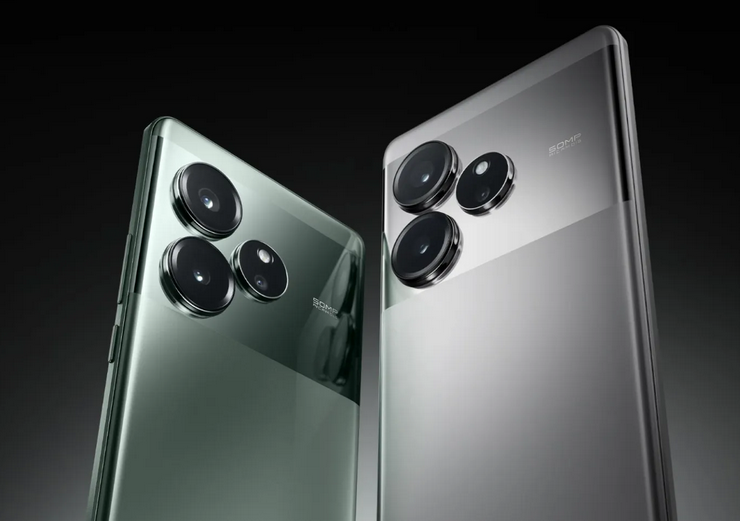
Now, both renders and real-life images of the smartphone have surfaced online, revealing its design. The images show a unique rear design of the Redmi Turbo 3 – unlike anything we’ve seen on previous Redmi phones.

The camera module essentially covers the top of the smartphone but what’s interesting is the actual camera sensor placement. There are two camera lenses that are vertically stacked on the left. One of them is said to be a main 200MP camera with Optical Image Stabilization (OIS). 

Additionally, there’s a small cutout in the center that likely houses a macro sensor. Adjacent to it is an LED ring-shaped light and the Redmi logo.

While the hands-on image may be somewhat blurry, we’ve included a set of renders below for a clearer view of the design. The back panel also has a dual-tone design and curved edges likely for improved grip when holding the smartphone.

Redmi Turbo 3’s Geekbench listing previously revealed that the smartphone will be powered by a Snapdragon 8s Gen 3 processor with up to 16GB of RAM. A Redmi Turbo device, potentially the Turbo 3, was also spotted on 3C certification last month, hinting at support for 90W charging. 

The phone is expected to come with a 5500mAh battery. Other rumored specifications of the Turbo 3 include a 6.67-inch 120Hz OLED display and HyperOS based on Android 14.

The Redmi Turbo 3 is expected to launch later this month, with Xiaomi likely to begin teasing its arrival and confirming the launch date soon.

Related:

Huawei’s upcoming MatePad tablet TGRL-10 passes radio and network certification

Huawei is gearing up to release its latest MatePad tablet, having secured radio and network certification for the device. The tablet, with the model number TGR-L10, is expected to join the MatePad series as its latest addition.

According to reliable sources, including tipster @DigitalChatStation, the TGR-L10 MatePad tablet is set to be a powerhouse, potentially featuring the Kirin 9000 chipset. This chipset is renowned for its performance prowess, promising seamless multitasking and smooth user experience.

Certification details indicate that the MatePad TGR-L10 will support various network standards, including TD-LTE, LTE FDD, WCDMA, and GSM, ensuring widespread connectivity capabilities. Despite specific design and internal parameter details being kept under wraps, there’s substantial speculation regarding its potential features.

Moreover, rumors suggest that Huawei might introduce a MatePad Paper variant, designed for enhanced productivity and efficiency. This model is expected to support Nearlink technology, enabling seamless connectivity with compatible accessories such as keyboards and mice. Such accessories could potentially harness the power of a new Kirin chip, further elevating the user experience.

The anticipation surrounding the MatePad TGR-L10 and the potential MatePad Paper variant highlights Huawei’s innovative approach in the tablet market. With Nearlink technology likely to be integrated into flagship devices, users can expect enhanced connectivity for efficient file transfers and browsing experiences.

While specific details regarding the MatePad TGR-L10’s design, internal specifications, and charging capabilities are yet to be disclosed, enthusiasts eagerly await its official unveiling. Huawei’s track record of delivering cutting-edge technology coupled with the excitement surrounding the MatePad series ensures that all eyes will be on the company’s upcoming announcements.

Related:

(via)

Honor Magic 6 Pro RSR Porche Design global launch imminent, clears IMDA certification

Last month, Honor debuted its latest range of flagship-tier smartphones in its home market of China including the Honor Magic 6 RSR Porsche Design and the Magic 6 Ultimate. Now, the Honor Magic 6 Pro RSR Porsche Design smartphone has also emerged on the IMDA certification website, revealing that it might soon debut in the global market.

Honor Magic 6 RSR Porsche Design

While the IMDA certification does not reveal any specifications onboard the Magic 6 Pro RSR Porsche Design design device, it does confirm its model number BVL-N59. This listing also means that the device is greenlit to launch in Singapore in the coming days.

Honor Magic 6 Pro RSR Porsche Design

That being said, the BVL-N59 model number is the same as the Magic 6 RSR Porsche Design’s model number, which indicates that the brand could rebrand the Magic 6 RSR Porsche Design as the Magic 6 Pro RSR Porsche Design for the global launch. This is currently a mere speculation so it should be taken with a pinch of salt until further confirmation. In the meantime, you can check out the specifications of the Honor Magic 6 RSR Porsche Design below.

Honor Magic 6 RSR Porsche Design specs:

The Honor Magic 6 RSR Porsche Design draws inspiration from the Porsche Taycan electric sports car for its design. It boasts a 6.80-inch OLED display with 1280×2800 pixels resolution, 120Hz refresh rate, and 1800 nits peak brightness that can go up to 5,000 nits while viewing HDR content.

Honor Magic 6 RSR Porsche Design

Under the hood, the device is powered by a Snapdragon 8 Gen 3 SoC and operates on MagicOS 8.0. It packs 24GB of RAM and 1TB of internal storage. In the camera department, it features a triple rear camera setup consisting of a 50MP wide-angle camera with OIS, a 180MP periscope telephoto camera with OIS, and a 50MP ultra wide-angle camera. For selfies, there’s a 50MP wide-angle camera on the front.

The device is fueled by a 5600mAh battery that supports fast charging with 80W Honor SuperCharge technology and 66W Honor Wireless SuperCharge capability.

RELATED:

Huawei’s triple folding phone and “Vision Pro” headset rumored to hit stores soon

Huawei‘s upcoming launch is expected to feature the P70 series smartphones, although there have been reports of delays. Despite this setback, leaks have been continuously surfacing shedding light on the features of the upcoming smartphones.

In addition to the P70 series, Huawei is also working on several other products, including a tri-fold smartphone and an MR headset named Huawei Vision Pro. According to a Weibo blogger known as SmartPikachu, Huawei has now completed the development of these two products.

The blogger also hinted that Huawei is eager to “put them into stores” suggesting that their launch might be imminent.

The triple-folding phone from Huawei has been a topic of discussion for some time now. It is expected to feature a Z-shaped or S-shaped folding design with a screen size of approximately 10 inches (25.4 cm).

Reports suggest that BOE will supply the panels for Huawei’s new folding phone, while companies like Zhaoli and Fusda are involved in hinge production. Huawei is said to have commenced large-scale material procurement for this project.

Huawei’s Vision Pro headset, on the other hand, is reportedly an MR headset equipped with a flagship-grade chipset.  The high-end processor would help in offering a more immersive and seamless experience. 

The wearable is also expected to address a major concern of other MR headsets: thermal dissipation. Rumors are that Huawei will offer the headset with a robust cooling mechanism.

However, nothing is confirmed at the moment, so it’s best to take these details with a grain of salt. While details about Huawei’s new triple-folding phone and headset remain limited, we will continue to keep you updated on any developments regarding these products.

Related:

Vivo T3x chipset and battery spec leaks; BIS listing hints at imminent India launch

Vivo is expected to add another compelling contender to its T series of smartphones with the upcoming T3x. The device has recently been spotted on both Bluetooth SIG and BIS certifications, confirming its name and hinting at an imminent launch in India.

Now, a report by MySmartPrice has revealed some of the key specifications of the device. Let’s take a closer look. 

Vivo T3x Specifications (Rumored)

According to the report, the Vivo T3x will be equipped with the Snapdragon 6 Gen 1 chipset. It’s an octa-core configuration manufactured on a 4nm process. Its core architecture includes four Cortex-A78 and four Cortex-A55 cores, along with an Adreno GPU.

Vivo
Vivo T2x

Furthermore, the T3x is touted to be Vivo’s first slim smartphone to house a massive 6000mAh battery. The phone will have a rated battery life of up to two days. In terms of audio, the phone will feature a dual stereo speaker setup with an audio booster, delivering a volume increase of up to 300%.

Beyond these details, the report doesn’t offer further information about the smartphone. However, there are speculations that Vivo might unveil the device sometime in the third week of April, possibly between April 19th and 22nd.

The Vivo T3x will succeed the Vivo T2x, which was launched in April 2023. The T2x boasted a 6.58-inch IPS LCD display with FHD resolution and a water-drop style notch.

Vivo
Vivo T2x

Under the hood, it was powered by a Dimensity 6020 processor paired with up to 8GB of RAM and 128GB of storage. The camera setup included a 50MP main sensor and a 2MP macro sensor on the rear, along with an 8MP lens on the front for selfies. The device was fueled by a 5000mAh battery with support for 18W charging.

Related: