The battle among AI companies is increasingly shifting toward hardware that powers advanced models, with Anthropic eyeing custom chip development in collaboration with Samsung, according to a report from The Information.
This is not a sudden move from Anthropic. Back in April, the AI company was weighing the idea of producing its own AI chips in response to insulate its infrastructure from chip shortages. Now, it appears the company is finally moving ahead with this idea.
Anthropic hasn’t yet finalized what the chip will be used for and the level of computing performance it aims to deliver, according to the report. While the company declined to confirm any partnership with Samsung, it told TechCrunch that their “diversified hardware stack that includes chips from Google, Amazon, and Nvidia will continue to be pivotal to its compute strategy.”
Anthropic’s move to build its own chips isn’t very surprising, as many AI companies have been doing so either to cater to specific compute tasks or to gain some independence from Nvidia. However, the timing of this reported collaboration is more important.
Anthropic’s biggest rival, OpenAI, recently unveiled its own custom inference chip developed in partnership with Broadcom. OpenAI says this chip, dubbed “Jalapeño,” is more efficient and achieves significantly better performance-per-watt in early testing compared to leading general-purpose AI GPUs. This could have triggered Anthropic to pace its custom chip development efforts.
Samsung is a key player in the AI supply chain. The South Korean giant is a major partner of Nvidia, producing chips that the company needs for training and deploying advanced AI models. Nvidia’s software tools also play a crucial role in the manufacturing process.
Samsung is working with Nvidia on an AI chip factory in South Korea and is reportedly in discussions with Google about chip manufacturing. The company has already secured orders from Tesla for manufacturing its next-generation AI chips.
The Redmi 17 5G appears to be inching closer to its global debut as it has surfaced on two certification platforms. While one listing confirms the handset’s identity, another reveals several important hardware details, giving us a better idea of what to expect before Xiaomi makes anything official. The development was first spotted by XpertPick.
SIRIM and NCC listings reveal key details
Refmi 17 5G NCC listing
The upcoming Redmi 17 5G, carrying the model number 26062RN92G, has been approved by Malaysia’s SIRIM certification platform. Although the listing only confirms the device’s marketing name and model number, its appearance suggests that the smartphone is being prepared for international markets.
It also reveals that Redmi has skipped the Redmi 16 branding and will move directly from the Redmi 15 series to the Redmi 17 lineup. The same handset has also been certified by Taiwan’s NCC authority, which discloses much more about the device.
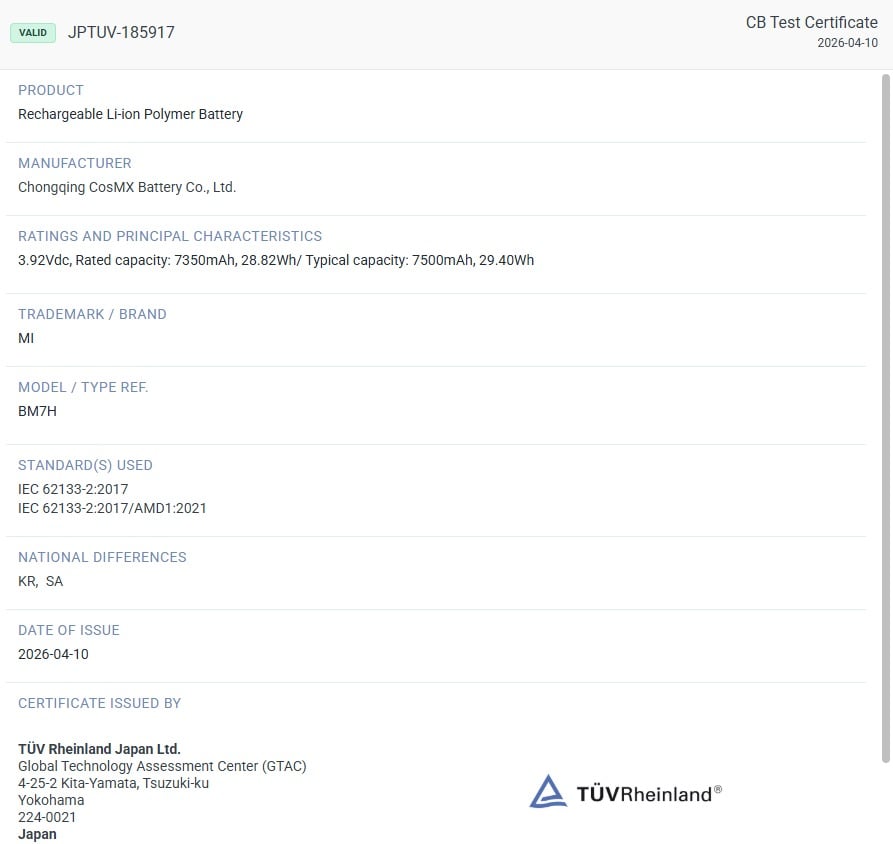
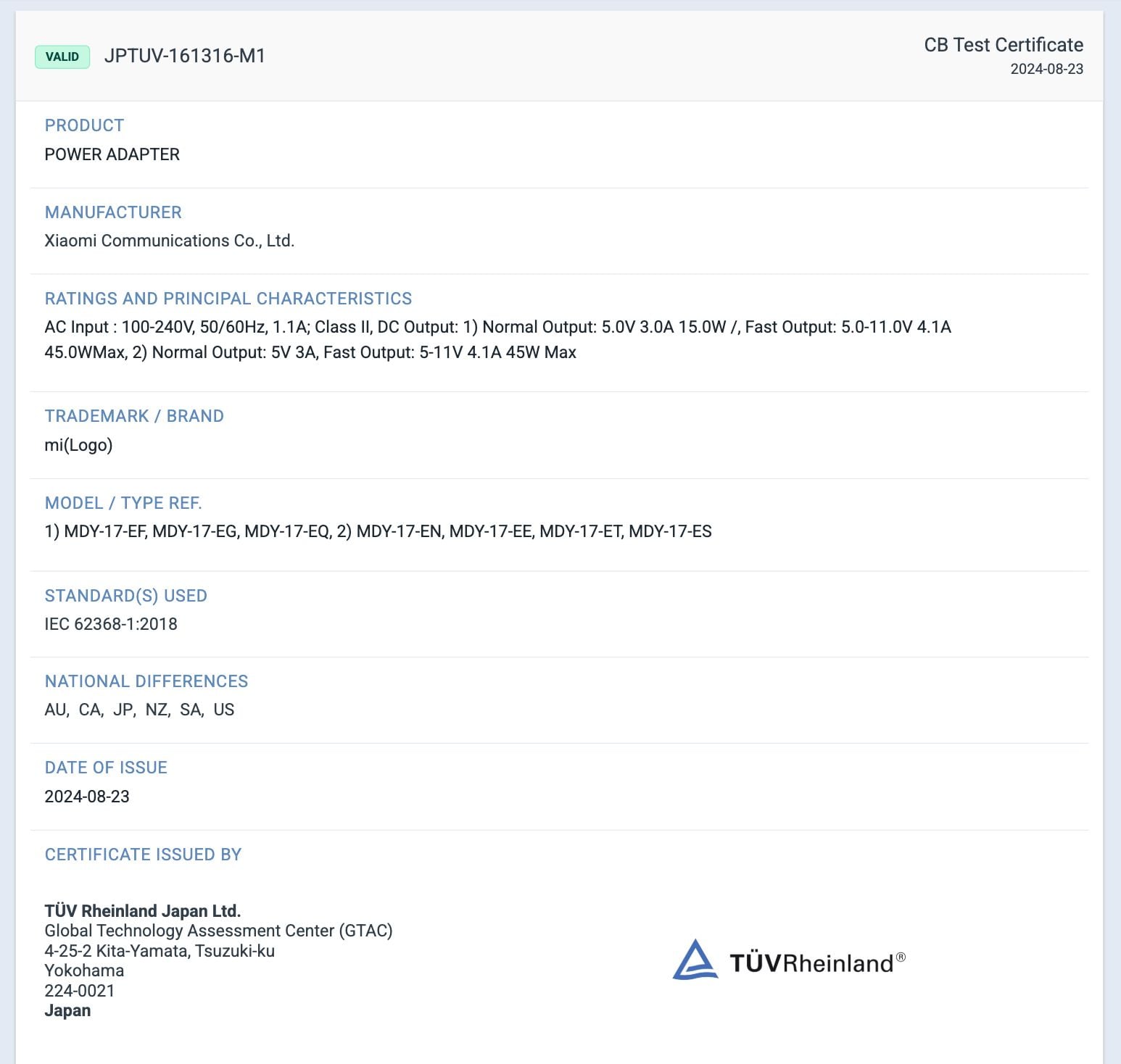
According to the NCC database, the Redmi 17 5G is expected to arrive in four memory configurations. Buyers may get options including 4GB+64GB, 4GB+128GB, 4GB+256GB and 8GB+256GB. The certification also confirms the battery model number BM7H and the bundled charger bearing the model number MDY-17-EN.
Information cross-checked with the earlier TÜV certification indicates that the Redmi 17 5G could pack a large 7,500mAh battery. The included charger is expected to support up to 45W fast charging. If this turns out to be accurate, it would be an upgrade over the Redmi 15 5G, which offered a 7,000mAh battery with 33W charging.
Coming back to the NCC listing, the Redmi 17 5G will be equipped with connectivity features, such as 5G, 4G LTE, VoLTE, dual-band Wi-Fi, Bluetooth, NFC and a USB Type-C port. The certification further points to an IP64-rated design for protection against dust and water.
While Redmi is yet to announce an official launch date, these certifications suggest that the Redmi 17 5G could make its global debut in the near future.
For more daily updates, please visit our News Section.
Content creators and filmmakers looking for high-quality audio in a tiny package now have a strong new option. DJI just launched the Mic Mini 2S, a compact wireless microphone system that delivers pro-level features without weighing you down.
What really stands out is its support for 32-bit floating-point internal recording. This means it can capture everything from quiet whispers to sudden loud sounds without distortion or clipping, giving you much more flexibility when editing later. The transmitter has a generous 14.5GB of built-in storage, which supports up to 28 hours of loop recording. You can record in raw format for detailed post-production or processed files if you want something ready to use right away.
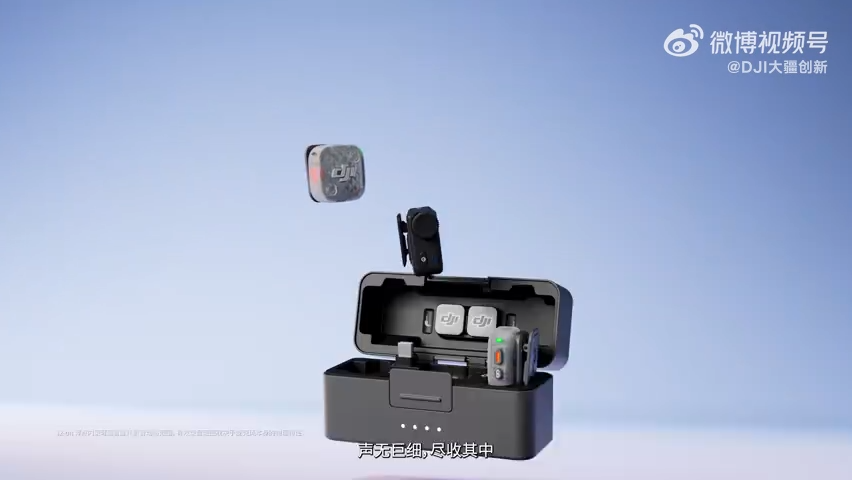
The transmitter is incredibly light at just 12 grams. It features a detachable magnetic clip that rotates and a removable front cover, so you can easily customize it. It comes in Obsidian Black and Cloud White, with extra color options and windproof fur covers available separately.
The noise reduction system has two modes: Weak for indoor spaces (great for cutting fan noise or echo) and Strong for outdoor environments with traffic or wind. Battery life is solid too, with up to 11 hours on the transmitter and 10 hours on the receiver. The charging case pushes total usage to around 40 hours, and fast charging gives you about an hour of use from just five minutes plugged in. You can even use the transmitter by itself as a standalone voice recorder.
On the connectivity side, one receiver can pair with up to four transmitters (including older DJI models), and it supports mono, stereo, or quad track output, which is super useful for editing. It works directly with DJI’s Osmo Pocket 4, Action 6, and other devices in their ecosystem, plus it supports Bluetooth connections to phones. The transmission range goes up to 400 meters in ideal conditions.
Pricing and availability
In China, DJI is offering several bundles:
One-to-two charging case kit: 1199 yuan (roughly €154 at the current exchange rate)
1-to-1 bundle: 629 yuan
Phone-to-phone kit with case: 629 yuan
Single transmitter: 399 yuan (~ €51)
Special artist collaboration magnetic covers: 199 yuan
While the Mic Mini 2S is expected to launch in global markets soon, DJI hasn’t announced official pricing for regions outside China yet.
The Oppo Find X10 Ultra is still some time away from its expected debut, but leaks surrounding the flagship have already started surfacing. A new tip from a reliable source suggests Oppo is testing one of its most advanced camera systems yet, with a particular focus on long-range photography.
Oppo Find X10 Ultra camera specifications tipped
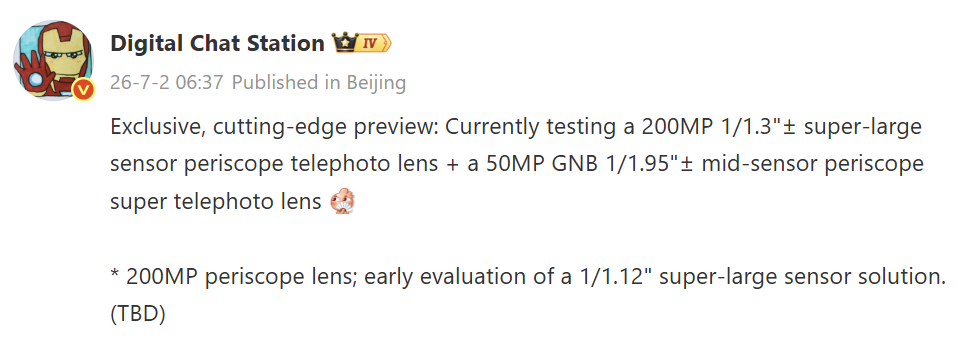
According to tipster Digital Chat Station, Oppo is testing a flagship smartphone with a dual periscope telephoto camera setup. While he did not specify the phone’s name, it appears that he could be talking about the Find X10 Ultra.
The prototype is said to feature a 200-megapixel periscope telephoto camera with an approximately 1/1.3-inch sensor, accompanied by a 50-megapixel periscope super telephoto camera with an approximately 1/1.95-inch sensor, which is said to support 10x optical zoom. In the comments section of the post, the tipster added that the final 200-megapixel telephoto sensor has not yet been decided, with another HP-series sensor remaining under consideration.
The tipster also revealed that Oppo had previously evaluated an even larger 1/1.12-inch sensor for the 200-megapixel periscope camera during the early stages of development. However, that configuration is still under evaluation and has not been finalized.
Previous reports claim the Oppo Find X10 Ultra could feature a 6.89-inch 2K LTPO BOE display with ultra-narrow symmetrical bezels and support for the BT.2020 colour gamut. It is also expected to be powered by Qualcomm’s forthcoming Snapdragon 8 Elite Gen 6 chipset, which is likely to be manufactured using TSMC’s 2nm process. The flagship is tipped to pack a battery exceeding 7,000mAh, with some rumours pointing to a capacity of around 8,500mAh.
Oppo Find series Product Manager Zhou Yibao has already confirmed that the Find X10 Ultra will not launch in 2026. Based on current leaks, the device is expected to debut in the first quarter of 2027, while the standard Find X10, Find X10 Pro, and Find X10 Pro Max are expected to arrive between September and October 2026.
For more daily updates, please visit our News Section.
Xiaomi was expected to release Android 17 soon, with a new HyperOS 4 custom skin on top, but now it seems the company may have different plans. Leaked internal firmware files for Xiaomi’s latest flagship phones suggest the company may be developing HyperOS 3.3 based on Android 17.
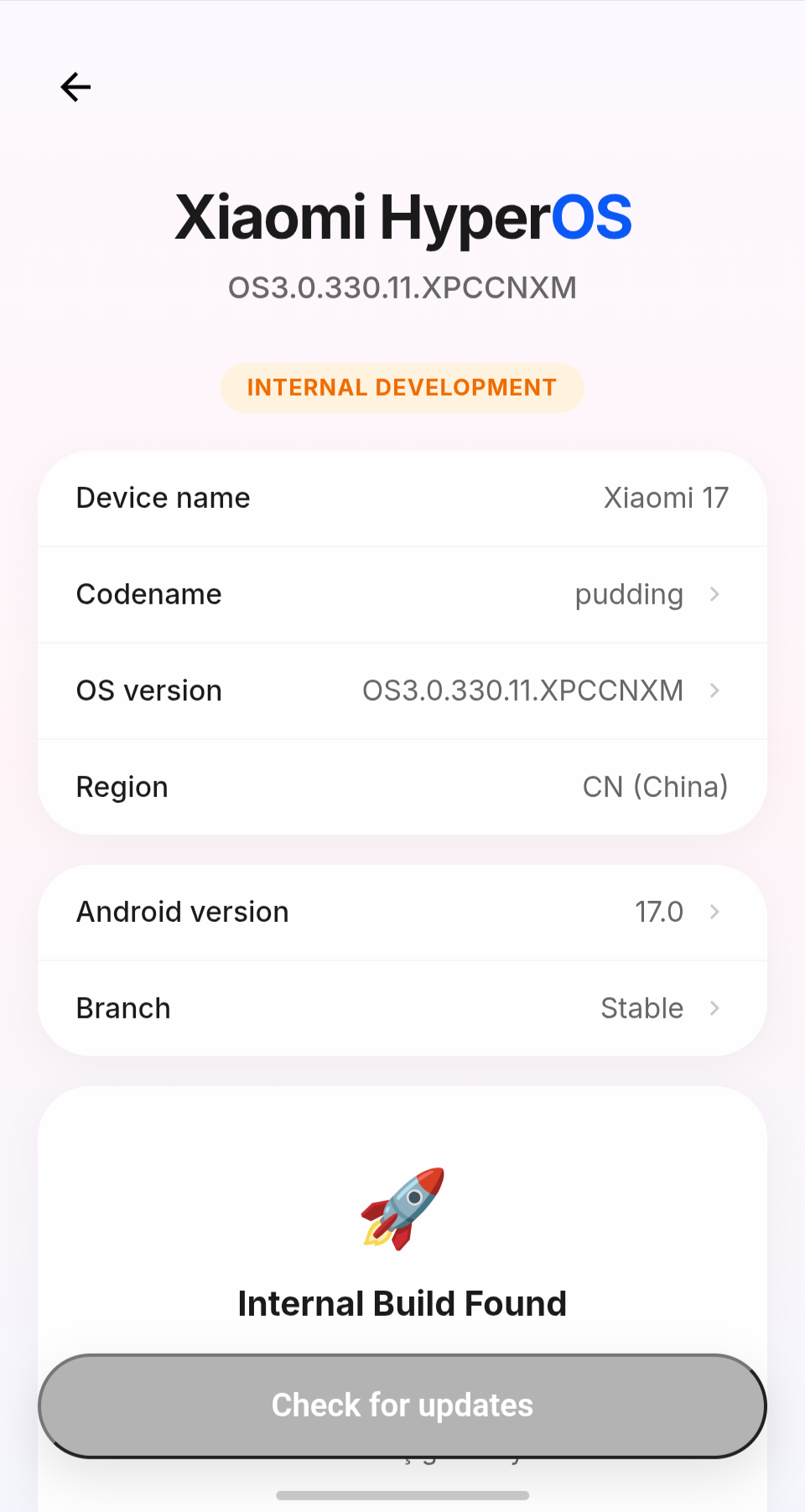
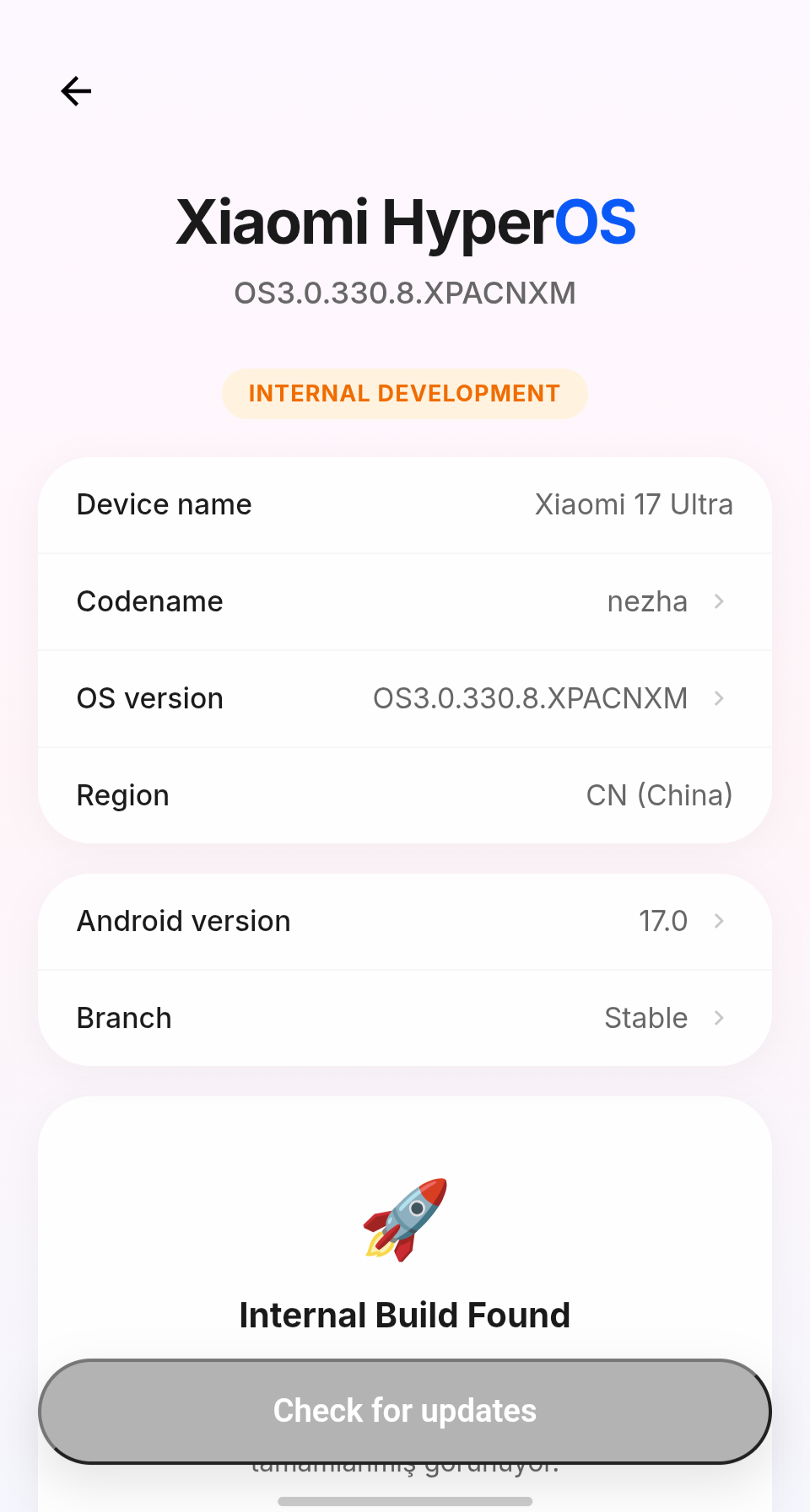
The Xiaomi 17 and Xiaomi 17 Ultra have been spotted (via Ximitime) with an unreleased HyperOS 3.3 firmware version, based on Android 17. While these are internal engineering builds and not intended for public release, they suggest Xiaomi may be testing them behind the scenes for a wider release later this year.
Xiaomi 17: OS3.0.330.11.XPCCNXM
Xiaomi 17 Ultra: OS3.0.330.8.XPACNXM
Interestingly, these builds have no mention of HyperOS 4, which was expected to be released with Android 17. However, since the new firmware is still under internal testing, I’d wait for more concrete details before reaching a conclusion.
That wait isn’t going to be much longer, as the next major HyperOS version, based on Android 17, has been officially confirmed for release in July or August. Ahead of the release, we can expect official teasers that should reveal whether it’s HyperOS 3.3 or HyperOS 4.0 coming to your phone.
Regardless of the HyperOS versions, we expect to see major upgrades to personal intelligence, new UI elements, deeper liquid glass UI integration, and plenty of under-the-hood improvements to make the system faster and more responsive. So, there’s a lot to look forward to with the upcoming HyperOS update.
In case you haven’t checked whether your Xiaomi device is eligible for the next big HyperOS 4 update, check out the complete list on this page.
We’ll keep you posted as we receive fresh details. You can visit the Xiaomi section on this website to stay updated, or simply join our Telegram channel to receive instant notifications.
The Redmi Note 17 series has already been officially confirmed to launch in China later this month. Meanwhile, several reports have claimed that the Redmi K100 series could debut as early as August in China, significantly earlier than the October 2025 debut of the Redmi K90 lineup. However, it now appears that the most powerful model in the K100 series may not launch this year.
Redmi K100 Pro Max launch timeframe (rumored)
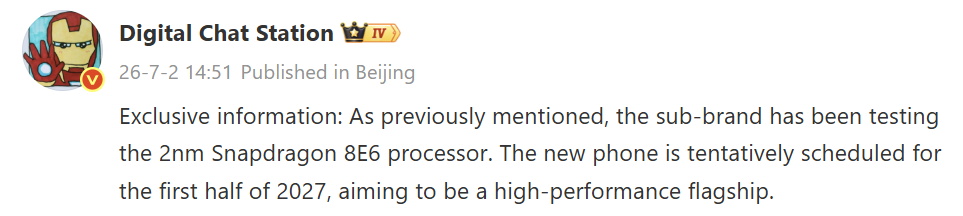
According to tipster Digital Chat Station, a Redmi flagship powered by Qualcomm’s upcoming 2nm Snapdragon 8 Elite Gen 6 series flagship chipset is currently undergoing testing and is tentatively scheduled to launch in the first half of 2027. The tipster did not reveal the device’s marketing name, but it could be the rumored Redmi K100 Pro Max, which is expected to sit at the top of the K100 lineup.
The Snapdragon 8 Elite Gen 6 series chipset is expected to be fabricated on TSMC’s 2nm N2P process and feature Qualcomm’s next-generation Oryon CPU architecture with two prime cores, three performance cores, and three efficiency cores. Previous reports suggest the prime cores could surpass the 5GHz frequency mark. The device is also rumored to feature an advanced cooling solution, possibly including an active cooling fan for improved sustained performance.
Redmi K100 series expected to arrive in August
While the Snapdragon 8 Elite Gen 6-powered flagship may arrive next year, the first Redmi K100 series models are still expected to launch in China this August. Previous leaks suggest the initial lineup will include the Redmi K100 and Redmi K100 Pro (tentative names), both powered by the Snapdragon 8 Elite Gen 5 chipset.
The series is also tipped to feature a 185Hz display, a 9,000mAh battery, a 200-megapixel primary camera, a 50-megapixel periscope telephoto camera, 100W wired charging, wireless charging support, an ultrasonic in-display fingerprint scanner, stereo speakers, a large vibration motor, and an IP-rated water-resistant design.
For more daily updates, please visit our News Section.
Recent reports have revealed that the upcoming Vivo X500 series lineup may include multiple models, such as the Vivo X500e, X500, X500 Pro (or Pro Mini), X500 Pro Max, and X500 Ultra. Among these, the X500e and X500 Ultra are expected to launch in the first half of next year, while the remaining three models may debut in China this September.
In a recent Weibo post, reliable tipster Digital Chat Station shared the camera details of the X500 Pro Max. Now, the tipster is back with a new leak, revealing what appears to be detailed information about the Vivo X500’s camera specifications.
Vivo X500 camera specifications tipped
X
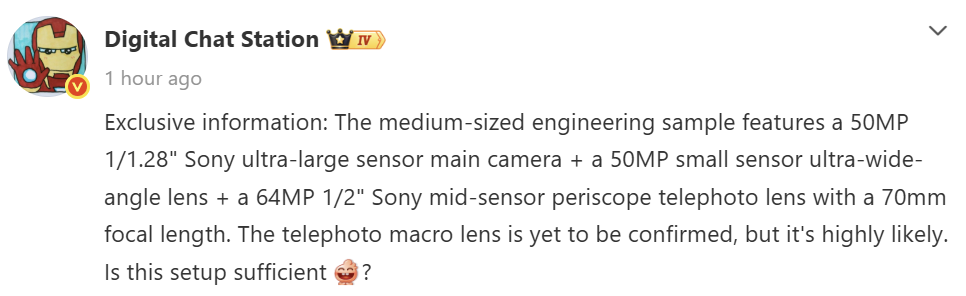
According to DCS, an engineering prototype believed to be the upcoming Vivo X500 is equipped with a triple rear camera setup. The leak claims the device features a 50-megapixel Sony primary camera with a large 1/1.28-inch sensor, a 50-megapixel ultra-wide camera, and a 64-megapixel Sony periscope telephoto camera with a 1/2-inch sensor and a 70mm equivalent focal length.
The tipster added that telephoto macro support has not yet been confirmed, although it is likely to be included in the final hardware.
As for the rest of the specifications, the Vivo X500 is expected to feature a 6.59-inch OLED display with a 1.5K resolution. Under the hood, it is likely to be powered by a Dimensity 9500-series chipset and pack a massive 7,500mAh battery. At present, there is no information about the device’s fast charging capabilities.
For more daily updates, please visit our News Section.
The iQOO Z11i has been launched in China as the fourth member of the Z11 series after the iQOO Z11x, Z11, and Z11 Turbo. Aimed at the entry-level segment, the new smartphone combines a large battery, a high refresh rate display and practical everyday features, while also bringing back a design element that has become increasingly uncommon in recent years, the waterdrop notch.
iQOO Z11i specifications and features
iQOO Z11i
The iQOO Z11i features a 6.74-inch LCD panel with an HD+ resolution of 1600 x 720 pixels, a 120Hz refresh rate and up to 1,200 nits peak brightness. The waterdrop notch display also supports DC dimming, a paper-like viewing mode and TÜV Rheinland low blue light certification for improved eye comfort.
Powering the device is the Snapdragon 4 Gen 2 chipset, paired with up to 8GB of LPDDR4X RAM and up to 256GB of UFS 3.1 storage. It also supports expandable storage through a microSD card.
Keeping the lights on is a 6,500mAh battery with 15W charging support and reverse wired charging. The phone runs Android 16 with OriginOS 6 on top.
For photography, it offers a 5-megapixel front-facing camera and a 13-megapixel rear camera with autofocus and support for up to 1080p video recording. Other features include a side-mounted fingerprint scanner, a 3.5mm headphone jack, USB Type-C, Bluetooth 5.1, an IR blaster, IP65-rated dust and water resistance, SGS five-star drop resistance certification and a hybrid dual-SIM slot.
iQOO Z11i price and availability
The iQOO Z11i is now available in China in Ink Shadow, Qingfeng and Desert Gold colour options. The 6GB + 128GB model is priced at 1,299 Yuan (~$190), the 8GB + 128GB version costs 1,499 Yuan (~$209), while the top-end 8GB + 256GB variant is priced at 1,699 Yuan (~$237).
For more daily updates, please visit our News Section.
Casio is expanding its Baby-G lineup in Japan this month with the release of the BGA-290SA series. The two new models, BGA-290SA-6AJF and BGA-290SA-7AJF, are currently available for pre-order and will officially launch in later this month for ¥15,950 ($98).
Design Details
The BGA-290SA series opts for a straightforward, round case design. The watches are available in two colorways: a pale purple and a soft white. The dial features standard metallic Arabic numerals and a glossy vapor deposition finish on the bezel ring. It uses a hybrid analog-digital display, meaning you get traditional physical hands alongside a small digital screen at the bottom of the watch face for additional data.
From a build perspective, the watch is pretty lightweight. It weighs just 33 grams and measures 45.2 x 41.5 x 10.1 mm. Both the case and the band are made of resin, and the display is protected by standard mineral glass. Like most watches in the Baby-G family, it is built for durability. It features Casio’s standard shock-resistant construction and 100 meters of water resistance, making it suitable for swimming and general outdoor use.
The internal feature set is standard for a modern, non-smart Casio timepiece. It is powered by a CR1025 battery rated for around three years and includes world time across 48 cities in 31 time zones, a 1/100 second stopwatch, a 24-hour countdown timer, five daily alarms, and an hourly time signal.
For visibility in low light, the watch includes a Double LED light system. This consists of one LED for the analog face and a separate LED backlight for the digital LCD display, both featuring selectable illumination durations and an afterglow effect. It also features a hand shift feature, which allows users to temporarily move the analog hands out of the way so they do not obstruct the digital readouts on the lower half of the dial.
Running out of storage always seems to happen at the worst possible time. It could be while recording a 4K video, downloading a new game or backing up important files before a trip. That’s when a reliable USB-C flash drive/pendrive or portable SSD can save the day.
But if you’re already overwhelmed by the sheer number of options available and can’t figure out which one is right for you, we’ve done the hard work. Here’s our roundup of the best USB-C flash drives and portable SSDs you can buy in 2026.
USB-C flash drives vs portable SSDs: Which one should you buy?
Before adding one to your cart, it’s worth knowing the difference between a USB-C flash drive and a portable SSD because they both cater to different kinds of users.
A USB-C flash drive is like a mini notebook or diary in your pocket. It’s compact, affordable, and perfect for everyday tasks like transferring photos, sharing presentations, backing up documents or expanding your phone’s storage. Most of them are small enough to live on your keychain, so they’re always within reach.
Portable SSDs, on the other hand, are more like carrying an entire filing cabinet that somehow fits in the palm of your hand. Still small, of course, but not as compact as flash drives.
They’re significantly faster, offer much larger capacities, and are built for handling demanding workloads, such as editing 4K videos, transferring hundreds of gigabytes of data or storing massive game libraries. They do cost more, as well, but if speed and capacity matter to you, they are the best option.
1TB, USB-C connector, USB 3.2 Gen 2, Up to 600MB/s
Rs 22,412
Kingston DataTraveler Exodia
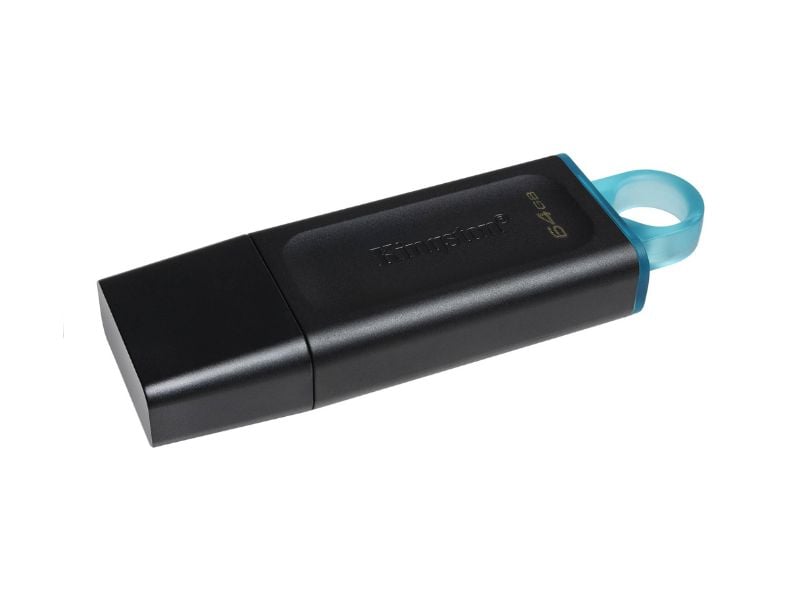
If all you need is a reliable drive for carrying everyday files, the 64GB variant of the Kingston DataTraveler Exodia is an easy recommendation. It’s affordable and gets the work done. The drive comes with a lightweight design, a protective cap, and a large loop that makes it easy to attach it to a keychain. This is great for basic tasks, like carrying office presentations, movies, and family photos.
It supports USB 3.2 Gen 1 interface, which means you get quicker file transfers than older USB 2.0 drives. On paper, it’s said to offer up to 400MB/s read speeds. Kingston also backs it with a five-year warranty, making it a dependable option for long-term use.
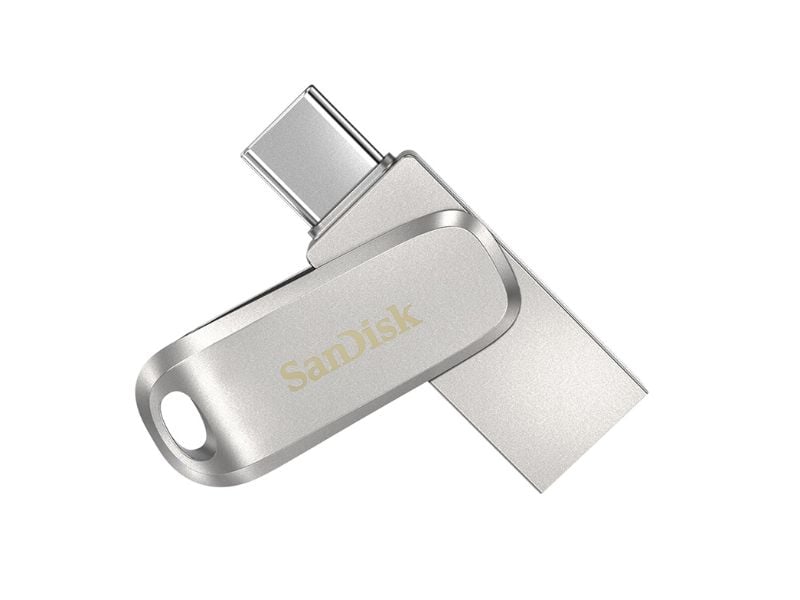
The SanDisk Ultra Dual Drive Luxe is one of the best sellers on Amazon, as it’s incredibly versatile. One side features a USB Type-C connector, while the other has a traditional USB Type-A port. So, if you’re transferring files from your smartphone to your laptop or moving photos to an older desktop, this drive saves you from hunting for adapters.
The drive’s all-metal construction feels quite premium, while the swivel design protects both connectors without needing a separate cap.
Performance is solid too. Thanks to USB 3.2 Gen 1 support, transferring photos, videos and documents is quick. It supports up to 400MB/s faster read speeds, and doesn’t cost a bomb for the 128GB and 256GB variants.
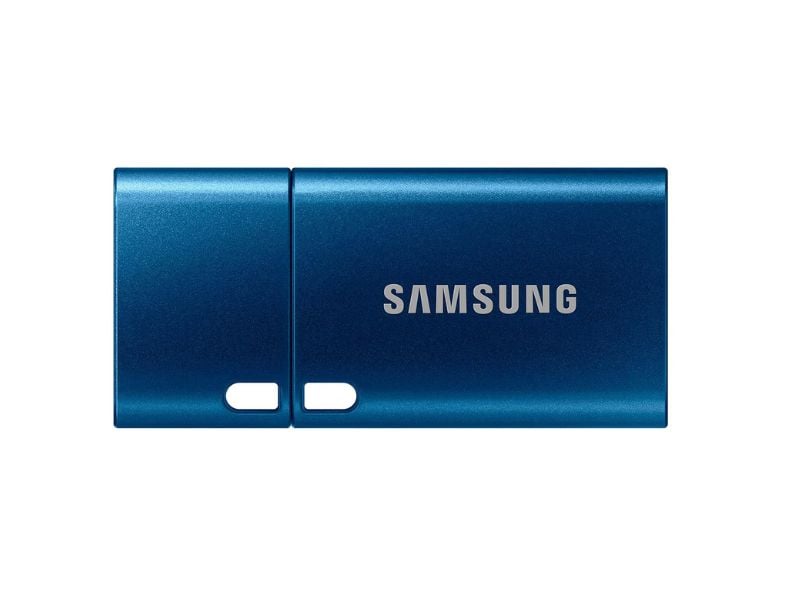
Samsung’s Type-C flash drive is another reliable option, and it’s also fast offering up to 400MB/s read speeds. It has a clean metal design that’s small enough to stay plugged into a laptop without sticking out too much.
Samsung also backs it with protection against water, shocks, magnets, X-rays, and extreme temperatures, making it a dependable choice if you regularly carry important files. The 128GB is the cheapest, but you also get a 256GB variant, if you plan to store extra files.
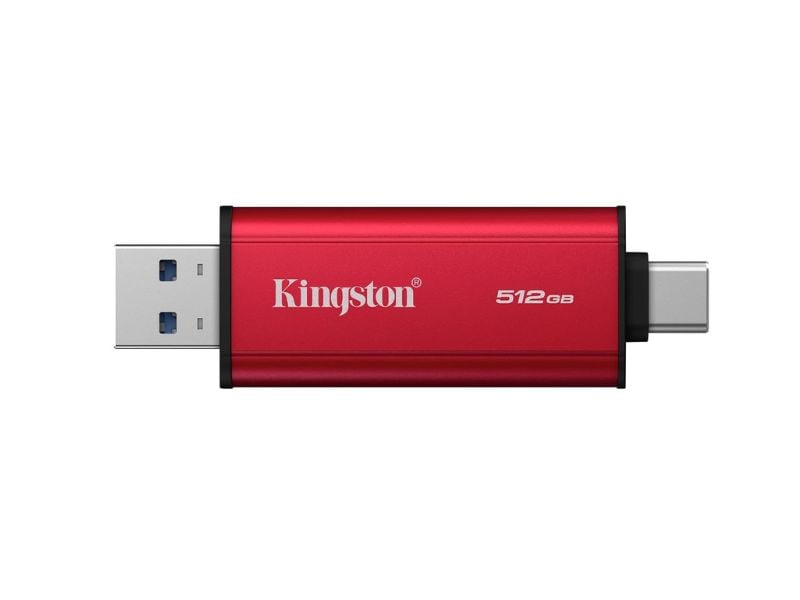
The Kingston Dual Portable blurs the line between a traditional USB flash drive and a portable SSD. At first glance, it seems like an ordinary USB-C thumb drive, but beneath its compact shell lies SSD-level performance.
Thanks to its USB 3.2 Gen 2 interface, it delivers read speeds of up to 1,000MB/s and write speeds of up to 900MB/s, making it the fastest flash drive in the segment.
That faster speed means you can copy a 4K video project, a massive game or movie library, or hundreds of RAW photos in far less time than you’d expect from a typical flash drive. Pair that with the 1TB variant, and you’ve essentially got an entire workstation that fits in your pocket.
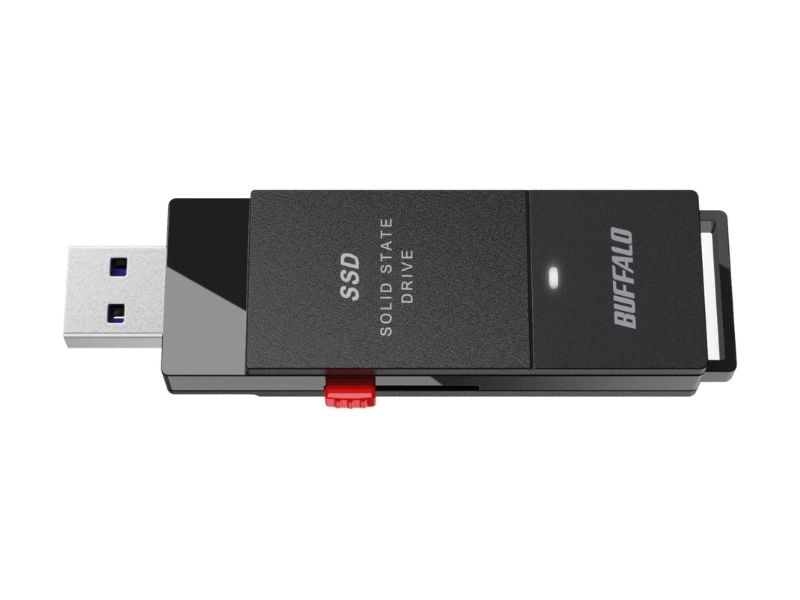
The Buffalo SSD looks like an ordinary flash drive, but don’t let its size fool you. Yes, it’s a tiny SSD drive but with support for a USB-C adapter that ships within the box. It supports USB 3.2 Gen 2 performance with read speeds of up to 600MB/s and write speeds of up to 500MB/s. That’s significantly faster than a typical flash drive and close to what you’d expect from an entry-level SATA SSD.
Unlike most portable SSDs, there’s no separate enclosure or cable to carry around. Just plug it into your laptop, tablet or smartphone and you’re ready to transfer large files in seconds.
The only real compromise with the Buffalo flash drive is its plastic casing, which doesn’t feel as premium or rugged as the metal enclosures found on some competing drives.
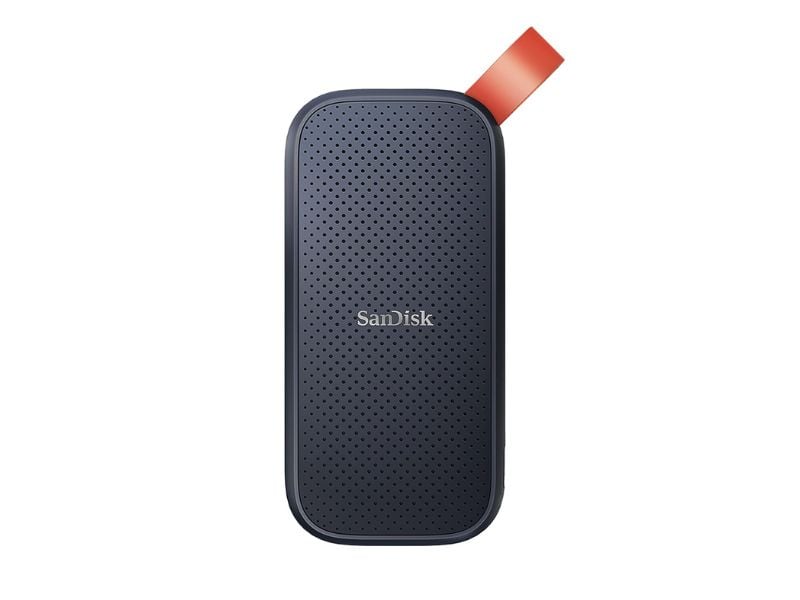
The SanDisk Portable SSD is the sweet spot for most users, striking the right balance of speed, portability, and price. It weighs just 40 grams, and is about the size of a stack of credit cards, which makes it easy to slip into your pocket or backpack.
It supports USB 3.2 Gen 2 platform, with read speeds of up to 800MB/s, so moving large photos, videos and documents will be quicker than a traditional hard drive. It’s also shock resistant with 2-metre drop protection, meaning it can shrug off the occasional knock while travelling.
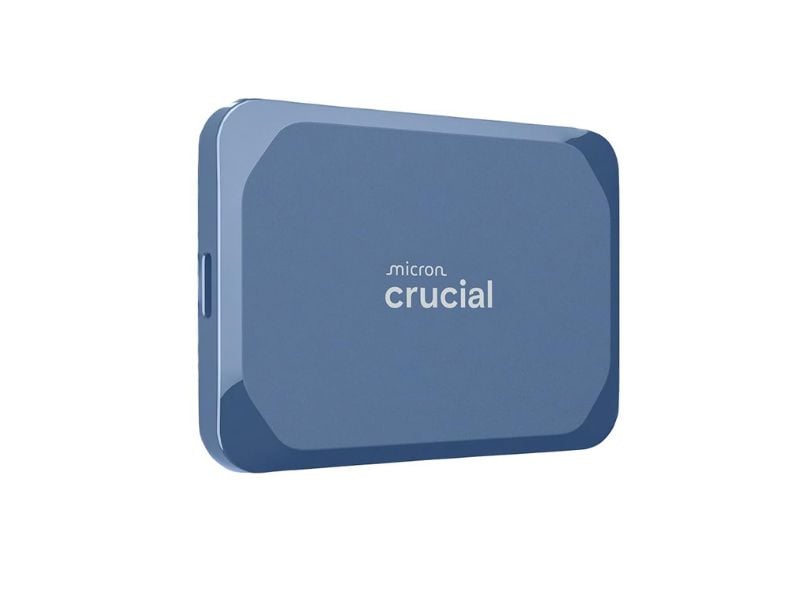
Need something faster and tougher? The Crucial X10 is a performance SSD with read speeds of up to 2,100MB/s, which means even huge 4K video projects, RAW photo libraries, and game files can be transferred in minutes.
It also carries an IP65 rating for dust and water resistance along with 3-metre drop protection, which means it’s ready for everything from your desk to an outdoor shoot. The 1TB variant is a great place to start, but if your storage needs grow over time, it’s also available in capacities of up to 8TB.
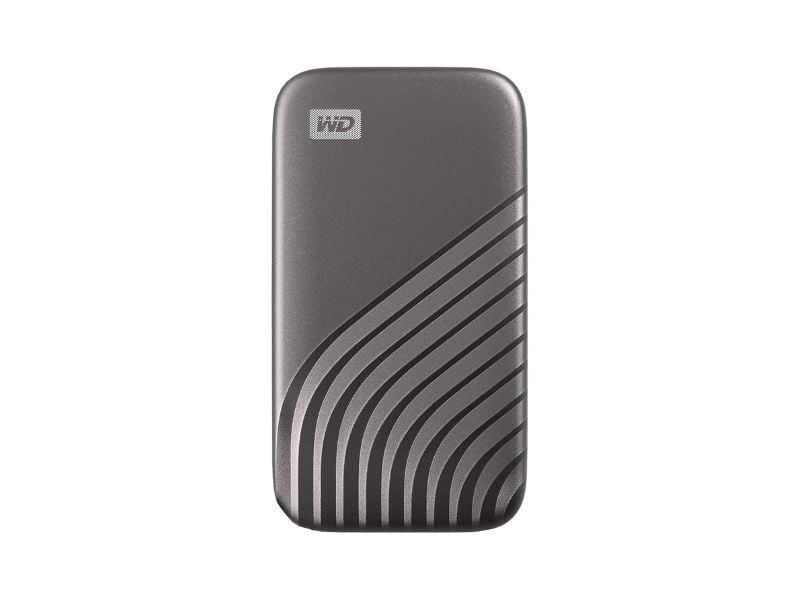
The WD My Passport SSD is designed for users who don’t want to compromise on speed or security. Its sleek metal body houses a USB 3.2 Gen 2 interface with read speeds of up to 1,050MB/s and write speeds of 1,000MB/s, so everything from project folders to full system backups can be moved in a matter of minutes.
Just like some other SSDs on this list, the My Passport also has 256-bit AES hardware encryption and password protection. These ensure your confidential files are always safe. It also features a durable, shock-resistant design, and is backed by a 5-year limited warranty.
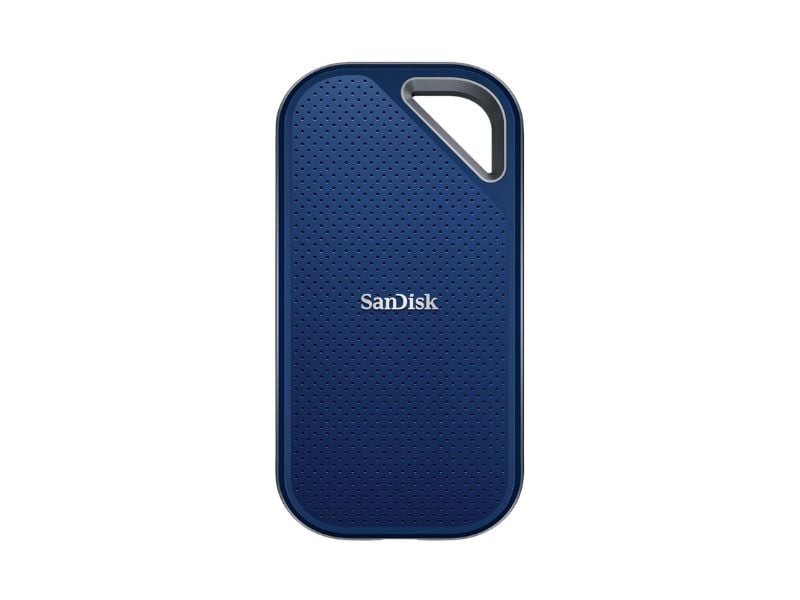
The SanDisk Extreme Portable SSD puts security front and centre. It comes with 256-bit AES hardware encryption, which means your sensitive files stay protected with password security.
The hardware encryption aside, it’s also quite fast, reaching read speeds of up to 1,050MB/s and write speeds of 1,000MB/s. Its IP65-rated body keeps dust and splashes at bay, while the rugged design is built to handle drops. You also get an integrated carabiner loop, which makes it easy to clip onto a backpack or camera bag so it’s always within easy reach.
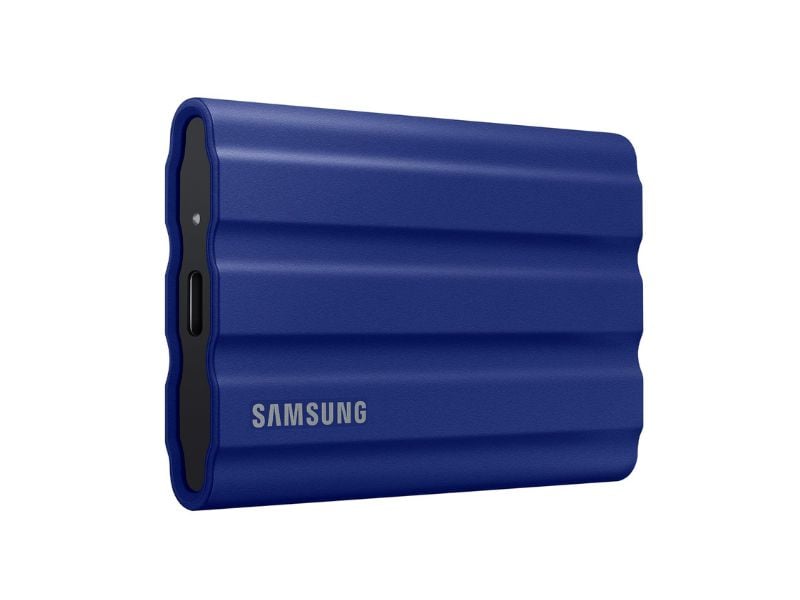
The Samsung T7 Shield is one of the most reliable portable SSDs you can buy on the market. It’s wrapped in a rugged rubber shell, has an IP65 rating and 3-metre drop protection, which means it can handle dust, splashes and the occasional tumble without breaking a sweat.
It reaches read speeds of up to 1,050MB/s and write speeds of 1,000MB/s, keeping large file transfers quick and consistent. You also get AES 256-bit hardware encryption, adding an extra layer of security for sensitive files. Additionally, Samsung offers a 5-year limited warranty, giving you extra peace of mind for the long haul.
The SanDisk Ultra Dual Drive Luxe is the best budget USB-C flash drive, thanks to its dual USB-C and USB-A connectors, premium metal build, and read speeds of up to 400MB/s.
Which is the best premium USB-C flash drive?
The Kingston Dual Portable Drive is the best premium USB-C flash drive, delivering near-SSD performance with read speeds of up to 1,000MB/s and write speeds of 900MB/s.
Which is the best budget portable SSD?
The SanDisk SDSSDE30-1T00-G26 is the best budget portable SSD, as it offers 800MB/s read speeds, a compact design, and 2-metre drop protection at a competitive price.
Which is the best premium portable SSD?
The Samsung T7 Shield is the best premium portable SSD on this list, pairing 1,050MB/s speeds with IP65 durability, AES 256-bit hardware encryption, and a 5-year warranty.
What’s the fastest portable SSD?
The Crucial X10 is the fastest portable SSD on this list, with read speeds of up to 2,000MB/s.
Is SSD better than HDD?
Yes. An SSD is faster, more durable and more power-efficient than an HDD, making it the better choice for most users. HDDs are still worth considering if you need large amounts of storage at the lowest possible cost.
Is a 2TB SSD overkill?
No, 2TB isn’t overkill, especially today, when 4K videos, RAW photo libraries and modern games can quickly eat up storage space. For most users, though, 1TB still strikes the best balance between capacity and price.
So, what’s your pick: a USB-C flash drive or an SSD? Let us know in the comments below.
Casio has opened US pre-orders for the DW5600TNT-7, a new G-Shock watch designed in collaboration with the Seoul-based streetwear brand thisisneverthat. The watch, which initially debuted in Japan last month, is priced at $155.
Casio DW5600TNT-7 Specifications
The DW5600TNT-7 uses the familiar square case of the standard DW-5600 line, but swaps out the usual opaque materials for a translucent resin bezel and strap. The clear hardware is paired with an inverted LCD, featuring light text on a dark background, to create a high-contrast, black-and-white color scheme. It is a straightforward design that leans on a 1990s streetwear aesthetic without altering the core shape of the watch.
Casio has added a few specific details for this release. The streetwear brand’s logo is printed across the lower half of the watch face, engraved on the metal case back, and stamped on the resin band loop. Additionally, the standard Protection and G-Shock text engraved into the top and bottom of the bezel has been treated with a phosphorescent finish, allowing the words to glow in the dark.
Underneath the collaborative branding, the watch features the standard hardware and durability metrics of the 5600 series. It measures 48.9 x 42.8 x 13.4 mm and weighs 52 grams. The display is covered by mineral glass, and the case is built to handle Casio’s standard shock resistance alongside 200 meters of water resistance.
For illumination, the watch uses a white LED backlight with an afterglow function. It also includes a flash alert feature, which syncs the backlight to flash alongside the buzzer for alarms, hourly time signals, and countdown timer alerts.
The watch runs on a single CR2016 coin-cell battery, which Casio estimates will last for about five years before needing a replacement.
The DW5600TNT-7 ships in custom packaging designed for the collaboration and can be pre-ordered directly through Casio’s US website.
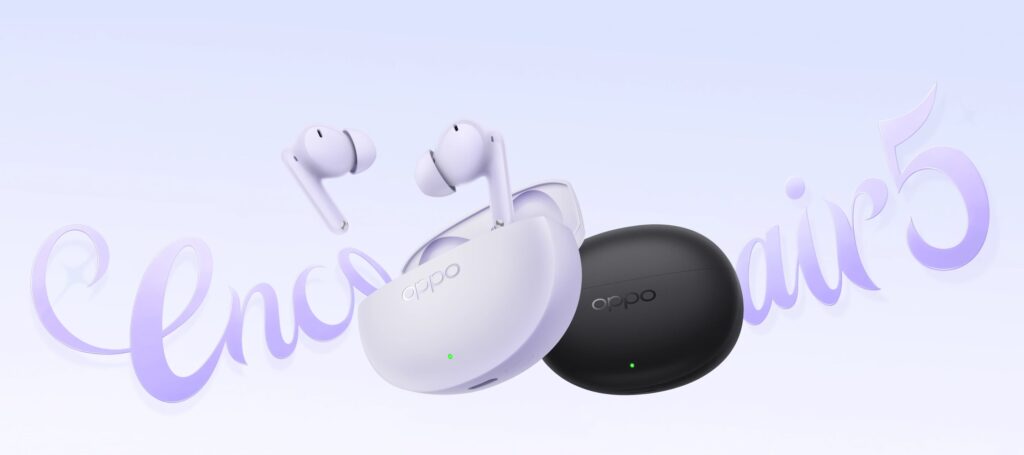
The earbuds feature a 12mm dynamic driver setup equipped with a titanium-coated PET diaphragm. On the software side, they provide a 10-band custom equalizer alongside three standard audio presets. There is also a spatial audio function called Alive Audio, though it is limited to users paired with an Oppo smartphone running ColorOS 12.0 or newer.
For noise cancellation, the Enco Air 5 features a 52dB adaptive ANC system. According to Oppo, the earbuds use an algorithm to monitor ambient noise and automatically switch between deep, medium, and light noise cancellation modes depending on the environment.
Coming to the battery life, the earbuds can last up to 13 hours on a single charge with ANC turned off, and up to 54 hours total when factoring in the charging case. If you leave ANC turned on, those numbers drop to 6.5 hours for the earbuds and 27 hours total. The case charges via USB-C and supports a quick charge feature that reportedly provides 11 hours of playback from a 10-minute plug-in.
For connectivity, these feature Bluetooth 6.1 with multipoint connectivity, allowing them to connect to two devices simultaneously across iOS and Android. They also include a low-latency gaming mode and customizable touch controls on the stems, which can be mapped to launch specific apps like Spotify.
For voice calls, these use a triple-microphone array that works alongside an AI noise reduction model to filter out background sound. The earbuds weigh 4.3 grams each and have an IP55 rating for dust and water resistance, making them suitable for exercise.
Pricing and Availability
The Oppo Enco Air 5 is available now in Midnight Black and Lavender Purple through Amazon, Flipkart, and Oppo’s online store. These are priced at Rs. 3299 but the brand is currently offering a temporary launch price of Rs. 3,099.
In related news, Sennheiser has recently launched its first clip-on earbuds featuring 12mm drivers, LDAC, and a 36-hour battery alongside the Honor Earbuds 5e with adaptive 52dB ANC, LHDC 5.0, AI features, and up to 45 hours of playback.
For more daily updates, please visit our News Section.
As AI agents get smarter and start handling more complex tasks on our phones, one big challenge is keeping users in the loop without forcing them to constantly switch apps. Google is tackling this with a new feature called Android Halo.
In a recent video on Google’s official developer YouTube channel, Android President Sameer Samat gave more details about it (around the 30-minute mark). First previewed at Google I/O in May, Android Halo is designed to make communication between users and their AI assistants much more seamless and transparent.
A dedicated spot in the status bar
The idea is simple but clever: Android Halo creates a persistent space in the phone’s status bar for your chosen AI agent, whether that’s Gemini or a compatible third-party one. When the agent is working on something, you’ll see a subtle indicator there. It can show progress updates, ask you quick follow-up questions, or display final results without you needing to open the app again.
Samat explained that while AI agents are getting good at running multiple tasks on their own, they still need human input at key moments. Halo acts as a dedicated channel for three main things: asking clarifying questions, sharing updates, and showing completed work.
“This is a dedicated location on the status bar where the user-selected agent can report updates to the user and receive the user’s latest instructions for the current task queue,” he said. He called it an interesting new direction for how we’ll interact with intelligent systems in the future.
By keeping everything visible and easy to access, Halo brings more transparency to background AI activity. It makes these smart agents feel less like mysterious black boxes and more like helpful partners, which should help build user trust.
The feature is expected to arrive later in 2026 with Android 17. It fits nicely into Google’s broader Gemini plans and could work alongside other new AI capabilities. While we’re still waiting for full details on rollout and supported devices, the goal is clear: make AI on Android feel more natural and integrated into daily use.
This move shows where the industry is headed, toward more proactive, agent-style AI. Features like Halo could become essential as these systems take on bigger responsibilities. It’ll be interesting to see how it evolves.
Browser extensions are supposed to make life easier, but some can come with serious privacy risks. Microsoft’s security researchers recently discovered a sneaky Chrome extension pretending to be the popular AI search engine Perplexity AI. Instead of helping users, it was secretly monitoring search activity and redirecting it through attacker-controlled servers.
The extension, called “Search for perplexity ai”, looked pretty harmless on the Chrome Web Store. But behind the scenes, it was doing some shady stuff. Microsoft Threat Intelligence broke down the details in a blog post on June 30, and Google quickly pulled it from the store. Still, if you installed it, it’s not gone until you remove it yourself.
The extension asked for broad permissions that went way beyond what a normal search helper needs. It used “chrome_settings_overrides” to take over your default search engine, so every time you typed something in the address bar, it first sent the query to a fake domain, “perplexity-ai.online”, before eventually passing it on to real search results.
It also used “declarativeNetRequest” permissions to monitor and modify network traffic. This gave it the ability to log your searches and even see real-time typing suggestions. There’s no sign it stole passwords or login info, but it could easily build up a detailed picture of your interests and online habits.
For reference, the real Perplexity AI lives at perplexity.ai. Always double-check the domain and the developer before installing anything, especially AI-related tools that are trending right now.
If you have the extension, remove it right away. Here’s the quick way:
Open Chrome and go to “chrome://extensions/”
Turn on Developer mode (top right corner)
Find the extension with the ID “flkebkiofojicogddingbdmcmkpbplcd” and click Remove
While you’re there, check your default search engine settings and reset them if needed
This whole episode is a good reminder that the Chrome Web Store isn’t perfect. Even with review processes, scammers are getting better at impersonating popular services. Microsoft suggests regularly reviewing your extensions, being picky about permissions, and sticking to well-known developers when possible.
Timex has announced the Waterbury Heritage America 250, a new watch marking the upcoming 250th anniversary of the United States. The company opted for a 1970s motorsport-inspired chronograph. It costs $319 and utilizes a meca-quartz movement, making it a practical, everyday option in the entry-level watch market.
Design Details
The watch features a brushed and polished stainless steel case measuring 39mm in diameter. At 13.5mm thick, it is fairly standard for a chronograph, and the 39mm width is a versatile size designed to fit wrists ranging from 5.9 to 8.1 inches.
The dial is black with two white subdials, a traditional panda layout, accented by red outlines. Timex included a blue tachymeter bezel and mismatched red and blue pushers for the stopwatch functions. The only direct reference to the anniversary is a small 250 printed on the lower half of the dial.
Inside the case, the watch runs on a meca-quartz movement powered by an SR936SW battery. Meca-quartz is a hybrid system that has become increasingly popular in affordable chronographs.
It relies on standard quartz technology for primary timekeeping to maintain high accuracy, but it employs a mechanical module for the stopwatch functions. This setup gives the chronograph’s seconds hand a smooth mechanical sweep and provides a tactile, crisp click when engaging the pushers to start, stop, and reset the timer.
In terms of hardware, the watch is fitted with a domed mineral crystal. The watch ships on a 20mm black perforated leather strap equipped with quick-release spring bars, allowing users to swap bands without specialized tools.
Durability metrics are standard for the category. The case offers 50 meters of water resistance, making it suitable for light swimming but not intended for diving or high-pressure water activities. Additionally, the hands feature luminescent in-fill for low-light legibility.
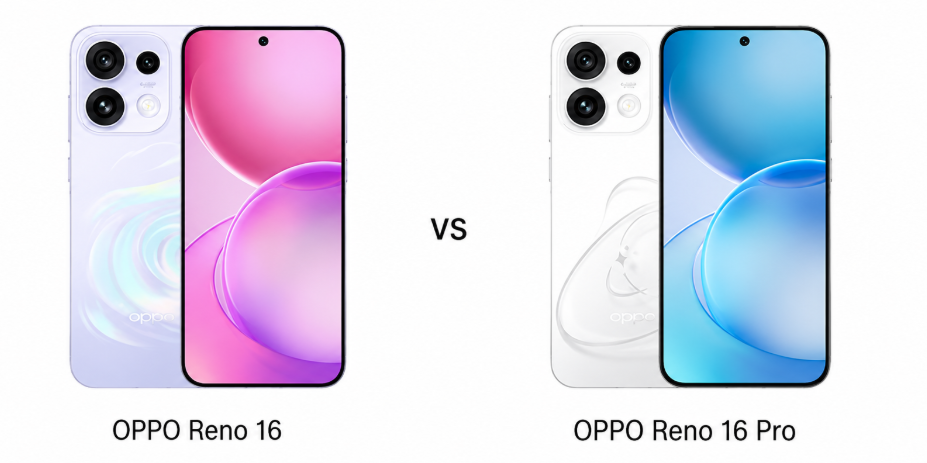
OPPO Reno 16 and OPPO Reno 16 Pro share the same premium design language and many flagship-level features, but the Pro model introduces meaningful upgrades in performance, display smoothness, imaging, and video recording. Instead of redesigning the phone, OPPO has focused on improving the core hardware where it matters most. Here’s a closer look at the biggest differences between the two models.
Major Features:
Category
OPPO Reno 16
OPPO Reno 16 Pro
Pro Upgrade
Display
6.32-inch AMOLED, 120Hz
6.32-inch AMOLED, 144Hz
Smoother scrolling and gaming with a 144Hz refresh rate.
Processor
Snapdragon 7 Gen 4
MediaTek Dimensity 8550 Super
Faster CPU and GPU performance for gaming, multitasking, and demanding apps.
RAM Options
8GB / 12GB
12GB only
Higher base memory for improved multitasking.
Main Camera
50MP with OIS
200MP with OIS
Significantly higher-resolution primary camera for more detailed photos.
Telephoto Camera
50MP, 3.5x optical zoom
50MP, 3.5x optical zoom
No upgrade.
Ultra-wide Camera
50MP
50MP
No upgrade.
Rear Video Recording
4K up to 60fps, 1080p up to 120fps
4K up to 60fps, 1080p up to 480fps, 720p up to 960fps
Much more advanced slow-motion video capabilities.
Selfie Camera
50MP AF, 4K 60fps
50MP AF, 4K 60fps
No upgrade.
Battery
6700mAh (Intl.) / 6000mAh (EU)
6700mAh (Intl.) / 6000mAh (EU)
No upgrade.
Charging
80W wired, 55W PPS
80W wired, UFCS support, 55W PPS
Adds UFCS compatibility and slightly faster full charge.
Connectivity
Bluetooth 5.4 with aptX HD, aptX Adaptive, LHDC 5
Bluetooth 5.4 with aptX HD, LHDC 5
Similar overall connectivity with minor codec differences.
Storage Options
256GB/512GB with 8GB or 12GB RAM
256GB/512GB with 12GB RAM
Higher-end memory configuration by default.
Price
Priced around $600 / ₹62,000
Priced around $830 / ₹71,000
Around $230 / ₹9,000 premium for the hardware upgrades.
Disclaimer: Specs are based on available data. Actual performance may vary. Verify details from official sources before buying.
At first glance, both smartphones look nearly identical. They feature the same premium construction with a glass front, aluminum frame, and either a glass or composite plastic back, depending on the variant. Both also carry IP68 and IP69 ratings for excellent resistance against dust and water, making them equally durable for everyday use. The in-display fingerprint scanner, stereo speakers, and modern ColorOS 16 interface create a familiar flagship experience on both devices. Since the overall build quality is unchanged, choosing between them does not come down to materials but rather to what is inside.
Display Quality
Both phones use a 6.32-inch AMOLED display with a sharp 1216 × 2640 resolution, HDR10+ support, up to 3,600 nits peak brightness, and Crystal Guard protection. The biggest difference is the refresh rate. The Reno 16 offers a smooth 120Hz panel, while the Reno 16 Pro increases it to 144Hz for even smoother animations and gaming. The improvement is subtle during everyday use but becomes more noticeable while scrolling quickly or playing high-frame-rate games.
Verdict
The design experience remains virtually identical across both models. The primary display upgrade is the 144Hz refresh rate on the Reno 16 Pro, making it feel slightly more responsive without changing the overall viewing quality.
2. Specifications Including Battery
Performance
The largest hardware upgrade comes from the processor. The OPPO Reno 16 runs on the Snapdragon 7 Gen 4, which is well-suited for daily tasks, multitasking, and moderate gaming. The Reno 16 Pro steps up with the MediaTek Dimensity 8550 Super, featuring higher CPU frequencies and a more powerful Mali-G720 MC8 GPU. This allows the Pro model to handle demanding games, intensive multitasking, and future software updates more comfortably. The Reno 16 also offers 8GB and 12GB RAM options, while the Pro starts with 12GB RAM, giving it a stronger baseline for power users.
Battery and Charging
Both smartphones include a large 6,700mAh silicon-carbon battery internationally, with a 6,000mAh version available in Europe. Charging speeds are almost identical, with both supporting 80W wired charging and 55W PPS. The Reno 16 Pro adds UFCS support and completes charging a couple of minutes faster, but the real-world difference is fairly small. Battery endurance should remain very similar because both use the same battery capacity.
Verdict
The Reno 16 Pro delivers its biggest upgrade through processing power and memory configuration rather than battery improvements. Users focused on gaming, long-term performance, and demanding workloads will notice the difference most.
3. Camera
Main and Secondary Lenses
Camera hardware is where the Reno 16 Pro makes its strongest statement. The Reno 16 features a capable triple-camera setup with a 50MP main camera, a 50MP telephoto lens offering 3.5x optical zoom, and a 50MP ultrawide camera. The Reno 16 Pro upgrades the primary sensor dramatically to 200MP while retaining the same 50MP telephoto and 50MP ultrawide cameras. Beyond higher resolution, the Pro also expands video recording with support for 1080p recording up to 480fps and slow-motion recording at 720p 960fps, making it considerably more versatile for creative users.
Selfie Camera
Both devices feature the same 50MP autofocus ultrawide selfie camera capable of recording 4K video at up to 60fps. Selfie quality, autofocus performance, and video capabilities remain identical, meaning front-camera users receive the same experience regardless of model.
Verdict
The biggest photography upgrade is clearly the 200MP main camera and significantly expanded slow-motion recording on the Reno 16 Pro. Meanwhile, the Reno 16 maintains the same telephoto, ultrawide, and selfie hardware, keeping much of the overall camera experience consistent.
4. Pricing
The OPPO Reno 16 is priced around $600 (₹62,000), making it the more accessible option in the lineup. The OPPO Reno 16 Pro is priced around $830 (₹71,000), representing roughly a $230 premium. That additional cost is mainly directed toward the faster Dimensity 8550 Super chipset, the upgraded 200MP primary camera, the smoother 144Hz display, higher standard RAM, and expanded video recording features. Since many core features remain identical, buyers are primarily paying for internal hardware improvements rather than an entirely different smartphone experience.
Is the Price Justified?
The pricing reflects the hardware upgrades rather than cosmetic changes. Those who value higher performance, advanced photography, and stronger gaming capabilities are more likely to appreciate the additional investment. Buyers who mainly use their phone for everyday tasks may find that the standard Reno 16 already delivers a premium experience.
Verdict
The price difference aligns closely with the performance and camera upgrades. The Reno 16 focuses on offering flagship-like essentials, while the Reno 16 Pro adds premium hardware for users seeking extra power and creative flexibility.
Disclaimer: Prices are approximate and may vary based on country, region, launch timing, and applicable taxes. Always check whether the listed price is for a China unit or a global/international variant when purchasing.
5. Conclusion
OPPO Reno 16 and Reno 16 Pro share an impressive foundation, including premium construction, IP68/IP69 protection, stereo speakers, Android 16 with ColorOS 16, a large silicon-carbon battery, and a versatile triple-camera system. The differences are concentrated in four major areas: the Reno 16 Pro upgrades to a 144Hz display, introduces the faster MediaTek Dimensity 8550 Super processor, replaces the 50MP main camera with a 200MP sensor, and adds far more advanced slow-motion video recording. These enhancements make the Pro model feel like an evolution focused on enthusiasts rather than a complete redesign.
Verdict
This comparison is less about one phone replacing the other and more about understanding the hardware improvements. The Reno 16 Pro builds on the Reno 16 with meaningful upgrades in performance, imaging, and display smoothness, while preserving the same premium design, battery capacity, and overall user experience.
Choose OPPO Reno 16 if premium design, long battery life, and reliable everyday performance are the priority, while the OPPO Reno 16 Pro is better suited for users who want faster performance, a higher-resolution main camera, and more advanced video recording capabilities.
Disclaimer: This comparison is based on the specifications provided and is intended for general informational purposes. Actual performance, camera results, battery life, and overall experience may vary depending on real-world usage, software updates, and individual preferences.
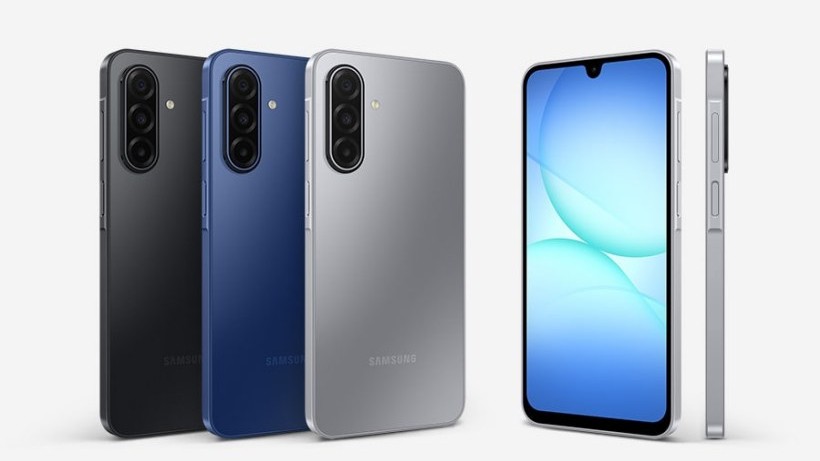
Samsung is reportedly moving away from its own Exynos chips for the upcoming Galaxy A18 series. The 4G model will stick with a MediaTek processor, following the same approach used in the A16 4G and A17 4G, while the 5G version will switch to a Qualcomm Snapdragon chipset instead of the Exynos 1330 chip found in previous 5G models.
The switch from Exynos to Qualcomm on the 5G model is reportedly driven mainly by cost control rather than a big performance leap. That said, Qualcomm’s strong reputation in 5G connectivity and efficiency could still make the phone feel like a solid upgrade for buyers compared to the Exynos-powered predecessors.
Production timelines are already taking shape. The A18 4G (model SM-A185F) is expected to enter mass production as early as August 2026, starting at around 100,000 units per month before ramping up significantly. The 5G version will reportedly follow a few months later.
Full specifications are still under wraps, but the A18 looks set to deliver what the A-series is known for. Predecessors like the A17 featured a 6.7-inch Super AMOLED display with 90Hz refresh rate, a 50MP main camera, a 5,000mAh battery with 25W charging, and an IP54 rating. Samsung’s generous software support, often six years of OS upgrades and security patches, remains one of the biggest advantages for budget-conscious buyers.
Firmware development for the A18 4G is already underway, with signs it could launch on Android 17 with One UI 9. That would reportedly bring modern AI features and a fresh experience right from the start. Rumors also suggest possible improvements like a refined design, but we’ll need official confirmation for those details.
In a segment where Chinese brands are pushing aggressive specs at low prices, Samsung’s chipset choices feel pragmatic. By using proven MediaTek and Qualcomm solutions, the A18 should offer reliable performance in both 4G and 5G versions. As we get closer to launch, expect more details on exact chipsets, display specs, cameras, and regional pricing to emerge.
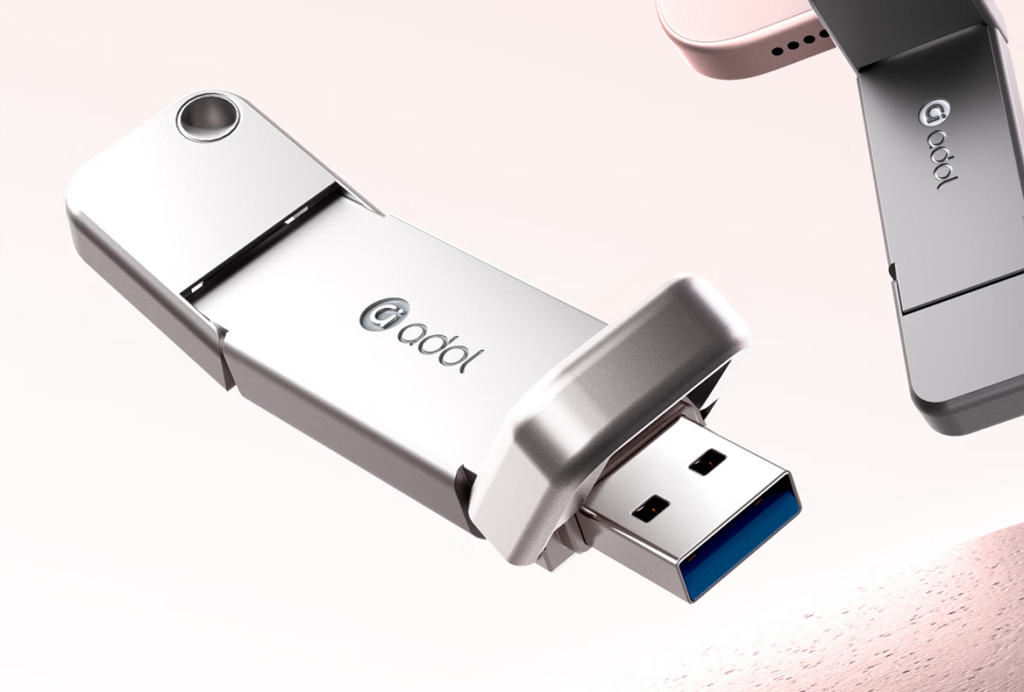
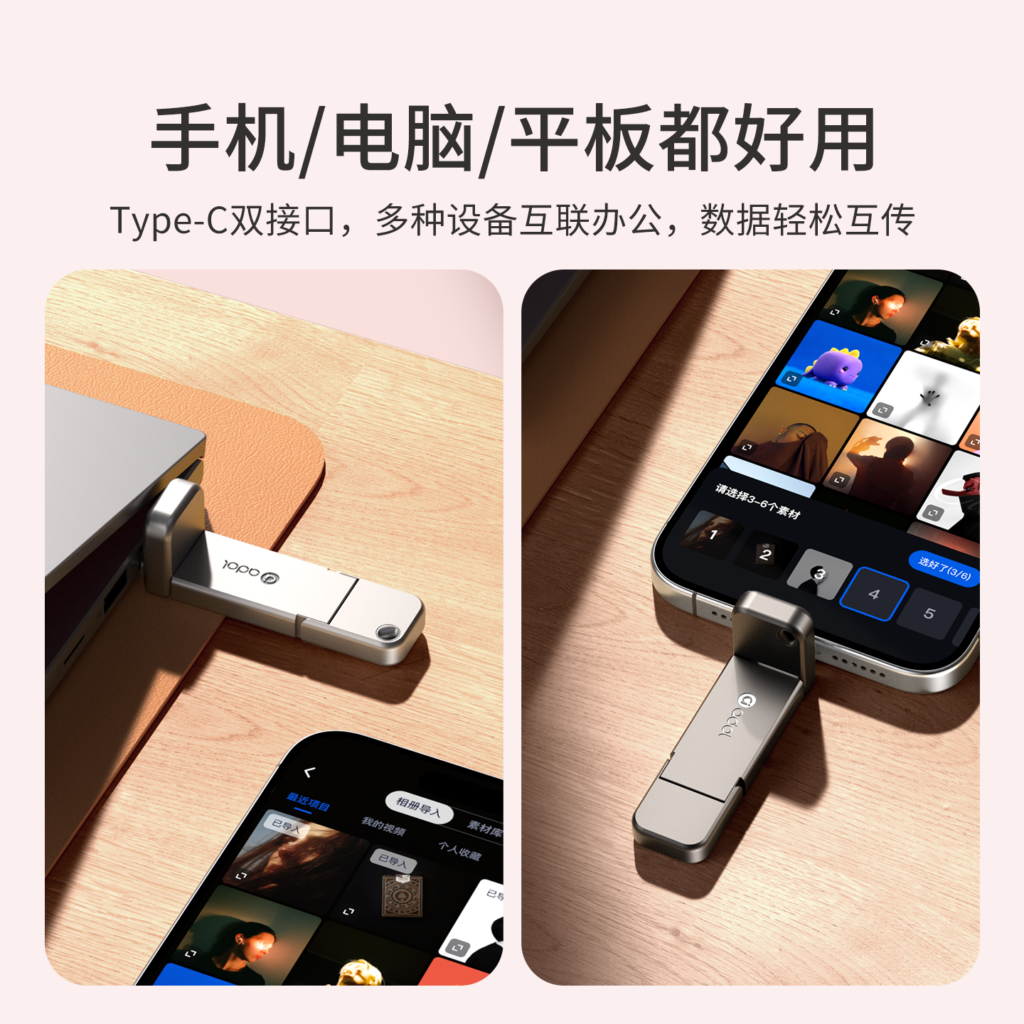
Asus has introduced a new portable storage device, the Adol High Speed Solid State USB Drive (PM310), in China. The device functions as a standard flash drive but incorporates solid-state storage technology to offer faster transfer rates than traditional thumb drives. It is designed primarily to facilitate file transfers between devices that use different USB standards.
Asus Adol PM310 Specifications
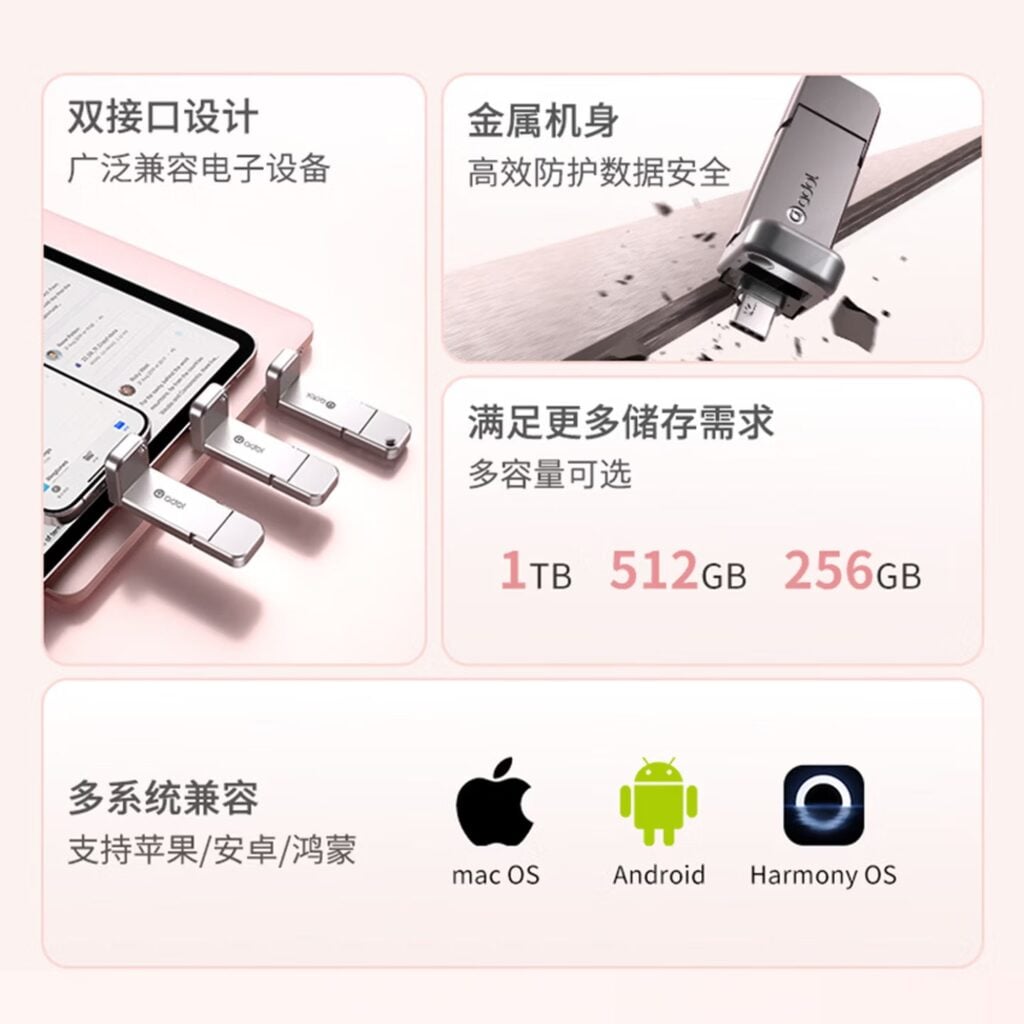
The physical design of the Adol drive centers around a dual-connector setup. One end features a standard USB-A port, while the other has a USB-C port. This configuration allows users to plug the drive directly into older desktop PCs and then connect it to modern smartphones, tablets, or laptops without needing a separate adapter.
The drive features a metal chassis measuring 82 x 20 x 7.5mm and weighs 42.9g, making it compact and lightweight enough for everyday carry. It also includes a built-in flip cap mechanism that protects the connectors when the drive is not in use.
In terms of performance, the Adol drive utilizes a USB 3.2 Gen 2 interface. Asus reports that the drive is capable of reaching sequential read speeds of up to 500MB/s. While this speed is lower than what you would find on larger, dedicated external SSDs, it is a standard benchmark for compact solid-state thumb drives.
The portable drive supports plug-and-play functionality across multiple operating systems, including macOS, Android, HarmonyOS, and iOS or iPadOS.
Pricing and Availability
The Asus Adol drive is available in four storage capacities. The base 128GB model is priced at 280 yuan ($41). The 256GB version costs 409 yuan ($60), the 512GB model is 629 yuan ($92), and the maximum 1TB capacity is listed at 959 yuan ($141).
In related news, Colorful has recently launched the RP600X Pro portable SSD with up to 1000MB/s read speeds and support for Apple ProRes recording.
For more daily updates, please visit our News Section.
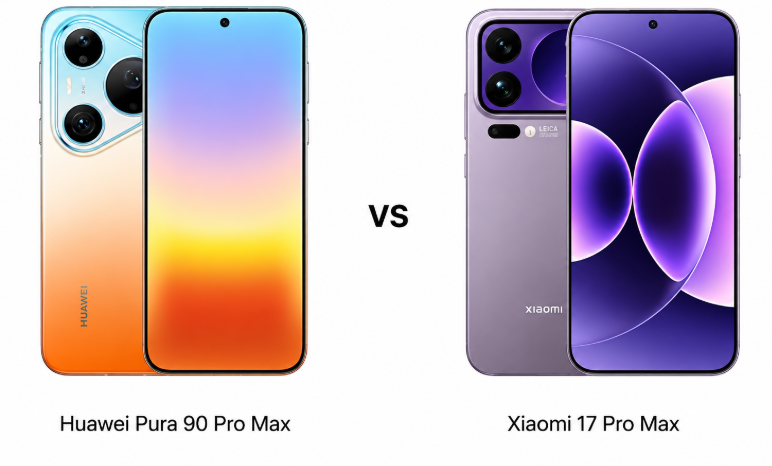
Choosing between the Huawei Pura 90 Pro Max and Xiaomi 17 Pro Max comes down to what matters most. Huawei focuses on premium craftsmanship, an advanced telephoto camera, HarmonyOS, and fast wireless charging, while Xiaomi delivers flagship Android performance, a massive battery, a brighter display, and several multimedia enhancements. Both target the ultra-premium segment, but they appeal to different kinds of flagship buyers.
Major Features:
Category
Huawei Pura 90 Pro Max
Xiaomi 17 Pro Max
Winner
Launch Price
Priced around $950 / ₹89,000
Priced around $930 / ₹1,00,000
Huawei – Lower India pricing
Build
Glass front & back, aluminum frame, IP68/IP69, Kunlun Glass
Glass front (Dragon Crystal Glass 3), aluminum frame, IP68
The Huawei Pura 90 Pro Max features a premium glass-and-aluminum construction with Kunlun Glass protection, an anti-reflective coating, and IP68/IP69 certification for excellent durability. It also supports dual Nano-SIM alongside dual eSIM capability, offering more flexibility for users who frequently switch networks. Xiaomi’s 17 Pro Max also uses a premium aluminum frame with Dragon Crystal Glass 3 and carries an IP68 rating. Its ultrasonic in-display fingerprint scanner feels more modern than Huawei’s side-mounted sensor, while the secondary rear display adds a distinctive flagship touch that enhances usability. Both phones feel premium, but Xiaomi introduces more innovative hardware features.
Display Quality
Both smartphones feature 6.9-inch LTPO panels with adaptive 120Hz refresh rates for fluid scrolling and gaming. Huawei offers a sharper 1308 × 2880 resolution and HDR Vivid support, while Xiaomi counters with Dolby Vision, HDR10+, an impressive 3500-nit peak brightness, 2160Hz PWM dimming, and an additional rear AMOLED display. Although Huawei delivers crisp visuals with excellent reflection control, Xiaomi’s display package feels more complete for entertainment and outdoor visibility.
Verdict
Huawei delivers an elegant flagship experience with durable construction and a sharp display, but Xiaomi combines superior brightness, richer HDR support, a more advanced fingerprint sensor, and a useful secondary screen. For most users, Xiaomi offers a more versatile display experience.
2. Specifications Including Battery
Performance
Huawei is powered by the Kirin 9030S running HarmonyOS 6.1, paired with up to 16GB RAM and 1TB storage. The software delivers a smooth user experience, especially within Huawei’s ecosystem. Xiaomi uses the Snapdragon 8 Elite Gen 5 chipset built on a 3nm process alongside the Adreno 840 GPU, UFS 4.1 storage, and Android 16 with HyperOS 3. Its newer hardware platform is better suited for demanding gaming, multitasking, and long-term flagship performance. The additional multimedia capabilities and faster storage also contribute to a more responsive daily experience.
Battery and Charging
Huawei includes a 6000mAh battery supporting 100W wired, 80W wireless, reverse wired, and reverse wireless charging. Xiaomi pushes battery capacity further with a massive 7500mAh silicon-carbon battery while retaining 100W wired charging and adding 50W wireless plus 22.5W reverse wireless charging. The significantly larger battery gives Xiaomi a practical advantage for heavy users without sacrificing charging speed.
Verdict
Huawei remains highly capable with fast charging and balanced performance, but Xiaomi combines flagship processing power with exceptional battery capacity. It is the stronger choice for users seeking maximum endurance and sustained flagship performance.
3. Camera
Main and Secondary Lenses
Huawei equips the Pura 90 Pro Max with a versatile triple-camera system featuring a variable-aperture 50MP primary sensor, an impressive 200MP telephoto camera with 4x optical zoom, and a 40MP ultrawide lens. The variable aperture provides additional flexibility across different lighting conditions, while the high-resolution telephoto camera stands out for detailed zoom photography. Xiaomi counters with three 50MP Leica-tuned cameras, including a 5x periscope telephoto and ultrawide lens, backed by extensive video features such as 8K recording, Dolby Vision HDR, and 10-bit LOG capture. Huawei appears stronger for high-resolution zoom photography, whereas Xiaomi offers a more complete camera toolkit for hybrid photo and video creators.
Selfie Camera
Huawei includes a 13MP ultrawide autofocus selfie camera capable of 4K recording, while Xiaomi delivers a 50MP autofocus front camera with HDR10+ video support. Xiaomi’s higher-resolution sensor is better suited for detailed selfies and content creation.
Verdict
Huawei impresses with its unique 200MP telephoto camera and variable aperture system, but Xiaomi delivers greater overall versatility through Leica imaging, stronger video recording capabilities, and a significantly more capable selfie camera.
4. Pricing
The Huawei Pura 90 Pro Max is priced around $950 (approximately ₹89,000), while the Xiaomi 17 Pro Max is priced around $930 (approximately ₹1,00,000). Despite Huawei carrying the slightly higher global dollar pricing, its approximate Indian pricing is lower than Xiaomi’s.
Huawei justifies its pricing through premium camera hardware, advanced wireless charging, dual eSIM support, and HarmonyOS integration. Xiaomi, meanwhile, offers one of the most powerful Android chipsets available, a substantially larger battery, an advanced AMOLED display with a secondary rear screen, Leica imaging, and richer multimedia capabilities. Buyers focused on overall specifications may find Xiaomi delivers more flagship hardware despite its higher Indian price.
Verdict
Huawei offers strong value for photography enthusiasts and users invested in its ecosystem. Xiaomi provides broader flagship features that make the higher regional pricing easier to justify for buyers wanting maximum performance and battery life.
Disclaimer: Prices are approximate and may vary based on country, region, launch timing, and applicable taxes. Always check whether the listed price is for a China unit or a global/international variant when purchasing.
5. Conclusion
Huawei differentiates itself with its 200MP telephoto camera, variable-aperture primary sensor, anti-reflective Kunlun Glass, dual eSIM support, and exceptionally fast 80W wireless charging. These features make it especially attractive for users prioritizing photography and premium hardware. Xiaomi responds with the Snapdragon 8 Elite Gen 5, an enormous 7500mAh silicon-carbon battery, Dolby Vision display, Leica camera tuning, ultrasonic fingerprint sensor, rear secondary display, UWB connectivity, DisplayPort output, and extensive professional-grade video recording features. The overall package feels more balanced for productivity, gaming, entertainment, and multimedia creation.
Verdict
The Huawei Pura 90 Pro Max is an excellent flagship for users who prioritize zoom photography, premium craftsmanship, and Huawei’s software ecosystem. The Xiaomi 17 Pro Max, however, delivers a more complete flagship experience with superior processing power, outstanding battery life, richer display technology, stronger selfie performance, and broader feature integration.
For most buyers seeking the best all-around premium smartphone, the Xiaomi 17 Pro Max is the better overall choice.
Disclaimer: This comparison is based on the specifications provided and is intended for general informational purposes. Actual performance, camera results, battery life, and overall experience may vary depending on real-world usage, software updates, and individual preferences.
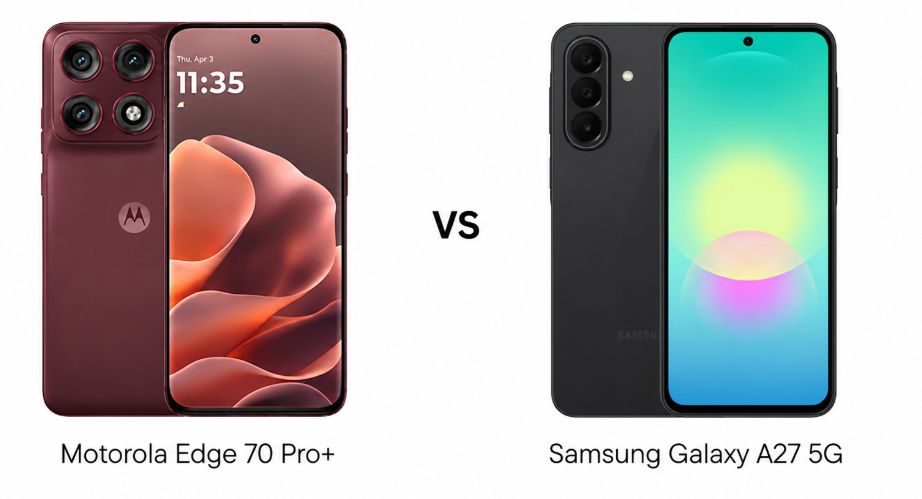
Comparing the Motorola Edge 70 Pro+ and Samsung Galaxy A27 5G may seem unusual because they belong to very different price segments. The Motorola Edge 70 Pro+ is priced around $570 (₹48,000), while the Samsung Galaxy A27 5G costs around $260 (₹22,000). However, many buyers often wonder whether spending nearly twice as much actually delivers a noticeably better experience.
This comparison focuses on what the extra money buys, whether Samsung already offers everything needed for everyday use, and who should consider paying more for Motorola’s premium hardware.
The Motorola Edge 70 Pro+ immediately feels like the more premium smartphone. Its eco-leather finish, IP68/IP69 water and dust resistance, and MIL-STD-810H certification give it a flagship-like appeal, while the curved design adds to the overall experience. Samsung takes a more practical approach with Gorilla Glass Victus+ on both the front and back and an IP64 rating, offering solid durability without chasing premium extras. For everyday handling, the Galaxy A27 5G still feels well-built and dependable. The biggest differences become noticeable for users who value higher durability, premium materials, or who frequently use their phones outdoors.
Display Quality
Motorola’s AMOLED panel runs at 144Hz, supports HDR10+, and reaches an impressive 5,200 nits of peak brightness. The Samsung Galaxy A27 5G features a vibrant 120Hz Super AMOLED display that remains smooth and enjoyable for social media, streaming, and browsing. Motorola clearly delivers richer visuals, better outdoor visibility, and a more premium viewing experience, but Samsung’s display is already good enough for the majority of daily tasks.
Verdict
Motorola offers a better design and display without question, but Samsung provides a quality experience that most everyday users are unlikely to find limiting unless flagship-level visuals are a priority.
2. Specifications Including Battery
Performance
The Motorola Edge 70 Pro+ is powered by the MediaTek Dimensity 8500 Extreme with 12GB RAM and UFS 4.1 storage, making it capable of demanding games, intensive multitasking, 4K video editing, and long-term heavy workloads. Samsung’s Snapdragon 6 Gen 3 with up to 8GB RAM targets a different audience. It comfortably handles calling, messaging, web browsing, streaming, navigation, banking apps, social media, and casual gaming without difficulty. Performance remains smooth during everyday use, although it cannot match Motorola when workloads become demanding. Most users are unlikely to push their phone beyond what Samsung already delivers.
Battery and Charging
Motorola pairs its large 6,500mAh battery with 90W wired charging, 15W wireless charging, reverse wireless charging, and reverse wired charging. Samsung includes a 5,000mAh battery with 25W fast charging. Both phones easily last a typical day, but Motorola provides noticeably longer endurance and dramatically shorter charging times, especially for heavy users who spend long hours away from a charger.
Verdict
Power users will appreciate everything Motorola brings to the table, but Samsung already delivers enough performance and battery life for the vast majority of everyday smartphone users.
3. Camera
Main and Secondary Lenses
Motorola offers one of the strongest camera systems in its segment with a 50MP main sensor, a 50MP periscope telephoto camera featuring 3.5x optical zoom, and a 50MP ultrawide camera. It also supports advanced 4K recording at up to 120fps. Samsung uses a simpler combination of a 50MP primary camera, a 5MP ultrawide sensor, and a 2MP macro camera. For family photos, travel snapshots, and social media, Samsung performs reliably in good lighting. However, Motorola delivers noticeably better versatility, sharper ultrawide images, true optical zoom, and much stronger video capabilities that photography enthusiasts will appreciate.
Selfie Camera
Motorola includes a 50MP autofocus front camera capable of recording 4K video, making it ideal for content creators and frequent video callers. Samsung’s 12MP selfie camera captures good everyday selfies and video calls, but lacks autofocus and high-resolution video recording. For casual use, Samsung is perfectly acceptable, while Motorola offers a considerably more premium experience.
Verdict
Samsung is sufficient for everyday photography, but Motorola justifies its higher price with a camera system that performs at a completely different level, especially for zoom, video, and content creation.
4. Pricing
Motorola Edge 70 Pro+ is priced around $570 (₹48,000), while the Samsung Galaxy A27 5G is priced around $260 (₹22,000). That price gap of roughly $310 (₹26,000) changes the entire perspective of this comparison.
Motorola uses the additional budget to deliver flagship-grade performance, premium cameras, a brighter display, wireless charging, faster charging, and stronger durability. Samsung focuses instead on offering a balanced smartphone experience at less than half the price. It covers the essentials without unnecessary premium features, making it accessible to a much wider audience.
Is the Price Justified?
Motorola’s higher price is justified if premium hardware, gaming performance, photography, and faster charging are important. Samsung, however, proves that spending significantly less does not mean sacrificing the core smartphone experience, making it one of the strongest value choices for everyday users.
Verdict
Samsung wins on value for money because it delivers everything most users need. Motorola is worth the extra investment only if its premium features will actually be used regularly.
Disclaimer: Prices are approximate and may vary based on country, region, launch timing, and applicable taxes. Always check whether the listed price is for a China unit or a global/international variant when purchasing.
5. Conclusion
The Motorola Edge 70 Pro+ stands out with its flagship-level 144Hz AMOLED display, Dimensity 8500 Extreme processor, triple 50MP camera system including a periscope zoom lens, massive 6,500mAh battery, 90W fast charging, wireless charging, Wi-Fi 7, and IP68/IP69 protection. These upgrades create a premium smartphone experience that goes well beyond everyday needs. The Samsung Galaxy A27 5G takes a different approach by combining a quality Super AMOLED display, dependable Snapdragon chipset, expandable storage, Gorilla Glass Victus+ protection, and six major Android upgrades into an affordable package that remains practical for years.
Verdict
The Motorola Edge 70 Pro+ is unquestionably the better smartphone, but that does not automatically make it the better purchase for everyone. For calling, messaging, browsing, streaming, social media, online banking, video calls, and casual photography, the Samsung Galaxy A27 5G already delivers a smooth and reliable experience while costing nearly half as much.
The Motorola Edge 70 Pro+ becomes the better choice for gamers, mobile photographers, content creators, and users who want flagship-level hardware with fewer compromises. For most everyday users, Samsung offers the smarter value, while Motorola is the right investment for those who will genuinely benefit from its premium features.
Disclaimer: This comparison is based on the specifications provided and is intended for general informational purposes. Actual performance, camera results, battery life, and overall experience may vary depending on real-world usage, software updates, and individual preferences.
We use cookies on our website to give you the most relevant experience by remembering your preferences and repeat visits. By clicking “Accept”, you consent to the use of ALL the cookies.
This website uses cookies to improve your experience while you navigate through the website. Out of these, the cookies that are categorized as necessary are stored on your browser as they are essential for the working of basic functionalities of the website. We also use third-party cookies that help us analyze and understand how you use this website. These cookies will be stored in your browser only with your consent. You also have the option to opt-out of these cookies. But opting out of some of these cookies may affect your browsing experience.
Necessary cookies are absolutely essential for the website to function properly. This category only includes cookies that ensures basic functionalities and security features of the website. These cookies do not store any personal information.
Any cookies that may not be particularly necessary for the website to function and is used specifically to collect user personal data via analytics, ads, other embedded contents are termed as non-necessary cookies. It is mandatory to procure user consent prior to running these cookies on your website.