Nothing is preparing to expand its audio lineup again, this time with a more affordable pair of over-ear headphones. The upcoming Nothing Headphone (a) is set to debut on March 5, 2026, during the company’s “Built Different” event.
The event will also introduce the Nothing Phone (4a) and Nothing Phone (4a) Pro, suggesting Nothing is continuing its push to build a broader, connected ecosystem rather than focusing on standalone devices.
The Headphone (a) appears to be a more accessible alternative to the original Nothing Headphone (1), which launched at €299. This new model is expected to come in at €159 in Europe and £149 in the UK, roughly half the price of the flagship version.
To reach that price point, Nothing is reportedly opting for a plastic construction instead of more premium materials. That doesn’t necessarily mean it will feel cheap, but it does signal a clear shift toward the mid-range segment.
In terms of design, the company isn’t toning things down. The Headphone (a) is expected to arrive in pink, white, black, and yellow — in line with Nothing’s bold, playful aesthetic. The semi-transparent styling that defines the brand is also likely to remain intact.
On the technical side, leaks point to a custom 40mm dynamic driver, Bluetooth 5.3 support, and dual-device pairing. Battery life could reach up to 35 hours with active noise cancellation enabled, which is competitive at this price. There’s some speculation that the ANC system may be less advanced than the one found in the Headphone (1), possibly as part of the cost-saving strategy.
If that trade-off holds true, the Headphone (a) may appeal most to users who want solid sound quality and long battery life without paying for top-tier noise isolation.
Nothing has been steadily growing its portfolio, and launching a more affordable over-ear option alongside mid-range smartphones reinforces that strategy. We’ll get full confirmation of specs, pricing, and availability on March 5. For now, the Headphone (a) looks like Nothing’s attempt to hit a sweet spot — stylish, capable, and easier on the wallet.
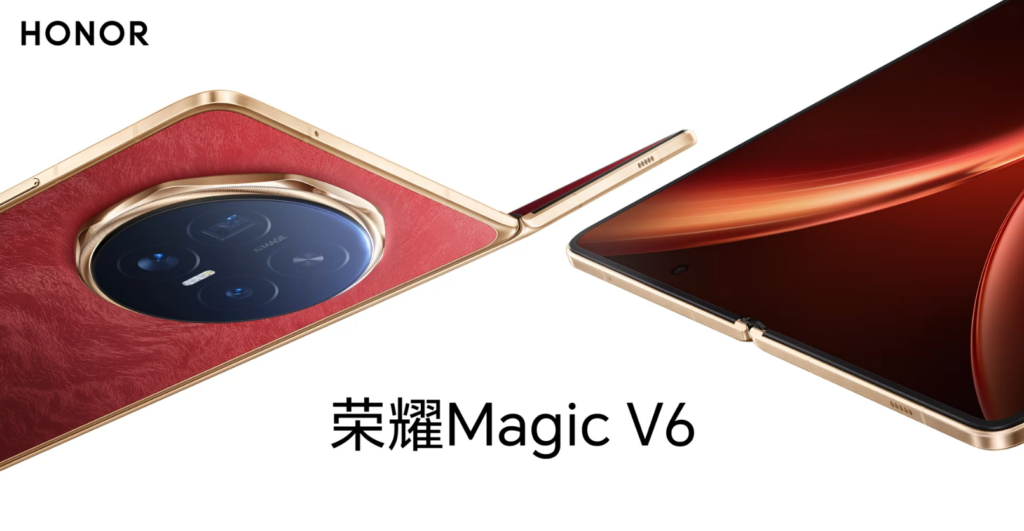
Honor is starting to lift the curtain on its next foldable, the Honor Magic V6, ahead of its global debut at MWC 2026. With just days to go before the March 1 launch in Barcelona, the company has shared early camera samples and revealed a new color option, both clearly meant to build anticipation.
Honor Magic V6
On Weibo, Honor’s imaging team posted a set of sample photos taken with the upcoming Magic V6. The company continues to lean on its AiMAGE branding, first introduced at MWC last year, which blends on-device AI processing with cloud-assisted enhancements. According to Honor, this setup improves clarity, zoom performance, and overall scene optimization.
The shared images highlight strong detail retention and balanced color reproduction, at least in the curated examples shown. Telephoto shots appear sharp, and low-light scenes seem well controlled. Of course, these are official samples, so real-world performance will need independent verification. Still, the message is clear: Honor wants the Magic V6 to compete not just with other foldables, but with top-tier slab flagships on camera quality.
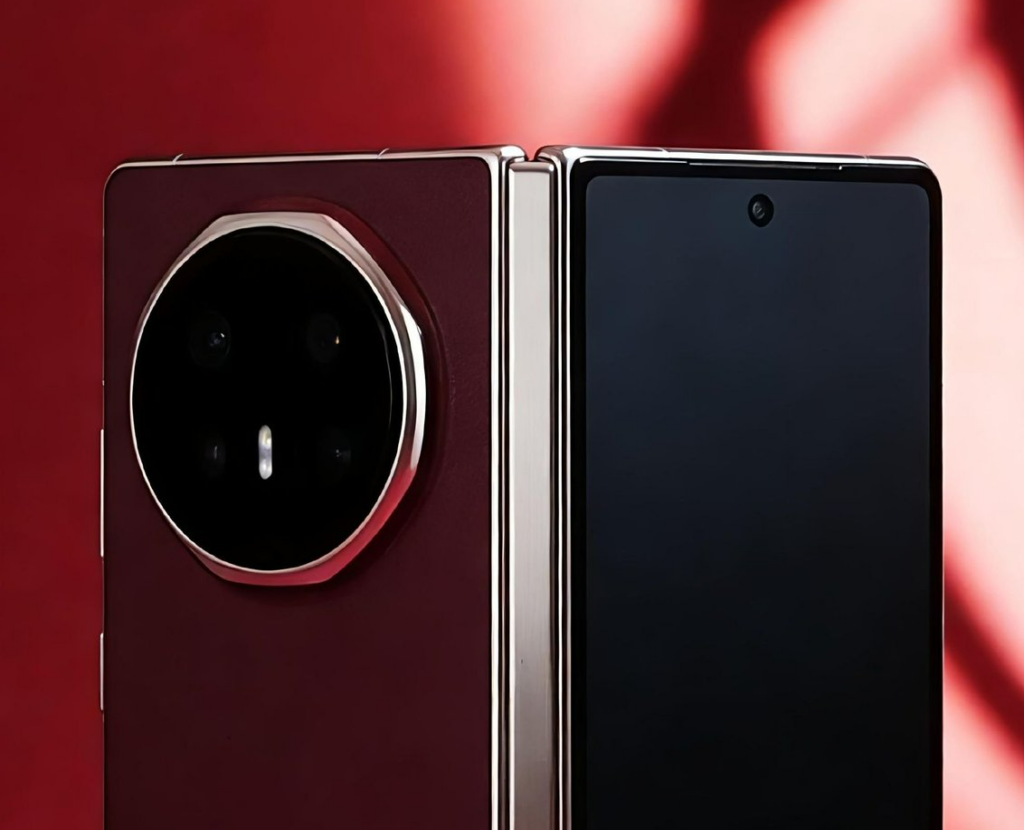
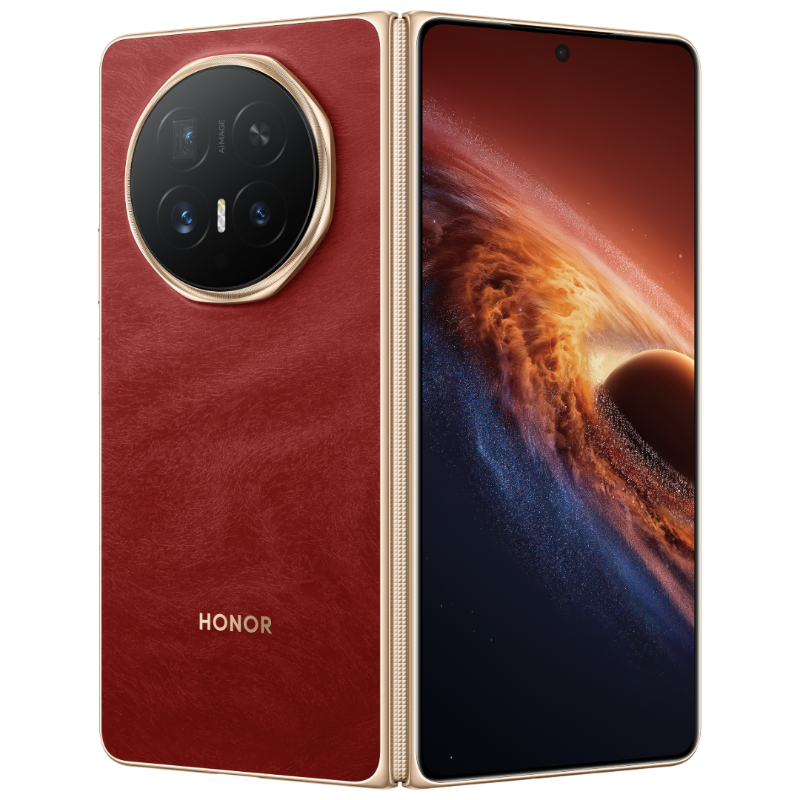
Alongside the imaging teasers, Honor also unveiled a new “Red Rabbit” color variant. The finish features what the company describes as eco-friendly velvet leather with a nano-coating for durability. Visually, it’s a deep red tone accented with gold detailing around the circular camera module.
Under the hood, the Magic V6 is confirmed to run on Qualcomm’s Snapdragon 8 Elite Gen 5, bringing expected gains in performance and power efficiency.
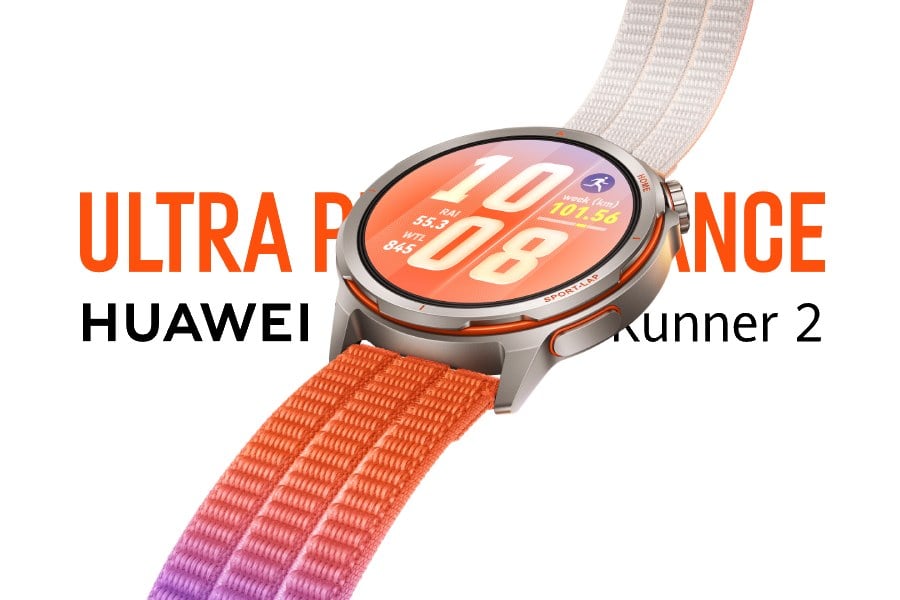
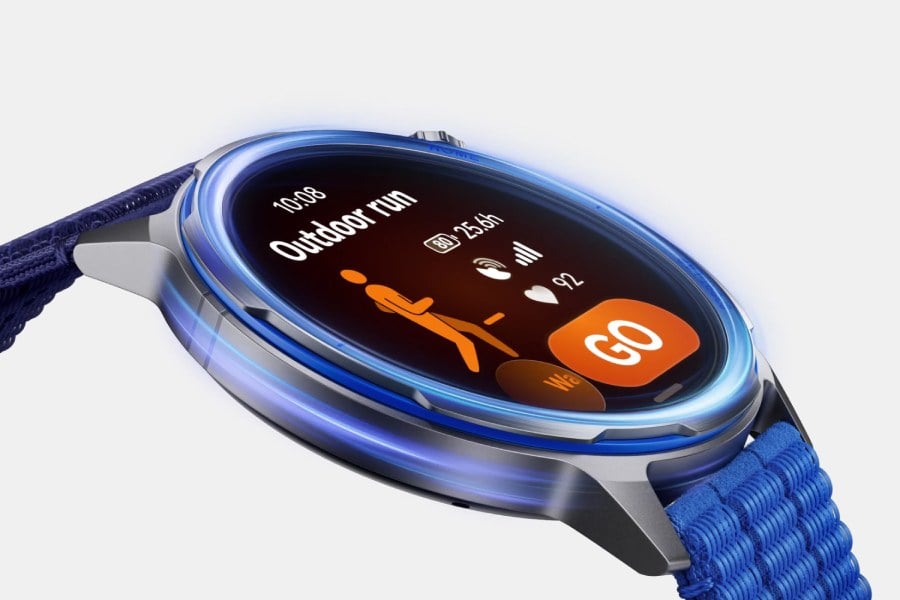
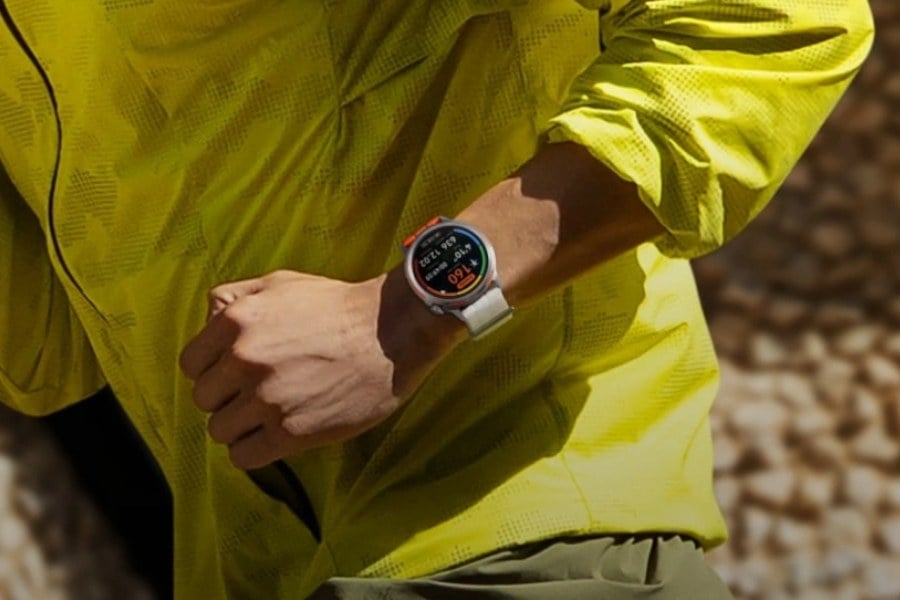
At the launch event today, Huawei officially released the Huawei Watch GT Runner 2. As the name implies, it’s a running-focused smartwatch with precision tracking, structured marathon training, and a lighter overall design.
At the center of the pitch is what Huawei calls an industry-leading 3D floating antenna system. The company says this setup improves positioning accuracy by 20 percent compared to previous models, even in dense urban areas, near tall buildings, or inside tunnels.
The watch supports dual-band GPS (L1 + L5) and works with multiple satellite systems, including GLONASS, BeiDou, Galileo, QZSS, and NavIC.
Huawei Watch GT Runner 2 Design and Display
The design has also been reworked with runners in mind. The watch case, bezel, crown, and buttons are made from titanium alloy, and the body measures 43.5mm by 43.5mm with a thickness of 10.7mm.
At around 34.5 grams (without the strap), it’s notably light for a watch in this category. Huawei pairs it with a new AirDry woven strap that uses a hollowed design for improved breathability. The company claims it boosts airflow by 25 percent compared to earlier straps. There’s also a fluoroelastomer strap included for workouts where sweat and water are more of a concern.
The display is a 1.32-inch AMOLED panel with a 466 x 466 resolution and a peak brightness of up to 3000 nits. The glass on top is second-generation Kunlun Glass, which checks out durability.
The Runner 2 is all about running!
But the bigger story here is software. The wearable comes with a DSM-Firmenich Running Team co-developed Intelligent Marathon Mode, which offers structured race preparation.
Runners can access major marathon events or create custom ones, generate tailored training plans, and track advanced metrics like lactate threshold, running power, training intensity, and a Running Ability Index. The watch can also predict finishing times based on historical data and training trends.
During races, the watch can display real-time pace charts, estimated finish times, and your gap against a target time. There’s also a digital pacer and fueling reminders designed to keep energy levels steady during long efforts. Post-run, the Huawei Health app breaks down performance data and provides form insights and recovery guidance.
Beyond running, the watch supports over 100 sports modes, including trail running, swimming, cycling, golf (with access to over 17,000 courses in select markets), and freediving up to 40 meters. It carries a 5 ATM and IP69 rating, although Huawei notes it’s not designed for hot showers or deep scuba diving.
Health and wellness features
As for health tracking, the watch includes ECG monitoring, heart rate variability tracking, blood oxygen measurement, sleep tracking with breathing awareness, and stress insights. Huawei is careful to note that these features are for reference only and not intended for medical diagnosis.
The Huawei Watch GT Runner 2 has a rated battery life of up to 14 days under light use, 7 days under typical use, and up to 32 hours in outdoor workout mode with precise positioning enabled.
You can charge it wirelessly, and the watch supports NFC payments, Bluetooth calling, standalone music playback, and QR code scanning. It works with both Android and iOS devices, though some features, like custom video watch faces and music syncing, are limited when paired with iPhones.
Huawei Watch GT Runner 2 Price
The Watch GT Runner 2 retails at £350 and will go on open sale starting today. You can choose from Dawn Orange, Dusk Blue, and Midnight Black colors.
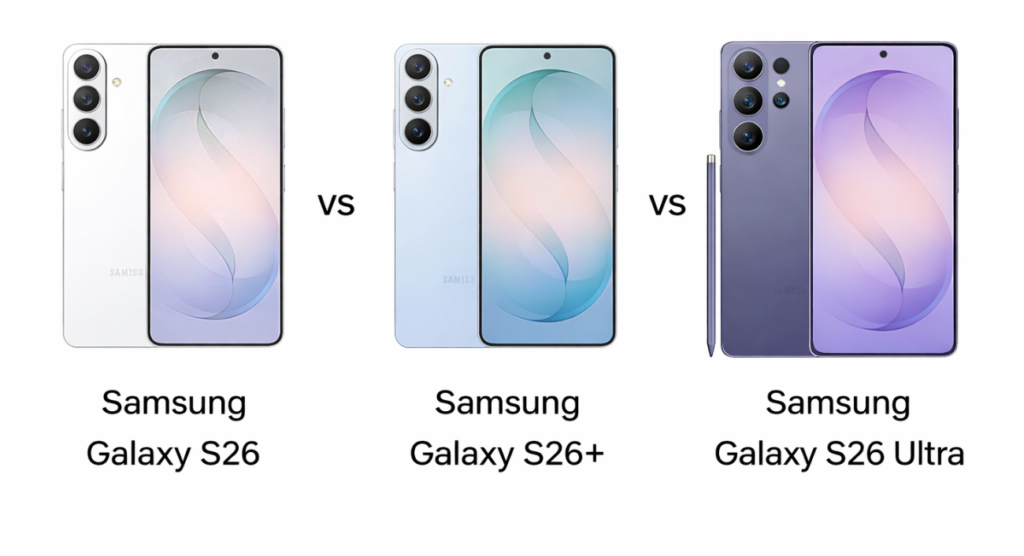
When three phones share the same flagship DNA, the real question isn’t which one is better; it’s what actually changes as you move up the lineup. The Samsung Galaxy S26, S26+, and S26 Ultra look similar at first glance, but the upgrades are carefully layered to match different types of users. From display sharpness and battery growth to camera flexibility and productivity features, each step adds a specific kind of value. This comparison breaks down how those upgrades differ, what they mean in real-world use, and which model makes the most sense depending on how a phone is actually used day to day.
Please Note: When you buy something using the links in our articles, we may earn a small commission at no cost to you.
Major Features:
Feature
Galaxy S26
Galaxy S26+
Galaxy S26 Ultra
Upgrades
Display Size & Resolution
6.3″ FHD+
6.7″ QHD+
6.9″ QHD+ + Anti-Reflective
Bigger and sharper screens improve media viewing, gaming, and multitasking comfort
Display Treatment
Standard flagship panel
Same as S26
Gorilla Armor 2 + DX coating
Ultra reduces reflections: better outdoor visibility and long viewing sessions
Build Experience
Compact flagship feel
Larger immersive feel
Productivity-focused with stylus
Upgrade shifts from portability to immersion to productivity use
Processor & Performance
Flagship chipset
Same performance level
Same chipset + higher RAM option
Ultra handles heavier multitasking and sustained workloads better
RAM & Storage Options
Up to 12GB / 512GB
Up to 12GB / 512GB
Up to 16GB / 1TB
Ultra better suited for creators, pro workflows, and heavy storage users
Main Camera
50MP
50MP
200MP
Ultra enables higher detail capture and better crop flexibility
Zoom System
3x telephoto
3x telephoto
3x + 5x periscope
Ultra adds real long-range photography versatility
Ultrawide Camera
12MP
12MP
50MP
Ultra improves detail and low-light ultrawide shots
Selfie Camera
12MP
12MP
12MP
No upgrade: same front camera experience across all
Battery Capacity
4300mAh
4900mAh
5000mAh
Bigger models support longer heavy usage sessions
Wired Charging
25W
45W
60W
Faster charging reduces downtime, especially for power users
Wireless Charging
15W
20W
25W
Upgrade improves convenience for desk and bedside charging
Extra Features
Core flagship features
Adds UWB
Stylus + UWB + pro display
Ultra adds productivity and pro-level usability tools
Price (Approx)
$900 / ₹88,000
$1100 / ₹1,20,000
$1300 / ₹1,40,000
Price increases match upgrade depth and target usage
Disclaimer: Specifications and features listed are based on available information at the time of writing and may vary by region, software updates, or official announcements.
The Galaxy S26 series follows a clear upgrade ladder rather than three completely different designs. The S26 acts as the baseline flagship with premium glass and Armor Aluminum 2, focusing on comfort and everyday practicality. Moving to the S26+, the main change is scale; it feels more immersive without dramatically changing the design philosophy. The S26 Ultra introduces the biggest functional upgrade: Gorilla Armor 2 with anti-reflective coating and built-in stylus support. This shift makes the Ultra less about style and more about productivity and precision input. The upgrade path here is practical, compact usability on S26, a larger media-focused experience on S26+, and professional utility on Ultra.
Display Quality
All three use Dynamic LTPO AMOLED 2X panels with 120Hz refresh rates and high peak brightness, so smoothness and color quality stay consistent. The main upgrade difference is resolution and usability. The S26 sticks with FHD+ for efficiency, while the S26+ and Ultra move to QHD+ for sharper text and better large-screen clarity. The Ultra adds anti-reflective treatment, which noticeably improves outdoor visibility and long viewing sessions.
Verdict
Design upgrades mainly scale from comfort to immersion to productivity, while display upgrades focus on sharper visuals and improved real-world readability as you move up.
2. Specifications Including Battery
Performance
Performance differences are subtle because all models use flagship-level chipsets and the same software support window. The S26 and S26+ share identical performance configurations depending on region, meaning real-world speed is nearly the same between them. The Ultra’s upgrade lies less in raw speed and more in sustained performance and higher memory options, which benefit heavy multitasking, long gaming sessions, and advanced editing workloads. The progression is about workload capacity rather than basic performance gains.
Battery and Charging
Battery upgrades follow a clear usage-based ladder. The S26’s smaller battery targets normal daily use with moderate charging speeds. The S26+ adds capacity and faster wired charging, which better supports heavier media consumption and longer screen time. The Ultra improves further with the fastest wired and wireless charging, reducing downtime for power users. These upgrades mainly affect convenience rather than fundamental endurance differences.
Verdict
Performance upgrades emphasize consistency across the lineup, while battery improvements primarily support heavier usage patterns and faster top-up convenience.
3. Camera
Main and Secondary Lenses
The biggest upgrade differences in the series appear in the camera system. The S26 and S26+ share identical hardware, meaning the move from base to Plus does not change photographic capability. Both focus on reliable flagship photography with 3x zoom and strong video features. The S26 Ultra introduces meaningful hardware upgrades: a 200MP main sensor, dual telephoto setup including a 5x periscope, and a higher-resolution ultrawide. These changes expand shooting flexibility rather than just improving quality, enabling better long-distance zoom, higher-detail crops, and more creative framing options. The upgrade here is clearly aimed at users who push mobile photography further.
Selfie Camera
All three use the same 12MP dual-pixel autofocus selfie camera, so selfie quality and video performance remain consistent across the lineup. This keeps the front-camera experience equal regardless of model choice.
Verdict
Camera upgrades are concentrated entirely on the Ultra, while S26 and S26+ maintain the same reliable flagship camera experience.
4. Pricing
The pricing structure reflects how upgrades are distributed. The Galaxy S26 starts at about $900 / ₹88,000, establishing the core flagship experience. The S26+ moves to roughly $1100 / ₹1,20,000, where the extra cost mainly pays for a larger, sharper display and bigger battery rather than performance or camera improvements. The S26 Ultra reaches around $1300 / ₹1,40,000, with pricing tied to significant camera upgrades, stylus integration, premium display treatment, and higher memory options.
Is the Price Justified?
The S26+ feels like an upgrade for comfort and endurance rather than capability. The Ultra’s price increase is easier to justify for users who will actively use Zoom flexibility, stylus features, or heavy multitasking. The value depends less on raw specs and more on whether those functional upgrades match daily usage.
Verdict
Pricing directly mirrors upgrade intent: screen and battery improvements in the middle tier, and feature-driven professional upgrades at the top.
Disclaimer: Prices are approximate and may vary based on country, region, and applicable taxes.
5. Conclusion
The S26 lineup is structured around progressive upgrades rather than drastic differences. The S26 provides the full flagship foundation. The S26+ upgrades the viewing and battery experience without changing core performance or cameras, making it a lifestyle upgrade for media-heavy users. The S26 Ultra introduces the most functional upgrades, advanced cameras, an anti-reflective display, stylus integration, and higher-end hardware options, targeting users who treat their phone as a productivity or creative tool. The lineup feels intentionally tiered so buyers can choose upgrades based on usage rather than marketing labels.
Verdict
The differences between S26, S26+, and S26 Ultra are less about which is “best” and more about how upgrades align with usage: Galaxy S26 is best suited for users who want a clean flagship experience without extra complexity, ideal for everyday performance, compact handling, and long-term reliability.
The S26+ fits users who consume more content, game longer, or simply prefer a bigger and sharper screen with stronger battery comfort, making it the most balanced upgrade for mainstream buyers.
The S26 Ultra is clearly built for power users, creators, and multitaskers who will actually use advanced zoom cameras, stylus features, and top-tier hardware.
S26 for simplicity, S26+ for balance, Ultra for maximum capability.
The foldable phone market has been chasing the same goal for years: reduce the crease enough that you barely notice it. Now, if recent leaks are anything to go by, Oppo may be getting closer than most.
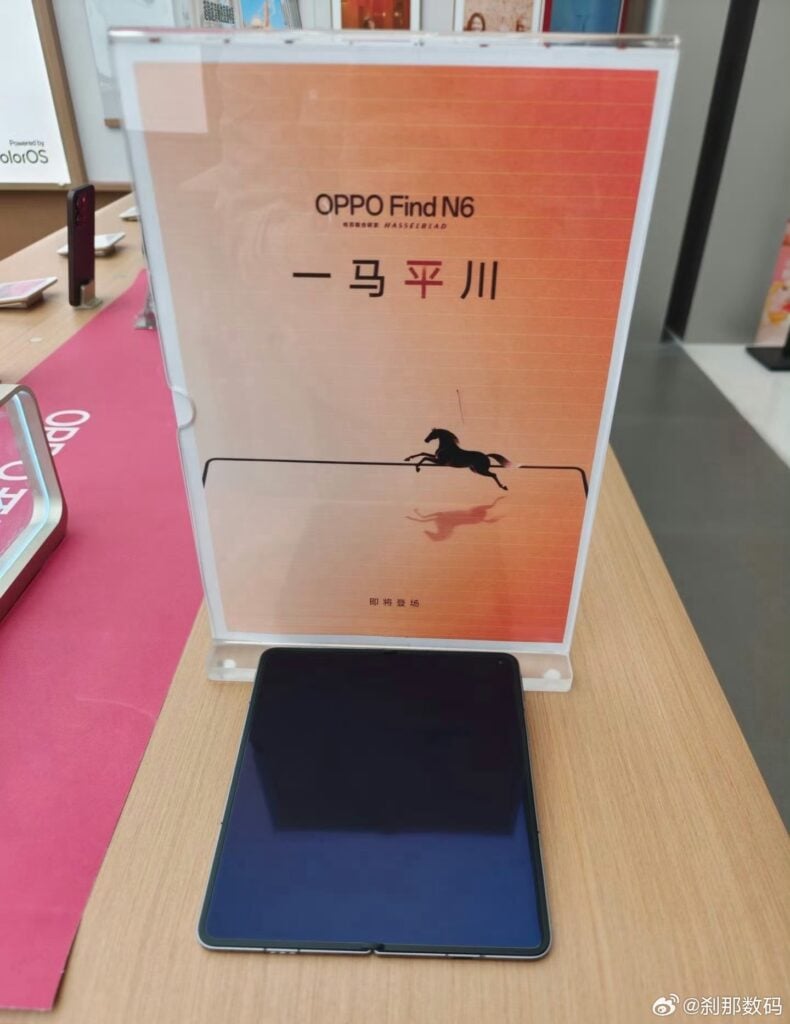
A real-life photo of the upcoming Oppo Find N6 have surfaced online, showing a noticeably flatter inner display. The crease is almost invisible when looking straight on.
Oppo hasn’t shared full technical details yet, but teasers point to a redesigned hinge system, reportedly built with a titanium alloy structure. The company is also said to be using a new ultra-thin glass designed to better resist long-term deformation. Whether that involves new materials or refinements to lamination isn’t clear, but the goal is obvious: make the display look and feel as close to a traditional slab phone as possible when opened.
Oppo is reportedly planning a March 17 launch in China, potentially beating several key competitors to market. Samsung’s next book-style foldable, expected to follow the current Samsung Galaxy Z Fold7, likely won’t arrive until mid-year. Google’s next Pixel foldable is also expected later in the summer. Meanwhile, Honor’s Honor Magic V6 is rumored for a similar March window, setting up direct competition.
If the Find N6 delivers on what these early glimpses suggest, it could raise the bar for crease reduction in book-style foldables. That would be particularly significant as Apple is widely rumored to be preparing its own foldable iPhone in the coming years, with heavy focus reportedly placed on minimizing the fold line.
Of course, real-world impressions will matter more than carefully framed demo shots. Lighting, display angle, and even screen content can influence how visible a crease appears. Still, the early signs suggest Oppo is pushing hard on hinge and display engineering.
More details are expected soon. For now, the Find N6 looks poised to deliver one of the flattest foldable displays we’ve seen so far.
Xiaomi has officially launched the Redmi Buds 8 Lite, also known as the Youth Edition, in China. The earbuds are priced at 139 yuan (approximately $20), making them an affordable option in the active noise cancellation (ANC) market. Xiaomi initially introduced the earbuds globally in January for €22.9.
Redmi Buds 8 Lite Specifications
The Redmi Buds 8 Lite features 42dB wide-frequency active noise cancellation with hybrid ANC technology to reduce low-frequency sounds like subway noise and air conditioning. It includes dual-mic AI noise reduction for clear call quality in noisy environments and a wind-noise reduction algorithm for outdoor use, resisting wind speeds up to 6m/s.
Xiaomi has included a 12.4mm titanium-diaphragm dynamic driver in the earbuds. The earbuds also support AAC and SBC codecs, maintaining sound quality even at lower bitrates.
The Redmi Buds 8 Lite offers up to 36 hours of battery life with the charging case and 8 hours of playback on a single charge. Fast charging provides 2 hours of listening time from a 10-minute charge.
The Redmi Buds 8 Lite offers dual-device connectivity, which allows users to pair two devices simultaneously and switch between them without delays. The Xiaomi Earbuds app enables users to adjust noise cancellation levels, customize EQ settings, and modify gesture controls.
Redmi has designed the earbuds for comfort and practicality. Each earbud weighs 4.5 grams and comes with multiple ear tip sizes to ensure a secure fit. The earbuds have an IP54 rating for dust and water resistance, making them suitable for everyday use.
The Redmi Buds 8 Lite supports Bluetooth 5.4 for reliable connectivity. The earbuds come in three colors: Blue, Black, and White.
In related news, Oppo has recently introduced the Enco Air 5 Pro with LHDC 5.0 audio, AI call noise reduction, and up to 54 hours of battery life, while the Realme Buds T500 Pro has surfaced in leaks featuring 50dB ANC, Bluetooth 6.1, and a 56-hour battery rating
For more daily updates, please visit our News Section.
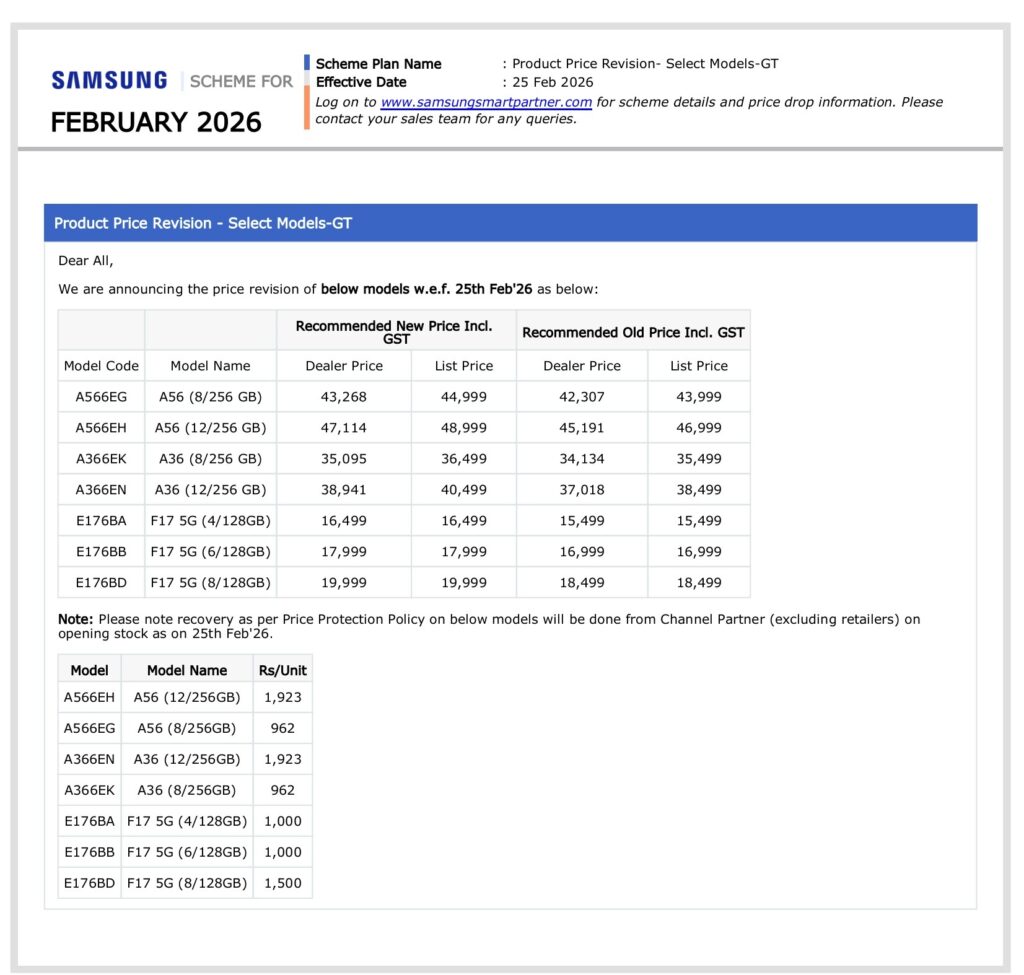
Samsung has increased prices for several Galaxy A and F series smartphones in India. A leaked internal pricing document from tipster AN Leaks shows the new rates, though Samsung hasn’t made any official announcement. The changes appear to be live in some stores, but online platforms haven’t fully updated their listings yet.
Galaxy A56 5G and A36 5G Get Price Bumps
The Galaxy A56 5G now costs more for its higher storage options. The 8GB + 256GB version is priced at ₹44,999, and the 12GB + 256GB model costs ₹48,999. Both variants are about ₹1,000 more expensive than before.
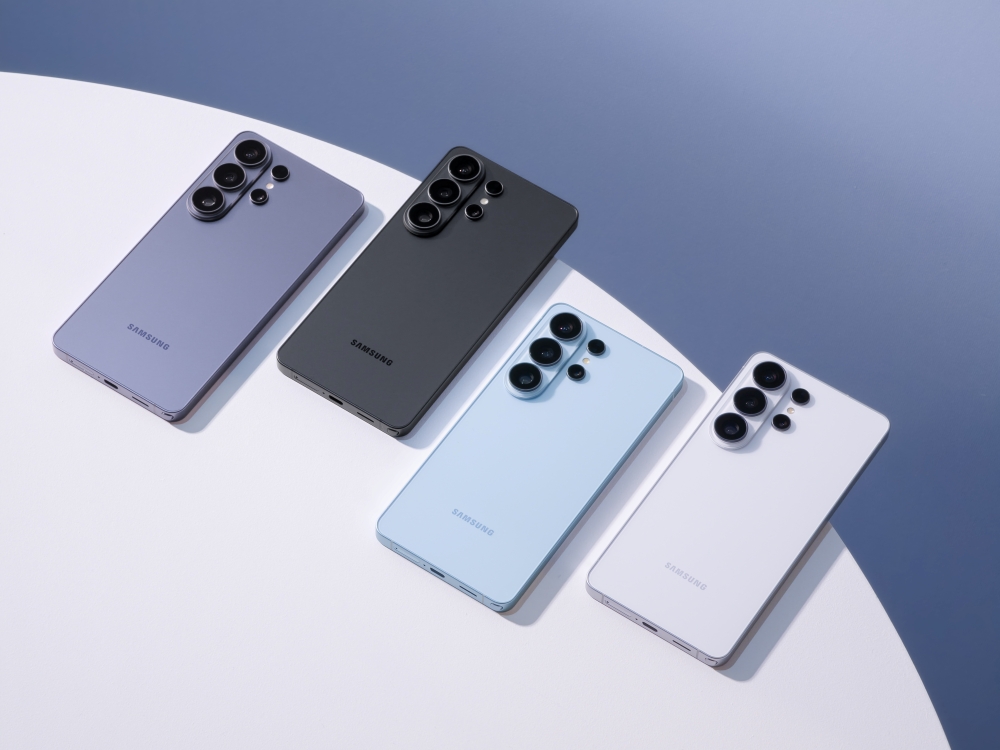
Sasmsung Galaxy A56 (left) and Galaxy A36 (right)
The Galaxy A36 5G also saw similar increases. The 8GB + 256GB variant jumped from ₹35,499 to ₹36,999. The 12GB + 256GB option now costs ₹40,499. Again, this is roughly ₹1,000 more per variant.
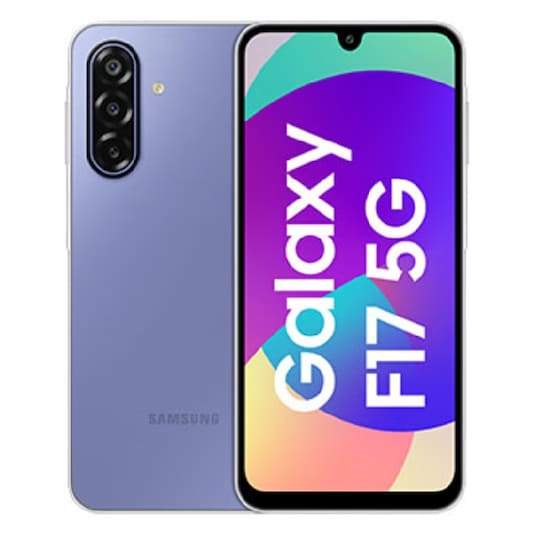
Galaxy F17 5G Prices Go Up Too
The Galaxy F17 5G also got pricier. The 4GB + 128GB variant now costs ₹16,499, while the 6GB + 128GB version is ₹17,999. Both are about ₹1,000 higher. The 8GB + 128GB model is priced at ₹19,999, which is a bigger jump of ₹1,500 from its earlier price.
Online Stores Still Show Old Prices
Checking major online shopping sites shows that many devices still display the older prices. This means the price increase might be rolling out slowly or could be limited to physical retail stores right now.
Second Price Increase This Year
This isn’t the first time Samsung raised prices in 2026. Reports from January suggested the Galaxy A56, Galaxy A36, and Galaxy F17 5G already had price hikes. Other leaks mention possible increases for more Samsung phones later this year, but nothing is confirmed.
For more daily updates, please visit our News Section.
With the Galaxy S26 Ultra, Samsung isn’t just pushing spec upgrades; it’s trying to redefine what a flagship phone should proactively do for you. This year’s Ultra focuses heavily on smarter AI, better video capabilities, and meaningful hardware tweaks rather than just bumping numbers. While it might look iterative at first glance, some of these additions are genuinely interesting.
A Slimmer Ultra Than Ever
Samsung Galaxy S26 Ultra
At just 7.9mm thick, the Galaxy S26 Ultra is the slimmest Ultra model Samsung has released to date. That might not sound dramatic, but in the world of large, camera-heavy flagships, shaving off thickness without sacrificing battery or thermals is a big deal. Despite the slimmer profile, the phone still packs top-tier hardware and doesn’t downsize the battery.
Built-In Privacy Display
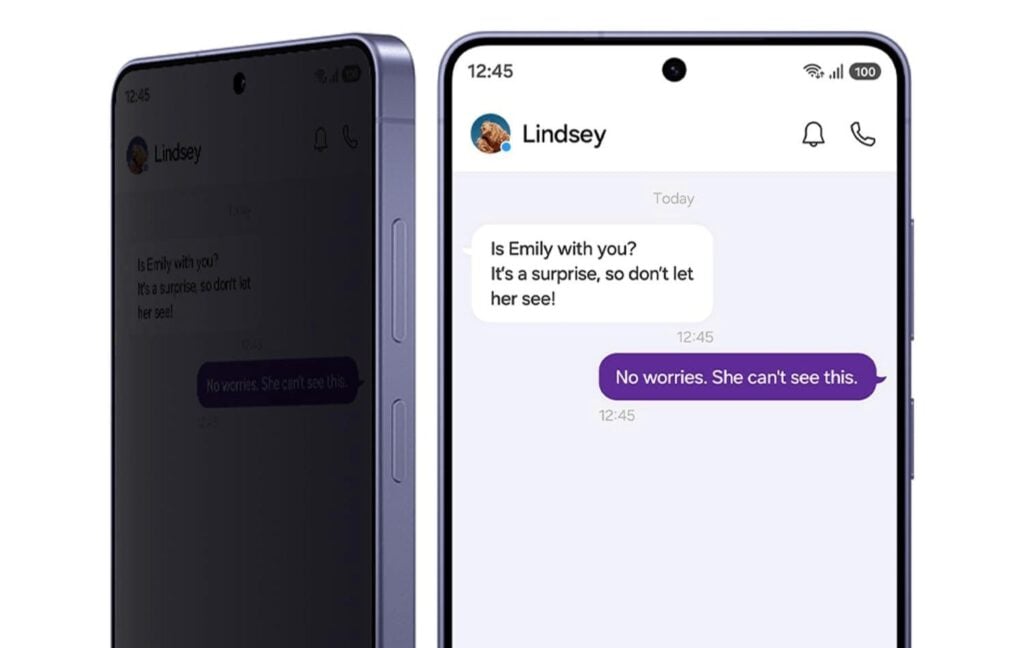
One of the most anticipated additions is the new Privacy Display. This is the first time Samsung has integrated built-in privacy screen functionality directly into a flagship phone. Using a combination of hardware filtering and software controls, the display restricts viewing angles so that on-screen content is much harder to see from the sides.
Galaxy S26 Ultra’s privacy display feature
If you often work in cafés, airports, or public transport, this could be a genuinely practical feature. Unlike clip-on privacy protectors, this one is native and toggleable. It’s subtle, but it signals Samsung thinking beyond just brightness and resolution.
Snapdragon 8 Elite Gen 5 for Galaxy
Under the hood, the S26 Ultra runs on the custom Snapdragon 8 Elite Gen 5 Mobile Platform for Galaxy. As the name suggests, this version is tuned specifically for Samsung’s flagship. Performance improvements focus on sustained workloads rather than just peak benchmarks. That matters for gaming, 4K and 8K video recording, and AI-driven processing tasks that run continuously in the background. Thermal management has also been improved, which pairs well with the phone’s thinner design.
Camera Upgrades: Low Light and Pro Video
Samsung is clearly doubling down on mobile videography this year. The S26 Ultra features wider apertures across parts of its camera system, improving low-light photography. Night shots are brighter and cleaner, but the bigger story might be “Nightography Video.” Samsung claims significantly improved clarity in dim environments, reducing noise and maintaining detail when recording at night. Video stabilization also gets an upgrade through improved Super Steady technology, helping smooth out handheld footage without over-cropping.
Perhaps most notably, the S26 Ultra is the first Galaxy smartphone to support the Advanced Professional Video (APV) standard. This allows for more efficient compression while maintaining high video quality, which could be a big deal for content creators who want pro-grade results without enormous file sizes. Even the front-facing camera benefits from AI ISP improvements, promising more natural skin tones and better detail retention in mixed lighting.
Agentic AI
Samsung is branding its next phase of intelligence as “Agentic AI.” The idea is simple: instead of waiting for you to trigger features, the phone anticipates and assists. “Now Nudge” delivers contextual suggestions at relevant moments, while “Now Brief” provides real-time summaries and updates throughout the day. Think less reactive notifications and more proactive guidance.
Bixby has also evolved into a more conversational device agent. You can adjust settings, navigate menus, and manage tasks using natural language without needing to memorize specific commands. The goal is frictionless interaction.
Samsung has also expanded “Circle to Search” and deepened integrations with AI platforms like Gemini and Perplexity. Native AI photo editing tools have been refined as well, making object removal, generative fill, and scene adjustments more seamless.
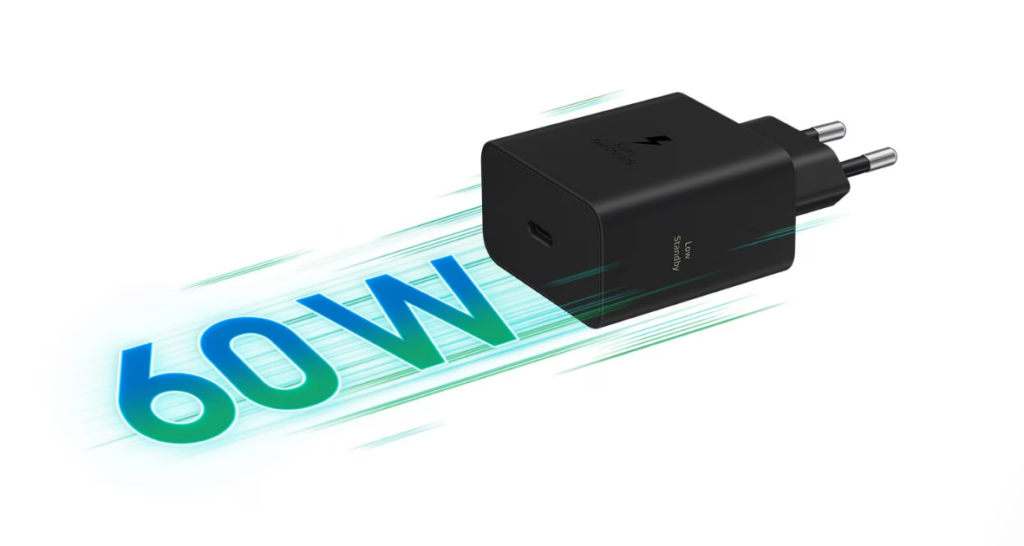
Super Fast Charging 3.0
Charging gets a meaningful bump with Super Fast Charging 3.0. Using Samsung’s new 60W charger, the S26 Ultra can reportedly reach 75% in 30 minutes. That’s not industry-leading on paper, but it strikes a balance between speed and battery longevity. In an era where 200W charging exists, Samsung appears to be prioritizing sustained battery health over headline-grabbing numbers.
For more daily updates, please visit our News Section.
Samsung has never been the most aggressive player when it comes to battery innovation. While most of its rivals are chasing bigger numbers year after year, Samsung is definitely moving more cautiously. Now, though, a senior executive has confirmed that change is coming.
Speaking at a media roundtable ahead of Galaxy Unpacked 2026, Moon Sung-Hoon, Executive Vice President and Head of Samsung Electronics’ Smartphone R&D Team, said the company is actively preparing a smartphone that uses silicon-carbon anode battery technology. According to Moon, such a device will arrive “in due course,” suggesting the tech is progressing internally, even if it’s not ready for prime time just yet.
Silicon-carbon batteries have become increasingly common among Chinese smartphone brands. By replacing traditional graphite anodes with silicon-carbon composites, these batteries can store more lithium ions in the same physical space. The result? Much higher capacities without dramatically increasing thickness or weight.
Moon acknowledged that the company may appear slower than competitors in adopting newer battery chemistry, but emphasized that safety, durability, and long-term stability remain priorities. That caution is understandable given Samsung’s history, particularly the lessons learned from the Galaxy Note 7 incident years ago. New battery technologies must pass strict internal testing, especially in areas like swelling resistance, lifespan, and charge cycle reliability.
That conservative strategy is evident in the just-launched Galaxy S26 series. Only the base model received a modest battery bump, while the Galaxy S26 Ultra and its Plus sibling retained familiar capacity figures.
That said, Moon’s comments confirm that Samsung is not ignoring the shift toward silicon-carbon chemistry. It’s simply taking its time. With brands like Honor, Oppo, OnePlus, and Xiaomi pushing 7,000mAh-plus batteries and longer endurance, the pressure on Samsung is mounting.
For Galaxy fans who feel battery upgrades have been incremental in recent years, this could signal a more meaningful leap on the horizon. There’s no concrete launch timeline yet, but the direction is clear: Samsung is working on it.
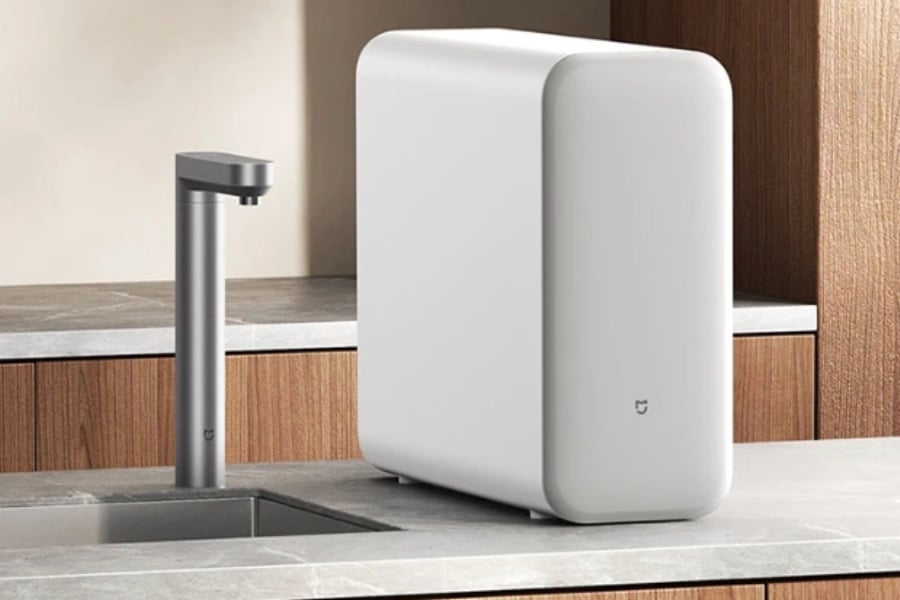
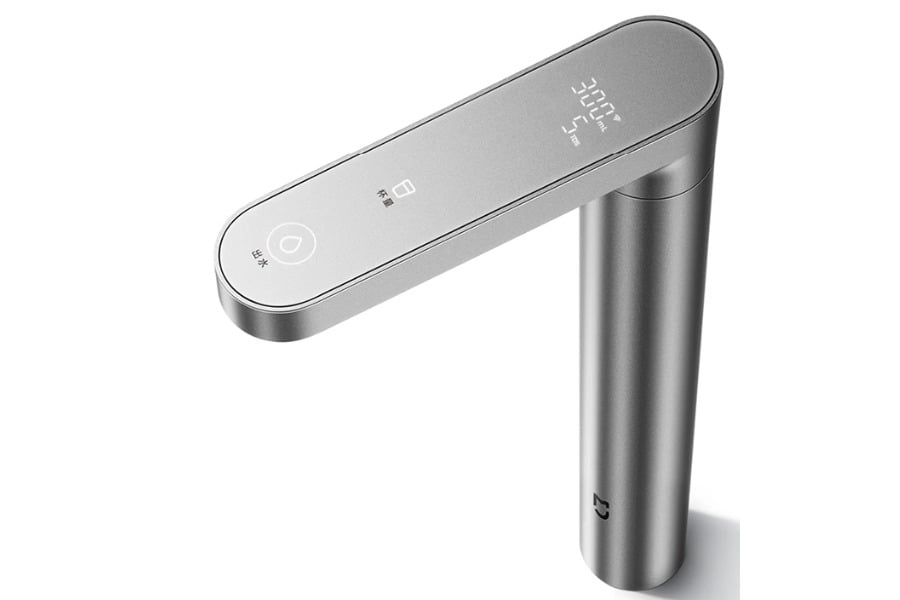
Xiaomi has introduced a new high-capacity water purifier in China. The Mijia Water Purifier 2 1200G comes with a long-life reverse osmosis system and what it describes as baby-grade healthy water.
At the core of the device is a 7-year long-lasting RO system. The purifier uses a 12-page high-precision RO membrane paired with a PPC filter cartridge. It also introduces what the company calls “Zero Stagnant Water 3.0” technology, which is designed to reduce leftover water sitting inside the system between uses.
Xiaomi claims the purifier has received professional maternal and infant certification, and that the filtered water does not contain scale inhibitors. The rated total purification capacity is 6,500 liters.
A 7-year RO system with app control
The Mijia Water Purifier 2 1200G (model MR1282-A) supports a clean water flow rate of 3.2 liters per minute and operates at 180W. It works with inlet water pressure between 0.1 and 0.4 MPa and has a working pressure range of 0.4 to 0.9 MPa. The unit weighs 11.9kg and measures 163 × 445 × 379 mm.
On the smart side, the purifier includes an IPX7-rated waterproof faucet with touch controls for dispensing water. It can display real-time TDS (total dissolved solids) values and connects over 2.4GHz Wi-Fi (IEEE 802.11b/g/n). Through the Mijia app, users can remotely check water quality data and other system information.
The purifier is designed for use with municipal tap water that meets China’s GB 5749 standard. Xiaomi says the output water meets the requirements of the country’s hygiene and safety standards for reverse osmosis drinking water treatment devices.
The purifier is priced at 1,999 yuan (~ $290), though Xiaomi is offering a pre-sale price of 1,499 yuan (~ $299). Its first official sale is scheduled for March 7.
For more daily updates, please visit our News Section.
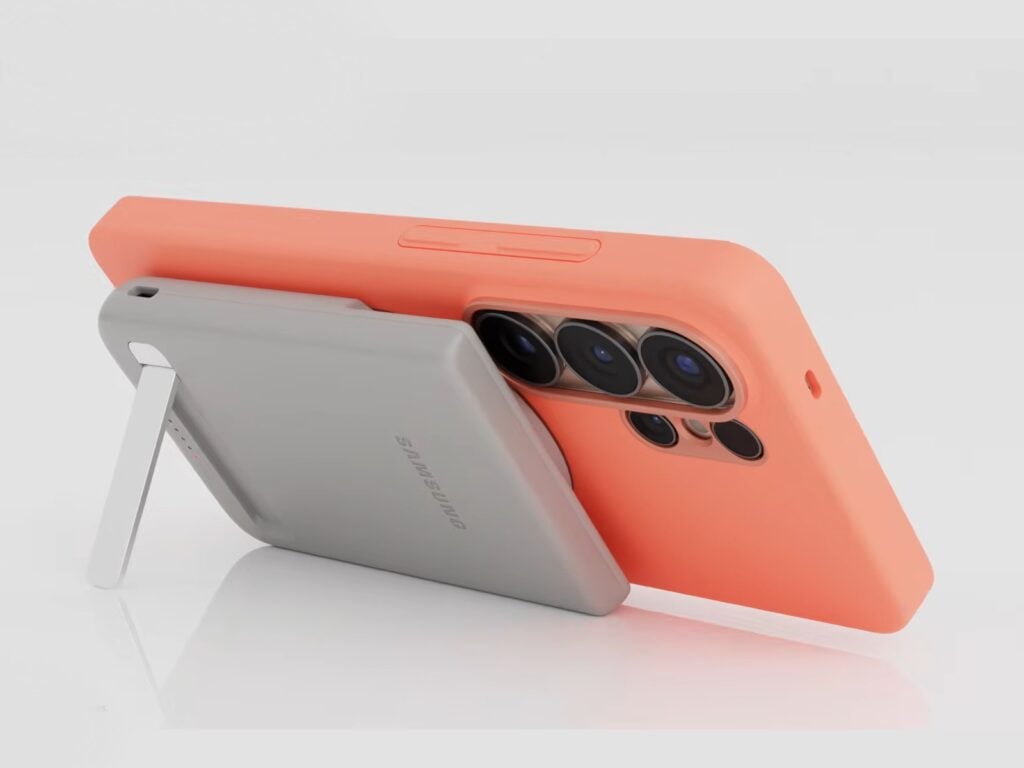
Samsung has just expanded its accessory ecosystem for the Galaxy S26 series with a clever new companion. The Galaxy S26 Ultra and its siblings just got a new 25W Magnetic Charger, and now, the brand has also released a new power bank with built-in magnets and a kickstand.
Magnetic Snap-On Power for the Samsung Galaxy S26 Series
This official Samsung magnetic power bank is specially engineered for the Galaxy S26 series and other Qi2-compatible phones. It uses magnetic alignment to attach securely to the smartphone’s back, ensuring proper positioning for efficient power transfer without reels of cable or fidgeting to find the right spot. Built into the back of the power bank is a fold-out kickstand, letting you prop your phone up at a comfortable angle, which makes it handy for video calls, streaming, gaming, or more.
Samsung Qi2 Magnet Power Bank
Samsung’s Qi2 Magnet Wireless Battery Pack houses a sizeable 5,000mAh battery pack. It supports wireless output up to 15W when magnetically connected to compatible devices like the Galaxy S26 Ultra, Galaxy S26+, and Galaxy S26. Keep in mind that these models don’t have built-in magnets like the Google Pixel 10 lineup or iPhones. So you will need a dedicated case with magnets.
For example, popular case brand Spigen have already released several magnetic cases and accessories. If you need a faster charging option, the power bank also offers 25W wired fast charging with its USB Type-C port. In other words, users can charge two devices at the same time. Samsung has released this Qi2 Magnet Wireless Power Bank in a single gray color option. As of right now, the pricing and launch details for this power bank are still at large.
For more daily updates, please visit our News Section.
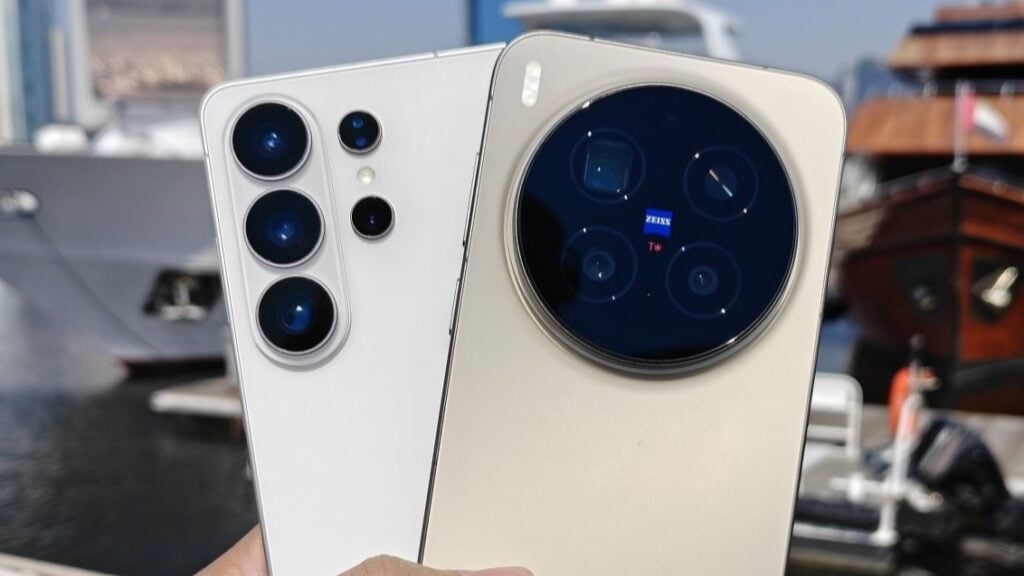
For the past few years, Vivo has launched its Ultra-branded flagship around a month after Oppo’s Ultra offering in China. However, this year may be different, as reliable tipster Digital Chat Station claims that the Vivo X300 Ultra will debut before the Oppo Find X9 Ultra. Here’s a look at when these devices are expected to hit the Chinese market.
Vivo X300 Ultra, Find X9 Ultra launch time frame (rumored)
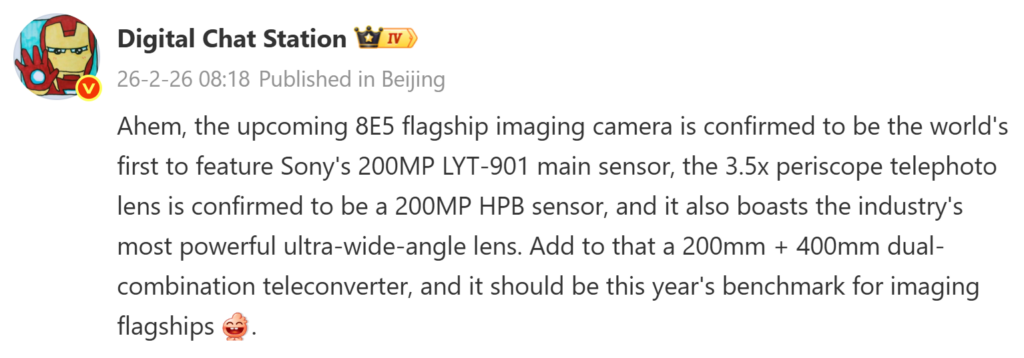
DCS revealed that the Vivo X300 Ultra will be announced in March, which could be in the second half of the month. He claims that this Snapdragon 8 Elite Gen 5-powered phone will feature the world’s first 200-megapixel Sony LYT-901 primary camera. It is also said to include a 3.5x periscope telephoto lens using a 200-megapixel Samsung HPB sensor, along with what is described as the strongest ultra-wide camera in the smartphone industry.
Oppo Find N6 and Find X9 Ultra launch timeframe (rumored)
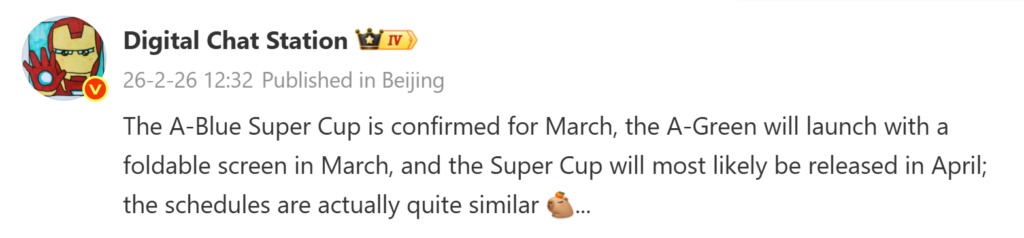
DCS claims that March will also see the arrival of the Oppo Find N6 foldable phone. A recent report revealed that it is slated to debut on March 17. He also mentioned that the Find X9 Ultra will be announced in April.
While it is not mentioned in the leak, there is a possibility that the vivo X300 Ultra could be accompanied by the Vivo X300 Max, and the Find X9 Ultra and Find X9s Pro may debut together in April.
Interestingly, both Ultra editions are also said to be heading to the global market in the coming months. While the X9 Ultra has not yet appeared on any global certification platform, the vivo X300 Ultra has already been approved in Indonesia and Europe, possibly hinting at a global launch in the second quarter of this year.
For more daily updates, please visit our News Section.
G-Shock watches remain one of the safest watch purchases in 2026 thanks to their legendary durability, long battery life, and wide range of styles. But with dozens of models available, from classic digital squares to premium metal designs and outdoor-focused beasts, choosing the right one can feel confusing.
This complete buying guide simplifies everything by helping you understand which G-Shock fits your lifestyle, budget, and daily usage. Each watch was selected to represent a specific use-case category (everyday wear, style, outdoor, fitness, or premium) rather than just launch date or price. Whether you’re a first-time buyer or upgrading to a better model, this guide covers quick picks, key buying tips, and an easy comparison table to help you decide faster.
How to Choose the Right G-Shock
Purpose & Lifestyle
The first step is understanding how you will actually use the watch. If you want a daily wear watch, lightweight and slim models are ideal. Outdoor users may need sensors and reinforced construction, while style-focused buyers might prefer metal designs. Avoid buying extreme models unless your lifestyle demands them.
Size and Comfort
One of the biggest mistakes buyers make is choosing oversized models just because they look tough. While large watches look impressive, slimmer options like square G-Shocks or the GA-B2100 are usually more comfortable for long-term wear. A watch that feels good daily will always be a better investment.
Power System (Solar vs Battery)
Many premium G-Shocks use Tough Solar technology, which reduces maintenance and extends long-term reliability. Battery-powered models are still good, but solar versions are generally preferred by experienced users because they require less attention.
Features vs Real Usage
Advanced features like compass, altimeter, or barometer sound impressive but are often unnecessary for regular users. Buy based on your real needs, not just feature lists.
Image created with AI
Best G-Shock Watches in 2026
These models represent the most balanced options across daily use, style, outdoor performance, and smart features.
These rankings are based on a combination of real-world usability, long-term popularity among G-Shock buyers, feature relevance, and overall value in 2026.
Everyday Reliability — GW-M5610U
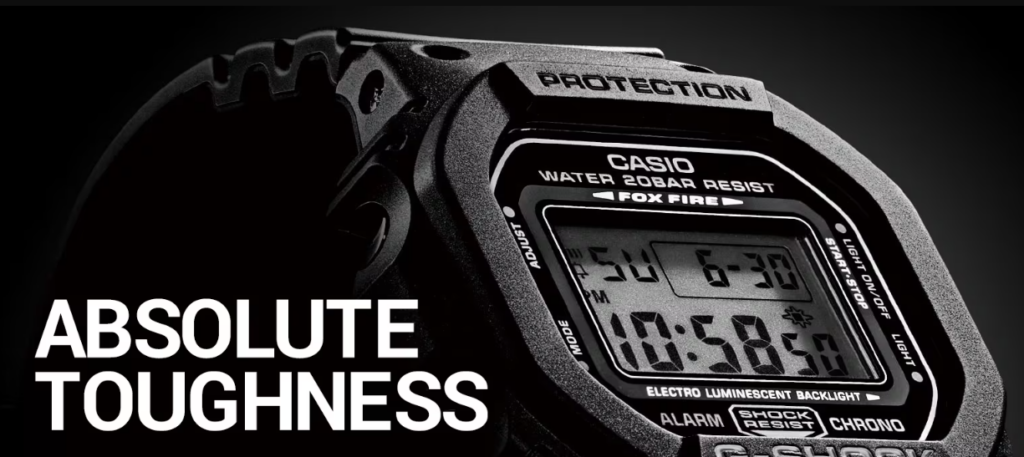
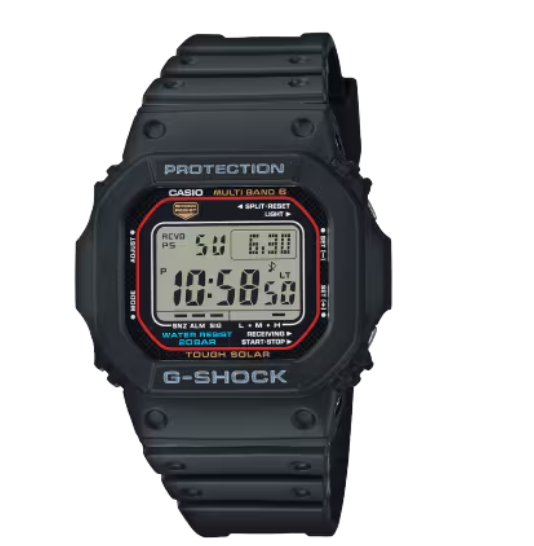
If you want the safest, no-nonsense G-Shock, the GW-M5610U is often the first recommendation, and for good reason. It’s compact, lightweight, and easy to wear every day without feeling bulky. Features like Tough Solar charging and automatic time syncing mean you rarely need to think about maintenance. Compared to larger analog models, it feels simpler and more practical, which is exactly why long-time users love it. This is the kind of watch you buy once and keep for years, whether you’re traveling, commuting, or just wearing it daily.
Please Note: When you buy something using the links in our articles, we may earn a small commission at no cost to you.
Modern Style — GA-B2100 (Casioak)
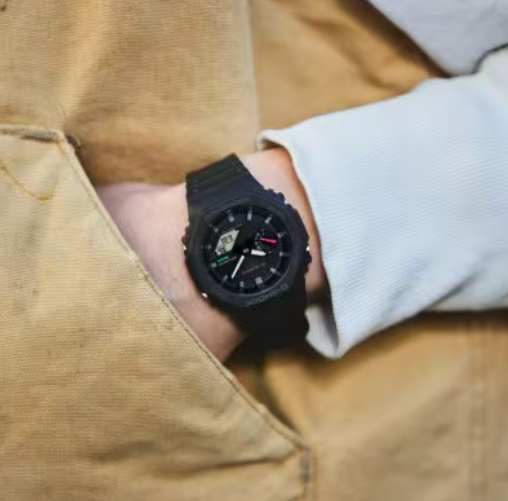
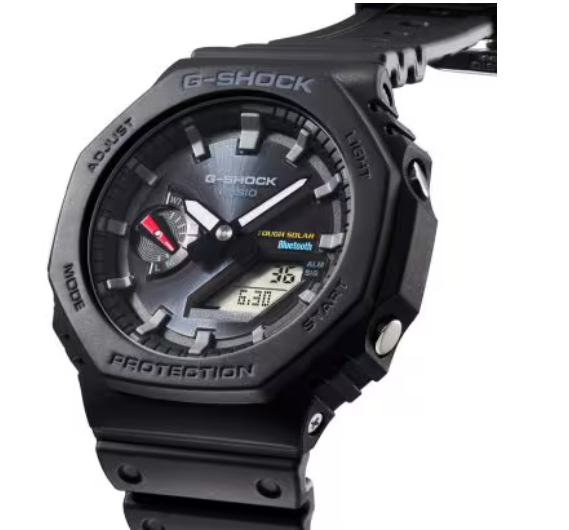
The GA-B2100 is the watch people choose when they want a modern look without losing G-Shock toughness. The octagonal “Casioak” design feels slimmer and more stylish compared to traditional chunky G-Shocks, making it easier to pair with casual or even smart outfits. It also adds Bluetooth connectivity and solar charging, which gives it a more modern edge over older analog-digital models. If the GW-M5610U is about pure function, the GA-B2100 is about balancing style and practicality, ideal for buyers who want something trendy but still durable.
Please Note: When you buy something using the links in our articles, we may earn a small commission at no cost to you.
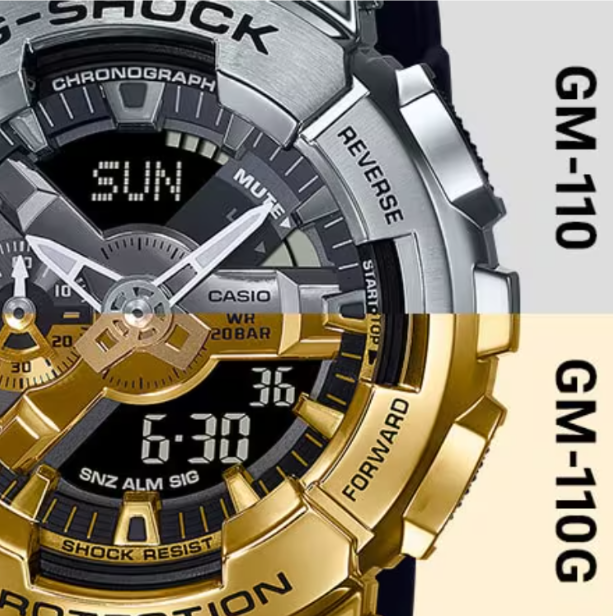
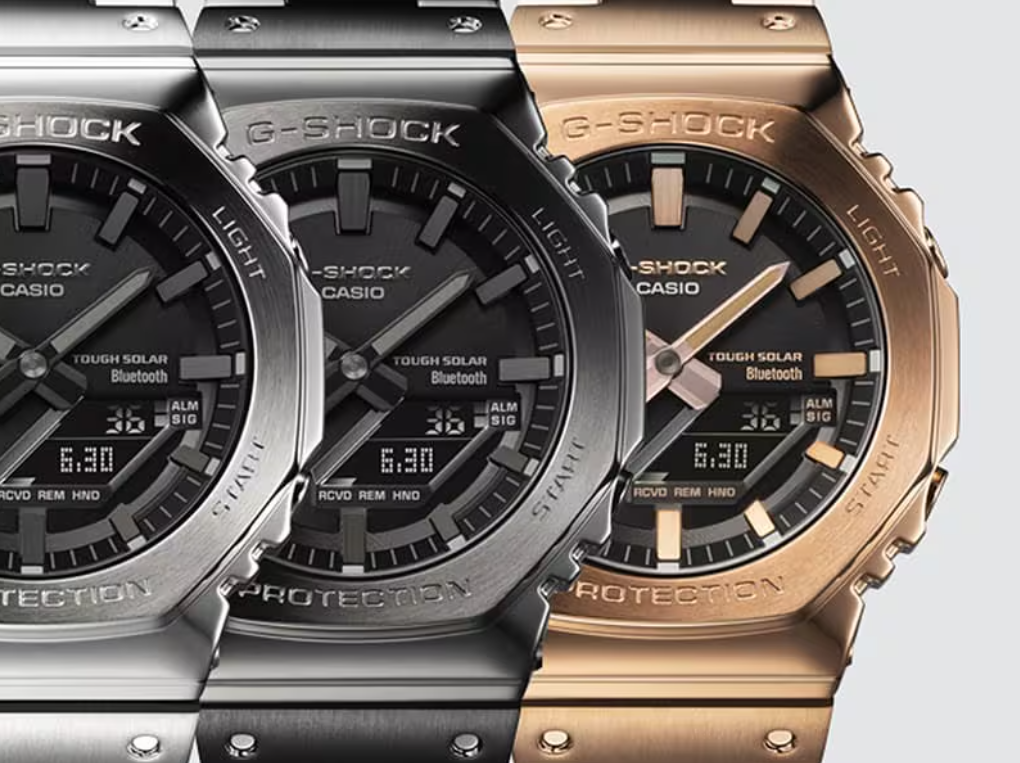
Premium Feel — GM-B2100 Full Metal
Think of the GM-B2100 as the grown-up version of the Casioak. It keeps the same modern shape but replaces the resin build with a full-metal body, instantly making it feel more premium on the wrist. Compared to standard G-Shocks, it looks more refined and works better with formal or office outfits. The trade-off is slightly more weight, but many buyers see that as part of the luxury feel. If you want a G-Shock that feels special rather than purely sporty, this is the upgrade worth considering.
Please Note: When you buy something using the links in our articles, we may earn a small commission at no cost to you.
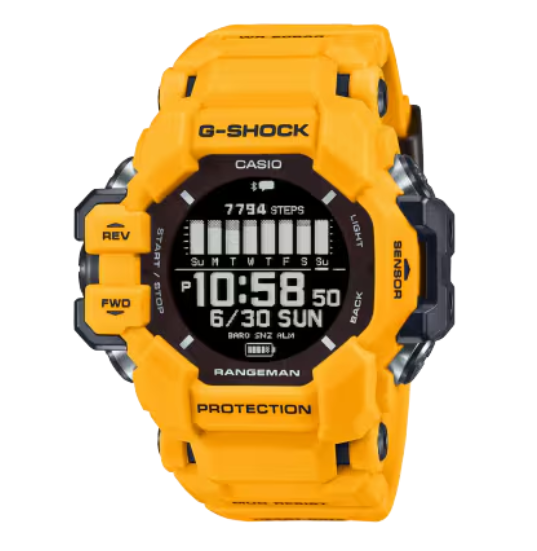
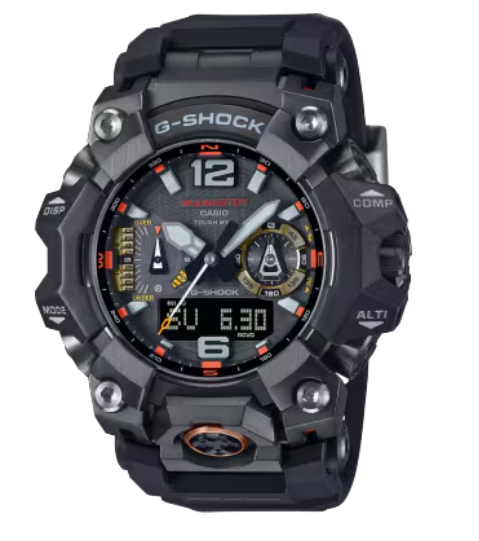
These are the true tool watches in the G-Shock lineup. The Rangeman is packed with practical outdoor sensors like an altimeter, barometer, and compass, perfect for hikers or trekkers who want real utility. The Mudmaster takes things a step further with extra protection against mud, dust, and harsh environments, making it ideal for rough work or extreme conditions. Compared to everyday models, both are larger and more rugged, so they’re best for people who actually spend time outdoors rather than casual wearers.
Please Note: When you buy something using the links in our articles, we may earn a small commission at no cost to you.
Smart Casual — G-STEEL Series
The G-STEEL series sits nicely between sporty and professional. It mixes metal styling with the rugged DNA of G-Shock, so you get something that feels more polished without losing durability. Compared to full-metal models, G-STEEL watches are usually lighter and easier to wear daily, making them a strong choice for office environments or smart-casual dressing. If you want one watch that can go from work meetings to weekend outings, this category makes a lot of sense.
Please Note: When you buy something using the links in our articles, we may earn a small commission at no cost to you.
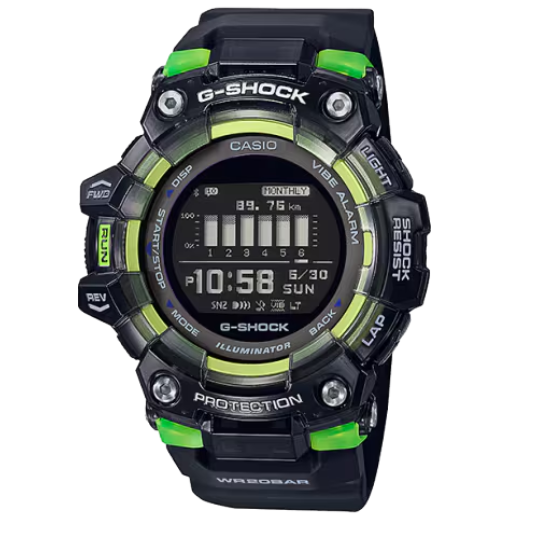
Fitness & Training — GBD-100
The GBD-100 is designed for active users who want fitness tracking without moving to a full smartwatch. It includes workout tools like step tracking, training data, and Bluetooth connectivity while still keeping the toughness G-Shock is known for. Compared to smartwatches, battery life is better, and durability is higher, but you won’t get advanced app ecosystems or touchscreens. That’s exactly the appeal; it focuses on core fitness features while staying simple, reliable, and sporty enough for daily training.
Please Note: When you buy something using the links in our articles, we may earn a small commission at no cost to you.
Choosing the best G-Shock in 2026 ultimately comes down to your lifestyle, whether you want everyday reliability, modern style, outdoor toughness, or fitness-focused features. The models in this guide represent the most trusted and widely recommended options across different categories, making it easier to pick the right one for your needs.
Disclaimer: Product details, model variants, features, availability, and prices may change over time and can vary by region or retailer. Please verify the latest information, and pricing before purchasing.
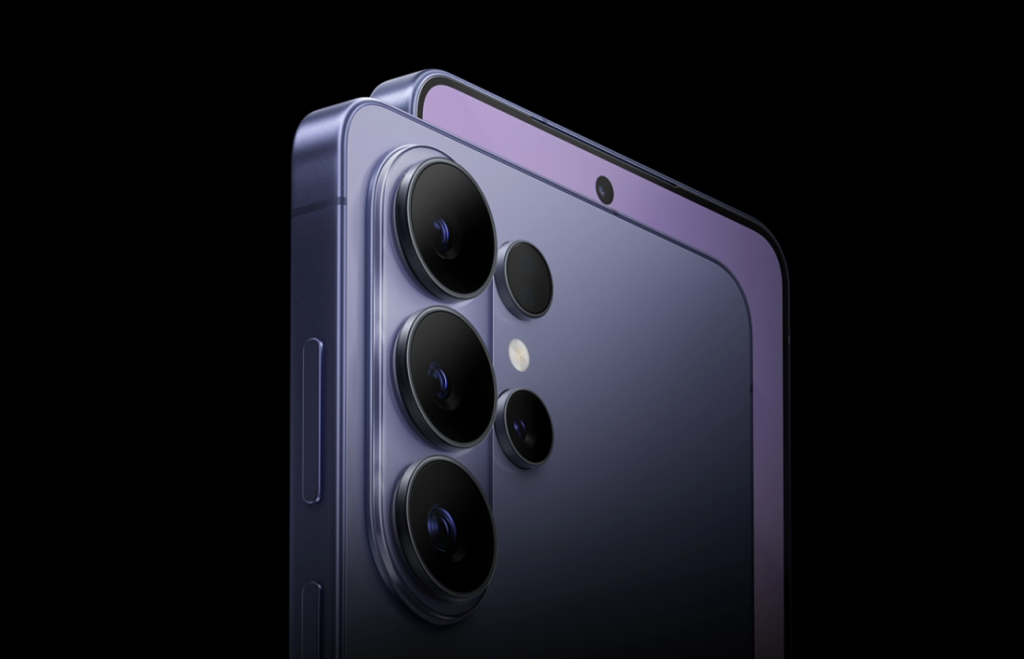
Samsung’s new Galaxy S26 Ultra brings a few notable upgrades to the table, including Privacy Display, stronger AI features, and support for faster wireless charging. But there’s one detail that has left some users scratching their heads: no built-in magnets yet.
The latest models, just like the Galaxy S25 series, are still labeled “Qi2 Ready.” The phones do not include the magnetic alignment ring that enables snap-on accessories in the style of MagSafe. So while you can charge wirelessly faster, you can’t attach magnetic wallets, mounts, or chargers directly to the back of the device.
Built-in magnets can interfere with the S Pen and slightly raise manufacturing costs. That trade-off, though, opens the door for accessory makers.
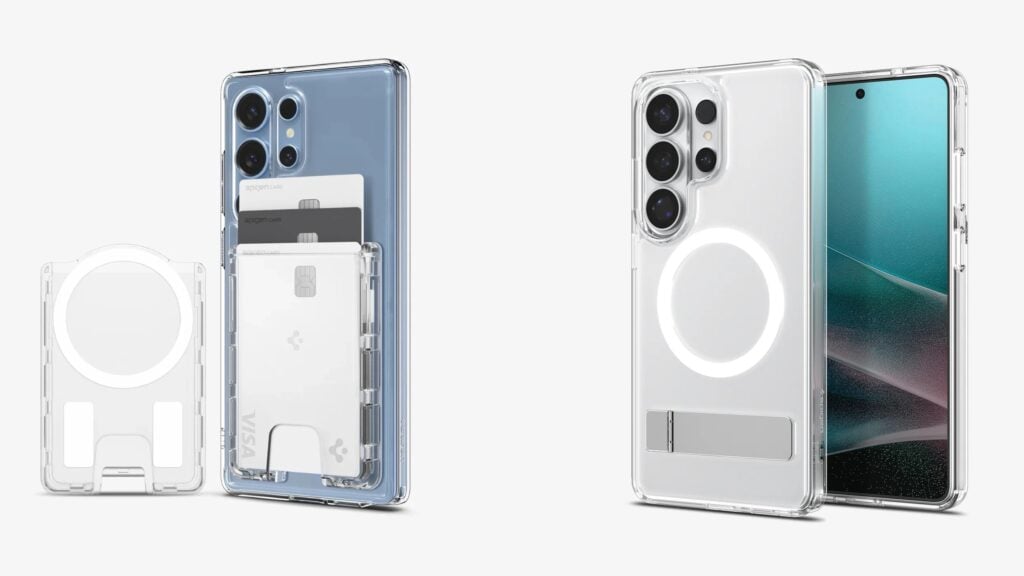
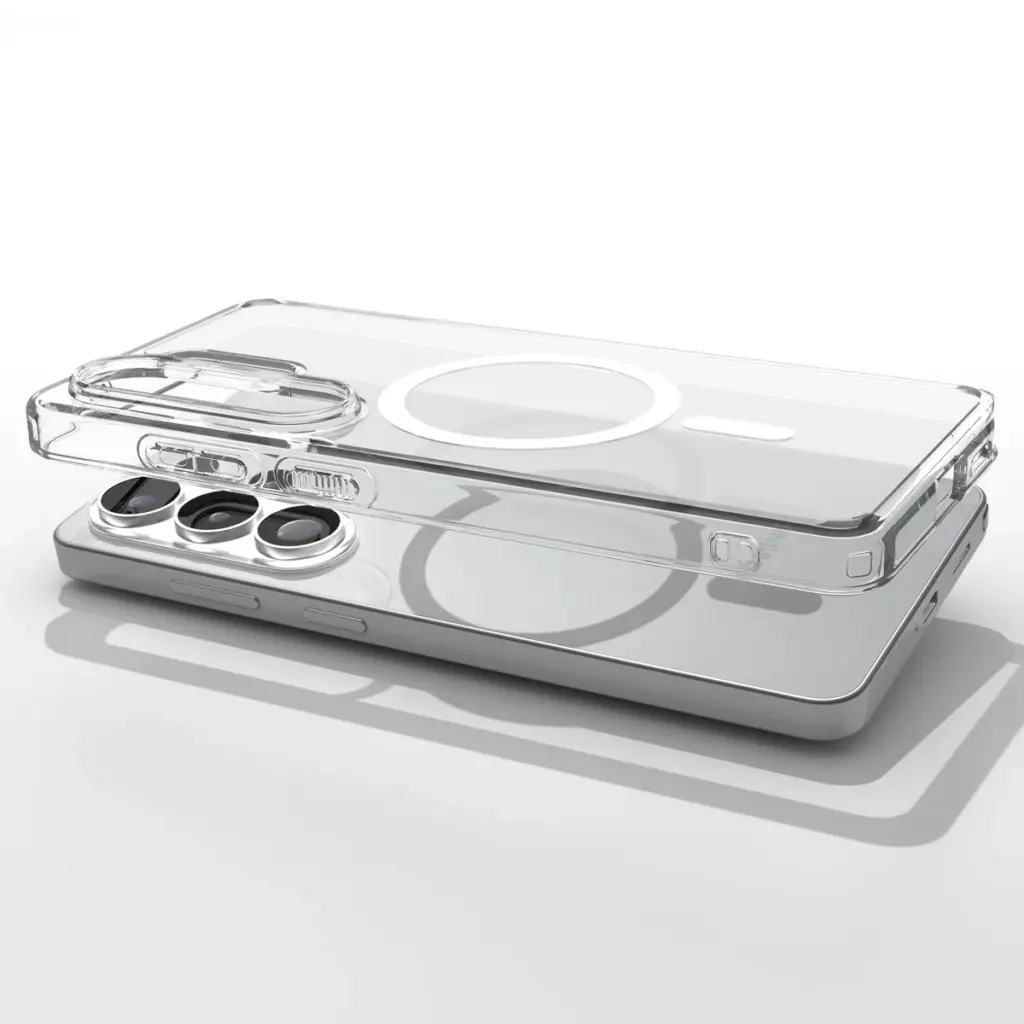
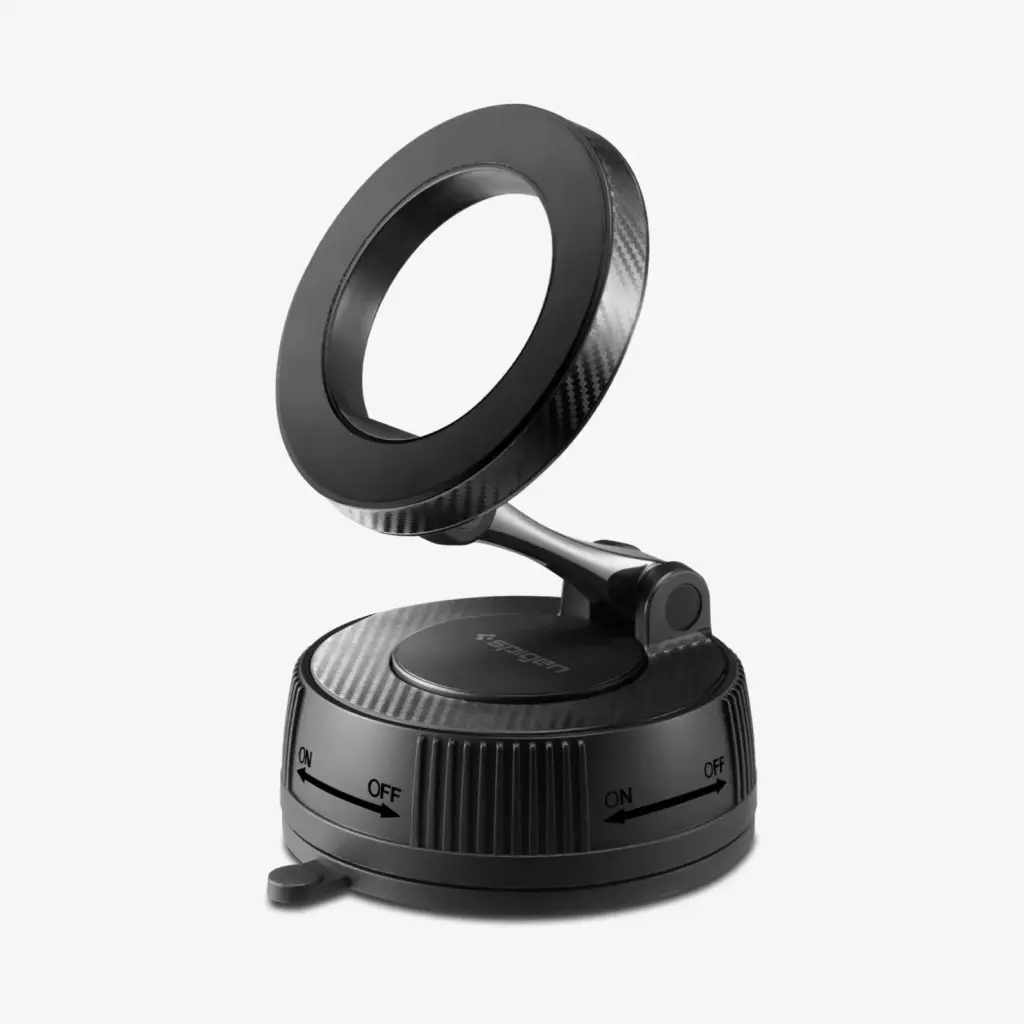
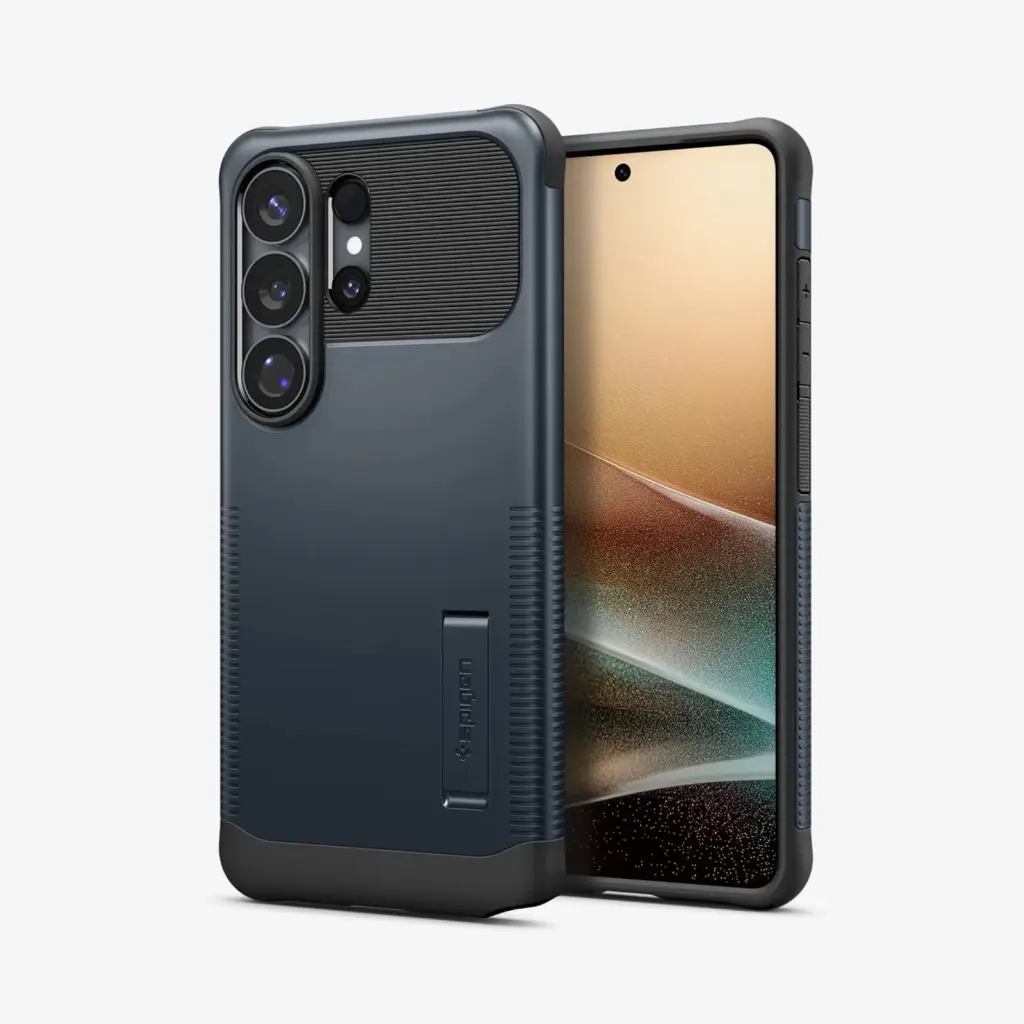
Spigen has already stepped in with a full lineup designed specifically for the Galaxy S26 series. At the simplest level, there’s a standalone magnetic adapter, essentially a slim ring that adds magnet support to a standard case or even directly to the phone. It’s priced at $25 and offers a way to get Qi2-style magnetic functionality without buying a brand-new case.
Beyond that, Spigen has introduced several cases under its Mag Fit branding. These include transparent options that show off the phone’s design, versions with built-in kickstands, and others featuring hand straps for added grip. The magnetic ring is integrated into the case itself, allowing for proper alignment with chargers and compatible accessories while still maintaining drop protection.
Spigen is also expanding the ecosystem with magnetic add-ons. Card holders, mounts, and even selfie sticks are part of the lineup. The key here is compatibility: Mag Fit follows the same magnetic layout used by Apple’s MagSafe and the broader Qi2 ecosystem.
Pricing for the Mag Fit cases falls between $40 and $60 depending on the design, while add-on accessories range from $30 to $60. Everything is available through Spigen’s online store.
Realme looks ready to expand its Note lineup once again. According to a new report, the company is set to announce the Realme Note 80 on March 5th.
The report doesn’t stop at the launch date, either. It also spills the full spec sheet ahead of the official reveal. Here’s what to expect.
Realme Note 80 Specifications
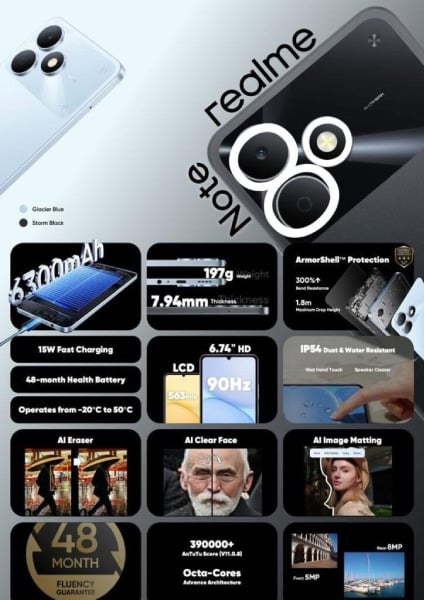
The Note 80 is built around a 6.74-inch HD+ LCD panel with a 90Hz refresh rate and peak brightness of 563 nits. The screen is protected by an “ArmorShell” protection, which can reportedly survive drops from heights up to 1.8 meters. The phone also carries an IP54 rating and even supports wet-hand touch input.
Under the hood, it runs on an octa-core processor with an AnTuTu score of over 390,000. Realme is also guarentting 48-month of fluency.
Moving on, the Note 80 packs a large 6,300mAh battery with support for 15W charging. Realme says the battery is designed to maintain its health for up to four years. The phone is also rated to function in temperatures ranging from -20°C to 50°C.
Its camera hardware is modest, though. It features an 8-megapixel rear sensor and a 5-megapixel front camera. While not high on megapixels, Realme is emphasizing n built-in software features like object removal, face enhancement, and background cutouts.
Design-wise, the Note 80 measures 7.94mm thick and weighs 197 grams, which keeps it relatively slim despite what’s inside. Realme plans to offer it in Glacier Blue and Storm Black options.
We are still not sure of the pricing details, and Realme hasn’t shared official availability information yet. But based on its specifications, the Realme Note 80 is an entry-level smartphone that delivers on the essentials.
For more daily updates, please visit our News Section.
Samsung has quietly expanded the accessory lineup alongside its Galaxy S26 Series announcement with the launch of a new 25W magnetic wireless charger. The accessory makes charging simpler and more stylish for Galaxy owners, especially those who want a sleek magnetic solution rather than a traditional charging pad.
What’s New: Qi2 Magnetic Charging at 25W
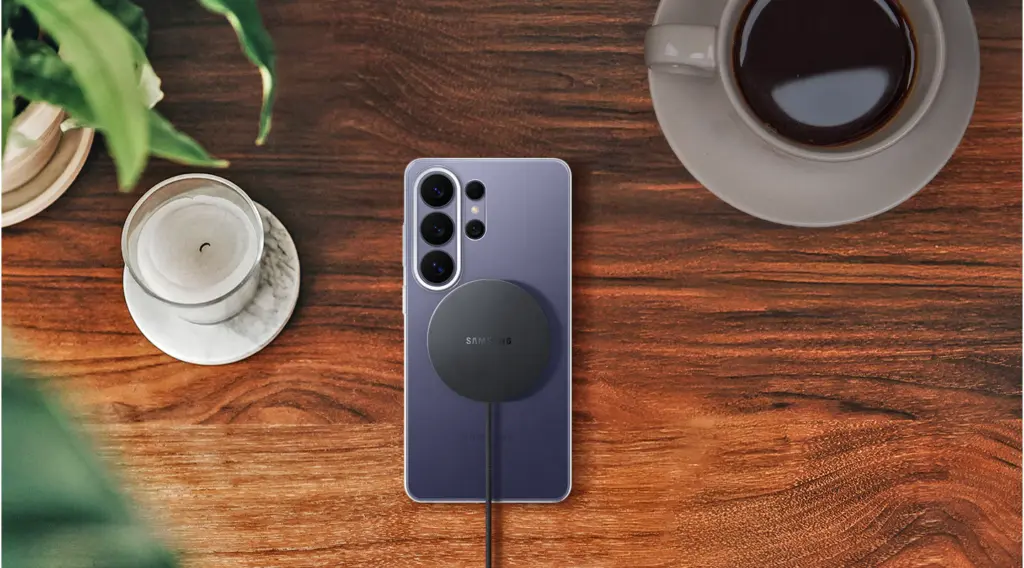
Unlike most generic wireless chargers, Samsung’s new Magnet Wireless Charger uses the Qi2 standard, which is the latest wireless charging protocol that supports magnetic alignment similar in concept to Apple’s MagSafe. This helps ensure better alignment between the phone and charger for more efficient power transfer. Despite this magnetic alignment, Samsung’s latest flagships do not have built-in magnets for Qi2 by default. Meaning, you still need a compatible magnetic case to properly secure the device to the charger for full power delivery.
Samsung S25 Magnetic Charger
The charger itself is super-thin (about 4.4mm) and includes a 1.5m USB-C cable with a fabric exterior for durability and daily flexibility. Samsung claims this magnetic charger can deliver up to 25W of wireless power, specifically supported on the Galaxy S26 Ultra. The Galaxy S26+ and Galaxy S26, on the other hand, are capped at about 20W and 15W, respectively.
Samsung claims that the new 25W magnetic charger can bring the Galaxy S26 Ultra to around 50% charge in just under an hour. This new charging accessory carries a minimalist and ultra thin design with a textured USB-C cable to resist fraying and tangling. The brand has already listed the Magnet Wireless Charger in some regions, including the US, where it is listed for 49.99 US Dollars. The global release in other regions, like India, is expected to kick off soon.
For more daily updates, please visit our News Section.
February 2026 didn’t bring a lot of new phones, but it did feature a couple of super exciting launches, including the Galaxy S26 series and the Pixel 10a. The Xiaomi 17 series is also launching on the last day of February. However, March 2026 is turning out to be an exciting month, packed with smartphone launches from multiple brands, including Honor, Nothing, Apple, Motorola, and POCO.
We’ll see some mid-range phones, such as the Edge 70 Fusion, POCO X8 Pro, and Nothing Phone (4a), as well as some high-end phones, including the Honor Magic V6 and iPhone 17e. The Honor Robot Phone is also launching in March to catch our attention.
Upcoming smartphone launches in March 2026
1. Honor Magic V6 and Robot Phone
Launch date: March 1, 2026
Honor Magic V6
Honor Magic V6 is the company’s next-generation foldable smartphone, focusing on enhanced durability, higher battery capacity, and an even slimmer design profile.
The Magic V6 is expected to feature a 200MP primary camera and a 7,150mAh battery with 120W fast charging. The brand claims full-level waterproofing and support for Beidou satellite communication. Recent leaks say the Magic V6 could feature Honor’s self-developed C1+ radio frequency enhancement chip and the E2 energy efficiency enhancement chip.
Honor Robot Phone
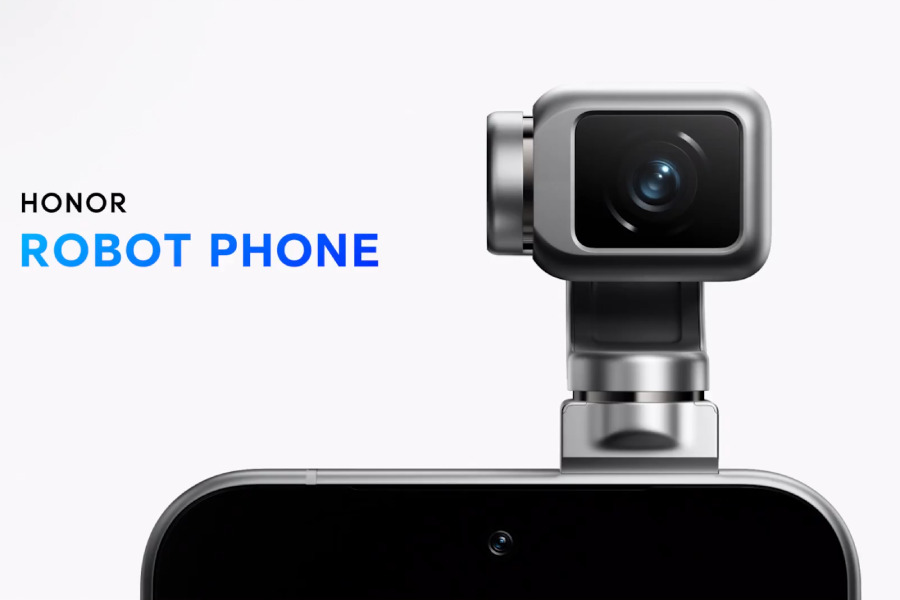
Alongside the Magic V6 foldable phone, Honor will also unveil the Honor Robot Phone at the MWC event on March 1. The company offered a sneak peek of the device at CES 2026 in January 2026, and we’ll soon have the complete picture.
Honor calls it the industry’s first “robot phone,” featuring a hidden robotic-arm gimbal that deploys with a single tap. This allows the phone to physically move for automatic composition, subject tracking, and enhanced stabilization, claimed by the brand.
The Honor Robot Phone integrates a powerful AI system that can see and respond in real time. The company says it can proactively suggest content, coordinate with other devices across its ecosystem, and function as a digital assistant that feels more personal and context-aware.
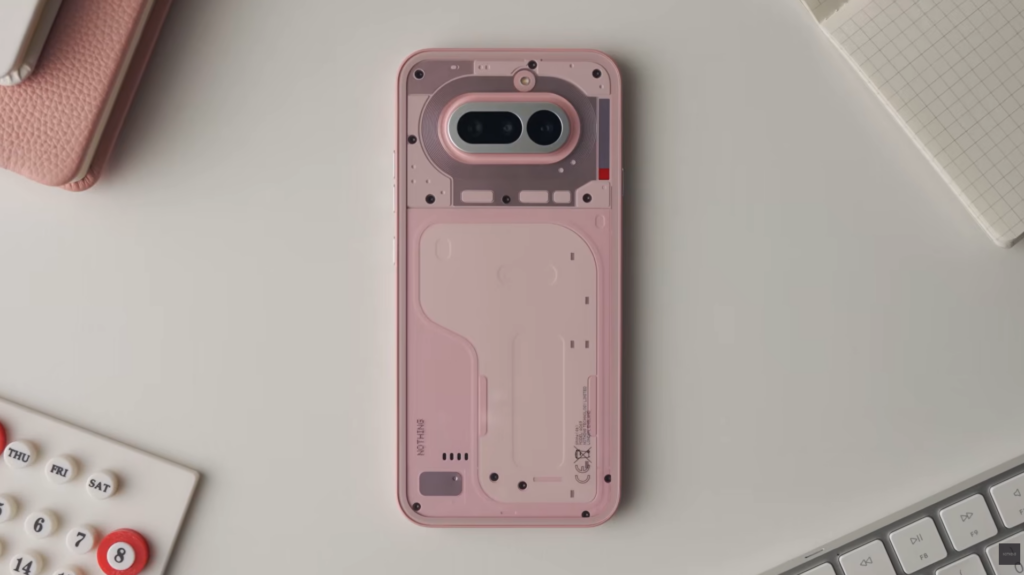
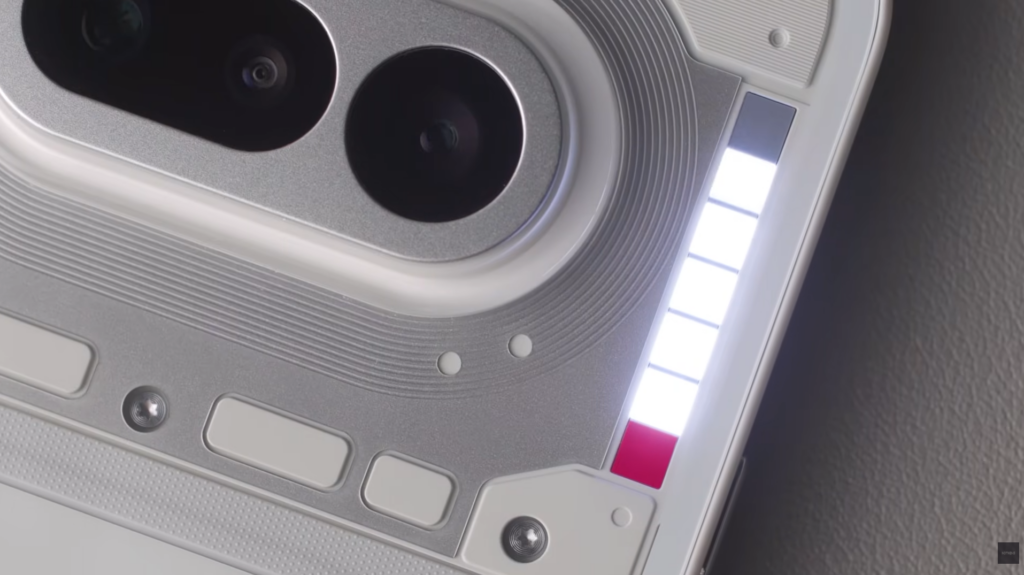
It’s one of the most anticipated smartphone launches of March 2026, featuring a redesigned Glyph Bar lighting system. There’s a dedicated red LED in the new Glyph Bar that signals recording activity. The Glyph Bar works with numerous system-level features, including Android 16’s live updates.
According to previous leaks and rumors, we can expect the Nothing Phone (4a) to feature a 6.78-inch 120Hz AMOLED panel, Snapdragon 7s Gen 4 processor, a 50MP primary rear camera, and a 32MP selfie camera. The device could be offered with 8GB or 12GB of RAM, paired with 128GB of storage.
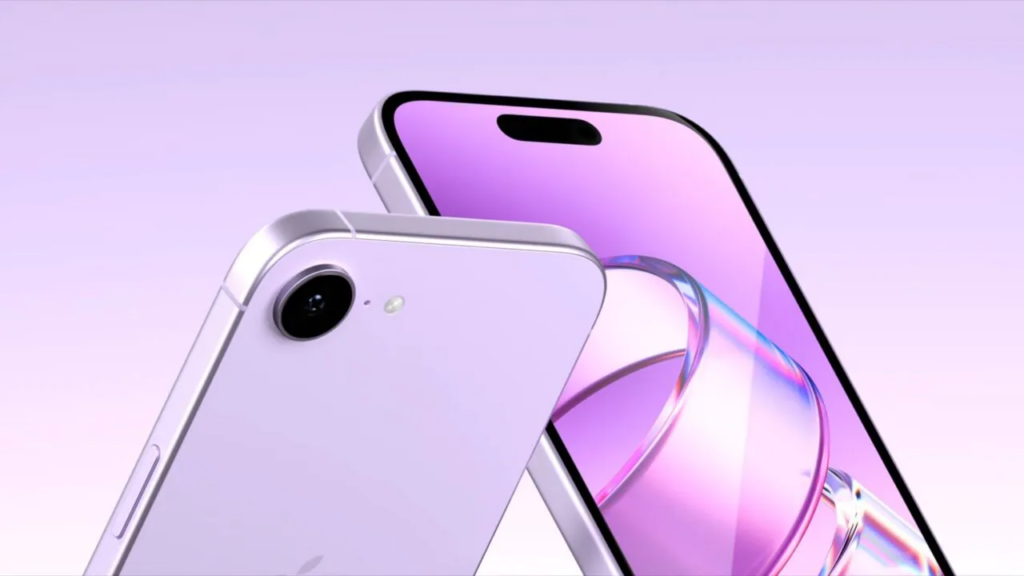
Apple is expected to unveil the iPhone 17e, along with a bunch of Other products, at the upcoming event on March 4. The device is expected to feature the A19 chip, the same chip powering the iPhone 17, but could have a downclocked CPU and GPU. It’s also said to bring an upgraded display engine, ISP, and Neural Engine to improve the on-device AI performance.
iPhone 17e could get a MagSafe upgrade, boosting charging speed to at least 15W. Furthermore, we might also see an upgraded Apple’s C1X modem. The iPhone 17e will likely retain the same display, camera, and design as the 16e.
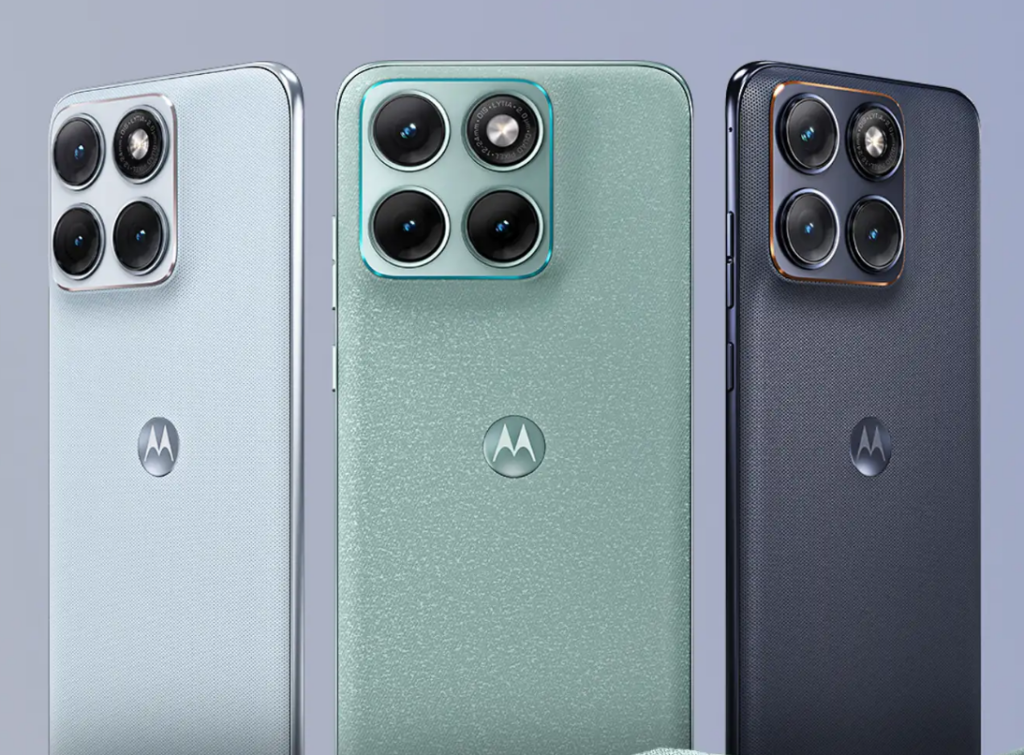
The Edge 70 Fusion is confirmed to launch in March, but the exact date is still under wraps. However, given the number of teasers Motorola has posted recently, we can expect the device to go official in the first half of the month.
Motorola has already teased pretty much everything about the Edge 70 Fusion, except for the pricing. So, we already know that the phone will sport a curved 1.5K display with a 144Hz refresh rate, HDR10+, and 5,200 nits of peak brightness. It will have a Snapdragon 7s Gen 4 chipset at its core and a long-lasting 7,000mAh battery with 68W fast charging support.
The Edge 70 Fusion will feature a triple-rear-camera setup, including a 50MP Sony LYT-710 primary sensor, a 13MP ultrawide sensor, and an unspecified macro camera. On the other side, it will have a 32MP selfie snapper.
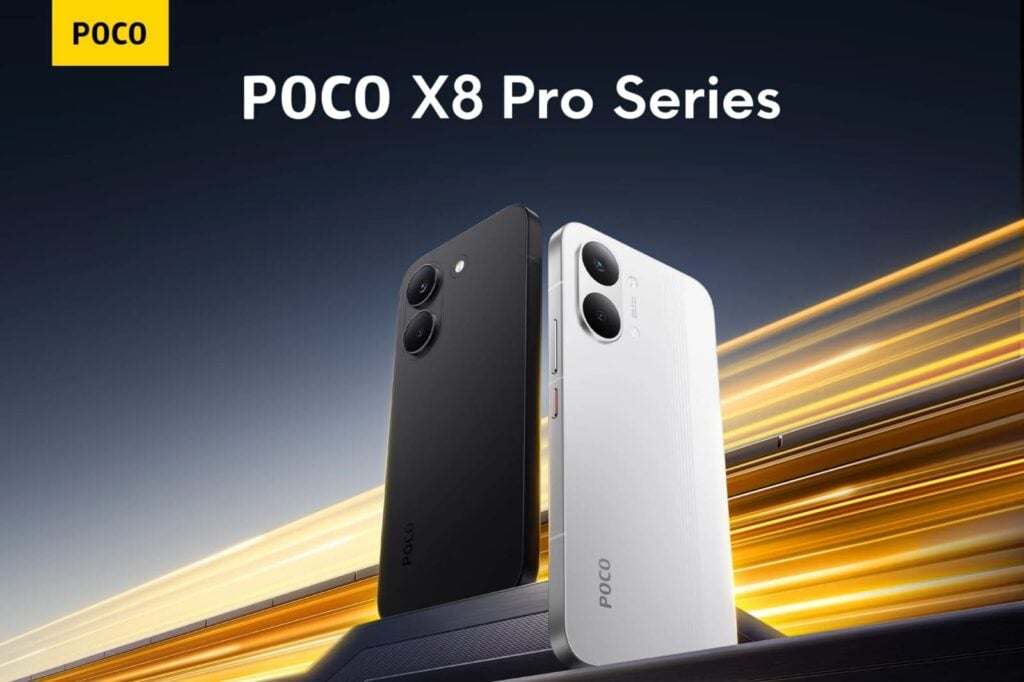
The POCO X8 Pro series is expected to launch in India in early March 2026. According to recent leaks, the brand could announce two models in the lineup, the POCO X8 Pro and the POCO X8 Pro Max, targeting the premium mid-range segment.
POCO X8 Pro
The POCO X8 Pro is said to feature a 6.59-inch 1.5K OLED display with a 120Hz refresh rate and 2000 nits of peak brightness. It’s expected to be powered by the Dimensity 8350 Ultra processor, paired with LPDDR5x RAM and UFS 4.1 storage.
The smartphone could feature a dual camera setup on the back: a 50MP Sony IMX882 primary sensor with OIS and an 8MP ultrawide lens, along with a 20MP front-facing camera. It’s expected to offer a 6,500mAh battery with 100W fast charging support and IP68, IP69, and IP69K certifications.
POCO X8 Pro Max
The “Max” variant could feature a slightly bigger 6.83-inch OLED display and a more powerful Dimensity 9500s processor. It’s expected to feature a 50MP Light Hunter 600 as the primary sensor, supported by an 8MP ultra-wide unit. For selfies, the device may use a 20MP OV20B sensor.
The POCO X8 Pro Max is said to have an 8,500mAh battery with support for 100W wired charging and 27W reverse charging. Additionally, it could feature dual stereo speakers, LHDC 5.0 audio support, a 3D ultrasonic fingerprint sensor, and IP68/IP69/IP69K certification.
We’ll keep bringing you the latest stories in our News section. Make sure to visit it regularly to stay up-to-date. Or, you can join our Telegram channel to get instant notification.
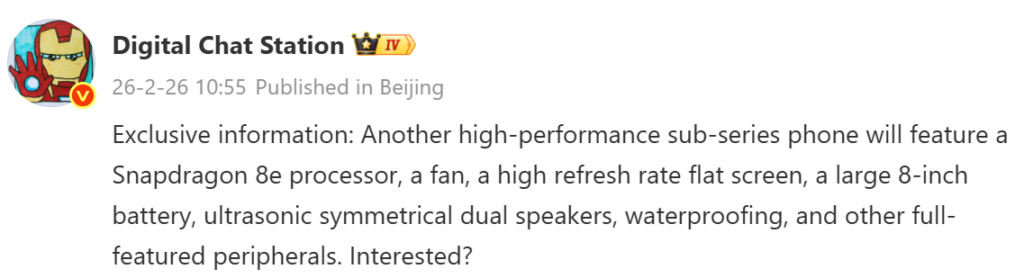
The Redmi K90 series currently includes the Redmi K90 and K90 Pro Max. In April, the company is expected to unveil the Dimensity 9500-powered Redmi K90 Ultra. A new leak from tipster Digital Chat Station indicates that another K90 series phone may also be in development. Although the official name of the device remains unknown, the leak highlights several key specifications of this upcoming model.
Redmi K90 Pro key details tipped
Redmi K90 series specs leak
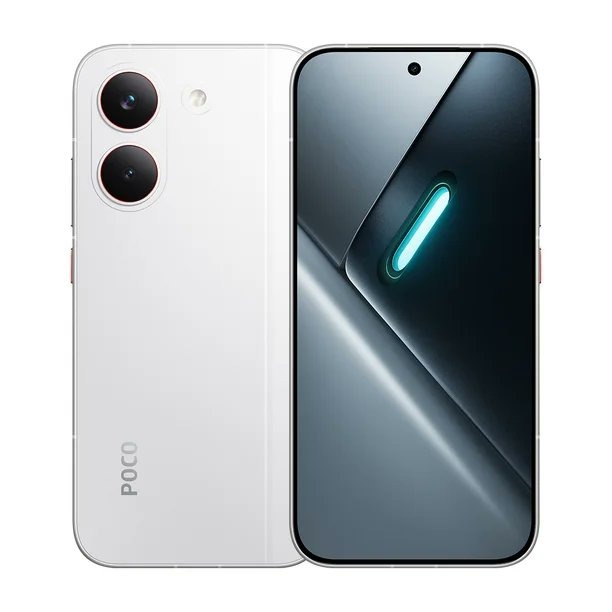
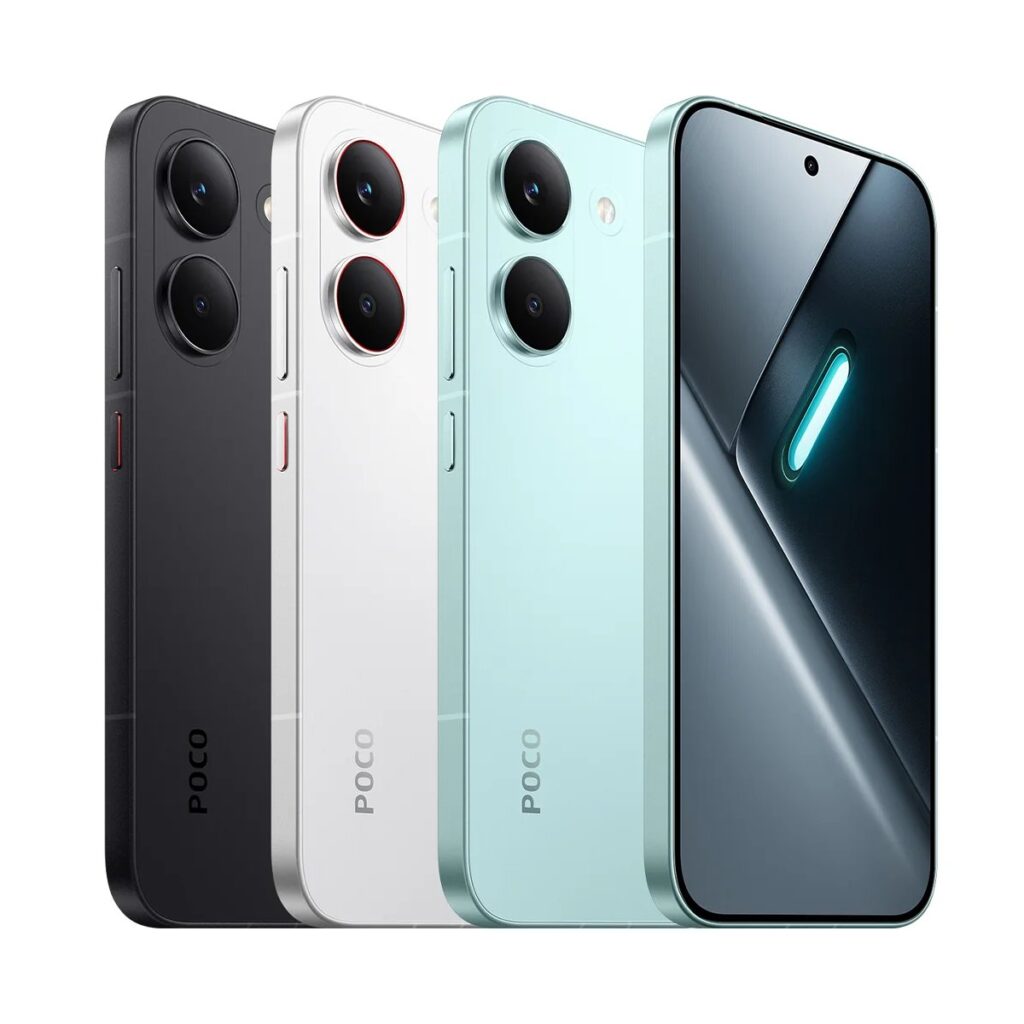
According to the tipster, the new Redmi phone will be powered by the Snapdragon 8 Elite chip. The presence of this chipset suggests that the device could belong to the K90 lineup. The leak further mentions that the handset will feature a high refresh rate display, a large battery with around 8,000mAh capacity, and a built-in cooling fan aimed at enhancing sustained performance.
In addition, the device is said to include an ultrasonic in-screen fingerprint sensor, symmetrical dual speakers, and a fully water-resistant body, pointing toward a flagship-grade build and feature set.
Currently, the Redmi K90 and K90 Pro Max are powered by the Snapdragon 8 Elite and Snapdragon 8 Elite Gen 5 chipsets, respectively. This positioning indicates that the newly tipped Snapdragon 8 Elite-powered model could sit between the K90 and K90 Pro Max in the lineup. As a result, it is speculated that the device may launch in China under the Redmi K90 Pro branding.
Redmi K90 Pro Max
This is not the first time rumors have suggested the existence of the Redmi K90 Pro. Back in November 2025, tipster Smart Pikachu claimed that Redmi was working on two additional K90 series models, namely the Redmi K90 Pro and Redmi K90 Ultra. That leak suggested the K90 Pro would feature a 6.6-inch display, while the Ultra variant could come with a larger 6.8-inch screen. Both devices are expected to debut together in China.
For more daily updates, please visit our News Section.
After Samsung’s big Galaxy Unpacked 2026 event, new accessories could be coming to India this spring. These are new peripheral gadgets that are all about charging. A new leak has revealed that three new power adapters are on the way, including two fast travel chargers and a magnetic charger. So here’s what we know.
New Samsung Chargers Dropping Soon
According to dealer pricing documents shared by tech insider Abhishek Yadav, the South Korean tech giant’s upcoming lineup includes three new power adapters:
A 25W Fast Magnetic Charger (Model: EP-P2900B).
A 50W Travel Adapter Duo with Cable (Model: EP-T5020X).
A 60W Travel Adapter (Model: EP-T6010N).
Samsung 60W charger
These accessories haven’t all gone live on Samsung’s official site yet, but one of them, the 60W Travel Adapter, is already listed for pre-order on the Samsung India website with a “notify me” button and a scheduled launch timeframe. Based on what we know so far, the magnetic charger is tipped to be Samsung’s first 25W magnetic power adapter in India.
A magnetic charger at 25W could especially appeal to users of Samsung’s latest flagship phones that support up to 25W Qi2 wireless charging. The second charger on the leaked roster is a 50W Travel Adapter Duo that reportedly ships with a cable. Last but not least, we have the 60W Travel Adapter, which is already showing up on Samsung India’s online portal. We also have some pricing details from the tipster’s tweet. Samsung’s 25W Magnetic Wireless Charger could cost Rs 3,299, while the 50W Travel Adapter Duo and 60W Travel Adapter could carry a Rs 4,499 and Rs 3,499 price tag, respectively.
For more daily updates, please visit our News Section.
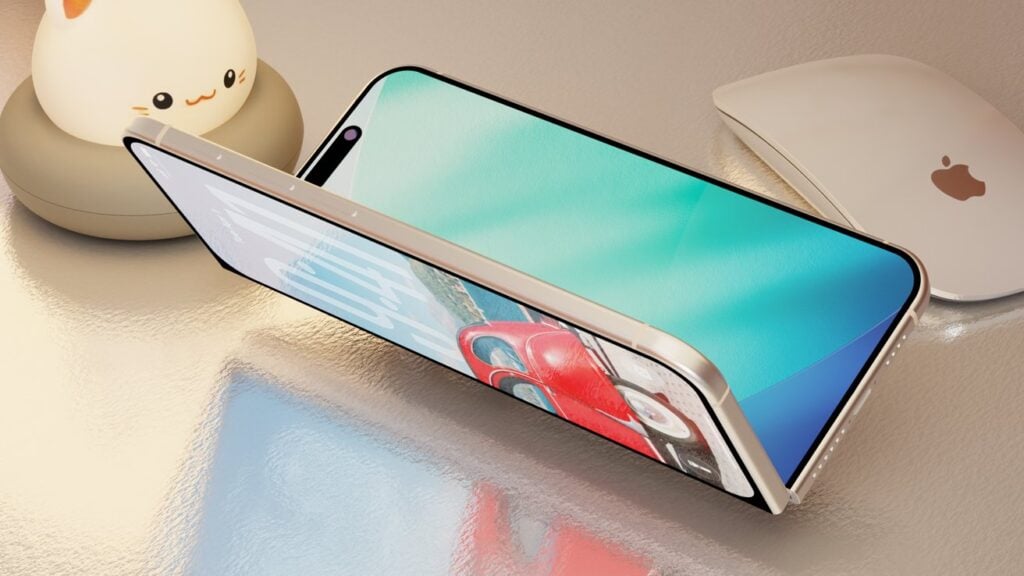
Apple’s foldable iPhone has been “coming soon” for years, at least according to leaks. Now, a new round of details suggests the company may finally be closing in on one of the biggest challenges that’s kept it out of the foldable race: the display crease.
One of the main criticisms of current foldables, including devices like the Samsung Galaxy Z Fold 7, is the crease. It’s not always a dealbreaker, but it’s noticeable. Reports over the years have suggested Apple wasn’t willing to enter the category until it could meaningfully reduce that crease.
A new leak from Chinese Weibo account Fixed Focus Digital claims that progress has been made. According to the post, Apple’s first foldable, widely referred to as the “iPhone Fold”, could feature an inner display with a crease depth of under 0.15 mm and a fold angle below 2.5 degrees.
Those numbers might not mean much at first glance, but they’re telling. A smaller crease depth means a shallower indentation along the fold, both visually and to the touch. For context, a human hair is roughly 0.05–0.1 mm thick, so anything under 0.15 mm would be relatively subtle. Current foldables often measure significantly deeper at the crease. If accurate, Apple’s implementation would be among the flattest we’ve seen so far: not invisible, but close.
The display itself is reportedly being supplied by Samsung Display, using newer materials and improved lamination techniques to better distribute stress along the hinge.
Beyond the screen, a few design details are also circulating. The rear camera module is said to resemble the minimalist layout of the iPhone Air, featuring two sensors: likely a main and an ultra-wide. Touch ID could return, embedded in the power button, replacing Face ID to save internal space and avoid additional cutouts on the inner display.
Production orders are reportedly in place, pointing to a potential September 2026 launch window, possibly alongside the iPhone 18 Pro and iPhone 18 Pro Max. If that timeline holds, Apple’s first foldable could finally become official next fall.
If the crease really is as shallow as claimed, it would explain why Apple has taken its time.
We use cookies on our website to give you the most relevant experience by remembering your preferences and repeat visits. By clicking “Accept”, you consent to the use of ALL the cookies.
This website uses cookies to improve your experience while you navigate through the website. Out of these, the cookies that are categorized as necessary are stored on your browser as they are essential for the working of basic functionalities of the website. We also use third-party cookies that help us analyze and understand how you use this website. These cookies will be stored in your browser only with your consent. You also have the option to opt-out of these cookies. But opting out of some of these cookies may affect your browsing experience.
Necessary cookies are absolutely essential for the website to function properly. This category only includes cookies that ensures basic functionalities and security features of the website. These cookies do not store any personal information.
Any cookies that may not be particularly necessary for the website to function and is used specifically to collect user personal data via analytics, ads, other embedded contents are termed as non-necessary cookies. It is mandatory to procure user consent prior to running these cookies on your website.

















![CASIO G-Shock GW-M5610U-1JF [20 ATM Water Resistant Solar Radio Wave GW-M5610 Series]](https://www.gizmochina.com/wp-content/plugins/aawp/public/image.php?url=YUhSMGNITTZMeTl0TG0xbFpHbGhMV0Z0WVhwdmJpNWpiMjB2YVcxaFoyVnpMMGt2TkRGR05sUnJPRFJ0Y2t3dVgxTk1NVFl3WHk1cWNHYz18MTc4MTMwNDM3Mg=)
![Casio GA-B2100-1A1JF [G-Shock GA-B2100 Series Men's Rubber Band]](https://www.gizmochina.com/wp-content/plugins/aawp/public/image.php?url=YUhSMGNITTZMeTl0TG0xbFpHbGhMV0Z0WVhwdmJpNWpiMjB2YVcxaFoyVnpMMGt2TkRGWmJqZGhTVnBSUkV3dVgxTk1NVFl3WHk1cWNHYz18MTc4MTMwNDM3Mg=)



![CASIO GWG-2000-1A1JF [G-Shock Carbon MUDMASTER Radio Solar Triple Sensor]](https://www.gizmochina.com/wp-content/plugins/aawp/public/image.php?url=YUhSMGNITTZMeTl0TG0xbFpHbGhMV0Z0WVhwdmJpNWpiMjB2YVcxaFoyVnpMMGt2TlRFeVdqbEpRMjFZV2t3dVgxTk1NVFl3WHk1cWNHYz18MTc4MTMwNDM3Mw=)