Advertisement

OnePlus devices eligible for Android 17 (OxygenOS 17) update: Here’s the complete list

OnePlus Android 17 (OxygenOS 17) update eligible devices

OnePlus wrapped up the OxygenOS 16 rollout earlier this month, which is based on Android 16, and we’re pretty sure the brand has already begun the development of its successor, OxygenOS 17. The upcoming software will have Android 17 at its core and will likely feature a host of new features and enhancements across the system.

While we don’t yet know the OxygenOS 17 features, we’ve curated a list of OnePlus devices eligible for the Android 17 upgrade. This is not a hypothetical list, but it is based on the existing software update policy and must therefore be accurate.

OnePlus Android 17 (OxygenOS 17) eligible devices list

OnePlus flagship phones

  • OnePlus Open
  • OnePlus 15
  • OnePlus 15R
  • OnePlus 13
  • OnePlus 13R
  • OnePlus 13s
  • OnePlus 13T
  • OnePlus 12
  • OnePlus 12R
  • OnePlus 11

OnePlus Nord series

  • OnePlus Nord 5
  • OnePlus Nord CE 5
  • OnePlus Nord 4

OnePlus Pad series

  • OnePlus Pad 3
  • OnePlus Pad 2
  • OnePlus Pad Lite
  • OnePlus Pad Go 2

If your OnePlus device is on the list, it’s guaranteed to receive the OxygenOS 17 update once the rollout begins. Otherwise, you’ll need to upgrade to a newer model to continue to receive the latest updates and access the latest features and major changes. You can review the list of OnePlus phones that promise up to 4 major OS upgrades here.

While OnePlus hasn’t shared any details about OxygenOS 17, Google has already released the first beta of Android 17. According to the official timeline, the OS will enter the platform stability phase next month, while the stable release is expected in Q3 2026.

Also read:
1. Android 17 Beta 1: How to install, eligible devices, and new features
2. OxygenOS 17 leak reveals new upgrades with Android 17

Last year, OnePlus was among the earliest third-party manufacturers to offer Android 16 testing. The first beta build was offered to select OnePlus devices in April 2025. The brand is expected to follow a similar pattern with Android 17, and hence, we can expect the first beta to arrive in March or April for select devices, including the OnePlus 15.

We’ll keep an eye on the latest developments around OxygenOS 17 and post them in the OnePlus section. You can visit the page from time to time to get fresh updates. Or, you can join our Telegram channel to get real-time updates.

Is iQOO 15R better than OnePlus 15R?

iQOO has just launched its latest gaming-focused smartphone, the iQOO 15R, and it clearly takes on the OnePlus 15R, which has been in the market for over two months now. Both phones promise cutting-edge performance, stellar displays, and impressive battery life.

However, with comparable price points and similar specifications, it begs the question: Is the iQOO 15R better than the OnePlus 15R? Let’s dive deep into their features to help you decide.

OnePlus 15R

1. Display

The iQOO 15R features a 6.59-inch OLED display with a resolution of 2750×1260 pixels. It supports a 144Hz refresh rate and achieves a peak brightness of 5000 nits. The device also includes features like 4320Hz PWM dimming and DC-like dimming to reduce eye strain, making it ideal for both indoor and outdoor use.

The OnePlus 15R sports a larger 6.83-inch AMOLED display with a resolution of 2800×1272 pixels. It offers an adaptive refresh rate ranging from 60Hz to 165Hz, which is highly useful for gamers and users who multitask. Its peak brightness reaches 3,600 nits, but OnePlus has added TÜV Rheinland Eye Care certification and brightness adjustments down to 1 nit for comfortable usage in low light.

Winner: The iQOO 15R is compact and might actually be better for game handling, and it also leads in peak brightness. However, the OnePlus 15R takes the overall lead with its adaptive refresh rate and display certifications, making it the superior choice for both gamers and regular users.

2. Performance

The iQOO 15R uses the Snapdragon 8 Gen 5 SoC and claims to achieve over 3.5 million points on AnTuTu 11. It includes a Q2 gaming chip that supports 1.5K resolution gaming with 144 FPS. iQOO uses a 6500mm IceCore VC cooling system with dual-layer graphite sheets, which helps reduce temperatures by up to 15°C.

The OnePlus 15R also runs on the Snapdragon 8 Gen 5 chipset. It includes a Cryo-Velocity Cooling system with a 3D vapor chamber and aerospace-grade insulation, though the cooling area is smaller than iQOO’s. OnePlus integrates a dedicated Wi-Fi chip for better connectivity, which helps maintain low latency during gaming and streaming.

Both phones come with up to 12GB of LPDDR5X RAM and 512GB of UFS 4.1 storage, ensuring fast app launches and smooth multitasking.

Winner: Both phones are excellent in handling games and overall day-to-day performance, and you won’t notice any difference in regular usage. However, the iQOO 15R takes the lead with its superior thermal management and dedicated gaming chip.

3. Software

The iQOO 15R runs on OriginOS 6, based on Android 16. The software focuses on gaming features supported by the gaming chip Q2, which enables 144 FPS gaming and 1.5K gaming quality. It offers smooth performance for gamers who need an optimized experience.

The OnePlus 15R runs on OxygenOS 16, also based on Android 16. The software includes AI-driven features like Google’s Gemini assistant and the Plus Mind feature, which acts as a personalized second brain. These features support productivity and enhance user interaction.

Winner: It depends. The iQOO 15R is better suited to gaming-focused users, while the OnePlus 15R offers more advanced AI-driven capabilities for productivity.

4. Cameras

The iQOO 15R includes a 50MP Sony LYT-700V main sensor with OIS, an 8MP ultra-wide lens, and a 32MP front-facing camera. The camera setup uses NICE algorithms and cinematic image enhancements to deliver vibrant photos and videos.

The OnePlus 15R features a 50MP Sony IMX906 main sensor with OIS, an 8MP ultra-wide lens, and a 32MP front camera with autofocus. The phone also introduces technologies like DetailMax Engine for high-fidelity photos, Clear Burst for action shots, and Clear Night Engine for low-light photography. The rear camera supports 4K 120fps video recording, making it a strong choice for videography.

Winner: Neither of these phones is focused on camera performance, and to be honest, they are quite similar. It’s hard to determine which is better without seeing real-world shots. However, the OnePlus 15R does offer slightly better camera specifications overall.

5. Battery and Charging

The iQOO 15R packs a 7600mAh battery and supports 100W FlashCharge. It charges up to 50% in just 33 minutes. The battery’s semi-solid-state technology ensures durability under extreme temperatures.

The OnePlus 15R houses a slightly smaller 7400mAh battery with 80W SuperVooc charging. It is designed to retain 80% of its original capacity after four years of use. The battery uses Silicon Nanostack technology, which increases energy density and extends battery life.

Winner: Both these phones are quite similar, but the iQOO 15R takes the lead here with its larger battery and faster charging.

6. Durability and Other Features

Both the iQOO 15R and OnePlus 15R offer excellent durability and premium build quality, but there are some differences. The iQOO 15R is protected by Schott Shield glass, providing strong resistance against scratches and drops. It also comes with IP68 and IP69 ratings, making it water and dust-resistant for everyday use.

The OnePlus 15R takes durability a step further with Corning Gorilla Glass 7i for added protection against impact. It also features IP66, IP68, IP69, and IP69K ratings, making it resistant to high-pressure water jets and extreme conditions. The use of fiberglass in the Electric Violet variant adds a layer of durability and unique aesthetics.

Both phones also include in-display ultrasonic fingerprint sensors and infrared sensors for enhanced functionality.

Winner: The OnePlus 15R offers slightly better durability with Gorilla Glass 7i and IP69K ratings, while the iQOO 15R still delivers a solid, well-protected design with Schott Shield glass and IP69 certification.

7. Design and Pricing

The iQOO 15R comes in two color options: Dark Knight and Triumph Silver. The Triumph Silver variant features a unique patterned back exclusive to India. At ₹44,999 for the base model, it is slightly more affordable than its competitor.

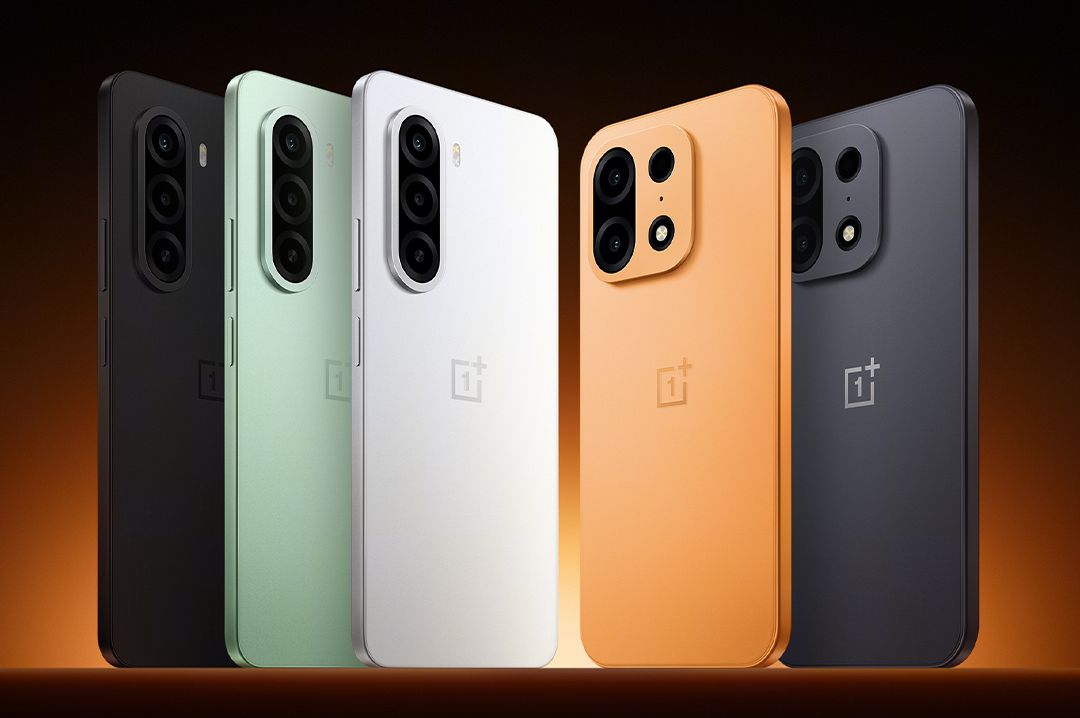
The OnePlus 15R is available in Charcoal Black, Mint Breeze, and Electric Violet. The Electric Violet variant uses fiberglass, which adds durability. The base model is priced at ₹47,999, making it more expensive than the iQOO 15R.

Winner: The iQOO 15R is more affordable, but the OnePlus 15R offers premium design finishes.

8. Which One Should You Choose?

Both the iQOO 15R and OnePlus 15R are strong performance-focused smartphones, but they cater to slightly different priorities. The iQOO 15R stands out for users who prioritize raw performance, offering higher peak brightness, stronger thermal management, and faster charging speeds. The OnePlus 15R, on the other hand, focuses more on design, software experience, and camera performance, making it a better fit for users looking for a more balanced and refined everyday device.

In the end, your choice boils down to priorities: performance and value? Go for the iQOO 15R. Premium software and camera? The OnePlus 15R is your pick.

For more daily updates, please visit our News Section.

Stay ahead in tech! Join our Telegram community and sign up for our daily newsletter of top stories! 💡

Xiaomi expands HyperOS rollout: 12T Pro gets HyperOS 3 update, 15 Pro gets a new beta

Xiaomi HyperOS update

HyperOS 3, based on Android 16, has been rolling out to Xiaomi devices for a few months now. But there’s a version of HyperOS 3 based on Android 15, which will be released for select devices that aren’t eligible for Android 16. This started rolling out in China in December 2025, and now the global rollout has begun, starting with the Xiaomi 12T Pro. The Xiaomi 15 Pro, on the other hand, is receiving a new HyperOS 3.1 beta update.

Android 15-based HyperOS 3 now rolling out globally

It’s good to see Xiaomi pushing the Android 15-based HyperOS 3 update outside China. This will allow more Xiaomi users to access the latest features without upgrading to a newer model. For the Xiaomi 12T Pro, as spotted by Xiaomi Time, the HyperOS 3 update arrives with the firmware version 3.0.1.0.VLFMIXM.

It’s a major upgrade, and therefore, the download size would be a few gigabytes. It’s best to use a stable Wi-Fi connection for the purpose, and charge your battery to at least 40% for a smooth upgrade to HyperOS 3. To check for the latest update, go to Settings > My device and tap the HyperOS logo at the top.

Xiaomi 15 Pro is receiving a new HyperOS 3.1 beta update

If you’re running a HyperOS 3.1 build on your Xiaomi 15 Pro, a new beta update should be waiting for installation. The latest one, tagged with the firmware version 3.0.300.7.WOBCNXM focuses on resolving performance issues to improve the user experience. Don’t expect to see new features or major changes with the latest beta build.

The HyperOS 3.1 beta program is currently limited to China, so the latest beta build for the Xiaomi 15 Pro is also restricted to that region. We’ll let you know when the beta program expands to other regions in our Xiaomi section.

We’ll regularly update you on the latest HyperOS news on this website. Be sure to visit the website regularly for fresh details. Alternatively, you can join our Telegram channel to ensure you don’t miss out on anything.

Xiaomi 17 Max tipped with Snapdragon 8 Elite Gen 5, 200MP camera, and massive battery

Tipster Digital Chat Station (DCS) has released a new Weibo post to share details about an upcoming large-screen flagship from Xiaomi powered by the Snapdragon 8 Elite Gen 5 chip. While he has not specified the name of the device, it appears the tipster could be referring to the Xiaomi 17 Max.

Xiaomi 17 Max key details tipped

Xiaomi 17 Max key details tipped

According to the tipster, the Xiaomi 17 Max’s engineering prototype includes upgraded speakers, likely using a dual symmetric 1115 speaker setup for enhanced audio performance. The device is also expected to retain an X-axis linear motor, which has reportedly become a standard feature in the series.

On the imaging front, DCS mentions a 200-megapixel large-sensor primary camera paired with a periscope telephoto lens. Other highlighted features include a flagship-grade large display, a symmetrical narrow-bezel design with equal sides, and a massive 8,000 mAh-class battery. The overall design language is said to follow a clean and minimalist aesthetic.

Previous reports have revealed that the Xiaomi 17 Max will feature a 6.9-inch flat OLED panel delivering a 1.5K resolution and a 120Hz refresh rate. Its massive battery is said to support 100W wired and 50W wireless charging. Like recent Xiaomi devices, the 17 Max is expected to run on HyperOS 3-based Android 16.

The 17 Max’s rear camera setup is said to feature a 200-megapixel Samsung ISOCELL HPE primary camera, a 50-megapixel ultrawide camera, and a 50-megapixel Sony periscope telephoto lens. For selfies, it could be equipped with a 50-megapixel front-facing camera.

Xiaomi 17 Max launch timeframe (rumored)

Rumors surrounding the Xiaomi 17 Max suggest that it may debut in April in China. This device is likely to compete with the Vivo X300 Max, which is expected to debut earlier in March in China. At present, there is no information about the global availability of these devices.

For more daily updates, please visit our News Section.

Stay ahead in tech! Join our Telegram community and sign up for our daily newsletter of top stories.

Oppo Find N6 launch date tipped, to be the flattest foldable phone ever

Oppo has started teasing the Oppo Find N6 foldable phone for the past few days in China. Since the February month will end soon, the foldable phone is expected to break cover in March. In a recent Weibo post, tipster Bald Panda has revealed when it would go official. At the same time, reliable tipster Digital Chat Station has revealed additional details about its design and technology.

Oppo Find N6 launch date (rumored)

Honor Magic V6 and Oppo Find N6 launch dates seemingly tipped

Bald Panda’s Weibo post indicates that the Find N6 may launch on March 17 in China, with availability in other Asian markets expected shortly afterwards. While Oppo has not officially confirmed the timeline, the increasing frequency of leaks suggests that the announcement could be imminent. The Marc 1 highlighted in the above image is the Honor Magic V6 launch date.

Oppo Find N6 to be flattest foldable phone ever

According to DCS, the Find N6 could set a new benchmark for foldable design. He claims that TÜV Rheinland has tested the device and rated it as the “flattest” foldable phone it has evaluated so far, noting that the certification body has reviewed nearly every foldable currently available in the market. DCS attributes this to two key technologies: a seamless titanium alloy hinge and a self-healing memory glass solution aimed at reducing visible creases over time.

The tipster also hinted that another major global smartphone brand, which appears to Apple, may be working on similar self-healing materials, possibly inspired by Oppo’s approach, although no official confirmation has been provided.

Oppo Find N6 specifications (rumored)

Reports indicate that the Find N6 will feature an 8.12-inch internal folding display alongside a 6.62-inch cover screen for everyday use. The camera system may include a 200-megapixel primary sensor supported by a periscope telephoto lens, an ultra-wide camera, and a multispectral sensor. Two 20-megapixel selfie cameras are also expected, positioned for both folded and unfolded usage.

Under the hood, the device is likely to run on the Snapdragon 8 Elite Gen 5 platform in a 7-core configuration. It may house a 6,000mAh battery with support for 80W wired charging and 50W wireless charging. The foldable could offer up to 16GB of RAM and up to 1TB of storage, with rumours also pointing towards a variant equipped with satellite connectivity. A recent leak revealed that it will be available in purple, black, and white shades in China.

For more daily updates, please visit our News Section.

Stay ahead in tech! Join our Telegram community and sign up for our daily newsletter of top stories.

OnePlus 15T to support wireless charging, ultra-thin magnetic cooling accessory to debut alongside

Yesterday, a OnePlus executive confirmed that the OnePlus 15T will be launching soon. He also described it as a “dream phone” for those who prefer a compact flagship. Today, tipster Digital Chat Station revealed one feature of the 15T that was absent on the previous generation.

OnePlus 15T to offer wireless charging

According to DCS, the OnePlus 15T will be a top-notch flagship phone powered by Qualcomm’s Snapdragon 8 Elite Gen 5 chipset. He added that the device will support wireless charging as standard and offer full compatibility with Apple’s magnetic (MagSafe-style) accessory ecosystem.

To recall, the OnePlus 13T lacked support for wireless charging. DCS describes the 15T as a powerful small-sized device, calling it a “small powerhouse.”

OenPlus ultra-thin magnetic accessory

In addition, the tipster says the brand will introduce what could be the industry’s first ultra-thin magnetic cooling accessory. The magnetic cooler is reportedly under 1cm in average thickness, making it notably slimmer than existing solutions.

DCS also shared an image to showcase the upcoming ultra-thin magnetic cooling accessory. The image above compares the new cooler (on the left) with a OnePlus 27W Freezing Point Magnetic Cooler (on the right), highlighting its significantly slimmer profile.

The side-by-side view emphasizes how thin the new accessory is, reportedly measuring under 1cm in average thickness, suggesting a more compact cooling solution designed for magnetic attachment. However, the new accessory does not feature an internal fan.

OnePlus 15T specifications (rumored)

Reports have revealed that the OnePlus 15T will feature a 6.32-inch OLED 1.5K 165Hz display, a 7,000mAh or 7,500mAh battery with 100W wired charging, up to 16GB of LPDDR5x RAM, and as much as 1TB of UFS 4.1 storage. For photography, it may feature a 200-megapixel or 50-megapixel main camera accompanied by a 50-megapixel telephoto camera and a 32-megapixel front-facing camera.

For more daily updates, please visit our News Section.

Stay ahead in tech! Join our Telegram community and sign up for our daily newsletter of top stories.

Spotify launches a cremation urn speaker, and yes, it streams playlists

Spotify has teamed up with Liquid Death for what might be one of its strangest hardware experiments yet — a Bluetooth speaker shaped like a cremation urn.

The product is called the Eternal Playlist Urn. It looks like something you’d expect to see on a mantelpiece, except it’s not designed to hold ashes. Instead, it’s a collectible speaker with a built-in Bluetooth system tucked into the lid. 

Spotify says only 150 units will be sold in the United States, each priced at $495. Buyers get a 7-inch by 11.4-inch urn-shaped device that streams music and little else.

A Bluetooth speaker dressed for the afterlife

According to Spotify, this is “the world’s first urn speaker that can stream music.” In a blog post announcing the collaboration, Spotify wrote, “Life needs the music. So does the afterlife.”

The idea is simple. Once you receive the urn speaker, you can create what Spotify calls an “Eternal Playlist.” Users answer prompts such as “What’s your eternal vibe?” or “What’s your go-to ghost noise?” Based on those answers — along with your listening history — Spotify generates a custom playlist that can sync directly to the speaker. The playlist can also be shared with friends and family, turning the urn into a kind of permanent soundtrack device.

It’s not the first time Spotify has ventured into hardware, though those efforts have been limited. In 2022, the company partnered with IKEA on a portable Bluetooth lightbox speaker with Spotify quick-play functionality. 

Before that, it launched Car Thing, a dashboard accessory meant to make streaming easier in older vehicles. Car Thing has since been discontinued, and Spotify has yet to introduce a standalone smart speaker under its own brand.

Liquid Death, meanwhile, has built its reputation on absurd and sometimes morbid marketing. The canned water company has released over-the-top products before, including a life-size snowman coffin-shaped cooler that reportedly drew more than 800 bidders and sold for $68,200. The brand thrives on turning dark humor into limited-edition merchandise, and the Eternal Playlist Urn fits neatly into that strategy.

For more daily updates, please visit our News Section.

Stay ahead in tech! Join our Telegram community and sign up for our daily newsletter of top stories! 💡

(Source)

SanDisk launches three new portable SSDs with up to 4TB storage and 4,000MB/s speeds

SanDisk has launched its latest portable SSD lineup, introducing three models designed for different users and workloads. The new lineup includes the SanDisk Portable SSD, the SanDisk Extreme Portable SSD, and the SanDisk Extreme PRO Portable SSD. These drives focus on speed, durability, and capacity to meet the increasing demands of file storage, AI-generated content, and creative workflows.

SanDisk Portable SSD lineup

Specifications

The SanDisk Extreme PRO Portable SSD delivers the fastest performance in the lineup. It offers transfer speeds of up to 4,000MB/s and targets professional photographers, filmmakers, and designers. The drive supports real-time editing and can transfer 10 minutes of 12K video in under one minute. SanDisk will release this model in 2TB, 4TB, and 8TB capacities later this year.

SanDisk Extreme PRO Portable SSD

The SanDisk Extreme Portable SSD provides high-speed storage for creative users. It delivers read speeds of up to 2,000MB/s and supports tasks such as transferring 1,000 high-resolution photos in under 60 seconds. This model is available now in 1TB, 2TB, and 4TB options. And a 500GB version will launch in the second half of 2026.

The SanDisk Portable SSD focuses on everyday storage needs for students, office workers, and family archivists. It delivers read speeds of up to 1,000MB/s and will be available in 500GB, 1TB, and 2TB capacities later this year.

SanDisk Extreme PRO Portable SSD

SanDisk has designed all three models with durability in mind. The Extreme and Extreme PRO models are resistant to three-meter drops, offer IP65 water and dust protection, and include 256-bit AES hardware encryption. The entry-level Portable SSD can withstand drops of up to two meters.

Pricing and Availability

The SanDisk Extreme Portable SSD is available now, starting at $259.99 for the 1TB model. The rest of the lineup will launch globally later this year.

In related news, Lexar has recently launched the JumpDrive D500 dual-interface USB SSD with transfer speeds of up to 400MB/s, alongside the new 512GB and 1TB JumpDrive A50V/C50V USB drives offering speeds up to 200MB/s.

For more daily updates, please visit our News Section.

Stay ahead in tech! Join our Telegram community and sign up for our daily newsletter of top stories! 💡

Samsung stays on top in Europe, but Apple hits record 27% share

Samsung stayed on top of Europe’s smartphone market in 2025, but Apple was the one that really moved the needle.

Fresh data from Omdia shows Europe shipped 134.2 million smartphones last year. That’s down just 1% from 2024, not a dramatic drop, but it signals demand is still soft. Between tighter consumer spending and regulatory shifts like mandatory USB-C and eco-design requirements, the market never really found strong momentum.

Even so, the big names tightened their grip. Samsung and Apple together accounted for 62% of all shipments in the region.

Samsung held the No. 1 spot with 46.6 million units shipped, translating to a 35% market share — up slightly from 34% a year earlier. Growth was modest, roughly 200,000 additional units year-over-year, but the company managed to steady things after a slow start. Things picked up later in the year, helped by aggressive pricing on the Galaxy A16 and particularly strong demand for the Galaxy A56, which reportedly ended up as Europe’s best-selling smartphone overall in 2025.

Apple, meanwhile, had the stronger growth story.

Apple shipped 36.9 million iPhones in Europe, up 6% year-over-year, reaching a record 27% market share in the region. Much of that came from steady upgrade cycles and strong demand for the iPhone 16 series. The iPhone 16 Pro Max and iPhone 17 Pro Max performed well at the high end.

Xiaomi remained in third place with 21.8 million shipments and a 16% share, though volumes dipped slightly. Motorola followed with 7.7 million units (6% share), down 5% year-over-year. Honor broke into the top five with 3.8 million units and a 3% share, showing noticeable momentum toward the end of the year.

Overall, the market looks increasingly split. Premium devices continued to drive growth, while the budget segment stayed under pressure. Samsung leaned on its mid-range strength, Apple capitalized on premium upgrades, and both extended their lead.

Europe accounted for 10.8% of global smartphone shipments in 2025. Not the largest region, but still an important one.

Don’t miss a thing! Join our Telegram community for instant updates and grab our free daily newsletter for the best tech stories!

For more daily updates, please visit our News Section.

(Source: Omdia)

Modified RTX 5090 dies at idle due to extreme temperature

Trying to squeeze every last bit of performance out of high-end GPUs is nothing new. But in the case of the RTX 5090, one ambitious modding attempt ended in a very expensive lesson.

In a recent YouTube video titled “I Killed My 5090…”, the creator behind Frame Chasers walked viewers through what started as a bold experiment on a Gigabyte RTX 5090 Aorus Master, and ended with a completely dead card.

The idea, at least on paper, made sense. Some Gigabyte variants include an unpopulated pad on the PCB for a second 12V-2×6 (16-pin) power connector. It’s there for alternative board designs, including versions that use dual connectors. Seeing that unused pad, Frame Chasers decided to take things further by soldering in a second power connector.

That wasn’t the only modification. He also performed a shunt resistor mod, a well-known (and risky) tweak that effectively bypasses NVidia’s built-in power limits. The goal was simple: let the GPU draw far more power than stock settings allow.

At first, it appeared to work. The system booted, benchmarks ran, and the card seemed stable under load. For a moment, it looked like the mod had paid off.

Then things went very wrong.

The card didn’t fail during a benchmark run or stress test. Instead, it died while idling. According to the video, two large holes were burned straight through the PCB, and at least one capacitor was knocked off the board from extreme heat.

Frame Chasers believes the failure came down to a dangerous combination of factors. The shunt mod reportedly increased baseline power draw, meaning the GPU was pulling more wattage even at idle. On top of that, the fans weren’t spinning despite rising temperatures. The card was also set to “performance mode” in the NVidia Control Panel, which keeps clocks elevated instead of allowing the GPU to downclock at idle.

The GPU die and VRAM chips themselves may still be intact. The catastrophic damage seems localized to the PCB and surrounding power components.

For enthusiasts, extreme overclocking can be thrilling. There’s always the temptation to push just a little further. But this incident is a stark reminder that modern GPUs operate within tightly controlled power and thermal envelopes for a reason.

(Source | Via)

Is Meizu shutting down its phone business after Meizu 23 reportedly scrapped?

Recent reports circulating on Chinese social platforms suggest fresh uncertainty around Meizu’s smartphone division. The possible restructuring within Xingji (Starji) Meizu raises questions about the future of upcoming devices such as the Meizu 23 series. While there is no official confirmation yet, the developments have sparked wide discussion across the industry.

Meizu phone business suspension claims surface

Alleged Maimai post claiming Meizu 23 halt and phone business shutdown.

A post circulating on the Chinese workplace networking platform Maimai claims that Xingji Meizu may shut down its smartphone business, with related teams facing full layoffs. According to the anonymous user, the much-anticipated Meizu 23 series has effectively been halted.

The post further alleges that Flyme Auto will operate independently, with leadership transitioning to a new head, and will be integrated under Geely-backed Yikatong as part of the broader automotive ecosystem.

The message also states that departments unrelated to the phone business wind-down could complete restructuring in March, with N+1 compensation reportedly offered to affected employees. Staff members holding company shares are said to be required to consult HR individually regarding follow-up arrangements.

Despite the reported changes, the post claims that the Meizu brand will not disappear and will remain within the Geely system, with other Geely subsidiaries potentially continuing related operations.

Xingji Meizu has not issued a public response so far.

Earlier cost pressures had raised concerns

DCS warns of rising chip costs and paused flagship development, while a commenter speculates that Meizu could be affected.

Earlier in February, tipster Digital Chat Station had highlighted rising memory and chipset costs, suggesting that several brands could delay or cancel new launches in 2026. Online discussions speculated that Meizu might be among the affected companies.

Notably, at the 2026 Meizu Fans New Year event, company executives had confirmed that the Meizu 23 was in development and would feature the narrowest bezels in the brand’s history. However, they also acknowledged that the iconic white front panel would be dropped due to manufacturing limitations.

The latest reports now cast uncertainty over those earlier plans.

For more daily updates, please visit our News Section.

Stay ahead in tech! Join our Telegram community and sign up for our daily newsletter of top stories.

OnePlus 15R May Become More Expensive in India Soon, Here’s What We Know

The OnePlus 15R may soon become more expensive in India, according to recent leaks from tipsters. The smartphone launched last year with a starting price of Rs 47,999. While OnePlus has not confirmed any revision yet, multiple sources suggest that a price increase could be implemented in the coming weeks.

OnePlus 15R

Tipster Abhishek Yadav claims that the price hike could take effect starting March 1. Another tipster, Debayan Roy (@Gadgetsdata), suggests that the increase may fall in the range of Rs 3,000 to Rs 4,000 and could roll out within about two weeks. If this happens, the base variant of the OnePlus 15R could be priced around Rs 51,999 or Rs 52,999. Since there is no official announcement, the information should be treated as unconfirmed for now.

In terms of specifications, the OnePlus 15R is powered by Qualcomm’s Snapdragon 8 Gen 5 chipset, built on a 3nm process and paired with the Adreno 840 GPU. In India, the device is available with 12GB LPDDR5X Ultra RAM and either 256GB or 512GB UFS 4.1 storage. It runs Android 16 with OxygenOS 16 out of the box.

The phone features a 6.83-inch AMOLED display with a 1.5K resolution of 2800 × 1272 pixels. It supports a variable refresh rate from 60Hz to 165Hz, along with 3840Hz PWM dimming and DC dimming for improved eye comfort. Corning Gorilla Glass 7i is used for protection.

For photography, the rear setup includes a 50-megapixel Sony IMX906 main camera with optical image stabilization and an f/1.8 aperture, along with an 8-megapixel ultra-wide camera offering a 112-degree field of view. Rear video recording goes up to 4K at 120fps. The front camera is 32 megapixels with autofocus and supports 4K video at 30fps.

The device packs a 7,400mAh battery with 80W SuperVOOC fast charging. Connectivity options include 5G SA and NSA bands, Wi-Fi 7, Bluetooth 6.0, NFC, and USB Type-C. Additional features include stereo speakers, an in-display ultrasonic fingerprint sensor, an infrared sensor, and IP66, IP68, IP69, and IP69K ratings for dust and water resistance.

(Source: 1, 2)

Realme GT 9 Pro may feature dual 200MP cameras; GT 9 could also flaunt 200MP camera

In October 2025, Realme unveiled the Realme GT 8 and GT 8 Pro. While the former featured a 50-megapixel triple camera unit, the latter debuted as the company’s first phone with a 200-megapixel camera. Recent leaks surrounding the Realme GT 9 series reveal that the lineup may feature dual 200-megapixel cameras.

Realme GT 9 series camera capabilities tipped

As is known, several smartphone brands are expected to offer dual 200-megapixel cameras on their flagship offerings this year. Some of these include the Oppo Find X9s Pro, Oppo Find X9 Ultra, and Vivo X300 Ultra. As seen in the screengrab below, tipster Smart Pikachu claims that the Realme GT 9 series’ current plan appears to favor a dual 200-megapixel camera setup aimed at pushing imaging performance higher, along with strengthened co-branded image tuning.

The Realme GT 8 Pro already features a 200-megapixel primary camera, and it appears that the Realme GT 9 Pro’s rear camera setup could include a pair of 200-megapixel sensors, likely for the main and periscope telephoto cameras. The leak suggests that the Ricoh partnership will offer deeper tuning for an enhanced photography experience.

Shown above is a Wisdom Pikachu Weibo post from earlier this month. In it, he claims that the entire GT 9 lineup will have a 200-megapixel camera. This suggests that the vanilla Realme GT 9 may also feature a 200-megapixel camera, but the company may not offer dual 200-megapixel sensors on this phone in a bid to differentiate it from the Pro variant.

At present, nothing else is known about the Realme GT 9 series. The lineup will likely be announced in October this year. The GT 8 and GT 8 Pro were powered by the Snapdragon 8 Elite and 8 Elite Gen 5 chipsets, respectively. Therefore, the GT 9 Pro may feature the Snapdragon 8 Elite Gen 6, but it remains to be seen whether the GT 9 will use the Snapdragon 8 Elite Gen 5 or Snapdragon 8 Gen 5.

For more daily updates, please visit our News Section.

Stay ahead in tech! Join our Telegram community and sign up for our daily newsletter of top stories.

Galaxy S26 series pre-order deals revealed: up to €350 in savings

But just ahead of the official reveal, a fresh leak has already outlined what could be some pretty attractive pre-order incentives for the Galaxy S26, S26+, and S26 Ultra in Europe.

According to reliable French leaker billbil-kun, posting via Dealabs, Samsung is preparing a mix of storage upgrades and trade-in bonuses that could save buyers as much as €350 in the Eurozone, assuming everything stacks the way it’s expected to.

Pricing reportedly starts at €999 for the base Galaxy S26 with 256GB of storage. Interestingly, Samsung appears to be moving away from the 128GB entry model seen on the Galaxy S25, making 256GB the new starting point. Pre-orders are expected to open right after Unpacked wraps up, with shipping beginning around March 11.

One of the headline offers is a free storage upgrade. Buyers who pre-order a 256GB model may receive the 512GB version at no extra cost, a perk that typically represents a €200 to €300 value, depending on the device. Similar “double storage” promotions have been popular in past Galaxy launches, and it looks like Samsung may be leaning on that strategy again in Europe (including France, and possibly the UK).

Trade-in bonuses are also part of the package. Leaks suggest an extra €100 in trade-in credit for those pre-ordering the Galaxy S26 or S26+, and €150 for the Galaxy S26 Ultra. When combined with the storage upgrade, that could push total savings into the €300–€350 range for certain configurations.

In practical terms, that means a 512GB Galaxy S26 could effectively land closer to €899 in some scenarios, depending on the device you trade in. For buyers eyeing the top-end 1TB Galaxy S26 Ultra, there’s also talk of an additional €200 pre-order discount, which would stack on top of the other incentives.

All of this fits Samsung’s broader strategy. Offering storage bumps and boosted trade-in credits is a relatively low-friction way to drive early orders without officially lowering retail prices.

It’s also worth noting that incentives vary by region. In the US, for example, early reservation offers have included smaller credits and larger trade-in ceilings instead. Europe, on the other hand, seems to be getting the more straightforward storage-upgrade approach this time around.

(Source)

Vivo Y05 launched with 120Hz display, 6500mAh battery

The Vivo Y05 has officially launched in Malaysia and Saudi Arabia. The entry-level smartphone offers a 120Hz display and a large battery. Aimed at budget users seeking long battery life, the Y05 combines essential features with practical durability. Here is a closer look at its specifications, features, and pricing details.

Vivo Y05 specifications and features

Vivo Y05
Vivo Y05

The Vivo Y05 features a 6.74-inch LCD with a resolution of 1600 × 720 pixels and up to a 120Hz refresh rate. The panel delivers 260ppi pixel density and supports up to 1200 nits HBM brightness. It is equipped with a side-mounted fingerprint sensor.

Under the hood, the Vivo Y05 has the Unisoc T7225 processor built on a 12 nm process. It is paired with 4GB LPDDR4X RAM and 64GB eMMC 5.1 storage. The phone also supports 4GB of extended RAM and expandable storage up to 2TB via microSD. A 6,500mAh Li-ion battery keeps the device running, supported by 15W charging.

The smartphone runs OriginOS 6.0 based on Android 16. For photography, it includes an 8-megapixel rear camera with f/2.0 aperture and rear flash, along with a 5-megapixel front camera with f/2.2 aperture.

Vivo Y05
Vivo Y05

The Y05 offers connectivity features, such as 4G VoLTE, dual SIM, Wi-Fi 2.4GHz and 5GHz, Bluetooth 5.2, USB Type-C, and an infrared blaster. This IP65-rated phone measures 167.40 x 77.10 x 8.39 mm and weighs 209g.

Vivo Y05 price and availability

The Vivo Y05 is priced at RM 399 (~$100) in Malaysia and is also available in Saudi Arabia for $109. It comes in Black and Blue color options.

For more daily updates, please visit our News Section.

Stay ahead in tech! Join our Telegram community and sign up for our daily newsletter of top stories.

Xiaomi 5000mAh Ultrathin Magnetic Power Bank Now Available in New Markets with Orange and Black Colors

Xiaomi launched its Ultrathin Magnetic Power Bank 5000 15W in Malaysia and Thailand, despite saying it wouldn’t expand to new markets until after February 28.

Xiaomi-UltraThin-Magnetic-Power-Bank-5000-15W

The power bank first appeared in Japan, then reached Australia, Singapore, and South Korea in late January. Xiaomi briefly listed it in the UK before pulling it down. Now Malaysia and Thailand have access, and both countries have two new colors: Graphite Black and Radiant Orange. Before this, only Glacier Silver was available.

What It Offers

The 5,000mAh power bank weighs 98 grams with a 6mm profile, positioning it among the slimmest power banks available. It delivers 15W wireless charging for compatible devices, though iPhones receive reduced 7.5W speeds through magnetic attachment. The USB-C port enables 22.5W wired fast charging.

Xiaomi UltraThin Magnetic Power Bank 5000 15W

Dual-device charging allows simultaneous power delivery to two devices. Compatibility extends beyond Apple products to Xiaomi, Samsung, and Google Pixel smartphones.

Battery and Safety

Xiaomi implemented ten protection layers addressing overheating, overcharging, and short circuits. The smartphone-grade lithium-ion battery is housed in an aluminum alloy body with fire-resistant fiberglass coating.

Pricing

Thailand lists the power bank at THB 2,490 ($80), marked down from a THB 2,990 ($96) suggested retail price. Malaysian pricing starts at MYR 369 ($95), with promotional pricing dropping to MYR 259 ($67).

Don’t miss a thing! Join our Telegram community for instant updates and grab our free daily newsletter for the best tech stories!

For more daily updates, please visit our News Section.

Roborock launches P20 Max robot vacuum with 35,000Pa suction & AI obstacle avoidance

Roborock has launched its latest high-end self-cleaning robot vacuum and mop, the P20 Max. The new model is available starting today at 4,299 yuan ($622) for the standard water-tank version. The automatic water supply and drainage version is priced at 4,699 yuan ($680).

Roborock P20 Max

Roborock P20 Max Specifications

The P20 Max features a compact design, measuring 352mm x 350mm with a height of just 79.8mm. Its low-profile build helps it clean under furniture and move through tight spaces more easily. The robot uses a precision navigation system and packs a large 6,400mAh lithium battery, enabling longer cleaning sessions for bigger homes.

The P20 Max delivers 35,000Pa suction through a high-speed motor and optimized airflow for maximum efficiency. Roborock integrated dual main brushes and curved side brushes specifically designed to minimize hair tangles. Additionally, its carpet pressure cleaning system enhances performance on soft surfaces by driving the brushes deep into fibers to extract stubborn, embedded dirt.

Roborock P20 Max

The robot comes with the company’s latest Lift Chassis 3.0 system. The chassis uses an AI-driven wheel-leg structure to cross obstacles up to 8.8cm high. The system also includes shock-absorbing landing control and coordinated wheel movement to improve stability on uneven surfaces. The robot can lower its profile further in low-height navigation mode, allowing it to clean under sofas and beds.

The P20 Max features dual rotating mop pads with 60°C heated water cleaning and a 12N downward pressure system to tackle sticky stains. The docking station supports 100°C high-temperature mop washing, hot-air drying, and automatic dust collection. The automatic water version adds refilling and drainage for hands-free operation.

Roborock P20 Max

The P20 Max features AI-powered obstacle recognition with Edge Structured Light 2.0, capable of identifying over 280 object types. Its advanced navigation system enables precise edge cleaning and efficient route optimization. It also supports voice commands, app control, and integration with platforms such as Apple Home and Xiaomi.

In related news, Roborock has introduced the G30S Pro earlier this year, featuring 35,000Pa suction, Chassis Lift 3.0, sonic mopping, and AI-powered navigation.

For more daily updates, please visit our News Section.

Stay ahead in tech! Join our Telegram community and sign up for our daily newsletter of top stories! 💡

(JD)

Here’s your first look at the Oppo Find N6 in Purple and White

Oppo has started teasing its next foldable, the Find N6, ahead of a launch in China. There’s still no official release date. But in classic internet fashion, the renders are already here.

A leak posted on the Chinese social media platform Weibo gives us our first real look at the Oppo Find N6 in purple and white. 

At first glance, it doesn’t look dramatically different from last year’s Oppo Find N5. It has the same circular camera module and color options.

We did notice a few changes, though. None of the leaked models show a leather back as the purple variant of the Find N5 did. And the flash has been moved outside the camera module, which slightly changes the rear layout. 

What we don’t see in the leak is the inner display — so the most important part of any foldable remains under wraps for now.

Oppo Find N6 specifications

Speaking of which, the Find N6 is expected to feature an 8.12-inch inner display paired with a 6.62-inch outer screen. 

Powering the device could be Qualcomm’s Snapdragon 8 Elite Gen 5 (7-core) platform. The phone has already surfaced on Geekbench with that chip onboard, suggesting Oppo isn’t holding back on performance.

In benchmark results, the Find N6 scored 3,524 in single-core and 9,090 in multi-core tests. The listing also indicates that the device runs Android 16 and comes with 16GB of RAM.

As for the camera, the main rear sensor is said to be 200 megapixels. It’s reportedly joined by a periscope telephoto lens, an ultra-wide camera, and even a multispectral sensor.

According to reports, the Find N6 could launch on March 17, shortly after China’s Spring Festival. It will launch in a standard and a Beidou satellite version. For now, though, we’re still waiting for Oppo to make it official.

For more daily updates, please visit our News Section.

Stay ahead in tech! Join our Telegram community and sign up for our daily newsletter of top stories.

(Source)

Xiaomi 17 Colours Confirmed for India as Xiaomi 17 Ultra Camera Specs Revealed Ahead of Launch

Xiaomi India has revealed camera specifications and color variants for its upcoming flagship phones launching on February 28, 2026, through an Amazon India microsite listing.

The Xiaomi 17 will arrive in three colors: Blue, Black, and an exclusive variant appearing to be Green based on teasers. Globally, Xiaomi confirmed four colors, including pink, alongside these three options.

The Xiaomi 17 Ultra positions itself as a night photography specialist, featuring a Leica 1-inch camera sensor and LOFIC HDR technology for precise exposure control in low light. The device features a Leica-tuned 200MP telephoto sensor covering 75mm to 100mm focal range with mechanical optical zoom, providing hardware-based adjustments rather than digital processing alone.

India appears set to receive only the standard Ultra variant. The microsite shows no evidence of the Leica Edition model, which launched in China with a physical rotating “Master Zoom Ring” for manual control of zoom, exposure, and white balance. BIS certification records listed only the standard model, reinforcing this likelihood.

The standard Xiaomi 17 Ultra is expected to feature a 6.9-inch 1.5K LTPO AMOLED display with a 120Hz refresh rate and Dragon Crystal Glass 3 protection. The camera system includes a 50MP primary sensor, a 50MP ultra-wide lens, and a 200MP periscope telephoto for advanced zoom capabilities.

Battery specifications point to a 6,800mAh capacity with 90W wired and 50W wireless charging support. The device could mirror China’s configuration options: 16GB + 512GB and 16GB + 1TB variants.

In China, Xiaomi launched both standard and Leica versions of the 17 Ultra starting at 7,999 Yuan ($1,160) in Black and Off-White. The Leica Edition included photography-focused enhancements like specialized color processing, exclusive shooting modes, and refined design elements alongside the mechanical zoom control.

The Xiaomi 17 series will launch alongside the Xiaomi Pad 8 on February 28, 2026, in India.

Stay ahead in tech! Join our Telegram community and sign up for our daily newsletter of top stories!

For more daily updates, please visit our News Section.

(Source)

Xiaomi 17T and 17T Pro could launch alongside the Xiaomi 17 Ultra, says this leak

Xiaomi is getting ready to unveil the Xiaomi 17 and 17 Ultra globally on February 28. A new leak now suggests that these might not be the only phones launching that day.

Xiaomi 15T

According to Digital Chat Station, the Xiaomi 17T and Xiaomi 17T Pro might also launch globally on the same day. The leak corroborates our previous report, which revealed that the two phones would launch four months ahead of their predecessors.

Xiaomi 17T series specifications

The tipster also revealed some specs of the phones. According to the leak, the lineup will use a combination of Dimensity 8-series and Dimensity 9-series flagship platforms. 

More specifically, the Xiaomi 17T could run on the Dimensity 8500, while the Xiaomi 17T Pro will be powered by the Dimensity 9500s chip.

The phones will also retain the Leica imaging solution, while the 17T Pro will exclusively feature a periscope telephoto lens.

Thanks to a codebase leak, we also know the camera specs of the Xiaomi 17T. It will feature a triple rear camera setup led by an OmniVision OV50E sensor. It will be joined by an OmniVision OV13B sensor and a Samsung ISOCELL JN5 sensor, handling ultra-wide and telephoto duties. There’s also mention of a Samsung ISOCELL S5KKDS sensor for selfies.

For comparison, the Xiaomi 15T used a 50MP Light Fusion 800 main camera, a 50MP telephoto lens, and a 12MP ultra-wide camera. It also featured a 32MP selfie camera.

The Xiaomi 17T is also expected to flaunt a 6,500mAh battery. That’s a sizable jump from last year’s Xiaomi 15T, which packed a 5,500mAh battery. However, the charging speed remains unchanged at 67W

For more daily updates, please visit our News Section.

Tech enthusiast? Get the latest news first! Follow our Telegram channel and subscribe to our free newsletter for your daily tech fix! ⚡

(Source)