Advertisement

Xiaomi 17 Pro Max Delivers Strong Camera Performance but Misses DXOMARK’s Top 10

Despite strong test results, the Xiaomi 17 Pro Max has failed to break into the top 10 of DXOMARK’s smartphone camera rankings. The device finishes 13th overall with a DXOMARK Camera score of 159, placing it behind rivals from Huawei, Vivo, Oppo, Apple, Google, Honor, and even Motorola’s latest flagship.
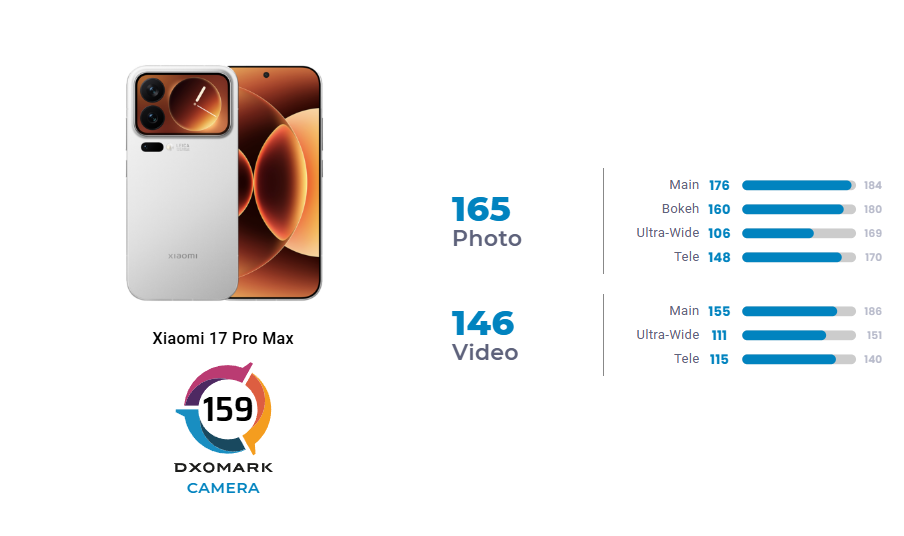
The Xiaomi 17 Pro Max earns a Photo score of 165 and a Video score of 146. On paper, its camera hardware is competitive. It features a 50MP 1/1.28-inch primary sensor with a 23mm f/1.67 lens, dual-pixel PDAF, and OIS, a 50MP ultra-wide camera with a 17mm f/2.4 lens, and a 50MP periscope telephoto offering a 115mm equivalent focal length with OIS.

In photo testing, the Xiaomi 17 Pro Max performs at a very high level. The primary camera delivers accurate white balance, pleasing color rendering, and an excellent balance between detail and noise. DXOMARK’s use case scores reflect this strength, with 172 for outdoor shooting and 161 for indoor scenes. Portrait photography is another highlight, with a score of 155, thanks to good skin tone rendering, high facial detail, and generally reliable subject separation.

Low-light photo performance is also competitive. Images retain good detail with controlled noise across standard, portrait, and telephoto shots. However, exposure consistency can vary across consecutive captures, and warm artificial lighting sometimes introduces an orange color cast. These issues, while not severe, contribute to the device losing ground against higher-ranked competitors.

Zoom performance is mixed. The 5x optical telephoto gives the Xiaomi an advantage at longer focal lengths, but the medium-range zoom relies on cropping from the main sensor, resulting in lower detail than rivals that switch to their tele cameras earlier. At extreme zoom levels, AI processing can introduce unnatural textures.

Video performance is where the Xiaomi 17 Pro Max falls furthest behind the top 10. Although exposure and dynamic range are excellent in bright conditions, video stabilization is weaker than expected for a flagship, with visible camera shake even when standing still. White balance transitions can be unstable, and noise becomes intrusive in low-light video.
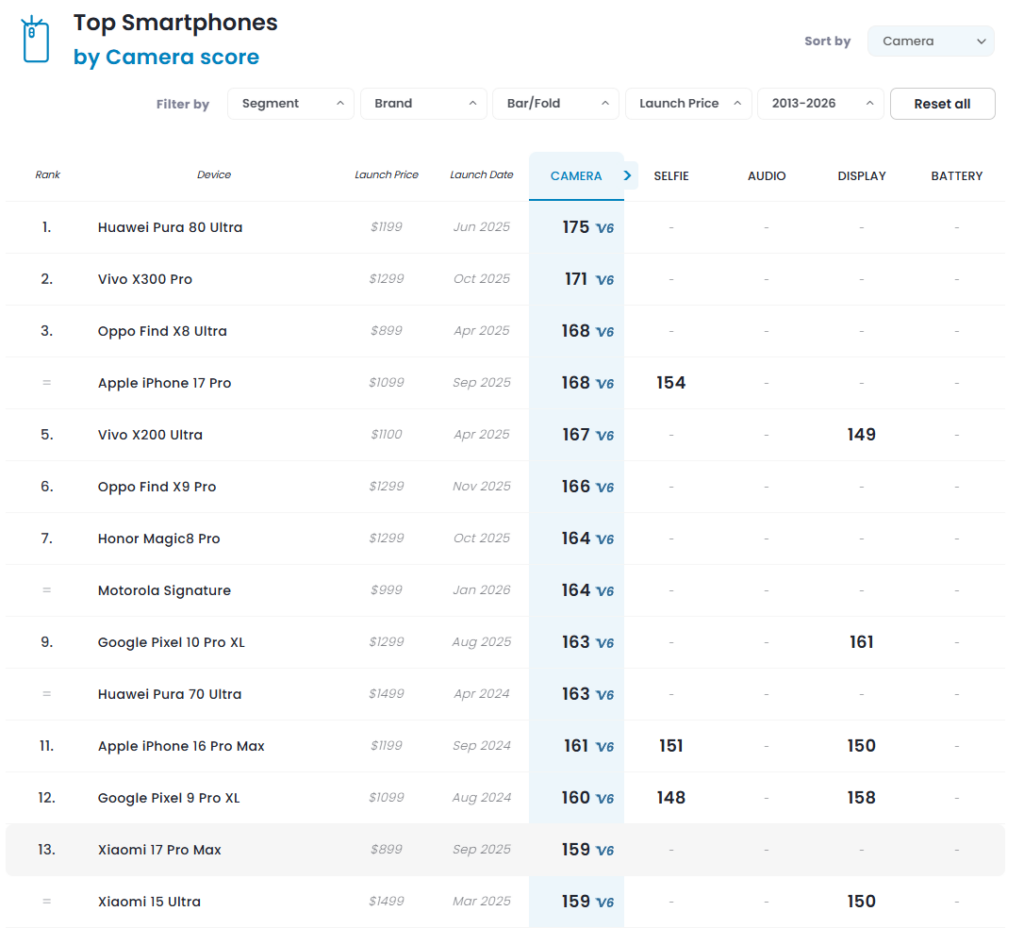
Overall, the Xiaomi 17 Pro Max delivers great results, especially in still photography, but shortcomings in video, stabilization, and zoom consistency prevent it from competing with the very best.

For more daily updates, please visit our News Section.

Stay ahead in tech! Join our Telegram community and sign up for our daily newsletter of top stories!

(Source)
Early leak reveals Honor Magic 9, Magic 9 Pro / Pro Max, and Magic 9 RSR display sizes

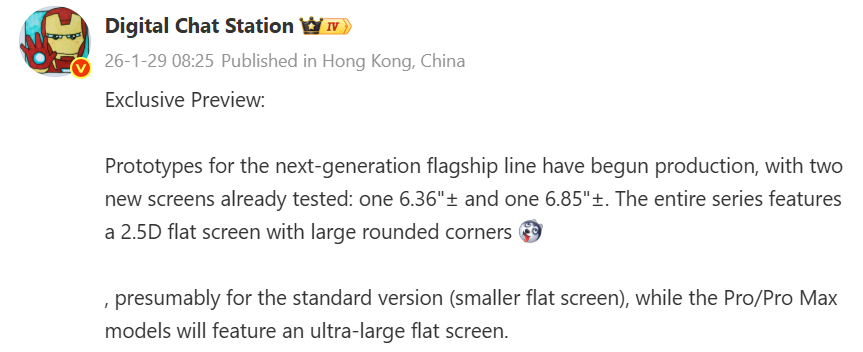
Later this year, Honor may unveil the Honor Magic 9 series of flagship phones. While it is too early to confirm all the models that will be part of the lineup, it may include at least three variants, such as the Honor Magic 9, Magic 9 Pro, and Magic 9 RSR, similar to the Magic 8 lineup. A new leak, courtesy of tipster Digital Chat Station, has revealed the screen sizes of these models.

Honor Magic 9 series screen size tipped

The new leak suggests that Honor has begun early prototyping for its next-generation Magic 9 flagship series. Two new flat displays are reportedly being tested: a compact 6.36-inch panel and a much larger 6.85-inch panel. Both screens are said to feature 2.5D flat glass with large, rounded corners.

Likely, the standard Magic 9 may adopt a smaller flat display, while the Magic 9 Pro could feature a significantly larger flat screen. The tipster has also mentioned a “Pro Max” variant in the leak. At present, there is no clarity on how different the Pro Max edition could be compared to the Pro model.

As far as the Magic 9 RSR is concerned, it has traditionally featured the same display as the Pro variant. Therefore, it is likely that it may also feature a 6.85-inch display.

Coming back to the standard Magic 9, the 6.36-inch screen would be significantly smaller than the Magic 8, which features a 6.58-inch display. On the other hand, the Magic 9 Pro’s display may increase to 6.85 inches compared to the previous generation, which features a 6.71-inch screen.

The Honor Magic 9 series could be early adopters of the Snapdragon 8 Elite Gen 6 series chipset. Just as the previous generation was announced in October, the new lineup may debut in the same month this year.

For more daily updates, please visit our News Section.

Stay ahead in tech! Join our Telegram community and sign up for our daily newsletter of top stories.

Samsung Galaxy S26 Series Pricing Leaks: Most Models Get Significantly Pricier, S26 Ultra Becomes Cheaper

Samsung is expected to launch the Galaxy S26 series toward the end of next month, and recent leaks suggest the company is making significant changes to pricing. According to reliable tipster Roland Quandt (via Winfuture), most models in the lineup will see a price increase compared to the Galaxy S25 series.

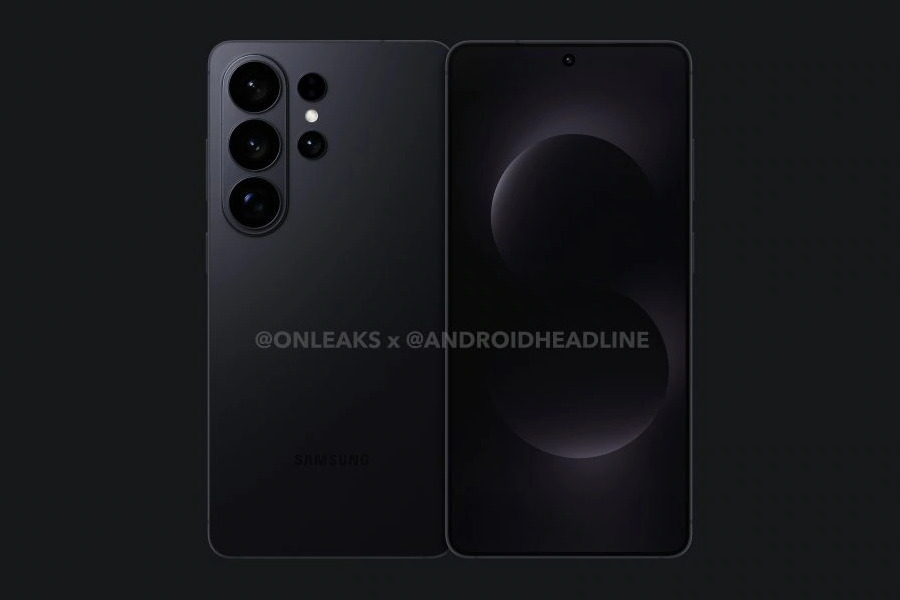
Samsung Galaxy S26 Ultra CAD render by OnLeaks & AndroidHeadlines

The exception is the Galaxy S26 Ultra, which is expected to become cheaper in its 256GB and 512GB configurations, while the 1TB variant will reportedly launch at the same price as the Galaxy S25 Ultra. The broader price increase across the lineup is likely tied to rising component costs, particularly higher prices for RAM and flash storage, which continue to impact smartphone manufacturing costs.

As per the Winfuture report, which cites dealer data from Sweden as its source, Samsung is dropping the 128GB storage option entirely, making 256GB the new starting point across the lineup. In Sweden, the Galaxy S26 with 256GB will be listed at 11,990 SEK (€1135), up from 10,990 SEK (€1040) for the 256GB Galaxy S25. This represents a year-on-year increase of about €95 and also means the entry-level S26 is roughly €200 more expensive than the base S25. The 512GB model will be listed at 13,990 SEK (€1,325), which is around €190 more than the 256GB version.

The Galaxy S26+ follows a slightly different path. The base 256GB model is priced at 14,490 SEK (€1372), the same as the Galaxy S25+ with identical storage. However, the 512GB variant now costs 16,990 SEK (€1609), which is over €230 more than last year. Storage upgrades are clearly more expensive across the board, reflecting higher flash memory costs.

The most surprising shift comes with the Galaxy S26 Ultra. Samsung appears to be lowering the entry price of its flagship model to keep it competitive. The 256GB Galaxy S26 Ultra is listed at 16,990 SEK (€1609), down from 17,990 SEK (€1703) for the Galaxy S25 Ultra. The 512GB version drops slightly as well to 18,990 SEK (€1798). The 1TB model remains unchanged at 22,490 SEK (€2129), suggesting Samsung is absorbing some of the added memory costs at the top end.

Samsung is also expected to end its long-running practice of offering free storage upgrades during pre-orders. With memory no longer cheap, those promotions are likely being phased out to give Samsung more pricing flexibility.

Beyond pricing, leaks suggest limited hardware changes. The Galaxy S26 is expected to feature a 6.3-inch M14 AMOLED display with an adaptive 120Hz refresh rate, while the S26+ could offer a larger 6.7-inch 2K AMOLED panel. Both are tipped to retain IP68 protection, Gorilla Glass Victus 2, Qi2 wireless charging, and similar camera setups to the S25 series. Power may come from either the Exynos 2600 or Snapdragon 8 Elite Gen 5, depending on the market.

According to recent reports, Samsung is expected to announce the Galaxy S26 series on February 25, 2026. Pre-orders could begin on February 26, with first sales starting on March 11.

For more daily updates, please visit our News Section.

Don’t miss a thing! Join our Telegram community for instant updates and grab our free daily newsletter for the best tech stories!

(Source)

Honor’s wide foldable may debut this year; Magic V Flip 3 reportedly cancelled

Honor is said to be planning notable changes to its foldable smartphone strategy this year. While the company is expected to continue expanding its premium foldable offerings, recent information suggests that certain existing product lines may be reworked to make room for a new form factor.

Honor may replace Magic Vs with a wider foldable

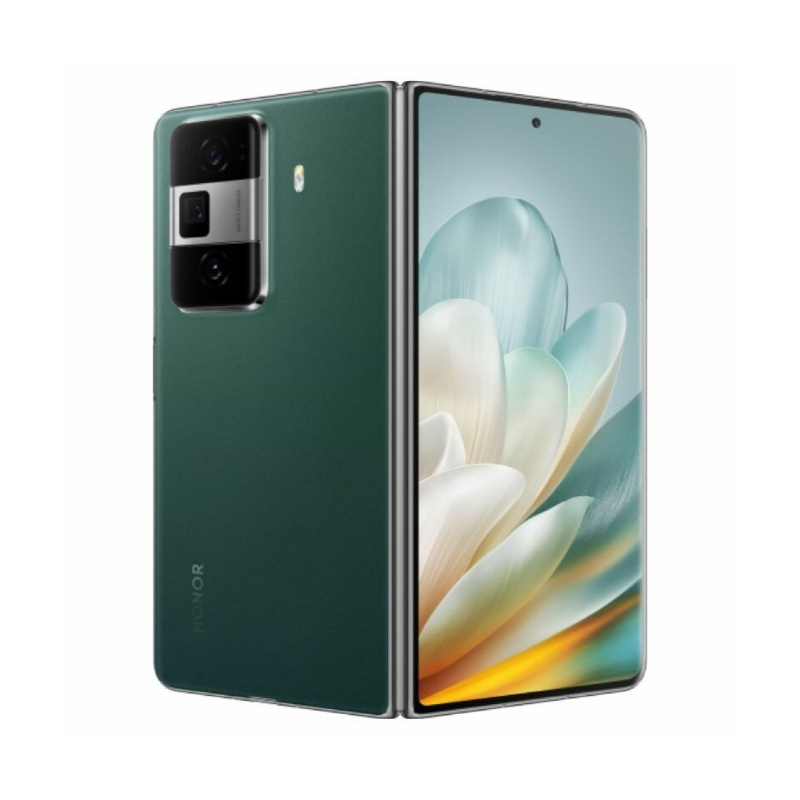
According to a tipster on Weibo, Honor is unlikely to launch a successor to its small clamshell foldable in 2026. Instead, the company is reportedly preparing to introduce a new “wide foldable” smartphone. This device is expected to occupy a similar price segment as the Magic Vs series, effectively replacing that lineup within Honor’s portfolio.

The wide foldable concept focuses on a broader inner display with a screen ratio closer to 16:10 or possibly 4:3. Compared to conventional book-style foldables, this approach improves usability when the device is folded while also offering a larger, more practical canvas when unfolded. The design was first popularised by Huawei with the Pura X, and the form factor is now gaining traction across the industry.

Honor introduced the Magic Vs series in late 2022, positioning it as a relatively accessible entry into the premium foldable segment. The lineup gained attention for its slim design, reduced weight, and competitive pricing.

Honor Magic Vs3
Honor Magic Vs 3

Honor has not launched a Vs-series foldable after 2024 Magic Vs 3, adding weight to reports that Honor may be preparing a strategic shift. Industry watchers note that several major brands are expected to launch wide foldable devices in 2026, including Huawei, Apple, and Honor. If the leaks are accurate, Honor’s upcoming wide foldable could signal a broader realignment of its foldable roadmap to match evolving usage patterns and display preferences.

For more daily updates, please visit our News Section.

Stay ahead in tech! Join our Telegram community and sign up for our daily newsletter of top stories.

Vivo pauses its AI smart glasses project amid uncertainty

Vivo has reportedly paused work on an internal AI smart glasses project that had been under preparation for several months. While the company has not issued an official statement, multiple reports suggest the project was halted after internal evaluations raised concerns around product direction and long-term viability.

Vivo’s AI smart glasses project put on hold

Vivo Vision Discovery Edition

According to people familiar with the matter, Vivo had been exploring different design and technology approaches for AI smart glasses, including audio-focused models and versions with a simple monochrome display. The company had also worked with several ODM partners to develop early demo units. However, despite months of research and prototyping, Vivo’s leadership reportedly concluded that the product lacked a clear path to meaningful differentiation at this stage.

One of the key challenges identified was the limited room for innovation within the current supply chain. Most AI smart glasses rely on the same core components, including highly standardised chipsets and camera sensors, which makes it difficult for brands to stand out in performance, power efficiency, or imaging capabilities. Even display-based models continue to face trade-offs between brightness, field of view, battery life, heat management, and cost.

Focus shifts towards mixed reality development

Industry observers note that Vivo’s decision does not indicate an exit from next-generation computing or wearable devices. Instead, the company is expected to consolidate resources around mixed reality products, an area where it already has tangible progress. Vivo previously introduced the Vivo Vision Discovery Edition MR headset, positioning it as an extension of smartphones and PCs rather than a standalone platform.

The broader AI smart glasses market also appears to be in a transitional phase. While interest remains high and demonstrations attract attention at global tech events, long-term user adoption continues to lag. Most current use cases revolve around translation, photography, or voice interaction, none of which yet offer a strong enough reason for everyday, all-day wear.

For now, Vivo’s cautious approach highlights a wider industry dilemma. Until clearer usage scenarios emerge and underlying technologies mature further, AI smart glasses may remain an experimental category rather than a mass-market product.

For more daily updates, please visit our News Section.

Stay ahead in tech! Join our Telegram community and sign up for our daily newsletter of top stories.

New OnePlus 15R Update Adds File Sharing in Private Safe and Security Improvements

OnePlus has begun distributing OxygenOS 16.0.3.501 to OnePlus 15R users in India through a staged rollout. The incremental update, carrying build number CPH2767_16.0.3.501(EX01), requires users to be on a recent OxygenOS version before installation.

OnePlus 15R

The update introduces organizational improvements to the app drawer by adding Office and Finance categories, automatically sorting productivity and financial applications without manual intervention.

The update also improves overall system stability and performance. While OnePlus has not shared specific technical details, this typically includes background optimizations and fixes for known issues to ensure smoother daily use.

On the security side, OxygenOS 16.0.3.501 integrates the January 2026 Android security patch. This patch addresses known system vulnerabilities and improves device protection at the Android platform level. Private Safe receives multiple functional upgrades. Users can now browse files in Private Safe by sliding the side slider. The update also allows users to search for files within folders inside Private Safe. In addition, files stored in Private Safe can now be shared directly, making the feature more practical without reducing security.

There is also a new call management feature that allows users to disable the SMS reply option on incoming call screens. The toggle is located in Contacts > three-dot menu > Settings > Answer or End calls > Reply with SMS.

Currently available to limited users, the update will expand to broader user groups in the coming days. OnePlus confirms update contents may differ by region and recommends users review their specific build’s changelog.

For more daily updates, please visit our News Section.

Stay ahead in tech! Join our Telegram community and sign up for our daily newsletter of top stories!

(Source)

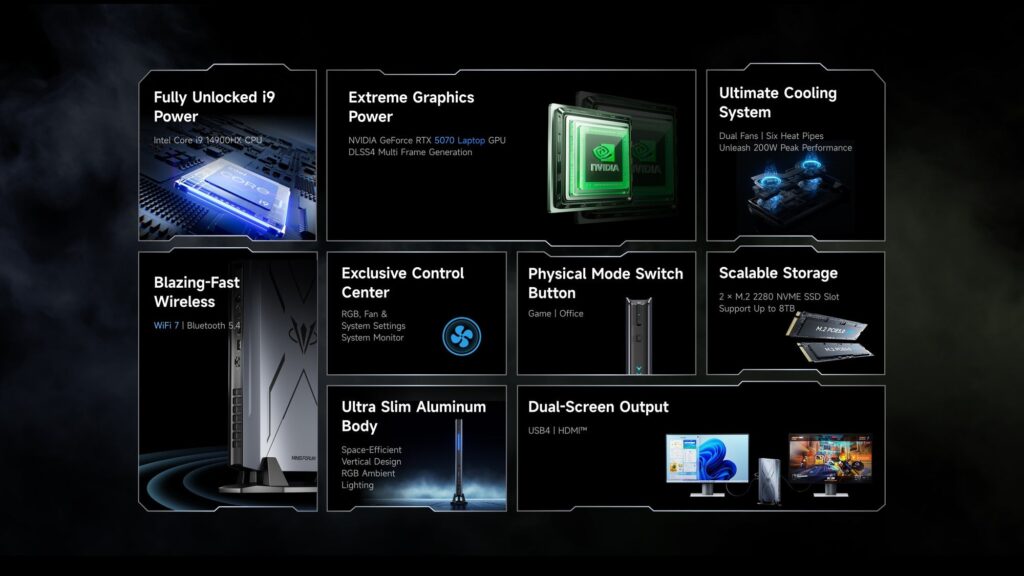
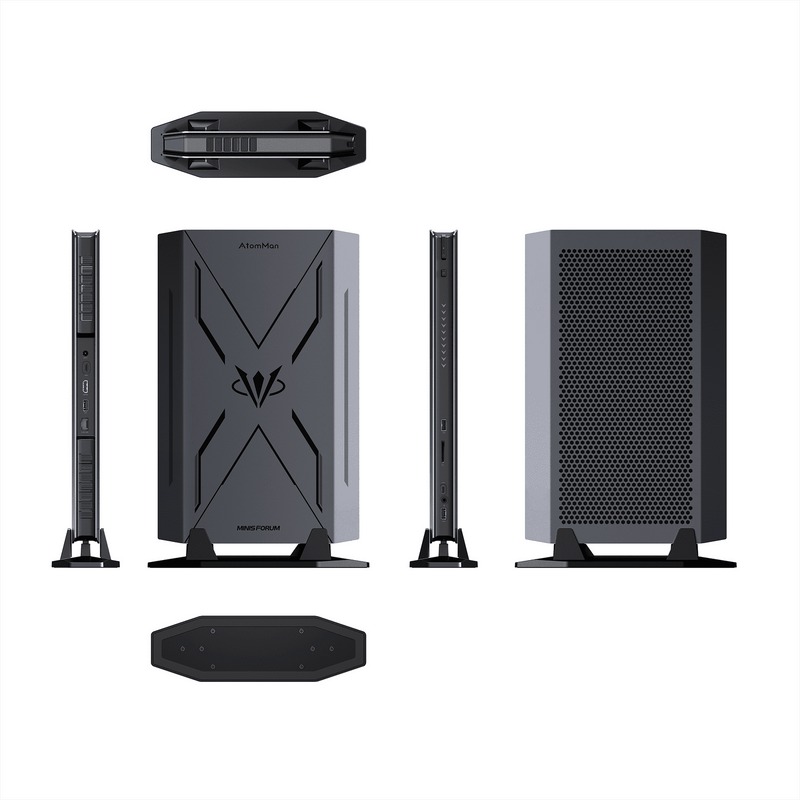
Minisforum AtomMan G7 Pro Gaming Mini PC Debuts With Intel Core i9-14900HX and RTX 5070

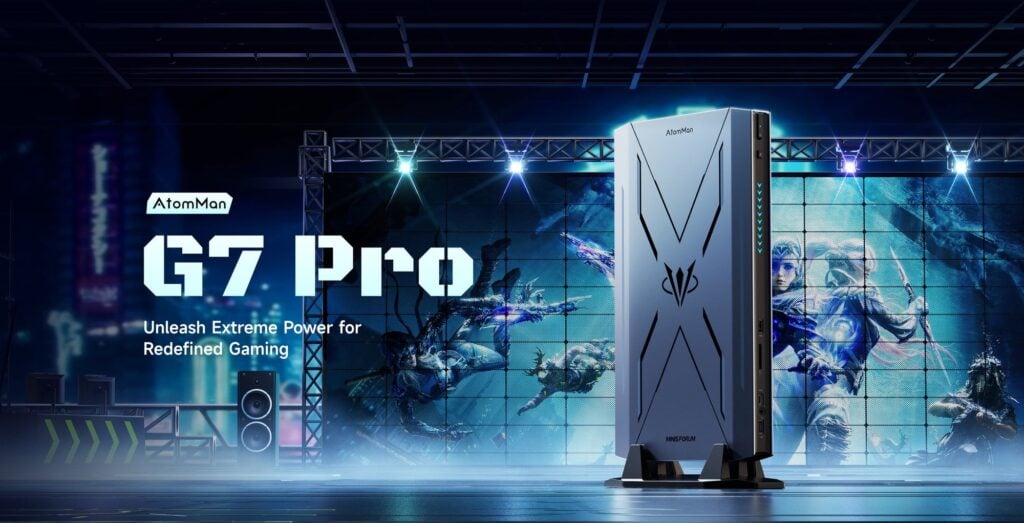
Minisforum has released the AtomMan G7 Pro globally, adding a new high-performance model to its AtomMan G7 mini PC lineup. The G7 Pro joins earlier AtomMan models, including the G7 Ti, and G7 Ti SE that launched during 2024.

Minisforum AtomMan G7 Pro

The mini PC features Intel’s Core i9-14900HX processor. This 10nm chip comes with 24 cores (8 performance, 16 efficiency) and 32 threads. Performance cores operate at 2.2 GHz base frequency, boosting to 5.8 GHz. Graphics are handled by the Nvidia GeForce RTX 5070 Laptop GPU, which is the only GPU option available for this model. Minisforum uses a cooling system with six heat pipes, dual 8015 mm turbo fans, and a three-sided exhaust design.

Minisforum AtomMan G7 Pro

In Gaming Mode, the system can pull up to 200 W during stress tests. CPU power can reach up to 120 W when running alone or up to 85 W with the GPU at 115 W. In Work Mode, CPU power is limited to 90 W or 55 W with the GPU capped at 95 W. Noise levels are rated at 26 dBA at idle and up to 32.8 dBA under full load in Gaming Mode, and up to 44.5 dBA under full load in Work Mode.

Minisforum AtomMan G7 Pro

The mini PC supports DDR5 memory through two SO DIMM slots, with speeds up to 5600 and a maximum capacity of 96 GB. Storage support includes two M.2 2280 NVMe slots, one PCIe 5.0 x4 slot supporting up to 4 TB and one PCIe 4.0 x4 slot also supporting up to 4 TB.

Connectivity options include Wi Fi 7 using the Intel BE200 module, Bluetooth 5.4, and a 2.5 GbE LAN port powered by the Realtek RTL8125 controller. Video output is handled through HDMI 2.1 FRL and USB4, both supporting up to 8K at 60 Hz or 4K at 120 Hz. Additional ports include multiple USB 3.2 ports, a USB C port for data, an SD 4.0 UHS II card reader, and a 3.5 mm combo audio jack.

The AtomMan G7 Pro ships with Windows 11 Pro. It measures 385 × 237 × 33 mm without the bottom plate and 398 × 260 × 80 mm with the bottom attached, weighing 2.62 kg.

Pricing & availability

Pricing starts at $1,359.90 for the barebones version. A preconfigured model with 32 GB of RAM and 1 TB of storage is priced at $1,679.90.

For more daily updates, please visit our News Section.

Stay ahead in tech! Join our Telegram community and sign up for our daily newsletter of top stories!

Android Strengthens Phone Theft Protection With Identity Check and Remote Lock

Android is rolling out a new set of theft protection updates focused on stopping unauthorized access, limiting damage after a device is stolen, and improving recovery. The changes build on existing protections and target a growing problem where phone theft often leads to financial fraud and data theft, not just loss of hardware.

Android Theft Protection

Stolen phones can expose banking apps, saved passwords, and personal information within minutes if security is bypassed. Google says these updates are designed to make Android devices harder to unlock, harder to misuse, and easier to secure remotely.

Several of the new features apply to devices running Android 16 and later. One update expands control over Failed Authentication Lock. This feature, first introduced in Android 15, automatically locks the screen after too many failed unlock attempts. It now has a dedicated enable or disable toggle in settings, giving users direct control over how the feature works on their device.

Android Theft Protection

Android is also expanding Identity Check. The feature, introduced in early 2025 for Android 15 and above, requires biometric authentication for sensitive actions when the user is outside trusted locations. Later in the year, Google extended Identity Check to all apps and features that use the Android Biometric Prompt. This means third-party banking apps and Google Password Manager now automatically require biometric verification under these conditions.

Protection against screen lock guessing is also being tightened. Android is increasing the lockout time after repeated failed PIN, pattern, or password attempts. To avoid accidental lockouts, repeated identical incorrect guesses no longer count toward the retry limit.

Recovery tools are getting updates as well. Remote Lock, which lets users lock a lost or stolen device through android.com/lock, now includes an optional security question or challenge. This step helps confirm that the person requesting the lock is the device owner. These recovery updates are available on devices running Android 10 and later.

In Brazil, Android is enabling theft protection by default on new devices. Theft Detection Lock and Remote Lock now turn on automatically during setup. Theft Detection Lock uses on-device AI to detect snatch-and-run thefts and quickly locks the screen.

For more daily updates, please visit our News Section.

Stay ahead in tech! Join our Telegram community and sign up for our daily newsletter of top stories!

(Source)
Asus launches Vivobook Pro 14/16 (2026) with up to Core Ultra X7 358H and 2.5K/2.8K OLED displays
Asus has announced the 2026 refresh of its Vivobook Pro 14 and Vivobook Pro 16 Intel Edition laptops in China. The new models come equipped with Intel’s latest Panther Lake-based Core Ultra processors, high-performance integrated graphics, and enhanced AI capabilities.

Asus Vivobook Pro 16 2026

Asus Vivobook Pro 14 and 16 2026 Specifications

The Vivobook Pro 16 is the more powerful option in the lineup. It features the third-generation Intel Core Ultra X7 358H processor built on the 18A process. The CPU uses a 16-core configuration, including four ultra-performance cores, and reaches boost speeds of up to 4.8GHz. It comes with Intel’s Arc B390 integrated GPU based on the Xe3 architecture, which supports XeSS 3 frame generation and advanced video codecs like AV1 and H.266.

Asus has included Intel’s AI Boost NPU in both models. The chip can deliver up to 50 TOPS of NPU compute and up to 180 TOPS total AI performance. The Vivobook Pro series also supports Asus’ built-in AI assistant, which offers features like offline voice control, local image generation, and document summarization.

Both the Vivobook Pro 14 and 16 come standard with 32GB of LPDDR5X memory and a 1TB PCIe 4.0 SSD. Each model supports dual M.2 2280 slots for up to 4TB of storage. Asus uses its IceCool Pro thermal system across both devices. The Pro 16 supports up to 85W total performance output, while the Pro 14 supports up to 65W. The cooling system includes dual fans and heat pipes designed to maintain consistent performance during heavy workloads.

The Vivobook Pro 16 features a 16-inch 2.5K OLED display with a 165Hz refresh rate. The panel reaches 1100 nits peak brightness and covers 100% of the DCI-P3 color gamut. Asus has factory-calibrated the screen to Delta E < 1 accuracy and included a black-and-white e-book mode for eye comfort. The Vivobook Pro 14 uses a 14-inch 2.8K OLED panel with a 120Hz refresh rate and similar visual specs.

Asus Vivobook Pro 16 2026

Both laptops include an 80Wh battery. Asus claims the Pro 14 can deliver up to 33 hours of local video playback, while the Pro 16 is rated for up to 20 hours. Fast charging support via USB-C enables 50% charge in around 30 minutes.

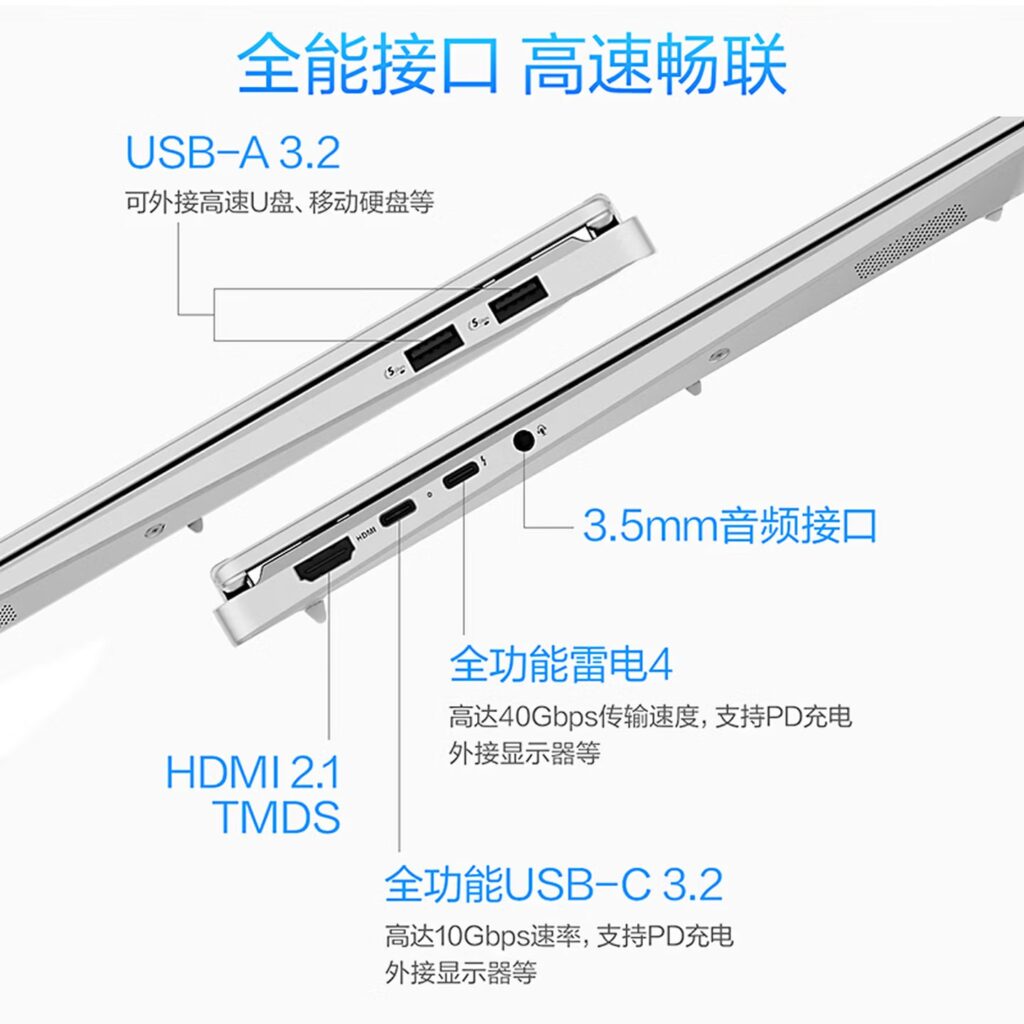
The Vivobook Pro 14 weighs around 1.39kg, and the Pro 16 weighs 1.69kg. The metal chassis measures 17.9mm thick on the larger model. Both devices feature Thunderbolt 4, full-function USB-C, USB-A ports, HDMI 2.1, and a 3.5mm audio jack.

Pricing and Availability

Coming to the pricing, the Vivobook Pro 14 with Core Ultra 7, 32GB RAM, and 1TB storage costs 6,999 yuan ($1,006). The Vivobook Pro 16 starts at 7,299 yuan ($1,050) with the same configuration and goes up to 7,999 yuan ($1,150) for the model with the more powerful Core Ultra X7 chip.

In related news, Asus has also launched the Zenbook 14 Air (2026) with the Intel Core Ultra 9 386H, a 2.8K OLED display, and a 77Wh battery, alongside the Zenbook Duo 14 (2026) featuring dual 2.8K OLED touch displays and an Intel Core Ultra X9 processor.

For more daily updates, please visit our News Section.

Stay ahead in tech! Join our Telegram community and sign up for our daily newsletter of top stories! 💡

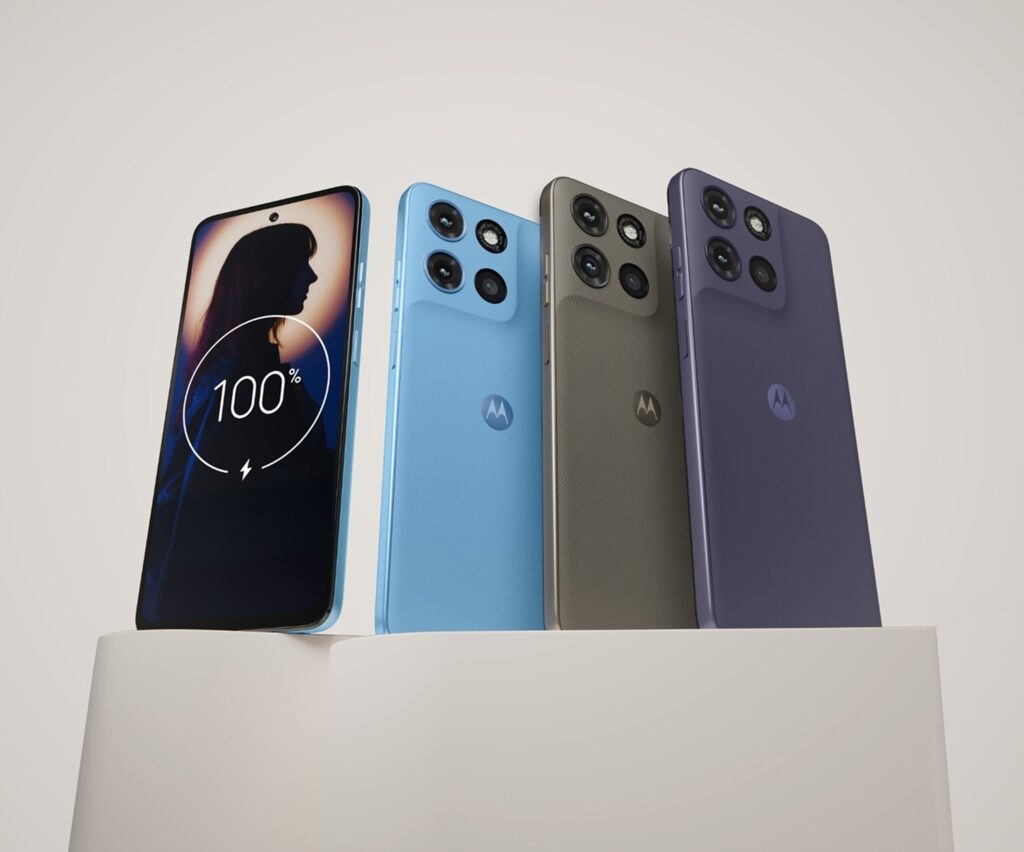
Moto G17 & G17 power arrive with MediaTek Helio G81 Extreme, 50MP Sony LYTIA 600 Camera & Improved Battery

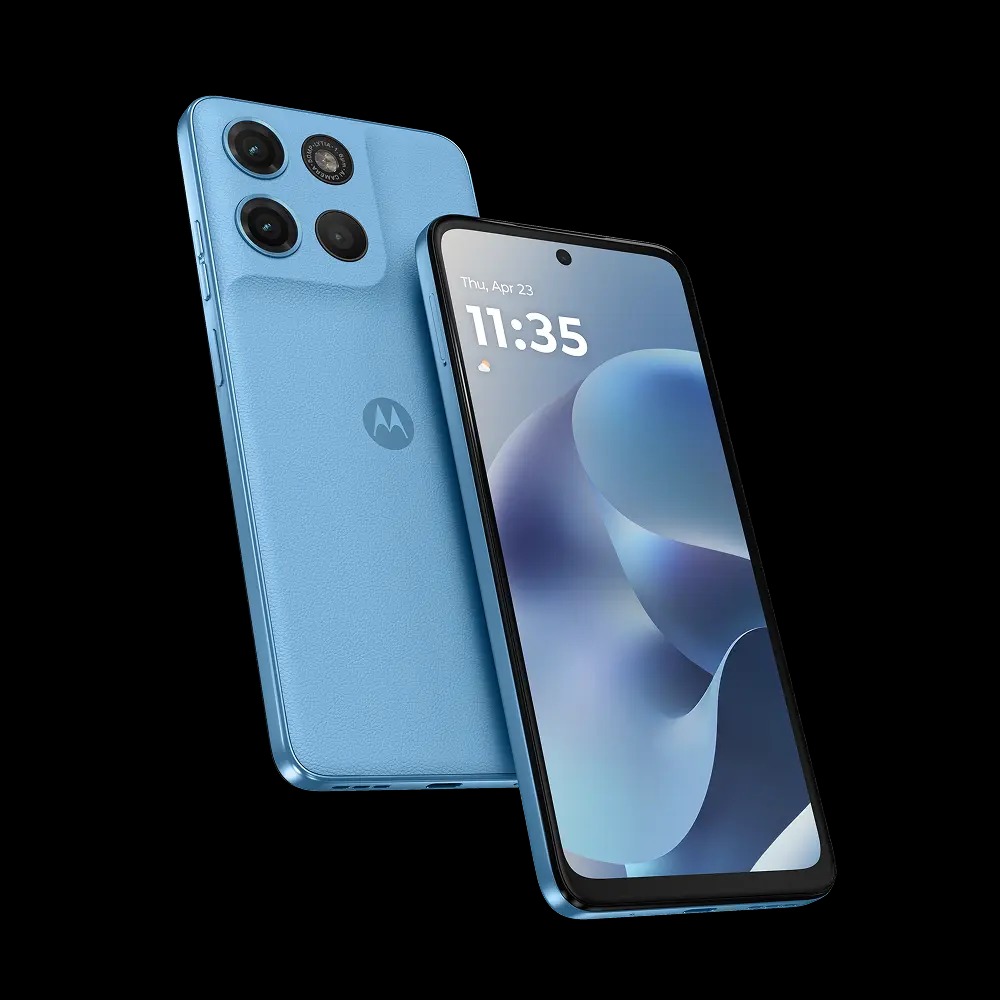
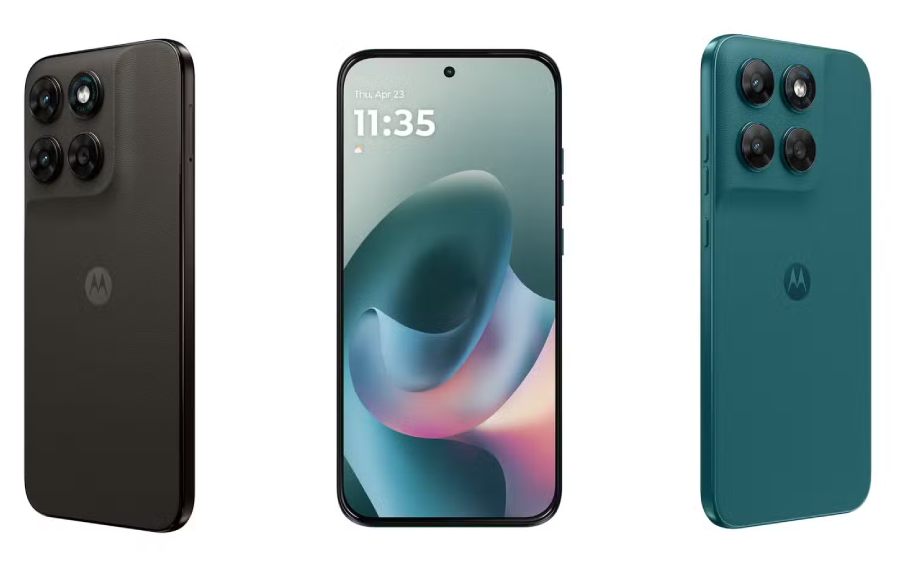
Motorola has announced the Moto G17 Power and Moto G17, two new mid-range smartphones focused on long battery life, capable cameras, and a practical feature set for everyday use. The devices are aimed at users who want reliable performance, solid imaging, and modern software without moving into higher price segments. These devices have debuted alongside the Moto G77 and G67, which we have covered separately.

Moto G17 Power
Moto G17 Power

Performance

Both phones are powered by the MediaTek Helio G81 Extreme processor. The chipset uses an octa-core CPU setup with two Cortex-A75 cores clocked at up to 2.0GHz and six Cortex-A55 cores running at up to 1.7GHz. Graphics are handled by an Arm Mali-G52 MC2 GPU clocked at 820MHz. It is worth noting that the software side is based on Android 15, rather than the latest Android 16.

Memory options include 4GB or 8GB of physical RAM. Motorola’s RAM Boost feature allows users to extend memory using internal storage, offering up to 8GB or 16GB of additional virtual RAM, depending on the variant. Storage options include 128GB and 256GB, with support for microSD cards up to 1TB. This makes the Moto G17 suitable for users who store large photo libraries, videos, or offline content.

Display & Design

The display is a 6.72-inch FHD+ LCD panel with a 20:9 aspect ratio and a 60Hz refresh rate. It is protected by Corning Gorilla Glass 3. The large screen size is designed for video streaming, reading, and casual gaming, while maintaining durability for everyday use.

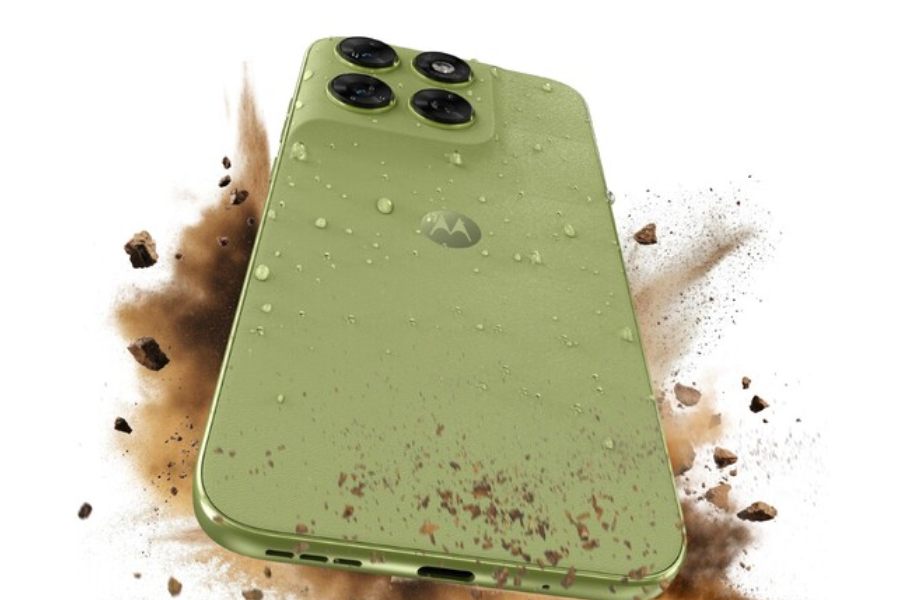
In terms of design, the Moto G17 measures 165.67 x 75.98 x 8.17mm and weighs 189.9g. It carries an IP64 rating for dust resistance and protection against water splashes. Color options include Pantone Bordeaux, Pantone Alaskan Blue, and Pantone Evening Blue.

Cameras

Camera hardware is a major highlight. On the rear, the Moto G17 features a 50MP Sony LYTIA 600 main sensor with an f/1.8 aperture, 0.8µm pixel size, and 1.6µm effective pixels after pixel binning. This is paired with a 5MP ultra-wide camera with an f/1.88 aperture and 0.8µm pixels. A third rear sensor handles ambient light detection and flicker reduction. Camera software includes HDR, Night Vision, Pro Mode, Panorama, Portrait, Live Filter, Watermark, Timer, and Google Lens integration. Video features include standard video recording, time-lapse, and slow motion.

On the front, the phone uses a 32MP selfie camera with an f/2.2 aperture and 0.7µm pixel size. The front camera supports HDR, full HD video recording at 30fps, face retouching, leveling tools, and assistive grid options.

Battery, Connectivity & Security

Battery capacity differs between the two models. The Moto G17 includes a 5200mAh battery, while the Moto G17 Power uses a larger battery. Both support 18W TurboPower charging through a USB Type-C port. The G17 Power, on the other hand, has a larger 6,000mAh battery, paired with 30W TurboPower charging.

Audio features include stereo speakers with Dolby Atmos support and a built-in microphone. The phone also retains a 3.5mm headphone jack. Connectivity options include Bluetooth 5.4, Wi-Fi 802.11 a, b, g, n, and ac with support for both 2.4GHz and 5GHz bands, NFC, FM radio, and USB Type-C.

Security features include a fingerprint reader, face unlock, Moto Secure, and ThinkShield protection. Software extras include Hello UX, Moto gestures, and Google Gemini voice control. Location services support GPS, A-GPS, GLONASS, Galileo, and QZSS. SIM options include dual nano SIM or single SIM with microSD.

Availability

The Moto G17 Power and Moto G17 are launching in select EMEA markets. The Moto G17 is priced starting at £149.99 in the UK for the 4GB/128GB variant, while the 8GB/128GB model costs €199.99 in Germany. Motorola has yet to reveal the pricing for the Moto G17 Power.

For more daily updates, please visit our News Section.

Stay ahead in tech! Join our Telegram community and sign up for our daily newsletter of top stories!

G-SHOCK Unveils Ghost In The Shell DW-5600 Inspired by the Iconic 1995 Anime Film

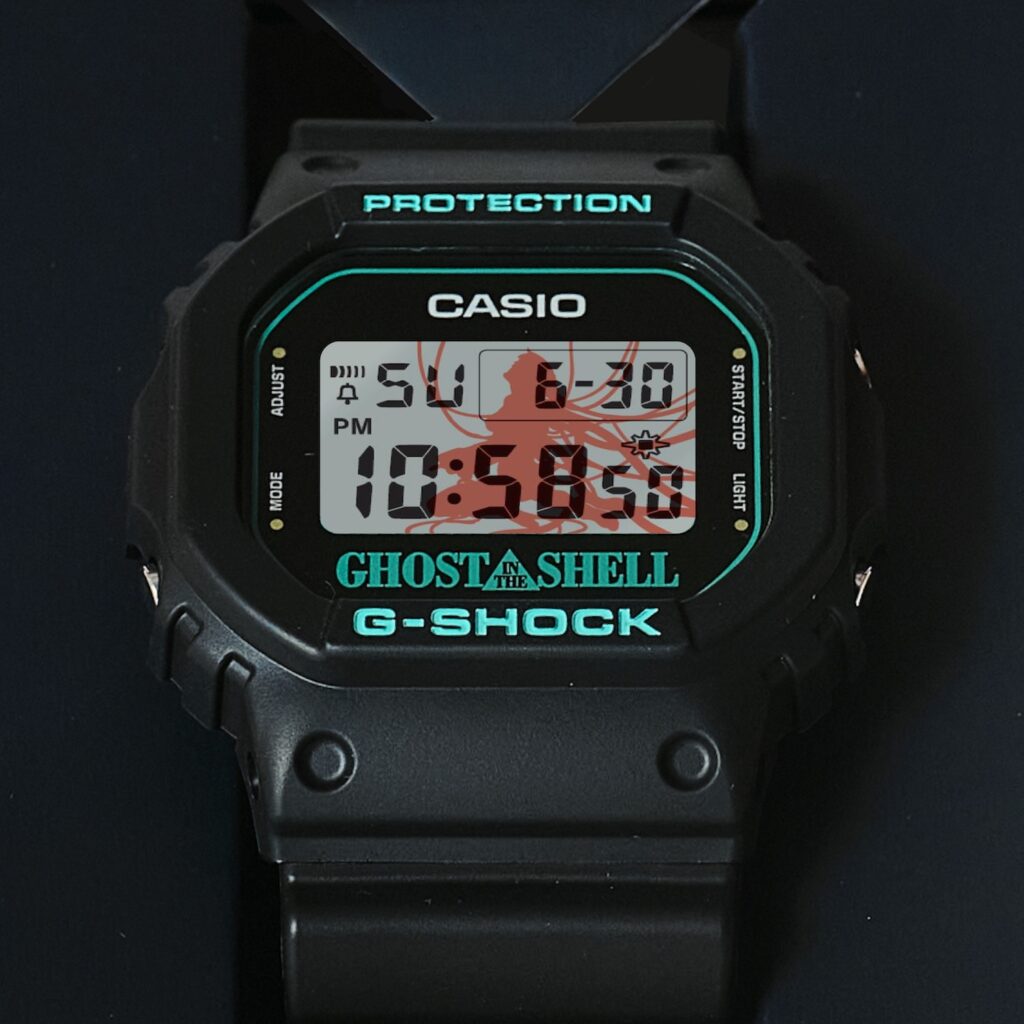
Casio’s G-SHOCK has announced a new collaboration with Ghost in the Shell, built around the classic DW-5600. The watch combines one of Japan’s most iconic anime franchises with a G-SHOCK model that helped define what a tough digital watch should be.

CASIO Ghost in the Shell × G-SHOCK DW-5600

Ghost in the Shell is one of the most influential anime and manga franchises ever created. First released as a manga by Masamune Shirow and later adapted into the landmark 1995 animated film, the series shaped how cyberpunk is portrayed in Japanese pop culture. Its exploration of identity, artificial intelligence, and the line between human and machine helped define modern sci-fi storytelling. The 1995 film, in particular, became a global reference point, inspiring filmmakers, designers, and technologists for decades.

CASIO Ghost in the Shell × G-SHOCK DW-5600

The collaboration is based on the DW-5600, a square-shaped G-SHOCK that traces its design back to the original DW-5000. This model established G-SHOCK’s core concept of shock resistance and long-term durability. The new edition stays faithful to that design while adding Ghost in the Shell elements.

The watch features a black resin case and band, with turquoise G-SHOCK branding on the frame. Ghost in the Shell branding appears in teal, matching the series’ cyber-themed color style. When the electro-luminescent backlight is activated, an image of Motoko Kusanagi, also known as The Major, appears on the display panel. This is the main visual tie-in with the 1995 film.

As part of the DW-5600 series, the watch is built for daily wear. It offers 20 ATM water resistance and a shock-resistant structure. Expected features include a 1/100-second stopwatch, a 24-hour countdown timer, electro-luminescent backlight, auto calendar, alarm, hourly time signal, and standard digital timekeeping. The case and strap are made from durable resin, consistent with other DW-5600 models.

Sales are scheduled to begin in early March 2026. The expected retail price is ¥15,400, including tax via Ghost in the Shell’s official Japan website. It is currently unclear if the watch will launch outside of Japan.

For more daily updates, please visit our News Section.

Tech enthusiast? Get the latest news first! Follow our Telegram channel and subscribe to our free newsletter for your daily tech fix!

Samsung Galaxy Buds 4 Pro, Galaxy Buds 4 premium price leaked ahead of launch

Samsung’s next generation of wireless earbuds, the Galaxy Buds 4 and Galaxy Buds 4 Pro, just surfaced in a new leak. These new TWS earbuds are set to debut globally soon and were recently spotted getting certified in multiple markets. And now, we finally have their pricing details. So let’s check it out.

Samsung Galaxy Buds 4 Pro & Galaxy Buds 4 Price Leak

The South Korean tech giant’s upcoming flagship earbuds were spotted in a new leak from Billbil-kun on X (formerly Twitter). Looking at the tweet, the latest information has revealed both the pricing details and launch timeline ahead of any official announcement from Samsung. The brand is reportedly set to unveil the Galaxy Buds 4 and Galaxy Buds 4 Pro in the European market around the same time as its flagship Galaxy S26 series of smartphones.

Samsung Galaxy Buds 3 Pro

To recall, the premium phones could make their global debut in late February during the Galaxy Unpacked 2026 event. The new leak also revealed the color variants of the Galaxy Buds 4 series, in Black and White colorways for both models. Some rumors have also hinted at there being a new Apricot version and other new hues, but this still seems unconfirmed at the moment.

Meanwhile, listings for the Galaxy Buds 4 and Galaxy Buds 4 Pro have also surfaced in the Samsung Members app in Europe. According to the leak, Samsung isn’t hiking prices this year despite expected upgrades to design and features. The Galaxy Buds 4 are tipped to debut at around 179 Euros, while the premium Galaxy Buds 4 Pro could land at about 249 Euros in major European markets like France.

For more daily updates, please visit our News Section.

Don’t miss a thing! Join our Telegram community for instant updates and grab our free daily newsletter for the best tech stories!

Asus Launches Zenbook Duo 14 (2026) with dual 2.8K OLED touch displays and Intel Core Ultra X9 CPU

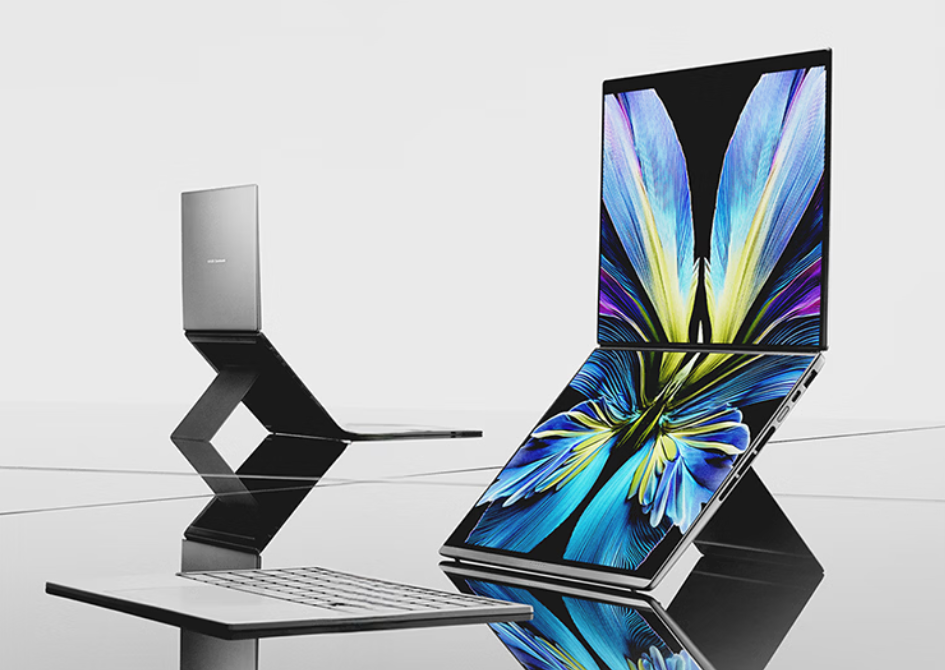
Asus has announced the Zenbook Duo 14 (2026) at its AI PC event in China. The new dual-screen laptop features two 14-inch OLED touch displays, each with a 2.8K resolution, 144Hz refresh rate, and 1000 nits peak brightness.

Asus Zenbook Duo 14 (2026)

Asus Zenbook Duo 14 (2026) Specifications

The displays support 10-bit color depth, 100% DCI-P3 color gamut coverage, and HDR with a 1,000,000:1 contrast ratio. They also come with AR anti-reflective coating and TÜV-certified low blue light protection for improved viewing comfort.

The Zenbook Duo 14 (2026) is powered by Intel’s latest Core Ultra X9 388H processor, based on the new Intel 18A process. The chip includes 16 cores and reaches clock speeds of up to 5.1GHz. Graphics are handled by the integrated Intel Arc B390 GPU with 12 Xe cores and support for XeSS 3, AV1, and H.266 hardware decoding. Asus claims a total AI compute performance of up to 180 TOPS.

Asus Zenbook Duo 14 (2026)

The laptop comes with 32GB of LPDDR5X memory running at 9600MT/s and up to 2TB of PCIe 4.0 SSD storage. Asus has equipped the device with a dual-battery design totaling 99Wh. The company claims up to 32 hours of local video playback when using a single display. The updated thermal system supports up to 45W sustained performance and includes dual fans, heat pipes, and larger air intake areas.

The Zenbook Duo 14 comes with a redesigned hinge to reduce screen gaps and support multiple usage modes. These include laptop mode, vertical mode, waterfall mode, and a flat 180-degree layout for collaboration. The device includes a built-in metal kickstand and a detachable magnetic Bluetooth keyboard with 1.7mm key travel and a large gesture-supported touchpad. Stylus input is also supported.

The port selection includes two Thunderbolt 4 USB-C ports, one USB-A, HDMI 2.1 FRL, and a 3.5mm headphone jack. The laptop supports Wi-Fi 7 and features a 1080p IR camera with face recognition and a six-speaker Dolby Atmos audio system. Asus has also integrated several AI software tools, including document summarization, offline image recognition, and local knowledge base search.

Pricing and Availability

Pricing details for the Zenbook Duo 14 (2026) have not been announced yet.

In related news, Asus has recently launched the Zenbook 14 Air (2026), featuring Intel’s Core Ultra 9 386H processor, a 2.8K OLED display, and a 77Wh battery.

For more daily updates, please visit our News Section.

Stay ahead in tech! Join our Telegram community and sign up for our daily newsletter of top stories! 💡

Motorola launches Moto G77 and G67: Here’s how they are different

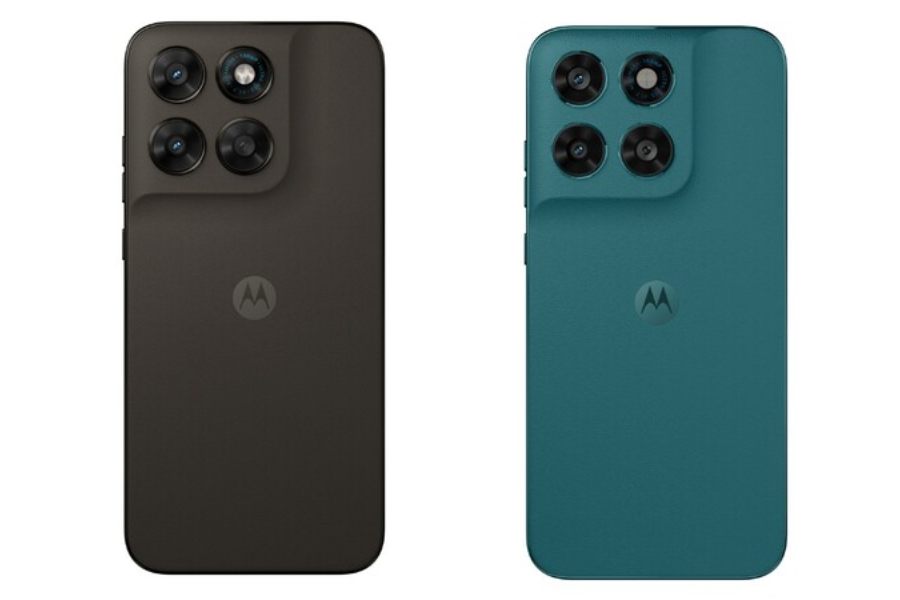
Motorola is refreshing its midrange lineup in the UK and other global markets with two new models, Moto G77 and Moto G67. Both are big-screen phones with large batteries and durability features. The main difference comes down to performance, cameras, and how much you want to spend.

Moto G77 Specifications

The Moto G77 is positioned as the more premium option of the two. Motorola is clearly leaning on display quality and camera upgrades here.

The phone features a large 6.78-inch AMOLED panel with a 1.5K resolution and a smooth 120Hz refresh rate. The screen is also plenty bright for outdoors with 5000 nits of peak brightness. 

On the camera side, the Moto G77 gets a 108-megapixel main sensor, which supports 3x lossless zoom. The main camera is paired with an 8-megapixel ultrawide, while selfies are handled by a 32-megapixel front-facing camera.

Inside, it runs on a MediaTek Dimensity 6400 chip, with options for 8GB or 12GB of RAM and storage going up to 512GB. Keeping the lights on is a 5,200mAh battery that supports 30W charging. Audio is handled by stereo speakers with Dolby Atmos.

Rounding out the specs are IP64 rating for dust and water resistance, MIL-STD-810H certification, and Gorilla Glass 7i on the front. 

The phone launches in Pantone shades called Shaded Spruce and Black Olive, priced at £250 in the UK.

Moto G67 Specifications

The Moto G67 is a more budget-friendly take on the Moto G77. 

It keeps several features intact, like the 6.78-inch AMOLED display with the Gorilla Glass 7i protection and 120Hz refresh rate. The battery size, charging speed, and MIL-STD toughness rating are also the same as the G77. Where it cuts back is performance and cameras. 

The processor drops to a MediaTek Dimensity 6300, paired with either 4GB or 6GB of RAM. The main camera is a 50-megapixel Sony Lytia 600 sensor paired with an 8MP ultrawide, and the water resistance rating is slightly lower at IP63. That said, the battery and charging specs are the same as the G77. 

Those compromises help bring the price down to £200. The Moto G67 will be available in Pantone colors named Arctic Seal and Nile. 

For more daily updates, please visit our News Section.

Stay ahead in tech! Join our Telegram community and sign up for our daily newsletter of top stories! 💡

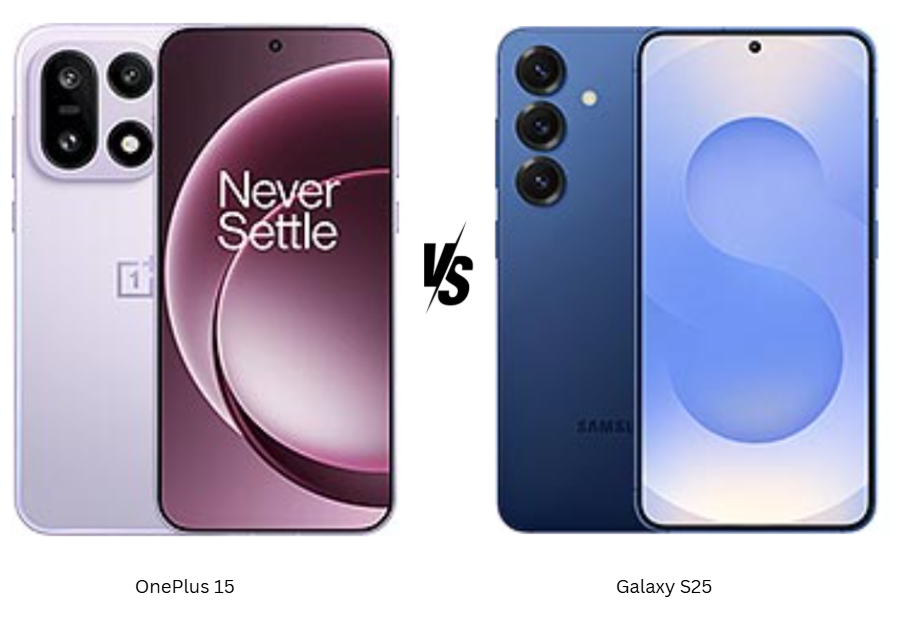
OnePlus 15 vs Galaxy S25: Which Flagship Makes Sense in 2026

Not all flagship battles are about who has the most features; some are about how those features are used. The OnePlus 15 and Samsung Galaxy S25 sit at the same premium table, yet they chase excellence in completely different ways. One pushes raw power, faster charging, and hardware dominance, while the other focuses on balance, polish, and long-term reliability. On paper, both look impressive, but in real-world use, they appeal to very different users. This comparison cuts past the spec sheet to see which flagship approach actually delivers the better experience.

Please Note: When you buy something using the links in our articles, we may earn a small commission at no cost to you.

Please Note: When you buy something using the links in our articles, we may earn a small commission at no cost to you.

Major Features:

FeatureOnePlus 15Samsung Galaxy S25Winner
Display6.78″ LTPO AMOLED, 165Hz, Dolby Vision, HDR10+, HDR Vivid6.2″ Dynamic LTPO AMOLED 2X, 120Hz, HDR10+OnePlus 15 – Higher refresh rate and richer HDR formats
ChipsetSnapdragon 8 Elite Gen 5 (3nm)Snapdragon 8 Elite (3nm)OnePlus 15 – Newer, more powerful chipset
Storage TypeUFS 4.1UFS 4.0OnePlus 15 – Faster read/write speeds
RAM OptionsUp to 16GBUp to 12GBOnePlus 15 – Better for heavy multitasking
Rear Camera (Main)50MP wide + 50MP periscope + 50MP ultrawide50MP wide + 10MP telephoto + 12MP ultrawideOnePlus 15 – Stronger overall camera hardware
Optical Zoom3.5× periscope3× telephotoOnePlus 15 – Better zoom flexibility
Video Recording8K, 4K@120fps, Dolby Vision, LUT8K, 4K@60fps, HDR10+OnePlus 15 – More creator-focused tools
Selfie Camera32MP with AF12MP with dual-pixel AFOnePlus 15 – Higher resolution and sharper output
Battery Capacity7300 mAh4000 mAhOnePlus 15 – Massive real-world endurance advantage
Charging (Wired)120W (50% in 15 min)25W (50% in 30 min)OnePlus 15 – Dramatically faster charging
Wireless Charging50W + reverse wireless15W + reverse wirelessOnePlus 15 – Much faster wireless speeds
DurabilityIP68 + IP69KIP68OnePlus 15 – Higher water resistance rating
Software SupportAndroid 16 out of boxAndroid 15, 7 major updatesGalaxy S25 – Longer guaranteed updates
Extra FeaturesIR blaster, bypass chargingSamsung DeX, Wireless DeXGalaxy S25 – Better productivity features

Please Note: When you buy something using the links in our articles, we may earn a small commission at no cost to you.

Please Note: When you buy something using the links in our articles, we may earn a small commission at no cost to you.

1. Design and Display

Build and Feel

OnePlus 15 adopts a bold, performance-driven design with premium materials and extreme durability ratings. Its IP69K protection and reinforced frame give it a rugged, almost industrial confidence that clearly targets power users. The Galaxy S25 takes a very different route, focusing on clean lines, Armor Aluminum, and a refined flagship aesthetic. Samsung’s design feels understated and comfortable, making it easier to live with daily. OnePlus feels like a device built to impress hardware enthusiasts, while Samsung prioritizes elegance and long-term usability.

Display Quality

OnePlus pushes boundaries with a 165Hz LTPO AMOLED panel and broad HDR format support, delivering ultra-smooth visuals and strong cinematic appeal. The Galaxy S25 counters with superior peak brightness and excellent color tuning, resulting in a display that feels consistent and easy on the eyes. Samsung’s panel may be less aggressive on paper, but it feels more balanced for everyday use.

Verdict

OnePlus 15 suits users who want bold design and cutting-edge visuals, while Galaxy S25 feels better optimized for comfort and visual consistency

2. Specifications 

Performance

OnePlus 15 runs on the newer Snapdragon 8 Elite Gen 5 chipset, paired with faster UFS 4.1 storage and higher RAM options. This gives it a clear advantage in heavy multitasking, gaming, and long-term performance headroom. Everything feels fast and uncompromising. The Galaxy S25 uses a slightly older Snapdragon 8 Elite chip, but Samsung’s tuning prioritizes stability and efficiency. Performance remains excellent, even if it feels more controlled than aggressive.

Battery and Charging

OnePlus dominates battery technology with a much larger capacity and extremely fast wired and wireless charging, minimizing downtime. Samsung takes a conservative approach, offering slower charging that favors battery longevity and ecosystem compatibility.

Verdict

OnePlus 15 leads in raw performance and charging speed, while Galaxy S25 focuses on reliability and efficiency over extremes.

3. Camera 

Main and Secondary Lenses

The OnePlus 15 features a versatile triple 50MP camera setup, including a periscope telephoto that offers stronger optical zoom and flexibility. Its video tools, Dolby Vision support, and LUT controls clearly target creators. The Galaxy S25 emphasizes consistency, relying on refined processing to deliver reliable colors, strong HDR, and predictable results. While its hardware is less ambitious, the output feels polished and dependable.

Selfie Camera

OnePlus offers a higher-resolution selfie camera with autofocus, producing sharper photos and better video clarity. Samsung relies on intelligent processing and dual-pixel autofocus to maintain natural skin tones and consistent results.

Verdict

OnePlus 15 is better for creative users who want control and flexibility, while Galaxy S25 excels at effortless, reliable photography.

4. Pricing 

OnePlus 15 is priced at around $900 or ₹80,000, placing it firmly in the premium flagship category. The Galaxy S25 comes slightly lower at approximately $800 or ₹75,000, making it the more accessible option. This price gap reflects their different priorities rather than outright value differences.

Is the Price Justified?

OnePlus justifies its pricing through aggressive hardware choices, faster charging, and higher-end display tech. Samsung’s pricing feels justified through long-term software support, ecosystem features, and brand reliability, even if the hardware appears more conservative.

Verdict

OnePlus 15 offers stronger hardware value, while Galaxy S25 delivers better long-term ownership value for most users.

Disclaimer:
Prices are approximate and may vary based on country, region, and applicable taxes.

5. Conclusion 

OnePlus 15 stands out with IP69K durability, ultra-fast charging, bypass charging, and creator-focused camera tools. It feels engineered for enthusiasts who care about performance and specifications. The Galaxy S25 differentiates itself through Samsung DeX, Wireless DeX, extended software support, and deep ecosystem integration. These features quietly enhance productivity and everyday convenience.

Verdict

If there’s only one choice, the OnePlus 15 is the better overall pick for most users. Its stronger performance, much larger battery, ultra-fast charging, and more versatile camera system make it feel more future-ready and exciting to use day to day. The Galaxy S25 remains an excellent option for those who prioritize long-term software support, ecosystem features, and a more refined, compact experience, but from a pure hardware and value perspective, the OnePlus 15 delivers more for the price.

Read More:

Xiaomi brings voice-activated parking fee payments to smart glasses

Alibaba’s Alipay has teamed up with Xiaomi to bring smart parking fee payments to Xiaomi’s smart glasses. That means, instead of scanning a QR code on a phone or opening an app at the exit gate, users can either say a command to the glasses or simply look at the parking payment code. After a security check, the payment is completed automatically, allowing the driver to leave the parking space without pulling out their phone.

According to Alipay, the experience is designed to work in three steps. First, when a vehicle enters a parking lot, the AI assistant built into the glasses gives a proactive voice reminder announcing when billing has started. This is meant to remove the guesswork around when parking fees begin.

When it’s time to leave, users can say, “Xiao Ai, pay the parking fee.” The AI assistant then queries the parking system and generates the payment order automatically. 

And in the final step, the assistant announces the amount to be paid, and the user confirms it to complete the transaction. The idea is to make the entire process hands-free, which could be useful in busy parking lots or situations where drivers want to exit quickly.

Xiaomi x Alipay makes it easy to pay the parking fee

Alipay says the feature is built using Ant Group’s GPASS trusted connection technology and its AHA intelligent interconnection solution. Together, these technologies form what Alipay calls an “AI Glasses Parking Assistant.” 

Identity verification is handled through methods like voiceprint recognition, allowing users to authorize payments after binding their Alipay account just once.

GPASS also supports multi-device collaboration. If users enable parking notifications in the Alipay mobile app, information such as vehicle entry, billing status, and exit details can be delivered simultaneously through voice notifications on the glasses. 

The company says the feature already works across Alipay’s smart parking network in multiple cities, including parking lots in business districts, transport hubs, office buildings, and tourist locations.

Beyond parking, Alipay has also integrated its AI health assistant, Ant Afu, into Xiaomi smart glasses. Users can select Afu from the “Featured Smart Agents” section, bind their account, and ask health-related questions directly while wearing the glasses.

Xiaomi introduced its first AI smart glasses last June. The device includes a 12MP first-person camera, support for Xiao Ai, and payment features like “pay with a glance.” 

For more daily updates, please visit our News Section.

Stay ahead in tech! Join our Telegram community and sign up for our daily newsletter of top stories! 💡

(Via)

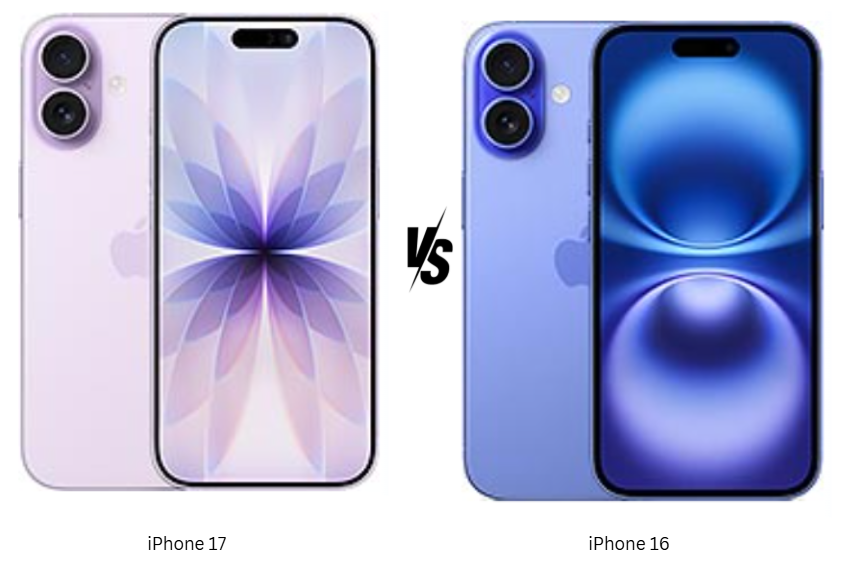
iPhone 17 vs iPhone 16: Full Comparison, Differences, and Verdict

Choosing between the iPhone 17 and iPhone 16 isn’t about old versus new, it’s about deciding how much refinement actually matters in daily use. Both phones deliver the familiar iPhone experience, but one focuses on meaningful polish while the other doubles down on value. From smoother visuals and smarter efficiency to subtle camera upgrades, this comparison looks beyond spec sheets to see which model truly feels like the better long-term companion.

Major Upgrades:

FeatureiPhone 17iPhone 16Upgrades
Display6.3″ LTPO OLED, 120Hz6.1″ OLED, 60HzLTPO panel with 120Hz refresh rate
Peak BrightnessUp to 3000 nitsUp to 2000 nitsHigher peak and outdoor brightness
ChipsetApple A19 (3nm)Apple A18 (3nm)Newer A19 with better efficiency
RAM8GB8GBNo change
Storage Options256GB, 512GB128GB, 256GB, 512GBHigher base storage
Main Camera48MP (Wide)48MP (Wide)No change
Ultrawide Camera48MP12MPMajor resolution upgrade
Selfie Camera18MP12MPHigher-resolution front camera
Video Recording4K Dolby Vision up to 60fps4K Dolby Vision up to 60fpsNo change
Battery Capacity3692 mAh3561 mAhSlightly larger battery
Wired ChargingFaster (PD3.2)Slower (PD2.0)Faster wired charging
Wireless Charging25W MagSafe / Qi225W MagSafe / Qi2No change
Reverse Charging4.5W wired4.5W wiredNo change
Bluetooth6.05.3Newer Bluetooth standard
Software VersioniOS 26iOS 18Ships with newer iOS version

Please Note: When you buy something using the links in our articles, we may earn a small commission at no cost to you.

Please Note: When you buy something using the links in our articles, we may earn a small commission at no cost to you.

1. Design and Display

Build and Feel

Both phones follow Apple’s clean, familiar design language, but the iPhone 17 feels like a more refined evolution rather than a redesign. The newer Ceramic Shield 2 and subtle finishing tweaks give it a slightly more premium and durable impression in daily use. The iPhone 16 still feels solid and well-built, but side by side, the newer model comes across as more polished, especially in long-term handling. The overall experience feels more “future-proof” on the iPhone 17, even if the visual changes are understated.

Display Quality

The biggest upgrade is the iPhone 17’s LTPO OLED panel with a 120Hz refresh rate. Scrolling, animations, and transitions feel noticeably smoother, making everyday interactions more fluid. Brightness levels are also higher, improving outdoor visibility. The iPhone 16’s display remains sharp and color-accurate, but the lack of a high refresh rate makes it feel slightly dated next to its successor.

Verdict

For users who value smoothness and display refinement, the iPhone 17 clearly feels like the more modern and satisfying screen experience overall.

2. Specifications 

Performance

iPhone 17’s A19 chipset brings a clear generational bump in raw power and efficiency. Apps open faster, multitasking feels more effortless, and demanding tasks like gaming or video editing run with greater stability. The iPhone 16’s A18 chip is still extremely capable and more than enough for most users, but the newer silicon in the iPhone 17 feels better suited for heavier workloads and longer software support.

Battery and Charging

Battery capacity sees a modest increase on the iPhone 17, but efficiency improvements make a bigger difference in real-world usage. It tends to last longer under mixed use, especially with adaptive refresh rates. Charging is also faster, both wired and wireless, making short top-ups more practical. The iPhone 16 delivers reliable battery life, but slower charging speeds make it feel less convenient over time.

Verdict

iPhone 17 offers a more balanced performance-and-battery package, making it a better choice for power users and longevity-focused buyers.

3. Camera 

Main and Secondary Lenses

Both phones share a strong 48MP main camera, delivering sharp images, natural colors, and excellent dynamic range. However, the iPhone 17 upgrades the ultrawide camera to a higher-resolution sensor, which results in noticeably better detail and cleaner low-light shots. Video recording remains a strength on both, but the newer model handles HDR and stabilization with more consistency.

Selfie Camera

The iPhone 17’s upgraded front camera produces sharper selfies and improved focus, especially in challenging lighting. Skin tones appear more natural, and video calls look clearer. The iPhone 16’s selfie camera is reliable, but the difference becomes noticeable when switching between the two, particularly for creators and frequent video callers.

Verdict

Photography enthusiasts will appreciate the iPhone 17’s camera refinements, while casual users may still find the iPhone 16 more than capable for everyday shooting.

4. Pricing 

iPhone 17 is priced at approximately $800, while the iPhone 16 sits lower at around $700. The price gap is noticeable but not dramatic, especially considering Apple’s typical long-term software support and resale value.

Is the Price Justified?

iPhone 17 justifies its higher price through a smoother display, stronger performance, better cameras, and faster charging. These upgrades may seem incremental on paper, but together they create a more refined daily experience. iPhone 16, however, stands out as a strong value option, offering flagship-level performance at a more accessible price point.

Verdict

Buyers seeking the best balance of features and longevity may find the iPhone 17 worth the extra cost, while budget-conscious users will see the iPhone 16 as an excellent value for money.

Disclaimer:
Prices are approximate and may vary based on country, region, and applicable taxes.

5. Conclusion 

iPhone 17’s standout features include its 120Hz LTPO display, improved chipset efficiency, enhanced ultrawide camera, and faster charging support. These upgrades focus on everyday usability rather than flashy changes. The iPhone 16 remains compelling with its reliable performance, solid camera system, and lower entry price, making it a practical flagship for most users.

Verdict

Even though the iPhone 16 is a great phone and better value if you want to save money, the iPhone 17’s smoother 120Hz display, stronger performance, improved cameras, and faster charging all add up to a noticeably better everyday experience. If you plan to keep your phone for several years, the iPhone 17’s refinements make it feel more future-ready and worth the extra cost

Read More:

Portronics Ignis 65 power bank launched with 65W USB-C PD fast charging and 20,000mAh battery

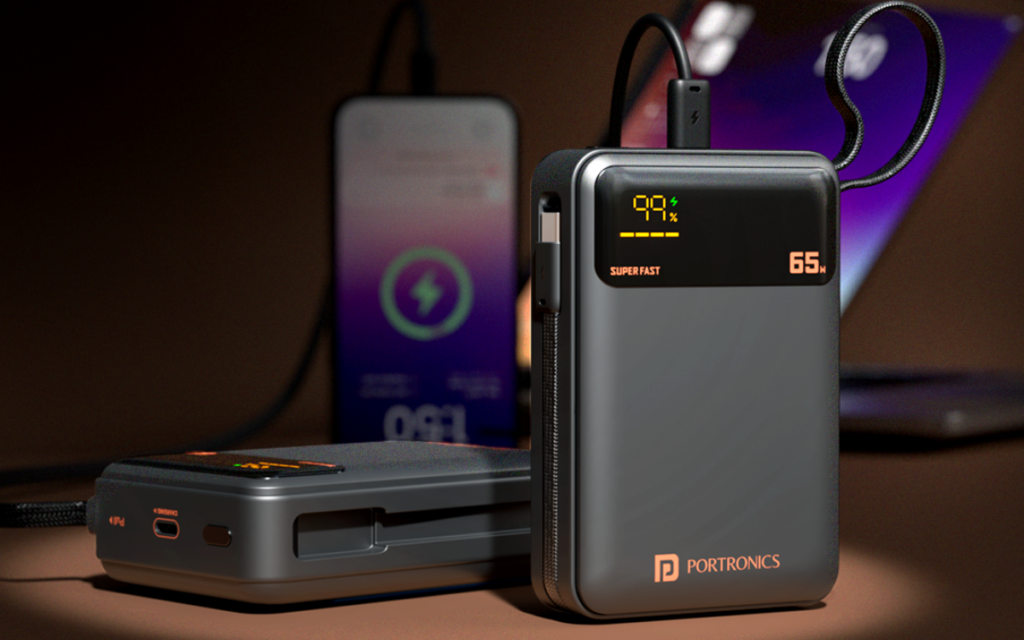
Portronics, a household name in the Indian accessories space, has launched its new high-performance power bank, the Ignis 65. The device features 65W fast charging through USB Type-C Power Delivery and carries a 20,000mAh battery.

Portronics Ignis 65 power bank

Pricing and Availability

It is priced at ₹2,049 ($22) and is now available in Black through the official Portronics website, Amazon, other leading e-commerce platforms, and authorised retail stores. The company provides a 12-month warranty with the product.

Portronics Ignis 65 Specifications

The Ignis 65 is designed to support a wide range of devices, including laptops, smartphones, tablets, and wearables. It can charge a MacBook Air from 0% to 50% in about 50 minutes, according to internal testing by Portronics. The power bank supports universal compatibility across major brands and device types through Type-C input and output.

Portronics has integrated a flat braided Type-C cable into the body of the power bank. This built-in cable supports up to 65W output and also functions as a lanyard for added convenience. It also features an LED digital display that shows real-time battery percentage and charging status, allowing users to monitor power levels easily.

The power bank has a compact and travel-friendly form factor, making it suitable for daily commuters, business users, and travelers. It is BIS certified and approved for air travel, which means it can be carried in cabin baggage. However, in-flight charging is not permitted under Indian regulations.

Portronics has included multiple safety features such as overcharge protection, short-circuit protection, advanced temperature control, and a fire-resistant casing. These features are aimed at ensuring user safety while maintaining high power delivery.

In related news, Portronics has recently launched the Adapto 100D desktop charger with 100W output and a smart power display, and also introduced the Beem 560, a budget smart projector offering up to 100 inches of FHD projection.

For more daily updates, please visit our News Section.

Stay ahead in tech! Join our Telegram community and sign up for our daily newsletter of top stories! 💡

Oppo’s upcoming flagship is not Find X9s, confirm reports

Earlier this week, images of what is rumored to be the Oppo Find X9s surfaced online. The images show the phone with four rear cameras, two of which are said to be 200MP sensors.

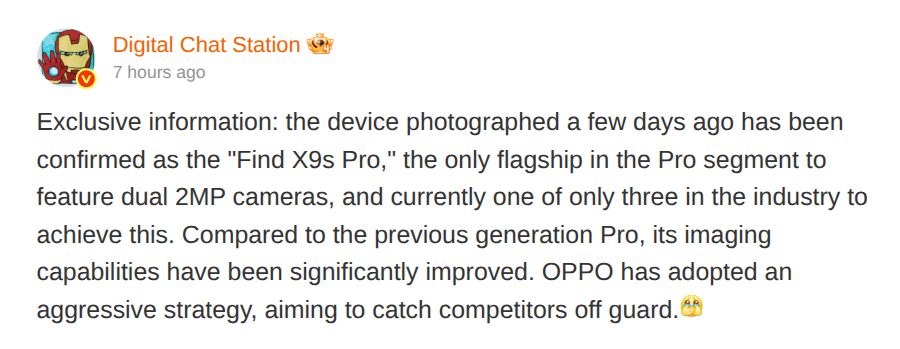
However, new rumors coming out of China suggest the device is not called the Find X9s, but rather the Find X9s Pro. Taking to Weibo, tipster Digital Chat Station confirmed that the device bears the name Oppo Find X9s Pro.

DCS notes that it is the only flagship with a “Pro” moniker to feature dual 200MP cameras. Another Weibo insider, WhyLab, also backs the claim regarding both the name and the camera specifications.

What’s interesting here is that the Find X9s Pro is said to be a compact flagship with a 6.3-inch display. So it’s not only the only Pro phone with two 200MP cameras, but also the only compact phone to offer dual 200MP cameras. And that’s not all—the rear setup also includes a 50MP ultrawide camera and a multispectral sensor.

Oppo is also expected to use another 50MP camera on the front for selfies and video calls.

What else do we know?

If you’re thinking that fitting larger sensors might require compromises in other areas, you may be glad to know that doesn’t seem to be the case. The Find X9s Pro is rumored to be powered by the flagship Dimensity 9500 chip and pack a large 7,000mAh battery. Charging specs are said to include 80W wired and 50W wireless charging.

It’s also likely to bring other flagship features, such as a 3D ultrasonic fingerprint sensor and full water resistance.

Oppo Find X9s

There are no hints yet about the launch timeline of the Find X9s Pro. It may debut alongside the Find X9 Ultra, which is expected to launch in March 2026.

For more daily updates, please visit our News Section.

Stay ahead in tech! Join our Telegram community and sign up for our daily newsletter of top stories.

(Source 1, 2)

Latest HyperOS 3 update brings UI & stability fixes for 11 Xiaomi devices

Xiaomi has begun rolling out an important HyperOS 3 update aimed at solving several nagging issues on a range of global devices. These models were facing various UI glitches, stability issues, and other connectivity bugs. The new update also addresses other problems related to the gaming mode, Bluetooth connectivity, and much more. So here are all the details.

Every eligible Xiaomi device that’s getting the HyperOS 3 update?

HyperOS 3.1 update
  • POCO X6 Pro 5G: Fixed a stubborn issue where users couldn’t play videos in the Hotstar app, restoring multimedia performance.
  • Redmi Note 14 5G and POCO M7 Pro 5G: Both devices saw severe system lag and hanging problems resolved, helping reduce stutters during everyday use.
  • Redmi 13, Redmi 13x and POCO M6: A key fix was delivered for NFC not functioning properly, making contactless payments and tag actions work again.
  • POCO X5 Pro 5G: Xiaomi patched a problem where the camera app sometimes froze, improving camera stability.
  • Redmi Note 13 Pro and POCO M6 Pro: The update resolved a Bluetooth toggle bug, allowing users to turn Bluetooth on/off without trouble.
  • Redmi Note 13: A critical stability issue that triggered random restarts was addressed.
  • Redmi Pad 2: Fixed a problem where no sound came from the speaker, restoring expected audio output on this tablet.

Other System-Wide Fixes

Beyond device-specific patches, the HyperOS 3.0 update addresses the black screen bug during Game Turbo sessions that affected multiple phones when gaming. It also polishes UI responsiveness, Bluetooth connectivity, NFC issues, and general system stability bugs that have been flagged by users globally. Keep in mind that Xiaomi is rolling these fixes out in batches, so it may take a little time before all eligible units receive the update.

For more daily updates, please visit our News Section.

Tech enthusiast? Get the latest news first! Follow our Telegram channel and subscribe to our free newsletter for your daily tech fix! ⚡

(Via)