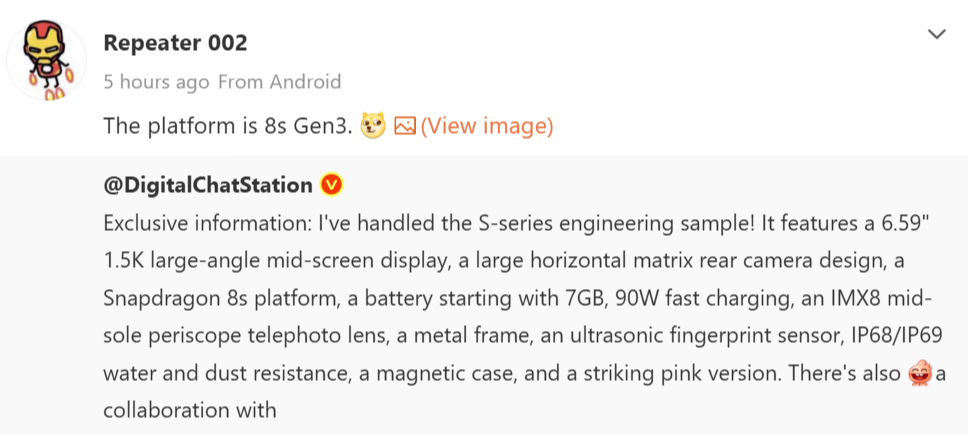
iQOO is getting ready to launch the iQOO 15 Ultra in early February, and early details suggest gaming will once again be a major focus. Among the headline features is a new take on shoulder controls.
Instead of traditional physical triggers, the iQOO 15 Ultra is expected to debut capacitive touch-based shoulder buttons, which iQOO refers to as “super-sensitive touch shoulder buttons.” These sit along the left and right edges of the display area and are designed to be used when the phone is held horizontally, allowing fingers to rest naturally during gameplay.
According to iQOO, the touch buttons support a 600Hz sampling rate, along with dual independent control chips to reduce input delay. There’s also an anti-sweat algorithm in place, aimed at maintaining accuracy during longer gaming sessions. Haptic feedback is handled by a linear motor, offering vibration cues without relying on moving parts, which also means no mechanical wear over time.
Popular FPS titles are expected to ship with built-in presets, while more advanced mapping options will be available for players who want to fine-tune controls or set up shortcuts.
Outside of the shoulder buttons, the iQOO 15 Ultra is shaping up to be a familiar high-end gaming flagship. It’s also tipped to feature an active cooling fan, a large 7400mAh battery, upgraded stereo speakers, and a 2K Samsung display. Camera hardware is also said to include a 50MP 3x periscope telephoto with CIPA 4.5 stabilization.
With its focus on alternative input methods and sustained performance, the iQOO 15 Ultra looks set to target serious mobile gamers once again. More official details should surface as the February launch gets closer.
Realme has confirmed that it will launch the realme Buds Clip in India on January 29, 2026. The Buds Clip is the company’s first clip-style true wireless earphone and was first introduced in global markets in November. In India, these earbuds will be launching alongside the Realme P4 Power.
The main highlight of the realme Buds Clip is its open-ear clip design. Unlike regular earbuds that sit inside the ear canal, the Buds Clip attaches around the outer ear. realme says this design offers a more breathable and pressure-free fit, which helps reduce ear fatigue during long listening sessions. Since the ear canal remains open, ambient sound can pass through naturally, allowing users to stay aware of their surroundings. This makes the earbuds suitable for office use, commuting, running, and other daily activities.
The earbuds are built using a titanium-fit wire that provides both flexibility and durability. Each earbud weighs 5.3 grams, making the overall design lightweight and comfortable for extended wear. realme is marketing the Buds Clip as a product that can be worn throughout the day without causing discomfort.
In terms of audio, the Buds Clip features intelligent bass tuning powered by realme’s NextBass Algorithm. This is designed to maintain bass depth despite the open-ear design. For calls, the earbuds use environmental noise reduction technology to improve voice clarity in different surroundings.
The Buds Clip supports tap controls for managing music playback and calls. It also includes AI-powered features such as real-time assistance and translation, adding smart functionality to everyday use. Battery performance is another key feature. The earbuds, along with the charging case, offer up to 36 hours of total playback time.
For more daily updates, please visit our News Section.
At the top of Xiaomi’s lineup, the 17 Ultra and 17 Pro Max may look similar, but they’re built with very different users in mind. One prioritizes advanced photography and feature depth, while the other focuses on endurance, practicality, and value. The real differences don’t show up in raw specs; they show up in daily use. This comparison highlights where each phone fits best and who should choose which.
Both phones lean premium, but they communicate it differently. The 17 Ultra focuses on a professional, camera-first identity with a rugged, confidence-inspiring finish that feels purpose-built rather than decorative. It subtly prioritizes durability and grip, making it feel like a tool meant for heavy daily use. The 17 Pro Max, by contrast, goes for a cleaner, more futuristic aesthetic. Its standout secondary rear display adds personality and practical flair, especially for notifications, widgets, and quick camera previews. The Pro Max feels more lifestyle-oriented, while the Ultra feels more workhorse-like.
Display Quality
Up front, both devices deliver an equally elite viewing experience with smooth adaptive refresh rates, excellent brightness, and strong HDR support. Content looks vibrant and controlled on both, with no meaningful compromise in color or clarity. The difference is in flexibility: the Pro Max’s rear display quietly changes how the phone is used day to day, while the Ultra keeps the focus entirely on the main screen.
Verdict
Choose the Ultra for a serious, utilitarian feel. Pick the Pro Max for visual flair and everyday convenience.
2. Specifications
Performance
Performance is effectively identical on both models. The same flagship chipset, modern architecture, and fast storage ensure smooth multitasking, reliable gaming, and long-term software confidence. Day-to-day use feels instant on either device, with no clear advantage in raw speed. The difference is more about how that performance is framed: the Ultra feels tuned for sustained, intensive workloads, while the Pro Max feels optimized for balanced, always-on responsiveness. Neither choice sacrifices longevity or future-proofing.
Battery and Charging
Battery strategy is where separation becomes clearer. The 17 Pro Max prioritizes endurance, comfortably suiting users who value long screen-on time and fewer charging interruptions. Its faster wired charging reinforces its “set and forget” appeal. The 17 Ultra counters with more flexible charging options, including broader reverse charging support, which adds utility for accessories and travel scenarios. It feels designed for versatility rather than outright capacity dominance.
Verdict
Power users who value endurance should lean toward Pro Max. Users who want flexibility and ecosystem convenience will prefer the Ultra.
3. Camera
Main and Secondary Lenses
The 17 Ultra is unmistakably the photography-first device. Its larger main sensor, advanced periscope system, and pro-grade extras make it more adaptable across lighting conditions and focal ranges. It feels built for enthusiasts who want consistent results without relying heavily on software correction. Zoom transitions are smoother, and creative control feels more deliberate. The 17 Pro Max still delivers excellent results, especially in everyday photography, but its camera setup feels more streamlined and less experimental. It favors reliability over ambition, which many users will appreciate.
Selfie Camera
Both phones offer high-resolution front cameras that handle detail and dynamic range well. The Pro Max gains a slight edge in focus reliability, while the Ultra emphasizes natural color tuning. Neither feels like a compromise, even for frequent video calls or content creation.
Verdict
Choose the Ultra for photography depth and flexibility. Choose the Pro Max for dependable, fuss-free imaging.
4. Pricing
The pricing difference plays a major role in positioning. The Xiaomi 17 Ultra launches at $999, clearly targeting users who want the brand’s most advanced camera system and feature-complete flagship experience. The higher price reflects its specialized hardware, satellite communication support, and photography-centric design philosophy. It feels aimed at enthusiasts who know exactly why they are paying extra.
The Xiaomi 17 Pro Max comes in at $899, undercutting the Ultra while delivering nearly identical performance, display quality, and a larger battery. That price gap makes it immediately appealing to users who want flagship power without committing to the most expensive tier. The inclusion of a secondary display further strengthens its value proposition, adding functionality rather than just specs.
Verdict
The Ultra justifies its cost through specialization. The Pro Max offers stronger overall value for most buyers.
5. Conclusion
Xiaomi 17 Ultra stands out with its advanced camera hardware, satellite communication, and accessory-friendly design touches. It feels engineered for users who treat their smartphone as a creative or professional tool.
The 17 Pro Max differentiates itself with its rear display, ultra-large battery focus, and strong value positioning. It feels more adaptable to everyday routines, blending innovation with practicality.
Verdict
Xiaomi 17 Ultra is best suited for photography enthusiasts, power users who rely on advanced connectivity, and buyers who want the most capable Xiaomi flagship available. Xiaomi 17 Pro Max is ideal for users who want top-tier performance, excellent battery life, and standout usability features at a lower price.
Neither device is the “wrong” choice; the decision comes down to whether specialization or balanced value matters more in daily use.
$1,299 down from $1,499, a straight $200 price cut, makes the Xiaomi 17 Ultra by Leica one of the most aggressive flagship deals currently available on Giztop. This flash deal is live for a limited time, with no coupon required and quantities expected to sell out quickly. Both global and express shipping options are available for global customers.
At this discounted price, the Xiaomi 17 Ultra sits comfortably in true ultra-flagship territory. It is powered by Qualcomm’s latest Snapdragon 8 Elite Gen 5 chipset, delivering top-tier performance for demanding users who expect smooth gaming, fast multitasking, and long-term software headroom. Paired with up to 16GB of RAM and up to 1TB of storage, this phone is clearly built for power users who do not want compromises.
The standout attraction is the Leica-engineered camera system. A massive 1-inch 50MP main sensor works alongside a 200MP telephoto lens capable of extreme focal lengths, giving the phone serious credentials for mobile photography and long-range zoom. Leica Summilux optics and tuning further elevate image quality, especially in low-light and high-contrast scenes.
Battery life is another major win. The 6800mAh battery easily supports heavy daily use, while 90W wired and 50W wireless charging keep downtime minimal.
This deal is ideal for users who want cutting-edge performance, elite mobile photography, and premium hardware. At $200 off, the Xiaomi 17 Ultra by Leica offers flagship value that is unlikely to last once the flash deal ends.
Motorola has introduced the moto watch powered by Polar in India, alongside the motorola signature smartphone. The device combines traditional watch aesthetics with modern smartwatch functionality through integration with Polar’s established wellness platform.
The smartwatch features an aluminum body with Corning Gorilla Glass 3 protection and a 1.4-inch circular OLED display supporting over 24 always-on watch faces. Users can choose from six variants including Matte Black and Matte Silver cases paired with stainless steel, vegan leather, or silicone straps in colors like PANTONE Volcanic Ash, Parachute Purple, Herbal Garden, and Mocha Mousse.
Durability comes via IP68 certification and 1ATM water resistance, suitable for daily wear and light water exposure.
Health Tracking Through Polar Integration
Motorola leverages Polar’s wellness platform for comprehensive health monitoring. The watch tracks workouts automatically, monitors heart rate continuously, and measures SpO₂ levels constantly. Sleep analysis includes Nightly ANS recharge insights. Dual-band GPS (L1/L5) enhances outdoor activity accuracy.
The sensor array includes accelerometer, gyroscope, PPG sensor, ambient light sensor, and e-compass. Onboard microphone and speaker enable additional functionality.
Battery and Technical Specifications
Battery endurance reaches 13 days under standard usage, dropping to seven days with always-on display enabled. Fast charging delivers full-day power in five minutes.
The 47mm diameter, 35-gram watch (excluding band) runs on Android 12 and above via Bluetooth 5.3 and BLE connectivity. Storage includes 512MB RAM and 4GB eMMC internal memory.
Pricing and Availability
The Moto Watch will go on sale starting January 30 at 12 PM via motorola.in and Flipkart. The silicone variants are priced at Rs. 5,999, while the stainless steel and leather options cost Rs. 6,999.
For more daily updates, please visit our News Section.
At first glance, Sony LinkBuds Clip and Bose Ultra Open Earbuds seem similar, both are open-ear, both avoid noise cancellation, and both target daily use. The real difference shows up after a few hours of wear. Sony leans toward effortless comfort and practicality, while Bose pushes sound quality and premium features. This comparison breaks down where each one actually makes more sense.
Sony LinkBuds Clip adopts a lightweight open-air clip design that hooks gently around the ear, prioritizing long-term comfort and breathability. At just 6.4 g per earbud, it feels almost weightless and works well for extended wear, especially during work or casual outdoor use. The IPX4 rating adds confidence for workouts or light rain. Bose Ultra Open Earbuds take a more premium approach with a flexible grip and sculpted open-ear frame. The materials feel more refined, and the fit is secure without creating pressure points, even during movement. Bose’s design leans more toward lifestyle and fashion, while Sony emphasizes practicality and minimalism.
Controls & Usability
Sony keeps things simple with onboard volume control, multipoint Bluetooth, and reliable touch responsiveness. Bose counters with intuitive gestures and deeper control via the Bose app, including EQ customization and immersive audio toggles. The app experience feels more polished overall.
Verdict
Sony’s feather-light build makes the LinkBuds Clip feel almost invisible over long sessions, which is exactly what open-ear users want first. Bose feels noticeably heavier and more premium, but that extra heft isn’t worth it if comfort is your priority. For most people who actually wear these earbuds all day, Sony wins decisively on comfort.
2. Sound Quality
Driver Performance, Bass, Mids, Highs
Sony’s 10 mm dynamic driver delivers clean mids and controlled highs, tuned for clarity rather than impact. Bass presence is modest, which suits spoken content, podcasts, and background music but may feel restrained for bass-heavy genres. Bose Ultra Open Earbuds sound noticeably fuller, with better low-end body and a wider soundstage. The open design still limits sub-bass depth, but Bose extracts more warmth and spatial depth from an open-ear format.
Codec Support & Audio Features
Both models support SBC and AAC, keeping codec support mainstream rather than audiophile-grade. Sony adds DSEE upscaling, subtly enhancing compressed tracks, while Bose leans heavily on Immersive Audio and spatial processing. Bose’s OpenAudio technology makes music feel more enveloping, even without isolation, giving it a more engaging presentation.
Verdict
Bose clearly takes the lead here. In an open-ear format, sound richness matters more than isolated punch, and Bose’s fuller, warmer profile delivers far more engaging audio than Sony’s thinner, balanced tuning. If music enjoyment is the main use case, Bose is the stronger choice.
3. ANC and Transparency Modes
Noise Cancellation Quality
Neither product offers traditional Active Noise Cancellation, which aligns with their open-ear philosophy. Sony LinkBuds Clip relies entirely on passive awareness, allowing environmental sounds to pass through naturally. Bose follows the same principle, choosing openness over isolation, though its acoustic shaping reduces harsh external noise slightly better in busy environments.
Ambient & Call Performance
Sony performs well for calls in quieter settings, with clear voice pickup but limited noise suppression outdoors. Bose handles calls more confidently in mixed environments, with better voice separation and consistency. Ambient awareness feels more natural on Sony, while Bose subtly balances awareness with audio focus, especially when Immersive Audio is enabled.
Verdict
Both skip traditional ANC, but Bose still manages a more refined awareness experience overall. Sony’s openness feels too raw in noisier environments, while Bose shapes environmental sound better without numbing awareness. For real-world listening around traffic or chatter, Bose feels more usable.
4. Battery and Connectivity
Battery Life & Fast Charging
Sony LinkBuds Clip delivers up to 9 hours of music playback, extending usability across a full workday without needing a recharge. Charging is straightforward, though fast-charge features are limited. Bose offers up to 7 hours of playback, dropping to around 4 hours with Immersive Audio enabled, but compensates with a strong charging case that significantly extends total usage time. Bose’s standby efficiency also stands out.
Bluetooth Stability and Multipoint
Both earbuds support Bluetooth multipoint and maintain stable connections within a 10 m range. Sony’s Bluetooth 5.3 implementation is reliable and power-efficient, while Bose’s connectivity feels equally stable but benefits from smoother device switching via its app ecosystem.
Verdict
Sony clearly beats Bose on pure battery life per charge, making it the smarter pick for long days away from a charger. Bose’s total playtime with the case closes the gap, but Sony’s efficiency and Bluetooth stability give it a practical edge that’s hard to ignore.
5. Pricing
At around $250, Sony LinkBuds Clip offers strong value for users seeking comfort, simplicity, and long battery life in an open-ear format. Bose Ultra Open Earbuds, priced closer to $300, justify the premium with superior sound immersion, app features, and design refinement. The price gap reflects experience rather than core functionality.
Sony’s price feels fair for what it delivers, comfort, simplicity, and excellent battery life. Bose feels a bit overpriced for what is essentially an open-ear experience with premium touches. If value is the priority, Sony wins; Bose is for those willing to pay extra for audio quality.
6. Conclusion
Sony stands out with ultra-light comfort, DSEE audio enhancement, and reliable all-day usability. Bose differentiates itself with Immersive Audio, richer sound tuning, and a more premium ecosystem experience. Both prioritize awareness and comfort over isolation, but approach the open-ear concept differently.
Verdict
For everyday use where comfort and long wearability matter most, Sony LinkBuds Clip feels like the smarter, more practical choice. However, if sound quality and a richer listening experience are higher priorities, Bose Ultra Open Earbuds justify their higher price. Most users who value audio engagement over comfort alone will lean towards Bose.
The Oppo Find X9 Ultra has recently been spotted taking photos while attached to its imaging kit. Finally, we’re getting a proper look at the flagship itself, courtesy of images published by SmartPrix.
We can see the Oppo Find X9 Ultra in black and a two-tone black-and-silver finish. Besides this, the phone is also said to be available in a vibrant orange variant. Unsurprisingly, there are some bold design choices on display here.
Oppo will reportedly sell the flagship in a classic all-glass version as well as finishes that mix glass, metal, and faux leather. The two-part back panel design is immediately noticeable, too.
The camera module is particularly bizarre
What I find particularly interesting, though, is the camera module. The circular housing spans almost the entire width of the smartphone and covers a large portion of the back panel. It looks genuinely massive by smartphone standards and unmistakably signals what this phone is all about.
This is a camera phone, after all. The Find X9 Ultra is said to feature a 200MP Sony LYT-901 sensor with a large f/1.5 aperture. There’s also a 50MP ultra-wide camera using Samsung’s JN5 sensor.
Rounding out the setup are two telephoto cameras: a 200MP OmniVision sensor with 3x optical zoom and a 50MP Sony LYT600 sensor offering 10x optical zoom, enabling up to 13.2x optical zoom overall.
On the specifications side, the Find X9 Ultra is expected to feature a 6.82-inch 2K flat AMOLED display with a 120Hz refresh rate.
Powering the device is Qualcomm’s Snapdragon 8 Elite Gen 5 chipset, paired with ColorOS 16 based on Android 16. Oppo is also reportedly fitting the phone with a large 7,300mAh battery.
As always with leaks, none of this is official yet. But all the leak points that Oppo Find X9 Ultra will be among the best camera phones of 2026.
For more daily updates, please visit our News Section.
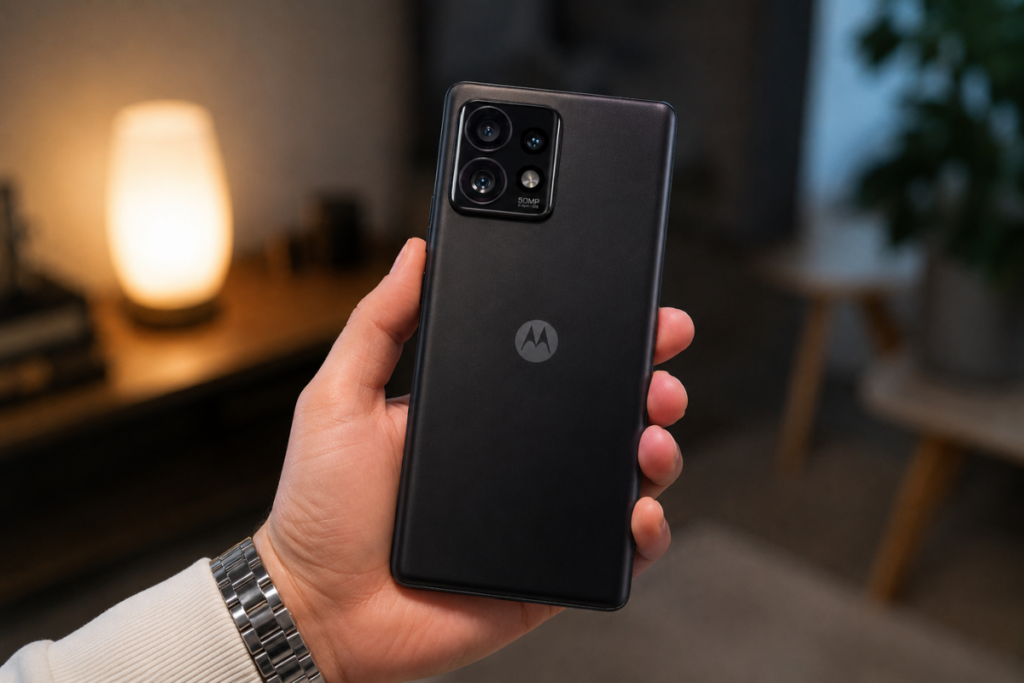
Motorola has launched the Signature smartphone in India, marking its entry into the premium flagship space with the new Signature series. First unveiled at CES 2026, the phone is just 6.99mm thick, making it one of the slimmest flagship smartphones available, while still delivering high-end hardware.
Motorola Signature feaatures
The body uses aircraft-grade aluminum with a quad-curved design. Despite the thin profile, Motorola didn’t skip on durability. The phone has IP68 and IP69 ratings for dust and water resistance, surviving submersion up to 1.5 meters for 30 minutes and high-pressure water jets. It also meets MIL-STD-810H military standards. Corning Gorilla Glass Victus 2 protects the front. Two color options are available: Martini Olive with a golden-green twill-inspired finish and Carbon with a navy blue linen texture, both curated by Pantone.
Motorola Signature
The camera system is the main attraction. Motorola claims this is the first phone with four 50MP cameras, earning a DXOMARK Gold Label. All sensors come from Sony’s LYTIA lineup. The main camera uses the 1/1.28-inch Sony LYT-828 sensor with f/1.6 aperture and OIS, Motorola’s largest sensor to date. It shoots 8K video at 30fps and 4K at 60fps with Dolby Vision support. The telephoto camera packs a 50MP periscope lens with the 1/1.56-inch Sony LYT-600 sensor, offering 3x optical zoom (71mm equivalent focal length) and 100x digital zoom through Super Zoom Pro. The ultrawide lens delivers a 122-degree field of view with autofocus and macro capabilities. Up front, the selfie camera uses the 1/2.93-inch Sony LYT-500 sensor with Quad Pixel technology and 4K video recording. Motorola’s AI Photo Enhancement Engine handles processing for noise reduction, color accuracy, and exposure.
The display measures 6.8 inches with 2780×1264 resolution. This AMOLED panel runs at up to 165Hz refresh rate and hits 6200 nits peak brightness. It supports Dolby Vision and carries Pantone validation.
Inside, the Snapdragon 8 Gen 5 processor runs on a 3nm process with CPU speeds reaching 3.8GHz, paired with an Adreno 840 GPU. RAM options include 12GB or 16GB of LPDDR5X, while storage comes in 256GB, 512GB, or 1TB configurations using UFS 4.1. A copper mesh liquid metal cooling system manages heat during gaming or video recording. Dual stereo speakers tuned by Bose support Dolby Atmos and Snapdragon Sound with aptX Lossless.
The battery capacity sits at 5200mAh using silicon-carbon technology, which offers higher energy density than standard lithium-ion cells. Charging tops out at 90W wired (Motorola claims a full day’s charge in 7 minutes), 50W wireless, and 10W reverse wireless charging.
Software arrives as Android 16 with a commitment to seven years of OS upgrades and security updates. The phone includes moto AI features with support for German, French, Polish, Romanian, Italian, and Japanese languages. Future updates will add white-glove assistance for travel and lifestyle services.
Additional features include an in-display ultrasonic fingerprint sensor, dual SIM support, USB Type-C with USB 3.2, Wi-Fi 7, Bluetooth 6.0, NFC, and 5G connectivity. The phone weighs 186 grams and measures 162.1 x 76.4 x 6.99mm.
Pricing, availability & offers
Pricing starts at Rs. 59,999 for 12GB RAM with 256GB storage, Rs. 64,999 for 16GB with 512GB, and Rs. 69,999 for 16GB with 1TB. Sales begin January 30 through Flipkart, motorola.in, and retail stores.
Motorola promotes this as India’s first smartphone with 24×7 concierge privileges covering travel, dining, wellness, lifestyle, and club access.
Launch offers include Rs. 5,000 discounts through HDFC and Axis banks, exchange bonuses up to Rs. 5,000 (Rs. 7,500 for select models), 12-month no-cost EMI, one year of Signature Club membership worth Rs. 20,000 with Rs. 6,000 complimentary credit on first use, up to Rs. 5,000 off on Moto watches, six months of Perplexity Pro, and free access to 10 premium OTT apps for six months (worth Rs. 15,000) with a Jio prepaid recharge of Rs. 1,199.
For more daily updates, please visit our News Section.
Choosing between the RedMagic 11 Air and the iQOO Z11 Turbo isn’t about raw power alone; it’s about what kind of flagship experience actually fits daily use. One phone is engineered around gaming endurance and sustained performance, while the other aims to balance speed, cameras, and battery life at a more aggressive price. Both target power users, but they approach that goal from very different angles. This comparison breaks down where each device feels more confident, more practical, and ultimately more rewarding, depending on how the phone is used beyond just benchmarks.
The RedMagic 11 Air leans heavily into its gaming identity, with RGB lighting, pressure-sensitive shoulder zones, and an active cooling fan that instantly signals performance intent. The aviation-grade aluminum frame and glass back give it a bold, mechanical feel that suits long gaming sessions. iQOO Z11 Turbo takes a more refined route, offering a cleaner design with stronger ingress protection and a more understated visual language. It feels more versatile in daily environments, blending premium materials with durability. The RedMagic design feels exciting and purpose-built, while iQOO’s approach feels calmer and more lifestyle-friendly, especially for users who want a flagship look without overt gamer aesthetics.
Display Quality
Both phones use high-refresh AMOLED panels, but their priorities differ. RedMagic focuses on ultra-stable brightness, smooth motion, and gaming-optimized touch response, creating a screen that feels tuned for speed and consistency. iQOO pushes display technology further with extremely high peak brightness, aggressive PWM dimming, and HDR emphasis, making it better suited for outdoor use and media consumption. The iQOO display feels more cinematic, while the RedMagic panel feels more controlled and predictable during intense gameplay.
Verdict
RedMagic wins for gaming-centric design and interaction, while iQOO leads in visual polish and everyday usability.
2. Specifications
Performance
RedMagic 11 Air is powered by Snapdragon 8 Elite, paired with an active cooling system that allows sustained peak performance. Long gaming sessions remain stable, with fewer thermal drops, giving it an edge for competitive players. iQOO Z11 Turbo runs on Snapdragon 8 Gen 5, which is slightly less aggressive but more balanced. Daily performance feels fluid and refined, with strong multitasking and efficient thermal behavior even without a fan. RedMagic feels unapologetically fast, while iQOO feels intelligently optimized for broader use cases.
Battery and Charging
iQOO Z11 Turbo takes the lead in battery capacity and charging versatility, combining large endurance with fast wired charging and reverse charging support. It feels built for long, interruption-free days. RedMagic counters with bypass charging, a feature gamers appreciate for reducing heat during extended play sessions. While charging speeds are competitive, RedMagic’s real strength is how it manages power under load. iQOO focuses on longevity and convenience, while RedMagic prioritizes performance stability.
Verdict
RedMagic excels in sustained performance, but iQOO delivers better all-day battery confidence and flexibility.
3. Camera
Main and Secondary Lenses
iQOO Z11 Turbo clearly positions itself as the stronger camera phone, led by a high-resolution main sensor with optical stabilization and enhanced color accuracy. Photos feel sharper, more detailed, and more versatile across lighting conditions. RedMagic’s camera setup is capable but secondary to its gaming mission, producing solid results without aiming to impress photography enthusiasts. Ultra-wide performance is similar on both, though iQOO’s processing delivers more consistent color and dynamic range. For users who frequently rely on their phone camera, iQOO feels more dependable.
Selfie Camera
The difference is more noticeable up front. iQOO’s traditional high-resolution selfie camera delivers sharper images and better video clarity. RedMagic’s under-display camera prioritizes uninterrupted visuals over image quality, which suits gamers and immersive content fans but sacrifices detail. The experience feels futuristic, but not photography-focused.
Verdict
iQOO Z11 Turbo is the clear winner for photography and video, while RedMagic treats cameras as a supporting feature.
4. Pricing
RedMagic 11 Air enters the market at approximately $500, positioning itself as a premium gaming-first smartphone with specialized hardware like active cooling and pressure-sensitive controls. The price reflects its niche focus and enthusiast appeal. iQOO Z11 Turbo, priced around $400, offers broader flagship-level features at a more aggressive value point. It delivers strong performance, superior cameras, a brighter display, and higher durability for less money.
RedMagic’s pricing makes sense for dedicated mobile gamers who value sustained performance over versatility. iQOO’s pricing feels more accessible, especially for users who want a powerful phone that performs well across photography, media, and daily tasks without paying extra for gaming-specific hardware.
Verdict
iQOO Z11 Turbo offers better overall value, while RedMagic justifies its higher price only for serious gaming enthusiasts.
Disclaimer: Prices are approximate and may vary based on country, region, and applicable taxes.
5. Conclusion
RedMagic 11 Air stands out with its built-in cooling fan, shoulder pressure controls, bypass charging, and bold gaming design. These features create a focused experience that feels purpose-built for long, demanding gaming sessions. iQOO Z11 Turbo differentiates itself with superior camera hardware, extreme display brightness, stronger water resistance, and a more balanced software experience. It feels engineered for versatility rather than specialization. RedMagic feels like a gaming console replacement, while iQOO feels like a well-rounded flagship designed to handle everything confidently.
Verdict
RedMagic 11 Air is the better choice for gamers who prioritize performance stability and immersive controls. iQOO Z11 Turbo is the smarter pick for users who want flagship power, excellent cameras, long battery life, and better value. The choice ultimately comes down to specialization versus balance.
Garmin just launched the Approach J1, a golf smartwatch built specifically for junior players. It’s now available worldwide and designed to fit smaller wrists with a slim, lightweight body.
The watch includes features that make sense for younger golfers. There’s a simplified display and a visual timer that shows the recommended pace of play. The tee-off guidance adjusts based on the player’s ability, and you can change the par to match their skill level. It also suggests which clubs to use and shows celebratory animations. Kids can record their scores directly on the watch, which then syncs to the Garmin Golf smartphone app. The device comes with over 43,000 golf courses already loaded.
The Approach J1 works for other activities too. It tracks walking, running, and cycling with GPS distance monitoring. Standard smartwatch features include a step counter, alarm clock, timer, and stopwatch.
The display is a 1.2-inch AMOLED touchscreen with 390 x 390 pixel resolution. You can turn on an always-on mode if you want. Battery life lasts up to 10 days in regular watch mode or 15 hours when using GPS.
Two color combinations are available: Blue/Black with a black ComfortFit textile strap and Silver/Purple with a purple ComfortFit textile strap.
Pricing & availability
The Approach J1 goes on sale January 23rd for $299.99 in the US, £309.99 in the UK, and €349.99 in Europe.
Gaming phones are no longer just about raw power, but they’re about how much performance you actually get for your money. The RedMagic 11 Air and ASUS ROG Phone 9 sit at opposite ends of that debate. One delivers flagship gaming hardware at an aggressively low price, while the other asks nearly double for polish, durability, and extras beyond pure performance.
On paper, they share the same elite chipset, but in real use, their priorities couldn’t be more different. This comparison looks past branding and price tags to answer a simple question: Does paying twice as much really make a gaming phone twice as good?
RedMagic 11 Air leans unapologetically into a gamer-first identity. RGB lighting, a visible cooling fan, and pressure-sensitive zones create a device that feels purpose-built for performance rather than subtlety. It looks aggressive and functional, appealing to users who want their phone to visually match high-end gaming hardware. The ROG Phone 9, by contrast, opts for a cleaner, more premium aesthetic. The Mini-LED matrix on the back adds customization without overwhelming the design, while full IP68 protection makes it feel more versatile for everyday use. Overall, RedMagic feels like a focused gaming tool, while the ROG Phone balances gaming flair with mainstream polish.
Display Quality
RedMagic’s AMOLED panel emphasizes resolution and sustained brightness, delivering a sharp, immersive look that benefits long gaming sessions. High PWM dimming also helps reduce eye strain over extended use. The ROG Phone 9 counters with a faster LTPO panel and a higher refresh ceiling, making scrolling and competitive gaming feel exceptionally fluid. HDR handling is more refined on the ROG, but RedMagic’s screen feels bolder and more striking in normal use.
Verdict
Winner: RedMagic 11 Air
RedMagic commits fully to the gaming aesthetic and delivers better immersion. ROG Phone 9 looks premium, but its safer design doesn’t justify costing nearly twice as much for gamers.
2. Specifications
Performance
Both phones run Qualcomm’s top-tier Snapdragon 8 Elite chipset, so raw performance is equally elite. Day-to-day speed, gaming frame rates, and multitasking feel effortless on either device. The difference lies in thermal philosophy. RedMagic’s built-in cooling fan and gaming-centric tuning allow it to sustain peak performance longer during heavy loads. ROG Phone 9 relies on passive cooling and software optimization, resulting in excellent stability but slightly more conservative thermal behavior. For prolonged gaming, RedMagic feels more relentless, while ROG delivers consistent performance with broader everyday appeal.
Battery and Charging
RedMagic’s larger battery paired with bypass charging makes it ideal for extended gaming sessions, reducing heat while plugged in. Fast wired charging further reinforces its play-all-day mentality. ROG Phone 9 offers solid endurance, faster everyday charging standards, and the added convenience of wireless charging, which suits a more lifestyle-oriented user. It feels more flexible, even if it doesn’t last quite as long under extreme gaming loads.
Verdict
Winner: RedMagic 11 Air
Same flagship chip, bigger battery, active cooling, and bypass charging at half the price. ROG Phone 9 performs well, but RedMagic simply extracts more value from the hardware.
3. Camera
Main and Secondary Lenses
The ROG Phone 9 clearly takes the lead in camera versatility. Its triple-camera setup, including a stabilized main sensor and a usable ultrawide, delivers more consistent results across lighting conditions. Video features such as higher-frame-rate 4K and HDR10+ give it an edge for creators. RedMagic’s dual-camera system is competent but clearly secondary to its gaming focus. Photos are sharp and reliable, yet the overall tuning feels more functional than expressive.
Selfie Camera
ROG Phone 9’s conventional front camera produces clearer selfies and better video quality, making it more suitable for streaming and calls. RedMagic’s under-display camera prioritizes uninterrupted screen immersion, which gamers may appreciate, but image quality takes a noticeable hit. It feels like a deliberate compromise rather than a weakness.
Verdict
Winner: ASUS ROG Phone 9
ROG Phone 9 clearly outclasses RedMagic in camera quality and video features. This is the only area where the price gap translates into a real advantage.
4. Pricing
Pricing is where the comparison becomes most dramatic. The RedMagic 11 Air lands around $500, positioning it as a performance bargain with flagship-level gaming hardware at nearly half the cost. The ASUS ROG Phone 9, priced close to $1,000, justifies its premium through better cameras, water resistance, wireless charging, and broader software refinement.
However, the performance gap does not scale with the price gap. RedMagic delivers most of the gaming experience at a significantly lower entry point, making its value proposition extremely strong. ROG Phone 9 feels more like a luxury gaming phone, excellent, but priced for enthusiasts who want everything, not just raw power.
Winner: RedMagic 11 Air
At around $500, RedMagic delivers flagship gaming performance. At $1,000, ROG Phone 9 offers refinements, not double the experience.
5. Conclusion
RedMagic 11 Air stands out with its active cooling fan, aggressive gaming design, ultra-high PWM dimming, and massive battery paired with bypass charging. It feels engineered for long, intense gaming sessions above all else. The ROG Phone 9 differentiates itself with IP68 protection, a versatile camera system, wireless charging, advanced audio support, and a polished ecosystem that fits both gaming and daily life seamlessly.
Overall Winner: RedMagic 11 Air
For gaming-focused buyers, RedMagic 11 Air makes more sense. ROG Phone 9, while significantly more expensive, offers a more rounded, premium experience that extends beyond gaming. The choice ultimately comes down to priorities, but the price gap makes RedMagic hard to ignore.
Garmin announced the tactix 8 Cerakote Edition, a tactical smartwatch targeting military personnel and outdoor professionals who need reliable gear in harsh conditions.
The 51mm watch has a 1.4-inch AMOLED display with sapphire lens protection and a titanium bezel. A built-in LED flashlight handles low-light situations. Battery life reaches 29 days in smartwatch mode, reducing how often users need to charge during long missions.
The Cerakote finish is this model’s main feature. Garmin applies the ceramic-polymer coating by spraying each watch and baking it to cure. The coating resists abrasion, corrosion, and chemicals. Over time, it develops a worn look that makes each watch slightly different. Available colors are slate gray and olive drab.
Tactical features include pack weight tracking for rucking and jumpmaster mode for HAHO, HALO, and static jumps. The screen displays two coordinate systems at once, like MGRS and latitude/longitude. Stealth Mode turns off wireless signals while still recording distance and biometric data without saving location. The watch works with night vision goggles and includes the Applied Ballistics Ultralight solver for shooting calculations.
The watch supports various activities beyond tactical use. It has a 40-meter dive rating for scuba and apnea diving. Training tools include strength plans, sport workouts, and real-time stamina tracking. Health monitoring covers Body Battery energy levels, Pulse Ox, and sleep detection including naps.
Navigation includes TopoActive maps with terrain contours, maps for thousands of golf courses and ski resorts, and a global aeronautical database. Users can navigate to waypoints or find the nearest airport. The watch uses multi-band GPS with SatIQ, a 3-axis compass, gyroscope, and barometric altimeter. When connected to Apple or Android phones, it handles calls, notifications, and Garmin Pay payments.
Pricing & availability
The tactix 8 Cerakote Edition will is available for priced $1,599.99 on the official Garmin US website. Regional availability might vary.
For more daily updates, please visit our News Section.
Honor has officially confirmed that it will be present at the MWC 2026 event, which will be held between March 2 and 5 in Barcelona, Spain. The brand has also revealed that it will showcase the Honor Robot Phone and the Magic V6 foldable. This means that the V6 is launching much earlier than the Magic V5v, which went official in July 2025. Meanwhile, the rumor mill continues to spill details about the V6. A screenshot shared by tipster Experience More reveals that the V6 may pack the largest battery ever seen on a foldable phone.
Honor Magic V6 battery reportedly certified by China’s 3C authority
Honor Magic V6 battery certified
According to the tipster, the Magic V6’s battery has already been certified by China’s 3C authority, with the top-end variant expected to feature a larger 7,000mAh rated dual-cell battery with a typical capacity of around 7,150mAh, which is more than 1,000mAh higher than its predecessor.
Other variants are tipped to pack a 6,700mAh rated battery with a typical capacity of about 6,850mAh. With this, Honor currently leads the market in battery capacity across multiple product categories.
A recent Weibo post by tipster DCS suggests that the Magic V6 will be one of the first foldable phones to feature the Snapdragon 8 Elite Gen 5 chipset. For photography, it may feature a 200-megapixel primary camera.
DCS also claims that the Honor Magic V6 will be slimmer and lighter than the previous generation, despite housing a bigger battery. For context, the Magic V5 measures 9.0mm and 4.2mm in the folded and unfolded states, respectively, and weighs around 222 grams.
The Honor Magic V6 will face competition from the Oppo Find N6, which is also expected to debut around the same time. The N6 is said to feature a Snapdragon 8 Elite Gen 5 chip, a 200-megapixel (main) + 50-megapixel (ultra-wide) + 50-megapixel (periscope telephoto) triple-camera setup, and a 6,000mAh+ battery.
For more daily updates, please visit our News Section.
Realme has officially launched the Realme Buds Air8 alongside the Realme Neo8 smartphone at its launch event on January 22. The earbuds are priced at 299 yuan (~$41), with a limited-time launch price of 269 yuan. Buyers who bundle them with the Realme Neo8 can get an even lower price of 239 yuan.
Realme Buds Air8 come in three stylish colors: Black, Gold, and Purple. They feature 55dB deep-sea active noise cancellation, covering up to 5000Hz, designed to reduce low- and mid-frequency noise more effectively. Realme also includes ANC and six-mic call noise reduction for clearer voice calls.
For audio, the earbuds use an 11mm + 6mm dual-driver setup and support Hi-Res Audio Wireless with the LHDC 5.0 lossless codec, focusing on detailed and layered sound. Gamers get a 45ms ultra-low latency mode, while smart features include AI real-time translation and AI call translation.
The Buds Air8 offer up to 58 hours of total battery life with the case (ANC off) and come with IP55 dust and water resistance, making them suitable for daily use.
Realme has officially launched the Realme Neo8 in China today, with sales starting immediately across all online and offline channels. Positioned as the final and most powerful flagship of the Neo series for 2026, the phone starts at 2399 yuan (~ $345), making it one of the most aggressive flagship launches this year.
Realme Neo8 is powered by the Qualcomm Snapdragon 8 Gen 5, paired with LPDDR5X RAM and UFS 4.1 storage. It features a strong gaming focus, backed by a high-airflow cooling system and the new GT Performance Engine. Realme confirms native 165Hz gameplay in over 30 popular titles, including major FPS games.
On the front, the phone uses an exclusive Samsung Sky Screen with a 165Hz refresh rate, extreme peak brightness, and advanced eye-protection features. The design stands out with a transparent RGB back panel, a metal frame, and customizable lighting effects.
The Neo8 packs a large 8000mAh battery with bypass charging support and wide fast-charging compatibility. Camera hardware includes a 50MP Sony OIS main camera and a 50MP periscope telephoto lens.
Running Realme UI 7.0, the Neo8 also offers top-tier durability with IP66, IP68, and IP69 ratings, ultrasonic fingerprint security, and flagship-grade audio and haptics.
SPECS:
Specification
Realme Neo8 Details
Model Name
realme Neo8
Launch Status
Official, available for purchase
Starting Price (China)
2399 yuan (~$343 USD)
Processor / Chipset
Qualcomm Snapdragon 8 Gen 5
GPU
Adreno GPU (Snapdragon 8 Gen 5)
Display Size & Type
Samsung Sky Screen (custom panel)
Refresh Rate
165Hz
Peak Brightness
Up to 6500 nits (local peak)
Touch Sampling Rate
3800Hz instantaneous
RAM & Storage
LPDDR5X RAM, UFS 4.1 storage
Battery Capacity
8000mAh
Charging Features
Bypass charging, UFCS / PD / PPS / QC support
Rear Camera Setup
50MP Sony IMX896 (OIS) + 50MP periscope
Optical Zoom
3.5× optical, 7× lossless
Max Digital Zoom
Up to 120×
Gaming Features
165Hz gaming, GT Performance Engine, PC Handheld Mode
OpenAI has set up a secret robotics lab in San Francisco focused on training robotic arms
The company is collecting massive amounts of human-operated data for household tasks
Full humanoid robots are not the priority yet, but groundwork is being laid
AI-generated image for representation only
OpenAI is quietly advancing into robotics, signaling that the long-anticipated “humanoid robot moment” may be closer than expected. While robotics is not yet part of OpenAI’s core mission, the company has been building early-stage capabilities behind the scenes.
In February 2025, OpenAI established a robotics lab in San Francisco. The lab has since expanded to more than four times its original size and now runs 24 hours a day. Around 100 data collectors and at least a dozen robotics engineers remotely operate robotic arms to generate training data.
The main focus is on low-cost robotic arms, not full humanoid robots. Workers use a 3D-printed controller called GELLO, which directly maps human hand movements to robotic arms. These robots are being trained on everyday tasks such as placing bread into a toaster and folding clothes.
OpenAI’s strategy relies on collecting large volumes of human-generated data, similar to how early language models were trained. Experts say the biggest challenge in robotics is not algorithms, but high-quality data.
A second robotics lab is planned in California, showing OpenAI’s long-term interest. While full humanoid robots remain a future goal, OpenAI is steadily preparing the foundation to get there.
Caviar has announced Aladdin, a custom concept robot that reimagines the Unitree G1 humanoid platform as a luxurious, culturally-inspired collectible. The robot combines high-end engineering with ornate design motifs drawn from Arab culture and Islamic art, presenting a unique fusion of robotics and craftsmanship.
The Aladdin project is not a mass-market release. Caviar intends it as a bespoke commission-only offering. Each unit will be customized with handcrafted ornamentation, including gold accents and precious stone inlays. The design references traditional Eastern attire such as the chapan and caftan, blending curved silhouettes and decorative flourishes to mimic ceremonial robes worn by historical Arab nobility.
The company has positioned Aladdin as the world’s first luxury humanoid robot. It runs on the Unitree G1 platform, which features 23 degrees of freedom, dynamic stabilization, advanced actuators, and a total height of 130 cm with a weight of around 35 kg. These specifications enable the robot to walk, gesture, and perform naturalistic movements. Caviar retains this engineering core while redesigning the outer body to reflect cultural heritage and symbolic elegance.
Caviar describes the project as a reinterpretation of the Aladdin myth from One Thousand and One Nights. Instead of a genie emerging from a lamp, Aladdin becomes a metaphor for artificial intelligence animating a machine. The robot is designed to evoke the idea of a digital-era hero, someone who draws power not from magic, but from intelligence and technological mastery.
The company also places a strong emphasis on personalization, involving buyers directly in the creative process. Buyers choose decorative motifs and symbolic elements, which Caviar’s designers and engineers then develop into a finished product, making each Aladdin robot a unique creation.
The Aladdin project expands Caviar’s portfolio beyond luxury electronics and into the realm of artistic robotics. The robot stands as a conceptual statement about the future of high-end technology and the role of culture in shaping machine aesthetics.
Caviar has not announced the price or production timeline. Both are available upon request.
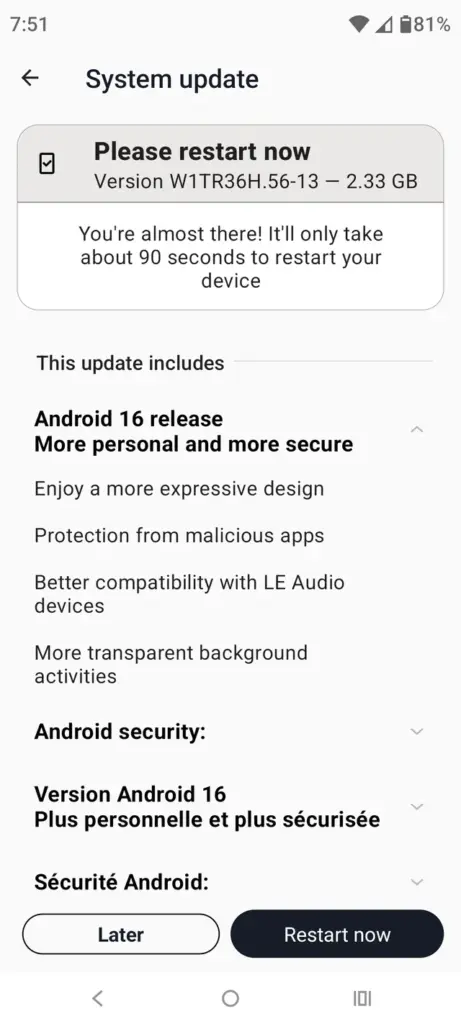
Vivo has been rolling out the Android 16 update since early November, and it has already reached dozens of eligible smartphones. The update comes with the OriginOS 6 skin at the top, which brings pretty significant upgrades and new features across the software.
Most of the eligible high-end devices are already running Android 16, and the update is now expanding to mid-range and cheaper models. Here, we’ve curated a list of Vivo and iQOO devices that have received the Android 16 update.
These Vivo, iQOO phones have received the Android 16 update
Vivo phones
Vivo X Fold 5
Vivo X Fold 3 Pro
Vivo X200
Vivo X200 Pro
Vivo X200 FE
Vivo X100
Vivo X100 Pro
Vivo X90
Vivo X90 Pro
Vivo V60e
Vivo V60 Lite 5G
Vivo V50
Vivo V50e
Vivo V40
Vivo V40 Pro
Vivo T4 Pro
Vivo T4 Ultra
iQOO phones
iQOO 13
iQOO 12
iQOO Neo 10
iQOO Neo 10R
iQOO Neo 9 Pro
Vivo has started rolling out Android 16 to these devices. However, note that the updates are usually released in batches, so it may take a couple of days to a few weeks to receive the update, even if your phone is on the list. To check for the latest update, go to Settings > System update.
There are still a bunch of Vivo phones waiting for the OriginOS 6 update. Vivo has promised that those devices will receive the update in the first half of this year, which means by the end of June 2026.
If you’re unsure about whether your Vivo or iQOO phone is eligible for the Android 16 update, check the official rollout schedule for clarity. If it’s there on the list, all you need to do is wait patiently for the update. Anyway, we’ll try to keep updating this list regularly so that you can revisit this page later for fresh information.
Remember to regularly visit the Android 16 section on Gizmochina to get the latest updates. Or, if you prefer your news instant and on-the-go, hop into our Telegram channel for rapid-fire software updates and all the biggest tech headlines.
Sony has introduced the LinkBuds Clip, a new addition to its open-ear audio lineup. The company announced the earbuds at a launch event in Europe. The LinkBuds Clip is priced at $229.99 and comes in four color options: Black, Taupe, Green, and Lavender.
Sony LinkBuds Clip Specifications
The earbuds use a C-shaped clip-on design that attaches to the outer ear. Sony says this structure provides a secure fit and all-day comfort. The open-ear design allows users to hear ambient sounds while listening to music or taking calls, making the earbuds suitable for daily commuting, workouts, or extended wear.
The LinkBuds Clip supports up to 9 hours of playback on a single charge. The charging case adds another 28 hours, bringing the total battery life to approximately 37 hours. It also supports fast charging, and a quick 3-minute charge gives users up to 1 hour of playback time. The earbuds support USB charging and feature an IPX4 water resistance rating.
Sony has equipped the LinkBuds Clip with AI-powered Voice Pickup Technology. The earbuds use dual microphones and a bone conduction sensor to isolate the user’s voice during calls. The company developed the noise reduction algorithm using AI training data from various voice and ambient sound samples.
The earbuds offer three tap-controlled listening modes, including Standard Mode for everyday use, Voice Boost for clearer speech in noisy environments, and Sound Leakage Reduction to limit audio spill in quiet spaces, along with Adaptive Volume Control and scene-based listening.
The LinkBuds Clip supports Bluetooth 5.3 and multipoint connectivity, allowing users to pair with two devices simultaneously. The earbuds are compatible with the Sound Connect app, which enables customization through a 10-band equalizer and tap control settings. The app also supports 360 Reality Audio and personalized sound tuning based on ear shape.
Sony says the LinkBuds Clip uses recycled plastics in both the earbuds and the charging case. The packaging does not include any plastic, aligning with the company’s sustainability goals.
OnePlus India CEO dismisses shutdown and “disintegration” claims
Rumours triggered by restructuring and reduced global activity
India remains a key market despite strategy changes
OnePlus India has strongly denied reports claiming that the company is shutting down or being dismantled. Robin Liu, CEO of OnePlus India, addressed the rumours on January 21, stating that all operations and business activities in India are running as normal. He described the circulating claims as false and misleading, urging people to rely only on official communication.
Where the Rumours Came From The controversy began after a report by a foreign tech outlet, Android Headlines, suggested that OnePlus was being gradually dismantled under parent company OPPO. The report cited internal restructuring, reduced teams, cancelled products, and centralised decision-making, which led to speculation about OnePlus’ future in several markets, including India.
Strategy Changes, Not a Shutdown OnePlus has been adjusting its product and business strategy to respond to market pressures. Upcoming devices are expected to focus more on performance rather than being all-around flagships. The company says these changes are strategic and do not indicate any plan to exit India.
Why the Rumours Spread So Fast The situation shows how quickly rumours can spiral in the tech industry. Quieter launches and restructuring are often mistaken for collapse, creating unnecessary panic. Despite the speculation, OnePlus India continues to operate normally and remains committed to the Indian market.
We use cookies on our website to give you the most relevant experience by remembering your preferences and repeat visits. By clicking “Accept”, you consent to the use of ALL the cookies.
This website uses cookies to improve your experience while you navigate through the website. Out of these, the cookies that are categorized as necessary are stored on your browser as they are essential for the working of basic functionalities of the website. We also use third-party cookies that help us analyze and understand how you use this website. These cookies will be stored in your browser only with your consent. You also have the option to opt-out of these cookies. But opting out of some of these cookies may affect your browsing experience.
Necessary cookies are absolutely essential for the website to function properly. This category only includes cookies that ensures basic functionalities and security features of the website. These cookies do not store any personal information.
Any cookies that may not be particularly necessary for the website to function and is used specifically to collect user personal data via analytics, ads, other embedded contents are termed as non-necessary cookies. It is mandatory to procure user consent prior to running these cookies on your website.