Advertisement

Teclast T40 Air tablet launched with 2K display, Android 13

Teclast recently launched the T50 Pro tablet in the global market with the MediaTek Helio G99 processor. And today the company has introduced another slate, dubbed Teclast T40 Air. The tablet brings a 10.4-inch IPS display with 2K resolution, a Unisoc Tiger T616 processor, and a dual rear camera setup. It looks like a good option for those looking for a budget-friendly tablet. Here are the details.

Teclast T40 Air featured

Teclast T40 Air Specifications and Pricing

Teclast T40 Air debuts as a compact tablet, featuring a sleek build and dual camera rings on the back. It gets even bezels on the fully-laminated display. The tablet comes with a thickness of 7.5 mm and weighs 450g. The 10.4-inch IPS LCD panel on the tablet outputs a 2,000 x 1,200 pixels resolution with a 60 Hz refresh rate, a 120 Hz touch sampling rate, and 350 nits peak brightness.

The Teclast tablet comes powered by a Unisoc T616 Octa-core Processor paired with Mali-G57 GPU at 750MHz. It offers 8GB RAM + 8GB Expansion and 256GB onboard storage that is expandable to 1TB via Micro SD. Teclast T40 Air packs a 7,200 mAh battery with support for 18 W wired charging.

Teclast T40 Air

For photography, the slate features a 13 MP AI dual rear camera with 8 MP front-facing cameras. However, you get optical image stabilization on either of the cameras. The tablet supports face unlock and comes with a proximity and light sensor. You can pair the device with a keyboard to make it more functional. On the software front, the Teclast T40 Air runs Android 13 out of the box.

Teclast is offering the tablet in a single grey finish. The T40 Air is available for €212.95 on the official website.

RELATED:

(Source) (Via)

Zebronics ZEB-EA122 22-inch LED monitor with 1680×1050 resolution launched in India for ₹4,699

Zebronics has introduced a new affordable HD+ monitor in the Indian market called the Zebronics ZEB-EA122. This is a 22-inch LED monitor under the brand’s Pixel Pure series.

Zebronics ZEB-EA122

The main attraction of this monitor is the bang for the buck you get. It is priced below Rs. 5000 and comes with a 22-inch LED screen with a native resolution of 1680×1050, making it sharper than the usual 1366 x 768 resolution monitors you find in this price range.

Zebronics ZEB-EA122

It also has 16:10 aspect ratio, which is preferred for office work, as well as a decent 250 nits maximum brightness. The monitor boasts a dynamic contrast ratio of 2000000:1 for better visual depth. It has a horizontal viewing angle of 140° and a vertical viewing angle of 110°. The monitor can show 16.7 million colors, so the colors are vibrant and accurate. With a response time of 5 ms, you can use it for casual gaming.

Connecting devices is simple with HDMI and VGA inputs. The monitor uses a maximum of 22 Watts of power. It has dimensions of 556 x 102 x 460 mm (With Base) and weighs 45 kg (with stand). You get a HDMI cable, and power cord in the package along with the base of the monitor.

Pricing & availability

Starting August 14th, you can buy the ZEBRONICS ZEB-EA122 monitor on Flipkart. During the initial period, it will be offered at a special launch price of Rs. 4,699, reduced from its regular price of Rs. 12,799.

RELATED:

Epic Showdown: Elon Musk vs. Mark Zuckerberg cage fight takes an ancient turn in Italy

In a surprising turn of events, the long-awaited cage fight between tech magnates Elon Musk and Mark Zuckerberg is set to unfold in the historic land of Italy. Musk, the maverick behind Tesla and SpaceX, and Zuckerberg, the brainchild behind Meta (formerly Facebook), have taken their feud to new heights, with an ancient twist that pays homage to the glory of Rome’s past.

The two tech moguls, known for their unrelenting ambition and audacious endeavors, have chosen Italy as the backdrop for their ultimate showdown. Conversations between Musk and Italy’s Prime Minister and Minister of Culture led to this unprecedented decision.

Musk took to his preferred platform, X (formerly Twitter), to share the monumental announcement. “The fight will be managed by my and Zuck’s foundations (not UFC). Livestream will be on this platform and Meta. Everything in the camera frame will be ancient Rome, so nothing modern at all,” Musk’s tweet declared.

The spectacle promises to be a blend of past and present, with the earnings from the event dedicated to supporting veterans. Both Musk and Zuckerberg have committed to preserving the heritage of Italy while settling their differences in the most unconventional manner.

However, the news doesn’t stop at the location and theme. Musk revealed details about his physical condition, hinting at possible delays. “Recovery will only take a few months,” he assured, shedding light on an unforeseen minor surgery he needs due to a shoulder issue.

As for Zuckerberg, his eagerness to step into the ring remains unshaken. Zuckerberg shared his anticipation on his own platform, Threads, stating, “I’m ready today. I suggested Aug 26 when he first challenged, but he hasn’t confirmed. Not holding my breath.”

The world watches with bated breath as these modern gladiators prepare for a battle of wits, strength, and determination, set against the majestic backdrop of Italy’s rich history.

Related:

(via)

TSMC led $3.8 billion venture strengthens European semiconductor industry, bolsters Taiwan-Europe ties

Taiwan’s strategic move to deepen ties with Europe comes in the form of a €3.5 billion (US$3.83 billion) investment by chip giant TSMC in Germany, aimed at fostering stronger engagement between the island nation and the European Union (EU). Amid mounting pressure from Beijing regarding its sovereignty, Taiwan seeks to bolster its diplomatic standing by cultivating relationships beyond its borders.

The TSMC investment not only underscores Taiwan’s commitment to Europe but also signifies goodwill in the face of diplomatic challenges. While the EU’s reluctance to pursue a Bilateral Investment Agreement (BIA) has been evident, Taiwan’s Economy Minister, Wang Mei-Hua, emphasized the potential for enhanced cooperation between the two entities.

Minister Wang drew parallels to the flourishing collaboration between Taiwan and the United States, citing recent agreements such as the ’21st Century’ trade initiative and measures to prevent double taxation. This TSMC venture, focusing on manufacturing less advanced chips for the automotive sector, is poised to further fortify bilateral relations with Europe.

Although the proposed German plant awaits Taiwan’s approval, its strategic alignment with Europe’s technological ambitions is anticipated to surmount any potential obstacles. This investment not only underscores Taiwan’s commitment to global economic partnerships but also signals its resilience in the face of geopolitical challenges.

source: TSMC

Amid TSMC’s autonomous investment choices, Taiwanese authorities have underlined the necessity for European nations to fortify relations with Taiwan to ensure sustained semiconductor collaboration. Taiwan’s persistent call for advancement on a Bilateral Investment Agreement (BIA) with the European Union (EU) remains unchanged.

What is the $3.83 Billion TSMC venture?

Technology giants TSMC, Bosch, Infineon, and NXP are collaborating to establish a groundbreaking joint venture aimed at advancing semiconductor manufacturing in Europe. The venture’s centerpiece is an ambitious fabrication facility (fab) projected to boast a monthly output of 40,000 300mm (12-inch) wafers.

Leveraging TSMC’s cutting-edge 28/22 nanometer planar CMOS and 16/12 nanometer FinFET process technology, this initiative is poised to bolster Europe’s semiconductor ecosystem while generating approximately 2,000 high-tech jobs. Construction is slated to commence in the latter half of 2024, with production anticipated to launch by the close of 2027.

TSMC’s commanding 70% ownership stake in the joint venture underscores its pivotal role, with Bosch, Infineon, and NXP each holding 10% equity (subject to regulatory nods). The substantial investment, exceeding 10 billion euros, will be sourced from equity injection, debt financing, and robust backing from the European Union and the German government. Operational reins will be in TSMC’s capable hands, propelling Europe’s technological prowess and fostering economic resilience.

Related:

(via)

Jabra Elite 8 Active, Elite 10 TWS Earbuds Renders And Key Features Leaked

Yesterday renders of the Bose QuietComfort Ultra and Ultra TWS surfaced online. Now, renders and key features of two new TWS earphones from Jabra have leaked giving us a look at the upcoming offerings. The TWS earbuds from the Danish brand are Elite 8 Active and Elite 10 Active. The former will likely succeed the Elite 7 Active. 

Jabra Elite 8 Active, Elite 10 renders and key features surface

Both the Jabra Elite 8 Active and Elite 10 are in-ear TWS earphones with silicon ear tips. Since the earbuds lack a stem, users will be able to perform various functions by tapping on the surface of the device. Both TWS earphones will come in various sizes of silicon ear tips. The leaked retail box of the Elite 8 Active reveal that the earbuds will be IP68-certified whereas the case will have an IP54 rating. It will also offer a secure-in-ear fit with Jabra ShakeGrip. 

The retail boxes of the Jabra Elite 8 Active and Elite 10 reveal that they will have hybrid active noise cancellation (ANC) and active noise cancellation support. The TWS earphones will feature voice assistant, Spotify Tap playback, and Google fast pairing. The Elite 10 is also tipped to pack Dolby Atmos support. The retail boxes also reveal that both earphones are made for iPhone.

As per the leaked renders, the Jabra Elite 8 Active will be offered in Black and Navy Blue colors whereas the Elite 10 will come in Black and Beige hues. 

The rest of the specifications of the Jabra Elite 8 Active and Elite 10 remain a mystery. We can expect the brand to announce the TWS earphones in the near future. 

Related: 

Via

MSI Titan GP68 HX With 240Hz Display, 13th Gen Intel Core Processor Launched In China

MSI has expanded its range of laptops in China. The latest offering from the Taiwanese brand is the MSI Titan GP68 HX. It is aimed at gamers who need a smooth and fast usage performance. The laptop is equipped with top-of-the-line hardware specifications along with other features like display and more. Read on to know the technical specifications of the Titan GP68 HX below. 

MSI Titan GP68 HX specifications and features

The MSI Titan GP68 HX boasts a large 16-inch display bearing a 2.5K resolution. It features a high 240Hz refresh rate for a smooth and blur-free gaming experience. There is also a 100 percent DCI-P3 color gamut. The laptop features a SteelSeries backlit keyboard with customizable RGB lighting and transparent WASD keys. 

The MSI Titan GP68 HX laptop features dual 2W stereo speakers and a 720p IR webcam. 

Under the hood, the MSI Titan GP68 HX is offered in two configurations – one with a 13th generation Intel Core i9 paired with 12GB NVIDIA GeForce RTX4060 GPU whereas the other variant has a 13th gen Core i7 coupled with 12GB RTX 4080. There is up to 16GB DDR5 RAM and 1T SSD storage. The machine is equipped with dual fans and six heat pipes for heat dissipation. 

The MSI Titan GP68 HX is backed by a 4-cell 90Wh battery with support for 330W charging. Connectivity options on the laptop include two USB 3.2 Gen2 Type-C ports, two USB-A ports, HDMI 2.1 port, WiFi, Bluetooth, and an Ethernet port. 

The MSI Titan GP68 HX starts at CNY 9,699 (~$1,340) for the Core i9 variant whereas the Core i7 model is priced at CNY 13,498 (~$1,865). Both variants are available for purchase from the brand’s website, JD.com, and TMall.

Related: 

Biden signs executive order restricting U.S. investments in High-Tech sectors in China

In a significant move aimed at safeguarding national security, U.S. President Joe Biden signed an executive order on Wednesday imposing restrictions on American investments in mainland China, Hong Kong, and Macao. The order, which targets high-tech sectors including artificial intelligence (AI), semiconductors, and quantum technology, has drawn criticism from China.

Under the executive order, U.S. individuals and entities are barred from engaging in “certain transactions” within the semiconductors and microelectronics, quantum information technologies, and AI sectors. The Treasury Department must be notified of such transactions. President Biden also declared a national emergency in response to the rapid technological advancements of “countries of concern,” which pose potential threats to U.S. national security.

The executive order permits the U.S. Treasury secretary to impose restrictions or outright prohibit American investments in Chinese entities operating in semiconductors and microelectronics, quantum information technologies, and specific artificial intelligence systems. This move reflects growing concerns about the strategic implications of sensitive technology transfer to potentially adversarial nations.

The primary objective of the order is to prevent American capital and expertise from inadvertently bolstering China’s military capabilities and undermining U.S. national security. Private equity, venture capital, joint ventures, and greenfield investments are all targeted under this measure.

China responded swiftly, expressing “grave concern” about the executive order and asserting its right to take countermeasures. The Chinese Commerce Ministry stated that the order disrupts normal business operations and decision-making processes of enterprises, thereby affecting the international economic and trade order.

While China has criticized the order, citing its negative impact on international economic cooperation, proponents argue that the action is necessary to prevent the unauthorized acquisition of critical technologies that could compromise U.S. security interests.

The signing of this executive order fulfills a long-awaited measure to address the challenges posed by the rapid development of high-tech sectors in countries deemed potential adversaries. It underscores the Biden administration’s commitment to safeguarding national security while navigating complex global technological dynamics.

The Treasury Department, in collaboration with other agencies including the Commerce Department, will oversee the implementation of the order. Public feedback is being sought to ensure a well-informed execution.

The Treasury Department clarified that the order aims to protect national security while upholding the U.S.’s commitment to open investment. Certain transactions, such as those involving publicly traded instruments and intra-company transfers from U.S. parents to subsidiaries, may be exempted.

This executive order represents a pivotal step in reshaping the U.S. approach to international technology investments and signals the administration’s determination to maintain its technological edge in strategic sectors.

Related:

(via)

Noise leads India’s smartwatch market with over a quarter market share

Popular wearables maker, Noise, is continuing to lead the smartwatch market in India. A new report found that the company holds over a quarter of the market share and saw sizeable growth in the second quarter of this year.

Noise saw a massive 90% YoY growth in Q2 2023

According to an IDC report, Noise has managed to regain the throne in India’s smartwatch market. The company had a sizeable market share of 27.6 percent, marking a huge 90 percent growth year on year. It saw a sizeable rise thanks to the robust growth of its smart wearable segment. Some of the notable products that helped include the Noise Colorfit Icon 2, Colorfit Icon Buzz, and Colorfit Pulse Go Buzz.

Noise

These models alone accounted for 39 percent of its total shipments. The report states that Noise saw a rise of 53.3 percent year on year in the first half of this year. During this time, it shipped 57.8 million units thanks to new launches, attractive designs, and innovative features. All of these contributed to an impressive 128.9 percent year on year growth within this category.

As per IDC, Noise is a great example of successful collaboration between Indian brands and ODMs (Original Design Manufacturers). Furthermore, the company was a notable player that contributed to the “Made in India” initiative. The company will likely see a successful second half this year as well as we get close to the holiday season.

RELATED:

Foldable Phones May Be Required To Comply With Google’s Specific Hardware Requirements

Samsung was the first to announce a foldable phone way back in 2019. In the last year, we have seen many foldable devices from brands like  OPPO, Motorola, and Huawei. Xiaomi also offers foldable devices but only limited to China. Foldable phones come with their advantages as well as drawbacks and brands have been improving these devices every year. The phones are expensive too making it a long-term investment for buyers and nobody wants them to get damaged. Now a new development seems to be a shining light for foldable phone enthusiasts. 

Foldable phones may have to comply with hardware requirements

At the heart of foldable phones, is a hinge mechanism. It allows the device to be opened and folded. The hinge is quite durable but like most things, it loses rigidity over a two to five-year period of time assuming that the user keeps using the device daily. 

Now coming to the main topic, Mishal Rahman revealed on his Patreon account (paywalled content) that Google will require hardware quality standards for the foldable phones. The search giant is planning to launch a foldable quality review process for brands. OEMs will have to complete a Google questionnaire and send sample devices to the platform holder for closer scrutiny. 

Brands often rate the number of folds for their devices. Google will require all foldable phones to last at least 200,000 folds and unfolds. This is in line with what Samsung claims for their Galaxy Z foldable. However, some brands like OPPO tout a larger hinge life for devices with 400,000 folds. This is quite high considering that 200,000 folds and unfolds would probably last for five years considering it is used 100 times a day. Rahman also added that foldable devices with a ‘torque hinge’ will require friction torque equal to at least 80% of the original torque after 200,000 folds/unfolds.

Google will also require OEMs to deliver two major OS updates and three years of security patches for foldable phones. This is kind of a letdown since the devices are quite expensive. 

There are no other major requirements like the usage of ultra-thin glass for foldable. Mandating the hinge and fold’s lifespan is a step in the right direction to ensure quality and that the foldable phones last for a long period.  

Related: 

Via

Tecno Pova 5 & Pova 5 Pro with 50MP dual camera, FHD+ 120Hz display unveiled in India, Check details

Earlier today, Tecno held a press event in India where it introduced the Pova 5 series smartphones. The brand has unveiled two smartphones in the series, namely, Tecno Pova 5 and Pova 5 Pro. The Pova 5 is a 4G smartphone, whereas the Pova 5 Pro comes with 5G connectivity. The smartphones also feature large FHD+ resolution displays with high refresh rate and large batteries with fast charging. Let’s look at the details.

Tecno Pova 5

Tecno Pova 5 & Pova 5 Pro specs

The Tecno Pova 5 Pro boasts a sizable 6.78-inch FHD+ display complete with a smooth 120Hz refresh rate, ensuring fluid visuals. Enhancing security, the device incorporates a side-facing fingerprint scanner. Photography enthusiasts will find interest in the dual-camera setup on the rear, featuring a 50-megapixel main sensor accompanied by an AI lens.

Tecno Pova 5 Pro

Under the hood, the Pova 5 Pro is powered by the Dimensity 6080 processor, complemented by a substantial 8GB of RAM and an additional 8GB of virtual RAM. The phone will come in 128GB and 256GB internal storage options. The device is supported by a robust 5,000mAh battery, with 68W fast charging capabilities for swift recharging. The smartphone also includes a 2,820mm² vapor chamber and a 12,979mm² heat dissipation area, ensuring effective temperature management during extended usage. It operates on Android 13-based HiOS 13.

A notable feature of the Pova 5 Pro is the dynamic RGB lighting-enabled Arc Interface situated on the rear panel. This distinctive design element lights up in various colors, enhancing the gaming experience, displaying charging status, and notifying users about incoming notifications.

Furthermore, the smartphone incorporates dual stereo speakers and a Z-axis linear motor to enhance tactile feedback. The Pova 5 Pro offers comprehensive connectivity options, including dual SIM support, 5G compatibility, Wi-Fi 802.11ac, Bluetooth, GPS, a USB-C port, and a 3.5mm audio jack.

On the other hand, the Pova 5 has a unique design that looks like robot armor on the back and is called Turbor Mecha. Specs-wise, the Tecno Pova 5 features a substantial 6.78-inch IPS LCD with a 120Hz refresh rate and a 240Hz touch sampling rate.

Tecno Pova 5

Driven by a mid-range Helio G99 SoC and 8GB of RAM, the device will also be available with 128GB and 256GB storage options. Notably, the device is equipped with a massive 6,000mAh battery, complemented by 45W fast charging and even supporting 10W reverse charging. Photography enthusiasts can enjoy a 50MP rear camera alongside a depth sensor. For selfies, an 8MP front camera is provided.

Price & availability

The Tecno Pova 5 is available in Hurricane Blue, Amber Gold, and Mecha Black color choices, while the Pova 5 Pro offers Silver Fantasy and Dark Illusion options. Currently, Tecno hasn’t revealed the prices for these models in India. However, we can anticipate that this information will be disclosed on August 14.

RELATED:

(Source 1, 2)

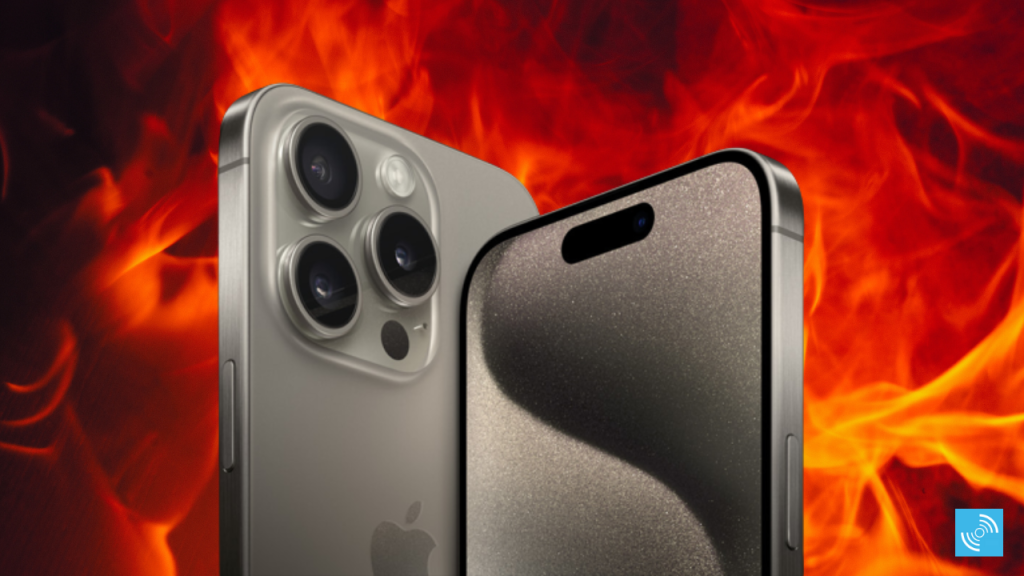
Apple iPhone’s Emergency SOS Via Satellite feature helps Hawaiian family escapes Maui wildfires

A family trapped in the horrific Maui wildfires has been rescued thanks to the Apple iPhone’s Emergency SOS via Satellite functionality. The Hawaiian island of Maui had gone up in flames as a result of wildfires decimating whole neighborhoods. The family of five was in their car when they suddenly saw themselves surrounded by flames. The only option for calling emergency services was via the iPhone feature, as network service was absent at the time.

The news was first reported in X (formerly Twitter) by Michael J. Miraflor. Thankfully, all five members of the family were rescued within 30-40 minutes. Mr. Miraflor also shared screenshots of the conversation with Emergency Services. This is another feature that is available on the iPhone Emergency SOS via Satellite. You have the option of sharing the conversation with your emergency contacts and letting them know what the situation is.

The iPhone 14 lineup heralded the Emergency SOS via Satellite feature. It is free for the first two years after activation. When the feature is activated, the user gets to answer a few questions about the emergency while the phone is connecting to the satellites. Once the satellite connection has been established, the signal is sent out to relay centers and subsequently routed to the appropriate Emergency Service Provider.

The Emergency SOS via Satellite feature currently works in the US, Canada, Austria, Belgium, Germany, France, Luxembourg, the UK, and Portugal. The feature is not supported in iPhone 14 models purchased in mainland China, Hong Kong, and Macau. This is also applicable even when the user travels to a country where the facility is supported.

It is just another layer of safety and protection offered by Apple with its tech products. It is expected that the Emergency SOS via Satellite feature will ultimately be cheap for users during natural disasters or other emergencies. Apple is already preparing to announce the iPhone 15 series and we expect some additions to the SOS via satellite functionality.

RELATED:

Audi Exec: Chip shortage to persist for years for Germany’s car industry

In recent years, semiconductor shortages have impacted various industries across the globe including the automobile market. And according to an Audi executive, the shortages of chips will likely continue for more years in Germany.

Semiconductor shortage woes continue

A senior Audi manager stated that the chip shortage issue has created a bottleneck in Germany’s automobile industry. He adds that the issue will take years to deal with. For those unaware, the global chip shortage issue first began between 2018 and 2019, quickly engulfing various industries. The dire situation at the time had even led to automobile production being completely halted in certain parts of Europe.

Audio Germany
Image via Reuters

Meanwhile, German carmakers and other electronics manufacturers have been severely impacted with production facing delays. These shortages are being faced across the globe so executives and policymakers are seeking to reduce their reliance on Asian and US chipmakers. At the moment, Germany has brought TSMC (the world’s largest contract chipmaker) over with billions of euros in subsidies. On the other hand, Intel also announced that it will be setting up a semiconductor factory in the region. Apart from Germany, the Taiwanese chipmaker is also expanding in Japan and the US.

But despite billions of dollars in investments, the shortage will still take years to alleviate, as per Renate Vachenauer, head of procurement at Audi. The senior official further added that automobile companies could help to ease these supply issues by using different chips. As of right now, the German market deals in around 8,000 different types of semiconductors for vehicles on the road. She added that “We have to use many levers to stabilize the supply of semiconductors and also stock up on the broker market to some extent.”

RELATED:

(Via)

Geely set to launch Geometry E Firefly Electric SUV in August: Features and specifications

Geely Geometry is set to electrify the market with its upcoming release, the Geometry E Firefly pure electric SUV, slated for a mid-August launch. This visionary 5-seater SUV boasts a captivating blend of form and function, adorned with cutting-edge features. Geely Geometry, simply known as Geometry, is a car marque created by the Chinese car company Geely in April 2019. The Geely Geometry brand is mainly focused on the development of electric vehicles or NEVs.

Drawing inspiration from the elegance of natural plants, the Geometry E Firefly showcases a revolutionary design concept. Three enchanting colors—jasmine white, mint green, and cherry blossom pink—grace its exterior, harmonizing with the twilight white, azurite, and cloud pink interior themes.

At the front, the vehicle integrates LED headlights, accompanied by a diverse array of light patterns. The car’s rear exudes a technological allure, marked by firefly LED taillights and a sporty double tail reminiscent of firefly wings.

Inside, the vehicle comes with a gear-equipped cabin, complete with dual screens and an electric sunroof, creating an atmosphere of modern luxury. Geely’s upcoming release, the Geometry E Firefly pure electric SUV, offers an interior brimming with innovative features. The central control area showcases a distinctive A0-level gear paired with dual 10.25-inch high-definition screens, seamlessly integrating control switches. Notably, the vehicle employs a user-friendly “non-inductive” start system, streamlining the start-up process.

The driving experience is elevated with a 6-way adjustable main driving position, while standard features like rearview mirror heating and rear defogging ensure all-around convenience. Additional enhancements include Bluetooth keys, parking comfort mode, and an electric sunroof.

Prioritizing the environment, the SUV incorporates baby-grade ecological materials for its seats and boasts a CN95-level air-conditioning filter combined with a fresh air system. Maintaining its sleek proportions, the Geometry E Firefly measures 4006/1765/1550 mm in length, width, and height, respectively, with a 2485 mm wheelbase. The standard 16-inch aluminum alloy rims add a touch of elegance.

The vehicle’s efficient charging capabilities are also noteworthy. Equipped with a maximum DC 52kW fast charge, it achieves an impressive fast charge time of ≤30 minutes (SOC30-80%). The series-standard 6.6kW charger supports an external discharge function of up to 3.3KW.

As anticipation builds, the Geometry E Firefly is poised to captivate the market, offering an eco-conscious and technologically advanced driving experience. With an official guide price ranging from 79,800 to 103,800 yuan, Geely’s foray into the electric SUV segment is set to make waves.

Related:

(via)

Vifa to launch the world’s first ChatGPT-powered speaker on August 17

Vifa is all set to launch the world’s first ChatGPT-powered speaker, ChatMini, on August 17th. It is a compact and portable speaker that incorporates Baidu’s “Wenxin Yiyan” chatbot capability alongside ChatGPT. This combo of dual AI chatbot allows ChatMini to have more dynamic and diverse conversations with users, meeting their wide range of needs.

In addition to its conversational capabilities, ChatMini can provide comfort, encouragement, and advice to users based on their emotional state. It can create poems, lyrics, articles, and other content that is tailored to users’ interests and hobbies. ChatMini can also play games, administer quizzes, and answer questions, making it a versatile and entertaining companion.

The smart speaker was jointly developed by Vifa and National Photovoltaic Appliances. It features Vifa’s signature sound quality and National Photovoltaic Appliances’ cutting-edge technology. For those unaware, Vifa is a Danish audio brand that was founded in 1933, and their products range from speakers to audio systems to acoustic solutions.  

Vifa’s ChatMini is a major step forward for the company in the AI speaker market. As the world’s first dual AI smart speaker with ChatGPT and Baidu’s “Wenxin Yiyan”, ChatMini is said to offer users a more intelligent interaction and communication experience. ChatMini will be officially released in the United States on August 17th at a price of $259 (about 1,800 RMB).

Related:

Baidu, ByteDance, Tencent, and Alibaba Purchase Hundreds of Thousands of Nvidia Cards Worth $5 Billion

Artificial intelligence technologies are taking the internet by storm. Almost every day, a company announces plans to create their own AI model or to integrate an existing chatbot like ChatGPT into their services. For now, “western brands” like OpenAI, Google, and Microsoft are leading the race, but Chinese companies are not far behind. Recent news shows that Chinese tech giants have ordered $5 billion worth of generative AI chips from Nvidia. Here are the details…

Chinese Tech Giants Invest $5 Billion in Nvidia AI Chips

No matter which side you’re on, one thing is clear: China is home to some of the world’s biggest tech companies. We see these brands in many parts of our lives. For example, even in my house, I have products like the Xiaomi robot vacuum and Huawei modem. Of course, some of these brands are also involved in trending areas like artificial intelligence.

China’s tech giants, including Baidu, ByteDance, Tencent, and Alibaba, have initiated orders with Nvidia for $5 billion worth of chips to construct generative artificial intelligence systems. Some of you might wonder what Nvidia has to do with this. Even though many of us know Nvidia for its RTX series graphics cards, the company is very experienced in artificial intelligence.

They make technologies like the A800 processor that can handle AI tasks. You can see examples of this in the technology used in the GeForce RTX series cards. For example, if you download Nvidia Studio on your computer, you can get AI features like changing the background and noise cancellation.

The Chinese tech companies mentioned above have placed an order with Nvidia worth about $1 billion. They will produce and deliver about 100,000 units of Nvidia’s A800 processor by the end of the year. Also, these companies bought graphics processing units worth $4 billion, and they plan to ship these units in 2024.

Nvidia’s A800 processors are a line of professional graphics cards that were launched in November 2022. They are based on the GA100 graphics processor and are designed for high-performance computing and artificial intelligence applications. The A800 processors offer a number of features that make them well-suited for these demanding workloads.

The A800 processors have 6912 CUDA cores, which is more than any other professional graphics card on the market. This allows them to handle complex computational tasks with ease. This processors also have 80GB of HBM2e memory, which is more than enough for even the most demanding AI applications. Moreover, the A800 have a 400GB/s interconnect, which allows them to communicate with other GPUs and CPUs quickly and efficiently.

RELATED:

(Source/via)

Redmi K60 Ultra officially teased to come with 24GB RAM & 1TB storage, design revealed

On August 14, Xiaomi will be hosting a launch event for the Xiaomi Mix Fold 3 smartphone. Along with the foldable, the brand will also be debuting the Redmi K60 Ultra, according to a recent Weibo teaser.

The teaser has revealed a bunch of information about the smartphone like its design, display details, and storage configuration. Starting with the design, multiple images shared by the brand reveal that the device has a flat frame with slightly curved corners. This is usually done to provide a comfortable feel while gripping the smartphone. The back has a square-shaped camera island with two large cutouts and a small one to the side, making for a total of three cameras.

The teasers confirm that the device will have a 144Hz 1.5K display, boasting a peak brightness of up to 2600 nits and utilizing 2880Hz ultra-high Frequency PWM dimming. Additionally, another teaser revealed that the device will offer options for up to 24 GB of LDDR5x RAM and up to 1 TB of UFS 4.0 storage. Furthermore, the smartphone will come with IP68 water resistance, indicating its ability to withstand submersion in water up to 1.5 meters deep for approximately 30 minutes.

Previous teasers have revealed that the smartphone will be powered by a MediaTek Dimensity 9200+ processor achieving a score of over 1.77 million points on AnTuTu.

RELATED:

(Source 1, 2)

GTA 6 has reportedly been in development for nearly a decade

Grand Theft Auto 6 is shaping up to be one of the biggest gaming releases in recent times. Rockstar Games’ sequel to the massively successful GTA 5 has been rumored to be in active development with a launch that is not too far away. But while the footage that confirmed GTA 6’s development surfaced relatively recently, it appears that actual work has been going on for a while now behind closed curtains.

GTA 6 could launch sometime in 2024

In the past, Rockstar Games began development on sequels soon after the current titles dropped. GTA 4 entered pre-production in 2004 as GTA San Andreas dropped, while work on GTA 5 began soon after GTA 4 dropped back in 2008. It appears that Take-Two Interactive followed the same process for the upcoming GTA 6 as well.

GTA 6 Development

According to former Rockstar Research Video Editor Jon Young, he began working on Grand Theft Auto 6 over a three-year period that ended in 2018. If this information is true, then Rockstar Games has been working on the highly anticipated game for nearly a decade. Notably, GTA 6 isn’t alone as the studio is reportedly working on two new games from the Bully franchise.

Bully 2 was apparently in development before eventually being canceled. But it seems that the franchise wasn’t put on ice completely. During its Take-Two’s recent earnings call, Grand Theft Auto 6 is expected to launch sometime next year. However, the launch date has yet to be officially confirmed. So stick around for more updates.

RELATED:

(Via)

Infinix INBook X3 Slim To Launch In India On August 22, Flipkart Listing Reveals Key Specs

Infinix recently announced that it will launch the Zero 30 5G smartphone in India by the end of this month. Now, the brand is set to expand its laptop portfolio with a new offering. The upcoming laptop is called the Infinix INbook X3 Slim. As the name suggests, it will arrive as the successor to the Infinix X2 Slim that debuted not too long ago. Read on to know the launch date as well as key details of the upcoming INbook X3 Slim that have been revealed by Infinix. 

Infinix INbook X3 Slim launch date, key specs revealed in India

The Infinix INbook X3 Slim laptop will debut in India on August 22 at 12 pm local time. Flipkart has put up a dedicated microsite (only visible on m-app) of the device confirming its availability from the e-commerce platform. The listing also reveals the key specifications of the upcoming offering. 

As per the microsite, the Infinix INbook X3 Slim has nearly identical specifications as the X2 Slim apart from the upgraded hardware. It retains the same dimensions with a 14.8mm thinness and 1.24kg weight. The lid of the laptop has a dual-tone finish and it sports an aluminium alloy metal chassis. The INbook X3 Slim will feature a 14-inch display bearing an FHD resolution and a 300 nits peak brightness. 

The Infinix INbook X3 Slim will come with a dual star-light flash camera for better quality during video calls. It will feature a backlit keyboard. The laptop will be equipped with dual stereo speakers tuned by DTS. 

Under the hood, the Infinix INbook X3 Slim will be powered by the upgraded 12th generation Intel Core processor with a max frequency of up to 4.4GHz. Users will get the option to choose from Core i3, i5, and i7. The device will pack up to 16G RAM and 1T SSD storage. It will be backed by a 50Wh battery unit with support for 65W fast charging via USB-C port. The laptop will ship with a pre-installed Windows 11 OS. 

The Infinix INbook X3 Slim will be available in Red, Silver, and Blue color options. 

Related: 

Sharp 25.3″ and 13.3″ color E-Ink electronic posters (ePoster) announced

Sharp has announced the launch of its new series of color E-ink electronic posters, named EP-C251 and EP-C131, measuring 25.3-inch and 13.3-inch respectively. These innovative posters, referred to as “ePoster,” are aimed at the electronic posters and signage market, and can be easily updated via mobile devices.

Sharp 25.3/13.3-inch ePoster specifications:

The new series of electronic posters offers enhanced functionality and flexibility, as they are designed with E-Ink panels that deliver different resolutions for the two models. The EP-C251 comes with a resolution of 3200×1800, while the EP-C131 offers 1600×1200 resolution. Both models are equipped with 8GB of internal storage and USB-C ports, supporting Wi-Fi connectivity, which will allow for easier content management and updates.

Content changes can be made through a USB or smartphone, providing versatility to users. In addition to this, Sharp will provide a proprietary content distribution system called “e-Signage S,” which will enable batch operations. This feature is likely to make the electronic posters an attractive option for businesses looking to manage multiple displays simultaneously.

The electronic poster technology is not entirely new, as E Ink previously introduced a 25.3-inch color electronic paper sign in 2021. This used Spectra 3100 four-color electronic paper technology, employing black, white, red, and yellow ink particles. The tech ensured high contrast and saturation, allowing for the display of vivid images and information. Sharp’s new products seem to be a continuation of this technology, bringing improvements and additional functionalities. Even Sharp also announced Sharp 42-inch ePaper back in April.

Both models of Sharp’s color E-ink electronic posters will become available starting in September. The pricing details have not yet been announced but could play a crucial role in determining the success of these products in the market.

RELATED: