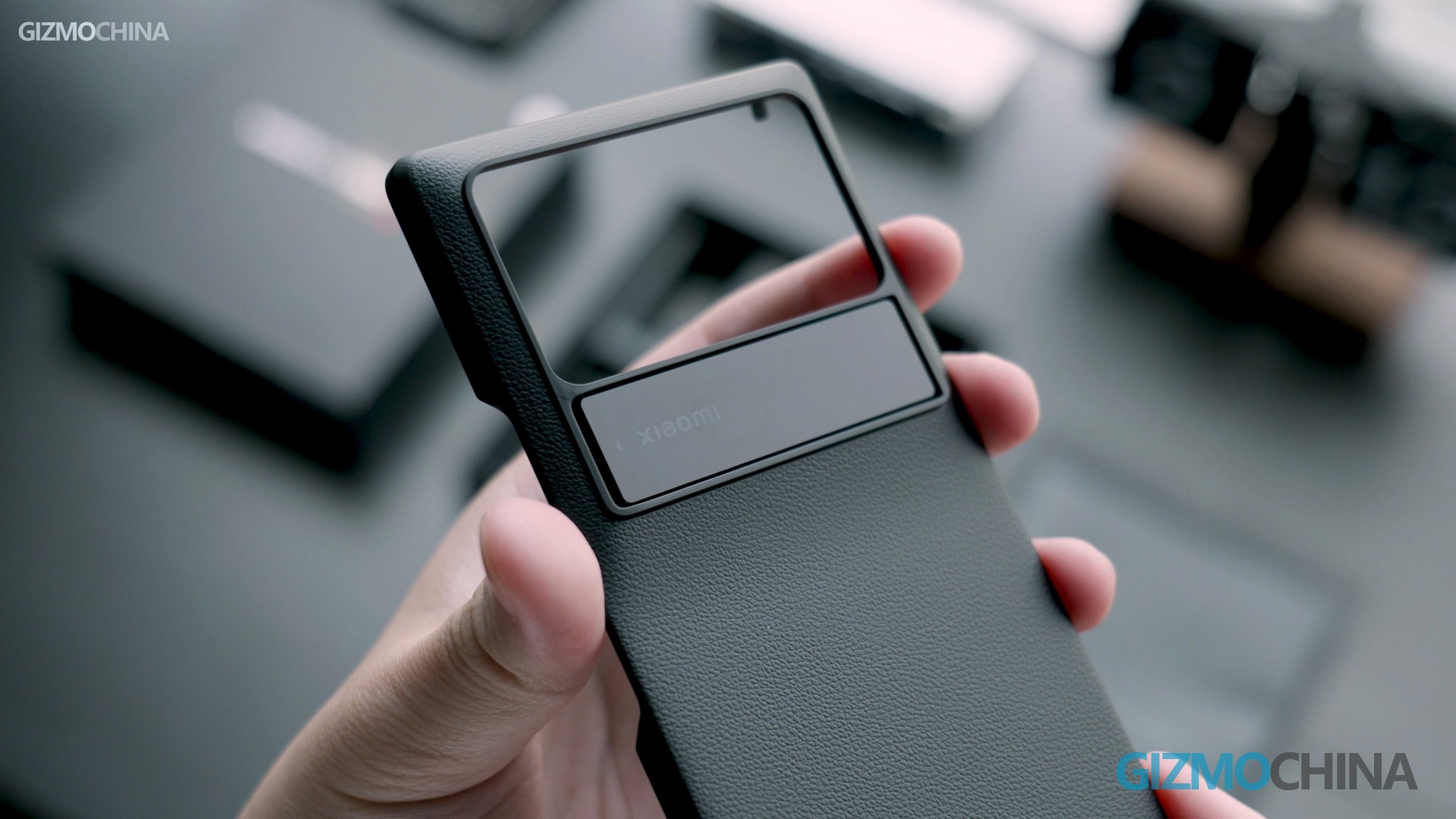
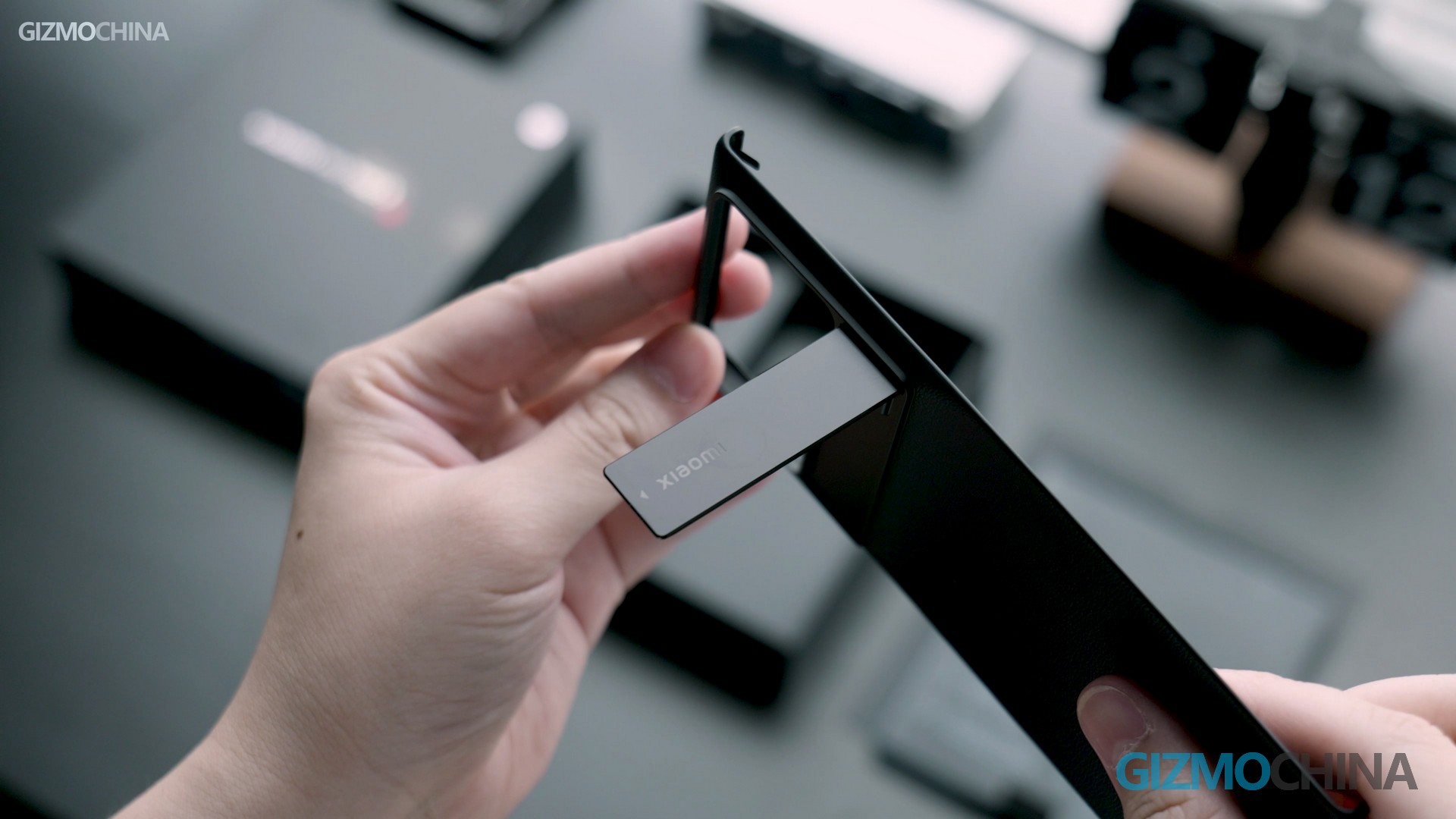
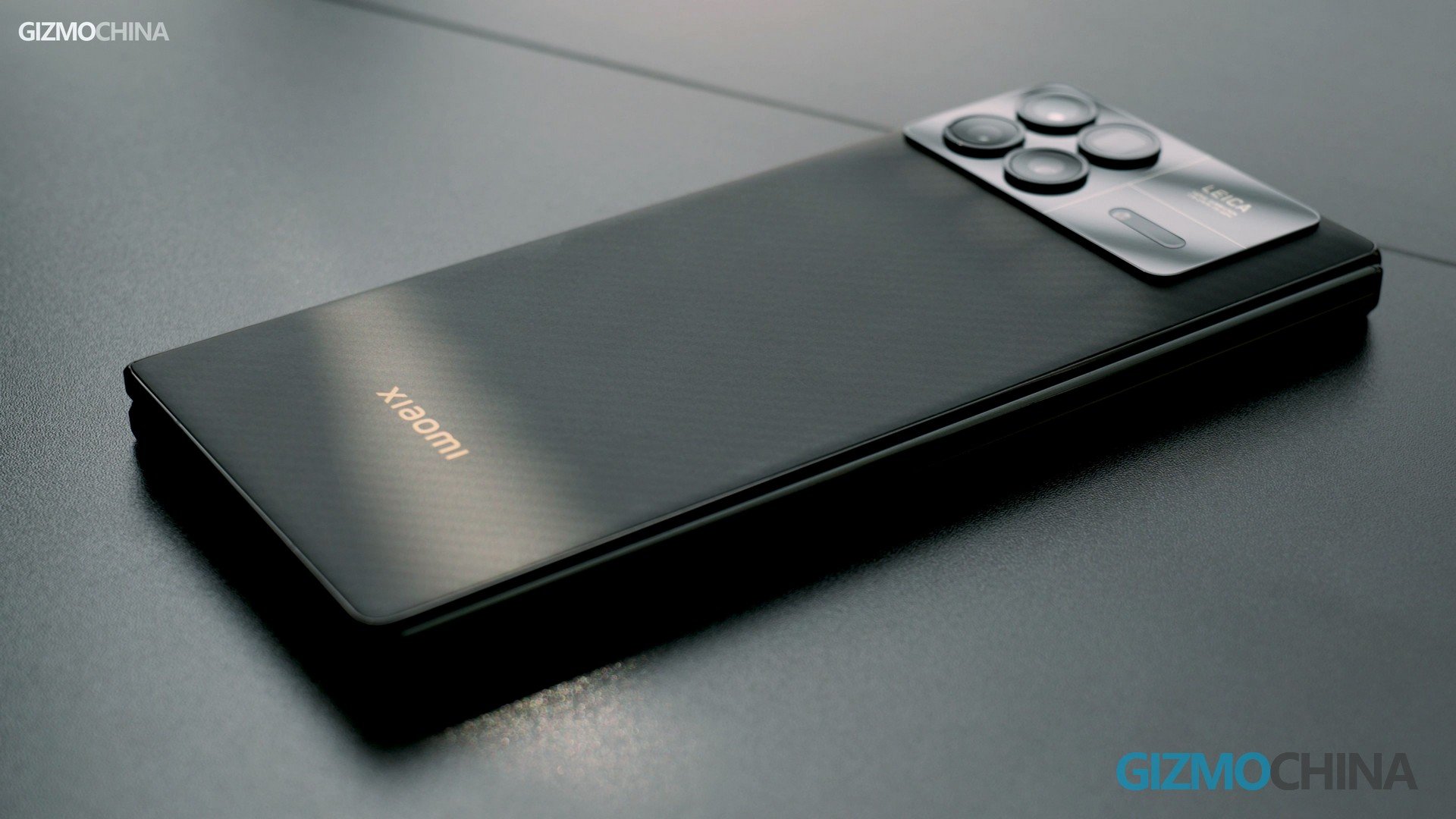
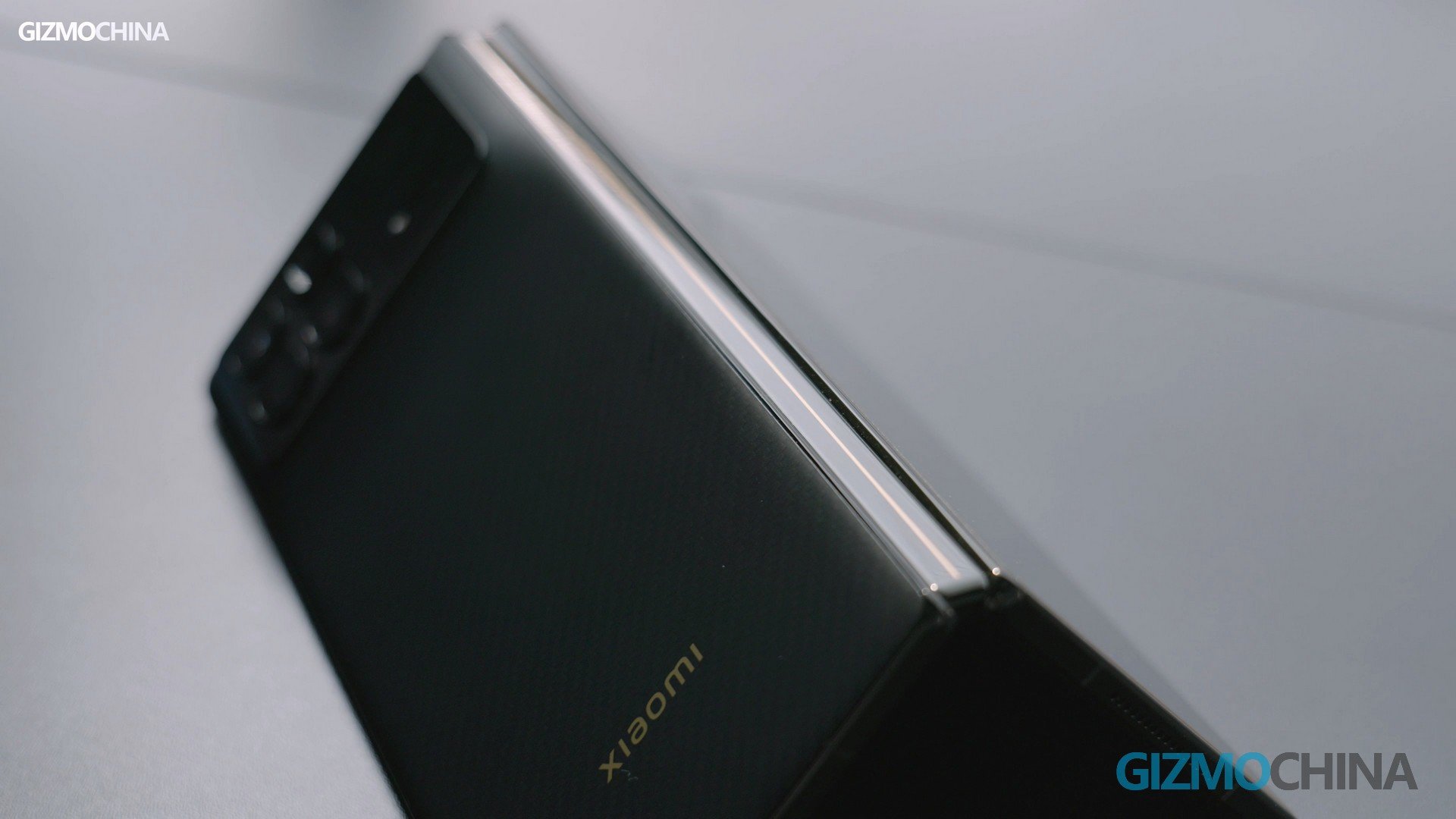
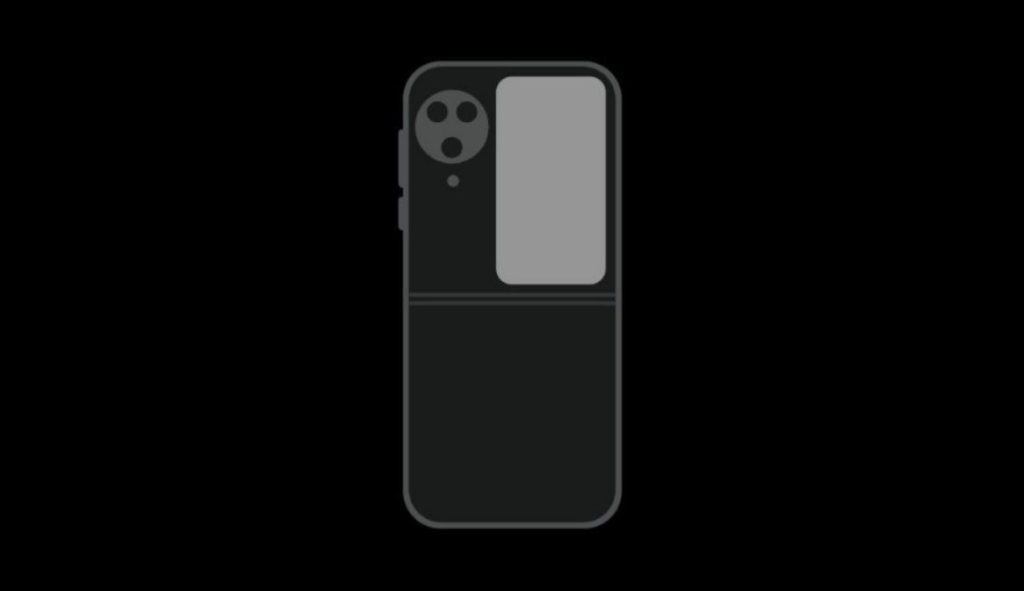
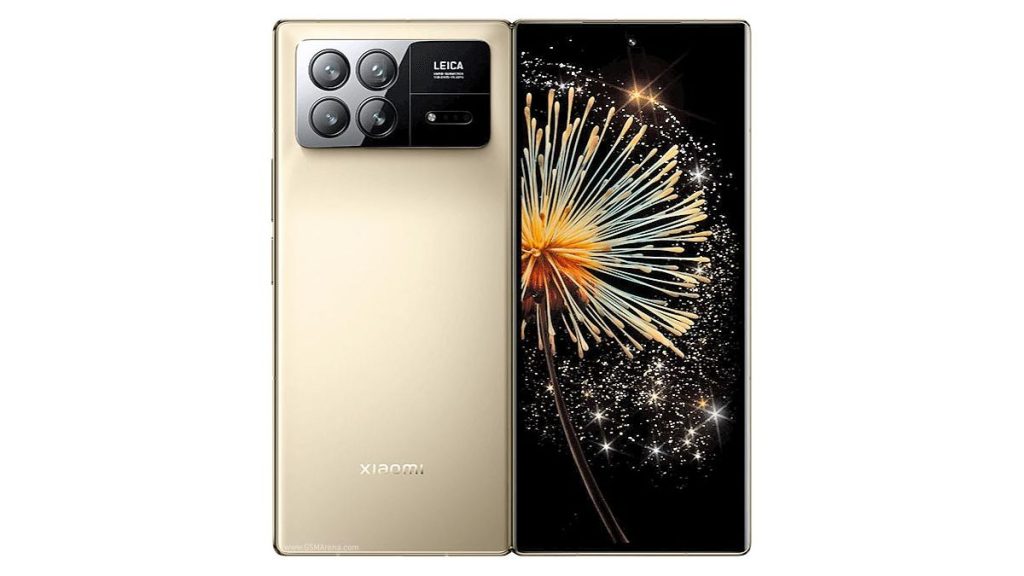
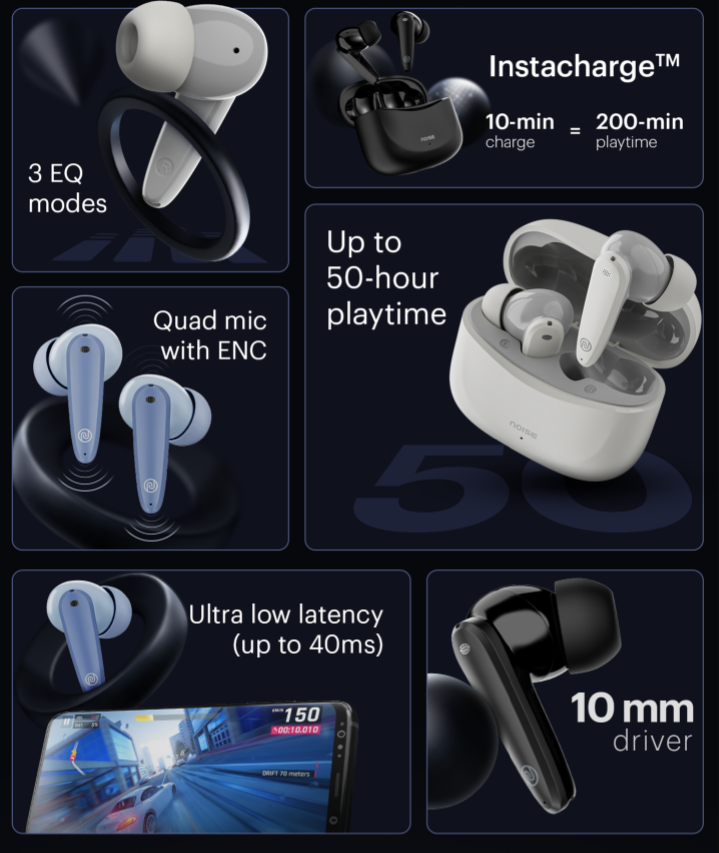
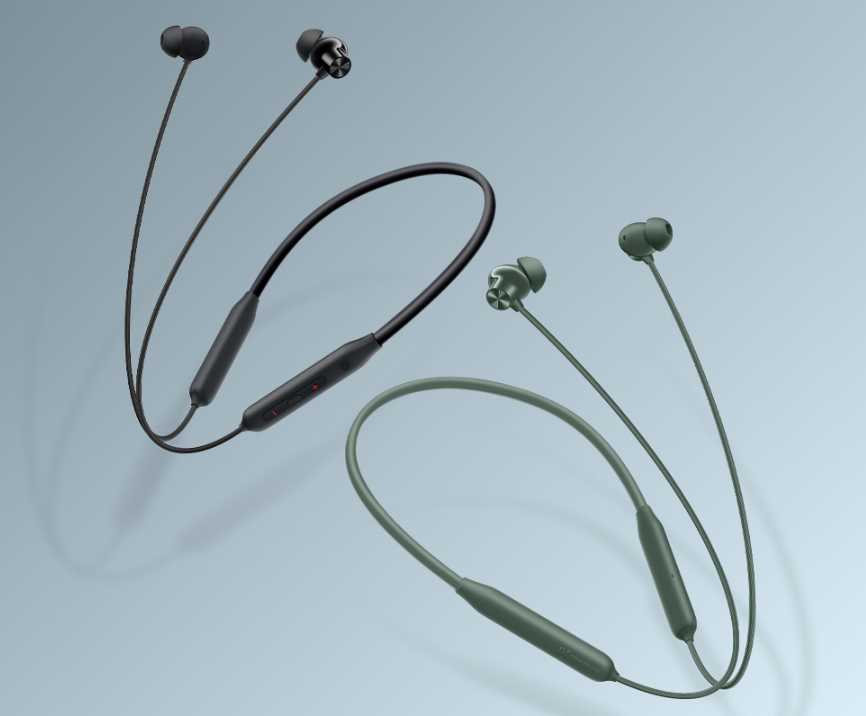
We have a first look at the OnePlus V Fold! Reliable tipster Steve Hemmerstoffer (aka onleaks) in collaboration with SmartPrix has shared CAD-based renders of the brand’s first-ever foldable phone. At the Cloud 11 event, OnePlus confirmed that it will launch the foldable phones in the third quarter of 2023 with rumors hinting at an August launch. Earlier this year, the company also trademarked the V Fold and V Flip at the China National Intellectual Property Administration
OnePlus V Fold surfaces in leaked renders
The CAD-based leaked renders of the OnePlus V Fold give us a first look at the device from all angles. Right off the bat, the OnePlus V Fold has a tall form factor and it looks similar to Samsung’s Galaxy Z Fold. The exterior screen has a center-aligned punch-hole cutout whereas it is located at the top left corner in the interior screen. Both images reveal thin bezels surrounding both displays which could result in a large screen-to-body ratio.
In the leaked renders, the OnePlus V Fold looks quite slimmer. The Black-colored leather back panel has a protruding circular camera module with Hasselblad branding confirming its presence. The island houses camera sensors and a periscope lens. The foldable phone has the beloved alert slider and volume rocker buttons on the right edge. There are two speaker grilles at the top and another at the bottom along with a USB-C port.
Apart from this, the renders do not reveal any additional information about the OnePlus V Fold. Looking at the images, the foldable phone does not seem to be a rebranded version of the OPPO Find N2 as it has a compact form factor. Past report also suggested that it will have a 2K display resolution and a larger screen.
We should expect more details to surface about the OnePlus V Fold in the coming weeks as we get closer to the Q3 launch.
Noise has launched a new smartwatch in India. The latest offering is dubbed the NoiseFit Crew Pro. It is an upgraded version of the NoisFit Crew that debuted earlier in February this year. Read on to know what the newest device offers out of the box.
NoiseFit Crew Pro specifications and features
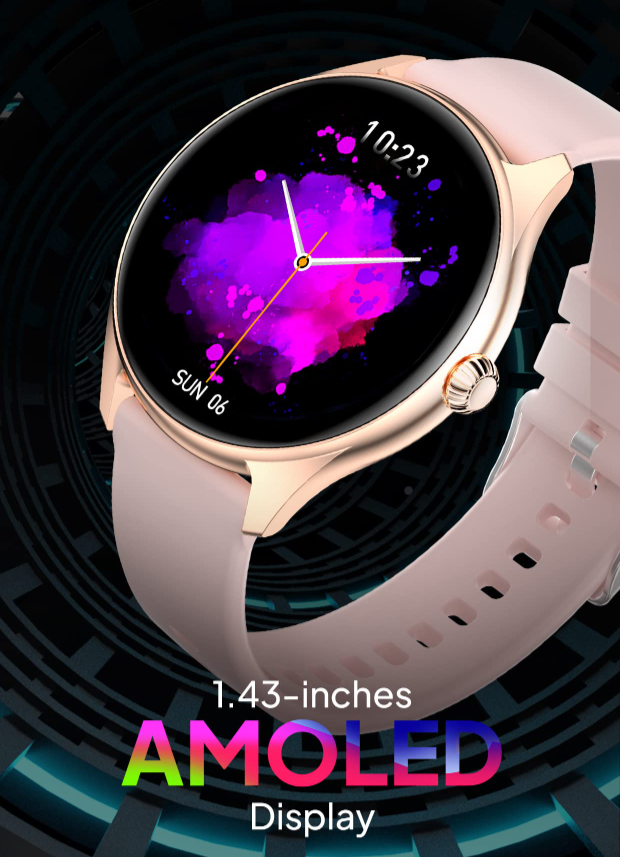
The NoiseFit Crew Pro comes with a circular dial featuring a metallic unibody and leather straps. It has a 1.47-inch AMOLED screen bearing a resolution of 240 x 240 pixels and a 550 nits peak brightness. There is a functioning rotating crown on the right side along with a physical button. The smartwatch is IP68-certified water and dust resistant.
On the health-centric front, the NoiseFit Crew Pro is equipped with a 24×7 heart-rate monitor, SpO2 sensor, sleep tracker, and female cycle monitor. It is also capable of measuring stress levels and offering breathing sessions. The wearable device packs support for more than 120 sports modes.
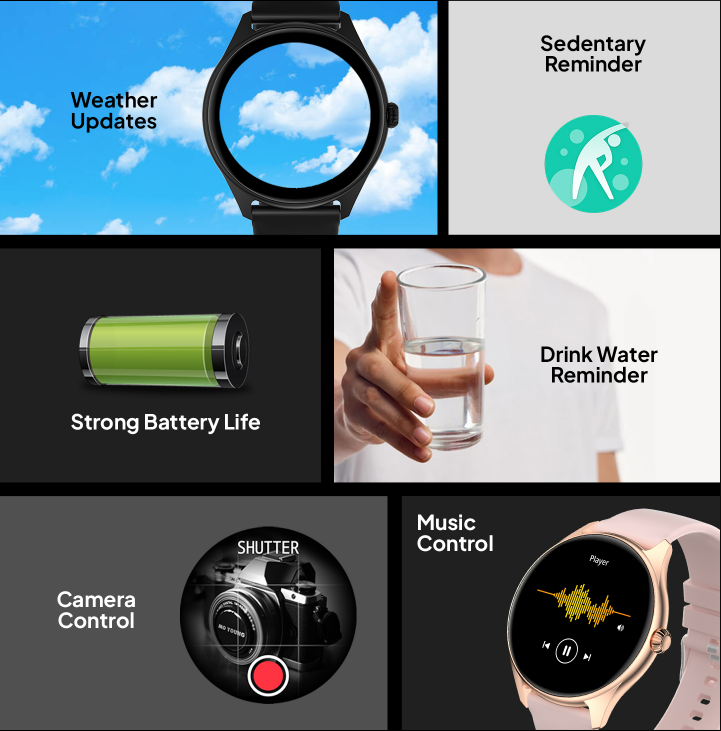
The NoiseFit Crew Pro has a built-in speaker and mic for Bluetooth calling along with access to recent logs and storing up to 10 contacts. It is backed by a 300mAh battery unit that is claimed to offer 7 days of usage. The smartwatch packs convenient specifications including a notification display, stock updates, quick reply, music and camera control, smart DND, and a calculator.
The NoiseFit Crew Pro carries a price tag of Rs 2,199. It is available for purchase in Classic Black (leather), Classic Blue, Classic Brown, and Silver Grey colors from Flipkart and the brand’s official website starting today.
We recently came to know about the Realme Narzo 60 smartphone through a Geekbench listing. Now, Realme has officially teased the arrival of the Realme Narzo 60 series in India.
The Amazon microsite of the Narzo 60 series reveals that the device will feature the capacity to store 2,50,000 photos. This means that the device could feature 256GB of storage. More details about the device will be revealed on the 22nd and June 26th. So it is possible that we could see the Realme Narzo 60 series debut in India in late June to early July.
That being said, the previous Geekbench listing of the Realme Narzo 60 5G has revealed that it has the model number RMX3750, and it features a MediaTek Dimensity 6020 SoC, along with 8GB RAM and Android 13. The device scores 714 points in the single-core and 1868 points in the multi-core test of Geekbench 6. Considering the price point at which Realme debuts its Narzo device, these devices come with good performance numbers.
No further information is available on the device right now, so let’s take a look at the Realme Narzo 50 5G to get an idea of what to expect.
Realme Narzo 50 5G specs
The device features a 6.6-inch FHD+ 90Hz LCD display and is powered by a MediaTek Dimensity 810 SoC. It is equipped with LPDDR4x RAM and UFS 2.1 storage. The device runs on Realme UI 3.0, based on Android 12.
On the camera front, it boasts a dual-camera setup with a 48MP (wide) + 2MP (depth) configuration on the rear, while the front houses a 16MP selfie camera. The device offers dual stereo speakers, a 3.5mm headphone jack, a 5,000mAh battery with 33W fast charging support. It also includes features such as a side-mounted fingerprint sensor, a MicroSD card slot, and has a thickness of 8.1mm, weighing 190g.


UleFone is a Chinese brand known for their rugged phones, but they do in fact produce regular smartphones as well. Now I’m holding the latest addition to their Note series, the UleFone Note 16 Pro, which is aimed at beginners for a very affordable price. By far it looks pretty good. But that’s not all of it, so Let’s check out what we can get for $150 in 2023.
Unboxing
The UleFone Note 16 Pro comes in a very simple package, on the top we see some basic information about the phone: it has 8GB of RAM and 256GB of ROM, coming with Android 13 pre-installed, which is really surprising to me considering that this is a super budget model and they don’t usually run on the latest version of Android.
Apart from the phone, we got some paper, a protective case, a USB-A to USB-C cable and a charger inside the package.
It seems that this budget phone didn’t save money on accessories. All we got here are almost the same as most pricy phones.
Design
The color variant we got is called Midnight Violet, the phone has an iPhone-style look, which is not hard to understand. As one of the best-selling smartphones, the iPhone design is known and acceptable to wide consumers, many brands borrowed elements from the best phone series to make sure their products are more accessible to more people.
For brands like UleFone offering cheap phones for wider groups, I can well understand that they have followed the giant’s footsteps due to limited margins and reflected in price concessions.But if we were talking about other big brands, it would be a different matter.
Like other budget models, the phone’s frame and back cover are made of plastic, which feels smooth and light when you hold it in your hand. The back cover with a matt finish helps get rid of fingerprints in daily use.
Screen & Dispaly
The front of the Note 16 Pro is covered with a 6.52-inch LCD screen with a teardrop notch. It has an HD+ resolution but the LCD panel doesn’t have sub-pixel rendering resulting in a compromised resolution.
So the screen looks very close to an FHD OLED screen of the same size. It looks sharp in detail and the colors and brightness are also impressively good as a budget model.
Connectivity
On the right side of the phone, we can see the volume buttons and the power button with a fingerprint reader. When you finish entering your fingerprint you can unlock the phone quickly.
The SIM slot is on the other side, in fact, it is a triple option slot, you can install two SIM cards on it or replace one of them with a micro SD card to expand your storage. This is one of the most necessary and useful designs on a smartphone, but we hardly ever see it on flagship phones.
At the bottom of the phone, we also get a 3.5mm headphone jack, which makes the phone almost perfect in terms of connectivity and expandability.
Camera
The UleFone Note 16 Pro has dual cameras on the back. The wide-angle camera has a 50MP ISOCELL JN1 sensor. It has a large f/1.8 aperture, which is more than enough for daily recording.
Here are some samples for your reference. As a budget phone, actually, it’s done pretty well.
The phone also supports 1080p video recording. So if you’d like to share your life or do live streaming at minimal cost, this is a spec that is clear enough without requiring too much storage.
Spec & OS
UleFone Note 16 Pro is powered by UniSoC T606 chipset, which is an octa-core platform, but the maximum CPU clocking is only 1.6G Hz, so it can only handle daily use and play some light games.
The Note 16 Pro ships with Android 13 and the latest security patches from Google, which means it will be compatible with the latest daily apps for a long time to come.
This is also our top priority when recommending a budget phone: whether it comes with the latest software pre-installed.
Other than the basic Google App, there are no non-essential apps pre-installed on this phone, which is also a plus to me. As many brands choose to work with developers to pre-install apps on some of their entry products for promotional fees.
The UleFone Note 16 Pro has a 4400mAh battery. Because of the very low power consumption of the SoC, this phone can still last a very long time, and considering that you probably won’t be playing heavy games on such a cheap phone, this battery is still good for a full day of use.
Verdict
Well, this is the UleFone Note 16 Pro, a budget phone with very good expandability. I think the brand has done a very balanced design at a very affordable price. The product is expected to be an ideal choice for those looking for a reliable and affordable smartphone.
On the other hand, if you want to buy a backup phone or are looking for a 4G mobile router, I think the budget 4G phone with storage expansion might also be a better choice. If you’re interested in the budget Ulefone Note 16 Pro, you can learn more here.
Meizu, the Chinese smartphone brand, is reportedly gearing up for the release of its Meizu 21 series, following the successful launch of the Meizu 20 lineup (check out our full review on Meizu 20) earlier this year. Recently, reliable tipster Digital Chat Station shared some primary details about the anticipated Meizu 21 smartphone, shedding light on its design and specifications.
Meizu 21 Rumored to Feature a Flat Display and Minimal Bezels
According to the information provided by the tipster, the Meizu 21 will feature a flat display with remarkably slim bezels, offering an immersive viewing experience. The front of the device will incorporate a centrally positioned punch-hole camera, while the back will house a vertically arranged triple camera setup in the upper-left corner.
The Meizu 21 is expected to introduce a new 50-megapixel primary camera and a telephoto camera within its rear camera setup. As for the Meizu 21 Pro, it is speculated to share a similar design with the standard model, although it remains uncertain whether the Pro variant will feature a regular telephoto camera or a periscope zoom camera.
As of now, there is no official information regarding the exact launch date for the Meizu 21 series. It remains to be seen whether Meizu will unveil the lineup towards the end of this year, alongside other smartphones equipped with Qualcomm’s Snapdragon 8 Gen 3, or if the launch will be scheduled for March 2024.
After one year, Huawei recently updated its flagship-level true wireless ANC earbuds with a new model, the FreeBuds 5, which is claimed to focus on better sound quality, noise cancellation, interaction, and brand-new open-ear design compared to its predecessor. It’s been a long time since Gizmochina Review has been excited about experiencing an earbud product. The FreeBuds 5 is certainly another of the most impressive earbuds of late.
The Huawei FreeBuds 5 is a truly new product if simply looking at the design. It’s widely concerning that launching open earbuds was bound to involve compromises such as degraded sound quality, weak ANC performance, etc. So it’s easy to see plenty of new releases of in-ear models on the market, but few attempts at open earbuds. Most brands ended up continuing to challenge the design dilemma after one or two attempts. From FreeBuds 3 to FreeBuds 4 & 4E and now this FreeBuds 5 with a teardrop faux-fluid design, Huawei seems to be increasingly becoming the preferred choice for comfortable wear.
New look & Design
Due to the new look, I have to say that the Huawei FreeBuds 5 is definitely a game-changer in terms of design compared to other TWS products on the market. In previous reviews of the FreeBuds lines, I’ve always been willing to give comment that ‘they are on the way moving towards the ultimate in ergonomic comfort with fresh designs.’ The Freebuds 5 is no exception.
The charging case of the FreeBuds is designed in a more elegant pebble shape. The eye-catching orange-red variant brings a stylish sense of fashion to the earbuds and the case. If you are not a fan of such a bold color, it is also available in other two widely popular options: white and silver.
Open the lid and you would see the earbuds ‘hanging’ on the gently sloping terrace and fitting the curve of the box seamlessly. The Emphasis throughout is on comfortably elegant curves with natural transitions without any sharp joints. Each bud looks like a futuristic water drop that we might have seen in some sci-fi movies. It obviously gives an upgrade to the look and feel, but more importantly, the comfort of hanging on the ears makes ‘burden-free wearing’ a reality. During the weeks of wearing the FreeBuds 5, it feels very different from the open earbuds I’ve tried in the past. It’s breathable and fits securely on the ear, as the smooth curved surface allows for a more relaxed fit to the ear’s contours. They are so comfortable that I have no complaints when I used them as sleep buds.
Each bud weighs 5.6g
The earbuds’ operation is also more user-friendly. Thanks to the new design, the combination of the arch-shaped bar and the waterdrop stems provides a larger touch area for smoother interaction, such as a long press for ANC switch, a slide for volume adjustment, or a double tap to answer calls or hang up, and so on.
Huawei claims that it’s IP54 dust- and splash-resistance. So I didn’t take it off while I was doing sweaty workouts and even exposed it to a few light showers (not intentionally). But luckily it survived and has been working well.
Sound quality
At first, we didn’t expect much for the sound quality of these open earbuds. However, it turned out to be a surprise. Each earbud is equipped with an 11mm dual-magnetic dynamic driver unit. And driven by the latest Bass Turbo Technology, the magnetic circuits offer a wide frequency range of 16Hz to 40kHz and particularly sensitive response at low frequencies. On first listen, its punching bass made it hard to believe that it was produced by a pair of open earbuds. It’s also wonderful that the open design doesn’t particularly affect the spaciousness of its soundstage. On the contrary, the wide spatial soundstage is well set up for a great balance between bass, mids and treble, especially when the earbuds were used for Dolby Atmos contents. And this is something I can’t experience with other open earbuds.
In addition to these relatively subjective comments, its excellent sound quality is also guaranteed by Hi-Res and HWA Audio Wireless certifications. Thanks to LDAC high-res codec support, the FreeBuds 5 supports super-high transmissions of up to 990kbps. In addition, if you prefer earbuds for low-latency gaming, the FreeBuds 5 can also automatically limit the transmission by activating the dynamic latency. Under the dynamic latency mode, the earbuds will shift to an ultra-low latency mode when detecting games are launched.
If you are using a Huawei phone, you can go to the Bluetooth settings to decide LDAC playback quality between ‘Optimised for audio quality’ and ’Balanced audio and connection quality’. But please do not get carried away with the former’s excellent sound quality, because the latter actually has a much more stable connection when the phone connects with a Wireless network and other Bluetooth devices.
If you want to experience even more unique features such as customized EQs and shortcuts, you will need to download and install the Huawei AI Life app. It’s a versatile app that integrates all your Huawei devices on the same platform. The software for FreeBuds is especially impressive. It’s one of the very few companion apps that shows connecting devices for earbuds. As you can see in the snapshot down below, the FreeBuds 5 supports dual connection and you can easily switch different sources in the connection center by clicking the bubble, or just check out which device is playing sound.
Active noise canceling
The ANC performance of the FreeBuds 5 already copes with most life scenarios with mid-low noise, which is also the most acceptable for me among all the open earbuds. Users can enable ANC with different ANC profiles, including General (Maximum) to Cozy (minimum), and another my favorite mode, Dynamic (auto-switching based on ambient noise). The Dynamic mode can seamlessly switch noise-canceling strength to balance both worlds. But the FreeBuds 5 still do not match the performance of the flagship FreeBuds Pro series which offers an in-ear design. The roar of the engine, for example, can still not be eliminated entirely. But the comfortable fit and relaxed ear-canal pressure leaves me with no complaints about them.
Call quality
There’re 3 microphones on the FreeBuds 3 picking up both the ambient sound and the user’s voice. So after a deep neural network (DNN) algorithm processing, the call quality is clear and gets enhanced without much distraction in the background.
For battery life, the FreeBuds 5 is able to last 5-hour playback without ANC on, while it could drop to around 3.5 hours if you activate ANC. The charging case can offer an extra 25-hour playback time for the earbuds, which does sound better. Another benefit of the charging case is the fast charge available, which allows users to collect back 2 hours of use after just 5-minute charging in the case. Although the case supports wireless charging, I would still suggest the faster-wired charging for most of the time.
Verdict
I really like the design of the new earbuds, yet perhaps what really makes it stand out is the excellent wearing experience and the superb sound quality as a pair of open earbuds. It’s well-balanced between the audio experience and quite a lot of unique features. If you make the open design your priority, it’s likely to be the best option available.
In December 2022, Red Magic introduced the Red Magic 8 Pro smartphone in China. It boasted cutting-edge specifications, including the Snapdragon 8 Gen 2 chipset, catering to the needs of gamers. Now, Red Magic is preparing to release an enhanced variant known as the Red Magic 8S Pro. The standout improvement in this model will be the upcoming Snapdragon 8+ Gen 2 SoC, delivering even more powerful performance.
Red Magic 8 Pro series
The new chipset is expected to debut sometime in the third quarter of this year. The Red Magic will join devices like the iQOO 11s, the Redmi K60 Ultra, the Realme GT Neo 6, and the OnePlus Ace 2 Pro which are also expected to come with this chipset. Known tipster DCS has shared a live image of the Red Magic 8S Pro smartphone running the AnTuTu benchmark. The benchmark has the device listed with the model number nubia NX729S_V1A.
Red Magic 8S Achieves Record-Breaking AnTuTu Score
Red Magic 8S Pro AnTuTu
What’s impressive is the score of AnTuTu score of the device. It far exceeds the Red Magic 8 Pro+, which is the current leader on AnTuTu’s performance database for Android smartphones. The upcoming Red Magic 8S Pro has scored 1,704,113 points on AnTuTu. Compared to that, the Red Magic 8 Pro+ tops out at 1,304,945. The major improvement is in the CPU department, with the device scoring 436,089 points, compared to the 275,416 of the 8 Pro+. The GPU also has improved quite a bit with the 8S Pro scoring 642,666 points compared to the 573926. Other than that, the device scored 318,418 points and 306,940 points in the memory and UX tests, respectively.
Red Magic Gaming Tablet is also in the works
Alongside the leaked benchmark results, the tipster reveals that the Red Magic 8S Pro will introduce notable features including 170W wired fast charging, an active cooling fan, and various performance tuning and system optimization enhancements. Additionally, there are speculations that Nubia is preparing to launch an Android gaming tablet, which might make its debut alongside the Red Magic 8S Pro. This gaming tablet is expected to deliver exceptional performance and potentially lead the Android tablet market in terms of performance capabilities.
The Realme 11 Pro and 11 Pro+ were launched just recently in the Indian market. And now, the company is also offering a new 1 year warranty extension plan. So here is all you need to know about this service.
Realme 11 Pro series 1 year warranty extension plan live in India
The Chinese smartphone maker has announced that it is making a new warranty extension plan that brings an additional one year of warranty period for the Realme 11 Pro series. The announcement was first shared on Twitter and it states that users can avail “Unlimited number of repair requests up to the benefit value can be availed under this plan.” Notably, the brand will even cover any manufacturing defect or electrical issues on your registered devices that are being sold in India through official channels.
For those interested, you can head to the company’s official stores or websites to buy the new warranty extension plan or even go to select e-commerce platforms in the region. To avail this new plan, customers need to purchase the service for a 1,299 INR. When claiming this warranty to get your device services, the users only need an invoice.
Talking about the devices itself, the Realme 11 Pro series sport a tall 6.7 inch AMOLED display with FHD+ resolution and 120Hz refresh rate. Both devices are equipped with a MediaTek Dimensity 7050 SoC that is paired with up to 12GB of RAM. The Realme 11 Pro features a 100 megapixel dual camera setup, while the top end 11 Pro+ model offers a 200 megapixel triple camera module on the rear.
WhatsApp has unveiled an exciting update for its Android beta users with the release of version 2.23.13.6 on the Google Play Store. One notable feature introduced in this update is an enhanced media picker, aimed at providing a more streamlined experience for selecting and sending images, videos, and GIFs. The new feature introduces numbered thumbnails that allow users to easily keep track of their selected media items and maintain the desired order.
Simplifying Media Selection
Previously, when users selected media to send, a simple checkmark would indicate the selection. While functional, this system often posed challenges when multiple items were chosen, as it was difficult to remember the order in which they were selected. However, with the latest update, WhatsApp has addressed this issue by assigning a number to each selected item, which is displayed on the thumbnail. This numbering system corresponds to the selection order, offering users a clear visual reference.
With this improvement, users gain greater control over the sequence in which media items are sent. Previously, relying solely on memory to maintain the desired order proved cumbersome. The introduction of numbered thumbnails simplifies the process, allowing users to easily discern the order in which media will be shared. This enables them to make any necessary adjustments before sending, ensuring a smoother and more organized experience.
The update is currently available to selected beta testers who have installed the latest WhatsApp beta for Android update from the Google Play Store. In the coming days, WhatsApp plans to roll out this feature to an even larger user base, gradually expanding its availability.
Earlier this week, we covered a leak that revealed the official promotional materials of a couple of its high anticipated upcoming products. One of the gadgets that was revealed in the poster image leaks included the Galaxy Watch 6 and Galaxy Watch 6 Classic. And now, even the pricing for the two smartwatch models have been revealed.
Samsung Galaxy Watch 6 series may start from 319.99 Euros
A new source has offered us a detailed breakdown of the pricing for every variant of the Galaxy Watch 6 series. Although, this leak is specifically for the European market with the price tag for these smartwatches coming from France. So there is likely certain differences in pricing depending on the different region and their tax rates. However, we now know that the Samsung Galaxy Watch 6 starts for 319.99 Euros for the 40mm variant in Graphite and Cream color option. This variant is Bluetooth only, while the 4G enabled versions costs 369.99 Euros.
Furthermore, the larger 44mm variant in Graphite and Silver will have a 349.99 Euros price tag for the Bluetooth only variant, while the model with 4G support costs 399.99 Euros. Talking about the Galaxy Watch 6 Classic edition, the 43mm version in Black and Silver will go for 419.99 Euros for the Bluetooth model and 469.99 Euros for the LTE variant. Lastly, the top end 47mm Galaxy Watch 6 in Black and Silver will be sold for 449.99 Euros for the Bluetooth only model and 499.99 Euros for the 4G version.
Apart from this, Samsung will likely offer trade in exchange offers as well as other bank offers on launch. The latest Samsung smartwatches are set to be announced during the upcoming Galaxy Unpacked event, which will be held in South Korea in the latter half of next month. During this event, the company will announced its next generation of Galaxy Z Fold 5 and Galaxy Z Flip 5 foldable phones, new Galaxy Buds 3, and Galaxy Tab S9 series as well.
Back in September 2021, Realme launched the Realme Pad tablet in India. While the brand did not a successor in 2022, there is a good chance that a new Realme tablet is heading to Indian markets this year.
Image via TheTechOutlook
According to a report from TheTechOutlook, the alleged Realme Pad 2 has emerged on the Bureau of Indian Standards certification website. The tablet has emerged with two model numbers: RMP2204 and RMP2205. This indicates that we can expect two variants of the device to debut in India. Additionally, these two model numbers have also appeared on the Bluetooth SIG certification website revealing that they feature support for Bluetooth version 5.3.
Image via TheTechOutlook
Other than that, there is no information available on the Realme Pad 2. We can expect the tablet to feature an upgraded chipset, along with a larger battery and a better display. It remains to be seen if the price of the upcoming tablet will also get a bump. For now, let’s check out the specs of the existing Realme Pad to get an idea of what to expect.
Realme Pad specs
The Realme Pad is a sleek tablet with a metal body, featuring a 10.4-inch LCD display with 2000×1200 resolution, the tablet offers vibrant visuals with 16.7 million colors, 82.5% screen-to-body ratio, and 360 nits brightness. It supports various display modes such as Reading Mode, Dark Mode, Night Mode, and Sunlight Mode.
Powered by a MediaTek Helio G80 SoC, the Realme Pad offers smooth performance, coupled with up to 4GB RAM and 64GB storage. The storage can be expanded up to 1TB using a MicroSD card.
Connectivity options include dual-band WiFi, Bluetooth 5.0, GNSS (GPS, A-GPS, GLONASS, BeiDou), and a USB Type-C port. LTE variants are also available.
The tablet runs on Realme UI for Pad, based on Android 11, providing a user-friendly experience with features like multi-user support and Google Kids Space. It enables multitasking with split-screen functionality.
The Realme Pad offers an immersive audio experience with Hi-Res Audio-certified quad speakers supporting Dolby Atmos. It has two 8MP cameras, dual microphones, and additional sensors like ambient light, accelerometer, gyroscope, and compass.
With a 7,100mAh battery and 18W fast charging support, the Realme Pad ensures long-lasting usage. It can even be used for reverse charging. The only notable omission is a 3.5mm headphone jack.
The Google Pixel 7a is the latest entry in the Pixel 7 series and is the mid range model in the lineup. This device is the most affordable in the series thanks to certain corners that the company cutting corners to keep its cost low. But one of these areas apparently includes its chipset, which on paper, is the same processor featured on its higher end siblings. So let’s have a look.
Google Pixel 7a reportedly equipped with a custom Tensor G2 SoC
The news arrives from tipster Kamila (@Za_Raczke) who found that the Tensor G2 equipped on the Pixel 7a is a different variant than the base or Pro models. This chip version on the Pixel 7a might be an underpowered variant that might perform slightly worse. Despite carrying the Tensor G2 moniker, it appears that Google has developed a more affordable version of the chipset to further cut down on costs.
For those unaware, Samsung is the manufacturing partner for this chipset and even helped co-develop the original Tensor G2. Thanks to Samsung’s semiconductor expertise, the chip also features its FOPLP-PoP technology. However, the Tensor G2 on the Pixel 7a reportedly features a cheaper and slightly worse IPOP packing. This version is thicker, larger, and even produces more heat compared to the more advanced FOPLP. Unfortunately, we still have no idea what this means in term of actual performance in real world scenarios.
The new Tensor G2 chipset version is likely using this new IPOP package to save costs for Google. Although, this move might costs its users as the Pixel 7a could potentially run marginally slower than the Pixel 7 and Pixel 7 Pro and may have heating issues as well. This is all the information we have regarding this matter so stick around for more updates.
iQOO is preparing for the release of the Neo 7 Pro smartphone in India on July 4, which is expected to offer an appealing choice for customers seeking a high-performance device in the mid-range segment. Prior to the launch, the brand has officially disclosed the available color options for the upcoming smartphone.
iQOO has unveiled two color choices for the Neo 7 Pro: Fearless Flame and Dark Storm. Fearless Flame represents an orange hue, while Dark Storm embodies a dark blue shade. The brand has confirmed that the iQOO Neo 7 Pro will come equipped with a Snapdragon 8+ Gen 1 SoC and will support 120W fast charging. Additionally, leaked information suggests that the device has appeared on the AnTuTu benchmark, achieving an impressive score of 1,316,514 points. Let’s explore the available details thus far.
iQOO Neo 7 Pro 5G specs
The iQOO Neo 7 Pro 5G is poised to offer a captivating experience with its notable features. It has a large 6.78-inch AMOLED display, boasting FHD+ resolution and a high 120Hz refresh rate. Fueling the device is the powerful Snapdragon 8+ Gen 1 chipset, complemented by a generous 16 GB of RAM and ample 256 GB of storage.
In terms of photography, the iQOO Neo 7 Pro 5G will sport a 16-megapixel front-facing camera for capturing selfies. On the rear, it will house a triple camera setup, including a 50-megapixel main camera with optical image stabilization (OIS), an 8-megapixel ultra-wide-angle lens, and a 2-megapixel macro lens.
The device is said to feature a 5,000mAh battery with support for 120W fast charging, offering users quick recharging options. Additional features include an under-display fingerprint scanner for enhanced security and the FunTouch OS 13-based Android 13 operating system.
Nothing recently made an official announcement confirming that their upcoming Phone (2) will be revealed on July 11th at 4 pm BST. In the lead-up to the launch, the device has successfully passed various regional certifications, with the most recent being the NBTC certification, indicating its intended release in Thailand
The NBTC certification has revealed the presence of the Nothing Phone (2) with the model number A065. While the certification itself does not disclose specific details about the device’s specifications, it does affirm that the phone is indeed eligible for release in Thailand, as previously mentioned. Let’s take a look at the information available on the device.
Nothing Phone (2) specs
Nothing has recently shared official details regarding their upcoming flagship device, the Nothing Phone (2), shedding light on its notable features. The smartphone will boast a spacious 6.7-inch AMOLED display, which is expected to offer a high-definition resolution and a fast 120Hz refresh rate, promising users an immersive visual experience.
Nothing Phone 2 alleged render
Confirmed reports indicate that the Nothing Phone (2) will be powered by the cutting-edge Snapdragon 8 Plus Gen 1 chipset, ensuring exceptional performance capabilities. Leaked benchmarks on Geekbench have hinted at a generous 12 GB of RAM, while the device is expected to run on the latest Android 13 operating system.
To provide users with a streamlined and efficient user interface, Nothing will introduce their custom Nothing OS 2.0, which will overlay the Android operating system. Nothing has also committed to offering three major Android OS upgrades and three years of security updates, assuring users of long-term software support.
The Nothing Phone (2) will be equipped with a substantial 4,700mAh battery, ensuring ample power for extended periods of usage.
Apple’s Mixed Reality headset, the Vision Pro created waves when it dropped. Not only it showcased a wide set of features and technology, it was also priced at a significantly high point. With a hefty price tag of $3,499, many potential consumers have changed their minds, from purchasing it to waiting for the technology to become more affordable. Even Apple CEO Tim Cook expressed uncertainty about its affordability for the average person.
The cheaper variant may be a good entry point into Mixed Reality Headsets
However, it seems like Apple may have something more innovative in mind. The company has been granted a new patent this week, hinting towards the tech giant’s experimentation with augmented reality (AR) hardware. The patent details a head-mounted display (HMD) accessory that can be connected to an iPhone, transforming it into a virtual or augmented reality headset, albeit on a smaller scale than the Vision Pro.
In a nutshell, Apple may be thinking of developing a more affordable version of the Vision Pro, although it is unlikely to be classified as truly cheap. In line with this, Apple’s newly awarded patent reveals an alternative approach. The patent describes a headband-like accessory resembling goggles, into which users can insert their iPhones. The accessory will feature a detection mechanism that establishes a wireless connection with the device, enabling the user to enjoy a VR experience.
While the exact workings of the headband and its communication with the iPhone or iPad remain undisclosed, it is clear that Apple is exploring innovative methods for leveraging its mobile devices. Although the existence of a patent does not guarantee the development of a corresponding product, it does indicate that Apple’s engineers are actively contemplating the possibility of transforming iPhones and iPads into VR headsets. Plus this is not the first time when a cheaper version of the Vision Pro headset has made the news. Previously, speculations were afloat that indicated towards the development of a low-budget Apple VR headset.
Microsoft Game Studios, one of the leading players in the gaming industry, has once again made it clear that it has no immediate plans to enter the virtual reality (VR) and augmented reality (AR) market. In an interview with The Hollywood Reporter, Matt Booty, the head of Microsoft Game Studios, emphasized that the current state of VR and AR does not align with Microsoft’s criteria for success in the line of gaming, especially in the near future.
Microsoft plans to leverage its existing Intellectual Properties to create new content
Booty explained that for Microsoft games to be considered successful, they need to attract a substantial player base of around 10 million users. Unfortunately, VR and AR technologies have yet to achieve such widespread adoption. While acknowledging the potential of these emerging technologies, Booty stated that Microsoft prefers to focus on leveraging its existing intellectual properties (IPs) to build ongoing franchises and bustling communities.
This strategic stance sets Microsoft apart from competitors like Sony and Meta (formerly known as Facebook). Sony’s recent release of the PlayStation VR2 saw impressive initial sales, with 600,000 units sold within six weeks. Sony’s President, Hiroki Totoki, even expressed optimism that the PS VR2 could surpass the total sales of its predecessor, which had reached 5 million units by the end of 2019. Similarly, Meta revealed earlier this year that its Quest VR headset had already achieved nearly 20 million unit sales.
Microsoft’s position on VR has faced scrutiny in the past. In November 2019, Phil Spencer, the head of Microsoft‘s gaming division, sparked controversy with his remarks about VR, which some interpreted as dismissive of the technology. However, Spencer later clarified his comments, expressing appreciation for the game industry’s exploration of different areas while emphasizing that VR was not their immediate focus.
While Microsoft’s current stance may disappoint VR enthusiasts, it highlights the company’s commitment to its existing gaming ecosystem. With a focus on expanding and nurturing their successful IPs, Microsoft aims to create engaging experiences for a broad player base. Nevertheless, as the VR and AR markets continue to evolve, Microsoft should remain open to the possibility of exploring these technologies in the future, because slowly yet steadily, AR and VR will carve a niche in gaming.
Back in June 2022, ZTE launched the Blade A72 smartphone for the European market. The device featured 4G connectivity, an entry-level 4G chipset, a large battery, and an affordable price tag. Now, the brand has launched its successor called the Blade A72s, however, it is more expensive and does come with some compromises.
ZTE Blade A72s specs & featrues
The ZTE Blade A72s boasts a generous 6.75-inch screen, complete with HD+ resolution and a smooth 90Hz refresh rate. The front-facing camera is housed within a discreet waterdrop notch, while the display is framed by substantial bezels.
Internally, the phone is powered by an octa-core Unisoc T606 processor, similar to its predecessor. This capable chip works in tandem with 3GB of RAM and a roomy 128GB of onboard storage. Additionally, users have the option to expand the built-in memory using a microSD card.
The camera capabilities of the ZTE Blade A72s have received a significant upgrade, now sporting a triple camera setup consisting of a 50 MP main lens accompanied by two 2MP lenses. In comparison, its predecessor, the Blade A72, featured a configuration of 13 MP + 2MP + 2MP.
The device is equipped with a 5000mAh battery, supporting 22.5W charging. It’s worth noting that this marks a notable decrease from the previous year’s model, which boasted a larger 6,000mAh battery.
Pricing & availability
The recently launched ZTE Blade A72s is now accessible to customers throughout Europe, and it comes in two attractive color options: Space Gray and Skyline Blue. Priced at €170, it’s important to note that this represents a €50 rise in comparison to the previous year’s model.
The ALKAID LCD Light Curing Resin 3D Printer sets a new standard in user experience with its ergonomic design and intuitive control panel. Unlike other machines, this printer features a control panel with a large tilt angle, allowing users to comfortably navigate and control the machine with ease. Whether you’re a seasoned professional or a beginner, the ALKAID printer ensures that you have full control over your printing process.
One of the standout features of the ALKAID printer is its utilization of a 6.08-inch 2K resolution black and white molding screen. This technology not only offers a higher life expectancy compared to color molding screens but also delivers exceptional printing accuracy with a resolution of 0.051mm. With this level of precision, you can bring your designs to life with stunning detail and clarity.
Equipped with a new generation matrix light source and a high transmittance black and white molding screen, the ALKAID printer achieves remarkable printing speeds. It boasts an average printing speed of 1.5 seconds per layer, enabling a swift and efficient workflow. With a printing speed of 120mm per hour, you can rapidly materialize your ideas into tangible objects, saving you valuable time and increasing productivity.
The ALKAID LCD Light Curing Resin 3D Printer pushes the boundaries of what’s possible in the realm of 3D printing. With an impressive print volume of up to 82mm (3.14″) * 130mm (5.11″) + 190mm (7.48″), this printer offers ample space to bring your imagination to life. Whether you’re working on intricate models or larger-scale prototypes, the ALKAID printer provides the flexibility and capacity you need to unleash your creativity.
In its pursuit of exceptional printing accuracy and quality, ALKAID has implemented a state-of-the-art Z-axis system. This system incorporates high-cost, high-rigidity, and high-load linear guides, which possess the unique ability to absorb assembly errors. By mitigating potential misalignments, the ALKAID printer ensures that every layer is precisely printed, resulting in superior print quality across your entire creation.
The ALKAID printer incorporates an innovative and advanced matrix light source. By utilizing 15 high-powered quartz lamp beads and a matrix lens made of professional optical materials, the printer achieves unparalleled UV irradiation uniformity and intensity on the LCD screen. This cutting-edge technology significantly enhances the speed and accuracy of the printing process.
Furthermore, ALKAID features UV lamp beads integrated into an aluminum substrate, maximizing the heat dissipation area. Paired with a cooling fan, this system effectively reduces the temperature of the lamp board, ensuring the prolonged service life of the UV lamp beads. Say goodbye to overheating concerns and enjoy uninterrupted printing sessions as the ALKAID printer continues to deliver outstanding results, time after time.
Limited-Time Offer: Get the GEEETECH ALKAID LCD 3D Printer at an unbeatable price! Retailing at $249.00, this cutting-edge printer is now available for just $99.00 in the US, CA, and AU, and €92.92 in the EU, saving you over $150.00 on your purchase. Plus, as a new member, you can enjoy an additional discount of $5.00 with the special coupon. Don’t miss this incredible opportunity to own a high-performance 3D printer with a large print volume and precision capabilities.
In a significant development for the automotive industry, Denza’s much-anticipated N7 delivery vehicle has entered the production phase. The official announcement by Zhao Changjiang, the general manager of Denza’s sales department, has set the stage for the vehicle’s launch at the end of June, with deliveries slated to begin in July. With an estimated price range of 350,000 to 450,000 yuan (~$48,785 to $62,723), the Denza N7 aims to make a noticeable impact in the EV market.
The N7 has an optional LIDAR system to detect nearby obstacles while driving
The BYD Denza N7 stands out as a 5-seater medium-sized SUV that showcases Denza’s distinctive π-Motion potential energy design language, the company claims. Measuring 2940mm in length and boasting a top speed of 180km/h, the vehicle offers an optional LIDAR system, enhancing its safety while on the road.
Inside the cabin, the Denza N7 introduces several advanced features. The AR-HUD instrument screen supports an augmented reality heads-up display, providing drivers with constant access to crucial road condition information without the need to divert their gaze. The Denshi Link system, equipped with a powerful 6nm chip, enables seamless integration with millions of applications, 5G technology, and Devialet audio. Additionally, passengers can enjoy a six-screen immersive smart scene and customize their experience with intelligent color-changing ambient lights. The co-driver is also provided with the convenience of an electric sunshade.
In terms of power, the Denza N7 comes in two versions. The single-motor variant offers a rated power of 70kW and a peak power of 230kW. The dual-motor version features a front motor rated at 75kW and a rear motor rated at 70kW, delivering a peak power of 160kW and 230kW for the front and rear, respectively. A notable feature of the N7 is its “double gun supercharging” charging technology, promising to achieve double the charging efficiency. Furthermore, the N7 will be the world’s first model to include the Cloud-A intelligent air body control system as a standard feature. All these features look quite promising, as interested consumers will be able to start preordering the N7 soon.
Reddit, the popular social media platform, has been confronted with a new challenge as ransomware gang BlackCat, also known as ALPHV, took responsibility for a targeted phishing scheme that occurred earlier this year. The attack exposed internal documents, code, contracts, and sensitive information belonging to some advertisers, as well as current and former employees. Although the compromised data has not been made public yet, BlackCat has announced that it possesses 80GB of compressed data and is demanding a ransom of $4.5 million from Reddit. Additionally, the gang is insisting that Reddit reverses the recent API price increases that have sparked widespread discontent among users.
The responsibility was claimed at a time when Reddit is already in a state of chaos
BlackCat’s scheme involved tricking employees into visiting a website that closely resembled Reddit’s intranet gateway through plausible-sounding prompts. By stealing login credentials and second-factor tokens from an individual who fell for the trick, the hackers gained access to the sensitive information. Fortunately, Reddit has assured users that their personal data has not been compromised during this breach.
The timing of BlackCat’s announcement is significant, coinciding with widespread protests against the API price hikes that have disrupted the Reddit ecosystem. The increased costs associated with the API changes have led to the closure of popular third-party apps such as Narwhal and Apollo. Christian Selig, the creator of Apollo, estimates that it would cost him $20 million annually to continue operating under the new pricing structure. Developers fear that the loss of these third-party apps may result in increased censorship and limited opportunities for growing ad revenue.
In response to the protests, Reddit’s CEO, Steve Hoffman, has stood firm on the API price increases, arguing that users are unhappy because they are no longer receiving services for free. Furthermore, Hoffman has suggested implementing easier methods for removing moderators who make unpopular decisions. While Reddit shows no indication of reversing its decision, some advertisers have paused their activities on the platform in solidarity with the ongoing blackouts.
As Reddit grapples with the situation, it faces mounting pressure from both external threats and disgruntled users. The next moves made by the platform will undoubtedly shape its future and determine the extent of its user base and advertiser support in the coming months.
We use cookies on our website to give you the most relevant experience by remembering your preferences and repeat visits. By clicking “Accept”, you consent to the use of ALL the cookies.
This website uses cookies to improve your experience while you navigate through the website. Out of these, the cookies that are categorized as necessary are stored on your browser as they are essential for the working of basic functionalities of the website. We also use third-party cookies that help us analyze and understand how you use this website. These cookies will be stored in your browser only with your consent. You also have the option to opt-out of these cookies. But opting out of some of these cookies may affect your browsing experience.
Necessary cookies are absolutely essential for the website to function properly. This category only includes cookies that ensures basic functionalities and security features of the website. These cookies do not store any personal information.
Any cookies that may not be particularly necessary for the website to function and is used specifically to collect user personal data via analytics, ads, other embedded contents are termed as non-necessary cookies. It is mandatory to procure user consent prior to running these cookies on your website.