Lenovo is no stranger to strange laptop ideas. Rollable screens, dual displays, experimental hinges—you name it. At CES 2026, the company confirmed that one of its more eye-catching concepts is no longer just a demo. The ThinkBook Plus Gen 7 Auto Twist is real, and it’s launching later this year.
At a glance, it looks like a fairly normal 14-inch clamshell. The trick is in the hinge. Lenovo has built in a motorized mechanism that lets the OLED touchscreen rotate and tilt on its own. The display can adjust based on where you’re sitting, switch orientations automatically, or move into tablet-style positioning without you having to touch it.
The panel itself is a 2.8K OLED with a 120Hz refresh rate. Lenovo says the system can respond to voice commands or usage scenarios, though how often that’s genuinely useful will likely depend on software polish.
Specs are firmly premium. Inside are Intel’s new Panther Lake Core Ultra 300 processors, paired with up to 32GB of DDR5-9600 RAM and up to 2TB of PCIe Gen 4 storage. There’s also a relatively large 75Wh battery, which is notable given the added moving parts. Weight comes in at around 1.4kg, keeping it reasonably portable.
Port selection is better than Lenovo’s previous experimental models. You get two Thunderbolt 4 ports, two USB-A ports, HDMI 2.1, and a headphone jack. Wireless includes Wi-Fi 7 and Bluetooth 5.4. There’s also a 10MP IR webcam for Windows Hello, along with quad speakers and microphones.
The ThinkBook Plus Gen 7 Auto Twist is set to launch in the US in June 2026, starting at $1,649. Whether the self-adjusting screen is a genuine productivity boost or just a clever party trick remains to be seen, but Lenovo is clearly serious about shipping its boldest ideas this time around.
Anker appears to be expanding its budget Zolo lineup in Europe with a new compact wall charger aimed at people juggling multiple devices. The Zolo Charger (50W, 4 Ports) has quietly gone on sale in markets like the UK and Germany, offering a four-port setup at a notably low price point.
The charger uses GaN (gallium nitride) technology, which helps keep its size in check despite the multi-port design. Physically, it’s fairly compact at 54.0 × 73.7 × 49.5 mm, making it small enough to slip into a travel bag without much thought.
Port selection is straightforward. There are two USB-C ports and two USB-A ports. The main USB-C port delivers a steady 30W, even when all four ports are occupied. Anker claims that’s enough to charge an iPhone 17 to 50% in just over 20 minutes. The second USB-C port can supply up to 20W with two devices connected, though total output is shared once three or four gadgets are plugged in.
Anker’s ActiveShield 4.0 safety system is also on board, with temperature monitoring running continuously throughout the day. As with many regional launches, color availability varies: the UK listing shows a black version, while Germany gets white, despite both colors appearing in marketing images.
Pricing is where the Zolo charger stands out. It’s listed at £19.99 on Amazon UK and €24.99 in Germany, undercutting many competing multi-port GaN chargers. There’s no official word yet on availability outside Europe.
For users looking for a simple, affordable way to charge several devices at once, the Zolo Charger looks like a practical addition to Anker’s growing budget accessory lineup.
At the ongoing CES 2026 event, HP has refresh its gaming laptop lineup with updates that target two very different audiences. At the top end is the new HyperX OMEN MAX 16, designed for users who want maximum performance headroom, while the Victus 15 continues to serve as a more accessible option with a wide range of configurations. HP also detailed the updated OMEN 16, which provides a balance between power and portability.
HyperX OMEN MAX 16 targets extreme performance
The HyperX OMEN MAX 16 is HP’s most powerful gaming laptop so far. It supports up to 300W of total platform power, a 50W and roughly 20 percent increase over the previous generation. The system can be configured with Intel Core Ultra 200HX series processors or AMD Ryzen AI HX chips, paired with NVIDIA’s next-generation GeForce RTX 5090 Laptop GPU. This places the MAX 16 firmly in the high-end category for sustained gaming and creator workloads.
Thermal management has been redesigned with OMEN Tempest Cooling Pro, which now adds a third fan and Fan Cleaner technology that periodically reverses airflow to reduce dust buildup. Display options include a 16-inch WQXGA OLED panel with a 240Hz refresh rate, HDR support up to 500 nits, and full DCI-P3 coverage, alongside IPS alternatives for different performance needs. HP also includes a high-polling-rate keyboard with customizable lighting and OMEN AI, which automatically tunes system and game settings to improve frame rates without manual intervention.
OMEN 16 balances power and portability
Sitting below the MAX model, the updated OMEN 16 focuses on high performance in a more conventional power envelope. It supports a wide range of processors, including AMD Ryzen AI 9, AI 7, and AI 5 chips with up to 50 NPU TOPS, as well as Intel Core Ultra H-series processors and 14th-gen HX options such as the Core i9-14900HX. Graphics configurations scale up to NVIDIA GeForce RTX 4050, with support for NVIDIA G-SYNC and AMD FreeSync depending on platform.
The OMEN 16 offers multiple 16-inch display options, topping out at a WQXGA IPS panel with a 240Hz refresh rate, 500 nits brightness, and full sRGB coverage. Memory configurations reach up to 32GB of DDR5, while storage includes PCIe Gen4 NVMe SSDs up to 1TB. HP equips the system with HyperX-tuned audio, a 1080p FHD webcam, HDMI 2.1, USB-C with DisplayPort support, and battery options up to 83Wh with fast charging that can reach 50 percent in about 30 minutes.
Victus 15 remains the entry point
The Victus 15 continues as HP’s mainstream gaming option. It supports AMD Ryzen 8000 series and Intel 13th-gen Core processors, paired with GPUs ranging from NVIDIA GeForce RTX 2050 up to RTX 4060, as well as AMD Radeon RX 6550M. The laptop features a 15.6-inch Full HD 144Hz IPS display, dual-channel memory support, PCIe Gen4 SSD storage, and DTS:X Ultra audio. Battery capacities range from 52.5Wh to 70Wh depending on configuration, keeping the Victus positioned for affordable gaming without premium extras.
Availability
HP has also confirmed availability timelines and starting prices for its updated gaming lineup. The OMEN MAX 16 Gaming Laptop is expected to launch in the coming months on HP.com, with a starting price of $1,699.99. The OMEN 16 Gaming Laptop will follow in March, starting at $1,599.99, positioning it just below the MAX model in HP’s gaming portfolio.
The refreshed Victus 15 Gaming Laptop will begin rolling out earlier, with initial availability expected in January at a starting price of $1,199.99. HP has also confirmed that an enhanced version of the Victus 15 will launch in May, though pricing for the upgraded configuration has not yet been detailed.
For more daily updates, please visit our News Section.
Samsung has announced its 2026 OLED TV lineup at CES 2026, introducing four models: S85H, S90H, S95H, and the all-new S99H. The new range includes updates across all tiers and adds the S99H as the top-end flagship, replacing last year’s S95F.
Samsung S99H QD-OLED
The S99H features a metal-framed design, which contrasts with the ultra-thin and bezel-less trend in today’s market. It is available in 55-inch, 65-inch, 77-inch, and 83-inch sizes, all with 4K resolution and 165Hz refresh rate support. Samsung uses QD-OLED panels for the smaller sizes, while the 83-inch variant uses LG Display’s Tandem W-OLED panel. The company claims the S99H achieves up to 35% higher brightness compared to the S95F. It also includes the Glare Free 3.0 anti-reflection coating and supports a wireless One Connect box.
The S95H, which also succeeds the S95F, retains the same brightness improvement and features a flush-to-wall design. It supports the wireless One Connect box and is available in 48-inch to 83-inch sizes. Samsung continues its dual-supplier approach, using LG W-OLED panels for the 48-inch and 83-inch models and QD-OLED for the rest.
The S90H targets the mid-range segment and gains a 15% brightness increase. It also upgrades to a 165Hz refresh rate and includes the Glare Free 3.0 coating. Samsung offers it in sizes from 42 inches to 83 inches, mixing QD-OLED and W-OLED panels depending on size.
The S85H serves as the entry-level OLED model, using LG W-OLED panels across all sizes and supporting 100Hz or 120Hz refresh rates.
All models include support for Samsung’s new Eclipsa Audio format, HDR10+ Advanced, Dolby Atmos, Tizen OS 10.0, and up to seven years of OTA updates. Gaming features include AI Auto Game Mode, FreeSync Premium, G-Sync compatibility, and VRR. Smart features cover Alexa, AirPlay 2, Matter Hub, SmartThings, and Microsoft Copilot.
In related news, Samsung has also unveiled a 130-inch Micro RGB TV that delivers the industry’s widest color gamut.
HP has unveiled its new Series 7 Pro monitor (model 732xk) at CES 2025, targeting creative professionals and enterprise users. The display was announced alongside the EliteBoard G1a Next Gen AI PC and is positioned as a companion monitor for the system.
HP Series 7 Pro Monitor Specifications
The monitor features a 31.5-inch 4K IPS Black panel with a 3840 x 2160 resolution, a 120Hz refresh rate, and VESA DisplayHDR 600 certification. It also includes factory calibration with Delta E <1 and wide color gamut coverage of 99.4% AdobeRGB, 99.4% DCI-P3, and 100% sRGB.
The Series 7 Pro uses Neo:LED technology to achieve deeper contrast levels, with a rated 2700:1 contrast ratio and peak brightness of 450 nits. HP has equipped the monitor with TÜV-certified Eye Ease blue light protection and supports features like Smart KVM, Picture-in-Picture, and Picture-by-Picture modes.
In terms of connectivity, the monitor integrates Thunderbolt 4 with up to 140W USB Power Delivery. It also includes an additional Thunderbolt 4 output (15W) for daisy-chaining a second 4K display.
The monitor also includes HDMI 2.1, DisplayPort 1.4 input and output, a USB-C port with DisplayPort Alt Mode, five USB-A ports, an extra USB-C for charging, and a 2.5G Ethernet port for high-speed wired networking.
The Series 7 Pro monitor supports height, tilt, swivel, and pivot adjustments, and features a four-sided borderless design with a micro-edge bezel. It also includes Single Power On, which allows users to power both the monitor and a connected laptop simultaneously with a single button press.
Although the display supports 120Hz, HP has limited the gray-to-gray response time to 5ms with Overdrive enabled. The monitor is not intended for competitive gaming, but instead focuses on color accuracy and connectivity for professional workflows.
Pricing and Availability
The HP Series 7 Pro will be available from March. As per the official site listing, it will be priced at $1,129.
In related news, Acer has unveiled the ProDesigner PE320QX, a 32-inch 6K monitor with extensive connectivity options. MSI has also introduced the MPG 341CQR QD-OLED X36, which features a fifth-generation Samsung QD-OLED panel.
OnePlus is kicking off 2026 with the launch of a new Turbo lineup of smartphones later this week. These are new performance focused models that will arrive at a more affordable price point over the flagship OnePlus 15 series. But ahead of the official announcement, the brand has shared some display features of the OnePlus Turbo 6. So here’s what we know.
OnePlus Turbo 6 Display Specs Teased
The Chinese smartphone brand is set to launch the OnePlus Turbo 6 in its home market on 8th January 2026. Recent teasers confirmed a bunch of its key features, like the Snapdragon 8s Gen 4 and G1 WiFi chip. But now, we finally have more details regarding its display. Looking at the official teaser poster, the upcoming Turbo 6 will match the premium OnePlus 15 and budget flagship OnePlus 15R model with a 165Hz refresh rate display.
OnePlus Turbo 6
This panel is supplied by known display maker BOE, and promises improved picture clarity, smoother gaming, and a flagship visual experience. Although, just like the other OnePlus phones with a 165Hz refresh rate support, this model would likely only offer 165Hz in select games and not by default. Apart from this, the teaser has revealed 100 percent DCI P3 color gamut, 1,800 nits of peak brightness, and 1.07 billion colors.
OnePlus’ new Turbo 6 will also offer various features for improved eye care, including a high frequency 3,840Hz PWM dimming and low flicker, reduced blue light, and better protection in low brightness. Based on what we know so far, this panel could be a tall 6.78-inch 1.5K resolution OLED display. Rumors have also hinted at the company releasing this device as the Nord 6 in the global market.
For more daily updates, please visit our News Section.
Acer is stepping deeper into the pro display space at CES 2026 with the ProDesigner PE320QX, a 32-inch 6K monitor aimed squarely at creatives who want high resolution and accurate color—without being tied to Apple’s ecosystem.
The PE320QX uses a 32-inch IPS panel with a 6,016 × 3,384 resolution and a standard 60Hz refresh rate. Response time is rated at 4ms GtG. Peak brightness reaches 600 nits, which should be enough for HDR workflows, though this is clearly more of a color-first display than a contrast monster.
Color performance is where Acer is putting the emphasis. The panel covers 98% of DCI-P3 and 99% of Adobe RGB, targeting photographers, designers, and video editors. It relies on 8-bit + FRC rather than native 10-bit color, which is fairly common in this category and unlikely to be a dealbreaker for most users.
Connectivity is generous. You get DisplayPort 2.1, HDMI 2.1, and dual USB4 ports—one delivering up to 100W of power for laptop charging, the other capped at 15W. There’s also USB-A, USB-C, a 3.5mm audio jack, and built-in speakers, making the monitor usable as a central hub for a clean desk setup.
In terms of positioning, Acer is clearly eyeing displays like Asus’ ProArt PA32 series and LG’s UltraFine 6K monitors. The difference may come down to price.
Pricing and availability:
Acer says the ProDesigner PE320QX will launch in parts of Europe between July and September 2026, priced at €1,499. That undercuts several existing 6K options. Pricing for other regions hasn’t been shared yet.
On paper, it looks like a solid, no-nonsense 6K option. Not flashy, but potentially very practical for professionals who just want pixels, ports, and dependable color.
MSI has announced the Cubi NUC AI+ 3MG mini PC at CES 2026. The new system joins the company’s growing lineup of compact desktops and is designed for AI workloads, everyday productivity, and modern connectivity needs. The Cubi NUC AI+ 3MG measures just 0.51 liters in volume, making it one of MSI’s smallest AI-ready PCs to date.
MSI Cubi NUC AI+ 3MG Mini PC Specs
The system supports Intel’s latest Panther Lake processors, also known as the Core Ultra 300 series. The top configuration features the Intel Core Ultra 9 386H with 16 cores and an integrated Xe3 GPU. MSI also offers the mini PC in Core Ultra 5 322 and Core Ultra 7 355 variants to meet different performance and budget requirements.
The Cubi NUC AI+ 3MG qualifies as a Copilot+ PC and has received the Windows 11 AI+ PC certification. It integrates Intel’s fifth-generation NPU (NPU5), which delivers up to 50 TOPS of AI computing performance. The system is capable of handling AI-enhanced workflows, fast inference tasks, and future Copilot+ features such as Recall and real-time effects.
MSI equips the Cubi NUC AI+ 3MG with two SO-DIMM slots that support up to 32GB of memory. It also includes a single NVMe slot for high-speed SSD storage. For display connectivity, the system supports up to four monitors through dual Thunderbolt 4 ports and additional outputs.
On the networking front, the Cubi NUC AI+ 3MG includes dual 2.5G LAN ports and WiFi 7 support. The power button integrates a fingerprint sensor for secure, quick access. The tool-free chassis design simplifies upgrades and maintenance. MSI also includes a cable organizer to help with tight workspace setups.
The system uses post-consumer recycled materials as part of MSI’s effort to promote sustainable design.
At CES 2026, MSI has also announced new Raider, Stealth, and Crosshair gaming laptops with upgraded performance hardware and improved thermal designs. The company also unveiled lighter Prestige laptops aimed at long battery life, with claims of over 30 hours on a single charge.
TCL has announced the NxtPaper 70 Pro at CES 2026. The phone features new NxtPaper 4.0 display technology and aims to deliver an all-day, eye-friendly experience for reading, writing, and entertainment.
TCL NxtPaper 70 Pro Specifications
The device includes a dedicated NxtPaper Key that allows users to instantly switch between three display modes: Color Paper, Ink Paper, and Max Ink. The latter turns the display fully monochrome for distraction-free reading and extended standby time. TCL says the phone can deliver up to seven days of reading and as much as 26 days on standby in this mode. The device also comes pre-installed with reading tools such as AI Outline, AI Q&A, AI Audiobook, and AI Podcast.
The 70 Pro supports stylus input and works with the optional T Pen. The pressure-sensitive, low-latency stylus enables handwriting input, AI-generated bullet journals, and off-screen memo features.
TCL has equipped the phone with a 6.78-inch Full HD+ NxtPaper display certified by TÜV and SGS for eye protection. It uses nano-matrix lithography to reduce reflections and glare in bright environments.
The panel includes seven eye-care technologies, such as blue light reduction to 3.41%, DC dimming to eliminate flicker, and an ultra-low 1-nit minimum brightness for use in low light. The screen also uses circular polarized light for natural visuals and color accuracy with a ΔE below 1.
The phone is powered by the MediaTek Dimensity 7300 chipset with 8GB RAM and up to 512GB storage, along with support for up to 16GB of virtual RAM expansion. It features a 50MP rear camera with OIS and a 32MP front camera.
The 70 Pro includes a 5,200mAh battery with 33W fast charging and is IP68 certified for dust and water resistance. TCL has also integrated AI features like real-time subtitles, face-to-face translation, and Gemini-based smart search.
Pricing and Availability
TCL will release the NxtPaper 70 Pro in February 2026. The 256GB version will be priced at €339, while the 512GB model will cost €389.
The company will offer the T-Pen and case as optional accessories. Availability will cover markets in Europe, North America, Asia-Pacific, the Middle East, and Latin America.
At CES 2026 in Las Vegas, Dell brought back its iconic XPS laptop family with the launch of the new XPS 14 and XPS 16. Both models are powered by Intel’s cutting-edge Core Ultra Series 3 processors and bring premium thin and light designs. So here’s everything you need to know.
Dell XPS 14
Dell’s XPS 14 is a compact powerhouse with a body crafted from CNC-milled aluminium with Gorilla Glass 3 covering the top surface, combining strength and premium aesthetics in a portable form factor. The company is calling the overall design “new” while also referring to these notebooks as “getting back to our roots”. It measures around 1.36 kilograms and offers two display options. The first is a 14-inch 2.8K OLED InfinityEdge panel with 100% DCI-P3 colour coverage and Dolby Vision HDR, while the alternative is a 2K LCD panel with a wide colour gamut and a 120Hz variable refresh that goes down to 1Hz to conserve power.
Under the hood, it is equipped with Intel’s Core Ultra X7 385H, Core Ultra 7 355, or Ultra 5 325, which delivers improved performance and power efficiency. You also get up to 64GB of LPDDR5X RAM and up to 4TB of PCIe Gen 5 SSD. Connectivity options include three Thunderbolt 4 ports, DisplayPort 2.1, Bluetooth 6, and Wi-Fi 7. A large 70Wh battery pack powers this notebook, which promises up to 40 hours of local video playback.
Dell XPS 14 and XPS 16 launch at CES 2026
For audio, there is a quad speaker setup that consists of a 3W main unit and 2W tweeter units. So it has a total output of 10W with Dolby Atmos tuning. Other notable features include up to 50 TOPS of AI performance from the new NPU, Intel Arc integrated graphics, and an 8MP webcam with Windows Hello. The base XPS 14 is priced at around 2,049.99 US Dollars for the Graphite model, with additional configurations expected to arrive in February and more colour options rolling out later in the year.
Please Note: When you buy something using the links in our articles, we may earn a small commission at no cost to you.
Dell XPS 16
For users who favour a larger screen and more immersive workspace, the XPS 16 delivers similar premium build quality with extra room for productivity and entertainment. As the name suggests, it has a taller 16–inch panel which is also available in either a 3.2K 20-120Hz OLED InfinityEdge touchscreen with deep contrast and vibrant colours or a 2K LCD panel with the same 1-120Hz variable refresh rate. Both panels feature Dolby Vision and advanced colour calibration for creative workflows.
Like its smaller sibling, the XPS 16 leverages Intel Core Ultra Series 3 processors (up to the Core Ultra X9 388H), coupled with integrated Intel Arc graphics for significant CPU and GPU uplift versus previous generations. The other three chip variants are also available in this model. Memory and storage top out at 64GB LPDDR5X RAM and 4TB PCIe Gen5 SSD, respectively. Audio comes from the identical quad speakers tuned with Dolby Atmos, while the rest of the connectivity options, design elements, and features like the battery size are mostly the same. The initial US starting price sits around 2,199.99 US Dollars for the base configurations, with additional models and options to follow.
Why this announcement matters
Dell’s decision to reintroduce the XPS brand comes in response to enthusiastic feedback from customers who missed the classic premium lineup. The company is betting that refreshed designs and next-gen Intel silicon will resonate with creators, professionals, and everyday users alike. With long battery life claims, lightweight bodies, and strong performance packages, the XPS 14 and XPS 16 aim to challenge rivals in both the productivity and mobile creator categories. Limited availability has begun in the U.S. and Canada, with broader regional rollout expected in early 2026.
Rumors are rife that Honor will unveil its Honor Magic 8 RSR flagship phone ahead of the upcoming Chinese New Year, which falls on Feb. 17. Ahead of the expected launch, Honor has released camera samples captured using its periscope telephoto camera.
Honor Magic 8 RSR periscope telephoto camera samples
Honor has released telephoto sample shots from the Magic 8 RSR. It features a 200-megapixel periscope telephoto camera with an f/2.6 aperture and ISZ focal lengths of 170mm / 230mm.
Based on this, the large-sensor periscope lens is speculated to have an effective focal length of around 85mm. It also supports telephoto macro shooting. According to other reports, the sensor will support 4.3x to 7x optical zoom.
The Magic 8 RSR’s rear camera setup is also said to include a 50-megapixel OmniVision OV50R main camera with ultra-high dynamic range and a 50-megapixel ultra-wide camera. For selfies, it is said to feature an autofocus-assisted 50-megapixel front camera.
On the front, the Honor Magic 8 RSR will have a 6.7-inch LTPO OLED display with a quad-curved design. The screen will support a 1.5K resolution and include an ultrasonic in-screen fingerprint sensor. It will also support 3D face recognition.
Under the hood, it will feature the Snapdragon 8 Elite Gen 5 chipset and a battery of around 7,000mAh capacity. It may support 120W wired and 50W wireless charging, and will run on MagicOS 10-based Android 16.
Honor is also said to be working on the Honor Magic 8 Air, a slim, compact phone powered by the Dimensity 9500. Both devices may debut together in China. At present, there is no information on whether these will be released in markets outside of China.
For more daily updates, please visit our News Section.
Realme has also announced the Realme Buds Air 8 in India today, debuting alongside the Realme Pad 3 tablet, Realme 16 Pro and Realme 16 Pro+. The new true wireless earbuds highlight a dual-driver audio system, up to 55dB active noise cancellation, long battery life, and AI-powered voice features. Here is a closer look at the specifications, features, and pricing details.
Realme Buds Air 8 specifications and features
Realme Buds Air 8
The Realme Buds Air 8 features a dual-driver setup consisting of an 11mm woofer and a 6mm micro-plane tweeter, supported by dual DAC audio processing and high-purity diaphragms. The earbuds offer up to 55dB intelligent active noise cancellation and a six-microphone AI noise reduction system for clearer voice calls. The earbuds carry Hi-Res Audio certification and support LHDC 5.0, LDAC, AAC, and SBC codecs.
The earbuds are rated IP55 for dust and water resistance. Additional features include 3D spatial audio, dynamic audio tuning, ultra-low 45ms latency, and AI Voice Assistant 2.0 powered by Google Gemini with live and face-to-face translation support.
Battery capacity is rated at 62mAh per earbud and 530mAh for the charging case. The earbuds deliver up to 58 hours of total playback with ANC turned off, while a 10-minute charge provides up to 11 hours of listening time.
Realme Buds Air 8
Design-wise, the earbuds introduce the India-exclusive Nature-Touch Master Design, developed in collaboration with designer Naoto Fukasawa, featuring a geometric case with a bio-based organic silicone finish.
Realme Buds Air 8 price and availability
The Realme Buds Air 8 is priced at Rs 3,599 in India and is available in Master Gold, Master Grey, and Master Purple colour options. The first sale begins on January 16 via realme.com, Amazon, Flipkart, and offline retail stores. As part of the introductory offer, buyers can avail a Rs 200 instant discount during the first sale period.
For more daily updates, please visit our News Section.
Realme has expanded its product lineup in India with the launch of the Realme Pad 3, introduced alongside the Realme 16 Pro. Realme 16 Pro+, and Realme Buds Air 8 today. The new tablet focuses on a large 2.8K display, a massive 12,200mAh battery, fast 45W charging, and MediaTek’s Dimensity 7300-Max chipset, positioning it as a productivity and entertainment-centric Android tablet. Here’s a look at the full specifications, features, and pricing details below.
Realme Pad 3 5G specifications and features
Realme Pad 3 5G
The Realme Pad 3 features an 11.61-inch LCD panel with a 2.8K resolution of 2800 x 2000 pixels and a 7:5 aspect ratio. The display supports up to a 120Hz refresh rate, up to 240Hz touch sampling, and reaches up to 550nits in high brightness mode.
Powering the tablet is the MediaTek Dimensity 7300-Max chipset, paired with 8GB of LPDDR4X RAM and up to 256GB of internal storage. Dynamic RAM expansion is supported, and storage can be expanded via a microSD card up to 2TB. The device packs a 12,200mAh battery with support for 45W fast charging and 6.5W reverse charging.
Powering the tablet is the MediaTek Dimensity 7300-Max chipset, paired with 8GB of LPDDR4X RAM and up to 256GB of internal storage. Dynamic RAM expansion is supported, and storage can be expanded via a microSD card up to 2TB.
Realme Pad 3 5G
On the software side, the Realme Pad 3 runs Realme UI 7.0 based on Android 16. Imaging duties are handled by an 8-megapixel rear camera with autofocus and an 8-megapixel front camera for video calls. The device packs a 12,200mAh battery with support for 45W fast charging and 6.5W reverse charging.
Other features include a side-mounted fingerprint sensor, quad speakers, Wi-Fi 5 or 5G depending on the variant, Bluetooth 5.4, USB Type-C, GPS support on the 5G model, and stylus support. The tablet measures 255.60 x 187.03 x 6.60mm and weighs around 578g, making it relatively slim for its battery size.
Realme Pad 3 price and availability
The Realme Pad 3 is available in three variants. The 8GB+128GB Wi-Fi model is priced at Rs 26,999, the 8GB+128GB 5G variant costs Rs 29,999, and the 8GB+256GB 5G model is priced at Rs 31,999. It comes in Space Grey and Champagne Gold color options.
The tablet will go on sale starting January 16 via Flipkart, realme.com, and offline retail stores. Launch offers include up to Rs 2,000 bank discount through eligible bank or UPI payments and up to six months of no-cost EMI. The Realme Smart Pen is priced at Rs 2,999.
For more daily updates, please visit our News Section.
MSI has revived one of its most extreme GPU brands. At CES 2026, the company showed off the GeForce RTX 5090 Lightning Z, marking the return of the Lightning Z series after a long absence—and making it clear this card isn’t meant for typical gaming PCs.
The Lightning Z is built specifically for extreme overclocking. MSI has paired the RTX 5090 with a large 394 x 120 x 56 mm radiator, complete with an oversized display mounted on it. The screen can be used to show system stats or custom visuals, though it also underscores just how far from mainstream this card sits.
Power delivery is where things get unusual. The card uses dual 12V-2×6 connectors and runs at up to 1,600W in its standard configuration. A separate BIOS unlocks a much higher ceiling—up to 2,500W—intended purely for competitive benchmarking. Overclockers have already pushed the GPU to around 3.74GHz using liquid nitrogen.
On paper, the specs are in line with a top-tier RTX 5090, but with extra headroom. The card features 21,760 CUDA cores, boost clocks approaching 2.8GHz in its performance mode, and 32GB of GDDR7 memory on a 512-bit bus. MSI has also equipped it with a heavy-duty 40-phase VRM and modern display outputs, including DisplayPort 2.1b.
MSI plans to produce just 1,300 units globally, with availability expected later in February 2026. Pricing hasn’t been announced, though it’s expected to sit well above already expensive RTX 5090 models.
This isn’t a product aimed at everyday users. Between the extreme power requirements and limited production, the RTX 5090 Lightning Z is clearly a showcase card—built for enthusiasts chasing world records rather than practical performance.
A great set of cameras is the hallmark of any true flagship device. From low light, zoom, and videos, 2025 has delivered some impressive camera smartphones. The models below stand out thanks to excellent sensors, balanced processing, and versatility across different shooting scenarios. So if you care about photography in a phone, here’s a list of some of the best models.
The iPhone 17 Pro Max remains a top-tier choice if you want reliable, consistent results across the board. While it doesn’t chase extremely high megapixel counts, Apple’s strength lies in balanced photo quality, consistent exposure, strong dynamic range, and top tier video performance.
For creators who shoot a mix of photos and video, or for those who prefer point-and-shoot simplicity without diving into manual tuning, the iPhone 17 Pro Max delivers. While one can’t call it objectively the best camera smartphone (especially still shots), the video recording aspect of it is the best in class. This is why many content creators still stick to the iPhone.
Please Note: When you buy something using the links in our articles, we may earn a small commission at no cost to you.
2. Vivo X200 Ultra
Vivo X200 Ultra
The Vivo X200 Ultra has arguably the best camera on any smartphone. From a large main camera sensor, a powerful telephoto shooter, to a capable ultra wide angle lens, this device can do it all. When you look at still photography, you get high details and an amazing point and click experience.
Its strengths show in landscape, portrait, low-light photography, and zoom shots thanks to a capable periscope telephoto system and sensor tuning. In blind comparison tests, many users ranked the X200 Ultra number one for versatility across lighting conditions and subjects. The device has already received praises across the globe, and even ranks among the top of DxOMark’s best camera phones.
Matching the Vivo X200 Ultra, we have the Xiaomi 15 Ultra with similar cutting edge camera hardware. It features impressive sensors (including a large “1-inch” main sensor) and optical systems designed for those who want maximum detail, dynamic range, and manual control. With Leica’s tuning, you get a signature look with every shot from this model.
Versatility is key with this model. There are two telephoto shooters with varying optical zooms and a large main sensor that can offer natural bokeh. This big 1-inch camera brings impressive low light performance. Despite challenging situations, the Xiaomi 15 Ultra is a dependable camera smartphone.
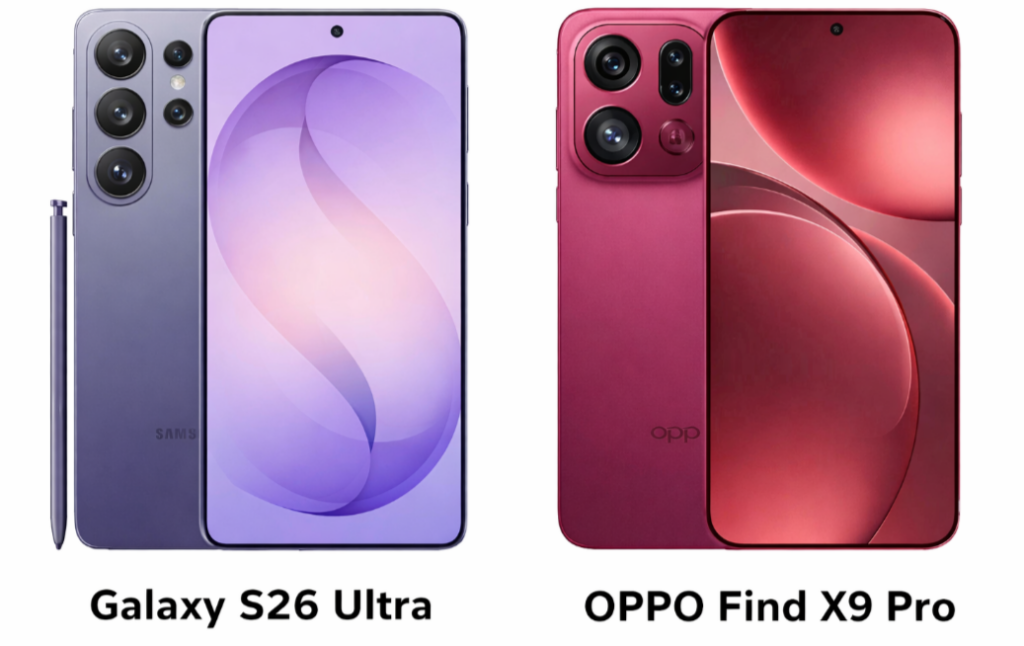
2025 saw a renewed push from Oppo in camera hardware, and the Find X9 Pro is among the headliners. It packs a new main sensor, strong zoom capability thanks to a large periscope telephoto shooter, and imaging algorithms tuned for color accuracy and detail. Image processing leverages the brand’s premium LUMO imaging tech along with expert tuning from Hasselblad.
The Find X9 Pro also often delivers rich detail and vibrant yet natural color rendering from all three of its sensors. So you won’t find any issues while shooting a variety of subjects like architecture, everyday photos, portraits, and travel. Don’t want to think too much about settings? The Find X9 Pro hits a dependable sweet spot.
Please Note: When you buy something using the links in our articles, we may earn a small commission at no cost to you.
5. Honor Magic 8 Pro
Honor Magic 8 Pro
Last but not least, we have the Honor Magic 8 Pro. While this flagship smartphone doesn’t have the latest sensors, all three cameras have been refined by the company to offer balanced output, stable processing, and color consistency across varied conditions. You can get great shots in everyday use, making it great for people who don’t want to fuss over minor tweaks.
The Magic 8 Pro delivers a reliable and consistent experience, which is further improved by AI enhancements and smart processing. It doesn’t compete with the big main sensors on the Ultra models, but it still has capable hardware that has received praise from many.
The tablet landscape in 2025 is just getting better and better, with major players like Apple, Samsung, Xiaomi, and Huawei bringing powerful hardware, stunning displays, and productivity-focused features to consumers. Whether you need a slate for creative work, media consumption, or just gaming, this year’s top tablets deliver performance and versatility that rival even some laptops.
Apple continues to set the bar high with the iPad Pro lineup, and the 13-inch version remains one of the most capable tablets you can buy. Powered by the next-gen Apple M5 chip, this model blends raw performance and efficiency, making it ideal for creators, professionals, and anyone who wants laptop-level power in a tablet form factor. The processor also makes this tablet the most powerful model on this list.
Couple with with a tall 13-inch Tandem OLED display, you also get vibrant colors, sharp contrast, and high resolution that makes it perfect for watching videos or movies and great for editing pictures and videos as well. With long software support, Apple Pencil compatibility (boost creative use for artists and designers), and a sleek design, the iPad Pro 13 still leads when it comes to overall performance and ecosystem strength in 2025.
Please Note: When you buy something using the links in our articles, we may earn a small commission at no cost to you.
2. Samsung Galaxy Tab S11 Ultra
Samsung Galaxy Tab S11 Ultra
Samsung’s flagship Android slate, the Galaxy Tab S11 Ultra, is built for productivity and immersive media. Its expansive 14.6-inch Dynamic AMOLED 2X display offers brilliant brightness and rich colors, along with a smooth 120Hz refresh rate for fluid scrolling and responsiveness.
The included S Pen and Samsung DeX mode transform it into a versatile work tool, while powerful internals (MediaTek Dimensity 9400+) and generous storage options make it strong in performance. IP68 rating, robust software support, and expandability via microSD add to its value for students, creatives, and mobile professionals looking for an Android alternative to iPad.
Please Note: When you buy something using the links in our articles, we may earn a small commission at no cost to you.
3. Xiaomi Pad 8 Pro
Xiaomi Pad 8 Pro
Xiaomi’s newcomer, the Pad 8 Pro, is one of the strongest Android tablets for users who want flagship-level performance without a flagship price tag. Powered by the Snapdragon 8 Elite and running on HyperOS 3, it offers snappy multitasking and strong GPU performance for gaming and creative workflows.
The 11.2-inch 3.2K 144Hz display delivers smooth visuals with HDR10 and Dolby Vision support, and quad speakers tuned for Dolby Atmos enhance multimedia experiences. A large 9200mAh battery with fast-charging keeps the tablet going through long work or entertainment sessions, making it one of the best values in the premium Android tablet segment in 2025.
Huawei takes a bold swing with the MatePad Edge, a large 14.2-inch OLED tablet that blurs the lines between tablet and laptop. With options up to 32GB RAM and 2TB storage, and running on a powerful Kirin series chipset, the MatePad Edge targets power-users and professionals.
Its flexible OLED panel and huge battery pack (over 12,900mAh) promise impressive all-day performance, while versatile keyboard support aims to boost productivity. Though it’s currently most widely available in China, this tablet could appeal to creators and multitaskers seeking a large-screen experience with top-tier hardware.
OnePlus carved out a space for itself in 2025 with the Pad 3, which adopts a flagship-level Snapdragon 8 Elite chip and a large 13.2-inch LCD with 144Hz refresh rate. This allows it to be on one of the fastest Android tablets in the market, delivering fluid multitasking and reliable performance for work and play alike.
Along with a robust 12,140mAh battery, optional accessories like a keyboard and stylus enhance productivity, while OnePlus’s software tweaks aim to smooth multitasking across apps. It’s a great “do-everything” tablet for users who prefer Android and want something that doubles as a light productivity machine.
During the CES 2026 event, Samsung introduced its latest generation of premium laptops. The Galaxy Book 6 lineup has just made its debut, bringing an entry level Galaxy Book 6, a high end Galaxy Book 6 Pro option, and the flagship Galaxy Book 6 Ultra variant. These notebooks arrive with a sleek design, AMOLED displays, and Intel’s latest Core Ultra Series 3 processors. So let’s check it out.
The Galaxy Book 6 Ultra sits at the top of the lineup, designed for demanding workflows like video editing, AI-assisted content creation, and immersive entertainment. Samsung skipped the Ultra model in the Galaxy Book 5 series, but is bringing back its flagship notebook this year. It sports a 16.0-inch WQXGA+ Touch Dynamic AMOLED 2X display with anti-reflective coating and up to 1000 nits brightness, delivering crisp visuals with rich color and deep contrast.
Under the hood, the Galaxy Book 6 Ultra packs Intel’s latest Core Ultra Series 3 processors that offer up to 50 TOPS of AI performance from its integrated NPU, which enables on-device intelligence without cloud dependence. Users can configure this model in multiple options, like the Core Ultra X9, Ultra X7, and Ultra 7 Series 3 CPU. Graphic options range from Intel Arc integrated GPU to Nvidia’s latest GeForce RTX 5070 and RTX 5060 graphics cards.
These beefy specs make the Galaxy Book 6 Ultra capable of not just creative tasks but also for graphically intense applications and gaming. You also get up to 64GB of LPDDR5X RAM and up to 2TB of SSD storage (support for storage expansion via a free SSD slot). For audio, the laptop houses six speakers with Dolby Atmos. Connectivity options include Thunderbolt 4, USB-A, HDMI 2.1, Wi-Fi 7 and Bluetooth 5.4. On a single full charge, Samsung is promising up to 30 hours of video playback (80.2Wh battery), which supports fast charging.
2. Samsung Galaxy Book 6 Pro
The Galaxy Book 6 Pro series is available in both 14-inch and 16-inch versions, offering a blend of power and portability. Like the Ultra, Pro models use Core Ultra Series 3 processors, namely Core Ultra X7, Ultra 7, and Ultra 5, and Intel’s new NPU for AI tasks. The Pro models also offer AMOLED displays with touchscreen support for creative workloads and media consumption.
RAM options include 16GB or 32GB LPDDR5X RAM, paired with PCIe SSD storage up to 1TB. The larger 16-inch Galaxy Book 6 Pro also offers an additional expansion slot for storage. Graphics are handled by Intel’s Arc integrated graphics, fine for everyday use and light creative work. The Pro also benefits from redesigned cooling with a vapor chamber for quieter, more consistent performance. Battery capacities vary by screen size, with up to 78Wh in the 16-inch model and solid endurance for all-day productivity sessions.
3. Samsung Galaxy Book 6
Like the Pro models, the standard Galaxy Book 6 is available in 14-inch and 16-inch sizes and brings Intel’s latest silicon in a more affordable option. It pairs the Core Ultra 7 and Core Ultra 5 Series 3 processors with Arc graphics and up to 32GB of LPDDR5X RAM and up to 1TB of PCIe SSD storage. Users can opt for a touchscreen option on the larger 16-inch model, but the base variants skip the AMOLED screen for an LCD panel (IPS on the 16-inch version).
Despite its positioning, the Book 6 still benefits from Samsung’s refined design approach, including improved thermal management, Dolby Atmos-enhanced speakers, and a robust port selection. This model is clearly aimed at everyday productivity, and these specs make it a reliable everyday laptop that carries many of the premium traits found in its Pro and Ultra siblings.
4. Pricing and Availability
Samsung has yet to reveal the global pricing or the exact launch timeline for all the markets. However, the Galaxy Book 6 series is expected to start rolling out in select regions by the end of this month, with a wider release following soon after. All three models will arrive in Gray and Silver colorways, while a Galaxy Book 6 Enterprise Edition will also roll out in certain markets.
For more daily updates, please visit our News Section.
Red Magic 11 Air has surfaced on the Geekbench benchmarking platform, offering an early look at what the upcoming gaming-focused smartphone could deliver. While official details remain limited for now, the listing confirms key hardware elements and sets the stage for more revelations ahead.
Red Magic 11 Air Geekbench listing reveals core hardware
The Red Magic 11 Air has been spotted on Geekbench with the model number NX799J, confirming that the device is powered by Qualcomm’s Snapdragon 8 Elite chipset. According to the benchmark data, the processor features two prime cores clocked at 4.32GHz and six performance cores running at 3.53GHz, paired with the Adreno 840 GPU.
The device has been spotted with 16GB of RAM and runs Android 16. In terms of performance, the device recorded a single-core score of 3,075 and a multi-core score of 9,934 on Geekbench 6.5.
Red Magic 11 Air specifications
Red Magic 11 Air
Prior to the Geekbench appearance, the Red Magic 11 Air was listed on China’s TENAA certification platform, revealing several hardware details. The phone is expected to feature a 6.85-inch AMOLED display with a 1.5K resolution of 1216 x 2688 pixels. It is also likely to include an active cooling fan, a signature feature seen on recent Red Magic devices.
The TENAA listing further suggests a rated battery capacity of 6,780mAh, which could be marketed as a 7,000mAh typical battery. It is expected to launch with storage options of 256GB, 512GB, and 1TB.
Camera specifications include a 50-megapixel primary rear camera, an 8-megapixel secondary sensor, and a 16-megapixel under-display front camera. The handset measures 163.82 x 76.54 x 7.85mm, weighs 207 grams, and is officially confirmed to launch in January in China.
For more daily updates, please visit our News Section.
From mid-range value bets like the Realme 16 Pro series and Redmi Note 15 series to near-flagship phones like the OnePlus Turbo 6 and Oppo Reno 15 series, January 2026 is bringing a flurry of smartphones, and therefore is shaping up to be an exciting month for smartphone enthusiasts.
We’re going to see many exciting launches from major Chinese brands, including Xiaomi, Realme, Oppo, OnePlus, and Honor. Thankfully, we don’t have to wait until the launch for the details, as we already know most of them through brand teasers and leaks. So, let’s take a closer look at the upcoming phones, along with all the details we know so far.
Oppo Reno 15 series will launch in India on January 8, featuring three models: Reno 15, Reno 15 Pro, and Reno 15 Pro Mini. All three models are confirmed to feature Aerospace-Grade Aluminium frames and Oppo’s HoloFusion technology. The latter offers a 3D layered visual effect to the glass back.
The 15 Pro model has a 6.78-inch AMOLED display with Corning’s Gorilla Glass Victus 2 protection. The 15 Pro Mini features a 6.32-inch AMOLED display, while the standard 15 sits in the middle with a 6.59-inch AMOLED display. Both have Gorilla Glass 7i coating. All three models have IP66 + IP68 + IP69 ratings in common.
The standard Reno 15 is reportedly priced under Rs. 50,000, while the Pro Mini model may be offered for under Rs. 40,000. The Reno 15 Pro could have a price tag above Rs. 50,000.
2. Poco M8 series
Launch date: January 8, 2026
On the same day, Poco will unveil its Poco M8 series in India, featuring two models: Poco M8 5G and Poco M8 Pro 5G. The phones will be sold via Flipkart.
The Poco M8 is confirmed to feature a Snapdragon 6 Gen 3 chipset paired with 8GB RAM, achieving over 825,000 points on the AnTuTu V11 benchmark. Sadly, it will come with Android 15-based HyperOS 2, not HyperOS 3, although the brand promises a quicker rollout. On the plus side, Poco guarantees 4 years of OS upgrades, along with 6 years of security updates for the standard M8.
POCO M8POCO M8 Pro
The Poco M8 Pro will reportedly feature a Snapdragon 7s Gen 2 chipset, a 50MP + 8MP dual rear camera, a 32MP selfie camera, and a 6,500mAh battery with 100W fast wired charging. It may also come with HyperOS 2 software, based on Android 15.
3. OnePlus Turbo 6 series
Launch date: January 8, 2026
OnePlus has also locked in the same date for the launch of its flagship-grade OnePlus Turbo 6 series. However, it will debut in China and will likely launch with a different name for the rest of the world.
The lineup comprises OnePlus Turbo 6 and Turbo 6V. The former is confirmed to pack a Snapdragon 8s Gen 4 chipset, a 1.5K resolution display with support for a 165Hz refresh rate.
The highlight of the Turbo 6 series is the battery capacity. The Turbo 6 packs a massive 9,000mAh battery, while the Turbo 6V will arrive with a smaller but still powerful 7,000mAh battery.
The OnePlus 6V is confirmed to feature a Snapdragon 7s Gen 4 processor and a 6.8-inch OLED display with a 144Hz refresh rate.
Rumors are that the OnePlus Turbo 6 could launch outside China as the Nord 6.
To provide a clearer picture of the latest smartphones, we’ve also included those that were recently launched in January, such as the Honor Power 2, Realme 16 Pro series, and Redmi Note 15 Pro series.
The Honor Power 2 debuted earlier this week as the first smartphone launch of 2026. Like the OnePlus Turbo 6 series, it’s also in the news for bringing a massive 10,080mAh battery, with support for 80W fast wired charging and 27W reverse charging.
The smartphone features a 6.79-inch AMOLED display with a peak brightness of 8,000 nits and a 120Hz refresh rate. At its core is the Dimensity 8500 Elite chipset, paired with 12GB of RAM and up to 512GB of storage. The rear camera module features a 50MP primary camera and a 5MP ultrawide camera, along with a 16MP selfie shooter.
Honor Power 2 has been launched in China, where it sells for 2,699 CNY (around Rs. 34,900) for the 12GB + 512GB variant, and goes up to 2,999 CNY (around Rs. 38,700) for the 12GB + 512GB variant. The brand hasn’t confirmed its global availability yet.
The Realme 16 Pro series has been launched in India, increasing the brand’s mid-range portfolio with two more devices: Realme 16 Pro 5G and Realme 16 Pro+ 5G.
The 16 Pro has a 6.78-inch AMOLED screen with a 144Hz refresh rate, 6500nits peak brightness, and HDR10+ support. The Pro+ model features a slightly larger 6.8-inch screen, while the rest of the display specifications remain largely unchanged. Both phones come with Android 16-based Realme UI 7.0 skin and promise up to three major Android upgrades.
There’s Dimensity 7300 Max powering the Realme 16 Pro, whereas the 16 Pro+ has a Snapdragon 7 Gen 4 chipset. The latter also gets an additional 50MP periscope telephoto camera, in addition to a 200MP primary shooter and an 8MP ultrawide unit. Both phones, however, have the same 50MP selfie camera.
Both smartphones carry the same 7,000mAh battery capacity with support for 80W wired charging and a bypass charging feature. As for the pricing, the Realme 16 Pro starts at Rs. 31,999 and the Realme 16 Pro+ starts at Rs. 39,999.
Alongside the Realme 16 Pro series, Xiaomi also unveiled the more affordable Redmi Note 15 in India, with a starting price of Rs. 22,999. The smartphone features a 6.77-inch AMOLED display with a 120Hz refresh rate and 3200nits of peak brightness.
The Redmi Note 15 5G is powered by a Snapdragon 6 Gen 3 chipset, paired with 8GB RAM and 128/256GB storage, further expandable up to 1TB with a microSD card. Furthermore, it offers a 108MP primary camera on the back, paired with an 8MP ultrawide camera. On the other side, it has a 20MP selfie camera. Additionally, the Note 15 packs a 5,220mAh battery with support for 45W fast wired charging.
We’re just a few days into the month, and we’ve already seen several smartphone launches and launch date announcements from multiple brands. We can expect a couple more new phones this month. You can join our Telegram channel to stay up-to-date with the latest news, product launches, and major tech events.
Acer is pushing high-refresh gaming even further. At CES 2026, the company unveiled the Predator X34 F3, a 34-inch ultrawide monitor built around Samsung’s latest QD-OLED panel and a headline-grabbing 360Hz refresh rate.
The monitor uses a 3440×1440 panel with a 1800R curve, keeping the familiar ultrawide format while targeting competitive players who care about motion clarity as much as immersion. Acer says the panel delivers a 0.03ms response time and supports AMD FreeSync Premium Pro to reduce tearing and stutter in fast-paced games.
As expected from QD-OLED, image quality is a big focus. The X34 F3 covers 99% of the DCI-P3 color space and carries a VESA DisplayHDR True Black 500 certification. That translates to deep blacks, strong contrast, and peak HDR brightness of up to 500 nits. It’s clearly aimed at gamers who want speed without giving up visual quality.
Connectivity is solid for a high-end gaming setup. The monitor includes HDMI 2.1, DisplayPort 1.4, and a USB-C port with 65W power delivery. There’s also a built-in KVM switch, making it easier to swap between a gaming PC and a laptop using the same keyboard and mouse. Integrated speakers and basic eye-care features round things out.
Acer announced the X34 F3 alongside more experimental displays, including a 1,000Hz esports monitor, but this model feels like the most practical of the bunch. It’s not yet clear whether it uses Samsung’s newer RGB stripe subpixel layout, which could improve text clarity.
The Predator X34 F3 is priced at $1,199.99 in North America and €1,199 in EMEA, with availability planned for Q2 2026. For gamers looking at ultrawide OLEDs, it’s one of the fastest options announced so far.
We use cookies on our website to give you the most relevant experience by remembering your preferences and repeat visits. By clicking “Accept”, you consent to the use of ALL the cookies.
This website uses cookies to improve your experience while you navigate through the website. Out of these, the cookies that are categorized as necessary are stored on your browser as they are essential for the working of basic functionalities of the website. We also use third-party cookies that help us analyze and understand how you use this website. These cookies will be stored in your browser only with your consent. You also have the option to opt-out of these cookies. But opting out of some of these cookies may affect your browsing experience.
Necessary cookies are absolutely essential for the website to function properly. This category only includes cookies that ensures basic functionalities and security features of the website. These cookies do not store any personal information.
Any cookies that may not be particularly necessary for the website to function and is used specifically to collect user personal data via analytics, ads, other embedded contents are termed as non-necessary cookies. It is mandatory to procure user consent prior to running these cookies on your website.