Advertisement

OPPO Find X9 Ultra vs Sony Xperia 1 VIII: Camera, Battery & Performance Compared

OPPO Find X9 Ultra and Sony Xperia 1 VIII are two premium Android flagships built for very different users. OPPO focuses on powerful hardware, huge battery life, and advanced camera tech, while Sony delivers a cleaner experience with creator-focused features and classic Xperia practicality. This comparison breaks down which flagship actually makes more sense for everyday use and long-term value. 

Major Features:

FeatureOPPO Find X9 UltraSony Xperia 1 VIIIWinner
Display6.82-inch LTPO AMOLED, 144Hz, 2K, 3600 nits6.5-inch LTPO OLED, 120Hz, FHD+OPPO – Brighter, sharper, and smoother display
Build QualityIP68/IP69, eco leather optionIP65/IP68, Gorilla Glass VictusOPPO – More premium durability and finish options
ProcessorSnapdragon 8 Elite Gen 5Snapdragon 8 Elite Gen 5Tie – Same flagship chipset
RAM & StorageUp to 16GB RAM, 1TB, UFS 4.1Up to 16GB RAM, 1TBOPPO – Faster storage performance
Expandable StorageNomicroSD card supportSony – Dedicated expandable storage
Main Camera200MP large sensor48MP sensorOPPO – More advanced flagship camera hardware
Telephoto Camera200MP 3x + 50MP 10x periscope48MP periscope 2.9xOPPO – Stronger zoom versatility
Ultrawide Camera50MP48MPOPPO – Slightly better sensor setup
Selfie Camera50MP AF12MPOPPO – Sharper selfies and better autofocus
Video Recording8K, Dolby Vision, O-Log24K 120fps HDROPPO – More advanced video tools
Audio FeaturesStereo speakersStereo speakers + 3.5mm jackSony – Better for wired audio users
Battery7050mAh5000mAhOPPO – Much larger battery capacity
Charging100W wired, 50W wireless30W wired, 15W wirelessOPPO – Significantly faster charging
Software Support5 major Android upgrades4 major Android upgradesOPPO – Longer update promise
Special FeaturesHasselblad tuning, IR blasterAlpha camera support, headphone jackSony – More unique creator-focused features
Price₹1,10,000 / $1150₹1,40,000 / $1600OPPO – Better overall value for money
Disclaimer: Specs are based on available data. Actual performance may vary. Verify details from official sources before buying.

1. Design and Display

Build and Feel

The OPPO Find X9 Ultra and Sony Xperia 1 VIII approach premium design very differently. OPPO focuses on a bold flagship identity with a curved LTPO AMOLED panel, ultra-premium finish options, and stronger durability credentials with IP68/IP69 protection. The eco-leather variant also gives the phone a more camera-centric personality that feels modern and luxurious. Sony keeps things cleaner and more functional with its signature minimalist Xperia styling, flat-sided frame, and practical additions like the dedicated microSD slot and 3.5mm headphone jack.

Sony’s design feels more professional and creator-focused, while OPPO feels more futuristic and mainstream premium. Users who enjoy immersive media and flashy flagship aesthetics may naturally lean toward OPPO, whereas Sony’s understated approach feels tailored for enthusiasts who value practicality over visual drama.

Display Quality

OPPO clearly pushes harder on display hardware. Its 144Hz LTPO AMOLED panel delivers sharper visuals, higher brightness, Dolby Vision support, and richer HDR performance. Outdoor visibility and gaming responsiveness are noticeably stronger. Sony’s OLED panel still looks excellent with natural color tuning and HDR BT.2020 support, but the lower resolution and 120Hz refresh rate feel less ambitious at this price.

Verdict

The Xperia 1 VIII offers a cleaner and more functional experience, but the Find X9 Ultra delivers the more impressive flagship display package overall.

2. Specifications Including Battery

Performance

Both phones run on the Snapdragon 8 Elite Gen 5 paired with the Adreno 840 GPU, so raw performance is flagship-grade on either side. Heavy multitasking, console-level gaming, and AI-driven Android 16 features should run effortlessly. OPPO, however, feels slightly more aggressive with optimization thanks to faster UFS 4.1 storage and a smoother 144Hz interface. ColorOS 16 also appears more visually fluid during gaming and app switching.

Sony takes a more balanced approach with a cleaner interface and creator-focused enhancements like native Sony Alpha camera integration. It feels less flashy but more refined for users who prefer stability and pro-level tools over visual effects.

Battery and Charging

Battery life is where OPPO creates a huge gap. The 7050mAh silicon-carbon battery is massive for a flagship device and is paired with 100W wired and 50W wireless charging. It is designed for heavy users who game, shoot video, or stream content all day. Sony’s 5000mAh battery remains respectable, but its 30W charging feels conservative in comparison. Bypass charging is useful for gamers, though it cannot fully offset the charging difference.

Verdict

Sony focuses on balance and long-term usability, but OPPO offers the more powerful performance and battery combination for demanding flagship users.

3. Camera

Main and Secondary Lenses

The OPPO Find X9 Ultra is built like a photography powerhouse. Its dual 200MP system, including a large 1-inch-class main sensor and advanced periscope zoom setup, gives it exceptional versatility. The dedicated 10x optical zoom camera adds a level of reach rarely seen in mainstream flagships. Features like Hasselblad tuning, Dolby Vision recording, O-Log2, and cinematic LUT support also push it toward professional mobile filmmaking.

Sony’s Xperia 1 VIII takes a different route with Zeiss optics, eye tracking, and Alpha-inspired controls. Its camera system focuses more on natural color science and creator precision rather than computational processing. The output may appeal more to photography enthusiasts who prefer realistic images instead of heavily processed shots.

Selfie Camera

OPPO again leads on hardware with a 50MP autofocus selfie camera capable of detailed 4K video recording. Sony’s 12MP front camera delivers natural skin tones and stable video, but it lacks the same flagship-level sharpness and flexibility.

Verdict

Sony provides a more professional and manual photography experience, but OPPO delivers the stronger all-around camera hardware and superior zoom capabilities.

4. Pricing

The OPPO Find X9 Ultra is expected to cost around ₹1,10,000 or roughly $1,150, while the Sony Xperia 1 VIII sits significantly higher at about ₹1,40,000 or $1,600. That creates a major price gap despite both phones sharing the same flagship chipset.

OPPO offers more aggressive specifications for the money, including a brighter 144Hz display, a larger battery, faster charging, and a more advanced zoom-focused camera setup. On paper, it feels like a flagship designed to outperform competitors in almost every hardware category without crossing ultra-luxury pricing territory.

Sony’s pricing is harder to justify purely through specifications. Much of its value comes from the Xperia ecosystem philosophy, cleaner software experience, professional-grade camera controls, expandable storage, and audio-focused features like the headphone jack and Hi-Res audio support. Those additions matter deeply to enthusiasts, but mainstream buyers may find the premium difficult to overlook.

Verdict

The Find X9 Ultra delivers stronger value for money, while the Xperia 1 VIII mainly targets niche users who specifically appreciate Sony’s creator-focused ecosystem.

Disclaimer:
Prices are approximate and may vary based on country, region, launch timing, and applicable taxes. Always check whether the listed price is for a China unit or a global/international variant when purchasing.

5. Conclusion

The OPPO Find X9 Ultra feels like a true modern ultra-flagship built around excess in the best possible way. Its massive battery, ultra-bright display, extreme zoom capabilities, and very fast charging create a device that feels future-ready. It is clearly aimed at users who want the most advanced hardware package available without compromise.

The Sony Xperia 1 VIII takes a more specialized route. Features like expandable storage, a headphone jack, Alpha camera integration, and cleaner software give it a unique identity in a market where most flagships now look and behave similarly. It feels more like a professional creative tool than a mainstream luxury phone.

For most buyers, OPPO will likely feel more exciting and practical day to day because it offers stronger hardware value across nearly every category. Sony still holds a unique charm, especially for photography enthusiasts and long-time Xperia fans who prefer a more manual and authentic smartphone experience.

Verdict

The OPPO Find X9 Ultra is the better overall flagship for most users, while the Sony Xperia 1 VIII remains a distinctive alternative for creators and enthusiasts who value Sony’s specialized ecosystem.

Disclaimer: This comparison is based on the specifications provided and is intended for general informational purposes. Actual performance, camera results, battery life, and overall experience may vary depending on real-world usage, software updates, and individual preferences.

Read More:

Caviar launches $10,000 iPhone 18 Pro collection months before the phone exists

Apple isn’t expected to announce the iPhone 18 Pro for another few months, but luxury customization company Caviar is already taking pre-orders for its modified versions of the unreleased device.

The brand, which is known for replacing standard smartphone glass and aluminum with materials like gold, titanium, and crocodile leather, just announced its new Royal Colors collection. It is a series of custom iPhone 18 Pro and Pro Max models that you can reserve starting May 20.

Caviar Royal Colors collection

Reserving one of these phones now does not mean you get to see what the iPhone 18 Pro looks like ahead of time. Instead, you are essentially paying in advance for the custom exterior. Once Apple officially releases the iPhone 18 Pro series later this year, Caviar will purchase the retail devices, remove the original casing, and install the new materials before shipping them out to buyers.

The Royal Colors collection is based on historical themes, with four different designs available. The Imperator model uses purple crocodile leather and 24-karat gold plating, featuring a pattern meant to look like a Roman toga. The King model takes a different approach, using white crocodile leather and a silver-toned body that incorporates a French fleur-de-lis motif.

For a darker aesthetic, the Black Prince model is themed around medieval armor. It uses black leather and a matte titanium upper panel with a black PVD coating. The fourth option, the Pharaoh model, uses blue crocodile leather and 24-karat gold plating with an Art Deco palm pattern inspired by ancient Egyptian artifacts.

Every phone in the collection ships in Caviar’s custom packaging, which includes a signature key and a gold-plated coin. The company is making exactly 18 units of each design to match the iPhone 18 name.

Pricing for the collection starts at $10,060 for both the Black Prince and Pharaoh models, while the King and Emperor versions are priced at $10,200 and $10,340, respectively.

In related news, Caviar recently unveiled a luxury pink gold and diamond iPhone 17 Pro collection, alongside a $10,000 iPhone 17 Pro featuring an original iPhone 2G motherboard inside.

For more daily updates, please visit our News Section.

Stay ahead in tech! Join our Telegram community and sign up for our daily newsletter of top stories! 💡

(Caviar)

Snapdragon 8 Elite Gen 6: Specs, upgrades, and everything else we know so far

Snapdragon 8 Elite Gen 6

Qualcomm is gearing up to launch its next generation of top-tier smartphone chipsets, and for the first time in the company’s history, there will be a “Pro” model as well. The new chipsets, the Snapdragon 8 Elite Gen 6 and Snapdragon 8 Elite Gen 6 Pro, will likely be unveiled in September 2026, following previous launch patterns.

We’ve already published a detailed post about the Snapdragon 8 Elite Gen 6 Pro, covering all the details from various leaks and reports. In this post, we’ll learn what the standard Snapdragon 8 Elite Gen 6 will have to offer, based on the details we’ve gathered so far.

[Note: Qualcomm hasn’t officially revealed any details about Snapdragon 8 Elite Gen 6, so all the details in the post are purely based on leaks and rumors.]

Snapdragon 8 Elite Gen 6: Spec sheet

LaunchSeptember 2026
Process node2 nm (TSMC)
CPU2 x prime cores
3 x performance cores
3 x efficiency cores
Peak CPU speedup to 5.0 GHz
GPUAdreno 845
Snapdragon Elite Gaming features
ray tracing support
GPU GMEM/cache12MB GMEM
System cache (LLC)6MB LLC
MemoryLPDDR5X
StorageUFS 5.0
Model numberSM8950

Qualcomm Snapdragon 8 Elite Gen 6: Everything you need to know

Process node and CPU architecture

The Snapdragon 8 Elite Gen 6 will be one of the first chips to use TSMC’s latest 2nm cutting-edge node. MediaTek and Apple are also expected to unveil their 2nm smartphone chips around the same time later this year.

The latest node is expected to deliver a massive leap in energy efficiency, allowing the chip to run faster while consuming significantly less battery. While efficiency is the main focus, the node may also allow Qualcomm to push raw speeds higher.

According to a reliable tipster, Digital Chat Station, the standard Snapdragon 8 Elite Gen 6 will use a new ‘2+3+3’ CPU layout instead of a regular ‘2+6’ layout, focusing more on higher efficiency. The Oryon CPU is said to have 16MB of L2 cache, up from 12MB on the 8 Elite Gen 5. Some rumors say the chip could offer a peak speed of 5GHz, or at least close to that.

GPU and gaming capabilities

The Snapdragon 8 Elite Gen 6 is said to feature an upgraded Adreno 845 GPU utilizing Qualcomm’s slice-based architecture. The GPU will reportedly use 12MB of GMEM graphics cache and 6MB of system-level cache (SLC). On the software side, the GPU will leverage the full suite of Snapdragon Elite Gaming features to offer a great gaming experience.

The “Pro” model will reportedly use an Adreno 850 GPU with higher cache, but leaks also say the chip will introduce heat path block (HPB) technology for the first time on a Qualcomm chip. It’s an advanced hardware-level thermal management technology designed to handle the intense heat generated by the chip.

AI and NPU capabilities

Not much has been revealed about the AI and NPU capabilities of the upcoming Snapdragon flagship through leaks, but we’re likely looking at an upgraded Hexagon NPU with significantly better power efficiency, support for newer LLMs, and extensive generative AI capabilities. We can also expect a more powerful on-device agentic AI experience.

Connectivity, memory, and storage

The standard 8 Elite Gen 6 is expected to feature an upgraded Snapdragon X90 5G modem with advanced AI hardware directly on the baseband chip. Rumors say the peak download speed could cross 15Gbps on a 5G network.

Leaks say the 8 Elite Gen 6 will support the same LPDDR5X memory as its predecessor, but will upgrade to a faster UFS 5.0 storage. The “Pro” model, however, is expected to support LPDDR6 memory, which could be a big differentiator between the standard and Pro versions.

The fact that LPDDR6 is significantly faster than the current LPDDR5X RAM would allow the chip to run complex AI assistants and generate images faster using on-device AI. It should also improve power efficiency and enable stable, high-FPS gaming at higher resolutions.

Upcoming devices with the Snapdragon 8 Elite Gen 6 chip

These smartphones are expected to come with the standard Snapdragon 8 Elite Gen 6:

  • Samsung Galaxy S27
  • Samsung Galaxy S27+
  • OnePlus 16
  • iQOO 16
  • Xiaomi 18

We’ll keep updating you with the latest stories in our Qualcomm section. Remember to visit it regularly to stay up-to-date. Or, you can join our Telegram channel to receive instant notifications when we publish new stories.

OPPO Find X9 Ultra vs Honor Magic8 Pro Comparison: Camera, Battery & Performance

OPPO Find X9 Ultra and Honor Magic8 Pro represent two very different takes on the modern Android flagship. OPPO focuses on extreme camera hardware and a premium multimedia experience, while Honor aims for smarter long-term value with refined software, huge battery life, and competitive pricing. This comparison breaks down which flagship actually deserves the top spot in 2026. 

Major Features:

FeatureOPPO Find X9 UltraHonor Magic8 ProWinner
Design & BuildGlass/eco leather back, aluminum frame, IP68/IP69Reinforced back, aluminum frame, IP68/IP69KHonor – Cleaner and more refined daily feel
Display6.82-inch LTPO AMOLED, 144Hz, 1440p, 3600 nits6.71-inch LTPO OLED, 120Hz, 6000 nitsOPPO – Sharper and smoother display experience
Brightness & Eye ComfortDolby Vision, HDR10+4320Hz PWM dimming, HDR VividHonor – Better for prolonged viewing comfort
ProcessorSnapdragon 8 Elite Gen 5Snapdragon 8 Elite Gen 5Tie – Same flagship chipset
RAM & StorageUp to 16GB RAM, 1TB UFS 4.1Up to 16GB RAM, 1TB UFS 4.1Tie – Identical memory setup
Gaming Performance144Hz support with aggressive coolingStable flagship performanceOPPO – Better gaming-focused tuning
Software Support5 Android upgrades7 Android upgradesHonor – Longer software longevity
Battery7050mAh7100mAh (Global)Honor – Slightly larger battery
Wired Charging100W wired100W wired (Global)Tie – Similar charging speeds
Wireless Charging50W wireless80W wirelessHonor – Faster wireless charging
Main Camera200MP 1-inch class sensor50MP large sensorOPPO – More advanced flagship hardware
Telephoto Camera200MP 3x + 50MP 10x periscope200MP 3.7x periscopeOPPO – Superior zoom versatility
Ultrawide Camera50MP ultrawide50MP ultrawideOPPO – Larger sensor advantage
Video Recording8K, Dolby Vision, O-Log2, LUTs4K up to 120fpsOPPO – More professional video tools
Selfie Camera50MP with 4K50MP + TOF 3D sensorHonor – Better biometric integration
BiometricsUltrasonic fingerprintUltrasonic fingerprint + Face IDHonor – More secure unlock options
ConnectivityWi-Fi 7, Bluetooth 6.0Wi-Fi 7, Bluetooth 6.0, AuracastHonor – More feature-rich connectivity
Price₹1,10,000 / $1150₹90,000 / $900Honor – Better value for money
Overall Camera ExperienceCreator-focused flagship camerasBalanced flagship photographyOPPO – Stronger photography package
Overall ValuePremium enthusiast flagshipBalanced premium flagshipHonor – More features for lower price
Disclaimer: Specs are based on available data. Actual performance may vary. Verify details from official sources before buying.

Design and Display

Build and Feel

The OPPO Find X9 Ultra focuses on a premium camera-first identity with its glass or eco-leather finish, strong IP68/IP69 durability, and a noticeably bold flagship feel. The curved frame and textured back option make it look more luxurious, especially for users who enjoy statement devices. Meanwhile, the Honor Magic8 Pro takes a cleaner and more refined approach with a slimmer body style, reinforced back panel, and NanoCrystal Shield protection. It feels more modern and easier to handle for daily use.

Display Quality

OPPO delivers a sharper 1440p LTPO AMOLED panel with a 144Hz refresh rate, Dolby Vision, and excellent HDR tuning. The screen feels more cinematic and slightly richer during gaming or streaming. Honor counters with an incredibly bright OLED display reaching 6000 nits peak brightness alongside 4320Hz PWM dimming, making it more comfortable for long nighttime usage. While the resolution is lower, the panel still looks flagship-grade in daily use.

Verdict

OPPO wins for visual richness and immersive display quality, while Honor feels more balanced and eye-friendly for everyday users. Those wanting the most premium media experience may naturally lean toward OPPO.

Specifications Including Battery

Performance

Both phones use the Snapdragon 8 Elite Gen 5 chipset with identical CPU and GPU configurations, paired with fast UFS 4.1 storage and up to 16GB RAM. In raw performance, the difference is extremely small. Gaming, multitasking, AI processing, and heavy editing workloads run effortlessly on both devices. However, OPPO’s aggressive cooling and 144Hz panel give gaming sessions a slightly smoother feel. Honor, on the other hand, feels more software-polished with MagicOS 10 and promises up to seven major Android upgrades, which adds serious long-term value.

Battery and Charging

The OPPO packs a huge 7050mAh silicon-carbon battery with 100W wired and 50W wireless charging. Battery endurance should comfortably last beyond a full day even with heavy camera or gaming use. Honor slightly edges ahead in capacity globally with a 7100mAh battery and faster 80W wireless charging. The charging ecosystem feels more complete, especially for wireless users. OPPO still maintains excellent charging consistency and thermal control under stress.

Verdict

Performance is nearly tied, but Honor gains an advantage through longer software support and stronger wireless charging. OPPO remains the better pick for gamers wanting a more performance-focused flagship feel.

Camera

Main and Secondary Lenses

The OPPO Find X9 Ultra is clearly designed around camera hardware dominance. Its massive 200MP primary sensor, dual periscope setup, Hasselblad tuning, and dedicated 10x optical zoom create one of the most versatile camera systems in the flagship segment. Long-range photography and cinematic video recording feel especially impressive here. Dolby Vision recording, O-Log2 support, and cinematic LUT options also make it more appealing for creators.

Honor takes a more balanced photography approach. The 200MP telephoto sensor performs strongly in portraits and medium-range zoom shots, while the processing delivers cleaner HDR output and natural skin tones. The ultrawide camera is less ambitious than OPPO’s setup but remains reliable for daily photography. Honor’s image tuning feels softer and more social-media-friendly overall.

Selfie Camera

Both devices use high-resolution 50MP selfie cameras with 4K recording. Honor gains an edge with its TOF 3D sensor and secure Face ID support, making facial recognition more advanced and consistent.

Verdict

OPPO is the stronger photography flagship overall, especially for zoom and professional video work. Honor feels more practical and polished for casual users who prefer simpler point-and-shoot results.

Pricing

The OPPO Find X9 Ultra is priced at approximately ₹110,000 ($1150), while the Honor Magic8 Pro comes in around ₹90,000 ($900). That creates a noticeable ₹20,000 gap between the two flagship phones despite both sharing the same processor generation and premium positioning.

OPPO justifies its higher pricing through its advanced quad-camera hardware, superior zoom flexibility, sharper display resolution, and creator-focused video features. Users heavily invested in mobile photography or cinematic content creation may find the extra spending reasonable. The device feels built for enthusiasts who want flagship hardware without major compromises.

Honor delivers stronger value for mainstream premium buyers. It offers similar flagship performance, bigger global battery capacity, longer software support, advanced biometric security, and stronger wireless charging at a lower price. The balance between features and cost feels particularly competitive in the ultra-premium Android segment.

Verdict

Honor Magic8 Pro offers better overall value for money, while OPPO earns its premium mainly through camera hardware and display excellence. Buyers focused on photography may still find the higher pricing worthwhile.

Disclaimer:
Prices are approximate and may vary based on country, region, launch timing, and applicable taxes. Always check whether the listed price is for a China unit or a global/international variant when purchasing.

Conclusion

The OPPO Find X9 Ultra stands out with its creator-centric approach. The dual periscope setup, Hasselblad calibration, advanced video recording modes, and high-resolution 144Hz display make it feel like a true multimedia powerhouse. It targets users who want a flagship that pushes camera and display hardware to the limit.

The Honor Magic8 Pro focuses more on balance and longevity. Seven years of Android upgrades, excellent battery efficiency, brighter eye-friendly display technology, Face ID integration, and stronger wireless charging create a flagship experience that feels practical for long-term ownership. The software support alone gives it a meaningful advantage in the premium segment.

Verdict

The OPPO Find X9 Ultra is the better choice for photography enthusiasts, gamers, and users wanting the most advanced hardware package possible. The Honor Magic8 Pro feels smarter for buyers prioritizing value, software longevity, and an all-around flagship experience without crossing ultra-premium pricing territory.

Disclaimer: This comparison is based on the specifications provided and is intended for general informational purposes. Actual performance, camera results, battery life, and overall experience may vary depending on real-world usage, software updates, and individual preferences.

Read More:

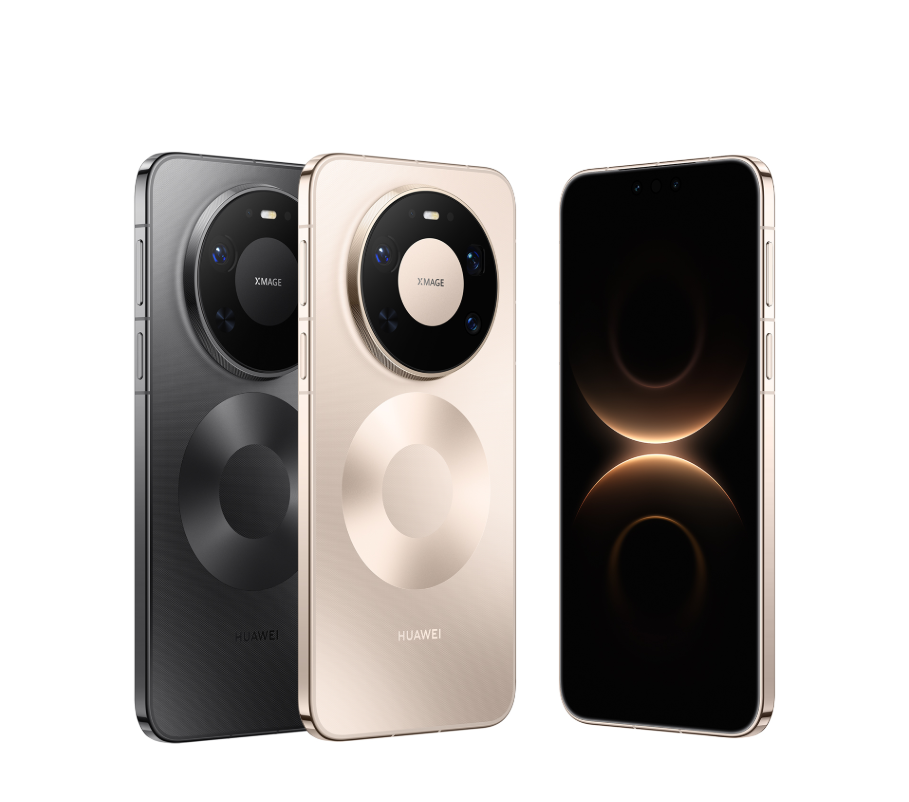
Huawei Mate 90 Pro Max, Mate 90 RS may feature dual periscope telephoto cameras with 10x optical zoom

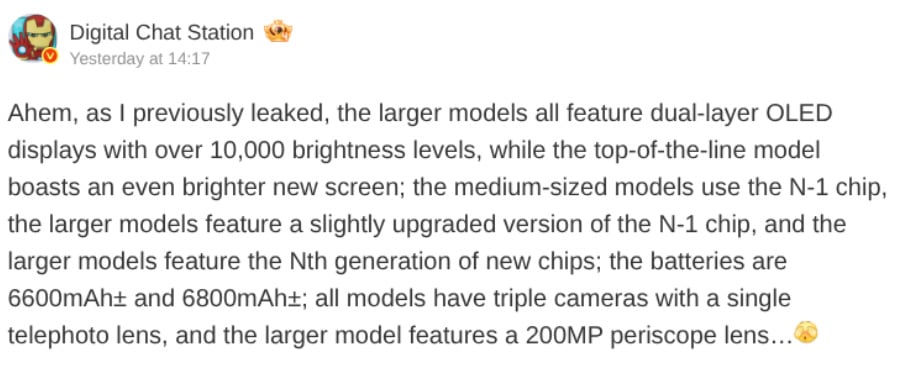
Huawei’s next-generation Mate series has started appearing in early leaks, hinting at major upgrades focused on zoom photography and battery capacity. Tipster Digital Chat Station reportedly shared the information before deleting the post shortly afterward, but details were later reshared by one of his followers online. While the tipster did not directly mention Huawei in the original leak, the emoji and specifications shared strongly suggest that the information could be related to the upcoming Mate 90 lineup, including the Mate 90 Pro Max and Mate 90 RS.

Huawei Mate 90 series may finally embrace dual periscope cameras

As per the leak, Huawei is reportedly testing dual periscope telephoto cameras on its upcoming flagship models. So far, this kind of camera setup has largely remained limited to Oppo’s Find X-series smartphones. The engineering prototypes are said to feature two 50-megapixel periscope sensors, while the larger “super-large” model is currently being evaluated with a 10x optical zoom periscope lens.

The leak further suggests that Huawei could significantly increase battery capacity on the Mate 90 Pro Max and Mate 90 RS Ultimate models. Both devices are expected to feature batteries ranging between 6,800mAh and 7,000mAh. In addition, the smartphones may arrive with a next-generation 6.9-inch Tandem OLED display, which could bring improvements in brightness, efficiency and overall panel durability.

The chipset powering the lineup is also tipped to receive a noticeable performance upgrade compared to the current generation. For reference, the existing Huawei Mate 80 RS uses the Kirin 9030 Pro chipset and features a 6.9-inch dual-layer OLED display with LTPO adaptive refresh rate support. The phone also includes multiple 50-megapixel cameras and Huawei’s in-house imaging technologies.

If Huawei introduces dual periscope cameras across its top-end Mate models, it could directly compete with Oppo’s flagship imaging approach, especially in long-range zoom photography. The addition of larger batteries and upgraded display technology may also help Huawei strengthen its premium flagship lineup further.

For more daily updates, please visit our News Section.

Stay ahead in tech! Join our Telegram community and sign up for our daily newsletter of top stories! 💡

Vivo X500 Pro Max could pack a huge 8,000mAh+ battery

Speculation is growing that Vivo may unveil the Vivo X500 series earlier than its predecessor. The lineup is expected to include three models, namely the Vivo X500, X500 Pro, and X500 Pro Max. Recent reports have already revealed the display sizes of all three phones, and now a new leak has surfaced, revealing the battery capacity of the Pro Max edition.

Vivo X500 Pro Max battery size tipped

Since there was no Pro Max edition in the X300 lineup, the upcoming Vivo X500 Pro Max will be a new model expected to feature a massive 6.85-inch OLED panel with support for 2K resolution.

It is expected to be powered by a next-generation 2nm chipset, which could be the MediaTek Dimensity 9600 Pro. The tipster added that the prototype unit is currently being tested with an 8,000mAh battery, although the final hardware design has reportedly not been completed yet. Vivo is said to still be working on the internal structure and hopes to achieve the targeted battery capacity in the final version.

The new leak aligns with a recent report claiming that the entire X500 lineup will feature high-density 7,000mAh+ batteries. This would mark a significant upgrade, considering that the Vivo X300 packs a 6,040mAh battery, while the X300 Pro houses a 6,510mAh unit. The X300s, which debuted a few weeks ago in China, features a 6.78-inch display similar to the X300 Pro but packs a larger 7,100mAh battery.

Reports further suggest that the Vivo X500 will feature a 6.59-inch display, while the Vivo X500 Pro could arrive with a 6.37-inch panel. Both devices are also expected to feature Dimensity 9600-series chipsets.

For more daily updates, please visit our News Section.

Stay ahead in tech! Join our Telegram community and sign up for our daily newsletter of top stories! 💡

Xiaomi confirms T-series return to India ahead of Xiaomi 17T launch

Xiaomi is finally bringing the T-series back to India after skipping the market for several generations. The company recently posted a short teaser on X saying, “The T is coming,” more or less confirming the return just days before the global Xiaomi 17T launch event on May 28.

This will be the first T-series launch in India since the Xiaomi 11T series back in early 2022. Since then, Xiaomi skipped India entirely with the 12T, 13T, and 14T lineups, even while the series continued doing fairly well in global markets.

The comeback is interesting because the premium mid-range segment in India has become much more aggressive over the past few years. Brands like OnePlus, iQOO, Vivo, and Realme have pushed hard into the space, while Xiaomi’s presence above the Redmi lineup has felt comparatively quieter.

Current leaks suggest India may only get the standard Xiaomi 17T and not the higher-end 17T Pro. The regular model is expected to feature a 6.59-inch 1.5K AMOLED display with a 120Hz refresh rate, MediaTek’s Dimensity 8500 Ultra chip, a 6,500mAh battery, and 67W charging support.

As for the optics, Xiaomi is reportedly using a Leica-branded triple-camera system with a 50MP main sensor, 50MP telephoto camera offering 5x optical zoom, and a 12MP ultrawide sensor. A 32MP front camera is expected on the front.

The 17T Pro, meanwhile, is rumored to come with a larger display, top-of-the-line Dimensity 9500 chipset, a bigger 7,000mAh battery, and faster charging. But its pricing could overlap too closely with proper flagship phones in India, which may explain why Xiaomi appears hesitant to launch it locally.

Early pricing leaks for the standard 17T (via Smartprix) suggest the phone could land somewhere around the ₹75,000 range depending on storage configuration.

If that happens, Xiaomi will be competing directly with performance-focused Snapdragon 8 Elite Gen 5 flagships like the OnePlus 15 and iQOO 15, as well as camera-focused devices like the Vivo X300 FE, which uses the Snapdragon 8 Gen 5.

That said, there is still some confusion around the pricing. Another recent leak hinted at a lower figure closer to ₹55,000, though that number was reportedly after launch offers and discounts. That pricing would make considerably more sense for a Dimensity 8500 Ultra-powered Xiaomi device in India. As of now, there is no reliable confirmation regarding the final Indian pricing.

There are also rumors that the Xiaomi 17 Max, the company’s upcoming battery-focused flagship, could launch in India shortly afterward.

Don’t miss a thing! Join our Telegram community for instant updates and grab our free daily newsletter for the best tech stories!

For more daily updates, please visit our News Section.

(Source: Xiaomi | NanoReview)

Oppo Find X10 series to pack 8,000mAh battery

When Oppo unveiled the Find X9 series, the company stated that it would not launch a flagship phone with a battery smaller than 7,000mAh. That is why even the compact Find X9s, which features a 6.32-inch display, packs a 7,025mAh battery. A new leak now suggests that Oppo could further increase the battery capacity with the upcoming Find X10 lineup.

Oppo Find X10 lineup battery size tipped

According to tipster Smart Pikachu, the Oppo Find X10 series may feature batteries in the 8,000mAh range. A recent leak also revealed that the lineup could include four models with different screen sizes, including 6.32-inch, 6.59-inch, 6.78-inch, and 6.89-inch variants.

While the exact name of the 6.32-inch variant is still unknown, the tipster claims that the 6.59-inch model will be the standard Find X10. The 6.78-inch and 6.89-inch variants are expected to arrive as the Find X10 Pro and Find X10 Pro Max, respectively.

The lineup is also said to include the Find X10 Ultra, which could feature the same display size as the Pro Max model. The Ultra variant is expected to be powered by the Snapdragon 8 Elite Gen 6 chipset, while the remaining Find X10 models may feature MediaTek Dimensity 9-series processors. The Ultra model is expected to launch in the first half of 2027.

Coming back to the 6.32-inch variant, it could reportedly launch as the Find X10s Pro. Interestingly, the leak suggests that Oppo may have managed to fit a massive 8,000mAh battery inside the compact device. If accurate, the phone could stand out as an engineering achievement, especially since it is also expected to include premium cameras similar to other Find-series devices.

For more daily updates, please visit our News Section.

Stay ahead in tech! Join our Telegram community and sign up for our daily newsletter of top stories! 💡

Casio’s new earU earbuds want to make better hearing stylish

Casio has introduced a new kind of wearable audio device called the earU ER-100 under its newly announced earU brand. Positioned as a hearing assist earphone rather than a traditional hearing aid, the new product combines open-ear comfort, wireless audio support, and digital sound enhancement in a more lifestyle-focused form factor.

Casio earU ER-100 specifications and features

Casio earU ER-100
Casio earU ER-100

The earU ER-100 features a cuff-style open-ear design that sits around the ear without blocking the ear canal. Casio says this approach reduces discomfort such as pressure, heat, and irritation that are commonly associated with conventional in-ear hearing devices. Each earbud weighs around 8 grams without accessories, making it suitable for longer usage sessions.

Casio has also focused heavily on natural sound reproduction. The company says the earbuds combine surrounding environmental audio with digitally corrected sound to make voices easier to hear while maintaining a better sense of direction and distance. The earbuds are also designed to reduce sound leakage and suppress unwanted resonance that can lead to feedback noise.

Users can adjust sound settings through a dedicated smartphone app. The app can automatically tune audio levels after analyzing hearing conditions and also allows switching between listening profiles designed for places such as offices, restaurants, outdoor areas, and meeting rooms.

Apart from hearing assistance, the ER-100 can also work as regular wireless earbuds for music playback and calls. The device supports Bluetooth 5.4 along with SBC, AAC, and aptX codecs. It features a 10mm dynamic driver and IPX4 splash resistance for the earbuds.

The battery is rated to deliver over 9.5 hours of continuous use in listening mode and more than 14 hours in streaming mode. Casio also says a 10-minute charge can provide around 90 minutes of listening time.

Casio earU ER-100 price and availability

Casio has confirmed that the earU ER-100 will go on sale in Japan for 49,940 JPY ($315), starting May 28 under the company’s new earU brand. The available colors include ER-100PT-NB Navy Black, ER-100PT-WY Ivory White, and ER-100SH-WY Ivory White, with different style accessories bundled depending on the variant.

At the moment, the ER-100 appears to be limited to the Japanese market. Therefore, it not clear whether it will be released in other markets.

For more daily updates, please visit our News Section.

Stay ahead in tech! Join our Telegram community and sign up for our daily newsletter of top stories! 💡

Xiaomi 17 Max shows up on Geekbench with 16GB RAM and high scores

Xiaomi is set to launch the Xiaomi 17 Max on May 21, which is tomorrow. Just before the launch, the device has now made its debut on Geekbench, revealing its performance scores. 

The Xiaomi 17 Max appeared on the benchmark under the model number 2605EPN8EC. According to the listing, the phone is powered by a Qualcomm Snapdragon 8 Elite Gen 5 chip and comes with 16GB of RAM. 

Xiaomi 17 Max Geekbench

The benchmark results show strong performance. In Geekbench 6.7.1, the device scored 3750 points in single-core performance and 11,674 points in multi-core performance. 

Xiaomi 17 Max Specifications (Expected)

Moving from the SoC, the Xiaomi 17 Max will feature a massive 8000mAh Xiaomi Jinshajiang battery. The company recently did a livestream showing the battery prowess of the phone, and it surprisingly outlasted two iPhone 17 Pro Max in video streaming. 

The front will be home to a 6.9-inch flat panel with very slim bezels. Xiaomi is calling this a Super Pixel display, which uses a new RGB sub-pixel layout and red luminous materials.

The company claims it can deliver near 2K clarity while consuming less power than a typical 1.5K OLED screen. It is also expected to support a 120Hz LTPO refresh rate, an ultrasonic in-display fingerprint sensor, and symmetrical stereo speakers.

Xiaomi 17 Max

For cameras, the Xiaomi 17 Max is expected to feature a Leica-backed 200-megapixel main camera with a 1/1.4-inch sensor, along with a 50-megapixel periscope telephoto lens offering 3x optical zoom and a 50-megapixel ultrawide camera.

Memory specs include LPDDR5X RAM and UFS 4.1 storage. Xiaomi has also reportedly redesigned the internal layout to improve cooling, which should help during gaming and heavy multitasking sessions.

Xiaomi will launch the Xiaomi Band 10 Pro, Xiaomi YU7 GT, and other products alongside Xiaomi 17 Max.

For more daily updates, please visit our News Section.

Stay ahead in tech! Join our Telegram community and sign up for our daily newsletter of top stories! 💡

7 things Google’s new Gemini Spark AI agent can do for you

Google has introduced Gemini Spark, a new AI-powered personal agent designed to handle tasks and workflows on behalf of users. Announced during Google I/O 2026, Spark represents a major shift for Gemini from being a chatbot-style assistant to becoming a more proactive digital companion.

Powered by Gemini 3.5 and Google’s Antigravity system, Spark works across Workspace apps and continues operating in the background even when users are offline. Here are seven things you can do with Gemini Spark.

Gemini Spark

1Gain more advanced abilities over time

Google says Spark will soon support texting and emailing directly, custom sub-agents, and the ability to interact with a local web browser for more advanced actions.

Google says users remain fully in control of Spark, including which apps it can access and whether it can perform certain actions. The company also noted that Spark will ask for permission before carrying out sensitive tasks such as sending emails or spending money. Gemini Spark is rolling out to trusted testers this week and will enter beta for Google AI Ultra subscribers in the US next week.

For more daily updates, please visit our News Section.

Stay ahead in tech! Join our Telegram community and sign up for our daily newsletter of top stories! 💡

Next

9 things to know about Google’s massive AI Search upgrade

Google has announced one of the biggest upgrades to Search in years during Google I/O 2026. The company is expanding AI-powered experiences across Search with smarter tools, deeper personalisation, AI agents, and custom interactive experiences. Here are nine important things to know about Google’s new AI Search plans.

9What happens to traditional Search results?

Google’s latest AI Search upgrades also hint at a gradual shift away from the traditional “10 blue links” experience. Most of these advanced features are currently tied to AI Mode, while regular Search will continue showing standard web results. However, with AI-generated summaries, conversational responses, and agents becoming more prominent, users may rely less on manually browsing multiple websites over time.

Next

Honor announces Honor Win Turbo launch in late May, to feature 10,000mAh battery

Honor introduced its Win series late last year with two phones, the Honor Win and Honor Win RT. Both devices pack massive 10,000mAh batteries alongside flagship Snapdragon 8 Elite series processors. The company is now preparing a more affordable entry in the lineup.

Honor recently started teasing the Honor Win Turbo, and has officially confirmed today that the smartphone will launch in China on May 29.

Honor Win Turbo specifications (expected)

Meanwhile, tipster Digital Chat Station on Weibo claims the phone will share several specifications with the Honor Power 2. 

As a result, unlike the Snapdragon 8 Elite-powered Win models, the Win Turbo is expected to run on MediaTek’s Dimensity 8500 Elite chipset. The phone could also arrive with up to 16GB of RAM and 512GB of storage.

Honor Win Turbo Launch Revealed

On the front, the device is expected to feature a 1.5K LTPS flat display paired with a metal frame. It’s also rumored to include a 50MP primary camera with OIS (optical image stabilization), housed inside a horizontal matrix-style camera module.

However, the tipster notes that the Honor Win Turbo will not include a built-in cooling fan, unlike the original Win.

What may remain unchanged is the massive 10,000mAh battery. Honor hasn’t officially confirmed the battery capacity yet, but Win is more about big battery, so it’s safe to assume this. The device is also expected to support 80W fast charging.

For photography, the rumored setup includes a 50MP primary rear camera, a 5MP ultra-wide sensor, and a 16MP front-facing camera for selfies and video calls.

With the official launch just days away, Honor likely won’t keep the remaining details under wraps for much longer.

For more daily updates, please visit our News Section.

Stay ahead in tech! Join our Telegram community and sign up for our daily newsletter of top stories! 💡

(Source)
iQOO 15T Roundup: Here’s Everything You Need To Know

iQOO is preparing to launch its next performance-focused flagship, the iQOO 15T, in China. With the official launch just around the corner, the company has been slowly revealing almost everything about the phone. And from everything we know about the device so far, we can predict that the device is built for performance without compromise.

iQOO 15T launch date-
iQOO 15T

So here’s everything you need to know about the iQOO 15T before its launch. 

1. 2K display with high refresh rate

On the front, the iQOO 15T will feature a 6.82-inch flat display with a 2K resolution and a 144Hz refresh rate. The panel uses an 8T LTPO structure and BOE’s Q10+ substrate, which should help with smoother refresh rate switching and better power efficiency.

The display is also described as a high-end “Everest” flat screen with very thin bezels and a 2K resolution. 

The phone also supports advanced gaming features like 2K resolution combined with 144fps frame interpolation, depending on the title and optimisation.

2. Dimensity 9500 and Q3 gaming chip 

At the core of the device is the Dimensity 9500 chipset from MediaTek. This is paired with iQOO’s self-developed Q3 gaming chip, designed to handle heavy graphics workloads and gaming optimisation.

Together, the system is tuned for sustained performance rather than short bursts. iQOO claims the phone can maintain near full-frame gaming performance for long periods while keeping power consumption under control, even in demanding games like Genshin Impact.

The Q3 chip also enables features like full-scene ray tracing, super-resolution rendering, and smoother frame generation. In supported games, users may even get 2K resolution combined with 144fps output. The iQOO 15T will run OriginOS 6 based on Android 16.

As is common in flagships now, the iQOO 15T uses a silicon-carbon battery of 8000mAh. Despite the large capacity, the phone still supports 100W fast wired charging. iQOO also includes a system called Global Direct Drive Power Supply 2.0, which helps reduce heat when the phone is charging and gaming at the same time.

3. Cameras

For cameras, the iQOO 15T introduces a major upgrade for the brand. It will feature a 200-megapixel main rear camera, which is the first time such a high-resolution sensor is used on an iQOO flagship.

This main camera uses a large sensor and supports CIPA 4.5-level stabilisation, similar to what is found in some Vivo imaging-focused flagships. It also supports 4x lossless zoom, which should help maintain detail when cropping or zooming into images.

Along with the main sensor, the phone also includes a 50-megapixel ultra-wide camera. On the front, there is a 16-megapixel selfie camera.

The camera system also supports full focal-length portrait photography and AI-based image enhancements. While iQOO is still clearly a performance-first brand, this setup shows it is also trying to improve its imaging capabilities.

4. Design and build

In terms of design, the iQOO 15T follows the styling of the iQOO 15 Ultra. It comes with a square camera module that has a transparent-inspired look.

The phone will be available in three colour options: Qingyun, Track Edition, and Legend Edition. It weighs around 216 grams, depending on the variant, and measures roughly 8.25mm to 8.4mm in thickness.

Despite the large battery, iQOO has managed to keep the design relatively slim for a device in this category.

The phone also includes practical hardware features like a 3D ultrasonic fingerprint sensor, a metal frame, and IP68/IP69 water and dust resistance ratings.

5. Price

There is still no official pricing for the iQOO 15T. However, based on its specifications, it is expected to sit in the upper-premium segment in China.

Global availability is also unclear at the moment. iQOO has not confirmed whether the device will launch outside China.

For more daily updates, please visit our News Section.

Stay ahead in tech! Join our Telegram community and sign up for our daily newsletter of top stories! 💡

Wear OS 7 is official: 7 major features coming to smartwatches

Wear OS 7 is now official, and Google says the new update focuses on smarter AI experiences, improved battery life, and a more flexible smartwatch interface. Announced during Google I/O 2026, the platform is based on Android 17 and will power upcoming smartwatches launching later this year. Here are seven important things to know about Wear OS 7.

WearOS 7
WearOS 7

7Fitness and media controls are improving

Wear OS 7 adds a built-in Wear Workout Tracker that offers standardised fitness tracking tools for app developers. Google is also introducing smarter media controls, including per-app auto-launch options and a remote audio output switcher.

If you wish to try the Wear OS 7, Google says you can test it through the developer-focused Wear OS 7 Canary Emulator before the official rollout later this year.

For more daily updates, please visit our News Section.

Stay ahead in tech! Join our Telegram community and sign up for our daily newsletter of top stories! 💡

Next

Alleged Redmi Turbo 6 Max key specs: 7-inch display, 3nm Dimensity 9-series chip, 10,000mAh+ battery

Earlier this month, tipster Digital Chat Station revealed the existence of a new Redmi phone equipped with a huge 10,000mAh+ battery. At the time, the tipster did not mention the chipset powering the device. However, a new Weibo post now appears to reveal additional details. While the phone’s name has not been officially confirmed, it is believed that the leak could be referring to the Redmi Turbo 6 Max.

Redmi Turbo 6 Max key specs tipped

According to the leak, the Redmi Turbo 6 Max may feature a 7-inch display with support for 2K resolution. The current engineering prototype of the device is said to be equipped with a 3nm Dimensity 9-series flagship chipset.

The existing Redmi Turbo 5 Max is powered by the Dimensity 9500s. Based on this, it appears that the Turbo 6 Max could either retain the same 3nm chipset or arrive with the Dimensity 9500. The tipster also claims that the device’s battery capacity exceeds the 10,000mAh mark.

A previous leak suggested that the device may also include an ultrasonic in-display fingerprint scanner, a metal middle frame, and IP68/IP69-rated dust and water resistance. As for the launch timeline, the phone is expected to debut by the end of this year.

In related news, rumors surrounding the Redmi K100 series suggest that the lineup could launch earlier than its predecessor. Expected to go official in September, the series may include the Redmi K100 and K100 Pro powered by the Snapdragon 8 Elite Gen 5, while the Redmi K100 Pro Max could feature the upcoming Snapdragon 8 Elite Gen 6 chipset.

Redmi is also reportedly working on the Redmi Note 17 lineup, which is expected to launch in July or August this year.

For more daily updates, please visit our News Section.

Stay ahead in tech! Join our Telegram community and sign up for our daily newsletter of top stories! 💡

Vivo S60, S60 Vitality Edition official images, variants confirmed before launch

On May 29, Vivo will announce two new S-series phones in China. Alongside the Vivo S60, the brand will also unveil the slightly lower-end Vivo S60 Vitality Edition. These devices are now listed on JD.com for pre-orders, revealing their official images, color options, and configurations ahead of launch.

Vivo S60 series design, variants revealed

The Vivo S60 and S60 Vitality Edition share the same design and will be available in the same color options, including Starry Sea, Early Summer Green, and Midsummer Night. Both phones will also be offered in 12GB + 256GB and 12GB + 512GB configurations.

While the S60 will also come in a higher-end 16GB + 512GB version, the Vitality Edition will start with an 8GB + 256GB base model, suggesting it will be the more affordable option. Vivo has gradually revealed key details about the S60 series, but it remains unclear what specifications will differ between the two smartphones.

According to reports, the Vivo S60 will feature a 6.59-inch OLED display with a 1.5K resolution and a 120Hz refresh rate. For security, it will include an ultrasonic in-display fingerprint scanner and run Android 16 with OriginOS 6.

The S60 is expected to be powered by the Snapdragon 8s Gen 3 chipset and pack a 7,200mAh battery with 90W fast charging support. It will feature a 50-megapixel triple-camera setup, which is also said to include a Sony IMX8-series periscope telephoto camera. Additional features may include stereo dual speakers, an X-axis linear motor, an IR blaster, and IP68/IP69-rated dust and water resistance.

For more daily updates, please visit our News Section.

Stay ahead in tech! Join our Telegram community and sign up for our daily newsletter of top stories! 💡

7 things you should know about Samsung, Google Android XR smart glasses

Samsung and Google have officially showcased their upcoming AI-powered smart glasses during Google I/O 2026. Developed with eyewear brands Gentle Monster and Warby Parker, the new wearable is designed to bring Gemini AI features into a more practical everyday form factor. While complete specifications are still under wraps, the companies have already revealed several important details about the intelligent eyewear.

Google, Samsung smart glasses

7Launching later this year

Google confirmed that the first generation will mainly focus on audio-based experiences instead of built-in display features. It will launch later this fall in select markets. Pricing and full hardware specifications are expected to be announced in the coming months.

Next

Xiaomi announces its most premium cordless vacuum with automatic dust collection system

It’s a new day, another new Mijia product announcement. After announcing a mini washing machine, an AC, a French-style refrigerator, and whatnot over the past few days, Xiaomi today unveiled the Mijia Cordless Vacuum Cleaner 4 Max. And as far as we know, it’s currently the most expensive cordless vacuum cleaner by Mijia. 

Xiaomi Mijia Cordless Vacuum Cleaner 4 Max Specification

The vacuum is powered by an 800W high-speed brushless motor capable of spinning at 150,000 RPM. According to the company, it can deliver up to 280AW suction power and a maximum vacuum level of 27,000Pa. That is enough for handling everything from dust and pet hair to larger debris like cat litter and dry food particles.

Xiaomi MIjia Cordless Vacuum Cleaner 4 Max Design

The machine is fitted with Xiaomi’s new dual-airflow self-collecting dust system. As a result, users do not need to manually empty the dust cup after every cleaning session. The vacuum automatically transfers debris into a 3-liter antibacterial dust bag inside the charging base instead. Xiaomi claims the system can achieve a 99% dust collection rate and can empty the dust cup in as little as 11 seconds.

The company also says the dust bag includes a silver-ion antibacterial layer with a claimed 99.99% antibacterial rate. Under typical use, you can reportedly go as long as 100 days before needing to replace the bag.

12-cone separation and 90-minute runtime

The vacuum also includes several technologies, like a 180-degree wide-angle blue light dust detection system to reveal fine dust particles that are difficult to see with the naked eye. The floor brush uses a right-edge design to improve cleaning along walls and corners, while there’s a 12-cone cyclone separation system that helps prevent clogging and maintain consistent suction over time.

The Mijia Cordless Vacuum Cleaner 4 Max runs off a built-in 4000mAh battery pack with up to 90 minutes of runtime. Good thing, the battery is removable!

Like many recent Xiaomi smart home products, the vacuum also supports Xiaomi HyperOS Connectivity and works with the Mi Home app. Users can monitor battery health, adjust suction levels, receive dust bag replacement reminders, and trigger automated smart home routines. 

Xiaomi says the vacuum can even interact with other smart devices, including air purifiers and smart locks, to create automated cleaning scenarios.

Pricing and Availability

The Cordless Mijia Vacuum Cleaner 4 Max is available for CNY 1,999 (~ $295) at Xiaomi Youpin. As usual, there are slim chances of the product making its global debut.

For more daily updates, please visit our News Section.

Stay ahead in tech! Join our Telegram community and sign up for our daily newsletter of top stories! 💡

Lenovo announces Legion 300W GaN4.0 adapter for under $60

As scheduled, Lenovo has announced a new 300W Legion GaN charger, alongside several other products, including the Lenovo Yoga Air 14 Ultra and the Lenovo Legion Y70 smartphone, yesterday.

And while laptop chargers are usually the least exciting part of a gaming setup, Lenovo seems to be betting that people are tired of carrying giant power bricks around.

Lenovo Legion 300W GaN adapter Launch Specs Price

Lenovo Legion 300W GaN Adapter Specifications

The new Legion 300W GaN adapter uses GaN4.0 technology, which allows it to deliver high power output in a smaller body compared to traditional adapters. Lenovo says the charger is compact at a body footprint of 82 x 82 x 33mm, so you don’t have to carry oversized adapters that typically ship with high-performance gaming laptops.

The charger supports Lenovo’s proprietary 20V/15A fast charging protocol and is designed for Legion gaming laptops that run in performance mode. 

Lenovo Legion 300W adpater with GaN 4.0 tech

The adapter uses a three-prong grounded plug design that the company says helps prevent static leakage. It also claims the charger can maintain a stable 300W output by operating within a “golden voltage range” between 200V and 240V.

There are also some smaller hardware touches for durability. It has a reinforced Slim square connector, soft rubber reinforcement around the cable, and a 1.5-meter charging cable in the box. An optional version with a digital display can show real-time charging power through what Lenovo calls its “AI Power” monitoring system.

Lenovo Legion 300W GaN charger design

The adapter supports a long list of Legion laptops from 2023 through 2026, including models in the Legion 7000P, 7000X, 9000P, and 9000X series. Lenovo also says that other laptops using its Slim square charging connector may technically work with the adapter, though charging performance could vary depending on the system and BIOS limitations.

The Legion 300W GaN adapter is priced at 399 yuan (~ $58) in China and will officially go on sale on May 31.

For more daily updates, please visit our News Section.

Stay ahead in tech! Join our Telegram community and sign up for our daily newsletter of top stories! 💡