Samsung has announced a new festive campaign aimed at consumers planning to upgrade their home entertainment systems this festival season in India. The initiative focuses on its Vision AI television range, with deals designed to make larger screens more accessible. The company is also offering additional benefits to make purchases and long-term ownership more convenient.
Samsung rolls out special offers on its Vision AI TVs
Called ‘Big, Bigger, Biggest’, the campaign includes a free Samsung Vision AI TV worth up to Rs 1,59,990 or a Samsung Soundbar worth up to Rs 1,10,990 with eligible television purchases. Customers can also receive up to 20% cashback, zero down payment options and a three-year comprehensive warranty. The offers are subject to applicable terms and conditions, so buyers should check eligibility before making a purchase.
Samsung has also highlighted its installation service, allowing customers within municipal limits to get eligible televisions installed within four hours of registering a request. Availability and applicable conditions may vary. The company announced the campaign on October 16, 2026, as part of its festive push in India.
Samsung’s Vision AI television lineup covers screen sizes ranging from 32 inches to 115 inches. The range combines AI-powered picture and sound enhancements with connected features designed to improve everyday viewing, whether users are watching films, television shows, sports or other entertainment. SmartThings integration also enables connectivity with compatible smart home devices.
Additional ownership benefits include Samsung TV Plus, which provides access to more than 200 free streaming channels, and Samsung Art+, which offers three months of access to the Samsung Art Store. Samsung Sound+ focuses on enhancing the audio experience, while Samsung Care+ provides extended warranty benefits. Buyers can also access paperless financing through Samsung Finance+ and receive up to seven years of operating system upgrades on eligible televisions.
The campaign gives buyers several ways to save on a television upgrade while receiving additional services and entertainment benefits. However, the value of the offer will depend on the eligible television model and the terms attached to each deal. Would you consider buying a Samsung Vision AI TV this Diwali for the free television or soundbar offer? Share your thoughts in the comments.
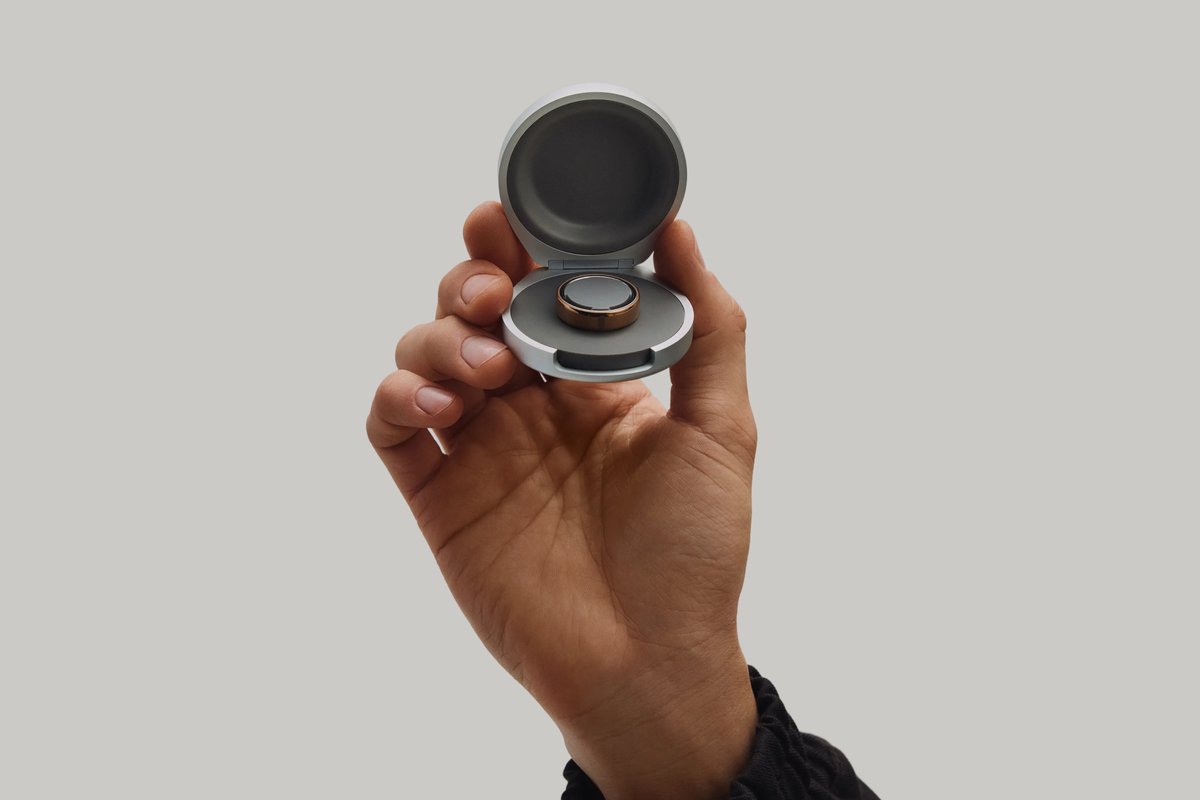
Oura has opened pre-orders for the Oura Ring 5 in India, with the fifth-generation wearable billed as the world’s smallest smart ring. The Oura Ring 5 India price starts at Rs 39,900 (~$422), and buyers can reserve one from October 22, 2026, at Croma stores across the country or online through Amazon.
Oura sells the ring in six finishes split into two brackets. Silver and Black cost Rs 39,900 (~$422), while Gold, Deep Rose, Stealth and Brushed Silver sit higher at Rs 50,900 (~$538). Gold gets a lighter tone closer to true gold, and Deep Rose is a new copper-rose shade. Every finish comes in sizes 6 through 13.
Buyers should also budget for the Oura Membership, which costs Rs 599 (~$6.33) per month with taxes included. It unlocks the personalized insights in the Oura App.
The Ring 5 takes up 40 percent less space than the Oura Ring 4. It measures 6.09 mm wide and 2.28 mm thick, uses non-allergenic titanium, and carries an IP68 rating. Inside, lower-profile sensor domes and stronger LEDs work with 12 optimized signal pathways, which Oura says deliver cleaner readings across more finger types and skin tones. A newly designed battery lasts 6 to 9 days per charge based on ring size and how the ring is used.
On the software side, Indian members get Health Radar, which grew out of Symptom Radar and watches heart health and nighttime breathing in the background. It includes Blood Pressure Signals and Nighttime BP, both wellness features that do not give mmHg readings or diagnose any condition. GLP-1 Insights, Menopause Insights, Cardio Effort and automatic VO2 Max round out the package.
Oura also makes an optional Charging Case for the Ring 5, though it is sold separately and India is not yet on its list of markets. The company stresses that the ring is not a medical device.
Honor has been actively launching new phones in China, keeping its flagship and performance-focused lineups busy. Last month saw the arrival of the Magic 9 lineup, and the company has now unveiled the Win 2 series of performance-oriented flagship phones with huge batteries. The brand is reportedly preparing another smartphone launch for November, with the Honor 700 series expected to join its growing portfolio.
Honor 700 Pro details tipped
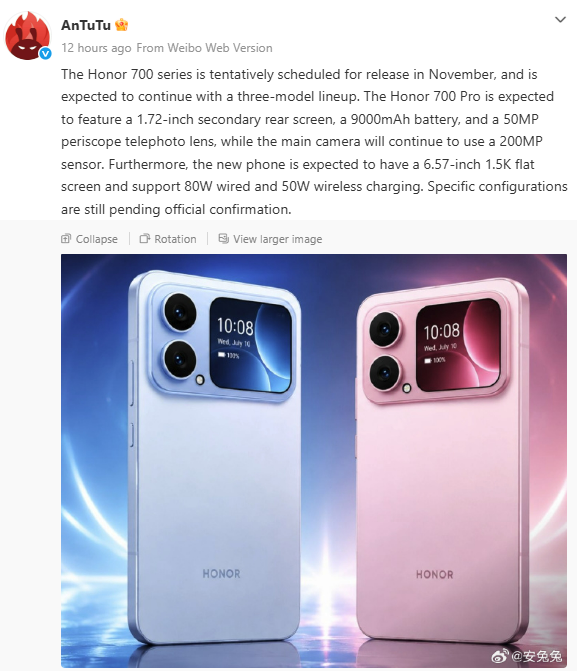
A Chinese tipster has revealed that the Honor 700 series will comprise three models. AnTuTu has reiterated the three-model lineup in a recent Weibo post and shared some key specifications of the Honor 700 Pro, which could sit at the top of the series. The lineup is tentatively scheduled to launch in China in November, although Honor has yet to confirm the launch timeline or the identities of all three models.
The Honor 700 Pro is reportedly being developed with a 1.72-inch rear display, which could provide additional functionality without requiring users to turn on the main screen. The secondary panel may prove useful for checking notifications, viewing information or framing selfies with the rear cameras, although its precise capabilities have not been disclosed.
Includes AI-generated image
The Honor 700 Pro is tipped to feature a 9,000mAh battery, a substantial capacity for a conventional smartphone. It is also expected to support 80W wired charging and 50W wireless charging, potentially combining long battery life with convenient charging options.
For photography, the handset is said to feature a 200-megapixel primary camera alongside a 50-megapixel periscope telephoto camera. While it is not mentioned in the leak, the rear setup is also expected to feature an ultra-wide camera.
The device is also tipped to sport a 6.57-inch flat display with 1.5K resolution. If these details prove accurate, the Honor 700 Pro could combine a relatively compact screen with a large battery and versatile camera hardware. However, all the reported specifications remain unofficial and could change before launch.
Apart from Honor, Vivo is reportedly preparing to launch the Vivo S70 lineup, while the Oppo Reno 17 series is also said to be in development for a November debut in China. With several brands potentially introducing new phones in the same month, which rumoured feature of the Honor 700 Pro excites you the most? Share your thoughts in the comments.
Insta360 has announced the Insta360 Mic today. The wireless microphone sits between the entry-level Mic Air and the flagship Mic Pro that the company already sells. The new model brings some of the Mic Pro’s features to a lower price point, including a screen that you can personalize and onboard audio recording through a microSD card slot.
The transmitter’s E-Ink display can show an uploaded image, whether it’s a channel logo, an emoji, a landscape, or a photo of your dog. Since the microphone clips onto your shirt or jacket, the screen also gives you a way to personalize its appearance on camera.
The microSD slot lets the transmitter record audio independently as a backup to whatever your camera or phone captures. It supports 32-bit float recording, which provides more room to recover audio levels during editing if a recording comes in too loud or too quiet.
Noise reduction and camera compatibility on Insta360 Mic
Insta360 has also added a dedicated AI audio chip for noise reduction. The company says it cuts more background noise while leaving fewer audible artifacts, helping voices sound natural. There are two modes available: Auto to prevent clipping, while Dynamic keeps volume levels more consistent. You can also choose between three voice tone presets: Regular, Rich, and Bright.
The Insta360 Mic can connect directly to compatible Insta360 cameras through Bluetooth, so you don’t need the receiver. For other cameras and phones, the receiver connects through the included USB-C smartphone adapter or a 3.5mm cable. It can handle up to four transmitters at once, including a mix of Insta360 Mic and Mic Pro units.
Each transmitter is rated for up to 13 hours of battery life, while the charging case extends the total runtime to up to 34 hours.
The Insta360 Mic is available through the Insta360 Official Store, Amazon, and authorized retailers. Below are the prices for the transmitter, or transmitter plus receiver set:
Insta360 Mic (2 transmitters + 1 receiver): US$249.99
Insta360 Mic (1 transmitter + 1 receiver): US$139.99
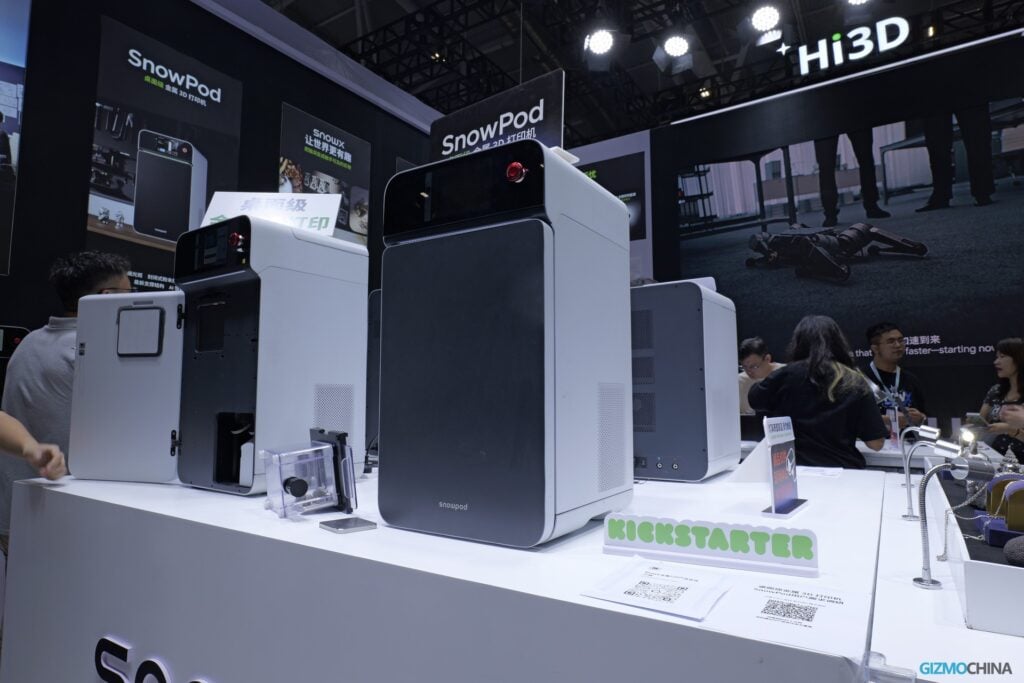
Desktop FDM printing has been mainstream for years, but metal printing has stubbornly remained locked inside industrial workshops and six‑figure price tags. At TCT Shenzhen, our review team stopped by the SnowX booth to see the SnowPod in action—a compact Laser Powder Bed Fusion (LPBF) system now live on Kickstarter—and to find out whether real metal additive manufacturing can genuinely fit on a workbench.
SnowPod: Industrial LPBF, Compressed
The core proposition is straightforward: fit the essential safety and process systems of an LPBF machine into a 360 × 360 × 660 mm footprint weighing roughly 40 kg—smaller than some flagship FDM printers. The build volume is 80 × 80 × 100 mm, a deliberate compromise for single parts, jewelry, prototypes, and small mechanical components rather than high‑throughput production.
Inside, a 200 W fiber laser delivers a 40 μm spot diameter with adjustable layer heights of 30–60 μm and 3 μm Z‑axis precision—specifications that allow fine contours, sharp edges, and narrow gaps to survive the print. The system launches with 316L stainless steel, with additional materials planned via updates.
Metal powder is the biggest hurdle for desktop LPBF, and SnowX’s answer is a closed‑loop architecture. Powder arrives in sealed cartridges, the build chamber remains enclosed, and dual HEPA‑13/14 filters work alongside PM2.5, gas, temperature, and humidity sensors to keep the environment stable. Unused powder is recovered at a reported rate of approximately 90%, depending on part geometry.
For the inert gas supply, SnowX built the NitroPod, a separate nitrogen generator that extracts N₂ from ambient air and feeds it directly into the SnowPod—eliminating the need for external gas bottles. At the booth, our team watched the NitroPod running alongside the printer, and the setup looked noticeably less intimidating than the gas‑cylinder arrangements typical of industrial LPBF installations.
AI Monitoring & Snap-off Supports
A built‑in camera and AI‑based visual algorithm monitor each build from the first layer, flagging issues such as edge lifting or insufficient powder delivery. Post‑processing gets an unusual solution as well: SnowX designed a breakaway support structure inspired by origami. Instead of sawing or wire‑EDM, the supports are removed by peeling them away in a controlled sequence, described by the company as behaving “like a zipper”.
The machine ships with SnowPath, SnowX’s in‑house slicer and toolpath software, which handles STL, STEP, 3MF, and SVG files and can initiate builds directly. During our booth visit, the team demonstrated the workflow from file preparation to a live build, and the interface appeared approachable for users without a background in industrial metal printing.
SnowX has opened a Kickstarter pre‑launch page, with the campaign scheduled for Q4 2026. The company has not yet disclosed official pricing, though the SnowPod is widely positioned in the sub‑$10,000 bracket—competing with systems like MetalBase, Scrap Labs, and Xact Metal that occupy the same compact LPBF space.
First Impressions from the Show Floor
Our review team spent time at the SnowX booth at TCT Shenzhen, watching live demos, handing-on with plenty of printed models, and speaking with CEO of SnowX, Fangda Xu, about the cartridge workflow, the NitroPod setup, and the breakaway support system. The SnowPod is not trying to be a miniature production machine. Its value lies in packaging the safety interlocks, sealed powder logistics, filtration, and gas generation that make LPBF viable into a unit small enough for a studio or lab. The parts on display had the expected metal finish, and the booth drew a steady stream of visitors curious about how the system handles powder safely in a desktop environment.
Whether SnowX can deliver on the software maturity and long‑term material roadmap remains to be seen—the campaign is still in its pre‑launch phase. But based on what our team saw at TCT Shenzhen, the SnowPod is one of the more credible attempts at accessible desktop metal printing we have come across.
For readers interested in following the campaign, the Kickstarter pre‑launch page is now open for sign‑ups, and additional details are available on the SnowX website.
HOHOTIME is launching its All-in-One AI Smart Training Station on Kickstarter, offering a new approach to strength training and home fitness. Designed with four independently adjustable resistance arms, AI-powered coaching and a library of 860 exercises, the machine aims to combine multiple workout options in a single setup.
This new design can replace more than 60 traditional fitness machines, making it an option for users who want a versatile training system without filling their workout space with separate equipment.
Four-Arm Design for Full-Body Training
The main feature of the HOHOTIME Smart Training Station is its four-arm resistance system. Each arm can be adjusted independently, with a movement adjustment range of 150 degrees. This design allows users to set up different movement paths for exercises such as presses, pulls, squats and rotational movements.
The system supports 95% of gym exercises and can accommodate different body types, heights and training positions. Each arm offers up to 400 lb of resistance, while the high-strength nylon cables are rated for loads of up to 800 lb.
The machine has a metal-bodied structure, aluminum-alloy pulley housing and a metallic finish. Built-in wheels are included to make moving the equipment easier. It is available in Black & Golden and White Radiance colour options.
AI Coaching and 860 Guided Exercises
HOHOTIME combines its resistance system with AI-powered workout assistance. Its motion-tracking system uses 42-point skeletal tracking to monitor body movements and provide feedback during exercise sessions. The AI Coach is designed to guide users through workouts, help improve exercise technique and track performance.
The system can monitor workout data such as power, repetitions and movement quality. It also records training sessions to help users follow their progress over time.
The built-in exercise library contains 860 exercises, with no additional exercise-library fee advertised. Training options shown in the campaign include strength workouts, HIIT, boxing, stretching, meditation, recovery and golf-related exercises.
Users can interact with the machine through its touchscreen, physical buttons and rotary controls, or voice control.
Five Accessories and HYROX Training Support
The training station supports five specialised accessories: Grip-Free Gloves, a T-Bar, a Millimeter-Adjustable Support Belt, a Scapular Stabilization Bench and Ski Handles. These attachments are designed to expand the range of exercises and provide additional training positions.
HOHOTIME also comes with selected HYROX training capabilities. The machine supports six core HYROX training movements, with AI tracking and performance monitoring to help users work on endurance, pushing power, lower-body strength and full-body conditioning. Please note that it is intended for home preparation rather than a confirmed replacement for every official HYROX race station.
The system can also connect with compatible body composition analyzers and heart-rate wristbands, bringing additional fitness information into the training experience.
Kickstarter Price, Warranty and Availability
HOHOTIME is scheduled to launch its Kickstarter campaign on October 22, 2026, with a Super Early Bird starting price of $2,799.
The purchase benefits include a two-year warranty and a 30-day free trial. Buyers should check the final Kickstarter reward tiers for package contents, shipping charges, taxes, return conditions and warranty exclusions before pledging.
With its four-arm resistance system, AI coaching and broad exercise library, HOHOTIME aims to offer a flexible alternative to traditional home gym equipment.
Choosing between Apple’s Pro iPhones is no longer simply about buying the more expensive model. The standard Pro targets users who want flagship capabilities in a more manageable package, while the Pro Max caters to those who prefer a larger screen and greater battery endurance. With both models sharing the same core hardware and camera system, the real decision comes down to how much the larger experience improves everyday use.
Major Upgrades:
Category
iPhone 18 Pro
iPhone 18 Pro Max
Upgrade
Display Size
6.3 inches
6.9 inches
Larger display
Display Resolution
1206 × 2622 pixels
1320 × 2868 pixels
Higher resolution
Battery Capacity (Nano-SIM)
4,056mAh
5,391mAh
Larger battery
Battery Capacity (eSIM-only)
4,288mAh (unconfirmed)
5,567mAh
Larger listed capacity
Screen-to-Body Ratio
Approximately 89.4%
Approximately 90.7%
Higher screen-to-body ratio
Price
$1,200 / ₹164,900
$1,300 / ₹180,000
iPhone 18 Pro – Lower price
Disclaimer: Specs are based on available data. Actual performance may vary. Verify details from official sources before buying.
The iPhone 18 Pro and iPhone 18 Pro Max follow Apple’s premium design language, combining Ceramic Shield 2 protection with an aluminum frame and a refined glass finish. Both carry an IP68 rating for dust and water resistance, making them equally suitable for demanding everyday use. Their familiar construction also gives buyers a consistent flagship experience regardless of which model they choose.
The key difference is handling. The iPhone 18 Pro is easier to manage during one-handed use, commuting, and quick interactions, while the Pro Max prioritizes an expansive viewing experience. The smaller model feels more practical for users who frequently use their phones on the move, whereas the larger version better suits those who enjoy immersive content.
Display Quality
Both phones feature LTPO Super Retina XDR OLED displays with 120Hz refresh rates, HDR10, Dolby Vision, and an advertised peak brightness of 3,000 nits. Their anti-reflective coatings and Ceramic Shield 2 protection further support outdoor visibility and everyday durability. Scrolling, animations, and compatible games should feel equally fluid on either device.
The Pro Max’s larger screen makes movies, gaming, document editing, and multitasking more comfortable. The standard Pro, however, retains the same premium display technology without demanding as much attention from the user’s hand. Neither sacrifices flagship display quality, so the choice primarily depends on screen preference.
Verdict
The iPhone 18 Pro is the more practical everyday companion, while the Pro Max delivers a more immersive viewing experience. Both offer excellent display quality, but the smaller model wins on convenience.
2. Specifications Including Battery
Performance
Both models run iOS 27 and use Apple’s A20 Pro chipset, built on a 2nm process. Their hexa-core CPUs and seven-core Apple GPUs provide a shared foundation for demanding games, advanced photography, video editing, and AI-powered features. With 12GB of RAM across the listed storage configurations, neither phone has an obvious advantage in memory capacity or core processing hardware.
This shared platform means buyers should expect broadly comparable performance rather than a meaningful speed gap between the two models. Both offer storage options ranging from 256GB to 2TB, giving power users room for large applications, high-resolution media, and professional video projects. The standard Pro is therefore just as compelling for performance-focused users who prefer a smaller phone.
Battery and Charging
Battery capacity separates these models more clearly. The iPhone 18 Pro Max offers a 5,391mAh battery in its nano-SIM version and 5,567mAh in its eSIM-only version. The standard Pro lists 4,056mAh for nano-SIM models, while its eSIM-only capacity remains officially unconfirmed. The Pro Max has the stronger starting position for extended use.
Both support wired charging that reaches 50% in 15 minutes, alongside 25W MagSafe and Qi2 wireless charging, with regional restrictions applying to wireless speeds. Reverse wired charging is also available at 4.5W. The Pro Max is the more reassuring option for long travel days, gaming sessions, and heavy media consumption, although actual endurance depends on usage.
Verdict
The Pro Max wins for battery capacity and likely endurance, while both deliver the same core processing platform and charging capabilities. Heavy users should favor the larger model.
3. Camera
Main and Secondary Lenses
The iPhone 18 Pro and Pro Max share a triple 48MP rear camera system, covering wide, periscope telephoto, and ultrawide photography. The main camera features a variable aperture, dual-pixel autofocus, and second-generation sensor-shift stabilization. The telephoto camera offers 4x optical zoom, while the ultrawide lens provides a 120-degree field of view for landscapes and group shots.
Both also include a LiDAR scanner for depth sensing and support advanced video recording, including Dolby Vision HDR, ProRes, ProRes RAW, and Apple Log 2. These capabilities make either model attractive to mobile creators who need greater control over their footage. Since the core camera hardware is shared, the Pro Max does not offer an inherent lens advantage. The standard Pro can therefore deliver the same versatile shooting experience in a more compact format.
Selfie Camera
Both phones feature an 18MP multi-aspect ultrawide front camera with autofocus and an SL 3D sensor for depth sensing and biometrics. This combination supports detailed selfies, group framing, and Face ID while offering flexibility for different compositions. Front-camera video recording also supports 4K at up to 60fps, alongside gyro-based electronic stabilization.
Their shared front-camera hardware and advanced video features make both devices suitable for video calls, social media, and content creation. The Pro Max’s larger display can make reviewing footage and framing shots more comfortable, but it does not provide a distinct selfie-camera advantage. For buyers who prioritize imaging quality over screen size, the standard Pro remains equally capable.
Verdict
Neither model has a clear camera hardware advantage. The iPhone 18 Pro Max offers a larger screen for reviewing photos and videos, but the standard Pro delivers the same versatile camera system.
4. Pricing
The iPhone 18 Pro is priced around $1,200 / ₹164,900, while the iPhone 18 Pro Max is priced around $1,300 / ₹180,000. The difference is approximately $100 or ₹15,100, placing the Pro Max in a higher premium tier. Both command flagship prices, so the decision depends on whether the larger display and battery justify the additional expense.
For buyers choosing between the two, the standard Pro offers a less expensive entry point into Apple’s top-tier hardware. It retains the same A20 Pro chipset, camera configuration, display technology, and listed storage options. The Pro Max directs the extra spending toward a larger viewing experience and greater battery capacity rather than a substantially different core feature set.
Is the price justified?
The Pro Max’s premium is easier to justify for users who watch videos, play games, or spend long hours away from a charger. Its larger battery adds practical value beyond the screen upgrade. However, buyers who mainly browse, communicate, photograph, and use everyday apps can save money with the standard Pro without giving up the central flagship experience.
Verdict
The iPhone 18 Pro offers better value for most buyers, delivering comparable performance and cameras for less. The Pro Max is worth the premium for screen size and battery priorities.
Disclaimer: Prices are approximate and may vary based on country, region, launch timing, and applicable taxes. Always check whether the listed price is for a China unit or a global/international variant when purchasing.
5. Conclusion
The iPhone 18 Pro and Pro Max share the features that matter most to flagship users: Apple’s A20 Pro processor, a versatile triple 48MP camera system, 120Hz OLED displays, advanced video recording, and premium connectivity. Both also support satellite-based Emergency SOS, Messages, and Find My, adding useful safety and communication options where supported. Their common hardware makes this a choice about everyday priorities rather than a contest between different performance tiers.
The Pro Max distinguishes itself with its expansive display and larger battery, making it particularly appealing to frequent travelers, mobile gamers, and users who consume substantial amounts of video. The standard Pro counters with a more manageable design and a lower price while retaining the same core capabilities. For many people, that balance makes it the more sensible purchase.
Overall winner: iPhone 18 Pro. It offers the stronger balance of flagship performance, camera versatility, premium display quality, and price. The iPhone 18 Pro Max is the better choice for buyers who specifically prioritize a larger screen and longer battery life, but the standard Pro delivers the more practical all-round package for most users.
FAQs:
1. Which is better, iPhone 18 Pro or Pro Max?
The iPhone 18 Pro Max suits users prioritizing battery life and screen size, while the iPhone 18 Pro offers a more compact experience.
2. Do the iPhone 18 Pro and Pro Max have the same cameras?
Yes, both feature a triple 48MP rear camera system with 4x optical zoom and an 18MP front camera.
3. Which iPhone 18 model has better battery life?
The iPhone 18 Pro Max has a larger battery, making it better suited for extended use and demanding workloads.
4. Is the iPhone 18 Pro Max worth the extra $100?
Yes, if you value a larger display and greater battery capacity. Otherwise, the standard Pro offers better value.
5. Which iPhone 18 model is better for gaming?
Both use the A20 Pro chipset and seven-core GPU, but the Pro Max offers a larger display for immersive gaming.
Disclaimer: Prices, specifications, and availability may vary by region and retailer. Recommendations in this article are based on editorial opinion, feature-based value, and market positioning at the time of writing. Readers are advised to do their own research before making a purchase.
Digital Chat Station has shared the first performance numbers for the OnePlus Ace 7 Pro, following its earlier design leak and the cooling schematic. The phone runs on Qualcomm’s Snapdragon 8 Elite Gen 5 and uses a dual-channel Ice River air cooling system.
The latest tests show how much the fan affects temperatures and whether the phone can maintain high frame rates during an hour of gaming.
With the fan switched off, the Ace 7 Pro reached 46.6°C at both measured points after a gaming session. Turning the fan on brought the readings down to 37.6°C and 36.4°C, a reduction of around 10°C.
The phone also maintained high frame rates in two games during one-hour tests. PUBG Mobile averaged 184.1 FPS with smooth graphics and the native ultra-high frame rate mode enabled. In Genshin Impact, the phone averaged 180 FPS with high graphics settings and the 180 FPS mode.
Digital Chat Station also compared the phone with an unnamed rival powered by a 2nm chip. The rival has no cooling fan and managed 120 FPS in its ultra-high frame rate mode. It began stuttering and dropping frames toward the end of the session, with heat eventually preventing it from maintaining the high frame rate.
A second round of testing used settings closer to everyday use. The Ace 7 Pro was connected to Wi-Fi with a 5G SIM inserted, screen brightness was set to 100%, and WeChat and Weibo were running in the background.
Under these conditions, Honor of Kings averaged 164.9 FPS over an hour at the highest graphics settings with the native ultra-high frame rate mode enabled. Digital Chat Station reported no lag during the test. Delta Force averaged 184.9 FPS at the highest graphics settings, with the tipster saying the phone maintained a similar level of performance even outdoors.
According to reports so far, the OnePlus Ace 7 Pro will feature a 6.78-inch 1.5K OLED display with a 185Hz refresh rate. The camera setup is also tipped to include a 200-megapixel main camera and a 50-megapixel periscope telephoto camera with 3.5x optical zoom.
OnePlus has already opened reservations in China, with a launch expected later this month. The company has yet to confirm the specifications or the performance figures shared by Digital Chat Station, so independent tests on retail units will be needed to see how closely the results match real-world performance.
Hardware failures are no longer a primary reason why most people discard their smartphones. It’s more often the lack of software support that forces users to buy a new one, and the cycle repeats.
After a few years, smartphone brands stop sending major OS upgrades that bring new features and upgrades across the system. Newly discovered security vulnerabilities remain unpatched, putting your data at risk. And modern apps are optimized to work best on newer versions of the operating system.
Even though the official software support ends, modern devices are still very much capable of delivering smooth everyday operations. That’s when custom ROMs play an important role. These are built by third-party developers to extend the lifespan of smartphones by providing regular security patches and new OS releases.
Which are the safest custom ROMs for your phone?
Since these alternative operating systems are built by third-party developers, you can’t just pick any that’s built for your phone. There are dozens of them on the internet, but the two we (and the entire custom ROM community) trust the most are GrapheneOS and LineageOS.
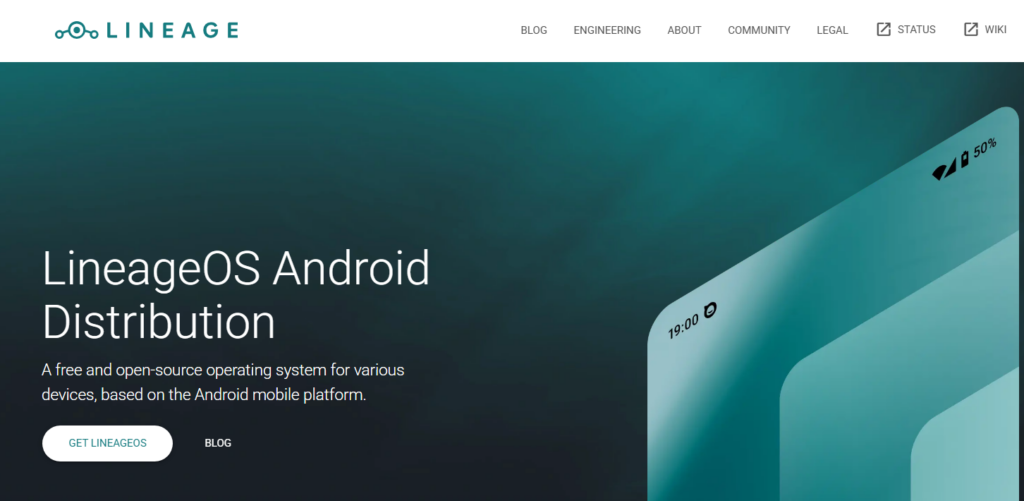
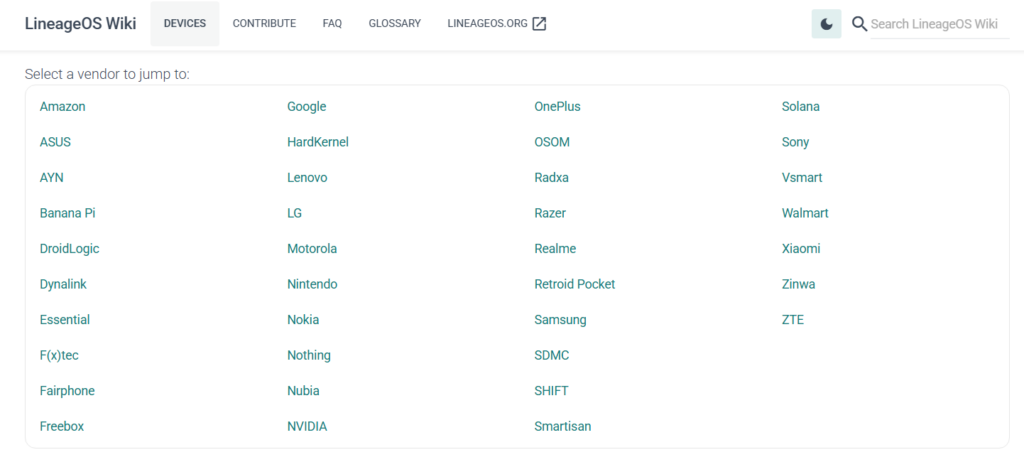
GrapheneOS is an open-source, safe, and highly hardened option available, but it’s exclusively available for Google Pixels due to their strict hardware security standards. LineageOS supports over 170 smartphones across various brands. It’s also a safe, open-source custom ROM with thousands of active developers and millions of users worldwide.
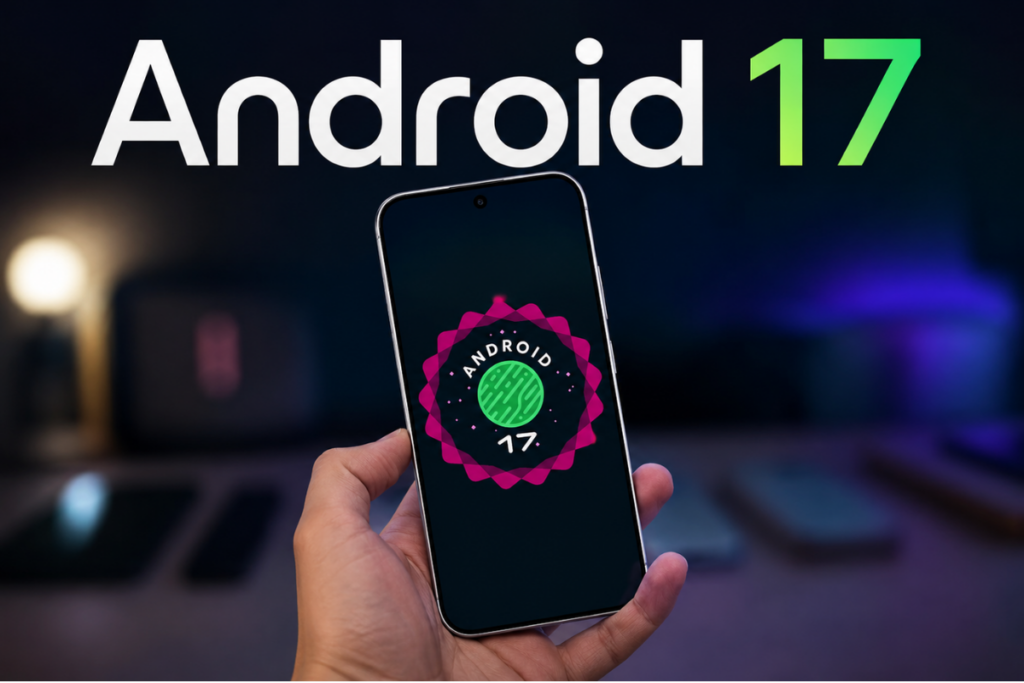
LineageOS 24: Android 17 with optional Google services
LineageOS 24 is the latest version of the popular custom skin built on top of Android 17. It is developed and maintained by an international community with a primary goal to keep smartphones up-to-date longer and give users more controls over their devices.
It’s a clean, lightweight custom ROM that comes without any additional apps, advertisements, and unnecessary services. It generally feels snappier and more responsive than most of the OEM custom skins. Older devices may also benefit from a positive impact on the energy efficiency — especially those who have become increasingly bloated over the years.
LineageOS is great for those who wish to share as little data as possible with Google by not opting to install Google apps and services. But those who need it can install a suitable package.
Not every smartphone is supported
LineageOS doesn’t support every phone and tablet that have stopped receiving official software support. However, it actively maintains builds for most of the popular devices.
The list of eligible devices is quite large, so there’s a chance yours may be included. You can find all supported devices on the LineageOS Wiki. Every device page includes download links, installation guides, and device-specific notes.
Take an extra minute to ensure that the device name and codename exactly match yours. For example, a Galaxy Tab S7 has multiple LineageOS builds based on which variant you carry. Brands often sell multiple versions of a device with different processors.
Important steps before installation
Unlike regular updates, installing a custom ROM requires a little extra care of your data and installation steps as it replaces the entire system software installed on your smartphone.
First things first: perform a complete data backup, including your photos, videos, documents, contacts, and other important data you don’t want to lose. You shouldn’t ignore this, as unlocking the bootloader completely wipes the internal storage.
You may also want to back up your data from apps you’re not signed into. Also back up your 2FA codes from authenticator apps or transfer your accounts to other devices.
Installing LineageOS or any other custom ROM requires an unlocked bootloader. There’s no universal guide on how to do this as the steps vary depending on the device model. Fortunately, the installation guide from LineageOS also includes the required bootloader unlocking steps for the specific device.
Unlocking the bootloader may void your phone’s warranty, and some security features and banking apps may not work. While the warranty issue shouldn’t be a concern on older devices, others are worth finding out in advance.
Installing LineageOS has become a lot easier
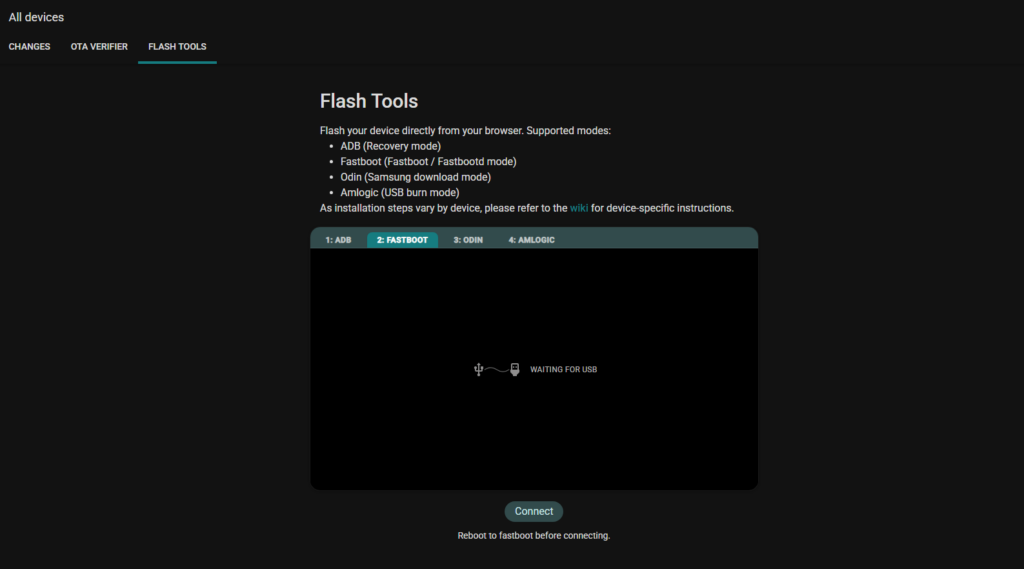
Installing a custom ROM used to be a bit complicated, but thanks to the new browser-based Lineage Flash Tools, the process has gotten significantly easier. The new tool handles the execution of commands, which can be intimidating.
Earlier, users had to set up environment paths and download individual platform-specific tools like ADB or Fastboot executables on the PC to run commands. Now, all of them are handled by the Lineage Flash Tools inside a Chromium-based browser like Google Chrome or Microsoft Edge.
Lineage Flash Tools lowers the barrier for beginners. However, it doesn’t handle each and every step. Users still are required to manually download the correct operating system image and unlock the bootloader.
On a compatible browser, open the tool’s web interface and connect your phone over a USB cable. You can also upload the installation files directly to your phone via the browser window.
LineageOS supports a vast number of devices from dozens of manufacturers, and not all of them follow the same installation process. Some devices may require additional steps or packages. Therefore, it’s highly recommended to follow the official installation guide. It tells you about the required files for your device along with download links, unlocking the bootloader, using the correct recovery environment, and additional instructions (if required).
If you carefully follow all the steps, your device should boot LineageOS without any issues. If you ever run into problems during or after installation, ask the official support channels on Reddit, Discord, or the IRC channel (#LineageOS on Libera.Chat).
Need Google services? Follow these steps
LineageOS doesn’t include Google services by default. If you wish to use Google Play Store, Google Maps, or Gmail, you need to install additional Google packages.
One of the most popular and commonly used solutions is MindTheGapps, which has been specially adapted for LineageOS. Download the required package and flash it onto your device.
Alternatively, users can opt forMicroG as a more privacy-friendly option, but mind the tradeoffs.
GrapheneOS: Exclusively for Google Pixels
Another popular name in the Android custom ROM space is GrapheneOS. However, unlike LineageOS, it’s exclusively built for Google Pixel smartphones due to its unique set of hardware-level security features.
GrapheneOS is aimed at users with high data privacy requirements. In fact, it’s considered significantly more secure and private than the stock Pixel ROM.
What makes GrapheneOS different:
It uses a custom memory allocator (hardened_malloc) that randomizes memory locations and isolating tasks.
It activates MTE by default for the base OS and allows you to force it on for all user-installed apps.
It modifies the underlying Linux kernel to block app access to dangerous system calls.
It allows users to set an alternate PIN or password that, when entered, completely triggers a factory wipe of the phone.
It allows users to completely disable the data pins on your USB-C port whenever the device is locked to stop physical hacking tools from stealing your data.
It features a customizable Auto-Reboot timer (ranging down to 10 minutes). If the phone remains locked and untouched for that period, it automatically reboots, wiping the active encryption keys from memory and placing the device in its most secure “Before First Unlock” state.
On a stock Pixel phone, Google Play services run with deeply integrated privileges, which could be a big concern for users’ high privacy requirements. GrapheneOS solves that by making it optional, but still can be used via an isolated environment (sandboxed Google Play).
For installing GrapheneOS, you can either use the WebUSB-based installer (easiest) or the command-line method, which is a little technical. The official guide has all the details you need to know. Follow the steps as per the guide and you should be running GrapheneOS on your Pixel soon.
The conclusion is that the end of official software support for a smartphone doesn’t necessarily mean the end of its life. There are great communities on the internet that are actively developing custom ROMs to make such devices last longer with regular security patches and major OS upgrades.
GrapheneOS is the best alternate operating system for Google Pixels, while LineageOS is available for a wider range of smartphones. The new web installer makes the installation easier than ever before.
Smartphone makers are reportedly getting creative as the global memory chip shortage bites harder. To keep production lines running, some have started using recycled DRAM pulled from old devices. It’s helped a few companies reverse earlier cuts to their output targets, but it’s also raising questions about how reliable these phones will be over time.
According to Counterpoint Research, several Chinese smartphone brands sharply cut production goals and looked for ways to trim costs in the second quarter of 2026 as memory prices climbed and supplies got shaky. Toward the end of the third quarter, though, some started raising those targets again. The main reason? A growing supply of recycled DRAM chips recovered from discarded smartphones, computers, and servers.
These chips are said to be pulled out, cleaned, properly tested, and put into new phones. A few manufacturers are even looking at putting recycled DRAM exclusively into certain budget models.
It’s not without risks. Memory chips that have already been running for five or six years might only have a similar amount of life left. As DRAM ages, its cells can start to degrade, which can lead to more data errors and weaker performance. Testing helps weed out the ones that have already failed, but analysts say the long-term durability of reused memory is still a real concern for both the companies making the phones and the people buying them.
The shortage itself is expected to drag on well beyond 2027. Big producers like Samsung Electronics and SK Hynix have been focusing more on higher-margin memory for AI servers and high-bandwidth applications, which leaves less available for phones. Counterpoint calls the recycled DRAM approach a short-term fix that shows just how bad the shortage has gotten, rather than a lasting solution.
The battle between the Honor Win RT and OnePlus 15R highlights two different approaches to building a high-performance smartphone. One prioritizes extreme endurance and gaming-focused hardware, while the other combines next-generation processing, advanced video recording, and a polished software experience. Both promise flagship-class capabilities, but their differences extend beyond benchmark numbers and battery capacity.
The real question is which phone delivers the better experience across everyday tasks, entertainment, photography, and demanding applications. With a considerable price gap between them, choosing the right device requires looking beyond individual specifications to determine which smartphone makes the more convincing overall investment.
Major Features:
Category
Honor Win RT
OnePlus 15R
Winner
Display
6.83-inch AMOLED, 185Hz, 6000 nits peak
6.83-inch AMOLED, 165Hz, 3600 nits peak
Honor — Higher refresh rate and claimed peak brightness
Display Protection
Scratch/drop-resistant glass
Gorilla Glass 7i
OnePlus — Specified glass protection
HDR Support
HDR Vivid, Ultra HDR
Dolby Vision, HDR10+, HDR Vivid, Ultra HDR
OnePlus — Broader HDR format support
Processor
Snapdragon 8 Elite
Snapdragon 8 Gen 5
OnePlus — Newer-generation chipset
Graphics
Adreno 830
Adreno 829
Honor — Higher-tier GPU designation, though real-world performance varies
RAM
12GB or 16GB
12GB or 16GB
Tie — Both offer up to 16GB RAM
Storage
256GB, 512GB, 1TB
256GB, 512GB
Honor — Offers a 1TB configuration
Storage Technology
UFS 4.1
UFS 4.1
Tie — Same storage standard
Rear Camera
50MP main with OIS, 12MP ultrawide with autofocus
50MP main with OIS, 8MP ultrawide
Honor — Higher-resolution ultrawide with autofocus
Rear Video
Up to 4K at 60fps
Up to 4K at 120fps
OnePlus — Supports higher-frame-rate 4K recording
Selfie Camera
50MP
32MP with autofocus
Honor — Higher resolution and 4K 60fps selfie video
Battery
10,000mAh silicon-carbon
7,400mAh silicon-carbon
Honor — Substantially larger capacity
Charging
100W wired, 27W reverse wired
80W wired
Honor — Faster charging and reverse charging
Cooling
Built-in cooling fan
No built-in cooling fan listed
Honor — Dedicated active cooling
Water Resistance
IP68/IP69K
IP68/IP69K
Tie — Same stated protection rating
Operating System
Android 16, MagicOS 10
Android 16, OxygenOS 16
OnePlus — Alternative for buyers preferring OxygenOS
Connectivity
Wi-Fi 7, Bluetooth 6.0, NFC, IR
Wi-Fi 7, Bluetooth 6.0, NFC, IR
Tie — Broadly comparable connectivity
SIM Support
Dual Nano-SIM
Dual Nano-SIM; eSIM on compatible variants
OnePlus — Additional eSIM flexibility
Price
Priced around $380 / ₹35,000 (approximate Chinese launch-price conversion)
Priced around $650 / ₹60,000 (approximate Indian retail pricing)
Honor — Lower estimated entry cost
Value for Money
Gaming-focused hardware and larger battery
Newer chipset and advanced rear-video capabilities
Honor — More hardware features for the money
Overall Winner
Strong battery life, gaming features, and affordability
Newer chipset, HDR support, and advanced rear video
Honor — Stronger overall hardware value
Note: Prices are approximate. The Honor Win RT’s INR figure is a conversion of its Chinese launch price, not an official Indian retail price.
The Honor Win RT adopts a distinctive performance-focused design, with an integrated cooling fan that actively assists heat dissipation during demanding gaming sessions. Its IP68/IP69K protection also provides substantial resistance against dust and water. The OnePlus 15R takes a more conventional premium approach, featuring Gorilla Glass 7i protection, an aluminum frame, and a choice of glass or reinforced plastic backing. Both phones offer strong durability credentials, but OnePlus feels better suited to buyers seeking a versatile daily companion rather than a device built around gaming first. Its eSIM support on compatible configurations is another practical advantage for travellers. Honor’s cooling hardware is undeniably impressive, although the OnePlus design feels more appropriate for users who want performance without emphasizing gaming-specific features.
Display Quality
Both smartphones feature 6.83-inch AMOLED displays with matching resolutions and sharp image reproduction. However, Honor pushes its refresh rate to 185Hz, compared with 165Hz on OnePlus, and claims substantially higher peak brightness. These advantages make the Honor particularly appealing for competitive gaming and outdoor use. The OnePlus 15R counters with Dolby Vision, HDR10+, and HDR Vivid support, giving it a strong entertainment-focused feature set. Its display remains exceptionally fluid while providing broader support for popular HDR formats. The difference between these refresh rates is unlikely to transform everyday scrolling, making the OnePlus display more than competitive for most users. Honor wins on headline display specifications, but OnePlus offers a more balanced multimedia experience.
Verdict
Honor wins on refresh rate and claimed peak brightness, but the OnePlus 15R delivers the more balanced everyday display experience with Dolby Vision and HDR10+ support.
2. Specifications Including Battery
Performance
The Honor Win RT uses Qualcomm’s Snapdragon 8 Elite, while the OnePlus 15R features the newer Snapdragon 8 Gen 5. Both are powerful 3nm platforms capable of handling demanding games, intensive applications, and multitasking. However, a newer chipset does not automatically guarantee higher performance in every workload; the Honor’s Snapdragon 8 Elite remains highly competitive, particularly in graphics-heavy tasks. OnePlus counters with a newer processing architecture and a forward-looking platform that makes it an appealing choice for buyers seeking the latest generation of hardware. Both devices offer up to 16GB of RAM and UFS 4.1 storage, so everyday responsiveness should be excellent. The OnePlus is the more compelling all-round platform, but Honor should not be dismissed as the slower phone simply because its processor carries an older name.
Battery and Charging
Honor’s 10,000mAh silicon-carbon battery is a major advantage over the OnePlus 15R’s 7,400mAh unit. Combined with 100W wired charging and 27W reverse wired charging, it makes the Honor an excellent choice for users who game for hours or frequently travel without access to a charger. OnePlus offers 80W wired charging, which remains fast, and its battery capacity should comfortably accommodate demanding daily use. The Honor is the clear choice for maximum endurance, but battery capacity alone does not determine overall usability. Charging habits, power management, screen brightness, and gaming workloads all affect real-world results. For most users, the OnePlus provides ample capacity without making battery size the defining feature of the phone. Honor wins endurance, while OnePlus maintains a strong balance.
Verdict
OnePlus wins narrowly for its newer processing platform and balanced daily performance, while Honor dominates battery endurance. The overall choice depends on whether longevity or versatility matters more.
3. Camera
Main and Secondary Lenses
Both smartphones use a 50MP primary camera with optical image stabilization, but their secondary cameras serve different priorities. The Honor Win RT pairs its main sensor with a 12MP ultrawide camera featuring autofocus, while OnePlus uses an 8MP ultrawide sensor. Honor therefore has the stronger hardware proposition for wide-angle photography, especially when capturing landscapes and group shots. OnePlus counters with a wider f/1.8 aperture on its primary camera and rear-video recording at up to 4K 120fps. That capability gives it a meaningful advantage for creators who want slow-motion flexibility and smoother high-frame-rate footage. Neither phone can be declared the photographic winner on megapixels alone, as image processing and consistency matter just as much. Nevertheless, OnePlus makes the more compelling choice for video enthusiasts, while Honor offers the more promising ultrawide hardware.
Selfie Camera
The Honor Win RT features a 50MP front camera capable of recording 4K video at up to 60fps. The OnePlus 15R uses a 32MP selfie camera with autofocus and supports 4K recording at 30fps. Honor’s higher resolution and faster front-video recording make it attractive for creators who frequently produce selfie videos or record themselves talking to the camera. However, OnePlus has an important practical advantage: autofocus can help maintain sharpness when the subject moves or changes distance from the phone. More megapixels do not automatically translate into better selfies, and processing, exposure, and skin-tone reproduction will influence the final results. Honor has the stronger specification sheet for front-camera resolution, but OnePlus offers a useful focusing feature. Buyers who prioritize selfie video should lean toward Honor, while those valuing autofocus may prefer OnePlus.
OnePlus wins for creators who prioritize advanced rear-video recording, while Honor offers stronger ultrawide and selfie-camera specifications. Neither delivers an unquestionable photography victory.
4. Pricing
The Honor Win RT is priced around $380 (₹35,000), while the OnePlus 15R is priced around $650 (₹60,000). This considerable difference makes Honor the more aggressive hardware-value proposition, particularly for buyers who prioritize battery life, gaming, and charging speeds.
OnePlus asks for a premium, but its newer Snapdragon platform, advanced rear-video capabilities, and OxygenOS 16 experience provide meaningful reasons to consider spending more. Both phones offer high-refresh-rate AMOLED displays, powerful processors, and fast storage, so neither is an obvious compromise in everyday performance.
The Honor is difficult to beat on specifications per dollar, but value is not simply a matter of counting features. Buyers must also consider which capabilities they will actually use and whether the OnePlus experience better suits their daily routine.
Is the price justified?
The OnePlus 15R’s higher price is justified for buyers who value its newer chipset, advanced video recording, and OxygenOS experience. However, the premium is substantial, and Honor delivers more battery capacity and distinctive gaming hardware for considerably less. For budget-conscious gamers, Honor is the smarter purchase. For buyers seeking a balanced performance phone, OnePlus can justify the extra spending.
Verdict
Honor wins on affordability and raw hardware value. OnePlus remains the recommended overall purchase for buyers willing to pay more for its newer platform, multimedia capabilities, and everyday versatility.
Disclaimer: Prices shown in USD and INR are approximate currency conversions based on announced pricing and prevailing exchange rates. They may not reflect official local retail prices, import duties, taxes, shipping charges, or retailer markups. Actual prices may vary by region, storage configuration, and availability. The Honor Win RT’s INR price is a conversion of its Chinese launch price, not an official Indian retail price.
5. Conclusion
The Honor Win RT stands out with its integrated cooling fan, 10,000mAh battery, 185Hz display, and high-resolution front camera. These features make it an unusually compelling choice for mobile gamers, heavy users, and anyone who wants maximum endurance without spending a premium. Its 12MP autofocus ultrawide camera is another advantage over the OnePlus alternative.
The OnePlus 15R counters with the Snapdragon 8 Gen 5, Dolby Vision support, 4K 120fps rear-video recording, and OxygenOS 16. Its eSIM support on compatible variants also improves flexibility for frequent travellers.
OnePlus does not need to beat Honor in every specification to be the better all-round smartphone. Its strengths align with a broader range of everyday activities, from gaming and streaming to recording high-quality video. Honor offers more specialized hardware, but OnePlus delivers a more balanced package for users who want one phone to handle a little of everything.
Honor Win RT is the clear overall winner for value-conscious performance enthusiasts. It delivers a 10,000mAh battery, 100W charging, an integrated cooling fan, a faster-refreshing display, and a capable camera setup at a substantially lower starting price.
The OnePlus 15R counters with a newer chipset, Dolby Vision support, and 4K 120fps rear-video recording, but these advantages are not enough to outweigh Honor’s broader hardware advantages for most buyers. Honor Win RT delivers more for the money.
1. Which phone is better for gaming, Honor Win RT or OnePlus 15R?
The Honor Win RT is better suited to extended gaming sessions, thanks to its built-in cooling fan, 185Hz display, and larger battery.
2. Which phone has the better camera?
The OnePlus 15R supports 4K 120fps rear video, while Honor offers higher-resolution ultrawide and selfie cameras.
3. Is the OnePlus 15R faster than the Honor Win RT?
The OnePlus features a newer Snapdragon 8 Gen 5 chipset, but actual performance differences depend on the workload and thermal management.
4. Which phone offers better battery life?
The Honor Win RT’s 10,000mAh battery has a substantial capacity advantage over the OnePlus 15R’s 7,400mAh battery.
5. Which phone offers better value for money?
The Honor Win RT offers better hardware value at its lower approximate price, while OnePlus may suit buyers prioritizing its software experience.
Disclaimer: Prices, specifications, and availability may vary by region and retailer. Recommendations in this article are based on editorial opinion, feature-based value, and market positioning at the time of writing. Readers are advised to do their own research before making a purchase.
The iPhone Duo starts shipping tomorrow, and if you were able to snag one in the blink-and-you-miss-it pre-orders, getting a case is a no-brainer for a device that starts at $2,000. You might not want to cover up a phone that looks this good, but if you decide to go caseless, be prepared for Apple’s premium repair costs.
Finding the right case for a foldable isn’t quite the same as picking one for a regular iPhone. It needs to cover two halves of the device, account for the hinge, and allow the phone to open and close freely. Some cases also add features such as kickstands, while others keep things simple to avoid extra bulk.
Apple iPhone Duo
One thing to keep in mind before choosing is that we haven’t tested these cases ourselves. The recommendations below are based on their designs, listed features, and manufacturers’ claims, so consider them a starting point rather than a final verdict.
Your daily use matters, too. If you plan to watch videos or make FaceTime calls with the phone propped up on a desk, a built-in kickstand can save you from carrying a separate stand. The Duo can already stand on its own when partly open, but a case with an adjustable stand gives you another way to position it on a desk or kitchen counter.
MagSafe compatibility is another thing to check. The Duo supports MagSafe charging, and most of the cases on this list have built-in magnets for compatible chargers and accessories.
Apple Pencil support is also coming, but there’s a catch. The phone will support the USB-C Apple Pencil, which connects through a cable rather than magnetically. You therefore don’t need a case with a magnetic Pencil attachment.
Apple’s own iPhone Duo Case costs $79 and uses two separate pieces, one for each half of the phone. It covers the front and back while keeping the overall design thin and light. The case comes in sand and navy blue.
Since it’s made specifically for the Duo, you won’t have to worry about whether the buttons and cutouts line up properly. Apple keeps things simple here, with protection for both halves but no extras such as a kickstand.
2. Best for videos and FaceTime
The Apple iPhone Duo Folio with Kickstand costs $129 and uses Apple’s TechWoven technical fabric. Unlike a full-coverage case, it protects the back without wrapping around the edges.
Its kickstand sits flush against the case when not in use and props the phone up at different angles when you need it. You can also continue using MagSafe charging with the stand open. The folio comes in taupe and navy blue.
This makes it a good option if you regularly use the Duo as a small screen on a table. The open edges do mean less protection against drops than a case that wraps around the phone.
If you prefer leather, Nomad also sells a Traditional Leather Folio for the Duo at the same $129 price.
3. Best for rough use
The OtterBox Defender Series Pro XT is a rugged, two-piece case with a pressure-fitted frame, port covers to keep out dust and dirt, and a raised edge to keep the screen off flat surfaces. It also has built-in magnets for MagSafe chargers and accessories.
The hinge cover moves as you open and close the phone, then lies flat when the Duo is unfolded. That gives you hinge coverage without getting in the way of normal use.
Protection comes at the expense of size, so expect this case to feel bulkier than Apple’s options. It’s worth considering if you frequently drop your phone or use it in rough environments.
OtterBox also offers the Lumen Clear MagSafe Case for the Duo if you’d rather have a transparent design with less of a rugged look.
4. Best clear case with a stand
Spigen’s Ultra Hybrid Pro S from its Mag Fit range combines a clear case with a circular kickstand. The stand supports both portrait and landscape orientations, making it useful for watching videos or keeping the phone upright during calls.
The transparent design also lets you show off the Duo’s Night Sky or Star White finish without switching to a folio-style cover.
Spigen has other options, including the Tough Armor Pro and Slim Armor Pro. If you want both a kickstand and hinge protection, the Slim Armor Pro S is another model to consider.
One drawback with clear cases is that the plastic can turn yellow over time. The case may not look as transparent after a year of use as it does when new.
5. Best clear case with hinge protection
The Tech21 EvoCrystal MagSafe uses a one-piece design with an auto-closing hinge cover. The cover moves with the phone as you fold and unfold it, protecting the hinge without requiring a separate piece for each half.
Tech21 says its FlexShock material absorbs impact energy and helps protect the phone through multiple drops. Built-in magnets also maintain compatibility with MagSafe chargers and battery packs.
The version listed for the Duo comes in Black Tint, which lets some of the phone’s finish show through. If you want a transparent case with hinge coverage but would rather avoid a two-piece design, the EvoCrystal MagSafe is worth a look.
6. Best slim case
Pitaka’s iPhone Duo cases cover both halves of the phone while leaving the hinge exposed. They support MagSafe and come in several finishes, including patterned designs named Moonrise, Sunset, and California Dream.
The Aramid Fiber Case is the option to consider if keeping the phone thin and light matters more to you than covering every part of it. There’s an obvious trade-off, though. With no case protection over the hinge, that area remains exposed to knocks and scratches. This option makes more sense if you’re careful with your phone and comfortable with the added risk.
The Burton Goods Heritage Leather Case for the iPhone Duo uses a leather hinge section and rare-earth magnets to help pull the phone shut. If you’d prefer something closer to a wallet cover, Burton Goods also sells a Pocket Book leather case for the Duo.
Sandmarc has a leather case for the phone as well, giving you another option to compare before buying.
Leather develops a different look with regular use, gradually changing color and showing signs of wear. Some people like that character, while others prefer a case that looks the same over time. If you fall into the first group, Burton Goods is worth considering.
8. How to choose the right iPhone Duo case
The Apple iPhone Duo Case is the simplest option if you want an official case without extra features. For watching videos or making calls with the phone propped up, consider Apple’s Folio with Kickstand or Spigen’s Ultra Hybrid Pro S.
The OtterBox Defender Series Pro XT is the better fit if you want a rugged case, while the Tech21 EvoCrystal MagSafe combines a clear design with a covered hinge. Pitaka makes more sense if you prefer a slim profile, Burton Goods is worth considering for leather, and CASETiFY gives you more room to personalize the phone’s appearance.
Availability is still uneven, with some retailer listings showing cases as unavailable. Delivery estimates for the phone itself also reportedly moved into late January after pre-orders opened. If you can’t find your preferred case right away, it may be worth waiting rather than settling for one you don’t really want.
If you’re still weighing up whether Apple’s foldable is worth $1,999, you can also compare it with these five foldable alternatives before making a decision.
A growing number of Samsung Galaxy Watch owners are posting photos and stories about unexpected skin reactions after sleeping with their smartwatches on. What starts as normal overnight health tracking has left some people with visible marks on their wrists, and it’s raising questions about heat and comfort.
The reports describe circular red patches, irritation, and in some cases fluid-filled blisters right under the sensor array on the back of the watch. These accounts are showing up on Reddit, Facebook groups, and Samsung’s own community forums.
One widely shared case involved a Galaxy Watch 5 Pro owner who went to bed with a fully charged watch and woke up to a completely drained battery and a blister on their wrist. Similar experiences have been reported by people with the Galaxy Watch 7, Watch 8, and Watch Ultra.
No one knows the exact cause yet. The usual suspects with any wearable still apply: wearing the band too tight, trapped moisture or sweat, and residue building up on the sensors. Samsung’s own support pages note that prolonged wear, perspiration, or not cleaning the device can lead to discomfort. Their advice is straightforward: take the watch off if irritation starts, clean both the watch and your skin regularly, and give the area a few days to recover.
That said, the blisters or red marks in some reports have people wondering if localized overheating might be involved rather than just regular contact irritation. A few users have pointed to unusually fast overnight battery drain as a possible clue, suggesting some process might be keeping the watch working harder than it should and generating extra heat.
Samsung hasn’t put out a statement acknowledging any manufacturing issue linked to these cases as of writing. If your watch feels unusually warm, starts hurting, or you notice blisters, take it off right away. Persistent or severe skin reactions are worth checking with a doctor, and it’s a good idea to reach out to Samsung support so they can look at the device.
These reports don’t currently point to a widespread safety crisis, but they are a solid reminder to keep an eye on both the watch’s temperature and your skin, especially if you’re wearing it overnight.
Huawei only launched the Pura 90 series a few months ago, and already there’s talk of another model joining the family. A familiar tipster has dropped some early details about a potential new variant that seems built around a pretty distinctive camera setup.
According to @DigitalChatStation, the phone is internally called Lucia and is being referred to as the Huawei Pura 90 Plus. It’s said to pack a 6.8″ 1.5K display and a triangular triple-camera module sitting up in the upper-left corner of the back. Expected colors are Obsidian Black, Snow White, Dawn Gold, and Sunset Purple.
The part that’s getting the most attention is the main camera: a 50MP 1-inch RYYB sensor with variable aperture. The tipster even called it the only setup like this expected this year. Huawei has used RYYB (red-yellow-yellow-blue) filters before in its flagships because they tend to pull in more light than the usual RGB ones.
When someone asked about a smaller “6.1 something” model, the tipster said that one’s more likely in the second half of next year. For context, the Pura 90 series itself launched in April 2026. The regular Pura 90 runs a Kirin 9010S, sticks with the triangular rear camera design, and has a 50MP main, 50MP 3.7x periscope telephoto, and 12.5MP ultrawide.
Looking at the current lineup, there are already a few tiers with different screens, chips, and camera combos. The standard model stands out with its bigger 6,500mAh battery and thinner build compared with the Pro and Pro Max. This leaked Plus version looks like it’s meant to sit alongside them rather than replace anything, mainly by bringing a larger main sensor to more of the range.
If this leak turns out to be real, the Pura 90 Plus would keep the series focused on camera hardware later in 2026 and continue Huawei’s push on imaging inside the Pura lineup.
A rumor back in July tipped that the Vivo X500 Ultra could have three 200MP cameras. A new rumor, however, suggests that may not happen. Instead, the company is now said to be testing a 50MP unit for its main camera.
Words for it come from a new post by Digital Chat Station, which claims that the latest engineering sample of the Vivo X500 Ultra features a 50MP Sony LYT910 sensor with a 35mm focal length.
The 50MP solution has been rumored as well. The tipster previously said Vivo was weighing a 50MP LOFIC sensor against a 200MP option for the main camera, and the latest information corroborates it. The telephoto, however, could still be a 200MP sensor.
Another post from Digital Chat Station reveals that the telephoto solution on the X500 Ultra is a 200MP unit with a 1/1.2-inch sensor. In comparison, the X300 Ultra uses a 200MP Samsung HP0 sensor in a 1/1.4-inch format, which means the rumored 1/1.2-inch sensor will have roughly 36% more sensor area. The larger surface could capture more light and produce better zoom shots in low-light conditions.
Beyond cameras, the device is expected to feature Qualcomm’s Snapdragon 8 Elite Extreme Gen 6 chip, a battery of around 8,000mAh and a 6.85-inch LTPO AMOLED display supplied by BOE. The phone is expected to launch in March or April next year, a release window a Vivo executive has already confirmed for the Chinese market.
These details are still based on an engineering sample, so the camera hardware could change before the phone reaches mass production. Vivo hasn’t officially confirmed the reported sensors or the rest of the specifications, and more details should emerge as the launch gets closer.
The Vivo Y600 series in China includes several models, such as the Y600 Pro, Y600 Turbo, Y600i, Y600k Turbo and Y600s Pro. Now, the company is teasing the Vivo Y600, the latest addition to the lineup. Its biggest highlight is a massive 10,000mAh battery, which has already featured in a Guinness World Records endurance test.
Vivo Y600’s arrival teased
The official promotional poster confirms that the Vivo Y600 uses a 10,000mAh BlueVolt battery. The company also highlights a Guinness World Records achievement for the longest continuous livestream test of a mobile phone, lasting 32 hours and 37 minutes. The test took place on August 11, 2026, demonstrating the endurance of the device’s large battery.
Meanwhile, tipster Experience More has shared additional specifications on Weibo. According to the leak, the Vivo Y600 will feature a MediaTek Dimensity 7300e chipset, a 50-megapixel primary rear camera, IP68 and IP69 ratings, and 44W wired charging. The phone has reportedly appeared with the model number V2607A in a 3C certification listing, which also indicates support for a 44W charger.
Could be a rebranded phone
The Vivo Y600 could be a rebranded version of the Vivo S2 FE, which recently launched in India. The same device is also available in Southeast Asian markets as the Vivo V80 Lite 5G. However, Vivo has yet to confirm whether these phones share the same hardware.
If the connection holds, the Y600 could feature a 6.83-inch AMOLED display with a 1.5K resolution and a 120Hz refresh rate. The S2 FE also packs a 32-megapixel front camera, a 2-megapixel depth sensor, and a 10,000mAh battery with 44W charging. It runs Android 16 with OriginOS 6 and carries IP68 and IP69 ratings. Vivo has not yet announced the Y600’s launch date, pricing, or availability.
Xiaomi has confirmed the Redmi Book 2027 series will launch in China on October 27. The laptops will launch alongside the Redmi K100.
The new laptops follow the Redmi Book 14 and 16 2026 models, which arrived in April with Intel Core Ultra 5 125H processors. For the 2027 series, Xiaomi is moving to Intel’s third-generation Core platform, bringing a newer processor generation than the previous models.
Xiaomi hasn’t shared many details yet, but it has confirmed a 72Wh built-in battery. The laptops will also get a refreshed design with brighter color options and, according to Xiaomi, a noticeable improvement in build quality. The company says the new models are intended for people who work away from a desk.
Screen sizes, memory and storage configurations, and pricing remain in the shadows. Xiaomi also hasn’t confirmed how many models the lineup will include, so those details will likely have to wait until the launch event.
Redmi K100 launches on the same day
The Redmi Book 2027 series won’t be the only new product arriving on October 27. The Redmi K100 launches on the same day, and fortunately, we know a fair share of details about the phone.
The standard Redmi K100 will have a 10,000mAh battery, the largest in any Xiaomi phone, along with a dedicated graphics chip, a relatively large vibration motor, and dual Bose speakers. The phone is expected to use a Snapdragon 8 Elite processor and fall within the 3,500 yuan price range.
The Redmi K100 will join the K100 Pro and K100 Pro Max, both of which launched in China in August. The standard model will complete the series, with more details expected at the October 27 event.
OnePlus has just confirmed that the OnePlus Ace 7 series will be unveiled on October 29 in China. Soon after the announcement, Li Jie Louis, president of OnePlus China, shared official details about the lineup’s new cooling technology. The company says its approach aims to maintain high gaming frame rates while keeping temperatures lower during extended sessions.
OnePlus Ace 7 introduces a dual-airflow cooling system
According to Li Jie, the OnePlus Ace 7 series features what the company calls a dual-airflow cooling system, designed to tackle both internal heat and the warmth users feel while holding their phones. One airflow channel directs cool air toward the chipset to help dissipate heat, while the second sends air across the rear panel to improve comfort during gaming.
The system also incorporates a tower-style fin structure similar to cooling designs used in graphics cards. OnePlus says this arrangement increases the heat-dissipation area and helps transfer heat away from the processor more efficiently. A dedicated temperature sensor and intelligent control algorithms coordinate the fan’s operation, allowing the system to adjust cooling based on temperature and usage conditions. You can read more about the company’s dual-outlet cooling design.
OnePlus claims the new system can keep gaming temperatures up to 10 degrees Celsius lower while maintaining stable frame rates. The company is positioning this as a significant improvement over earlier fan-cooled smartphones, which often prioritize either lower temperatures or consistent performance rather than addressing both together.
The series is expected to include the standard Ace 7 and the Ace 7 Pro. According to earlier reports, both models could feature a 6.78-inch 1.5K OLED display with a 185Hz refresh rate, a battery of around 9,000mAh, and a 200-megapixel primary camera. The Pro model may also include a 50-megapixel periscope telephoto camera with 3.5x optical zoom. These specifications remain unconfirmed.
The OnePlus Ace 7 series will launch in China on October 29 at 7 PM local time. More details about its hardware and pricing should emerge at the event.
While OnePlus is teasing the arrival of the Ace 7 series, it may introduce another performance-focused smartphone before the year ends. A new leak points to an upcoming model that could target gamers and users who prioritize high refresh rates and long battery life. The device is expected to join the company’s Turbo lineup in China.
OnePlus Turbo 7 Pro specifications leak
OnePlus Turbo 7 Pro leak by DCS
Tipster Digital Chat Station has revealed several details about the upcoming OnePlus Turbo 7 Pro in a Weibo post. The handset is tipped to feature a 6.78-inch flat display with a 1.5K resolution and a 185Hz refresh rate. These specifications would put it among the high-refresh-rate smartphones aimed at gaming enthusiasts.
The phone is expected to use Qualcomm’s 3nm SM8845 Pro chipset, which has been linked to the Snapdragon 8 Gen 6 or Snapdragon 8 Gen 5 Pro branding in recent leaks. Its rear camera setup could include a 200-megapixel primary sensor with a large sensor format. Another reported addition is an external cooling fan accessory, potentially connecting to the phone through a compatible case with pogo pin contacts. It is likely to compete with the upcoming iQOO Z12 Turbo, which is also rumored to pack the same chip and a built-in cooling fan.
Battery capacity could be another major selling point. The OnePlus Turbo 7 Pro is tipped to pack a battery rated at 9,000mAh or higher, while engineering samples from the series have reportedly reached 10,000mAh. However, the final retail capacity and charging specifications remain unconfirmed.
The Turbo 6 series includes several models, and among them the Turbo 6 equipped with the Snapdragon 8s Gen 4 chipset is the most powerful model. It has a 6.78-inch 1.5K OLED display running at 165Hz, and a 9,000mAh battery. It also supports 80W wired charging and includes a 50-megapixel main camera with optical image stabilization. The rumored Turbo 7 Pro could deliver a higher refresh rate, a substantially higher-resolution primary camera, and a newer processor.
Interestingly, the leaked display and battery specifications resemble those attributed to the OnePlus 16, although the two phones are expected to use different chipsets. OnePlus has yet to confirm the Turbo 7 Pro’s name, specifications, pricing, or launch date.
The wide-screen smartphone that Coolpad announced a few days ago is now available for pre-order in China. You can pre-book the Coolpad Cool X Wide via JD.com, with shipping set to begin on November 8.
Coolpad calls it the first wide-screen phone in the Android camp, and it is also the company’s first phone with this form factor. More importantly, it costs a fraction of what Huawei, the only manufacturer that currently sells a wide-screen smartphone, asks for the Pura X View.
The base model retails at 999 yuan (~ $150) with 8GB of RAM and 128GB of storage. The other options include 8GB + 256GB for 1,199 yuan (~ $180) and 12GB + 256GB for 1,399 yuan (~ $209). This affordability directly translates to what the phone offers.
Coolpad Cool X Wide Specifications
The Cool X Wide has a 6.38-inch display with a 16:10 aspect ratio and a 90Hz refresh rate. Its 720 x 1158 resolution is relatively low, particularly compared with the Full HD screens found on many phones, but it helps keep the price down.
Its dimensions are 150.3 x 94.5 x 8.95mm. At 94.5mm wide, the phone is much broader and shorter than a typical smartphone, giving it a different shape from the tall, narrow designs most manufacturers sell. Oppo is also reportedly developing a wide-screen phone, according to an earlier leak, but the Cool X Wide is already available to order.
Inside, the phone runs on MediaTek’s Helio G99 chipset, paired with LPDDR4X RAM and UFS 2.2 storage. Buyers can get up to 12GB of RAM and 256GB of internal storage, while the latter is expandable up to 256GB via a TF card. Worth noting, the Helio G99 is a 4G-only chip, so the phone does not support 5G connectivity.
The remaining hardware includes a 4,600mAh battery and a single 50-megapixel rear camera.
For now, the Cool X Wide is limited to the Chinese market. Coolpad has not announced plans to release the phone in other markets.
We use cookies on our website to give you the most relevant experience by remembering your preferences and repeat visits. By clicking “Accept”, you consent to the use of ALL the cookies.
This website uses cookies to improve your experience while you navigate through the website. Out of these, the cookies that are categorized as necessary are stored on your browser as they are essential for the working of basic functionalities of the website. We also use third-party cookies that help us analyze and understand how you use this website. These cookies will be stored in your browser only with your consent. You also have the option to opt-out of these cookies. But opting out of some of these cookies may affect your browsing experience.
Necessary cookies are absolutely essential for the website to function properly. This category only includes cookies that ensures basic functionalities and security features of the website. These cookies do not store any personal information.
Any cookies that may not be particularly necessary for the website to function and is used specifically to collect user personal data via analytics, ads, other embedded contents are termed as non-necessary cookies. It is mandatory to procure user consent prior to running these cookies on your website.