Lenovo is getting ready to launch a new lightweight handheld aimed squarely at cloud gaming and game streaming.
The company has confirmed that the Legion C700 will drop on August 25 in China. Unlike most Windows handhelds that try to run heavy games locally, this one is built for streaming and cloud play, so it can stay much more portable.
Official teasers say the C700 works with Tencent START cloud gaming. Games like Black Myth: Wukong can hit up to 60 FPS with end-to-end RTT latency under 10ms. Lenovo has also baked in its own streaming software with deep optimizations that try to feel as close as possible to playing on a regular gaming platform.
On the hardware side, it packs a 7.82″, 120Hz IPS LCD screen. The whole thing weighs about 556 grams and is only 14.9 mm thick, nearly 300 grams lighter than your typical Windows handheld. Controls include a TMR sensor joystick (the kind that resists drift), Hall-effect linear triggers for finer input, an omnidirectional D-Pad, two back buttons, and a pair of small shoulder buttons. Everything can be custom-mapped.
It runs Lenovo’s own streaming software. You get one-click streaming plus offline and high-speed streaming modes. There’s also a custom management centre that lets you pull up widgets for real-time performance monitoring and quickly tweak controller settings, fan speed, and screen options. From the performance widget you can fine-tune stick sensitivity, remap buttons, and switch game modes on the fly.
Full pricing, processor details, and the rest of the specs are expected to drop during the August 25 launch event.
Compaq, the popular PC brand that was widely known in the late 1990s, was acquired by HP in 2002. HP gradually phased out the Compaq branding from its PC business during the early 2010s. In recent years, the Compaq name has returned to the consumer electronics market through brand licensing partners, with the focus largely on budget and entry-level Android devices in emerging markets, particularly Latin America and some Asian markets.
In recent years, the brand has also entered the smartphone segment with entry-level models such as the Q6 and Q3 and has now added a new tablet to its lineup, the Compaq QTab Ultra 12.6.
Compaq QTab Ultra 12.6 specifications and features
Compaq QTab Ultra 12.6
The Compaq QTab Ultra 12.6 features a 12.6-inch InCell AMOLED display with a 1600 x 2560 pixel resolution. The large panel is aimed at entertainment as well as productivity tasks such as studying, drawing, and working with documents.
The tablet runs Android 15 and supports 5GHz Wi-Fi, Bluetooth 5.0, GPS and USB-C with OTG support. It also has an 11,000mAh battery, with Compaq claiming up to 500 hours of standby time and around six hours of continuous use. It supports 18W fast charging.
Compaq QTab Ultra 12.6
The QTab Ultra 12.6 also comes with a stylus pen and protective case in the box, while an external keyboard can be used for a more laptop-like setup. The tablet comes with 12GB of RAM and 512GB of internal storage, while a microSD card slot allows users to expand storage by up to 2TB.
The tablet is designed to be a more versatile option for users who want a large screen for media consumption and creative work. However, the product listing does not disclose the chipset or camera specifications, so those details remain unclear.
The Compaq QTab Ultra 12.6 is listed in Mexico for MXN 8,499 (~$503) and is available to purchase through Compaq’s Mexican website. As seen above, the retail package includes a protective case, stylus, power adapter, and charging cable alongside the tablet. There is currently no information about its availability in other markets.
For more daily updates, please visit our News Section.
Early sales numbers for Xiaomi’s new REDMI flagship series are in, and they’re a bit of a mixed bag. Digital blogger @RDObservation, who keeps a close eye on the Chinese smartphone market, says the REDMI K100 Pro series managed about 95% of the first-week sales volume of the older REDMI K90 series (counting launch night plus the next seven days).
Looking at the individual models tells a clearer story. The regular REDMI K100 Pro sold roughly 70% of what the K90 managed in the same period. The higher-end K100 Pro Max, on the other hand, did much better, reaching around 135% of the K90 Pro Max’s sales.
This lines up with an earlier update from Lu Weibing (Xiaomi Group Partner and President, head of the Mobile Phone Division, and General Manager of the Xiaomi brand). On August 12 he shared that the K100 Pro Max’s first-day sales hit 150% of its predecessor’s figure, based on data up to midnight on August 11.
The K100 Pro and Pro Max officially launched on the evening of August 11. The Pro runs the newer Snapdragon 8 Elite Gen 5 V chip, while the Pro Max gets the more capable 8 Elite Gen 5. Both pack big batteries (8,580mAh on the Pro and 9,070mAh on the Pro Max) and Bose-tuned speakers. After subsidies, the series starts at 3,199 yuan (~€412) in China.
The Pro Max’s stronger showing suggests buyers are especially interested in the top-spec version with the bigger battery and more powerful chip. Even though the overall series came in a little under the previous generation’s first-week numbers, the Max’s clear outperformance points to healthy demand at the premium end.
These percentages give us an early read on how the new K100 series is landing with customers. Absolute unit numbers haven’t been shared, so the relative figures are all we have for now.
Digital Chat Station has shared a new update on iQOO’s next flagship lineup, and this time we have a launch month attached. According to the tipster, the iQOO 16 and a new iQOO mini tablet will launch in September. Both devices are expected to be among the first products to be powered by Qualcomm’s sixth-generation Snapdragon 8 Elite chipset.
Earlier this month, the same source shared details of the iQOO 16. It is expected to feature a 6.85-inch 2K+ display with a 165Hz refresh rate. The panel is said to use next-generation Samsung display technology and will have a flat design. The phone could also get a new rear design, with a small square camera module placed in the upper-left corner.
iQOO 15
The camera setup is expected to be one of the phone’s main upgrades. It reportedly features a 50MP main camera with a 1/1.3-inch sensor and an F1.68 aperture; a 50MP ultra-wide camera could join it with an F2.0 aperture, and a 50MP periscope telephoto camera with a larger 1/1.95-inch sensor and an F2.65 aperture.
iQOO’s tablet with Snapdragon 8 Elite Gen 6
At the same time, iQOO is also working on a compact performance-focused tablet. As mentioned earlier, it’s said to be powered by a sixth-gen Snapdragon 8 Elite processor, and could feature a 2.8K OLED display with a high refresh rate, slim bezels, and a metal unibody design.
The tablet is also rumored to have a square camera module on the back. Interestingly, the camera section could also house a built-in cooling fan for better thermal management.
iQOO Pad 6 Pro
Neither device has been officially confirmed by iQOO yet, so the September launch window should still be treated as a rumor.
Still, the repeated leaks about the chipset, displays, cameras, and designs suggest that both devices could be getting close to launch. More details, including the exact launch date and pricing, are likely to emerge as September gets closer.
For more daily updates, please visit our News Section.
Nothing has officially confirmed that its next major software release, Nothing OS 5.0, will be introduced on August 25th. The announcement event is set to take place at 11:00 AM BST (3:30 PM IST), where the brand is expected to reveal the release timeline and highlight major upgrades and new features.
The timing of the announcement suggests Nothing is planning a quicker release for Nothing OS 5.0. Last year, it introduced Nothing OS 4.0 on September 16th, but the new software is coming at least three weeks earlier.
Nothing might follow up with an open beta release shortly after the announcement event, much like it did last year with Nothing OS 4.0.
While we don’t know when Nothing will begin the stable rollout of Nothing OS 5.0, it’s almost certain that it will happen earlier than last year. We’re expecting an early November release.
With weeks still to go for the public rollout, you might want to check whether your Nothing phone is eligible for this major upgrade.
Which Nothing phones will get the Nothing OS 5.0 update?
Nothing Phone (4b)
Nothing Phone (4a)
Nothing Phone (4a) Pro
Nothing Phone (3)
Nothing Phone (3a)
Nothing Phone (3a) Lite
Nothing Phone (3a) Pro
Nothing Phone (2a)
Nothing Phone (2a) Plus
Nothing CMF Phone 2 Pro
Only three phones, Phone (1), Phone (2), and CMF Phone 1, haven’t made the cut to the list. They have already received the number of major Android OS updates promised at launch.
A new all-in-one PC and a handful of accessories are now part of Asus’ lineup in India, covering everyday computing, productivity, and gaming. The VM240 AiO leads the new range with a space-saving design aimed at home and office setups.
The Asus VM240 AiO features a 24-inch display with adjustable tilt support and a slim 22mm stand. It comes with up to an AMD Ryzen 5 40 processor and up to 512GB of PCIe Gen 4 SSD storage.
For video calls, the system includes a 1080p webcam with a physical privacy shutter, while dual front-facing 2W speakers with Dirac audio handle sound for meetings, music and streaming. AI-powered noise cancellation is also included to reduce background sounds during calls.
The all-in-one PC measures 22mm at its stand and is designed for everyday tasks such as browsing, learning, office work and entertainment. The VM240 AiO is priced at Rs 66,990 (~$700) in India. Asus says the AMD Ryzen 5 variant will become available around mid-September.
The Asus Jelly75 Keyboard KD201 is priced at Rs 8,999 (~$95) and features hot-swappable keys, a gasket-mounted design and three connectivity options: Bluetooth, 2.4GHz wireless and wired. It can connect with up to five devices.
The Asus Wireless Mouse MD105 costs Rs 1,799 (~$20) and supports Bluetooth 5.0 and 2.4GHz connectivity across up to three devices. It also offers 1,200, 1,600 and 2,400 DPI settings, along with an ergonomic design and near-silent clicks.
The Asus Marshmallow Keyboard and Mouse Combo CW200 costs Rs 4,199 (~$45) and supports up to three devices, multiple operating systems and a dedicated Copilot key. Meanwhile, the ROG HDMI Cable LHR60 is priced at Rs 999 (~$10), offering 48Gbps bandwidth, 8K at 60Hz and 4K at 144Hz support. It also supports HDMI VRR for compatible gaming devices, including the PS5 and Xbox Series X|S.
The VM240 AiO, MD105, CW200 and ROG HDMI Cable are available through Asus’ online and retail channels, while the Jelly75 will go on sale from August 31. Asus is also offering doorstep replacement for accessories under warranty across more than 17,000 pin codes in India.
Vivo has just hit the T5 Pro with another price hike in India, and this one is the biggest yet. The 8GB + 128GB version has jumped from ₹35,999 to ₹41,999, while the 8GB + 256GB model has gone from ₹39,999 to ₹46,999. That’s an increase of up to ₹7,000 in one go, which is more than double the size of the earlier ₹3,000 bumps.
Interestingly, as of writing, the 8GB + 128GB variant is still listed on Amazon for ₹39,999 instead of the new ₹41,999. If you’re interested, it might be worth checking quickly before the seller updates the price.
Quick recap of the journey so far: the phone launched in April at ₹29,999 (8GB + 128GB) and ₹33,999 (8GB + 256GB). It got a ₹3,000 hike in June, another ₹3,000 in July, and now this third one. The base model is now ₹12,000 more expensive than at launch, and the higher-storage version is ₹13,000 costlier.
Vivo hasn’t said anything officially about why the price is climbing again. The most likely reason is the same one hitting the whole industry right now: rising DRAM and NAND memory costs, largely driven by heavy demand from AI data centres. Previous hikes on this phone were more restrained, so this bigger jump stands out.
At these new prices, the T5 Pro has shifted into a higher bracket than the one it started in. It’s now sitting closer to phones like the iQOO Neo 10 and OnePlus Nord 6, even though the hardware itself hasn’t changed at all. Anyone who held off buying after launch is now looking at a noticeably more expensive phone for the exact same specs.
These repeated increases show how tight memory supply continues to squeeze smartphone pricing in India. Quite a few brands have made similar moves across their ranges in recent months. For the T5 Pro specifically, three hikes in a row have clearly changed its value equation compared to when it first went on sale.
So how do you put the words Robot and Phone together? It was hard for me to visualize such a product, until I saw it at MWC this year. Then I was thinking, ok a prototype then. But, now it has become a mass-produced product. This is crazy! Anyway, the phone market is kind of boring these years, no matter how this phone really performs, the HONOR Robot Phone does bring a bit of interesting stuff. We just got this one, and this article is just a first impression. Stay tuned if you want to see a comparison with maybe the DJI Pocket 4P. And since this phone is not sold globally, you can buy it from Geekwills.com.
First, let’s talk about the form factor. There are four cameras, the main camera, also the one with the gimbal, is a 200MP, 1/1.28 inch sensor, F1.6. Then there is also 200MP telephoto lens, 50MP ultrawide, and a 50MP front camera, specs are very good.
The main camera can be used as it is, tucked in the camera module, with a lens cover to protect it. But if you do want to use it this way, you must wipe the lens cover often for sure. Then if you use it with the gimbal, you need to slide the cover to the side first, otherwise there will be a notice to remind you.
When the gimbal is fully extended, it does tip the balance over a little bit. HONOR must know it, so there is a special case, a magnetic ring and a lanyard to support a better experience. The magnetic ring is better than most out there, because it can shape into more angles.
The robot camera can also do more things, such as dance with the music, or track human movement while streaming. This unlocks a lot more potential than the pocket cameras.
Image Quality
You must be very curious about the image quality and gimbal performance, right? We did some tests, just like how we use the pocket cameras.
Please check the demo comparision in the video
When I walk with the camera, the stabilization is very good. When I put it side by side with the DJI 4P, I can’t see any wobble or image shaking from HONOR. Then I run, it still performs well, only slightly less stable than the DJI.
Now when it comes to the image quality, there is a slight pity, the video specs top at 2.8K 120FPS. But if you tuck the camera away, it can shoot at 4K 120FPS. So when I compare the footage of 2.8K 30FPS and 4K 30FPS, you can clearly see the stabilization is better with the gimbal out, but the image quality and dynamic range are better from 4K 30FPS. Honestly, I wasn’t expecting this. And I hope there will be an OTA to top it up to 4K, because I see the 4K option is in gray in the settings, not completely invisible.
And since HONOR is working with ARRI on color science, there are all the cinematic tones in the collection, you can choose the best film look you want.
It’s Still A Phone
Now it is still a phone that we can use daily. In that form, it is smaller than all the Ultra and Pro-level phones. But it is indeed heavier, even heavier than the Ultra phones. With the camera module being heavier, you really have to do some brain power training.
Other than that, I still think this phone is really well built. It feels like a carefully engineered masterpiece. I think most people will like it.
Then it comes with Snapdragon 8 Elite Gen5, 12GB+512GB, or 16GB+1TB. Battery capacity 7060mAh. Despite the limited space, the battery is still big. But of course, the gimbal would consume more power, so let’s see how the battery life goes.
Summary
So this is the HONOR Robot Phone, it is truly an engineering masterpiece. There are still some limitations, but we can’t deny that it does bring some fresh stuff to the robot, pocket camera, and phone markets. We will bring you the full review soon.
Honor just dropped the official spare-parts prices for its new Robot Phone. The phone went on sale August 18 (a few days after its August 12 launch). The 12GB + 512GB version starts at 9,999 yuan (about €1,270), while the 16GB + 1TB model is 12,999 yuan (around €1,650). Barely a week later, Honor has already published the full list of replacement parts on its official channels.
Screen assembly: 979 yuan (€124) if you catch the discounted rate, or 1,379 yuan (€175) at the regular price
Battery: 319 yuan (€40)
Back cover: 379 yuan (€48)
The motherboard is where it gets painful. Replacing the one in the 12GB + 512GB model will set you back 4,599 yuan (€584). Go for the higher-end 16GB + 1TB version and you’re looking at 6,599 yuan (€838).
Camera modules vary a lot. The front camera is a relatively painless 149 yuan (€19). On the rear side, the 50 MP ultrawide is 199 yuan (€25), the 200 MP periscope telephoto jumps to 879 yuan (€112), and the 200 MP main rear camera is the real wallet-buster at 3,079 yuan (€391).
That high price for the main camera makes sense once you remember what Honor put in there. The Robot Phone is the first phone with a titanium-alloy gimbal system. It’s built with aerospace-grade titanium, is 65% smaller than typical gimbal designs, and uses the first titanium-alloy gimbal that can spin up to 360 degrees per second. Pair that with a 200MP 1/1.28″ sensor and you can see why the module costs so much to replace.
These official prices give owners a clear idea of what repairs will cost once the warranty runs out. Labor will still be extra, of course, depending on where you get it fixed. The list also drives home just how much engineering went into that camera system, and what the long-term ownership costs might look like for this rather unique flagship.
A high-end Xiaomi device has shown up in benchmark testing. It offers an early look at what is expected to become the next flagship under the Poco brand.
A Xiaomi phone with the model number 26077PC53G has appeared in the Geekbench database. According to tipster Abhishek Yadav, this is the upcoming Poco F9 Ultra. The listing shows it’s powered by Qualcomm’s Snapdragon 8 Elite Gen 5 chipset paired with an Adreno 840 GPU. In the test it scored 2,980 in single-core and 10,030 in multi-core. The phone is also confirmed to come with 16GB of RAM and run Android 16.
These numbers put it firmly among the current top performers in Android. Previous rumors suggest the Poco F9 Ultra is basically a global rebranded version of the REDMI K100 Pro Max, though with a slightly smaller 8,050mAh battery. The display is expected to be a 6.9″ AMOLED panel with a 1200 × 2608 resolution, 185Hz refresh rate, and peak brightness up to 4,500 nits.
On the camera side, the phone is rumored to pack a 200MP main sensor with optical image stabilization, a 50MP periscope telephoto, a 50MP ultrawide, and a 32MP front camera. These specs line up with the high-end positioning of recent Redmi K-series Pro Max models that usually get adapted for international markets under the Poco name.
No official announcement or pricing details have been shared yet. The Geekbench appearance does confirm that development is well advanced and that the device is already going through performance validation. Once it launches, the Poco F9 Ultra is expected to compete in the premium segment by offering flagship-level processing power, a high-refresh-rate display, and a versatile camera system at a price aimed at people who want strong performance without paying the absolute top flagship rates.
More details should emerge as the phone gets closer to its official reveal.
A new leak lists the phone makers currently working on wide-screen foldables — phones that open into a shorter, wider display instead of the usual tall shape. Tipster Digital Chat Station shared the details on Weibo.
Huawei is furthest along. It already sells the Pura X, which folds sideways into a wide display. It later added the Pura X Max, a larger version with newer hardware.
Samsung has also released a wide foldable. The redesigned Galaxy Z Fold 8 has a shorter, wider shape; meanwhile, the company is selling the tall book-style foldable under Z Fold 8 Ultra branding.
Xiaomi hasn’t launched its version yet. But the company is working on the Xiaomi Mix Fold 5, and leaked images in fact show a 4:3 display, wider than the company’s past foldables. The device will ship with HyperOS 4 out of the box.
Apple is also preparing to enter the category, with its first model being the wide foldable itself. According to previous reports, the first foldable iPhone will feature a 7.6-inch inner screen and a smaller cover display, much like the same wide, book-style design as its rivals. The launch is expected around September.
Huawei Pura X Max
Reportedly, Honor and Oppo are also working on wide-screen foldables. Honor’s foldable is said to be in testing with a Snapdragon 8 Elite Gen 6 chip and a 7,000mAh battery. Oppo’s Find N7 is tipped for a Q1 2027 launch with a 6,500mAh battery.
Word on the street is that Vivo is still to explore this category.
None of these details are confirmed, and launch plans can change. But the leak shows how many companies are now working on this design. What started with one Huawei phone has turned into a format most major brands are building toward.
For more daily updates, please visit our News Section.
According to the leak, the chip with model number SM8950 will be called the Snapdragon 8 Elite Gen 6. Meanwhile, the other chip, SM8975, will be called the Snapdragon 8 Elite Extreme Gen 6.
Qualcomm itself confirmed dual flagship chips for 2026, but their actual names are still under wraps from the maker. Meanwhile, previous leaks attributed the higher-tier version as the Snapdragon 8 Elite Gen 6 Pro.
Nonetheless, both chips are expected to use TSMC’s 2nm process, Qualcomm’s first flagship mobile chip built on this node. The previous generation, the Snapdragon 8 Elite Gen 5, used a 3nm process. A smaller node usually means better performance and lower power use.
Snapdragon 8 Elite Gen 6 series specifications (rumored)
As for the core layout, the standard 8 Elite Gen 6 is expected to use 2+3+3 Oryon cores, along with a shared 16MB L2 cache and an Adreno 845 GPU. The GPU is said to include a six-slice design, 12MB of GMEM, and 6MB of system-level cache, plus support for LPDDR5X memory and UFS 5.0 storage.
On the other hand, the big brother could feature an Adreno 850 GPU carrying 18MB of dedicated GMEM. That’s roughly a 50% jump in GPU bus width and memory capacity over the Gen 5. It’s also rumored to support LPDDR6 memory alongside LPDDR5X, and some reports point to peak clock speeds near 5GHz, which would be a first for a smartphone chip.
Qualcomm has already confirmed that this year’s Snapdragon Summit will take place from September 22nd to 24th in Hawaii, where the chips are expected to be unveiled in full. That’s earlier than the event’s usual October date.
Releasing two separate flagship chips is a change for Qualcomm, which has usually released just one main flagship SoC each year. A standard option and a more powerful variant could give phone brands more room to set devices apart by price and performance.
The Snapdragon Summit is still about a month away, so more leaks are likely before then. Details on the camera systems, GPU, and CPU core layout for both chips could surface in the coming weeks, ahead of Qualcomm’s official announcement.
For more daily updates, please visit our News Section.
Following the launch of the Luna Ultra earlier this year, Insta360 announced a second gimbal camera, called the Luna Pro. It drops the Ultra’s second lens for a single 1-inch sensor, and Insta360 is calling it the industry’s first 4K vertical shooting gimbal camera. It’s priced at 3,399 yuan (~$505).
The vertical shoot claim comes down to resolution. Insta360 says the Luna Pro captures 8K footage while holding onto 4K resolution when the camera is turned vertical. This matters because most gimbal cameras lose resolution the moment they switch orientation. In comparison, DJI’s Osmo Pocket 4 caps out at 3K in vertical mode, and even the higher-end Osmo Pocket 4P doesn’t clear that ceiling.
Insta360 Luna Pro Specifications
The Luna Pro uses a Sony 1-inch sensor to capture 4K video at 30fps in a 9:16 frame. It also has AI tracking and three-axis stabilization to help keep subjects properly framed when you’re shooting vertically.
The camera uses a Leica Summicron F1.8 lens, the same optical partner used on the Luna Ultra, and is rated for up to 14 stops of dynamic range. It supports up to 4x zoom, with the first 2x being lossless. Beyond that, an onboard AI model takes over image processing to help maintain image quality.
For color, the Luna Pro includes three Leica presets — Chrome, Natural, and Vivid — along with six cinematic filters. You can also share your color settings with someone else via a QR code instead of copying them manually.
For portraits, the camera can detect facial contours and skin texture in real time, smoothing skin while preserving facial details. You can adjust beauty intensity, smoothing, and brightening separately.
It also has a built-in color temperature sensor that measures the surrounding light and automatically adjusts the white balance. Insta360 says this helps keep skin tones consistent when moving between warm indoor lighting and daylight. The company has also added a multi-skin-tone AI algorithm designed to avoid the washed-out look that can come from applying the same whitening effect to different skin tones.
Like the Luna Ultra, the Luna Pro has a detachable touchscreen remote that can be used as a wireless controller. It supports image transmission from up to 20 meters away and provides full camera control, while a built-in wireless microphone can record audio from a distance.
You also get an optional head-tracking accessory that can track the user’s head movements and move the gimbal accordingly, similar to the POV Head Tracker available for the Luna Ultra.
The Luna Pro has the same 1,550mAh battery capacity as its larger sibling and is rated for up to four hours of shooting. Fast charging can take it to 80% in 23 minutes, while 47GB of built-in storage is included.
For more daily updates, please visit our News Section.
Poco unveiled the Poco M8 in the first half of the year in India. This was followed by the Poco M8 Power with an 8,000mAh battery earlier this month, and now the brand is back with the Poco M8x 5G. It comes with a 120Hz AMOLED screen, the latest Snapdragon 4-series chip, and a massive battery. Here’s everything you need to know.
The Poco M8x 5G sports a 6.9-inch HD+ LCD display with a 120Hz refresh rate, up to 825 nits of brightness and 240Hz touch sampling. The panel also gets Corning Gorilla Glass 7i protection, DC dimming and Wet Touch 2.0, while the phone carries an IP64 rating for dust and splash resistance.
The M8x is India’s first phone to feature the all-new Snapdragon 4 Gen 5 chipset, built on a 4nm process. The new chip is coupled with up to 6GB of LPDDR4X RAM and UFS 2.2 storage. It runs HyperOS 3 based on Android 16, with Poco promising four Android OS upgrades and six years of security updates. The camera setup includes a 50-megapixel main rear camera with 2x digital zoom and a 2-megapixel macro camera, along with an 8-megapixel front camera.
Poco M8x 5G – Leather GreenPoco M8x 5G -BluePoco M8x 5G – Black
The biggest highlight is the 7,900mAh battery, which supports 45W wired charging and 22.5W wired reverse charging. Poco claims the phone can deliver up to 35 hours of social media use, 27 days of messaging, 13 hours of GPS navigation, or 64 hours of music playback. A triple cooling system helps manage heat during extended use.
The Poco M8x 5G starts at Rs 20,999 (~$220) for the 4GB+128GB variant, while the 6GB+128GB model costs Rs 22,999 (~$240). A Rs 2,000 bank discount is also available. The phone will go on sale from August 27 at 12pm IST via Flipkart in Black, Blue and Leather Green, with the latter featuring a vegan leather finish.
Acer is bringing a familiar face into its expanding consumer technology business in India. The company has partnered with Akshay Kumar as it looks to connect its technology ecosystem with everyday life at home.
Acer announces Akshay Kumar as brand ambassador in India
Akshay Kumar – Acer Brand Ambassador
Acer has announced Akshay Kumar as its brand ambassador in India, coinciding with the company’s 50th anniversary globally and 27 years in the Indian market. The partnership comes as Acer expands beyond personal computers into a wider range of products designed for modern homes.
The association was unveiled at the House of Acer event at JW Marriott Mumbai, Juhu. The concept brings Acer’s computing products together with Acerpure home appliances, including televisions, air conditioners, washing machines, and other home solutions. The company is positioning this broader ecosystem around making everyday technology smarter, easier, and healthier.
For Akshay Kumar, the partnership is closely tied to a busy lifestyle involving films, travel, fitness, and family. He said that technology should simplify everyday tasks rather than make life more complicated, while also highlighting how Acer has evolved alongside changing consumer habits.
The House of Acer represents the company’s broader push to make technology part of different aspects of home life, rather than limiting it to work and computing. Acer India President and Managing Director Harish Kohli said the partnership reflects qualities such as performance, discipline, reliability, and continuous evolution.
Acer says its 50-year global journey and 27-year presence in India have been shaped by changing consumer needs. With Akshay Kumar now representing the company, Acer aims to connect its established technology business with its growing range of home-focused products.
For more daily updates, please visit our News Section.
Vivo is expected to unveil the Vivo X500 series next month (September) in China. The lineup is expected to include at least three models, namely the X500, X500 Pro, and X500 Pro Max. With a few weeks remaining until the launch, one of the X500 Pro series phones has been spotted in the wild, revealing its design for the first time.
Vivo X500 Pro series phone spotted
Jay Chou spotted with Vivo X500 Pro series phone
Taiwanese singer and actor Jay Chou was reportedly seen filming an advertisement for what appears to be the Vivo X500 series. To recall, Chou endorsed the Vivo X300 Ultra during the 2026 Carnival World Tour in China and is likely to be the series’ brand ambassador for the Vivo X500 series.
A recent leak claimed that the standard Vivo X500 will have its circular camera module placed at the upper-left corner, whereas the X500 Pro and X500 Pro Max will have the circular camera module at the center, like the previous generation.
Therefore, the device held by Chou appears to be the Vivo X500 Pro or X500 Pro Max. The design appears similar to the X300 Pro, but the flash arrangement looks different, suggesting some changes to the rear camera layout.
Vivo X300 Pro
It is being said that the standard X500 will have a 6.59-inch OLED panel and feature a 3nm Dimensity 9-series chip. On the other hand, the X500 Pro and Pro Max editions are said to arrive with the forthcoming 2nm Dimensity 9600 Pro series chip. While the X500 Pro may feature a 6.4-inch display, the Pro Max edition may house a 6.85-inch screen. Both Pro models are expected to feature a 200-megapixel triple-camera setup, while the standard edition may house a 50-megapixel triple-camera unit.
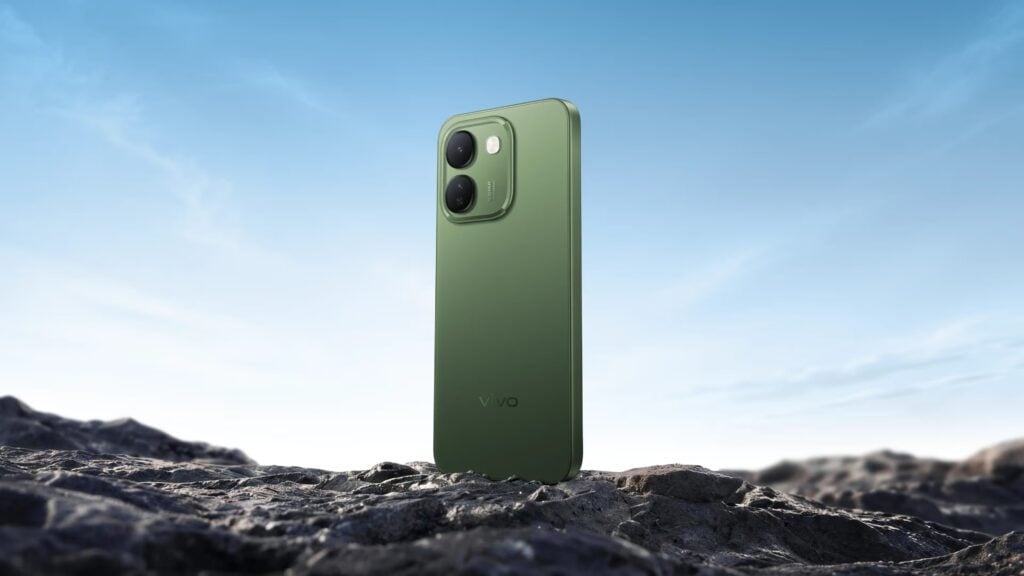
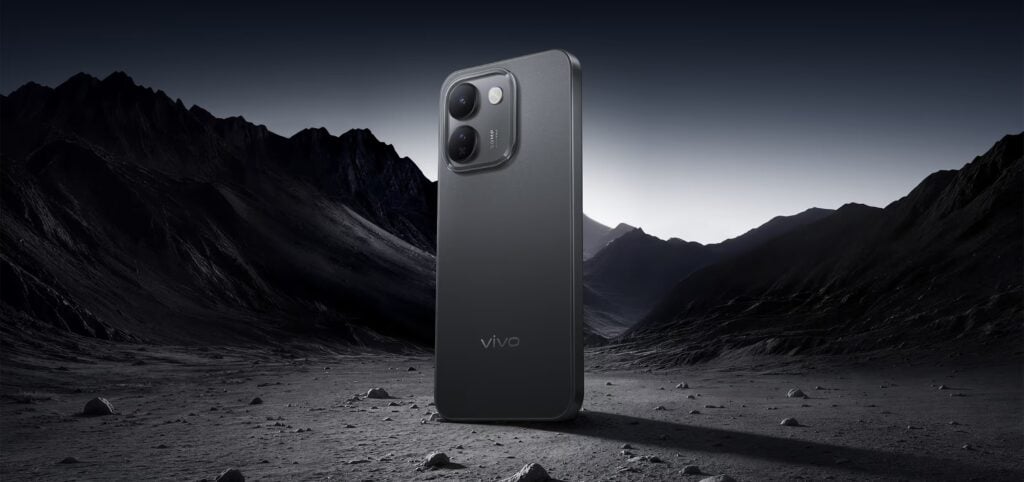
Vivo has been teasing the Vivo V80 Lite in some markets, including Pakistan. Now, it has also begun teasing the phone in Malaysia. Interestingly, the Malaysian edition is different from the one releasing in other markets. Here’s a look at the first official teaser of the Malaysian V80 Lite.
Vivo V80 Lite launch date confirmed
VIvo V80 Lite 5G launch date
The above poster confirms that the Vivo V80 Lite will debut at 7pm local time on Sept. 3 in Malaysia. The phone will be available in pink and green shades.
The poster also confirms that the Vivo V80 Lite will be powered by a huge 10,000mAh battery. This would be the first time Vivo has released a 10,000mAh battery phone outside of China. Previously, the brand launched the Vivo 600 Pro with a 10,200mAh battery in China, but it has not launched anywhere else.
The previously seen SIRIM listing of the V80 Lite revealed that it has the model number V2626, and the same has also appeared on Geekbench with Dimensity 7300e (MT6858). The TUV listing of this device has revealed that it will support 44W fast charging.
Vivo V2626 Geekbench listingVivo V2626 TUV listing
The Geekbench listing also revealed that it has 6GB of RAM and runs Android 16, which will most likely have the OriginOS 6 layer on top.
In related news, the Vivo V80 Lite heading to other markets could have different model numbers. It has been spotted with the model numbers V2643 and V2644 in the Bluetooth SIG database. The V2643 has also appeared on Geekbench with the Dimensity 7360-Turbo (MT6878), 8GB of RAM, and Android 16.
This variant is likely a rebranded version of the Indian Vivo S2, which has the model number V2576. The reason is that the V2576 is associated with the model numbers V2643 and V2644, as per Google Play Supported Devices listings shown above.
For more daily updates, please visit our News Section.
Ugreen has quietly launched a new Qi2 wireless charging stand (model no W776) in the US market. It is priced at $79.99 and is now listed on Amazon US. The device is a two-in-one desktop charger designed to power an iPhone and a pair of AirPods simultaneously. Aside from standard charging capabilities, it includes a built-in screen and an active cooling system to manage device temperatures.
The charger features Qi2 certification. For compatible devices, such as the iPhone 16 and iPhone 17 series, the primary magnetic mount provides up to 25W of wireless power. If you are using an older MagSafe-compatible device, like the iPhone 12 through iPhone 15, the output is capped at the standard 15W.
The base of the stand features a secondary wireless pad that outputs 5W, which is intended for charging wireless earbuds like AirPods. Ugreen specifies that to achieve the maximum 25W charging speed while operating the cooling fan, the stand must be plugged into a power adapter that supplies at least 45W.
Because fast wireless charging generates heat, Ugreen included a thermoelectric cooling (TEC) system and a fan directly behind the magnetic charging plate. According to the manufacturer, this setup lowers the phone’s temperature to below 20 degrees Celsius to help maintain battery health over time. If the fan noise is an issue, you can turn the cooling system off by double-tapping a dedicated button on the base.
The base also includes a small LED display that provides real-time information about the charging process. It shows the current power output in watts and the temperature of the device. If the stand is connected to a power adapter that provides less than 45W, a low-input icon appears on the screen. The second button on the base allows users to switch between data screens with a single tap, or adjust the screen’s brightness with a long press.
In terms of physical design, the magnetic mount can tilt vertically up to 90 degrees and allows the phone to rotate 360 degrees. This makes it possible to view the phone in landscape mode or use features like iOS StandBy while it charges.
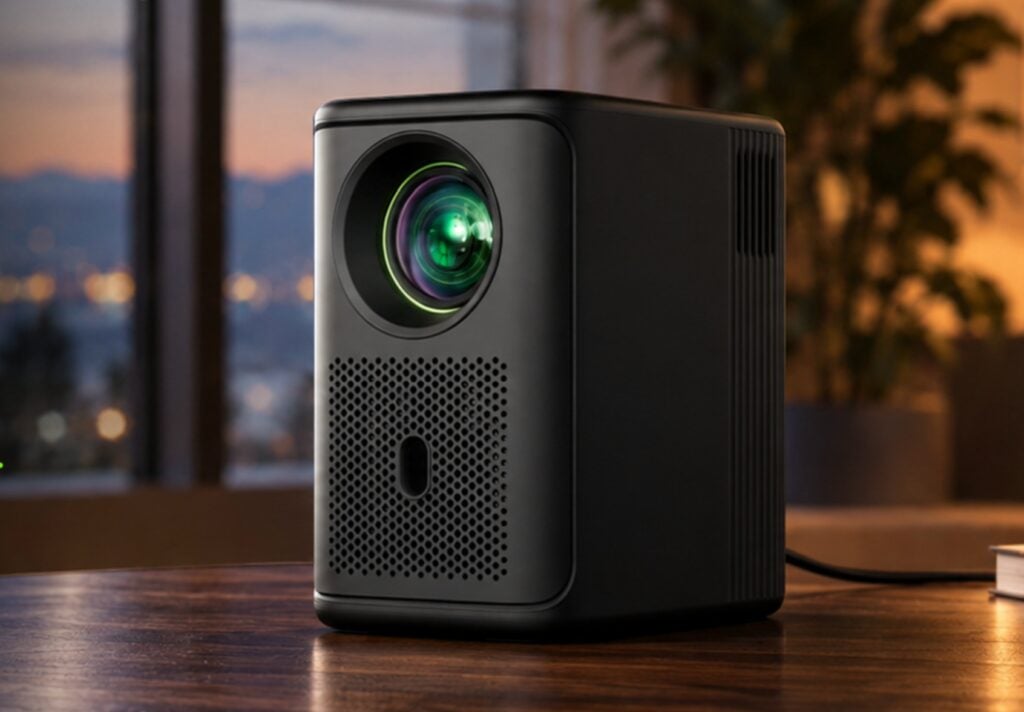
Dangbei has introduced the D7X Pro Super Bright Edition in China, expanding on last year’s D7X Pro 4K projector. The new model is available for presale on JD.com at 3,799 yuan (~$565) and primarily brings an upgraded, brighter light source.
The projector uses a 0.39-inch DMD chip, DLP display technology, and a pure RGB triple-laser light source. Dangbei is using a new QuaLas 42 laser system, which the company says improves light efficiency by 8% over the previous QuaLas 32 version.
This results in a rated brightness of 1,700 CVIA lumens (or 1,900 ISO lumens). For color, the projector covers 110% of the BT.2020 color gamut and 99% of Display P3, with a color accuracy of ΔE<1. It also has a 50,000:1 dynamic contrast ratio.
The projector includes a 0.98:1 to 1.3:1 lossless optical zoom. Because optical zoom uses physical lens adjustments instead of digital cropping, you can change the image size without reducing the native 4K resolution.
The device weighs 2.1kg and sits on a 145-degree integrated gimbal. This allows users to tilt the projector vertically to display images on higher walls or ceilings without buying a separate stand. To help with setup, it has global autofocus, automatic keystone correction, obstacle avoidance, and screen alignment.
Inside, the D7X Pro Super Bright Edition runs on a MediaTek MT9-series processor, paired with 2GB of RAM and 64GB of storage. It connects via Wi-Fi 6 and uses Dangbei AI OS 6.0. The software integrates with the Xiaomi Mi Home ecosystem and can be controlled using Xiao Ai voice commands.
For gaming, the projector supports Variable Refresh Rate (VRR) and Auto Low Latency Mode (ALLM). Dangbei included a low-latency mode that it claims reduces response times to 1ms. The software also has a 21:9 ultra-wide viewing option and specific picture settings for different types of games, like first-person shooters or RPGs.
To handle the heat from the laser system, Dangbei uses a cooling setup it calls the Super-Dimensional Thermal Management Architecture 2.0. The company says it increased the internal fin area and airflow to keep the operating noise down to 28dB. For audio, the projector has dual 6W speakers. The back panel includes two HDMI ports, two USB ports, a 3.5mm audio jack, and a DC power input.
🔌 You’ll NeedWith a 145-degree tilting gimbal built for ceiling and high-wall throws, a proper projector screen makes the most of that flexibility. Check portable projector screen price on Amazon →
According to previous reports, Sony’s 2026 Xperia lineup will split into two naming groups: models starting with “XQ-GE” and models starting with “XQ-GH.” The XQ-GH54 you’re looking at here is believed to be the European variant of the Xperia 10 VIII.
On the benchmark front, the phone posted 871 points in single-core and 3,028 points in multi-core on Geekbench 7.0. Its motherboard shows up under the codename “parrot,” and the CPU field lists “SM6475”, which is the internal codename for the Qualcomm Snapdragon 6 Gen 3. That means the Xperia 10 VIII is carrying over the same chip as the Xperia 10 VII.
The Snapdragon 6 Gen 3 itself dates back to August 2024. It’s built on a 4nm process and tops out at 2.4GHz, and it is an affordable option for budget-friendly devices rather than a performance flagship. Reusing it keeps costs down for Sony, though it also means you shouldn’t expect a big leap in raw power over the outgoing model.
We use cookies on our website to give you the most relevant experience by remembering your preferences and repeat visits. By clicking “Accept”, you consent to the use of ALL the cookies.
This website uses cookies to improve your experience while you navigate through the website. Out of these, the cookies that are categorized as necessary are stored on your browser as they are essential for the working of basic functionalities of the website. We also use third-party cookies that help us analyze and understand how you use this website. These cookies will be stored in your browser only with your consent. You also have the option to opt-out of these cookies. But opting out of some of these cookies may affect your browsing experience.
Necessary cookies are absolutely essential for the website to function properly. This category only includes cookies that ensures basic functionalities and security features of the website. These cookies do not store any personal information.
Any cookies that may not be particularly necessary for the website to function and is used specifically to collect user personal data via analytics, ads, other embedded contents are termed as non-necessary cookies. It is mandatory to procure user consent prior to running these cookies on your website.