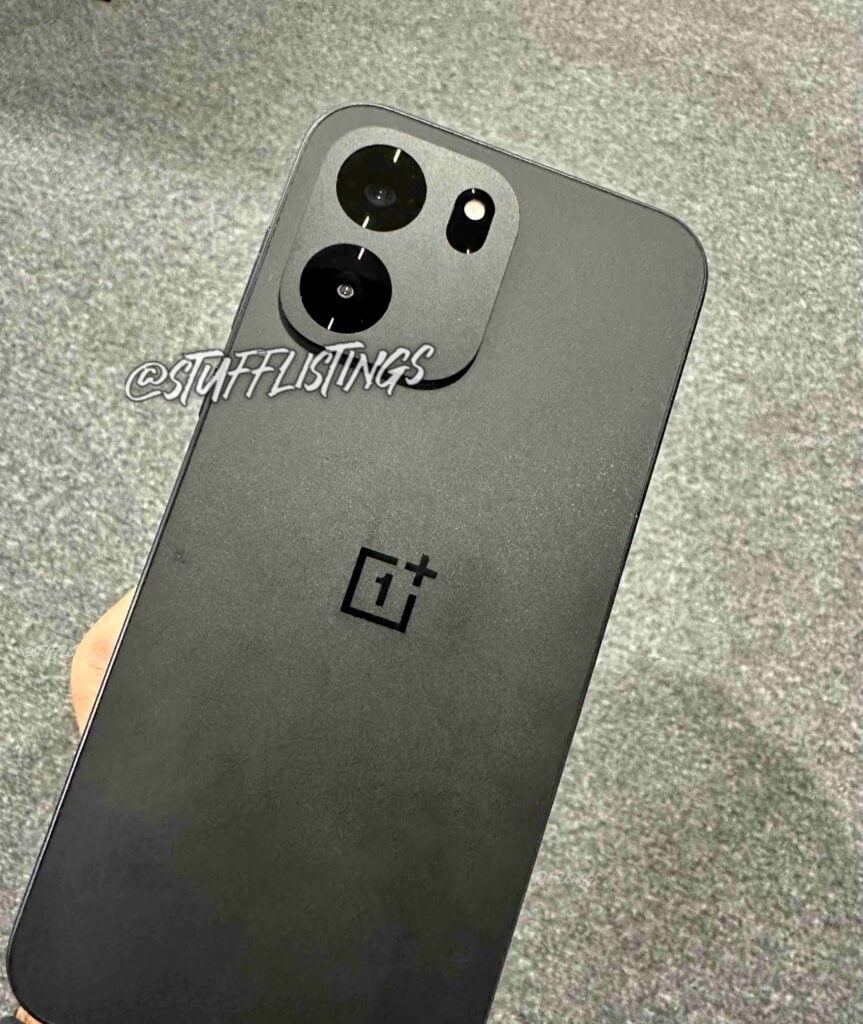
OnePlus looks set to expand its Nord lineup in India soon, with more models expected after the upcoming Nord 6. The company has already confirmed that the Nord 6 will launch on April 7, 2026. Now, a leak from tipster @stufflistings suggests the Nord CE6 and Nord CE6 Lite could follow in May.
Alongside the timeline, the tipster also shared what appears to be a live image of the Nord CE6. The phone is shown in a matte black finish with a fairly clean rear panel and a dual-camera setup inside a squircle-shaped module.
Specs are still mostly unclear, but earlier reports hint that the device could be related to the OnePlus Turbo 6V, which launched in China earlier this year. That phone comes with a 6.78-inch AMOLED display, 144Hz refresh rate, Snapdragon 7s Gen 4, and a notably large 9,000mAh battery. If OnePlus follows a similar setup here, it would be a noticeable step up from the previous generation.
For context, last year’s Nord CE model used a 120Hz panel, a MediaTek chip, and a smaller battery. So even a partial upgrade would make a difference.
The Nord CE6 Lite, meanwhile, is expected to sit a tier below. It will likely target buyers looking for a more affordable option, similar to how the Nord CE4 Lite was positioned.
Taken together, the lineup looks fairly spread out this year. The Nord 6 is expected to focus more on performance, while the CE6 models should cover the mid-range and budget-friendly segments.
There’s still no official word on pricing or full specifications. But if the May timeline holds, teasers could start not long after the Nord 6 launch.
With brands like Xiaomi, Realme, and Motorola pushing aggressively in this space, OnePlus doesn’t have much room to slow down.
Xiaomi has quietly added another budget option to its lineup in India with the Redmi 15A 5G. It’s not trying to do anything flashy, and that’s kind of the point. This one is clearly meant for people who just want a dependable phone with 5G, without spending too much.
At the center of it is the Unisoc T8300 chip. It’s built on a 6nm process and should be fine for basic tasks like calls, messaging, online payments, and some light multitasking. Nothing particularly exciting here, but it doesn’t need to be. You get 4GB or 6GB RAM options, along with up to 128GB storage, and there’s a microSD slot if that matters to you.
The battery is probably the main highlight. It’s a 6,300mAh unit, which is quite large even by today’s standards. Xiaomi is claiming up to two days of use, which sounds reasonable if you’re not pushing it too hard. Charging is limited to 15W though, so it will take its time. There’s also reverse wired charging, which is a small but useful addition.
The display is big, 6.9 inches, with a 120Hz refresh rate. It’s still HD+, so it won’t look as sharp as some others, but the smoother scrolling does help a bit in daily use. Brightness tops out at 800 nits, which should be manageable outdoors.
Cameras are kept simple. There’s a single 32MP sensor at the back and an 8MP camera on the front. It should handle basic shots fine, especially in daylight, but that’s about it.
It runs HyperOS 3.0 based on Android 16, and Xiaomi is promising four major updates, which is actually quite good for this price range.
The Redmi 15A 5G starts at ₹12,999 and goes up to ₹16,499, with sales beginning April 3. It comes in Black, Blue, and Pink.
Overall, it feels like a phone that knows exactly what it’s trying to be. Nothing extra, just the basics covered.
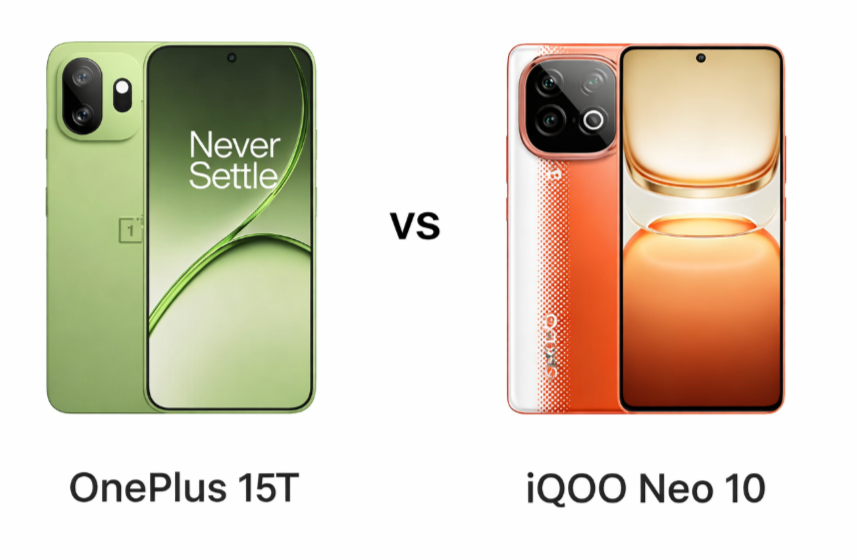
Flagship power is no longer reserved for flagship prices, and this comparison proves it. The OnePlus 15T brings cutting-edge performance, premium build, and advanced camera tech, while the iQOO Neo 10 pushes aggressive value with high-end specs at nearly half the price. One aims to deliver a refined flagship experience, the other focuses on raw performance and speed without breaking the bank. This isn’t just a spec battle, it’s a clash between premium polish and unbeatable value.
The OnePlus 15T clearly leans toward a more premium feel with its aluminum frame and stronger IP68/IP69K protection, making it more durable in real-world conditions. The iQOO Neo 10, while solid, uses a plastic frame and offers only IP65 protection, which feels less reassuring at this price tier. The OnePlus device also supports eSIM, adding a layer of flexibility that’s becoming increasingly useful. Overall, the OnePlus 15T feels like a flagship, whereas the iQOO feels more performance-focused than premium.
Display Quality
The iQOO Neo 10 offers a larger and brighter display with a higher peak brightness, making it more immersive for content consumption and outdoor visibility. However, the OnePlus 15T counters with a smoother 165Hz refresh rate and stronger HDR support including Dolby Vision, which enhances streaming quality. The slightly sharper panel also gives it a cleaner look in daily use. One feels cinematic, the other feels more refined.
Verdict
The iQOO wins on size and brightness, but the OnePlus 15T delivers a more premium build and balanced display experience.
2. Specifications Including Battery
Performance
The OnePlus 15T is powered by the newer Snapdragon 8 Elite Gen 5, delivering significantly better raw performance and efficiency compared to the Snapdragon 8s Gen 4 on the iQOO Neo 10. This translates into smoother multitasking, better sustained gaming, and more future-proof performance. The difference isn’t just on paper—it’s noticeable in heavy workloads where the OnePlus feels more stable and faster over time.
Battery and Charging
The OnePlus 15T packs a larger 7500mAh battery, which should easily last longer in real-world usage. It also supports wireless charging, something missing on the iQOO. However, the iQOO Neo 10 takes the lead in charging speed with 120W fast charging, making it extremely quick to top up. The inclusion of bypass charging is also a big plus for gamers. One prioritizes endurance, the other prioritizes speed.
Verdict
The OnePlus 15T wins for performance and battery longevity, while the iQOO Neo 10 appeals to users who value ultra-fast charging.
3. Camera
Main and Secondary Lenses
The OnePlus 15T clearly has the more versatile camera setup with a 50MP main sensor paired with a 50MP telephoto lens offering 3.5x optical zoom. This gives it a major advantage in portrait and zoom photography. The iQOO Neo 10, on the other hand, includes an 8MP ultrawide camera, which is useful but less impactful overall. Additionally, OnePlus supports 8K recording and Dolby Vision HDR, pushing it ahead for video capabilities.
Selfie Camera
The iQOO Neo 10 features a higher-resolution 32MP front camera with 4K video support, making it better suited for selfies and vlogging. The OnePlus 15T’s 16MP selfie camera is more basic and limited to 1080p video, which feels slightly outdated at this level.
Verdict
The OnePlus 15T dominates in rear camera versatility and video, while the iQOO Neo 10 is better for selfie-focused users.
4. Pricing
OnePlus 15T is priced at around ₹58,000, while the iQOO Neo 10 comes in significantly lower at around ₹33,000. This creates a massive price gap, positioning the iQOO as a value-driven performance phone and the OnePlus as a premium flagship alternative. The difference isn’t small; it fundamentally changes which audience each phone targets.
Value for Money
iQOO Neo 10 offers exceptional value, delivering strong performance, a great display, and ultra-fast charging at a much lower price. It feels like a performance bargain. However, the OnePlus 15T justifies its higher price with better build quality, superior chipset, wireless charging, and a more advanced camera system. It feels more complete and future-ready.
Verdict
The iQOO Neo 10 is the clear value winner, while the OnePlus 15T justifies its price for those wanting a flagship-level experience.
Disclaimer: Prices are approximate and may vary based on country, region, and applicable taxes.
5. Conclusion
The OnePlus 15T stands out with its flagship-grade chipset, premium build, wireless charging, and telephoto camera, making it a well-rounded high-end device. Meanwhile, the iQOO Neo 10 focuses on delivering top-tier performance, extremely fast charging, and a large immersive display at a much more accessible price. Each device targets a different kind of user, one aiming for refinement, the other for aggressive value.
Verdict
OnePlus 15T is the better overall phone with flagship features and long-term usability. However, the iQOO Neo 10 is hard to ignore for its price, offering incredible performance and features for the money. The smarter buy depends on priorities, premium experience or maximum value.
Early work on the Exynos 2800 is reportedly underway, and this is the processor expected to power the Galaxy S28 lineup in 2028. It’s still early days, but the direction Samsung is taking is starting to become clearer.
According to a report from Korea, the company wants to wrap up the design of the Exynos 2800, codenamed Vanguard, sometime in 2026. After that, it will be handed over to Samsung’s foundry division for production. The chip is expected to be built on the company’s third-generation 2nm process, referred to as SF2P+.
Samsung had earlier plans to move more aggressively toward a 1.4nm process around 2027, but that no longer seems to be the priority. Instead, the focus now is on improving yields and making sure the process is stable enough before pushing further. The 1.4nm node is now expected to arrive later, possibly closer to 2029.
This change doesn’t come as a huge surprise. Shrinking chip sizes every year is getting harder, and the gains aren’t always as straightforward as they used to be. Samsung now seems to be leaning more on design and manufacturing working closely together, rather than just chasing smaller numbers on paper.
The upcoming Exynos 2700, which is also expected to use a 2nm process, is said to be progressing smoothly. That probably gives Samsung some confidence that this approach is working, at least for now.
For Samsung, this is about more than just hitting a new node. Previous Exynos chips haven’t always matched Snapdragon in areas like efficiency and heat management. Focusing on stability and optimization could help narrow that gap.
There’s still no word on CPU or GPU details for the Exynos 2800, which isn’t surprising this far out. But if things go according to plan, the Galaxy S28 could end up benefiting from a more refined and balanced chip than what we’ve seen in the past.
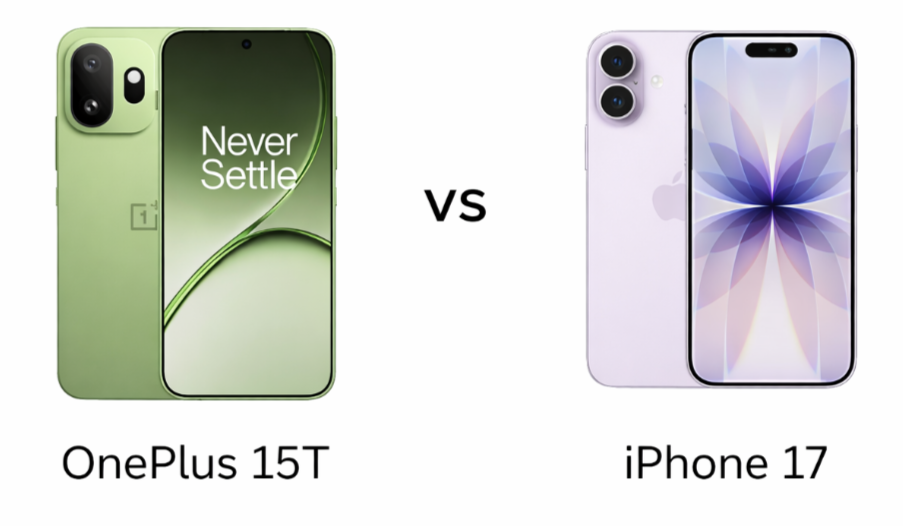
OnePlus 15T and iPhone 17 take two very different approaches; one focuses on raw power, battery, and aggressive specs, while the other delivers refinement, ecosystem strength, and long-term consistency. This comparison matters because both target premium users but prioritize completely different experiences, making the choice less about specs and more about what actually fits everyday usage.
The OnePlus 15T leans toward a practical flagship feel with its aluminum frame and fiber-backed design, offering durability without going overly premium. It also brings IP68/IP69K protection, giving it an edge in rugged use cases. The iPhone 17, on the other hand, sticks to Apple’s refined glass-and-aluminum build with Ceramic Shield 2, delivering a more premium in-hand feel and tighter finishing. It feels more polished overall, though slightly less aggressive in durability claims.
Display Quality
OnePlus pushes boundaries with a 165Hz AMOLED panel, higher peak brightness, and advanced PWM dimming, making it smoother and more eye-friendly. The iPhone’s 120Hz LTPO display is more color-accurate and consistent, with excellent HDR tuning and anti-reflective coating. It looks more natural, while OnePlus looks more vibrant and punchy.
Verdict
OnePlus wins for sheer display specs and smoothness, but the iPhone feels more refined and balanced for everyday viewing.
2. Specifications Including Battery
Performance
The OnePlus 15T runs on the Snapdragon 8 Elite Gen 5, delivering top-tier Android performance with aggressive clock speeds and strong GPU output. It feels built for gaming and sustained workloads. The iPhone 17’s A19 chip, however, focuses on efficiency and real-world fluidity. It may not chase peak numbers, but it consistently delivers smoother app optimization and longer-term performance stability.
Battery and Charging
Battery is where OnePlus clearly dominates with a massive 7500mAh cell, paired with 100W wired and 50W wireless charging. It is designed for heavy users who hate charging anxiety. The iPhone’s smaller battery is optimized well, but charging speeds remain conservative, even with MagSafe improvements.
Verdict
OnePlus is the clear winner for power users and battery life, while the iPhone focuses more on efficiency and consistency.
3. Camera
Main and Secondary Lenses
The OnePlus 15T offers a versatile setup with a 50MP main sensor and a dedicated telephoto lens with 3.5x optical zoom, making it more flexible for zoom shots. The iPhone 17 counters with a 48MP main sensor and a 48MP ultrawide, focusing on consistency and color science rather than zoom reach. Apple’s processing tends to produce more natural tones, while OnePlus leans slightly toward sharper and more contrast-heavy results.
Selfie Camera
The iPhone pulls ahead with a more advanced selfie system, including autofocus and depth sensing for Face ID, along with better video capabilities like 4K Dolby Vision. OnePlus keeps it simpler with a decent but less advanced front camera.
Verdict
iPhone wins for overall camera reliability and video, while OnePlus offers better zoom flexibility.
4. Pricing
OnePlus 15T is priced around $600 (₹58,000), while the iPhone 17 sits significantly higher at $800 (₹83,000). This creates a clear gap in positioning, with OnePlus targeting value flagship buyers and Apple aiming at premium users.
Value for Money
OnePlus delivers aggressive specs for the price, especially in battery, charging, and display. It feels like a performance-first device built to overdeliver. The iPhone, despite the higher price, justifies itself through ecosystem integration, long-term software support, and consistent user experience. It may not win on paper, but it often feels more complete in daily use.
Verdict
OnePlus offers better raw value, while iPhone justifies its price through refinement and ecosystem advantages.
Disclaimer: Prices are approximate and may vary based on country, region, and applicable taxes.
5. Conclusion
The OnePlus 15T stands out with its massive battery, ultra-fast charging, high refresh rate display, and telephoto zoom, features that directly impact heavy usage. It feels designed for users who prioritize performance and endurance. The iPhone 17, meanwhile, focuses on ecosystem features like Face ID, Ultra Wideband, satellite connectivity, and long-term software updates. These features may not seem flashy, but they add meaningful convenience over time.
Verdict
OnePlus 15T is the better pick for power users and value seekers, offering more hardware for less money. The iPhone 17 suits those who prefer a polished, reliable, and ecosystem-driven experience that stays consistent over the years.
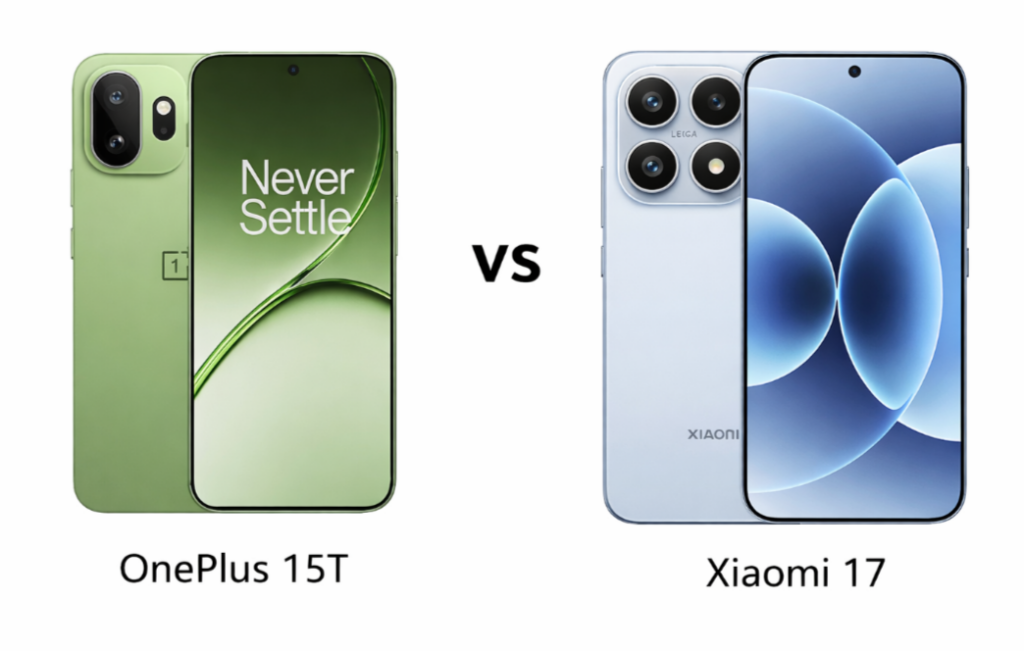
Flagship smartphones are no longer just about raw power; they’re about how that power is packaged, priced, and experienced daily. The OnePlus 15T and Xiaomi 17 take two very different approaches despite sharing the same core chipset. One pushes boundaries with battery and smoothness, while the other leans into premium design and camera versatility. This comparison breaks down where each device truly stands, and more importantly, which one actually makes more sense depending on what matters most.
The OnePlus 15T focuses on durability with its IP68/IP69K rating and a practical fiber-reinforced back that prioritizes toughness over premium shine. It feels built for long-term use and harsher conditions. The Xiaomi 17, on the other hand, leans into flagship elegance with a glass back and refined finish, giving it a more premium in-hand feel. It looks and feels more luxurious, though slightly less rugged on paper.
Display Quality
OnePlus delivers a 165Hz AMOLED panel with aggressive brightness scaling and excellent motion smoothness, making it ideal for gaming and fast UI interactions. Xiaomi counters with an LTPO AMOLED panel featuring richer color depth, better HDR handling, and more efficient adaptive refresh. While OnePlus feels smoother, Xiaomi’s display appears more refined and visually cinematic.
Verdict
OnePlus 15T is the practical, durability-first choice with ultra-smooth visuals. Xiaomi 17 feels more premium and polished, especially for content consumption.
2. Specifications Including Battery
Performance
Both phones run the same Snapdragon 8 Elite Gen 5 chip, so raw performance is virtually identical. Daily tasks, gaming, and multitasking feel equally fast. However, software tuning differs; OxygenOS feels lighter and snappier, while HyperOS leans toward feature richness. One tends to feel cleaner, the other more versatile.
Battery and Charging
This is where the gap becomes obvious. OnePlus packs a massive 7500mAh battery, making it a clear endurance leader. It’s built for heavy users who want fewer charging cycles. Xiaomi’s 6330mAh (global) is still solid but less impressive in comparison. Both offer 100W wired and 50W wireless charging, but Xiaomi adds faster reverse charging options, which is a practical bonus.
Verdict
Performance is a tie, but the OnePlus 15T dominates battery life. Xiaomi 17 adds versatility with better reverse charging features.
3. Camera
Main and Secondary Lenses
Xiaomi 17 clearly targets photography enthusiasts with its triple 50MP setup, including an ultrawide and Leica tuning. It delivers more flexibility and richer image processing, especially in varied lighting. OnePlus 15T keeps it simpler with a dual-camera setup but still offers strong results, especially with its telephoto lens and consistent color science. Xiaomi feels more complete, while OnePlus feels more focused.
Selfie Camera
The difference is significant. Xiaomi’s 50MP selfie camera supports 4K video and produces sharper, more detailed shots. OnePlus sticks with a basic 16MP sensor, which is fine for casual use but lacks flagship appeal. This makes Xiaomi more suitable for content creators and video calls.
Verdict
Xiaomi 17 wins decisively with a more versatile camera system and a much stronger selfie experience.
4. Pricing
The OnePlus 15T is priced at around ₹58,000, while the Xiaomi 17 sits much higher at approximately ₹90,000. This creates a substantial gap, placing them in slightly different buyer segments despite similar core performance.
Is the price justified?
OnePlus delivers flagship-level performance, massive battery life, and a high-refresh display at a much more accessible price. It feels aggressively priced for what it offers. Xiaomi justifies its premium with a superior camera system, more refined display tuning, and flagship-grade build quality. However, the price jump is noticeable and may feel steep unless those extras are truly valued.
Verdict
OnePlus 15T offers significantly better value for money. Xiaomi 17 justifies its price, but only for users who prioritize cameras and a premium feel.
5. Conclusion
OnePlus 15T stands out with its massive battery, ultra-smooth 165Hz display, and rugged durability, making it ideal for power users and gamers. Xiaomi 17 differentiates itself with Leica-tuned cameras, a high-end display experience, and premium build quality that feels closer to ultra-flagship territory. One focuses on practicality and endurance, while the other leans toward refinement and imaging excellence.
Verdict
OnePlus 15T is the smarter buy for most users, offering flagship performance at a much lower price with unmatched battery life. Xiaomi 17 feels more premium and complete, but its higher price makes it a niche choice for those who truly value its camera and display advantages.
OnePlus 15T is now available at a special first-sale discount on Giztop, making it a much more attractive deal for flagship buyers. Originally priced at $799, the device is currently available for $699, giving buyers a flat $100 discount. This limited-time offer makes the OnePlus 15T one of the most value-packed premium smartphones right now, especially considering its high-end specs and massive battery.
Flagship Performance with Snapdragon 8 Elite Gen 5
Under the hood, the OnePlus 15T is powered by the latest Qualcomm Snapdragon 8 Elite Gen 5 processor, ensuring top-tier performance for gaming, multitasking, and everyday use. Paired with 12GB or 16GB LPDDR5X Ultra Pro RAM, the phone delivers smooth app switching, fast loading times, and stable high frame rates. It also supports dual 5G connectivity, keeping you future-ready for faster networks.
Smooth Display and Premium Experience
The phone features a 6.32-inch 1.5K AMOLED LTPO display with an ultra-smooth 165Hz refresh rate, making scrolling and gaming incredibly fluid. With 1300 nits peak brightness and HDR10+ support, visuals look sharp and vibrant. Additional features like Reading Mode, Night Mode, and an in-display fingerprint sensor enhance the overall user experience.
Powerful Cameras with Periscope Zoom
For photography, the OnePlus 15T comes with a triple camera setup, including a 50MP Sony IMX890 main sensor and a standout 50MP LUMO 3.5X periscope telephoto lens. This setup allows for detailed shots and improved zoom capabilities. On the front, a 16MP selfie camera handles video calls and social media content with ease.
Massive Battery with Fast Charging
One of the biggest highlights is the 7500mAh battery, which easily lasts more than a day. It supports 100W fast wired charging and 50W wireless charging, ensuring you spend less time plugged in. Features like Ultra Power Saving Mode further extend battery life when needed.
Storage and Software
The device offers up to 1TB UFS 4.1 storage, providing plenty of space for apps, photos, and videos. It runs on ColorOS 16 with Dark Mode 2.0, offering a clean, customizable, and smooth software experience with support for multiple global languages.
Why This Deal Stands Out
At $699, the OnePlus 15T combines flagship performance, a massive battery, and premium features at a price that undercuts many rivals. The $100 launch discount makes it an especially compelling option for buyers looking to upgrade without paying full flagship pricing.
The foldable smartphone market in North America is starting to look more competitive. For years, Samsung has held a clear lead, but that gap is now shrinking.
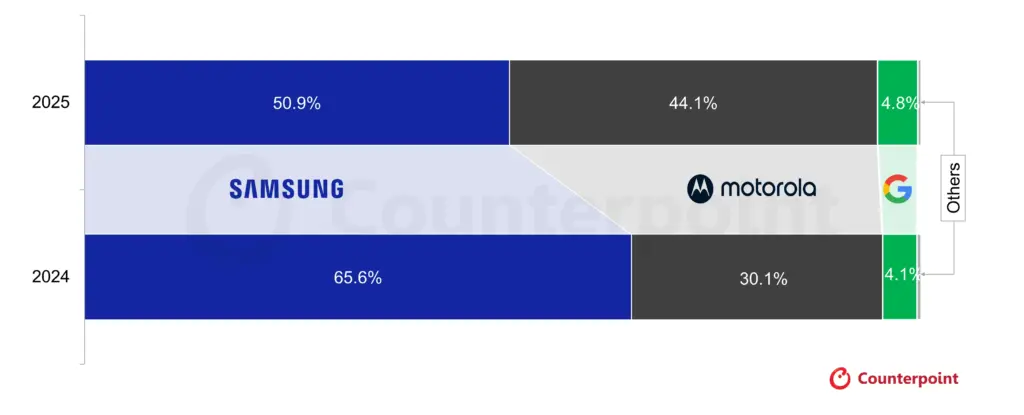
According to a recent report from Counterpoint Research, foldable shipments in the region grew 28% year-over-year in 2025. Growth is still solid, but the bigger shift is in market share.
Samsung’s share reportedly fell from 65% in 2024 to around 51% in 2025. The company still leads overall and remains strong in book-style foldables, but competition in the clamshell segment has picked up.
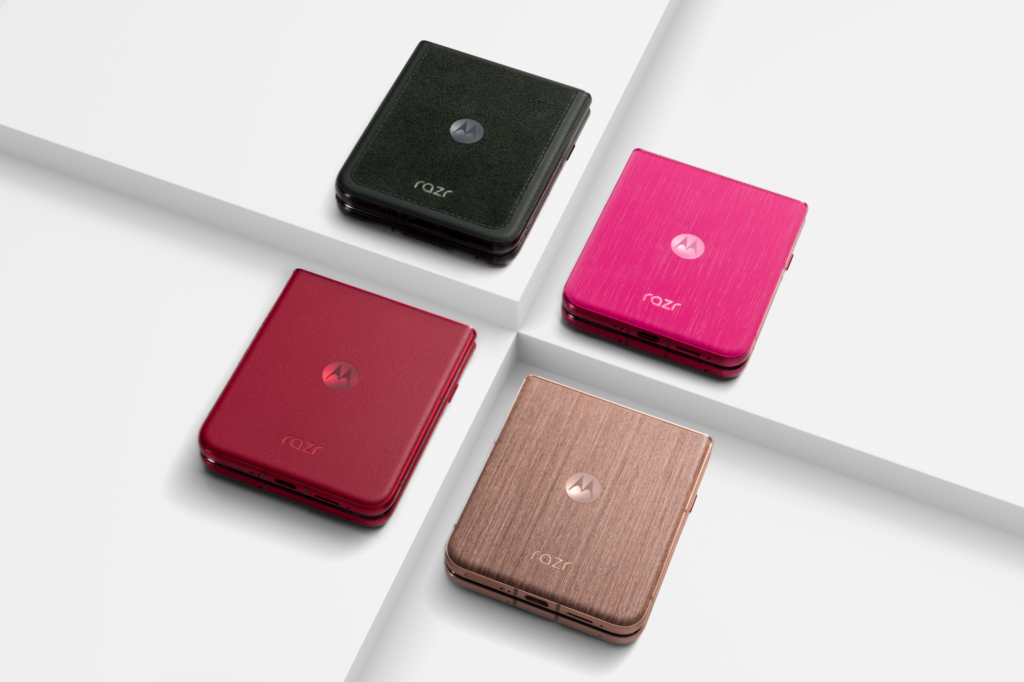
A big part of that shift comes from Motorola. The brand saw strong demand for its Razr 60 series, helped by aggressive pricing and carrier deals. As a result, Motorola captured roughly 44% of the market, turning what used to be a one-sided space into a much closer race.
Google is also growing, though from a smaller base. Shipments rose 52% year-over-year, following the launch of the Pixel 10 Pro Fold in late 2025. Even so, its share is still estimated at around 5%.
All of this comes just ahead of Apple’s expected entry into foldables. The long-rumored iPhone Fold is widely tipped to arrive alongside the iPhone 18 series later this year, though availability could vary depending on the market.
Apple has taken its time with foldables, skipping the early phase when people were more concerned about the durability and reliability of the new form factor. By entering now, the company is stepping into a category that’s more mature and easier to sell to mainstream users.
Samsung, meanwhile, is said to be working on updates of its own, including a book-style foldable with a wider display. The goal appears to be staying competitive as new players, especially Apple, enter the space.
If these trends continue, 2026 could mark a turning point. What was once a Samsung-dominated category is starting to open up, and Apple’s arrival may push it further toward the mainstream.
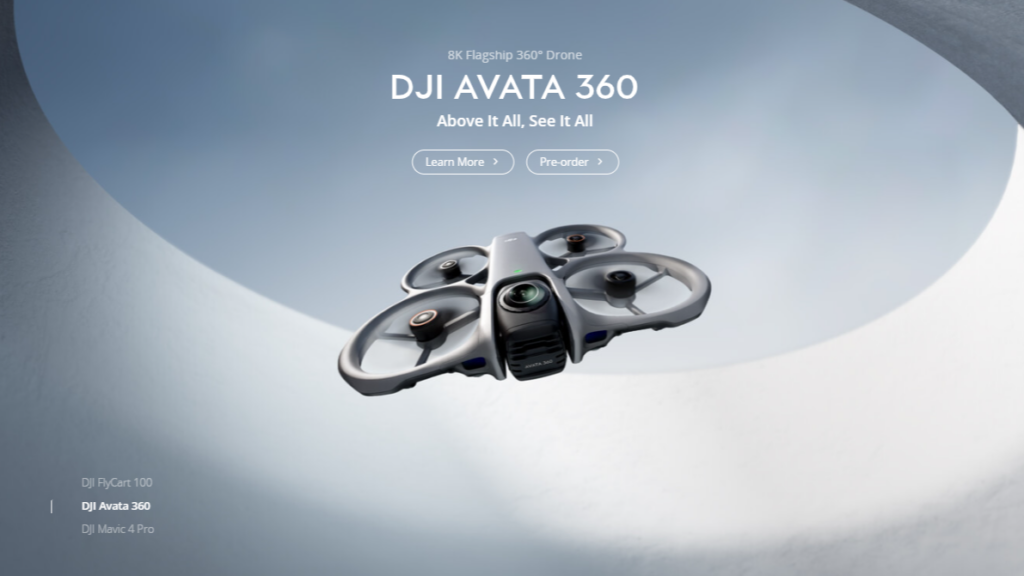
DJI has stepped into the growing 360-degree FPV space with the new Avata 360, and it’s clearly aiming at creators who want more flexibility from their footage. The idea is simple on paper: capture everything in one go, then decide the framing later.
The Avata 360 uses a dual-lens setup with 1/1.1-inch square CMOS sensors. Each one has relatively large 2.4 μm pixels, which should help in tricky lighting. DJI claims up to 120MP stills and 8K 60fps HDR video in full 360 mode. There’s also a single-lens mode for more traditional 4K 60fps recording if you don’t need the full spherical view.
What makes this kind of camera interesting is what happens after shooting. Since the drone captures everything around it, you can reframe shots later, pick different angles, or even create multiple clips from a single flight. It’s not entirely new as a concept, but having it on a compact FPV drone does make it more usable in day-to-day shooting.
DJI is also bringing over its usual flight tech. The Avata 360 uses the O4+ transmission system, offering a 1080p 60fps live feed with a claimed range of up to 20km. There’s omnidirectional obstacle sensing as well, which should make flying a bit less stressful, especially in tighter environments. Features like ActiveTrack 360° and Spotlight Free are included too.
A few practical touches stand out. The front lens can be replaced if it gets damaged, there’s 42GB of built-in storage, and Wi-Fi 6 helps speed up file transfers. Flight time is rated at up to 23 minutes, and the drone weighs about 455 grams.
DJI launched the Avata 360 on March 26, with availability starting in China and wider rollout expected soon. Pricing sits around £409 or €459, which feels fairly aggressive for what’s being offered.
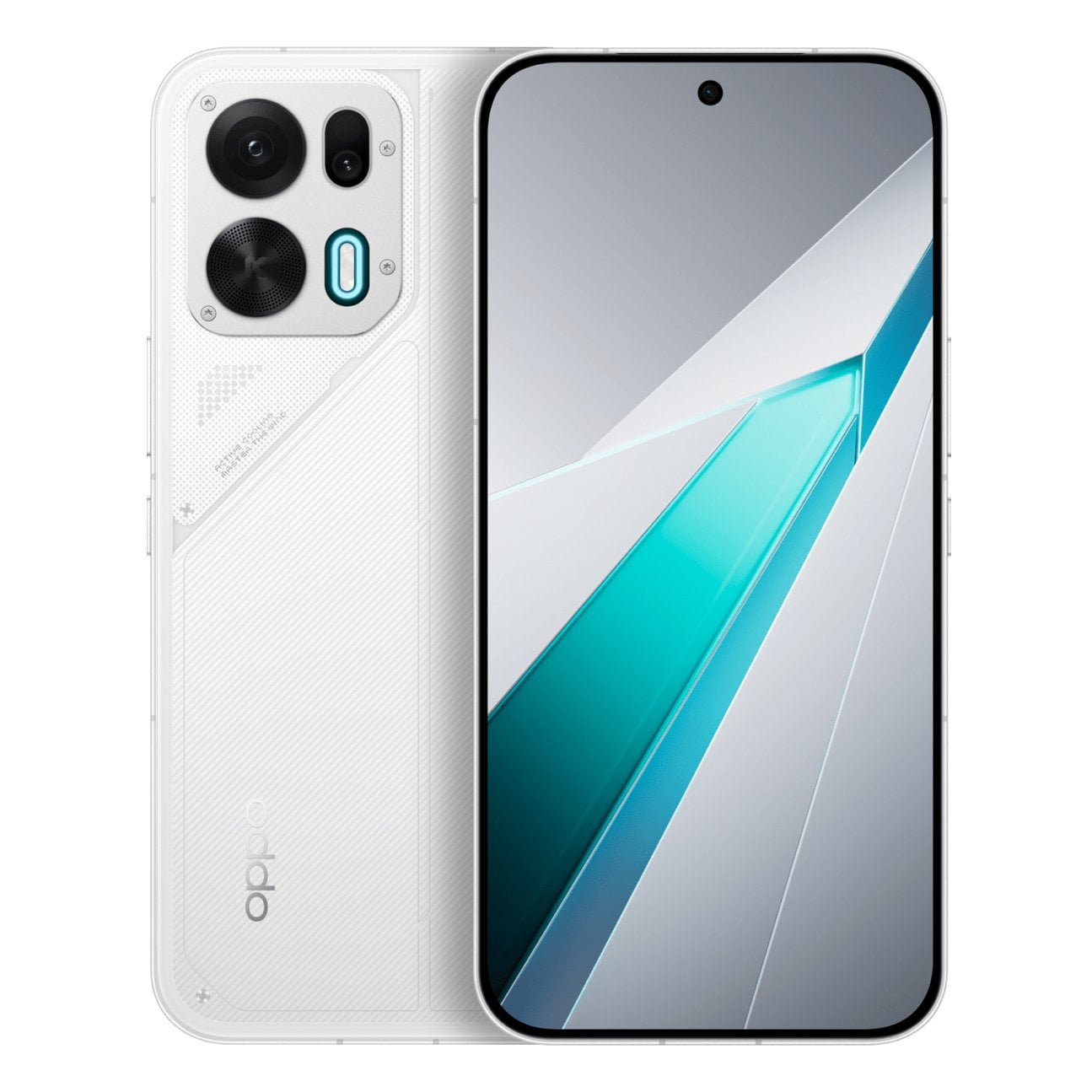
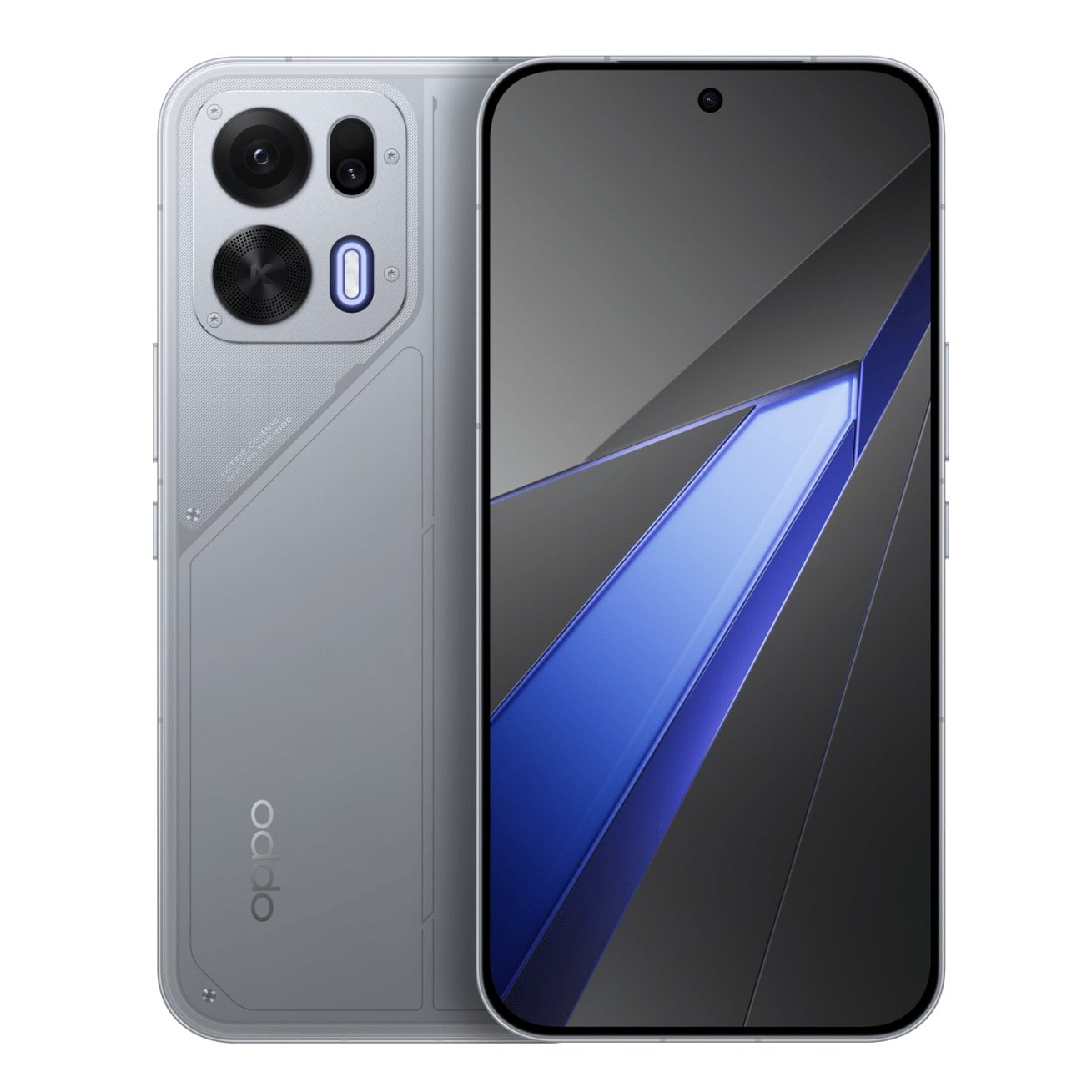
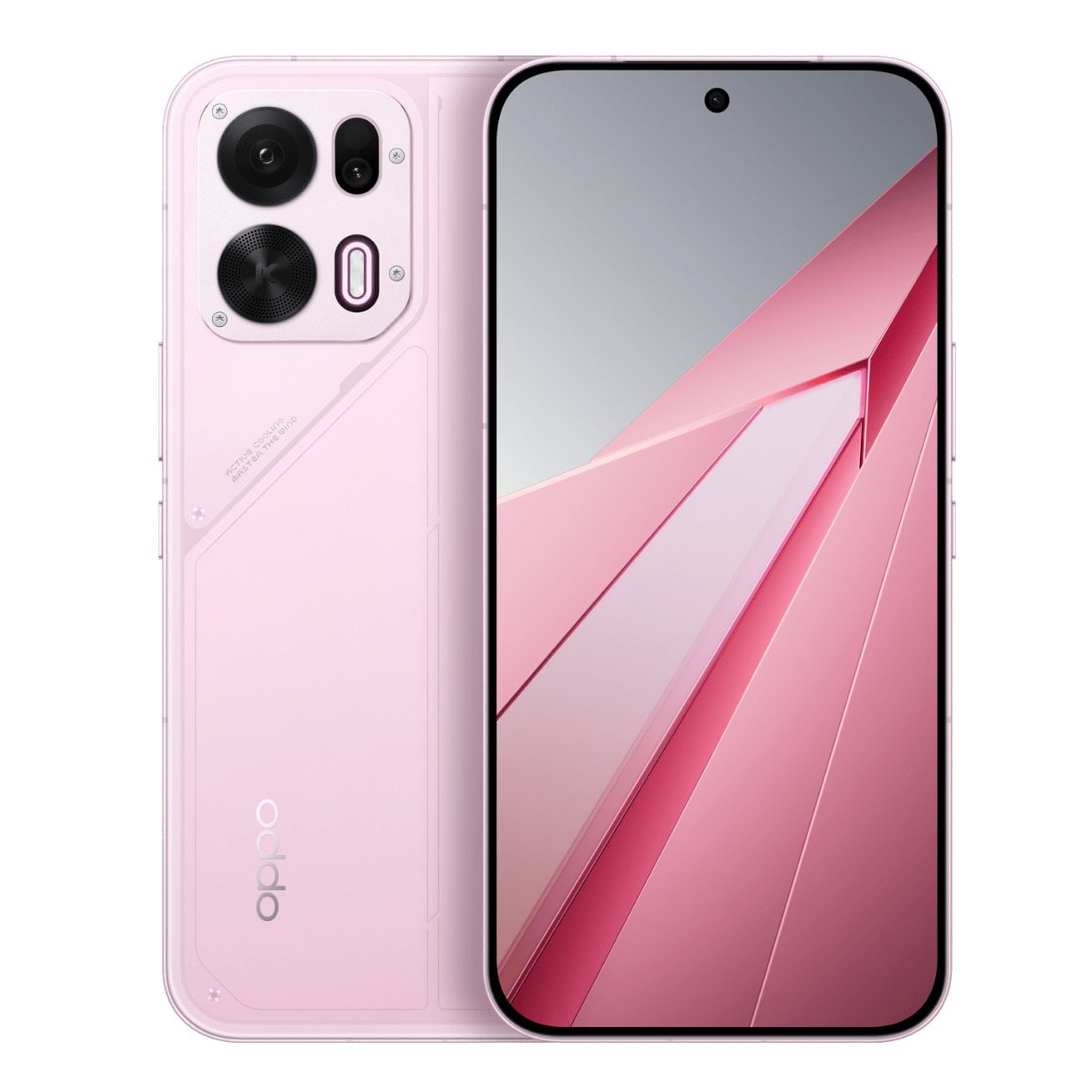
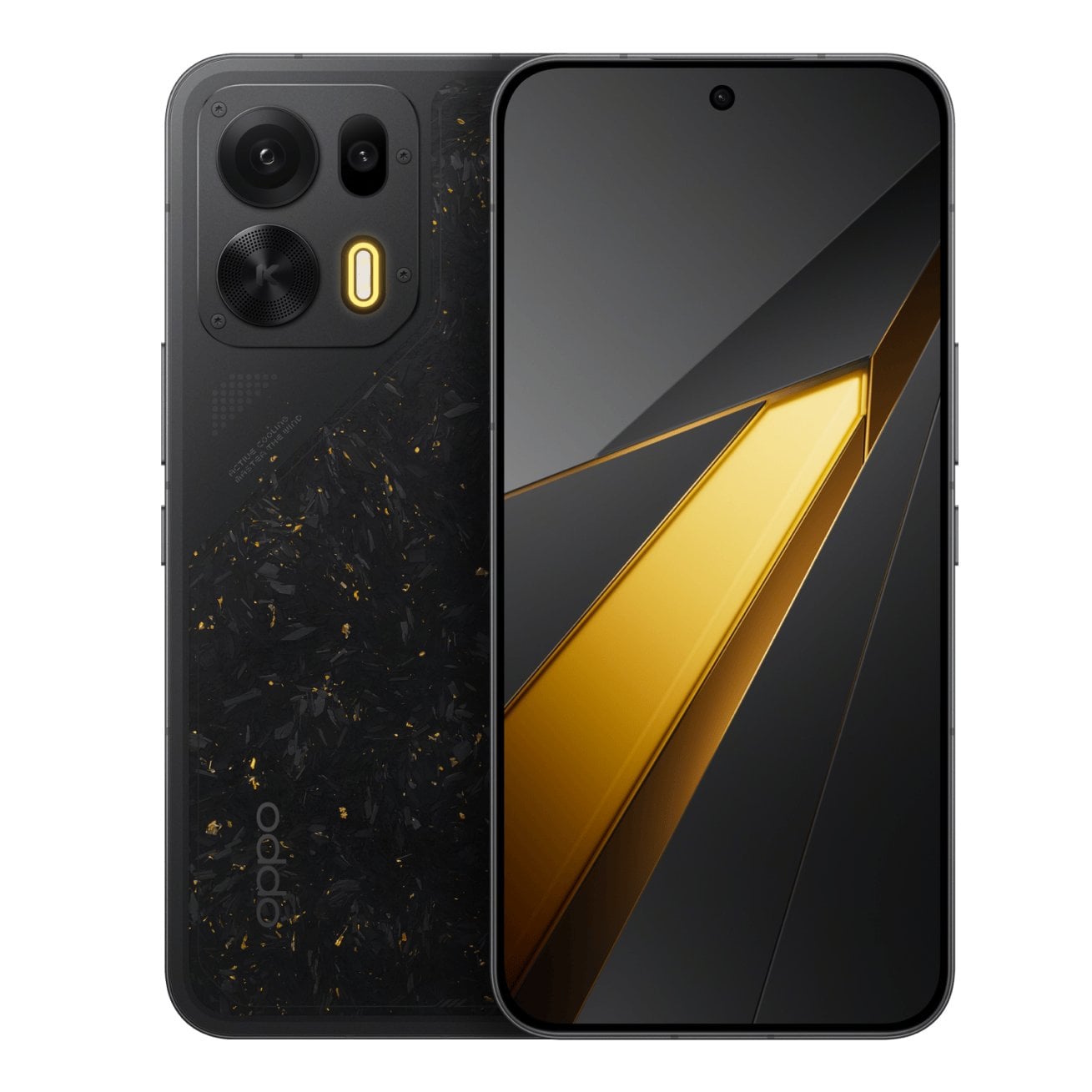
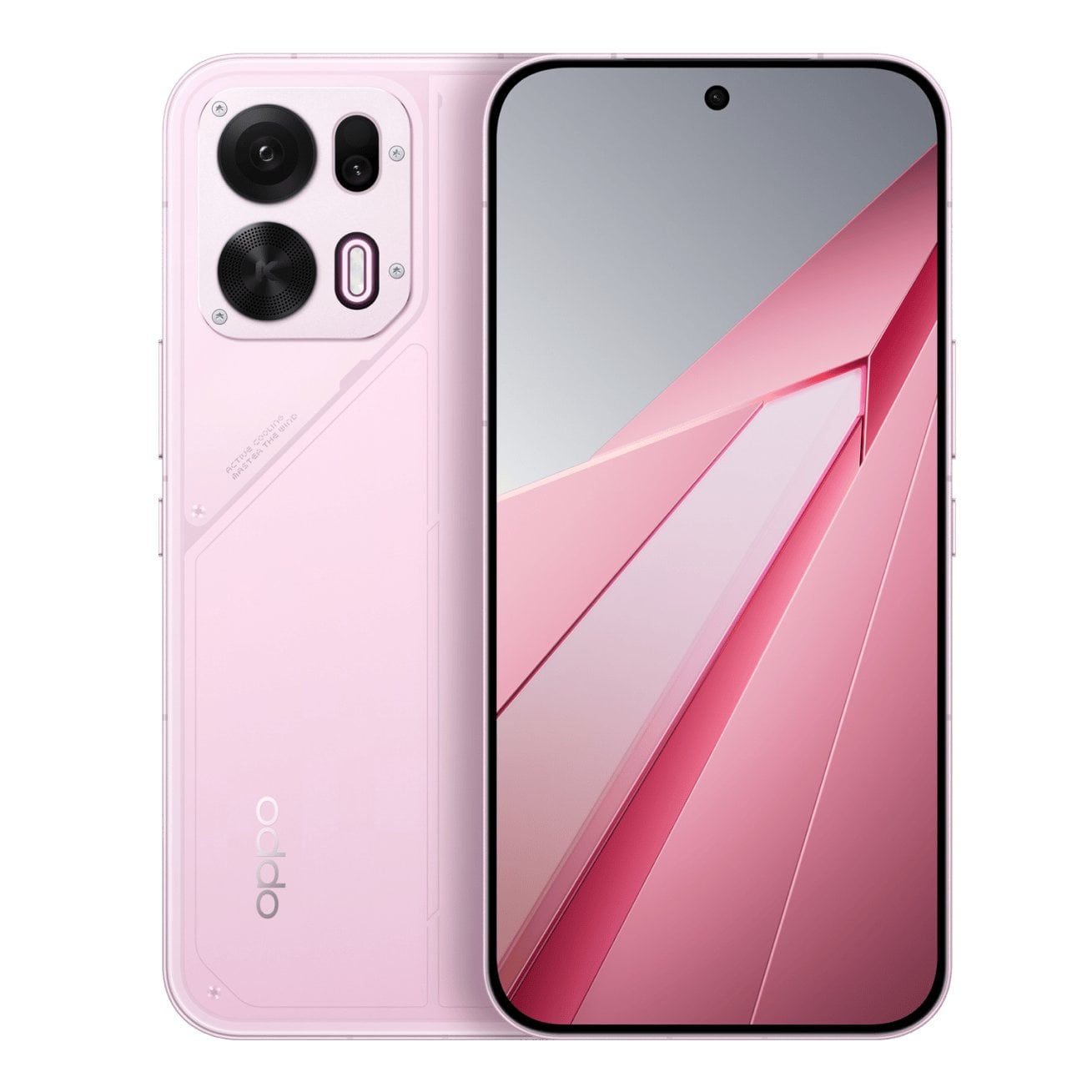
On April 1, Oppo will announce the Oppo K15 Pro and K15 Pro+ in China. Ahead of the launch, both phones are now listed for pre-orders through the company’s online store. The official listings have revealed their configurations and color options. At the same time, both devices have appeared on Geekbench, confirming their chipsets.
Oppo K15 Pro series configs, color options
Oppo K15 Pro – Cyber WingsOppo K15 Pro – Origin GrayOppo K15 Pro – PhotodustOppo K15 Pro – Golden Legend
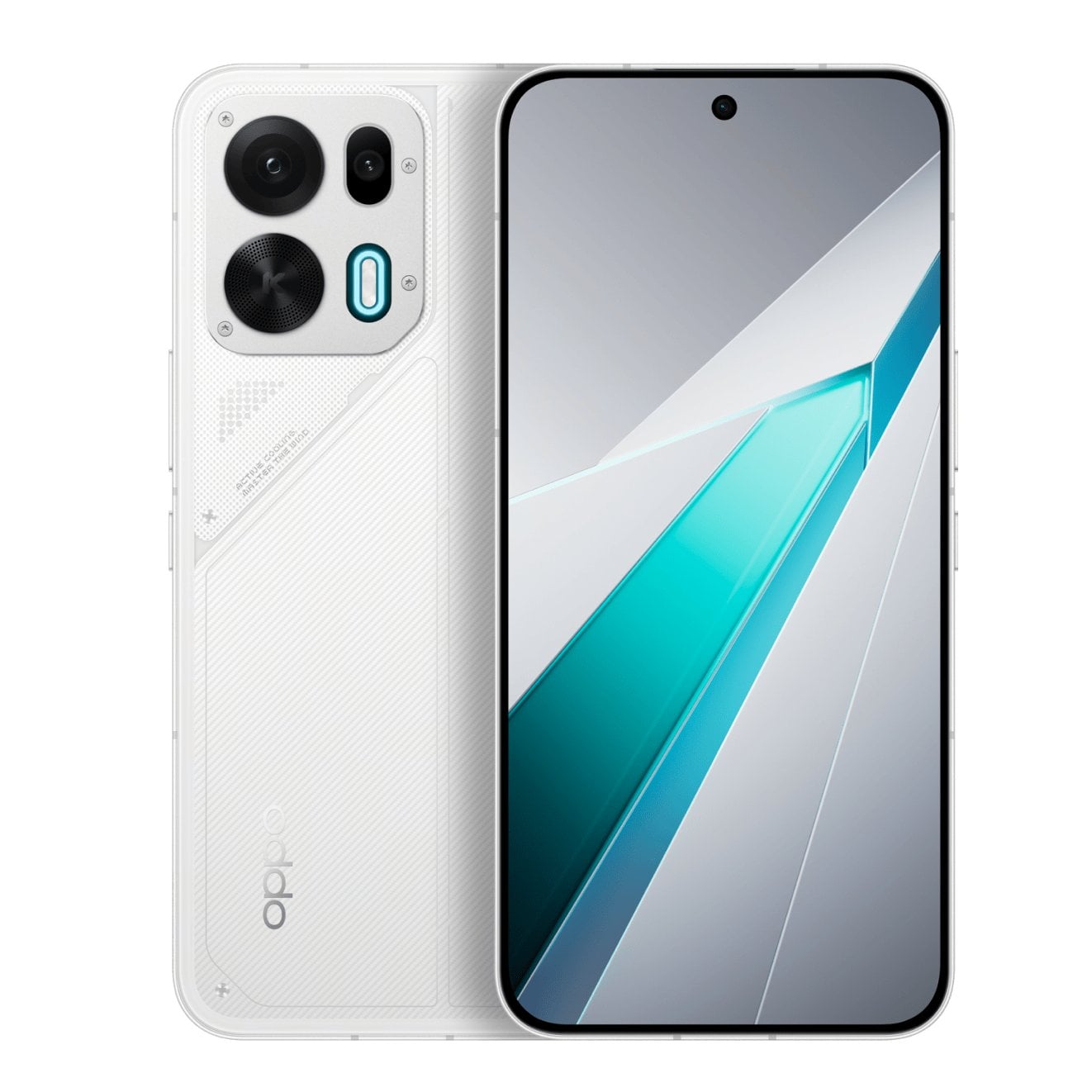
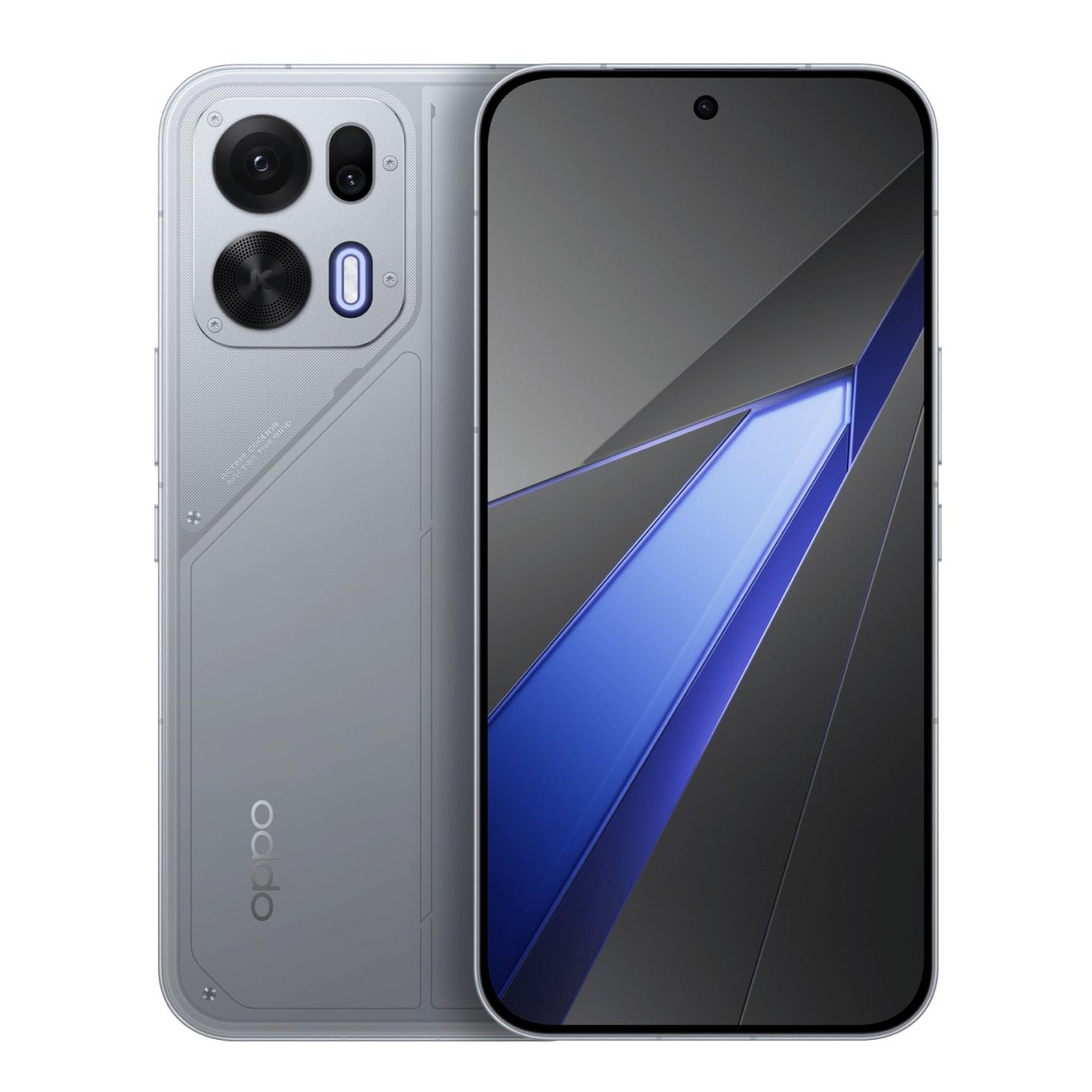
The official images of the Oppo K15 Pro and K15 Pro+ show that both phones have an identical design. For those who don’t know, the K15 Pro will be a smaller device featuring a 6.59-inch screen, whereas the K15 Pro+ will have a larger 6.78-inch display.
The K15 Pro and K15 Pro+ will come in shades such as Cyber Wings, Origin Gray, and Photodust (pink). The Pro version will also be available in an additional Golden Legend color variant. Both phones will be offered in 12GB+256GB and 12GB+512GB configurations.
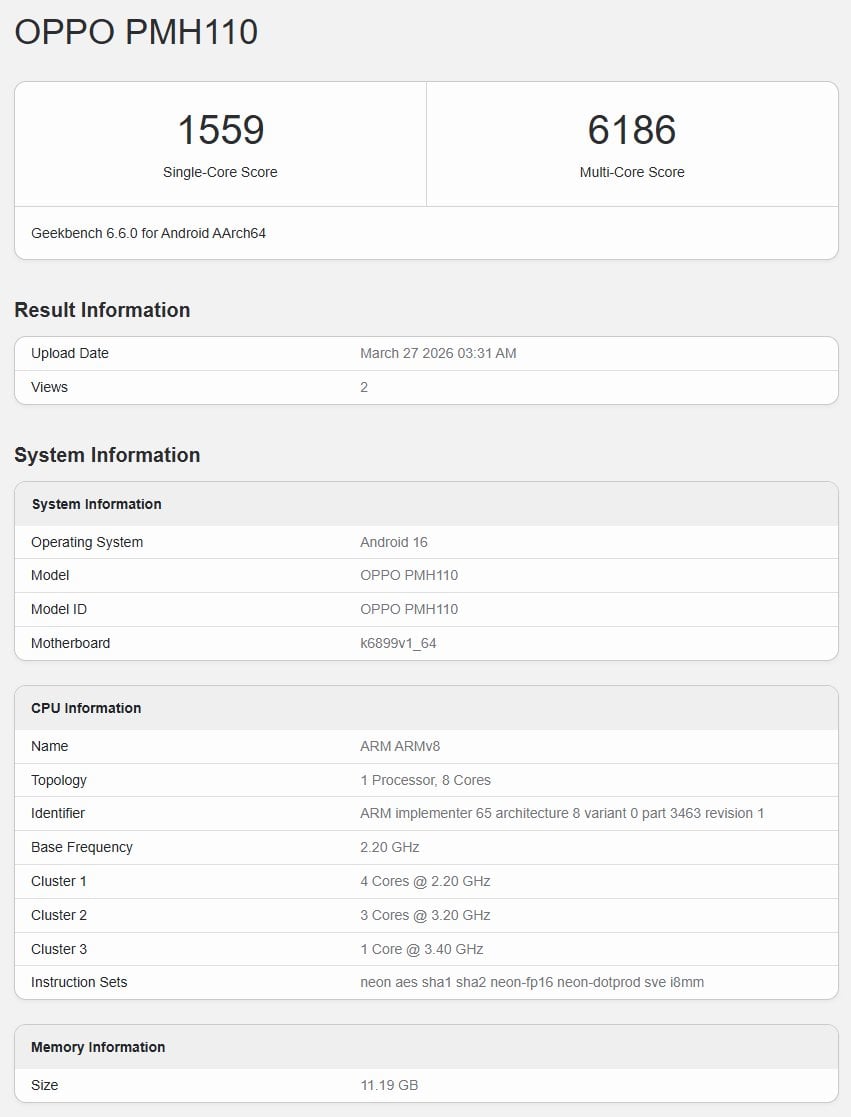
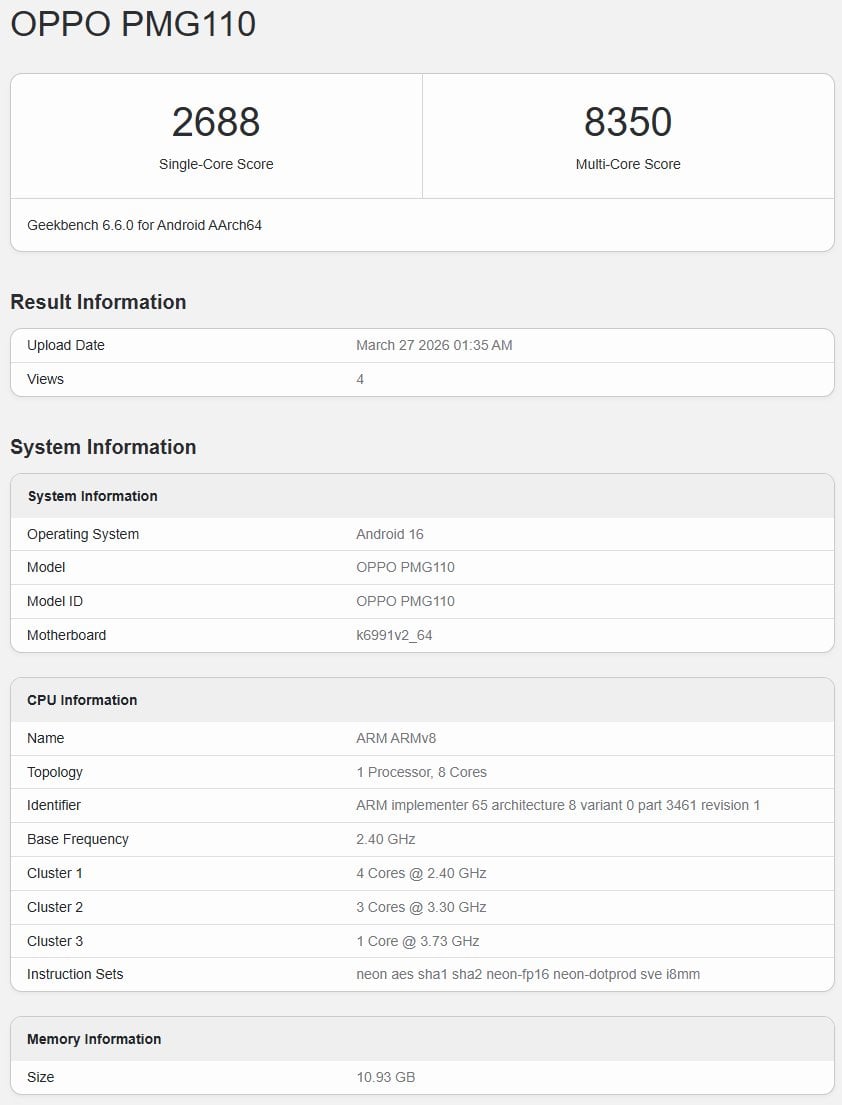
Both phones are also listed on Geekbench with model numbers PHM110 and PGM110, respectively. The previously seen TENAA listings revealed that these devices are powered by 3.40GHz octa-core and 3.73GHz octa-core chips, respectively.
Oppo K15 Pro Geekbench listingOppo K15 Pro+ Geekbench listing
The Geekbench listings confirm that these devices are powered by the Dimensity 8500and Dimensity 9500s, respectively. Although the chipset names are not explicitly mentioned, the CPU and GPU details available in the listings are sufficient to confirm their identities. The listings further reveal that the K15 Pro series comes with 12GB of RAM and runs on Android 16.
Other reports suggest that the K15 Pro series will support a 1.5K resolution and up to a 165Hz refresh rate. Both phones are also expected to feature a built-in cooling fan, a 16-megapixel front camera, and a 50-megapixel + 8-megapixel dual-camera setup. The K15 Pro may house a 7,600mAh battery, while the Pro+ variant may feature an 8,000mAh battery, and both are likely to support 80W charging.
For more daily updates, please visit our News Section.
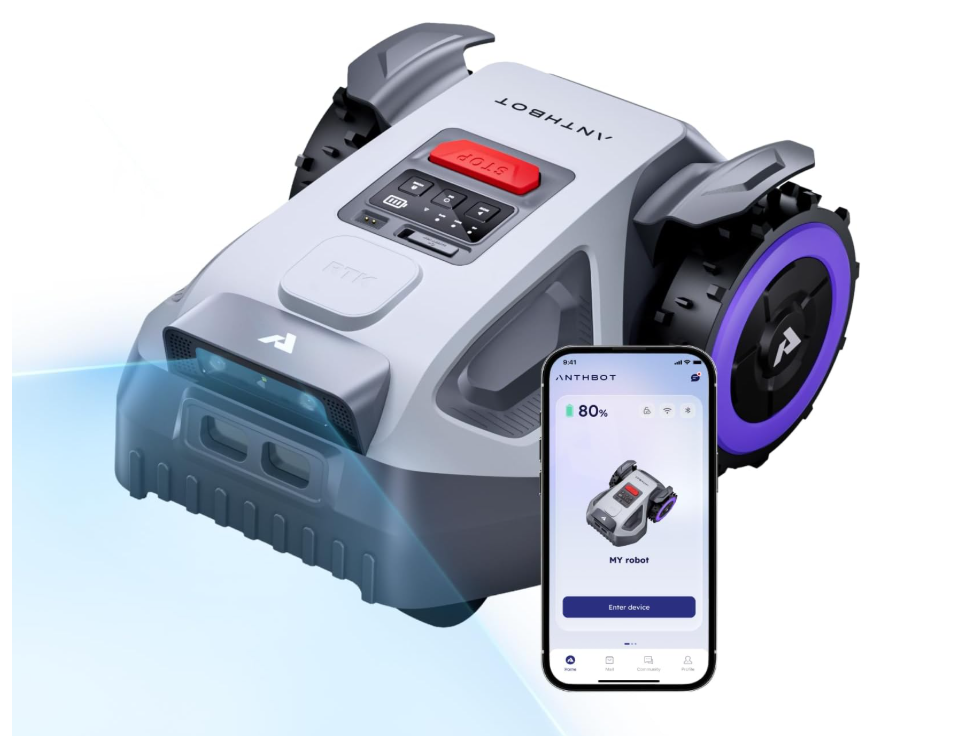
ANTHBOT M5 is a smart robotic lawn mower designed for small to medium-sized yards up to 0.15 acre. It focuses on convenience, precision, and automation, making lawn care easy even for beginners. With advanced AI vision and RTK positioning, it eliminates the need for perimeter wires and manual setup, offering a clean and modern mowing experience.
Deal & Availability
The ANTHBOT M5 is currently available with a massive limited-time discount on Amazon, making it a much more attractive buy. The mower has an original MSRP of $819, but it is now available at a reduced deal price of $679, offering solid savings. This special offer started on March 25, 2026, and will run until March 31, 2026. Since it’s a time-limited deal, availability may vary depending on stock, so interested buyers should act quickly to grab this smart robotic mower at a lower price.
Smart Navigation & Precision
This mower uses a dual AI vision system combined with RTK technology to achieve highly accurate positioning. It can map your lawn automatically in about 10 minutes without needing manual guidance. The dual-camera setup ensures stable performance even in complex garden layouts, while full signal coverage improves reliability across different areas of your yard.
Performance & Cutting
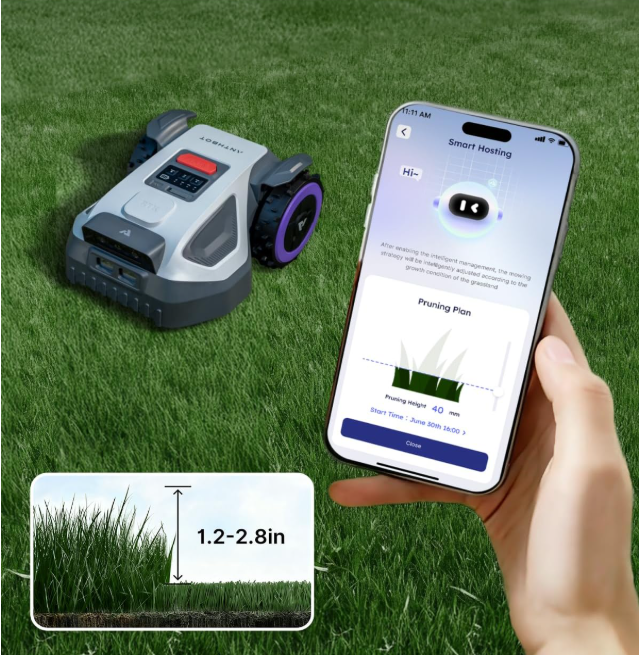
The ANTHBOT M5 delivers efficient mowing with support for slopes up to 45%, making it suitable for most residential lawns. It features adjustable cutting height from 1.2 to 2.7 inches and uses five free-rotating blades to give a smooth, carpet-like finish. Intelligent path planning allows users to select different mowing patterns through the app.
App Control & Multi-Zone Support
Using the ANTHBOT app, users can manage up to 20 zones, create no-go areas, and monitor mowing progress remotely. The mower also supports automatic charging and resumes work after recharging, ensuring uninterrupted operation.
Safety & Build
Equipped with dual HDR cameras, the M5 can recognize over 1,000 obstacles for better safety. It also includes emergency braking, IPX6 water resistance, and operates quietly at under 58 dB, making it neighbor-friendly.
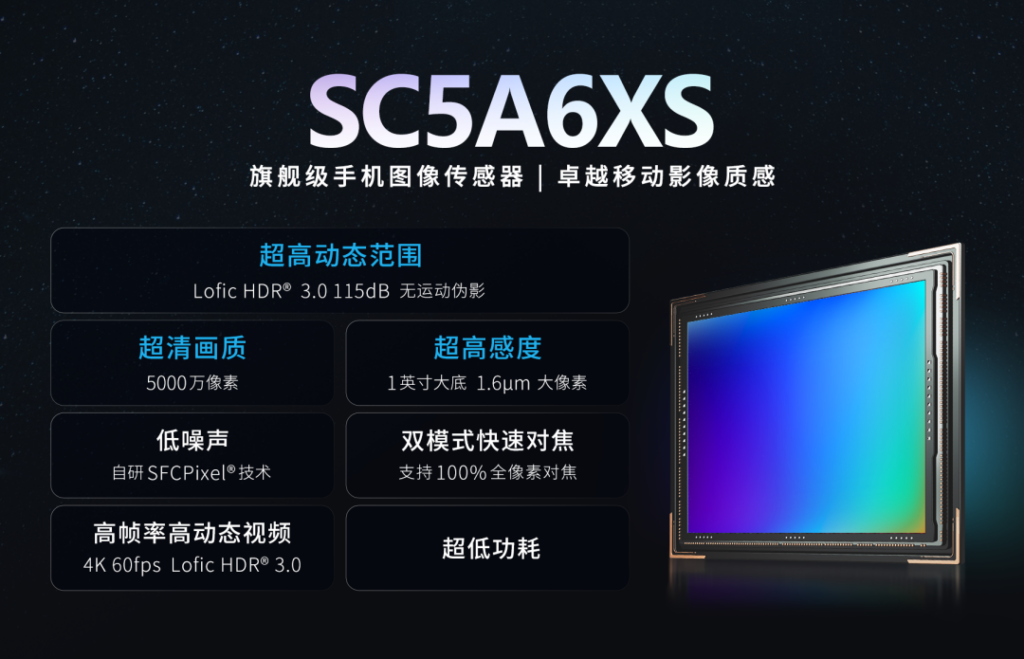
Chinese image sensor maker SmartSens has introduced a new camera sensor aimed at flagship smartphones. The SC5A6XS brings a 50-megapixel 1-inch format and focuses on improving dynamic range and video capabilities. The announcement highlights upgrades in HDR processing, low-light imaging, and power efficiency, setting the stage for next-generation mobile photography.
Focus on HDR and video performance
SmartSens SC5A6XS
The SC5A6XS is built on a 22nm stacked process and integrates the brand’s upgraded Lofic HDR 3.0 technology. This system enhances image quality in challenging lighting by capturing a wider range of brightness levels. With a peak dynamic range of 115dB, the sensor aims to preserve highlight details while retaining shadow information in high-contrast scenes.
The HDR system works through multi-frame fusion within a single exposure, which also helps reduce motion artefacts. This is particularly useful in video scenarios where subjects or the camera are in motion. The sensor supports 4K video at 120fps, along with 4K 60fps recording in HDR mode, making it suitable for advanced video use cases on smartphones.
In terms of hardware, the sensor features a 1.6μm pixel size and incorporates SFCPixel technology to improve light sensitivity. With higher sensitivity and reduced read noise, it is designed to produce clearer images in dim conditions without excessive grain.
Autofocus is handled through a combination of full-pixel AllPix ADAF and partial pixel phase detection, allowing faster and more reliable focusing across different lighting environments. Additionally, the company has worked on reducing power consumption, with an approximate 11 percent improvement in HDR mode, which may help control device heating during extended video recording.
The SC5A6XS has already entered the sampling phase and is expected to move into mass production in the second quarter of 2026. It is likely to appear in upcoming flagship smartphones, probably the Huawei Pura 90 series, being the likely candidate, focusing heavily on camera performance.
What are your thoughts on the new 1-inch 50-megapixel SC5A6XS sensor and its HDR capabilities?
For more daily updates, please visit our News Section.
There’s a certain kind of compromise that comes with buying a projector under $500 in 2026. You’re not getting true home theater performance, and you’re definitely not replacing a high-end TV.
But you are getting something that can project a large image onto a wall, run streaming apps, and occasionally feel like a cinema, as long as you understand the trade-offs.
That’s really what defines this category now. Most projectors under $500 lean on 1080p resolution, portability, and smart features, while settling on just enough brightness.
In this article, we will list out five of the best projectors you can find in 2026 with their pros and cons.
The reality of budget home theater in 2026
Before getting into the list, it’s worth setting expectations, and is a $500 budget tier for projectors?
Yes, $500 is a budget segment for projectors. Proper home theater models can easily cost over $1000, so this sits at the lower end of the market. And that means these projectors come with trade-offs.
At this price, brightness is the first limitation. Many portable models hover around a few hundred lumens, which means they work best in dark rooms. Even slightly lit environments can wash out the image. For example, compact models like the Nebula Capsule 3 sit at around 200 ANSI lumens, which is enough for nighttime viewing but not much else.
Resolution is less of a problem now. Most options here are Full HD (1920 x 1080), which has become the baseline even for cheaper projectors.
What has improved is usability. Features like autofocus, keystone correction, and built-in Google TV have become standard, even in budget devices. This drastically improves the usability.
XGIMI Halo+
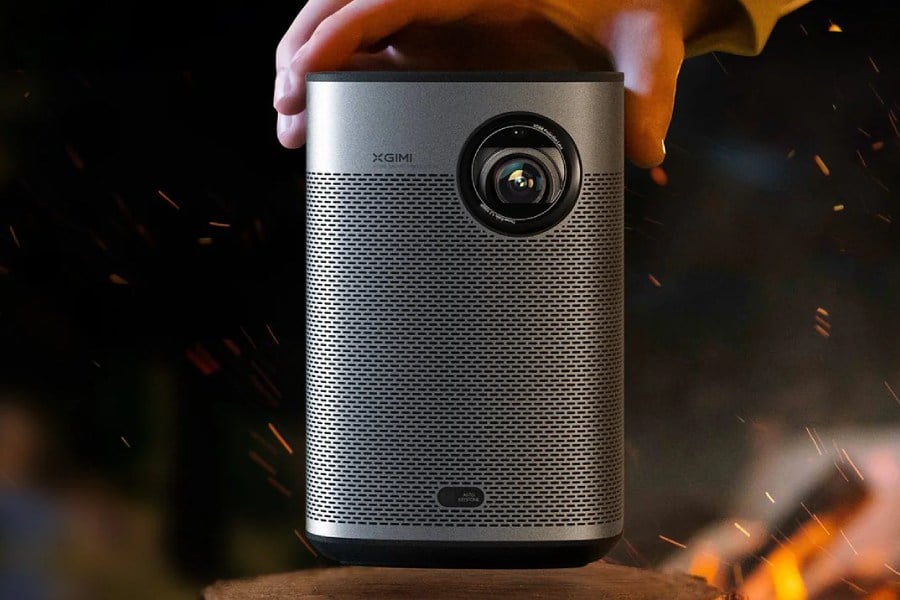
If you want the least compromised projector under $500, the XGIMI Halo+ is the one that looks the most complete on paper and in practice. It has 1080p FHD resolution, 700 ISO lumens, Google TV, a 59.454Wh built-in battery, and 2.5 hours of playtime.
It also includes two 5W Harman Kardon speakers and a full auto-setup suite. It uses a CMOS sensor and a ToF module to focus the image and fix the keystone automatically.
All these features make Halo+ a worthy choice for most people. It is bright enough for a dark living room, simple enough for a casual movie night, and portable enough to move from room to room.
The trade-off is still brightness. At 700 ISO lumens, it’s bright enough for a dim room, though you’ll still want to pull the curtains during the day.
Lumio Arc 7
The Lumio Arc 7 is harder to categorize, partly because of its limited availability. It’s mostly sold in India, but it’s a good projector for the price nonetheless.
The design is a vertical tower, which makes it easy to stick on a crowded nightstand. It’s a 1080p unit with 400 ANSI lumens. It’s lower than the XGIMI on paper, but Lumio uses a proprietary “Arclight Engine,” which is a fully sealed, dust-proof, and precision-aligned optical system.
It is designed to be a high-performance projection core rather than a standard, open LED light source, for long-term durability by preventing dust from creating hazy spots or color degradation on the display over time.
The real standout here is the audio. It packs dual 8W speakers (16W total) that are genuinely impressive. If you’re a renter who doesn’t want to buy a soundbar, this is probably the best all-in-one solution on the list. It also runs a very clean version of Google TV with official Netflix support.
ViewSonic LX60HD
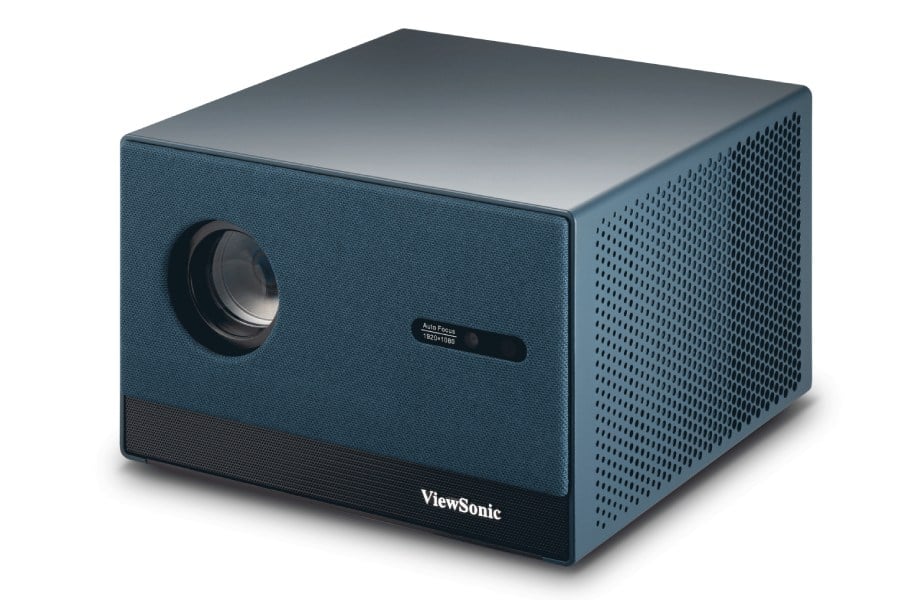
The ViewSonic LX60HD is the simplest option in this group. It currently retails at $249.99 in the US. The projector has 1080p Full HD resolution, 630 ANSI lumens, Google TV, native Netflix support, built-in Wi-Fi and Bluetooth, and auto focus plus auto H/V keystone correction. It also projects up to a 140-inch screen and uses a sealed optical engine designed to keep dust and moisture out.
This makes the LX60HD a good fit for people who do not want to assemble a home theater from separate pieces. It has the streaming system built in, the setup tools are straightforward, and the price is low enough that it does not feel risky.
The downside is that it is still a 630-lumen projector, so it belongs in a dim room rather than one full of daylight. But if you want a compact projector for nighttime movies, this projector is for you.
Epson EpiqVision Flex CO-W01
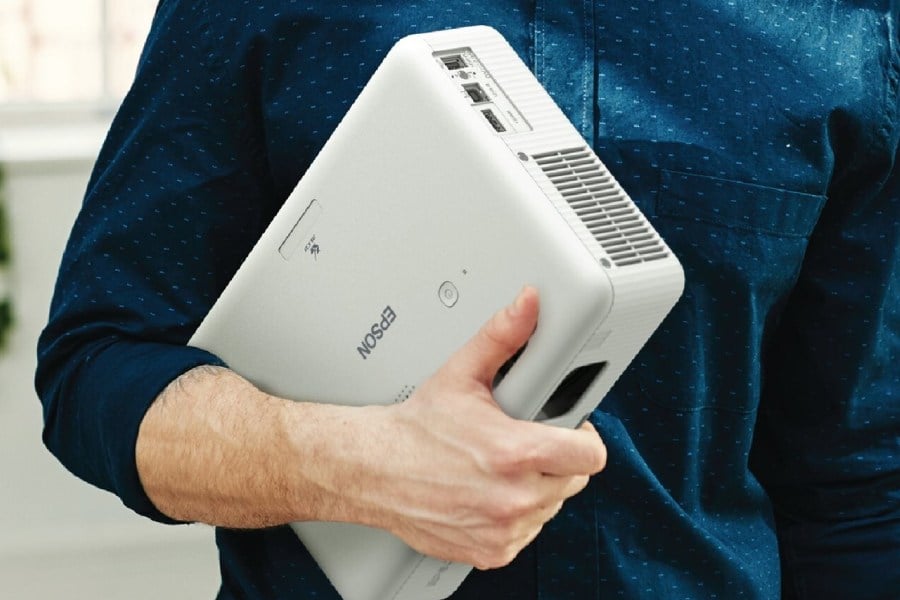
Unlike other projectors in this list, the Epson EpiqVision Flex is a bit different. It doesn’t try to be portable, nor does it has built-in battery. But if you plan on using your projector in a room with some ambient light, and your budget is under $500, this is the one.
It pumps out 3,000 lumens using 3LCD technology. This means the colors stay vibrant even when the room isn’t pitch black. Most cheap projectors use a single-chip DLP system that can cause a “rainbow effect.” You don’t get that here.
But there are two big trade-offs. First, the resolution is WXGA (1280×800), which is essentially 720p. In 2026, that feels a bit dated.
Second, it has zero smart features. There’s no Netflix, no Wi-Fi, and no apps. You’ll need to plug in a Chromecast or a Roku stick to actually watch anything.
Nebula Capsule 3
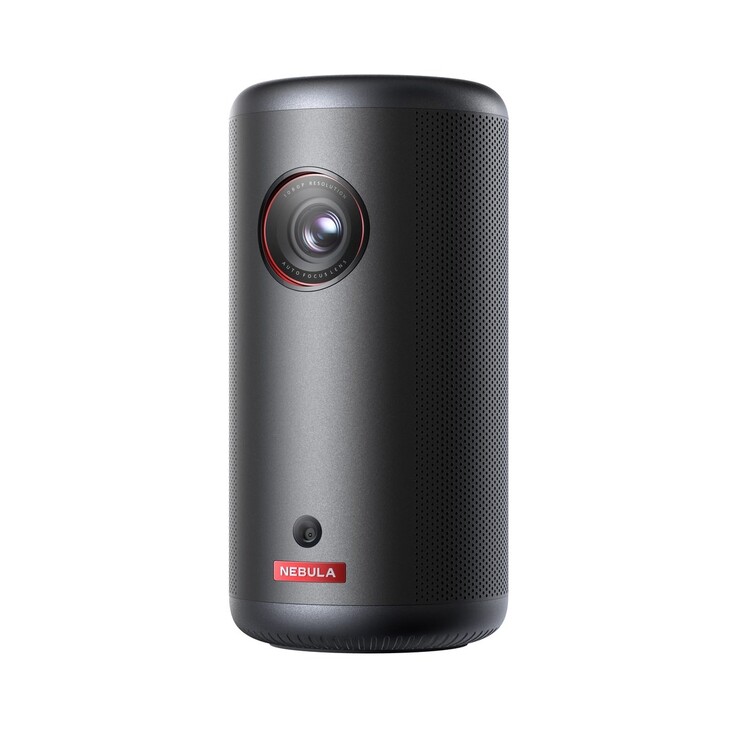
The Nebula Capsule 3 probably has the most recognizable form factor in this list. It looks like a portable speaker, and in many ways, it behaves like one.
It’s small, battery-powered, and designed to be carried around. It runs Google TV, so you can stream content directly without additional hardware. Setup is simple, and it includes automatic image adjustments.
Its limitations are equally clear, too. The brightness is capped at around 200 ANSI lumens, which means it’s strictly a dark-room or nighttime device. The speakers are decent at 8W.
The main point of Capsule 3 is that it’s built for convenience. You can take it anywhere, set it up quickly, and watch something without thinking too much about placement or cables.
It can run for a couple of hours, which is enough for a movie but not much more. It’s less of a home theater projector and more of a personal screen you can move around.
For more daily updates, please visit our News Section.
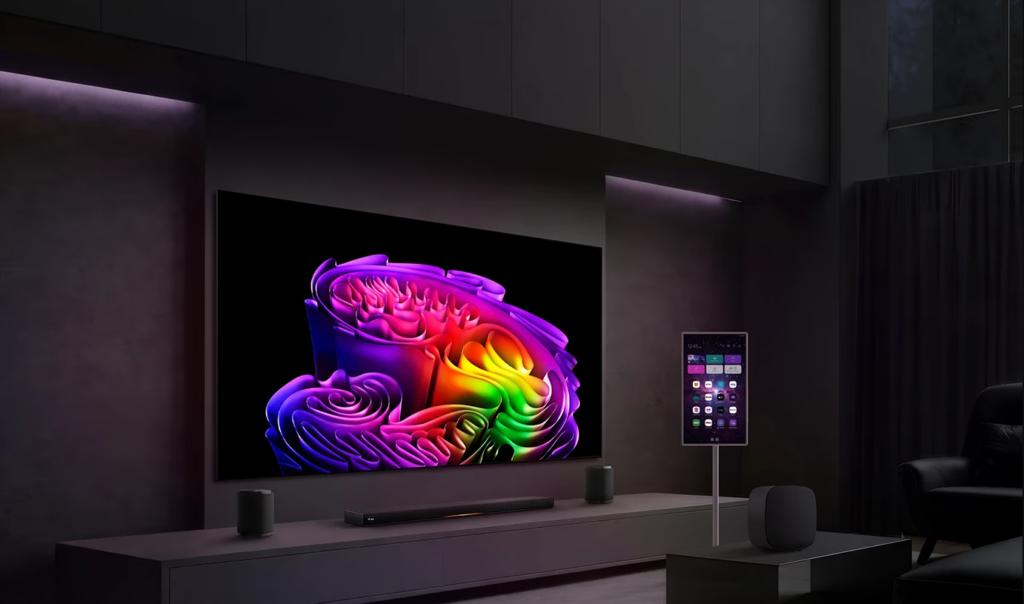
LG Electronics has started rolling out its 2026 TV lineup, bringing updates across OLED, LCD, and wireless TV categories. The new range includes OLED evo models, a Micro RGB evo series, and a wireless OLED wallpaper TV.
The OLED evo lineup includes the G6, C6, and B6 series. These models focus on improving brightness, color accuracy, contrast, and response time. LG says the panels use Hyper Radiant Color technology and can reach up to 3.9 times higher brightness compared to standard OLED, with the B6 used as a reference.
All models are powered by the α11 AI Processor 4K Gen3, which delivers 5.6 times higher AI performance. Features include AI Dual 4K Upscaling for lower-resolution content and Hyper Bright Booster, which adjusts brightness based on scenes. The Reflection Free Premium display reduces glare by eliminating light instead of scattering it and is certified by Intertek. Core OLED traits such as near-infinite contrast and fast response time remain.
Audio support includes Dolby Atmos FlexConnect and compatibility with LG Sound Suite for multi-speaker setups.
The TVs run on webOS 26. The platform integrates Microsoft Copilot and Google Gemini for search and interaction. Features include AI Concierge for recommendations, AI Search for contextual results, an AI Chatbot, and AI Picture and Sound Wizard for automatic adjustments. Voice ID allows user-based personalization, while LG Shield handles system-level security. LG Gallery+ adds AI-generated images and background audio.
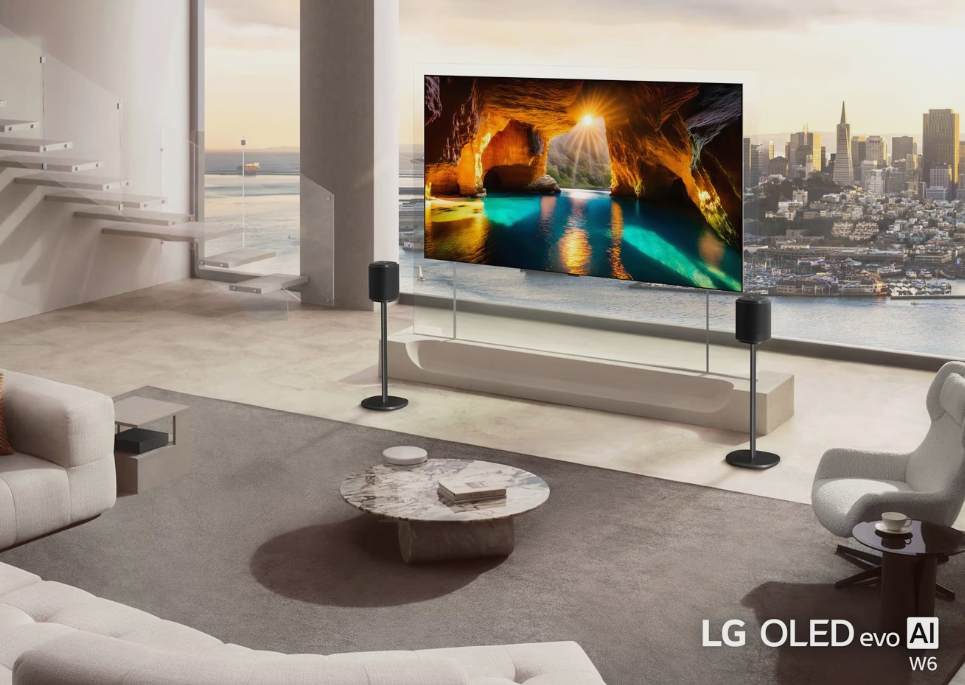
LG OLED evo W6
The OLED evo W6 is a wireless wallpaper TV with an ultra-slim design of around 9mm. It uses a Zero Connect Box for wireless AV transmission. The TV supports 4K resolution at 165Hz with low-latency, lossless signal transmission. The Zero Connect Box is 35 percent smaller than earlier versions. The model has received multiple awards at CES 2026.
The Micro RGB evo series is LG’s new premium LCD approach. It replaces white LED backlighting with RGB LEDs and uses smaller light units for better precision. The series uses the α11 AI Processor 4K Gen3 with a dual AI engine. It also applies light control techniques derived from OLED. It supports triple 100 percent color certification across BT.2020, DCI-P3, and Adobe RGB. Large variants include 100-inch models.
Pricing & availability
LG will begin sales in South Korea from March 25, followed by global rollout. OLED evo models will be available from 42 to 97 inches.
G6 pricing ranges from KRW 3,059,700 ($2,027) for 55-inch to KRW 37,900,000 ($25,110) for 97-inch. C6 pricing ranges from KRW 1,897,200 ($1,257) for 48-inch to KRW 6,190,000 ($4,107) for 77-inch. B6 models are priced at KRW 3,290,000 ($2,180) for 65-inch, KRW 5,690,000 ($3,770) for 77-inch, and KRW 7,900,000 ($5,234) for 83-inch.
The W6 wireless OLED TV and Micro RGB evo series are expected to launch in the first half of 2026. LG is also expanding large-screen options, with Micro RGB models up to 100 inches and QNED TVs reaching 115 inches.
For more daily updates, please visit our News Section.
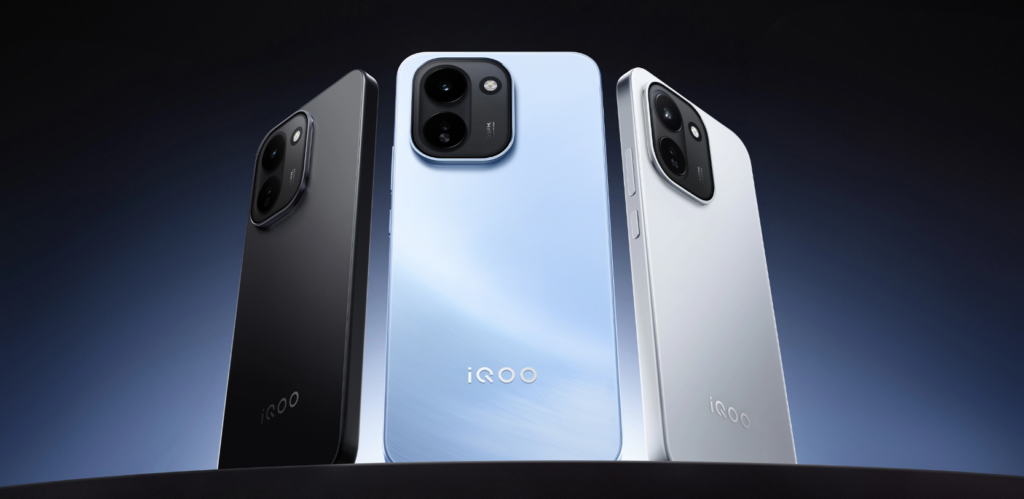
The iQOO Z11 has been launched in China, targeting users who want long battery life, high refresh rate visuals, and stable gaming performance. The device introduces a larger battery, an updated chipset, and new display features.
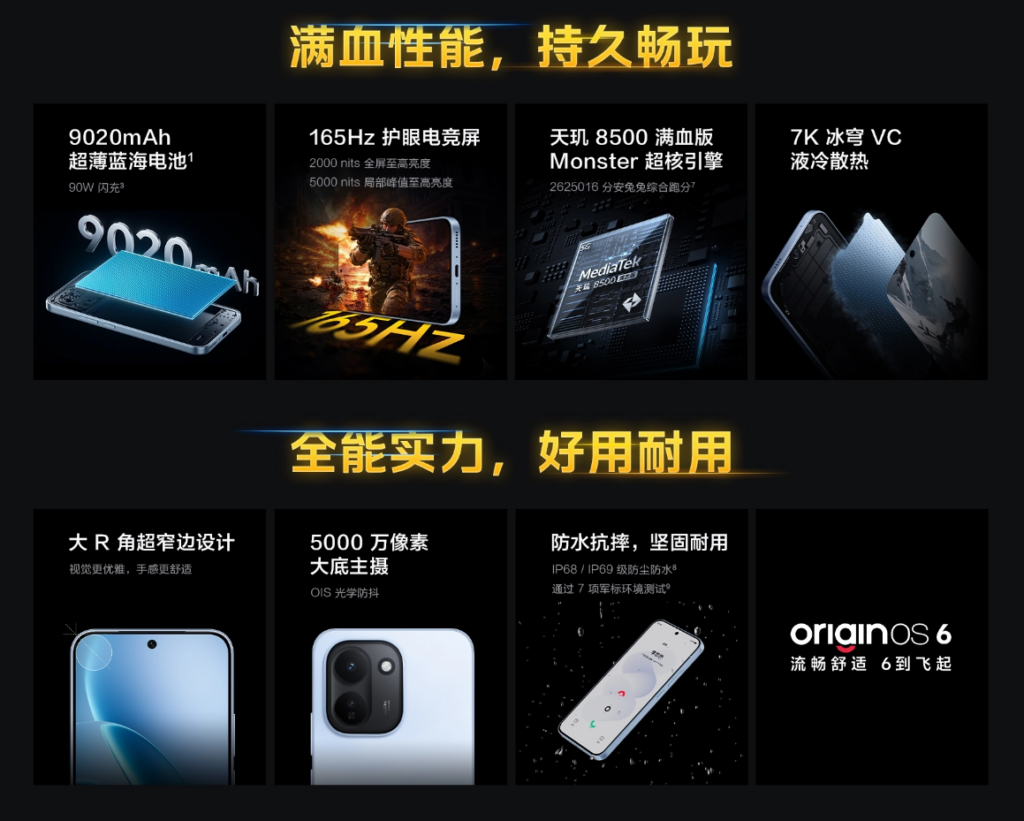
Battery capacity is the headline feature. The phone packs a 9,020mAh “Blue Ocean” battery, the largest used in an iQOO device so far. It uses a fourth-generation silicon anode and semi-solid-state battery cells to maintain a relatively slim 8.25mm profile while improving performance in low temperatures. The company claims over 10 hours of mixed usage with more than 50 percent charge remaining. The device supports 90W wired charging and also allows reverse charging for other devices.
The Z11 runs on the MediaTek Dimensity 8500 chipset, built on a second-generation 4nm process. It uses Cortex-A725 cores in an all-large-core architecture aimed at improving efficiency. iQOO adds its Monster Over-Core Engine, which includes a Prophet Scheduler for background task control and a Lightning Accelerator to stabilize frame rates. The phone also includes a 7K Ice Dome VC liquid cooling system. The brand claims a benchmark score exceeding 2.62 million.
On the front, the device features a 6.83-inch AMOLED display with a 1.5K resolution of 2800×1260 pixels and a 165Hz refresh rate. It supports up to 5000 nits peak brightness, 2160Hz PWM dimming, and DC-like dimming. The panel is designed to reduce latency and improve touch response during gaming.
For cameras, the Z11 includes a 50MP primary sensor with OIS and a 2MP depth sensor. It supports 4K video recording. The front camera is 16MP. Software features include portrait enhancements, film filters, and a watermark system that logs time and location.
The device runs Android 16 with OriginOS 6 and comes with up to 16GB LPDDR5X RAM and 512GB storage. It supports Wi-Fi 6, Bluetooth 5.4, NFC, NavIC, and stereo speakers. It also includes an in-display fingerprint sensor and infrared support.
The design features a rounded “floating porthole” camera module and is available in Floating Light, Sky White, and Midnight Black. It carries IP68 and IP69 ratings and has passed multiple durability tests.
Pricing & availability
Pricing starts at 2299 yuan for the 8GB + 256GB model and goes up to 3399 yuan for the 16GB + 512GB variant. The device is already on sale in China with discounts of up to 300 yuan.
Realme will launch the Realme 16 5G on April 2, 2026, expanding its 16 Series lineup. The phone focuses on photography and content creation, with a mix of camera hardware and AI features.
The device uses 50MP Sony sensors for both the rear and front cameras. This setup is aimed at keeping image quality consistent on both sides. It also includes a rear selfie mirror, which helps users frame shots while using the main camera instead of the front lens. A ring flash is built into the back to provide more even lighting in low-light conditions.
On the software side, realme is adding several camera tools. LumaColor imaging works to keep colors balanced and skin tones natural across different lighting conditions. The “Say Hi” gesture feature lets users start a countdown shutter by making a hand gesture. Vibe Master Mode offers three preset styles called Lively, Festival, and Ceremony for quick edits. AI Edit Genie allows users to change elements like hairstyles, clothing, and backgrounds through simple commands. AI Instant Clip can turn photos and videos from the gallery into ready-to-share clips.
The phone also focuses on battery and design. It packs a 7000mAh battery but keeps a slim profile at 8.1mm thickness and 183g weight. realme says this is possible due to its “AirCraft Structure,” which uses a high-density internal layout and reduces unused space. High energy-density graphite cells are used to fit the large battery inside a thin body, while improved internal stacking adds strength.
The Realme 16 5G has a 6.57-inch display with narrow bezels and rounded edges for better grip. The back panel uses a “Gleaming Wings” design with a layered blue-gold gradient finish. It also has an anti-fingerprint coating. The phone will be available in Air Black and Air White.
For more daily updates, please visit ourNews Section.
The Wobble K-series 65-inch TV is aimed at users who want a large 4K display without spending heavily. Instead of focusing on premium specifications, it delivers a balanced experience for daily viewing. After spending time with it, the TV feels designed for users upgrading from smaller screens to a more immersive setup at a reasonable price.
7Verdict
The Wobble K-series 65-inch TV is listed on Flipkart starting at Rs 39,799, making it one of the more accessible options in the 65-inch 4K segment.
It offers a large display, vibrant visuals, a clean smart TV experience, and a well-designed remote that improves usability. It may not be ideal for gaming or cinematic viewing in dark rooms, but for streaming, live TV, and general entertainment, it delivers a solid overall experience.
For more daily updates, please visit our News Section.
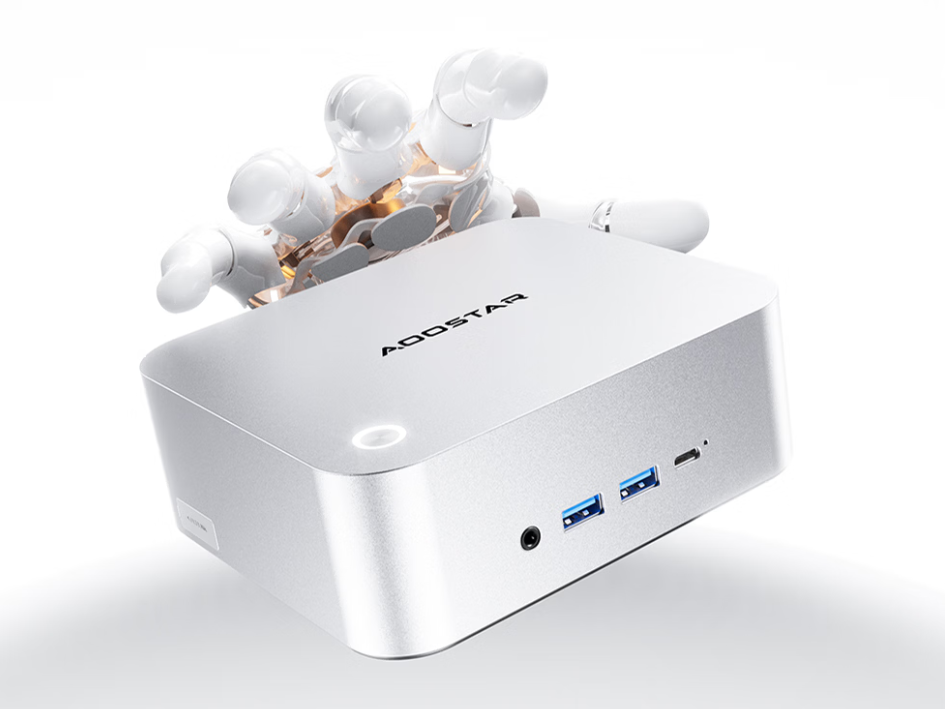
Aoostar has launched the MACO 470 mini PC in China. The device features the AMD Ryzen AI 9 HX470 processor and comes with 32GB of LPDDR5 RAM.
Aoostar MACO 470 Specifications
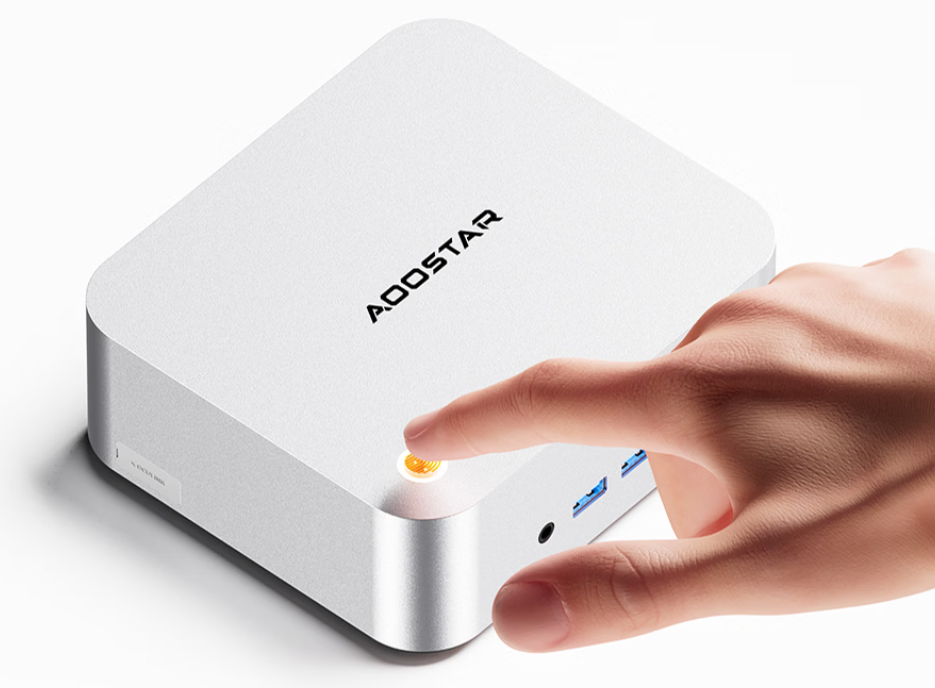
The mini PC has a compact design and uses a CNC-machined unibody aluminum chassis. The chassis has a seamless vent-free construction, which improves durability and gives the device a premium appearance. The mini PC weighs 0.66 kg and has dimensions of 13 x 15 x 5.5 cm. It also includes a fingerprint sensor with Windows Hello support, allowing secure and password-free logins.
The system is powered by the AMD Ryzen AI 9 HX470 processor, which is built on the Zen 5 architecture. This processor has 12 cores and 24 threads with boost speeds up to 5.2GHz. The device also features integrated Radeon 890M graphics, which use the RDNA 3.5 architecture with 16 compute units running at up to 3.1GHz.
The MACO 470 includes 32GB of LPDDR5 RAM operating at 8533MT/s. Aoostar has provided support for up to three M.2 PCIe 4.0 SSD slots to allow storage expansion.
The device uses a Glacier 4.0 cooling system to manage heat. This system includes a 5600mm² vapor chamber and a turbo fan with fluid dynamic bearings. The cooling setup ensures efficient heat dissipation while keeping noise levels low, even during heavy workloads.
The system also sports a well-rounded selection of ports across the chassis. The front includes two USB 3.2 Gen2 ports, one USB4 port (40Gbps), and a 3.5mm audio jack for quick access.
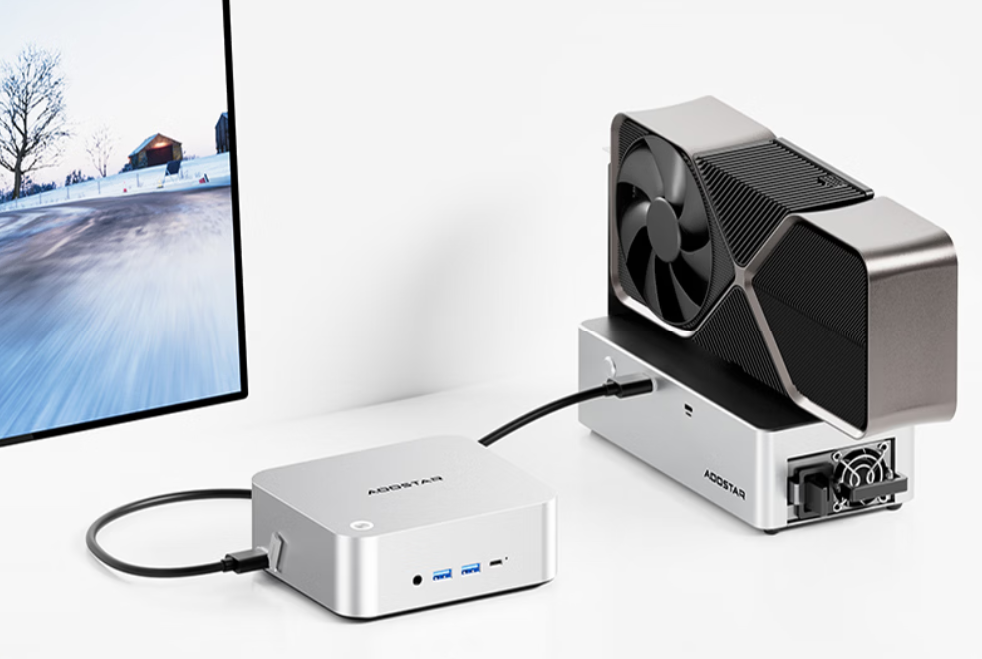
The rear comes with another USB4 port, two USB-A ports, HDMI 2.1, DisplayPort 2.1, and dual 2.5G Ethernet ports, ensuring stable high-speed networking and versatile display output options. It supports up to four displays simultaneously, including high-resolution output up to 8K. It also includes an OCulink port for external graphics docks.
Pricing and Availability
The MACO 470 barebones version costs 5,899 yuan ($826), the 1TB SSD variant is 7,299 yuan ($1,022), and the 2TB SSD version is 8,599 yuan (~$1,204). These are now available on JD.com.
For more daily updates, please visit our News Section.
OpenAI is reportedly shutting down its Sora video-generation tool, less than two years after it first drew widespread attention. Sora was introduced in 2024 as a way to create realistic video clips from simple text prompts. Early demos generated a lot of buzz, especially around how quickly the quality seemed to improve.
But that momentum didn’t quite translate into long-term traction. OpenAI has now announced that it plans to step back from video generation and focus more on areas like robotics and so-called “agentic” AI.
That said, the situation around Sora isn’t a clean, immediate shutdown. While OpenAI has indicated that it is discontinuing the app and winding down development, the tool hasn’t disappeared overnight. The web version, for instance, is still accessible for now, and there’s no clearly defined cutoff date yet. It suggests Sora is in a transition phase—no longer a priority, but not fully offline either.
The shift isn’t just about the product itself. OpenAI is also walking away from a major content partnership with The Walt Disney Company, which had been announced only a few months ago. The deal, reportedly worth around $1 billion, would have allowed Sora users to generate videos featuring well-known Disney characters.
According to reports, the agreement hadn’t progressed far enough for any payments to be made, and Disney was caught somewhat off guard by the decision. The company has since said it will continue exploring AI partnerships elsewhere, while keeping a close eye on how its intellectual property is used.
Sora’s commercial performance may have played a role here. Despite the initial excitement, the platform reportedly brought in around $1.4 million in global in-app revenue—a relatively small figure compared to ChatGPT’s $1.9 billion over a similar period. There were also ongoing concerns around moderation, including misuse involving deepfakes, copyrighted content, and non-consensual imagery.
At the same time, competition in the space has been heating up, with new tools emerging from other companies. Combined with legal risks and rising infrastructure costs, continuing Sora may have been harder to justify.
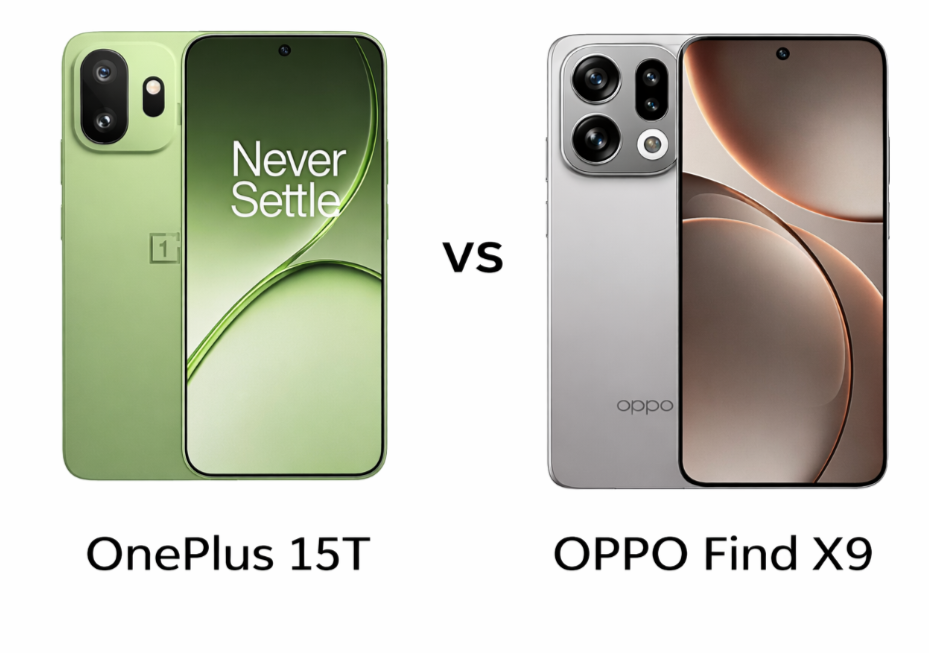
Flagship smartphones are no longer just about raw power; they’re about how intelligently that power is used in daily life. The battle between the OnePlus 15T and the OPPO Find X9 perfectly reflects this shift, where one focuses on performance and endurance, while the other leans into camera innovation and premium refinement. For buyers in this price segment, the real question isn’t which phone is better on paper, but which one actually delivers a more satisfying experience day to day.
The OnePlus 15T leans toward a practical, durability-focused approach with its fiber-reinforced back and solid frame, giving it a slightly rugged yet premium feel. In contrast, the OPPO Find X9 goes all-in on a flagship aesthetic with glass on both sides and refined finishing. Both offer top-tier water and dust resistance, but the OPPO device feels more traditionally premium, while the OnePlus subtly prioritizes grip and durability.
Display Quality
OnePlus pushes ahead with a 165Hz AMOLED panel, making animations and gaming feel noticeably smoother. OPPO counters with a slightly larger display and equally rich color tuning, backed by strong HDR support. Brightness levels are comparable, but the higher refresh rate on OnePlus adds a more fluid everyday experience, especially for gamers and power users.
Verdict
The OPPO Find X9 feels more premium in-hand, but the OnePlus 15T delivers a smoother, more responsive display experience that may feel more modern in daily use.
2. Specifications Including Battery
Performance
The OnePlus 15T is powered by the Snapdragon 8 Elite Gen 5, delivering top-tier performance with excellent efficiency and strong GPU output. The OPPO Find X9 uses the Dimensity 9500, which is also flagship-grade and optimized for AI and sustained workloads. While both are extremely fast, Snapdragon still holds a slight edge in gaming stability and optimization across apps.
Battery and Charging
OnePlus clearly dominates with a massive 7500mAh battery paired with ultra-fast 100W charging. OPPO’s 7025mAh battery is still impressive and supported by fast wired and wireless charging, but it doesn’t match the sheer endurance of the OnePlus. The larger battery makes a noticeable difference in heavy usage scenarios.
Verdict
OnePlus 15T stands out with better battery life and slightly stronger performance, making it the more reliable long-term performer.
3. Camera
Main and Secondary Lenses
The OPPO Find X9 takes a clear lead in camera versatility with a triple-camera setup, including an ultrawide and a periscope zoom lens. Its larger sensors and Hasselblad tuning help deliver richer colors and better dynamic range. The OnePlus 15T keeps things simpler with a dual-camera setup, focusing on strong primary and telephoto performance but lacking ultrawide flexibility.
Selfie Camera
OPPO again pulls ahead with a 32MP selfie camera capable of 4K video, offering sharper detail and better video quality. OnePlus provides a decent 16MP shooter, but it feels more basic in comparison, especially for content creators or video calls.
Verdict
OPPO Find X9 is clearly the better camera phone, offering more versatility and higher-quality outputs across both rear and front cameras.
4. Pricing
OnePlus 15T is priced at around ₹58,000, while the OPPO Find X9 comes in significantly higher at about ₹76,000. This creates a noticeable gap in positioning, with OnePlus targeting value-focused flagship buyers and OPPO leaning into the premium segment.
Value for Money
OnePlus delivers exceptional value with top-tier performance, a massive battery, and a high-refresh-rate display at a lower price. OPPO justifies its higher cost with superior cameras, premium build, and longer software support, but the difference may feel steep unless camera quality is a priority.
Verdict
OnePlus 15T offers better overall value, while the OPPO Find X9 makes sense for users willing to pay extra for camera and premium design upgrades.
5. Conclusion
The OnePlus 15T shines with its massive battery, ultra-smooth 165Hz display, and performance-focused tuning, making it ideal for gamers and heavy users. The OPPO Find X9 stands out with its advanced camera system, premium build, and long-term software support, appealing more to photography enthusiasts and flagship buyers seeking refinement.
Verdict
For most users, the OnePlus 15T feels like the smarter buy due to its aggressive pricing and balanced performance. However, the OPPO Find X9 positions itself as a more complete flagship experience, especially for those who prioritize camera quality and premium feel over pure value.
We use cookies on our website to give you the most relevant experience by remembering your preferences and repeat visits. By clicking “Accept”, you consent to the use of ALL the cookies.
This website uses cookies to improve your experience while you navigate through the website. Out of these, the cookies that are categorized as necessary are stored on your browser as they are essential for the working of basic functionalities of the website. We also use third-party cookies that help us analyze and understand how you use this website. These cookies will be stored in your browser only with your consent. You also have the option to opt-out of these cookies. But opting out of some of these cookies may affect your browsing experience.
Necessary cookies are absolutely essential for the website to function properly. This category only includes cookies that ensures basic functionalities and security features of the website. These cookies do not store any personal information.
Any cookies that may not be particularly necessary for the website to function and is used specifically to collect user personal data via analytics, ads, other embedded contents are termed as non-necessary cookies. It is mandatory to procure user consent prior to running these cookies on your website.