Advertisement

HONOR Brings iPhone Notification Sharing to Multiple MagicOS 10 Devices

HONOR is expanding the cross-device features of MagicOS, and iPhone notification sharing is now rolling out to users. The feature first appeared in the November MagicOS 10 update, which also added Face Unlock support for the Dynamic Capsule and video lock screen wallpapers.

MagicOS Product Director Kaopu Guige confirmed that iPhone notification sharing is already supported on several HONOR phones and tablets. Compatible devices include the Magic V5, V3, and Vs3 series, the Magic 8, 7, 6, and 5 series, and the HONOR 500, 400, and 300 series. It is also available on the HONOR GT, GT Pro, and MagicPad 3. More models will receive support through future system updates.

The feature is designed to sync notifications across devices. Once paired, users can view iPhone system alerts and app notifications directly on their HONOR device. This helps users who carry both devices stay updated without switching screens all the time. HONOR says the goal is to keep the experience stable and useful in daily use.

To use the feature, HONOR devices must be running MagicOS 10 or later, and the iPhone must be updated to iOS 15.6 or above. The setup process is simple. Users install the HONOR Connect app on the iPhone, create a QR code inside the app, and scan it with the Smart Connectivity option on the HONOR device. After pairing, users can choose which notifications they want to sync.

Early user feedback says the feature works smoothly, with alerts coming in on time and without changing how notifications behave on either device. HONOR says it will continue improving the feature based on user feedback and plans to add more cross-device functions to make MagicOS work better with other platforms.

Don’t miss a thing! Join our Telegram community for instant updates and grab our free daily newsletter for the best tech stories!

For more daily updates, please visit our News Section.

(Source, via)

Exynos 2600: The 2nm Chip Samsung Hopes Will Win Back Apple and Qualcomm

Samsung is positioning the Exynos 2600 as more than the main chipset for its next flagship phones. The chip also acts as Samsung’s first large-scale showcase of its 2nm process, which the company hopes will help bring major customers back to its foundry business. After struggling to win meaningful 3nm orders, Samsung is relying on the Exynos 2600 to prove that its new node can deliver stable performance and better efficiency.

Exynos 2600

A new report from South Korea says Samsung has introduced a cooling method for the Exynos 2600 that is drawing interest from Apple and Qualcomm. Both companies have relied on TSMC for their recent mobile and desktop chips, largely because Samsung’s previous flagship chipsets faced consistent thermal and stability issues. Samsung now claims it has addressed those concerns with a packaging method called Heat Path Block technology.

The Heat Path Block design uses a copper heatsink placed directly on top of the mobile AP. To enable this layout, Samsung moved the DRAM to the side of the processor instead of stacking it above the die. This gives the heatsink direct contact with the main chip, allowing heat to move out of the package more quickly. According to the report, internal testing shows up to a 30 percent improvement in thermals compared to the previous Exynos generation.

Samsung missed most of the 3nm demand because its early process did not inspire confidence among top-tier customers. The company is now more cautious with its 2nm rollout but believes this node has a better chance at competing with TSMC. Samsung expects the Exynos 2600 to act as the first real demonstration of what its 2nm line can achieve in a consumer device.

If the Exynos 2600 delivers the thermal and performance gains that Samsung is targeting, it could help the company rebuild trust with major chip designers. That outcome would be important for Samsung as it looks to secure future 2nm orders and re-establish itself as a competitive alternative to TSMC in advanced chip manufacturing.

For more daily updates, please visit our News Section.

Don’t miss a thing! Join our Telegram community for instant updates and grab our free daily newsletter for the best tech stories!

(Source, via: 1, 2)

ASUS’ Next Zenbook Duo Packs a Larger Battery & Improved Dual Displays

ASUS has just teased the arrival of a new dual display laptop. The Zenbook Duo series is getting a new 2026 edition with a bunch of upgrades across the board, which could make it a more compelling option for those looking for a notebook with a larger screen real estate. So let’s check it out.

ASUS Zenbook Duo 2026: All the new upgrades

The Zenbook Duo OLED was the last model in the lineup. But now, we are finally getting a sequel, and it appears that ASUS has plans for a bunch of upgrades. The brand has just shared a new video trailer on X (formerly Twitter) which showcases the design elements and some of the key upgrades. ASUS showcases a stronger hinge that houses the two displays. These screens likely offer a similar 14-inch size but might get thinner bezels.

ASUS Zenbook Duo 2026

With the newer Zenbook Duo 2026 model, ASUS has also shifted to a dual cell battery setup, which could bring notable upgrades in terms of total battery life. To recall, the predecessor was powered by a sizeable 75Wh battery. The last generation of ASUS Zenbook Duo packed Intel’s Arrow Lake architecture, packing the Intel Core Ultra 9 285H processor.

So we might also be getting the Panther Lake lineup which is set to debut early next year. Looking at the video trailer, the Taiwanese tech giant plans on unveiling the Zenbook Duo 2026 model during the CES 2026 event on 6th January 2026. This is all the information we have at the moment, so stick around for more.
For more daily updates, please visit our News Section.

Don’t miss a thing! Join our Telegram community for instant updates and grab our free daily newsletter for the best tech stories!

OriginOS 6 Update Finally Lands on the iQOO 13

Vivo’s OriginOS 6 update has been rolling out for various smartphone models over the last few weeks. Just recently, the Vivo X300 series started receiving the global version of this update. Now, iQOO’s last year flagship, the iQOO 13, has finally received the major software upgrade as well. So here are all the details.

iQOO 13 receives OriginOS 6: What you should know

The Chinese brand just started rolling out OriginOS 6 for the iQOO 13. This is a massive update that carries a hefty download size of 4.05GB. It brings the Android 16 OS along with various other additions and upgrades. To improve the overall user experience, OriginOS 6 packs the new Origin Smooth Engine to help boost app launch speeds, stabilize frame rates, and much more. UI has also been enhanced with smoother system animations and improved system resource management.

iQOO 13
iQOO 13

Apart from just visual upgrades, OriginOS 6 also made improvements to the responsiveness and added more personalization as well. The cleaner animations are coupled with new home screen and lock customization options, adaptive app folders, and even new AI features. There are a bunch of new AI powered tools like Gemini Live, Retouch Suite, and even image editing tools. Other notable features include Origin Island (inspired by Apple’s Dynamic Island), performance optimizations, and more subtle UI tweaks.

At the moment, iQOO is rolling out the iQOO 13 update in a staggered manner. So only a few units are receiving the OriginOS 6 update. This makes sense since it allows the company to catch any major software bugs, vulnerabilities, or other issues. The majority of iQOO 13 owners are expected to get the update soon after.

For more daily updates, please visit our News Section.

Tech enthusiast? Get the latest news first! Follow our Telegram channel and subscribe to our free newsletter for your daily tech fix! ⚡

Google’s new browser wants to “vibe-code” apps from whatever you’re doing online

Google thinks the future of the web isn’t just about making it agentic; it’s also about letting your browser build things for you. That idea is now real with “Disco”, the company’s experimental new AI-powered browser that vibe-codes an app based on what you are doing online. This feature of Disco is called “GenTab,” and is powered by Gemini 3.

As you might’ve guessed, GenTab takes your tab and chat history into consideration. It analyzes your tabs, your searches, and your chat prompts to generate tools that fit what you’re doing.

Google showed off a few examples, and they’re honestly pretty impressive. If you’re researching science topics like Entropy, Disco might spin up an “Entropy Explainer” app. The official video also shows a vibe-coded bunk bed comparison site and a memory match brain game.

Google’s new AI browsers vibe codes an app based on your tabs

GenTabs sit alongside regular tabs, but they get their own Gemini-like icon instead of a favicon. One demo showed a travel planner with calendars, route maps, crowd-level predictions, and quick-action buttons like “Book Nearby Stays.” Tap anything inside that app, and the GenTab reshapes itself in real time.

Disco greets you with a homepage containing a chatbox rather than the usual address bar. That’s where the chat history comes from, although you can also paste a URL in it.

If you end up conversing, Google will first suggest you relevant webpages, and after a few conversations, it pops up a prompt to create a GenTab based on what you’re searching.

AI is definitely changing the way we search and consume content. And it won’t surprise me that features like GenTabs are the next evolution of it. 

You don’t need to write code; you just describe what you need, refine it in plain language, and the browser does the heavy lifting. Google says Disco is meant to help people “learn faster” and experiment with what browsing could become. And yes, the company admits the best concepts from Disco might eventually show up in Chrome.

For now, Disco is an early experiment. Google Labs has opened a waitlist, and the first version is rolling out only on macOS. 

For more daily updates, please visit our News Section.

Don’t miss a thing! Join our Telegram community for instant updates and grab our free daily newsletter for the best tech stories!

Motorola Signature may replace the Edge 70 Ultra as the brand’s next flagship

Motorola is gearing up to unveil its next gen flagship smartphone soon. But while rumors predicted that the Edge 70 Ultra is on its way, a fresh leak claims otherwise. The next premium phone from the brand could be dubbed the Motorola Signature. So here’s what we know.

Motorola Signature: New flagship vision from Moto?

The news of Motorola’s shift in flagship branding arrives from known tipster Evan Blass. In response to a recent tweet related to the alleged Edge 70 Ultra renders leak, he claimed that the company’s next flagship carries the codename Urus and will be the first model in the new Motorola Signature lineup. Although, it is unclear if the branding is dedicated to a certain region or will be uniform across the globe.

Motorola Edge 70 Ultra leaked renders

Motorola devices from the Edge and Razr lineup usually have a slightly different names than their global counterparts. Furthermore, another leak from a Weibo tipster confirmed some of the high end specs of this upcoming smartphone. The Motorola Signature will reportedly sport a tall 6.7-inch flat OLED with a 1.5K resolution and a 120Hz refresh rate.

Under the hood, it might be equipped with the new Snapdragon 8 Gen 5 SoC. For photography, the Motorola Signature is expected to feature a 50MP triple camera setup that likely consists of a main, ultra wide, and periscope telephoto shooter. Lastly, three of the color options were also revealed, including black, green, and bronze. Some of these specs are similar to the Edge 50 Ultra, which was the last Ultra model from the brand. But unfortunately, this is all the information we have at the moment, so stick around for more.

For more daily updates, please visit our News Section.

Don’t miss a thing! Join our Telegram community for instant updates and grab our free daily newsletter for the best tech stories!

Sony BRAVIA 2M2 Series Slashes to All-Time Low Price of ₹49,490

Sony’s BRAVIA 2M2 series 55-inch 4K Ultra HD Smart Google TV K-55S25BM2 comes under the mid-premium segment aimed at users who want cinematic visuals, a smooth Google TV experience, and reliable brand backing without jumping to flagship OLED pricing. It combines Sony’s image processing with a modern smart TV platform, making it suitable for mixed usage like OTT streaming, sports, and console gaming.

Specs and Pricing

The pricing for the base model with a 55-inch screen starts at around ₹57,990, with additional discounts of up to ₹7,000 off with HDFC CC No Cost EMI, and on top, of that, apply a ₹1,500 off Coupon, which will bring the effective pricing to ₹49,490.

Please Note: When you buy something using the links in our articles, we may earn a small commission at no cost to you.

Sony’s BRAVIA 2M2 series is packed with premium specs. It comes with a 60 Hz display with 4K Ultra HD (3840 x 2160) resolution. The TV combines a sharp 4K LED panel with the processor X1, Live Colour, 4K X-Reality PRO, MotionFlow XR 100 and HDR10/HLG support to deliver detailed, vibrant, smooth, and high dynamic range visuals ideal for movies, sports, and streaming. The device has 4 HDMI ports and 2 USB ports. And the best thing is that it supports gaming consoles too. It supports 20W Dolby Atmos with DTS Digital Surround.

The TV has all the essential smart kits in it. Like Google TV, Watchlist, Google Assistant, Google Cast, and Google Menu. And on top it also supports Apple AirPlay 2, Apple HomeKit, and Alexa. Sony provides a one-year warranty from the date of purchase.

Currently, the product is running at its lowest price. If you don’t want to miss this. Sony’s BRAVIA 2M2 series 55-inch 4K Ultra HD Smart Google TV is now available at a great deal.

Six more Realme phones are getting Realme UI 7.0 beta update

Realme UI 7.0 beta program (round seven)

The seventh round of the Realme UI 7.0 Early Access program has gone live, bringing the latest features and upgrades to six more Realme smartphones ahead of the stable rollout. The latest beta round includes devices like the Realme 13 5G, Realme 12x 5G, Narzo 70x 5G, Narzo N65 5G, Realme C65 5G, and Realme C63 5G.

The sixth wave of Realme UI 7.0 beta access is currently live in India, with no official confirmation regarding its expansion to other regions. If you have one of these eligible Realme devices and live in India, you can sign up for the beta program to access the latest features and upgrades without waiting.

Realme UI 7.0 early access beta round 7

How to get the Realme UI 7.0 beta update?

The Realme UI 7.0 Early Access program is already live for all six Realme phones. You can participate in the program right now, but note that Realme is only accepting a maximum of 200 applications for each of these models. Therefore, you must hurry to secure a slot, as they are offered on a first-come, first-served basis.

Step 1: Ensure that your device has the required firmware version

To be eligible for the beta access, your Realme device must be running on the required firmware version:

  • Realme 13 5G: RMX3951_15.0.0.1610
  • Realme 12x 5G: RMX3998_15.0.0.1610
  • Realme Narzo 70x 5G: RMX3998_15.0.0.1610
  • Realme Narzo N65 5G: RMX3997_15.0.0.1610
  • Realme C65 5G: RMX3997_15.0.0.1610
  • Realme C63 5G: RMX3950_15.0.0.1610

You can verify the software version by navigating to Settings > System & Updates > Software Update. Now that we have completed this step, let’s proceed to the beta registration part.

Step 2: Sign up for the Realme UI 7.0 Early Access program

You must enable the developer settings first. If you haven’t already, go to Settings > About device > Version > Version Number and tap the version number seven times in quick succession. This should enable developer settings.

Now, you’re ready to sign up for the beta program. Follow these steps in the same order:

  1. Open the Settings app on your Realme phone.
  2. Go to System & update and tap Software update.
  3. Tap the three dots icon in the top-right corner and choose Beta program.
  4. Tap the Early Access option and click Apply now on the next screen.
  5. Accept terms and conditions and tap Submit.

After submitting the application, you will soon receive the Realme UI 7.0 beta update via OTA. To manually check for updates, go to Settings > System & update > Software update.

The beta rollout has already begun for these Realme devices included in the 7th wave of beta access, so the wait should not be long. Since this is a major upgrade with a hefty download size, the brand recommends keeping at least 15GB of free storage and a battery level above 60% for a smoother installation.

Also read: Here’s the Realme UI 7.0 Open Beta rollout timeline for India

Be sure to check the Android 16 section on Gizmochina regularly for fresh updates. Or, if you prefer your news instant and on-the-go, hop into our Telegram channel for rapid-fire software updates and all the biggest tech headlines.

(source: Realme Community)

Redmi Note 15 5G with Big Battery & 108MP Camera Nears India Launch

Redmi’s popular Note series of mid range smartphones is arriving in India soon. Xiaomi recently unveiled the Redmi Note 15 5G, Note 15 Pro 5G, Note 15 Pro+ 5G, Note 15 4G, and Note 15 Pro 4G in the global market. The brand just confirmed the launch of the Redmi Note 15 5G in India, and a fresh teaser has even revealed its camera and battery details. So lets check it out.

Redmi Note 15 5G teased: What to expect?

Xiaomi plans to release the Redmi Note 15 5G in the Indian market on 6th January 2026. But ahead of the official release, the device had some of its key specs revealed. The Chinese tech giant confirmed the new 108 MasterPixel camera in the previous teaser, which was showcased again. Unlike the 50MP camera in the Chinese variant, the global version has a higher resolution 108MP shooter.
Redmi Note 15 5G - Black
Redmi Note 15 5G

The sensor will offer OIS (Optical Image Stabilization), 4K video recording, and it was even teased as a multifocal portrait legend. Apart from this, Xiaomi also claimed that the smartphone will bring a long battery life thanks to its 5,520mAh battery pack, which promises up to 1.6 days of usage and up to 5 years of total battery lifespan. The Redmi Note 15 5G supports 45W wired fast charging.

This appears quite similar to the specs of the Note 15 5G model that debuted in the European market. To recall, this model features Snapdragon 6 Gen 3 SoC under the hood, sports a tall 6.77-inch AMOLED display with an FHD+ resolution, a 120Hz refresh rate, an in-display fingerprint scanner, and an IP65 rating for water and dust resistance.

Please Note: When you buy something using the links in our articles, we may earn a small commission at no cost to you.

For more daily updates, please visit our News Section.

Tech enthusiast? Get the latest news first! Follow our Telegram channel and subscribe to our free newsletter for your daily tech fix! ⚡

Samsung Galaxy S26 faces memory supply uncertainty as TM Roh plans rare CES meeting

The Galaxy S26 series is at the centre of a developing supply situation that has drawn attention across the industry. A report from South Korea has revealed that Samsung is preparing for high-level discussions with Micron as it aims to secure stable mobile DRAM for its upcoming flagship. With the smartphone’s launch window nearing, rising memory prices and unsettled contracts have triggered a series of urgent developments that set the tone for what follows.

Samsung seeks emergency talks at CES 2026

TM Roh

TM Roh, who heads Samsung’s DX division, is reportedly scheduled to meet Micron CEO Sanjay Mehrotra on the opening day of CES 2026 in Las Vegas. Such meetings are rarely arranged during the event, but the growing strain on LPDDR5X supply appears to have made this one unavoidable.

Industry insiders say the price surge has been unusually steep. LPDDR5X 12GB modules that were trading at around 30 dollars earlier this year have reportedly jumped to nearly 70 dollars by late November, creating uncertainty in Samsung’s negotiations with both its DS division and Micro. The two suppliers have yet to finalize terms for the Galaxy S26, leaving the smartphone unit under pressure as it approaches mass production deadlines.

Several Korean reports note that memory manufacturers prefer quarterly supply agreements during price upswings rather than longer commitments. This has added another layer of difficulty for Samsung’s mobile division, which is already dealing with increased expenditure on application processors. The situation has elevated Micron’s importance in Samsung’s flagship portfolio, especially after the company supplied a large share of mobile DRAM for the Galaxy S25 series.

New DRAM technologies and internal challenges

Samsung’s DS unit is simultaneously advancing its next-generation LPDDR6 technology, expected to offer higher bandwidth and improved efficiency. Early signs suggest the company may showcase it at CES 2026, although commercial deployment could arrive later. Meanwhile, internal adoption of the Exynos 2600 remains limited, further tightening the mobile division’s budget as it negotiates memory procurement.

With the Galaxy S26 set to debut in early 2026, the outcome of TM Roh’s CES meeting may influence how smoothly Samsung can secure DRAM supply for its next flagship. While the company has declined to comment on its memory plans, the urgency around negotiations underscores the broader industry pressure caused by rising demand and limited production capacity.

For more daily updates, please visit our News Section.

Stay ahead in tech! Join our Telegram community and sign up for our daily newsletter of top stories.

The Most Powerful “Pro Max” of the Year — HUAWEI Mate 80 Pro Max Review

So yes, HUAWEI did it too. The Mate Pro+ series has now been renamed as Pro Max this year. Xiaomi taught us through its own sales numbers that, as long as the product is powerful enough, the name doesn’t matter. In fact, HUAWEI probably thinks the same way, which is why the Mate 80 Pro Max has become the new peak of HUAWEI smartphones. Also, this is the most impressive Pro Max I’ve ever seen. With a major redesign and a launch price lower than last year’s Mate 70 Pro+, there’s no reason the Mate 80 Pro Max would be anything less than great.

Design & Features

Let me answer the question you’re most curious about. No, this ring on the back doesn’t support magnetic accessories. Why the Mate 80 Pro Max has such a ring here it’s simply to prevent the functions of the wireless charging coil from being blocked by its metal back cover.

Compared to the Mate 70 series, the frames of the Mate 80 series have changed from round to flat. The benefit is that it looks slimmer. As for the downside, your hand will tell you.

The Mate 80 Pro Max is a phone with many holes. The three holes on the screen are nothing new; basically, the 3D facial recognition module and the front camera.

There are also five holes along the frame, including the microphone, speaker port, and SIM card slot—most of them are familiar to us. But what is this hole on the side for? HUAWEI told us that this is also one of the speakers. The difference is that it’s mainly used to cancel out the sound waves leaking during calls, to protect your privacy during phone calls.

Many of HUAWEI’s target users are outdoor explorers, so HUAWEI also designed new features for them. The Mate 80 Pro Max adds a new Expedition mode, which turns a modern smartphone into a professional outdoor tool. In addition to satellite communication and emergency messaging, it also extends battery life a lot. The map has also been optimized, automatically recording your path and allowing you to retrace your route anytime.

With IP68 and IP69 ratings, and the second-generation Kunlun Glass, treating the Mate 80 Pro Max as an ultimate rugged phone is absolutely justified.

Display

If you have the budget to buy the Mate 80 Pro Max or RS Ultimate version, your display will be upgraded from regular OLED to a Tandem one. Tandem OLED is not a new technology. The iPad Pro and HUAWEI Mate 70 RS Ultimate both use Tandem OLED.

The benefits of this panel are obvious—higher brightness, wider color gamut, and lower power consumption. Higher resolution may not be noticeable for everyone, but higher brightness is something you will definitely feel. I placed it next to several flagship phones we own, and at a glance, you can see how high the Mate 80 Pro Max’s brightness is.

Not only is it easier to read under sunlight, but it also excels at HDR content. The blinding highlights are hard to capture in video. Trust me, if you get a chance to see the Mate 80 Pro Max’s display in a store, you’ll definitely feel tempted to buy it.

The only downside of Tandem OLED is expense; however, the Mate 80 Pro Max is probably the cheapest Tandem OLED phone at launch right now. So this should be one of the strongest reasons for you to buy this phone.

Performance & Battery

The Mate 80 Pro Max uses the latest and most powerful Kirin 9030 Pro platform. Compared to the Kirin 9020, the 9030 Pro has one extra P-core, and both CPU and GPU frequencies have been improved. It’s worth noting that the four phones in the Mate 80 series have three different Kirin processor models. If you want the highest performance from a HUAWEI phone, you need to get the 16GB RAM Pro version at least.

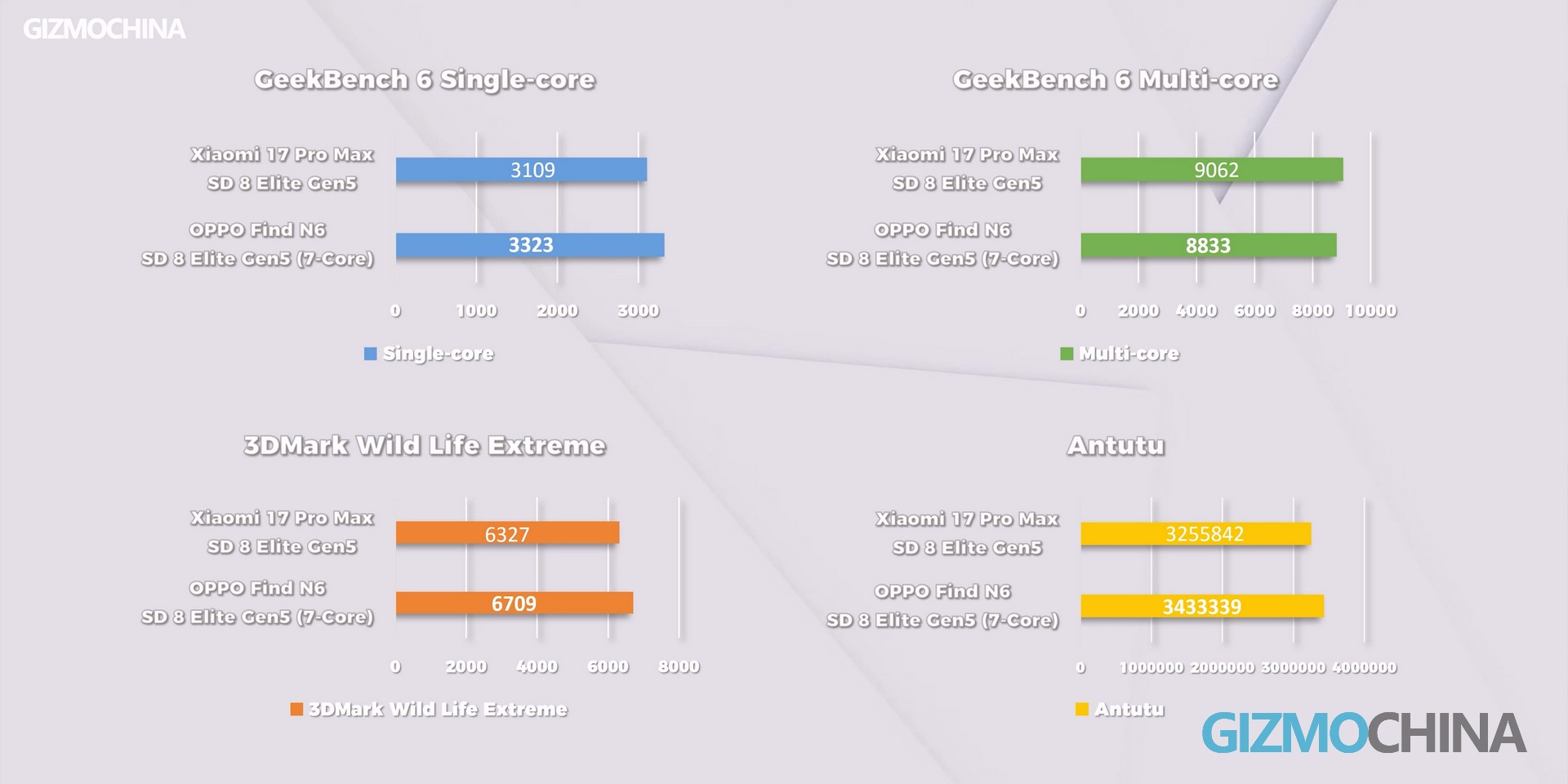
Since the benchmarks we commonly use are all blacklisted by HUAWEI, we won’t be running benchmarks this time—the scores can’t prove the strength of a chipset anyway. So let’s jump straight to gaming performance.


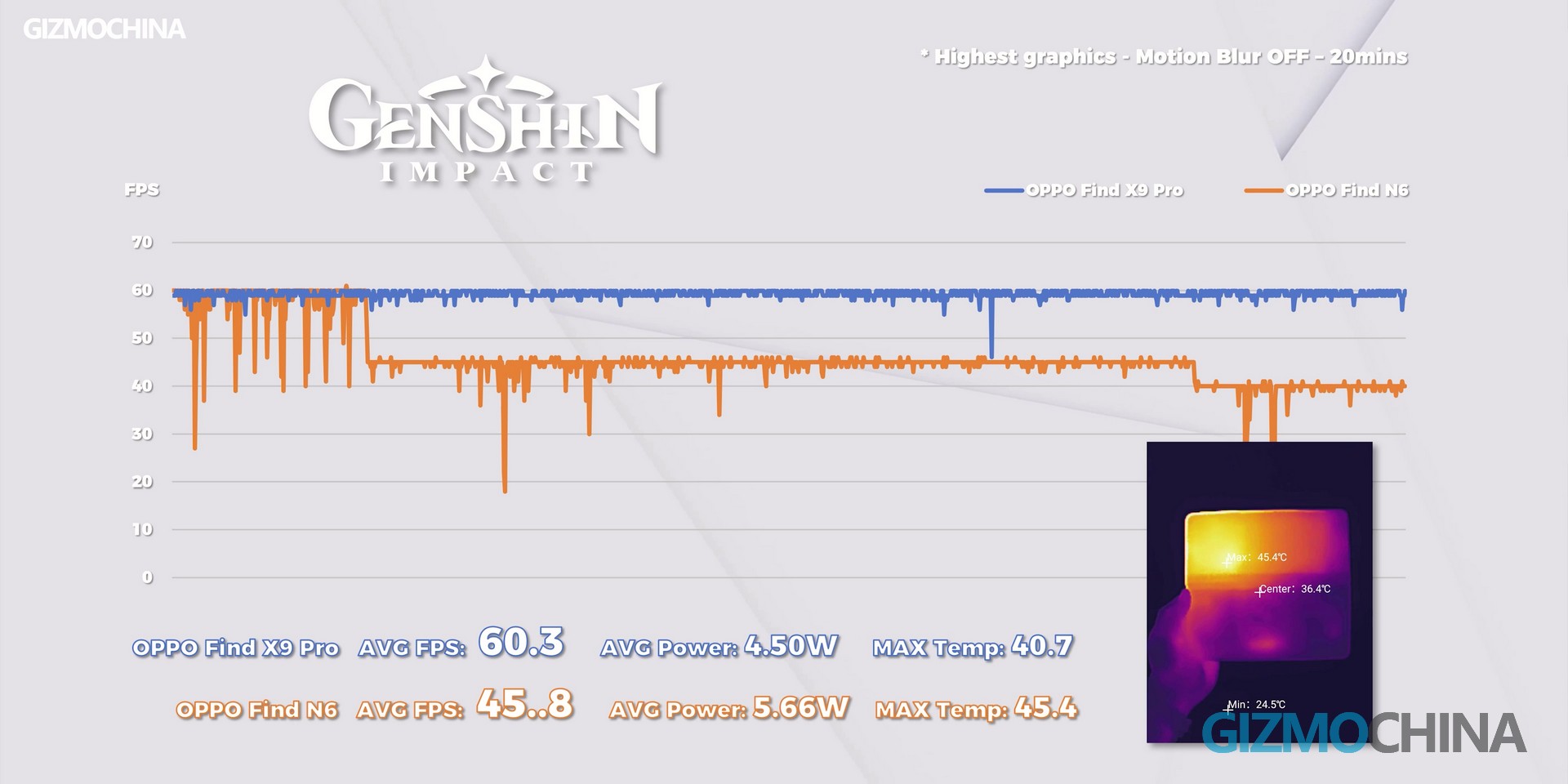
Fortunately, miHoYo developed a HarmonyOS-exclusive version of Genshin Impact. This makes it one of the very few games that can fully unleash the Kirin 9030 Pro’s performance. And when you enable high-performance mode, you can disable frame interpolation.

HUAWEI also designed a new performance monitoring tool for all HarmonyOS phones: HiSmartPerf. With this, we can finally capture accurate frame rate curves from HarmonyOSI devices.

Wow, look at this perfectly straight frame rate graph—can you believe this is from a HUAWEI phone? This is the native frame rate without interpolation. I can’t believe that. It’s beautiful. Thanks to the full metal back cover, heat is evenly distributed. From this, the gaming experience seems comparable to other Snapdragon 8 Elite Gen 5 phones.

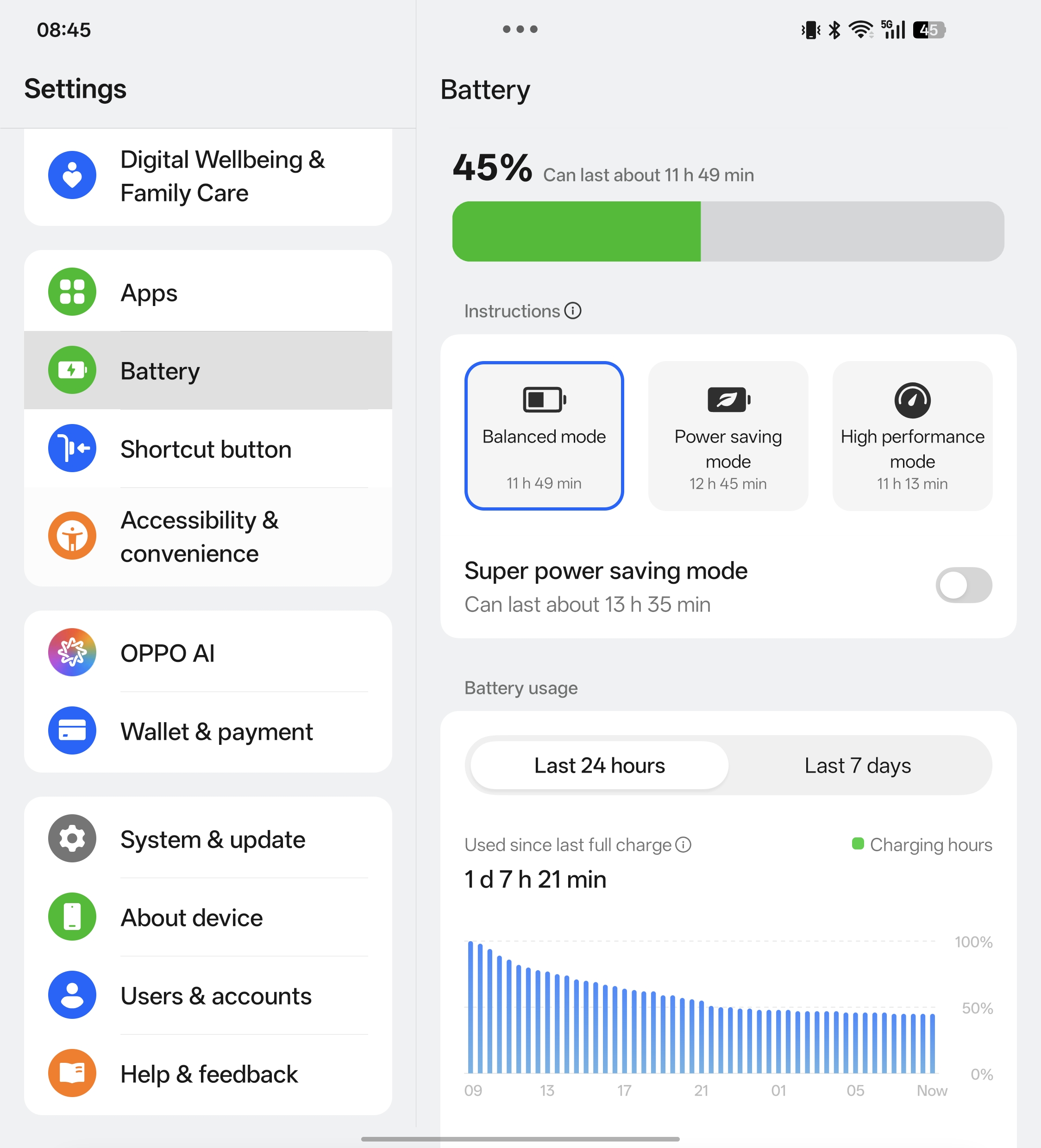
Well, the Kirin 9030 Pro has indeed made great progress, but there is a cost—its power consumption still has room to improve. And with the battery capacity only increased by 300mAh compared to the previous generation—less than we expected—so battery life in gaming does indeed fall behind. Fortunately, under light workloads, it’s power-efficient enough to rival phones with 7000mAh batteries if you don’t play games.

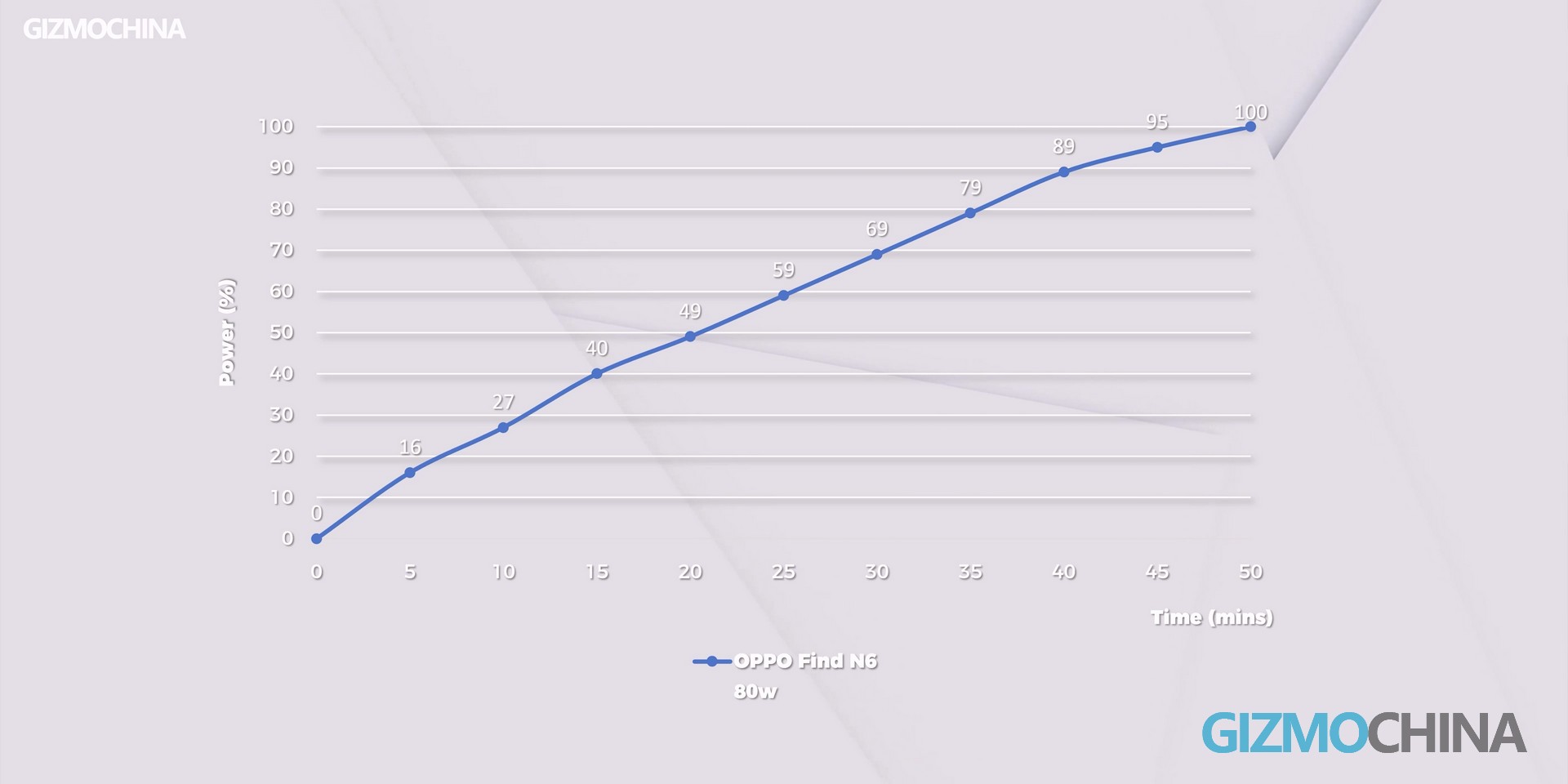
Wired charging supports 100W, and wireless charging goes up to 80W. It only takes 50 minutes to fully charge in our tests. Overall, I think battery and charging performance are still satisfying.

Camera

All four camera sensors on the Mate 80 Pro Max come from SmartSens Technology. Honestly, I’m very happy with all four of them. The ultra-wide has a sufficiently wide field of view, and 2 telephoto lenses let me capture subjects far away.

There are two things to note: First, the ultra-wide camera is not compromised like in many other flagships. It uses the same sensor as the two telephotos, meaning image quality at every focal length remains excellent. Secondly, every sensor uses an RYYB filter, increasing light intake and greatly improving low-light performance. And the color shift caused by RYYB can be corrected with the second-generation color temperature sensor. Combined with the variable aperture on the main camera and SmartSens’s new HDR technology, this is the most feature-rich and balanced camera system I’ve seen. Whether it’s dynamic range, white balance, or focal coverage, I can’t find any faults.

Some phones try to use a 200MP mid-telephoto camera, rely on in-sensor zoom to cover longer focal lengths. Although in most cases, the cropped photos look similar to the Mate 80 Pro Max’s 6.2x optical zoom, this approach has two major drawbacks you might not know: One, their telephoto cameras cannot shoot macro photos. The Mate 80 Pro Max’s 4x telephoto has a minimum focusing distance of 5cm—the best macro performance we’ve ever seen on any phone, period.

Two, if you need to shoot video using the telephoto lens, the quality difference becomes huge. So, between a single large-sensor telephoto and two smaller-sensor telephotos that cover longer ranges, I’ll always choose the latter.

Speaking of video recording, the Mate 80 Pro Max has improved a lot as well. Shaking caused by stabilization has been reduced significantly. The ultra-wide sensor is also larger than that of other flagships, performing better than expected in low light.

The front camera is also from SmartSens, but with a smaller sensor. Selfie quality is average.

Conclusion

After reviewing this phone, I realized I like it more than the time I bought it. Although it looks more ordinary now, and its performance can’t compete with other Pro Max devices, HarmonyOS 6 is very smooth, and battery life is excellent if you don’t play games. The camera system is my favorite—full-range quad cameras—and it also has the brightest display I’ve ever seen.

Add long-held advantages like signals and Face ID, and you’ll understand why HUAWEI phones remain popular. Oh, and it’s also cheaper now, so for longtime HUAWEI users, this is the perfect time to upgrade.

Nothing breaks its silence on Nothing OS 4.0 rollout delay

Nothing OS 4.0 rollout delay update

The stable rollout of Nothing OS 4.0 began last month, starting with the Nothing Phone 3, and it quickly expanded to the Phone 2, Phone 2a, Phone 2a Plus, Phone 3a, and Phone 3a Pro towards the end of November. However, many users are still waiting for their turn to receive the Android 16 update.

In the midst of users reporting delays in the rollout, a screenshot of a chat with Nothing’s support team surfaced on Reddit, leading to further disappointment among users awaiting the update. The screenshot (see it on Reddit) suggested that the Nothing OS 4.0 rollout has been temporarily suspended due to critical bugs requiring an urgent fix.

Finally, we now have an official update from Nothing’s team on the matter (via Android Authority). Here’s the official statement:

We use a phased rollout for every major software update so we can identify potential optimisations for users, these are often related to third-party apps.

Such optimisations were identified as part of the Nothing Phone (2a) Series and were rolled out on 1 December 2025. The rollout across all devices is progressing as planned and continues gradually.

If users have questions or feedback on Nothing OS 4.0, we invite them to reach out to our Customer Service team directly.”

So, Nothing has completely denied any claims regarding the rollout suspension. Instead, the company says the rollout is progressing as planned. If you’re among those waiting for the Nothing OS 4.0 update, note that the brand employs a phased rollout for every major upgrade, which means it may take some time for the update to reach all users. You can manually check for updates by navigating to Settings > System > System updates.

We’ll continue to post fresh updates about Nothing OS 4.0 in the Nothing section. If you prefer your news instant and on the go, hop into our Telegram channel for instant notification about the latest software updates and all the biggest tech headlines.

Vivo V70 series will not have any 4G models; Elite and FE are joining the line

Vivo is likely to launch the V70 series phones in early 2026. So far, we have heard about two phones of the lineup: the Vivo V70 and V70 Lite. Both have appeared in at least one certification platform to confirm their existence.
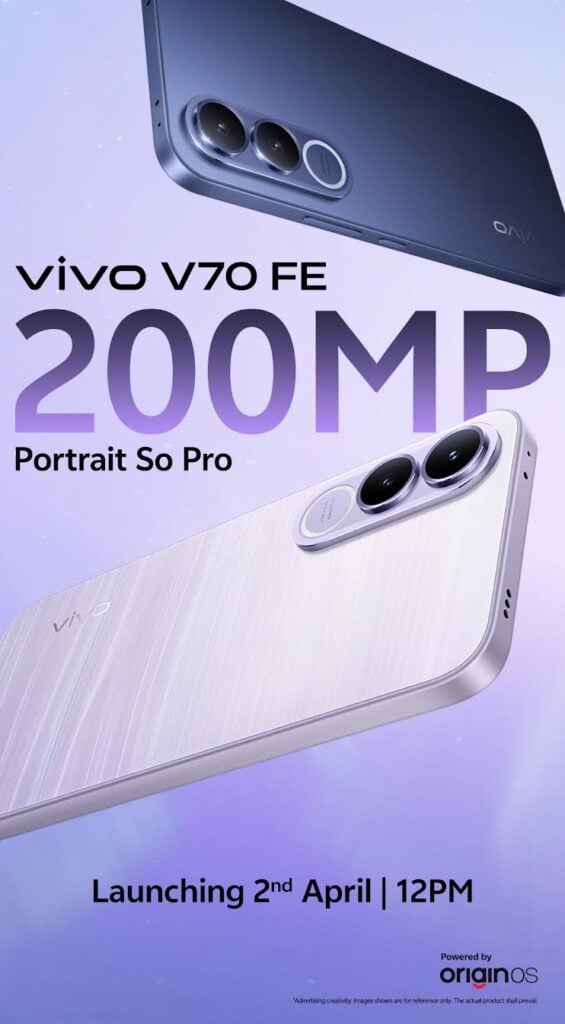
A new leak suggests that these phones will be joined by another two devices called the Vivo V70 Elite and Vivo V70 FE.

No Vivo V70e or V70 Lite 4G

Words for this come from tipster Paras Guglani on X, who claims that the 2026 Vivo V70 lineup will not include any Pro or Pro Plus models. Not much is surprising, as the predecessor lineup didn’t have them either. What’s interesting, however, is the addition of Elite and FE models, with no mention of a V70e.

For comparison, the V60 series was quite different, comprising the V60 itself, the V60 Lite 5G, the V60 Lite 4G, and the V60e.

Vivo S50
Vivo S50

Another detail from the leak is that all V70 phones are expected to have 5G connectivity. Vivo traditionally offered Lite models in multiple connectivity options to appeal to different markets, but that may no longer be the case.

Moreover, the tipster says that not all phones will launch in the same market. The standard Vivo V70 seems destined for India, while the Lite and Elite models might launch globally. The V70 FE, meanwhile, could see a release in India, though that’s less certain.

What we know

There’s not much detail available on any V70 phone. However, rumors suggest the standard V70 could be a rebrand of Vivo S50 from China. Given that, it might feature a 1.5K resolution and a 120Hz refresh rate.

The back will include a triple-camera setup, including a 50MP main sensor, an ultra-wide, and a 50MP telephoto camera with 3x optical zoom. A 50MP selfie camera is reportedly on board as well. 

Rounding out the list are a 6,500mAh battery, 90W wired charging, and an IP69 rating.

For more daily updates, please visit our News Section.

Stay ahead in tech! Join our Telegram community and sign up for our daily newsletter of top stories.

(Source)

This could be the Vivo X300 FE’s full specifications

Apart from the Vivo S50, the Vivo S50 Pro Mini bearing the model number V2527A has appeared in the database of China Telecom. As usual, the listing has revealed the key specifications of the device. Rumours suggest that the Vivo X300 FE, which is expected to launch in the near future for the global market, will be a rebranded version of the S50 Pro Mini. So, continue reading ahead to know what to expect from the Vivo X300 FE.

Vivo S50 Pro Mini specifications

Vivo S50 Pro Mini’s China Telecom listing

The China Telecom listing has revealed that the Vivo S50 Pro Mini will be a compact phone featuring a 6.31-inch OLED screen with a resolution of 2640 x 1216 pixels and an in-screen fingerprint sensor. The device measures 150.83 x 71.76 x 8.10mm and weighs 192 grams.

On the rear, the S50 Pro Mini is fitted with a triple camera setup comprising a 50-megapixel main camera, a 50-megapixel secondary camera and an 8-megapixel lens. For selfies, the device is equipped with a 50-megapixel front-facing camera.

Powering the S50 Pro Mini is the all-new Snapdragon 8 Gen 5 (SM8845) with a peak clock speed of 3.8GHz. The listing confirms configurations of 12GB+256GB, 12GB+512GB and 16GB+512GB, using LPDDR5x RAM and UFS 4.1 storage.

Vivo S50 Pro Mini
Vivo S50 Pro Mini

The S50 Pro Mini packs a 6,500mAh battery, which is the same capacity as the larger Vivo S50, which features a bigger 6.59-inch screen. Vivo has already revealed that it will support 90W wired and 40W wireless charging. The S50 Pro Mini runs Android 16, with expectations of OriginOS 6 on top.

Past reports have revealed that the S50 Pro Mini will have a glass back, an aerospace-grade aluminium frame and an IP68/69-rated body. It will be available in shades like Space Black, Confession White and Inspirational Purple.

For more daily updates, please visit our News Section.

Stay ahead in tech! Join our Telegram community and sign up for our daily newsletter of top stories.

Concrete evidence reveals Galaxy S26 Ultra to support 60W charging

Yesterday, it was widely reported that Samsung has silently released a new 60W charger, which could support 60W charging on the upcoming Galaxy S26 Ultra. Now, a new certification listing has emerged to confirm the fast-charging capabilities of the device.

Samsung Galaxy S26 Ultra 3C certified

Samsung Galaxy S26 Ultra 3C certified in China

The Galaxy S26 Ultra’s Chinese variant bearing the model number SM-S948B has been approved by China’s 3C certification platform. The listing reveals that the device will support 20A/3V (60W) charging, but it will be sold without a power brick.

This will be the first major charging speed upgrade arriving on Samsung phones, as 45W charging was introduced way back in 2019 on the Galaxy Note 10+. Apart from this 60W wired charging, the S26 Ultra is also expected to support wireless and reverse wireless charging.

The 3C listing also reveals that the Galaxy S26 Ultra will have support for satellite connectivity. This is not surprising since the S25 Ultra also came with support for it in China.

Likely, the S26 Ultra will be the only phone in the series to support 60W fast charging. The S26 Plus is expected to offer 45W charging. It remains to be seen whether the standard S26 will support 25W or 45W charging.

The 3C certification also hints at a delayed arrival for the Galaxy S26 series. The reason behind this is that the S25 Ultra was approved by the 3C authority in September 2024 before going official in January 2025. With the S26 Ultra getting certified by the 3C in December, it appears that the S26 series may debut by late February, as suggested by recent reports.

For more daily updates, please visit our News Section.

Stay ahead in tech! Join our Telegram community and sign up for our daily newsletter of top stories.

Vivo S50 full specifications revealed, Vivo V70 could be based on this phone

On Dec. 15, Vivo is set to announce the Vivo S50 and S50 Pro Mini in China. In the recent past, the brand has already confirmed the key specifications of the Pro Mini edition, but it has not revealed anything significant about the S50’s hardware. With only a few days remaining for the launch, the device has appeared in the product library of China Telecom, revealing all the key details.

Vivo S50 specifications

As per the China Telecom listing, the Vivo S50 will feature a 6.59-inch OLED display that offers a 1.5K resolution of 2750 × 1260 pixels. It is also likely to support a 120Hz refresh rate. The device will come with an in-screen fingerprint sensor.

The rear panel of the Vivo S50 is equipped with a triple camera setup that includes a 50-megapixel primary camera, an 8-megapixel lens and a 50-megapixel periscope telephoto camera featuring the Sony IMX882 sensor. On the front, the device will offer a 50-megapixel selfie camera.

The S50 is powered by the Snapdragon 8s Gen 3 chipset. Vivo has already confirmed that the device will feature LPDDR5x RAM and UFS 4.1 storage. The China Telecom database also lists its three variants: 12GB+ 256GB, 12GB+512GB and 16GB+512GB.

Vivo S50
Vivo S50

The battery section of the listing confirms a 6,500mAh unit. As seen in its 3C certification, the phone will support 90W fast charging. The device is expected to run Android 16 paired with OriginOS 6.

In terms of build, Vivo has already confirmed that the S50 features an aerospace-grade aluminium frame. It is also likely to offer an IP68/69-rated body. Colour options include Space Black, Confession White, Inspirational Purple and Serene Blue.
Vivo V70 could be based on the S50

Vivo is working on the Vivo V70 for the global market. Although details about the device remain unknown, it could be based on the S50. One major difference could be that the V70 may swap the Snapdragon 8s Gen 3 for the Snapdragon 7 Gen 4 chipset.

This iPhone 17 Pro Case Adds a Handy Second Screen on the Back

Remember Xiaomi’s big new feature on the Xiaomi 17 Pro series? A secondary screen on the back to take on the iPhone 17 Pro models. Well, it seems like all you need is this particular protective case to get some of the useful features of that on your latest Apple flagship.

iPhone 17 Pro Gets a Xiaomi 17 Pro Inspired Case

Dockcase just released a new cover for the iPhone 17 Pro, which is called the Selfix case. This basically adds a cover display on the back of the phone. Being able to take selfie shoots as the secondary screen acts as a camera viewfinder is one of the best features of devices like flip phones. The Xiaomi 17 Pro series has this function too, but now, even the iPhone 17 Pro is capable of it.

Selfix Case for the iPhone 17 Pro

The large high resolution sensors are perfect for those vloggers and content creators. This is a tiny 1.6-inch circular AMOLED display with touchscreen support and 480 x 480p resolution. Dockcase’s Selfix case promises a zero lag experience and doesn’t require any dedicated companion app. But that’s not all, buyers also get a dedicated power button to allow users to switch the secondary screen on and off. There is even a PD 3.0 USB Type-C port that supports up to 100W input.

Adding even more to the feature list is a microSD card slot that can expand storage by up to 2TB. So even media, like pictures and videos, stored in the microSD card will still appear inside the regular iPhone gallery. Unfortunately, we still don’t have an official pricing and release date. Although, Dockcase has launched the product on Kickstarter, showcasing multiple color options. These include Midnight Black, Oat White, and Blush Pink.

Please Note: When you buy something using the links in our articles, we may earn a small commission at no cost to you.

For more daily updates, please visit our News Section.

Don’t miss a thing! Join our Telegram community for instant updates and grab our free daily newsletter for the best tech stories!

These new Snapdragon chips might redefine what entry-level phones can do

Qualcomm has announced two new chipsets aimed at strengthening the mid-range and entry-level smartphone space. The Snapdragon 6s 4G Gen 2 and Snapdragon 4 Gen 4 mark the company’s next wave of affordable mobile platforms focusing on faster performance, improved imaging support and upgraded efficiency. With both processors expected to appear in 2026 devices, they signal Qualcomm’s ongoing push to remain competitive in the budget segment.

Snapdragon 6s 4G Gen 2

The Snapdragon 6s 4G Gen 2 is positioned as a dependable option for low-cost phones while still offering noticeable improvements over its predecessor. It comes with a Kryo CPU clocked at up to 2.9GHz and an enhanced Adreno GPU that delivers smoother visuals and gains in graphical output. The chipset supports 120fps playback on Full HD Plus displays, helping reduce lag in gaming and multimedia.

Imaging is also a key focus, with support for cameras up to 108-megapixel and the ability to capture photos and videos through multiple lenses at the same time. Qualcomm has strengthened AI-related functions as well, improving voice assistance and ensuring clearer audio through better microphone and echo management. These upgrades are intended to help budget phones deliver more reliable everyday performance.

Snapdragon 4 Gen 4

The Snapdragon 4 Gen 4 continues the same philosophy but leans more towards efficiency. It features a Kryo CPU capped at 2.3GHz along with an Adreno GPU that can handle 120fps output on compatible displays. Like the 6s 4G Gen 2, it supports 108-megapixel cameras, but adds hardware-level multi frame noise reduction for cleaner low light shots.

Battery life is another highlight, as the chip supports Quick Charge 4 Plus which can bring a phone from zero to fifty percent in about fifteen minutes. With 5G and Wi-Fi enhancements included, the chipset aims to power upcoming entry-level smartphones with a more balanced performance profile.

For more daily updates, please visit our News Section.

Stay ahead in tech! Join our Telegram community and sign up for our daily newsletter of top stories.

Motorola pushes stable Android 16 update for Moto G86

Moto G86 Android 16 update

The Android 16 update is gradually expanding to budget Moto G series smartphones, with the latest being the Moto G86. Its sibling, the Moto G86 Power, received the latest software last month, and now the update is out for the vanilla model as well.

Motorola confirmed the Android 16 rollout for the Moto G86 via its support pages, as spotted by Ytechb. As the update has just started rolling out, its availability is currently limited to select regions, primarily European countries. However, it should also expand to other regions pretty soon.

The latest update for the Moto G86 is tagged with the firmware version W1VN36H.60-30. It’s the same firmware version as for the Moto G86 Power, and has a download size of about 1.33GB. The update also brings the October 2025 security patch, alongside the changes as part of Android 16.

If you have a Moto G86, navigate to Settings > System updates > Check for updates to check if the update is ready for your device. If it doesn’t appear, please check back in a few days, as the rollout will expand in stages.

Android 16 is the first major Android OS upgrade for the Moto G86, as it was launched a few months ago with Android 15. The smartphone will receive at least one more Android upgrade before it runs out of OS updates. However, it will continue to receive security updates for at least three more years. 

Here’s the complete Android 16 update changelog for Moto G86:

Feature improvements
After upgrading, you’ll see the following improvements to the Android operating system and other apps.

Find modes in one place
Now you can find these modes in Settings > Modes:

– Do Not Disturb
– Bedtime
– Driving

You can also create custom modes to fit any situation where you want to choose a different set of people or apps who can interrupt you.
Toggle these modes on or off in quick settings.

Connect to Wi-fi and hotspot with one tap
If your phone and device you want to connect to its hotspot are using the same Google account, you no longer need to enter a password to connect.

Better support for low-energy audio hearing aids
You can now choose to use either your hearing aid’s built-in microphone or your phone’s microphone during voice calls. Additionally, you can adjust the volume of ambient sound captured by the hearing aid’s microphones. These options help enhance call clarity, especially in noisy environments or when your hearing aid’s battery is running low.

Other improvements
Android system updates add more than new features. Using the latest Android update provides other improvements such as:

– Enhanced security and protection to defend against evolving threats like malware, phishing, and data breaches
– App compatibility with newer apps, which often require the latest Android version to function correctly
– Performance improvements that optimize your phone’s operating system for smoother performance, better stability, and, in some cases, longer battery life
– Bug fixes and stability enhancements to resolve known issues and improve overall reliability and stability

Remember to visit our Motorola section regularly for the latest updates. Alternatively, you can join our Telegram channel to get instant notifications about the latest software updates and tech breakthroughs.

Please Note: When you buy something using the links in our articles, we may earn a small commission at no cost to you.

Oppo ColorOS 16 Update Now Arriving on Oppo K13 Turbo, Find N2 Flip, & More

In a fresh wave of ColorOS updates, Oppo is expanding its list of devices eligible for ColorOS 16. There are a bunch of older smartphones getting the Android 16 OS update, including older premium foldable phones and even mid range devices. So here are the details.

Oppo Brings ColorOS 16 to More Smartphones

Just recently, the Chinese tech giant brought the update to premium and budget models. This included the Find X6, Find X6 Pro, Reno 13, Reno 14, Reno 14 Pro, and the F27 models. So now, here are all the models getting the new ColorOS 16 update:

  • Oppo Find N2 Flip – CPH2437_16.0.1.310(EX01)
  • Oppo K13 Turbo – CPH2761_16.0.1.300(EX01)
  • Oppo K13 Turbo Pro – CPH2731_16.0.1.301(EX01)
Oppo Find N2 Flip
Oppo Find N2 Flip

Oppo’s ColorOS 16 custom skin brings the latest Android 16 OS and carries a download size of around 3.7GB. The company is rolling out the update in a staggered manner, so only a small batch of these models is getting the major software upgrade. Meaning, if you haven’t received the update yet, it should follow soon after.

To check if you’ve received the update go to Settings > System & update > Software update > tap the top of the page > tap the icon on the top right > Beta program > Release candidate> Apply Now. Click the Download now button and then install the update. It is worth noting that you should make sure that you have sufficient storage to download and install this update. Furthermore, it is also recommended to have over 40 percent battery life when installing ColorOS 16.

For more daily updates, please visit our News Section.

Tech enthusiast? Get the latest news first! Follow our Telegram channel and subscribe to our free newsletter for your daily tech fix! ⚡