Apple relies on China for its huge production capacity. Majority of the Apple products are still manufactured in China. However, over the last few years, Apple has been facing issues in China due to political tensions between the US and China, along with the COVID-19 outbreak. Therefore, the brand has been slowly shifting its production to countries like India.
Despite these issues, Apple is currently the most profitable corporation in China. The pandemic’s effects on lifestyle allowed Apple’s China business to expand quickly; s its operational earnings increased by 104% over 24 months to $31.2B in the fiscal year ending in September. According to an estimate from FinanceTimes, Apple is currently worth more than Tencent and Alibaba put together ($15.2 billion and $13.5 billion, respectively).
According to the article, Apple and China reached a deal that allowed the iPhone manufacturer to escape a “crackdown on local IT firms,” which is how the profits came about. The agreements, which were made as a result of CEO Tim Cook’s repeated diplomatic visits to the nation over the years, have greatly strengthened Apple’s supply chain in the area. The agreement enables Apple to keep “unrestricted access” to affordable labor and manufacturing, which are crucial to its success.
However, critics argue that Apple’s proximity to the government and access to resources has made it more willing to comply with administrative demands. This includes storing Chinese user data in a data center owned by a provincial government, removing thousands of apps from the App Store, and avoiding controversial topics.
Other advantages of diplomacy for Apple include a significant weakening of Huawei. In 2019, Chinese citizens aided in the purchase of Huawei smartphones, propelling the local manufacturer past Apple in global sales that year. Now, Apple practically owns China’s $600+ smartphone market, with only few competitors able to compete at that level.
Samsung is currently serving Apple as a display supplier for its iPhones. All the iPhone 14 lineup models were packed with the panels supplied by Samsung displays. However, the premium smartphone maker has now decided to use other suppliers’ panels for its premium iPhone 14 Pro models. Apple will now reportedly use the panels supplied by LG Displays for the upcoming units of the iPhone 14 Pro.
It was previously reported that talks between Apple and LG Display over the supply of the OLED screen for iPhone 14 Pro variants are ongoing. There were discussions over the supply of LTPO TFT Type OLED panels. LG started supplying display panels for the 14 Pro since the last week of October, according to a source from ETNews. According to reports, LG Display was meant to be a component supplier of the Pro model supply chain, but due to the brand’s restriction, they couldn’t supply it earlier. Anyway, Apple ultimately approved its incorporation following an early production holdup.
Samsung Display will now supply screens for all four iPhone 14 models, LG Display will supply screens for two iPhone 14 models, and BOE will continue to supply screens for the iPhone 14. LG Display’s partnership with Apple reportedly extends beyond the iPhone 14 Pro versions. The display maker is apparently working on micro OLED displays for Apple’s AR headset, foldable panels for upcoming iPhone models, and trying to get into the OLED iPad supply chain.
Although the LTPO OLED technology was originally launched on the iPhone 13 Pro, this is LG Display’s first attempt to supply LTPO OLED to Apple for its devices. The inclusion of LTPO refresh rate technology along with the newly introduced pill-shaped notch cutout made the production hard for the supplier. For the past two years, Samsung Display has provided Apple with LTPO OLEDs for use in mobile devices.
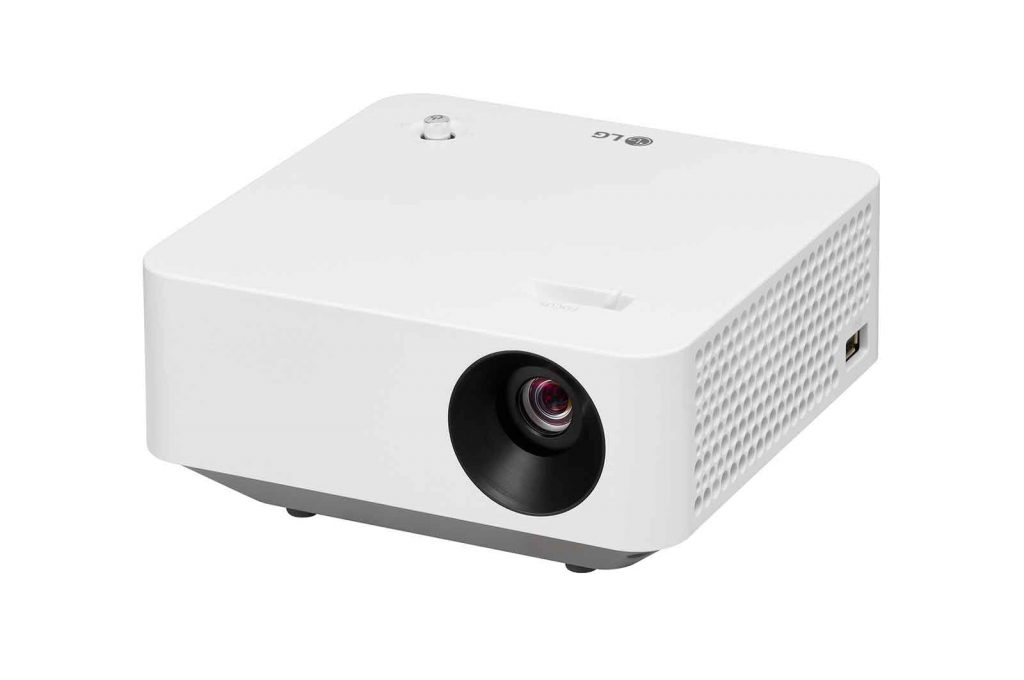
Philips has launched the Screeneo U5 4K projector with an image of up to 150 inches under crowdfunding. The impressive projector was unveiled via Indiegogo and took a remarkable 5-minute run to reach its goal. The Screeneo U5 is the successor to the U4 and uses a 4K UHD resolution and a high maximum brightness rating.
The U5 is based on Android 11 UI and is an ultra-short-throw projector that can deliver a home theater cinema experience without the need of having a giant screen in the room. The maximum screen size of 150 inches is achieved with a distance of just 16.5 inches away from the wall. The Screeneo U5 can also throw a 120-inch display from 11 inches and it has up to 2,200 ANSI lumens of brightness. The U5 also adheres to the Rec.709 color space and supports Dolby Vision, FlowMotion 4 MEMC+ technology, and HDR10.
The U5 Indiegogo campaign is still ongoing, with up to $570,000 attracted from its backers. The price of the Philips Screeneo U5 is €3,299 (~$3,314) but there are still a few units available via Indiegogo with a 48% discount. The speed with which the Indiegogo campaign for the Philips Screeneo U5 achieves its goal is quite impressive. Its success seems to have eclipsed that of the U$ which was also previously launched on Indiegogo. It is unclear what is expected lifetime of the projector is based on its light source.
Instagram has launched in-app posts scheduling feature. The popular photo-sharing platform has started releasing the long-due feature. To date, users had to upload content whenever they wanted. And if they preferred uploading at a specific time, then users would have to make use of third-party scheduling software tools. It’s worth noting that the in-app scheduling tool is only available for professional accounts.
Plan ahead 📅
Creators and business accounts can now schedule posts up to 75 days out.
Instagram Head Adam Mosseri announced the in-app post scheduling feature on his Twitter account. He dubbed it as a ‘finally feature’ and that the Meta-owned platform should have introduced it a long time ago. The ability to schedule posts has been available on other social media platforms like Meta, Twitter, TikTok, and YouTube. Apart from scheduling posts on Instagram via third-party tools, users could also do it from Meta’s Creator Studio.
As mentioned earlier, the in-app posts scheduling on Instagram is only available to professional users which include creators and business accounts. It will allow users to schedule photos, reels, and carousel posts up to 75 days in advance. To schedule a post, users need to go through the usual steps of creating till uploading the content. At the end of the flow before publishing, there is an option to access ‘Advanced Settings’ at the bottom of the screen. Then, there is a toggle option to ‘Schedule this post’. Once it is toggled, users can select the time and date they want to see their post go live on Instagram. Professional users can view scheduled posts in their profile menu’s ‘Scheduled Content’ section that is accessible via the hamburger menu. Additionally, they can also reschedule the content if required. \
The in-app post scheduling on Instagram is quite a useful new update. Social media managers and creators will no longer have to rely on third-party tools for scheduling which seems like a hassle. The feature is available on Android and will be rolled out on iOS in the coming days. It remains to be seen whether the scheduling tool will be released to all Instagram accounts.
Apart from post scheduling, Instagram is also redesigning its web interface to take advantage of larger screens. The refreshed design moves the menu and icons like home, search, and explore to the left side.
BenQ has been churning out projectors at an unprecedented rate in recent times. The company has launched yet another high-end projector in China. The product is dubbed BenQ W1130X projector and it is presently on sale at Jingdong (JD.com) priced at 6999 yuan (~$965).
The BenQ W1130X projector is obviously a flagship projector. It uses a new 4LED light source with long-lasting color rendering and ultra-long life. It equally features a built-in 0.65-inch DMD chip as well as an all-glass lens, and an optical zoom with lossless image quality.
BenQ W1130X home projector follows the international film and television industry color calibration standard D65 color temperature. Under the leadership of THX and ISF dual-certified engineers, the BenQ CinematicColor professional team calibrates each W1130X one by one to ensure that the color accuracy reaches 98% Rec.709, and Delta E<3.
In addition, the BenQ W1130X has a high refresh rate of 120Hz, as well as a low latency of 8.3 milliseconds. The display has a resolution of 1080p, a contrast ratio of 500000:1, and a brightness of 2300 IOS. It also supports side projection. In terms of audio, the projector pack two built-in stereo speakers for an optimum user experience.
Oppo has just announced a new strategic partnership. The smartphone maker is working closely with Unity to offer better gaming performance and graphics fidelity on its smartphones.
For those unaware, Unity is a known company that is best known for its Unity game engine. This game engine has been used in a number of popular titles for both computers and mobile games like “Honor of Kings,” “Honkai 3,” “Call of Duty,” and even “Genshin Impact.” So it is clear that a number of game developers prefer this game engine, with each of these games having robust playerbases. So an improvement in gaming performance specially optimized for Oppo devices would offer a better gameplay experience to the brand’s customers.
The company announced the partnership with the real time 3G engine giant Unity during the China International Import Expo. This cooperation aims to improve visual fidelity or graphic visuals and even make the games based on Unity run smoother as well. Furthermore, Oppo has already integrated its self developed ray tracing algorithm into the Unity game development engine, which helps create lights and shadows in real time in the game.
The smartphone brand’s ray tracing algorithms can also generate real time dynamic shadows, surface reflections, glass refractions, and more. In simpler terms, it can simulate the actual behavior of light, which greatly improves the visual fidelity of the games. The partnership was just announced but it remains to be seen how it affects the gaming experince on Oppo devices in real life.
OPPO A1 Pro 5G is reportedly in development for the global market. Today, reliable tipster Evan Blass aka Onleaks shared a leaked image of the device. It reveals the back panel design of the device. The tipster adds that the OPPO A1 Pro 5G could be rebranded version of the A98 with model number PHQ110 which is yet to release in China. The OPPO A98 has already bagged TENAA certification.
The overall design of the OPPO A1 Pro 5G matches the images of the OPPO A98 that recently surfaced on China’s TENAA certification platform. The smartphone has a pill-shaped camera module with two circular rings on the back panel. The first one houses a primary sensor whereas the second has two lenses along with an LED flash. The camera rings are followed by a glittery pattern. The smartphone is also seen in a gradient back panel with Silver and Gold hues.
As for the core specifications, the OPPO A1 Pro 5G could be similar to the A98. The latter’s China listing reveals that the device will feature a 6.7-inch FHD+ 120Hz AMOLED display with curved edges, a punch-hole, and an under-display fingerprint scanner. It will reportedly be powered by a Snapdragon 778G SoC coupled with up to 12GB of RAM and 256GB storage. The upcoming offering is tipped to be backed by a 5,000mAh battery and 67W fast charging. It may run on ColorOS 13-based Android 13 OS. On the optics front, the OPPO A1 Pro 5G is expected to feature a 108MP primary camera and a 16MP selfie snapper.
Samsung has just launched a new special edition model of an existing smartphone. The new limited variant is the Galaxy Z Flip 4 Maison Margiela Edition. So let’s have a look at this new device.
For those unaware, Maison Margiela is a Paris based haute couture house and a French luxury fashion brand. So, the new special edition model from the South Korean tech giant features a design inspired by Maison Margiela’s original design values. The company has also launched the Galaxy Z Flip 4 Maison Margiela edition also comes in a Solid White color, which is based on a reinterpretation of the fashion brand’s core beliefs. The smartphone maker made the announcement for the device earlier today (9th November 2022).
Apart from the special edition Galaxy Z Flip 4, the company also bundled two protective covers as well, including one leather and the ‘Bianchetto’ technique. This makes it look like the its painted gray on a white canvas. The four stitches also reflect the Maison Margiela’s signature emblem. On the other hand, the second is a silicone numbering case that has the number 11 engraved on the ring holder.
Lastly, Samsung Electronics even offers the new limited edition model with two unique themes, which includes a special UX theme that offers an X-Ray vision through the device in both black and white, while the other shows a paint texture expression done with a rough brush. The company has just announced the new Galaxy Z Flip 4 Maison Margiela Edition model in its home market of South Korea as well as France. Sales of the device will begin on 1st December 2022, although, it is also planned to release in other major global markets as well.
Apple has started rolling out a new firmware update for its AirPods Pro 2. The AirPods Pro 2 earbuds is the company’s flagship TWS earbuds launched back in September. It has now started getting a new firmware update, which further improves the device’s music experience. The new update for the AirPods Pro 2 has the firmware build number 5B58. Other AirPods are yet to get updated, and they’re still on the firmware release 4E71.
Regarding the update changelog, Apple often doesn’t give a thorough changelog or update notes. Instead, the company provides a short changelog. However, there might be some significant tweaks and fixes made inside. Anyhow, the changelog for the most recent version of the AirPods Pro indicates that it is a “bug fixes and improvements” release. We expect the reported bugs will be fixed based on shared notes.
Some AirPods firmware updates have decreased the effectiveness of Active Noise Cancellation. Although the reason for Apple reducing this feature is unclear, rumours say that the company may be under pressure from pending litigation to do so in order to please patent trolls. There aren’t any formal statements on this subject, though.
It is worth mentioning that the AirPods don’t support the manual installation of the firmware and therefore, whenever your device will receive the update, it will be automatically installed. To check for the update, you can head over to Settings >> General >> About >> Select AirPods >> A menu will appear. You can see from the about settings if your device has been updated to the latest firmware.
Vivo has announced that it will launch the world’s first Hi-Fi wireless headset this month. However, the name of the audio device and its launch date remain a mystery. The brand tried to introduce Hi-Fi into mobile phones and earphones years ago. Now with the tenth anniversary of Vivo hi-fi, the company aims to incorporate the feature in an audio device. The upcoming offering is touted to be the first-ever wireless headset with hi-fi technology.
Hi-Fi refers to high fidelity and it reproduces the sound with little distortion giving results similar to the original audio source. High fidelity is usually found on wired earphones and headphones. Vivo’s headset with the technology will be the first wireless headset in the industry. It is said to come with a transmission rate of up to 1.2Mbps. The audio device will be equipped with a high-performance DAC chip and feature an ultra-wideband high-definition unit above 40kHz.
In a Weibo post, Vivo said “For the tenth anniversary of vivo Hi-Fi, what have we broken through? A major acoustic breakthrough, the original sound immersion experience, vivo’s world’s first true Hi-Fi wireless headset is coming soon!”
We expect to know more details about the upcoming Vivo audio device in the coming days. In other news, the brand recently launched Wireless Sports Headset 2 in China. It is a neckband-style wireless earphone with an 11.2mm driver, noise reduction for calls, voice assistant support, and 80ms low latency mode. The audio device is backed by 12 hours of battery life.
Realme is gearing up for the launch of its Realme 10 lineup of smartphones across the globe. The company already launched the Realme 10 4G in Indonesia, and will release the series in mainland China and other global markets in the coming weeks. Anyway, the brand has now officially started teasing its upcoming Realme 10 series of smartphones in the Indian market, hinting at an imminent launch.
The Realme 10 series is expected to include three different smartphones; the vanilla Realme 10, Realme 10 Pro and Realme 10 Pro+. The high-end Realme 10 Pro+ will bring a fantastic set of specifications this time. The Realme’s VP, Madhav Seth, has shared a teaser of the upcoming Realme 10 Pro+ device on his Twitter handle. The shared teaser highlights the curved display of the smartphone and quotes the “curve display on the way”.
We have been getting leaks and rumours regarding the upcoming Realme 10 series for a long time. Now, the curved panel of the smartphone has been officially confirmed. According to earlier reports, the Realme 10 family may officially launch in India before the year is over. As the brand has started teasing the smartphone, we expect them to announce the launch date in the upcoming weeks. The launch itself could happen in the month of December.
Clash White and Rush Black would be the two colour options for the base Realme 10, while Nebula Blue and HyperSpace would be the colour options for the Realme 10 Pro. The top-tier Realme 10 Pro+, on the other hand, will come in Hyperspace, Nebula Blue, and Dark Matter colours. The Realme 10 Pro+ is further expected to feature specifications such as a MediaTek Dimensity 5G chipset, and quad or triple rear cameras with a 108-megapixel primary lens. It may also get a 4500mAh battery with support for 80W fast wired charging.
At the end of last month, Xiaomi launched the phone with the fastest charging technology ever seen in the smartphone market: the Redmi Note 12 Explorer Edition. It is not a flagship phone, but it is the most advanced variant of the Redmi Note 12 series and it packs amazing specifications, despite its pretty affordable price. But this is not the only midrange phone able to provide blazing charging speeds out there. If we exclude iQOO’s flagships, there is another upper-midrange with very fast charging technology: the Realme GT Neo 3 150W. The price of this device is not so far from the one of the new Redmi, that is why we decided to write this article. Here is a comparison between the main specifications of the Realme GT Neo 3 and the Redmi Note 12 Explorer Edition.
Realme GT Neo 3 vs Xiaomi Redmi Note 12 Explorer Edition
Triple 50 + 8 + 2 MP, f/1.8 + f/2.3 + f/2.4 16 MP f/2.5 front camera
Triple 200 + 8 + 2 MP, f/1.7 + f/1.9 + f/2.4 16 MP front camera
BATTERY
5000 mAh, fast charging 80W or 4500 mAh, fast charging 150W
4300 mAh, Fast Charging 210W
ADDITIONAL FEATURES
5G, dual SIM
5G, dual SIM, splash and dust resistant
Design
The Realme GT Neo 3 comes with a more beautiful and original design. Its rear cover is very attractive, especially for gamers and young people, because it comes with a painting with two white stripes reminding of a sports car. Further, the phone has an ergonomically curved back and very narrow bezels around the flat display. On the other hand, with the Redmi Note 12 Explorer Edition, you can actually get a better build quality. It is a phone made with a glass back and an aluminum frame, sporting the IP53 certification making it dust resistant and splash resistant. However, its screen to body ratio is lower and the design is less impressive and original overall. Do you prefer a beautiful design or a great build quality?
Display
If we consider the specifications of the displays, it is more or less a draw, but the Redmi Note 12 Explorer Edition looks a bit more interesting. It has an OLED display able to show up to one billion colors with a diagonal of 6.67 inches, a Full HD+ resolution of 1080 x 2400 pixels, a 120 Hz refresh rate, Dolby Vision support, and HDR10+ certification, as well as a peak brightness of 900 nits and an in-display fingerprint reader. With the Realme GT Neo 3, you get an AMOLED display able to show up to one billion colors with a diagonal of 6.7 inches, a Full HD+ resolution of 1080 x 2412 pixels, a 120 Hz refresh rate, and HDR10+ certification, as well as an in-display fingerprint scanner. These phones feature two stereo speakers but they have no audio jack.
Specs & Software
The most powerful hardware setup belongs to the Realme GT Neo 3 150W. It is fueled by the Dimensity 8100 chipset by Mediatek built with a 5 nm production process. It is a processor with an octa-core architecture composed of four Cortex A78 CPUs running at a max frequency of 2.85 GHz, four Cortex A55 CPUs running at 2 GHz, and a Mali G610 MC6 GPU. The chipset is paired with up to 12 GB of RAM and up to 512 GB of UFS 3.1 internal storage. With the Redmi Note 12 Explorer Edition, you get an inferior Dimensity 1080 chipset by Mediatek, running at a max frequency of 2.6 GHz and paired with up to 8 GB of RAM and up to 256 GB of native storage. The operating system installed is Android 12 on both phones.
Camera
The Redmi Note 12 Explorer Edition is a more interesting camera phone because it packs the new 200 MP sensor by Samsung and it includes optical stabilization (OIS), instead of the old 50 MP Sony IMX766 camera found on the Realme GT Neo 3. The secondary sensors are the same: an 8 MP ultrawide shooter and a 2 MP macro lens.
The battery of the Realme GT Neo 3 is actually bigger with a capacity of 4500 mAh against just 4300 mAh, but the Redmi Note 12 Explorer Edition charges faster thanks to 210W fast charging: the fastest technology ever seen on the shelves (a full charge in 9 minutes). However, the Realme GT Neo 3 is still pretty fast thanks to its 150W fast charging tech.
Price
The Redmi Note 12 Explorer Edition starts from €330 or $330 in China, just like the Realme GT Neo 3. Even though it features a slower charging tech, the Realme wins the comparison thanks to its better overall specifications.
It’s been a few months since Google launched its Pixel 7 and Pixel 7 Pro flagship smartphones in the market, and now we are getting information about the upcoming Pixel 8 series smartphones.
Although the launch of the upcoming Pixel 8 and 8 Pro smartphones is expected to happen in late 2023, a new report from WinFuture has revealed some key details about the devices.
Google’s Pixel 7 and Pixel 7 Pro
The report indicates that the Pixel 8 is codenamed Shiba, while the Pixel 8 Pro is codename Husky. This naming convention appears to be in line with Google’s Pixel 7 and 7 Pro, which are codenamed Panther and Cheetah, respectively.
It also comes at a time when there are reports making rounds indicating that the upcoming flagship smartphones from Google will be powered by the company’s Tensor G3 processor, which will be manufactured by Samsung using 3nm process. Further, it is also said that the chipset will be based on Samsung Exynos 2300 SoC.
The upcoming Tensor G3 chip is allegedly codenamed Zuma and will come with the Samsung G5300 modem which is found in the current-generation Tensor G2 processor of the Pixel 7 series.
Coming to the specifications, reports indicate that the Pixel 8 will feature a display with a 2268 x 1080 pixels screen resolution while the Pixel 8 Pro will offer a 2822 x 1344 pixels screen resolution. It further adds that both devices will come packed with up to 12GB of RAM. The screen resolution doesn’t line up with prior Google Pixel devices, so we would advise you to take this with a pinch of salt.
South Korean Tech Giant Samsung has started rolling out the latest November 2022 update for its foldable lineup of smartphones. The Galaxy Z Fold 3 and the Galaxy Z Flip 3 and 4 have started receiving the latest security patch update. The brand had promised up to 5 years of security patches and keeping up to their word, the latest monthly patch update for their foldable smartphones is out. It fixed tons of software-based glitches and bugs.
The latest November 2022 security patch for the Samsung Galaxy Z Fold 3 arrives with the build number F926U1TBS2DVJ1. The OTA update is currently rolling out to all the carrier networks in the US. On the other hand, the update for Galaxy Z Flip 4 arrives with the build number F721BXXS1AVJE. The update for the Flip 4 smartphone is currently rolling out to users in Ireland. The update fixes tons of privacy and security-related bugs present on the UI.
Last but not the least, the Samsung Galaxy Z Flip 3 has got the November 2022 security patch update with the firmware build F711U1TBS3EVJ2. The update is currently available to all the carrier networks in the US markets. The November patch for Z Flip 3 also fixes some security and privacy-related bugs present here and there. If you haven’t received the OTA update yet, you can check for it manually by going into Settings >> Software update >> Download and Install.
If the update is still not showing up for you, you can wait for a few more days. Sometimes, the batch rollout of the update does take quite a long time. However, fret not, you will receive the update. Keeping checking for updates on your smartphone at regular intervals.
All three of the top-tier foldable smartphones are expected to receive the most recent OneUI 5 version, which is based on Android 13, on or around December 2022. It is expected that the Fold 4 smartphone would receive the upgrade before any foldable, followed by the Galaxy Z Flip 4, the Fold 3, and the Flip 3. We’ll keep you up-to-date as soon as the software update becomes available for the devices.
Infinix recently unveiled the Hot 20 series, which consists of the Infinix Hot 20 5G, Hot 20 5G, Hot 20s, Hot 20i, and Hot 20 Play. Out of these devices, the Hot 20 5G and the Hot 20 Play are expected to soon hit the Indian markets.
The report comes from Fonearena, which claims that the HOT 20 5G could offer up to 12 5G bands in India. The report also alleges the November 30 Indian launch date for these devices. Let’s take a look at the specifications and features of these smartphones.
Infinix Hot 20 5G specs
The Infinix Hot 20 5G boasts a 6.6-inch IPS LCD panel with a Full HD+ resolution, a refresh rate of 120Hz, and a touch sampling rate of 240Hz. The smartphone boots to the Android 12 operating system, with the XOS 10.6 UI on top. It has a fingerprint sensor on the side of the device.
The Dimensity 810, which supports 5G connectivity, powers the Infinix Hot 20 5G. The SoC is complemented by 4 GB of RAM(3 GB virtual RAM expansion available) and 128 GB of internal storage. It has a 5,000mAh battery with 18W charging compatibility and 5W reverse charging to keep the lights on.
A 50-megapixel Samsung JN1 primary camera and a depth sensor are both featured on the Hot 20 5G. It sports an 8-megapixel camera up front. The phone has photography features like eye tracking, portrait mode, short video mode, and super night mode. Other features include a USB-C connector, a 3.5mm audio jack, dual SIM, 5G, Wi-Fi 802.11ac, Bluetooth 5.1, GPS, NFC (for contactless payments), and GPS.
Infinix Hot 20 Play specs
The Infinix Hot 20 Play has a massive 6.82-inch IPS LCD screen with a 90Hz refresh rate and an HD+ resolution of 1640 x 720 pixels. The device’s preinstalled operating system is Android 12 with Infinix’s XOS UI on top.
The Hot 20 Play is powered by the MediaTek Helio G37 CPU and 4 GB of RAM. The smartphone is available with 64 GB and 128 GB of storage. The device contains a microSD card slot for additional storage. It includes an 8-megapixel selfie camera on the front. A 13-megapixel primary camera, an AI lens, and an LED flash are all included on the device’s rear. A fingerprint scanner is also included in the rear casing. Additionally, the device enables face unlock.
The Hot 20 Play contains two speakers and a 3.5mm audio port for audio. It is powered by a 6,000mAh battery with 18W charging capability. With dual SIM, 4G LTE, Wi-Fi 802.11ac, Bluetooth 5.0, GPS, and a USB Type-C connection, it provides the standard connectivity functions. The phone weighs about 209.6 grams and has dimensions of 171 x 78 x 8.5mm.
Soon after the announcement, Vivo officially disclosed that it will release a smartphone housing this chip. Unfortunately, the brand did not reveal the name of the device.
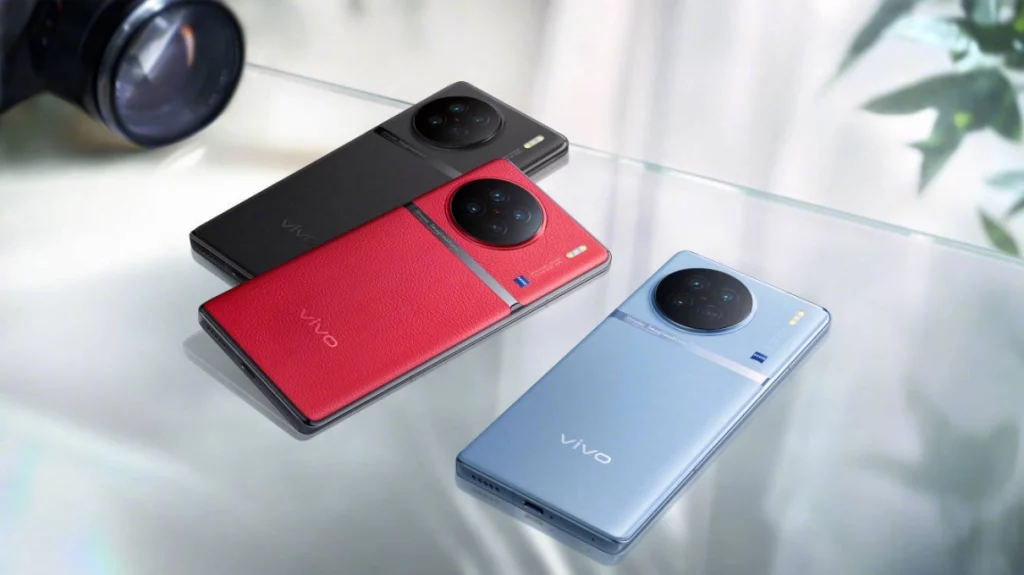
Whylab, a popular Chinese tech media, says that the Dimenisty 9200 chipset could power the forthcoming Vivo X90 and Vivo X90 Pro. In the same Weibo post, it also notes that the Vivo X90 Pro and Vivo X90 Pro Plus may feature a Qualcomm Snapdragon 8 Gen 2 chip.
This means the Vivo X90 Pro could be available in both Dimensity and Snapdragon variants. The information provided by Whylab could be mostly true as the outlet is known for reliable leaks.
Aside from this, a live image leak from yesterday revealed that the Vivo X90 Pro+ will be available in red color with a leather finish. WhyLab has also shared what seems to be an official teaser of the design (the picture attached above) along with the aforementioned chipset details.
We are expecting more leaks on the Vivo X90 series in the coming days. Perhaps, Vivo may also start teasing the features officially.
ZTE Miracle WiFi 6 AX3000 Pro Review As budget phones and tablets have started to support WiFi 6, an often-ignored device once again gets our attention, that is the router. You might have complained that the internet connection does not reach the speed promised by the provider, and then just called the provider directly to ‘fix’ it and forgot about the router.
Actually, you don’t have to feel so helpless and the truth is not so complicated. Instead, you might just need a new router.
Without investing a lot of money, users can now easily find an advanced router. The ZTE Miracle WiFi-6 AX3000 Pro is a great example. It provides great features that we might only have on some high-end devices, such as dual-band Wi-Fi 6 connection, up to 2976Mbps (theoretical) speed, EasyMesh system, and NFC one-touch connection. For less than a hundred euros, it will bring better connectivity and greater network control via the exclusive phone app or you can even use its Web UI.
ZTE Miracle Router Is Compact & Elegant
The low-key minimalist design of the Miracle router looks stylish and exquisite. The thin and light body comes with dimensions of 250 x 180 x 45 mm and a weight of 430 grams. When unfolding the antennas, the height will be around 190 mm. Unlike other powerful but complexly-designed routers, the white variant of the device blends well into most interior styles. This may also be why it won both, the iF Design Award 2022 and Good Design Award 2021.
The ZTE and NFC logos are at the top and an indicator light is well-arranged on the front. And there are two LAN ports and two WAN/LAN ports on the back, which support dual broadband of two operators to double the speed of the total home internet.
It’s common for high-performance routers to become unstable due to thermal issues. But it doesn’t look like it’s going to happen on the ZTE router, since you can see a lot of ventilation holes covering the sides and bottom. The reset hole and the information sticker are at the bottom too, which helps easily reset the device or check details like Wi-Fi SSID and default password. For the first connection and setup, you can find the network name and password on the sticker. And before that, make sure you already plug in the power adapter and Ethernet cable, both of which can be found inside the package.
I strongly recommend that you download and install the ZTELink App (available on Android & iOS devices) or Web UI to set up the router further after first connecting to your home internet. In the app or the Web UI, users can check uplink speed and downlink speed, as well as general information of the connected devices.
Every connected device’s connection can be modified. You can set a parent control to it or even block it from the network.
In addition, to setting up the connection, the toolkit integrated into the app also adds some useful features that help better manage the network, such as Guest Wi-Fi, speed test, and Wi-Fi-sleep schedule. In both app and Web-UI management, more advanced settings are supported, including night mode, dynamic IP settings, firewall, and firmware update.
The router is powered by the Qualcomm IPQ5018 routing chip, which is a dual-core 64-bit CPU plus a built-in advanced 12-thread network processor and 256MB of storage.
ZTE Miracle Router Connection Speeds
For connectivity, the Miracle router supports 2.4GHz and 5GHz dual frequencies, and the concurrent wireless access rate theoretically reaches up to 2976Mbps, which is 250% of the rate of Wi-Fi 5 AC1200. 160MHz large bandwidth is also supported to meet the latest connected devices’ largest available bandwidth.
Although as mentioned, the router’s wireless access rate can theoretically reach up to 2404 Mbps (5G) and 574 Mbps (2.4G), most of us do not have access to such fast speed from our providers. Unfortunately, neither can we. Our studio has contracted connection speeds of 500Mbps (download) / 50Mbps (upload). We tested the connection speed of 2.4G and 5G at 1m and 8m from the router, and around 15m through a wall, respectively.
At the closest point (1m), the 5G Wi-Fi connection’s download speed reached up to 621.6 Mbps and the upload speed was 60.1 Mbps. The 2.4G’s download/upload speeds are 79.3 / 57.1 Mbps.
5G2.4G
At 8m from the router, the 5G’s download speed was a bit down to 607.6 Mbps while the upload speed was not significantly affected and remained at 58.7 Mbps. The 2.4G connection was still stable at 70.7 / 53.8 Mbps.
5G2.4G
At the position through the wall (15m), the 5G connection had a download speed of 463.4 Mbps and an upload speed of 57.8 Mbps, which still maintained impressive performance with good stability. While the 2.4G signal was a bit more affected. Its download speed was 37.1 Mbps and its upload speed was 18.8 Mbps.
5G2.4G
To conclude, we found that the wireless internet speed can maintain a decent level in an area of around 100㎡ and it could drop 5%-40% through walls. According to the tested result, it’s predicted to have good coverage in a house of 120 ㎡ (1291 ft²) if you place it at the right centre position. During the test, there’s no problem when we connected up to 12 devices. As claimed, the number of devices supported is up to 128.
ZTE’s Miracle Router Supports Mesh System
The Miracle router is also an excellent budget option to build a house mesh system. In the Web UI/app, users can find the built-in EasyMesh feature to easily set up the connection among ZTE routers with one click.
The NFC feature is so convenient. As the user can set one of the main SSIDs or the secondary SSID (Guest Wi-Fi) for the NFC one-touch connection, any visitors can touch the router with their phone to build up a connection without a password, while the host doesn’t have to worry about any security issue.
Another great feature is the dual-WAN support. It truly can double the internet speed and make full use of dual broadband. This is only applicable if you’ve installed two broadbands in the house.
While the ZTE Miracle AX3000 Pro WiFi-6 is a budget router, it’s suitable for most households. The AX3000 kit can access the internet at a fast and stable speed with superb bandwidth support. The Mesh support also makes it as expandable as high-end mesh devices, offering wider coverage. If you are interested in improving your house network, you can click here on Amazon to learn more about the on-sale quality router.
DIZO has launched a new smartwatch in India. The Realme TechLife brand has expanded its range of Watch D lineup with the latest offering. The newest device is called the Watch D Plus. It carries an affordable price tag and is touted to offer the largest display in the price segment. Read on to know what the smartwatch offers out of the box.
The DIZO Watch D Plus features a rectangular dial with a large display measuring 1.85-inches. It offers a resolution of 240 x 280 pixels, peak brightness of 550 nits. The smartwatch features more than 150 customisable watch faces and automatic screen brightness adjustment. It has a premium metal frame and it is water-resistant up to 30 meters. There is a button on the right side of the device.
The DIZO Watch D Plus is equipped with a heart rate monitor, SpO2 sensor, and sleep tracker. It is also capable of tracking the menstrual cycle for women, hydration reminders, and breathing exercises. The wearable device packs support for more than 110 indoor and outdoor sports modes.
The DIZO Watch D Plus is powered by a 300mAh battery unit and is claimed to offer 14-day usage. It packs convenient features like a notification display, weather updates, music and camera control, and more.
The DIZO Watch D Plus costs Rs 1,999 and is offered in Classic Black, Silver Grey, and Deep Blue colours. The smartwatch can be purchased from Flipkart starting 12pm on November 15th.
Last month, Samsung announced the One UI 5.0 update roadmap for its domestic South Korean market. Devices like the Galaxy S22 series, Galaxy S21, Galaxy S21+, and Galaxy S21 Ultra have started receiving the stable Android 13 update in European regions. Now, the company has unveiled the One UI 5.0 update timeline for Indian devices.
The stable Android 13 (One UI 5.0) update is slated to arrive for the Galaxy S22, Galaxy S22+, and Galaxy S22 Ultra. The update will be available in December for the Galaxy S20, Galaxy S20+, Galaxy S20 Ultra, Galaxy S20 FE, Galaxy S20 FE 5G, Galaxy S21, Galaxy S21+, Galaxy S21 Ultra, and the Galaxy S21 FE.
The update for the foldable will also arrive in December. It will include the Galaxy Z Flip, Galaxy Z Flip 5G, Galaxy Z Flip 3, Galaxy Z Flip 4, Galaxy Z Fold 2, Galaxy Z Fold 3, and Galaxy Z Fold 4. You can check out the Indian update schedule for other eligible Samsung smartphones below.
All the leading Android OEMs are working on delivering Android 13 update to their devices for the past few months. Oppo is one of them and it was the first non-Google brand to start rolling out stable releases.
The company has now begun to seed the ColorOS 13 stable update based on Android 13 for one of its popular upper mid-range smartphones called Oppo Reno 8 Pro.
Oppo has started rolling out the Android 13 stable update with ColorOS 13 for the Oppo Reno 8 Pro. The phone originally goes by Oppo Reno 8 Pro Plus in China. This version is also receiving the said update.
The handset joined the beta program in late September. This means it took the brand almost one and a half months to deliver the stable release.
Just like any other OTA software update, the ColorOS 13 stable for the Oppo Reno 8 Pro is also being pushed in batches. Therefore, it may take some time to reach every user.
According to officialannouncements, the update is currently live in India, Indonesia, and China. It should be available in other regions in the coming weeks.
Users of the phone in the aforementioned countries can head over to Settings to check whether their unit has received the Android 13 stable update. If you have got the update installed on your smartphone, then do let us know your experience in the comment section below.
We use cookies on our website to give you the most relevant experience by remembering your preferences and repeat visits. By clicking “Accept”, you consent to the use of ALL the cookies.
This website uses cookies to improve your experience while you navigate through the website. Out of these, the cookies that are categorized as necessary are stored on your browser as they are essential for the working of basic functionalities of the website. We also use third-party cookies that help us analyze and understand how you use this website. These cookies will be stored in your browser only with your consent. You also have the option to opt-out of these cookies. But opting out of some of these cookies may affect your browsing experience.
Necessary cookies are absolutely essential for the website to function properly. This category only includes cookies that ensures basic functionalities and security features of the website. These cookies do not store any personal information.
Any cookies that may not be particularly necessary for the website to function and is used specifically to collect user personal data via analytics, ads, other embedded contents are termed as non-necessary cookies. It is mandatory to procure user consent prior to running these cookies on your website.