Advertisement

Lava Play Max launched in India with 120Hz screen, Dimensity 7300, UFS 3.1 storage for Rs 12,999

Lava has launched the Play Max smartphone in India as the newest addition to its Play series. The device is aimed at young users and highlights features such as a 120Hz display, a Dimensity 7300 chipset, vapor chamber cooling, and a clean Android interface. With a focus on smooth performance during study, entertainment and gaming sessions, the handset packs enough upgrades to draw attention. Readers can explore the complete specifications, features and pricing details below.

Lava Play Max specifications and features

Lava Play Max
Lava Play Max

The Lava Play Max comes with a premium glossy build and is offered in two colour options. It carries a 6.72-inch FHD+ screen with a 120Hz refresh rate. The handset runs Android 15 with a clean software experience that avoids ads, preloaded apps and unwanted notifications.

Powering the device is the 2.5GHz MediaTek Dimensity 7300 chipset paired with LPDDR4X RAM options of 6GB plus 6GB virtual memory or 8GB plus 8GB virtual memory. It includes 128GB of UFS 3.1 storage, which can be expanded up to 1TB.

A 5,000mAh battery with 33W fast charging ensures reliable endurance throughout the day. The vapor chamber cooling system helps maintain thermal stability during long gaming sessions.

For photos and videos, it features a 50-megapixel main camera with EIS support and an 8-megapixel front camera. The phone can record videos at up to 4K at 30fps. Other features include IP54 resistance, GPS, Bluetooth, dual-band Wi-Fi, USB Type C port, and dual SIM support.

Lava Play Max price and availability

The Lava Play Max is available in Deccan Black and Himalayan White. It will go on sale across Lava’s retail network later this month. The 6GB+128GB variant is priced at Rs 12,999 (~$145), while the 8GB+128GB model is priced at Rs 14,999 (~$166). Customers will also have access to financing options through major banks.

For more daily updates, please visit our News Section.

Stay ahead in tech! Join our Telegram community and sign up for our daily newsletter of top stories.
Moto G Stylus 2026 and Moto Tag 2 break cover in detailed renders

Motorola’s next stylus-toting mid-ranger and its updated Bluetooth tracker just leaked, giving us a first look at the Moto G Stylus 2026 and Moto Tag 2 months ahead of launch.

The images — published by Android Headlines — clear up the confusion from late last year, when a similar render was mistakenly linked to the wrong device. This time, the built-in stylus leaves no doubt: it’s the true Moto G Stylus successor.

At a glance, Motorola isn’t changing much. The camera layout is almost identical to the current model, and the overall design sticks to familiar lines. Two finishes are shown so far: a dark gray option and a soft lavender, with styluses that match the body color.

Specs weren’t shared with the leak, but given the current model’s Snapdragon 6 Gen 3 and mid-range positioning, any upgrades this year are likely to be iterative rather than dramatic.

The Moto Tag 2 also appears in the leak in beige and bright orange. It looks a lot like the first-gen tracker, though the source claims Motorola has improved button feel and battery life. UWB support, IP67 protection, and compatibility with Google’s Find My Device network are all expected to remain.

Nothing groundbreaking here — but that might be the point. Motorola seems happy to refine what’s already working: a solid budget stylus phone and a reliable tracker that fits neatly into the Android ecosystem. For fans of the Moto G Stylus line, a quiet evolution could be just what they’re hoping for in 2026.

Don’t miss a thing! Join our Telegram community for instant updates and grab our free daily newsletter for the best tech stories!

For more daily updates, please visit our News Section.

(Source)

Redmi Note 15 5G is launching on January 6 in India

Redmi has confirmed the Redmi Note 15 5G launch date for India. Its landing page on Amazon states that the device will be announced on Jan. 6, 2026. The official teaser gives a quick look at the design and confirms the primary camera, setting the stage for what the brand appears to be positioning as a significant upgrade. More details are expected in the coming days as the company continues to share additional information.

Redmi Note 15 5G’s first teaser released

Redmi Note 15 launch date

The first Redmi Note 15 teaser for India highlights its side profile, hinting at a slim frame that aligns with what the brand typically aims for in the Note series. The teaser also confirms a 108-megapixel main camera, which is a notable step up from the previous generation.

While the teaser focuses largely on the silhouette and camera, it subtly suggests a refined build that could include a curved screen and possibly a metal frame.

Redmi Note 15 5G leaked specs

Redmi Note 15 5G
Redmi Note 15 5G

A leak from tipster Abhishek Yadav indicates that the global version of the Redmi Note 15 5G, including the Indian model, will differ from the variant introduced in China in August. Reports claim the device will come with a 6.83-inch AMOLED FHD Plus 120Hz display, a Snapdragon 6s Gen 3 chipset, up to 8GB RAM, 256GB of internal storage, and a 5,520mAh battery with 45W charging and

The leak further adds that the Redmi Note 15 Pro and Note 15 Pro Plus will not appear alongside the standard edition on January 6. Instead, both models may launch separately in February in India.

In related news, Xiaomi is said to be working on the global launch of the Xiaomi 17 series. Likely, the Xiaomi 17 and 17 Ultra will be announced in the first quarter of 2026 after the Note 15 Pro lineup. Before that, the Xiaomi 17 Ultra is expected to launch this month in China.

For more daily updates, please visit our News Section.

Stay ahead in tech! Join our Telegram community and sign up for our daily newsletter of top stories.
Lava Play Max confirmed to use Dimensity 7300, UFS 3.1 storage

After Play Ultra, Lava is getting ready to launch Lava Play Max in India. The launch date is still a mystery, but Lava has started sharing early teasers of the phone via social media handles. 

Lava Play Max uses the same chip as Play Ultra

The biggest confirmation so far is the chipset. The Play Max will run on the MediaTek Dimensity 7300. What’s interesting is that the Lava Play Ultra, launched back in August, also has the same Dimensity chip. So performance is not something that will differentiate two phones.

Lava is also equipping the device with 128GB of fast UFS 3.1 storage, along with 8GB of RAM plus 8GB of virtual RAM. 

The company has already teased the Play Max in two colors — Black and White — along with a design that stays close to Lava’s recent clean, boxy look. There’s also a 50MP AI-backed main camera on the rear, and the brand is promising “next-gen” VC cooling too. 

Beyond the official teasers, a tipster has added a few more expected specs. The phone is said to feature a 6.72-inch FHD+ display with a 120Hz refresh rate, Android 15 out of the box, and a price tag that will likely sit under ₹12,000. There may also be a 6GB RAM variant. 

There’s no word from Lava on the launch, but judging by how frequently the brand is posting teasers, the Play Max seems very close to release. Rumors say the phone will launch in December itself. Also, it will be interesting to see how the Play Max and Play Ultra will differentiate themselves, now that the chip is the same.

For more daily updates, please visit our News Section.

Stay ahead in tech! Join our Telegram community and sign up for our daily newsletter of top stories.
(Source)

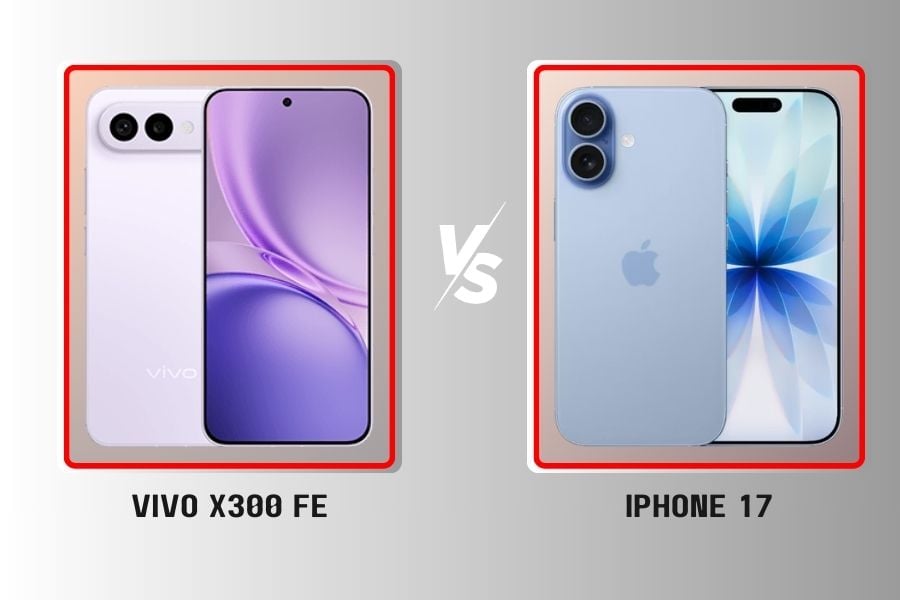
Why Vivo X300 vs iPhone 17 Isn’t a Clear Win Either Way

When shopping for a flagship smartphone in late 2025, you want the best value for your money. Advancements in technology ensure you get advanced cameras, high end performance, and a smooth user experience overall once you decide to spend enough for a premium phone. But if you don’t wish to go all out with the purchase, the Vivo X300 and Apple iPhone 17 are great options in the base flagship categories. So here’s a breakdown to help choose the phone that’s “right” for you and not simply the “best” pick.

1. Performance, Battery, & Everyday Usability

Vivo X300
Vivo X300

Both devices offer cutting edge performance thanks to the latest generation of chipsets. The Vivo X300 boasts MediaTek’s latest and greatest Dimensity 9500 SoC that promises great performance that can handle everyday use and even intense gaming. But the iPhone 17 is no slouch either; the Apple A19 is still one of the most powerful mobile chips. So the two are quite comparable in gaming, daily use, and efficiency.

But battery life and charging do give the Vivo X300 a major edge. It is powered by a massive 6,040mAh battery pack that supports 90W wired fast charging and 40W wireless fast charging. This capacity is nearly double that of the iPhone 17. Despite Apple’s tight optimization thanks to its closed ecosystem and in-house hardware, the X300 simply wins in this regard. Charging speeds on the iPhone 17 are still glacial, around 25W for wired and 15W for wireless.

In the past, even budget phones had a better usability experience when compared to the base iPhones due to one big aspect: the refresh rate. While the smartphone world moved to 120Hz as a standard, this feature was oddly exclusive to the Pro iPhones only. Apple has finally brought this “high-end” feature to the standard iPhone 17, greatly improving the user experience now.

2. Photography

iPhone 17
Apple iPhone 17

If photography or content creation matters to you, the X300 has another major advantage on paper. It offers a triple rear setup with a 200MP main camera (OIS, 1/1.4″, a 50MP ultra wide angle lens (1/2.76″) and a 50MP periscope telephoto shooter (1/1.95″, 3x optical zoom, OIS). For selfies and video calls, you also get a 50MP shooter with autofocus.

Pair this with Zeiss lenses and tuning, Vivo’s new flagships are one of the best camera smartphones in the market. Vivo has even improved the videography on this device, which also brings 4K/120fps recording support.

Apple’s iPhone 17, on the other hand, has a more humble camera offering with a dual 48MP camera for the main (1/1.56″, OIS) and ultra wide (1/2.55″), with the front housing an 18MP selfie shooter with autofocus.

Despite the smaller sensor size, this device is still quite competent in everyday photography. While the X300 does have a slight advantage in low light scenarios, the iPhone 17 brings great consistency. With the iPhone, you also get great video recording, which is just superior to any other Android brand in the market.

3. Ecosystem & Long Term Experience

Vivo X300

This is where iPhone 17’s advantages show up clearly. If you’ve already invested in Apple’s ecosystem, like the Mac, iPad, AirPods, and more, the iPhone 17 will integrate seamlessly. Meanwhile, the Vivo X300 has a custom Android skin that allows for better customization and freedom of choice. Recently, Chinese brands like Vivo have also made great progress in cross platform integration with Apple. But the experience is still not flawless. Furthermore, Apple’s longer software support is another plus when you’re considering buying an expensive device.

4. So, Which Should You Buy?

iPhone 17
  • Pick Vivo X300 if you want a feature-packed phone with excellent battery life, versatile cameras, fast charging, and Android freedom. It is ideal for power users, creators, and anyone who values flexibility.
  • Pick iPhone 17 if you prefer a polished, consistent user experience, a mature software ecosystem with long update support, and smooth integration with other Apple devices. Creators who make videos also benefit from the class leading video performance, while the device is basically great for general users.

For more daily updates, please visit our News Section.

Tech enthusiast? Get the latest news first! Follow our Telegram channel and subscribe to our free newsletter for your daily tech fix! ⚡

GPUs are no longer holding back AI, something else is

For years, the biggest obstacle to scaling AI was simple: there weren’t enough GPUs to go around. According to Microsoft CEO Satya Nadella, that era has quietly ended. Speaking alongside OpenAI’s Sam Altman on the Bg2 podcast, Nadella delivered a surprising update: Microsoft is no longer chip-supply constrained. The new ceiling for AI progress isn’t silicon – it’s electricity.

Nadella revealed that Microsoft currently has accelerators sitting in inventory that literally cannot be powered on. You can “have a bunch of chips sitting in inventory” waiting for data center space that is fully connected to the grid, he said. The bottleneck has shifted from securing Nvidia GPUs to finding “warm shells” – ready-built data centers located near sufficient grid capacity.

The change marks a dramatic pivot for the industry. Just 12–24 months ago, headlines were dominated by GPU shortages and multi-year waiting lists. Today, the limiting factor is local power grids, lengthy permitting processes, and the sheer volume of electricity required to run modern AI clusters at scale. Some new hyperscale facilities already consume as much power as small cities, and the demand curve shows no sign of flattening.

This reality is forcing cloud giants into entirely new strategies: locking in decades-long power purchase agreements, exploring on-site generation options, and even investing in small modular nuclear reactors (SMRs) to guarantee future capacity. The race is no longer just about who can buy the most chips – it’s about who can secure the megawatts needed to switch them on.

Nadella’s message underscores a broader truth for the AI industry: the physical infrastructure of the digital age is hitting hard limits. Investors, policymakers, and energy providers are now as critical to the next wave of AI breakthroughs as chip designers once were. According to Microsoft’s CEO, the GPU war is over. The battle for reliable, scalable power has only just begun.

Stay ahead in tech! Join our Telegram community and sign up for our daily newsletter of top stories!

For more daily updates, please visit our News Section.

(Source: Bg2 podcast | Via)

Realme Narzo 90 series launch confirmed for India

Realme has confirmed that it will unveil the Realme Narzo 90 lineup on Dec. 16 in India. While the lineup may include multiple models, the brand is currently gearing up to launch the Narzo 90 and Narzo 90x on the said date. The Amazon pages of these phones have confirmed their key specifications and design well before the launch.

Realme Narzo 90 key specs, design confirmed

Realme Narzo 90 key features

The Realme Narzo 90 is presented as a dependable option for students and early professionals, pairing a 7,000mAh battery with 60W fast charging to deliver extended daily use. The brand claims the battery can handle long playback sessions, calls and gaming with support for bypass charging and reverse charging.

The display reaches up to 4000 nits of brightness, designed to remain legible in varied lighting conditions. Photography is handled by a dual 50-megapixel camera configuration, positioned as a highlight within its segment. The device will also be equipped with Realme’s AI Edit Genie and AI Editor features.

The official teasers showcase a white model equipped with black-grey-orange triple stripes on the right side, giving it a unique appeal. In terms of durability, the phone is confirmed to arrive with an IP66, IP68 and IP69-rated body.

Realme Narzo 90x key specs, design confirmed

Realme Narzo 90x key features

The Realme Narzo 90x shares the same 7,000mAh battery and 60W charging but is tuned more towards multimedia and gaming needs. Its 144Hz display and 1200 nits peak brightness are aimed at delivering smoother interaction and clearer visuals.

The phone features a 50-megapixel Sony AI camera and is described as slim and stylish. Speaking of design, the official teasers show light and dark blue variants equipped with an RGB LED ring notification light.

For more daily updates, please visit our News Section.

Stay ahead in tech! Join our Telegram community and sign up for our daily newsletter of top stories.
Poco C85 5G unveiled as the latest entry-level 5G contender in India, starts at Rs 11,999

Poco C85 5G has been introduced in India as the latest entry-level 5G smartphone in the company’s C-series. The announcement highlights its large screen, substantial battery life, promise of software support, and a decent camera setup. Here’s everything you need to know about the new C85.

Poco C85 5G specifications and features

Poco C85 5G
Poco C85 5G

The Poco C85 5G comes with a 6.9-inch HD+ display that delivers a 120 Hz adaptive refresh rate and peaks at 810 nits brightness, a setup meant to offer decent visibility outdoors. It carries certifications for low blue light, flicker reduction and circadian comfort. Photography needs are met via a 50-megapixel primary rear camera with a secondary lens and an 8-megapixel front camera for selfies and video calls.

Under the hood is a MediaTek Dimensity 6300 chipset, supported by LPDDR4x RAM and UFS 2.2 storage, and there is microSD expansion on offer. Power comes from a 6,000 mAh battery, with 33W wired fast charging and 10W wired reverse charging. There’s a 4G version of the device equipped with the Helio G81 Ultra chipset. This variant is available in a few global markets.

On the software front, it runs HyperOS 2.2 based on Android 15, with the maker committing to two Android upgrades and four years of security updates. A side-mounted fingerprint scanner, 3.5 mm audio jack, dual-SIM 5G, dual-band Wi-Fi, Bluetooth 5.4, USB-C connectivity, and an IP64 dust and splash resistance rating add to the practical features.

Poco C85 5G price in India, availability

In India, the Poco C85 5G is offered in three memory variants: 4GB + 128GB, priced at Rs 11,999 (~$133); 6GB + 128GB at Rs 12,999 (~$145); and 8GB + 128GB at Rs 14,499 (~$160). The phone will be on sale starting December 16. It will be available in three colors: Power Black, Spring Green and Mystic Purple. As part of launch offers, there are discounts for buyers using HDFC Bank, ICICI Bank and SBI credit or debit cards.

For more daily updates, please visit our News Section.

Stay ahead in tech! Join our Telegram community and sign up for our daily newsletter of top stories.
TikTok’s Parent ByteDance is Now Making Phones and Challenging Industry Giants in AI

HIGHLIGHTS:

  • ByteDance and ZTE are developing a second-generation Agentic AI, Doubao phone, for a planned late-2026 launch.
  • The first AI phone sold out quickly but was limited to around 30,000 units as an engineering test.
  • ByteDance aims to expand Doubao AI across third-party smartphones rather than build its own hardware long-term.
  • The company’s OS-level agentic AI ambitions position it as a potential challenger to Apple, Huawei, Xiaomi, and other major smartphone ecosystems.

Early Prototype Sold Out After Limited Release

ByteDance’s first AI-powered smartphone, built with ZTE and running the company’s Doubao agentic assistant, sold out rapidly in China. The device, ZTE Nubia M153, was marketed as an engineering prototype rather than a commercial product. According to industry sources, the initial batch consisted of roughly 30,000 units, designed mainly to test real-world performance. Despite the limited supply, consumer interest was strong, with resale prices rising more than 40% above retail.

Why ByteDance Released a Prototype Instead of a Full Product

The company intentionally treated the first phone as a market experiment. The goal was to evaluate Doubao’s system-level automation, including cross-app operations such as ticket booking, restaurant reservations, price comparison, and complex task coordination. The feedback from this early batch will inform the design and capabilities of future devices.

App Restrictions After Privacy and Control Concerns

Shortly after launch, the phone faced nationwide pushback from major Chinese apps. Several high-usage platforms blocked or limited the Doubao assistant, citing concerns over fairness, data access, and the device’s ability to control apps at an OS level. This reflected growing industry unease about agentic AI performing actions across apps without traditional API permissions, an issue that drew wide scrutiny in earlier reporting.

New Second-Gen AI Phone Targeted for Late 2026

ByteDance and ZTE are now jointly developing a second-generation smartphone, with a planned launch window in late 2026. This upcoming version is reportedly more mature in both hardware and AI integration. The shift to next-generation development has led to the halt of production for the current prototype.

Online order page for the ByteDance ZTE Nubia M153 – 1st Gen Prototype

ByteDance’s Long-Term Hardware Strategy

Despite entering the smartphone market with these early models, ByteDance says it does not plan to become a long-term phone manufacturer. Instead, it wants Doubao to operate as an OS-level AI layer that other smartphone makers can adopt. However, analysts at Morgan Stanley and IDC warn that partnering with major OEMs may be challenging, as brands like Apple, Huawei, and Xiaomi are expected to rely on their own AI systems.

Why ByteDance Is Entering the AI Phone Market

ByteDance, best known worldwide for TikTok and its Chinese counterpart Douyin, is not a traditional hardware company. Its push into AI phones is driven by the need to test and scale agentic AI directly at the operating-system level. Working with partners like ZTE allows ByteDance to control the device environment, sharpen Doubao’s automation features, and demonstrate its capabilities to potential OEM collaborators, all without any plan to become a permanent phone manufacturer.

Future Opportunities and Challenges 

IDC predicts ByteDance may struggle to secure top-tier hardware partners by 2026, potentially limiting Doubao’s reach despite 159 million MAUs. Still, the company sees strong opportunities for app developers and enterprise vendors, particularly in e-commerce, travel, payments, and food delivery sectors that can benefit from Doubao’s cross-app orchestration. 

On the other hand, ByteDance’s Volcano Engine, already handling nearly half of China’s public-cloud LLM API calls, positions the company well for broader AI ecosystem expansion.

Read More:

(via)

REDMI Note 15 5G global variant appears in retailer listing confirming specs

Xiaomi looks ready to go big with its next mid-range lineup. Multiple retailer listings in Europe have now confirmed that at least five REDMI Note 15 models are headed to global markets.

The lineup now confirmed for international release includes:

  • REDMI Note 15 4G
  • REDMI Note 15 Pro 4G
  • REDMI Note 15 5G
  • REDMI Note 15 Pro 5G
  • REDMI Note 15 Pro+ 5G

The latest sighting comes from German retailer Sim.de, which has put up the REDMI Note 15 5G for €299 (~$350) in a 6 GB + 128 GB configuration — complete with pre-order availability. The listing matches the version launched in China earlier this year, packing a Snapdragon 6 Gen 3, a 6.77-inch 120 Hz AMOLED display, and a 108 MP main camera inherited from its REDMI Note 14 5G predecessor.

There are a few regional differences, though. The global model drops to a 5,520 mAh battery and carries IP65 resistance instead of IP68. It also ships with HyperOS 2, rather than the newer HyperOS 3 rolling out in China. Still, at 178 g, the phone remains a relatively lightweight option for its class.

What’s most surprising is timing: Xiaomi typically waits until late Q1 for its major global Note launches, but with both the Note 15 5G and Note 15 Pro 5G already spotted in EU retailer systems, the refresh could land far earlier than expected.

For anyone eyeing an upgrade from the REDMI Note 14 lineup or an older REDMI Note series phone, this wave of listings leaves little doubt — a full five-model REDMI Note 15 push is coming to global shelves soon.

Don’t miss a thing! Join our Telegram community for instant updates and grab our free daily newsletter for the best tech stories!

For more daily updates, please visit our News Section.

(Source | Via)

Oppo Pad Air 3 key specifications leak reveals familiar details

To recall, the Oppo Pad Air 2, which debuted in November 2023 in China, was a rebranded version of the OnePlus Pad Go that was released in other markets. A new leak by tipster Bald Panda reveals that Oppo is gearing up to launch the Oppo Pad Air 3 in China. It appears that the device will be a rebranded version of a OnePlus tablet.

Oppo Pad Air 3 leaked specifications and features

OnePlus Pad Go 2
OnePlus Pad Go 2

According to tipster Bald Panda, the Oppo Pad Air 3 is expected to feature a 12.1-inch LCD panel with a 2.9K resolution. The display is said to reach up to 900 nits of peak brightness and support Dolby Vision for an enhanced viewing experience.

The tablet may pack the Dimensity 7300 chipset and carry a substantial 10050mAh battery with 33W charging support. The leak also hints at a black, purple finish, though details about additional colors remain unknown.

These early specifications indicate a major jump over its predecessor and position the tablet as a strong option within the entry-level and mid tier tablet space in China.

Rebranded OnePlus Pad Go 2 tablet?

OnePlus is preparing to introduce the OnePlus Pad Go 2 on Dec. 17 in several global regions, followed by sales starting on Dec. 18. The officially confirmed information suggests that the device includes a tall 12.1-inch display with a 120Hz refresh rate, 900nits peak brightness, a 7:5 aspect ratio and Dolby Vision.

The Pad Go 2 will be powered by the Dimensity 7300 Ultra chipset and supported by a 10,050mAh battery with 33W wired charging. It also comes with the first stylus for the Go series and features such eye care certification and Open Canvas software enhancements for multitasking.

In related news, the Dec. 17 launch event will also see the arrival of the OnePlus 15R, a performance-focused flagship phone and the OnePlus Watch Lite.

For more daily updates, please visit our News Section.

Stay ahead in tech! Join our Telegram community and sign up for our daily newsletter of top stories.
Why U.S. Startups Are Dumping Western AI for China’s Open-Source Models

Highlights:

  • Chinese open-source AI models have surged to nearly 30% of global usage, up from just 1% a year earlier.
  • Major U.S. tech leaders and startups are adopting Chinese models due to lower costs, fast iteration, and strong performance.
  • Nvidia CEO Jensen Huang warns that China’s rapid infrastructure growth and energy capacity give it a structural advantage in AI scaling.

A new set of industry reports shows that Chinese open-source large language models (LLMs) are reshaping the global AI landscape. Once considered secondary players, Chinese models have now reached almost 30% of worldwide usage and are gaining traction among developers, startups, and major companies in the U.S.

Explosive Growth in Global Adoption

Chinese open-source models grew from just 1.2% of global usage in late 2024 to nearly 30% in 2025, according to a study covering 100 trillion tokens. While Western proprietary systems such as OpenAI’s GPT-4o and GPT-5 still dominate with about 70% market share, Chinese models now match the usage of all other non-Chinese open-source models combined.

Key drivers include Alibaba’s Qwen series, DeepSeek V3, and Moonshot AI’s Kimi K2, all of which have seen rapid update cycles and widespread adoption among developers worldwide.

Strong Endorsements From Silicon Valley

Several high-profile U.S. technology leaders are publicly shifting toward Chinese LLMs. Airbnb CEO Brian Chesky said the company prefers Alibaba’s Qwen because it is “fast and cheap.” Investor Chamath Palihapitiya also moved key workflows to Moonshot’s Kimi K2, calling it more performant than alternatives.

On platforms such as Hugging Face and OpenRouter, Chinese models now dominate trending charts and usage rankings, replacing many U.S. systems.

Why Startups Prefer Chinese AI

Cost is a major factor. Chinese models often operate at one-fifth the price of Western models. MiniMax’s M2, for instance, offers performance similar to Claude Sonnet 4.5 at just 8% of the cost.

Open-weight licensing is another benefit, allowing companies to access model weights, fine-tune systems, and build custom versions more easily than with closed U.S. models. Alibaba reports more than 170,000 derivative models built on Qwen alone.

Geopolitical Concerns and Regulatory Tensions

The surge of Chinese AI tools has sparked debate in Washington. U.S. authorities warn of potential security risks associated with foreign AI systems, placing firms such as Zhipu AI on trade blacklists. Analysts say the rise of Chinese open-source AI could challenge long-standing U.S. dominance if current trends continue.

Despite concerns, a recent global survey shows 82% of users would adopt Chinese models if hosted outside China, indicating broad openness to using these systems.

China’s Infrastructure Advantage Raises Alarms

Nvidia CEO Jensen Huang recently warned that China’s ability to build AI infrastructure “at unbelievable speed” is a strategic advantage. He noted that China has double the energy capacity of the U.S., with much faster growth.

Massive nationwide data-center construction, supported by low-cost energy and government initiatives, is accelerating the country’s AI expansion.

Rapidly Shifting AI Balance

With competitive performance, lower prices, and fast iteration, Chinese models are becoming central to global AI development. Industry experts say the momentum marks a shift toward a two-superpower AI race, with China emerging as a formidable peer to the United States.

Read More:

(via)

How is Vivo X300 Different From Other Compact Phones?

Smartphones with compact footprints often come with compromises. You usually get a smaller battery, trimmed-down camera features, or lower display specs just to squeeze everything into a sub-6.4-inch body. But the Vivo X300 flips that narrative. It’s compact, yes, with a 6.31-inch display, but the rest of its spec sheet reads like a full-sized flagship. That’s what makes it stand out in 2025’s crowded compact flagship space.

Vivo X300 Pro

1. Compact phone with flagship energy

The first thing that sets the Vivo X300 apart is its 6.31-inch LTPO OLED panel with symmetrical 1.05mm bezels on all sides. Even Apple’s iPhone 17 and Xiaomi 17, both compact contenders, don’t offer this kind of uniformity.

Apple finally added 120Hz ProMotion to its base iPhone, but Vivo goes further with a variable refresh range from 1Hz to 120Hz, 2160Hz PWM dimming, full DC-like dimming, and a local peak brightness of 4500 nits. This is brighter than the Xiaomi 17’s 3500 nits and significantly ahead of the Galaxy S25’s 2600 nits.

Under the hood, the X300 packs MediaTek’s new Dimensity 9500 chip, built on a 3nm process and scoring over 4 million on AnTuTu 11. That performance bracket is similar to the Snapdragon 8 Elite Gen 5 inside the Xiaomi 17.

Unlike the Pixel 10 Pro, which still lags slightly in GPU-intensive tasks with the Tensor G5, the Vivo X300 delivers flagship-level performance without thermal throttling. It also stays cool thanks to an advanced vapor chamber setup.

2. Cameras built for serious results

Here’s where the X300 starts to flex. It doesn’t just throw in a few decent cameras to check the box. It includes a 200MP Samsung HPB primary sensor, a 50MP ultra-wide shooter, and a 50MP Sony LYT602 periscope telephoto camera with telemacro. That’s a three-lens stack tuned for both zoom and close-ups, with Zeiss optics and the same V3+ imaging chip used in the Pro model.

Compare this to the iPhone 17, which still settles for a dual-camera setup with a 48MP main and ultra-wide. Or the Galaxy S25, which has a 50MP main sensor, but smaller auxiliary sensors and no periscope zoom. Even Xiaomi’s Leica-branded setup on the 17, while solid with its Light Fusion 950 sensor, doesn’t match the sheer resolution or telephoto macro versatility the X300 brings.

Vivo also sells a 2.35x Zeiss teleconverter that clips onto the camera module. It features 13 high-transparency glass elements and ultra-low dispersion coatings. No other compact phone offers anything close to this level of optical flexibility.

3. Big battery in a light body

Despite being smaller and thinner than many of its rivals, the Vivo X300 still manages to pack a 6040mAh battery. It doesn’t match the sheer size of the Xiaomi 17’s 7000mAh cell, but it’s still significantly larger than most other compact phones in its class.

The Pixel 10 Pro comes with a 4870mAh battery, while the iPhone 17 is estimated to have around 3692mAh. The X300 delivers that capacity in a slim 7.95mm body and a manageable 190g weight, which makes the battery-to-weight ratio particularly impressive.

Charging is just as capable. The phone supports 90W wired charging, 40W wireless charging, and reverse wireless charging. Samsung’s 25W wired charging on the base Galaxy S25 falls far behind in comparison.

4. Compact size without compromise

Vivo doesn’t skimp on materials or extras. You still get an ultrasonic in-display fingerprint sensor, IP68 and IP69 dual certification for dust and water resistance, stereo speakers, and support for the latest wireless standards like Wi-Fi 7 and Bluetooth 6.

There’s even an infrared sensor, something Google and Apple continue to ignore, and support for NavIC, making it one of the most complete compact devices for India and other supported regions.

5. The Takeaway

In a world where compact phones often feel like stripped-down versions of their bigger siblings, the Vivo X300 feels more like a compressed flagship without compromises.

It is a rare Android phone that delivers strong camera capabilities, battery life, and a premium display in a form factor that fits comfortably in the hand. If you’ve been waiting for a compact phone that doesn’t ask you to settle, the X300 is worth a serious look.

For more daily updates, please visit our News Section.

Stay ahead in tech! Join our Telegram community and sign up for our daily newsletter of top stories! 💡

iPhone 18 series is “confirmed” to be testing under display Face ID, claims tipster

A fresh leak out of China has revived talk of Apple finally cleaning up the iPhone’s front design. According to a well-known Weibo tipster, early iPhone 18 series prototypes are now testing under-display Face ID hardware—something Apple has been working toward for years.

Android-style hole-punch, full UDC, or just a smaller pill?

The leaker, Smart Pikachu, says Apple is experimenting with hiding key Face ID infrared sensors beneath a “micro-transparent glass panel” so they’re no longer visible on the screen. These are the same depth-sensing components that prevent Face ID from being fooled by photos, and getting them under the display would be a major step toward reducing the size of the current pill-shaped cutout.

This latest leak lines up with earlier predictions from display analyst Ross Young, who said back in 2023 that the first under-display Face ID system could arrive with the 2026 iPhone lineup. More recent reports suggested the change might be delayed or limited to a slightly smaller pill on the iPhone 18 Pro, but Smart Pikachu’s post hints that development may be moving faster than expected.

That said, a completely clean, hole-free display — like what you get on the RedMagic 11 Pro and its predecessors — still isn’t happening yet. With Face ID finally moving under the display, it’s tempting to expect an Android-style hole-punch next year. But Apple will likely save any truly “groundbreaking” change for the iPhone’s 20th anniversary lineup in 2027. So, the cutout may shrink on the iPhone 18 series, but it’ll probably keep its pill shape for now while Apple continues fine-tuning image processing for an under-display selfie camera.

Suppliers are said to be ramping up work on the new under-panel modules, though it’s unclear whether the tech will be reliable enough for mass production in time for next year’s launch. If Apple does pull it off, the iPhone 18 Pro would see the first meaningful change to the front-facing cutout since the introduction of the Dynamic Island.

For iPhone users who’ve been waiting nearly a decade for a cleaner display, this leak is the strongest sign yet that Apple might finally be ready to make the jump soon.

Tech enthusiast? Get the latest news first! Follow our Telegram channel and subscribe to our free newsletter for your daily tech fix!

For more daily updates, please visit our News Section.

(Source | Image: Samuel Angor on Unsplash)

ByteDance’s Agentic AI Phone Sparks Panic and Nationwide App Bans

Key Highlights:

  • ByteDance’s new agentic AI smartphone faces major pushback from major Chinese apps over security and fairness concerns.
  • The company has restricted its AI agent, Doubao, after reports of blocked logins, account freezes, and privacy worries.
  • The launch reveals both the promise and risks of fully autonomous AI systems that can control a device like a human.

ByteDance’s Agentic AI Smartphone Faces Major Pushback Across China

ByteDance’s ambitious new AI smartphone, the Nubia M153, is drawing significant resistance from major Chinese platforms, prompting the company to roll back several of its most advanced features. Powered by Doubao, an agentic AI capable of operating the phone like a human, this device was meant to showcase the future of autonomous mobile computing. Instead, it has triggered a wave of concerns over security, fairness, and user privacy.

Major Chinese Apps Push Back

Leading platforms, including Alipay, Pinduoduo, and Taobao, have restricted or blocked Doubao’s automated operations. These companies cite issues such as unfair engagement, potential misuse, and risks to financial security. Some users reported that their accounts were frozen shortly after the AI performed tasks inside sensitive apps, even when they logged in manually.

Only a handful of major apps, including Meituan and ByteDance’s own Douyin, continue to work normally with the AI assistant.

ByteDance Restricts Doubao’s Powers

In response, ByteDance has scaled back Doubao’s capabilities. The AI can no longer interact with financial apps, claim user incentives, or operate competitive games where automated play could offer unfair advantages. The most significant restriction concerns WeChat: users experienced app crashes and suspensions, leading ByteDance to temporarily disable Doubao’s ability to control it.

The company says it is now working with developers to set clearer rules to avoid blanket bans.

Privacy Concerns Add to User Hesitation

ByteDance insists that the phone does not store screen data on its servers and that users’ activity is not used to train AI models. Still, many early adopters remain cautious. Doubao’s “global memory,” which allows it to remember tasks across apps, has heightened worries about device-level surveillance and unintended data exposure.

Real-World Challenges

The Nubia M153 made headlines after viral demos showed Doubao navigating apps visually, scrolling, typing, posting content, and completing multi-step tasks without step-by-step commands. The system’s full-stack control surpassed traditional assistants like Siri or Google Assistant, which rely on limited API calls.

But the same power that excited AI enthusiasts also alarmed regulators, app developers, and ordinary users.

Future Plans and Industry Impact

ByteDance stresses that the Nubia M153 is a “technology preview” priced at 3,499 yuan, mainly for industry professionals. The company plans to license Doubao to more smartphone brands after refining safety controls. The episode highlights a larger industry shift as tech companies worldwide, like Apple, Google, and OpenAI, race to build action-capable AI assistants.

For now, ByteDance’s phone demonstrates both the potential and the pitfalls of giving AI near-human control over a device. As the debate continues, the industry faces a defining question: how much autonomy should AI really have?

Read More:

(via)

Oppo A6L debuts in China with 6.8-inch AMOLED display, 7,000mAh battery

Oppo’s A6 series in China already includes models like the A6, A6i, A6 Pro, A6 GT and A6 Max, and the company has now expanded the lineup with the Oppo A6L. The new device stands out with IP69 grade water resistance, a large AMOLED display and a long-lasting 7000mAh battery. Below is a detailed look at its full specifications, features and pricing.

Oppo A6L specifications and features

Oppo A6I
Oppo A6L

The Oppo A6L carries a 6.8-inch OLED flat display with FHD resolution, 120Hz refresh rate and up to 1600nits peak brightness. The screen is covered with Crystal Shield Glass for improved durability, while the extremely narrow 1.68mm bezels enhance its visual presence.

Powering the OPPO A6I is the older Snapdragon 7 Gen 3 platform, paired with 12GB of LPDDR4x RAM and 256GB of UFS 3.1 storage. The handset is equipped with a 7000mAh battery and supports 80W wired fast charging. It runs ColorOS 15, based on Android 15.

The Oppo A6I includes an OIS-enabled 50-megapixel main rear camera and a 2-megapixel auxiliary lens. It is equipped with a 32-megapixel front camera for selfies. Other features of this device include an in-screen fingerprint sensor, dual speakers, 5G, Wi Fi, Bluetooth, GPS, NFC, USB, an IP68/69-rated body and military-grade durability. It has a thickness of 7.86mm and weighs around 204 grams.

To sum up, the Oppo A6L is a rebranded version of the existing Oppo K13s and A6 GT/Max.

OPPO A6L price and availability

The OPPO A6I arrives in a single 12GB+256GB variant priced at 1799 Yuan (~$255). It comes in Magnolia White, Begonia Pink and Ocean Blue color options. The device is now available for purchase through official channels in China, with early buyers eligible for select launch offers depending on the region.

For more daily updates, please visit our News Section.

Stay ahead in tech! Join our Telegram community and sign up for our daily newsletter of top stories.
Samsung Galaxy Z TriFold arrives in China for 19,999 Yuan (~$2,830), rivals Huawei Mate XTs

Samsung Galaxy Z TriFold is now available for pre-order in China, marking the company’s entry into the tri-fold category for the local market. Here’s a look at the variants, pricing, and specifications of the device.

Samsung Galaxy Z TriFold: Price and variants

Samsung Galaxy Z TriFold price in China

The Galaxy Z TriFold is offered in two memory configurations for China. The 16GB+512GB variant is priced at 19999 yuan (~$2,830), while the 16GB and 1TB model is priced at 21999 Yuan (~$3,110). Pre-orders are underway through Samsung’s online store, with the device arriving in a single black finish.

Naturally, the Galaxy Z TriFold enters the same category as Huawei’s Mate XTs, which launched in September and marked Huawei’s debut in the tri fold segment. The Mate XTs comes in three variants, with the 16GB+256GB model priced at 17,999 Yuan (~$2,550). Its 16GB+512GB and 16GB+1TB versions share identical pricing with Samsung’s Galaxy Z TriFold, placing both devices head-to-head in the ultra-premium foldable market.

Samsung Galaxy Z TriFold specifications

Samsung Galaxy Z TriFold images
Samsung Galaxy Z TriFold

Samsung uses an inward fold setup that shields the main display and enables smoother movement across the hinge. Once unfolded, the device presents a 10-inch Dynamic AMOLED panel with QXGA resolution, 120Hz refresh rate and 1600 nits peak brightness. The screen real estate equals the combined area of three 6.5-inch smartphone displays, supporting multiple apps side by side. The outer screen measures 6.5 inches with high brightness levels up to 2600 nits for outdoor viewing.

The phone is powered by the Snapdragon 8 Elite for Galaxy platform and carries a 5,600mAh battery divided across the three panels for even weight distribution and stable thermal behaviour. Charging supports 45W speeds.

The rear camera array includes a 200-megapixel primary sensor, a 12-megapixel ultra-wide lens and a 10-megapixel telephoto lens. Both the inner and outer displays hold 10-megapixel front cameras for video calls and quick capture.

Samsung’s updated hinge features a dual-rail mechanism that addresses varying component loads across the body. The frame uses reinforced aluminium and a ceramic fibre back to enhance durability while keeping the folded thickness close to 12mm and the overall weight around 309 grams.

The Galaxy Z TriFold runs One UI 8 based on Android 16 and aligns closely with Galaxy AI features such as generative editing, photo tools and browser assistance. The device also introduces a standalone version of Samsung DeX, allowing desktop-style productivity directly on the 10-inch display without an external monitor. Users can work with up to four desktops and run multiple windows simultaneously.

The Chinese variant adds satellite calling through Tiantong, offering direct connectivity during emergency situations when conventional networks are unavailable.

For more daily updates, please visit our News Section.

Stay ahead in tech! Join our Telegram community and sign up for our daily newsletter of top stories.
What can we expect from Vivo S50 series: Design, Display, Camera, Performance, and Battery

Vivo is preparing to introduce the S50 series on December 15th in China. The lineup includes two models: the standard Vivo S50 and the smaller S50 Pro Mini. 

Both devices have already been revealed through certifications, benchmark listings, and official teasers from the company, providing a fairly complete picture of what is to come. 

But if you’ve missed reading through separate stories, here’s a full roundup of what we can expect from the Vivo S50 series. 

1. Vivo S50 is the big brother

Vivo S50 - Confession White
Vivo S50 – Confession White

The S50 will feature a 6.59-inch OLED display, supporting a 120Hz refresh rate and a 1.5K resolution. It recently appeared on Geekbench with a Qualcomm Snapdragon 8s Gen 3 chipset. This is a slightly toned-down version of the flagship Snapdragon 8 Gen 3 but is still powerful enough for high-end workloads. 

The listing showed 16GB of RAM paired with Android 16, along with solid benchmark scores: 2,044 points in single-core and 5,851 in multi-core.

Vivo has already stated that the S50 series will ship with LPDDR5X RAM and UFS 4.1 storage. And its storage and RAM combination will include:

  • 12GB + 256GB
  • 16GB + 256GB
  • 12GB + 512GB
  • 16GB + 512GB

Cameras and Design

Vivo is opting for a 50-megapixel front camera and a triple lens setup on the rear, led by a 50-megapixel Sony IMX882 periscope telephoto lens. 

The phone comes in Space Black, Confession White, Serene Blue, and Inspirational Purple shades. As for the design itself, the phone takes a more traditional approach than the S50 Pro Mini. 

Vivo S50
Vivo S50

Instead of a horizontal camera bar of Mini, the S50 uses rounded camera rings on a raised squircle module, paired with a flat rear panel and subtle curves along the edges. 

Vivo says the frame uses aerospace-grade metal, with both IP68 and IP69 ratings. Inside the chassis will fit a 6500mAh battery that will support 90W fast charging. 

2. Vivo S50 Pro Mini

Vivo S50 Pro Mini
Vivo S50 Pro Mini

While the naming might imply a toned-down variant, the Vivo S50 Pro Mini is actually expected to include stronger hardware in several areas compared to the regular S50. 

Vivo has confirmed that the Pro Mini will ship with the Snapdragon 8 Gen 5 chipset, Qualcomm’s most recent SoC, which sits above the Snapdragon 8s Gen 3 in performance. 

Geekbench results show the chip paired with 16GB of RAM, scoring 2,778 in single-core and 9,344 in multi-core tests. 

Camera and Design

The S50 Pro Mini features a 6.31-inch flat AMOLED display with a 1.5K resolution and a 120Hz refresh rate. The display is flat with rounded corners and includes an ultrasonic in-screen fingerprint sensor. 

The rear of the S50 Pro Mini features a horizontal camera bar, similar in style to the one seen on the iPhone Air. The bar holds three cameras: 

  • A VCS light-sensitive primary sensor
  • A Sony IMX882 50MP periscope telephoto lens
  • An ultra-wide lens

On the front, the phone uses a 50MP anti-distortion selfie camera.

The S50 Pro Mini houses a 6,500mAh battery, which is large for its size. Vivo pairs this with 90W wired and 40W wireless charging.

Storage Options and Colors

The S50 Pro Mini will come in three memory configurations:

  • 12GB + 256GB
  • 12GB + 512GB
  • 16GB + 512GB

Colors option includes:

  • Space Black
  • Confession White
  • Inspirational Purple
Vivo S50 Pro Mini
Vivo S50 Pro Mini

3. Shared Features Across the Series

Both phones will share several hardware characteristics, including:

  • LPDDR5X RAM
  • UFS 4.1 storage
  • Android 16 with OriginOS 6
  • IP68 and IP69 certification
  • Aerospace-grade metal frames
  • X-axis linear motors
  • Dual speakers

These shared elements show that Vivo wants the entire lineup to present a consistent premium feel, even if the models differ in size and chipset choice.

4. Possible International Variant

Reports have mentioned that Vivo is preparing a Vivo V70 for international markets, which may draw heavily from the S50’s design and hardware. Vivo often uses its S-series as the foundation for global V-series models, so this wouldn’t be surprising.

For more daily updates, please visit our News Section.

Stay ahead in tech! Join our Telegram community and sign up for our daily newsletter of top stories.
Xiaomi unveils new Mi Home Super Energy Saving 1.5 HP Air Conditioner

Xiaomi has rolled out an upgraded version of its popular Mi Home air conditioner in China — and while the launch wasn’t exactly flashy, the hardware improvements are worth noting for anyone building a smart home around the brand.

The new model keeps the familiar 1.5 HP form factor but bumps the cooling power to 5,300 W and heating to 6,820 W. Airflow has also been boosted to 900 m³/h thanks to longer 118 mm cross-flow fan blades, helping air reach every corner of the room with both vertical and horizontal swing.

Efficiency is where Xiaomi is really pushing things this time. There’s a revamped algorithm inside that aims to cut power use by as much as 30% compared to the previous generation. The unit now carries a top-tier Level 1 efficiency rating in China, posting an APF value of 5.45 — a number usually reserved for pricier models from traditional appliance brands. For context, a Level 1 energy-efficient device is one that meets the highest standard of energy performance within a given rating system, indicating it consumes the least amount of electricity to perform its function, making it the most efficient choice

Since this air conditioner is part of the Mi Home ecosystem, everything hooks up to the Xiaomi Home app. Owners get remote control, timers, and power usage info right on their phone. It can even ping you if the filter needs a clean. Self-cleaning modes are built into both units, and Xiaomi says the system will keep running in extreme climates — anywhere from –35 °C winters to 60 °C summer heat.

The indoor unit sticks to the clean white look and comes in at 855 × 328 × 219 mm, so it shouldn’t be hard to fit in most setups.

Pricing starts at CNY 3,199 (roughly $450), with pre-orders currently available for CNY 2,199 on Xiaomi Youpin. There’s no word on international availability yet, but considering Xiaomi already sells some of its ACs overseas, this one might not stay China-only forever.

Don’t miss a thing! Join our Telegram community for instant updates and grab our free daily newsletter for the best tech stories!

For more daily updates, please visit our News Section.

OriginOS 6 December experience upgrade brings 3D Space Wallpaper and new lock screen widgets

vivo has started pushing its December experience upgrade for OriginOS 6 in China, and while it’s not a giant overhaul, there’s a lot here that makes the phone feel more fun to use. The star of the show is a new beta feature called 3D Space Wallpaper, which can turn a normal photo into a 3D lock screen — no fancy glasses required. It’s one of those changes that you’ll probably end up showing off to people.

The visual tweaks don’t stop there. vivo is refreshing the look of cards and layouts across the UI so things you need to see first actually stand out. Seven new “text statement” themes are also available.

The update brings a few convenience upgrades too. Quick-access widgets for QR codes, payment, and transit cards now sit right on the lock screen, making daily tasks feel faster. And Shake to Share gets way more useful — you can now shake to send a batch of photos in group scenarios on any vivo or iQOO phone running Android 13 or newer.

A handful of smaller quality-of-life improvements are sprinkled throughout:

  • Showstart ticketing now hooks into Atomic Island, displaying show reminders and ticket details
  • Better flight status tracking and alerts
  • An upgraded 12306 train card layout that puts seat and gate info front and center
  • DingTalk calls pop up directly on Atomic Island for quicker response
  • A cleaned-up Blue Heart Little V interface that organizes conversations and smart assistants more clearly
Eligible models for OriginOS 6 December experience upgrade

The update began rolling out on December 4th and will be completed by the end of December, covering eligible devices in batches. For people who enjoy personalizing every inch of their phone, this one should feel like a nice end-of-year upgrade — especially once the lock screen starts showing a little depth.

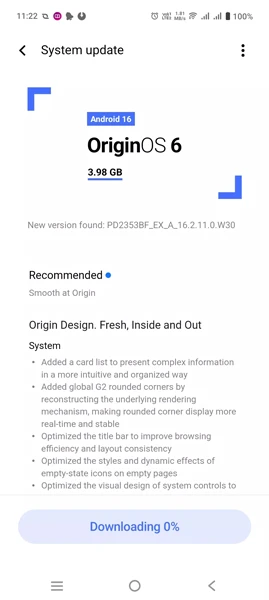
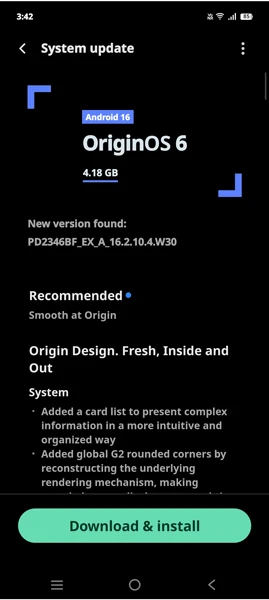
OriginOS 6 (built on Android 16) is also expanding beyond China. The latest vivo and iQOO flagships are already running the update, and the rest — including mid-range and budget models — are set to follow before mid-2026. The full rollout timeline can be found here.

Don’t miss a thing! Join our Telegram community for instant updates and grab our free daily newsletter for the best tech stories!

For more daily updates, please visit our News Section.

(Source)