Advertisement

New Samsung Bespoke AirDresser brings two-way AirWash and two-stream heating-free steam refresh 

Samsung has revealed an updated version of its Bespoke AirDresser, a home appliance that refreshes clothes using directed air and chemical-free steam. The announcement came from Samsung India’s digital appliances leadership, highlighting improved hygiene modes and gentle crease reduction, built to fit busy routines and sensitive fabrics.

Bespoke AirDresser key highlights

Samsung Airdresser
Samsung Airdresser

The new AirDresser refreshes garments without putting them through full washing cycles. Its Dual AirWash system sends targeted airflows from two sides, clearing fine dust and neutralizing almost all everyday smells from fabrics. The Dual JetSteam setup releases high-temperature steam streams from two directions, disinfecting clothes while reducing crumples naturally.

The hangers are engineered to move air inside and outside the clothing, improving the depth of cleaning and smoothing results without aggressive heat exposure or detergents. A dedicated long-dress section allows extra space for coats, robes, long gowns, and layered traditional outfits.

The device also syncs with the SmartThings app, enabling care suggestions and reminders for routine filter and tank maintenance. It focuses on preserving fragile clothing, including silk sarees, chiffon layers, wool blends such as cashmere or merino, and formal jackets used often in professional wardrobes.

Bespoke AirDresser price and availability

The appliance is available in select Samsung offline retail locations: the brand hub in BKC, Mumbai and the Samsung storefront at Opera House in Bengaluru. It can also be ordered on Samsung Shop app. The standard retail cost is Rs 1,56,990, while early launch pricing temporarily drops to Rs 1,30,490.

For more daily updates, please visit our News Section.

Stay ahead in tech! Join our Telegram community and sign up for our daily newsletter of top stories.

HKC just dropped a 27-inch pro-grade curved gaming monitor for under $200

HKC has launched the SG27QEC, a new 27-inch curved gaming monitor priced at 1,399 yuan ($198) in China. The monitor features a 2K resolution, a 300Hz refresh rate, and a 1500R curvature aimed at gamers seeking smooth performance and immersive visuals.

HKC SG27QEC curved gaming monitor

HKC SG27QEC Specifications

The SG27QEC uses a 2560×1440 HVA panel with a 16:9 aspect ratio. It supports a 1ms GTG response time and a 300Hz refresh rate to reduce motion blur and latency during fast gameplay. The 1500R curved screen provides a wide field of view and keeps viewing distance consistent across the display, which improves comfort and immersion.

The monitor covers 95% of the DCI-P3 color gamut and 107% of the sRGB range. It delivers a 5000:1 static contrast ratio and has DisplayHDR 400 certification, which allows it to display deeper blacks and more dynamic highlights in supported content. The curved panel includes DIC motion blur reduction technology to minimize ghosting in fast-moving scenes.

HKC SG27QEC curved gaming monitor

HKC supports both AMD FreeSync and Nvidia G-Sync on this model. These adaptive sync technologies help prevent screen tearing and reduce stuttering when connected to compatible GPUs. The SG27QEC also includes features such as Optix sniper mode and an on-screen crosshair for gamers who want additional tools during competitive play.

In terms of connectivity, the monitor offers two HDMI 2.1 ports and one DisplayPort 1.4, and an audio output jack, making it compatible with PCs, gaming consoles, and other high-bandwidth devices. The monitor supports a 100×100mm VESA mount and has an adjustable stand with a height range from 418.8mm to 538.8mm. It weighs 4.5kg.

In related news, Xiaomi recently introduced the A27Qi 2026 monitor with 95 percent DCI-P3 color coverage, a 120Hz refresh rate, and slim bezels. Gigabyte also launched the GO27Q24, a 27-inch QD-OLED gaming monitor that features a QHD resolution and a 240Hz refresh rate.

For more daily updates, please visit our News Section.

Stay ahead in tech! Join our Telegram community and sign up for our daily newsletter of top stories! 💡
(Source)

Reviving a classic: NBD P100 compact camera channels Sony Cyber-shot nostalgia with a modern twist

If you ever owned one of those old Sony Cyber-shot compacts with the sliding front cover, you probably remember the oddly satisfying sound it made as the lens popped out. That tiny mechanical flourish made those cameras feel more alive than today’s flat, slab-like gadgets. Now, a newcomer called NBD is trying to tap straight into that nostalgia with its new P100 — a tiny digital camera that mixes retro mechanics with just enough modern tech to feel relevant again.

The first thing you notice is the familiar sliding panel. Instead of a power button, the whole front plate drops down in one smooth motion, revealing the lens. It’s a clever workaround that keeps the optics protected in your pocket while giving you that old-school “ready to shoot” moment. It’s the kind of small, tactile detail smartphone cameras can’t really replicate.

Inside, the P100 isn’t pretending to be a full-on Sony replacement from the 2000s, but it does try to modernize the formula. NBD has fitted it with a 64-megapixel sensor — and it can shoot 4K video at 30fps. The lens is fixed with a f/1.8 aperture, which should help with low-light snaps and those soft-background portrait shots. The trade-off? No optical zoom. Unlike older Cyber-shots with 5x zoom lenses, the P100 sticks to digital zoom to stay pocket-friendly.

For creative types, there are 18 built-in filters and a handful of shooting modes for sports, portraits, and nighttime scenes. On the back, there’s a small display along with a selfie camera, which gives it a bit of modern, creator-friendly flexibility. Storage is handled by a microSD card, and the camera charges via USB-C. Plug the same cable into your laptop, and it doubles as a webcam — handy if you want better quality for your video calls.

Pricing and availability:

The P100 is currently live on Kickstarter, where early backers can grab it for around $90 before shipping and taxes. Deliveries are supposed to start in January, though — as always with crowdfunding — delays and quality issues are possible, so it’s good to stay realistic.

Still, for anyone who misses the charm of a dedicated compact camera, the P100 scratches an itch. It’s not a perfect revival, but it captures just enough of that slide-to-shoot magic to remind you why small cameras like this were so fun in the first place.

Don’t miss a thing! Join our Telegram community for instant updates and grab our free daily newsletter for the best tech stories!

For more daily updates, please visit our News Section.

(Source)

Honor Watch X5 debuts with a 1.97″ AMOLED display, GPS, IP68 rating & 120 sports modes

Honor has launched the Watch X5 in China as part of its expanding smartwatch lineup. The new wearable debuted alongside the Honor 500 smartphone series yesterday and is priced at 449 yuan (around $63). It comes in two colors: Moonlight White and Phantom Black.

Honor Watch X5

Honor Watch X5 Specifications

The Watch X5 features a 1.97-inch AMOLED display with a resolution of 390×450 pixels and a 302 PPI density. The bezels measure just 1.8mm, resulting in an 82 percent screen-to-body ratio. The display supports a 60Hz refresh rate, Always-On Display mode, and lift-to-wake functionality. It uses 2.5D curved glass for added durability and a premium look.

Honor Watch X5

The smartwatch has a 45.68mm by 40.2mm body with a thickness of 9.99mm at its slimmest point. It weighs about 29 grams without the strap. The case uses an aluminum alloy front and a PC+ABS rear shell. It ships with liquid silicone straps that support quick-release replacement. Honor includes a stainless steel rotating crown for intuitive navigation.

Honor equips the Watch X5 with a range of sensors, including a barometer, compass, gyroscope, geomagnetic sensor, PPG heart-rate sensor, and accelerometer. The device supports over 120 sports modes and includes features like route recording, professional stretching guidance, and voice-based exercise feedback. It supports both 5ATM and IP68 ratings for water and dust resistance, making it suitable for swimming, running, and general fitness activities.

Honor Watch X5

The Watch X5 integrates a five-system GNSS module with support for BeiDou, GPS, GLONASS, GALILEO, and QZSS to deliver more reliable outdoor positioning. It uses Bluetooth 5.3 for stable connections and calling, and includes NFC for door access and offline payments.

Health features include 24-hour heart-rate monitoring, SpO2 tracking, sleep and stress analysis, and one-tap health measurements. Female health tracking is also available. All data syncs with the Honor Health app for analysis and long-term trends.

Honor Watch X5

The device supports Android 9.0 and iOS 13.0 or later and charges via a pogo-pin magnetic interface. It offers a 14-day battery life with standard usage and about five days with Always-On Display turned on. The Watch X5 also includes remote camera control, music playback features, SOS emergency alerts, and mini games.

For more daily updates, please visit our News Section.

Stay ahead in tech! Join our Telegram community and sign up for our daily newsletter of top stories! 💡
Huawei launches a 100W GaN charger with a Type-A/Type-C combo port and foldable plug

Huawei has a new accessory for power users in China. The company has launched a new all-in-one fast charger with up to 100W of output and multiple charging ports in a single compact brick. Let’s dive in.

Huawei Multi-Port All-in-One Charger (100W Max) Overview

What makes this charger interesting is a small design trick you don’t usually see on compact power adapters. Huawei has built in a “fusion port” on the upper section, which can accept both a Type-A or a Type-C cable, depending on what you plug in. 

Below that sits a standard Type-C port, meaning you can charge two devices at the same time in A+C or C+C combo. The power splits dynamically, as expected.

When only one device is plugged in, the charger can deliver its maximum 100W output. Huawei says that’s enough to juice a Pura 70 Pro to 40 percent in just 10 minutes. 

When two devices are connected, the charger intelligently adjusts power between them. Depending on the device combination, output can shift between 88W/18W, 66W/40W, 40W/66W, or 18W/88W. 

As expected, Huawei is positioning this as a universal travel charger too. It supports the company’s own SuperCharge protocol, but it also works with UFCS, PD, PPS, and Qualcomm Quick Charge standards. So if you’re carrying Apple, Samsung, Xiaomi, or gaming phones—or even tablets, laptops, earbuds, or smartwatches—the charger should be able to power them without much fuss. 

Inside, Huawei is using gallium nitride (GaN) and layered graphite cooling to keep temperatures in check, while the foldable plug helps reduce bulk in your backpack.

Huawei is also bundling a 1.8-meter, 7A USB-C braided cable in the box. The company claims it has 70 percent more softness compared to traditional braided cables and is designed to resist tearing.

It’s priced at 299 yuan (around $41); however, global availability remains uncertain.

For more daily updates, please visit our News Section.

Stay ahead in tech! Join our Telegram community and sign up for our daily newsletter of top stories! 💡
OnePlus Nord 4 Gets Stable OxygenOS 16 Update: Key Upgrades You Need to Know

A little over a month after announcing OxygenOS 16, OnePlus has started rolling it out to mid-range Nord devices. The Nord 4 is now getting the update globally, beginning with India under version CPH2661_16.0.1.301(EX01). The rollout will continue in batches for other regions.

OnePlus Nord 4 OxygenOS 16

The update brings major changes to animations and system interaction. Parallel Processing improves fluidity across system apps, Home screen icons, widgets, folders, text selection, Quick Settings, and button navigation. Charging, fingerprint effects, and scrolling also get smoother motion powered by the Luminous Rendering Engine.

Performance improvements come from the updated Trinity Engine. It now adjusts resources automatically for gaming, videos, and long camera use, helps keep games steady, speeds up app launches, loads photo albums and cached thumbnails faster, and adds tiered performance controls in power saving mode.

AI features get a large upgrade.
Mind Space adds quick saving through Plus to Mind Space, landscape support, and a Mind Assistant that searches stored content.
Photos gets a refreshed design, new video editing tools (split, merge, speed, transitions, music), automatic straightening, motion photo collages, instant slow-motion, and AI Portrait Glow for better lighting in portraits.
Notes adds block editing, side-by-side image viewing, full note sharing via links, text highlighting, and new formatting tools.
Recorder gets AI noise reduction, automatic detection of meetings and lectures, and link sharing for audio, transcripts, and summaries.
AI Writer can now help create posts, summaries, and personal writing across apps.

The interface is redesigned with updated light field visuals, improved particle and glow effects, real-time weather animations, the new One Serif font, and refreshed designs for Clock, Calculator, Compass, and system pages.

The Flux Home screen adds new icon styles, cleaner layouts without text under icons, improved folder options, better Drawer organization, faster search, adaptive icon colors, Dark mode icon styles, and customizable widget names and Lock screen shortcuts.

Connectivity improves with Touch to Share, cross-device clipboard, phone-to-PC mirroring through OnePlus Connect, better in-car Bluetooth pairing, and a new My Devices panel with widgets. Network upgrades include AI LinkBoost alerts, detailed speed tests, Wi-Fi sharing with tablets, and better weak-signal handling.

Other upgrades include an AI document scanner, improved Game Assistant recording, cleaner notifications, more Quick Settings customization, earbuds-only ringtone playback, faster iOS data migration, quicker virus scans, and easier app locking or hiding.

For more daily updates, please visit our News Section.

Tech enthusiast? Get the latest news first! Follow our Telegram channel and subscribe to our free newsletter for your daily tech fix!

(Source)

Huawei FreeBuds Pro 5 TWS Released in China with NearLink Tech & Premium Features

Huawei has just released a new premium truly wireless earbuds to rival Apple’s AirPods Pro 3. The FreeBuds Pro 5 brings new lossless audio tech, improved ANC, high end audio drivers, and much more for around $200, so here are all the details.

Huawei FreeBuds Pro 5: What makes it special?

The Chinese tech giant unveiled the FreeBuds Pro 5 in its home market. Huawei promises premium audio with twin audio drivers per earbud. Coupled with this, the FreeBuds Pro 5 comes with NearLink technology, which offers lossless audio streaming at up to 4.6Mbps. You also get access to AAC, SBC, LDAC, and L2HC audio codecs as well. The brand claims that the ANC (Active Noise Cancellation) performance has seen a 3x upgrade thanks to new microphones and the custom Kirin A3 chipset.

Huawei FreeBuds Pro 5 TWS

The FreeBuds Pro 5 features an in-ear design with a stem, while the charging case has a pebble shaped body. On a single full charge, the brand’s flagship TWS earbuds offer up to 33 hours of battery life, with the earbuds alone promising 5 hours of audio playback with ANC enabled. These hearables also get an IP67 rating for water and dust resistance.

Huawei has officially announced the FreeBuds Pro 5 in China for 1,449 Yuan (roughly around 204 US Dollars). The brand released the earbuds in four color options. This includes White, Gray, Gold, and Blue variants. In related news, the company just unveiled the Mate 80 Pro Max, Mate 80 Pro, Mate 80, and Mate X7 foldable. Alongside these flagship grade smartphones, the brand also launched the MatePad Edge.

For more daily updates, please visit our News Section.

Tech enthusiast? Get the latest news first! Follow our Telegram channel and subscribe to our free newsletter for your daily tech fix! ⚡

Huawei MatePad Edge launched with 14.2″ OLED, Kirin X90, 140W charging & desktop-grade cooling

Huawei has officially launched the MatePad Edge, a high-performance 2-in-1 HarmonyOS tablet aimed at productivity users and creators. The tablet launches alongside the Mate X7 foldable and Mate 80 series smartphones.

Huawei MatePad Edge

Huawei MatePad Edge Specifications

The MatePad Edge uses a 14.2-inch flexible OLED display that delivers a sharp 3.1K resolution at 3120 x 2080 and a smooth 120Hz refresh rate. It reaches a 94% screen-to-body ratio with slim 4.1mm bezels and avoids any notch by relying on an ultra-narrow border packaging process for its 32MP front camera.

The panel supports HDR Vivid, peaks at 1000 nits, and maintains professional ∆E<1 color accuracy with full P3 gamut coverage. The tablet also comes in a soft light version, which adds an anti-glare treatment for better comfort in bright environments.

Huawei MatePad Edge

Under the hood, the MatePad Edge is powered by Huawei’s Kirin X90 or X90A chipset, the same processor category used in its desktop HarmonyOS PCs. Huawei claims a 3.8x performance boost compared to the MatePad Pro 13.2 from 2023. It runs HarmonyOS 5.1 and supports dual-mode operation with seamless transitions between tablet and desktop UI, four-finger gestures, control center switching, and keyboard shortcuts.

The rear camera setup consists of a 50MP main sensor with an f/1.8 aperture and an 8MP ultra-wide macro lens at f/2.2. The main camera supports 8K photo capture and up to 4K video recording. The front camera is a 32MP ultra-wide sensor capable of 1080p video capture, making it well-suited for video conferencing and creative self-recording.

Huawei MatePad Edge

The MatePad Edge includes a 12900mAh battery and supports 140W Huawei SuperCharge, allowing fast charging and 40W reverse charging for other devices. It is paired with a custom cooling solution comprising dual aluminum fans, VC heat dissipation modules, micro-etched airflow channels, and nearly 4000 drilled vents. The liquid cooling edition further includes graphene sheets and a dual-core micro pump for up to 28W thermal capacity.

The tablet features a six-speaker stereo system with near-ear spatial audio and a panoramic surround mode when paired with Huawei FreeClip earbuds.

For connectivity, the tablet supports dual-band Wi-Fi on 2.4GHz and 5GHz, Bluetooth 5.2, USB-C 3.1 Gen1 with DP1.2 video output, OTG, and Huawei’s new NearLink standard. It includes a gyroscope, gravity sensor, Hall sensor, ambient light sensor, and an integrated fingerprint scanner for secure access.

Huawei MatePad Edge

Pricing & Availability

The Huawei MatePad Edge is available in Deep Space Gray and Moonlight Silver. Select models include a floating magnetic keyboard in the box, and the tablet also supports the optional M-Pencil Pro stylus.

  • Wi-Fi 16GB + 256GB: 5999 yuan ($840)
  • Wi-Fi 16GB + 512GB: 6499 yuan ($910)
  • Wi-Fi 16GB + 512GB Soft-Light Display: 7299 yuan ($1020)
  • Wi-Fi 24GB + 1TB: 7999 yuan ($1120)
  • Wi-Fi 24GB + 1TB Soft-Light Display (with keyboard): 9999 yuan ($1400)
  • Wi-Fi 32GB + 2TB Soft-Light Display Liquid-Cooling Edition (with keyboard): 12999 yuan ($1820)

For more daily updates, please visit our News Section.

Stay ahead in tech! Join our Telegram community and sign up for our daily newsletter of top stories! 💡
OnePlus Nord 5 Gets OxygenOS 16 Update in India: Here’s What’s New

OnePlus has started rolling out the OxygenOS 16 update for the OnePlus Nord 5 in India, bringing a fresh set of features, revamped UI elements, and much more. This is a major OS update that brings Android 16, so here’s everything you need to know.

OxygenOS 16 Now Rolling Out for OnePlus Nord 5 Users in India

The Chinese brand has finally released the stable build of the OxygenOS 16 update for the Nord 5. This makes it the first model from the popular Nord lineup to receive the official update. The OxygenOS 16 update carries the CPH2707_16.0.1.300(EX01) firmware version that has a sizeable download size of 3.47GB. Just like the OxygenOS update on the OnePlus 13s, Nord 5 gets the refreshed UI that brings fluid animations, Parallel processing and Trinity Engine.

OnePlus Nord 5
OnePlus Nord 5

You also get various AI based features like Mind Space, AI powered Photos, Notes, Recorder, Writer, and much more. OxygenOS 16 also brings deeper integration of Google Gemini as well. OnePlus is also promising improved performance and seamless sharing support for Windows and Mac along with improved syncing with iPhones and Apple Watch.

Lastly, the OxygenOS 16 introduces the Private Computing Cloud, described by OnePlus as Android’s first full-chain security solution. In related news, the company just announced the launch date for the OnePlus 15R, OnePlus Go 2, and OnePlus Watch Lite. OnePlus Ace 6T official images were just revealed, while a rumor has hinted at the design and display of the upcoming OnePlus 15T model.

For more daily updates, please visit our News Section.

Don’t miss a thing! Join our Telegram community for instant updates and grab our free daily newsletter for the best tech stories!

Oppo A6X 5G India Variant Details Revealed with Dimensity 6300 and 45W Charging

The Oppo A6X 5G is getting closer to its India launch as more details have appeared online. Tipster Abhishek Yadav has posted a full list of specifications on X after recently revealing the phone’s design and battery features.

Oppo A6X 5G

The A6X 5G is said to come with a 6.75-inch HD+ LCD display that supports a 120Hz refresh rate. It is expected to run on the MediaTek Dimensity 6300 SoC. The software will be Android 15 with ColorOS 15 on top.

For cameras, the phone will offer a 13MP primary rear camera paired with a VGA secondary sensor. On the front, it will feature a 5MP selfie camera. The setup suggests a basic photography package aimed at everyday use.

Battery life will be a key highlight. The A6X 5G will include a 6500mAh battery along with 45W SuperVOOC charging. This combination should give long backup times with faster charging than most entry-level phones.

The device will also have an IP64 rating for dust and water resistance. According to the leak, it weighs 212 grams and measures 8.58mm in thickness.

Abhishek has not mentioned a launch date. However, since a promotional poster has already leaked, Oppo may be preparing to announce it soon.

In other news, Oppo has launched the Reno 15 series in China and is now expected to bring the Reno 15c and the global Reno 15 lineup to more markets. Ahead of the global rollout, the Reno 15 Pro 5G (model CPH2813) has been certified by NBTC, BIS, TUV, and TDRA, with TUV confirming 80W charging support.

For more daily updates, please visit our News Section.

Stay ahead in tech! Join our Telegram community and sign up for our daily newsletter of top stories!

(Source)

Realme Watch 5 Teased in India with an Apple Watch Ultra-Inspired Design

Realme is gearing up to launch its next affordable smartwatch in India. The Realme Watch 5 was just teased in the region, confirming its availability and some of its design elements that seem inspired by the Apple Watch Ultra. So here’s everything you need to know.

Realme Watch 5 India Teaser Drops

To recall, the Chinese brand had quietly released the Realme Watch 5 in the European market back in September. Now, a new microsite for this upcoming smartwatch went live on Flipkart, which confirms its availability and imminent release. There is no official word on its launch date, only stating that it is coming soon. Unfortunately, the Flipkart microsite doesn’t list any other details of the Realme Watch 5.

Realme-Watch-5-price-specs-launch
Realme Watch 5

But based on the earlier global release, we can expect the Indian variant to feature similar specs and features. In Europe, the Realme Watch 5 sported a tall 1.95-inch AMOLED display with a 390 x 450 pixel resolution, 600 nits of brightness, and support for over 300 watch faces. This smartwatch connects via Bluetooth 5.4, which brings Bluetooth calling support through the Realme Link app.

A 460mAh battery pack powers this smartwatch that Realme promises delivers up to 14 days of battery life. The Realme Watch 5 arrives with 108 sports modes, heart rate tracking, SpO2 blood oxygen monitoring, sleep monitoring, and much more. Other notable features include camera shutter control, Find My Phone, flashlight, Always On, and world clock. Realme announced the Watch 5 in Germany for 70 Euros, so we can expect the Indian release to also carry an affordable price tag.

For more daily updates, please visit our News Section.

Tech enthusiast? Get the latest news first! Follow our Telegram channel and subscribe to our free newsletter for your daily tech fix! ⚡

Nubia’s Flip 3 and first-gen book-style foldable surface in renders with impressive design

Nubia looks set to expand its foldable lineup in a big way. A new leak from Evan Blass has revealed two upcoming devices — the company’s first book-style foldable and the next entry in its clamshell series.

Until now, Nubia has only released flip-style foldables, with two generations already out. The newly leaked Nubia Fold changes that. The images show a full-size book-style model that puts Nubia directly up against Samsung’s upcoming Galaxy Z Fold 7 and other big names in the category.

The inner display shows off uniform bezels. Flip it over, and things get eye-catching: a massive camera island taking up nearly a third of the back, with three circular lens cutouts, a ring light, a pill-shaped flash, and some branding off to the right. The whole module sticks out quite a bit too, giving the phone a noticeably chunky camera setup for a first-gen book-style foldable.

That said, one of those “lens” cutouts might be purely cosmetic — there is a common practice of adding decorative openings, as seen on the RedMagic 11 Pro+.

The tipster also shared some schematics of the book-style foldable that reveal a centered punch-hole selfie camera on the outer display, a top-right punch-hole selfie camera on the inner display, along with the placements for the speakers, microphones, SIM tray, and USB-C port.

The second device, the Nubia Flip 3, continues the company’s habit of redesigning its flip phone every generation. The first model had a circular cover display; the Flip 2 switched to a tall rectangular one; and now the Flip 3 render shows a full-width outer screen that wraps around the dual cameras. It looks somewhat similar to the Xiaomi Mix Flip 2 – just one of the cutouts is much smaller than the other on Nubia’s design.

One interesting detail is the dual-LED flash, which sits on the lower half of the back instead of next to the camera module. Honor made a similar choice on the Magic V Flip 2, and while the placement will look odd and somewhat less practical to some, it does clear up space for the larger cover display.

There’s still no word on specs or pricing, and the launch timeline is wide open. Nubia could announce these devices before the end of 2025, or hold them for early 2026. To recall, the first- and second-gen flip models launched in February 2024 and January 2025, respectively. Either way, the leak makes it clear the brand is gearing up to push into both major foldable categories at once.

(Source: Evan Blass)

Huawei Mate X7 debuts with Kirin 9030 Pro, 50MP XMAGE camera & satellite support

Huawei has officially launched the Mate X7 in China, continuing its push in the premium foldable smartphone segment. The new Mate X7 debuts alongside the Mate 80 series and brings significant hardware and design improvements.

Huawei Mate X7

Huawei Mate X7 Specifications

The Mate X7 sports a dual-display design featuring an 8-inch foldable OLED screen (2416 × 2210 pixels) and a 6.49-inch curved OLED outer screen (2444 × 1080 pixels). Both displays support 1-120Hz LTPO adaptive refresh rates and 1440Hz high-frequency PWM dimming for reduced eye strain.

The outer screen hits a peak brightness of 3000 nits, while the inner display reaches 2500 nits. The Collector’s Edition equips second-generation Xuanwu-tempered Kunlun Glass for enhanced durability, while both panels deliver P3 color gamut and 10.7 billion color support.

Huawei Mate X7

The device runs on Huawei’s Kirin 9030 Pro processor, enabling advanced AI features, enhanced performance, and seamless integration with HarmonyOS 6. The OS brings new smart multitasking tools, AI-assisted note-taking, encrypted sharing, and dynamic window management optimized for foldable screens.

The Mate X7 introduces the second-generation Red Maple Imaging system with a 50MP main camera featuring a ten-stop variable aperture (f/1.49 to f/4.0), a 40MP ultra-wide sensor, and a 50MP periscope telephoto macro camera with 3.5x optical zoom and up to 100x digital zoom. It supports 4K HDR video, RAW shooting, and XMAGE imaging tools. For selfies, both the inner and outer screens house 8MP cameras capable of 4K video recording.

Huawei Mate X7

Huawei includes a 5525mAh battery in the standard Mate X7 and a 5600mAh battery in the Collector’s Edition. Both models support 66W wired fast charging, 50W wireless charging, and reverse wireless charging.

Huawei uses the Xuanwu folding architecture for the Mate X7, which adopts a tri-layer composite structure and a reinforced water-drop hinge made from high-strength rocket-grade steel. The phone weighs about 235 to 236 grams, measures 9.5mm when folded, and goes down to 4.5mm when unfolded.

Huawei Mate X7

It carries IP58 and IP59 protection ratings for water and dust resistance and supports satellite communication. The Collector’s Edition includes both Tiantong satellite calling and Beidou messaging, while the standard version supports Beidou messaging.

In terms of connectivity, the Mate X7 features Wi-Fi 7, Bluetooth 6.0 with LDAC and L2HC codecs, USB-C 3.1 Gen1, and NFC. The Collector’s Edition supports stylus input and includes the M-Pen 3 in select configurations.

Huawei Mate X7

Pricing and Availability

The Huawei Mate X7 is now available for order in China and goes on sale starting December 5. Pricing is as follows:

  • 12GB + 256GB: 12,999 yuan ($1,830)
  • 12GB + 512GB: 13,999 yuan ($1,970)
  • Collector’s Edition 16GB + 512GB: 14,999 yuan ($2,112)
  • Collector’s Edition 16GB + 1TB: 15,999 yuan ($2,252)
  • Collector’s Edition Stylus Set 20GB + 1TB: 17,599 yuan ($2,478)

The phone is available in Obsidian Black, Cloud Brocade Blue, Cloud Brocade White, Cosmic Red, and Phantom Purple colors.

For more daily updates, please visit our News Section.

Stay ahead in tech! Join our Telegram community and sign up for our daily newsletter of top stories! 💡

Alldocube unveils the iPlay 70 Max Pro: A capable 13-inch tablet under $200

Alldocube has rolled out a new budget tablet in Japan, and it’s a bit of a surprise package. The iPlay 70 Max Pro is now listed at JPY 29,999 (around $191), and for that price you’re getting a 13-inch high-res screen and 5G built in.

The tablet uses the Unisoc S715, an octa-core chip that Alldocube says scores roughly 650,000 on AnTuTu. The company even compares it to devices running MediaTek’s Dimensity 1080, like the Redmi Note 12 Pro. Alongside that, you get 8GB of RAM and 128GB of UFS 2.2 storage, plus a microSD slot if you need more room.

The big draw is the display. It’s a 13-inch IPS panel with a 1600 × 2560 resolution, and Alldocube is highlighting Widevine L1 support — meaning Netflix and Prime Video can stream at full quality, not the blurry SD you get on many cheap tablets. The tablet also packs eight speakers, which is pretty unusual at this price.

Alldocube is also trying to angle it a bit toward productivity. There’s a desktop mode, a Pogo Pin connector for an optional keyboard, and support for USI 2.0 stylus pens. The cameras are basic — 8MP on the front and 13MP on the back — but fine for calls. Connectivity includes dual-SIM 5G, Wi-Fi 5, and Bluetooth 5.0.

Powering the whole thing is a 10,000mAh battery with 33W fast charging, which should make it a solid all-day streaming machine.

Right now the iPlay 70 Max Pro is only available in Japan, but Alldocube says a global release is coming. At roughly $190, it looks like one of the stronger big-screen budget options announced lately — especially if you just want a large display, dependable battery life, and the option to use it as a light work device.

Don’t miss a thing! Join our Telegram community for instant updates and grab our free daily newsletter for the best tech stories!

For more daily updates, please visit our News Section.

(Source)

MSI MAG 274QPF X32 Gaming Monitor Announced With 320Hz Refresh Rate, 0.5ms Response Time & 129% sRGB Coverage

MSI has announced the MAG 274QPF X32, a 27-inch gaming monitor that uses a Rapid IPS panel. A Rapid IPS panel is an improved version of a standard IPS panel designed specifically to deliver faster response times and smoother motion, which are important for gaming. In this model, the panel runs at 320 Hz with a 0.5 millisecond response time, which is aimed at fast-paced gaming.

MSI MAG 274QPF X32

The monitor has a 2,560 x 1,440 resolution. Adaptive Sync is supported to match the refresh rate to the output of the connected device, helping avoid tearing during gameplay.

MSI lists VESA DisplayHDR 400 certification with a 400 cd/m² peak brightness. This is enough for regular use and basic HDR, but the contrast ratio is 1,000:1, so high contrast scenes will not look as strong as they do on panels with deeper blacks. The panel covers 129 percent of the sRGB color space and 95 percent of Adobe RGB, which is useful for users who work with color-related tasks.

MSI MAG 274QPF X32

Connectivity includes DisplayPort 1.4a and HDMI 2.1. There is no USB-C input for video. The monitor supports HDMI CEC and has a console mode for users who want to pair it with a gaming console.

The stand supports height adjustment, tilt and pivot. VESA mounting is also available for users who prefer a monitor arm or a wall bracket. Price and availability have not been announced yet.

For more daily updates, please visit our News Section.

Tech enthusiast? Get the latest news first! Follow our Telegram channel and subscribe to our free newsletter for your daily tech fix!

(Source, via: Notebookcheck)

Huawei Mate 80 Pro Max is an unapologetically premium flagship with a dual-layer OLED, 8000 nits brightness, and satellite connectivity

Huawei announced the Mate 80 series in China today, and at the top of the lineup sits the new Mate 80 Pro Max. It’s the most powerful and most durable Mate phone from Huawei, featuring an all-metal chassis, a new dual-layer OLED display, and satellite connectivity. 

Huawei Mate 80 Pro Max Specifications

The Mate 80 Pro Max is built around an all-metal body with Huawei’s second-generation Kunlun glass at the front. The company claims this setup increases drop resistance by 20 times, improves bending resistance by 20 percent, and doubles scratch resistance over the previous generation. 

The phone is also IP69 and IP68 rated for dust and water resistance.

More impressively, the Mate 80 Pro Max is the first smartphone in the industry with a dual-layer OLED screen. As a result, it can reach a peak brightness of 8000 nits, and the dual-layer structure is touted to offer great efficiency and better viewing contrast. 

The screen measures 6.9 inches and features a 120Hz refresh rate, a 10-bit color gamut, 1440Hz high-frequency PWM dimming, and 300 Hz touch sampling rate.

The entire Mate 80 range also includes a full 3D ToF setup on the front for biometrics. It combines a depth-sensing sender, depth-sensing receiver, and a 13MP front camera into what Huawei calls an AI posture-aware design. Essentially, it’s supposed to recognize faces more accurately and track body movement more precisely.

On the performance side, the new phone is powered by the Kirin 9030 Pro chip in conjunction with Huawei’s Ark Graphics Engine. Huawei says the Mate 80 Pro Max is 45 percent smoother and loads apps 34 percent faster than last year’s Mate 70 series. 

The phone also supports 3DGS rendering acceleration and hardware-accelerated ray tracing capable of 20 million rays per second, which should improve gaming, video rendering, and motion graphics.

Huawei says the Mate 80 Pro Max offers the highest integration of communications systems in any smartphone. It supports Wi-Fi 7 Plus, standard cellular networks, Tiantong satellite communication, and Beidou satellite messaging. 

Huawei is pitching this as “ground network + sky network + no network,” with support for 700MHz emergency communications in situations where carrier networks are unavailable.

Cameras

The Mate 80 Pro Max debuts with Huawei’s second-generation Maple Leaf Imaging System. It’s built around a redesigned primary imaging sensor with 2.45μm equivalent pixels and claims a 96 percent increase in total light intake. 

Huawei says the phone offers 300 percent higher dynamic range thanks to a dual-real-time fusion system, and can sense color more accurately through an upgraded spectral array.

The main camera itself is a 50-megapixel, 1/1.28-inch RYYB sensor with a 10-stop variable aperture that can shift between f/1.4 and f/4.0. There’s also a 40MP RYYB ultrawide camera, a 50MP macro telephoto with 4× optical zoom, and a second 50MP periscope with 6.2× optical zoom and up to 12.4× “optical quality” zoom. 

If that’s not enough, the phone also supports a 3.3× teleconverter via a new add-on accessory kit. 

And then there’s the Mate 80 RS | Ultimate Design

If the Pro Max still isn’t enough, Huawei has something even more premium: the Mate 80 RS | Ultimate Design. This limited version builds on the Pro Max hardware, adds a more luxurious design, and maxes the memory to 20GB. 

Pricing and Availability

The Huawei Mate 80 Pro Max starts at 7,999 yuan (around $1,100) for the 16GB + 512GB model, while the 16GB + 1TB variant is priced at 8,999 yuan (approximately $1,240). 

The Mate 80 RS | Ultimate Design comes with 20GB of RAM and either 512GB or 1TB of storage, priced at 11,999 yuan ($1,650) and 12,999 yuan ($1,790), respectively.

Both models will go on sale on November 28th.

Don’t miss a thing! Join our Telegram community for instant updates and grab our free daily newsletter for the best tech stories!

For more daily updates, please visit our News Section.

Huawei Mate 80 and Mate 80 Pro launched in China: Dual-ring design, Kirin SoC, and 5750mAh battery

Huawei has announced the Mate 80 series in China today with in-house Kirin mobile processors. The vanilla Mate 80 is powered by last year’s Kirin 9020, while the Mate 80 Pro, Mate 80 Pro Max, and Mate 80 RS get to use the new Kirin 9030 chip.  

The latter two models are covered in a separate article here.

Even with the same chip, Huawei claims the Mate 80 offers a 35% jump over the Mate 70, while the new Kirin 9030 inside the Mate 80 Pro delivers the same 35% performance bump versus last year’s Mate 70 Pro. There’s also a higher-binned Kirin 9030 Pro variant in the 16GB Mate 80 Pro configuration, which Huawei claims is 42% faster than last year’s flagship.

Both phones support Tiantong satellite calls and two-way Beidou messaging. More impressively, they’re the first phones to support 700MHz emergency communication even when there’s no network coverage. 

Huawei says it can maintain a connection up to 13km away and can punch a signal even through three walls. You also get Bluetooth 6.0, seamless offline 2.4GHz communication, and Wi-Fi 7+.

Design-wise, the Mate 80 and Mate 80 Pro look nearly identical. Both feature a unique dual-ring back design and a full metal body wrapped in a nylon back. They come in four finishes: Obsidian Black, Snow White, Dawn Gold, and Spruce Green.

The Mate 80 gets a frosted aluminum alloy frame, while the Pro model switches to a glossy one. Both phones are relatively slim at 7.95mm and weigh around 217–219g.

Up front, the Mate 80 and Mate 80 Pro pack a 6.75-inch OLED display at 2832×1280, with a 1–120Hz adaptive refresh rate, 1440Hz PWM dimming, and 300Hz touch sampling. Huawei is also using its second-generation Kunlun glass, plus a side-mounted fingerprint reader.

Cameras and battery

On cameras, the entire Mate 80 lineup uses Huawei’s second-generation “Maple Leaf” primary-color imaging system.

The Mate 80 has:

– 50MP main camera with 10-stop variable aperture (RYYB, OIS, f/1.4–f/4.0)
– 12MP periscope telephoto (5.5x optical, OIS)
– 40MP ultrawide
– 13MP ultrawide selfie camera, autofocus
– Plus a 3D ToF depth sensor

While the Mate 80 Pro comes with:

– 50MP main camera (RYYB, OIS, 1/1.28”, f/1.4–f/4.0)
– 48MP macro telephoto lens (OIS, 4x / 8x)
– 40MP ultrawide
– Upgraded 9th-gen ISP promising 2x faster real-time processing

Huawei is also releasing a new TILTA pro-grade photography kit, including a 3.3x teleconverter designed for the Pro model, along with modular quick-release accessories.

Both the Mate 80 and Mate 80 Pro carry a 5750mAh battery (rated 5620mAh). Wired fast charging hits 66W on the Mate 80 and 100W on the Pro, while wireless charging goes to 50W and 80W, respectively. There’s reverse wireless charging as well, and the Mate 80 Pro even offers an extreme low-power mode that lasts up to 13 days.

The entire family is IP68/IP69 rated and ships with HarmonyOS 6, which Huawei is promising will bring new visual effects, lighting dynamics, and more fluid animations.

Pricing and Availability

For the standard Huawei Mate 80, the 12GB + 256GB version is CNY 4,699 (around $660 USD), the 12GB + 512GB is CNY 5,199 (about $730 USD), and the 16GB + 512GB version is CNY 5,499 (roughly $770 USD).

As for the Huawei Mate 80 Pro, the pricing starts at CNY 5,999 for 12GB + 256GB (about $840 USD), goes up to CNY 6,499 for 12GB + 512GB (around $910 USD), then CNY 6,999 for 16GB + 512GB (about $980 USD), and finally CNY 7,999 for the top-end 16GB + 1TB version (roughly $1,120 USD).

Don’t miss a thing! Join our Telegram community for instant updates and grab our free daily newsletter for the best tech stories!

For more daily updates, please visit our News Section.

“Aluminium OS”: Google’s Android-based desktop OS breaks cover

Google might be gearing up for one of its biggest platform shifts in years, and it quietly slipped out through a new leak. According to Android Authority, the company has been working on an Android-based desktop OS internally called “Aluminium OS”, and it’s apparently much further along than anyone expected.

The project has been floating around in rumor territory for months, but this is the first time we’re seeing the Aluminium OS codename tied to it. Google has been building it in partnership with Qualcomm, and the idea is pretty simple: take Android, make it behave like a proper desktop system, and offer it as an alternative for devices where Windows has historically struggled, especially around battery life and power management.

It’s reportedly designed to run on desktops, laptops, 2-in-1s, and even tablets. Earlier reports hinted that Google was testing an Android desktop build on Snapdragon X chips. Now it sounds like those tests were part of something bigger.

What this means for ChromeOS is still a huge question mark. The leak suggests that many Chromebooks could eventually be upgraded to this “Aluminium OS”, though users might be able to stick with ChromeOS if they prefer the current experience. Google is already testing it on Chromebooks running Intel Alder Lake and MediaTek Kompanio processors, which hints that this isn’t some experimental future thing — the transition could start on hardware that’s already out there.

A major focus of the new OS is AI, unsurprisingly. Google is baking Gemini into the system from day one, positioning Aluminium OS as an answer to Microsoft’s Copilot-heavy Windows push. The big advantage for Google, if everything works as planned, is straightforward: native Android apps on a desktop, with no weird compatibility layers or half-baked tablet UI like we’ve seen before.

There’s no final name yet — Aluminium OS is internal-only for now. The leak points to a possible reveal at Google I/O 2026, followed by devices later that year.

If this pans out, 2026 might finally be the year we get a serious Android-based alternative to Windows laptops. It’s been tried before, but with Qualcomm’s newer chips and Google leaning harder into cross-device software, this attempt might actually stick. For now, Aluminium OS is still unofficial, but definitely no longer just a rumor.

Don’t miss a thing! Join our Telegram community for instant updates and grab our free daily newsletter for the best tech stories!

For more daily updates, please visit our News Section.

(Source)

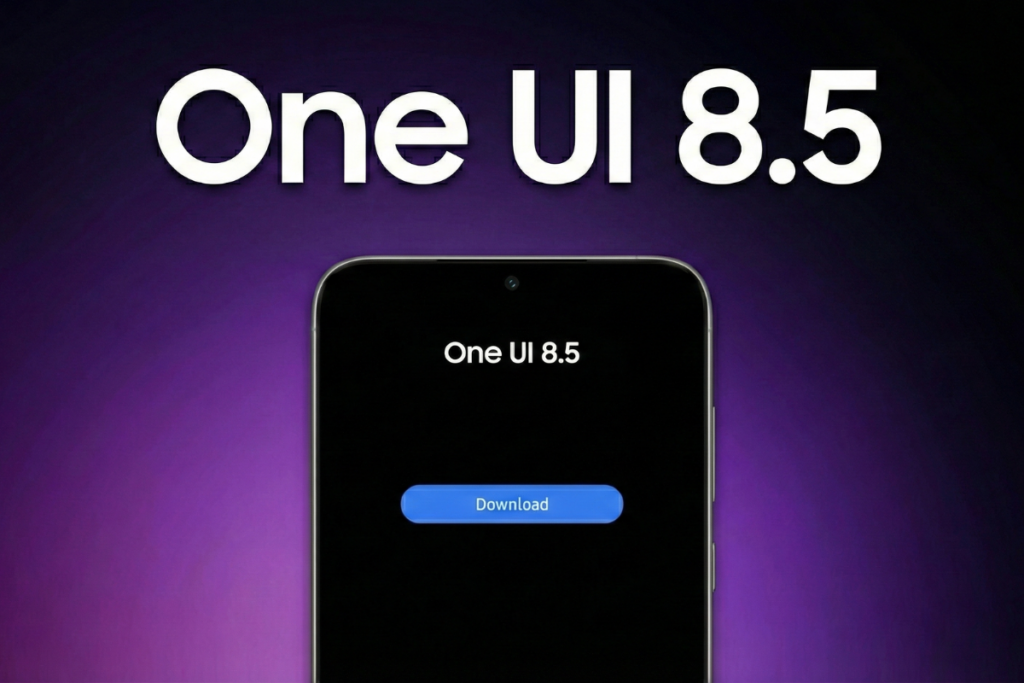
One UI 8.5 beta launch nears as first test build spotted for Galaxy S25 Ultra

Samsung One UI 8.5 beta update

Samsung is indeed preparing the Galaxy S25 series for One UI 8.5 beta testing, as the first test build has just been spotted on Samsung’s servers. This one will also be based on Android 16, but unlike One UI 8.0, it’s said to bring several major upgrades, along with a host of enhancements.

The first One UI 8.5 test build has surfaced on Samsung’s servers for the Galaxy S25 Ultra, with the PDA build version ZYKP. Such internal builds are not available to the public, but their appearance on the server suggests the public beta release could be just a few weeks away.

Galaxy S25 Ultra One UI 8.5 test build

As of writing this post, Samsung hasn’t announced anything about One UI 8.5, including the release date or upcoming changes. However, thanks to past leaks, we already know that the new software will debut early next year with the Galaxy S26 series. According to reports, the S26 series will be unveiled in February. As for the One UI 8.5 beta program, it will likely go live in December.

Related:
1. Samsung devices that are eligible for One UI 8.5 update
2. One UI 8.5 leaked video shows plenty of UI changes

What to expect from One UI 8.5?

Leaked builds of One UI 8.5 in the past have also revealed major changes and upgrades, which suggest it’s a major upgrade, unlike most One UI x.1 upgrades, which used to bring just a few additional features. One UI 8.5 will feature a more customizable Quick Settings panel with the ability to move, resize, and remove toggles or modules. Early leaked builds also show 3D-style icons with realistic depth and shadows, but newer builds show Samsung may be toning down the effect.

Samsung has also made significant visual upgrades to multiple apps, including Gallery, My Files, Phone, and Device Care. The new software may also introduce Now Nudges, which is a proactive AI assistant that works similarly to Google’s Magic Cue. This AI-powered feature learns your routines and provides contextual suggestions exactly when needed, such as quick actions, automatically filling out forms, and bringing back recently used information like passwords or locations when you might need them again.

One UI 8.5 may also add the “Auto Answer with AI” feature in Call Assist, which automatically answers after a preset duration. It can ask callers why they’re calling, transcribe responses, and tell them you’ll call back later. A new Priority Notification feature was also spotted in leaked builds, which uses AI to surface the most important notifications. Furthermore, the update may introduce AI-generated notification summaries to quickly understand group notifications.

Leaks also reveal plenty of additional changes to One UI 8.5, including an iOS-26-inspired Settings app, additional professional camera and video features, stronger identity check protection for accessing critical functions, Private Display mode, and gaming enhancements.

Don’t forget to visit Samsung section on Gizmochina regularly for the breaking news and latest One UI updates. Or, if you prefer your news instant and on-the-go, hop into our Telegram channel for instant notification about the latest software updates and all the biggest tech headlines.

Realme GT 8 Pro goes on sale in India: Here’s price, specs, & launch offers

Realme is finally rolling out its latest flagship smartphone in the Indian market. The Realme GT 8 Pro was just announced in the region wth powerful specs and features last week, and the first sale for this device has now kicked off. So here are its price, specs, and launch offers.

Realme GT 8 Pro: Pricing, Colors, & Availability

The Chinese brand just released the Realme GT 8 Pro in India at 12PM IST today (25th November 2025). This high end device is available for purchase on the company’s official website and Flipkart, a popular e-retailer in the country. It is listed in two color options, namely Dairy White and Urban Blue. The Realme GT 8 Pro has a Rs 72,999 starting price tag for the 12GB + 256GB model, while the 16GB + 512GB variant costs Rs 78,999.

Realme GT 8 Pro
Realme GT 8 Pro

Realme has also launched the GT 8 Pro Dream Edition in Aston Martin Racing Green color for Rs 79,999 (16GB + 512GB). The brand’s latest flagship arrives with a Rs 5,000 instant bank discount for ICICI, HDFC, and SBI card holders, up to 6 months of no cost EMI options, and a free Deco set for online buyers.

Specs & Features

The Realme GT 8 Pro sports a tall 6.79-inch QHD+ AMOLED display with a 144Hz refresh rate, 2000 nits of peak brightness, and Gorilla Glass 7i protection. Under the hood, it is equipped with the Snapdragon 8 Elite Gen 5 SoC. A massive 7,000mAh battery pack powers this model, which supports 120W wired fast charging and 50W wireless fast charging.

Realme GT 8 Pro Aston Martin F1 Limited Edition
Realme GT 8 Pro Dream Edition

For optics, the rear has a 50MP (Main) + 50MP (Ultrawide) + 200MP (Periscope Telephoto) with Ricoh GR anti glare lenses, while the front houses a 32MP shooter for selfies and video calls. Other notable features include Android 16 OS based Realme UI 7 custom skin, Bluetooth 6, WiFi 7, an in-display ultrasonic fingerprint scanner, stereo speakers, and an IP68 + IP69 rating for water and dust resistance.

For more daily updates, please visit our News Section.

Don’t miss a thing! Join our Telegram community for instant updates and grab our free daily newsletter for the best tech stories!