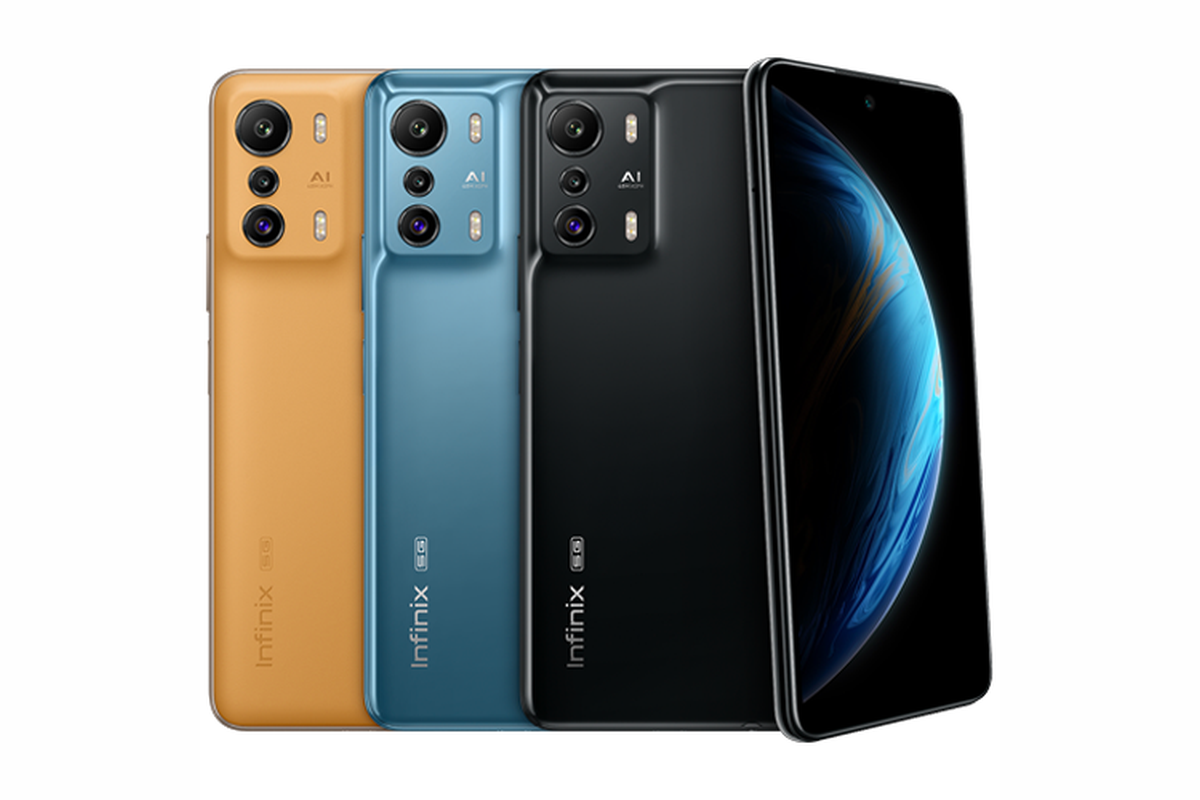
Infinix Zero 5G was announced recently in Nigeria. Today, it is scheduled to go official in India. A fresh report by Onsitegothat cites tipster Yogesh Brar as the source has leaked the pricing of the Zero 5G for the Indian market.
According to the report, the Infinix Zero 5G with 8 GB of RAM and 128 GB of built-in storage will have an MRP (maximum retail price) of Rs 24,990 (~$330). However, it will be available for purchase with a pricing of Rs 18,990 (~$251).
Infinix Zero 5G
As it is known, the device will be available for purchase exclusively through Flipkart. At present, there is no word on the sale date of the device. In global markets, it comes in three colors such as Cosmic Black, Horizon Blue, and Skylight Orange.
Infinix Zero 5G specifications and features
The Infinix Zero 5G has a 6.78-inch IPS LCD screen that offers a Full HD+ resolution of 1080 x 2460 pixels, a 20.5:9 aspect ratio, and a 120Hz refresh rate. It runs on Android 11 OS with XOS 10 UI on top.
The Dimensity 900 chipset that powers the device is assisted by LPDDR5 RAM and UFS 3.1 storage. It has a 5,000mAh battery that supports 33W fast charging.
The device has a front camera of 16-megapixel. Its rear camera setup has a 48-megapixel primary camera, a 13-megapixel telephoto camera with 2x optical zoom, a 2-megapixel bokeh camera, and a quad-LED flash.
The handset offers users 3 GB of extended RAM. For security, it has a side-facing fingerprint scanner.
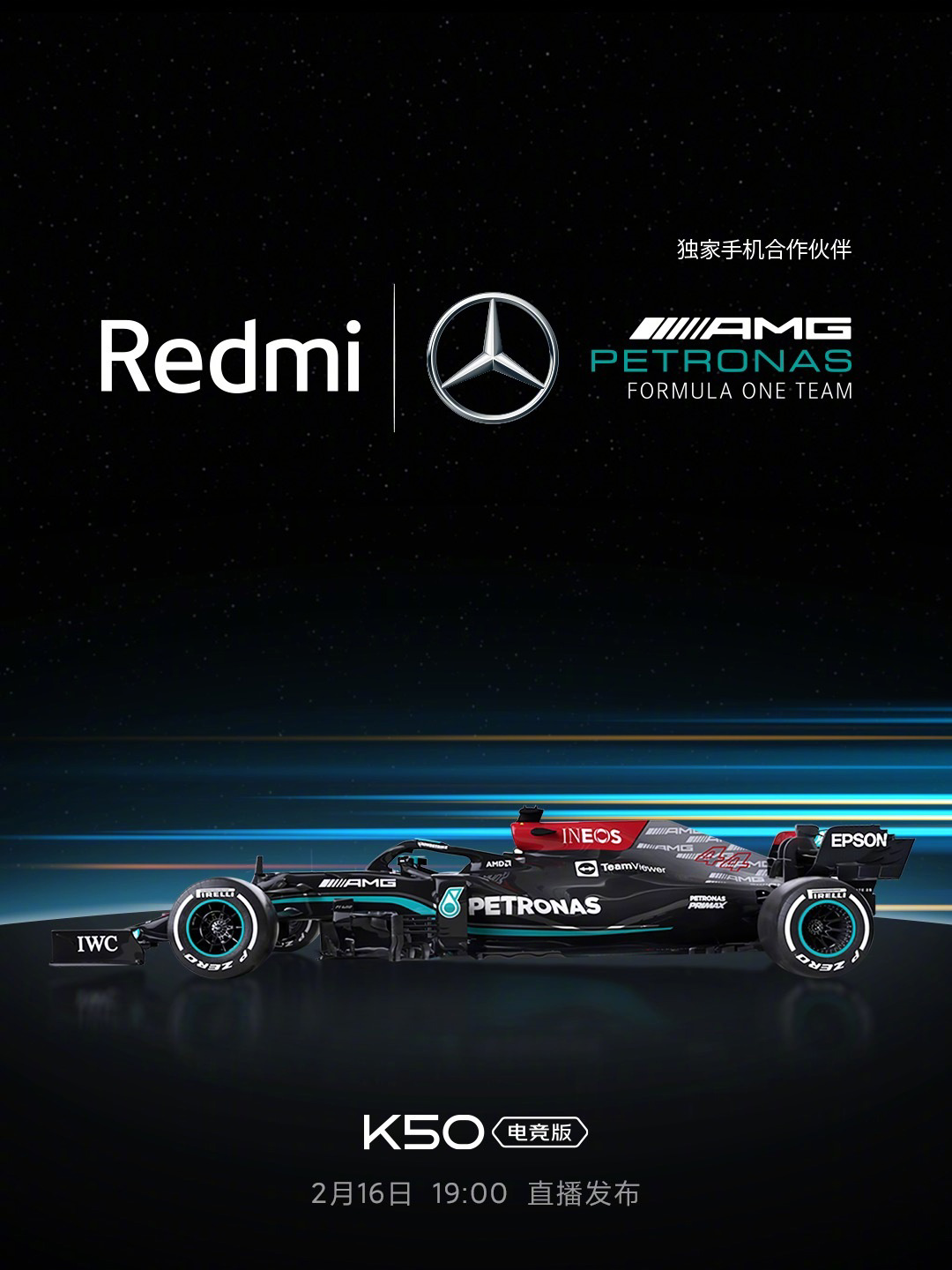
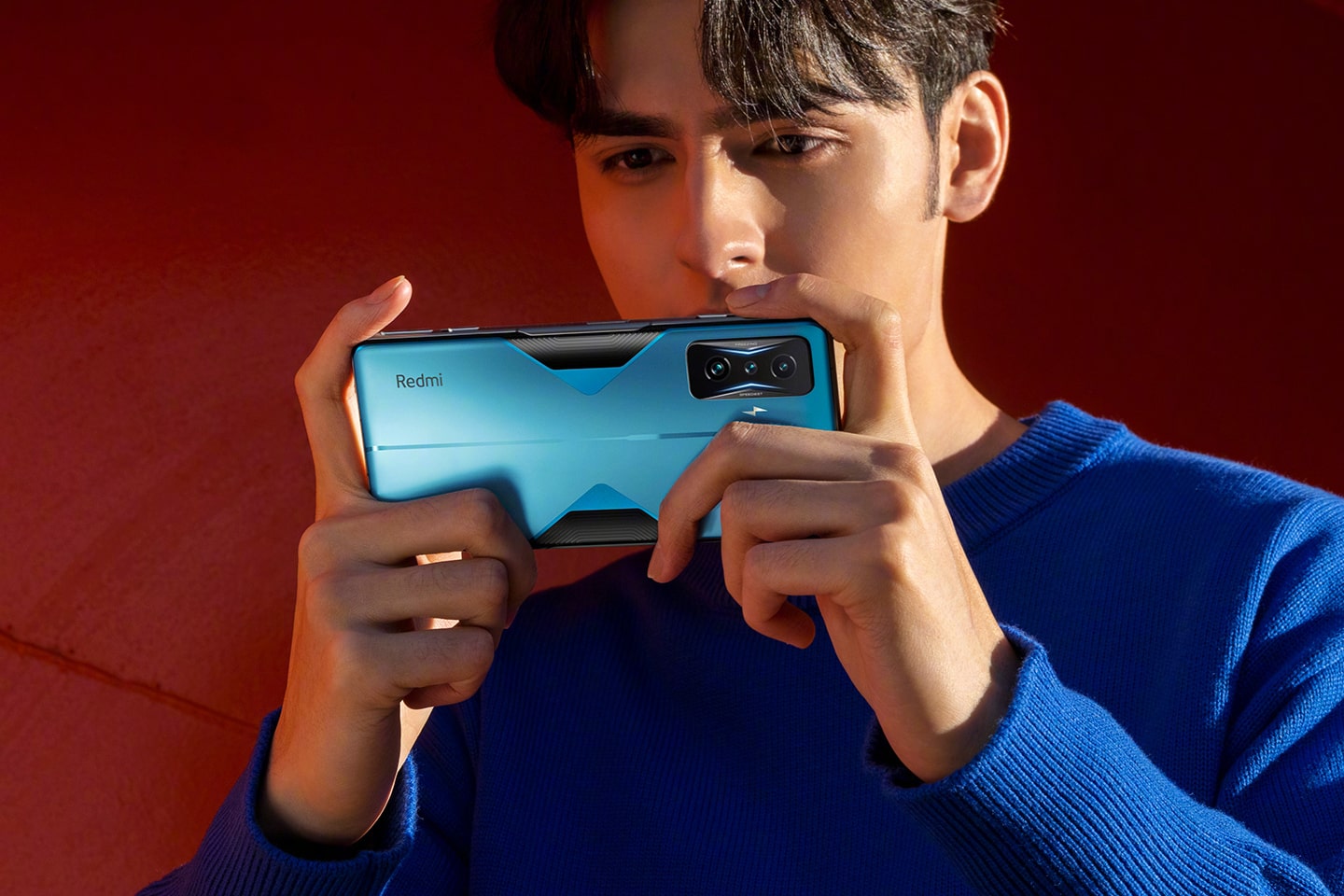
Xiaomi-backed brand Redmi has today officially announced a partnership with the Mercedes-AMG F1 team. The company says that Mercedes will serve as the exclusive mobile phone partner to explore extreme performance.
The announcement also hints that there will be a Redmi K50 Mercedes F1 smartphone getting launched which is likely to be a limited edition model. Currently, not much is known about this upcoming device.
The company is also gearing up to launch the Redmi K50 Gaming Edition smartphone in the Chinese market and it’s highly likely that the Mercedes F1 Limited Edition device could be a variant of the Gaming Edition launching on 16th February.
Based on the leaks, the Mercedes Edition smartphone will come with the iconic color scheme of the Mercedes F1 cars, including a grey-colored back panel with black triangular elements around the mid-section of the back panel. Two sides of the triangles will be lined with cyan color and a glowing RGB strip integrated within the camera module.
The phone will also have two dark Grey racing stripes running vertically down the center of the back panel and a Mercedes AMG Petronas F1 Team branding at the top right corner along with the iconic Mercedes badge.
The Redmi K50 Gaming Edition will come with a 6.67-inch OLED Full HD+ display with a screen resolution of 2400 x 1080 pixels, a 120Hz refresh rate, and a 480Hz touch sampling rate along with Gorilla Glass Victus protection.
Under the hood, the device will be powered by the Qualcomm Snapdragon 8 Gen 1 chipset. To keep the temperature in check, it features a VC cooling area of 4860mm². It is claimed to be the world’s first to be equipped with a CyberEngine ultra-wideband motor.
For photography, there will be a triple-camera setup on the back, consisting of a 64-megapixel Sony IMX686 primary sensor, coupled with a 13-megapixel OmniVision OV13B sensor, and a 2-megapixel tertiary lens. On the front side, there will be a 20-megapixel snapper for taking selfies and video calling.
It is likely to be running the latest Android 12 operating system out-of-the-box with the company’s own MIUI 13 custom user interface on top. The device will be powered by a 4,700mAh battery with 120W fast charging support.
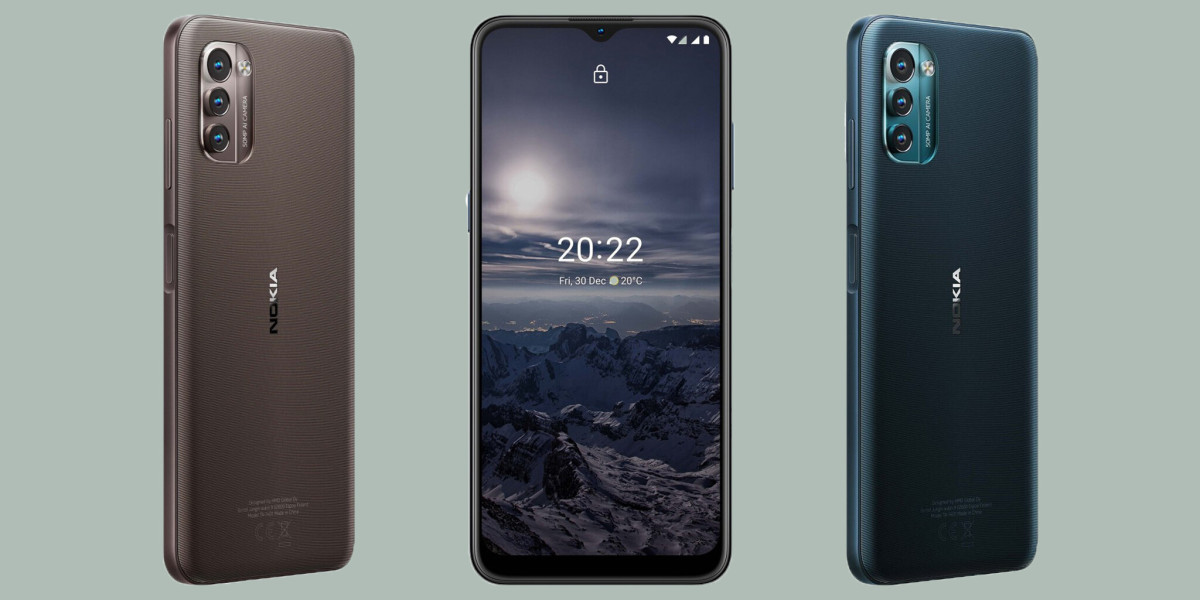
HMD Global has today officially announced its latest smartphone — Nokia G21. As the name indicates, the device is a successor to the Nokia G20 that was launched last year. For this new smartphone, the company appears to have focused on three major aspects for improvements — Screen, Camera, and Battery.
It comes in two different color options — Nordic Blue and Dusk. The smartphone will soon be available for purchase in the European market for the price of €170.
The Nokia G21 features a 6.5-inch HD+ LCD display that supports a 90Hz refresh rate. It also has support for adaptive refresh rate which drops to 60Hz in power saving mode.
Under the hood, the device is powered by the Unisoc T606 chipset which is manufactured using a 12nm process. It packs two Cortex-A75 cores and six Cortex-A55 cores along with the Mali G75-MP1 graphics processor.
The phone is packed with 4GB of RAM and comes in two options for internal storage — 64GB and 128GB. It also has a microSD card slot that allows users to further expand the storage capacity on the device.
In the camera department, there’s a triple-camera setup on the back that includes a 50-megapixel primary snapper, a 2-megapixel macro lens, and a 2-megapixel depth sensor. It has support for features like Super Resolution and Night Mode.
The device runs the Android 11 operating system out-of-the-box but the company has confirmed that the phone will get the Android 12 operating system. Not just that, Nokia has also promised two major Android updates, which means that the device will also get the Android 13 update in the future.
It is powered by a 5,050mAh battery which the company is promising can offer up to three days of usage on a single charge and comes with support for 18W fast charging. However, the company is shipping a 10W charger in the box.
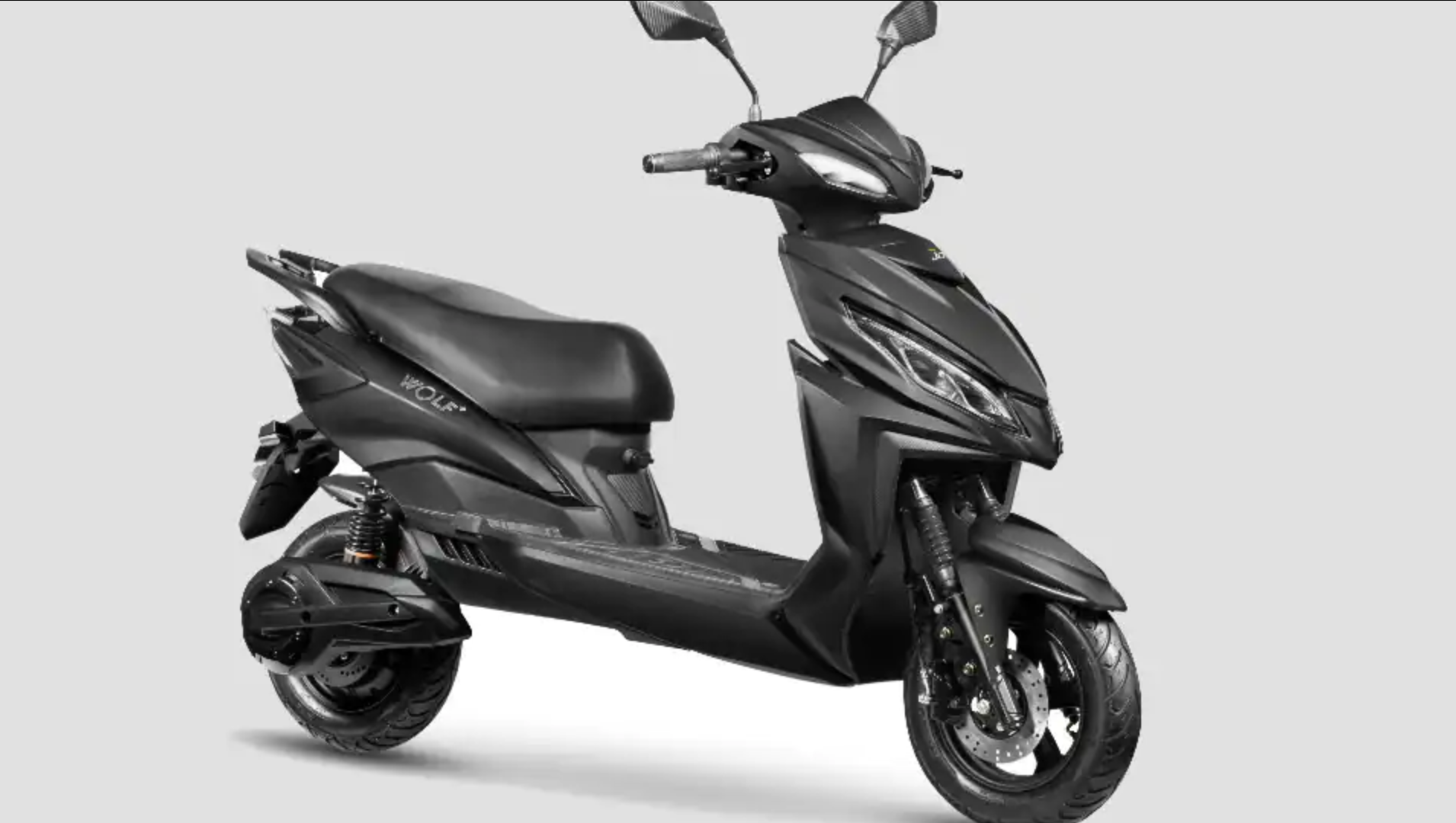
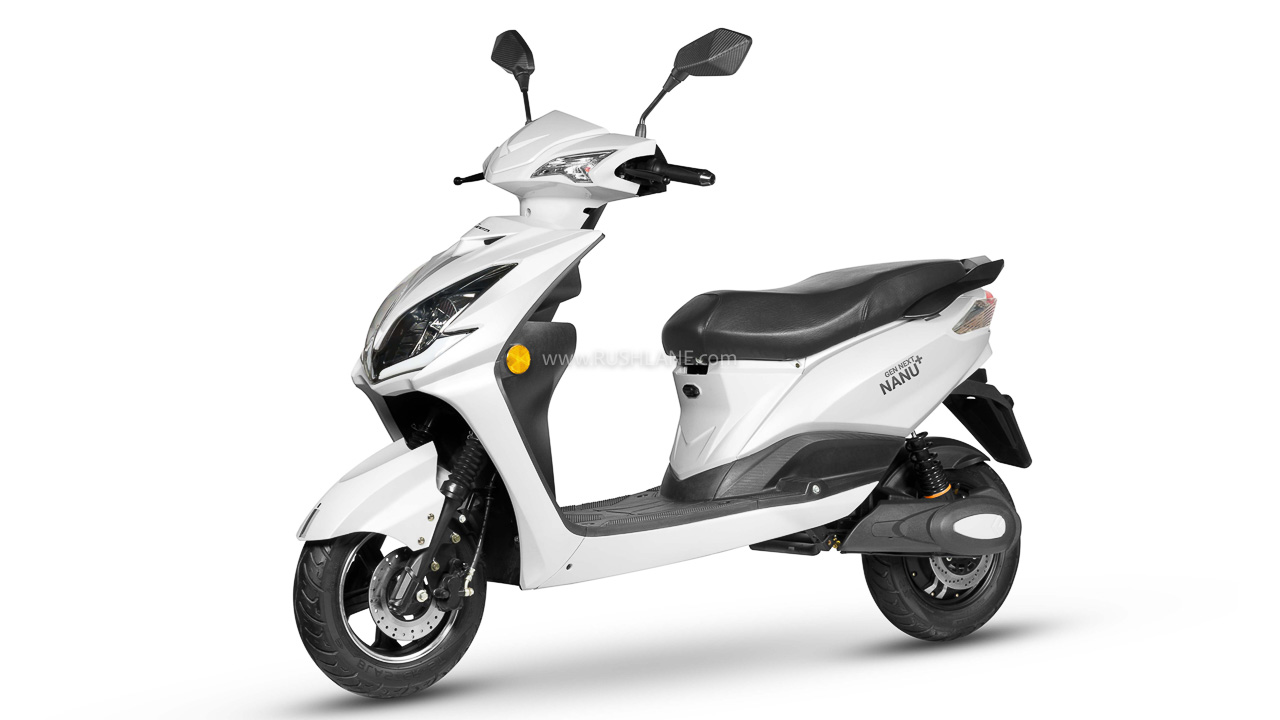
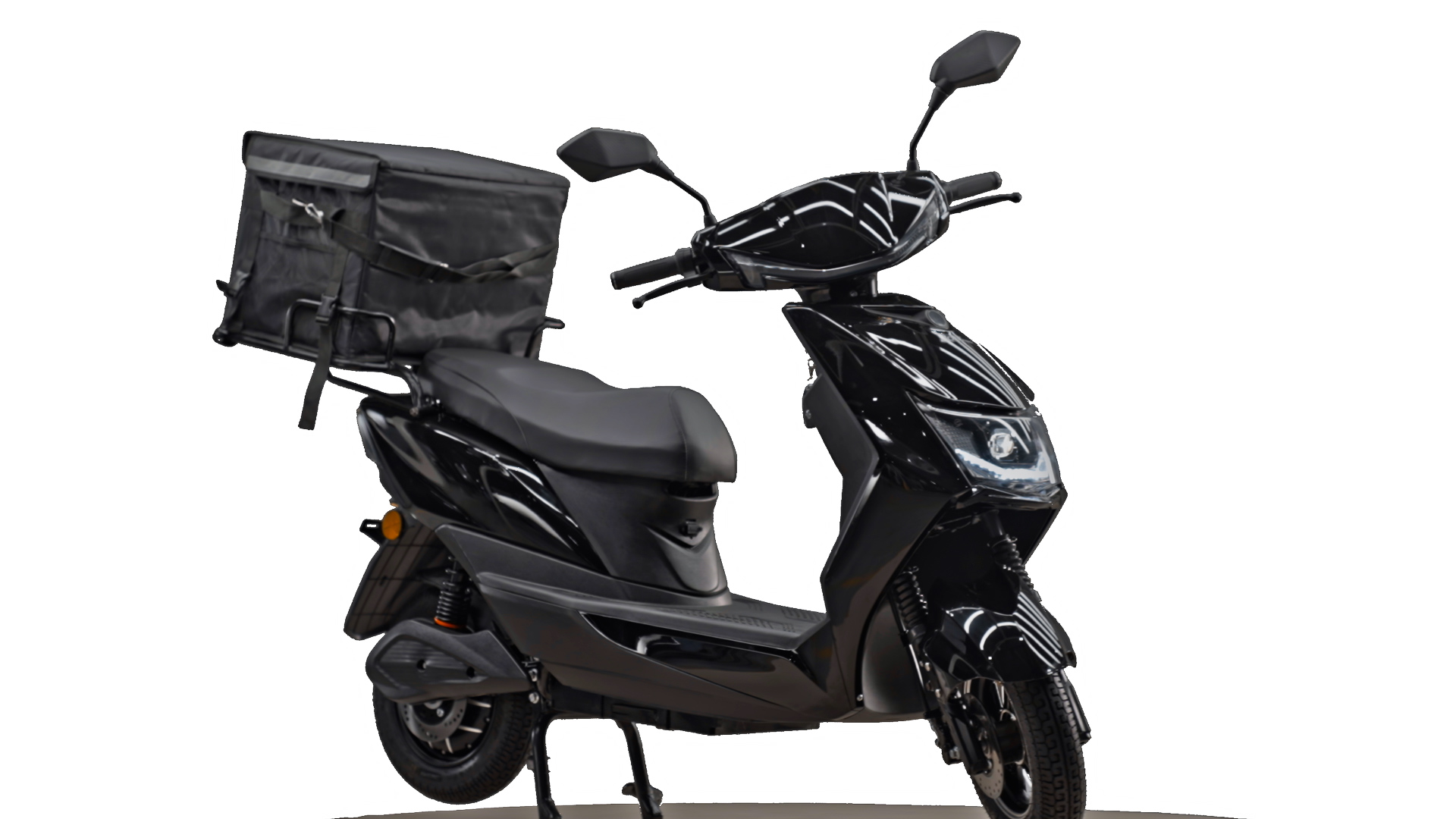
Indian electric scooter manufacturer WardWizard Innovations has launched two new scooters under its Joy e-bike brand. The products include the Joy e-Bike Wolf+ and Gen Next Nanu+ high-speed electric scooters.
These models are the brand’s first high-speed scooter, each having a top speed of 55km/h. The scooters also come with several features tailored towards guaranteeing rigers’ comfort. Considering that they are designed for Indian market, they are not only durabe but have a focus on localization.
The Wolf+ and Nanu+ use dual fork hydraulic suspension setup at the front while the rear suspension is a mono shock variant. They both have a ground clearance of 160mm and turning radius at 1.6m. The scooters also come with keyless Start/Stop functions as well as Bluetooth connectivity which allows for pairing the scooter with a smartphone. They also come with a smart remote control which locks the scooter when being tampered with. New electric scooters from Joy e-bike. Regenerative braking system improves ride range by recharging whe n the brake lever is pulled. Battery is rated as 60V/35Ah and can be charged anywhere. the charging cycle will take 4 to 5 hours, and is touted to offer 100km range per charge.
The WardWizard Wolf+ electric scooter is price of Rs 110,185 (~$1,462). It comes in Matte Black, Stardust (Grey) and Deep Wine cloro options. On the other hand, the Gen Next Nanu+ is available in Midnight Black, and Matte White colours and is priced at Rs 106,991 (~$1,419).
The idea of a manual transmission on an electric vehicle seems a far thought presently, as current EV models only come with automatic transmission. However, a recent patent filing by Japanese carmaker Toyota indicates that the company may be tinkering with the idea of a manual transmission for EVs.
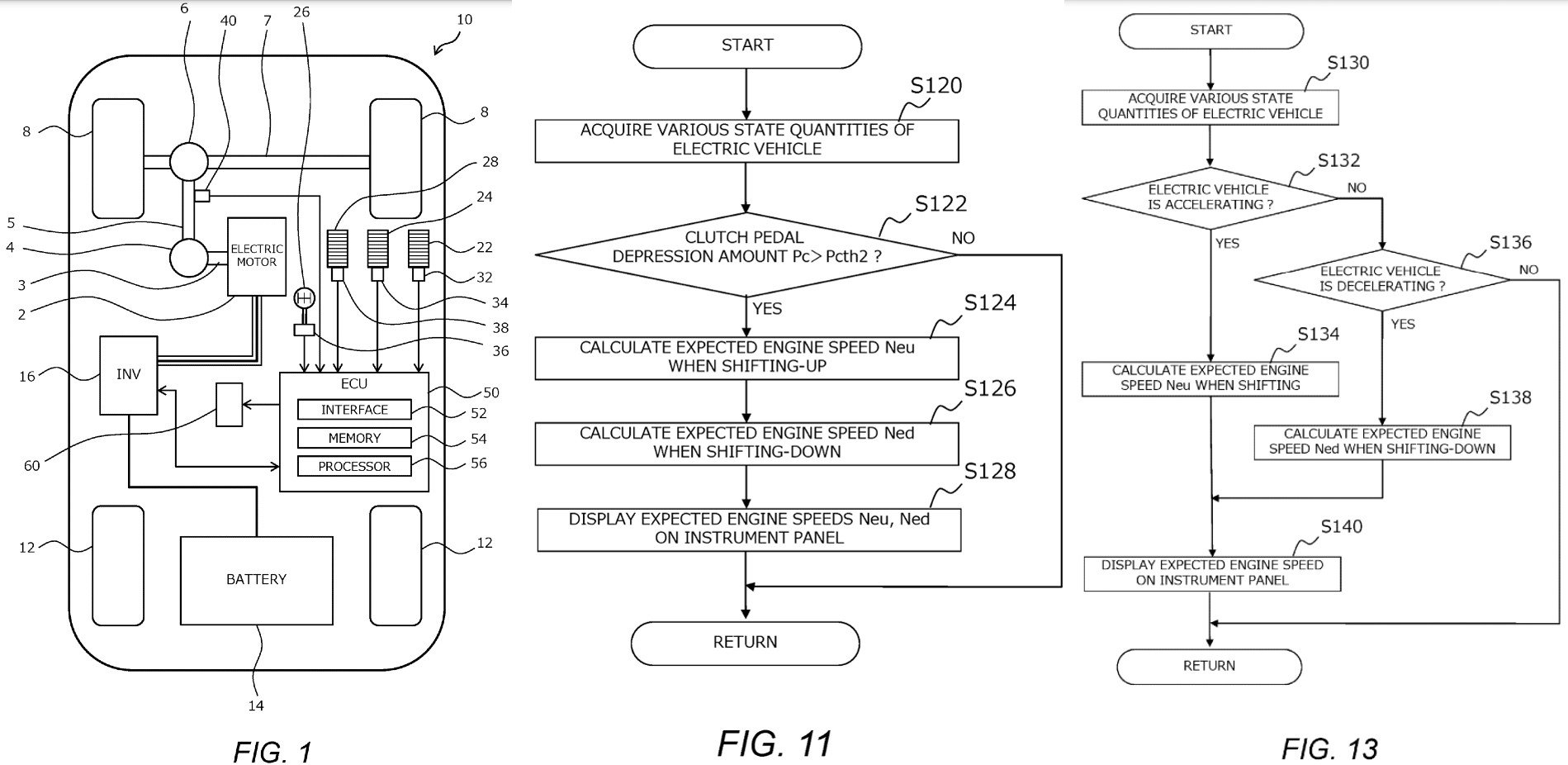
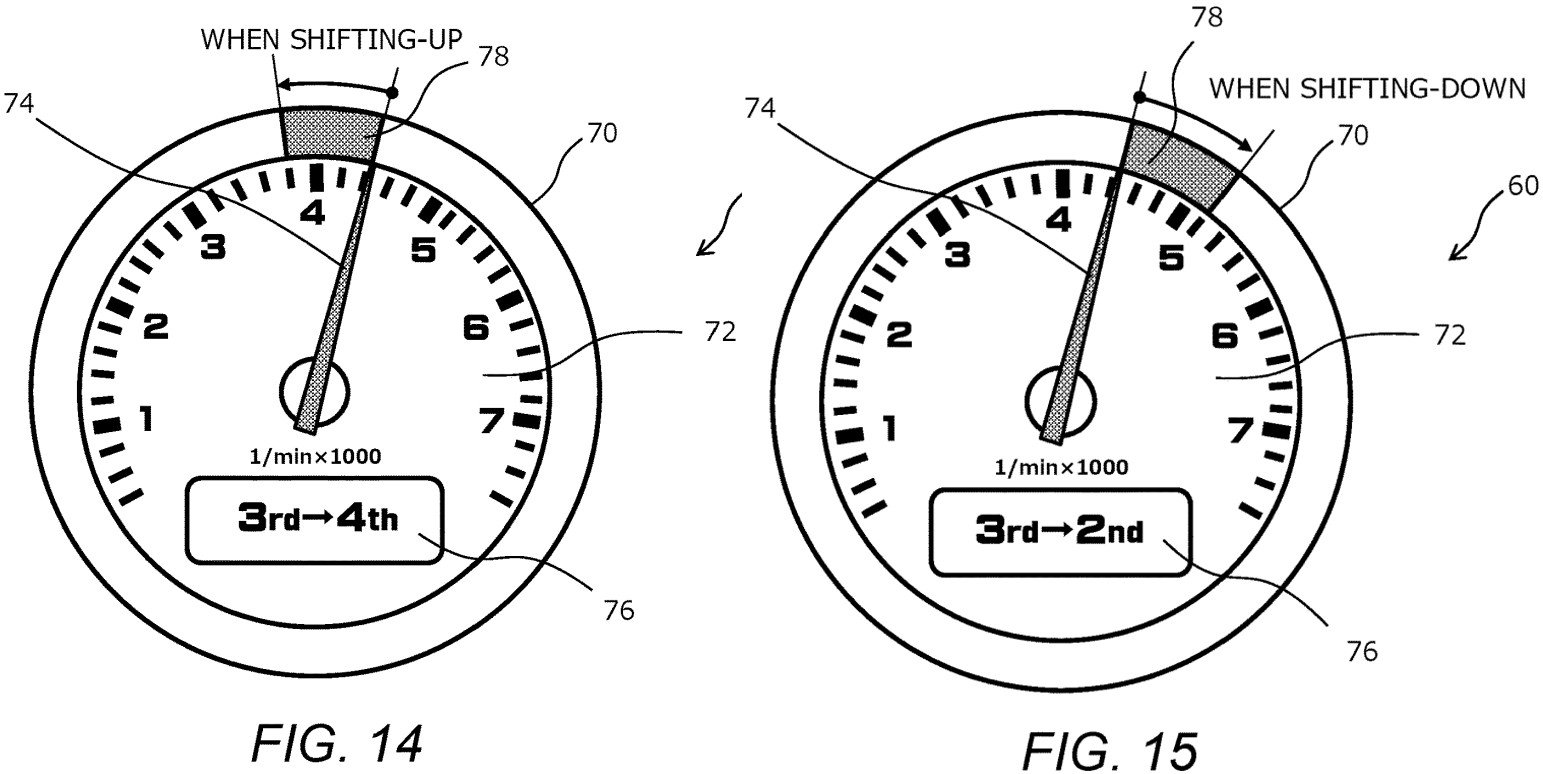
According to a recent report by Teslarati, Toyota has made a raft of patent applications for a manual transmission to be used with electric vehicles. It is understood that the proposed Toyota system uses a pseudo-clutch pedal and pseudo-gear shift that will enable electric vehicles to transit to manual transmission whenever the driver desires.
There are lots of current EV users who may still be connected to their manual transmission internal combustion cars. For one thing, the engaging nature of manual transmission has made some drivers become die-hard fans of the manual transmission. However, it will take some dose of innovation to accomplish the Toyota model in an EV. The patent application shows a motor controller that models the output based on a traditional internal combustion vehicle. The mechanism of the operation of this component is at the heart of the development of what could be termed pseudo-manual transmission in electric vehicles.
Although the optics of the manual transmission mechanism are not very detailed at this time, it is bound to draw some manual transmission enthusiasts to such EVs when they become a reality. We just have to keep our fingers crossed to see whether Toyota will be putting their money into research and development of the manual transmission model for EVs.
Xiaomi’s founder Lei Jun has laid the clearest marker yet of the company’s intention to be the leader in the global market of high-end smartphones. Lei Jun, Xiaomi Corp’s founder, and CEO says that the company aims to fully benchmark against Apple in terms of its products and the overall user experience using these products. The focus will be on the high-end segment of the global smartphone market where Apple has a commanding market share in the aftermath of Huawei’s problems.
The tech giant’s CEO described the competition in the high-end segment of the smartphone market as a war of life and death, which the company must overcome in order to sustain its growth. Apple remains the leading light in the premium segment of the global smartphone market, and Xiaomi obviously has its job cut out for it. There is a rush by Chinese smartphone makers to feel the huge vacuum created due to the crumbling of the Huawei brand, and Xiaomi is taking a pole position in the competition among China’s leading tech firms. Lei said that the company’s strategic goal is to develop into the world’s largest smartphone vendor by 2025.
Xiaomi had indeed had an upward trajectory in the last couple of years in which the fortunes of Huawei were moving down south. It has created a leading position for itself in the Chinese market and globally as well. Lei says Xiaomi is committed to investing 100 billion yuan ($15.71 billion) in R&D over the next five years in pursuit of its strategic goals. Xiaomi will continue to contend with some heavy hitters at the high end of the smartphone market like Apple and Samsung. The recent global data shows that Xiaomi is doing a good job at the top, and it could overtake Apple or Samsung in a couple of years if it continues in its current trajectory.
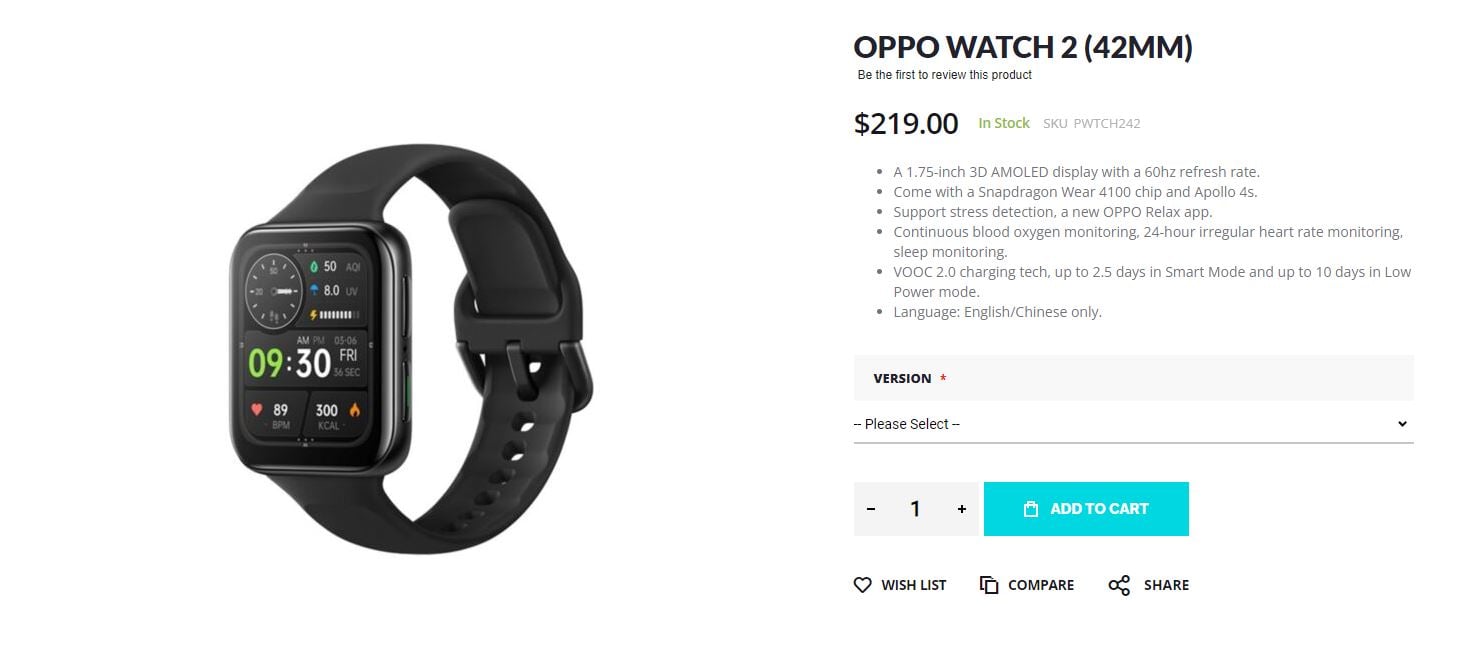
Oppo released its flagship smartwatch, the Oppo Watch 2, back in July 2021 in China. Initially launched with ColorOS 2.0, the smartwatch has just received a major software upgrade in China to the latest ColorOS Watch 3.0 operating system.
The latest update brings many much sought out features by smartwatch users for Oppo Watch 2 owners in China. The list is quite long, so here are the details from the updates’ changelog.
UI Changes
[New] Option to keep the Watchface Always On, like a physical watch face.
[Updated] App icons have a newly redesigned look, similar to ColorOS 12 on phones.
System Additions
[New] Added support for instant applications, currently 70 apps in the list of instant apps and growing.
[New] Added Calendar app.
[New] Added Digital Car Keys Support for Li Auto Smart Vehicles.
[New] Added Health Assistant called Fairy, a fairy on your wrist to remind your workouts and work on self-discipline.
[New] Added Function to remind the user that the Oppo Watch 2 battery has been fully recharged via Battery Health App and notification.
[Updated] Bug Fixes and Improved Stability.
Sleep Tracking
[New] Sync: You can now sync your sleeping schedule between your Oppo Watch and Oppo smartphone.
[New] Sleep Mode 2.0: System will reduce brightness, provide bedtime reminders and sleeping tips for users to help them sleep healthier.
[Updated] Sleep Tracking Report: Minor redesign to make the interface cleaner, added heart rate section to monitor your heart rate pattern during sleep.
Fitness Tracking
[New] Added Support and health data for Junior High School Students.
[New] Added Tracking for Skiing in the snow.
The Oppo Watch 2 is powered by a Qualcomm Snapdragon Wear 4100 with a 510mAh battery on the 42mm model. It has a 1.91 inches AMOLED squarish display, 1 GB RAM and 8 GB internal storage.
If you fancy an Oppo Watch 2 42mm yourself, it is now available on GizTop for $219.
The electric vehicle revolution is fast catching some never-before thought segments of human activities. This technological improvement is not unconnected with the growing demand for sustainable solutions to environmental problems, with a greater emphasis on clean energy sources. Airstream has announced its latest product the eStream camper with the capability to function as a two-wheel electric vehicle.
Airstream has an impressive record of building unique travel trailers with a rounded shape and aluminum exterior. The eStream combines its iconic design features with an integrated solar power system on the roof and an electric motor that could be used to drive and park the trailer. The system of the electric motor within the eStream also means that, when being towed by another vehicle, the in-built electric vehicle within the eStream could take some energy off the main vehicle when it is operational. This means that the range of an electric car that could be used for transporting the eStream could be increased further due to its shared load.
The solar roof system offers up to 900W power, while the eStream has an 80kW battery which can be fully charged in under 45 minutes at a fast-charging station. The eSteam can also be parked using a tablet or other internet-enabled device. This, according to Airstream, enhances the maneuverability of the standalone eStream as compared to being towed by a truck.
Airstream says the power capabilities of the eStream means that it can remain off-grid for up to two weeks with varying degrees of power needs. There are no indications yet that the eStream could come on stream anytime soon. It will be exciting to see it out on the camping grounds sooner rather than later.
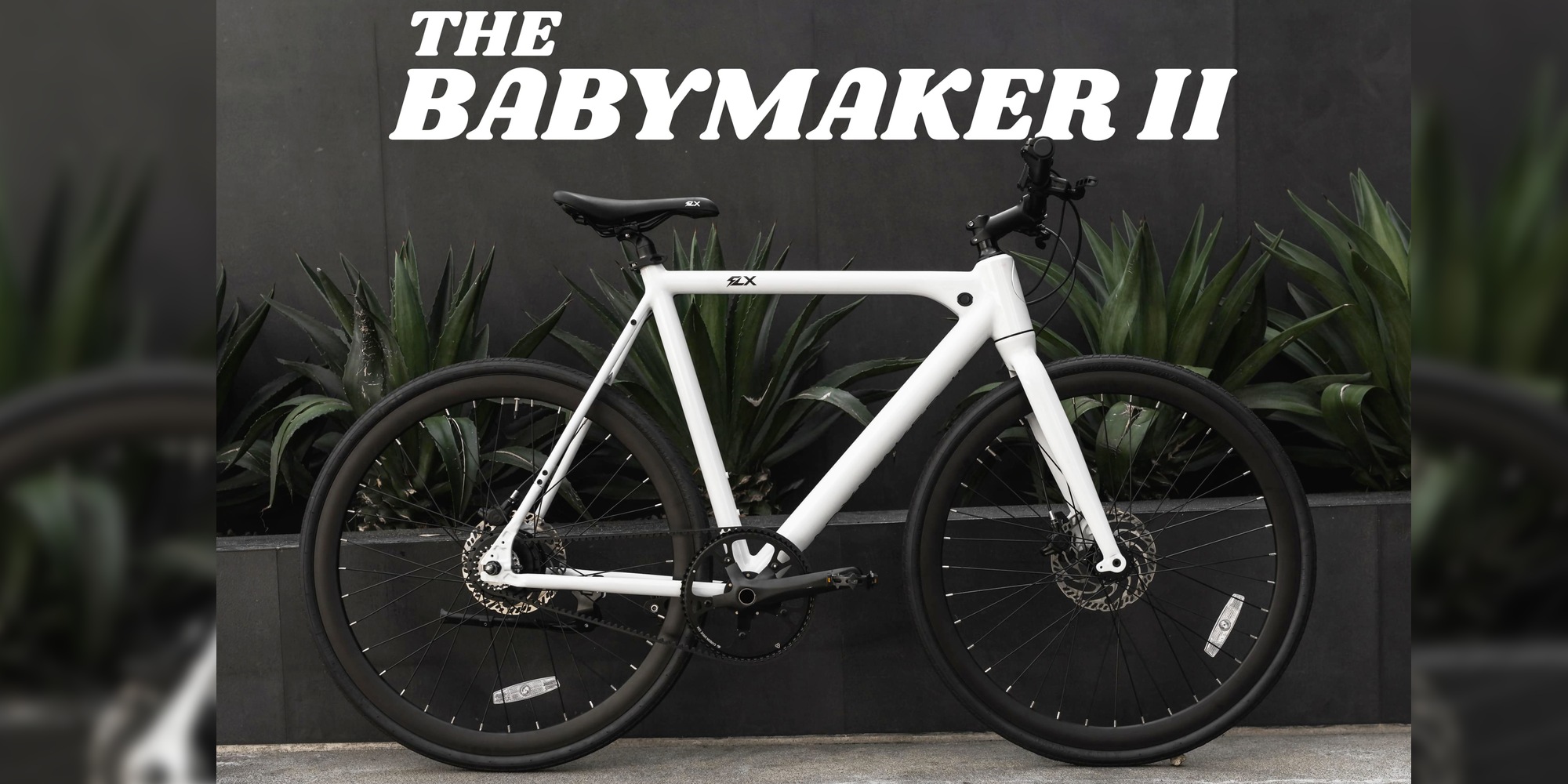
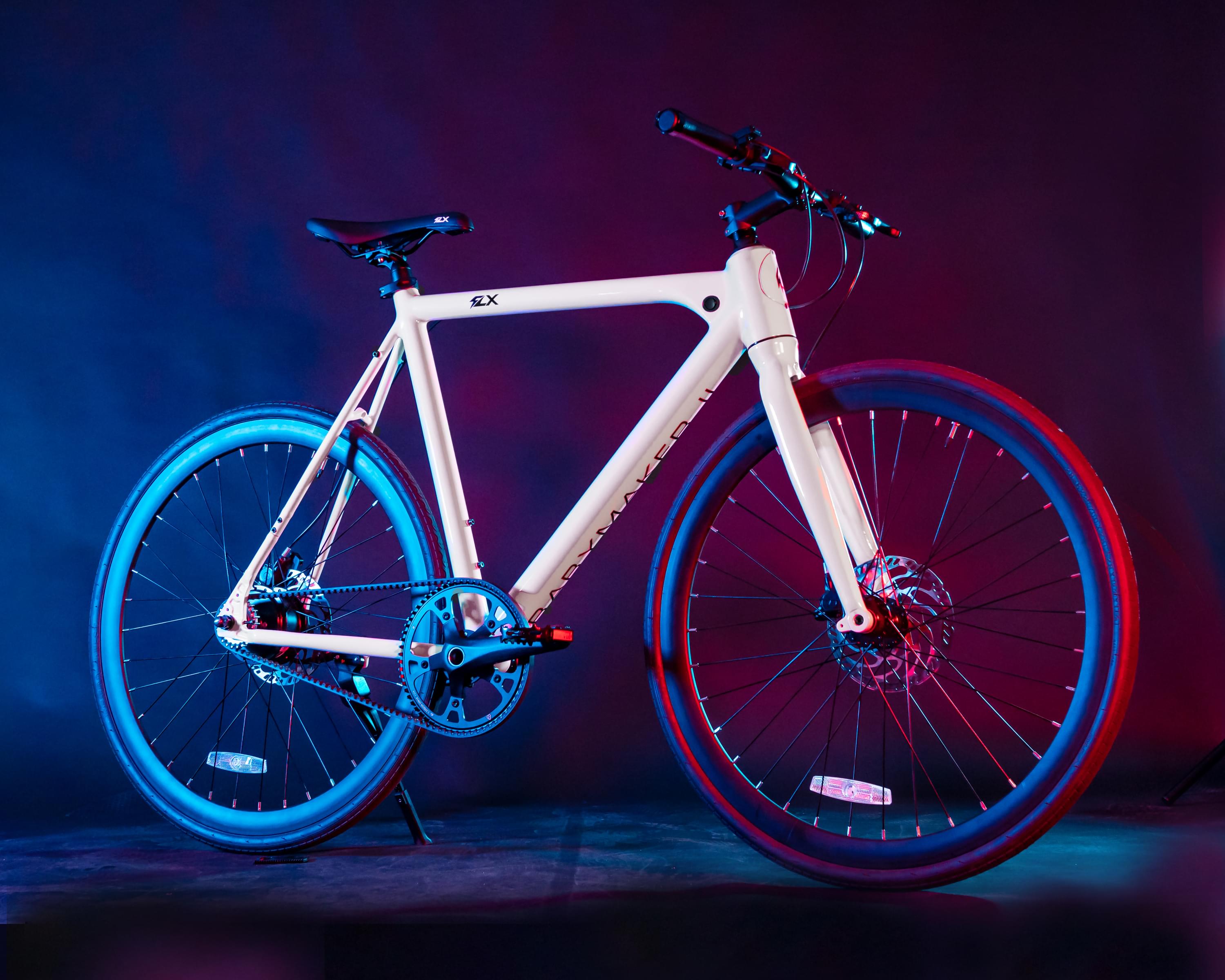
Electric bicycle company FLX is providing some details about the upcoming launch of its latest e-bike the Babymaker II electric bicycle. FLX had grossed several millions of dollars in sales of the original FLX Babymaker and hopes that the new and improved Babymaker II will have a great reception in the rapidly expanding e-bike market.
Although there are still several details about the Babymaker II that are still lacking at this time, the few details released by the company point to an exciting e-bike. In terms of pricing, the original Babymaker e-bike had a $2,000 price tag, although promotional offers were made that presented discounts of varying degrees. The Babymaker e-bike was launched via an Indiegogo crowdfunding campaign in 2020. The crowdfunding process was quite successful raising over $13 million from interested Babymaker owners in the process.
Although there is no word yet from FLX on the next steps in the evolution of the Babymaker II, there is a possibility that it could thrive on another crowdfunding campaign. This will come on the heels of the very successful drive for the Babymaker in 2020. The new model will bear some semblance with its predecessor. The Babymaker was an ultra-stealthy-looking pedal bike with an electric assist mechanism ensconced in a tiny rear wheel hub motor. The battery was also integrated into the frame of the electric bicycle. The Babymaker II will come with a battery that is almost one-half bigger than the original model. This will imply that the Babymaker II will have a larger range than its predecessor.
The power of the e-bike will come from a 350W motor in the rear wheel which can take the Babymaker II to a top speed of 40km/h. Other features are flat handlebars, Magura hydraulic disc brakes, and a generally improved riding position for riders. It seems it will maintain the pedal-assist mechanism that was in the original Babymaker e-bike.
The coming weeks will provide the necessary background for the expected trajectory of the Babymaker II. We are yet to know much about its pricing and launch date, as well as several other intrinsic specs, but we expect more teasers going forward.
Before the launch of the latest Samsung Galaxy S22 lineup, reports emerged stating that the phones may arrive late to the consumers due to high demand. However, it appears as Samsung may have underestimated the popularity of their tablets as they are now struggling to keep up with the demand.
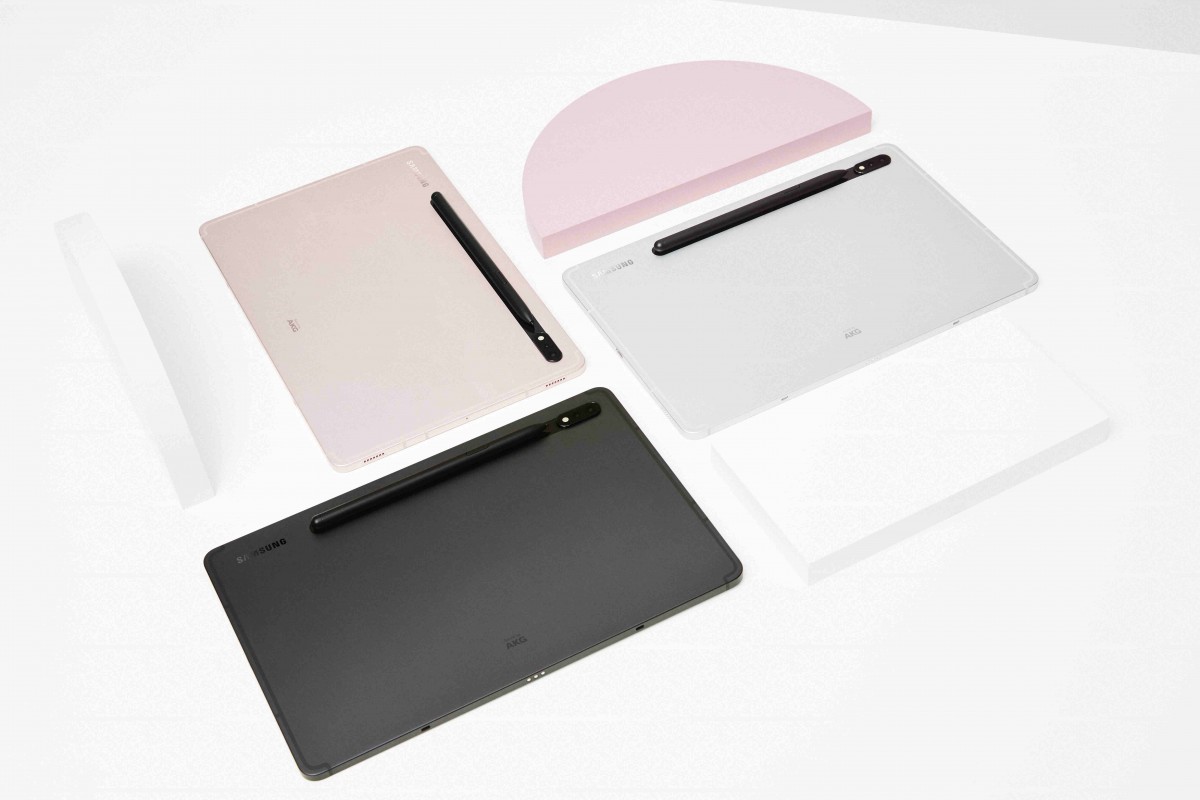
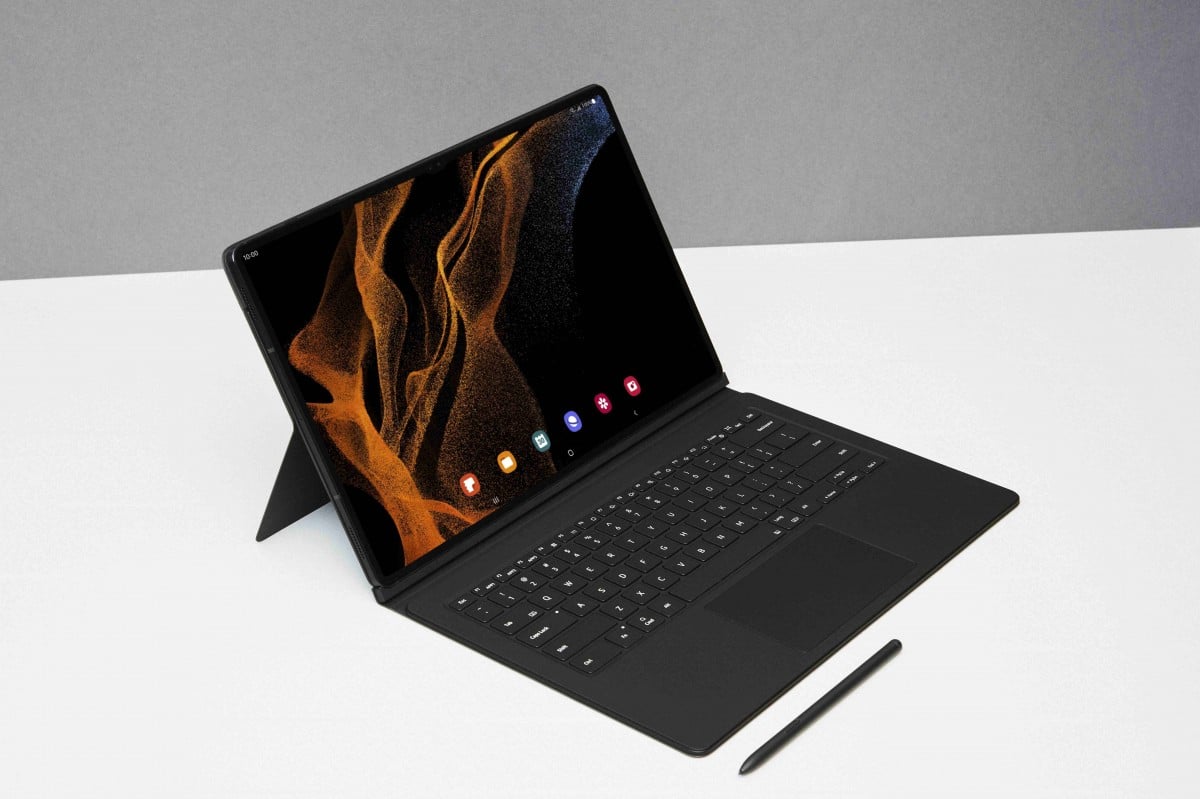
A recent XDA-Developers report stated that the South Korean tech giant has paused the pre-orders of its recently released Samsung Galaxy Tab S8 and the Galaxy Tab S8 Ultra in the US. The Galaxy Tab S8 Plus appears to still be available for pre-order, however, it is also expected to run out of stock soon.
On the matter, Samsung stated that “We are thrilled by the consumer response to our new Galaxy Tab S8 lineup. Due to the overwhelming demand in the last 48 hours, we will be pausing preorders at Samsung.com for the Galaxy Tab S8 Ultra and Galaxy Tab S8. We are working quickly to meet consumer excitement and demand. Please stay tuned for more updates.”
Considering that the Galaxy Tab S8 series is Samsungs’ only tablet release since August 2020, it is not surprising that they are selling like hotcakes. Add in the fact that they carry some major upgrades over the last-gen tablets like the super low latency S Pen, the Snapdragon 8 Gen 1 processor, and the 14-inch Dynamic AMOLED 2x Display on the Galaxy Tab S8 Ultra variant, and you get the most desirable Android tablet offering in the current market.
Samsung Galaxy Tab S8 Ultra specifications and features
For those unaware, the Galaxy Tab S8 Ultra has a 14.6-inch S-AMOLED display that offers a 2960 x 1848 resolution, a 120Hz refresh rate, and an ultrasonic in-display fingerprint reader. It is a unique Android tablet that features a display notch, which houses a 12-megapixel main selfie camera and a 12-megapixel ultrawide lens. The back panel of the Tab S8 Ultra has a 13-megapixel + 6-megapixel dual-camera system, which is also available on the Tab S8 and S8 Plus tablets.
The Snapdragon 8 Gen 1 fuels the Galaxy Tab S8 Ultra. The flagship tablet comes with 8 GB / 12 GB / 16 GB of RAM and 128 GB / 256 GB / 512 GB of storage. It is backed by a massive 11,200mAh battery, which supports 45W fast charging.
The Galaxy Tab S8 lineup runs on Android 12 OS skinned with One UI 4.1. The OS tags along Samsung’s Knox security feature. The three tablets offer other features such as 5G, Wi-Fi 6E, Bluetooth 5.2, GPS, a USB Type-C Gen 3.2 port, quad stereo speakers tuned by AKG and Dolby Atmos, three microphones, wireless DeX, 30fps 4K recording, and support tor S Pen stylus.
The base variant of the Galaxy Tab S8 Ultra is priced at $1,099. To know more about the Samsung Galaxy Tab S8 series, check out our elaborate coverage of the newly launched tablets.
A great aftersales customer experience is always crucial in maintaining a brand’s reputation in the industry, especially in the smartphone industry. While smartphone manufacturers always promise 2-5 years of software support for their devices in the long run, these major software updates normally take up more and more space in your old phone.
Coupled in with the apps, photos and videos you’ve taken throughout the years, phone storage space running low is normally an annoyance for those who are using their old phones. And you can’t directly add more storage to your smartphone right? Or can you?
Huawei Internal Storage Upgrade Solution
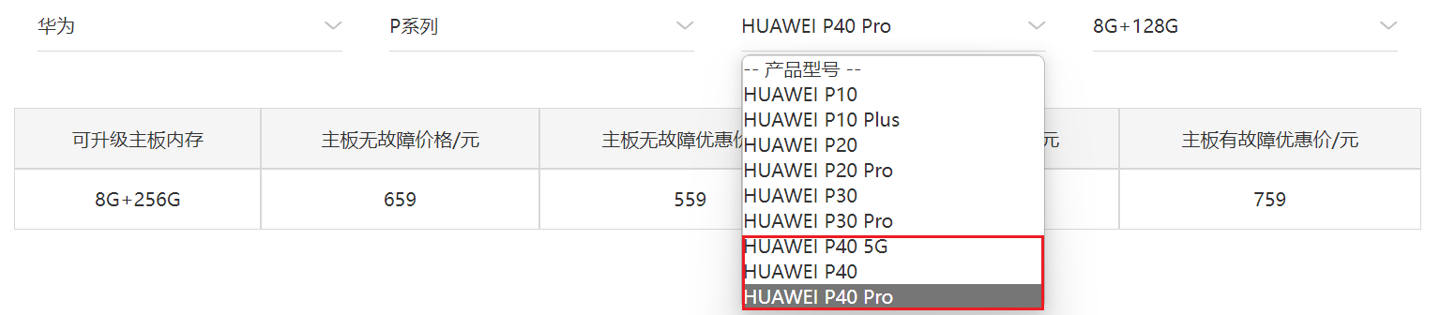
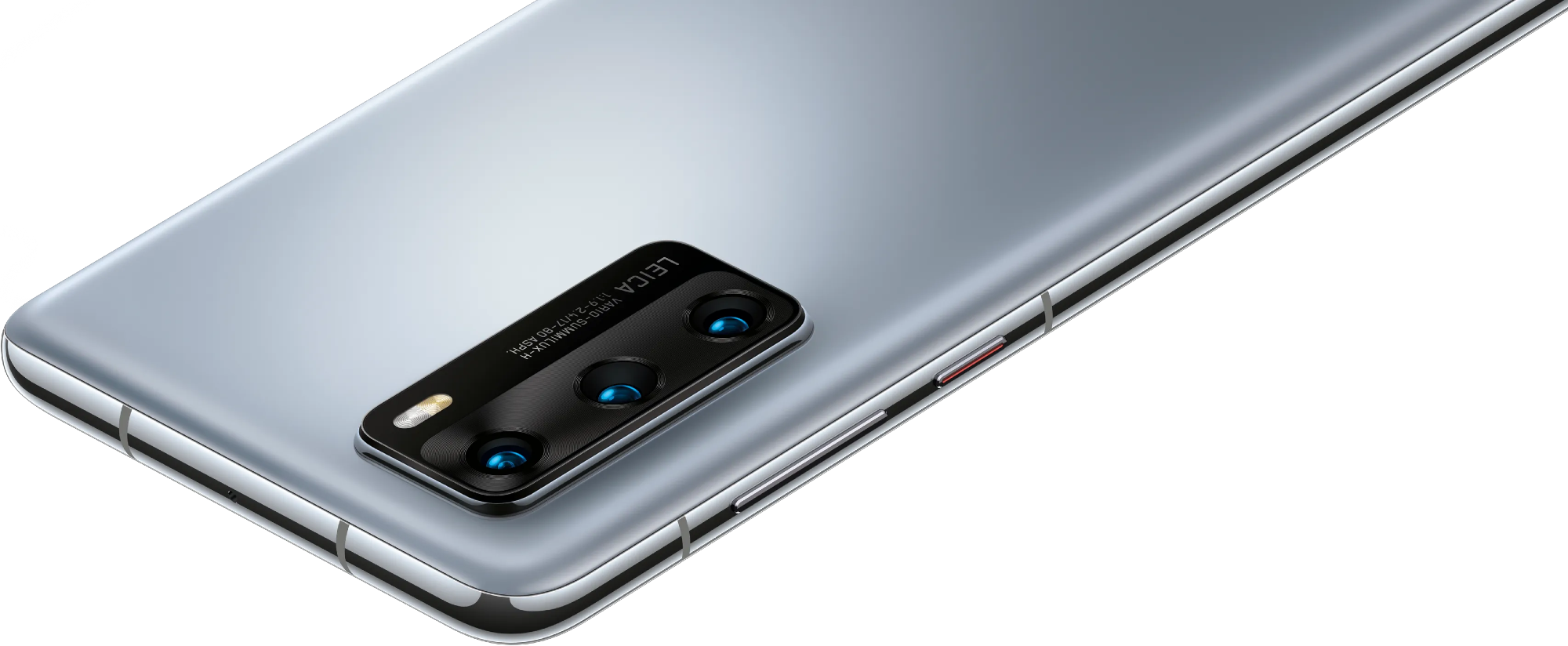
In China, Huawei has proposed a solution for these old phone users to extend their phones’ life cycle without having to pay a premium. Huawei officially calls this aftersales service as “Internal Storage Upgrade Solution”. The service has been running in China since last year for its flagship Huawei P10 series up until the Huawei Mate 30 series, and as of February 2022, Huawei has now added its Huawei P40 lineup into the service.
Huawei P40 series added to the service
How the storage upgrade service works is quite simple. Let’s say a user has a Huawei P40 in a 128GB storage configuration. After 1 year, they have realised that 128GB is not enough to store all their apps and media on their phone, and they want to upgrade to 256GB storage without changing their phone. The user can simply visit their nearest Huawei Service Centre in China and pay 559 RMB(USD 88) to get their Huawei P40 128GB upgraded to a 256GB configuration.
Huawei P40
Do note that quotations for each device varies, so you may need to visit Huawei’s China website first to get a quotation for your internal storage upgrade before you visit a Huawei Service Centre in China.
For under USD 100, the service also ensures that all of the users data will be transferred over to the new storage drive. This service takes up to an average of 10 days to complete and is currently only available in Chinese markets, not available worldwide.
The service serves as a convenience to those who feel like they are comfortable with their current Huawei phone but wished that their phone supported more storage. Indirectly, the end-user can also save themselves the hassle of searching for a new phone and splurging top dollar to get the phones they want, when they could comfortably settle back on an older flagship that they currently have.
REDMAGIC is gearing for the launch of its REDMAGIC 7 smartphone series. The launch is next week and ahead of its debut, the company has been actively teasing the highlights of the phone. Today, REDMAGIC has revealed the independent gaming chip that will power the smartphone.
REDMAGIC took it to Weibo revealing the phone’s gaming chip. By now, we know that the REDMAGIC 7 will be powered by the Qualcomm Snapdragon 8 Gen 1 chipset.
As per the company, this chipset will be assisted by the company’s built-in Red Core (translated text) game chip. It is expected to assist in offering a better gaming experience and enhancements to sound, light, vibration, and touch.
It will come with up to 16GB of LPDDR5 RAM and 512GB of UFS 3.1 internal storage. The device will boot on Android 12 OS and have RedMagic UI on the top.
Apart from the raw hardware, the REDMAGIC 7 will come with a 6.8-inch OLED panel with a Full-HD+ resolution. The screen will have a 165Hz refresh rate and a higher touch sampling rate. The device will feature a 64MP triple-rear camera system and a single selfie camera.
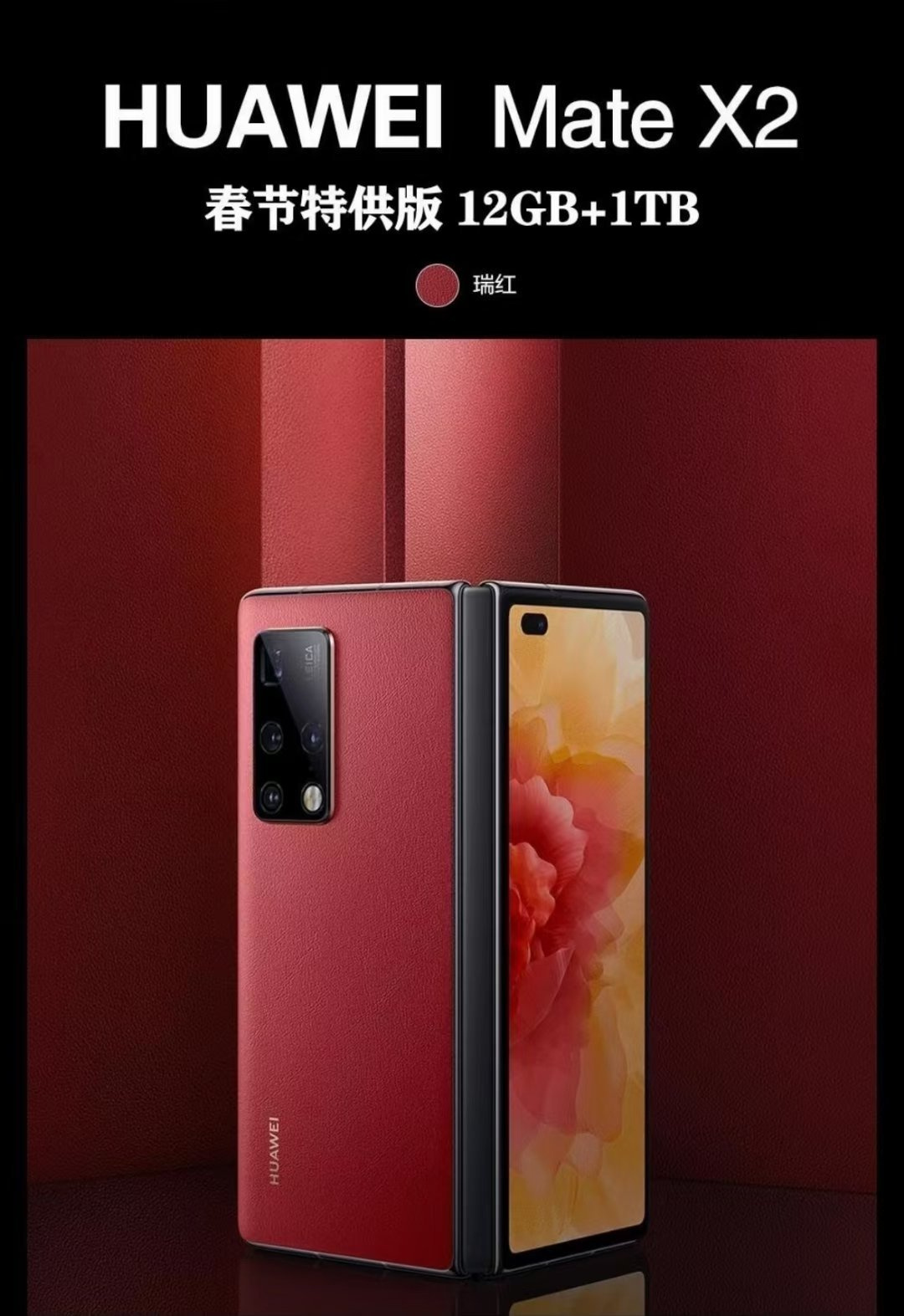
Chinese celebrate the Lunar New Year for 15 days, namely from the 1st day of the year of the lunar calendar to the 15th day of the calendar. During Lunar New Year, the colour red has always meant propensity and good fortune in Chinese culture. With that in mind, Huawei has launched a very prosperous “Red” leather edition of its Huawei Mate X2 foldable in China in tangent with the Lunar New Year Celebration.
Huawei Mate X2 Lunar New Year Edition
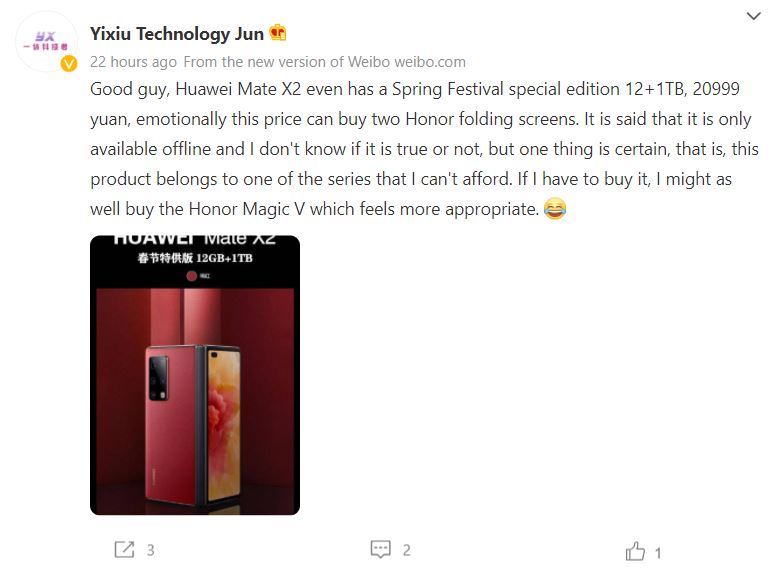
Shared by Weibo user, Yixiu Technology Jun, the official name of the foldable is called the Huawei Mate X2 Lunar New Year Red Limited Edition, and it shares the same hardware such as the processor and the cameras as the normal Huawei Mate X2. The main differentiating factors of this phone are its red vegan leather back design, and its generous 12GB RAM and 1TB storage option.
Source: Weibo user Yixiu Technology Jun
This new edition of the Huawei Mate X2 was silently launched by Huawei, and as of current, the phone is only available in offline stores in China, priced at 20999 RMB (3305 USD).
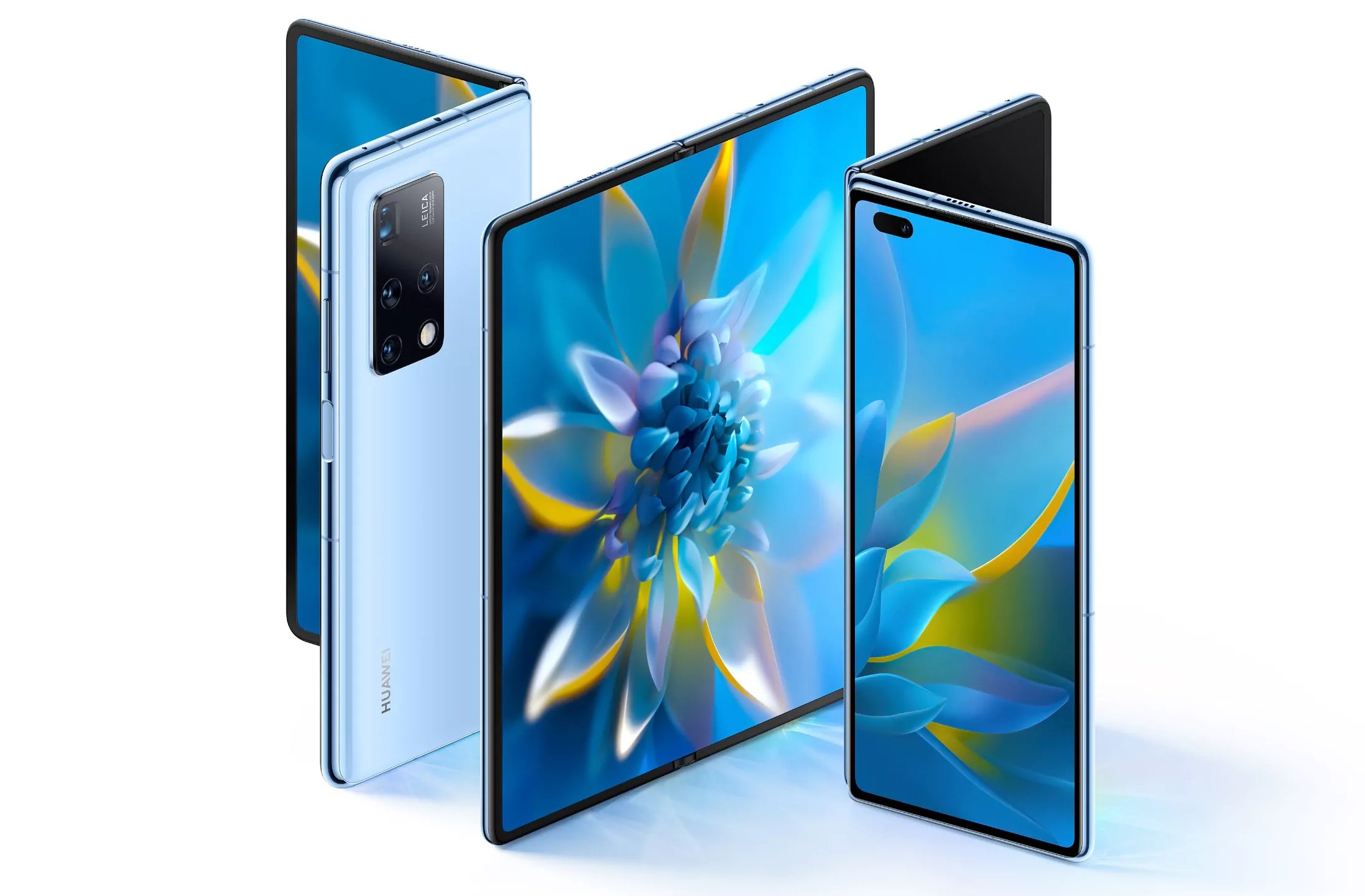
The Huawei Mate X2 comes with a 6.45-inch 90Hz cover OLED display with a pill-shaped cut-out that houses a single 16MP front-facing camera. The foldable display is an 8-inch OLED panel and also has a 90Hz refresh rate.
In the camera department, the phone is equipped with a quad-camera setup that includes a 50-megapixel primary sensor, a 16-megapixel ultra-wide-angle lens, a 12-megapixel telephoto sensor, and an 8-megapixel periscope lens.
It is running Huawei’s own EMUI 11 interface based on the HarmonyOS 2.0 operating system. The smartphone is powered by a 4,500mAh battery and comes with support for 55W wired fast charging technology.
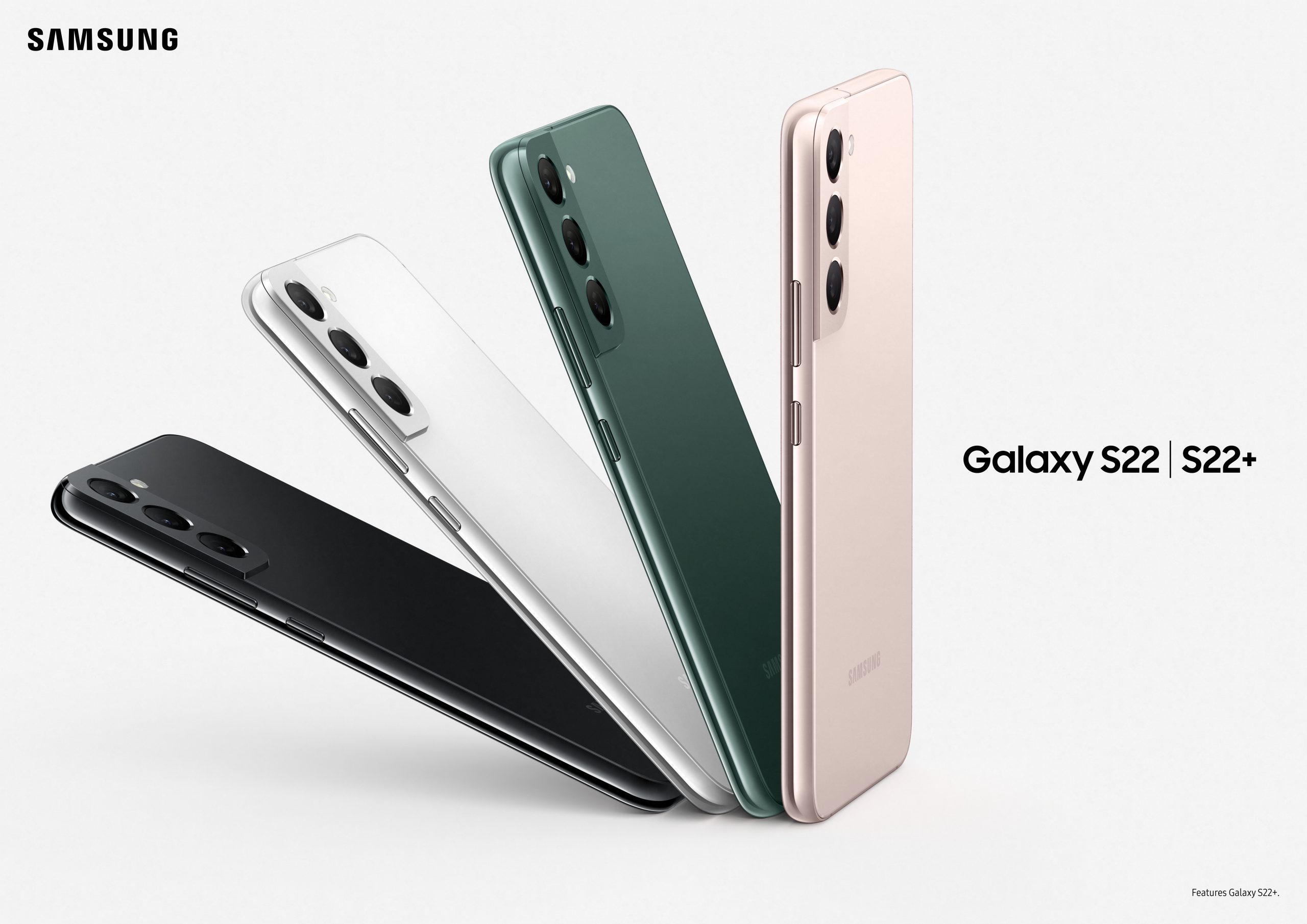
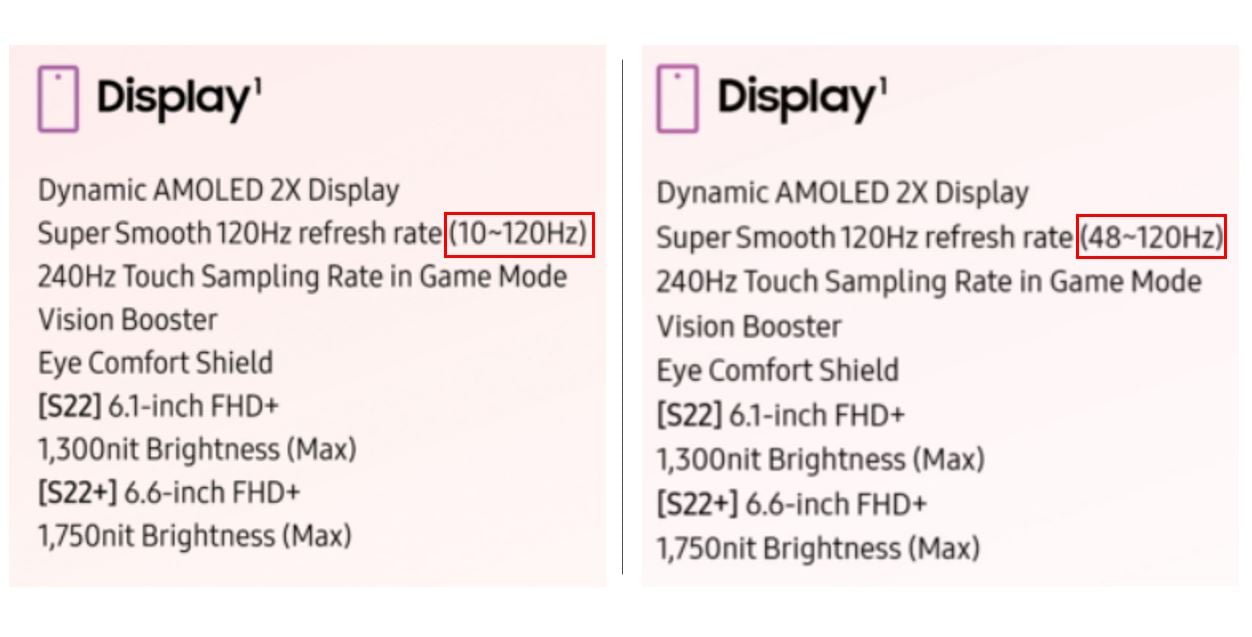
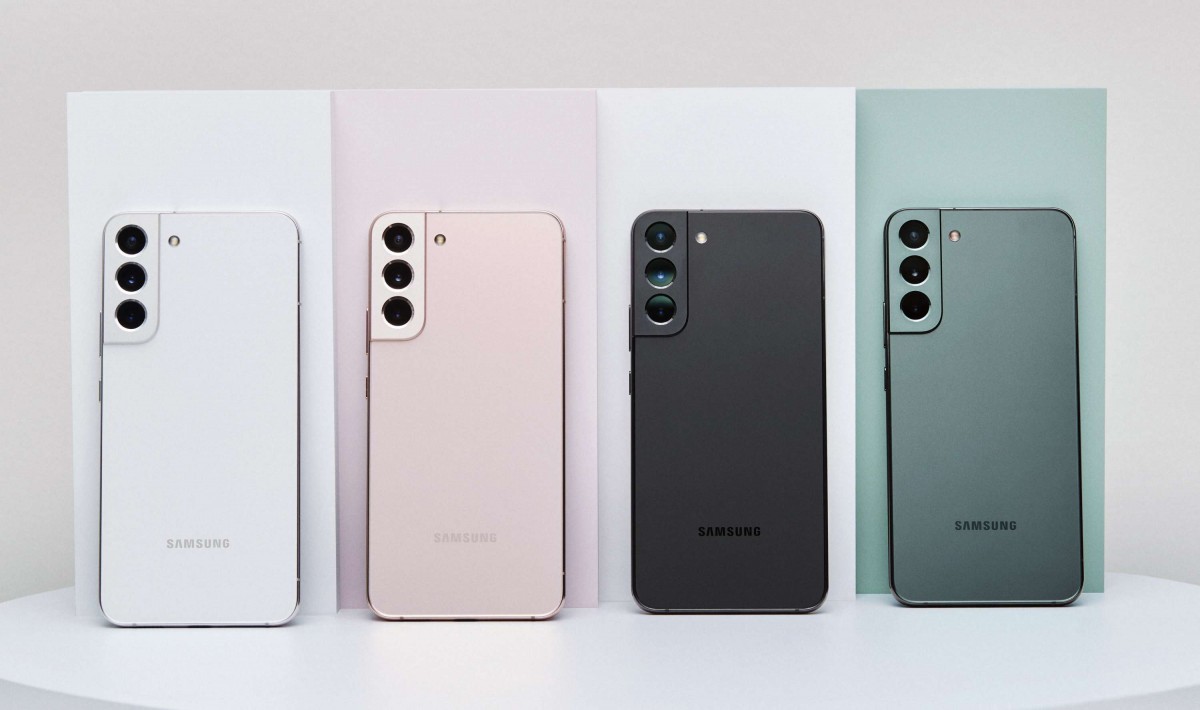
Samsung has recently announced its Samsung Galaxy S22 lineup with the Galaxy S22, S22+ and S22 Ultra. In their initial press release, Samsung had sent the media that the Samsung Galaxy S22 and S22+ were equipped with 10~120Hz Dynamic AMOLED 2X displays. However, 3 days later, Samsung has silently changed the details of the press release, now stating that the Samsung Galaxy S22 and S22+ were equipped with only 48~120Hz Dynamic AMOLED 2X displays instead.
The news came from Twitter user, Ross Young, who noticed that Samsung had changed the details of the Galaxy S22 and S22+ in their marketing materials 2 days after launch. From what he had gathered, he had noticed that in Samsung older marketing materials, it mentioned that both the Samsung Galaxy S22 and S22+ were equipped with 10~120Hz variable refresh rate displays, but in the new marketing materials Samsung has published, the Galaxy S22 and S22+ are only equipped with 48Hz~120Hz variable refresh rate displays, same as last year’s S21 and S21+.
Left: Initial Samsung Promo Material, Right: Latest Samsung Promo Material
Samsung silently changed the details of its Samsung Galaxy S22 and S22+ after it has opened pre-orders on Feb 10 for both phones in several markets such as in the US, Europe and Southeast Asia. The mislabelling of the specifications of the display has also reached the general public as many tech channels have uploaded their hands-on and impressions videos, mentioning that both devices have 10~120Hz refresh rate displays, when in reality, the S22 and S22+ only support 48~120Hz.
In fact, several users already had concerns about the Samsung Galaxy S22 and S22+ having worse battery life than their predecessors, since the S22 and S22+ only come with 3700mAh and 4500mAh batteries respectively, while the S21 and S21+ were equipped with larger 4000mAh and 4800mAh batteries.
Buyers thought that a more power-efficient 10-120Hz display could compensate for the 300mAh decrease in battery size since a display when reading e-books runs on less battery power at 10Hz compared to 48Hz. But Samsung has now confirmed their fears with a worse display than initially advertised. Hopefully, when devices reach the hands of consumers, software battery-saving optimisations would be enough to get the Samsung Galaxy S22 and S22+ to last the whole day on a single charge.
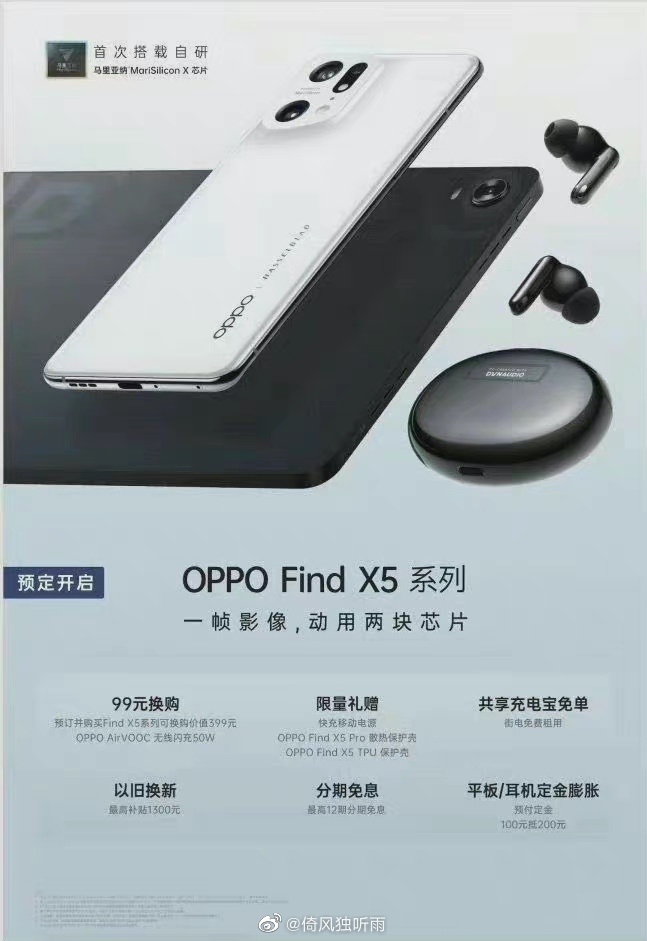
OPPO is expected to showcase the OPPO Find X5 series of smartphones such as Find X5, Find X5 Pro, and Find X5 Lite at the Mobile World Congress (MWC) tech trade show later this month. OPPO is likely to hold a dedicated launch event in China to announce the Find X5 and X5 Pro. Reliable tipster Digital Chat Station shared a leaked poster on Weibo (now deleted) that not only shows the Find X5 series phone, but also other unannounced products such as the OPPO Pad tablet and Enco X2 TWS earbuds.
While OPPO is yet to release an official confirmation, the leaked poster gives a good look at the upcoming OPPO devices. The Find X5 (Pro) design is not a secret since a recent report by Winfuture.de carried its leaked press renders. A leak from the previous month also revealed what to expect from Enco X2 earbuds.
The leaked poster gives a glimpse of OPPO’s first tablet, which is likely to be called OPPO Pad. It reveals that the top edge of the tablet will feature a pair of speaker grilles and a power key. The rear side of the tablet features a single camera along with an LED flash and some sort of branding.
OPPO Pad specifications (rumored)
Recent reports have revealed that the OPPO Pad has an 11-inch IPS LCD display with slim bezels. The tablet will offer a resolution of 2560 x 1600 pixels and a 120Hz refresh rate. It may come with an 8-megapixel front camera and a 13-megapixel rear camera. The device may not feature a fingerprint scanner but may arrive with support for face unlock.
The OPPO Pad will come with Snapdragon 870, 6 GB of LPPDR4x RAM, and 256 GB of built-in storage. It may come preinstalled with Android 12 OS and offer features like multi-screen and a desktop mode. It may house an 8,080mAh battery that supports 33W fast charging. It may come with support for a pressure-sensitive stylus. The device is likely to be priced at around 2,000 Yuan (~$315).
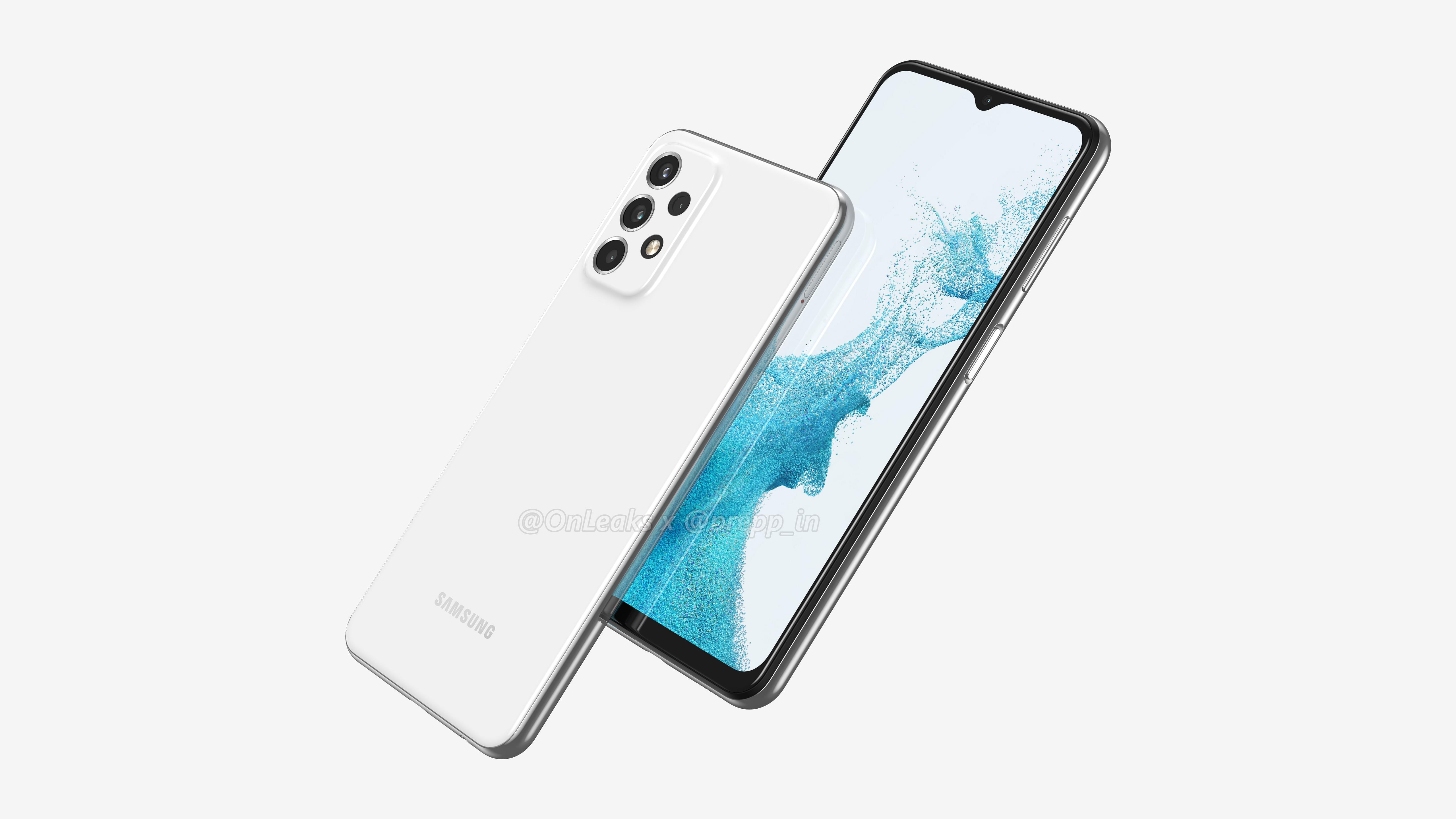
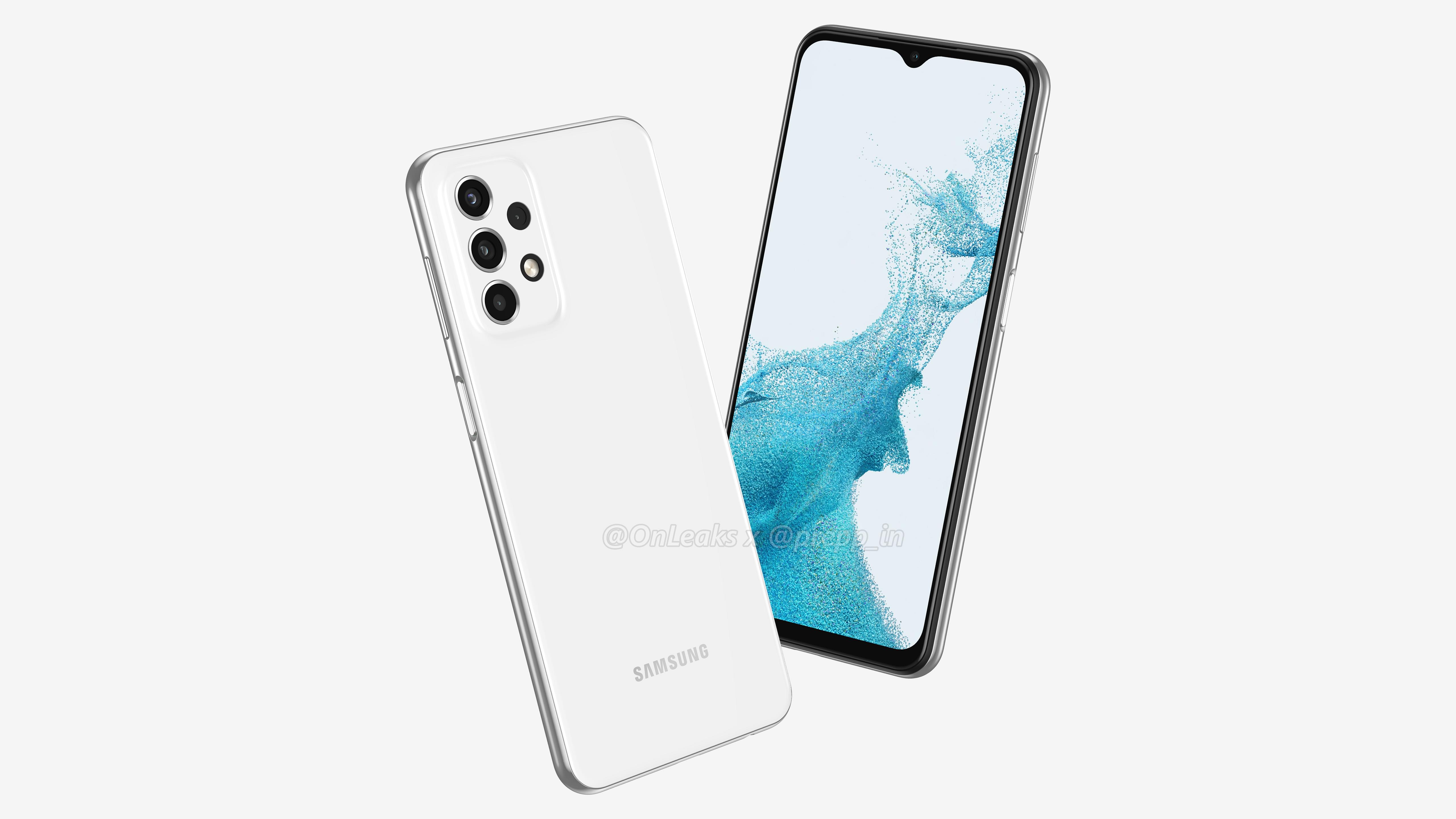
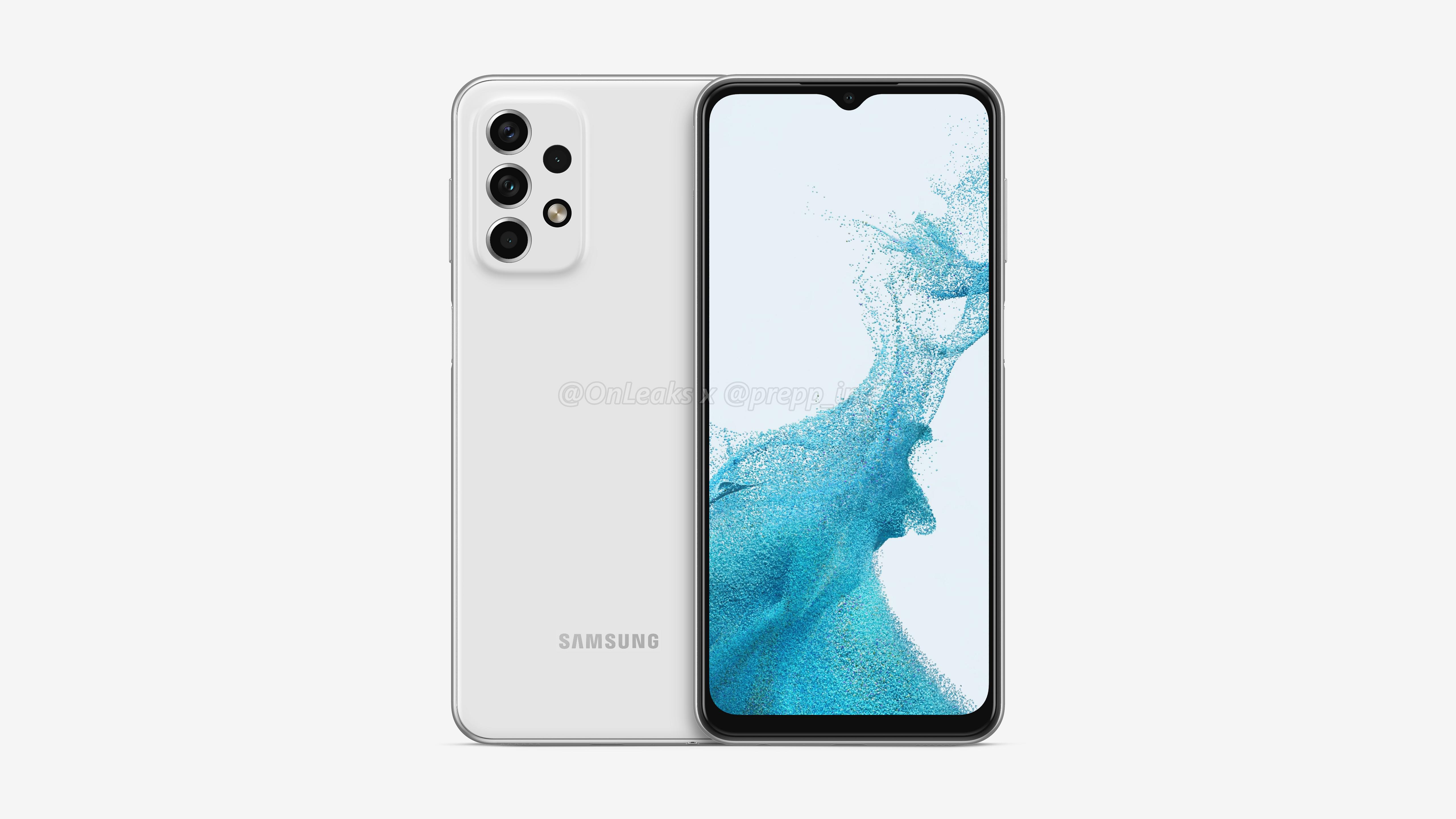
Samsung is reportedly working on a couple of new A-series of smartphones such as Galaxy A23, Galaxy A33, Galaxy A53, and Galaxy A73. It is speculated that some of these phones may debut as early as at the end of this month or in March. A fresh leak courtesy of popular tipster Steve Hemmerstoffer and CollegeDuniareveals the entire design of the Galaxy A23 from all angles. The CAD renders suggests that its design will be similar to last year’s Galaxy A-series phones such as from last year.
Samsung Galaxy A23 5G renders
The CAD renders of the Galaxy A23 5G reveal that it will be sporting a waterdrop notch display on the front with a thick chin. The rear design of the phone Galaxy A23 5G is like last year’s Galaxy A32, A52, and A72. The device measures around 165.4 x 77 x 8.5mm. Its thickness increases to 10.3mm at the camera bump.
1 of 4
Samsung Galaxy A23 5G renders by OnLeaks / CollegeDunia
Samsung Galaxy A23 5G renders
Samsung Galaxy A23 5G renders
Samsung Galaxy A23 5G renders
Samsung Galaxy A23 5G renders
The right side of the phone has a volume rocker and a power key, which is integrated with a fingerprint scanner. The top edge of the device has a microphone, and its bottom side has a 3.5mm audio jack, a microphone, a USB-C port, and a speaker grille. A SIM card slot is available on the left side of the phone.
Samsung Galaxy A23 5G specifications (rumored)
The leak mentions that the Galaxy A23 5G has a display of around 6.6 inches. The rear-facing quad-camera unit of the phone will seemingly feature a 50-megapixel SK Hynix primary camera with OIS support. It could be accompanied by a 5-megapixel ultrawide lens and a pair of 2-megapixel lenses.
At present, there is no information on the other specs of the phone. It is speculated that the Galaxy A32 will be made available in 4G and 5G flavors.
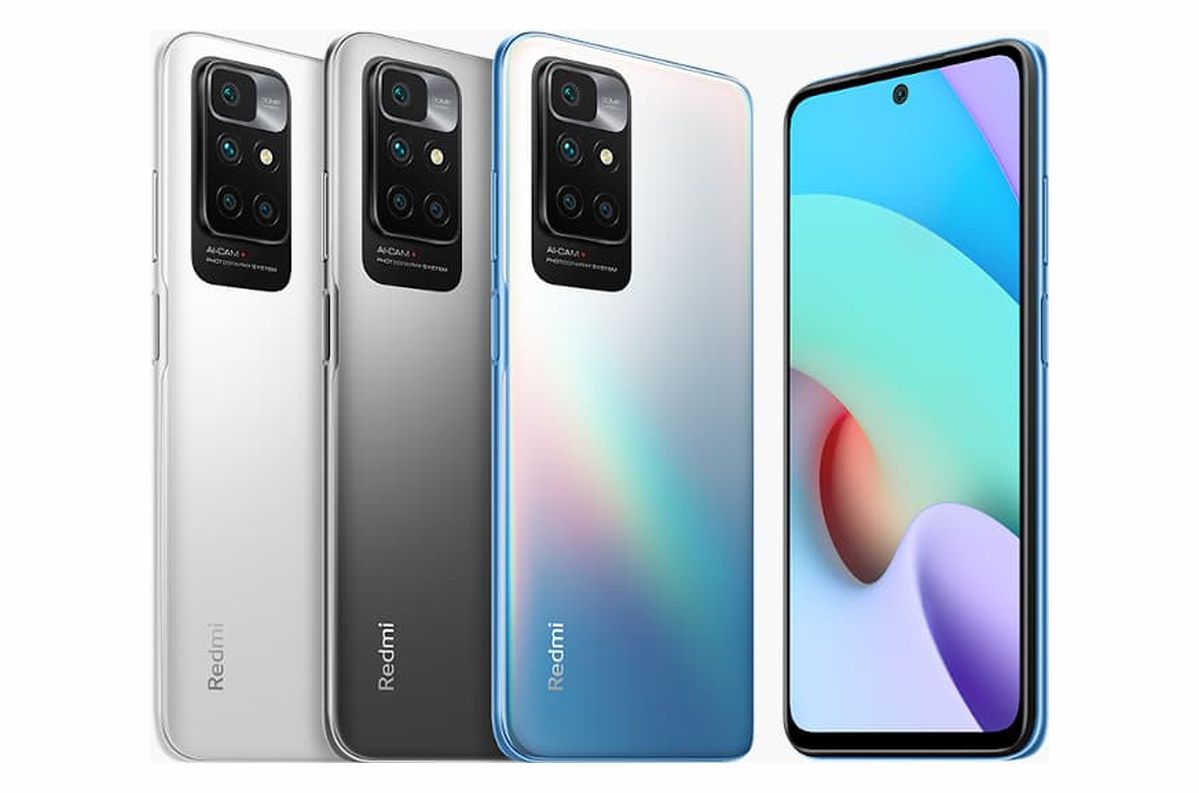
Redmi 10 2022 has gone official silently for the global markets. The mid-range offers key features such as a 90Hz display, 50-megapixel quad cameras, a big battery, and an Helio G-series chipset. Here is all the information on the specifications, features, and pricing of the Redmi 10 2022.
Redmi 10 2022 specifications and features
The Redmi 10 2022 measures 161.95 x 75.53 x 8.92mm and weighs 181 grams. The device has a 6.5-inch punch-hole display that offers a Full HD+ resolution, a 90Hz refresh rate, 405 ppi pixel density, and Gorilla Glass 3. The device has a front camera of 8-megapixel, and its rear camera setup has 50-megapixel primary camera, a 120-degree 8-megapixel ultrawide lens, a 2-megapixel macro camera, and a 2-megapixel depth sensor.
The Helio G88 chipset is present under the hood of the Redmi 10 2022. The device ships with 4 GB of LPDDR4x RAM and up to 128 GB of eMMC storage. The device runs on Android 11 and MIUI 12.5.
Redmi 10 2022
It is equipped with a 5,000mAh battery that supports 18W fast charging and 9W reverse wired charging. The retail package of the device includes a 22.5W charger. For security, it supports face unlock and has a side-facing fingerprint scanner. The device offers other features such as dual 4G VoLTE, a dedicated microSD card slot, Wi-Fi 802.11ac, Bluetooth 5.1, GPS, NFC, IR blaster, a USB-C port, dual speakers, a 3.5mm audio jack, and a splash-resistant body. In terms of specifications and features, it is identical to the Redmi 10, which was announced in August 2021.
Redmi 10 2022 pricing and availability
The Redmi 10 2022 pricing is yet to be confirmed. It comes in three colors such as Carbon Gray, Pebble White, and Sea Blue.
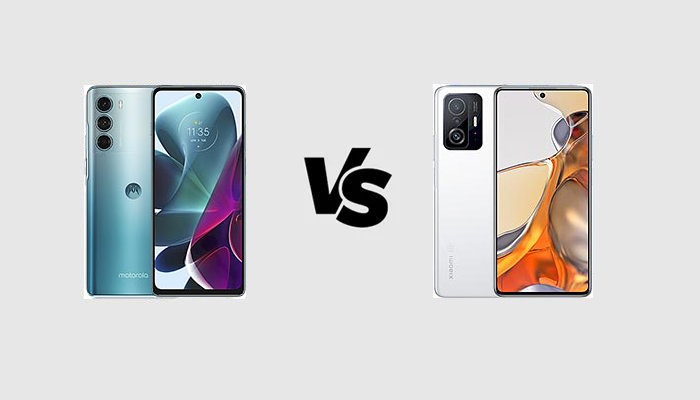
Motorola recently brought another flagship to the global market: the Moto G200 5G. If you are looking for the best performance at a great price, then this is one of the most powerful phones you can opt for. But to get that huge power at that price, you have to face a few compromises. That is why you have to evaluate your purchase in a detailed way by comparing the Moto G200 5G to other handsets in the same range. One of them is definitely the Xiaomi 11T and this is a comparison between the specifications of this handset and the Moto G200 5G.
Motorola Moto G200 5G vs Xiaomi 11T
Motorola Moto G200 5G
Xiaomi 11T Pro
DIMENSIONS AND WEIGHT
168.1 x 75.5 x 8.9 mm,
202 g
164.1 x 76.9 x 8.8 mm,
203 g
DISPLAY
6.8 inches, 1080 x 2460 pixels (Full HD+), LCD
6.67 inches, 1080 x 2400 pixels (Full HD+), AMOLED
PROCESSOR
Qualcomm Snapdragon 888+, octa-core 2.99 GHz
Mediatek Dimensity 1200, octa-core 3 GHz
MEMORY
8 GB RAM, 128 GB – 8 GB RAM, 256 GB
8 GB RAM, 128 GB – 8 GB RAM, 256 GB
SOFTWARE
Android 11
Android 11, MIUI
CONNECTIVITY
Wi-Fi 802.11 a/b/g/n/ac/6e, Bluetooth 5.2, GPS
Wi-Fi 802.11 a/b/g/n/ac/ax, Bluetooth 5.2, GPS
CAMERA
Triple 108 + 8 + 2 MP, f/1.9 + f/2.2 + f/2.4
16 MP f/2.2 front camera
Triple 108 + 8 + 5 MP, f/1.8 + f/2.2 + f/2.4
16 MP f/2.5 front camera
BATTERY
5000 mAh, fast charging 33W
5000 mAh, Fast Charging 67W
ADDITIONAL FEATURES
5G, dual SIM, water-repellent
5G, dual SIM, IP53 splash resistant
Design
The Motorola Moto G200 5G is a flagship killer, but unfortunately, it is not built with premium materials. Its rear cover and its frame are both made of polycarbonate and, even if the look is attractive thanks to those cameras without a rear camera module behind, it is a cheap phone in terms of aesthetics. The Xiaomi 11T is built with a glass back and an aluminum frame: the design is definitely more suggestive and the materials used are premium just like the most expensive flagships. The Motorola Moto G200 5G has a water repellent body, while the Xiaomi 11T features the IP53 certification which guarantees dust resistance and splashes resistance. The Xiaomi flagship killer is even more compact than its rival.
Display
The Xiaomi 11T wins the comparison even when it comes to the displays. It comes with a great AMOLED display showing up to one billion colors with a Full HD+ resolution of 1080 x 2400 pixels, the HDR10+ certification, a 120 Hz refresh rate, a very high peak brightness (up to 1,000 nits), and a diagonal of 6.67 inches. Unfortunately, the Motorola Moto G200 5G has an LCD panel with less brilliant colors: it has a higher 144 Hz refresh rate, but the image quality is inferior due to the LCD technology. On the other hand, it has a wider panel with a diagonal of 6.8 inches, this is great for productivity users and gamers, just like the 144 Hz refresh rate. Note that the Xiaomi handset comes with stereo speakers, while the Motorola one does not.
Specs & Software
If your goal is to get the best phone in terms of performance, then you have no better choice than the Motorola Moto G200 5G. It is powered by the amazing Qualcomm Snapdragon 888 Plus mobile platform, an upgrade of the Snapdragon 888 providing higher CPU performance, paired with 8 GB of RAM and either 128 or 256 GB of UFS 3.1 internal storage. It is a lot better than the Xiaomi 11T fueled by the MediaTek Dimensity 1200 chipset and up to 8 GB of RAM. Both the phones run Android 11 but with different user interfaces. The Motorola Moto G200 5G is definitely the best even for those who seek the highest gaming performance.
Camera
Motorola Moto G200 5G and Xiaomi 11T are equipped with a triple rear camera including a main sensor with a 108 MP resolution. The former has a better 13 MP ultrawide camera paired with the main sensor, while the latter has a brighter focal aperture for the main sensor which should allow getting slightly better photo quality in low light conditions.
The Xiaomi 11T and the Motorola Moto G200 5G sport two batteries with a capacity of 5000 mAh. But despite the capacity being the same, the 11T should be able to last more on a single charge due to its efficient AMOLED display. It even provides faster charging with a power of 67W (against just 33W).
Price
You can find the Xiaomi 11T in the global market for less than €400/$455 thanks to online street prices, while the Motorola Moto G200 5G is available for less than €500/$568. The Xiaomi 11T wins the comparison because of its better display, stereo speakers, premium design, and faster charging. But if you are a gamer, then Moto G200 5G might be a better choice due to its higher refresh rate and better processor.
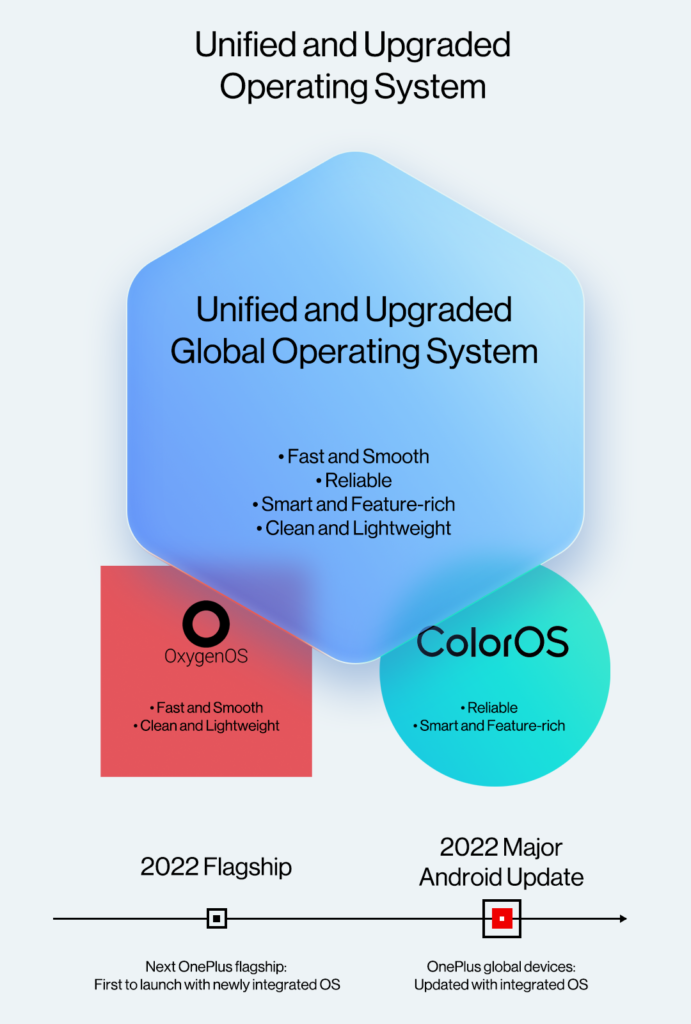
Back in June 2021, OnePlus announced that OxygenOS will be deeply integrated with OPPO’s ColorOS. Following this, OnePlus ditched the HydrogenOS in favor of ColorOS in China. Later, the global regions received the Android 12 update which effectively made the OxygenOS nothing more than a rebranded ColorOS.
A recent report suggested that both the companies will be ditching their operating system names and will rather go for a unified OS with one name which is rumored to be H2OOS. Now, OnePlus has just confirmed that they are working on the OxygenOS 13 based on Android 13.
This latest revelation throws a wrench in the current rumors and narrative that the brand will be ditching the OxygenOS name altogether. However, OnePlus has previously stated that at some point they will start offering a unified global operating system across all their devices, so it may be that the upcoming unified OS name change will still happen, but will likely be delayed than the previous rumors suggest.
The latest announcement is in regard to discussing OxygenOS 13 on the Open Ears Forum with their userbase in an effort to create the perfect OxygenOS for OnePlus smartphones. The event is scheduled for February 28, 19:30 – 21:30 HKT (17:00 – 19:00 IST, 13:30 – 15:30 CEST, 7:30 – 9:30 EST). Interested people can apply to join the event till February 18, by clicking on this link.
You thought this past week was busy with smartphone launches? Think again. Because next week is going to be even busier. A total of 7 brands have confirmed to release phones next week. Of these, four companies will announce new products. Whereas, the remaining three will debut their already official handsets in one of the important markets – India.
Next week, we will witness the launch of 5 brand-new smartphones. Out of this, two of them will be the first high-end gaming smartphones of 2022. On the other hand, the remaining three will be important budget/mid-range smartphones. Let’s go through them one by one.
The most anticipated smartphone of next week is Redmi K50 Gaming Edition. It will be the brand’s first phone with a Qualcomm Snapdragon 8 Gen 1 SoC.
The launch event for the handset is scheduled to kickstart from 6 PM CST on February 16. Interested readers can watch the live stream on Mi.com China, Weibo, and leading Chinese social as well as video streaming platforms.
The device is expected to arrive with features such as a 6,67-inch 120Hz OLED display, 64MP + 13MP + 2MP triple camera setup, 16MP selfie camera, JBL-tuned dual stereo speakers, magnetic shoulder keys, x-axis linear vibrations motor, side-mounted fingerprint sensor, 4,700mAh battery, and 120W fast charging.
2. realme 9 Pro Series
realme 9 Pro series
The realme 9 Pro series is set to launch on February 16 in multiple markets, including India and Europe. The event live stream is planned to start from 1:30 PM IST. It can be watched on the brand’s official YouTube channel. The company may also stream the conference on its official Twitter and Facebook profile/page.
The lineup will include two devices, namely realme 9 Pro and realme 9 Pro+. They will feature the same color-changing rear design but will differ in terms of specs.
According to leaks and teasers, the Pro+ will offer all the bells and whistles like an OIS-enabled 50MP Sony IMX766 primary camera, 6.43-inch FHD+ 90Hz AMOLED display, and an in-screen fingerprint sensor with support for heart rate monitoring. While the Pro will come with a 6.59-inch 120Hz display (LCD) and a Qualcomm Snapdragon 695 chipset.
3. REDMAGIC 7 Series
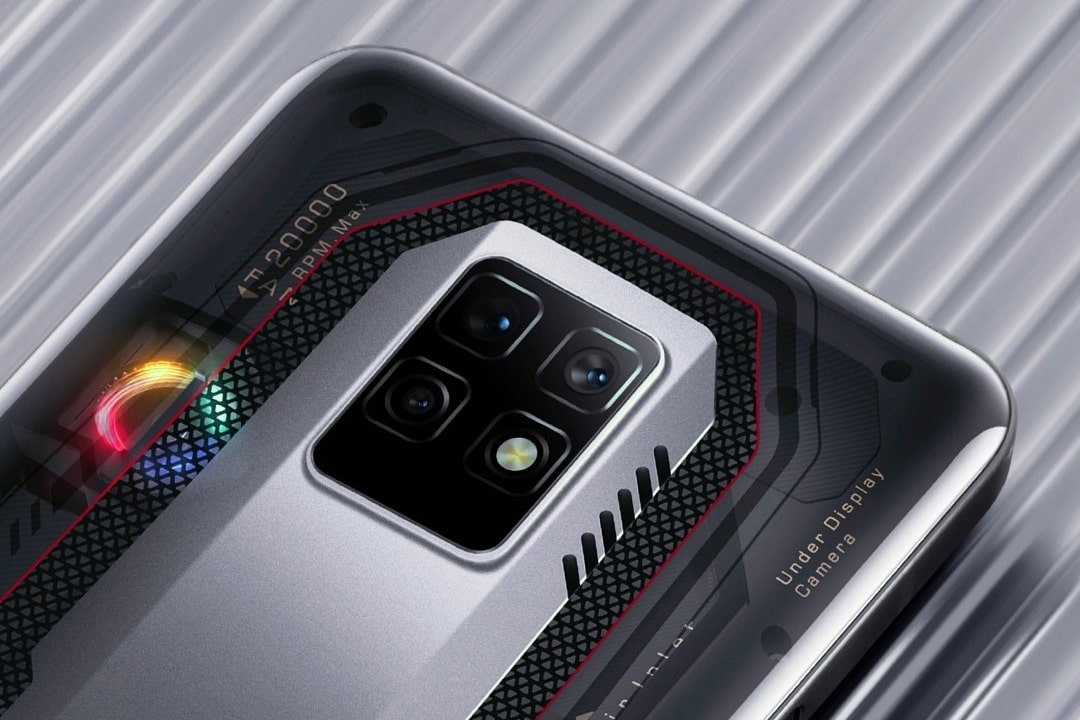
REDMAGIC 7 Under Display Camera Edition
The REDMAGIC 7 series will launch on February 17 in China. The event is scheduled to start at 3 PM CST. It will be live-streamed on Weibo and other popular Chinese social as well as video streaming platforms.
The family is expected to include two models, such as REDMAGIC 7 and REDMAGIC 7 Pro. There could be a special variant with an under-display camera.
Leaks, certifications, and teasers have revealed features like a 6.8-inch FHD+ 165Hz OLED display, Qualcomm Snapdragon 8 Gen 1 chip, LPDDR5 RAM, UFS 3.1 storage, VC liquid cooling system, dual cooling fans, 64MP triple camera setup, Android 12, 4,500mAh battery, and 165W fast charging.
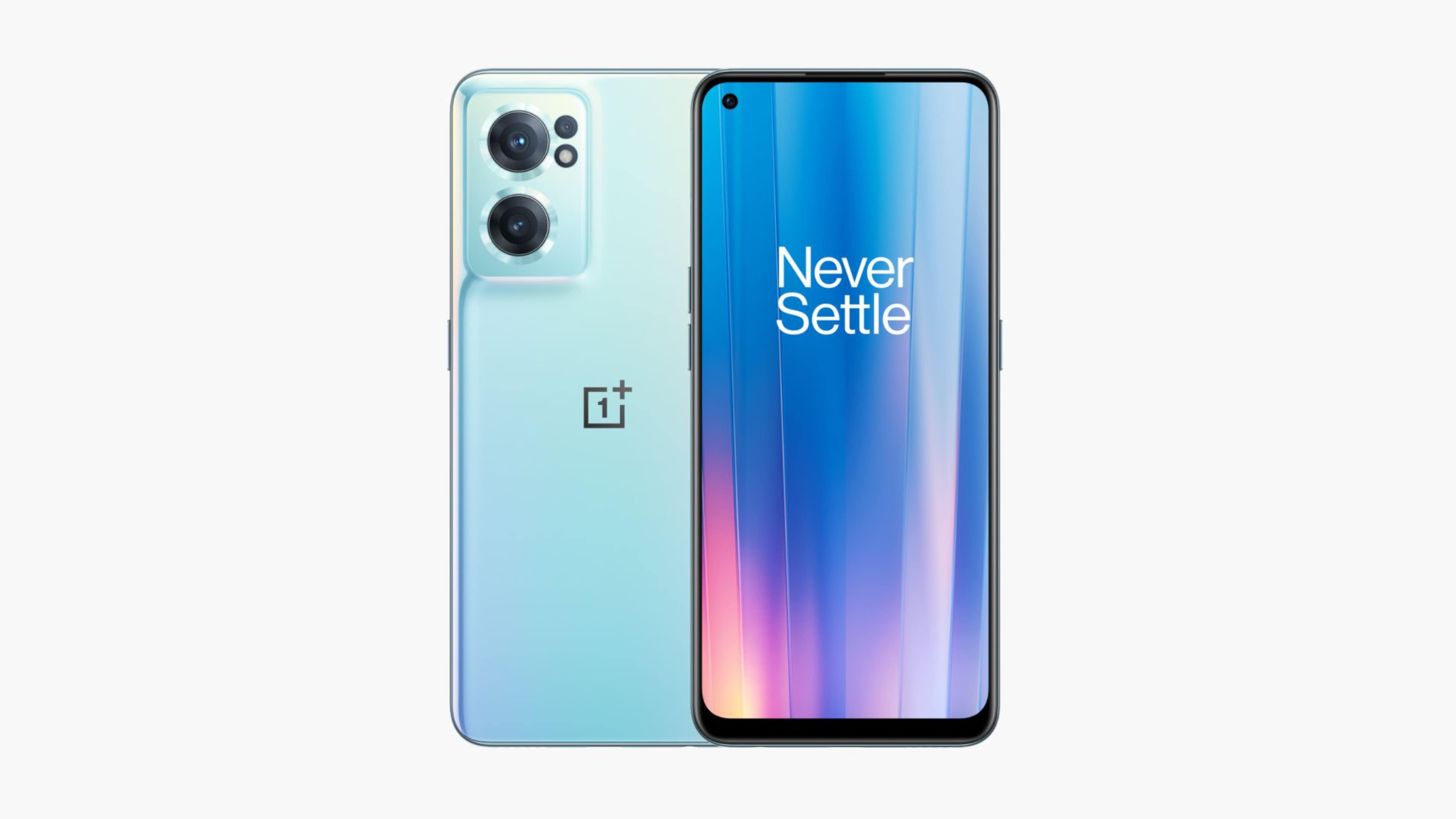
4. OnePlus Nord CE 2
OnePlus Nord CE 2
OnePlus has confirmed to launch the OnePlus Nord CE 2 in multiple markets on February 17. The event will be live-streamed on the company’s official YouTube channel from 7 PM IST. The brand may also stream the conference on its official social media handles.
As far as the device is concerned, it will be the successor of the OnePlus Nord CE from last year. It will be accompanied by the OnePlus TV Y1S series. The OnePlus Nord CE 2 Lite may also debut alongside it.
The OnePlus Nord CE 2 is said to sport a 6.43-inch FHD+ 90Hz AMOLED display, MediaTek Dimensity 900 SoC, LPDDR4x RAM, UFS 2.2 storage, 64MP (wide) + 8MP (ultra-wide) + 2MP (macro) triple camera setup, 16MP selfie camera, MicroSD card slot, 3.5mm headphone jack, in-screen fingerprint sensor, OxygenOS 11.3 based on Android 11, 4,500mAh battery, and 65W fast charging.
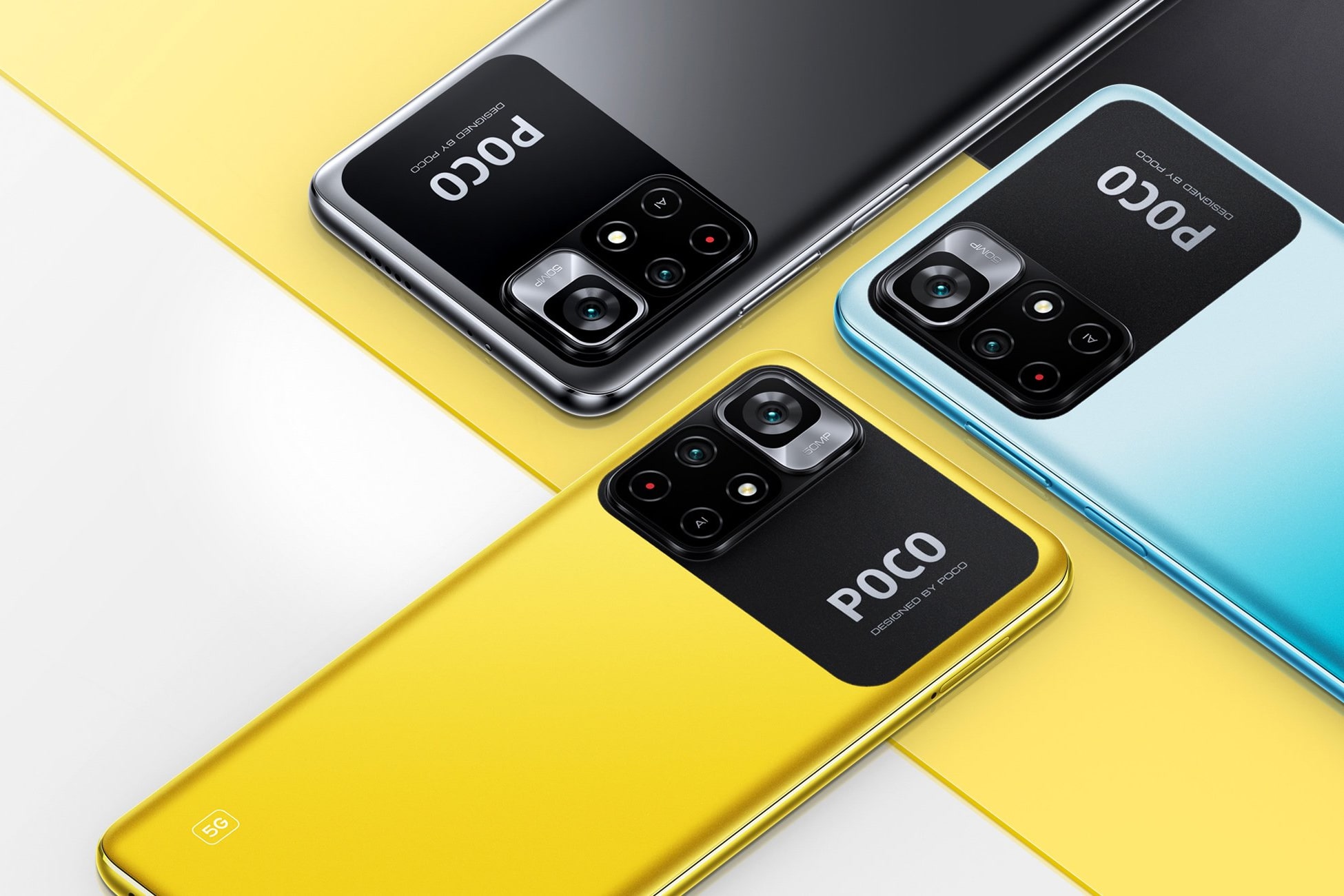
5. POCO M4 Pro 5G
POCO M4 Pro 5G
The POCO M4 Pro 5G is finally heading to India on February 15. The launch event will begin at 12 PM and can be streamed on the official YouTube channel of POCO India.
This handset went official in early November in multiple international markets. It is nothing but a rebranded Redmi Note 11 5G sold in China. The phone also goes by the name of Redmi Note 11T 5G in India.
Its specifications include a 6.6-inch FHD+ 90Hz display (LCD), MediaTek Dimensity 810 chipset, 50MP (wide) + 8MP (ultra-wide) dual camera setup, 16MP selfie camera, side-mounted fingerprint sensor, dual stereo speakers, Android 11-based MIUI 12.5, 5,000mAh battery, and 33W fast charging.
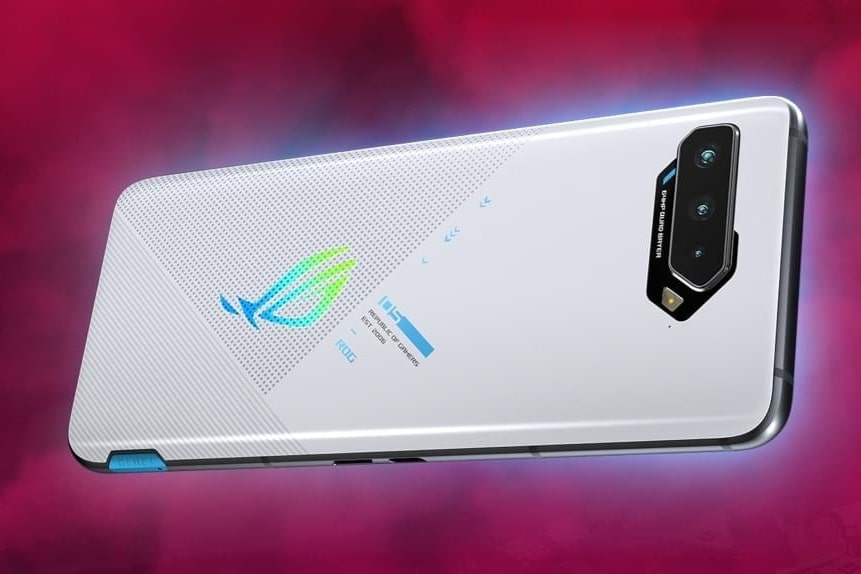
6. ASUS ROG Phone 5S Series
ASUS ROG Phone 5S
Six months post its initial release, the ASUS ROG Phone 5S series is set to launch in India on February 15. The family includes two devices, namely ROG Phone 5S and ROG Phone 5S Pro.
The duo will be similar to their predecessors ROG Phone 5 and ROG Phone 5 Pro, except for the chip. They are powered by a Qualcomm Snapdragon 888+ SoC instead of Snapdragon 888.
Their specs consist of a 6.78-inch FHD+ 144Hz AMOLED display, LPDDR5 RAM, UFS 3.1 storage, 64MP (wide) + 13MP (ultra-wide) + 5MP (macro) triple camera setup, 24MP selfie camera, dual stereo speakers, 3.5mm headphone jack, 2 x USB Type-C ports, in-screen fingerprint sensor, ultrasonic shoulder triggers, Android 11-based ROG UI, 6,000mAh battery, and 65W fast charging.
7. Infinix ZERO 5G
Infinix ZERO 5G
Infinix ZERO 5G went official earlier this week in Nigeria. Up next, the brand’s first 5G smartphone is on the way to India. It will land in the country on February 14.
The handset has a design similar to the premium OPPO Find X 3 series. However, it is a mid-range 5G smartphone.
It offers specifications like a 6.78-inch 120Hz display (LCD), MediaTek Dimensity 900 chipset, LPDDR5 RAM, UFS 3.1 storage, 48MP + 13MP + 2MP triple camera setup, 16MP selfie camera, Android 11, 5,000mAh battery, and 33W fast charging.
We use cookies on our website to give you the most relevant experience by remembering your preferences and repeat visits. By clicking “Accept”, you consent to the use of ALL the cookies.
This website uses cookies to improve your experience while you navigate through the website. Out of these, the cookies that are categorized as necessary are stored on your browser as they are essential for the working of basic functionalities of the website. We also use third-party cookies that help us analyze and understand how you use this website. These cookies will be stored in your browser only with your consent. You also have the option to opt-out of these cookies. But opting out of some of these cookies may affect your browsing experience.
Necessary cookies are absolutely essential for the website to function properly. This category only includes cookies that ensures basic functionalities and security features of the website. These cookies do not store any personal information.
Any cookies that may not be particularly necessary for the website to function and is used specifically to collect user personal data via analytics, ads, other embedded contents are termed as non-necessary cookies. It is mandatory to procure user consent prior to running these cookies on your website.