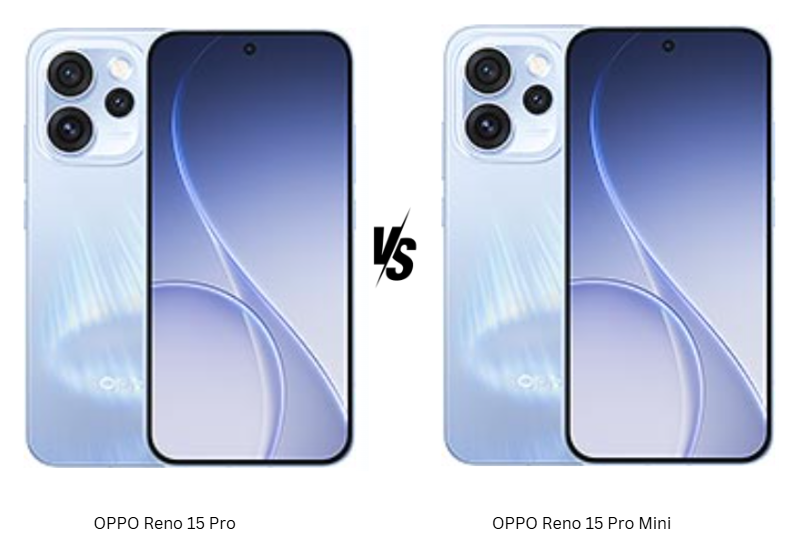
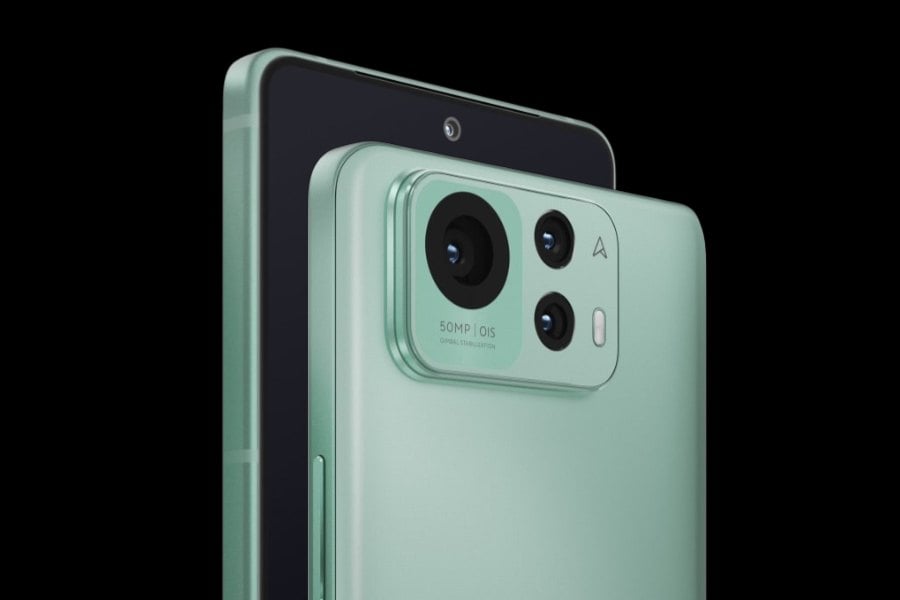
On paper, the Oppo Reno15 Pro and Reno15 Pro Mini look like twins, same display, the same performance, the same cameras, and even the same battery setup. Yet Oppo has priced them noticeably apart, raising an obvious question: what are you actually paying extra for? This comparison matters because it isn’t about specs, it’s about value, practical upgrades, and whether the “Pro” name still means something when the experience feels nearly identical. For buyers choosing between these two, the decision comes down to subtle features, pricing logic, and which phone makes more sense in real-world use rather than on a spec sheet.
Major Features:
Feature
Oppo Reno15 Pro
Oppo Reno15 Pro Mini
Winner
Design & Build
Premium glass & aluminum, IP68/IP69, eSIM support
Same premium build, no eSIM
Reno15 Pro — eSIM adds flexibility for some users
Display
6.32″ AMOLED, 120Hz, HDR10+, Gorilla Glass 7i
Same 6.32″ AMOLED, 120Hz, HDR10+, Gorilla Glass 7i
Tie — Identical panel quality and experience
Performance
Dimensity 8450, 12GB RAM, UFS 3.1
Same Dimensity 8450, 12GB RAM, UFS 3.1
Tie — No practical performance difference
Battery & Charging
6200 mAh, 80W wired fast charge
Same 6200 mAh, 80W wired fast charge
Tie — Same endurance and charging
Main Camera
200MP wide + 50MP tele + 50MP ultrawide
Same triple-camera setup
Tie — Same optics and output
Selfie Camera
50MP ultrawide selfie
Same 50MP ultrawide selfie
Tie — Identical front camera
Connectivity
eSIM support; Wi-Fi includes 802.11ax (Wi-Fi 6)
No eSIM; Wi-Fi includes 802.11ax (Wi-Fi 6)
Reno15 Pro – eSIM
Price (Approx.)
₹67,000
₹60,000
Reno15 Pro Mini — Better value for almost identical hardware
Both the Oppo Reno15 Pro and Reno15 Pro Mini share the same premium glass/aluminum design and high water/dust resistance. They feel refined in hand with no visible compromise on materials between the two. The only practical difference is SIM support: the Pro adds eSIM support, which may matter if you use dual profiles without physical SIM cards.
Display Quality
Both phones use the same 6.32-inch AMOLED panel with 120 Hz refresh, wide color, strong brightness, and Gorilla Glass 7i. In everyday use, scrolling and media playback feel equally fluid. There’s no visual advantage for either; they match in quality and color richness.
Verdict
Design and display are effectively tied. The only subtle advantage for the Pro is the eSIM option.
2. Specifications
Performance
They run on the same Dimensity 8450 chipset with identical RAM/storage options. Real-world performance, apps, multitasking, and gaming feel identical. There’s no performance uplift on the Pro that’s noticeable in daily use.
Battery and Charging
Battery capacity and charging speeds are the same on both. Endurance and charge times match, so you won’t see any real advantage in battery life or charging experience.
Verdict
No difference in performance or battery. Hardware and daily responsiveness are equally strong.
3. Camera
Main and Secondary Lenses
Both phones use the same 200 MP main, 50 MP telephoto, and 50 MP ultrawide cameras with OIS and rich video modes. Photo and video quality will be indistinguishable between them in normal use. Neither model has exclusive imaging features.
Selfie Camera
Selfie performance is also the same, with a 50 MP sensor producing well-exposed shots with natural colors. No Pro benefit here.
Verdict
Identical camera systems, so no winner between them.
4. Pricing
Oppo Reno15 Pro sits around ₹67,000, while the Reno15 Pro Mini is about ₹60,000. Since core hardware, display, battery, and cameras are the same, the Mini’s lower price is the main practical difference. The Pro only adds eSIM support, which matters for certain users but doesn’t impact most everyday experiences.
Verdict
From a value perspective, the Pro Mini wins, same experience, lower price.
Disclaimer: Prices are approximate and may vary based on country, region, and applicable taxes.
5. Conclusion
The standout differentiator is eSIM support on the Reno15 Pro; everything else, performance, battery endurance, display, and cameras, is the same. The Mini effectively delivers flagship hardware at a better price point.
Verdict
If you need eSIM, choose the Reno15 Pro. For most buyers, Reno15 Pro Mini gives you equal performance and features for less money, making it the smarter choice overall.
Smartwatches have become one of the most common gadgets people wear today. After all, they promise to do everything from basic step tracking to monitoring your heart rate and oxygen-level. On paper, they look like the perfect everyday accessory.
But they also come with obvious downsides. A good smartwatch that offers reliable tracking usually costs hundreds of dollars. And no matter how advanced it is, most of them need to be charged every day or two. For a device that’s meant to stay on your wrist all the time, that constant charging quickly becomes another chore.
Personally, I’ve never enjoyed charging things more than necessary. Phones are unavoidable, laptops are understandable, but charging a watch every night has always felt excessive to me. That’s why I’ve gradually moved back toward conventional digital watches instead of Apple, Samsung, or other smart options.
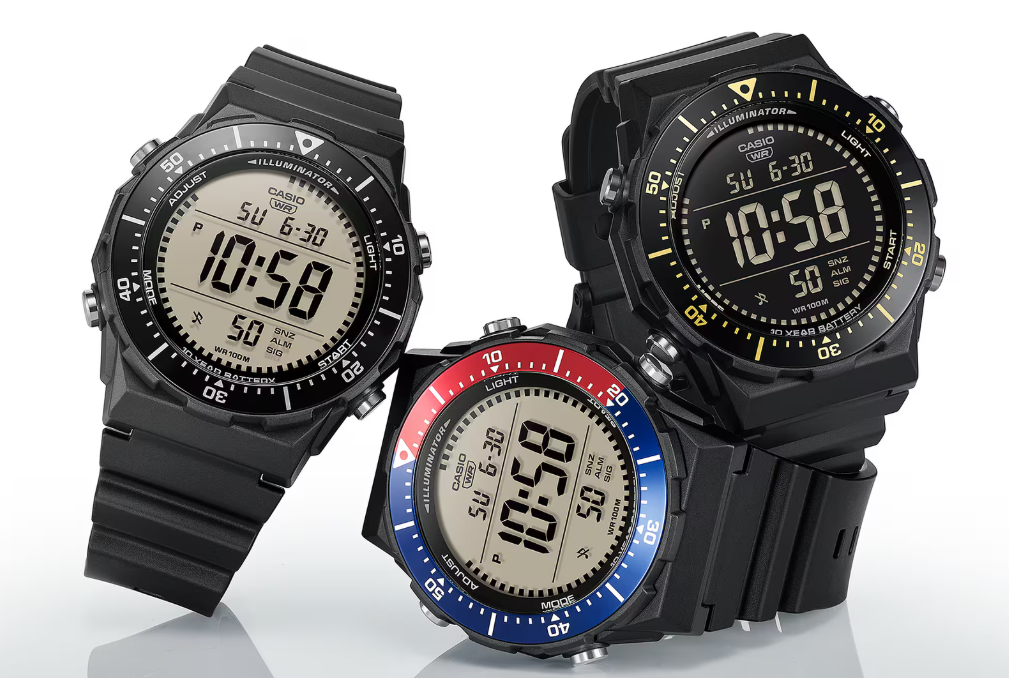
And when it comes to simple, reliable digital watches, Casio still sits at the top of the list. Its affordable AE and W series, in particular, are one of the easiest recommendations for anyone who just wants a watch that works. The headline feature is a claimed battery life of 10 years.
Despite the dominance of smartwatches, interest in these inexpensive Casios hasn’t disappeared. If anything, they’ve settled into a quiet niche audience, but the traction is there. So here’s why Casio’s 10-year battery watches still make sense in 2026.
1. Practical features without the smart-device hassle
First and foremost, let’s look at the features a 10-year Casio smartwatch offers. One of the common misconceptions is that long-battery watches fall short in terms of specs and features. That isn’t really true. Modern Casio models with 10-year batteries often include genuinely useful tools such as:
world time for travelers
multiple alarms
countdown timers
stopwatches
bright LED backlights
water resistance
These are features most people actually need in daily life, without any of the complexity that comes with a smartwatch.
2. A decade of near-zero maintenance
The biggest appeal of Casio’s 10-year battery watches is quite obvious. You don’t have to think about them once you wear them.
Most quartz watches need a battery change every two to three years. That means trips to a repair shop, small service costs, and the minor annoyance of suddenly finding your watch dead one morning. Imagine you don’t have to think about all this for a decade.
You buy a watch in 2026, use it extensively, and realize only in 2036 that now is the time for a battery change. It’s a real convenience for people who treat watches as tools rather than fashion accessories; this is a huge advantage.
3. Real quality-of-life improvement for heavy users
Speaking of usability, a long-battery-life smartwatch is most suitable for people who rely on their watches every day. You could be a student who uses a watch for alarms and timers, or a traveller with a need for world time. Casio excels on all these fronts.
Of course, smartwatches can also do this and even more, but heavy use means even more frequent charging. With a 10-year battery, you can use alarms, timers, a world clock, and backlights regularly without worrying about draining the battery.
4. Built for rough use
I’ve always looked at Casio as the Nokia of watches. The company built its reputation for durability, and that stays even to this day.
Most of the company’s long-battery models are designed to handle rough daily use. They offer 100-meter water resistance, resin construction, and simple quartz movements that can survive years of wear. So you can be sure to wear them during traveling, hiking, working outdoors, or commuting in bad weather without worrying too much.
Unlike smartwatches with delicate screens and expensive repairs, a basic Casio is meant for rough use. That practical, rugged nature makes them trusted companions for people who need a watch as a tool rather than a status symbol.
5. Better for the wallet
Casio’s 10-year battery model is also light on your pockets. You can easily get one below $50 with all of the durable features we mentioned above. And if you calculate value as “years of service per rupee or dollar,” these watches are hard to beat. You pay a small amount upfront and get a decade of reliable use with almost no additional expense.
That’s a big deal for students and budget-conscious buyers. No subscription costs, no expensive repairs, no accessories required.
There’s also a quiet environmental benefit. Fewer battery changes mean fewer disposable coin cells thrown away. A watch that lasts ten years without replacement reduces small but real electronic waste.
Casio’s newer models also increasingly focus on durable builds and longer product life rather than fast replacement cycles. It’s not a dramatic solution to e-waste, but it’s a sensible step in the right direction.
6. Longevity over novelty
Technology culture today revolves around upgrades. New phones every year. New wearables every few years. More features, more apps, more charging.
Casio’s 10-year battery watches are the exact opposite philosophy. They are built around reliability, low friction, and long-term thinking. A gadget that quietly runs for a decade without asking for anything in return feels almost unusual now.
Smartwatches will continue to evolve and offer more capabilities. For many people, they make sense. But there will always be users who just want a simple, dependable watch that tells the time, sets alarms, and never needs attention.
For them — and for anyone tired of charging yet another device — Casio’s 10-year battery watches remain one of the most practical pieces of technology you can still buy today. And that’s why they matter.
For more daily updates, please visit our News Section.
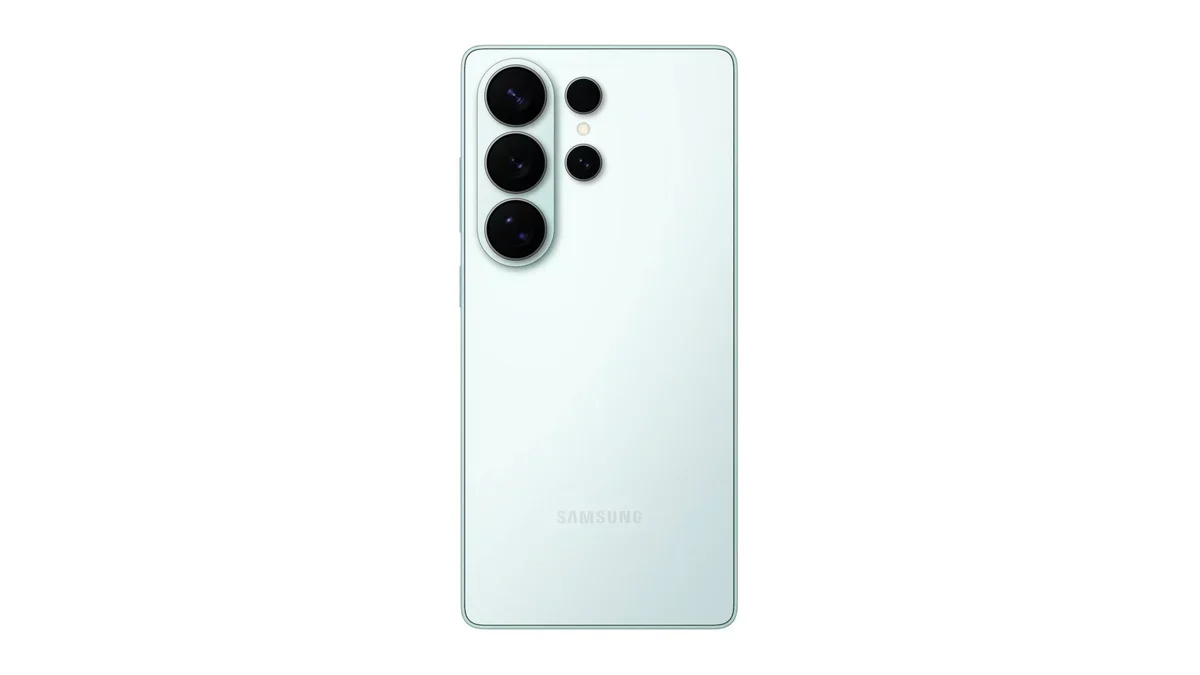
Samsung’s Galaxy S Ultra series has long been the poster child for Android flagships, packing cutting edge hardware, top tier cameras, and the best of the brand’s software features. While we are still waiting on the Galaxy S26 series, many rumors and leaks have already revealed a bunch of details for the latest flagships.
These reports have revealed that the Galaxy S26 Ultra and the others are likely getting minor updates over their predecessors. However, 2027’s Galaxy S27 Ultra could be shaping up to be a true upgrade after years of minor changes. So could this be Samsung’s breakthrough flagship? Read on to see everything we know about this premium phone.
One of the most intriguing Galaxy S27 Ultra rumors centers on a new biometric system dubbed Polar ID. Leaks suggest Samsung is exploring a wild new face unlock tech that could pair with its existing in-display fingerprint scanner. The idea seems to be improving security and convenience with a more robust facial authentication mechanism, potentially making biometrics faster and more secure than ever before.
If done well, this could finally be a true rival to Apple’s Face ID technology. It should also help Samsung stand out from the rest of the premium Androids, offering secure face unlock without needing external sensors or gimmicks. However, like all early biometric rumors, the real test will be in its reliability and privacy safeguards.
2. Conflicting Camera Leaks
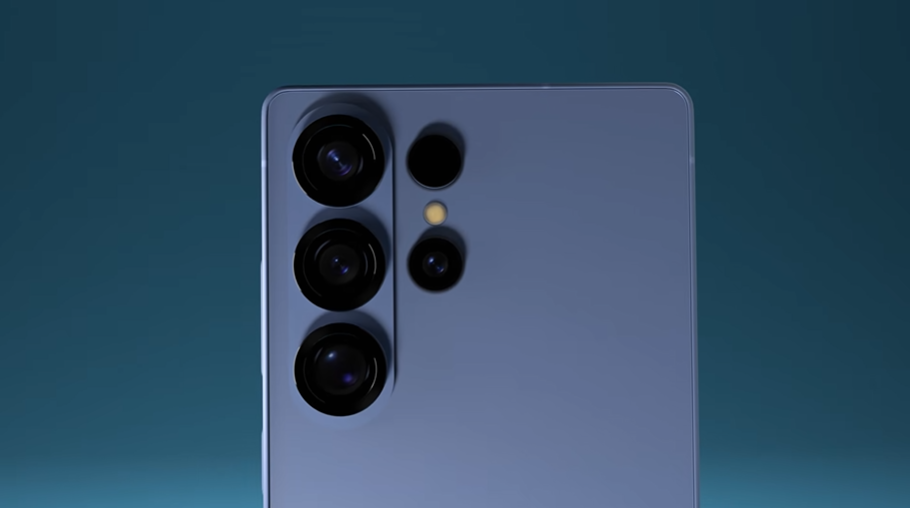
Camera performance has always been a focal point for Ultra models, and the S27 Ultra is no exception. Early reports hinted that Samsung might upgrade to a 200MP main camera, prompting excitement among enthusiasts. Larger sensors translate to better detail and low-light performance, but the high megapixel count doesn’t always mean better image quality.
Recent rumors have hinted at Samsung planning on upgrading the sensors for the primary shooter, ultra wide angle lens, and the selfie camera. But unfortunately, the telephoto setup could remain the same. Still, this would be a notable change as Samsung has relied on its 200MP ISOCELL HP2 camera sensor since the Galaxy S23 Ultra.
So while photography as a whole could get an upgrade, some areas, like periscope zoom, might disappoint. Some analysts believe that the larger sensor would offer various improvements that will help the device match other flagships. Many were expecting that Samsung could match other Ultra models with a large 1-inch sensor, but this still seems highly unlikely. Some rumors point to a new Samsung ISOCELL 1/1.3-inch sensor, while others claim that the brand is using a Sony 1/1.1-inch sensor.
3. Back to Exynos?
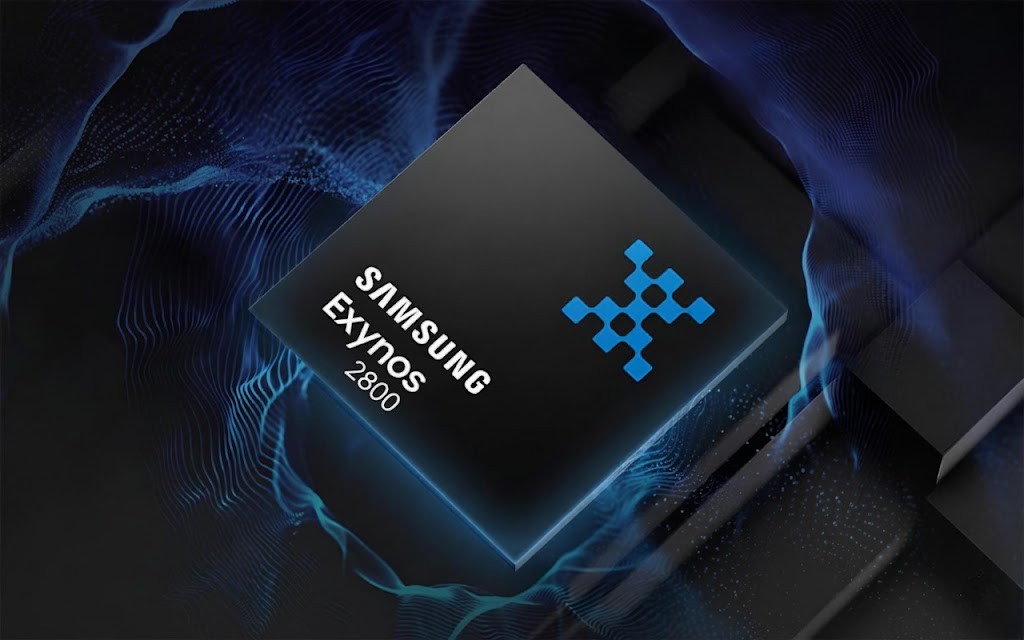
Samsung Exynos 2800 (Rumored)
Reports from South Korea have revealed that Samsung is expected to get a big rise in 2nm yield by the end of this year. Typically, the Galaxy Ultra models featured the top Qualcomm Snapdragon 8 series chip, but the improved yield might help the brand adopt its proprietary Exynos processors. To recall, the upcoming Galaxy S26 Ultra will likely launch with a custom overclocked Snapdragon 8 Elite Gen 5.
But the S27 Ultra may move to a 2nm based Exynos chipset. A leak from earlier this month states that this chip could be dubbed the Exynos 2700 and will offer improved thermal design, performance, and energy efficiency. In the past, the Exynos variants of Samsung’s flagships trailed behind the Snapdragon versions. Samsung seems to be addressing this with the next-gen Exynos, which can reportedly achieve an impressive Geekbench 6 scores of 4,800 in single-core and 15,000 in multi-core tests.
For more daily updates, please visit our News Section.
USB4 has become the new standard for portable external SSDs. With speeds reaching up to 40Gbps and support for Thunderbolt 4, these drives now offer desktop-grade performance in palm-sized enclosures.
Whether you’re moving massive 4K video files, expanding your gaming library, or backing up data on mobile devices, the latest USB4 drives bring both speed and reliability. Here are the best models available in 2026.
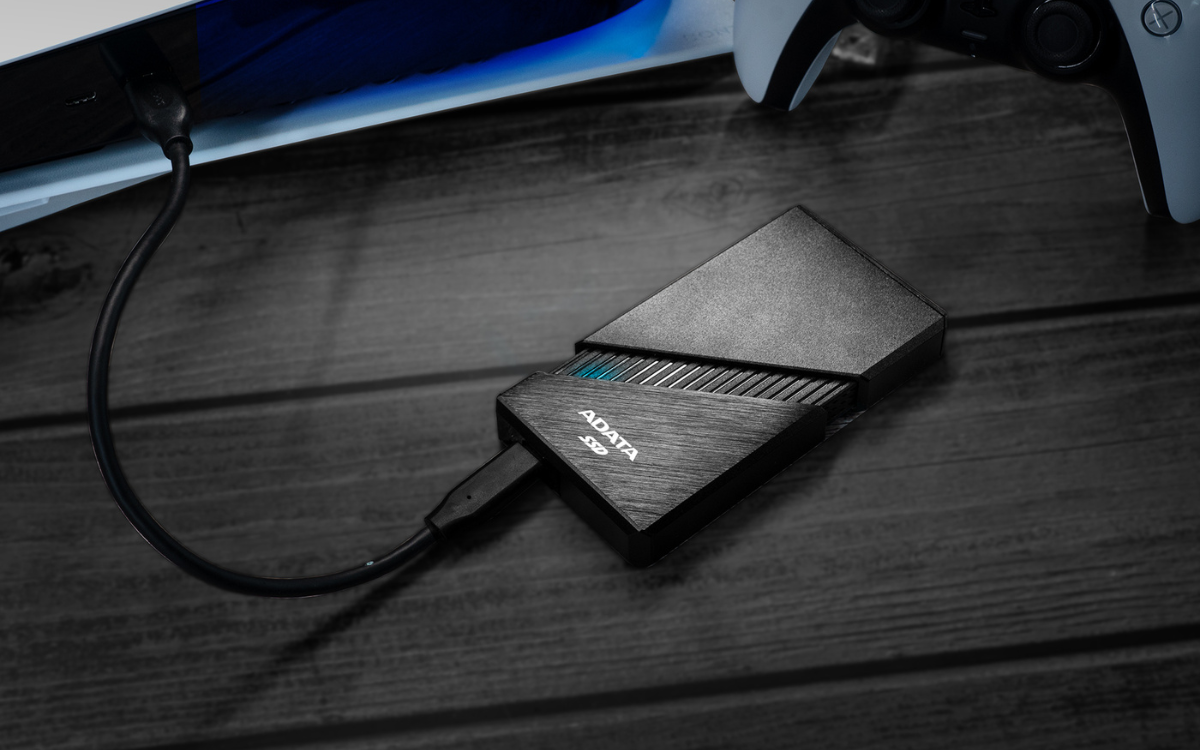
The SE920 supports USB4 with read speeds of up to 3,800MB/s and write speeds up to 3,700MB/s. It features a patented active cooling mechanism where pressing down on the case activates a built-in micro fan.
This design expands the internal space for airflow and helps lower temperatures by as much as 10% compared to fanless enclosures. The fan retracts when not in use.
The SE920 works with Windows, macOS, Android, and Linux systems. It includes a USB-C to C cable in the box and supports Thunderbolt 3 and 4 for wider compatibility. The drive weighs 181g and is available in capacities up to 4TB. Adata includes a five-year limited warranty.
Price: Starts at $189.99 for 1TB
2. SanDisk Extreme Pro USB4
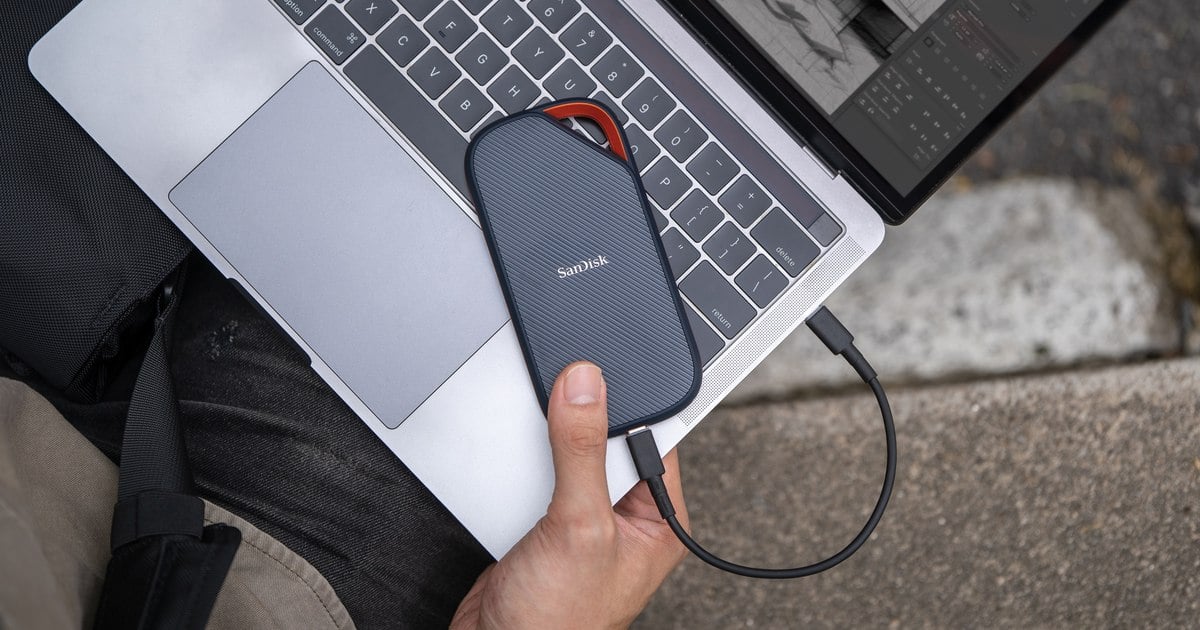
The SanDisk Extreme Pro USB4 model matches the SE920 in performance, reaching up to 3,800MB/s read and 3,700MB/s write speeds. It focuses on physical protection with a silicone outer shell, aluminum frame, IP65 water resistance, and drop protection from up to 2 meters. The drive measures 5.5 inches in length and weighs 0.38 lbs.
It supports Windows, macOS, PS5, and Xbox Series X|S, with backward compatibility for USB 3.2 and USB 2.0. SanDisk includes a standard USB-C to C cable and a five-year limited warranty. The chassis helps with passive heat management, although it lacks an active cooling system.
Price: Starts at $349.99 forr 2TB
3. Corsair EX400U
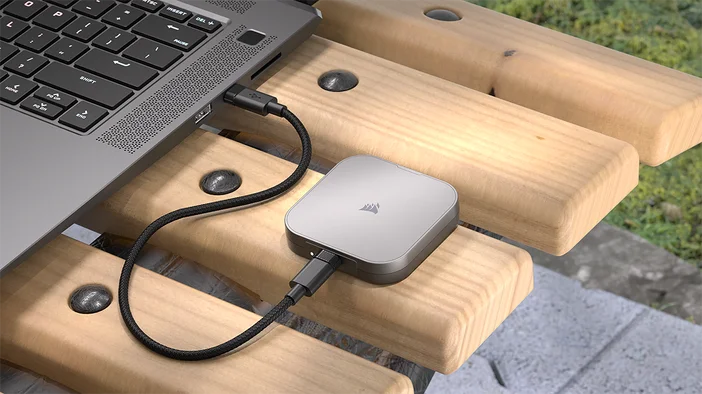
The EX400U delivers sequential read speeds up to 4,000MB/s and write speeds up to 3,600MB/s, making it the fastest USB4 drive in this group. The drive includes both standard and 90-degree USB-C cables and supports Thunderbolt 4 and USB4 for top-tier transfer speeds. Corsair also adds MagSafe compatibility, allowing iPhone 15 and newer models to magnetically attach to the drive.
The EX400U weighs 92g and features a compact gunmetal-colored enclosure. It works with Windows, macOS, Linux, and iOS/iPadOS. The drive ships with a three-year warranty.
Price: Starts at $144.99 for 1TB
4. LaCie Rugged SSD4
Seagate’s LaCie Rugged SSD4 provides USB4 speeds up to 4,000MB/s and supports a wide range of ports, including Thunderbolt 5, Thunderbolt 4, and USB 3.2.
The drive comes with IP54 water and dust resistance, 2-meter drop protection, and pressure resistance up to 1 tonne. It supports external video recording on iPhone USB-C models and connects to Windows, macOS, iOS, Android, ChromeOS, and game consoles.
The SSD4 weighs 108g and features LaCie’s iconic orange rubber bumper around a recycled material body. It comes bundled with LaCie Toolkit software, a USB-C 40Gbps cable, and a three-year warranty that includes Rescue Data Recovery Services and a two-month Adobe Creative Cloud membership.
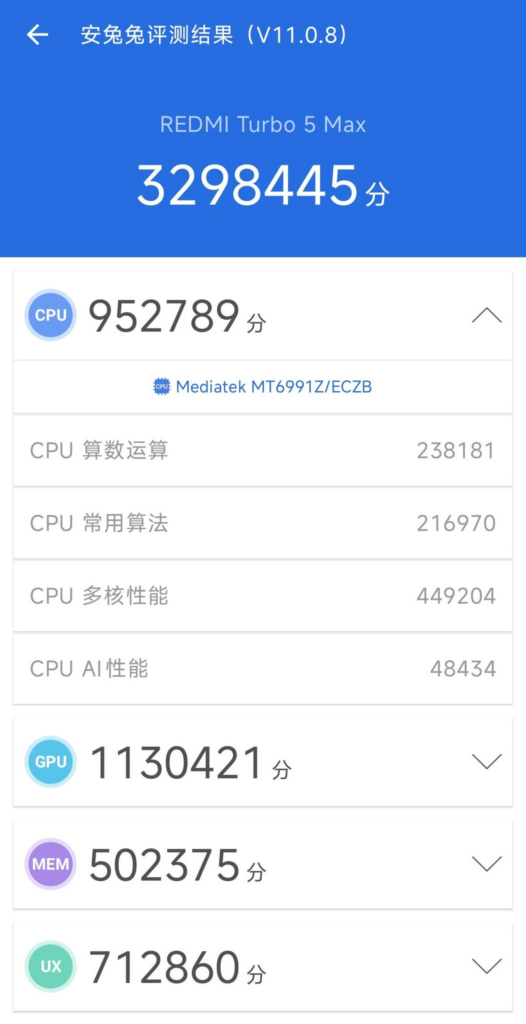
Redmi has started teasing the arrival of the Redmi Turbo 5 Max in China. This device is officially confirmed to feature MediaTek’s latest Dimensity 9500s SoC. Ahead of its impending launch, its AnTuTu score has appeared, suggesting that it will offer a stellar performance.
Redmi Turbo 5 Max AnTuTu listing
Redmi Turbo 5 Max AnTuTu listing
The above screenshot shows that the Redmi Turbo 5 Max has achieved a 3,298,445 score on AnTuTu. The Dimensity 9500s chip is mentioned with model number MT6991Z/ECZB in the listing. This score suggests that the Redmi Turbo 5 Max will rival Snapdragon 8 Gen 5-powered devices, such as the OnePlus Ace 6T, iQOO Z11 Turbo, and the upcoming Realme Neo 8.
The 3.3 million score is a total of 952,789 points in the CPU test, 1,130,421 points in the GPU test, 502,375 points in the memory test, and 712,860 points in the UX test.
For those who are unaware, the Dimensity 9500s comprises a Cortex-X925 core operating at 3.73GHz, three Cortex-X4 running at 3.30GHz, and four Cortex-A720 cores working at 2GHz. Graphics are handled by the Immortalis-G925 GPU, which comes with support for raytracing.
To recall, the Redmi Turbo 5 Max was recently spotted on Geekbench with the Dimensity 9500s Soc and 16GB of RAM, registering 2656 points in the single-core test and 8377 points in the multi-core test.
Expected to be priced at around 2,500 Yuan (~$360), the Redmi Turbo 5 Max is said to feature a 1.5K OLED LTPS screen and a battery of around 9,000mAh capacity with 100W charging. The rest of its specifications are under wraps. The series is also expected to have a standard model powered by the Dimensity 8500 chip. It remains to be seen whether it will be called the Redmi Turbo 5 or something else.
For more daily updates, please visit our News Section.
Realme is expected to soon launch the Realme P4 Power phone equipped with an enormous 10,000mAh battery. Reports have revealed that the said device carries the model number RMX5107. The same device has now appeared on Geekbench, revealing some of its key specifications.
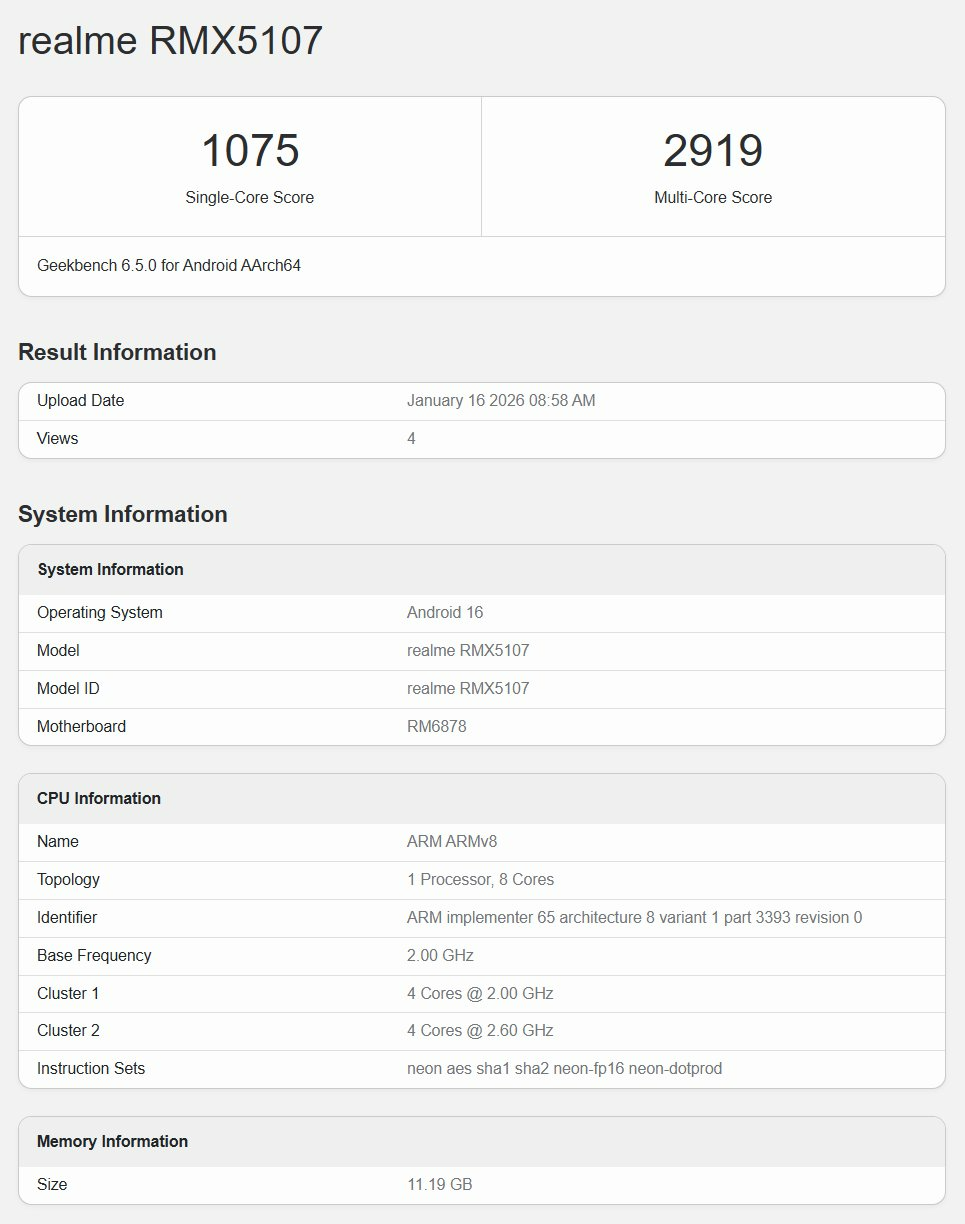
Realme P4 Power Geekbench listing
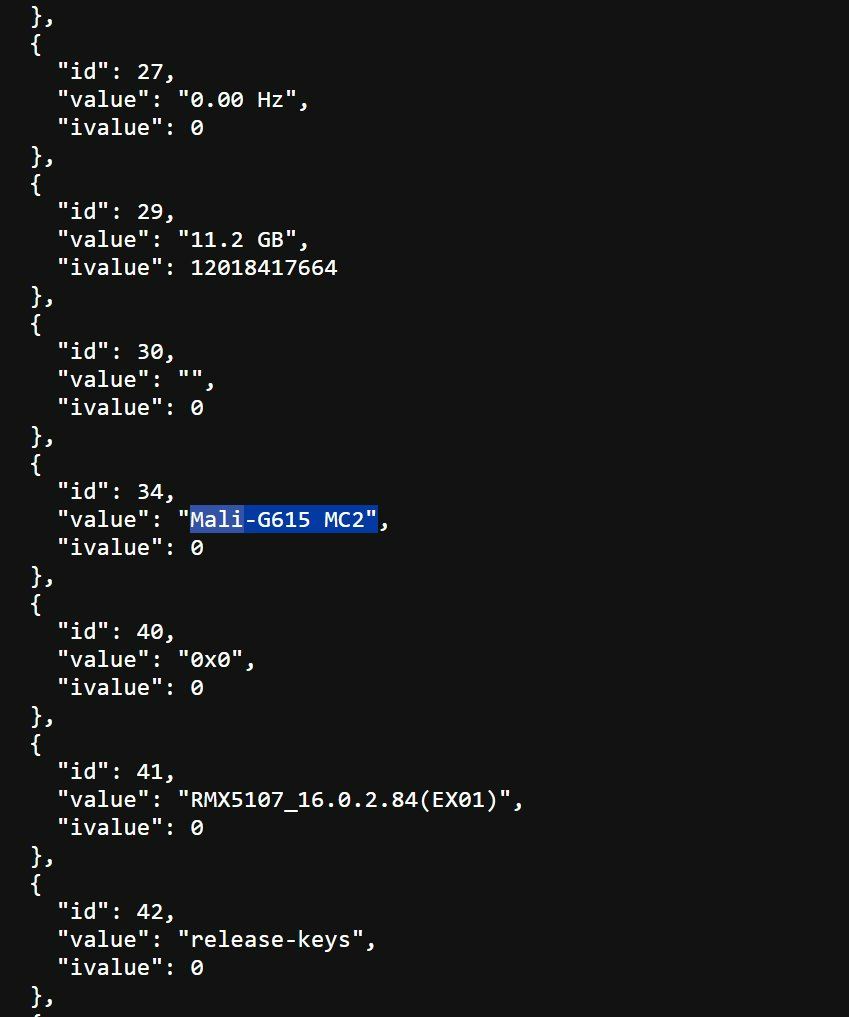
The Realme P4 Power (RMX5107) has emerged on Geekbench with the Dimensity 7400 chipset. As usual, the chipset’s name is not explicitly mentioned in the listing. Instead, it reveals the CPU configuration and GPU details through metadata.
The chipset includes four CPU cores clocked at 2.00GHz and four CPU cores operating at 2.60GHz. For graphics, it is equipped with the Mali-G615 MC2 GPU.
The Geekbench listing further reveals that the device packs 12GB of RAM and runs Android 16, which is likely layered with Realme UI 7. The brand has already confirmed that the phone will receive three years of Android OS updates and four years of security patches.
On Geekbench 6.5, the Realme P4 Power scored 1,075 points in the single-core test and 2,919 points in the multi-core test. These scores align with what is typically seen from smartphones powered by the D7400 chipset.
As per other reports, the P4 Power will feature a quad-curved AMOLED display with a 144Hz refresh rate and 1.5K resolution. It is also tipped to support 80W wired charging, 27W reverse charging, and bypass charging. The phone is expected to ship with 256GB of storage and arrive in colour options such as orange, silver, and blue. Despite packing a massive battery, it is expected to weigh around 218 grams.
For more daily updates, please visit our News Section.
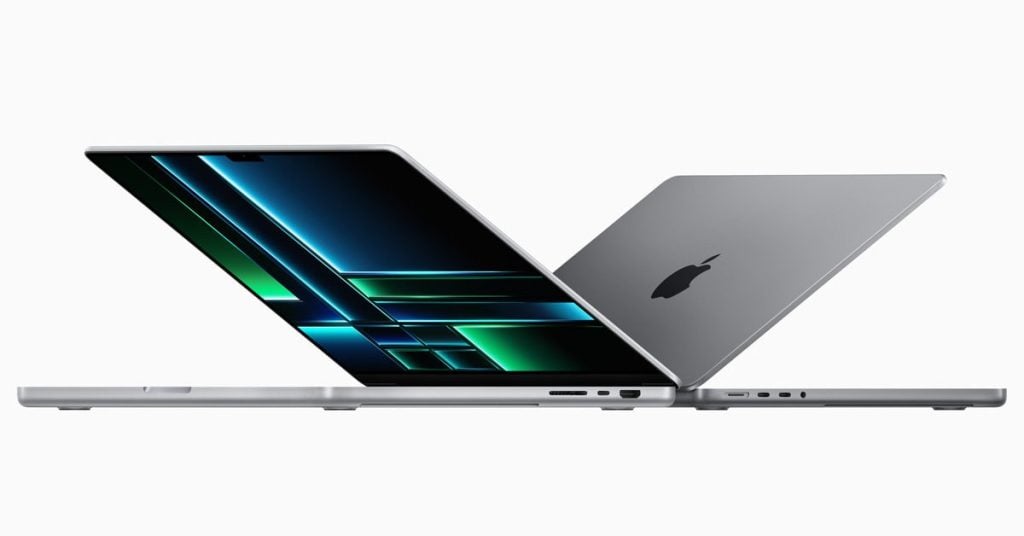
Several reports have revealed that Apple is working on a MacBook Pro with an OLED screen. A new update hints at an earlier-than-expected arrival for Apple’s upcoming professional laptop.
OLED display production reportedly starts early
According to a fresh rumor circulating on Korean platforms, Samsung Display has already begun mass production of OLED panels intended for Apple’s next MacBook Pro. The production was earlier expected to start in the second quarter of 2026, but the new claim suggests that the schedule has moved forward. While the source behind this information has a mixed track record, the timing broadly aligns with earlier reporting from well-known industry watchers.
The OLED panels are said to be based on tandem OLED technology, similar to what Apple currently uses in the latest iPad Pro models. This type of display is known for improved brightness, colour consistency, and longevity compared to conventional OLED panels. If the reports are accurate, the upcoming MacBook Pro could mark Apple’s most significant display upgrade on a Mac in years.
The new OLED panels are believed to be touch-capable, which would make this the first touchscreen MacBook Pro. Such a change could further blur the distinction between MacBooks and iPads, especially for creative professionals who already rely on touch-based workflows.
The touchscreen OLED MacBook Pro lineup is expected to debut with Apple’s M6 chip. which is yet to go official. The new models are also tipped to feature a thinner and lighter design compared to the current generation. Reports suggest that Apple may replace the familiar display notch with a smaller hole-punch cutout dedicated to the FaceTime camera.
It is worth noting that Apple is still expected to release updated M5 Pro and M5 Max MacBook Pro models before the OLED generation arrives. As a result, even if display production has started early, the OLED MacBook Pro could still land towards the end of 2026 or early 2027. As with all leaks, these details should be treated cautiously until Apple makes an official announcement.
For more daily updates, please visit our News Section.
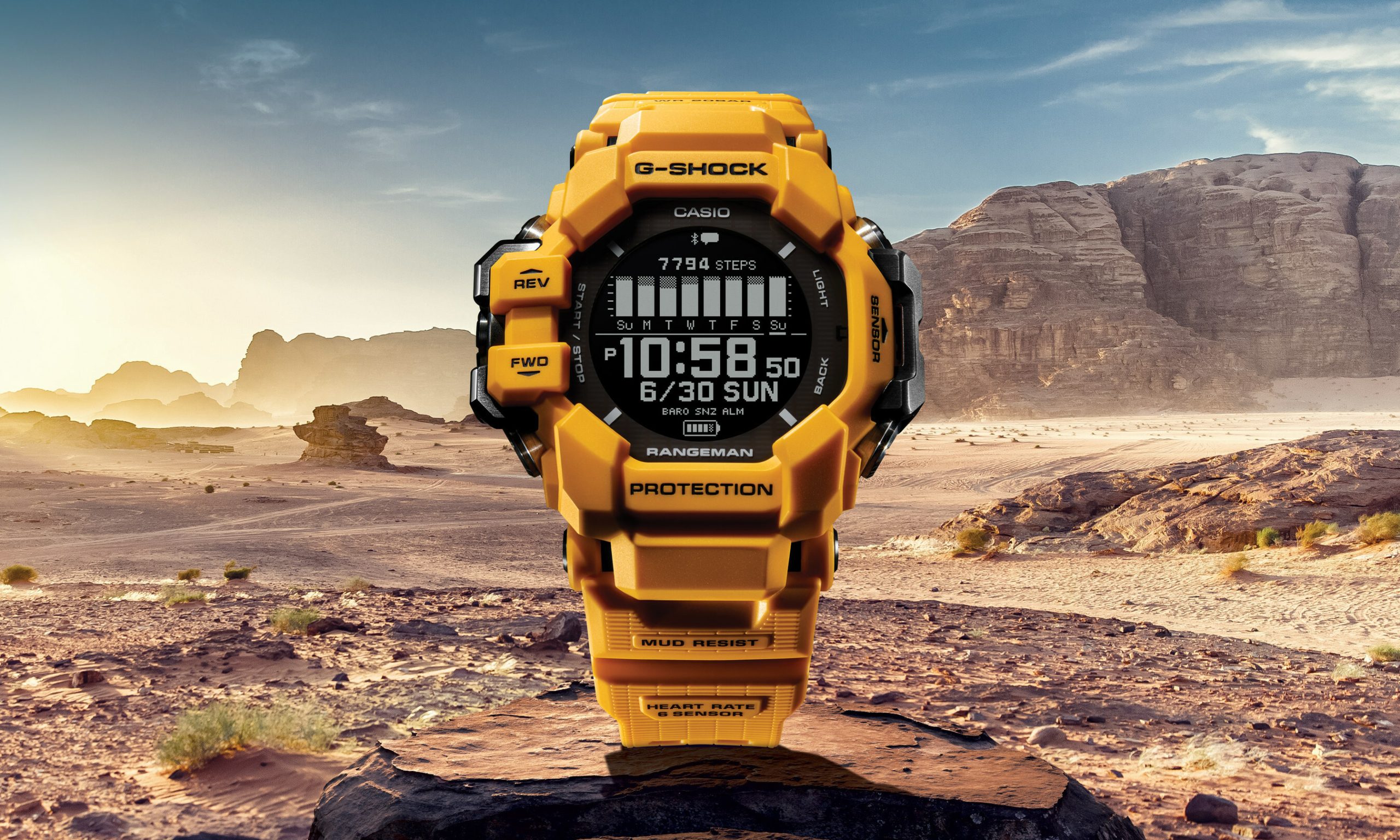
In this year, the Casio G-Shock ‘Master of G’ series continues to define the pinnacle of tactical and survival horology. While both the Rangeman and Mudmaster are engineered for the world’s harshest environments, their 2026 iterations, specifically the Rangeman GPR-H1000 and the Mudmaster GWG-B1000, cater to distinct audience.
Whether you are navigating a rescue mission or trekking through a swamp, here is how to choose between these two titans.
Choosing between the Rangeman GPR-H1000 and the Mudmaster GWG-B1000 boils down to your operational environment:
If you need a digital log of your route, blood oxygen levels for high-altitude climbing, or a one-touch stopwatch for tactical timing, the Rangeman’s feature-dense module is superior.
If you work with heavy equipment, require the elite durability of sapphire and forged carbon, or simply prefer an analog interface that looks as good in a briefing room as it does in a trench, the Mudmaster is the ultimate choice.
Both watches feature Tough Solar, Multi-Band 6 (or Bluetooth sync), and 200m water resistance, ensuring that regardless of your choice, you are wearing one of the most resilient machines ever built.
For more daily updates, please visit our News Section.
The iQOO 15 Ultra is one of the most awaited flagship phones of 2026. As per reports, it will arrive as an enhanced version of the existing iQOO 15. A new Weibo post by tipster Digital Chat Station suggests that the 15 Ultra will debut with an impressive battery and charging combination.
iQOO 15 Ultra charging speed tipped
Recently, the iQOO 15 Ultra was reportedly spotted with a 100W charger on China’s 3C certification platform. Multiple Weibo posts from DCS have consistently claimed that the phone will support 100W wired charging, but a new Weibo post suggests that it could offer double the charging speed.
As mentioned, DCS claims that the iQOO 15 Ultra will debut in China by early February. The tipster suggests that over the course of the series’ lifecycle, the device could push charging speeds up to 200W, which would place it ahead of some parent-brand flagship models in terms of fast-charging capability.
The last time iQOO offered 200W charging was with the iQOO 11 Pro, which debuted back in 2022 with a 4,700mAh battery. Since then, the brand has increased battery capacity while gradually reducing charging speeds to 120W and later to 100W on the recent iQOO 15, which packs a 7,000mAh battery.
Reports suggest that the iQOO 15 Ultra may feature a 7,000mAh or larger battery. It is also expected to support wireless charging. While it may borrow many of its specifications from the iQOO 15, it could differentiate itself with features such as an active cooling fan and gaming shoulder buttons.
As with all early leaks, these details should be taken with a pinch of salt until iQOO makes an official announcement.
For more daily updates, please visit our News Section.
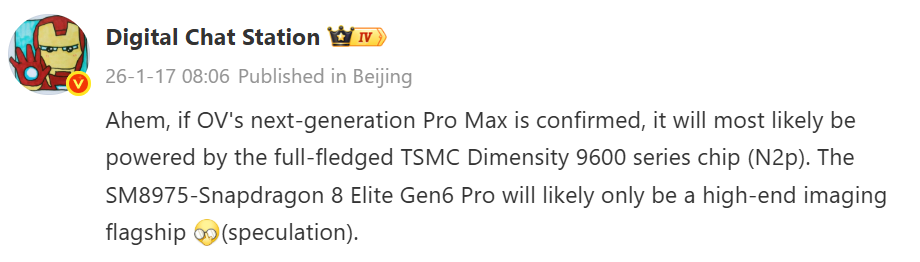
Reliable tipster Digital Chat Station has shared fresh insights into the roadmap of next-generation flagship smartphones, building on an earlier post that discussed launch timelines for upcoming Dimensity-powered devices. In that earlier update, he suggested that at least either Oppo or Vivo could launch an iterative flagship as early as September. He also hinted that delaying ultra-premium models until April may not align well with faster chipset refresh cycles, especially for so-called “Ultra” variants.
The tipster contrasted this with Xiaomi’s established rhythm, where standard and Pro models typically arrive around September, followed by Ultra models towards the end of the year. He suggested that other brands may benefit from adopting a similar staggered launch strategy to better match chipset evolution.
Rumored chipsets for Pro Max and Ultra flagships
In his newer Weibo posts, DCS claims that if Oppo and Vivo move forward with Pro Max-branded models, these devices are likely to feature MediaTek’s upcoming Dimensity 9600 series chip built on TSMC’s N2P (2nm) process. He describes this as a full-performance flagship platform, indicating that Pro Max models may prioritize sustained performance and scale.
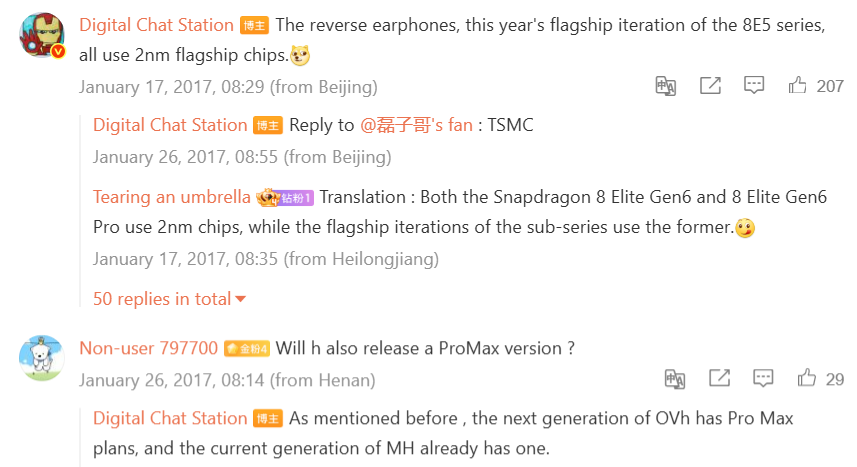
At the same time, he suggests that Qualcomm’s next Snapdragon 8 Elite Gen 6 Pro, identified internally as SM8975, may be reserved exclusively for Ultra-branded premium, imaging-focused flagships rather than mainstream Pro or Pro Max devices. In replies, DCS further notes that both the Snapdragon 8 Elite Gen 6 and its Pro variant are expected to be manufactured on a 2nm process by TSMC, but with clear segmentation between standard iterative flagships and top-tier models.
He also reiterates that multiple brands under the OV and “H” umbrella are planning Pro Max variants for their next flagship cycles, adding that one brand, abbreviated as “MH” has already introduced such a model in the current generation. Here, “H” appears to be Honor and “MH” seems to be Huawei, which has already launched the Huawei Mate 80 Pro Max.
While none of this has been officially confirmed, the posts collectively point towards tighter launch schedules, clearer flagship tiering, and more aggressive adoption of next-generation silicon across major Chinese smartphone brands.
For more daily updates, please visit our News Section.
It was reported around two weeks ago that Asus will not launch new smartphones this year. That speculation has now gained clarity after fresh comments from the company’s top leadership, outlining what lies ahead for its phone business and where priorities are shifting.
Asus confirms no expansion in smartphone product lines
Asus ZenFone 12 Ultra
At Asus’ year-end employee gathering held at the Taipei Nangang Exhibition Centre, chairman Jonney Shih confirmed that the company will not expand its smartphone product lines. He stated that Asus will not add new phone models or introduce additional product categories within its phone portfolio. This effectively signals a pause on aggressive smartphone growth rather than a short-term delay.
Shih also clarified that existing smartphone customers will continue to be supported. Asus plans to maintain after-sales services and commitments to users who already own Asus smartphones. The focus, however, will not be on scaling volumes or entering new segments within the smartphone market, which has become increasingly competitive and margin driven.
Strategic shift towards AI-driven hardware and robotics
With smartphone expansion off the agenda, Asus is redirecting its attention towards artificial intelligence-driven hardware. The company plans to invest more heavily in AI-centric systems, including intelligent machines, robotics, and edge computing devices capable of operating with minimal human intervention.
Asus believes long-term growth will come from building what it describes as physical AI products rather than relying on consumer smartphone sales. This includes AI servers, enterprise-grade systems, and integrated platforms that combine hardware design with advanced AI software.
For smartphones, the shift means continuity without growth. Asus phones will remain supported, but they are no longer positioned as a primary growth engine as the company pivots towards an AI-first future.
For more daily updates, please visit our News Section.
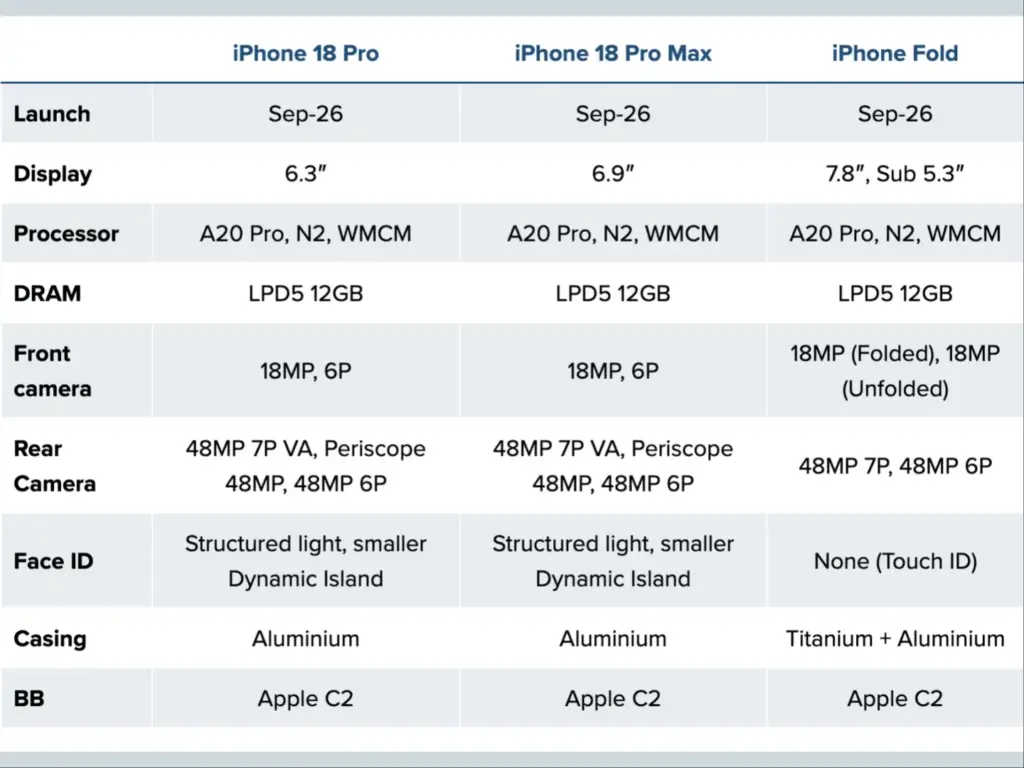
According to Apple analyst Jeff Pu, the company plans to launch the iPhone 18 Pro, iPhone 18 Pro Max, and its first foldable iPhone in September 2026, while pushing the standard iPhone 18 models to spring 2027. The details were shared with investors and later reported by outlets including 9to5Mac.
On the hardware side, all three high-end models are said to feature 12GB of LPDDR5 RAM and Apple’s next-generation A20 Pro chip, reportedly built on a 2nm process. They are also expected to use Apple’s in-house C2 modem, marking a further shift away from third-party connectivity solutions.
Screen sizes are tipped to remain at 6.3 inches for the Pro and 6.9 inches for the Pro Max. Camera hardware is said to include three 48MP sensors, including a periscope telephoto lens. Face ID stays in place, though under-display components could further shrink the Dynamic Island.
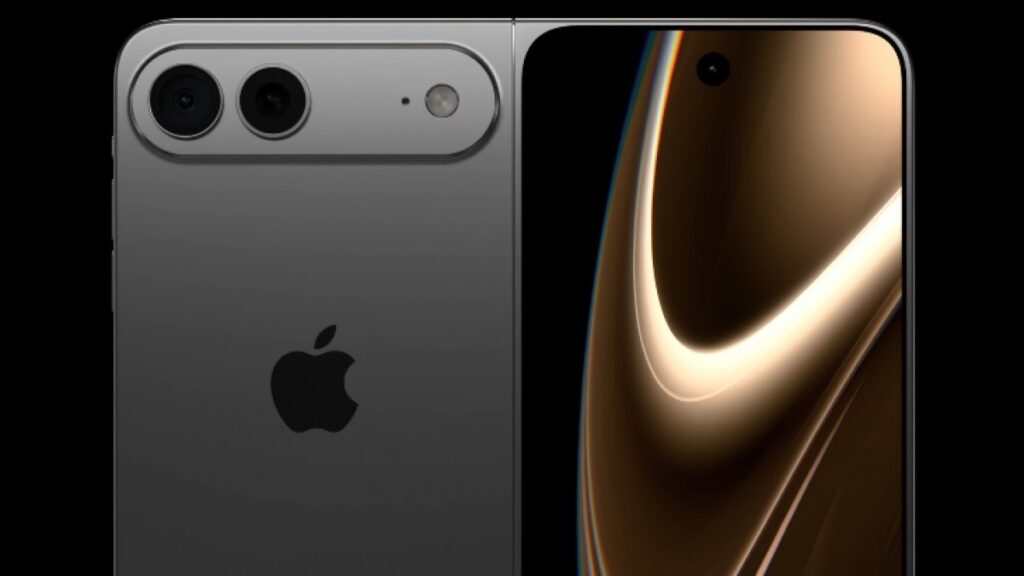
iPhone Fold lacks Dynamic Island
The bigger shift comes with the iPhone Fold. Apple’s first foldable is tipped to feature a 7.8-inch internal display paired with a 5.3-inch outer screen. Unlike the iPhone 18 series, it reportedly drops Face ID entirely and relies on Touch ID instead, possibly built into the power button. The body is said to combine titanium and aluminum, likely to balance durability, weight, and cost.
On the camera side, the foldable is expected to use a dual 48MP setup, likely consisting of a main and ultrawide sensor. Some earlier leaks have suggested Apple may skip a telephoto lens due to space constraints, which would not be unusual for the brand’s first-generation foldable.
While selfie cameras were previously rumored to jump to 24MP, Pu now claims Apple will reuse the 18MP sensor seen in the iPhone 17 lineup. The iPhone Fold is expected to include two front-facing cameras – one on the cover display and another on the inner flexible screen. The absence of a Dynamic Island and the switch to Touch ID could result in a cleaner, more immersive experience, something iOS users have been waiting for on larger displays.
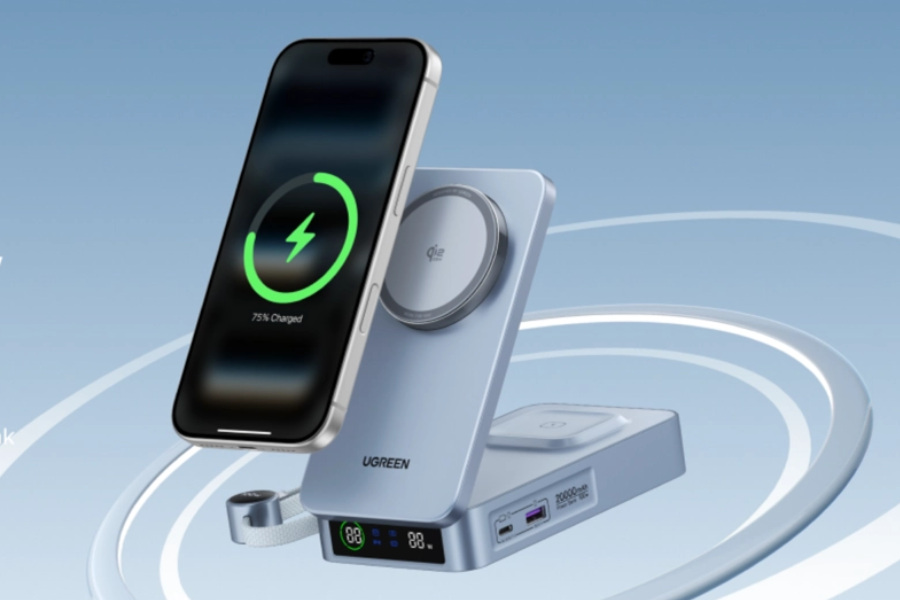
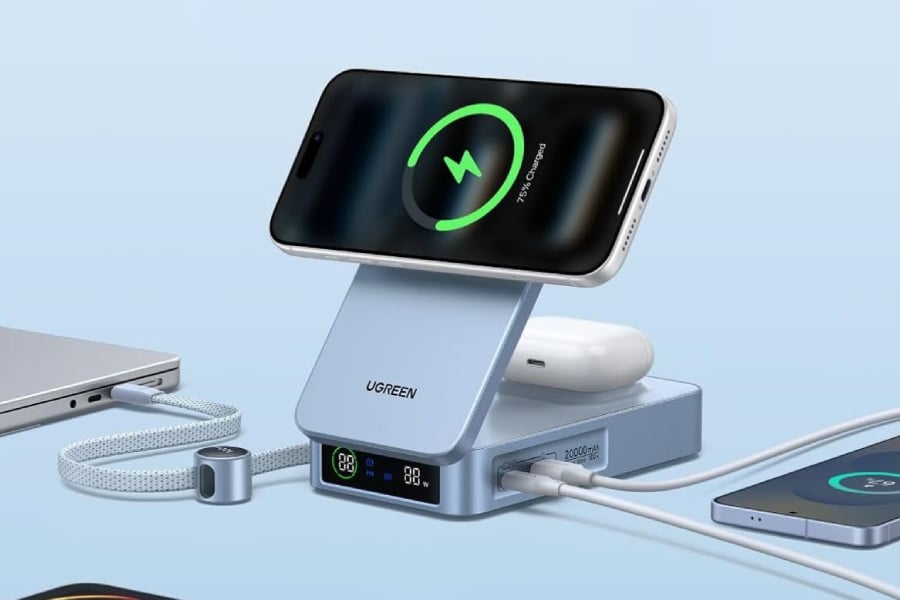
UGREEN is expanding its power bank offerings with a new model called the MagFlow 2-in-1 MagSafe. As the name suggests, the battery pack is MagSafe certified and can also be used as a charging dock for your phone.
At first glance, it looks like a regular high-capacity power bank, but UGREEN made sure it supports all the 2026 charging standards. It has Qi2 wireless charging, Apple’s latest magnetic charging standard, and can also function as a small desktop charging dock.
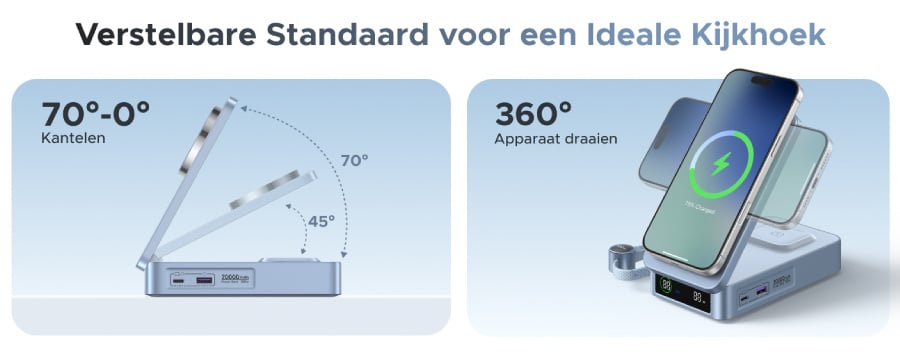
One of the more noticeable features is the digital display on the bottom. So you don’t have to rely on blinking LEDs guessing the battery level, instead you can look at the screen for remaining battery percentage and current output power.
The front of the MagFlow power bank includes a Qi2 magnetic panel designed to attach directly to compatible smartphones. When the unit is unfolded, a second charging pad appears in the middle. This smaller pad can be used to wirelessly charge accessories like true wireless earbuds.
The top cover is adjustable as well, allowing the phone to be propped up at an angle so the screen remains visible while charging.
Battery size, portability, and price
In terms of performance, UGREEN says the main Qi2 panel can deliver up to 25W of wireless power, while the internal pad for earbuds supports 5W charging. The package also includes a USB-C braided cable capable of 100W output.
The power bank itself carries a 20,000mAh battery and can recharge at a maximum rate of 65W. Physically, the device measures about 14.8 x 8.1 x 4.15cm and weighs around 670 grams. Not exactly pocket-friendly but still portable.
For wired connections, there is one USB Type-C port and one USB Type-A port. The Type-A port offers up to 10W output, while the Type-C port handles higher power tasks.
The UGREEN MagFlow 2-in-1 MagSafe power bank is available in the EU for €140 or some $162. The company might expand its accessibility in other markets soon.
For more daily updates, please visit our News Section.
OnePlus’ entry into the foldable scene (in 2023) with the OnePlus Open was a breath of fresh air. The foldable had a sleek profile, solid performance, and software that felt more polished than most early-generation foldables.
So it looked like OnePlus was going to be the next big contender in this space after Samsung and Google.
Naturally, anticipation for the Open 2 was high. However, the company didn’t make this a reality in 2024, nor in 2025. Hopes were high for 2026, but recently, news broke that OnePlus is cancelling the Open 2 yet again this year.
As much as we, as foldable enthusiasts, are saddened by this news, it also means OnePlus missed a lot by cancelling the Open 2. And that’s exactly what we’re here to talk about.
1. The first Open was supposed to be the beginning, not the end
When the original OnePlus Open launched back in 2023, it caught a lot of people off guard.
OnePlus had spent years trying to stay competitive in the traditional smartphone market. But it was stuck in the loop of predictable Android phones. The Open was different. It was bold. It was premium. It was the company’s first foldable, and it actually felt like a serious attempt to compete with Samsung and Google.
Reviewers liked it. Users liked it. And for a moment, it looked like OnePlus had finally found a way to stand out again.
Naturally, people expected a sequel, and that’s how product cycles are supposed to work. You launch something interesting, learn from it, and then release a better version a year or two later.
Instead, OnePlus kept delaying the Open 2. Then rumors started piling up that it might be cancelled altogether. And now, in 2026, reports suggest that the device might not happen at all.
2. The foldable market didn’t wait around
One of the biggest problems with cancelling the Open 2 is simple timing.
Foldables used to feel like a gimmick—expensive, fragile, and maybe unnecessary. But over the last few years, they’ve slowly turned into a real category. Samsung has refined its Galaxy Z Fold line, Google’s Pixel foldables are now part of its main number series, and other brands like Honor have also pushed out surprisingly polished hardware.
The idea of a phone that unfolds into a small tablet doesn’t sound weird anymore. In fact, OnePlus was doing it right from the first generation. Unlike the tall aspect ratio of Galaxy Z Fold devices, the OnePlus Open has a noticeably wider screen that makes it feel more like a standard smartphone.
This was exactly the moment when OnePlus could have stepped in with a strong second-generation device and made another dent in the market.
3. OnePlus also had a chance to be more than “just another Android brand”
We knew the original OnePlus as a brand that shipped flagship specs without flagship prices. It built its entire fanbase around that idea. However, the brand slowly started to lose that identity when it began launching true flagships with flagship-level pricing.
And it’s not that OnePlus smartphones are bad. They’re exactly what you’d expect from a modern flagship. But if users have to pay flagship prices, many tend to prefer legacy brands like Samsung.
The Open, however, was one of the few recent products that had the potential to make OnePlus feel special again. Cancelling its sequel sends the opposite message.
4. A lot of potential improvements will never happen
The frustrating part is that the OnePlus Open 2 actually sounded promising.
According to leaks and reports, the device was expected to fix many of the original model’s shortcomings:
A thinner and lighter design
Better cameras with improved Hasselblad tuning
A newer flagship Qualcomm processor
Wireless charging
Stronger water resistance
Larger, brighter displays
So it looked like OnePlus was preparing a genuinely competitive foldable, not just a minor refresh.
Even if half of these rumors were true, the Open 2 could have been one of the more interesting foldables of 2026. Now, all that work, research, and anticipation amounts to nothing.
5. Cancelling products hurts more than people think
From the outside, cancelling a phone might seem like a practical business decision. But from a customer’s perspective, it’s very different.
People who bought the original OnePlus Open did so assuming it was the start of a long-term product line. They expected better software support, new accessories, and eventually a worthy upgrade path.
Now those buyers are left with no choice but to switch to another brand—willingly or not. This doesn’t just hurt foldable users; it hurts the brand as a whole. People who invest in foldables are often the same users willing to invest in ecosystem products. So, OnePlus is not only losing customers in the foldable side but also its ecosystem products.
6. The competition gets an easier road
The biggest beneficiaries of OnePlus’s cancellation of its foldable ambitions are Samsung and Google.
Without the Open 2 in the picture, the foldable market in many regions essentially goes back to being a two-horse race. Samsung continues to dominate by default. Google positions the Pixel Fold as the main alternative.
OnePlus could have offered something different—maybe cheaper, maybe better designed, maybe just more interesting. Instead, it chose not to play at all.
7. There are probably practical reasons
To be fair, OnePlus likely has its reasons.
Component prices have gone up. The smartphone market isn’t as healthy as it once was. Foldables are expensive to develop and risky to manufacture. Profit margins are thin.
From a spreadsheet perspective, cancelling the Open 2 might make perfect sense. But tech history is full of examples where playing it safe led to long-term irrelevance. Remember BlackBerry?
The companies people remember are usually the ones willing to take risks. So it shouldn’t matter even when the numbers don’t look great on paper.
8. The real loss is bigger than one phone
In the end, the OnePlus Open 2 isn’t just a cancelled gadget. It’s a missed opportunity for OnePlus to rebuild a strong brand identity instead of remaining just another smartphone company.
All we can do now is criticize the decision and hope OnePlus either reverses course or launches the Open 2 late—rather than never.
For more daily updates, please visit our News Section.
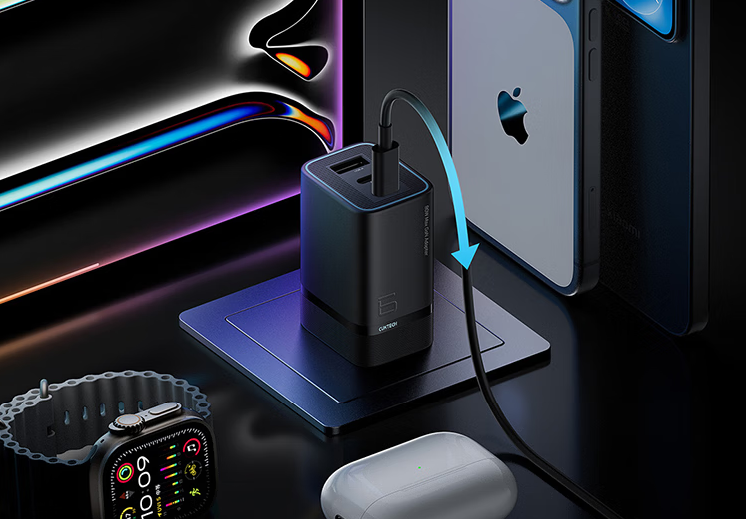
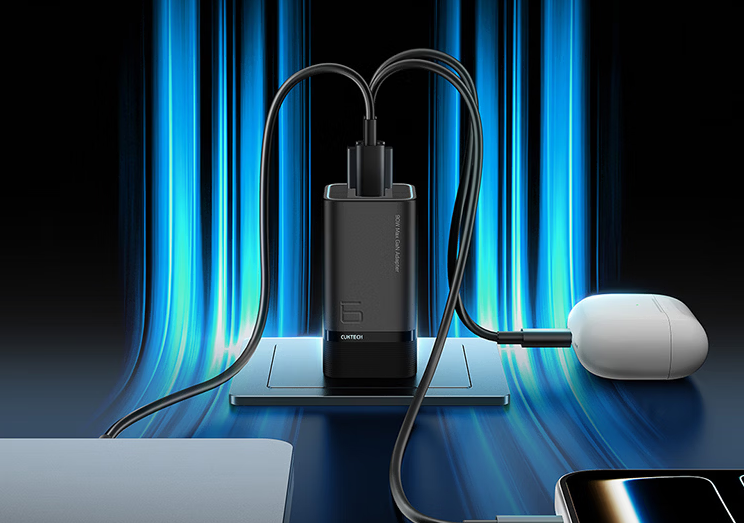
Cuktech has launched the 6 Mini GaN Charger in China. It will be available for purchase starting January 19.
Cuktech 6 Mini Specifications
The Cuktech 6 Mini supports a maximum output of 90W through either of its two USB-C ports. The charger also includes a USB-A port that can deliver up to 22.5W. All three ports can be used simultaneously, with intelligent dynamic power distribution maintaining efficient and stable charging.
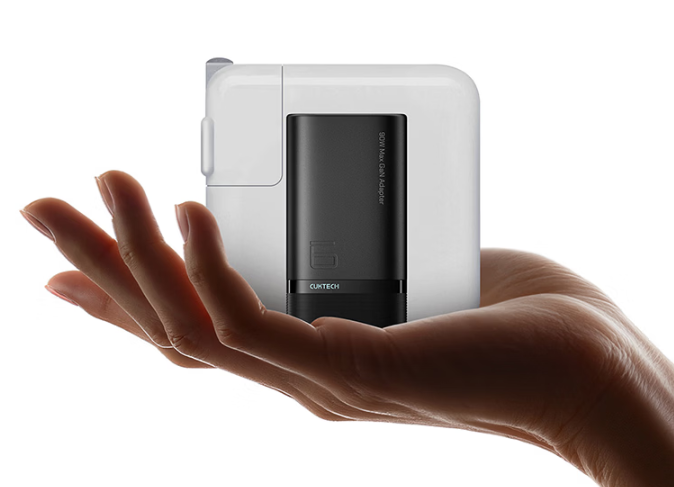
Cuktech claims a 50% size reduction compared to standard 90W chargers. The 6 Mini achieves a power density of approximately 1.14W/cm³, which represents a 171% increase over typical 67W PD chargers.
The charger is powered by a GaN chipset and features a thermal control system that uses dynamic temperature monitoring, internal potting, and aerogel heat dissipation. The system performs tens of thousands of temperature checks per hour to maintain safety during operation.
The 6 Mini supports a wide range of fast charging protocols, including Xiaomi HyperCharge, PD 3.1, PPS, AFC, FCP, and Huawei SCP. This allows it to charge a variety of devices from brands like Xiaomi, Redmi, Samsung, Apple, Huawei, Oppo, Vivo, and iQOO. It can also deliver up to 65W fast charging for laptops such as the MacBook Air and Windows-based ultrabooks.
The charger uses Cuktech’s self-developed ADC 2.0 adaptive fast-charging system. It detects device types and adjusts power output automatically when devices are plugged in or removed.
The bundled 240W USB-C to USB-C cable includes an E-Marker smart chip and is rated for high-current charging. It uses tinned copper cores and a braided design for improved durability. The charger also features a foldable plug and meets China’s safety standards. It includes nine layers of protection, covering over-voltage, over-current, short-circuit, surge, and static electricity scenarios.
For more daily updates, please visit our News Section.
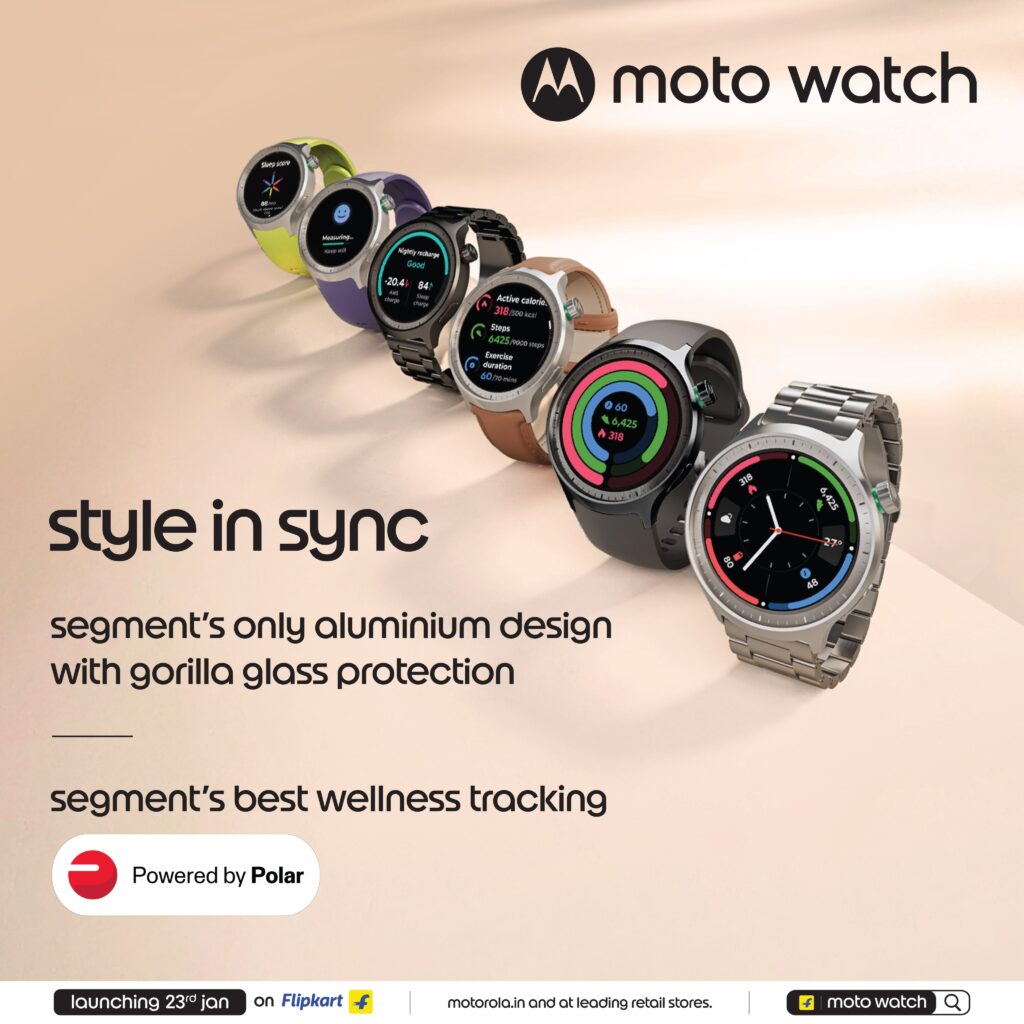
Motorola will launch the Moto Watch in India on January 23 alongside the Motorola Signature smartphone. The company showed off the watch at CES 2026 earlier this month.
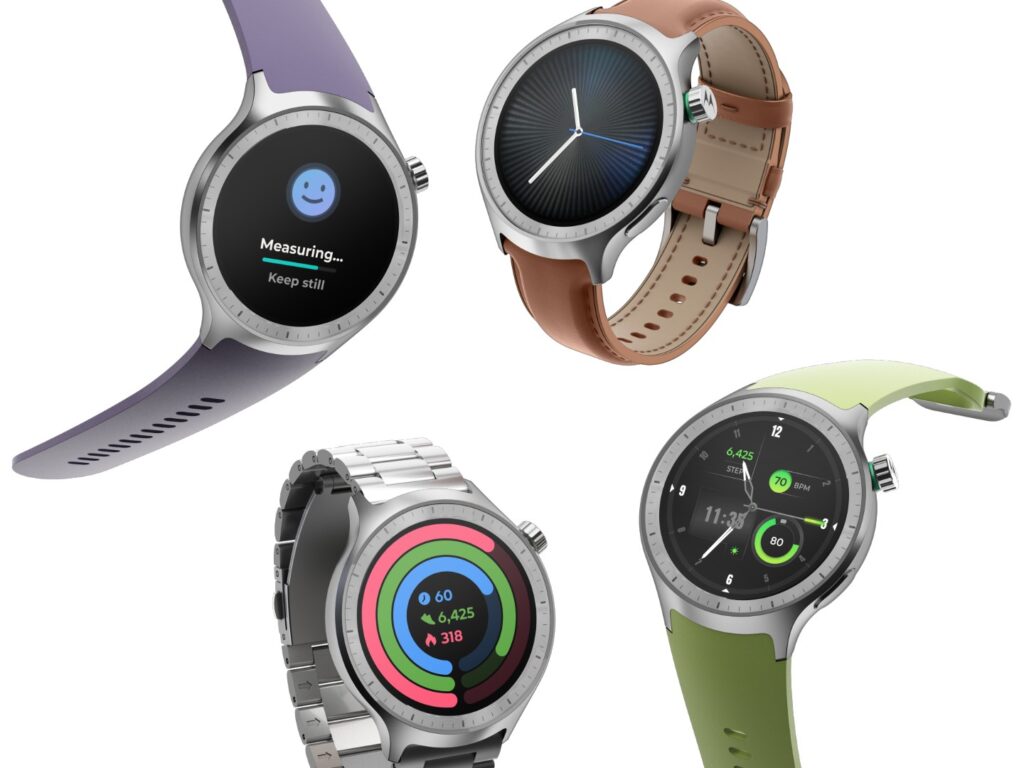
The smartwatch has a 1.43-inch OLED display inside a 47mm aluminum case. There’s a stainless steel crown on the side for controls. You can pick between silicone, leather, or stainless steel bands. The display has Gorilla Glass 3 protection. It’s IP68 rated for dust and water resistance, plus there’s a 1 ATM rating for shallow water.
Motorola partnered with Polar, a sports science company, for the fitness features. The watch tracks steps, heart rate, blood oxygen, stress, and sleep. It includes Polar’s features like Smart Calories, Nightly Recharge, and Activity Score. These focus on recovery and workout intensity instead of just numbers. You also get hydration reminders, medication alerts, and custom goals.
The watch has dual-frequency GPS and can handle phone calls through its built-in speaker and microphone. Motorola’s moto ai handles notifications and summaries, including a “Catch me up” feature on supported phones. The watch runs on Motorola’s own software, not Wear OS. You need Android 12 or later to use it.
Battery life hits 13 days with normal use or around 7 days with the always-on display turned on. Motorola says a five-minute charge gives you a full day of use.
The Moto Watch comes in Matte Black and Matte Silver. After launch, you can buy it on Flipkart, motorola.in, and at offline stores. In the US, the watch will be available starting January 22, 2026, with international availability beginning in February.
For more daily updates, please visit our News Section.
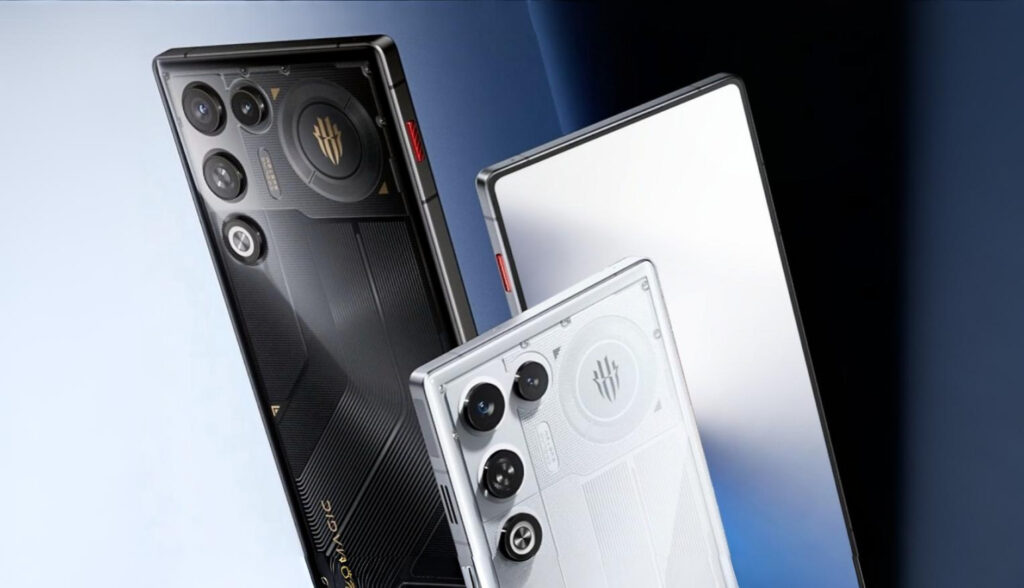
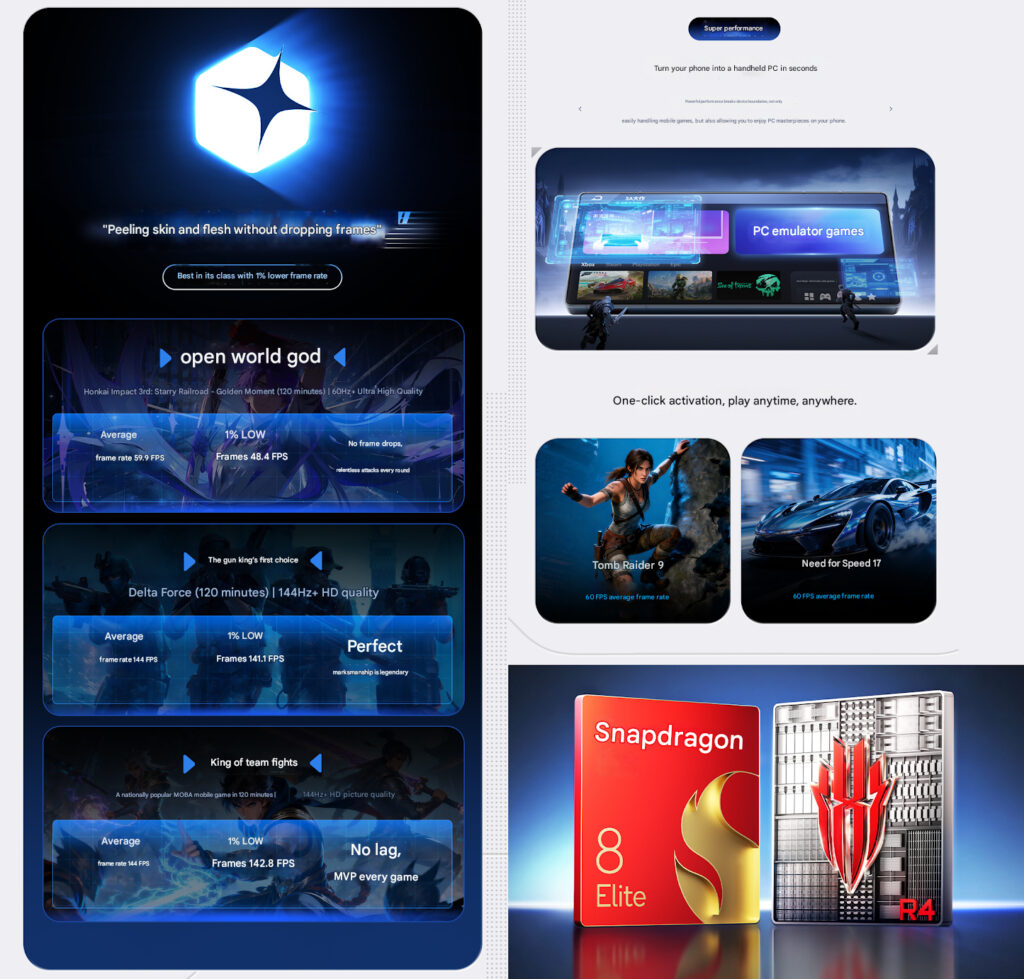
The RedMagic 11 Air is being positioned as the first “Air” model with an active cooling fan. The phone leans heavily on performance despite a slimmer profile than the RedMagic 11 Pro series.
The phone will be powered by Qualcomm’s Snapdragon 8 Elite chipset, paired with RedMagic’s in-house Red Core R4 gaming chip. According to the company, the secondary chip is meant to help with performance stability and power management during long gaming sessions. The 11 Air is also confirmed to use UFS 4.1 storage and what the brand refers to as “LPDDR5X Ultra” memory, though exact configurations haven’t been shared yet.
One of the more unusual claims involves PC game emulation. RedMagic says the 11 Air can run titles such as Tomb Raider 9 and Need for Speed 17 at an average of 60fps using a built-in emulator. As with most pre-launch performance figures, these numbers come directly from the brand and will need to be checked through independent testing.
RedMagic has also shared performance data for native Android games. The company claims Honkai Impact 3rd runs at a stable 60fps, while competitive titles like Delta Force and MOBA games can reach 144fps. It also says 1% low frame rates stay above 141fps, suggesting minimal frame drops under load.
On the hardware side, the phone features a 6.85-inch display with a 144Hz refresh rate and a near full-screen design, reportedly reaching a 95.1% screen-to-body ratio. RedMagiic says the 24,000RPM active cooling fan helps maintain performance during extended play. Shoulder triggers and support for the CUBE gaming engine are also included.
Previous reports point to a battery around 7,000mAh and a thickness of roughly 7.85mm. More details are expected ahead of the January 20 launch.
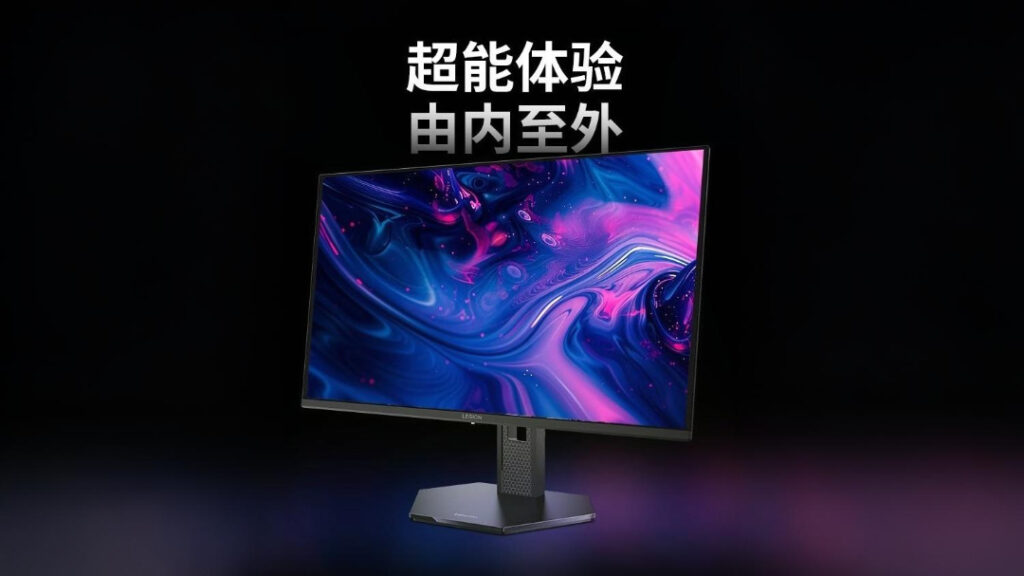
Lenovo has launched a new OLED gaming monitor under its Legion brand. The Legion 27Q-10 OLED is now listed on JD.com for 2,499 yuan ($358), offering a premium QHD OLED display with esports-focused specifications at a competitive price.
Lenovo Legion 27Q-10 OLED Specifications
The monitor features a 26.5-inch QD-OLED panel with a native resolution of 2560 × 1440 pixels. It uses a 16:9 aspect ratio and delivers wide viewing angles, typical of OLED panels.
Lenovo has equipped the monitor with a high 240Hz refresh rate and claims a 0.03ms GtG response time. It also supports AMD Adaptive Sync, which helps reduce tearing and stuttering during gameplay with fluctuating frame rates.
In terms of color performance, the Legion 27Q-10 OLED supports true 10-bit color depth. It covers 99% of both the sRGB and DCI-P3 color gamuts, offering accurate color reproduction for gaming, content creation, and media consumption. The typical brightness is rated at 200 nits, with a peak brightness of 400 nits.
Lenovo has implemented a next-generation OLED anti-burn-in system in the 27Q-10 OLED. This protection mechanism helps manage pixel wear and image retention, making the panel more suitable for extended usage sessions and static UI elements.
In terms of connectivity, the monitor includes two HDMI 2.1 ports and one DisplayPort 1.4. For ergonomics, it includes a stand that supports height adjustment, tilt, rotation, and pivot. Lenovo has included VESA 100 × 100 mm mounting support for users who prefer wall or arm setups.
In related news, Lenovo has recently launched the Yoga Pro 27UD-10 OLED monitor with a 4K 120Hz display, along with Dolby Vision and Dolby Atmos support, while AOC has introduced the Agon Pro AG276QSG2 gaming monitor featuring a 2K 360Hz panel and G-Sync Pulsar technology.
For more daily updates, please visit our News Section.
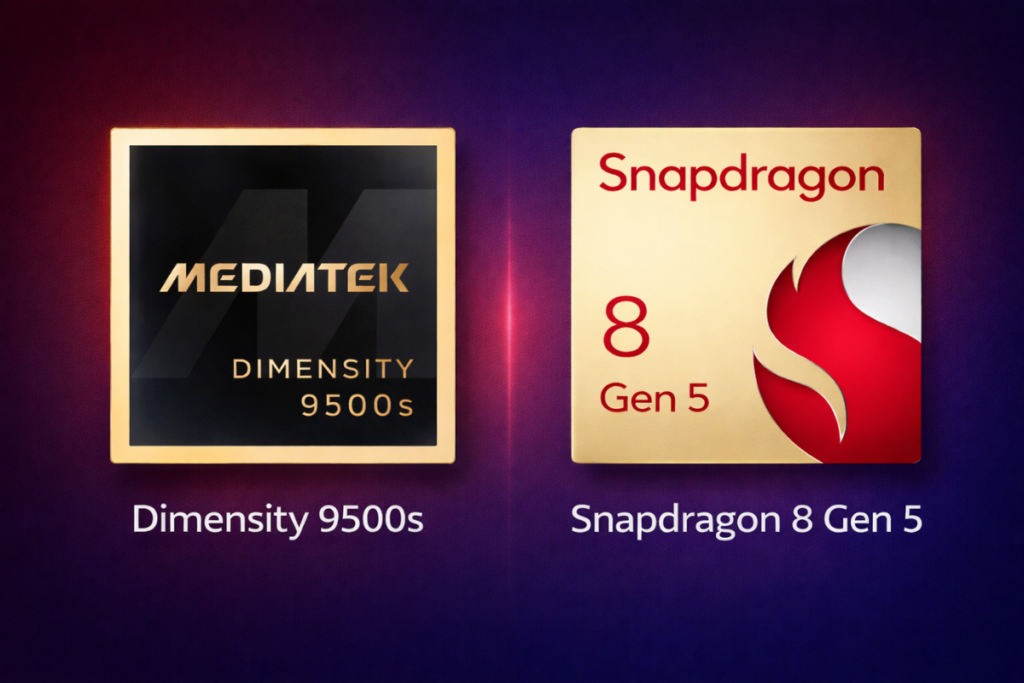
In September, MediaTek announced Dimensity 9500 as its most powerful smartphone chipset, and now we’ve an affordable version of it, dubbed Dimensity 9500s. This is still a flagship-grade chipset, promising excellent performance, power efficiency, and competitive AI capabilities.
The Dimensity 9500s would directly compete with the Snapdragon 8 Gen 5, which was announced in November. Both high-end chipsets target the same user segment, so it’s exciting to see how they stack up against each other.
Dimensity 9500s
Snapdragon 8 Gen 5
Announced
January 2026
November 2025
Process node
TSMC’s 3nm (N3E)
TSMC’s 3nm (N3P)
CPU
1 x 3.73 GHz — Cortex-X925 3 x 3.30 GHz — Cortex-X4 4 x 2.0 GHz — Cortex-A720
2 x 3.8GHz — Oryon (3rd gen) 6 x 3.32GHz — Oryon (3rd gen)
GPU
Immortalis-G925 MP12 ray tracing support MediaTek Adaptive Gaming Technology 3.0
Adreno 840 ray tracing support Snapdragon Elite Gaming features
NPU
MediaTek NPU Agentic AI support
Qualcomm Hexagon NPU Agentic AI support
Memory
LPDDR5x, up to 5.3 GHz
LPDDR5x, up to 4.8 GHz
Storage
UFS 4 + MCQ
UFS 4.1
Camera
Imagiq ISP (18-bit) up to 320MP single camera up to 108MP single camera at 30fps up to 36MP triple cameras at 30fps up to 8K/60fps video recording
Qualcomm Spectra triple AI ISP (20-bit) up to 320MP single camera up to 108MP single camera with zero shutter lag, 30fps up to 48MP triple cameras with zero shutter lag, 30fps real-time semantic segmentation (limitless) up to 4K/120fps video recording
Connectivity
3GPP Release 17 standard download speed: 7 Gbps (peak) Wi-Fi 7 (peak speed: 6.5 Gbps) Bluetooth 5.4
Dimensity 9500s vs Snapdragon 8 Gen 5: Who has the edge?
Both Snapdragon 9500s and Snapdragon 8s Gen 5 use TSMC’s 3nm process node, though there are some differences. The Dimensity chip uses N3E process technology, while the Snapdragon chip uses a more refined N3P node, offering slight improvements to performance and efficiency.
CPU performance
The Dimensity 9500s features an all-big-core CPU design, led by a Cortex-X925 prime core. The octa-core CPU also includes three Cortex-X4 performance cores and four Cortex-A720 power efficiency cores.
1 x Cortex-X925 at 3.73 GHz
3 x Cortex-X4 at 3.30 GHz
4 x Cortex-A720 at 2.0 GHz
In contrast, the Snapdragon 8 Gen 5 features a 2+6 CPU configuration with all third-generation custom-designed Oryon cores.
2 x Oryon cores (3rd-gen) at 3.8 GHz
6 x Oryon cores (3rd-gen) at 3.32 GHz
From the spec sheet alone, it’s difficult to say which chipset has a faster CPU. And unfortunately, we don’t have benchmark data for the Dimensity 9500s yet. It will take a while for the brand to launch devices with this new Dimensity chipset.
However, if I had to take a calculated guess, the Snapdragon 8 Gen 5 should offer faster CPU performance. That’s because this chip has the same CPU configuration as the flagship Snapdragon 8 Elite Gen 5, but with a slightly lower clock speed. That gap in clock speeds shouldn’t matter as much as the Dimensity 9500s using CPU cores a generation older than the Dimensity 9500.
GPU performance
For graphics rendering, the Dimensity 9500s uses Immortalis-G925 MP12 GPU. MediaTek hasn’t provided more details about the GPU, such as frequency, binning, etc. So, for now, it’s inaccurate to say it’s the same Immortalis-G925 GPU that’s been used inside the Dimensity 9400 and 9400+ chips.
We’ll have to wait for benchmark data or third-party teardowns for better clarification. However, I’m pretty sure the Dimensity 9500s would bring some GPU improvements, if not major upgrades.
The Snapdragon 8 Gen 5, on the other hand, ships with an Adreno 829 GPU with ray tracing support and a full suite of Snapdragon Elite Gaming features. We’ll run benchmark tests and update the data here to provide clearer insight into GPU performance.
AI capabilities
The demand for on-device AI capabilities, such as AI assistants, AI image/video editing, and generative AI, is stronger than ever. Both MediaTek and Qualcomm understand this, and therefore most of their new chips come with powerful NPUs.
The Dimensity 9500s has a MediaTek NPU with support for multimodal models and agentic AI. The NPU also helps with AI photo editing, AI summarization, and a wide range of tools for cameras, creativity, and productivity.
The Snapdragon 8 Gen 5’s Hexagon NPU also supports agentic AI, which can learn and adapt to your preferences over time for highly personalised recommendations. The AI also helps improve camera output and connectivity.
Camera & imaging
The Dimensity 9500s integrates an 18-bit Imagiq ISP. It’s a content-aware ISP, which uses advanced Super Resolution techniques to improve clarity, even at high zoom levels. The chip supports up to 320MP single camera and up to 8K video recording at 60fps.
In contrast, the Snapdragon 8 Gen 5 features a 20-bit triple AI ISP, with up to 320MP single camera and 4K/120fps video recording. The chip also supports up to 8K video recording, but at lower frame rates. Additionally, the 8 Gen 5 offers numerous photo and video features, including Truepic photo capture, Bokeh Engine, and Video super resolution.
Connectivity
Both chipsets offer excellent connectivity features, although there are several notable differences. For example, the Dimensity 9500s supports the 3GPP Release 17 standard, while the Snapdragon 8 Gen 5 supports the newer Release 18 standard with additional enhancements.
Over a 5G connection, the Dimensity chip’s download speed can go up to 7 Gbps, while the Snapdragon chip can reach even higher, up to 10 Gbps. The Dimensity 9500s makes a comeback with a higher peak Wi-Fi speed (6.5 Gbps vs 5.8 Gbps).
Dimensity 9500s vs Snapdragon 8 Gen 5: Conclusion
From the spec sheet, the Snapdragon 8 Gen 5 appears to have an edge over the Dimensity 9500s. However, note that specs alone do not give the complete picture. We’ll update this post once we’ve tested a device powered by a Dimensity 9500s for better clarity.
The Redmi Turbo 5 Max will be among the very first phones to feature the Dimensity 9500s chip. It’s expected to launch later this month. Meanwhile, click here to see how the Snapdragon 8 Gen 5 stacks up against the competition.
Beelink has revealed the SER10 Series mini PCs, replacing last year’s SER9 model, at the recent CES 2026 event. The new systems use AMD’s Ryzen AI HX 470 Gorgon Point processor instead of the previous Ryzen AI 9 HX 370 Strix Point chip. The performance gains are small across CPU, GPU, and NPU components.
The SER10 comes in two versions. The SER10 Pro has LPDDR5x memory soldered directly to the mainboard. The SER10 Max includes dual SODIMM slots, letting users upgrade the RAM themselves. This is the key difference between the two models.
Both versions get a major networking upgrade with 10 Gigabit Ethernet ports. The SER9 only had 2.5GbE. This makes the SER10 better suited for high-speed file transfers, home servers, and professional networking tasks.
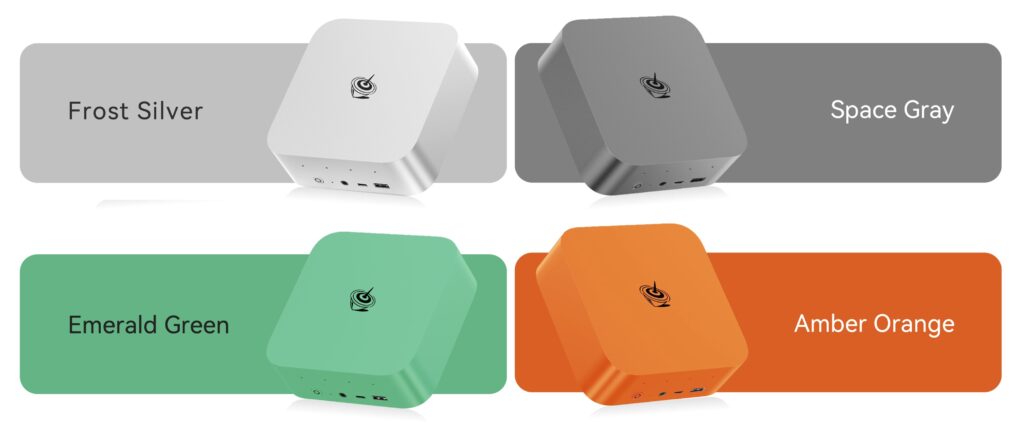
Beelink offers both models in silver or gray. The Pro model also comes in orange and green, which is uncommon for mini PCs, and quite eye-catching as well.
At launch, buyers can choose between two configurations: 32GB of RAM with 1TB of storage, or 64GB of RAM with 1TB of storage. These options apply to both the Pro and Max models.
Beelink hasn’t announced pricing or a release date yet. The company only says the SER10 Series is “coming soon.”
In other news, ASUS also previewed the ROG GR70 at CES 2026, a compact high-end gaming mini PC positioned between consoles and full desktop rigs. It is the first ROG mini PC powered by AMD’s Ryzen 9 9955HX3D processor running at 70W, paired with NVIDIA GeForce RTX 5070 or RTX 5060 Laptop GPUs with up to 115W Dynamic Boost.
For more daily updates, please visit our News Section.
We use cookies on our website to give you the most relevant experience by remembering your preferences and repeat visits. By clicking “Accept”, you consent to the use of ALL the cookies.
This website uses cookies to improve your experience while you navigate through the website. Out of these, the cookies that are categorized as necessary are stored on your browser as they are essential for the working of basic functionalities of the website. We also use third-party cookies that help us analyze and understand how you use this website. These cookies will be stored in your browser only with your consent. You also have the option to opt-out of these cookies. But opting out of some of these cookies may affect your browsing experience.
Necessary cookies are absolutely essential for the website to function properly. This category only includes cookies that ensures basic functionalities and security features of the website. These cookies do not store any personal information.
Any cookies that may not be particularly necessary for the website to function and is used specifically to collect user personal data via analytics, ads, other embedded contents are termed as non-necessary cookies. It is mandatory to procure user consent prior to running these cookies on your website.