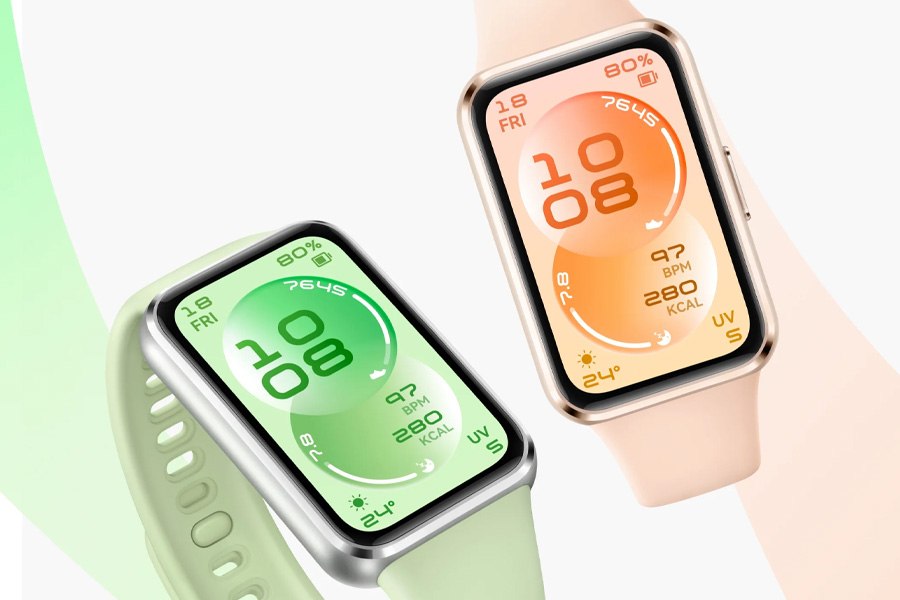
Huawei has officially launched two new fitness bands in the Philippines: the Huawei Band 11 and the Huawei Band 11 Pro. The pair looks nearly identical on paper, sharing most of their core features, but they differ slightly in materials, size, and price.
Huawei Band 11 and Band 11 Pro Specifications
Both the Band 11 and Band 11 Pro come with a 1.62-inch AMOLED display with a 286 × 482 resolution and 347 PPI pixel density. The display supports full touchscreen controls and is paired with a physical side button for navigation.
Huawei is positioning both devices as lightweight, everyday wearables. The standard Band 11 offers two case options: aluminium alloy or durable polymer. The Pro model, meanwhile, uses an aluminium alloy case by default.
Huawei Band 11 Pro
The difference slightly affects weight. The Band 11 weighs 17 grams with the aluminium case or 16 grams with the polymer case, while the Pro comes in at 18 grams without the strap. In terms of size, the Pro is marginally taller at 43.5 mm compared to 42.6 mm on the regular version.
Both models use a fluoroelastomer strap and carry a 5 ATM water resistance rating, meaning they should handle swimming and everyday water exposure without issue. Inside, Huawei includes a 9-axis IMU sensor setup, which combines an accelerometer, gyroscope, and magnetometer. There’s also an optical heart rate sensor and an ambient light sensor.
Connectivity is handled via Bluetooth 6.0 with BLE, and the bands are compatible with devices running Android 9.0 or later and iOS 13.0 or later.
Each band packs a 300mAh battery that Huawei says can last up to 14 days under light usage, around 8 days with typical use, or up to 3 days if the always-on display is enabled.
Pricing and Availability
Pricing is where the two bands have a clear difference. The Huawei Band 11 starts at PHP 2,399, while the Huawei Band 11 Pro is priced at PHP 4,499 through Huawei’s official online store in the Philippines.
Color options also differ slightly. The Band 11 is available in Beige, Green, White, Black, and Purple (for the polymer version), with Black also offered in polymer. The Pro model comes in Green, Blue, and Black.
For more daily updates, please visit our News Section.
Casio has launched three new G-Shock models in the US. The GW2310U-1, GW6900U-1, and GX56UBB-1 offer upgraded features while maintaining the toughness and reliability that G-Shock is known for. These models debuted in Japanese and European markets earlier this year and are now available to US customers.
GX56UBB-1
The GX56UBB-1 delivers a bold, all-black design with a rugged build. Casio designed the watch to withstand shocks and impacts from all directions. The matte finish highlights the unique contours of the case, while the high-brightness LED backlight ensures visibility in dark conditions. The watch is powered by Tough Solar technology, which recharges using both natural and artificial light. Casio has priced it at $165.
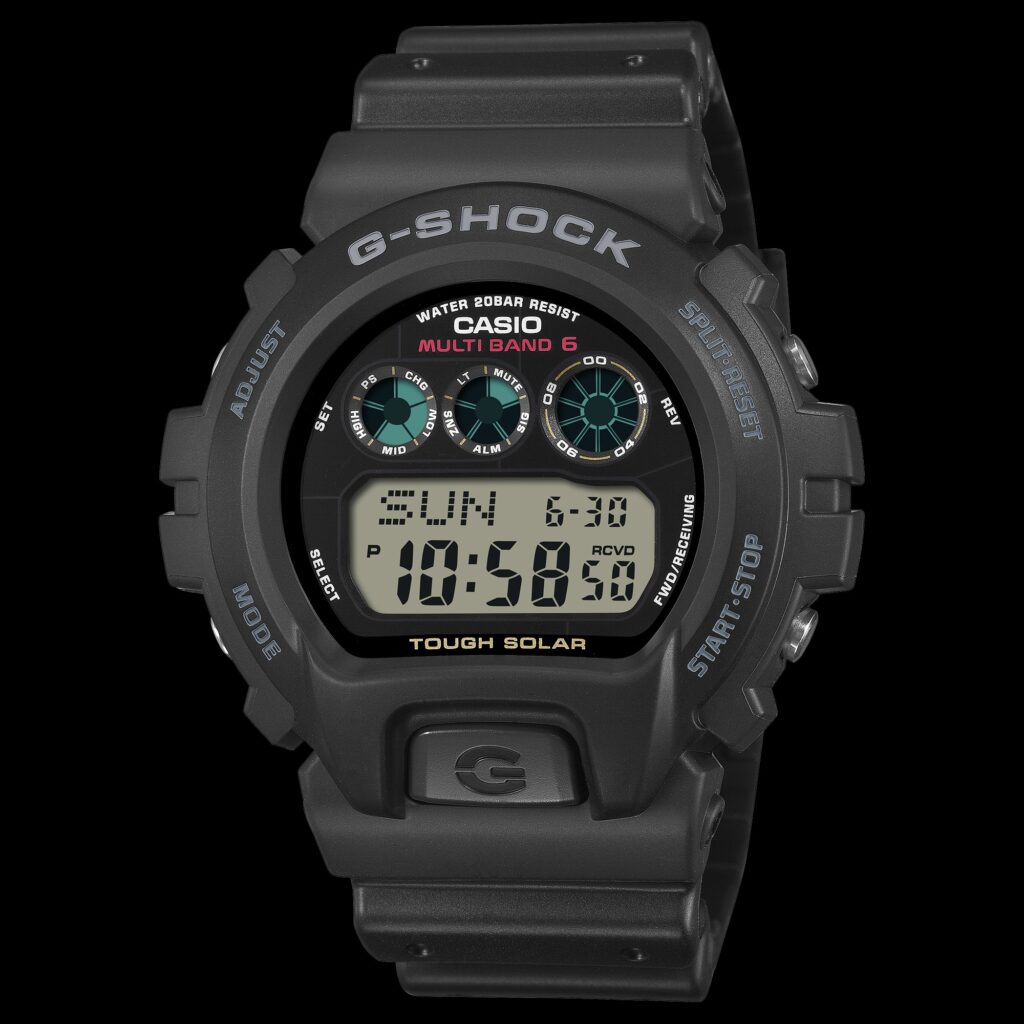
GW6900U-1
The GW6900U-1 updates the popular DW-6900 with modern features. Casio added Multiband 6 technology, which automatically calibrates the time using radio signals from six global stations. This ensures precise timekeeping no matter where you are. The watch is powered by Tough Solar and includes a high-brightness LED backlight for easy readability. Casio has kept the simple, versatile design of the original, making it suitable for everyday wear. The GW6900U-1 costs $155.
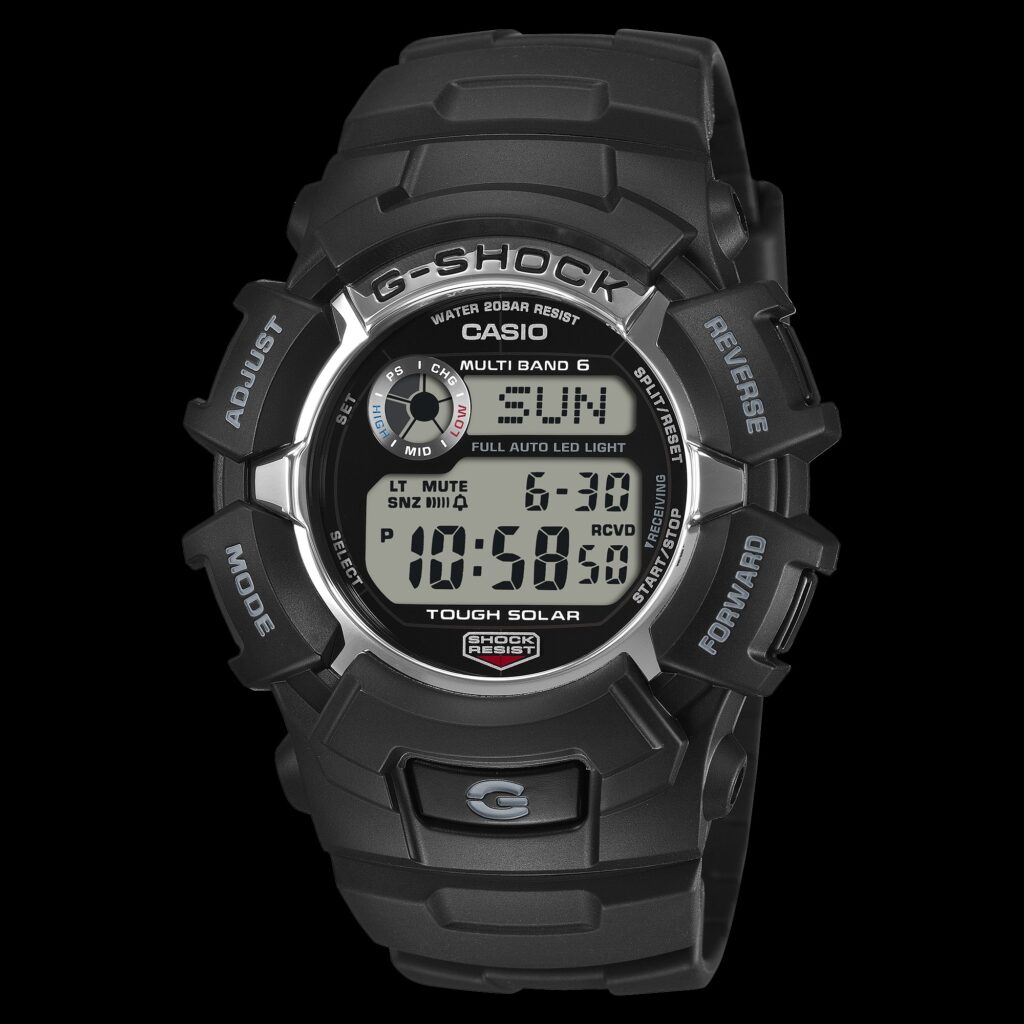
GW2310U-1
The GW2310U-1 provides reliable performance in a compact, lightweight design. Casio kept the symmetrical look of the original G-2300 while adding Multiband 6 for automatic time calibration. The watch uses Tough Solar technology for power and features a durable resin and stainless steel construction for long-lasting reliability. It weighs only 64 grams, making it a comfortable option for everyday use. Casio has priced this model at $155.
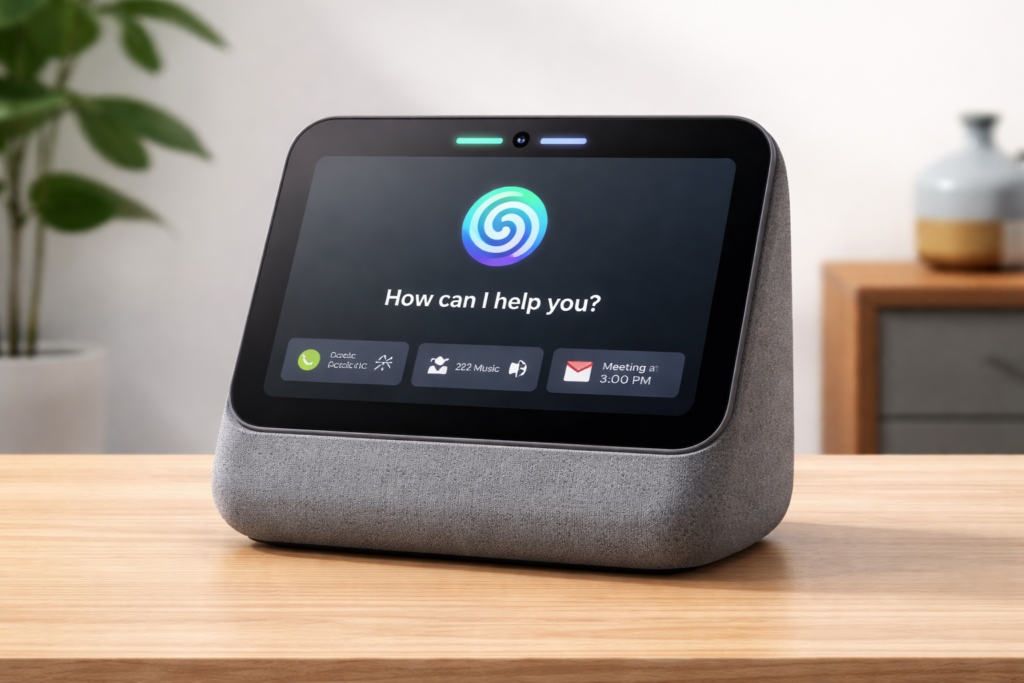
It might not be a wearable device after all, as OpenAI is reportedly working on its first hardware product, a smart speaker powered by ChatGPT. According to The Information (via Engadget), the device will include advanced features like a built-in camera for facial recognition and object identification. OpenAI aims to position the speaker as a more interactive and intelligent alternative to existing products like Amazon Echo and Google Home.
AI-Generated Concept
The smart speaker could cost between $200 and $300 and is expected to launch in early 2027. The device will reportedly use its camera to recognize objects nearby, scan faces with Face ID-like authentication, and even listen to conversations in its surroundings.
The speaker will try to assist users by nudging them toward actions that align with their goals. For example, it could suggest going to bed early if a user has a major event the next day.
OpenAI hired former Apple designer Jony Ive to lead the hardware design. Ive’s design firm, io Products, was acquired by OpenAI in 2025 for $6.5 billion. Over 200 employees are currently working on OpenAI’s hardware division, indicating the company’s serious commitment to entering the consumer tech market.
Privacy concerns have already become a major talking point, as some of you might already feel while reading this article. Yes, the always-on camera and microphone could raise serious questions about how OpenAI stores and processes user data.
Some of you might also feel uncomfortable being watched all the time through a camera, especially in private spaces like in living rooms. The fact that the device is designed to actively track its surroundings only amplifies these concerns.
In addition to the smart speaker, OpenAI is working on other AI-powered devices, including smart glasses and a smart lamp. Reports suggest the smart glasses may not be ready until 2028, while the smart lamp’s production status remains unclear.
As OpenAI is facing a competitive market and might actually go bankrupt in 2027, according to many reports, the company is planning to diversify its product strategy and eventually launch hardware products powered by ChatGPT. This diversification could help stabilize the company in the long run, but it won’t be easy.
Established players like Amazon, Google, and Apple already have proven smart speaker products in the market, and OpenAI will need to overcome significant challenges, including ChatGPT’s tendency to generate inaccurate or biased responses, to convince consumers to embrace its new devices.
For more daily updates, please visit our News Section.
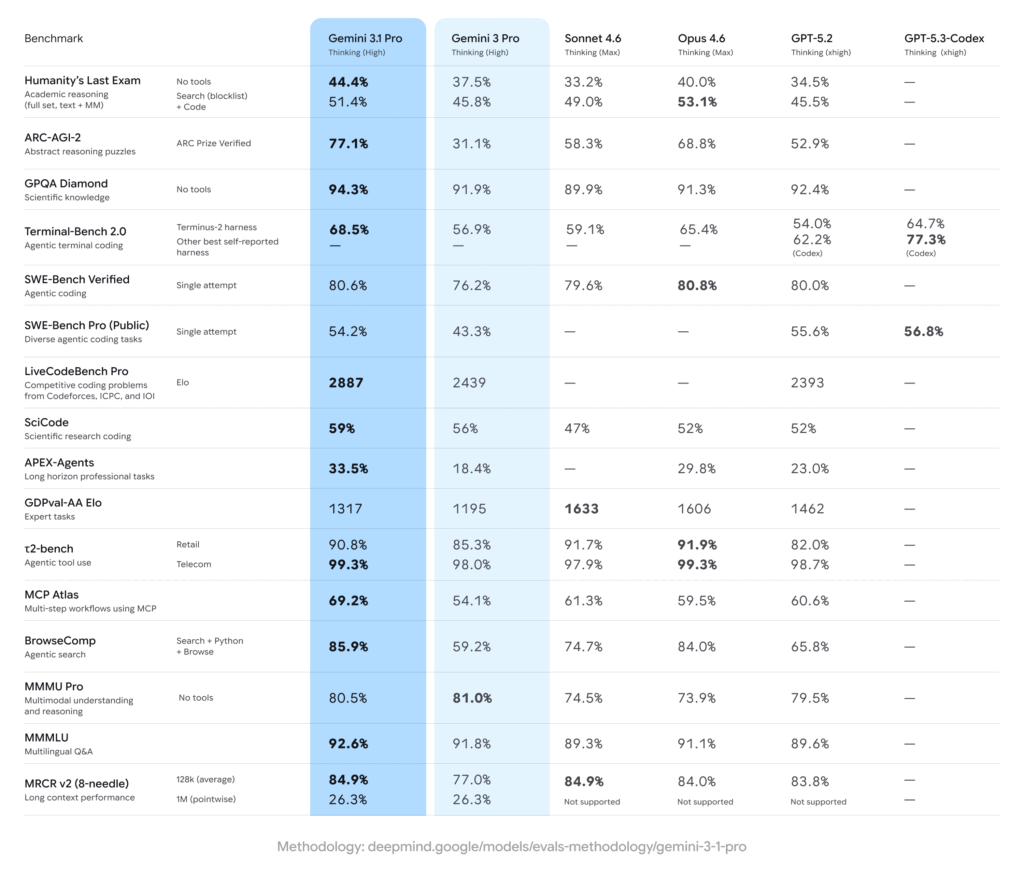
Google has introduced Gemini 3.1 Pro, the latest version of its advanced AI model. The update delivers significant improvements in reasoning and problem-solving, making it one of the most powerful AI systems available today. The model is now rolling out in preview for developers, enterprises, and consumers, with wider availability expected soon.
Gemini 3.1 Pro focuses on handling complex, multi-step tasks that require advanced reasoning. The model can build interactive experiences, translate creative ideas into functional code, and connect complex APIs with user-friendly interfaces.
It can generate immersive projects such as 3D simulations with real-time interaction, create live data dashboards like ISS orbit visualizations, and turn literary themes into modern web designs.
The model also generates animated SVGs directly from text prompts. These animations are created as code rather than video files, which preserves image quality at any scale while keeping file sizes smaller.
In terms of performance, Gemini 3.1 Pro achieved a score of 77.1% on the ARC-AGI-2 benchmark, which tests abstract reasoning. This result more than doubles the score of its predecessor, Gemini 3 Pro, and outperforms competitors like GPT-5.2 (52.9%) and Opus 4.6 (68.8%). The model also posted strong results on GPQA Diamond, SWE Bench Verified, and BrowseComp, which evaluate scientific reasoning, coding ability, and search-related tasks.
Google is making Gemini 3.1 Pro available through several platforms. Developers can access it via Google AI Studio, Gemini CLI, and Android Studio. Enterprises can use it through Vertex AI and Gemini Enterprise. Consumers can try it on the Gemini app and NotebookLM, with Pro and Ultra subscribers receiving higher usage limits.
Xiaomi is steadily expanding its presence in Europe’s home appliance market, and its latest move brings a connected washer-dryer combo to the UK.
The Xiaomi Mijia Front Load Washer Dryer Pro 9kg is now available for £599. The washing machine has been rolling out across parts of Europe since late last year, and it’s already been spotted in markets like Germany and France at slightly lower prices. Now it’s officially landed in the UK as well.
At its core, this is a 9kg front-load washer that also handles drying, aimed at people who don’t have space (or patience) for separate machines. It supports a range of programs, including a 36-minute Smart Wash and a shorter 12-minute cycle for lighter loads. Xiaomi also claims it can wash and dry 3kg of laundry in around three hours. That’s not lightning-fast, but for a combo unit, it’s reasonable.
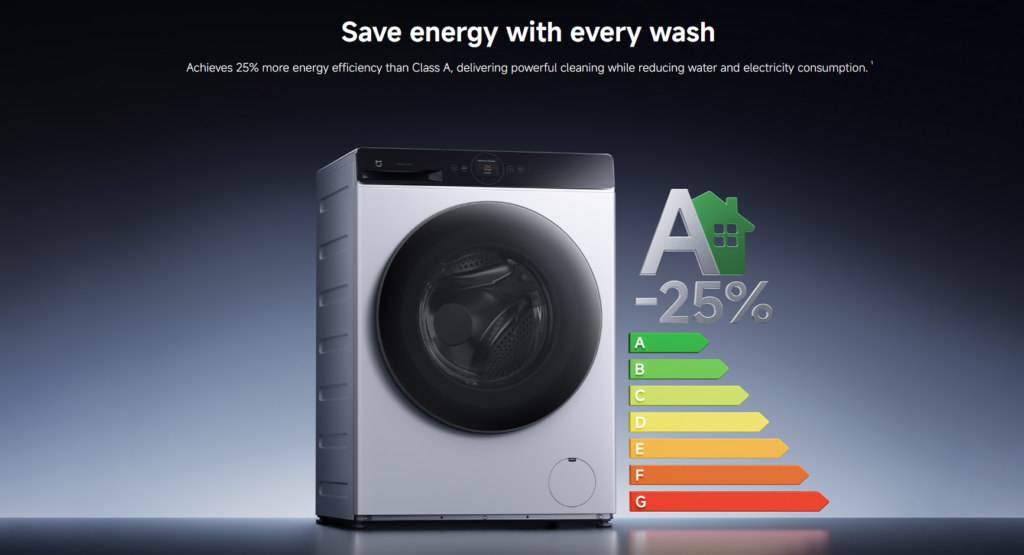
Steam cleaning is part of the package too. The company says it can eliminate up to 99.99% of bacteria, which is increasingly becoming a standard claim in this category. The machine carries a Class A energy rating and is said to be more efficient than the minimum requirement for that tier.
Where Xiaomi really leans in is the smart functionality. Through the Xiaomi Home app, users can start or pause cycles remotely, check remaining time, schedule washes, and even receive firmware updates.
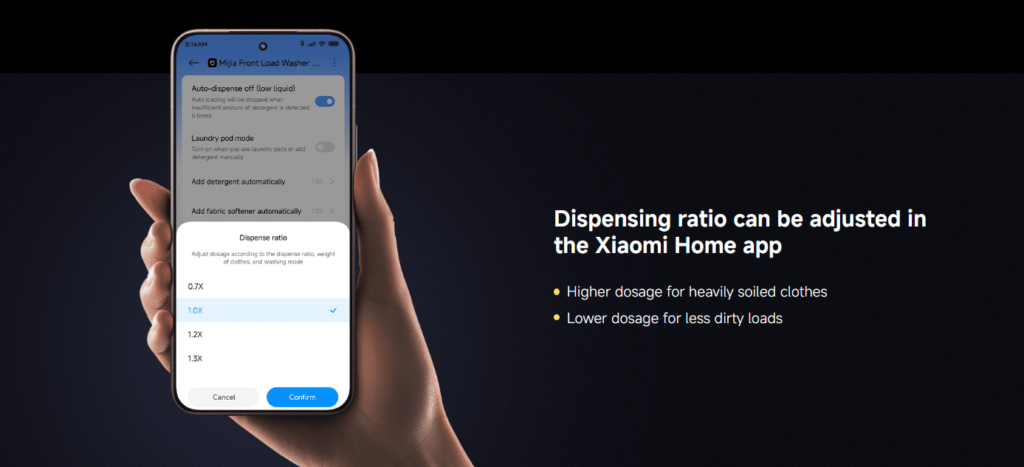
There’s also automatic detergent dosing for up to two products. The machine adjusts the amount based on the selected program and load size.
One detail that stands out is the self-cleaning system. Washer-dryer combos are known for collecting lint and residue over time, and maintenance can be a chore. Xiaomi says this model uses high-pressure water to rinse parts of the drying system and periodically cleans the drum and detergent drawer at high temperatures. In theory, that means less manual upkeep.
At £599, it’s not exactly entry-level, but it’s competitive for a smart washer-dryer with these features. For households already invested in Xiaomi’s ecosystem, it makes a certain kind of sense.
Motorola has started teasing its next Edge series phone in India, and all signs point to the upcoming Motorola Edge 70 Fusion.
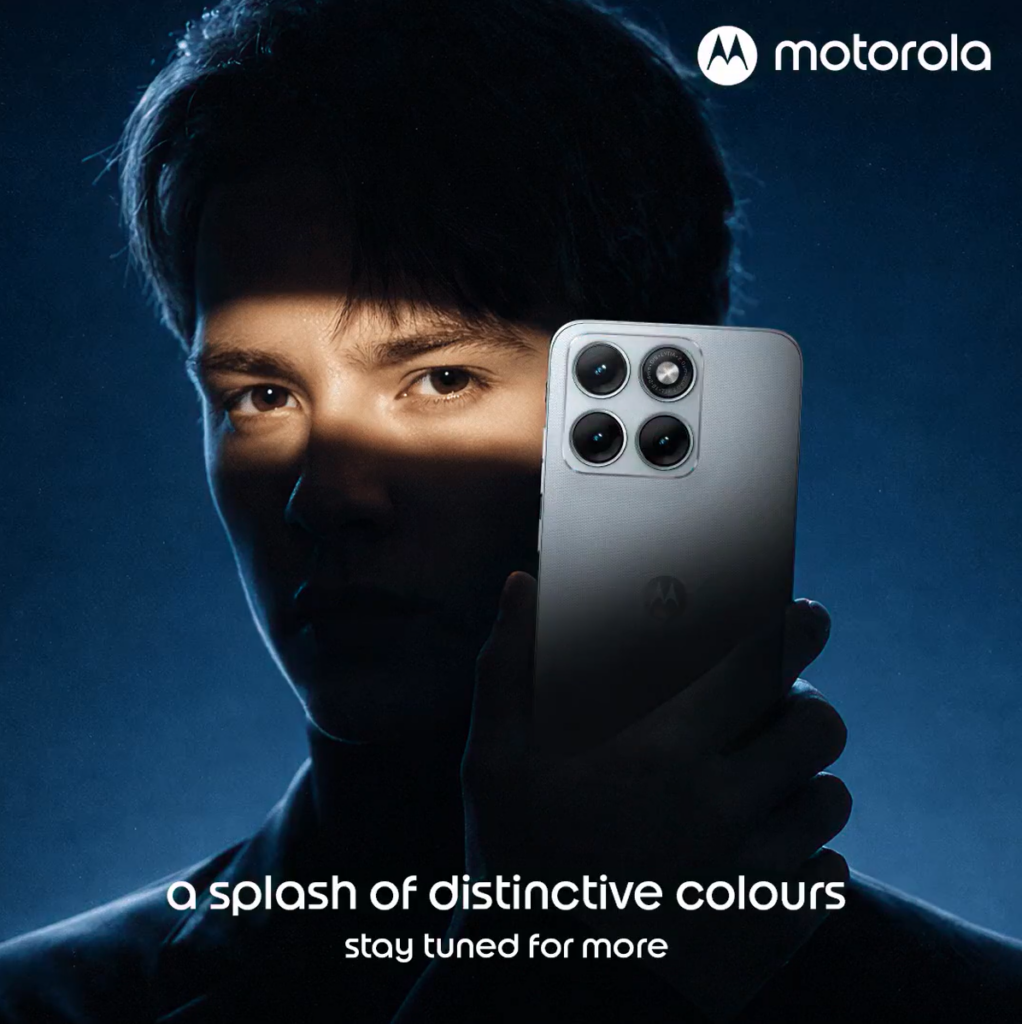
The company hasn’t explicitly named the device in its initial X posts, but the hints are hard to miss. One teaser cleverly played around with the word “fusion,” alongside images of a new handset in bright, textured finishes. Shortly after, Flipkart went live with a dedicated promo page carrying the tagline, “a fusion that gives you the edge.” At that point, the identity was pretty clear.
Color options confirmed
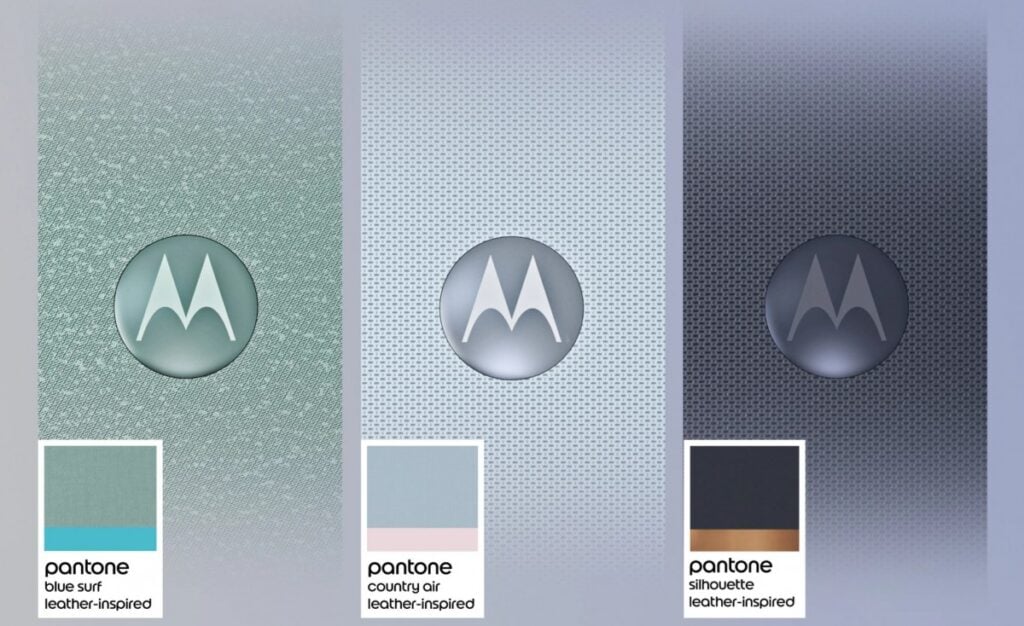
Flipkart’s microsite confirms three color options for India: Pantone Blue Surf, Pantone Country Air, and Pantone Silhouette. All three appear to feature Motorola’s now-familiar leather-inspired textured back, which has become a signature look for the brand’s recent Edge devices.
Earlier global leaks suggested as many as five Pantone shades, including Orient Blue and Sporting Green, but it looks like India may be getting a trimmed-down selection at launch.
The overall design sticks to Motorola’s recent formula: curved display edges, slim bezels, and a distinct camera module that blends into the back panel.
One confirmed detail is the presence of a “LYTIA camera,” which likely refers to a Sony LYTIA sensor. Leaks suggest the main camera could be a 50MP unit, with improved low-light performance.
As for the processor, earlier rumors pointed toward the Snapdragon 7s Gen 3. However, more recent leaks, including marketing renders and benchmark listings, suggest the phone may instead use the newer Snapdragon 7s Gen 4. If true, that would bring modest CPU and GPU improvements, along with better efficiency compared to the previous generation.
The rest of the spec sheet hasn’t been officially confirmed yet, but leaks paint a fairly ambitious mid-range picture. The Edge 70 Fusion is rumored to pack:
A massive 7,000mAh battery
68W fast charging
A 6.78-inch 1.5K AMOLED display with 144Hz refresh rate
Up to 12GB RAM
Android 16 out of the box
Launch timeline
Flipkart has promised more details on February 23, while subtle hints in the promo page URL suggest February 26 could be a key date — possibly for launch or availability. Motorola hasn’t officially confirmed the timeline yet.
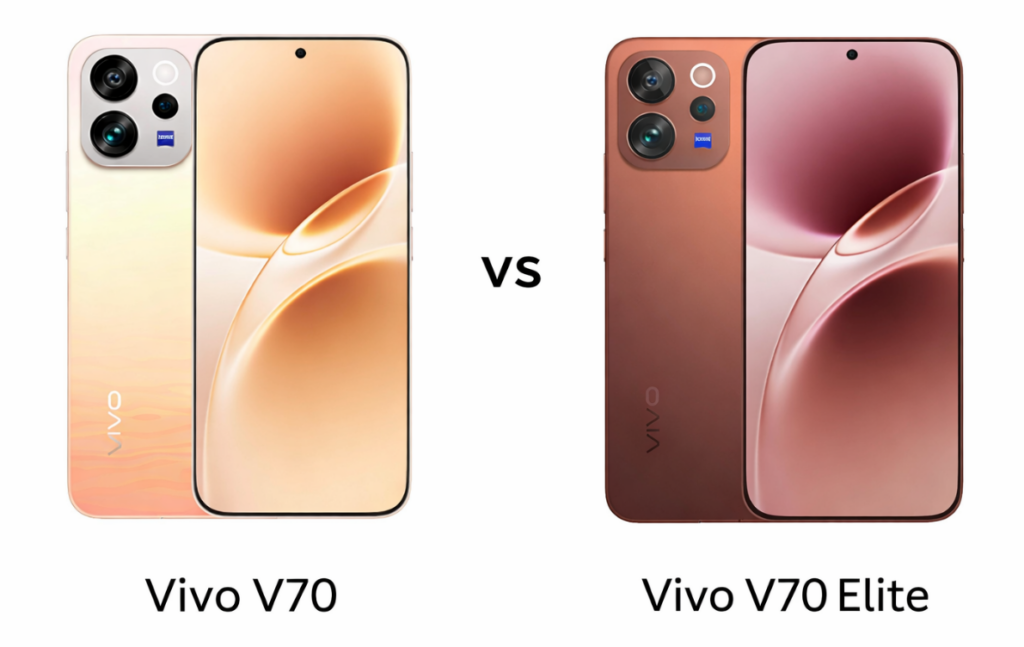
Choosing between two phones that look almost identical but promise very different experiences can be surprisingly tricky, and that’s exactly the case with the Vivo V70 and Vivo V70 Elite. On paper, both share the same premium design, display, and camera hardware, yet their real difference lies in performance and positioning. One focuses on balanced value, while the other pushes toward flagship-level power. This comparison matters because the price gap isn’t huge, making it important to know whether the extra money truly changes the everyday experience or just adds numbers on a spec sheet.
Amazon Pre-Sale Discounts (Vivo V70 Series)
Amazon’s pre-sale for the Vivo V70 series is live, with official shipments starting from February 27. The Vivo V70 base variant is priced at ₹50,000, but the pre-sale discounted price brings it down to ₹46,000. The Vivo V70 Elite base variant, originally priced at ₹55,000, is available at a discounted pre-sale price of ₹52,000. Buyers can also combine these price cuts with additional launch offers, including bank discounts, EMI options, exchange bonuses, and other deals listed on the Amazon product page.
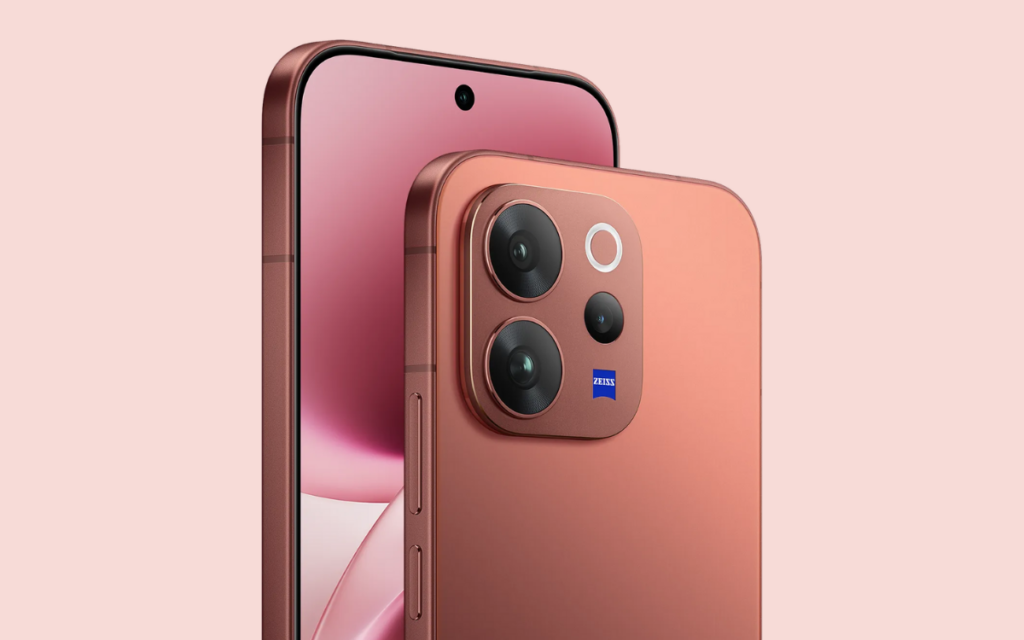
Both Vivo V70 and V70 Elite follow a premium design approach with a glass front, aluminum alloy frame, and either glass or fiber-reinforced back finishes. The overall styling feels modern and refined, giving both phones a flagship-like presence in daily use. Water and dust resistance adds a practical layer of durability, making them feel reliable beyond just looks. Since the design language is shared, the difference here is more about positioning than appearance; the Elite feels like a performance-focused variant rather than a visual upgrade. This similarity can actually be a positive, as buyers don’t have to compromise on aesthetics when choosing the more affordable model.
Display Quality
Both devices use the same AMOLED panel with a 120Hz refresh rate, HDR10+ support, and very high peak brightness. Colors look vibrant, contrast remains deep, and smooth animations make scrolling and gaming feel premium. Outdoor visibility is excellent, and the display experience feels equally polished on both models. In real-world use, there is virtually no separation between them visually.
Verdict
Design and display are essentially tied. The V70 stands out as the smarter pick here since it delivers the same premium viewing experience without paying extra.
2. Specifications Including Battery
Performance
The main difference between these two phones appears under the hood. Vivo V70 runs on the Snapdragon 7 Gen 4, which handles daily apps, multitasking, and moderate gaming smoothly. Vivo V70 Elite steps up to the Snapdragon 8s Gen 3, offering noticeably stronger performance for demanding games, heavier editing tasks, and longer-term performance stability. The Elite feels faster under pressure, especially when pushing graphics or multitasking heavily. Still, the standard V70 proves that upper mid-range chips now deliver a very polished everyday experience without feeling slow.
Battery and Charging
Both phones pack a large 6500mAh battery with 90W fast charging, reverse wired charging, and bypass charging. Endurance should comfortably last a full day, even with heavy use, and charging speeds remain equally impressive. The V70 may feel slightly more power-efficient due to its chipset, while the Elite focuses more on raw speed and sustained performance.
Verdict
Performance clearly favors the V70 Elite, but battery experience remains equally strong on both. The choice depends on whether raw power or balanced efficiency is more important.
3. Camera
Main and Secondary Lenses
Camera hardware is nearly identical across both devices, featuring a 50MP main sensor with OIS, a 50MP periscope telephoto lens with 3.7x optical zoom, and an 8MP ultrawide camera. Image output should be very similar, delivering sharp details, balanced colors, and strong zoom versatility. The V70 Elite adds a color spectrum sensor and slightly improved HDR video processing, which can help with more consistent tones in complex lighting scenes. In everyday photography, however, differences remain subtle rather than dramatic, making both phones strong camera performers in their segment.
Selfie Camera
Each model uses the same 50MP autofocus selfie camera capable of 4K video recording. Selfies are expected to look detailed with natural skin tones, and autofocus helps maintain sharpness in both photos and video calls. Social media creators and casual users alike will find the front camera experience consistent across both models.
Verdict
Camera performance is nearly equal, but the V70 Elite takes a slight lead due to small processing improvements. The V70 still delivers flagship-style results without clear compromises.
4. Pricing
Vivo V70 is priced at around ₹50,000, while Vivo V70 Elite comes in at approximately ₹55,000. The almost ₹5,000 difference mainly reflects the jump to a more powerful processor and small imaging refinements rather than major hardware changes. For buyers comparing pure features, the pricing gap feels narrow enough to make the decision more about usage style than budget limits.
Is the Price Justified?
The V70 offers stronger value because it delivers the same design, display, battery, and almost identical camera experience at a lower price. The Elite justifies its higher cost for users who want extra performance headroom for gaming or long-term heavy usage. The pricing strategy feels balanced, but the benefits of the Elite are more performance-focused than all-around upgrades.
Disclaimer: Prices are approximate and may vary based on country, region, and applicable taxes.
Verdict
Vivo V70 wins on value for most users, while V70 Elite makes sense for buyers prioritizing performance and future-proofing.
5. Conclusion
Both smartphones offer premium AMOLED displays, large batteries, fast charging, and Zeiss-tuned camera systems, creating a flagship-like experience regardless of choice. The real separation lies in processing power; the V70 Elite targets users who want stronger gaming performance and longer-term speed consistency, while the V70 focuses on delivering a balanced experience at a more accessible price. This makes the lineup easy to understand, as buyers are essentially choosing between value and extra performance rather than completely different devices.
Verdict
Vivo V70 is the smarter all-round choice thanks to its pricing and balanced specifications. Vivo V70 Elite is the better option for power users who want higher performance ceilings and slightly refined imaging performance without changing the overall experience.
Gemini 3.1 Pro is the company’s most capable LLM with stronger core reasoning and better performance on complex, multi-step work. It outperforms the best from Anthropic and OpenAI across many benchmarks. Here, I’ll show you the top 5 ways to access Gemini 3.1 Pro for free with all the steps.
Image credit: Google
How to use Gemini 3.1 Pro for free (5 methods)
1. Google Gemini
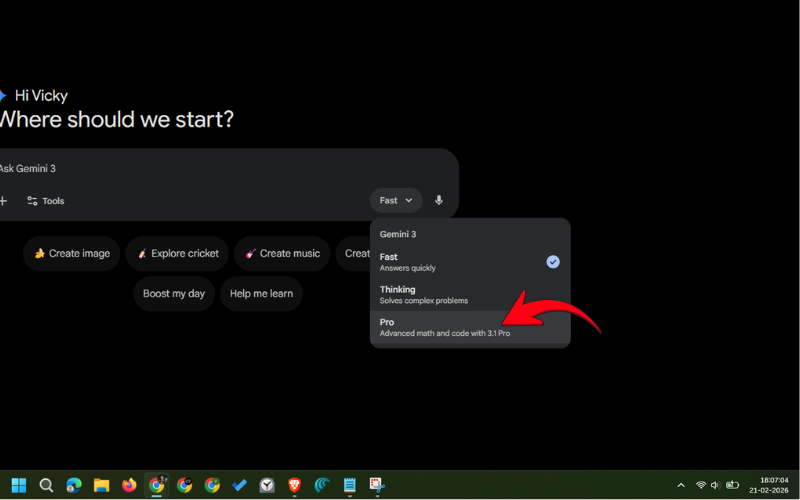
This is the easiest and quickest way to test the capabilities of Gemini 3.1 Pro. Simply go to gemini.google.com, choose the “Pro” option, and get things done.
Step 2: Log in to your Google account (if not logged in).
Step 3: Tap the mode selector and choose “Pro”.
Step 4: Type your prompt and hit Enter.
If you’re using a smartphone, it’s best to download the Google Gemini app from Google Play Store (Android) or App Store (iPhone). The steps remain the same.
Please note that the free version of Google Gemini allows only a few messages per day for Gemini 3.1 Pro. That’s best for the testing purpose. However, you can upgrade to the Pro or Ultra plan to increase your limits. Luckily, there are ways to get Google Gemini Pro for free for a year. Comment below if you want a detailed post on that.
2. Google’s Vertex AI platform
Google is offering $300 in free credits to use Google Cloud services, including the Vertex AI platform, which allows us access to Gemini 3.1 Pro, Google Veo, and many other AI tools. Note that free credits are available for 90 days. After which, they expire.
Step 2: Choose your Google account and your country.
Step 3: Fill in your contact information, then verify a payment method.
[Note: You won’t be charged automatically even after the free trial ends unless you do a manual activation. You can verify the same in the screenshot below.]
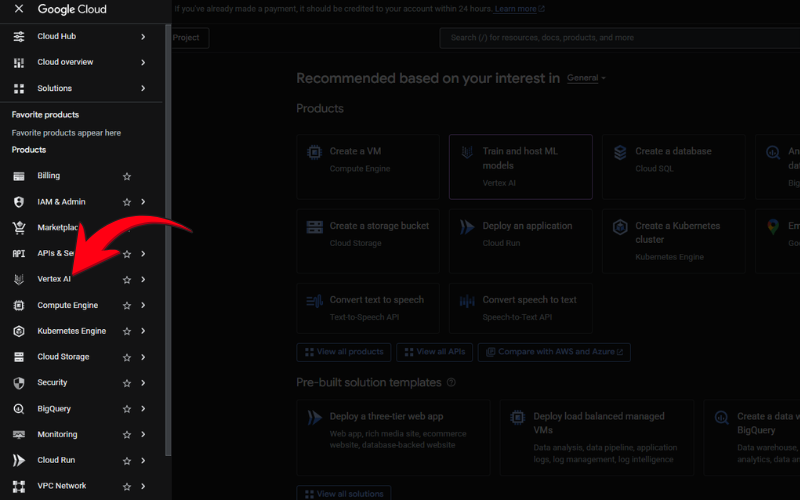
Step 4: In your Google Cloud dashboard, tap the menu button and choose “Vertex AI”.
Step 5: Click “Try now” below Vertex AI Studio.
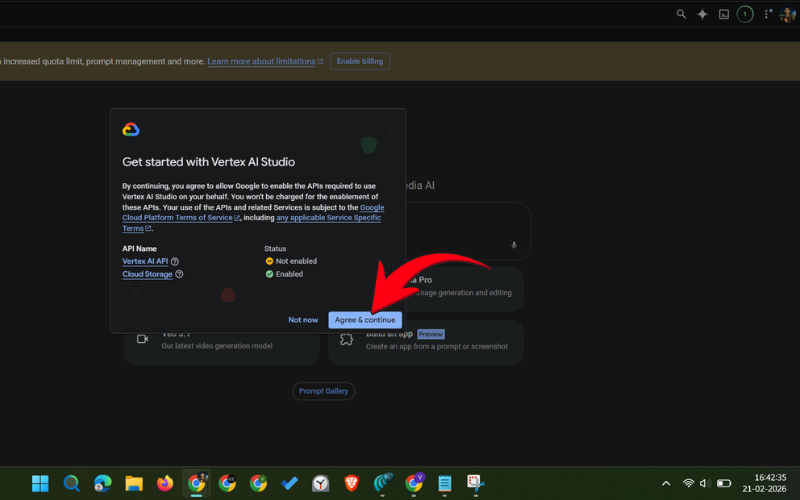
Step 6: Click “Agree & continue” to enable the required APIs for using Vertex AI Studio.
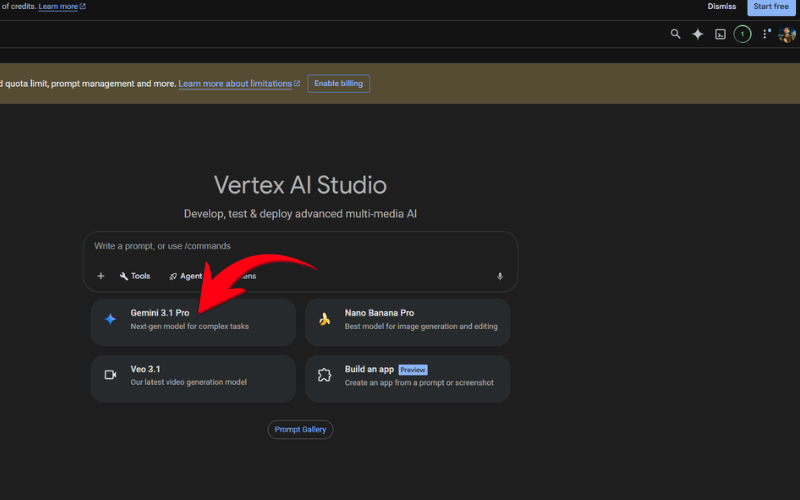
Step 7: Choose “Gemini 3.1 Pro” and start using it.
The $300 free credit gives you very high usage limits to Google’s top AI models for 90 days. You can even create videos, build tools using coding, and do a lot more stuff without paying a penny.
3. Try That LLM
This is an easy and free tool for comparing responses from various LLMs. The platform offers dozens of LLMs to test your prompt, including Gemini 3.1 Pro, Claude Opus 4.6, and ChatGPT 5.2.
This is super easy to use. Just sign up on the website (it takes less than a minute), choose your model, and start using it. The best part is you don’t need to fill in payment details.
Step 1: Go to trythatllm.com and click the “Sign up” button.
Step 2: Fill in basic details to create your account.
Step 3: Verify your email.
Step 4: Tap “New Prompt Group”.
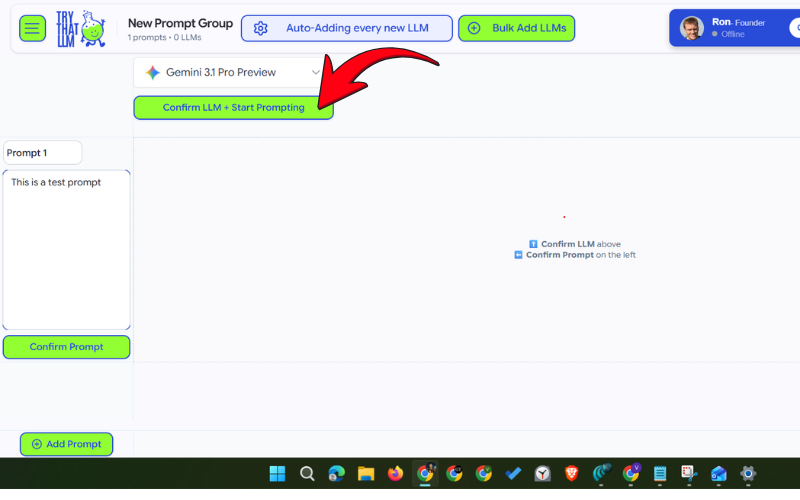
Step 5: Click “Choose an LLM” and select Google > Gemini 3.1 Preview.
Step 6: Click “Confirm LLM + Start Prompting”.
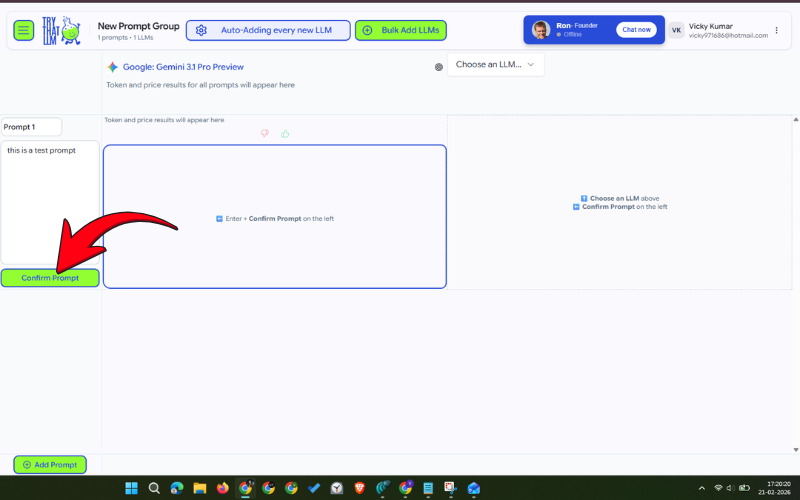
Step 7: Enter your message in the prompt section and click “Confirm Prompt”.
You get 1000 free credits when you create an account. Note that these are one-time credits and are not added every month.
4. Arena AI
Arena AI also lets you compare different LLMs for free. The best part is that you don’t need to sign up on the platform to use Gemini 3.1 Pro or any other LLM. Just open the website, choose your AI model, and start messaging.
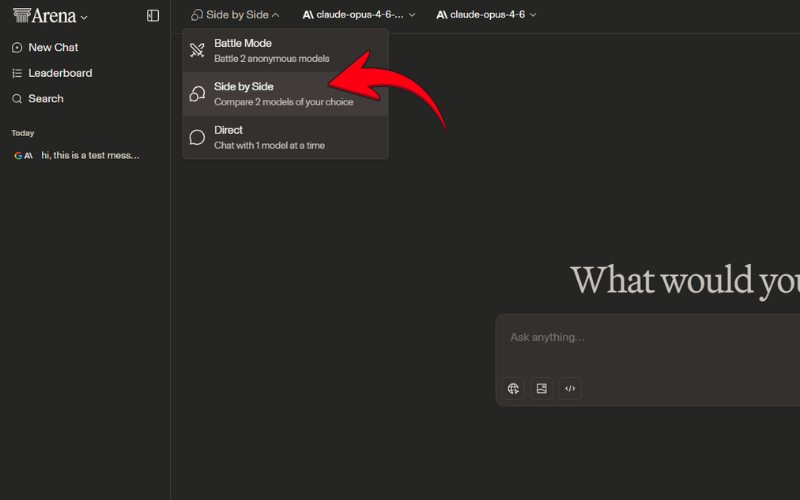
Step 1: Go to Arena.ai and make sure side-by-side mode is selected.
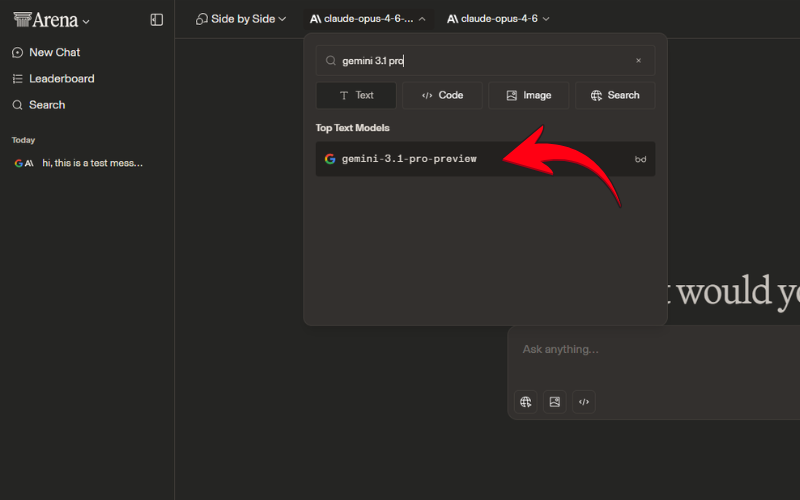
Step 2: Tap on the first LLM field.
Step 3: Search for “Gemini 3.1 Pro” and choose the right LLM from.
Step 4: Write your message/prompt in the Ask anything section and enter.
Arena AI is completely free to test LLMs, but it doesn’t offer unlimited responses. The platform provides pretty generous limits, which should be more than enough for small use cases.
5. ChatPlayGround AI
ChatPlayGround AI also offers access to dozens of LLM models, including Gemini 3.1 Pro, Claude Opus 4.6, and ChatGPT 5.2. Unlike Try That LLM and Arena AI, this AI tool lets you use images and PDFs with your message. But what’s the catch here? It doesn’t have a free plan; instead, it offers a 3-day free trial, and for that, you’ll need to link your bank cards.
So, if you only need access to Gemini 3.1 Pro and other LLMs with better capabilities, you can go for the free trial, but make sure to cancel the plan before three days to avoid any charges. Simply go to chatplayground.ai, tap “Sign Up”, and fill in the required details to get started.
Be sure to visit the AI section on Gizmochina regularly for the latest updates.
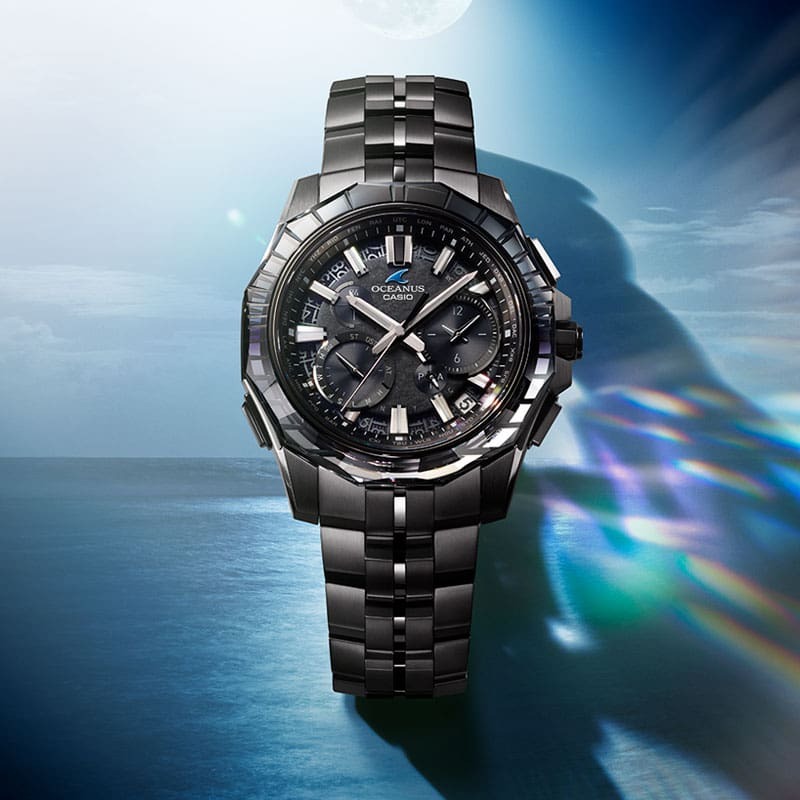
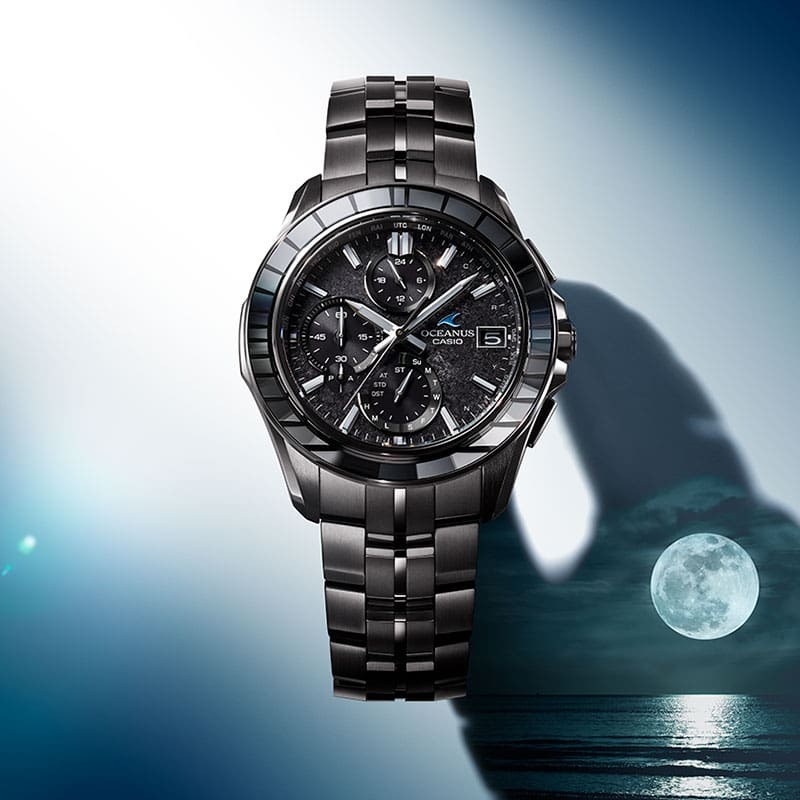
Casio has launched two limited-edition models, the Oceanus OCWSG1000CN1A and OCWS7000CN1A, in the United States. These watches, part of Casio’s premium Oceanus Manta series, first debuted in global markets last year and are now available in limited quantities in the US.
Design Details
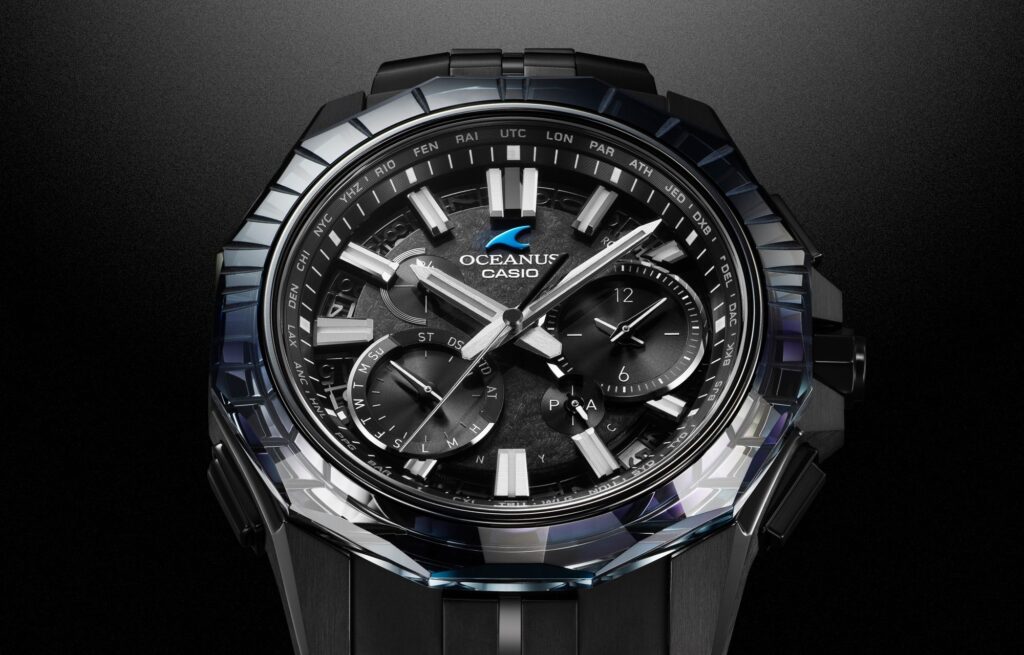
The OCWSG1000CN1A costs $4,800 and is limited to only 600 pieces worldwide. Casio engraved each watch with a unique serial number to highlight its exclusivity. The watch design takes inspiration from a Calm Night theme, evoking the look of a moonlit sea.
Casio used Edo Kiriko craftsmanship for the sapphire glass bezel, with each cut handcrafted by third-generation Edo Kiriko artisan Toru Horiguchi. The titanium case features a DLC (Diamond-Like Carbon) coating, which enhances durability and gives the watch a sleek, polished appearance.
Casio equipped the OCWSG1000CN1A with Gallium Tough Solar technology, which significantly improves power generation efficiency. The watch includes advanced timekeeping features such as Bluetooth connectivity, multi-band radio-controlled timekeeping, and automatic time adjustments. It also offers water resistance up to 10 bars and a textured dial that resembles the moon’s surface.
The OCWS7000CN1A is priced at $2,200 and features a similar Calm Night design theme. Casio crafted this model with an all-black titanium case and an Edo Kiriko sapphire glass bezel. The dial incorporates a silver and black gradient, creating depth and a dynamic aesthetic. The blue accents on the watch reflect light differently depending on the angle, mimicking the ocean’s natural movement.
Casio designed the OCWS7000CN1A to be slimmer and lighter, measuring just 9.8 mm thick and weighing 81 grams. The watch includes Bluetooth connectivity, multi-band timekeeping, and a solar-powered battery with an operating life of up to five months on a full charge. It is limited to only 1,600 pieces worldwide.
Both models provide additional features like 100-meter water resistance, smartphone connectivity via the Casio Watches app, and support for over 300 world time cities.
With the rollout of One UI 8.5 Beta 5 for the Galaxy S25 series, Samsung has quietly introduced a major refresh to Bixby. The changelog only mentions an applied Bixby version upgrade, but early testers are reporting much bigger changes under the surface.
The update is currently rolling out in regions including the US, UK, Germany, India, Korea, and Poland, with a download size of around 550MB and the February 2026 security patch.
According to beta users, the assistant now delivers noticeably faster and more detailed answers. It can generate longer, structured content, such as poems, essays, and in-depth explanations, directly on device.
There are also signs of deeper web integration. Bixby appears to pull real-time information from online sources, and some testers have noticed a small Perplexity icon appearing in certain search results. Samsung hasn’t officially confirmed the integration in this beta, but the visual cue strongly suggests backend support from Perplexity AI.
Image: SammyFans
In practical terms, that means Bixby is starting to feel less like a basic voice command tool and more like a conversational assistant.
Better device control
Beyond web queries, Bixby seems more responsive when controlling the phone itself. Natural-language commands such as “Set display brightness to 30 percent” or “Change system sound to level 3” execute instantly, without requiring users to navigate through menus. That may sound minor, but smoother system-level control is exactly where voice assistants often fall short.
The assistant now appears to better understand both the device and online context, blending hardware control with web-powered intelligence.
Samsung has also updated the visual experience. When activated, Bixby now displays a cleaner, pill-shaped animation bar at the bottom of the screen. The Bixby icon sits on the left, the microphone on the right, and the edges glow subtly while listening. The overall design feels more modern and less intrusive.
Bixby has long struggled to compete with Google Assistant and, more recently, Gemini. But this update suggests Samsung is taking its assistant more seriously again. With the stable version of One UI 8.5 expected to debut alongside the Samsung Galaxy S26 at Galaxy Unpacked on February 25, this beta may be laying the groundwork for a broader AI push.
Sony’s next flagship earbuds, the Sony WF-1000XM6, are drawing attention for more than just sound quality. A recent teardown based on FCC filings suggests Sony has quietly made the new model easier to repair, particularly when it comes to battery replacement.
That may not sound flashy, but for long-term owners of these expensive earbuds, it’s a big deal.
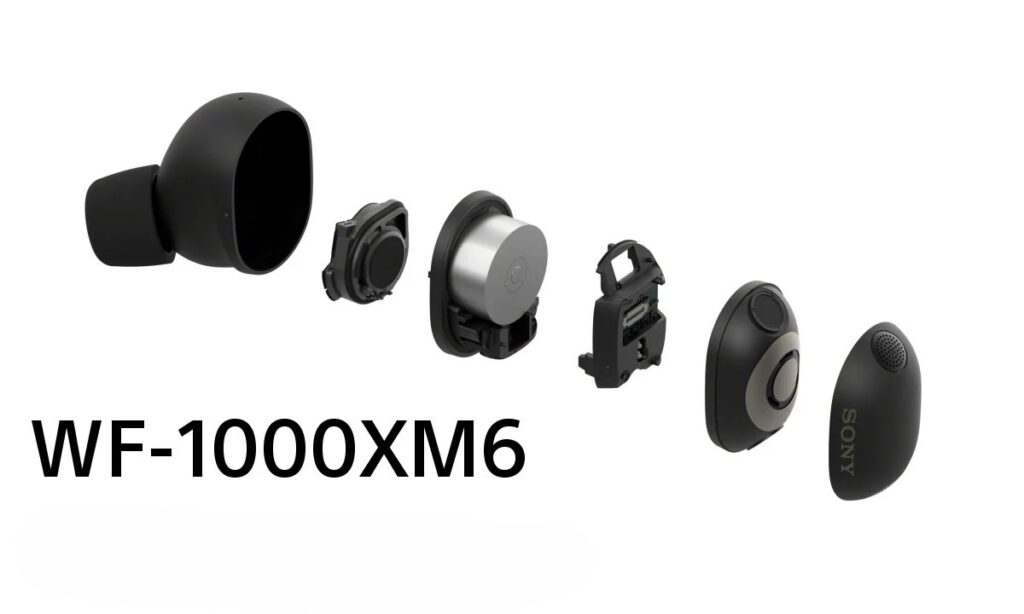
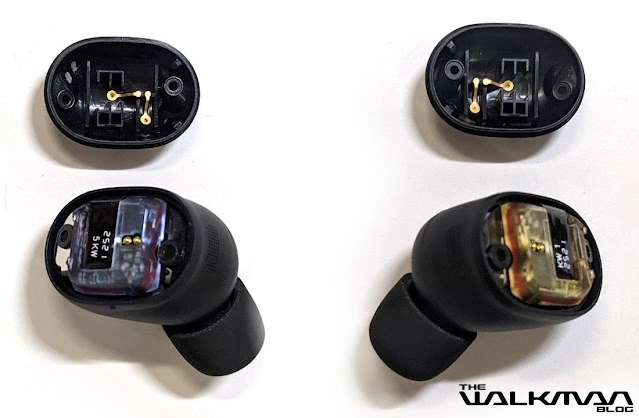
The analysis, published by The Walkman Blog, pulls from internal photos and schematics included in US FCC documentation. One key change stands out: Sony has removed the ribbon cable that previously connected the top cover to the main internal components.
Why does that matter? Ribbon cables are fragile. During disassembly, especially when trying to replace aging batteries, they’re easy to tear. Removing that component simplifies the process and reduces the risk of accidental damage. For a product category often criticized for being difficult to repair, that’s a meaningful step.
Inside the earbuds
Internal photos reveal Bluetooth antenna contacts, touch sensor connectors, microphone openings, and a MEMS mic mounted directly on the board. There’s also a transparent plastic layer on top, a small design touch that visually separates this generation from earlier leaks.
The battery is listed as model Z55FA, rated at 3.85V. Multiple suppliers are mentioned, including Springpower, Highpower (TH), VDL, and Zhuhai ZeniPower Battery Co., Ltd., with signs pointing to ZeniPower as a primary source. Capacity isn’t disclosed in the FCC paperwork.
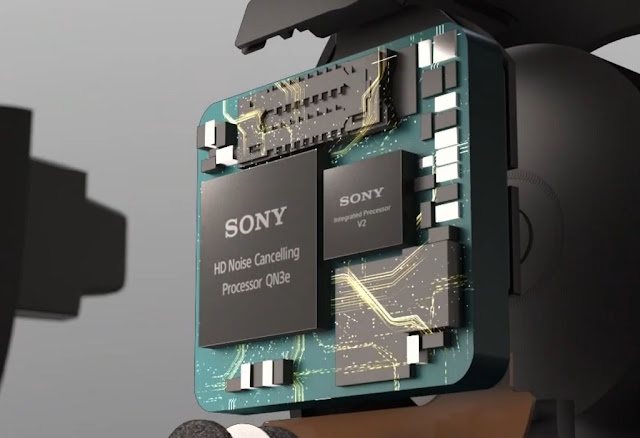
On the silicon side, the teardown confirms an updated system-in-package module labeled GSBR-005 (version 3-2), integrating an MT2833 Bluetooth chip. Although resin coating obscures some details, component sizing suggests the new QN3e noise-canceling chip is noticeably larger than the previous QN2e.
Sony’s XM series has long been considered among the best in the noise-canceling true wireless category. By improving internal design for easier servicing, without compromising premium hardware, Sony seems to be addressing one of the biggest long-term pain points in wireless earbuds: battery degradation.
Of course, real-world performance will ultimately decide how compelling the upgrade is. But on paper, the WF-1000XM6 look like a refinement in more ways than one. It’s already available for $329.99 on Sony’s US website.
Apple’s March 4 “special Apple Experience” event is almost here, and a fresh macOS update may have just revealed more than the company intended. Digging through macOS 26.3, developers have found references to three unreleased device identifiers hidden inside kernel extensions.
While Apple hasn’t officially announced anything yet, the codenames strongly suggest new hardware is on the way, possibly including a more affordable MacBook and updated Studio Displays.
A lower-cost MacBook could finally be coming
The most talked-about codename is J700, which many believe refers to a new entry-level MacBook. Apple hasn’t seriously targeted the sub-$800 laptop segment in years. The MacBook Air still starts around the $849–$999 range depending on configuration, and while that’s competitive, it’s not exactly “budget.”
Reports suggest this new model could land somewhere between $599 and $799. To get there, Apple may skip its usual M-series silicon and instead use the Apple A18 Pro, the same chip expected in the iPhone 16 Pro lineup.
That might sound like a downgrade, but early benchmarks indicate the A18 Pro slightly outperforms the original M1 in certain tasks, while offering excellent power efficiency. For everyday tasks on macOS — web browsing, streaming, document work, even light creative tasks — it should be more than enough.
Rumored specs point to a 12.9-inch display (roughly 13 inches), an aluminum build, and a range of brighter color options. If accurate, this would mark Apple’s most aggressive push into mainstream laptop pricing in quite some time.
Two additional identifiers, J427 and J527, appear to reference updated versions of the Apple Studio Display. Details are still fuzzy, but speculation suggests Apple could be preparing refreshed 27-inch 5K models, possibly with mini-LED backlighting. That would bring better contrast, improved HDR performance, and potentially higher brightness.
There’s also talk of higher refresh rates — maybe 90Hz or even 120Hz — bringing ProMotion-style smoothness to Apple’s standalone displays.
Apple’s New York event, with parallel sessions in London and Shanghai, is being described as a “special experience” rather than a traditional keynote. That wording suggests this may be more of a hands-on preview for media than a big livestream presentation.
Samsung has already released five One UI 8.5 beta builds for the Galaxy S25 trio, and it appears the brand is still not done with the beta testing. Just recently, a new beta build was spotted on the test server, which could be the sixth for the S25 series. Now, if you’re wondering whether a new beta will cause a delay to the stable release or when the stable update will arrive, then stick to the post as we dig deeper to find those answers.
The One UI 8.5 beta program went live in early December for the Galaxy S25 series. At regular intervals, Samsung continued to push more beta builds to fix bugs and enhance the software experience. The Beta 3, in particular, brought some hope of a quicker, stable release, as the build reportedly had a near-stable smoothness with no obvious bugs. However, Samsung wasn’t convinced.
The fourth beta landed in early February, and then the fifth one arrived this week. While these builds primarily aimed to improve software smoothness and squash previously discovered bugs, they also introduced a couple of new features. Beta 4 added Direct Voicemail, and Beta 5 debuted AI-powered Bixby.
Samsung might release another One UI 8.5 beta soon, as a new build has just been spotted on the server (via Alfaturk) with firmware version ZZB7. This could go live next month as the sixth beta update for the Galaxy S25 series. We don’t know how many more are on the way. Last year, Samsung released seven One UI 8.0 beta builds before pushing the stable update. So, there could be one or two more beta builds for One UI 8.5 in the queue before we actually start receiving the stable update.
Samsung hasn’t announced when it will start rolling out the stable One UI 8.5 update. However, if past rollouts are anything to go by, we can expect the rollout to begin in late March 2026, starting with the Galaxy S25 series.
It’s been surprising to see that Samsung didn’t expand the One UI 8.5 beta program beyond the Galaxy S25 series. The brand has not confirmed if more devices will get the beta update. This could mean a direct stable release for other Galaxy models. That shouldn’t be concerning if Samsung quickly rolls out the One UI 8.5 update to its eligible devices. That seems more likely as the brand is reportedly gearing up to release the next-gen foldable devices with One UI 9.0 (Android 16) around July or August. Samsung would be looking to wrap up the One UI 8.5 rollout before that.
We’ll continue to update you with the latest developments around One UI 8.5 in the Samsung section on this website. Remember to visit that regularly. Also, join our Telegram channel to get instant notifications about the breaking news and software rollouts.
The Vivo V70 and Realme 16 Pro+ 5G are two of the latest smartphones competing in the mid-to-high-end segment in India.
Both devices bring strong specifications, including premium displays, powerful processors, and advanced camera systems, making them direct competitors in this space.
Here’s a detailed comparison to help you decide which phone meets your needs better.
The Vivo V70 features a flat-edge design with an aerospace-grade metal frame. Vivo has focused on making the phone ergonomic with its Golden Grip size, which ensures comfortable one-handed use. The phone comes in color options like Passion Red, Lemon Yellow, Sand Beige, and Authentic Black.
The Realme 16 Pro+ uses a unique Urban Wild design with a back panel made of bio-based organic silicone. Realme offers a wheat-grain texture on its Camellia Pink variant, which is exclusive to India. Other options include Master Gold and Master Grey.
The Vivo V70 has a 6.59-inch flat 1.5K AMOLED display with a 120Hz refresh rate and up to 5000 nits peak brightness. The Realme 16 Pro+ offers a slightly larger 6.8-inch flat 1.5K OLED display with a faster 144Hz refresh rate. The Realme display reaches up to 6500 nits peak brightness, making it better for outdoor use.
While both displays are HDR10+ certified, Realme’s higher refresh rate and brighter screen give it an edge in this category.
2. Performance
The Vivo V70 and Realme 16 Pro+ are both powered by the Snapdragon 7 Gen 4 chipset, built on a 4nm process. While both devices feature LPDDR5X RAM, the Vivo V70 uses UFS 4.1 storage, offering faster read and write speeds compared to the UFS 3.1 storage in the Realme 16 Pro+.
Both phones feature vapor chamber cooling systems and perform well for gaming and heavy tasks. Vivo includes 4D game vibration with an X-axis linear motor for an immersive gaming experience, while Realme adds AI Gaming Coach features, which provide useful insights and tools for gamers.
The performance is nearly identical, but the V70 takes the lead in this round due to its inclusion of UFS 4.1 storage.
3. Cameras
The Vivo V70 boasts a Zeiss-engineered triple camera setup. It includes a 50MP OIS main sensor, a 50MP telephoto lens with 3x optical zoom and up to 100x digital zoom, and an 8MP ultra-wide sensor.
The Realme 16 Pro+ uses a 200MP primary camera featuring a Samsung HP5 sensor. It also includes a 50MP 3.5x periscope telephoto lens with up to 120x digital zoom, along with an 8MP ultra-wide sensor.
Realme offers stronger on-paper camera hardware, but Vivo may deliver more consistent real-world results, especially in low-light scenes and color accuracy.
4. Battery and Charging
The Vivo V70 packs a 6500mAh battery with 90W fast charging. The Realme 16 Pro+ has a larger 7000mAh battery with 80W fast charging. Both phones offer excellent battery life and quick charging speeds.
5. Software and Others
The Vivo V70 runs OriginOS 6 based on Android 16, while the Realme 16 Pro+ runs Realme UI 7.0. Vivo promises four major OS updates and six years of security patches, whereas Realme offers three major Android OS updates and four years of security patches.
The Vivo V70 is equipped with a 3D ultrasonic fingerprint sensor, which offers faster and more accurate recognition, even with wet or oily fingers. The Realme 16 Pro+ uses an optical fingerprint sensor, which is reliable but not as advanced as Vivo’s ultrasonic solution.
6. Pricing
The Vivo V70 is priced at ₹45,999 for the base 8GB + 256GB variant, while the 12GB + 256GB model costs ₹49,999.
The Realme 16 Pro+ initially launched at ₹39,999 for the 8GB + 128GB variant, but a recent price hike has raised the starting price to ₹43,999.
7. Verdict: Which Should You Buy?
To be honest, both the Vivo V70 and Realme 16 Pro+ are extremely competitive at their respective price points. Both devices offer balanced performance and well-rounded camera setups, making it difficult to choose between them. However, if you ask me, I would pick the Vivo V70 for its strength in camera tuning. While the Realme 16 Pro+ comes with a 200MP sensor, Vivo’s expertise in camera optimization gives it a slight edge, especially in consistency and low-light performance.
When it comes to gaming, both phones are solid performers, but Realme offers a slight advantage with its gaming-focused features, such as AI Gaming Coach. If you’re someone who’s nitpicky about software tools and gaming-specific specs, Realme might be the better option for you.
Ultimately, it all comes down to pricing. If we compare the two in terms of value for money, Realme is the clear winner here, offering many flagship-level features at a more affordable price.
For more daily updates, please visit ourNews Section.
With the Nothing Phone (4a) series set to launch on March 5, the company has now confirmed at least one important detail: the new phones will run on Qualcomm’s Snapdragon chipsets.
Nothing Phone (4a) series chipset teaser
The confirmation came via a teaser post on X, where Nothing shared an image featuring the Snapdragon logo and made it clear that both the Phone (4a) and the Phone (4a) Pro will use Qualcomm silicon. That continues the trend from the Phone (3a) series, which used the Snapdragon 7s Gen 3. What hasn’t been confirmed yet is which Snapdragon chip we’re getting this time.
Snapdragon 7s Gen 4 looks likely
Leaks and benchmark listings strongly suggest that at least the base model could be powered by the Qualcomm Snapdragon 7s Gen 4. The chip is built on a 4nm process and features a Cortex-A720 prime core clocked at 2.7GHz, alongside additional performance and efficiency cores, paired with an Adreno GPU.
On paper, it should deliver modest performance and efficiency gains over the previous generation, nothing dramatic, but enough to keep the (4a) competitive in the mid-range segment.
As for the Pro variant, things are less clear. Some reports suggest it could use the same 7s Gen 4, while others hint at a step up, possibly a Snapdragon 7 Gen 4.
Beyond the processor, both models are rumored to share some core specs. A 5,400mAh battery with 50W wired charging is expected across the lineup, along with a 50MP telephoto camera offering 3.5x optical zoom.
Nothing Phone (4a) Glyph Bar
Where they may differ more noticeably is in the rear lighting setup. The standard Phone (4a) is confirmed to feature a simplified “Glyph Bar” with nine individually controlled LEDs for cleaner lighting effects. The Pro model, meanwhile, could adopt a more advanced “Glyph Matrix” system, potentially inspired by the higher-end Phone (3) and its expanded rear lighting interface.
With the launch scheduled for March 5 (4 PM IST in India), we won’t have to wait much longer for official confirmation. For now, the real question is how much separation the Pro model will get, and whether the chipset choice brings a noticeable jump over last year’s (3a).
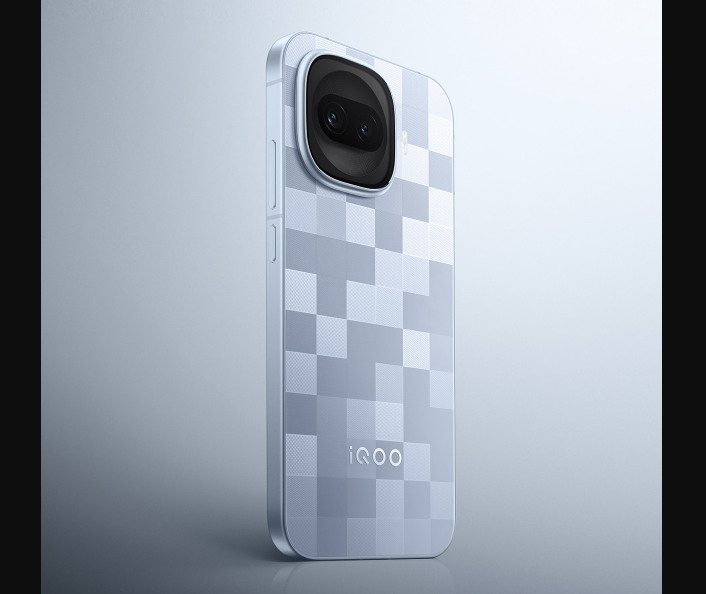
iQOO is set to launch the iQOO 15R 5G smartphone in India on February 24. The company has already revealed key details of the device, including that it will be powered by the new Snapdragon 8 Gen 5 chip. Now, a fresh leak has revealed the price of the phone just ahead of the launch.
According to tipster PassionateGeekz on X, the iQOO 15R 5G could start at Rs 45,999 for the 8GB RAM and 256GB storage variant. The 12GB + 256GB model could launch at Rs 47,999, while the top-end 12GB + 512GB option may retail for Rs 52,999.
iQOO 15R 5G Specifications
At the center of the iQOO 15R 5G is the Snapdragon 8 Gen 5 processor, paired with OriginOS 6 based on Android 16. The company has promised four years of Android updates along with six years of security patches on the software.
Moreover, the phone is said to pack a massive 7,600mAh battery with 100W FlashCharge support. To keep thermals in check, iQOO is reportedly including a 6.5K IceCore VC cooling system.
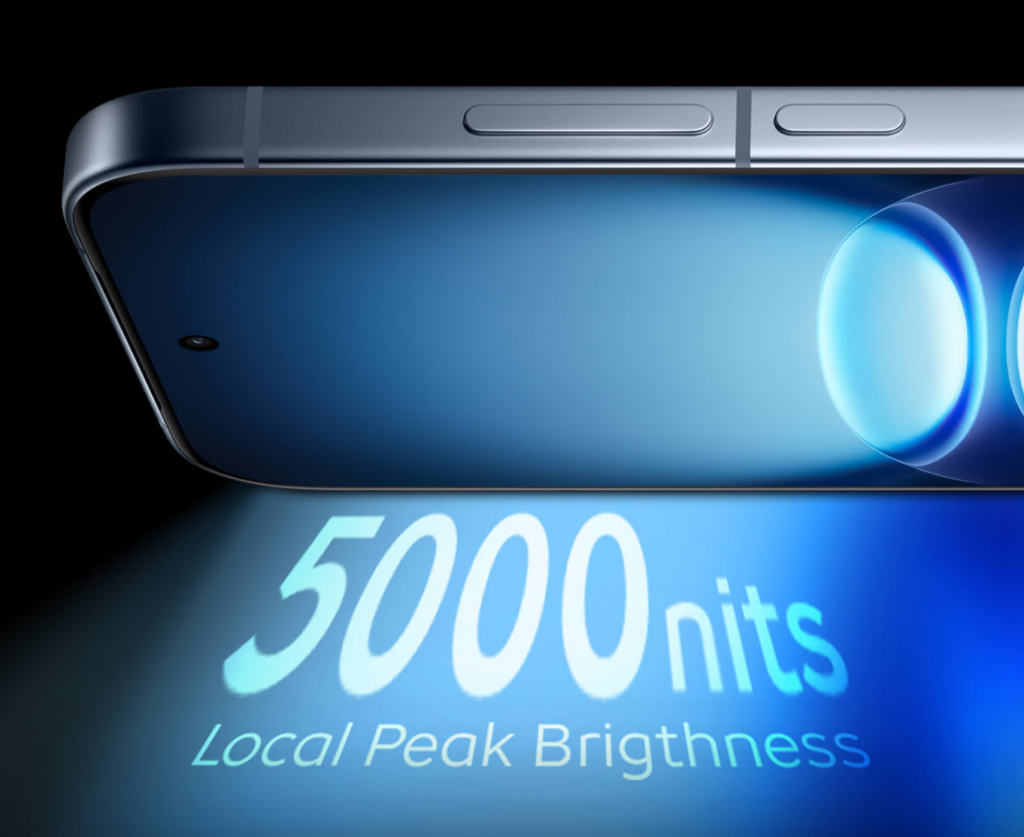
On the display side, the iQOO 15R 5G features a 1.5K AMOLED panel with a 144Hz refresh rate. The company is also marketing it as an “EyeCare” display, which also supports HDR10+ and reaches up to 5,000 nits of local peak brightness.
The iQOO 15R carries a dual rear camera setup led by a 50-megapixel Sony LYT-700V primary sensor with optical image stabilisation, supported by an 8-megapixel ultra-wide lens. The details about the front camera aren’t out yet.
Additional features include IP68 and IP69 ratings for dust and water resistance, an ultrasonic in-display fingerprint scanner, Wi-Fi 7, Bluetooth 6.0, NFC, and an IR blaster. The device will launch in Triumph Silver and Dark Knight colour options.
For more daily updates, please visit our News Section.
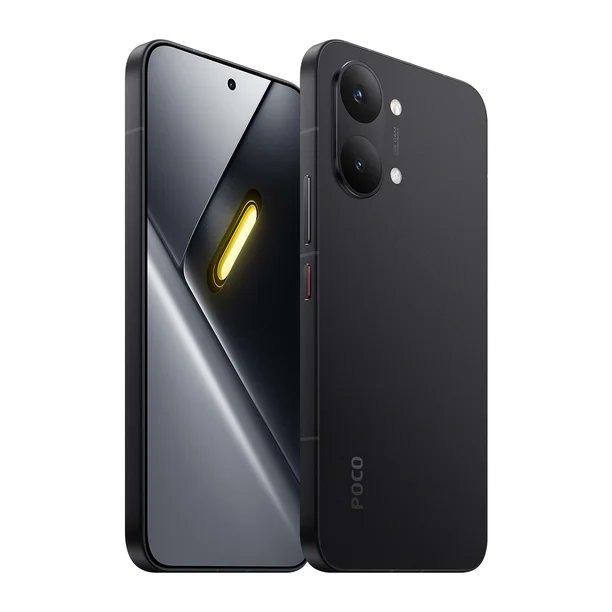
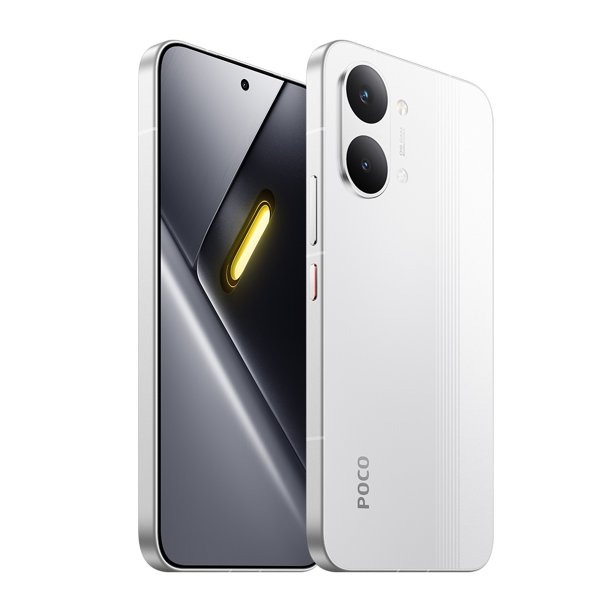
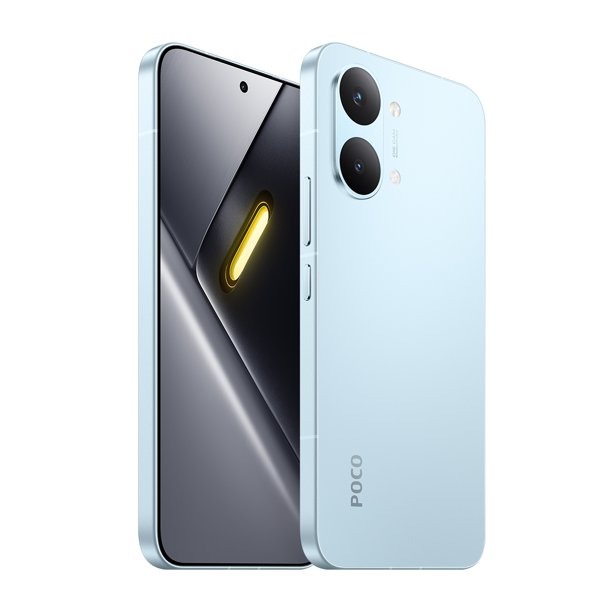
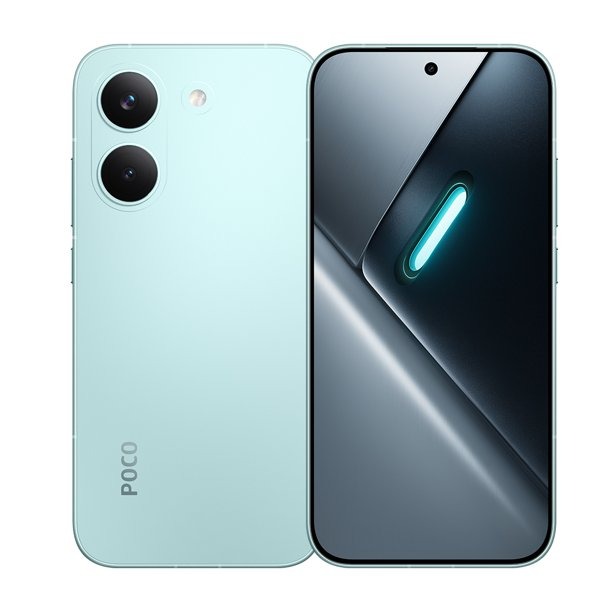
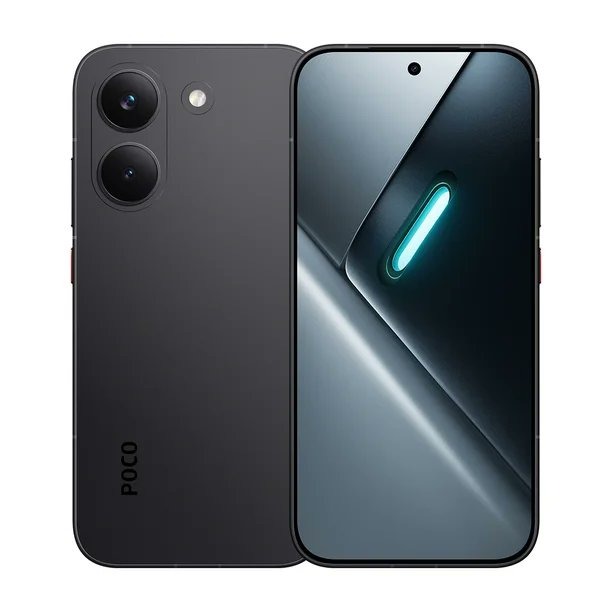
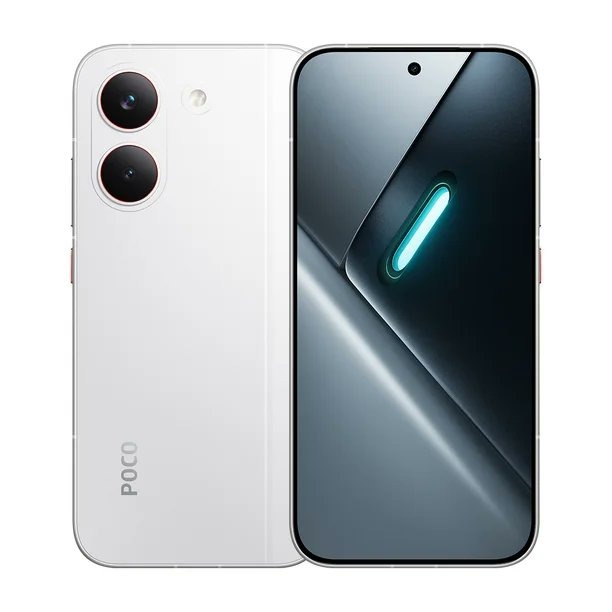
Xiaomi‘s sub-brand POCO is expected to launch two new mid-range smartphones globally, the POCO X8 Pro and POCO X8 Pro Max. Both devices were previously spotted in certifications and Geekbench listings. A new leak now shows the design of the two phones in multiple colors.
Poco X8 Pro MAX 5G
Poco X8 Pro MAX 5G
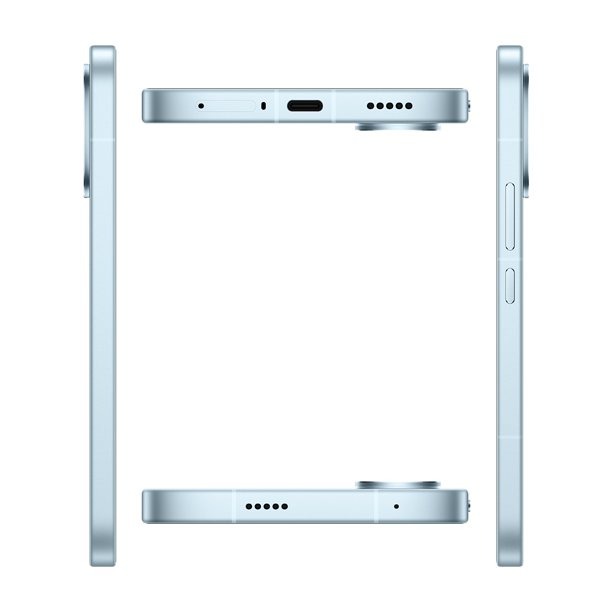
The renders were shared by X user @passionategkeez and show both models in black, white, and blue. The phones have a similar look with a pill-shaped camera module that includes a dual-camera setup. One clear difference is the flash. The Poco X8 Pro Max has a dual LED flash, while the Poco X8 Pro uses a single LED. From the front, both phones look almost identical with uniform bezels and a center punch-hole display.
Poco X8 Pro 5G
Earlier leaks also revealed detailed specifications. The Poco X8 Pro Max is tipped to use a 6.83-inch 1.5K TCL M10 OLED display with a 120Hz refresh rate, 2000 nits brightness, and 3840Hz PWM dimming. It may run on the Dimensity 9500s with an Immortalis-G925 MC12 GPU, LPDDR5x Ultra RAM, and UFS 4.1 storage. The rear camera setup could include a 50MP Light Hunter 600 sensor with OIS and an 8MP ultra-wide camera, along with a 20MP OV20B front camera. Other features may include dual stereo speakers, LHDC 5.0 audio, a 3D ultrasonic in-display fingerprint sensor, Wi-Fi 7, Bluetooth 5.4, and IP68, IP69, and IP69K ratings. The phone is also tipped to measure 8.15mm thick and weigh 219 grams.
The Poco X8 Pro is expected to feature a 6.59-inch 1.5K TCL M10 OLED display with a 120Hz refresh rate and 2000 nits brightness. It may run on the Dimensity 8500 Ultra with a Mali-G720 MC8 GPU, LPDDR5x Ultra RAM, and UFS 4.1 storage. The camera system could include a 50MP Sony IMX882 sensor with OIS, an 8MP ultra-wide lens, and a 20MP selfie camera. It may pack a 6,500mAh battery with 100W wired charging and 27W reverse charging.
The Poco X8 Pro is also expected to include IP68, IP69, and IP69K ratings, a metal frame, NFC, an IR blaster, and an optical in-display fingerprint sensor. Connectivity may include Wi-Fi 6. Both phones are expected to launch with Android 16 and HyperOS 3 out of the box.
For more daily updates, please visit our News Section.
Leaked internal emails indicate that Amazon-owned Ring may be planning to expand its AI-powered camera network far beyond its current use cases, raising fresh concerns about large-scale neighborhood surveillance.
According to emails obtained by 404 Media, Ring founder Jamie Siminoff told employees that the company’s controversial “Search Party” feature was introduced “first for finding dogs,” but could eventually evolve into technology aimed at reducing crime across neighborhoods. Search Party launched in October as an on-by-default feature that connects Ring cameras within a local area and uses AI to identify lost pets, effectively creating a shared detection network across participating homes.
“This is by far the most innovative that we have launched in the history of Ring,” Siminoff wrote in an email to staff shortly after the feature’s rollout. He added that the underlying system could become a key part of Ring’s long-term mission, describing a future where the company might help “zero out crime in neighborhoods” through AI-enabled tools.
The feature drew backlash during the Super Bowl after Ring promoted the concept in an advertisement. Critics argued that technology capable of scanning for lost animals could easily be repurposed for broader surveillance, particularly given Ring’s history of partnerships with police departments across the United States.
Recent product launches appear to reinforce those concerns. Ring has introduced “Familiar Faces,” a facial recognition feature designed to identify known individuals captured on cameras, as well as “Fire Watch,” which uses AI to alert users about nearby fires. While these tools are marketed as safety features, privacy advocates warn they could contribute to an increasingly interconnected surveillance ecosystem.
Additional emails obtained by 404 Media also highlight Ring’s growing law enforcement integrations. The company launched a “Community Requests” feature in September, allowing police to request footage directly from camera owners through a partnership with public safety technology firm Axon. Siminoff described the feature internally as “foundational” to Ring’s mission of making neighborhoods safer.
In response to the reports, a Ring spokesperson said the company focuses on providing context about local events such as lost pets or fires and emphasized that footage sharing remains optional. The spokesperson also stated that Search Party does not process human biometrics or track individuals.
Despite those assurances, the leaked emails suggest Ring’s ambitions may extend well beyond pet recovery, potentially reshaping how residential surveillance technology is used in the future.
For more daily updates, please visit our News Section.
With Samsung Galaxy Unpacked just days away, leaks are starting to fill in the remaining gaps, including how much Samsung’s next earbuds might cost.
Galaxy Buds 4 Pro render
According to tipster Roland Quandt, the Galaxy Buds4 are expected to retail for $179.99 in the US, while the Buds4 Pro could come in at $249.99. If accurate, that’s identical to the launch pricing of the Buds3 lineup last year.
That’s notable. With component costs fluctuating and many brands quietly raising prices year over year, Samsung appears to be holding the line, at least this time.
In Europe, early retailer listings are pointing in the same direction. Italian retailer Euronics has already shown the Buds4 Pro at €249, while the standard Buds4 are tipped to land at €179. Other listings, including on Amazon in select markets, have surfaced ahead of schedule, although not all of them display final pricing.
Still, the consistency across multiple sources suggests these numbers are likely locked in.
Same price, new design?
Recent dummy units and renders indicate that Samsung is refreshing the design. Both models are expected to adopt a flatter stem look. The distinctive Blade Lights seen on the Buds3 Pro appear to be gone, signaling a shift toward a cleaner, more understated aesthetic.
At $249.99, the Buds4 Pro would go head-to-head with Apple AirPods Pro 2, which also retail at $249 in the US. Sony and Google’s premium offerings occupy a similar range.
The Galaxy Buds4 and Buds4 Pro are expected to debut alongside the Galaxy S26 lineup at Unpacked on February 25 in San Francisco. As usual, pre-orders should follow shortly after.
Nothing is official until Samsung takes the stage, but if these leaks hold, the Buds4 series may deliver an updated design without asking buyers to pay more.
Titanium is one of the most desirable materials in watchmaking thanks to its lightweight strength, corrosion resistance, and premium look, but it often appears on pricier timepieces. So here’s a list of some watches that manage to bring true titanium builds with a $500 budget without sacrificing quality or features. Below, we’ve rounded up the best affordable titanium watches you can buy this year
A standout in the affordable titanium space is the Citizen Zenshin Three-Hand Titanium Watch, which is a modern and stylish everyday timepiece with a brushed titanium case and a textured dial that adds subtle character. Powered by Citizen’s Eco-Drive solar technology, it never needs a battery change and offers reliable timekeeping with solid build quality. This is a great pick if you want a lightweight watch that looks refined enough for both work and weekend wear without crossing the $500 mark.
2. Citizen Promaster Diver
Citizen Promaster Diver
For sporty watch lovers who appreciate durability and outdoor readiness, the Citizen Promaster Diver with Super Titanium case is a rare gem under $500. Featuring 200 m water resistance, a robust rotating dive bezel, and solar-powered Eco-Drive movement, it offers serious functionality in a lightweight package. The Super Titanium coating also helps resist scratches, making this diver ideal for everyday wear and weekend adventures alike.
3. Casio Oceanus Titanium Series
Casio Oceanus Titanium Series
Casio’s Oceanus titanium watches are often overlooked but pack excellent value for under $500. These models combine precise solar-powered quartz movements with a sapphire crystal and lightweight titanium cases, making it perfect if you want a reliable and versatile daily watch with a slightly refined, dress-friendly aesthetic. Their understated design pairs easily with casual or business attire, while titanium ensures comfort during long hours on the wrist.
Casio’s Lineage series combines traditional analogue styling with modern tech perks. The titanium version tends to have radio-controlled timekeeping (Wave Ceptor), ensuring accurate time worldwide, plus a solar quartz movement for maintenance-free power. You also get radio-controlled accuracy, solar charging, sleek, and an everyday design. For those who want precision and practicality in a classy, lightweight titanium package, this model offers serious value under $500.
What Makes Titanium Watches Special
Titanium is lighter and more corrosion-resistant than stainless steel, often making watches more comfortable for long-term wear, especially for those with active or daily-wear needs. It also holds up well against scratches and daily knocks while still looking refined.
Finding a titanium watch under $500 is more feasible than ever, thanks to improved manufacturing and wider adoption of lightweight alloys in mid-tier watches. Options range from rugged divers and precise radio-controlled timepieces to classic everyday watches and sophisticated chronographs. Whether you prioritise sport features, solar power, or everyday elegance, there’s a titanium watch on this list that offers comfort, durability, and style without the premium price tag.
We use cookies on our website to give you the most relevant experience by remembering your preferences and repeat visits. By clicking “Accept”, you consent to the use of ALL the cookies.
This website uses cookies to improve your experience while you navigate through the website. Out of these, the cookies that are categorized as necessary are stored on your browser as they are essential for the working of basic functionalities of the website. We also use third-party cookies that help us analyze and understand how you use this website. These cookies will be stored in your browser only with your consent. You also have the option to opt-out of these cookies. But opting out of some of these cookies may affect your browsing experience.
Necessary cookies are absolutely essential for the website to function properly. This category only includes cookies that ensures basic functionalities and security features of the website. These cookies do not store any personal information.
Any cookies that may not be particularly necessary for the website to function and is used specifically to collect user personal data via analytics, ads, other embedded contents are termed as non-necessary cookies. It is mandatory to procure user consent prior to running these cookies on your website.