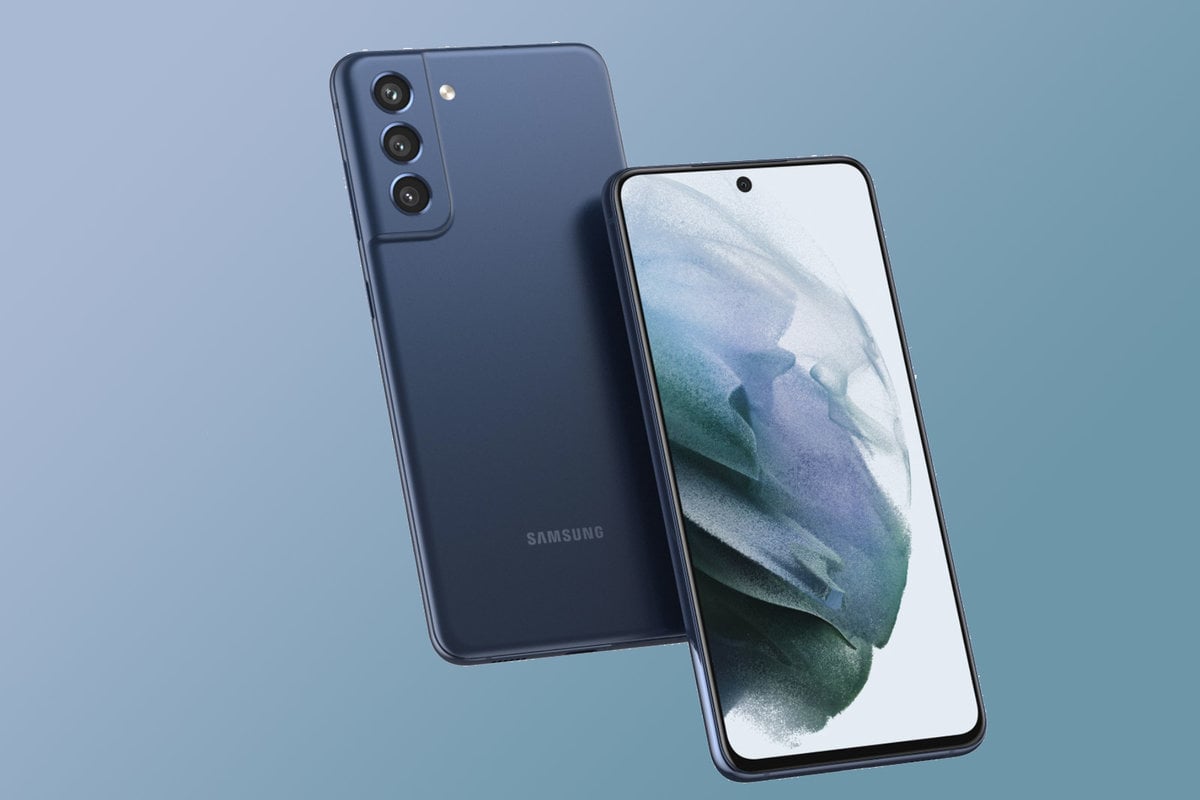
The Samsung Galaxy S21 FE has been delayed numerous times. The phone was expected to go official in the summer but after delaying the launch several times, there were rumors about the phone getting canceled. However, recent reports have indicated that the phone is still getting launched but has been delayed till January 2022.
Now, we are getting to know the potential launch dates for the upcoming Fan Edition smartphone. As per the latest report, the Samsung Galaxy S21 FE could launch during CES 2022 which will happen in January 2022.
Samsung Galaxy S21 FE
The Consumer Electronics Show (CES) 2022 is scheduled from 5th January to 8th January and will take place in Las Vegas. If the reports are to be believed, then the Galaxy S21 FE could go official in the initial days of CES. This contradicts previous rumors suggesting 11th January as the launch date.
Samsung doesn’t usually announce its smartphones at CES. Even when the company announced its Galaxy S21 lineup in January last year, the South Korean giant hosted its own Galaxy Unpacked event a few days after CES. However, the company showcases some of its gadgets and appliances at the Consumer Electronics Show.
With the Samsung Galaxy S21 FE launching at CES, there’s a possibility that the South Korean giant could move the launch of its next-generation S-series flagship, the Galaxy S22 lineup, to its usual timeframe of Galaxy Unpacked event in February.
As for the specifications, the Galaxy S21 FE is expected to feature a 6.4-inch FHD+ AMOLED display with a 120Hz refresh rate. The display holds a punch-hole design to house the 32-megapixel selfie camera. It is also expected to pack a triple camera setup and come powered by a 4,500mAh battery with support for 25W fast charging.
Apple executives in an interview with The Wall Street Journal have finally given a reason for Apple once again giving a miss on Face ID and touch screen support with the latest MacBook models.
Lack of Face ID is perhaps one of the biggest criticisms of MacBook. Many have wondered if the tech would ever make it to the Macs following its debut with the iPhone X. There had been talks about the feature arriving in the future but fans were in for a disappointment with the latest 14 and 16-inch MacBook Pros.
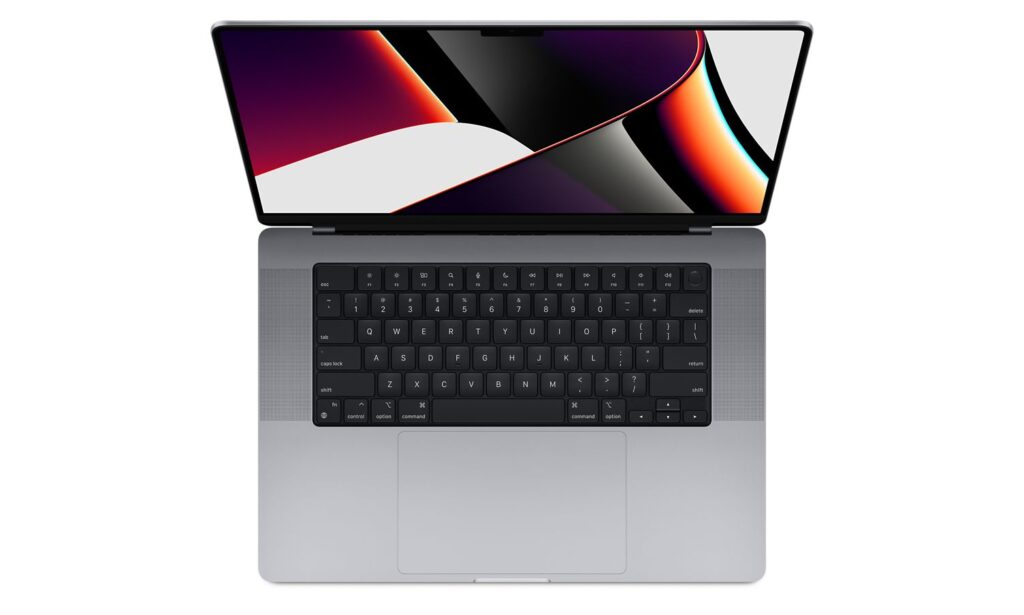
16-inch MacBook Pro 2021
Both models featured notches very similar in looks to the one found on the iPhones but continued to lack Face ID. Apple’s Tom Boger, vice president of iPad and Mac product marketing, said the reason behind this was that Touch ID is more convenient on a laptop since your hands are already on the keyboard (via MacRumors).
Another topic of debate about the Macs has been touch screen support. People have speculated that it has been kept this way so that Macs don’t cannibalize iPad sales. John Ternus, Apple’s senior vice president of hardware engineering, implies this is true:
“We make the world’s best touch computer on an iPad. It’s totally optimized for that. And the Mac is totally optimized for indirect input. We haven’t really felt a reason to change that,” he said.
Image: MacRumors
Boger and Ternus also addressed queries about missing upgradable RAM support on the latest Macs. Both Apple silicon 14-inch and 16-inch MacBook Pros feature deeply integrated RAM modules that can’t be upgraded at all – a bummer for those looking for extra memory following purchase.
The reason behind this was stated to be Apple silicon’s “unified memory architecture” that enables higher memory performance on Macs with ARM-based chips. Similar performance levels cannot be achieved if UMA is done away with just to make way for expandable RAM.
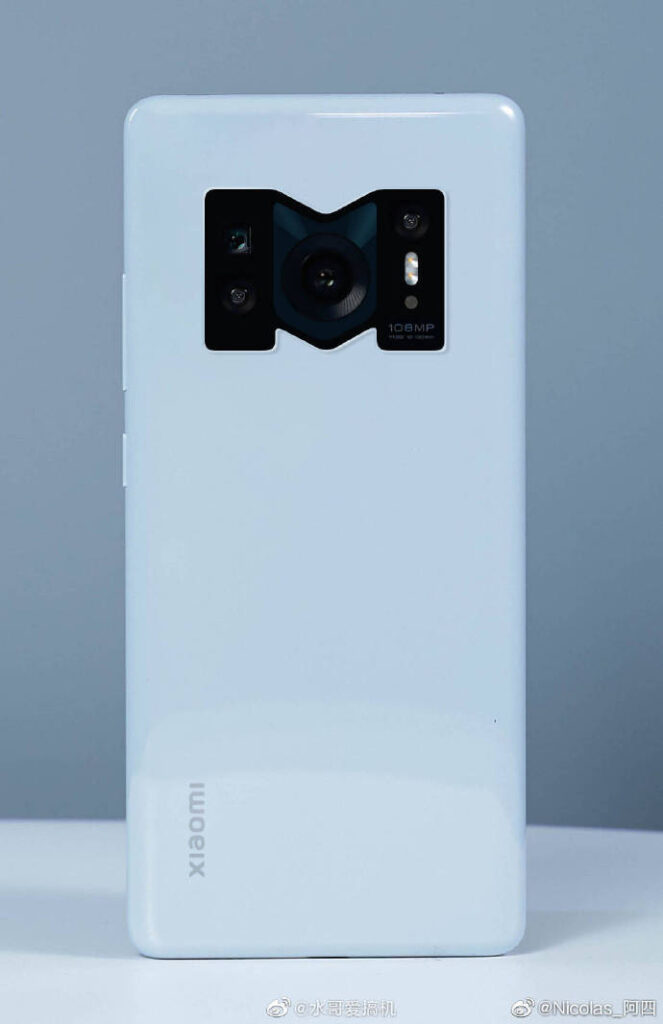
The Xiaomi 12 was allegedly spotted in action in a subway and this could be our first-ever look at the upcoming flagship phone.
Tipster Mukul Sharma has shared a couple of images from Weibo showing the device in action. Not much is visible about the phone really due to it being covered by an odd-looking case, but it does seem to have an unusually tall display. Or it could just be the angles playing tricks.
The Xiaomi 12 was earlier tipped to feature a smaller punch-hole design and a high screen-to-body ratio along with a slight curvature of the sides. But these improvements, unfortunately, are near impossible to spot thanks to the pitch-black content being displayed on the phone in the leaked images.
Nonetheless, a Xiaomi 12 launch was imminent considering that its predecessor – the Mi 11 Ultra – is already being phased out in countries like India. The device reportedly also received Indian BIS certification, further confirming an upcoming release soon. Rumors have pointed towards an early-2022 release date but that hasn’t been officially confirmed yet.
Xiaomi 12 concept
What is known is that the Xiaomi 12 will be one of the first devices to feature the Qualcomm Snapdragon 898 chipset that will be manufactured using a 4nm process. It may pack up to 12GB LPDDR5x RAM and up to 512GB UFS 3.1 storage. 120W wired and 50W wireless charging may also be supported.
realme only recently launched the realme GT Neo2 while its predecessor of sorts – realme GT 5G – went official back in August. The company is still keen on expanding the GT lineup further and is now seemingly working on another model called the realme GT Pro 2.
Tipster Mukul Sharma came across a realme GT Pro 2 with the model number RMX3301 on the IMEI database. The listing date shows that it’s fresh and was posted only today. But apart from the moniker, there really isn’t anything else to it, leaving the rest open for speculation.
So yes, as I tipped a little while ago, Realme GT 2 Pro is indeed coming up soon. The moniker has now been confirmed via IMEI listing. Feel free to retweet. And credits will be highly appreciated.#Realme#RealmeGT2Propic.twitter.com/DLcvpllWoA
Nonetheless, the RMX3301 model number is very much alike to the realme GT Neo’s model number of RMX3031. This means that both phones could sport similar specifications. The GT series is known to be performance-oriented and it is hence likely that the GT Pro 2 will be powered by a flagship-level MediaTek or Snapdragon chip.
Apart from this, AMOLED and high refresh rate displays are known to be standard across the GT lineup, meaning that the GT Pro 2 will be sporting the same too. Fast charging of typically around 65W is another common feature. There could be some meaningful upgrades over the existing GT models though to justify the ‘Pro’ tag.
Speculation aside, realme is yet to confirm the existence of the realme GT 2 Pro. Those interested thus will have to wait for teasers that will likely be dropping soon. A launch could follow in late 2021 or early 2022.
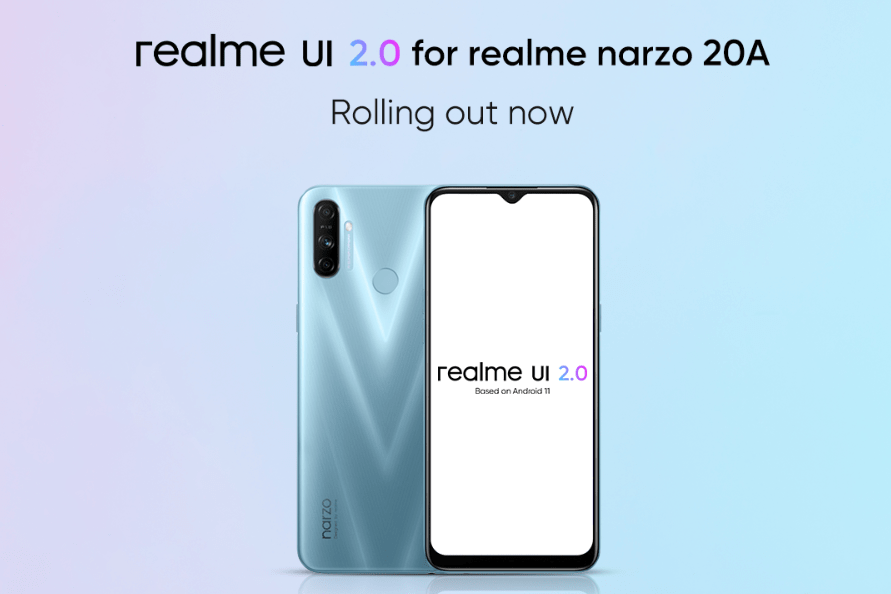
Chinese smartphone brand realme recently announced realme UI 3.0 based on Android 12. However, the company is yet to roll out the Android 11-based realme UI 2.0 update to some of the eligible devices. One such phone called realme narzo 20A has finally started receiving the last-gen Android update.
The realme narzo 20A joined the realme UI 2.0 Early Access program in June. So it took the company four months to seed the stable update.
According to the official announcement post on the realme community, the Android 11 update for realme narzo 20A arrives with firmware version RMX2050EX_11.A.05.
In order to receive the latest software build, users should be running either of the two firmware builds – RMX2050EX_11.A.31_0310 and RMX2050EX_11.A.33_0330.
Since the update is being pushed to the public via OTA, it is being rolled out in batches. Hene, some users might receive it early, while others will have to wait. Anyway, everyone should get the update in the coming days.
The realme narzo 20A launched in September 2020 with realme UI based on Android 10. Hence, the Android 11-based realme UI 2.0 is its firs-ever maor software update.
Unfortunately, Android 11 is also the handset’s last big update as it is not eligible for realme UI 3.0 based on Android 12. But it should receive security patches for a while.
Xiaomi has been rolling out MIUI 12.5 Enhanced Edition update for eligible devices since late August. The ‘Global’ variant of the Redmi Note 9 recently got access to this latest version of MIUI. Just a few days later, the Indian version has also started receiving the new build.
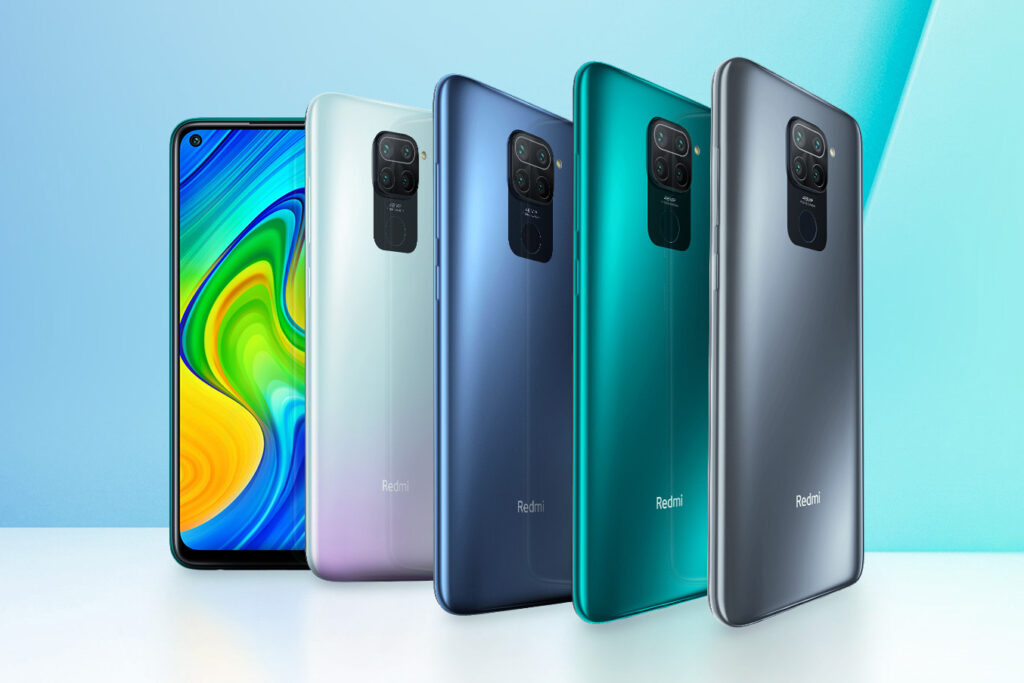
Redmi Note 9
Xiaomi has begun to seed MIUI 12.5 Enhanced Edition update for the Redmi Note 9 in India. The fresh system update for the handset arrives with build number V12.5.2.0.RJOINXM.
Since MIUI 12.5 Enhanced Edition is all about optimizations rather than features, uses won’t see any visual changes after updating to the latest software. That said, the update additionally also brings along October 2021 security patches.
Like any other OTA system update, this one is also being rolled out in batches. Therefore, the build is currently labeled ‘Stable Beta’, which is Xiaomi’s way of saying limited availability.
Anyway, the update should be available for all users in India in the coming days. At the same time, we also expect the update to reach the remaining regional variants of the Redmi Note 9 as well.
The Redmi Note 9 launched with MIUI 11 based on Android 10. So far, the smartphone has only received a single MIUI and Android update in the form of MIUI 12 and Android 11.
OnePlus is rolling out a new system update for the OnePlus 7 series and the OnePlus 7T series. Apart from bumping up the security patch level, the latest software builds for these smartphones also bring a fix for an annoying issue.
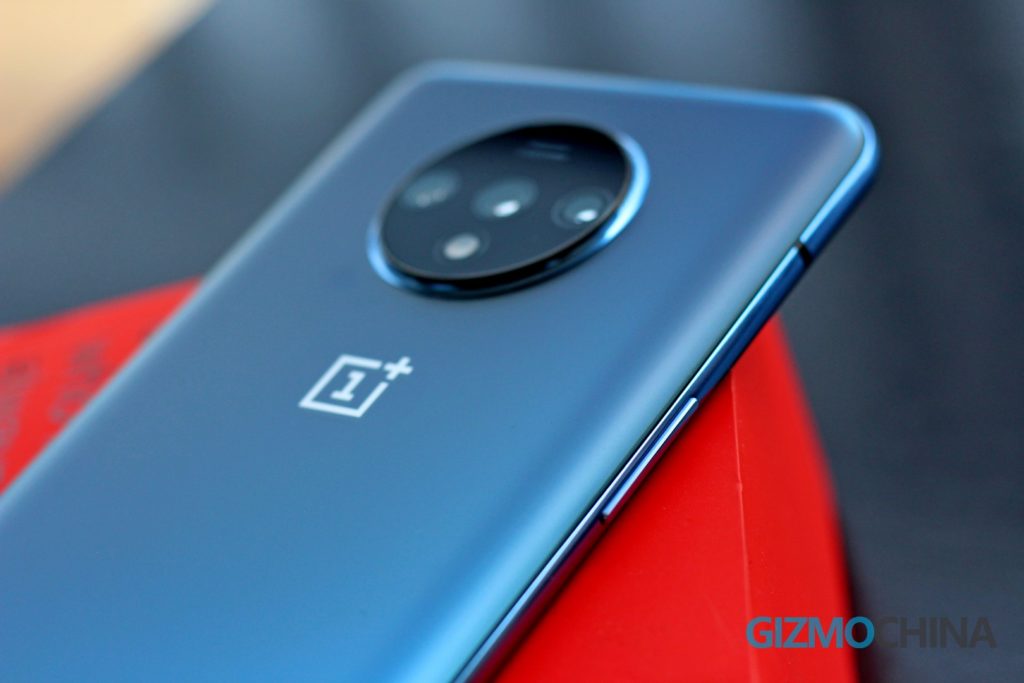
OnePlus 7T
The fresh OxygenOS update for the OnePlus 7/7 Pro and the OnePlus 7T/7T Pro arrives as OxygenOS 11.0.4.1 It comes with October 2021 security patches.
More importantly, it fixes the delay in the incoming call screen interface. Users had been reporting this bug for some time now. Thankfully, the brand paid heed to the feedback from customers.
Apart from the above-mentioned factors, the update also improves system stability.
Like any OTA software update, the OxygenOS 11.0.4.1 for the OnePus 7 and the OnePlus 7T series of handsets is being rolled out in batches with the following build numbers.
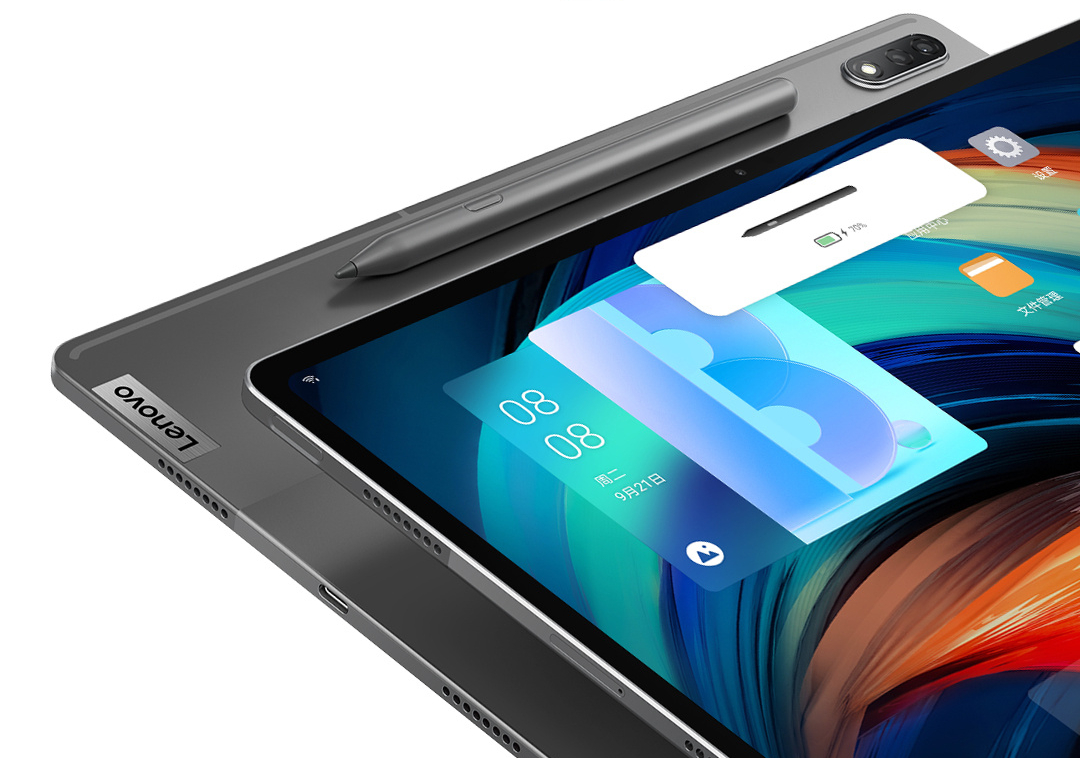
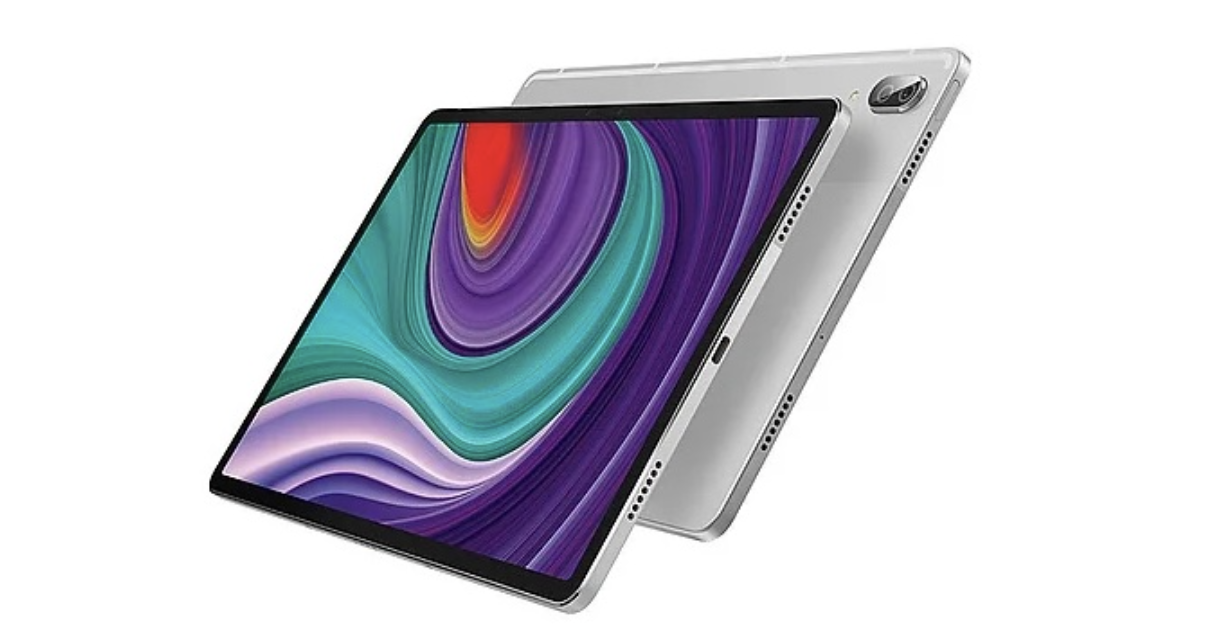
Lenovo has scheduled to launch the new Xiaoxin Pad Pro 12.6 on November 2 in China. Ahead of its unveiling, the tablet was teased several times. Today, the company has shared some bits regarding its display refresh rate.
Although the Lenovo Xiaoxin Pad Pro 12.6 had earlier been rumoured to include a 120Hz high refresh rate screen, the manufacturer has now confirmed the same. It will sport a high refresh rate screen and will have Frame Sharing Ultra HD certification. Furthermore, the device will support high refresh rate streaming on the Youku video streaming platform.
Apart from the refresh rate, the other display specifications are also confirmed. The tablet will come with a 12.6-inch E4 AMOLED screen with thinner bezels. It will have a 2560 x 1600 pixels resolution with 600 nits of brightness. The device will have a 100% DCI-P3 colour gamut and a TUV Rheinland certification. On top of the 120Hz refresh rate, the tablet is also slated to have a 360Hz touch sampling rate.
The Lenovo Xiaoxin Pad Pro 12.6 will equip a 13MP main and a 5MP secondary camera sensor at the rear while on the front, it will have an 8MP and a ToF sensor. At the helm, the smartphone will come powered by a Qualcomm Snapdragon 870 SoC paired with LPDDR5 RAM and UFS 3.1 built-in storage. It will pack a 10,200mAh battery with support for 30W fast charging technology.
The tablet will come with highlighting features like Dolby Vision, DC dimming, JBL branded Doly Atmos supported speakers and multi-accessory support. We can expect a stylus and a keyboard accessory launched alongside the Xiaoxin Pad Pro 12.6 tablet.
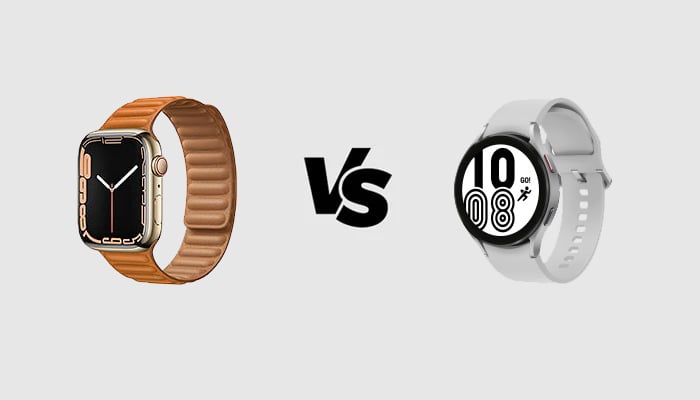
Do you need the most advanced smartwatch out there? If so, then two of the best choices for you are the Apple Watch Series 7 and the Samsung Galaxy Watch 4. They are the most famous high-end smartwatches belonging to the last generation and they come with the most advanced features you can expect on a wearable device in 2021. But which are the differences between them and which one is the best? We will try to let you find out through this comparison between the specifications of the Apple Watch Series 7 and the Samsung Galaxy Watch 4.
Do you desire a smartwatch that is similar as much as possible to a real watch? If so, go for the Samsung Galaxy Watch 4 without thinking twice. It comes with a round and very minimal form factor which looks like a real watch and it even has a rotating bezel thanks to which you can navigate through the user interface. Besides being elegant and even more compact than the Apple Watch Series 7, it has a great build quality.
The Samsung Galaxy Watch 4 is waterproof up to 50 meters deep and it has military certification (MIL-STD-810G) which indicates its resistance to drops and more. Last but not least, it has a display protected by Gorilla Glass DX+ which is the most advanced Corning protection for the display of smartwatches. You should choose the Apple Watch Series 7 if you want a smartwatch with a wider display that is more comfortable to use.
The square-shaped form factor and the wider display are better elements to navigate through the user interface. Further, the Apple Watch Series 7 provides a better build quality as it is built with sturdier materials. Indeed, it has a ceramic/sapphire crystal back and a stainless steel frame. Besides being water resistant (50m), it is also dustproof with the IP6X certification.
Display
The most advanced display belongs to the Apple Watch Series 7. It is a rectangular panel with a diagonal of 1.9 inches and a higher resolution than the Samsung Galaxy Watch 4 (484 x 396 pixels and a 326 ppi pixel density). It is an OLED display just like the one of the Galaxy Watch 4, but it adds the LTPO technology enabling an adaptive refresh rate.
Both the displays support the Always On Display mode and naturally touch screen, but the Samsung Galaxy Watch 4 also comes with a rotating bezel. A good advantage of the Samsung Galaxy Watch 4 is the smaller diagonal making the watch more compact than Apple Watch Series 7, but the Apple Watch is definitely equipped with a better display.
Specs & Software
You should not notice big differences between the performances of these smartwatches. They are both equipped with flagship-class processors, but the Apple Watch Series 7 should provide higher performance thanks to better optimization of the operating system. Further, the Apple Watch Series 7 has more internal storage: 32 GB instead of just 16 GB.
The Galaxy Watch 4 is the first Samsung smartwatch that runs Wear OS out of the box and it supports Android apps, while the Apple Watch Series 7 runs watchOS which is currently the most advanced operating system for wearable devices alongside watchOS. If you have an iPhone, then the software of the Apple Watch is better for your needs, otherwise, Wear OS is more suitable.
Sensors and connectivity
Apple Watch Series 7 and Samsung Galaxy Watch 4 are equipped with plenty of sensors. The Samsung Galaxy Watch 4 offers an original feature like blood pressure detection, but this does not mean that it is a better fitness tracker and health tracker.
The Apple Watch Series 7 has an altimeter and it is able to track the VO2max parameter. With these smartwatches, you can track a lot of other parameters, better than any other smartwatch from a mainstream manufacturer (alongside the OPPO Watch 2). They have the ECG sensor, the SpO2 sensor, the heart rate sensor, barometer, and more.
They support WiFi and Bluetooth connectivities, and they can even be used as stand-alone devices operating independently from smartphones thanks to the eSIM support. Further, they support NFC for contactless payments all around the world.
With Apple Watch Series 7, you get less than a day of battery life. With normal usage, the Apple device lasts about 18 hours, while the Galaxy Watch 4 is able to last up to 40 hours on a single charge. Both the watches support wireless charging.
Price
The Apple Watch Series 7 starts from $399/€440, while Galaxy Watch 4 starts at $249/€270. The Apple Watch Series 7 wins this comparison because of its advanced operating system, better display, and amazing sensors, but you can save a lot of money with the Galaxy Watch 4 which represents a better choice if you have an Android phone.
Apple Watch Series 7 vs Samsung Galaxy Watch 4: PRO and CONS
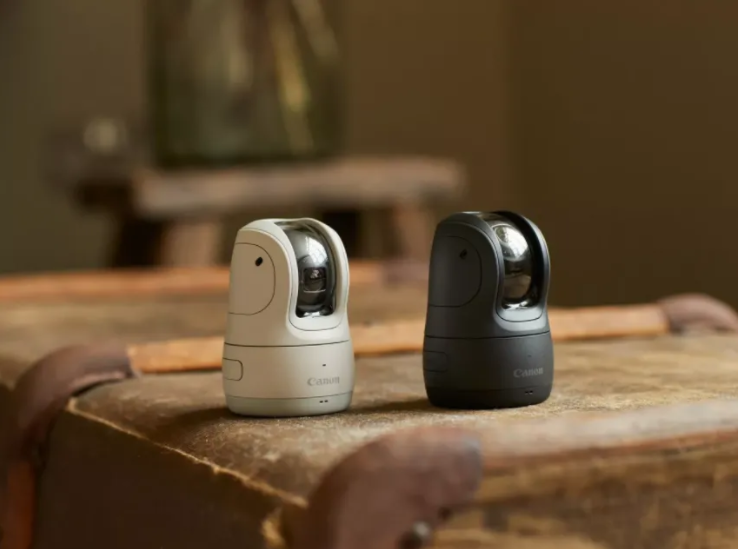
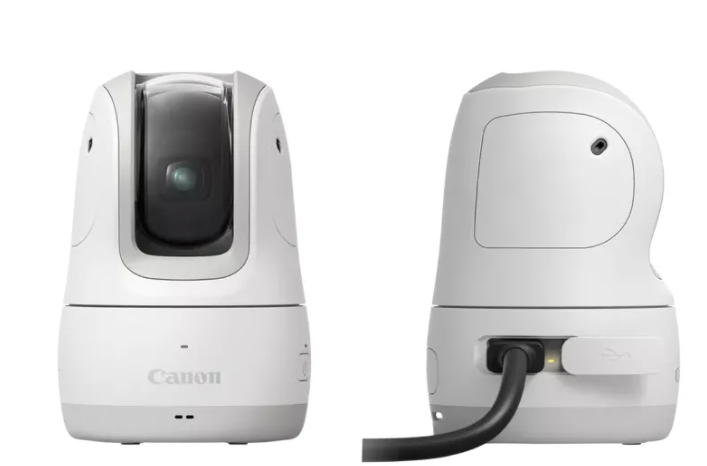
Canon has launched the PowerShot PX home surveillance camera in Europe and the UK. The portable cam carries a hefty €499.99 ($582). For that price, you get a powerful camera packing several high-end features. The PowerShot PX is capable of taking shots and recording videos in the home which can be viewed later.
The Canon PowerShot PX is a home surveillance camera to capture happy memories. It can automatically snap photos and videos using the built-in subject recognition feature. It can frame and select shots that can be viewed later.
Indeed the PowerShot PX bears semblance to a security camera and this could be confusing, as it is projected as a camera for family memories. The PowerShot PX will retail at €499.99 in Europe and £449.99 in the UK. The gadget is yet to be available in the United States, although it is expected that the global availability could be expanded subsequently.
The PowerShot PX has an 11.7MP 1/2.3-inch CMOS sensor. It can record 11MP photos in JPEG format, full HD (1920 x 1080) MP4 videos into its16GB microSD card. It also features a mechanical pan and tilt mechanism, making it possible for the camera to move 340 degrees from its left to the right and 110 degrees vertically in both directions.
The mechanical pan and tilt mechanism enable smart framing of photos which puts it in a different class from traditional security cams. With Wi-Fi and Bluetooth connectivity available, you can easily transfer photos and videos to your PC. With the use of the connected app, you can sort and select content. The PowerShot PX also has a voice control function that can be activated to capture a specific picture.
There is no mention of artificial intelligence capability for the subject recognition feature, which obviously limits the functionality of the new camera. The pricing seems on the high side although the device could appeal to some segments of the markets where it is already available.
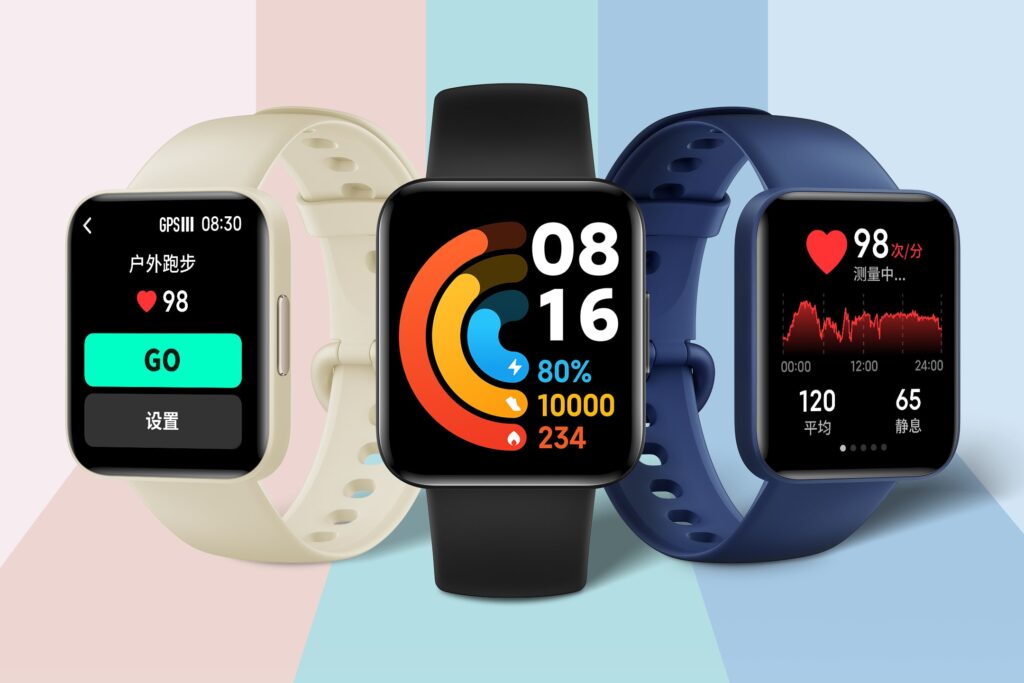
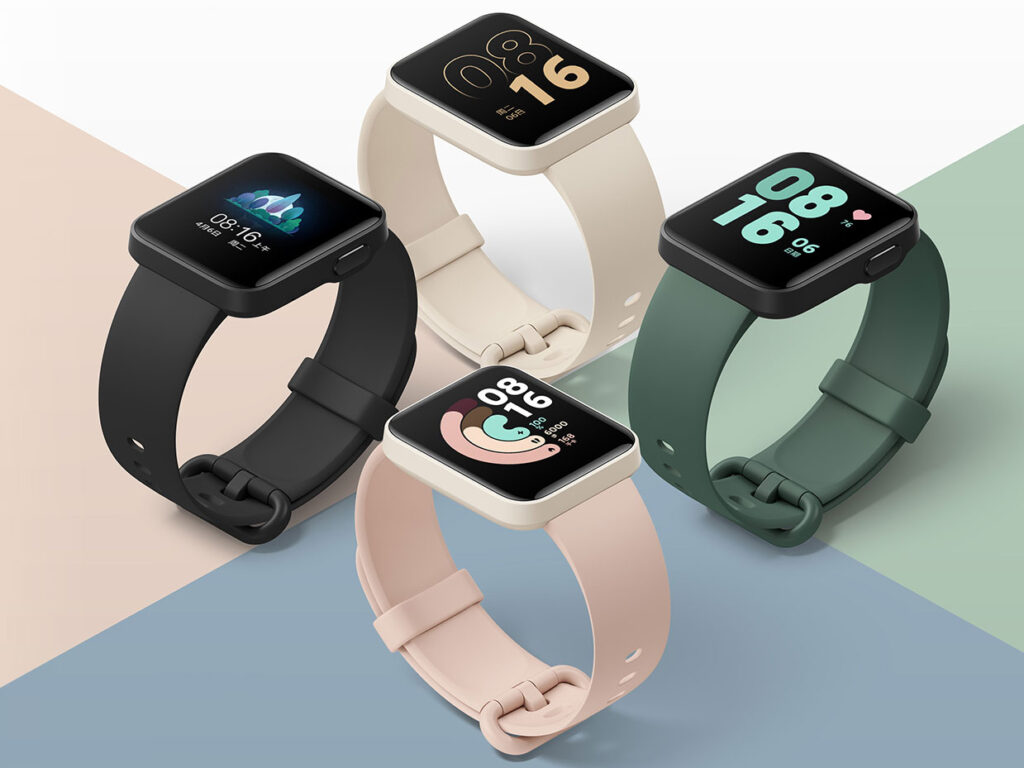
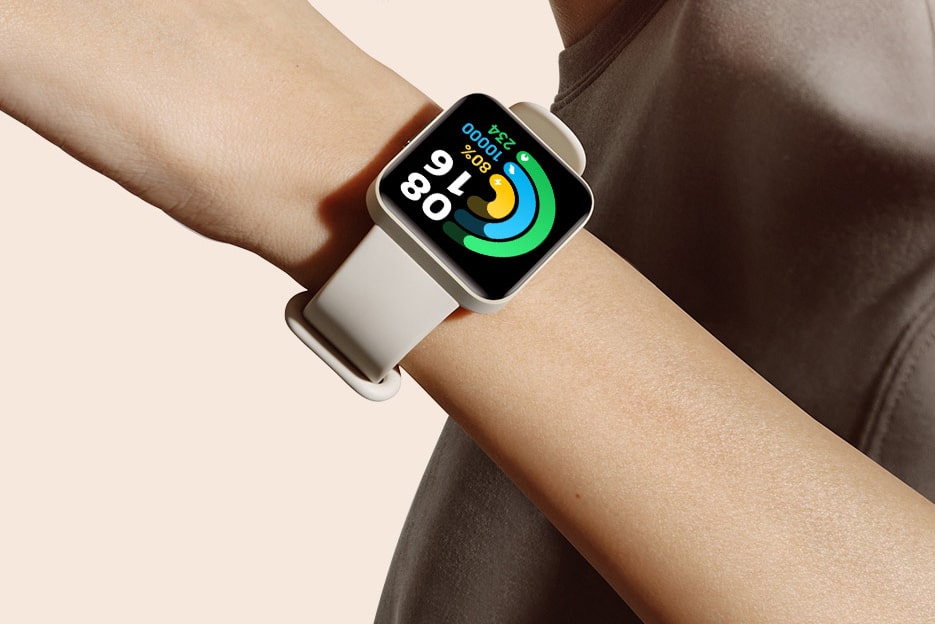
Recently, Redmi launched a budget smartwatch called Redmi Watch 2. It is the successor to Redmi Watch from 2020. The new model is costlier than its predecessor. For extra cash, it brings some improvements over the original product.
Redmi Watch 2
So is it worth spending more on the latest Redmi Watch 2 or should you save some penny by settling down for the Redmi Watch? We try to answer this question in our detailed comparison of these two wearables’ specifications
Redmi Watch 2 vs Redmi Watch: Detailed Specs Comparison
Note: This comparison is based on the original Chinese variant of the Redmi Watch and the newly released Redmi Watch 2. The international Redmi Watch (aka Mi Watch Lite) is a bit different from the Redmi Watch sold in mainland China.
Design
Both Redmi Watch (REDMIWT01) and Redmi Watch 2 (M2102W1) feature a polycarbonate (plastic) body with a square-shaped dial and an interchangeable TPU strap. However, the newer product is slightly lighter at 31g (with strap) compared to the 35g weight of the older model.
They are 5ATM water-resistant and have a single physical button on the right side. Further, the front is fully occupied by the screen, whereas the rear houses a pogo pin for charging and a window for the biometric sensor.
As far as colors are concerned, the duo is sold in three hue options (black, white, blue). But customers can buy other colored straps separately. Redmi only offers two additional straps (pink, green) for the original as opposed to three (pink, green, brown) for the latest watch.
Without the strap, the Redmi Watch and Redmi Watch 2 measure 41 x 35 x 10.9mm and 39.1 x 34.4 x 9.98mm in dimensions respectively. In other words, the newer model is a bit smaller in form factor.
Display
Despite being slightly smaller than the original, the Remi Watch 2 flaunts a larger 1.6-inch AMOLED display with a resolution of 320 x 360 pixels. The Redmi Watch from last year sports a comparatively tinier 1.4-inch TFT LCD panel with a resolution of 320 x 320 pixels.
Both screens support touch inputs and they use a gesture navigation system. Unfortunately, we only have the official PPI count for the Redmi Watch, which happens to be 323.
Interestingly, the last-gen model has 120+ watch faces compared to 100+ watch faces on the current-gen product.
Redmi Watch
Sensors
The duo comes with an accelerometer, an ambient light sensor, a compass, and an optical heart rate sensor. Additionally, the Redmi Watch 2 also has a gyroscope and an SpO2 sensor.
Sports Modes
The original Redmi Watch only supports 7 sports modes. But its successor Redmi Watch 2 arrives with a whopping 117 sports modes.
The newer watch also supports automatic activity detection for certain sports modes.
Health
Just like any other smart wearable available in the market, these two come with heart-rate monitoring, sleep tracking, guided breathing exercises, and idle alerts.
In addition, the latest Redmi Wach also has support for blood oxygen level monitoring and menstrual cycle tracking.
Redmi Watch 2
Other Features
The duo arrives with NFC for transit passes. On the other hand, the Redmi Watch 2 also comes with GNSS (BeiDou, GPS, GLONASS, GALILEO) for accurate location-based activity tracking.
They can be also used to control smart devices connected with Xiaomi’s Xiao AI platform.
Battery Life
The Redmi Watch gets its juice from a 230mAh battery, while the Redmi Watch 2 is backed by a somewhat smaller 225mAh battery.
Thanks to an energy-efficient screen, the latter is rated to last for 12 days on regular usage as opposed to 7 days on the former. However, users can get up to 12 days of endurance on the Redmi Watch by enabling a power-saving mode.
Furthermore, the Redmi Watch 2 is advertised to offer 7 days of battery life on heavy usage and 18 hours of runtime on location-based activity tracking.
As for charging, the 2021 model uses a magnetic connector but the 2020 watch charges via a cradle.
Redmi Watch
Compatibility
Both Redmi Watch and Redmi Watch 2 pair with smartphones via Bluetooth 5.0 and Xiaomi Wear application. They can be used with any handset running Android 5.0+ or iOS 10.0+.
Price
The original Redmi Watch costs ¥299 ($47). Whereas, the Redmi Watch 2 is priced at ¥399 ($62). The latest smartwatch from Redmi is ¥100 ($15) costlier than the older watch.
Redmi Watch 2 vs Redmi Watch: Which One Should You Buy?
The Redmi Watch 2 is definitely a better option of the two. For ¥100 ($15) more, it not only offers a superior larger AMOLED display but also GNSS and much more sports modes.
Most importantly, the wearable has a considerably better battery life with 12 days of endurance. On top of these, it is not only smaller but also lighter in weight.
Which one do you prefer and why? Let us know in the comment section below.
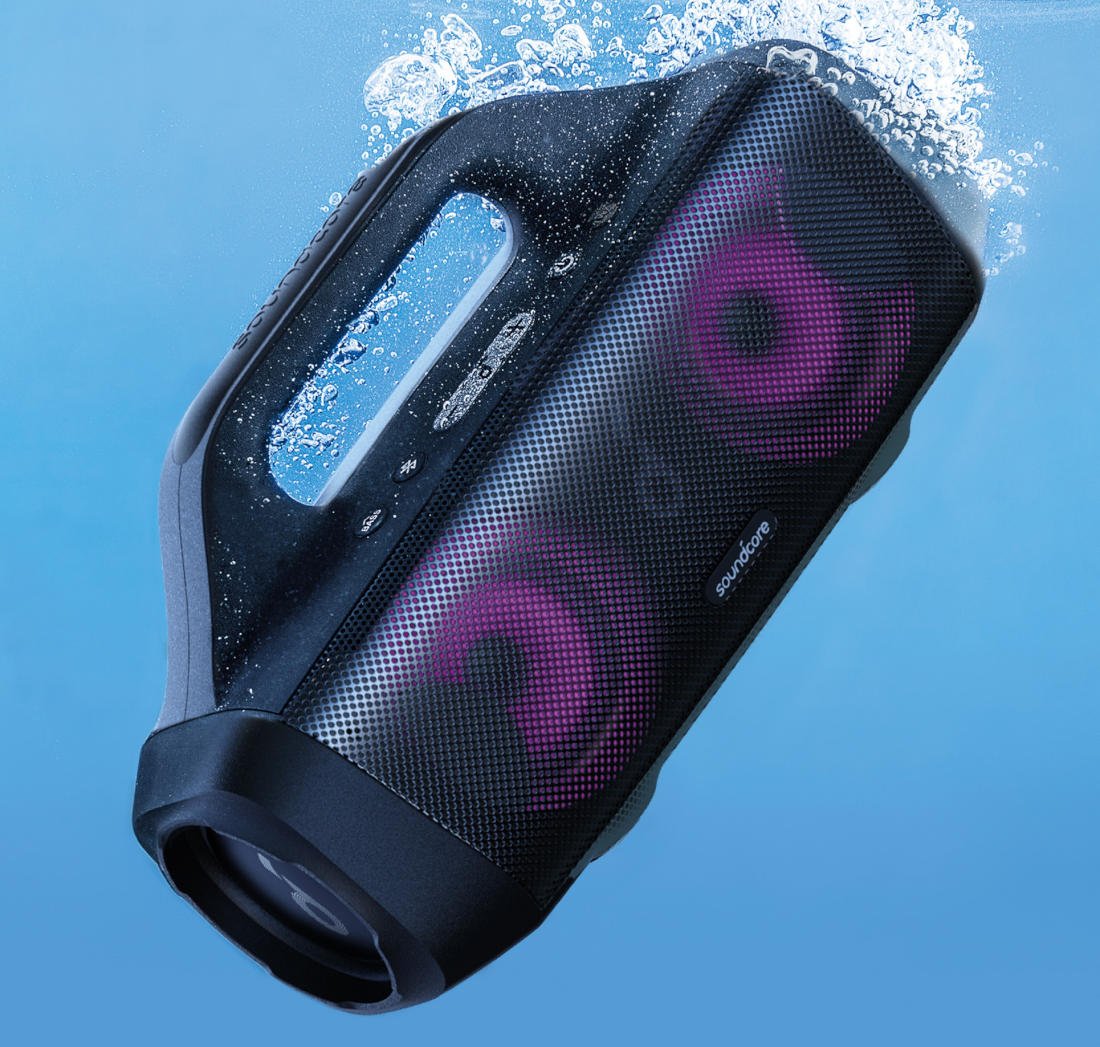
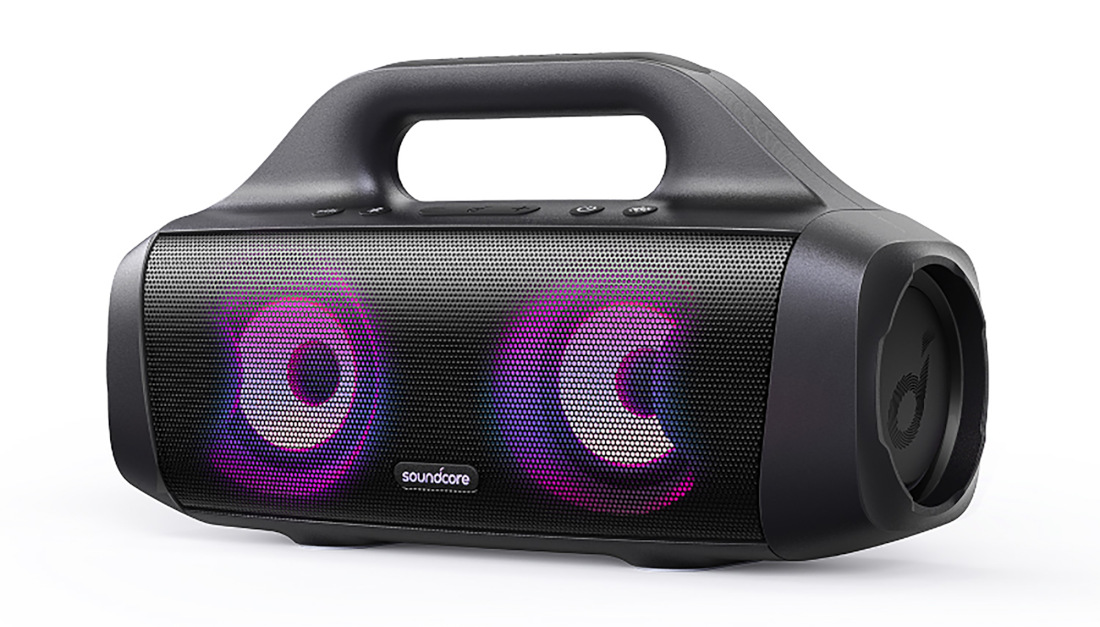
The Soundcore Select Pro submersible party speaker has been unveiled in India. Soundcore is an arm of Anker squarely focused on audio products. The Soundcore Select Pro speaker comes with some impressive features. It has a ruggedly designed body that is capable of being submerged without any effects because the speaker is IPX7-rated. It also offers a powerful 30W sound output for a great audio experience.
With its developed BassUp Technology, Soundcore is offering a superior audio experience for users of the new party speaker. Soundcore’s BassUp Technology combines its two drivers and four passive radiators to yield a powerful output. The EQ settings of the speaker can be customized using the Soundcore app via a user’s smartphone.
The built-in LED lighting in the speaker offers some aesthetic appeal, especially in dark areas. The built-in LEDs can match the music and also synchronize light and audio across several other Soundcore speakers.
The Soundcore Select Pro party speaker guarantees up to 16 hours of playtime with its 6,700 mAh. You can charge the speaker via its USB-C port. It also features Anker’s PowerIQ charge-out technology, which transforms the speaker into a power bank.
The Soundcore Select Pro speaker can be gotten online via Flipkart and has an Rs. 7,999 (~$109) price tag. Several other retail outlets could subsequently join Flipkart in the sale of the new Soundcore Select Pro party speaker.
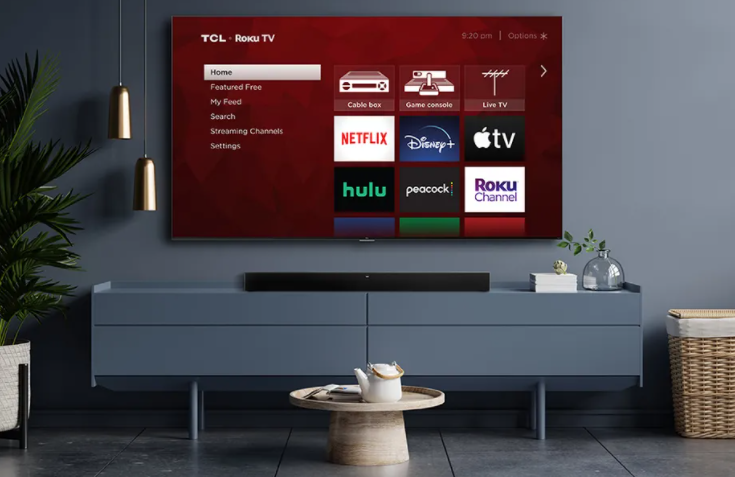
TCL has teamed up with Roku TV to launch the TCL Alto R1 Roku TV wireless Soundbar. The new wireless soundbar comes with some impressive features that guarantee a remarkable audio experience whenever the Soundbar is deployed. It is capable of significantly elevating the audio output of your Roku TV.
The new Roku TV Wireless Soundbar was highlighted as the Alto R1 during CES 2021. It encapsulates TCL’s design philosophy of producing simple, yet powerful audio solutions. The new Roku TV Wireless Soundbar is priced at $179.99 and only works with Roku TVs. This could limit the applicability of the wireless soundbar, as it is not compatible with any other Roku streaming device.
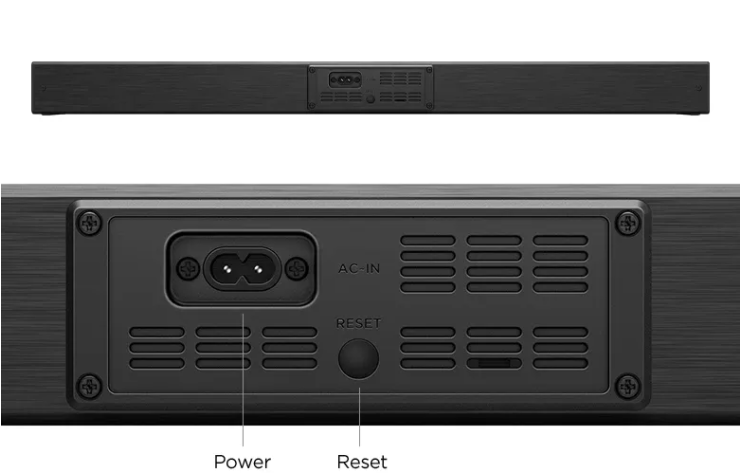
The Soundbar aims to promote a clutter-free environment while also enhancing the audio experience of the entertainment center. Its wireless capability means that there is no need for HDMI or audio ports. The only cable needed for the setup of the Soundbar is the power cable. The Roku TV Wireless Soundbar uses Wi-Fi 802.11ac, as well as the existing Roku TV remote. With the remote, the Soundbar can be seamlessly paired with the Roku TV using the setup menu on the TV. A reset button is at the back of the Roku TV Wireless Soundbar.
The new Soundbar offers studio-quality audio with outputs up to 120W. Using the Roku TV’s sound settings, you can modulate the audio to suit the mood via the multiple equalization settings. The Soundbar supports Bluetooth 5.0 and enables the user to stream audio content from smartphones. The package also includes components for mounting the device on a wall.
The Roku TV Wireless Soundbar is available from online platforms Amazon and Best Buy. The $179.99 price tag is not the cheapest Roku TV compatible Soundbar in the market. However, its key features are the superior audio output and its wireless capability which reduces clutter while producing studio-quality audio.
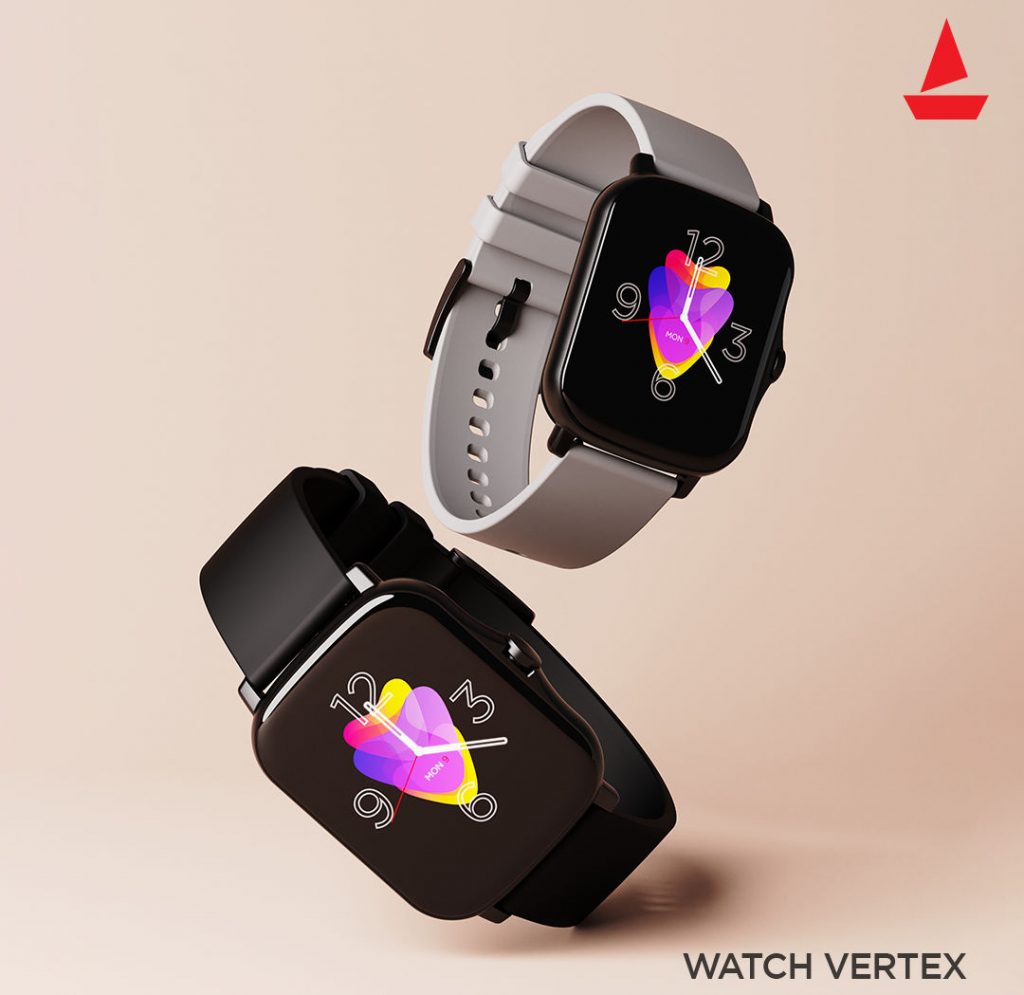
The boAt Watch Vertex is the latest product from boAt to berth in India. The boAt Vertex smartwatch has a 1.69-inch LCD and curved screen. The smartwatch is capable of having more than 100 watch faces via the boAt Crest app.
The boAt Crest app helps the user to customize his workout regimen. It is also possible to get customized fitness plans based on the user’s body mass index (BMI) and current activity levels. It offers up to 10 days of battery life on a full charge.
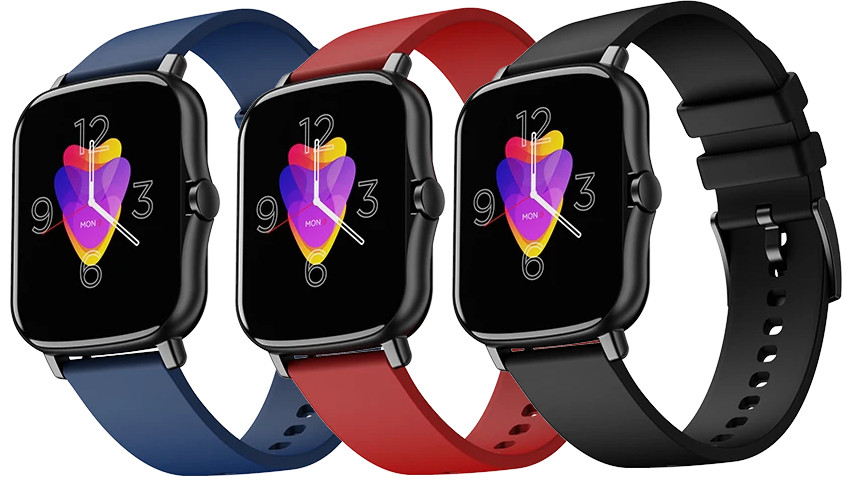
The boAt Vertex is priced in India at Rs. 2,499 ($34). The smartwatch is available in India via Flipkart and boAt’s website. Four color variants are available for consumers in India, namely Raging Red, Deep Blue, Cool Grey, Active Black, and Raging Red.
The boAt Vertex smartwatch has sensors for monitoring some important body functions. It supports blood oxygen levels (SpO2) monitoring, sleep monitoring and can track the user’s heart rate with its in-built heart rate tracker.
The Watch Vertex also sports similar functions in other boAt smartwatches like music and camera controls, IP67 water resistance rating, and weather forecasts. It also has 7 Active Sports Modes namely: Football, Walking, Badminton, Running, Cycling, Basketball, and Skipping. Using these sports-specific modes will enhance the exercise experience.
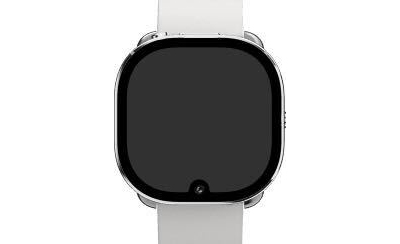
Just a day ago, Facebook announced that it is rebranding the company to Meta as it shifts focus from just being a social media platform to the metaverse. The company has a few AR/VR projects and products and now it seems that it is gearing up to launch a new wearable device — a smartwatch.
An image of the upcoming Meta smartwatch has surfaced online (via Bloomberg), which reveals the design of the wearable product. The product has a rounded square design and also features a front-facing camera on the bottom bezel.
This was leaked through the Facebook View application which is designed by the company to be used with the new Ray-Ban Stores smart glasses launched earlier this month. The code in the app hints that the upcoming smartwatch is codenamed “Milan.”
It seems that there is a control button on the right side edge of the body and the strap for the smartwatch is detachable. It’s safe to assume that the front-facing camera may be capable of allowing users to make video calls — making it stand out from the rest of the smartwatches available in the market.
Previously, Facebook was reported to be working on a smartwatch with multiple cameras and a heart rate sensor. This newly leaked device is likely to be the product that was reported previously.
While the launch date of this Meta smartwatch remains unknown, some reports indicate that the device could go official early next year, but the company hasn’t made a final decision and the launch could get delayed. Once launched, the device will compete against the likes of the Apple Watch and Samsung Galaxy Watch, among others.
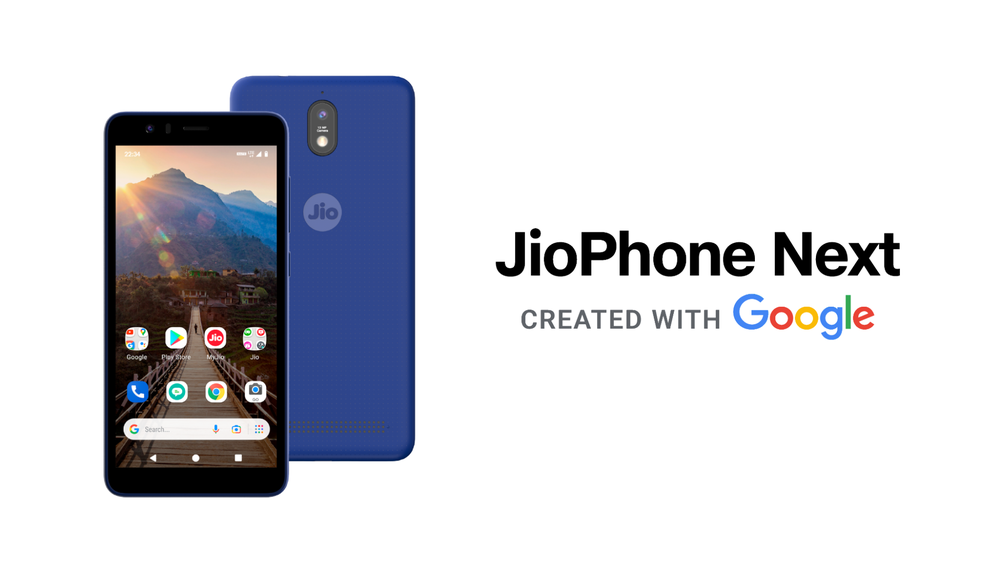
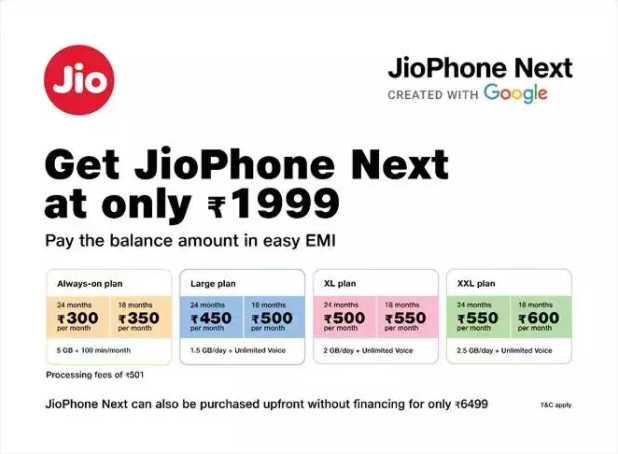
Reliance Jio has finally announced the much-anticipated JioPhone Next smartphone. The device is a budget smartphone designed in partnership with Google. The budget smartphone has been a long time coming but the launch has been marred by several delays. The device doesn’t disappoint though, as it comes with an amazing price tag – Rs. 6499 (~$86).
The JioPhone Next is priced at Rs. 6499 (~$86) and will be released ahead of Diwali. Reliance is even offering enthusiastic buyers the chance to get it via installment payment with a down payment of Rs. 1,999 (~$27) with the remaining balance spread across several months. While there is no definitive release date, an official statement indicates that it will be available across JioMart Digital’s 30,000 retail outlets.
Speaking of the specifications, the JioPhone Next sports a 5.45-inch display with an HD+ resolution. The device uses wide bezels at the top and bottom edges where the 8MP selfie camera is embedded. At the rear aspect, there is also a single 13MP camera with an LED flash.
The Jio Next is powered by a Qualcomm Snapdragon 215 processor paired with 2GB of RAM. There is 32GB of internal storage but there is no indication if the storage is expandable. To keep the lights on is a decent 3,500mAh battery. The phone comes with dual-SIM support and 4G LTE.
It runs on a custom Pragati OS which Reliance says is an optimized Android fork. The phone comes with a Translate Now, Read Aloud feature, built-in camera optimizations including Portrait mode, Night mode as well as Google Voice assistant support.
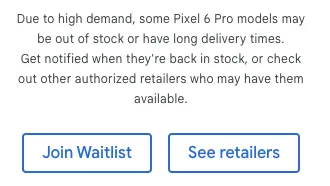
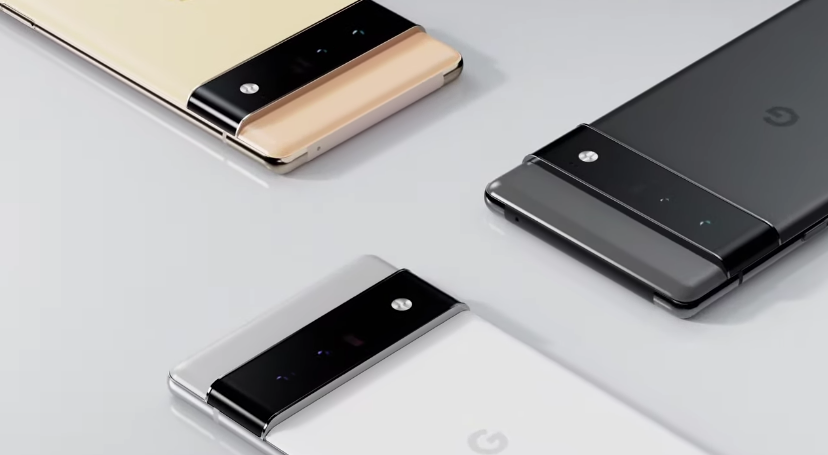
Google is unable to meet the Pixel 6 Pro demand and seems to be running low inventory, resorting to waitlists that notify about the phone’s availability – a bummer for those waiting on the device after seeing all of the exciting leaks and rumors for months.
A new banner has now been put into place atop the Pixel 6 Pro page on the Google Store website. “Due to high demand, some Pixel 6 Pro models may be out of stock or have long delivery times,” it reads. “Get notified when they’re back in stock, or check out other authorized retailers who may have them available.”
Image: Google, The Verge
Underneath the banner, you get a couple of buttons, one of which is for joining the waitlist and the other to see other retailers you can try to get the phone from instead.
The Verge reports that the stock isn’t completely depleted though. Certain variants and color options of the phone do come in stock from time to time. These, however, can only be availed if you got some really fast fingers as they run out quite quickly. Also, the Verizon Pixel 6 Pro seems to fare better and still offers multiple color and storage options to pick from in the United States.
“The banner on the Pro page on the Google Store is still accurate — some models of the Pro are out of stock,” the company said in a statement to The Verge. “While we work to make more available, customers can check out our authorized partners nationwide while supplies last.”
It seems from the statement that you can still grab the Pixel 6 Pro from the Google Store if you try hard enough. But for those with no luck, it is advisable to check for stock in other authorized sellers. And if it’s not available anywhere else, then joining Google’s waitlists will be the best bet.
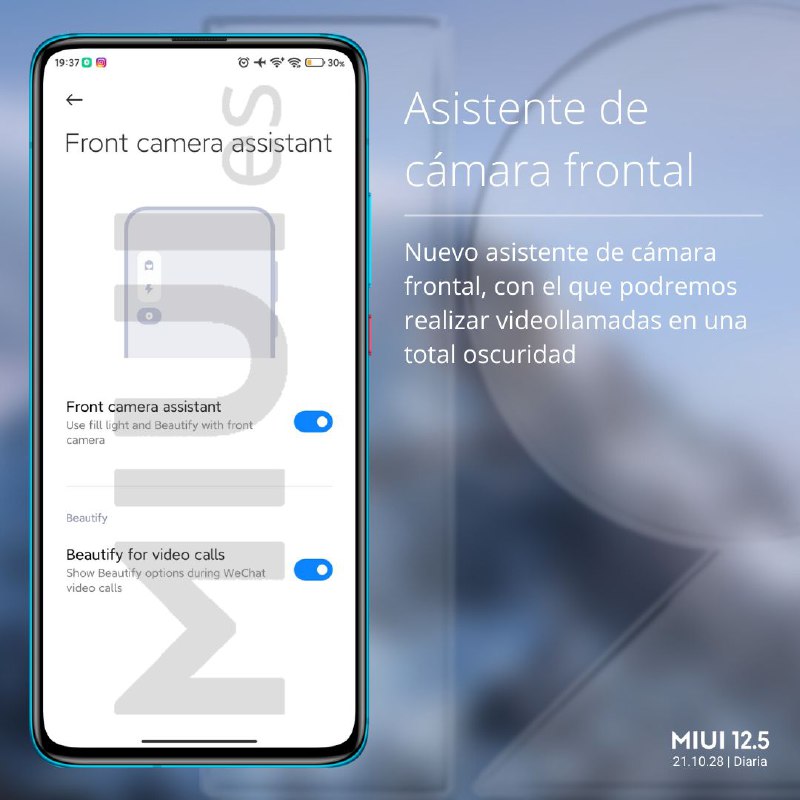
Xiaomi is known for fixing issues and introducing new features via MIUI weekly beta builds. The latest release dated 21.10.28 brings a useful feature called ‘Front camera assistant’. Let’s take a look at what it is all about.
Source: MIUIes
According to a MIUI-focused Telegram channel called MIUIes, Xiaomi has added a feature called ‘Front camera assistant’ in its mobile operating system. The feature is currently live in the latest weekly beta build.
The new feature offers two options, namely ‘Front camera assistant’ and ‘Beautify for video calls’. When enabled, the former cranks up the display brightness to fill light while making video calls in low light. On the other hand, the latter applies a beautification filter during calls.
Xiaomi could have simply called the first option ‘Fill light’ instead of ‘Front camera assistant’, which also happens to be the name of the feature. Anyway, both options currently only work on WeChat video calls in China.
As Xiaomi has stopped releasing MIUI Global weekly beta builds a couple of years ago, the only way to experience this feature is by installing MIUI China weekly beta ROM after unlocking the bootloader.
At present, it’s not known when the feature will be available in the stable channel. Even if it arrives, it’s not clear whether it will make its way to international markets. Hopefully, Xiaomi works with global video calling apps to bring this useful feature to more customers around the world.
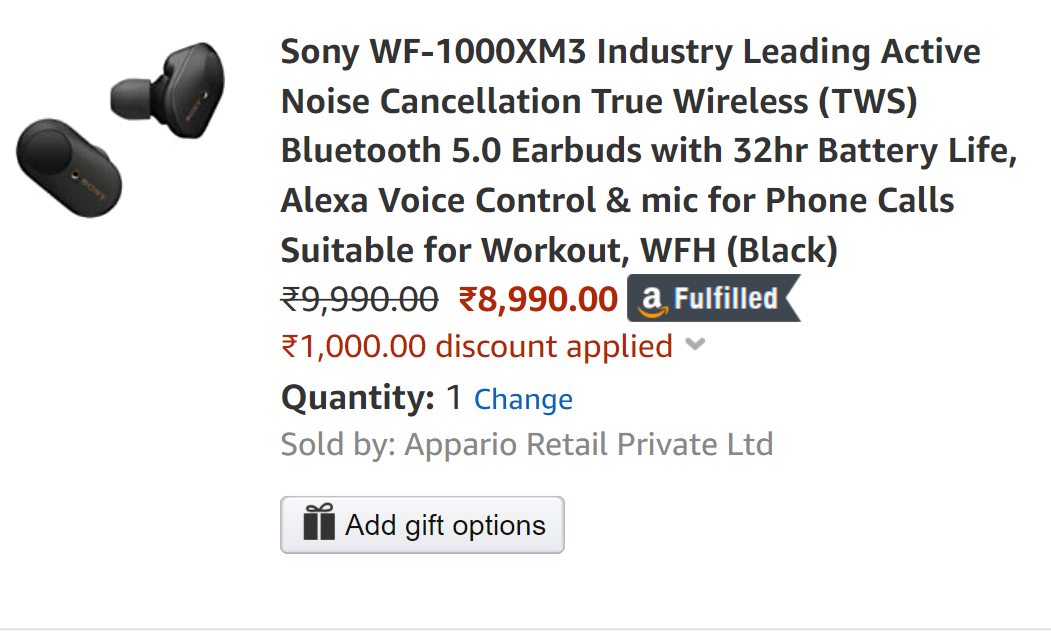
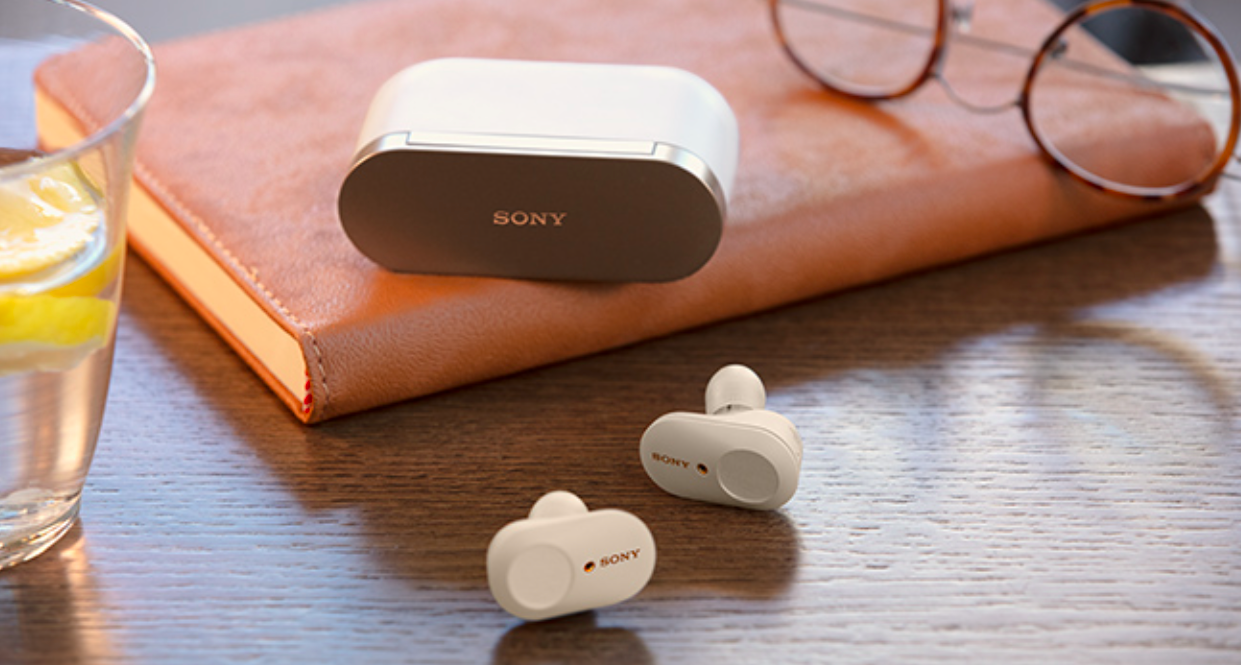
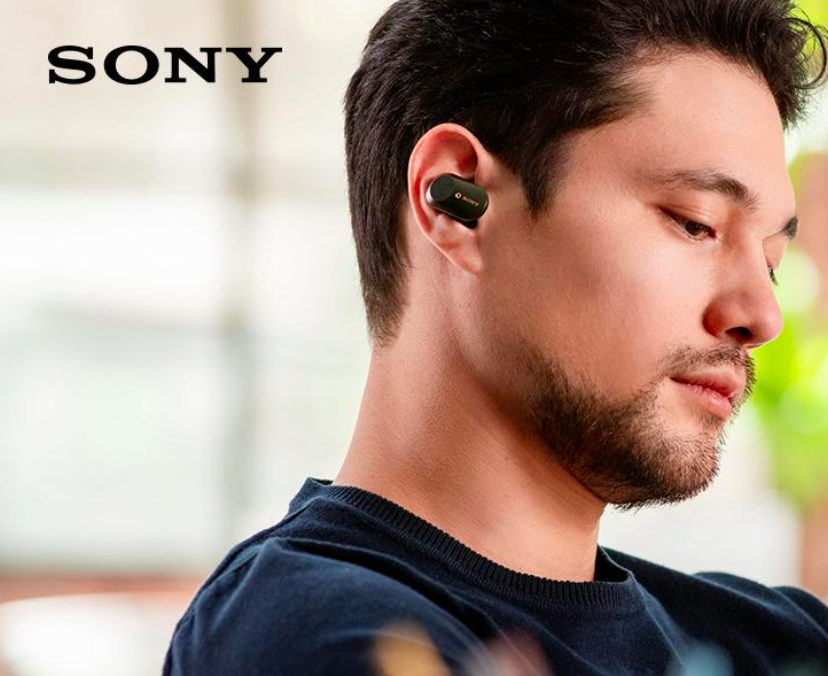
Amazon India is giving an amazing deal on the Sony WF-1000XM3 Earbuds. The earbuds which generally retail for ₹20000 is now available at a massively discounted price of ₹8990 (clip-on coupon of ₹1000) only at Amazon India. This deal ends in 5 hours.
Industry-leading Digital Noise Cancellation technology – virtually soundproof experience
Proprietary technology for premium sound
Extended battery life plus quick charging – 6 hours on a single charge and 24 hours with the case
Quick charge – get 90 minutes of playtime with just 10 minutes of charge
Built-in Alexa – for voice free access and control
Smart touch controls
Quick attention mode, Ambient Sound mode
Wearing detection
Smart listening
Intelligent auto-power off through IR sensor which detects earbuds’ status
Location detector
Generally retailing for ₹20000 you can now buy Sony WF-1000XM3 Earbuds at a heavily discounted price of ₹8990 only at Amazon India. Please note that this super deal ends in 5 hours. So place your order asap.
For more information on such exciting deals and offers check out ourdeals hub.
* Please Note: When you buy something using the links in our articles, we may earn a small commission at no cost to you.
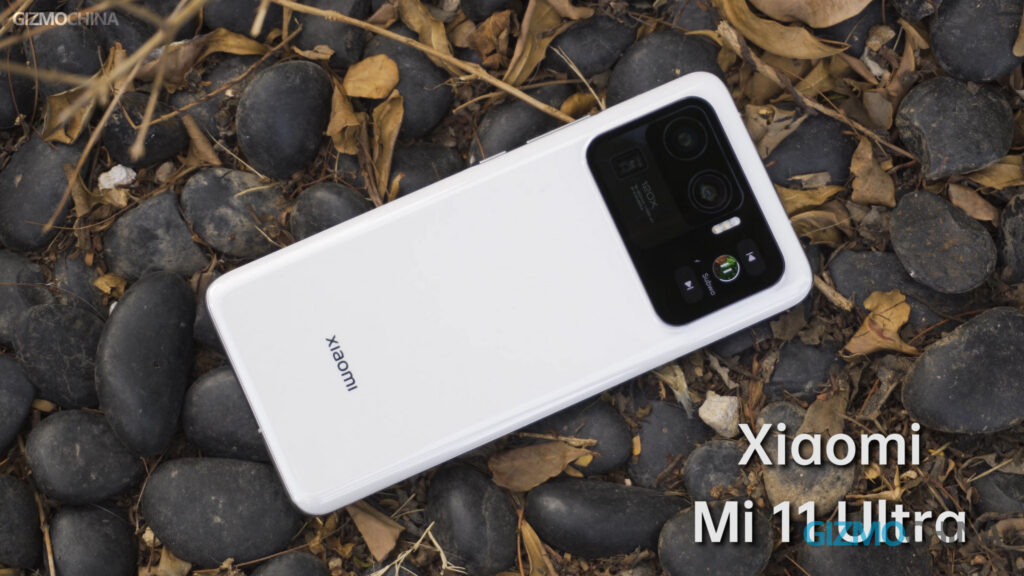
The Xiaomi Mi 11 Ultra will not be selling in India anymore after being made available several months ago with extremely limited stock.
The flagship smartphone was launched in April this year and went on sale in the country starting July 7. Its quantity was extremely limited though and it had quickly gone out of stock. Xiaomi never bothered with a restock afterwards and India Today has now confirmed that the Mi 11 Ultra has hit the end of the road in India and will not be sold ever again.
However, the company will continue to focus on the premium segment and will soon be replacing the Mi 11 Ultra with a new flagship offering in 2022. A high-end model with near top-of-the-line specifications named Xiaomi 11T Pro is already about to make its debut in India soon, so all’s not lost for consumers interested in premium Xiaomi devices. However, the phone isn’t exactly a flagship, as its price indicates.
The Mi 11 Ultra was Xiaomi’s first true flagship for India, but its sale was riddled with problems right from the start. The phone, as usual, only made its way into India weeks after a Chinese launch. However, the company reportedly failed to put it on sale initially. ‘Circumstances beyond control for the delay’ were cited. It was only in July that the phone went on sale, only to get sold out within days and never to get restocked.
While not officially stated, it is highly likely that the global chip shortage is the main reason for the extremely limited stock and delays associated with the flagship device. Hopefully, its successor will not suffer the same fate and actually show up with a decent amount of stock.
We use cookies on our website to give you the most relevant experience by remembering your preferences and repeat visits. By clicking “Accept”, you consent to the use of ALL the cookies.
This website uses cookies to improve your experience while you navigate through the website. Out of these, the cookies that are categorized as necessary are stored on your browser as they are essential for the working of basic functionalities of the website. We also use third-party cookies that help us analyze and understand how you use this website. These cookies will be stored in your browser only with your consent. You also have the option to opt-out of these cookies. But opting out of some of these cookies may affect your browsing experience.
Necessary cookies are absolutely essential for the website to function properly. This category only includes cookies that ensures basic functionalities and security features of the website. These cookies do not store any personal information.
Any cookies that may not be particularly necessary for the website to function and is used specifically to collect user personal data via analytics, ads, other embedded contents are termed as non-necessary cookies. It is mandatory to procure user consent prior to running these cookies on your website.