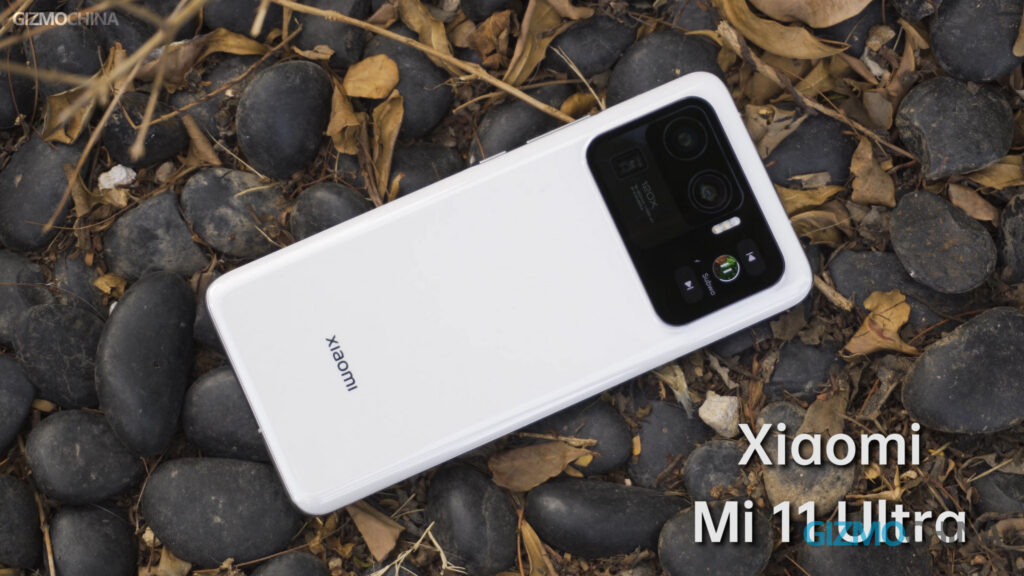
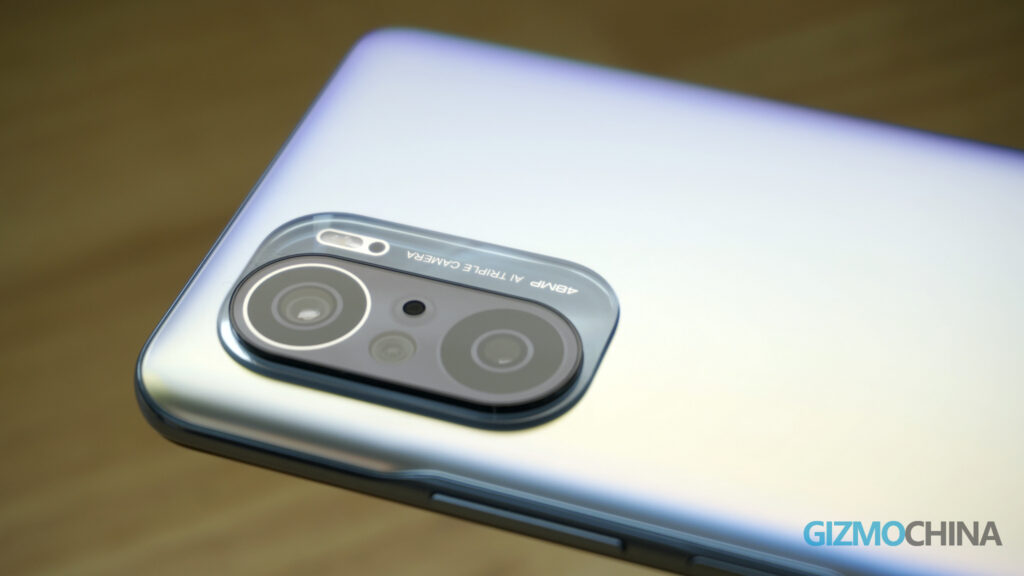
The Xiaomi Mi 11 Ultra will not be selling in India anymore after being made available several months ago with extremely limited stock.
The flagship smartphone was launched in April this year and went on sale in the country starting July 7. Its quantity was extremely limited though and it had quickly gone out of stock. Xiaomi never bothered with a restock afterwards and India Today has now confirmed that the Mi 11 Ultra has hit the end of the road in India and will not be sold ever again.
However, the company will continue to focus on the premium segment and will soon be replacing the Mi 11 Ultra with a new flagship offering in 2022. A high-end model with near top-of-the-line specifications named Xiaomi 11T Pro is already about to make its debut in India soon, so all’s not lost for consumers interested in premium Xiaomi devices. However, the phone isn’t exactly a flagship, as its price indicates.
The Mi 11 Ultra was Xiaomi’s first true flagship for India, but its sale was riddled with problems right from the start. The phone, as usual, only made its way into India weeks after a Chinese launch. However, the company reportedly failed to put it on sale initially. ‘Circumstances beyond control for the delay’ were cited. It was only in July that the phone went on sale, only to get sold out within days and never to get restocked.
While not officially stated, it is highly likely that the global chip shortage is the main reason for the extremely limited stock and delays associated with the flagship device. Hopefully, its successor will not suffer the same fate and actually show up with a decent amount of stock.
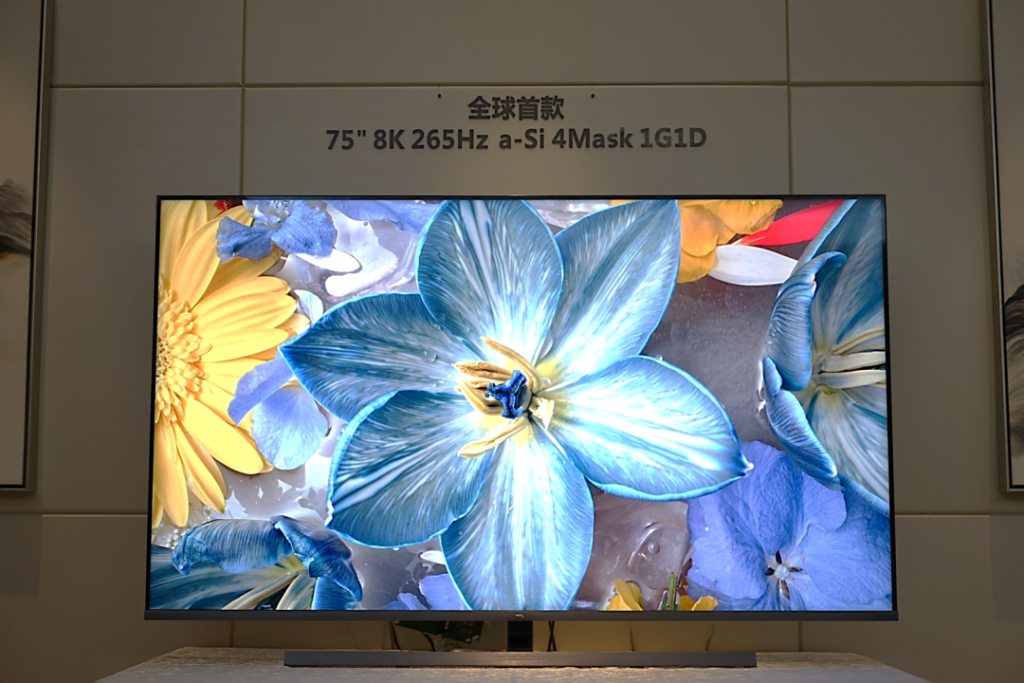
TCL Huaxing today announced the development of 75-inch 8K 265Hz a-Si 4Mask 1G1D display technology for TV.
The company had last year premiered its first generation of 8K 1G1D technology but the new 2021 tech is a new milestone in terms of image quality, refresh rate, and manufacturing process.
Reports say that the new generation 8K 1G1D technology adopts a high-throughput H-HVA technology, 4Mask technology, and is equipped with unique HCC charging compensation technology to achieve a super-fluid 265Hz 8K 1G1D display (via IT Home).
Image: IT Home
Typical 8K TVs come with 120Hz displays so the refresh rate of 265Hz is a huge leap. It is in fact the highest in the industry.
Further, the TCL Huaxing large-size technology development team has further refined the pixel architecture design, and the H-HVA transmittance has increased by 10% year-on-year. This is based on the first-gen 8K 1G1D technology.
Last but not least, the second-generation 8K 1G1D technology is also equipped with a unique HCC row variable charging technology. This is paired with a high-drive GOA and compensation circuit design that makes use of 8K CSPI in-screen high-speed transmission technology. All this increases the transmission frequency by over 7.5 times.
Along with this, TCL also announced the world’s first 85-inch 8K 120Hz 1G1D high-end LCD display based on IGZO technology at the World Display Industry Conference 2021. This one has a contrast ratio of over 5000:1 and its power consumption is 30% lower than that of similar products with the same specifications.
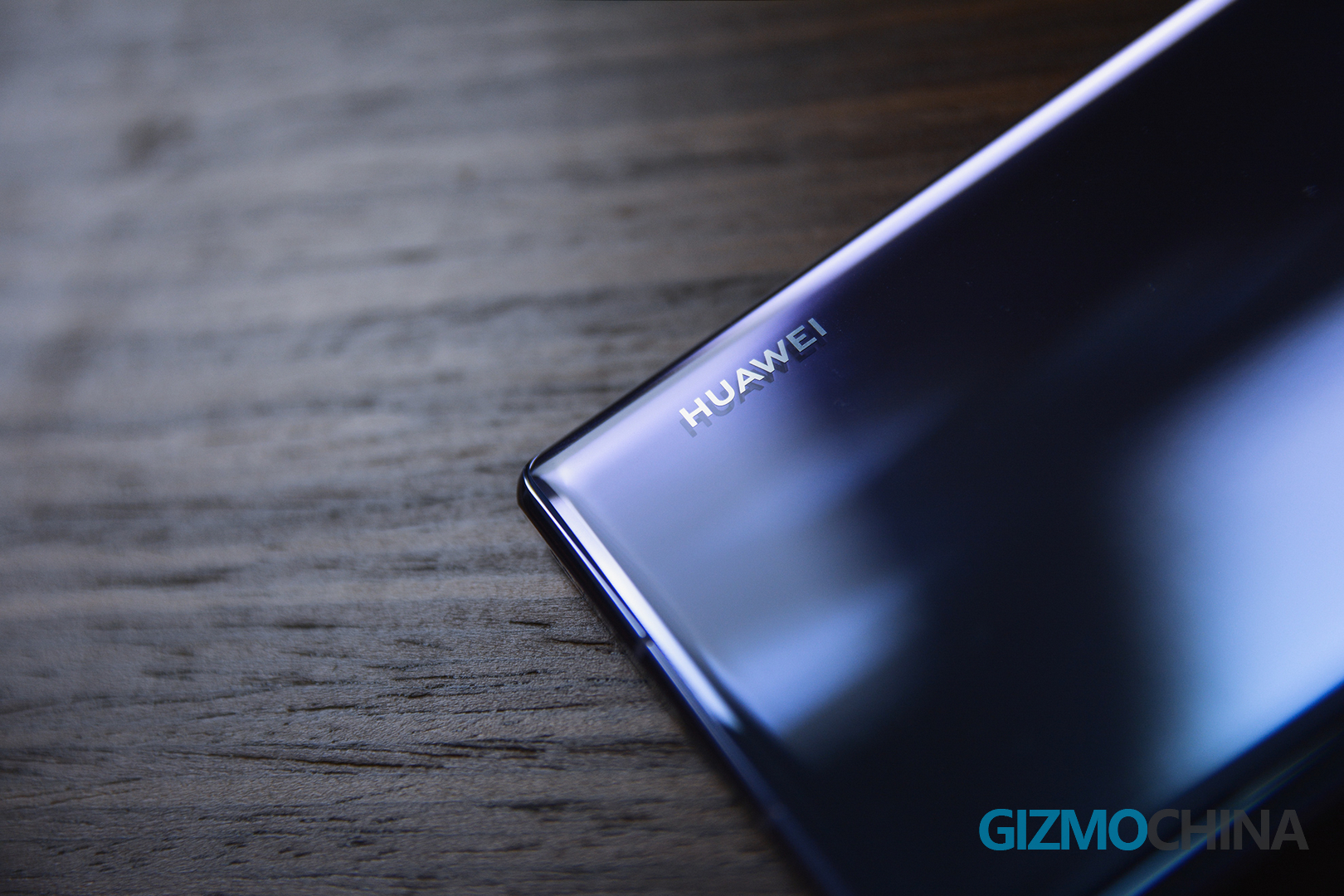
Earlier today (29th October 2021), Huawei shared a new financial report that showcased its earning for the first three quarters of this year. In the report, the company revealed its overall sales revenue and net profit margin for the three quarters.
Looking at this report, the Chinese tech giant managed to rake in a total of 455.8 billion yuan (roughly 71.3 billion US Dollars) in sales revenue during the 9 month period. Similarly, it also recorded a 10.2 percent net profit margin as well. The company’s rotating chairman Guo Ping stated that the overall performance during this period was in line with Huawei’s expectations. He added that the consumer side of the brand’s operations did take a significant hit, but its business operations remained stable.
The senior official also said that the company will continue to strengthen its technological innovation, with more investment into research and development and talent attraction to continue to improve its operational efficiency. In the financial report, Guo Ping also expressed gratitude towards the company’s loyal customer base and its partners. However, while the report ended in a positive note it isn’t all smooth sailing for the company.
The 455.8 billion yuan total sales revenue marks a sizeable 32 percent decline year on year over 2020. Last year, the company’s first three quarters brought in 671.3 billion Yuan (roughly 1.04 trillion US Dollars). This decline can be primarily attributed to the US trade ban that it faces, with newer reports suggesting even tighter restrictions being on the way. Another major factor in the decline is also it selling off its budget smartphone subsidiary, Honor, last year to help ensuring the brand’s survival.
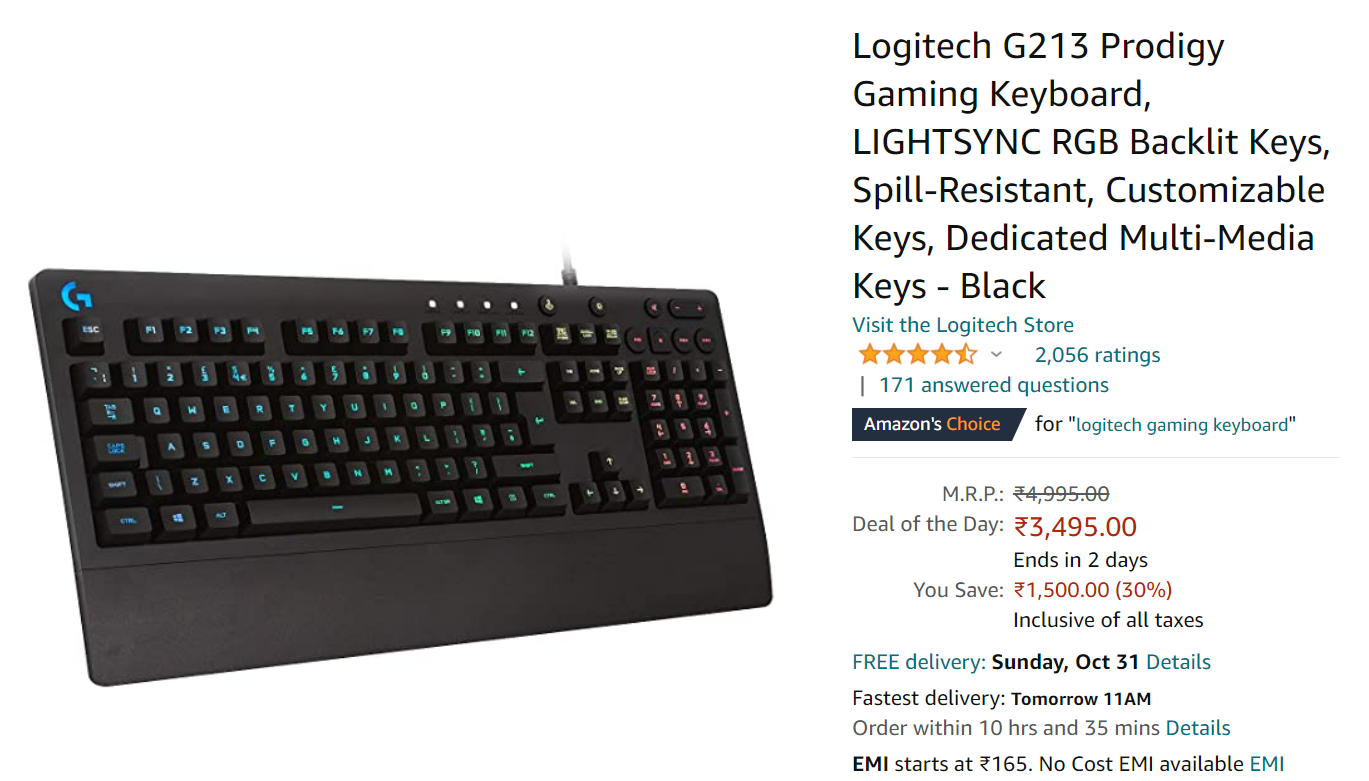
Logitech G213 Prodigy Gaming Keyboard which generally retails for ₹4000 is now available at a discounted price of ₹3495 only at Amazon India. This deal ends in 2 days.
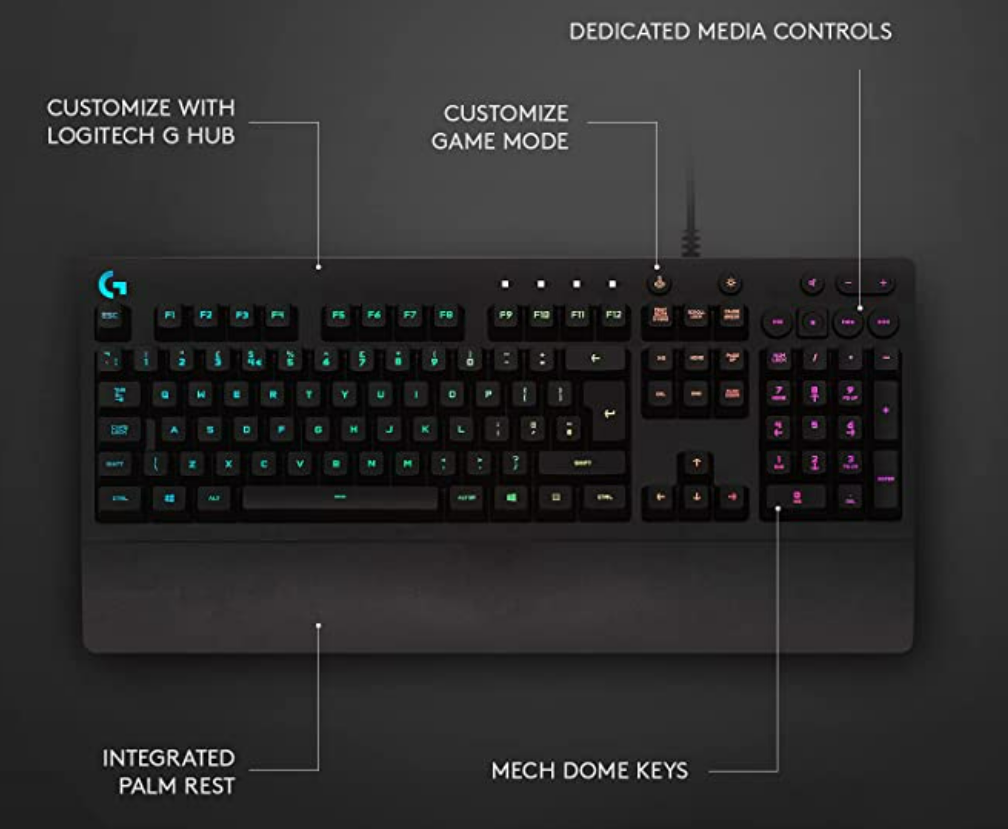
Full-sized keyboard specifically designed for e-sports, speed, durability, and productivity
Slim body design perfect for pro gamers
Integrated palm rest and adjustable angle for long term comfort
Performance tuned with multi-key input
Ultra-quick responsive key
Anti-ghosting gaming matrix tuned for optimal gaming performance
Dedicated media control – instant play/pause/mute
Backlit keyboard
Brilliant color spectrum
Personalize 5 individual lighting zones
Synchronize lighting effects with other Logitech G devices using Logitech gaming software
Generally retailing for ₹4000 you can now buy Logitech G213 Prodigy Gaming Keyboard at a discounted price of ₹3495 only at Amazon India. This deal ends in 2 days. So place your order asap.
For more information on such exciting deals and offers check out ourdeals hub.
* Please Note: When you buy something using the links in our articles, we may earn a small commission at no cost to you.
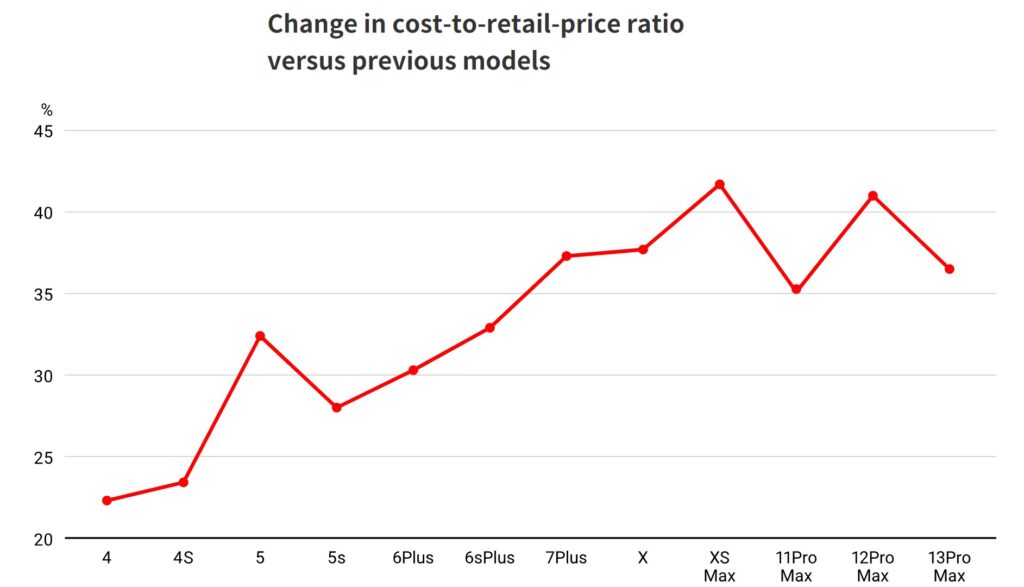
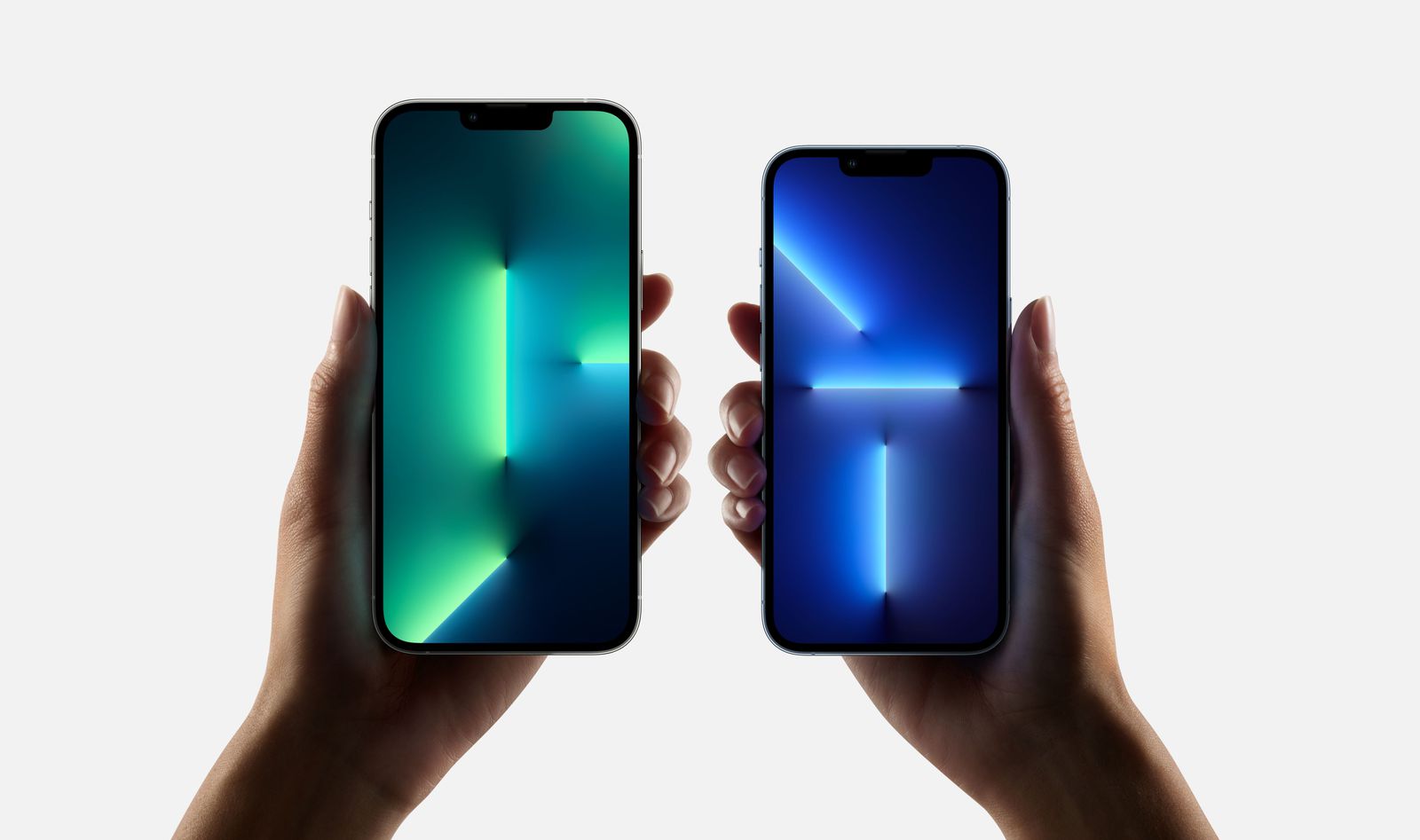
The iPhone 13 now has a cost-to-retail price ratio for its components of around 37%, and Apple is sacrificing profits in order to make its phones better and offer more for less.
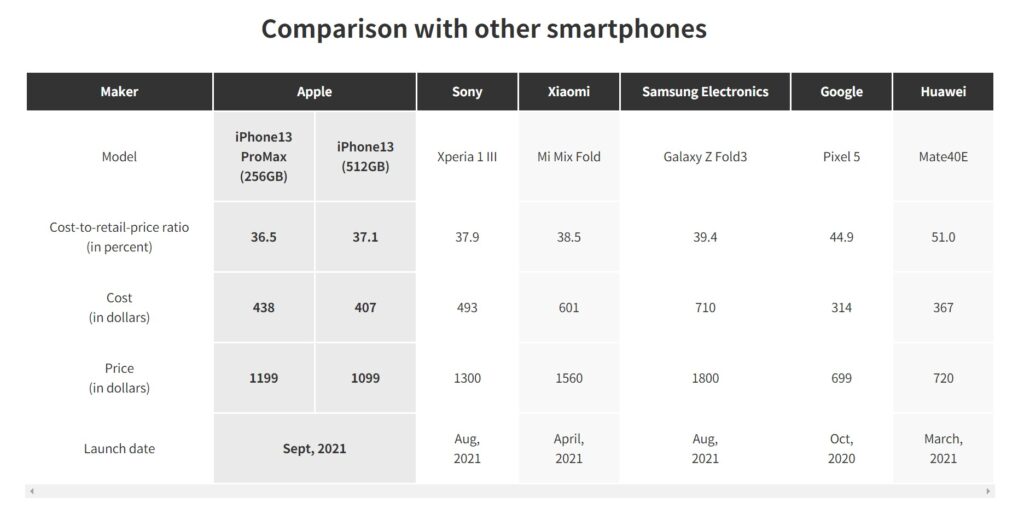
The report from Nikkei Asia and Financial Times (via iMore) reveals that the OLED display of the iPhone 13 Pro Max alone costs $105 for Apple – the most expensive component. This is followed by the camera module of the device that costs $77. The Apple A15 Bionic chip costs around $45. In total, the iPhone 13 Pro Max (256GB variant) costs around $438 to make, or around 36.5% of the phone’s retail price.
Image: Nikkei
The cost ratio, however, is still a bit low when pitched against other smartphones with similar prices. Samsung’s Galaxy Z Fold3 has a cost ratio of 39.4% while Huawei’s Mate 40E has a cost ratio of 51.0%. This indicates that Apple relies heavily on the strength of its brand for profitability.
Still, iPhone component costs have indeed grown sharply in the past 10 years, with almost a consistent YoY increase. Take the iPhone 4S that had a retail cost ratio of just 23%. The device at the time cost $749. In contrast, the iPhone 13 sits in the 35-40% cost ratio range. Its camera module alone costs 10 times as much as the one on the iPhone 4.
Image: Nikkei
But while component costs can be figured out relatively easily, other costs such as labor, advertisement, R&D, shipping, and packaging, are much harder to ascertain. Add all these to the cost ratio and it’s bound to rise dramatically. Hence, components alone don’t tell us exactly how much Apple makes from the sale of every iPhone unit, so that’s one thing to consider.
The Apple iPhone 13 series was launched last month with the new A15 Bionic chip, multiple camera upgrades, a 120Hz ProMotion display, and much more.
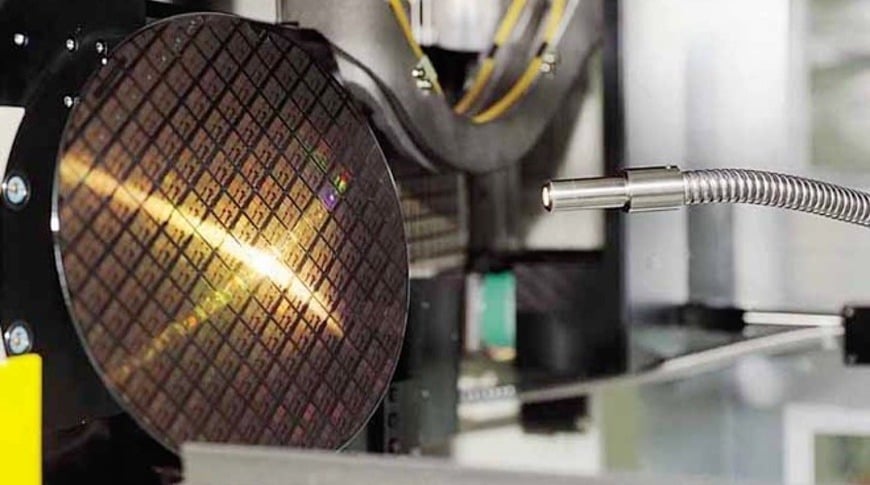
Earlier this week, Sony confirmed that it was considering a plan to partner up with TSMC (Taiwan Semiconductor Manufacturing Co.) for a new chip plant that will be situated in Japan.
According to AsiaNikkei, the Japanese tech giant confirmed that it is considering joining hands with TSMC during a news conference that it held to showcase its earning for the first half of this year. In this conference, the company’s Chief Financial Officer stated that “The stable procurement of semiconductors is a crucial issue amid the chip crunch, and [TSMC’s plant] could be a solution.” As of right now, Sony outsources the production of most of its logic chips that are key components to its image sensors.
Furthermore, the company is also raising efforts in attracting more clients and improve the quality of its sensors to broaden their applications across multiple different product ranges. Totoki further added that the brand will hold discussions with TSMC and Japan’s Ministry of Economy, Trade and Industry for the partnership. This collaboration would bring together Sony’s expertise in Japanese chip operations to the world’s largest contract chipmaker that manufactures chips for giants like AMD, Nvidia, MediaTek, Qualcomm, and others.
While the CFO avoided directly commenting on the investment for this chip plant, he added that “It will be very meaningful for us to further strengthen and deepen our partnership with TSMC, which has the world’s most advanced semiconductor production technology.” For those unaware, TSMC has been planning to open its first advanced chip production site outside of its home country of Taiwan, and will be building a plant in Japan (western Japanese prefecture of Kumamoto to be particular). The construction will start sometime next year and productions are expected to begin in 2024.
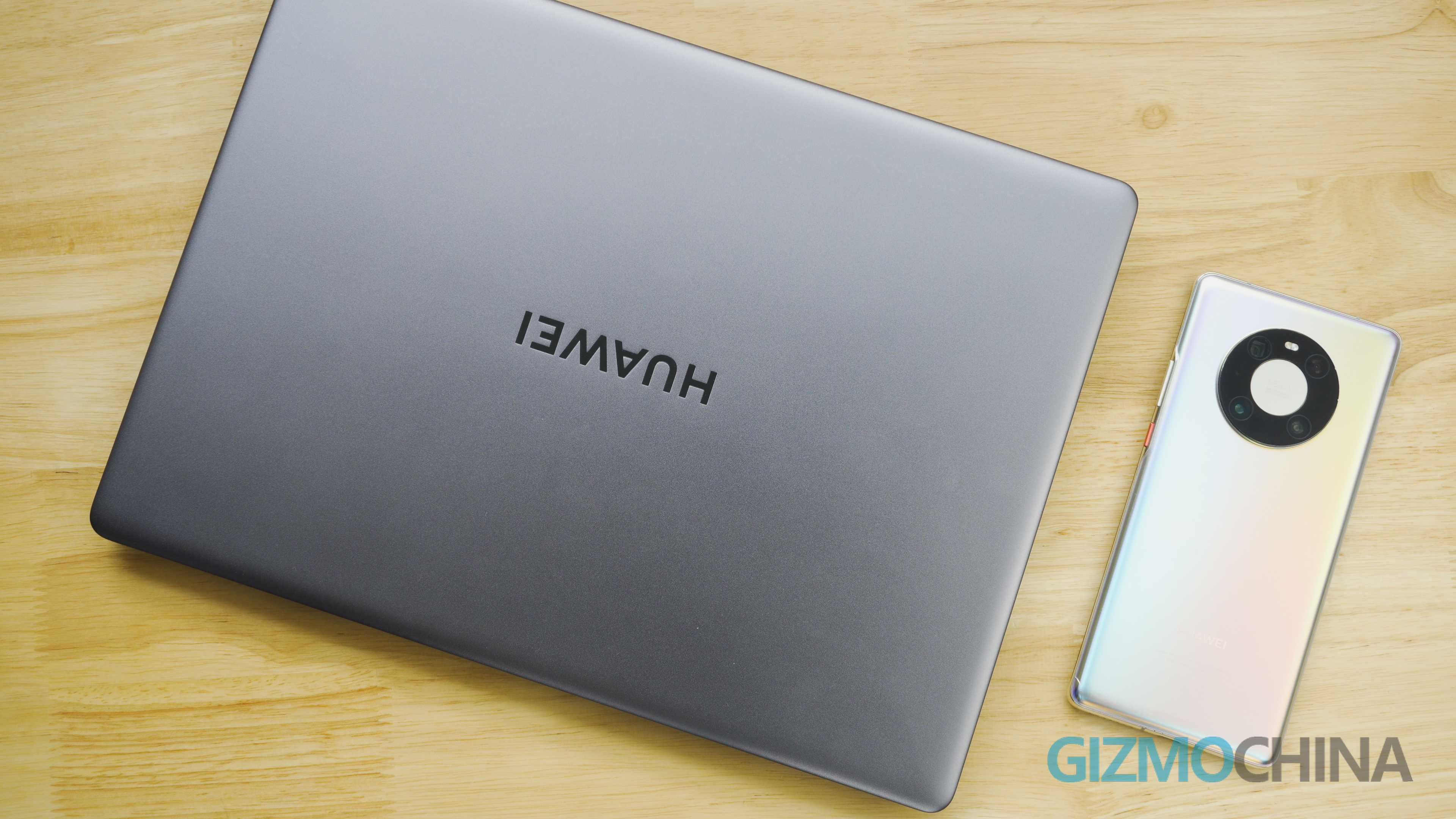
Huawei’s Matebook series has finally got a significant upgrade. We’re pretty thrilled to review a model from the latest lineup, the Matebook 14s.
At first glance, this Matebook 14S model looked so impressive that we even mistakenly believed that it was a new model of the top X Pro series. After all, it’s probably the first time that we are seeing such a fine build quality in a laptop of its price range.
MATEBOOK 14S Review: DESIGN
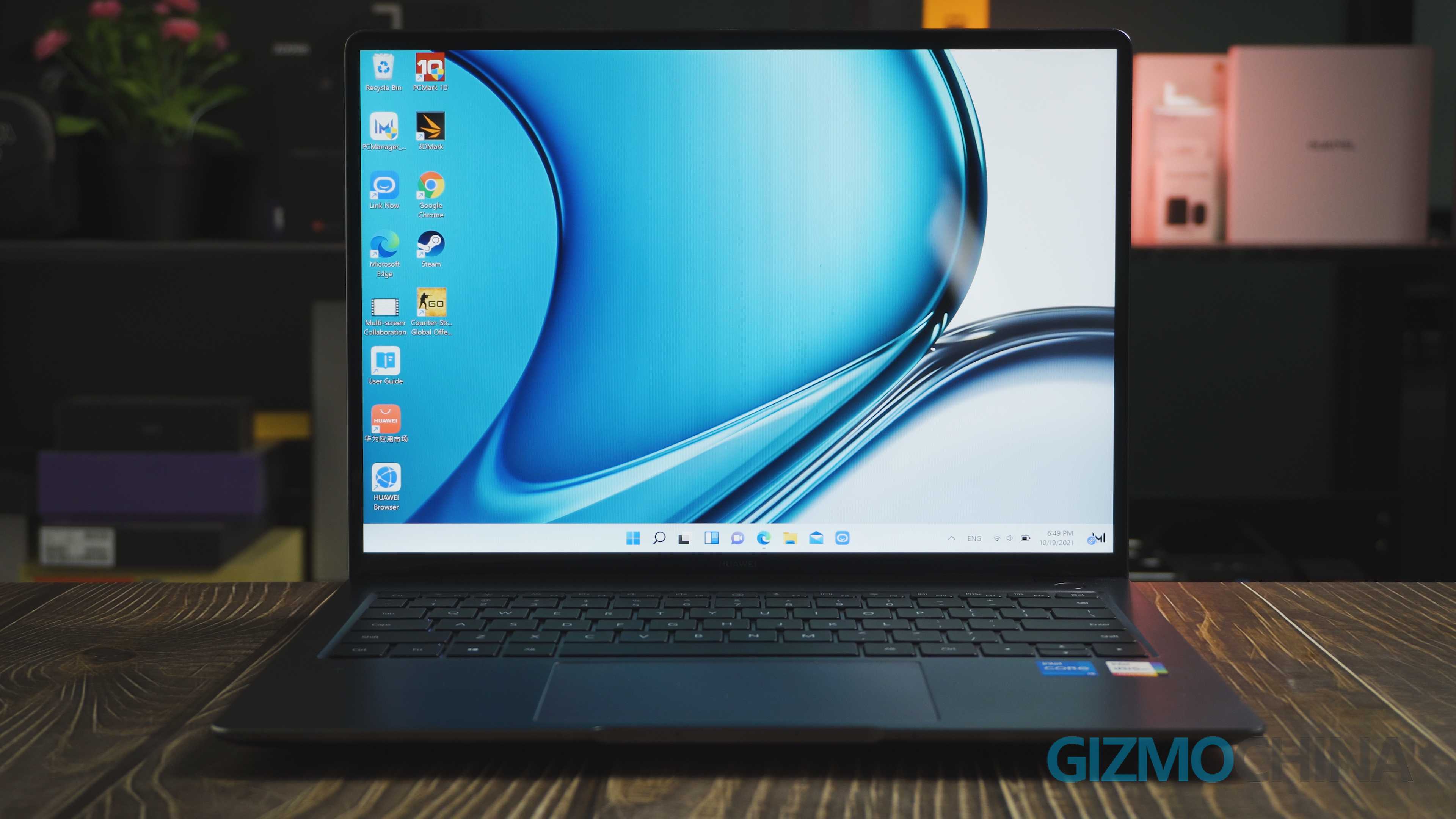
Let’s look at its design first. On the surface of the MateBook 14s, the company has used a rare sandblasting process with high precision. We have only seen this process on some top-end models, sold for much higher prices. But this time we will quickly go through its design. There are a lot of interesting features that make this laptop stand out from the crowd of thin and light notebooks.
Coming back to the notebook’s body size, although the MateBook 14s features a slightly larger 14.2-inch display than its predecessor, the MateBook 14, the weight has been reduced from 1.49kg to 1.43kg. And the display is one of the most important upgrades for this notebook.
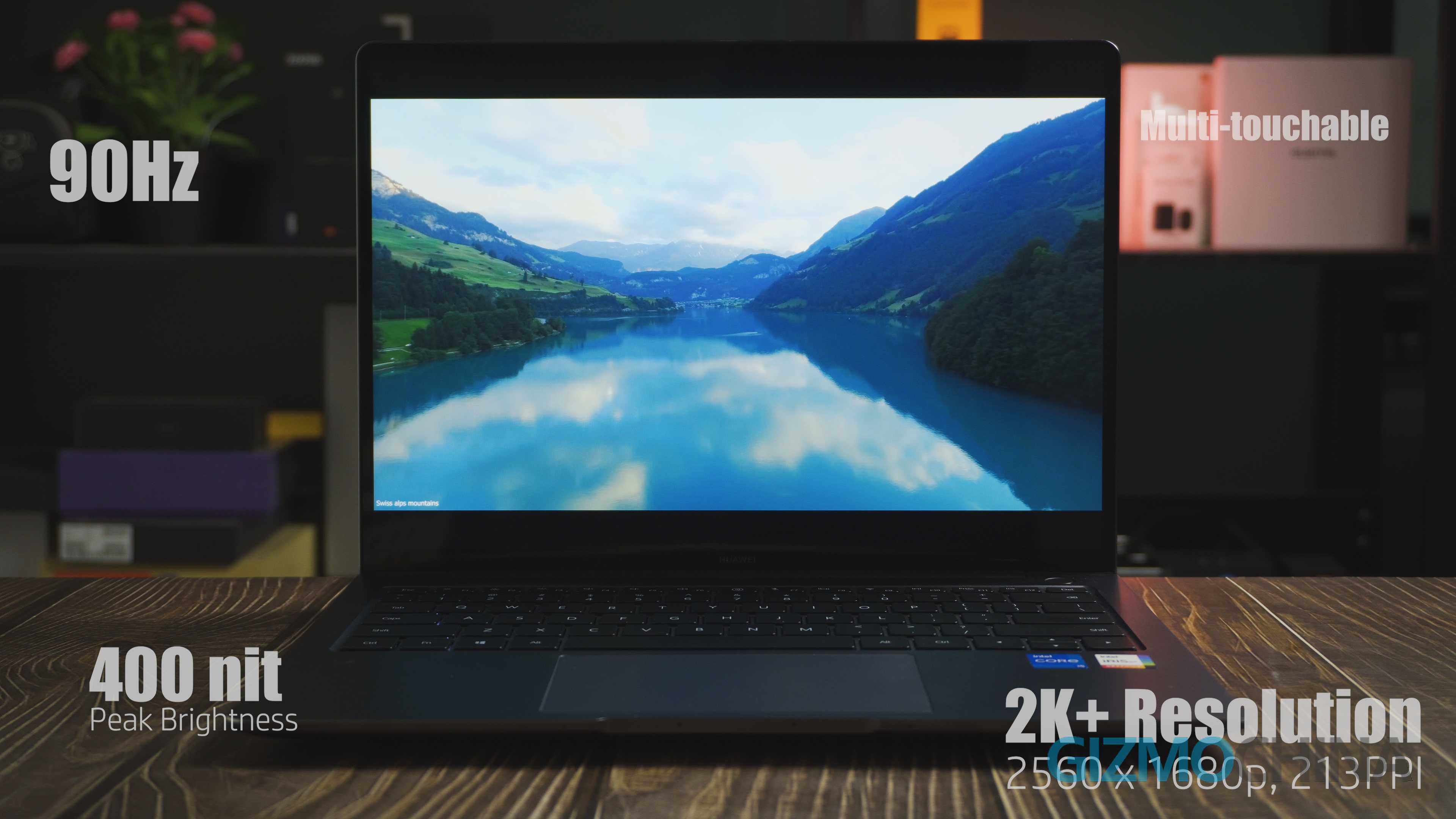
On the Matebook 14s, HUAWEI not only gave it a higher resolution with a higher PPI, but also brought in a high refresh rate of 90Hz and a higher peak brightness of 400 nits. And this display also supports multitouch, which means it can be used as a tablet. But the touch experience isn’t great, as the screen struggled to stay firm in its position and swayed a bit. But anyway, we didn’t really rely on its touch most of the time, so basically it won’t be a big problem for a majority of the users.
The power button has an integrated fingerprint reader. And by recognizing fingerprints, there’s no need to store passwords online to securely log in to websites or applications, which is even safer for protecting personal information.
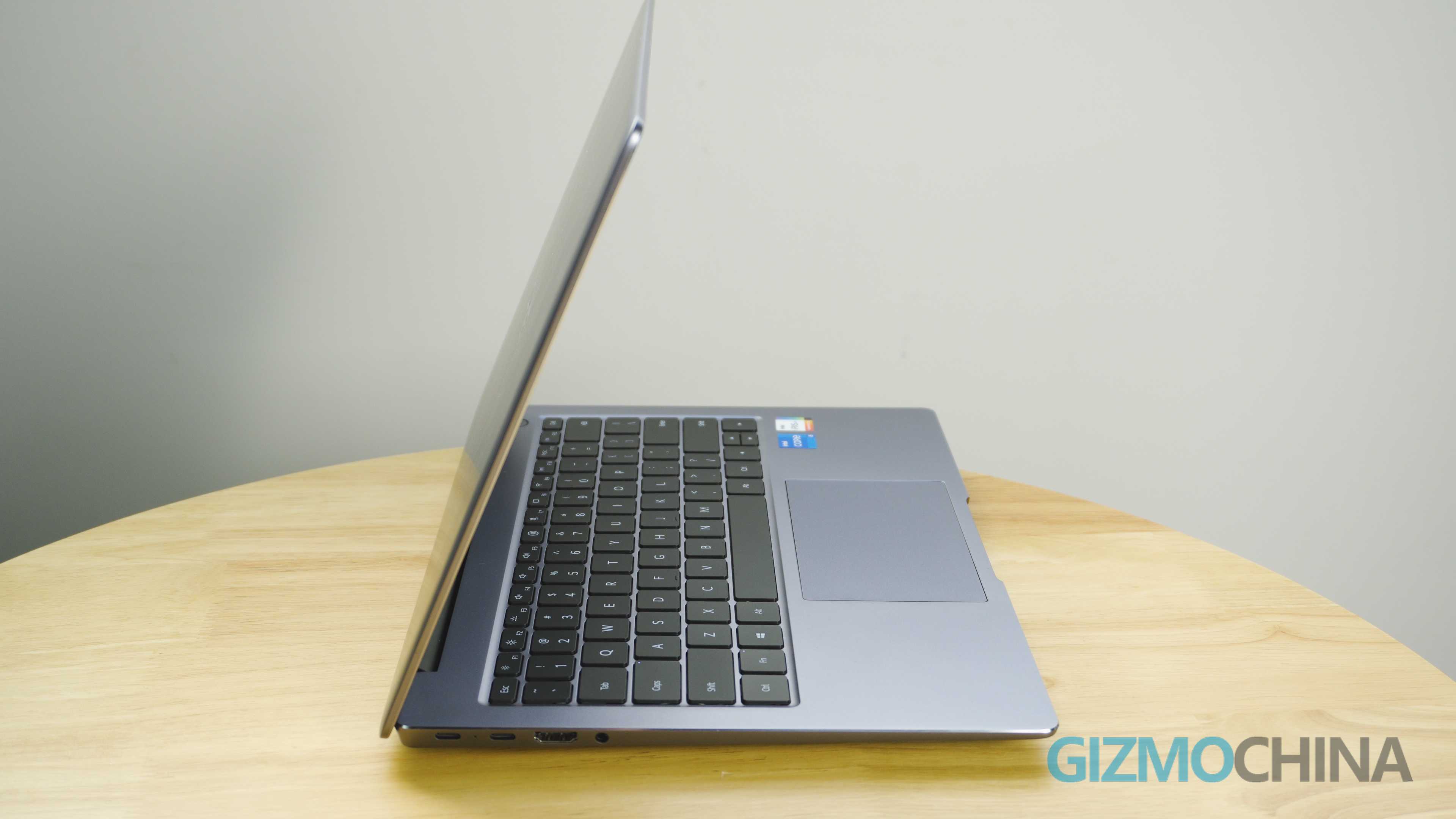
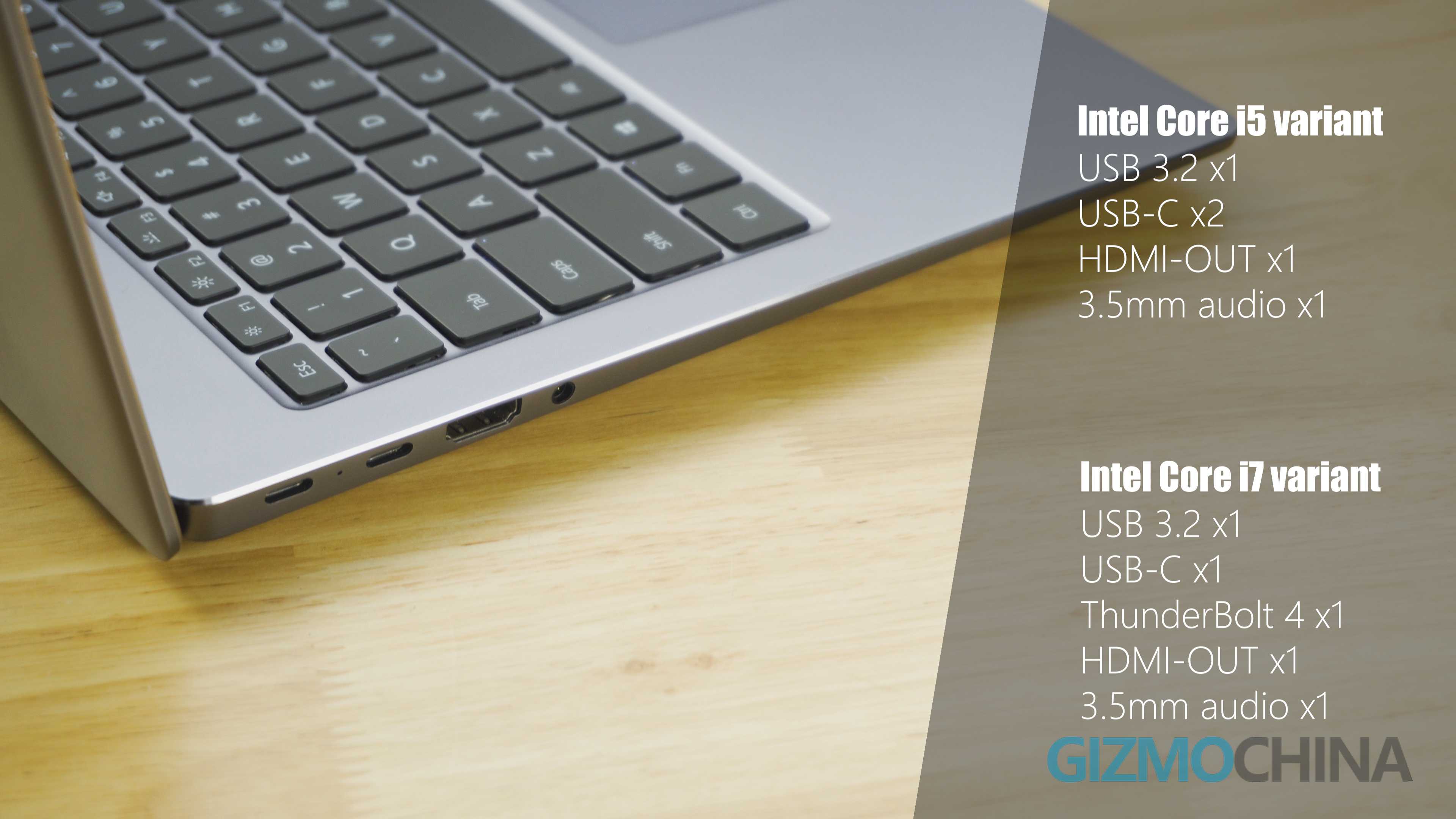
The left side of the body has an HDMI-in, a type-c for fast data transfer, and another full-function USB-C port. While on the i7 variant, the second Type-C port is upgraded to support thunderbolt 4. On the other side, there’s a USB 3.2 port and a 3.5mm audio jack.
After using it for over a week, we have to say it’s one of the best displays that we’ve experienced on a compact notebook in its price range. The fluency of high refresh rate and good display quality didn’t cause much discomfort for the eyes even after using it for a long time. And the super-narrow bezels also brought immersive visual experience when watching videos or films. It’s even an excellent portable option for professional image editing since we got an average delta E of 0.82 in our test of its color accuracy under 98% sRGB color coverage. The actual peak brightness is also impressive, as it slightly exceeded their official promise.
The Matebook 14s also features 4 speakers for delivering high-quality stereo sounds. Combined with Huawei’s special sound algorithm, the 4 speakers can build immersive pure stereo output for various scenarios, producing a surround sound experience.
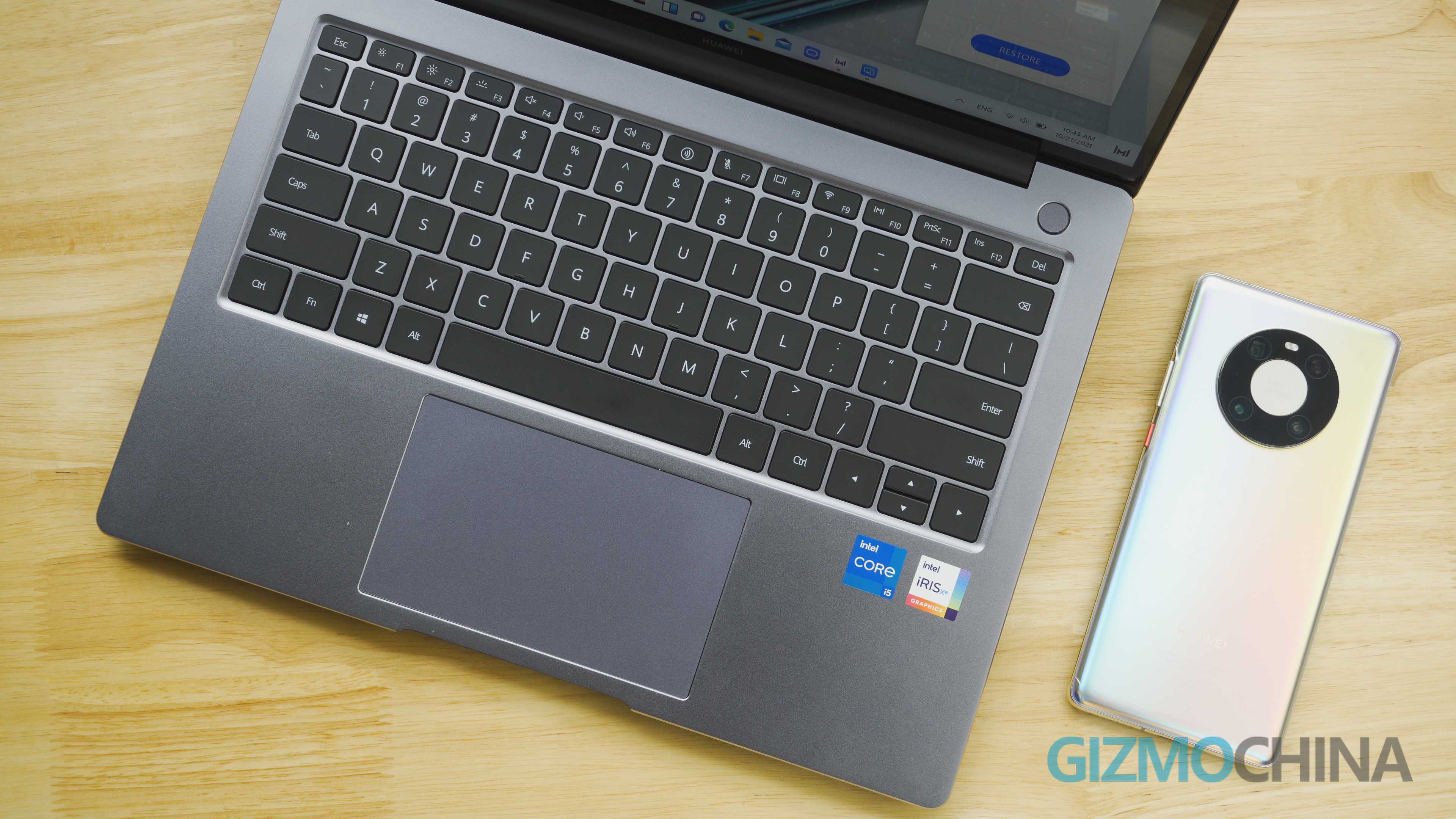
The keyboard layout of theMateBook uses backlit keycaps with good travel at 1.5mm. The keys offer smooth and strong rebounds without producing much noise while typing.
The large touchpad down below the keyboard is also responsive and smooth. And this large touchpad is also the NFC sensing area for phone connection.
Matebook 14S Review: Software
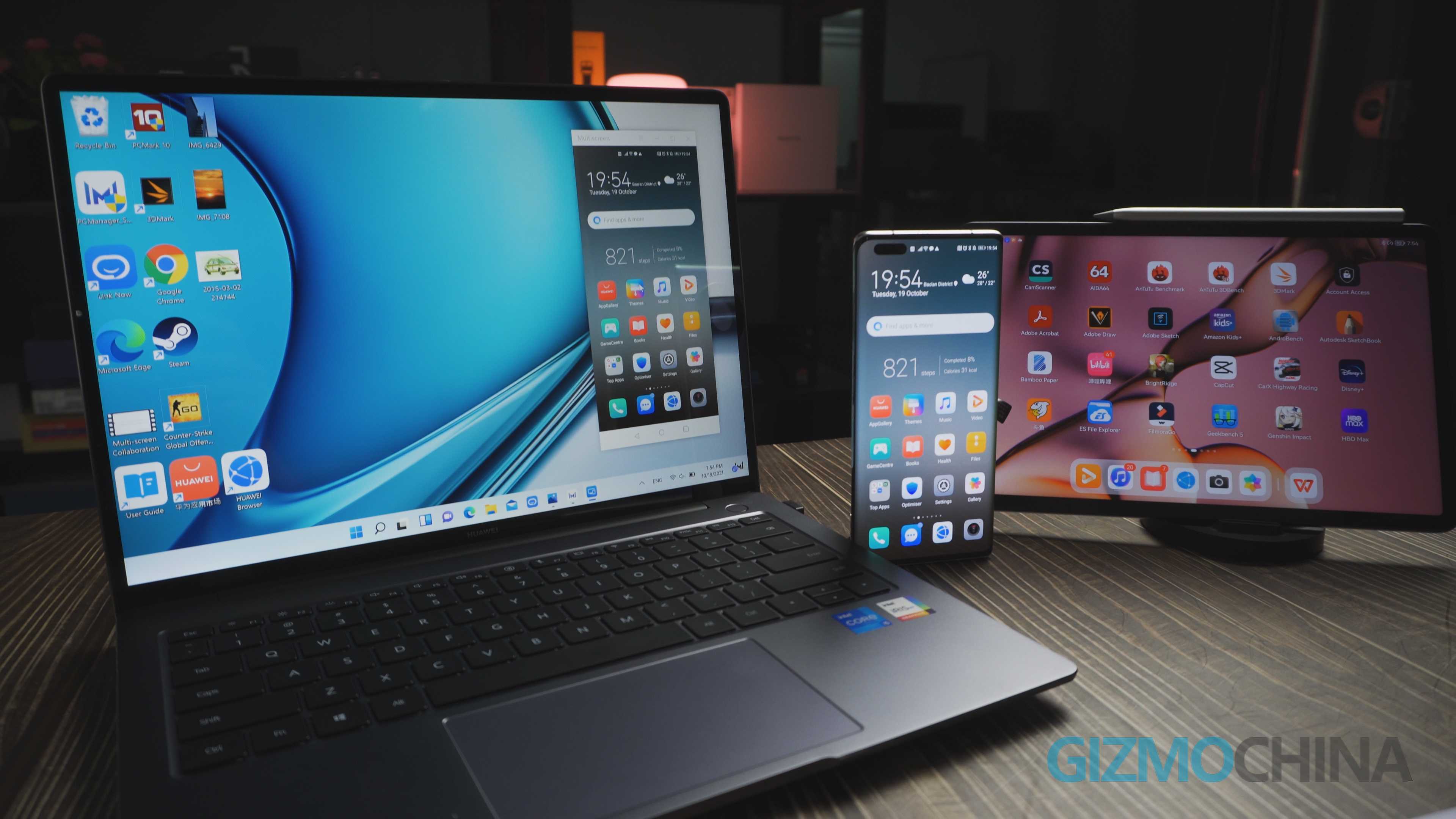
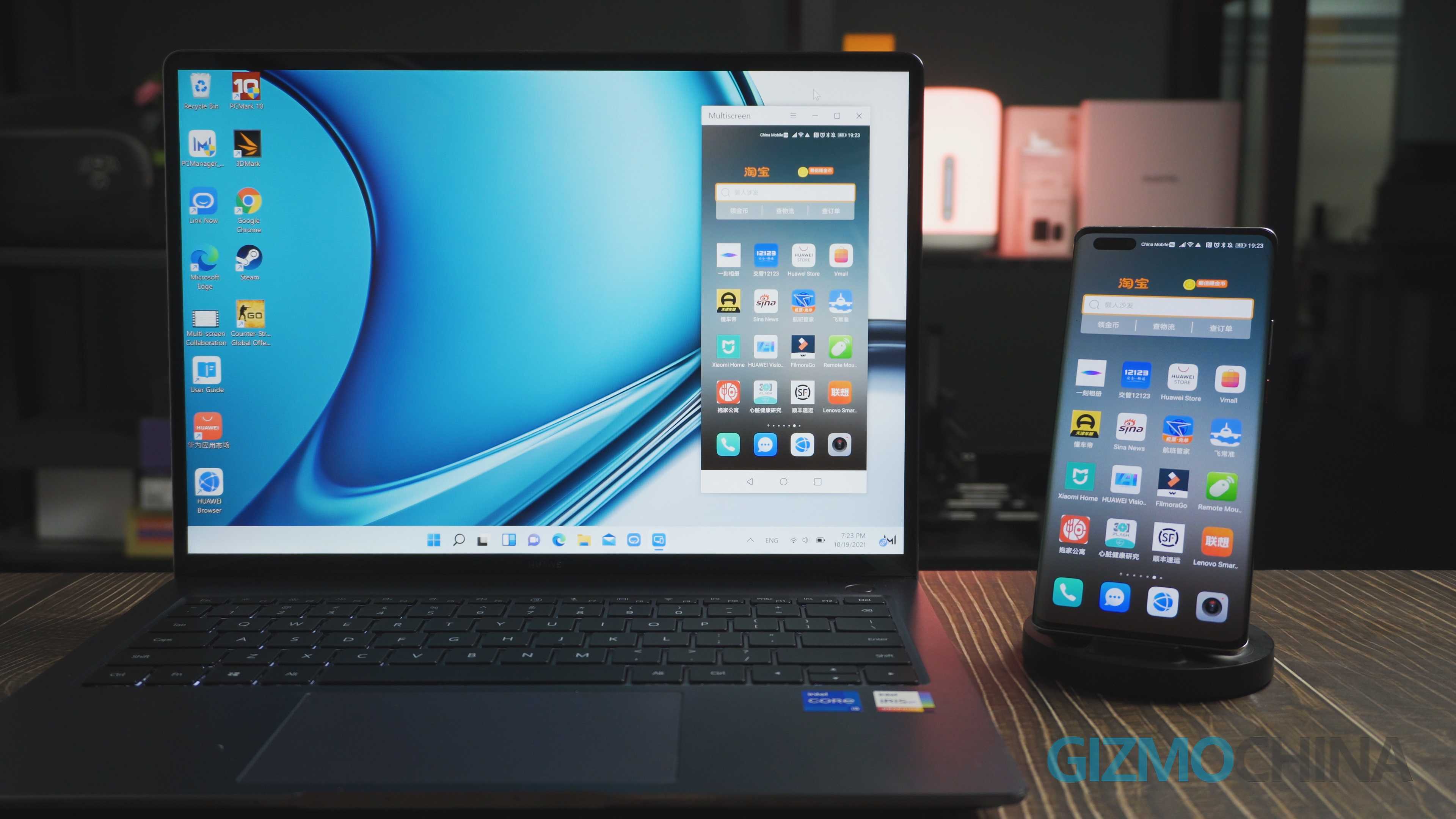
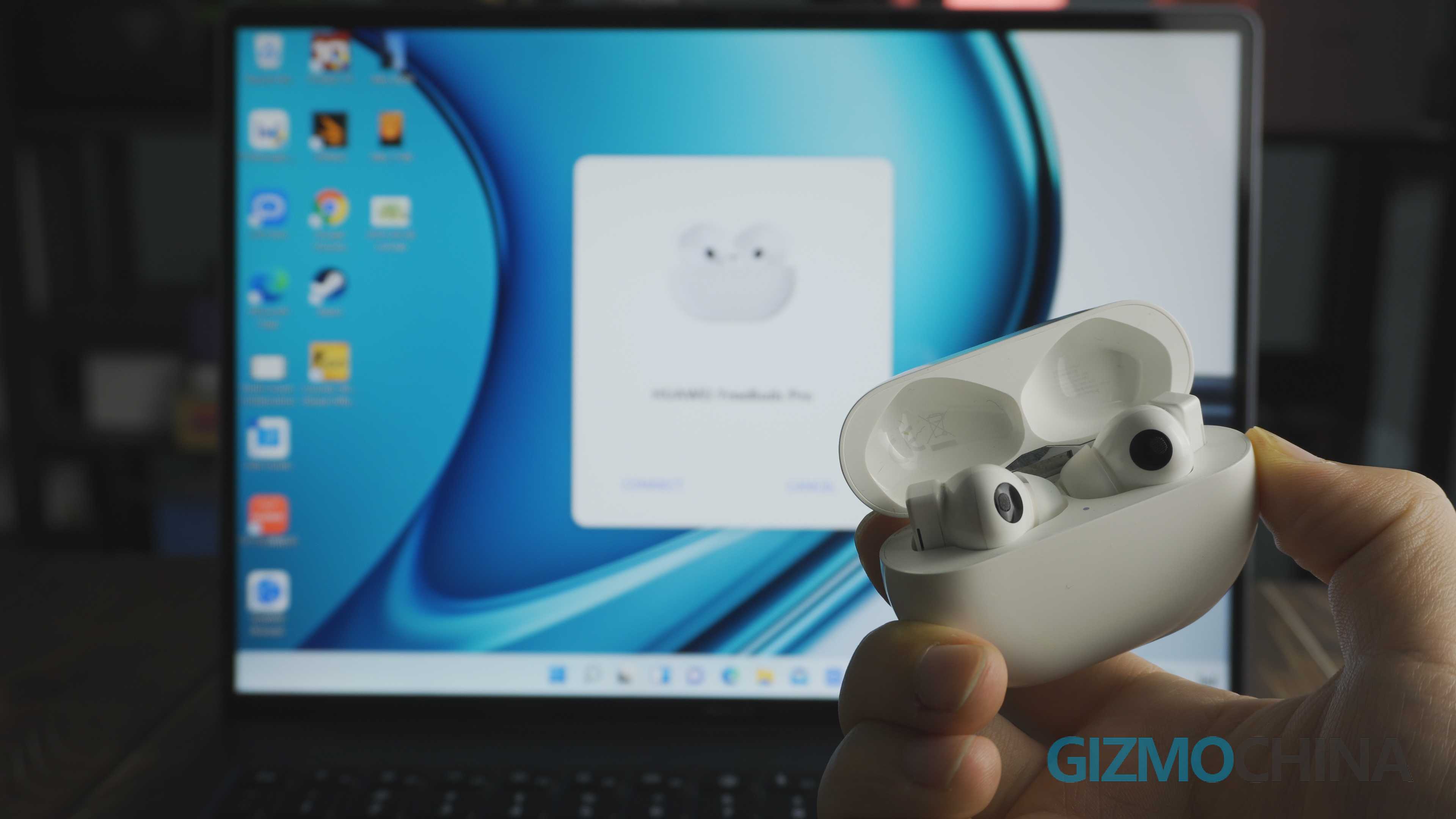
Unlike those traditional laptop brands, the most innovative feature of the Matebook Series is its software experience, especially because of its support for multi-device collaboration. For example, the Matebook 14s integrated the HUAWEI PC manager app, which can access most of the Huawei exclusive features. In addition to normal PC checkup, users can also access deeper performance adjustments and collaborate with HUAWEI phones and tablets. Users can quickly connect the phone to the PC by touching the NFC sensor on the touchpad. You can not only have a real-time projection of the phone’s screen but also operate the phone via the notebook. You can easily back up photos and videos on the PC, share the phone’s internet connection, and share files between the PC and the phone.
The whole interaction and connection are extremely smooth and stable, which is definitely the best multi-collaboration experience that you can have right now. But it’s only available on HUAWEI devices.
1 of 3
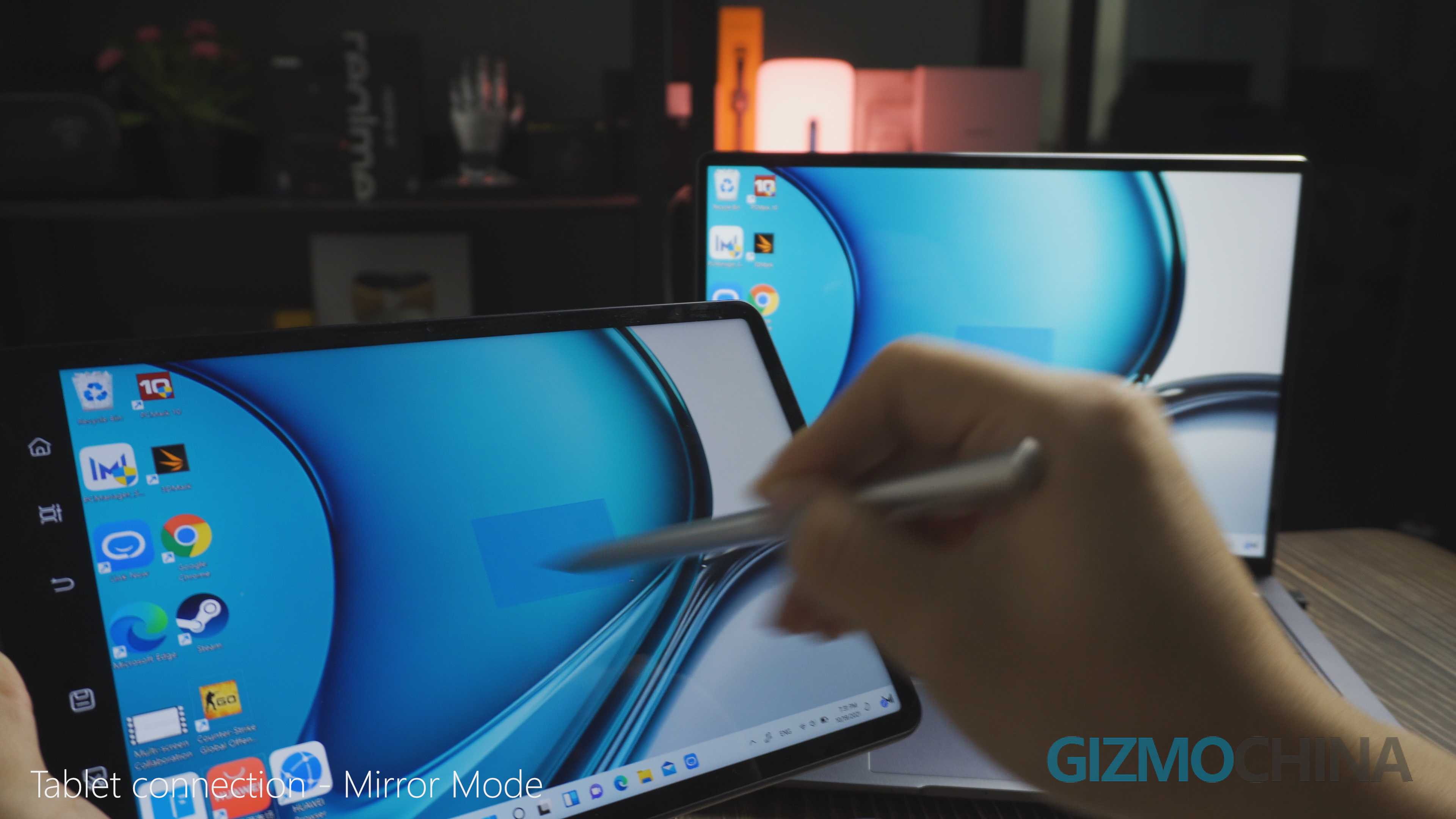
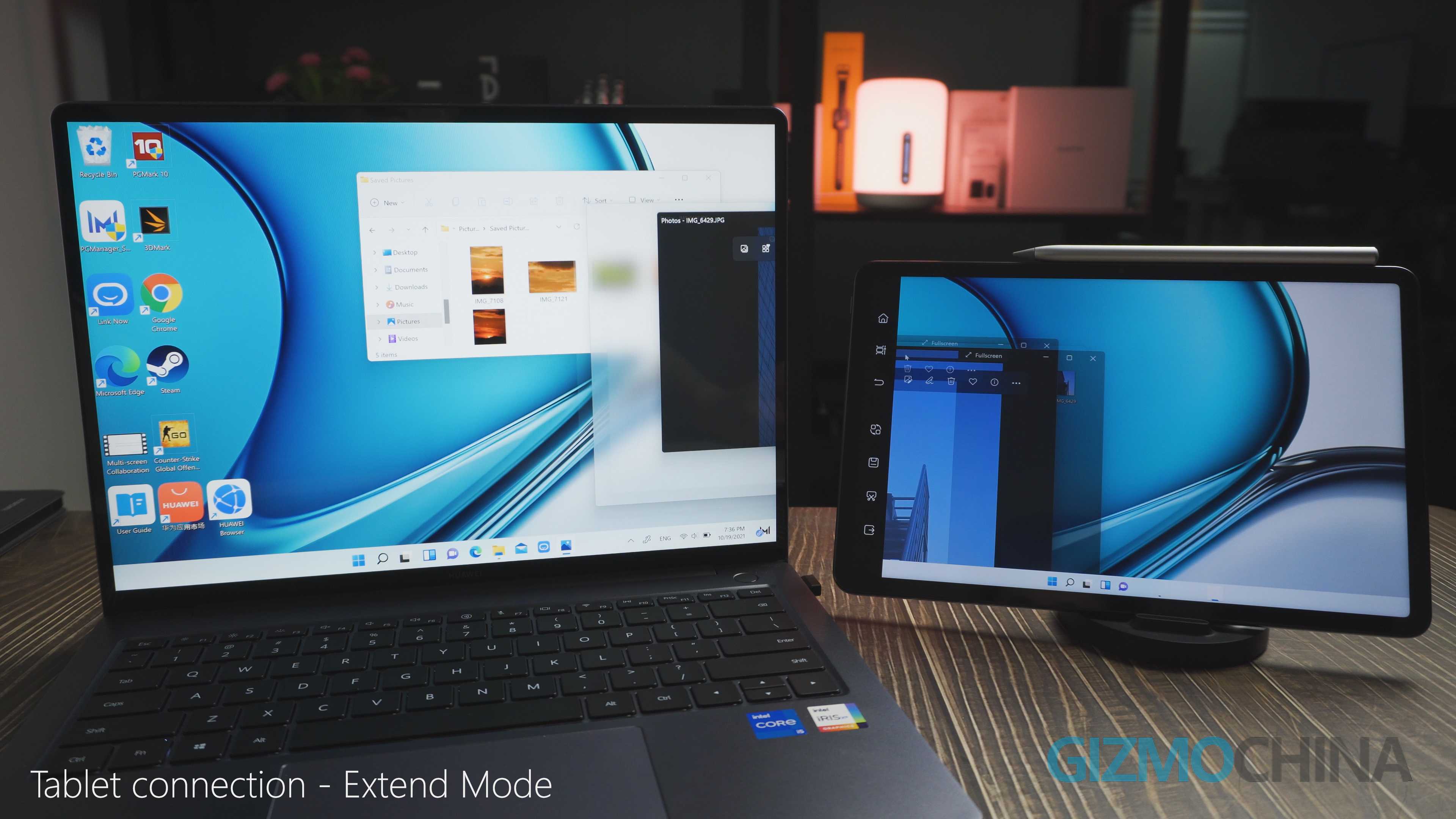
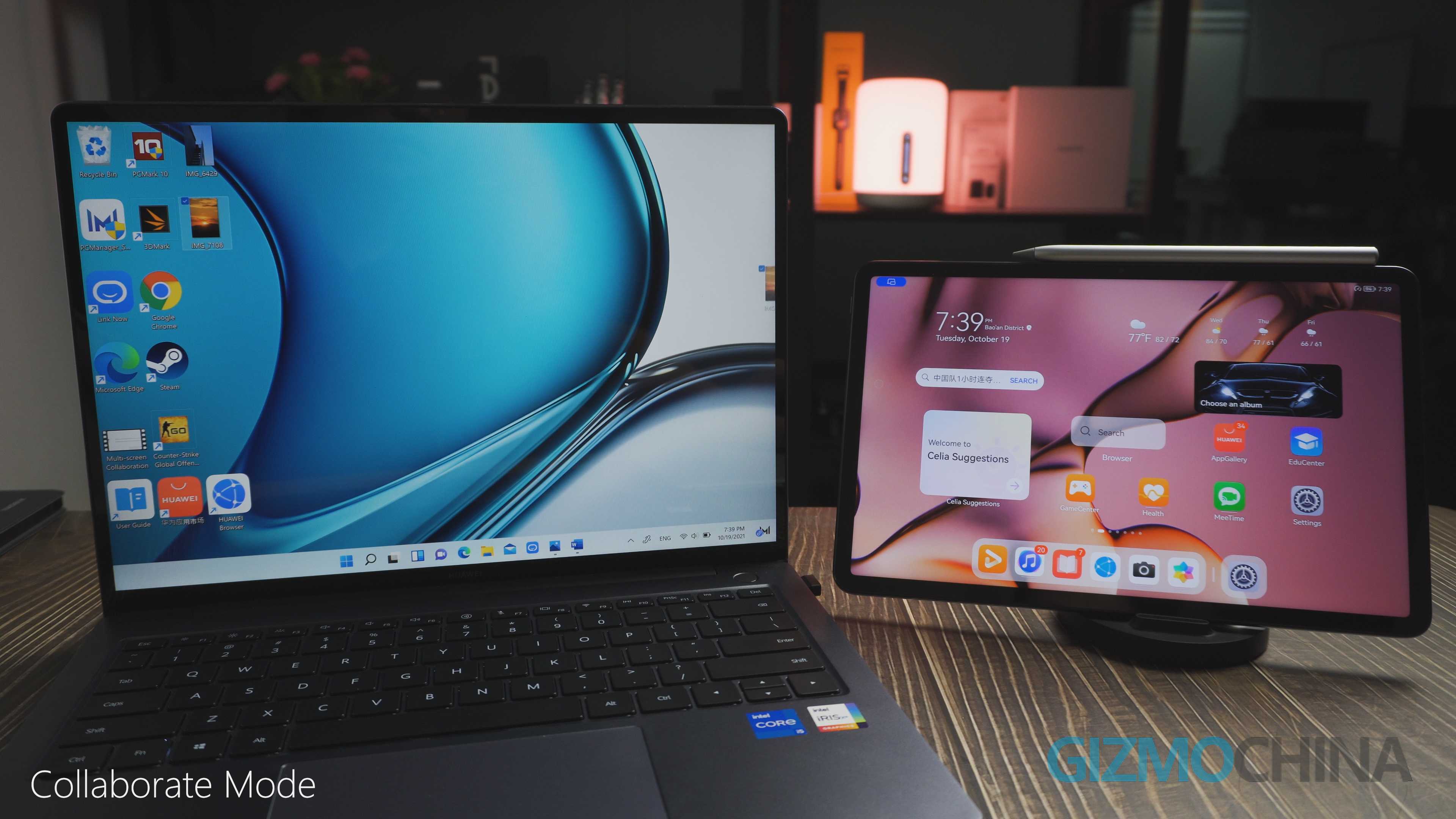
In addition to co-working with phones, the latest collaboration with tablets is another surprise. We finally experienced the full-function tablet collaboration on the Matebook 14s. The tablet we used is the HUAWEI MatePad 11 (Review here), which also has powerful software support. There are three connected modes for tablets, including mirror mode, extend mode and collaborate mode. Under mirror mode, you can simply copy the PC screen to the tablet and use the tablet as a mobile controller and a monitor for the PC. Or just turn the tablet into a secondary display for the PC in the extend mode. And in the last, collaborate mode, you can truly have collaboration across the system and devices through the PC’s keyboard and touchpad or mouse. And all of these real-time connected modes have really low latency and works very smoothly. Moreover, all the operations and works can be done easily with intuitive interaction.
In addition to the phone and tablet we mentioned above, there are more devices that can realize seamless collaboration with the Matebook 14S. After all, Huawei is trying to bring all their products under one platform and build a connected smart eco-system that covers all aspects of modern life.
It’s hard to deny that HUAWEI is quite innovative, since most hardware manufacturers often only think about stacking new hardware without really trying to add useful software features. But Huawei’s software team has really promoted their devices’ software experience to a new level.
Considering how these features and solutions were developed when the company was going through a tough time, do you really think this is the end for the brand? We don’t think so!
In fact, you might have heard Microsoft claim that they are breaking the barriers of Android, allowing users to run Android apps on the latest Windows 11. Although we’ve upgraded the system to Windows 11, there’s no such feature in the latest version, and it’s not available in most regions either. However, on the Matebook 14s, you can enjoy a similar feature while running Windows 10. All you need to do is to download the PC version of the HUAWEI app gallery on Huawei’s PC products. But by far, most mobile apps available in the App gallery are only for the China market. So we’re really looking forward to its expansion in the global markets.
Matebook 14S Review: Performance & Battery Life
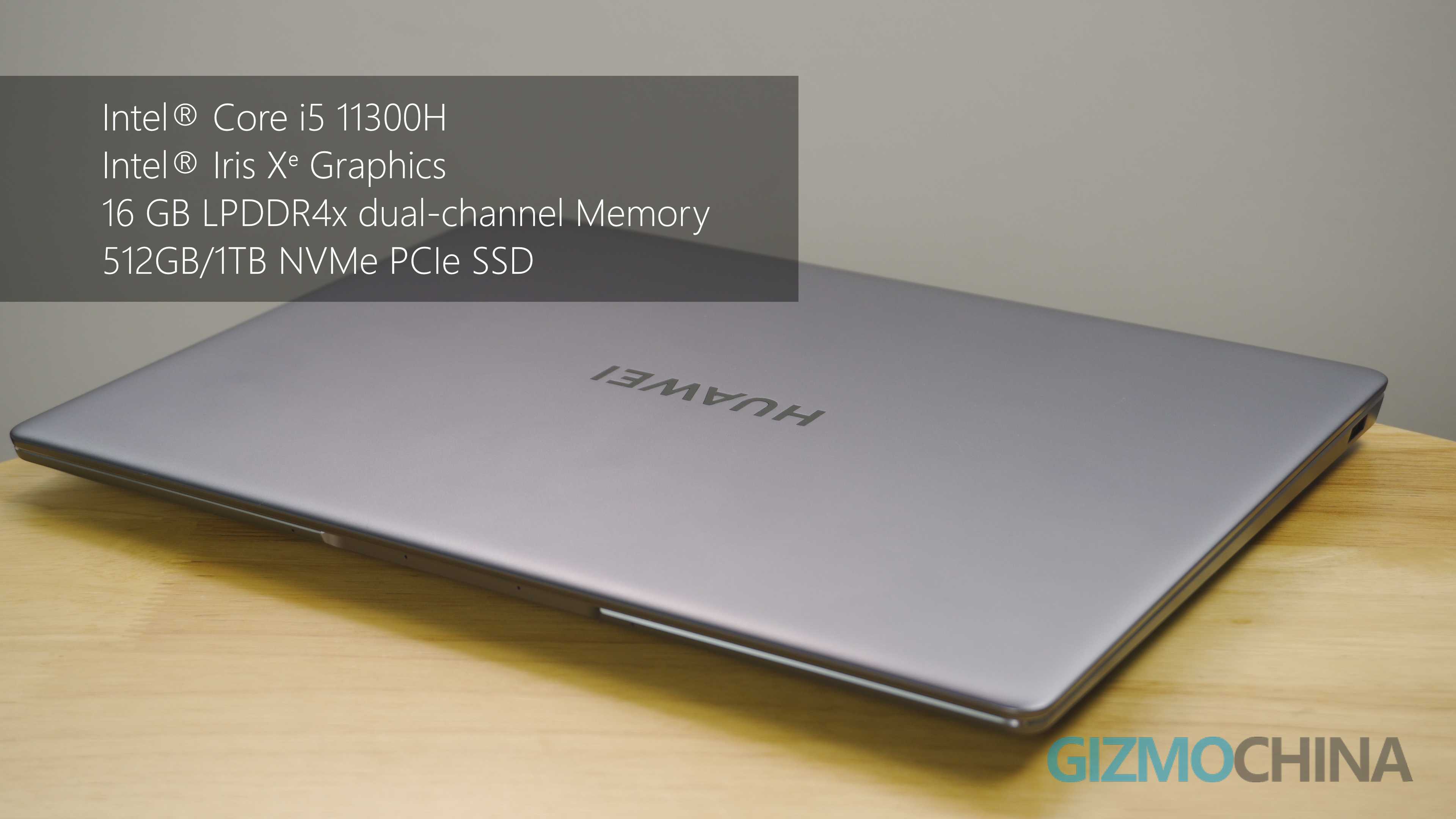
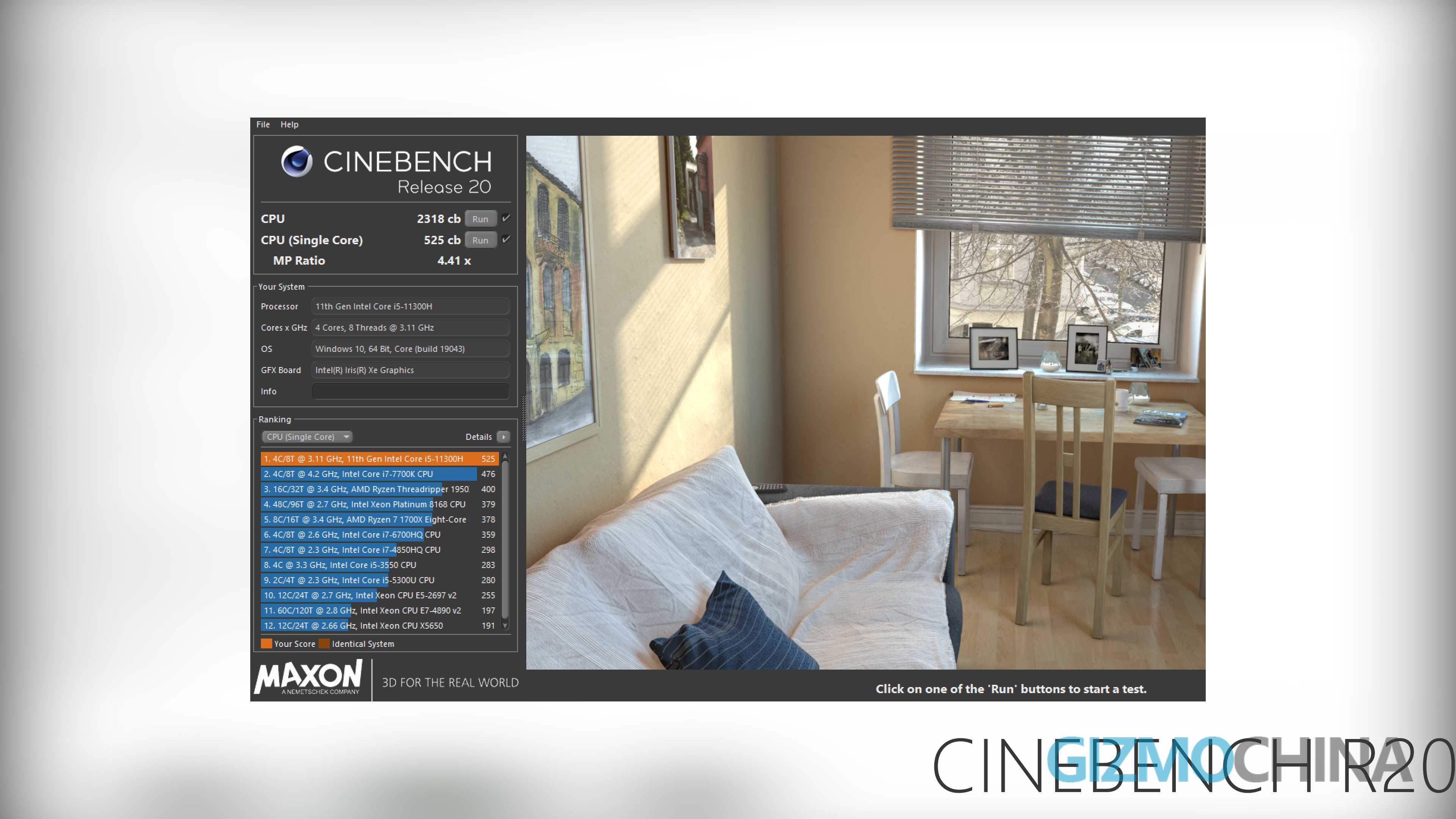
As for performance, we all know such compact notebooks often have thermal constraints. The Matebook 14s in our hand is an Intel i5 variant. The processor equipped in the Matebook is an Intel Core i5-11300H one integrated with Intel Iris Xe Graphics, coming with dual-channel 16GB LPDDR4X memory and 512GB SSD storage. Basically, the Matebook 14s can handle daily tasks well for productivity uses.
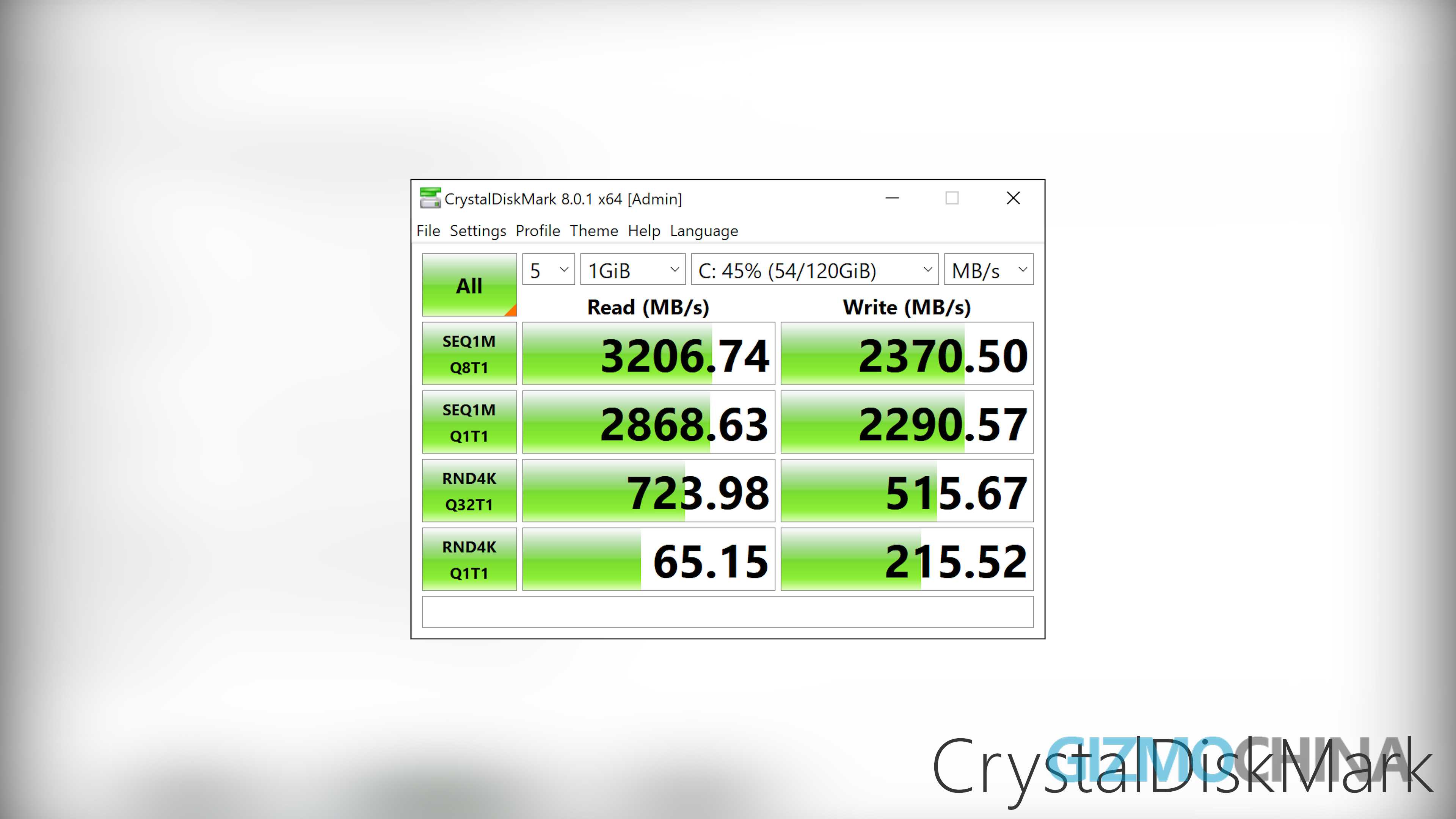
First, let’s look at some results of the basic performance tests. In PC Mark 10 without plug-in power, it scored around 5000 points, which is at the best level that can be achieved by the H35 processor. Especially in the Essentials and Productivity parts, the MateBook finished the tests efficiently. So even under power mode supported by the single battery, the Notebook still has a very good performance. And in memory and storage benchmarks, the notebook also impressed us with excellent results.
1 of 3
AIDA
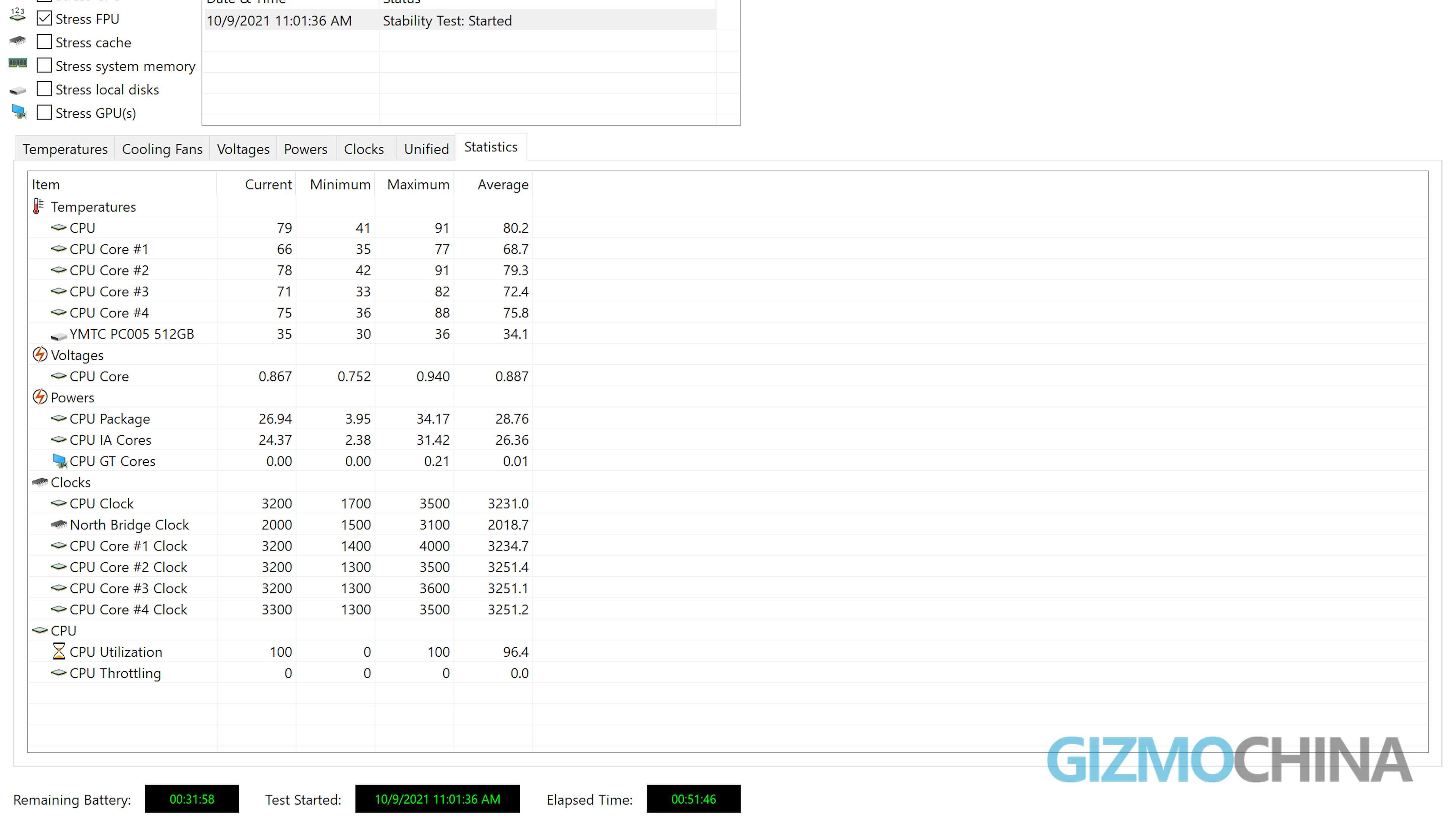
But what we are wondering is how stable is its performance under long-time heavy loads. So let’s move to the FPU stress test in Aida 64. We ran the stress test for over 50mins and tried to explore more information about its actual thermal limits and performance stability. During the entire 50-min test, the CPU could surprisingly run up to 4 GHz with 35W power output and eventually stabilize at 3.2GHz with 27W power. More importantly, the overall CPU temperature reached 80℃ without any throttling issues, and it didn’t cause uncomfortable surface temperature when we put our hands on the keyboard.
Considering the compact size of the Matebook 14s, we must admit that its performance is pretty impressive.
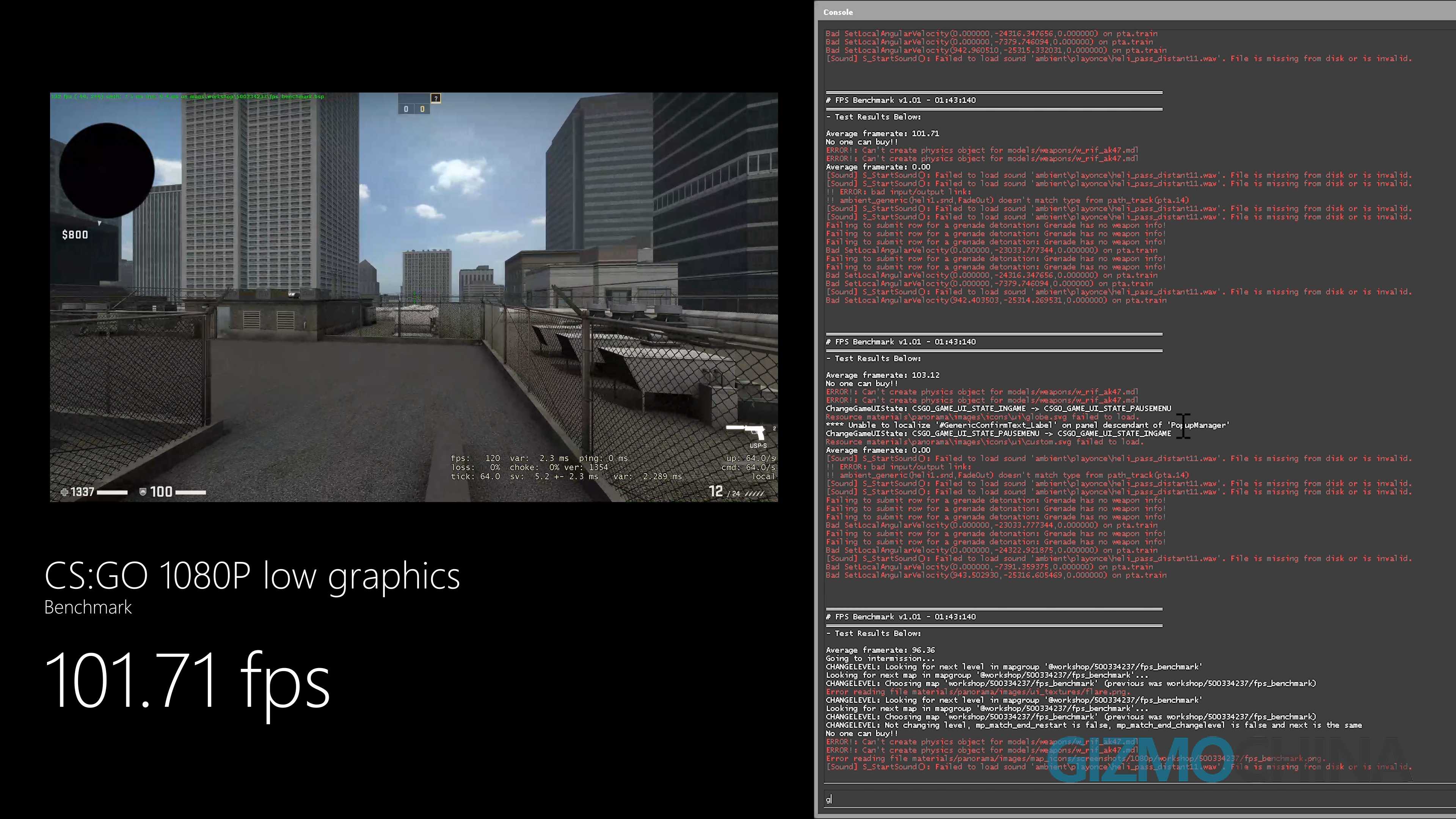
If you are looking for a notebook for heavy gaming, the MateBook 14s is not a good option. But if you want a compact notebook for light gaming, the integrated Iris Xe graphics still provides pretty good support. For example in the fps benchmark of the CS:GO, the notebook could run at over 100fps under low 1080P graphic settings, which is much more than we expected.
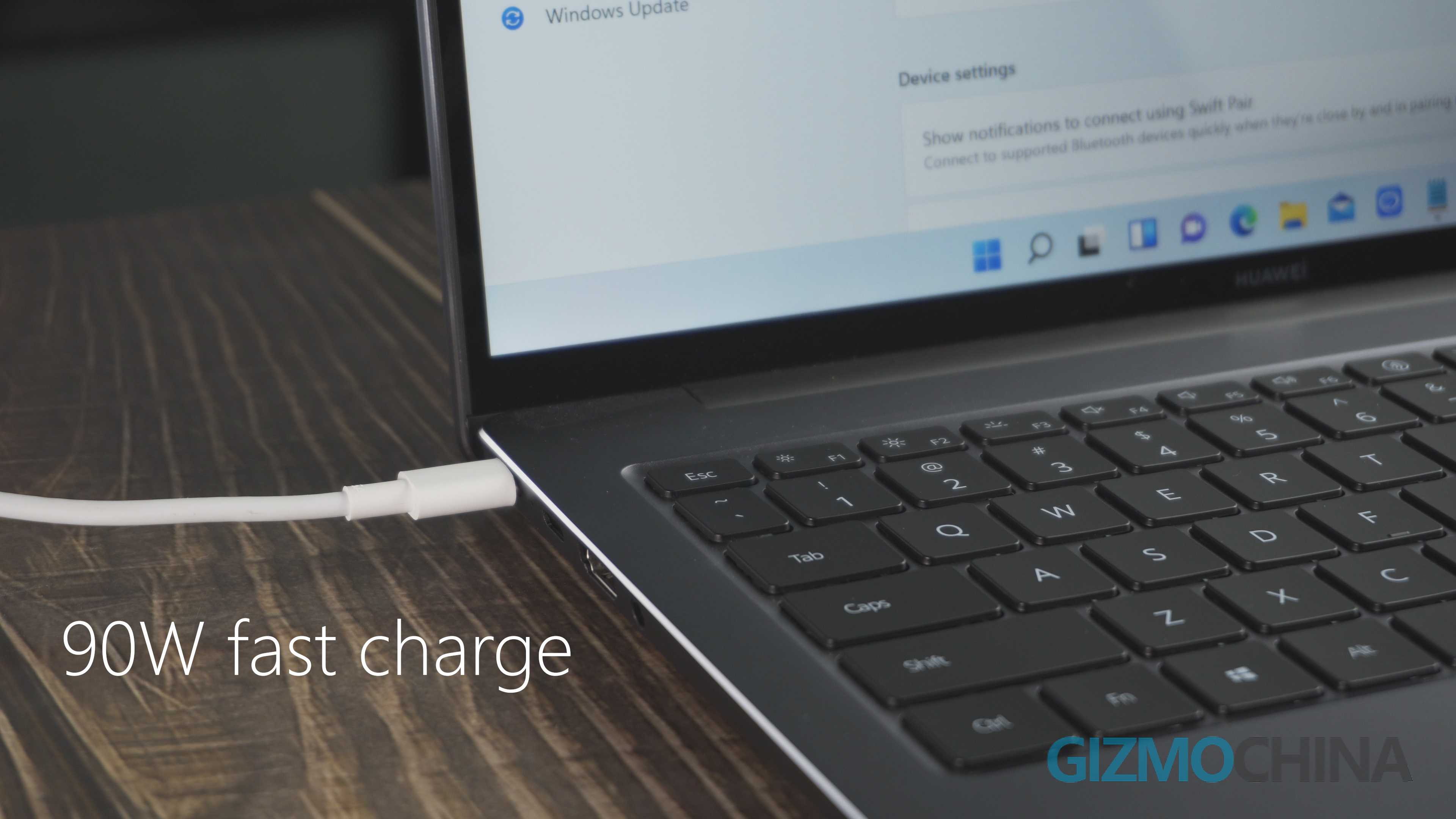
As for battery life and charging, the Matebook 14s has a 56Wh battery with an upgraded 90W fast charge. And the included 90W charger can also be used for phones and tablets. If you are going to travel, this would ensure that you can travel light. In the battery-life test of PC Mark 10, the MateBook 14s was able to continuously run for over 10 hours, which is not an easy result to achieve on such a compact notebook.
Matebook 14S Verdict
So that’s all about the Matebook 14s. To be honest, these days, except for the regular hardware upgrades, there are not many significant innovations being added to ultra-thin Windows notebooks. But on the HUAWEI Matebook 14s, we saw another possibility for laptops. The Matebook 14S turned out to be a solid control center for multi-device collaboration across all of your mobile devices like smartphones and tablets. So,in addition to decent hardware performance, the MateBook 14s definitely surprised us with its collaborative software.
So what do you think of the future of compact notebooks? Please share your thoughts down below.
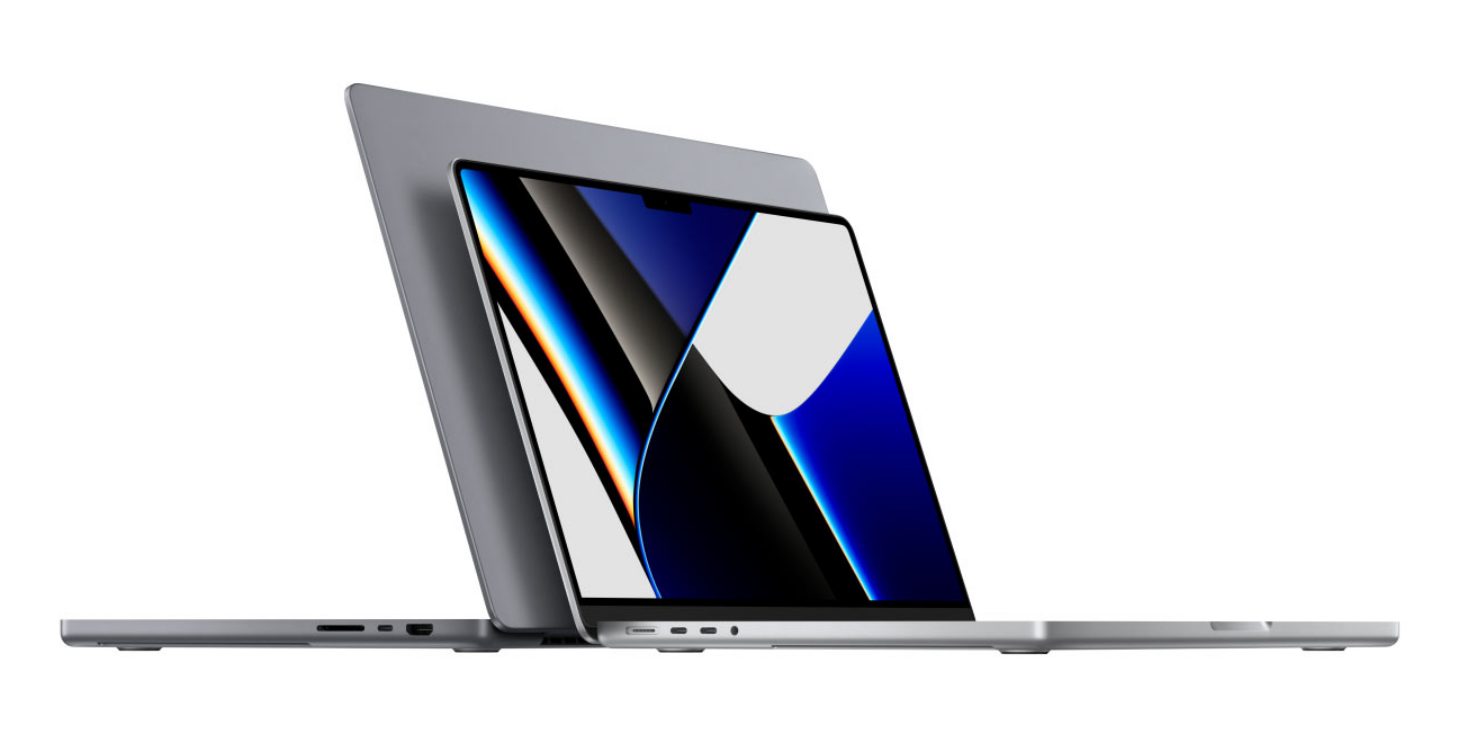
The 2021 MacBook Pro’s from Apple arrived with a significant change in design as they featured a new notch display on the front. But it seems that this notch has caused users to face issues with certain apps on their laptop, which had prompted the company to release a new support document that addresses these issues.
Image Via NoteBookCheck
For those unaware, users of the latest MacBook Pro have been facing issues with the weird behavior of certain Mac apps that have yet to be optimized for the notch display. So while the power of the new M1 Pro and M1 Max chips have been well received, the laptops in general have been offering an inconsistent experience. But now, the Cupertino based giant has released a new support document to offer a workaround for there problems.
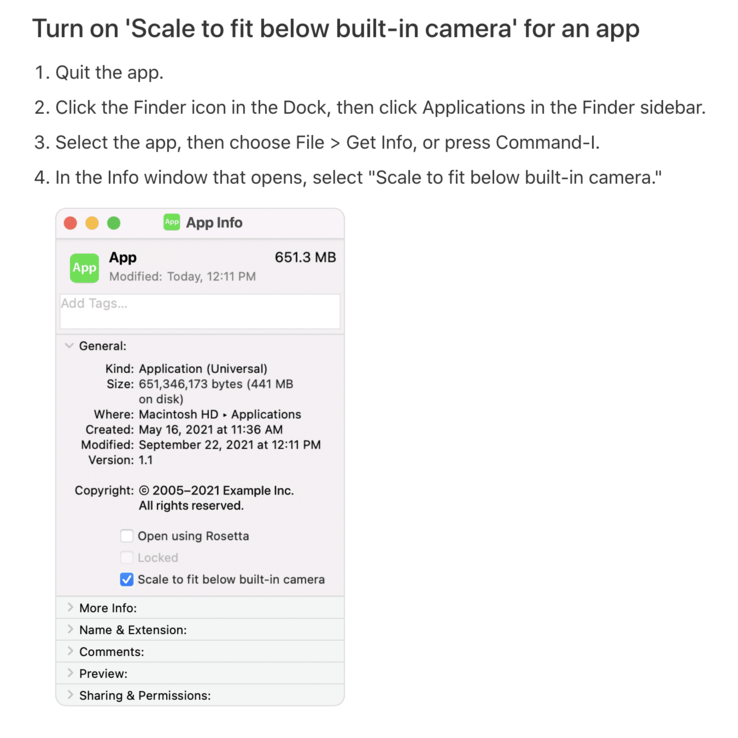
In the recently published support document, the company highlighted the “Scale to fit below built-in camera” settings option for an app. This setting stops the apps that haven’t been optimized for the new MacBook pro’s notch display from working in an unintended manner. Some of the possible erratic behaviors include menu bar items or windows appearing behind the camera housing that would hide it. Meanwhile, the other apps that share the same desktop space as the adjusted app will also appear below the camera until the app using this scaled setting has been exited.
The setting is built into the macOS and will remain as an available option for certain apps that have yet to receive optimization for the new MacBook Pros. In other words, the settings will disappear when the company officially updates these apps to better support the new notch display.
Indian smartphone shipments shrunk by 2% YoY and recorded 52 million units in sales in Q3 2021. The decline can be attributed to higher pent-up demand last year due to COVID-19. Another major contributing factor is the component shortages that worsened this quarter, thanks to brands aggressively working to secure as much stock as they could.
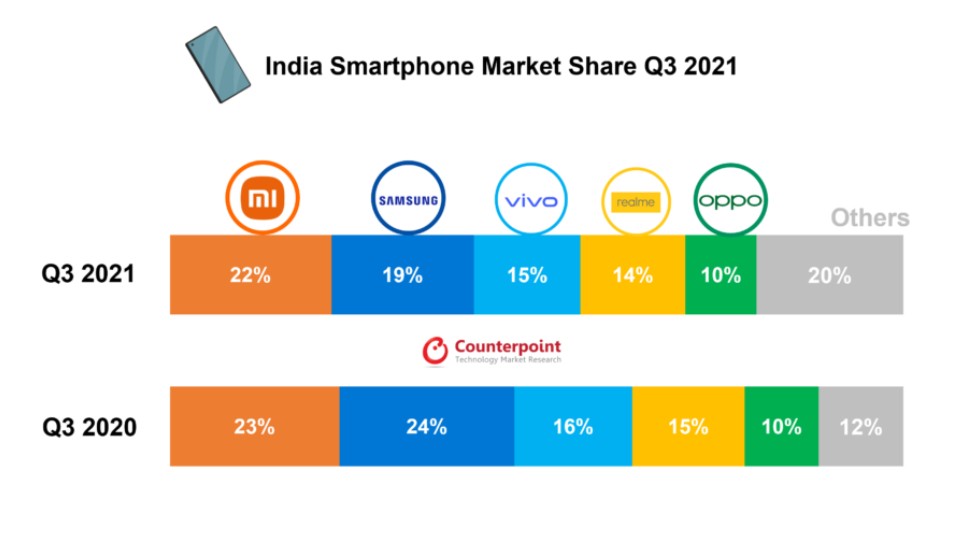
Chinese brands have continued to have an iron grip over the Indian smartphone market and held a 74% share in Q3 2021.
Among these, Xiaomi has the biggest slice with a 22% share driven by excellent sales of the Redmi 9A, Redmi 9 Power, Redmi Note 10, and Redmi 9 models. The Redmi 9A has been the best-selling model in 2021 till date. The company also recorded its highest-ever shipments in the premium segment in Q3 2021 thanks to the Mi 11x series.
Source: Counterpoint Research Market Monitor, Q3 2021
Samsung stands second with a 19% share. The newly launched Galaxy M series and Galaxy F series drove much of its sales in the online channels while the Galaxy A series sold well offline. Samsung’s USP has been support for a wide number of 5G bands on most of its 5G smartphones. The company was the top smartphone brand in the INR 10,000 – INR 30,000 segment.
Vivo ranked third in Q3 2021 with a 15% share. It became the top 5G smartphone brand for the first time ever, while remaining the top offline smartphone seller. Its premium segment sales were driven mainly by the Vivo X60, V21, and iQOO series.
Realme has secured fourth place in Q3 2021 in Indian smartphone shipments with a 14% share. It was the top 5G smartphone brand in the sub-INR 20,000 segment. The Realme 8 5G and Realme 8s 5G were the top two 5G smartphone models in the sub-INR 20,000 segment and captured nearly half of the market.
Apart from this, the Transsion Group brands (itel, Infinix, and Tecno) registered 72% YoY growth and captured a 9% share collectively in the overall India smartphone market.
Other honorable mentions include Apple and OnePlus, with Apple actually being the fastest growing brand in Q3 2021 with 212% YoY growth. The company led the premium smartphone market (> INR 30,000) with a 44% share. Strong demand for the iPhone 11 and 12 was the driving factor for the growth.
As for OnePlus, it grew 55% YoY in Q3 2021 thanks to the great reception of the OnePlus Nord series. The company also registered its highest ever shipments in India and bagged the second spot in the premium (> INR 30,000) segment.
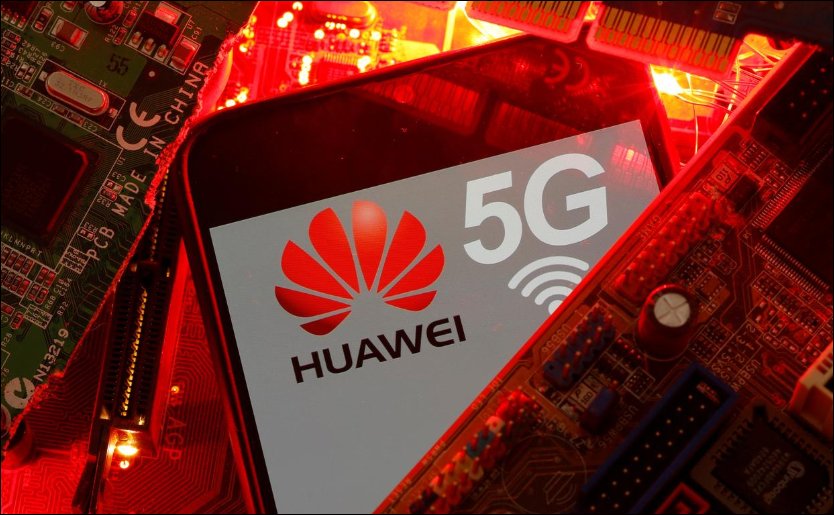
Lawmakers in the US have unanimously voted for a new bill that will tighten the reins around Huawei and ZTE. The US Senate voted earlier this week to bring to approve a legislation that will prevent the companies that are labelled as a security threat from gaining access to equipment licenses from US regulators.
According to an SCMPreport, The new bill is the Secure Equipment Act, which is the latest move from the US government to restrict the Chinese telecommunications giant. This bill was brought to the US House last week and saw a 420-4 vote and has now been sent to President Joe Biden for his signature. Notably, the latest push back from the US lawmakers arrives after it was recently found that suppliers of blacklisted Chinese brands like Huawei and SMIC were still being granted` export licenses that were worth 61 billion US Dollars.
Republican Senator Marco Rubio, “Chinese state-directed companies like Huawei and ZTE are known national security threats and have no place in our telecommunications network.” This new bill would prevent the FCC (Federal Communications Commission) from reviewing or issuing new equipment licenses to firms on the FCC’s “Covered Equipment or Services List.” For those unaware, Huawei and ZTE were placed on trade blacklist back in 2019 and were later designated as national security threats and barred from the US communications network.
Back in June, the FCC had also unanimously to advance plans to ban approvals for equipment in US telecommunications network that are made from these Chinese companies. Although, this vote was withdrawn due to strong opposition from China. Zhao Lijian, a spokesperson at China’s foreign ministry had stated that The United States, without any evidence, still abuses national security and state power to suppress Chinese companies.”
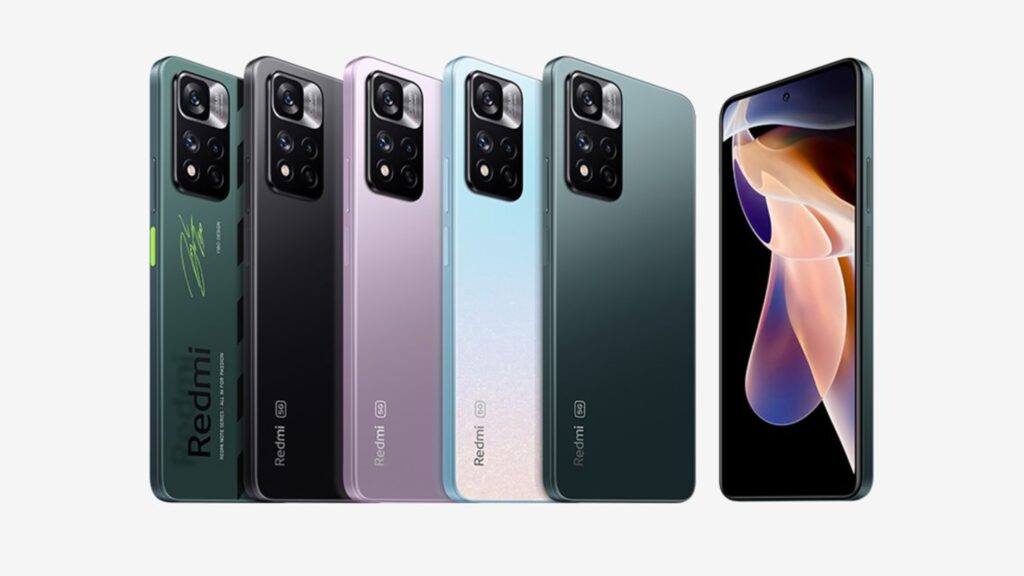
Last night, Redmi launched the Remi Note 11 series in China. The vanilla Redmi Note 11 is expected to launch as POCO M4 Pro 5G in international markets. Within hours after the announcement, a reliable tipster now reveals the marketing names of Redmi Note 11 Pro and Redmi Note 11 Pro+ outside the brand’s home country.
Redmi Note 11 Pro+
According to MIUI tipster Kacper Skrzypek (@kacskrz), Xiaomi will launch the Redmi Note 11 Pro and Redmi 11 Pro+ in India under Xiaomi branding. He says that there are no other regional variants of these phones as of now. Hence, they will most likely remain exclusive to China and India.
As far as the names for India are concerned, Redmi Note 11 Pro will be called Xiaomi 11i, while the Redmi Note 11 Pro+ will release as Xiaomi 11i HyperCharge.
Additionally, in select global markets, these new Redmi handsets will be sold under their original marketing names.
This is not the first time Xiaomi has rebranded a Chinese Redmi Note for India. The Redmi Note 9 Pro 5G from late 2020 is sold as Mi 10i 5G in the country.
The Redmi Note 11 Pro and the Redmi Note 11 Pro+ have an identical set of specifications. The only major differences between the two are battery size and fast charging capabilities.
The Pro comes with a 5,160mAh battery and 67W fast charging support. On the other hand, the Pro+ is backed by a smaller 4,5000mAh battery with support for 120W fast charging.
Xiaomi is yet to release the Xiaomi 11T Pro in India. Hence, the country does not have a 120W fast-charging smartphone. Now, as Redmi Note 11 Pro+ is set to debut in the region as Xiaomi 11i HyperCharge, it will be interesting to see which one will make entry first.
Apple has historically been one of the strongest brand in terms of the brand loyalty its receives from its customers. Now, a new data from analysts at Consumer Intelligence Research Partners has revealed that the company has managed to retain its high loyalty rate for iPhones.
The report stated that 90 percent of all iPhone buyers remain with the Cupertino based giant’s smartphones. CIRP’s data reveals that the company account for nearly half of all smartphone sales in the US in the past three years. On the other hand, South Korea’s Samsung managed to capture just a little more than half of Android sales in the same region. The report added that Apple accounts for 43 percent of US smartphone sales while Samsung came in at 31 percent and LG at 9 percent in the last three years.
But in terms of loyalty, Apple dominated the market with the 90 percent of iPhone users remaining with the brand. Meanwhile, Android smartphone brands do not rank just as high, with customers shifting to other brands as moving in the Android ecosystem is easier. Despite this, the overall loyalty for Android in general was also about 90 percent. So the data isn’t indicative of which ecosystem is more dominant or more popular.
OPPO is expected to announce the Reno7 series of smartphones in China in November. Initially, it was speculated that the lineup has three models such as Reno7, Reno7 Pro, and Reno7 Pro+. However, a recent leak claimed that the Chinese manufacturer will not be launching the Pro+ model. A Chinese tipster has now tipped the specs of the Reno7 series of smartphones. The leak reveals that the Reno7 family will have a device named Reno7 SE, which will be the most affordable phone in the series.
OPPO Reno7 SE specifications (Rumored)
The Reno7 SE has a 6.43-inch E3 AMOLED FHD+ 90Hz display, Dimensity 920 chipset, 8GB / 12 GB of LPDDR4x RAM, 128 GB / 256 GB of UFS 2.2 storage, a 4,300mAh battery that supports 65W fast charging. It has a 32-megapixel (Sony IMX615) front camera, and a 64-megapixel (OmniVision OV64B) + 8-megapixel (Sony IMX355) + 2-megapixel (portrait) triple camera unit.
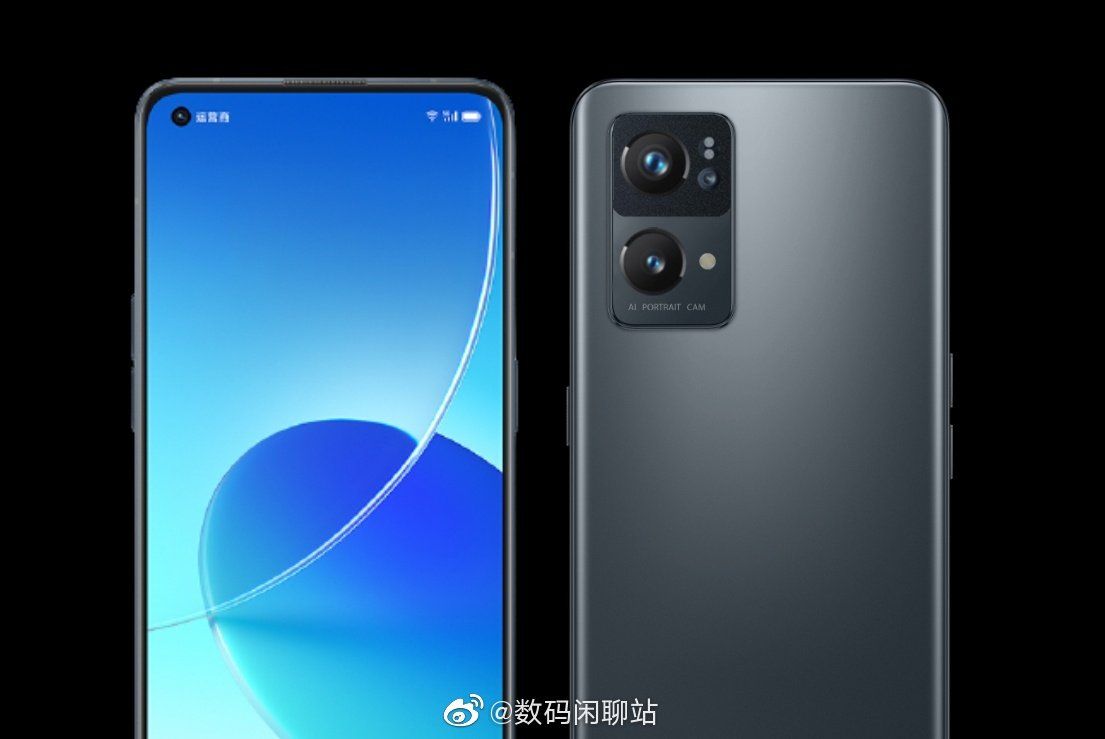
Alleged Reno7
OPPO Reno7 specifications (Rumored)
The Reno7 has a 6.5-inch OLED FHD+ 90Hz screen, Dimensity 1200 chip, 8 GB / 12 GB of LPDDR4x RAM, 128 GB / 256 GB of UFS 3.1 storage, and a 4,500mAh battery that supports 65W fast charging. For photography, it has a 32-megapixel (Sony IMX615) front camera, and 50-megapixel (Sony IMX766 with OIS), 16-megapixel (Sony IMX481 ultrawide) + 2-megapixel (portrait) triple camera unit.
OPPO Reno7 Pro specifications (Rumored)
The Reno7 Pro may feature a 6.5-inch curved edge OLED screen that offers FHD+ resolution and a 120Hz refresh rate. It is equipped with Snapdragon 888, 8 GB / 12 GB of LPDDR5 RAM, 256 GB / 512 GB of UFS 3.1 storage, and a 4,500mAh battery that supports 65W fast charging. It will feature a 32-megapixel (Sony IMX615) front camera, and a 50-megapixel (Samsung GN5 with OIS) + 64-megapixel (OmniVision OV64B ultrawide) + 13-megapixel (Samsung S5K3M5 telephoto) triple camera unit.
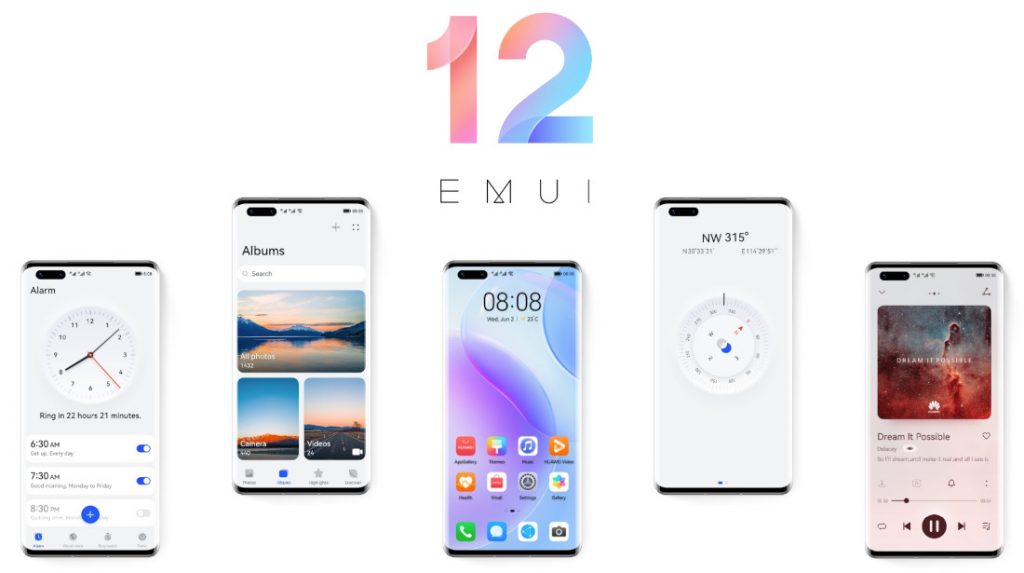
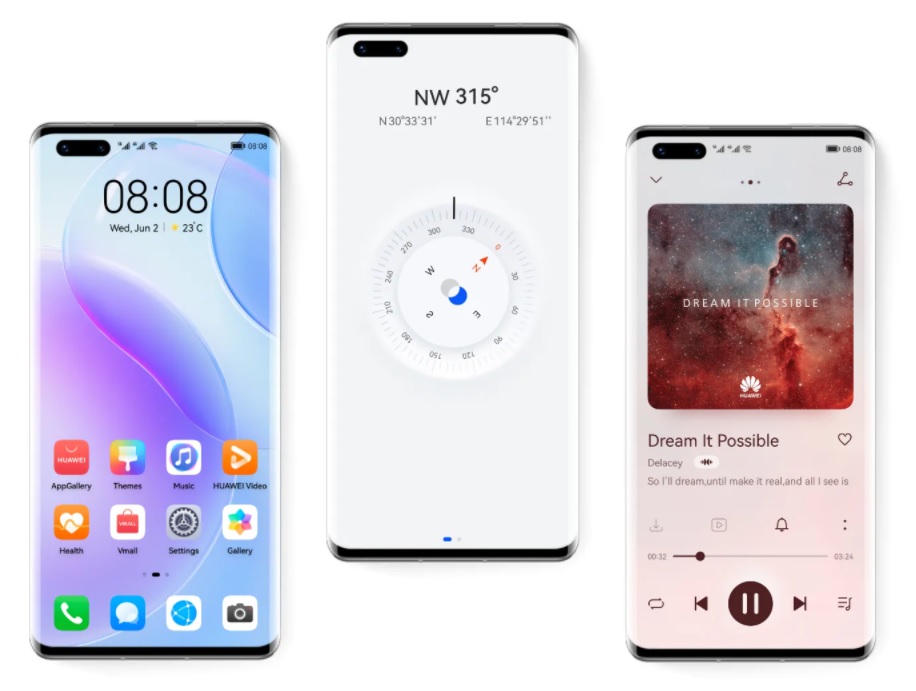
Along with the Huawei Nova 9 smartphone launch in Europe last week, the Chinese technology giant also introduced its latest EMUI 12 custom user interface as the next major update for its smartphones.
Today, the company has shared the list of smartphones that will be getting the EMUI 12 update, starting from the first half of next year, i.e. H1 2022. It is expected to start the beta testing for the flagship Mate-series and P-series phones in the coming days or weeks.
Here is the list of Huawei smartphones set to receive the new update:
Mate 40 Pro
P40 Pro+
P40 Pro
P40
Mate Xs
Mate 30 Pro
Mate 30
P30 Pro
P30
Mate 20 Pro
Mate 20 RS
Mate 20 X 5G
Mate 20 X
Mate 20
P20 Pro
P20
Mate 10 Porsche Design
Mate 10 Pro
Mate 10
nova 7
nova 7 SE
nova 7i
nova 5T
nova 4
nova 4e
Y9 Prime 2019
Y9s
Y8p
This custom skin for Android means that Huawei is keeping EMUI around for its smartphones launched outside China. In its home country, the company is using its own HarmonyOS for its devices and isn’t limited to just smartphones.
The newly announced EMUI 12 comes with a refreshed user interface and tons of customizations. It now has a cleaner, minimalist, and realistic interface that makes use of three colors — white, black, and blue.
It not only allows users to adjust the font size but also its weight just with a slider. There’s also an easy access control panel allowing users to control playback, get access to Bluetooth and Wi-Fi settings as well as shortcuts, and connected devices on Device+.
Huawei also introduced Device+, which is a feature that allows for easy collaboration between Huawei devices, including multi-screen collaboration, making calls, sending messages, and viewing photos, and more.
The EMUI 12 also comes with improved performance, better response time, and smooth app startups, as well as better and improved security features. You can check out all the new features of this new EMUI by clicking here.
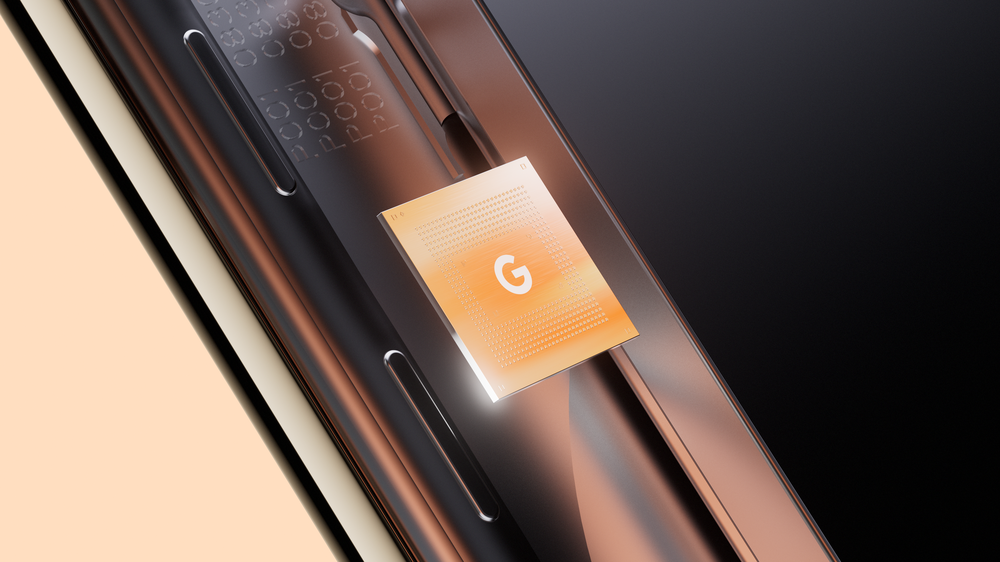
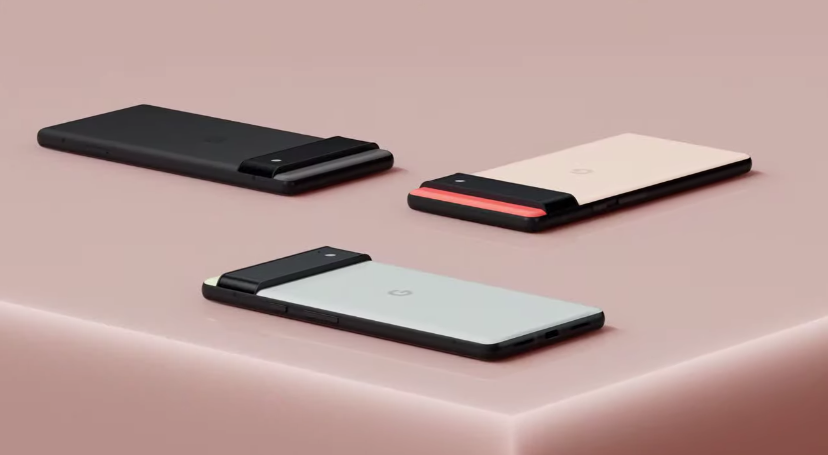
Google has just recently launched its Pixel 6 series, which feature the company’s proprietary custom made Tensor chips. Now, new information has surfaced that hints at the brand working on the second generation of Tensor chips that would likely ship with the Pixel 7 series.
While the Pixel 6 series has just been released in the market, folks at 9To5Googlerecently spotted a reference to a new Pixel related codename, “Cloudripper.” In other words, we only have a codename to go on for now, but 9To5Google believes that this might be for the chip that powers the Pixel 7 series rather than the Pixel 7 and the Pixel 7 Pro. So, the Cloudripper could be the internal name used for the developer board that relates to hardware in common between the two smartphone models.
Previously, the codename “Slider” was also common between the Pixel 6 and Pixel 6 Pro as well. So, Cloudripped could be connected to a second generation version of the Tensor chips from the search engine giant that has a model number “GS201.” For those unaware, the Pixel 6 series’ Tensor chips arrived with a “GS101” model number. Meaning, the rise of 100 in the model number could very well be the next gen Tensor chips.
Since the Cloudripper has already been spotted in Pixel related apps right now, it arrives as no surprise that the company might have already began work on the second generation of Tensor GS201 chips. Keep in mind that it is still too early to offer any concrete statements at the moment, so stay tuned for more updates.
Xiaomi is gearing up to launch new premium smartphones in the near future. The Xiaomi 12 series is in the news for the past few days. At the same time, we are also hearing about the Redmi K50 series. Amidst this, an unknown device from the company codenamed Munch gets spotted in MIUI code.
Redmi K40
According to Xiaomiui, a new Xiaomi handset with codename Munch has appeared in MIUI code. This phone bears model number L11R.
The smartphone will sport an FHD+ (2400 x 1080 pixels) with a 120Hz refresh rate. It is mentioned to have a side-mounted fingerprint sensor. Hence, there’s a chance that it might have an LCD panel although recent Xiaomi group devices feature a combination of AMOLED display and side-mounted fingerprint sensor.
Interestingly, the phone will be powered by a Qualcomm SM8250-based chipset. Xiaomiui suggests that this silicon could be unreleased Snapdragon 870+. For those unaware, Snapdragon 870 itself is a plus variant of Snapdragon 865+.
Last but not least, the handset is said to arrive with a triple rear camera setup consisting of a primary wide-angle sensor, an ultra-wide unit, and a macro snapper.
Xiaomiui suggests that Xiaomi Munch could go official as Redmi 50S in China and Xiaomi 12T in international markets. However, we would like you to consider this guess with a pinch of salt.
We expect to learn about the actual marketing name of the device once we near its launch.
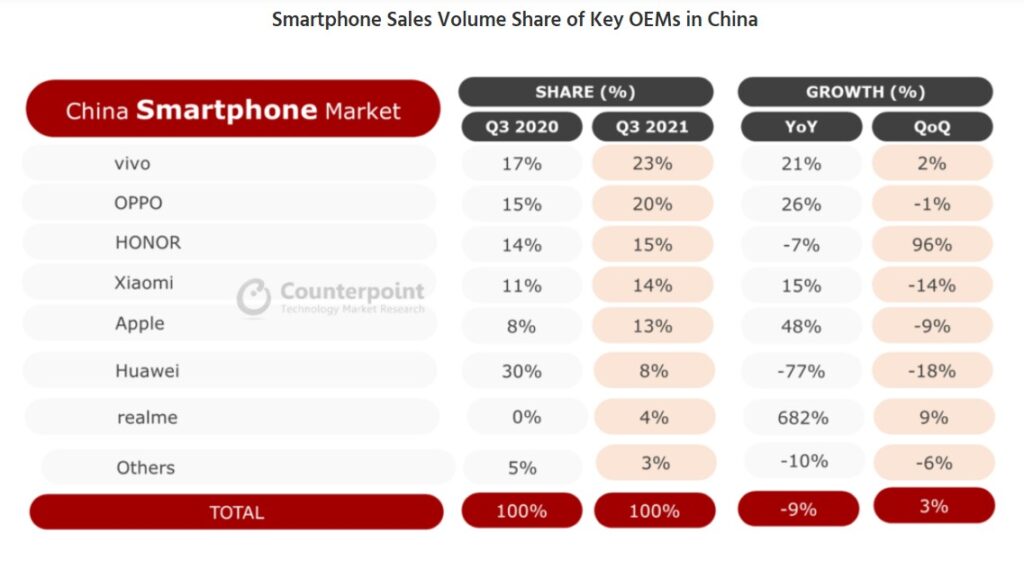
The Chinese smartphone market may have declined 9% YoY but has seen a 3% QoQ increase in sales last quarter (Q3 2021). The growth has still been uninspiring though thanks to a weak consumer demand coupled with component shortages, especially 4G SoCs.
While the overall smartphone sales may have been weak, there has been quite a reshuffle, mainly due to Honor‘s comeback (via: Counterpoint Research). The company has overtaken Xiaomi with a QoQ growth of an astonishing 96%. It now holds a 15% share, undercutting Xiaomi by just 1%. Vivo and Oppo have continued to lead the market with 23% and 20% shares respectively.
However, Oppo and Vivo’s growth is backed primarily by successful budget phones. Vivo was driven by the Vivo S10/S10 Pro, Y31s, and Y52s, while OPPO was mainly driven by the OPPO Reno 6, OPPO A55, and OPPO A93. Huawei may have taken the backseat following the Huawei ban but Chinese OEMs have struggled to fill in the hole left by the company, and are still limited to the sub-$500 range.
Tackling the high-end price range after the downfall of Huawei thus continues to remain a challenge for Chinese OEMs. Huawei was after all one of the few Chinese companies that had gained global recognition in the flagship segment, thanks to it giving much more than what the competition was offering at the same price. Take the Huawei Mate and P series for example.
Therefore, while Chinese OEMs continue to struggle to try to prove themselves in the premium segment, Apple iPhones are still the most-preferred high-end smartphones by consumers in China. There has been a 9% QoQ dip in terms of sales for the company though in China, indicating that other companies could be catching up.
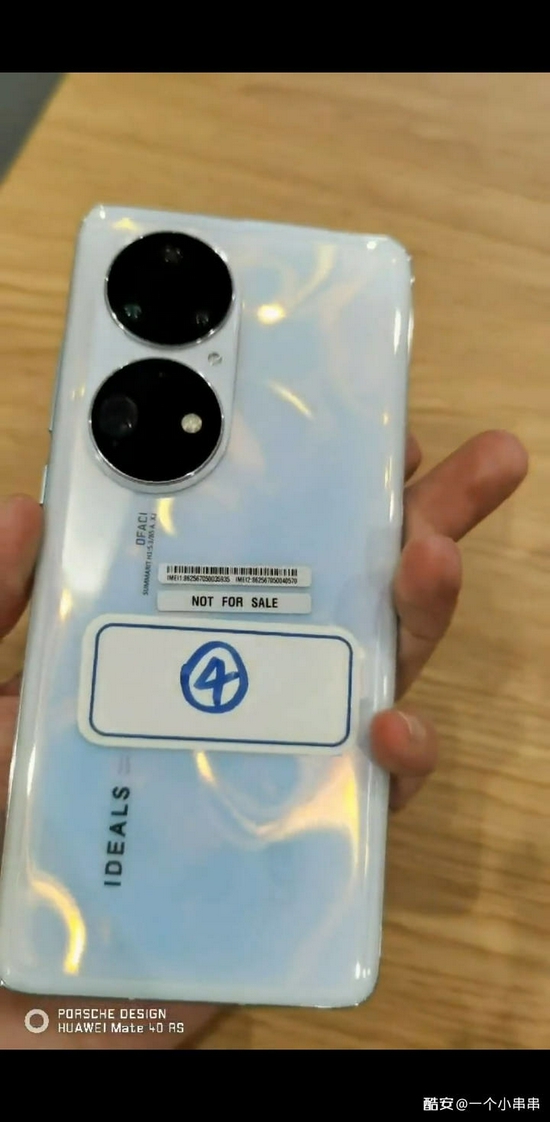
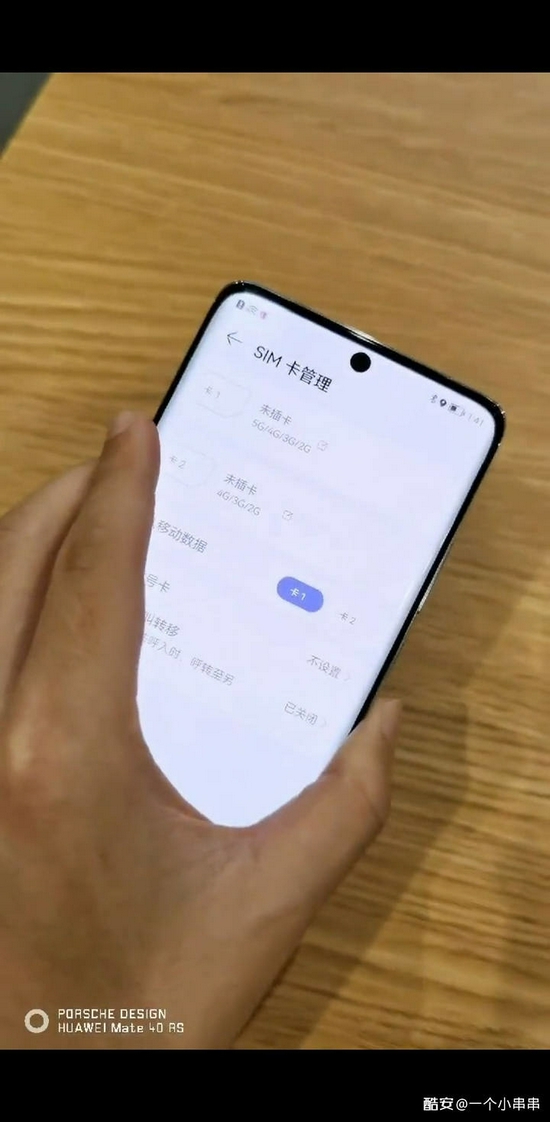
Earlier this year, Huawei had launched its highly anticipated P50 flagship series of smartphone. While the device offered top notch specs and features it lacked 5G support, but now, live images of an internal testing variant of the P50 Pro has just surfaced online, which supports 5G networking.
The image was shared by @一个小串串 and we can tell that the device is a testing version as it sports the Chinese tech giant’s IDEALS logo. This signifies that it is a non retail version that is not made for sale and is used by the company’s internal testing. Furthermore, the @一个小串串 added that the device arrives with HarmonyOS, a HiSilicon Kirin 9000 series SoC with a complete RF chip.
Unfortunately, finer details regarding this device wasn’t revealed, although, the tipster added that the flagship smartphone might also feature an IMX700Y sensor from Sony. For those unaware, the P50 Pro launched in a 4G only variant, which meant it lacked 5G support that has since become a staple in the smartphone industry. But due to the ban, the smartphone was limited to LTE networking through a 4G modem.
Keep in mind that this is still just an unconfirmed report as of right now, so take it with a pinch of salt. Although, a 5G variant of the smartphone was expected to launch sometime in the future. Furthermore, the P50 series is looking for a global release early next year so we might be hearing more about this 5G variant soon. So stay tuned for more updates.
iQOO is said to be working on the iQOO 9 series of smartphones. The Chinese manufacturer announced the iQOO 8 and iQOO 8 Pro smartphones in August. Hence, it is likely that the iQOO 9 lineup may debut after a couple of months. Probably, it will be unveiled first in China by January 2022. Ahead of the launch, the iQOO 9 series of smartphones are busy bagging some certifications.
The iQOO 9 Pro’s Indian variant with model number I2022 was spotted at the IMEI database earlier this month. Now, the vanilla iQOO 9 has appeared at the IMEI database with the V2171A model number. It is not the Indian model, but a variant that will be heading to China and some other countries.
At present, there is no information on the specs of the iQOO 9 and iQOO 9 Pro. The iQOO 7 powered by the Snapdragon 888 chip was announced back in January this year. Hence, it is likely that the iQOO 9 series will be featuring the next-generation Snapdragon 8-series flagship chipset.
In related news, iQOO India is gearing up to launch the iQOO 8 and iQOO 8 Legend in India. With October month ending soon, it appears that the iQOO 8 duo will land in India in November. The iQOO 8 and 8 Legend will be rebranded versions of the iQOO 8 and 8 Pro.
The iQOO 8 has a 6.56-inch FHD+ AMOLED display, Snapdragon 888, and a 4,350mAh battery, whereas the 8 Pro has a 6.7-inch QHD+ AMOLED LTPO screen, Snapdragon 888 Plus, and a 4,500mAh battery. The vanilla model has a 50-megapixel (main) + 13-megapixel (ultrawide) + 13-megapixel (telephoto) triple camera unit, whereas the Pro model gets a 50-megapixel (main, with gimbal OIS) + 48-megapixel (ultrawide) + 16-megapixel (telephoto) triple camera system. Both phones offer common features like a 16-megapixel front camera and a 120W fast charging support.
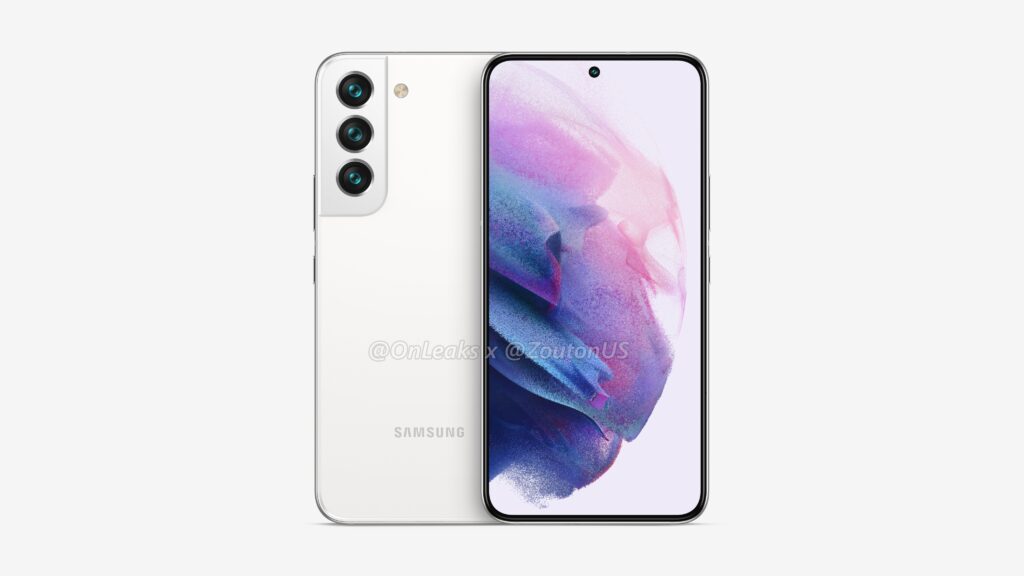
The Galaxy S22 series is now frequently in the news. We have been learning more details about Samsung’s next-gen flagship smartphones with their every new appearance on the web. The latest report regarding these phones reveals their pre-order timeline.
Samsung Galaxy S22 | Source: @OneLeaks via Zouton
According to the sources of reliable tipster Jon Prosser (Front Page Tech), the upcoming Samsung Galaxy S22 series will be available for pre-orders in the sixth week of 2022. This means customers will be available to pre-order the smartphones from the second week of February.
The pre-order timeline revealed by the leaker could be mostly for the US although he does not specify the country. That’s because his leaks are chiefly targeted at the US audience, Anyway, since Samsung is known for taking pre-orders in multiple regions alongside the US, the timeframe should be applicable to other usual first-wave countries as well.
The Galaxy S22 series was initially reported to launch in January. But that does not appear to be the case anymore. Because Samsung will be releasing the Galaxy S21 FE in the first month of 2022 instead.
Multiple sources have suggested that the Galaxy S21 FE will go official in early January. Jon Prosser even says that the handset will launch on January 11. Generally, when Prosser mentions ‘launch date’, he means the ‘sale date’.
The Galaxy S21 FE was initially expected to release alongside Galaxy Z Fold3 and Galaxy Z Flip3 but that never happened. The phone later went through multiple delays and as a result, Samsung now appears to have delayed the Galaxy S22 series from January to February.
We use cookies on our website to give you the most relevant experience by remembering your preferences and repeat visits. By clicking “Accept”, you consent to the use of ALL the cookies.
This website uses cookies to improve your experience while you navigate through the website. Out of these, the cookies that are categorized as necessary are stored on your browser as they are essential for the working of basic functionalities of the website. We also use third-party cookies that help us analyze and understand how you use this website. These cookies will be stored in your browser only with your consent. You also have the option to opt-out of these cookies. But opting out of some of these cookies may affect your browsing experience.
Necessary cookies are absolutely essential for the website to function properly. This category only includes cookies that ensures basic functionalities and security features of the website. These cookies do not store any personal information.
Any cookies that may not be particularly necessary for the website to function and is used specifically to collect user personal data via analytics, ads, other embedded contents are termed as non-necessary cookies. It is mandatory to procure user consent prior to running these cookies on your website.