Founder of audio accessories maker Nothing, Carl Pei has accused an unnamed competitor of its ear (1) earbuds of attacking the company’s supply chain for the product. Pei made the revelation in a blog post to mark the first anniversary of the founding of the company. Obviously, as per the Pei blog post, the company has seen tremendous growth in the first year of its operation and has an overall great outlook, even if industry watchers feel the founder’s optimism may be overstretching the reality.
Pei stated that a major competitor was attacking the Nothing brand in the supply chain by trying to block the company’s access to important components needed to build the ear (1) earbuds. He also alleged that a proximate reason for the alleged action by the competitor could be the price tag of the Nothing ear (1). With loads of functionality available in the Nothing ear (1) including active noise cancellation, its price of $99 was seen as highly competitive for a start. Much of the established products with similar features were priced up to or even more than twice the price of the ear (1).
Pei says the goal within its first year of operations was to make the Nothing brand to be visible and this has been achieved. The Nothing ear (1) earbuds priced at $99, in the words of the founder, are selling like hotcakes, with up to 320,000 orders received for the true wireless earbuds since the product unveiling. About 180,000 of the Nothing ear (1) earbuds have been shipped so far, with up to 600,000 units forecasted to be shipped overall. The company has surmounted several challenges culminating in its formation and eventual manufacture of the Nothing ear (1) true wireless earbuds with ANC.
Pei continues to project an improved second year for the company and there are hints that the company may release a smartphone soon. This will shift the perception of the company as an audio/ headphone company and open it up for more investments. One note reminder however is apt – Carl Pei has had a seemingly flawless performance as the co-founder of OnePlus, and he could well replicate the OnePlus success story with his new company.
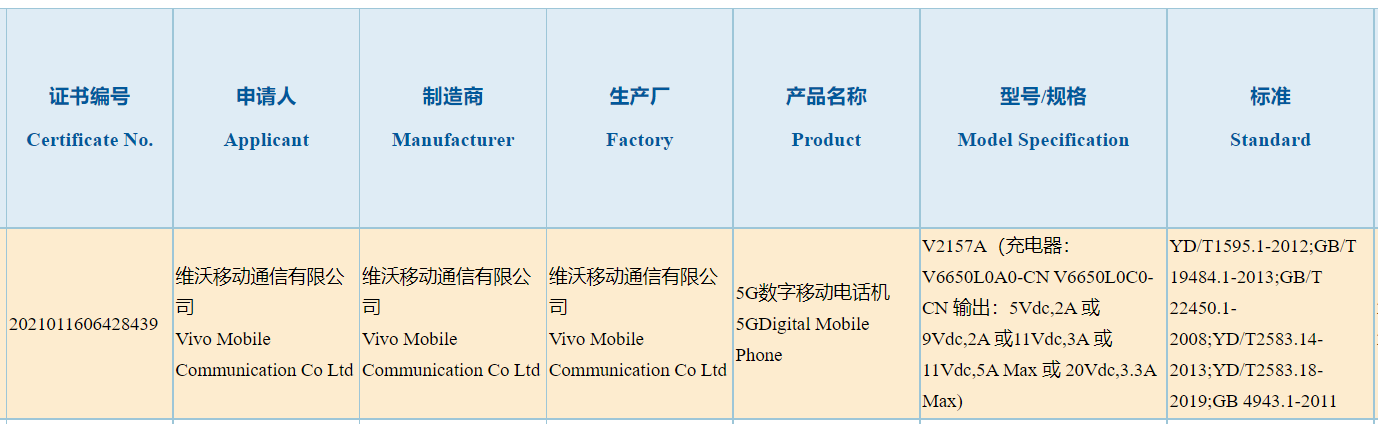
iQOO is reportedly working on a new phone called the iQOO Neo6 SE. This device is expected to debut in November in China. A new Vivo smartphone with model number V2157A has been certified by the 3C authority of the country. The previously seen IMEI database listing revealed that it will be debuting in the market with the iQOO Neo6 SE.
The 3C listing of the V2157A device reveals that it will be a 5G-ready phone. It may ship with a 66W fast charger. The listing has no other information on its specifications.
A recent leak revealed that the iQOO Neo6 SE will come equipped with the Snapdragon 778G Plus chipset. It is expected to arrive in three color variants. Unfortunately, there is no other information available on the other specs of the Neo6 SE. It is advisable to wait for further reports to know more about the Neo6 SE.
Another Vivo phone with model number V2154A was also approved by the 3C certification site. This phone is expected to arrive with support for 66W fast charging. There is no word on the final moniker of the device.
iQOO is also said to be working on the iQOO 9 series of the smartphone. The vanilla iQOO 9 with model number V2171A was spotted at the IMEI database last week. Earlier this month, the Indian variant of the iQOO 9 Pro with the I2022 model number was also spotted on the same platform. The company is expected to announce the iQOO 9 series in January 2022.
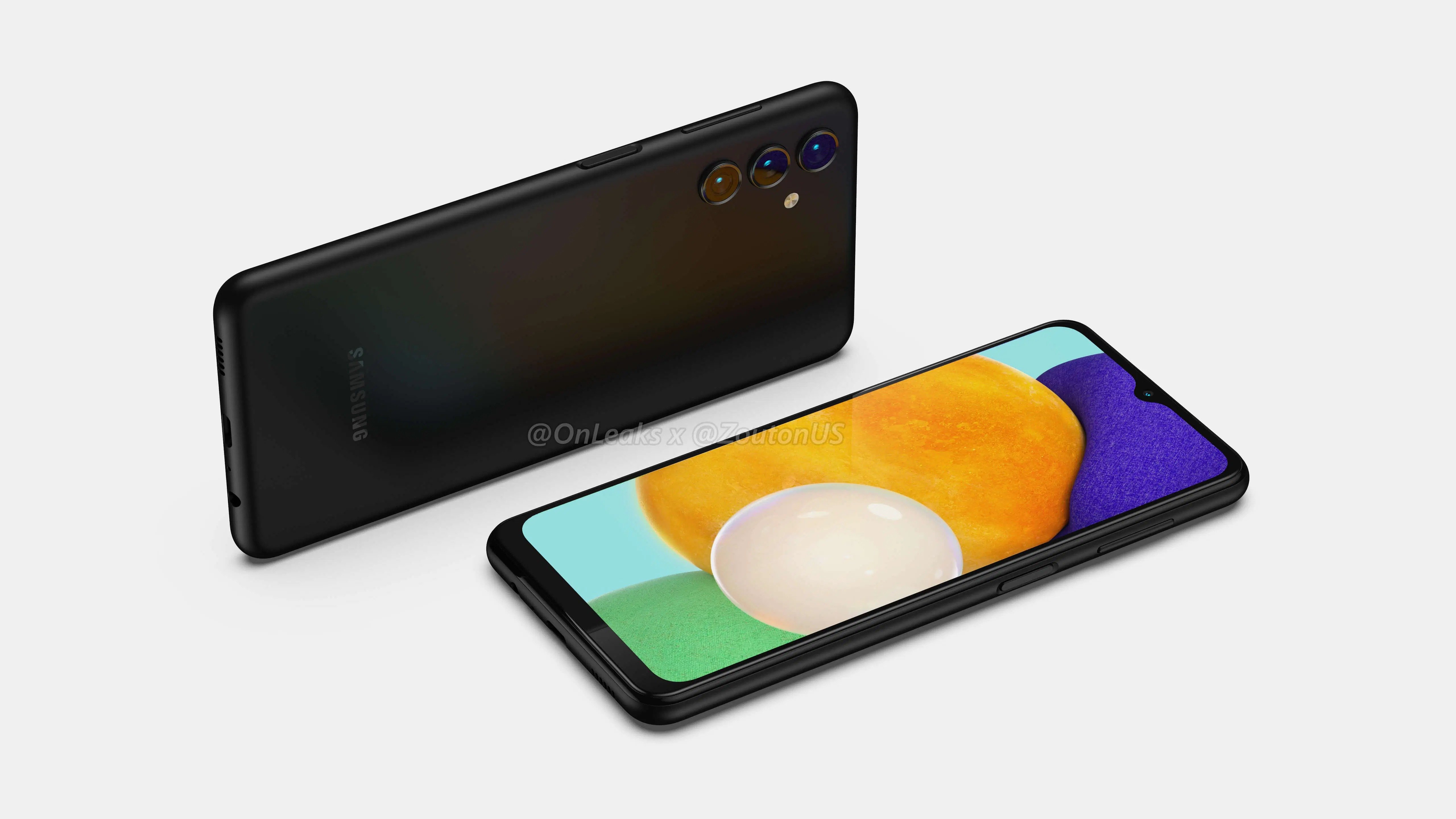
Since the last month, the rumor mill has been spilling information on the specs of the upcoming Samsung Galaxy A13 5G smartphone. Today, tipster Anthony took to Twitter to share the key specs of the smartphone.
Samsung Galaxy A13 5G specifications
The tipster revealed that the Galaxy A13 5G has a 6.48-inch LCD panel that offers a Full HD+ resolution. Its CAD renders that appeared earlier his month revealed that it features a waterdrop notch display.
There is no word on the front camera of the smartphone. Its rear camera setup has a 50-megapixel primary camera, a 5-megapixel ultrawide camera, and a 2-megapixel depth sensor.
Galaxy A13 5G renders by Steve Hemmerstoffer
The Galaxy A13 5G will be driven by the Dimensity 700 5G. To recollect, the handset was spotted with the D700 chip earlier this month. It has a 5,000mAh battery that carries support for 25W fast charging. For security, it has a side-facing fingerprint scanner.
The A13 is likely to arrive in three RAM variants such as 4 GB, 6 GB, and 8 GB. It may come in storage choices like 64 GB and 128 GB. The other details of the phone are under wraps.
Galaxy A13 5G pricing (Rumored)
A report from last month claimed that the Galaxy A13 5G could be the cheapest 5G-ready phone Samsung. The new leak claims that the Galaxy A13 5G may cost around $249. It will be replacing the Galaxy A12 from last year.
Gigaset Communications is a former arm of Siemens and it has launched its latest smartphone, the GS5 with a €299 price tag. The German smartphone company is not popular across several markets but has a pretty strong presence in parts of Europe.
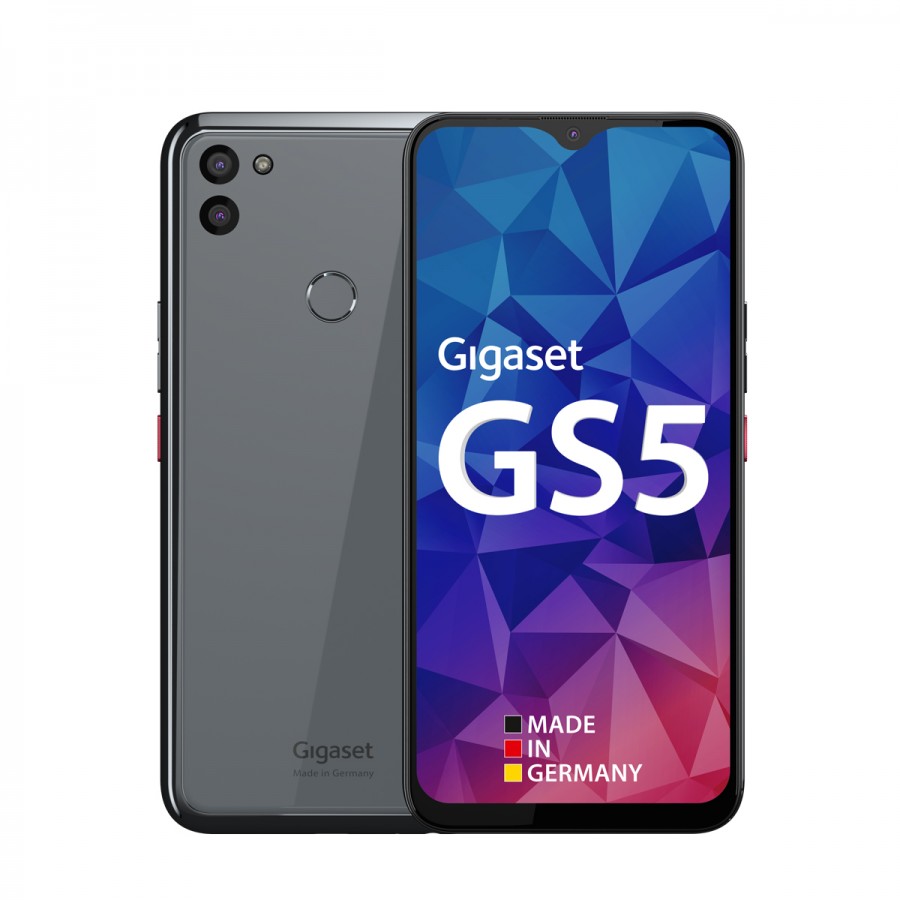
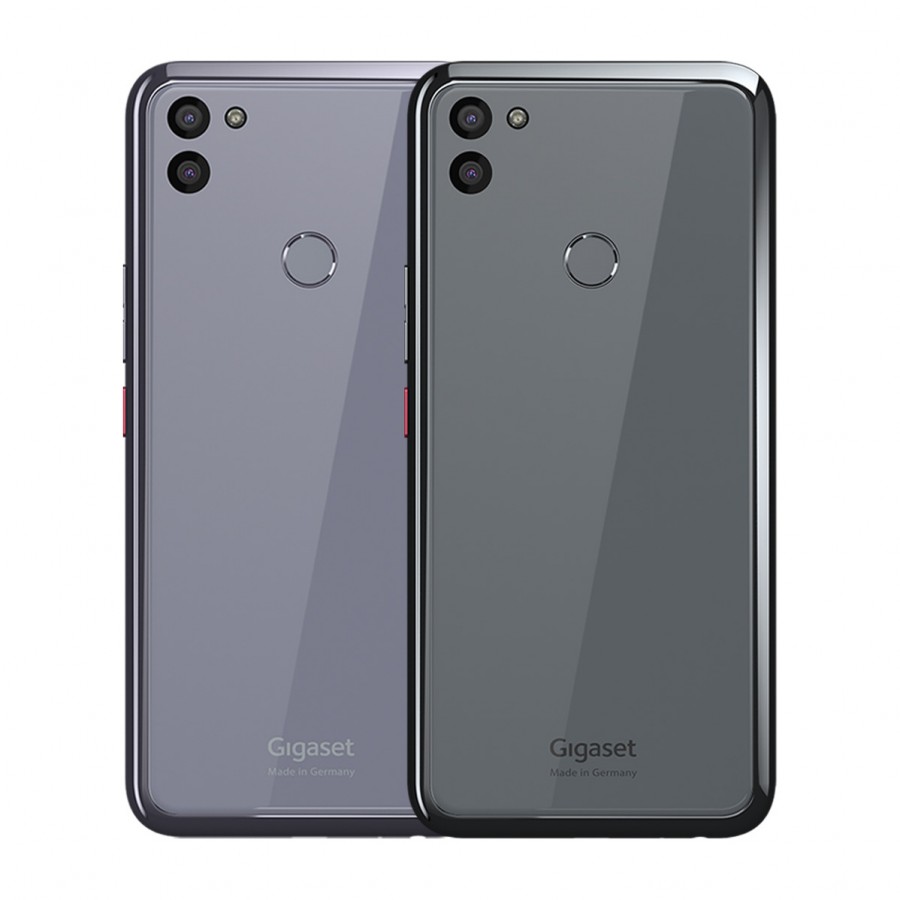
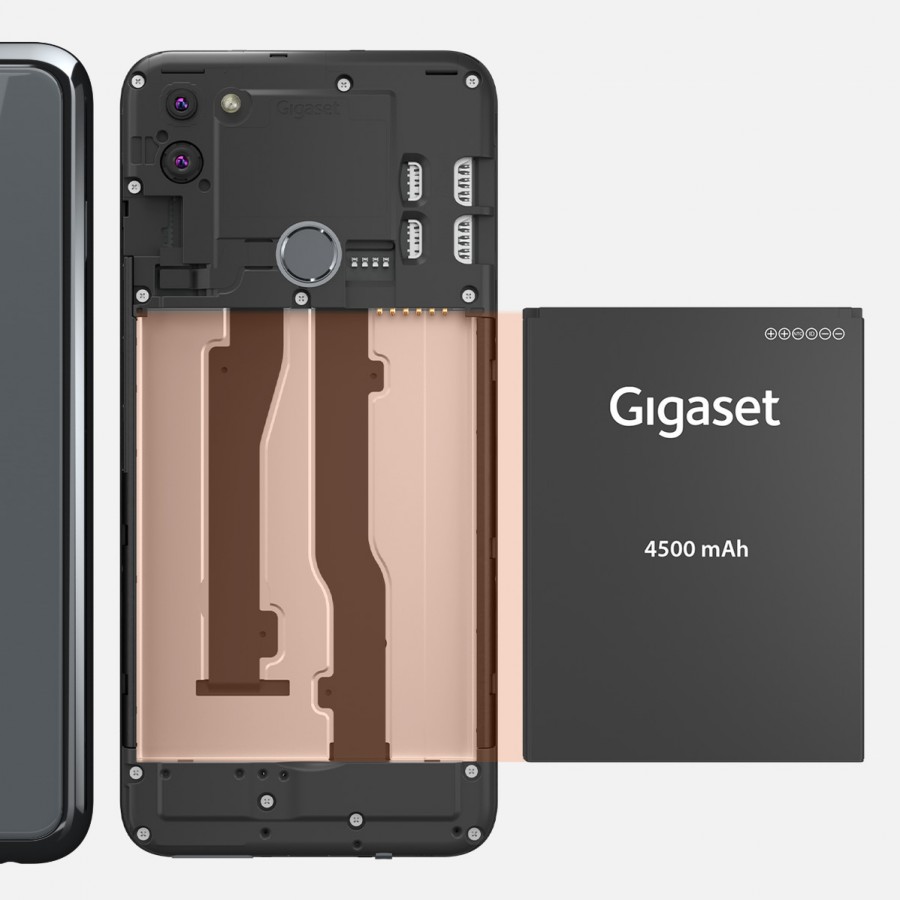
Gigaset has a broad lineup of rugged, mid-range smartphones. The GS5 features an eye-catching curved design with flush rear cameras and a removable 4,500 mAh battery. The removable battery is something uncommon in most smartphones in recent times. The display also holds a waterdrop notch design.
1 of 2
The Gigaset GS5 has a 6.3-inch full HD+ waterdrop notch display, a 16MP selfie camera, and a 48MP main camera. It is powered by MediaTek’s Helio G85 chipset, has 4GB of RAM and 128GB internal storage. The internal storage can be scaled up further with a microSD card.
There is an 8MP ultrawide snapper to complete the triple camera setup, together with an LED flash at the back. The GS5 comes in two colors: dark titanium grey and light purple.
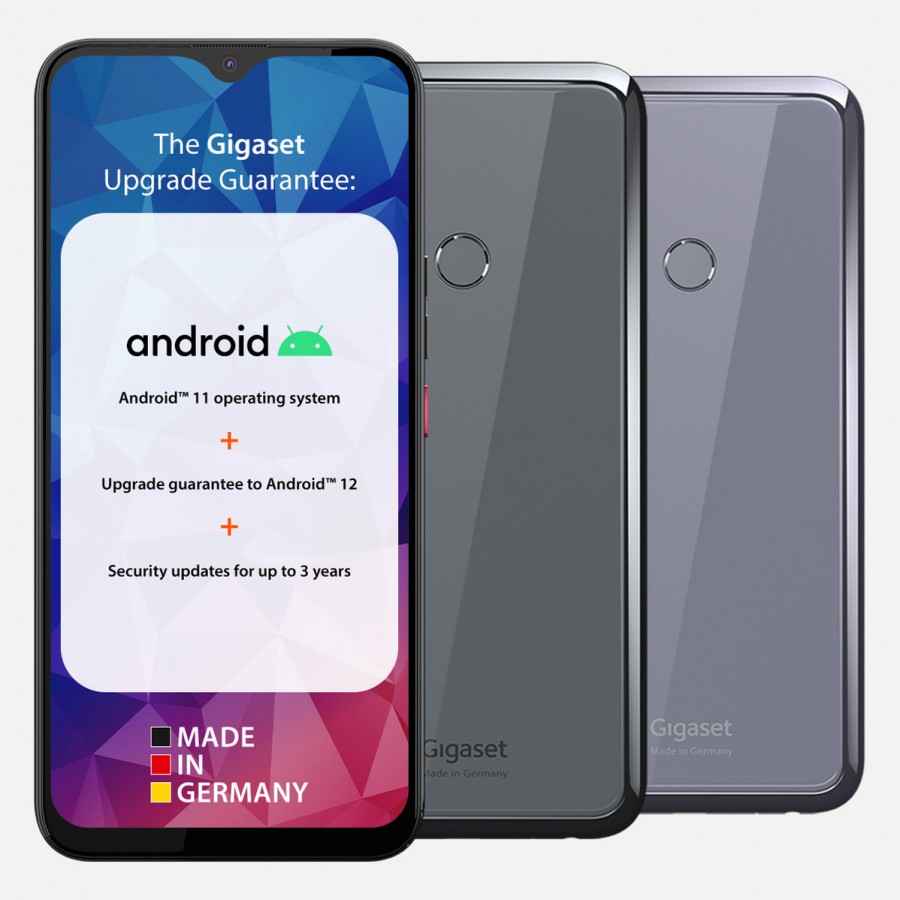
The GS5 will come with Android 11 OS with a guaranteed update to Android 12 in due course. The Gigaset GS5 also has a fingerprint scanner. The dual SIM tray also houses the microSD slot, while the other openings are for the NFC and headphone jack.
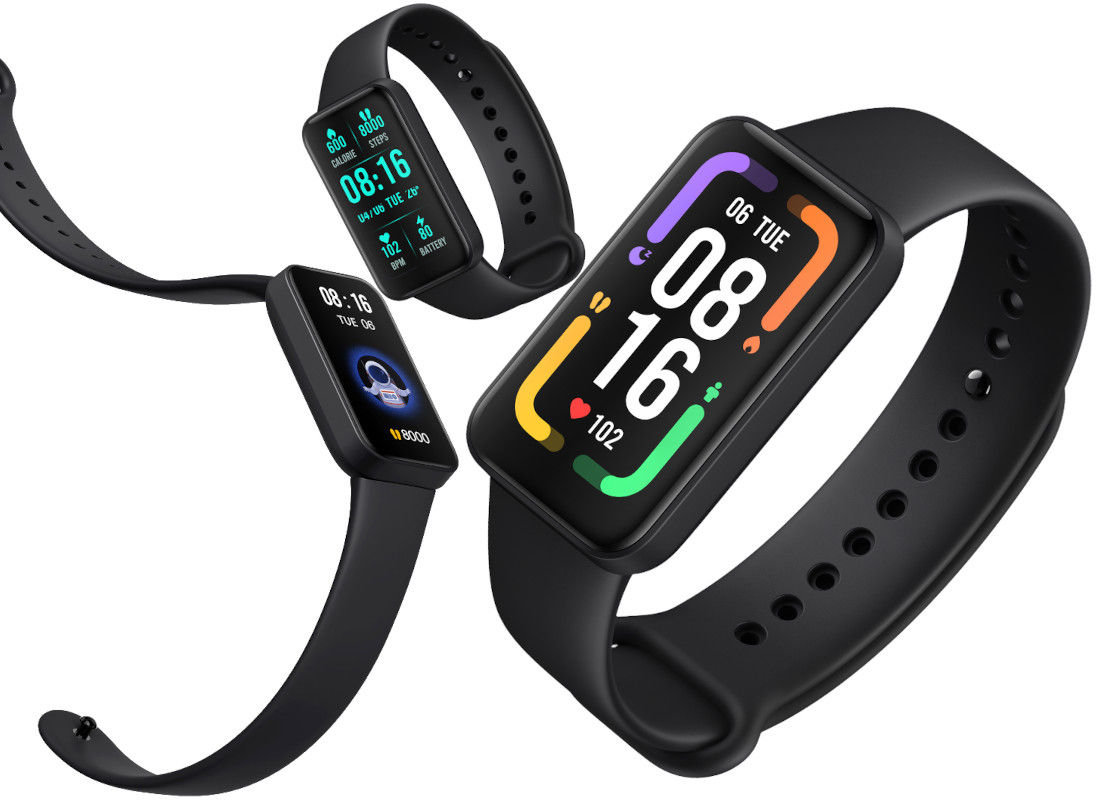
Xiaomi is one of the leading wearable devices makers and the company already has a number of products in the market. Now, the company has launched its latest wearable device, dubbed as Redmi Smart Band Pro.
Unlike the Mi Smart Band 6, this new wearable product comes with a design that makes it look like a smartwatch, even though the device is a fitness tracker. It features a 1.47-inch Super AMOLED display with 194 x 368 pixels screen resolution and 264ppi pixel density.
The device comes with support for more than 50 watch faces. The product comes in a black-colored body and for the build material, it uses glass fiber reinforced and 2.5D tempered glass and polycaprolactam.
It comes with several features, including more than 110 workout modes that include popular activities such as running, cycling, swimming, and yoga. The company says that the Redmi Smart Band Pro can detect when a workout has started and can also measure the effort made by its user.
There’s support for apps like Strava and Apple Health. It can measure stress levels and also offers features related to female health. Apart from a 24/7 heart-rate monitor, the fitness tracker also supports sleep quality tracking. It also supports checking blood oxygen levels, which can also be set to be carried out automatically while the user is sleeping.
The device is rated for 5ATM for water resistance, and it can last up to 14 days of typical usage or 20 days in power-saving mode after being fully charged via the magnetic charger.
Currently, Xiaomi has not shared the pricing and availability details of the Redmi Smart Band Pro. However, we expect the company to share these details in the coming days or weeks. There’s a possibility that it could be available in countries where the Mi Smart Band 6 isn’t available for purchase.
Smartphones are evolving at an unprecedented rate. Every week smartphones get launched with new innovations to lure customers. Apart from bringing the 5G support in smartphones, the major OEMs are also working to enhance the camera capabilities of the smartphones. These days it is a common sight to see triple, quad, or Penta camera lenses on a smartphone. The ability to shoot in low-light conditions has improved drastically. Apart from hardware advancement, thanks to software tweaks, which are also advancing the cameras by processing the image efficiently and in a better way.
The smartphone cameras are used to take selfies, panoramas, night light selfies, portraits, videos, slow-mo, and to take pictures of a document as a scanner. The improved camera picture has allowed the user to capture every detail of the document and then render it as scanned paper. The CamScanner app is the famous document scanner app available for Android devices. It is a widely used app with the added benefits of cloud backups.
The apps like CamScanner have abbreviated the usage of scanning devices. The smartphone made things easier for users. The user can now quickly scan a document with the smartphone camera via the CamScanner app and can even share it via Email, WhatsApp,Messenger, and other ways.
How CamScanner Works?
The CamScanner is primarily a photo-snapping app that automatically processes a document by removing the unnecessary black spots and optimizes the contrast and brightness of the photo. As a result, it outputs the document, which appears to be correctly scanned in a scanner. CamScanner efficiently converts the scanned document into a PDF file. Everyone gets stunned through the high-quality scans, which can be zoomed in to see every minor detail.
There are many other features that CamScanner offers. In today’s writeup, we will let you know about the CamScanner alternatives that our users can install. Let’s have a look at the alternates:
Best CamScanner Alternatives for smartphones
Adobe Scan
The word “document” is mostly denoted either by a Doc file or by a Pdf file. Surprisingly, Adobe itself has invented the PDF extension, and there’s no other app that can manage the PDF as the Adobe Scan. Adobe is known for its professional tools for image editing, video editing, document editing, and a lot more. Similarly, Adobe Scan is a professional tool to capture a document and digitize it anywhere and anytime. It can save documents in various extensions like PDF and JPG.
The user can scan his/her education documents, passports, bills, card, and any other stuff which you want to capture. It can even convert a business card into contact. The enhanced OCR technology is instantly available to convert the printed text into a digital document. Adobe Scan opens doors for document editing by linking to other Adobe products.
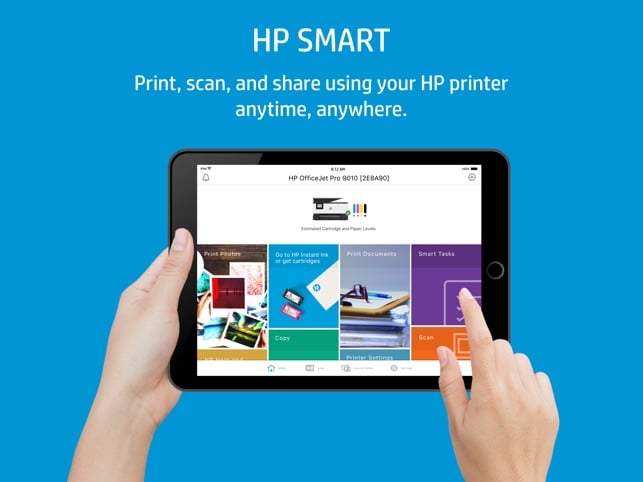
HP is known for its hardware devices, but they have a minor software application. The HP Smart is an office assistant application that can be connected wirelessly to HP smart applications. HP Smart allows the user to snap and scan a photo from either an iOS or Android smartphone. The documents can be exported in PDF or a JPG file.
Hp Smart can even synchronize the snapped documents to the cloud and can let you print the document on your smart printer is connected to the network. It is an intelligent application and can be used by any user. The interested users can download the app from the links below.
The CamScanner and ScanBot compete head-to-head in terms of features and UI. Scanbot also features support for a variety of file formats, automatic image cropping and adjustment, and several other features. It can even scan barcodes and QR codes, making the app more dynamic and feature-rich. Other features include live syncing, image correction, multi-page document, fx support, cloud syncing, text recognition, etc.
The users can even search the text inside the documents with ease. THe user can sync the scanned documents to different cloud services such as Dropbox, Google Drive, OneDrive, Box, Evernote, and others. It also allows the user to edit documents for highlighting text, adding notes, and drawing the signature.
A famous productivity app – Google Drive incorporates various tools and features. Surprisingly, it also has a built-in scanner app. To access the scanner feature, the user needs to tap the plus button, and you will be able to scan anything. Unlike the CamScanner and Scanbot apps, the Google Drive scanner does not offer various advanced features but comes in handy if someone is looking for a simple scanner app.
It might be the favorite among most of the users as Google Drive is available on every Android smartphone and also is much secure than the CamScanner. It is a better replacement for the CamScanner.
How can Microsoft miss the chance to get users despite being a pioneer in creating and managing documents through Microsoft Office and other products? It can scan documents, business cards, and even whiteboards without any issue. It allows choosing the type of document the user wants to scan. Office Lens carries the capability to scan handwritten notes, whiteboard tables, and diagrams. Upon successful conversion, the user can directly export it into Word or Powerpoint documents.
Microsoft Office Lens also synchronize the document to the cloud through OneNote and OneDrive. It is a powerful and useful scanning app available for free on both Android and iOS.
It is one of the best apps for scanning documents. In comparison with CamScanner, the Evernote Scannable offers a better user interface and user experience. It can quickly scan any document from notes to business cards with ease. It can even scan bulk documents using the batch scanning feature. The files are finally sent to the cloud from where you can retrieve them on any device irrespective of the environment.
Evernote Scannable allows the user to save the file within JPG or PDF file format. It becomes easy to share files via email or any other social media. In Android, the Evernote scannable is inbuilt with the primary Evernote app. However, the user needs to download the Evernote Scannable app separately on iOS devices.
These are some best Cam Scanner App available for download both on iOS or Android. If we missed any high-rated app, then do let us know via the comments below.
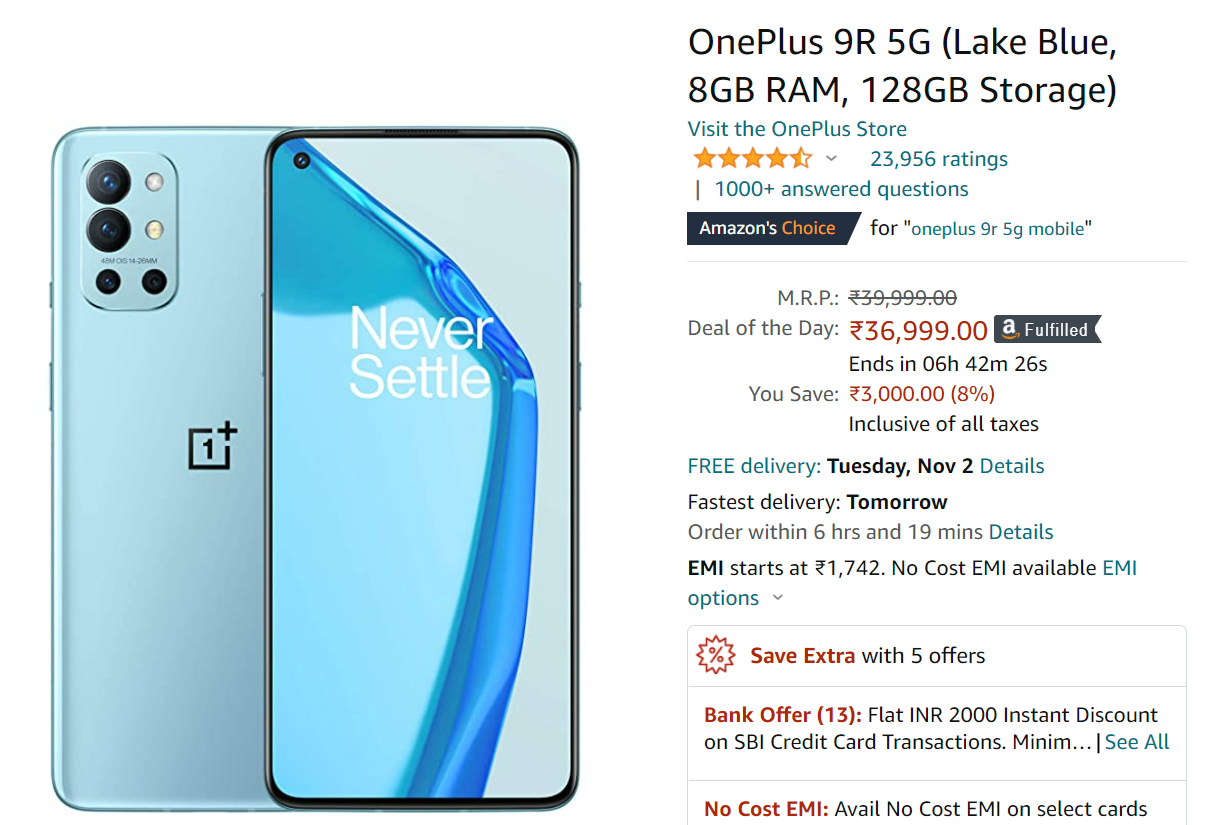
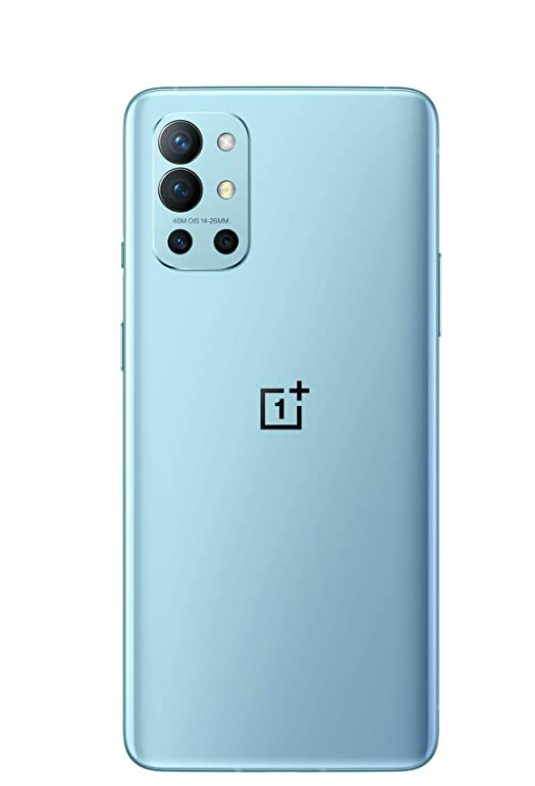
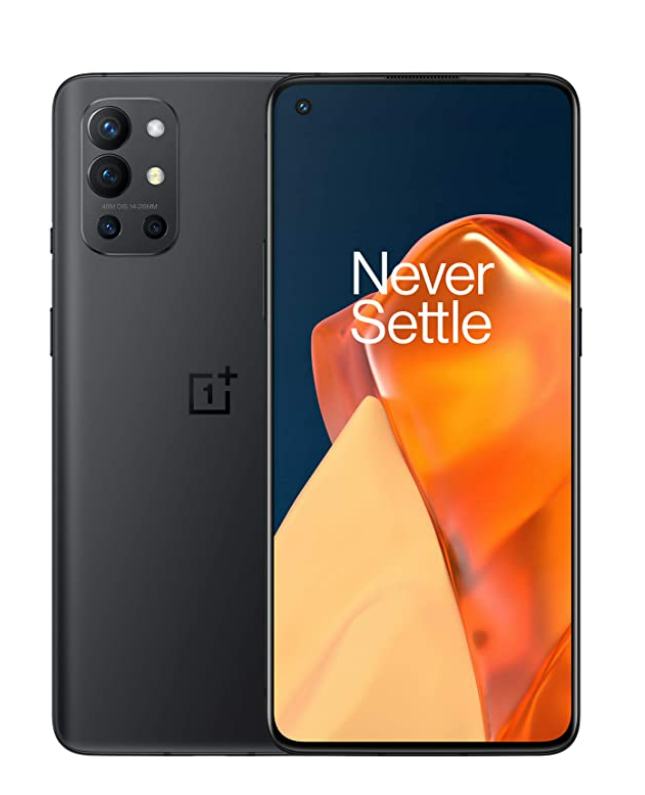
OnePlus 9R 5G which generally retails for ₹40000 is now available at a discounted price of ₹36999 only at Amazon India. This is a limited-time super deal.
OnePlus 9R 5G features a 6.55 Inches Fluid AMOLED display with a 120Hz refresh rate and is powered by the Qualcomm Snapdragon 870 processor. The smartphone comes with a quad rear camera setup featuring a 48MP main camera, 16MP ultra wide-angle camera, 5MP micro camera, and 2MP monochrome camera. And for your selfies, you have a 16MP front camera.
OnePlus 9R 5G comes in multiple storage variants viz: 8GB + 128GB , 8GB + 256GB and 12GB + 256GB. Fueled by a powerful 4500mAh battery, the smartphone comes with 65W Fast charging that charges your phone to 100% in just 39 mins. Other features include hands-free access to Alexa, Oxygen OS based on Android 11, under-display optical Fingerprint sensor, Bluetooth v5.1, etc.
Generally retailing for ₹40000, you can now buy the OnePlus 9R 5G at a discounted price of ₹36999 only at Amazon India. This price is applicable to the 8GB + 128GB, Lake Blue, and Carbon Balck color variants. This super deal ends in 6 hours. So place your order asap.
For more information on such exciting deals and offers check out ourdeals hub.
* Please Note: When you buy something using the links in our articles, we may earn a small commission at no cost to you.
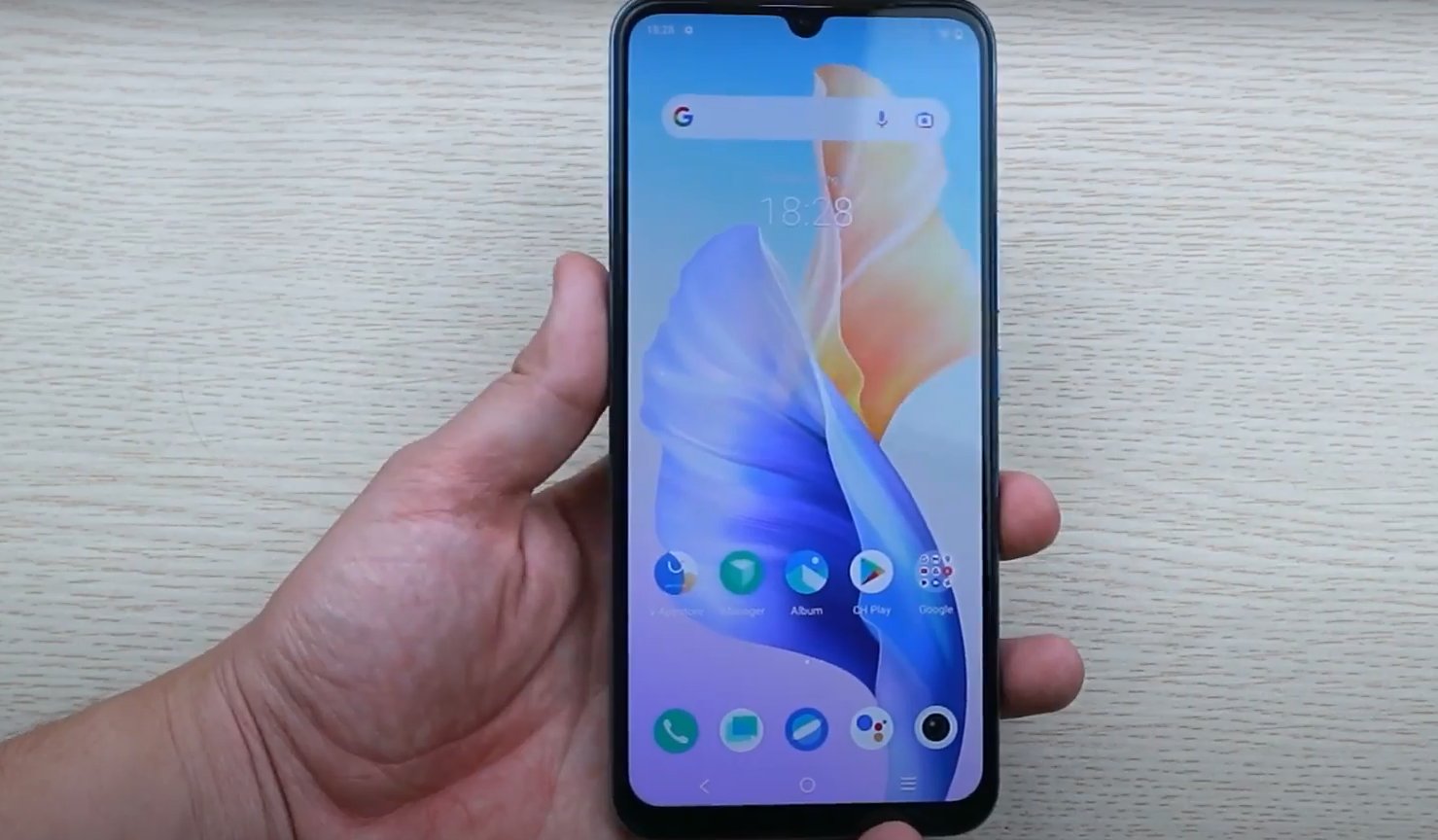
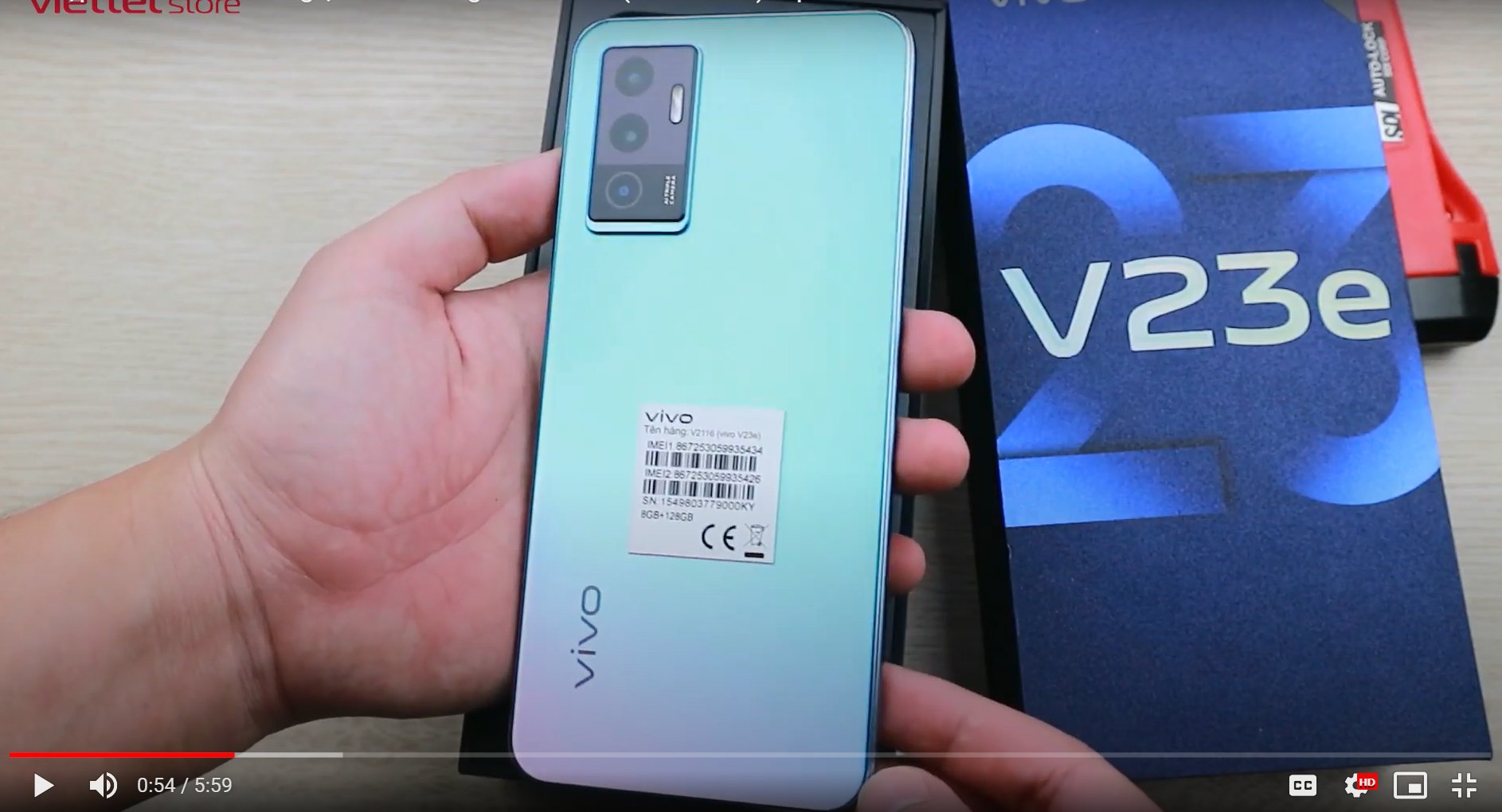
Last month, the Vivo V23e smartphone was spotted at the Bluetooth SIG certification site, which indicated that it won’t take too long for it to go official. Fresh tweets by reliable tipster Chun reveal that the V23e is set to go official in November in Vietnam. It appears that the company will train the retailers about the phone between Nov. 2 and Nov. 5. The tipster revealed that the Vietnam-based Viettel Store briefly uploaded a hands-on video of the Vivo V23e. A user managed to download the video before it was taken down by the retailer. Readers can click this link (shared by the tipster) to view the V23e hands-on video.
vivo V23e will be released pretty soon, vivo Vietnam will train their sellers about the phone from Nov 2nd-5th next week pic.twitter.com/LVMnNEZLFx
— Fuck Halloween, Imma get the vaccine soon (@chunvn8888) October 31, 2021
Vivo V23e design and specifications (Rumored)
The video reveals that the Vivo V23e has a waterdrop notch display. It seems to be an OLED panel since it is equipped with an in-screen fingerprint scanner. It has a glass back and a plastic frame.
The left edge of the device appears barren, while the right side features a volume rocker and a power key. A microphone is placed on the top edge of the device, whereas its bottom edge features a SIM slot, a microphone, a USB Type-C port, and a speaker grille. The device lacks a 3.5mm audio jack.
The chipset spec is a bit wrong because Antutu says MT6781 (Helio A22) but about phone says 8 cores 2.05GHz while A22 only has 4 cores, plus V23e does support 5G too so don't take chipset leak pic.twitter.com/i15VvFxhoz
— Fuck Halloween, Imma get the vaccine soon (@chunvn8888) October 31, 2021
For selfies, it features a 50-megapixel front-facing camera. Its back panel has a vertical camera module which includes a 64-megapixel main camera. It is coupled with an 8-megapixel lens and a 2-megapixel macro camera. It has a 4,030mAh battery that supports 44W fast charging. It runs on FunTouch 12 based Android 12. Lastly, the device is powered by a 5G-ready chip, but its exact name is not known yet.
Vivo V23e price
The leak reveals that the Vivo V23e will be priced at VND 10,000,000 (~$436). The retail package of the Vivo V23e includes the phone, a charger with its cable, a pair of earphones, a USB-C to 3.5mm audio jack dongle, and some documents.
Samsung is working on the new One UI 4 custom interface based on the latest Android 12 operating system. The South Korean giant recently closed beta testing for its flagship Galaxy S21 series phones.
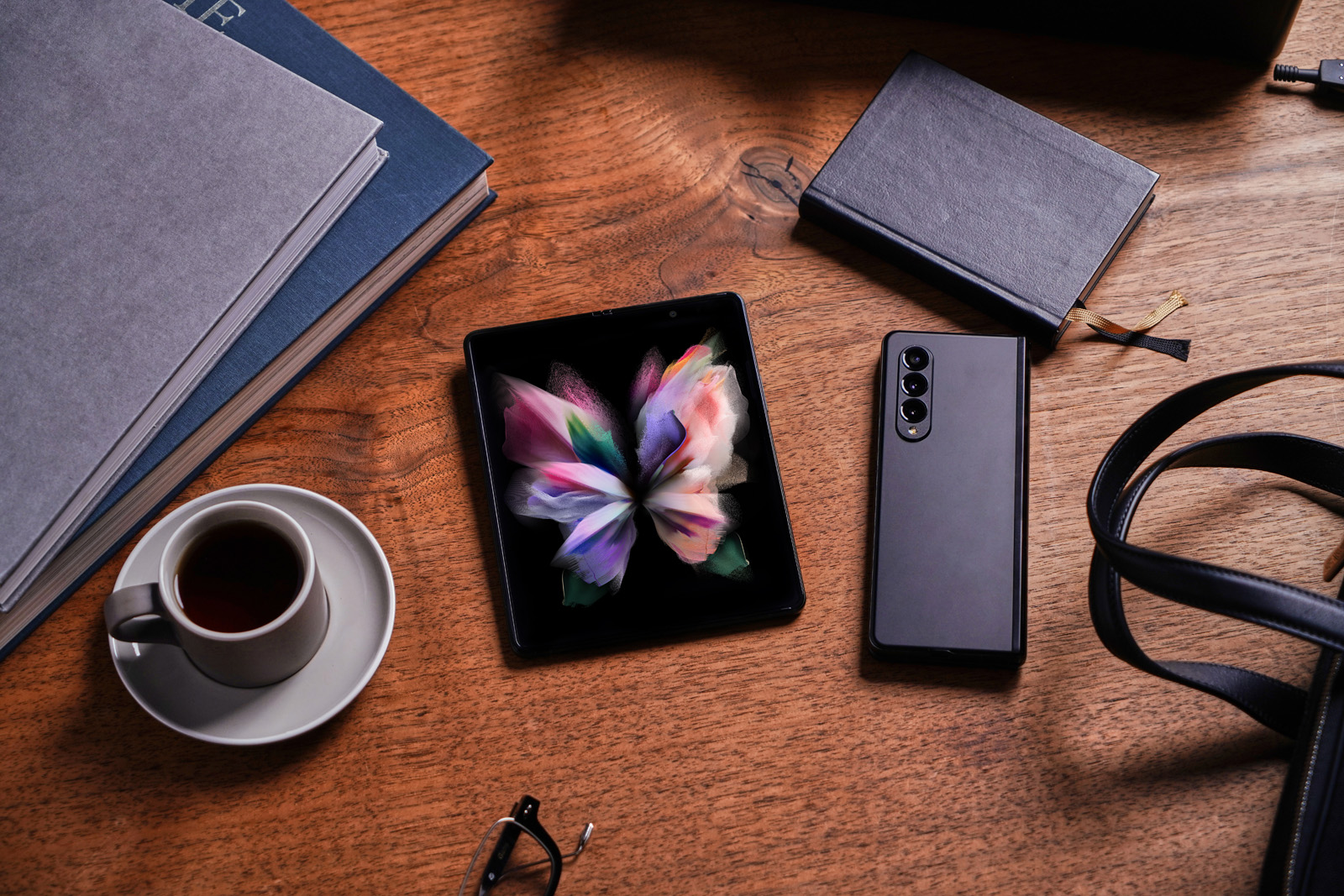
Now, the company has started beta testing of the new Android 12-based Samsung One UI 4 for its latest foldable smartphones. The Galaxy Z Fold3 and the Galaxy Z Flip3 have now been added to the list of eligible devices.
Reports indicate that the users of Galaxy Z Fold3 and Galaxy Z Flip3 in South Korea and India can enroll in the beta testing program of One UI 4. Also, the devices must be unlocked to complete the enrollment process.
Eligble users can log into the Samsung Members application and then tap on the One UI 4 beta enrollment button from the Notices page. After enrolling, the update should be available to download within a few minutes.
Samsung showed off its Material You implementation for One UI and also demonstrated the ability to set health goals with others using Samsung Health Together, so groups can compete in completing training or exercise goals.
There’s a new feature named Quick Share that allows seamless transfer between Galaxy devices, and much more. Similar to Apple’s Lost Mode, the new One UI 4 update also expands SmartThings Find to stuff such as the Galaxy Buds and S Pens, leveraging up to 1.5 billion instances of data exchange between Samsung devices in a network to help pinpoint a lost accessory’s location.
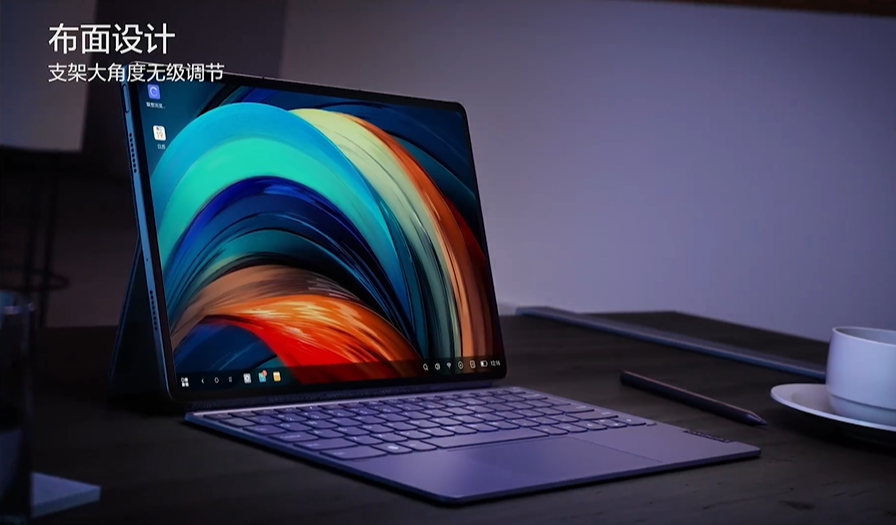
Lenovo has officially scheduled a launch event on November 2 for the launch of Lenovo Xiaoxin Pad Pro 12.6. Before it arrives, the company has started its tease-spree and it doesn’t seem to stop. Last time, the company confirmed the 120Hz refresh rate support on the Youku app and now, its magnetic Keyboard accessory has been teased.
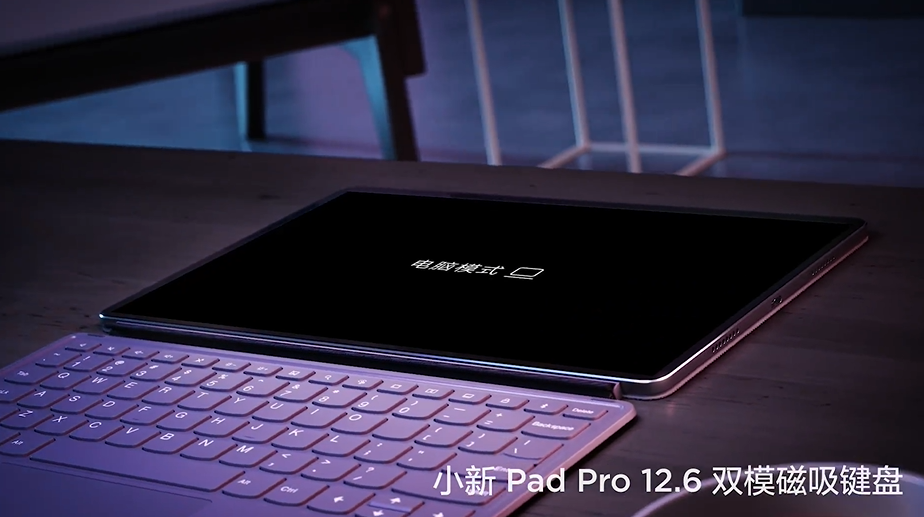
According to a teaser video, the Lenovo Xiaoxin Pad Pro 12.6 will launch with a magnetic keyboard accessory. The keyboard will work with Bluetooth wireless technology and will also act as a protective case. It has a Gray colour variant and when connected with the tablet, it seems to work like a laptop device.
The keyboard accessory has 15 shortcut keys and boasts a large touchpad. It has a 1.3mm keystroke and a key-spacing of 19mm. Just like Lenovo laptop keyboards, the keyboard accessory also has a Lenovo branding on the right-side.
Furthermore, the tablet will also get a second-generation stylus accessory. The stylus will support 4096 levels of pressure sensitivity. It is touted to be 44% faster than the first generation stylus accessory.
The Lenovo Xiaoxin Pad Pro 12.6 will come with a large 12.6-inch screen featuring a 2560 x 1600 pixels resolution. It will have a 120Hz refresh rate and a 360Hz touch sampling rate. It will equip a 13MP + 5MP dual rear camera system and an 8MP + ToF dual front camera setup. It will come powered by the Snapdragon 870 SoC paired with faster LPDDR5-type RAM and UFS 3.1 internal storage. It was teased with a 10,200mAh battery with support for 30W fast charging technology.
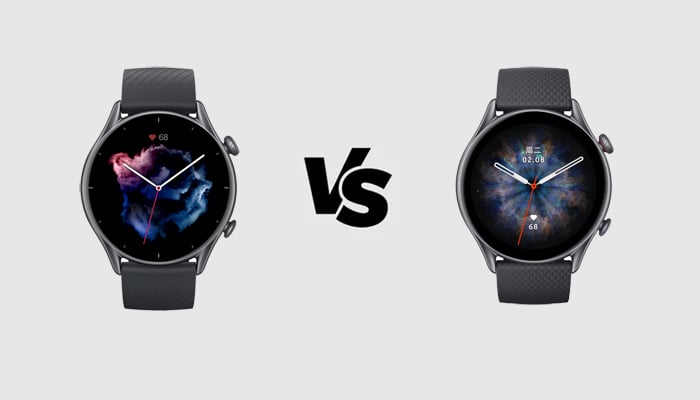
Huami recently announced a new lineup of smartwatches composed of Amazfit GTR 3, Amazfit GTR 3 Pro, and Amazfit GTS 3. The first twos are the ones with a round display and they are also the first smartwatches with the brand new Zepp OS, which features a revamped user interface. If you are looking for one of these two wearables, you are probably wondering which one to choose between Amazfit GTR 3 and Amazfit GTR 3 Pro. It is not an easy choice, given that the changes in their specifications are not many. This is a comparison between their specifications that will hopefully help you.
The Amazfit GTR 3 and the Amazfit GTR 3 Pro have the same design and the only difference is the dimensions. They are made out of aircraft-grade aluminum alloy and they have a weight of just 32 grams. They come with curved glass and a round display, and they can be purchased with a leather strap or a black fluoroelastomer strap. The watches have two buttons, with one of them being a crown that can be used to scroll through menus and longer notifications. The look is very minimal and elegant, perfect for those who want a device similar to a classic watch.
Display
Amazfit GTR 3 and Amazfit GTR 3 Pro are equipped with round AMOLED displays sporting a high pixel density and a very high brightness: up to 1000 nits. That is why they offer good visibility outdoor. The bezels are very narrow with screen to body ratios up to 70.6 percent (66 percent on the vanilla GTR 3 and 70.6 percent on the Pro). The refresh rate of these displays has been increased by 67 percent if compared to the previous generation. The vanilla version supports over 100 watch faces, while you get over 150 watch faces on the GTR 3 Pro. The watch faces have matching Always On Display versions simplified to reduce power usage. Some watch faces are even editable and you can customize the widget to display such as heart rate, steps, weather, and more.
Specs & Software
With the Amazfit GTR 3 and the Amazfit GTR 3 Pro, Huami introduced the new Zepp OS: a brand new operating system with a revamped user interface. It is not quite as powerful as Wear OS, but it supports third-party apps working on an app framework designed to reduce power usage. A few apps are integrated with Home Connect: a tool for controlling smart home devices. Amazfit is creating a web-based app development kit that allows everyone to create their own watch faces and their own apps.
Sensors and connectivity
These smartwatches are equipped with plenty of sensors in order to track physical activity at a professional level. They offer 24/7 heart rate tracking and blood oxygen tracking thanks to a SpO2 sensor. They are able to measure the blood oxygen level in just 15 seconds and they also support sleep tracking monitoring the different stages of sleep and naps. The Pro model supports satellite positioning based on the 5 major constellations and it can also track VO Max and measure the temperature, while the vanilla version cannot do it. Last but not least, with the Pro version you get Alexa support and 2.3 GB of internal storage to store music and podcasts. You may need the features provided by the Pro variant or not, but they are definitely very interesting features justifying the price difference between these two watches.
The battery life of the Amazfit GTR 3 Pro is 12 days with normal usage, but if you use continuous GPS tracking, it will last just 35 hours. There is also a Battery Saver Mode to extend the battery life up to a full month. The Amazfit GTR 3 has a battery that lasts up to 21 days of typical usage or 10 days of heavy use, while it is able to last up to 35 days with Battery Saver mode. With continuous GPS tracking, it lasts 35 hours. As you probably noticed, despite being cheaper, the vanilla version has a longer battery life than the Pro.
Amazfit GTR 3 and Amazfit GTR 3 Pro: Price
The Amazfit GTR 3 carries a price tag of $180/€150, while the Amazfit GTR 3 Pro is available for $230/€200. Both are advanced high-end smartwatches and now you know the differences: which one would you choose?
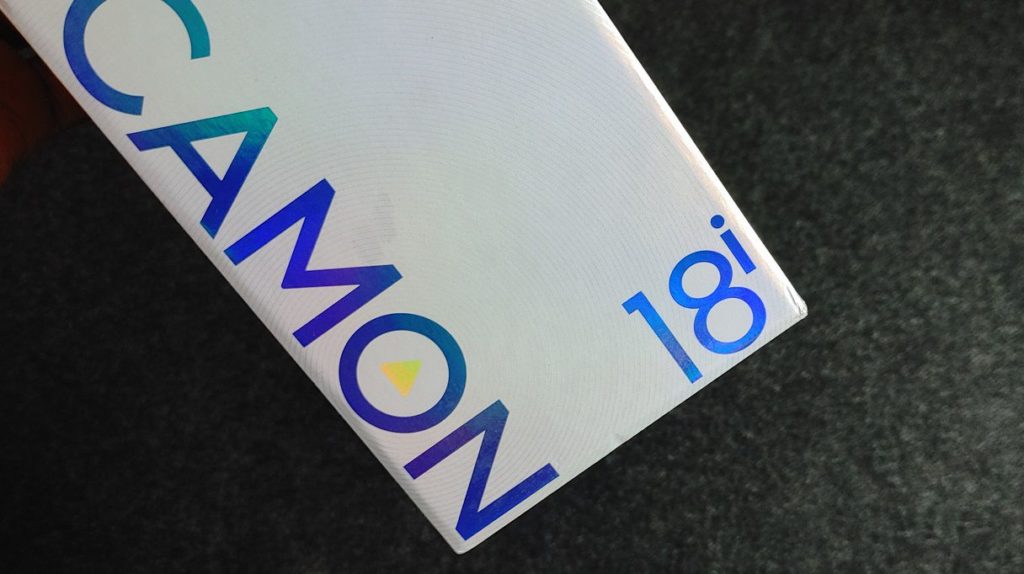
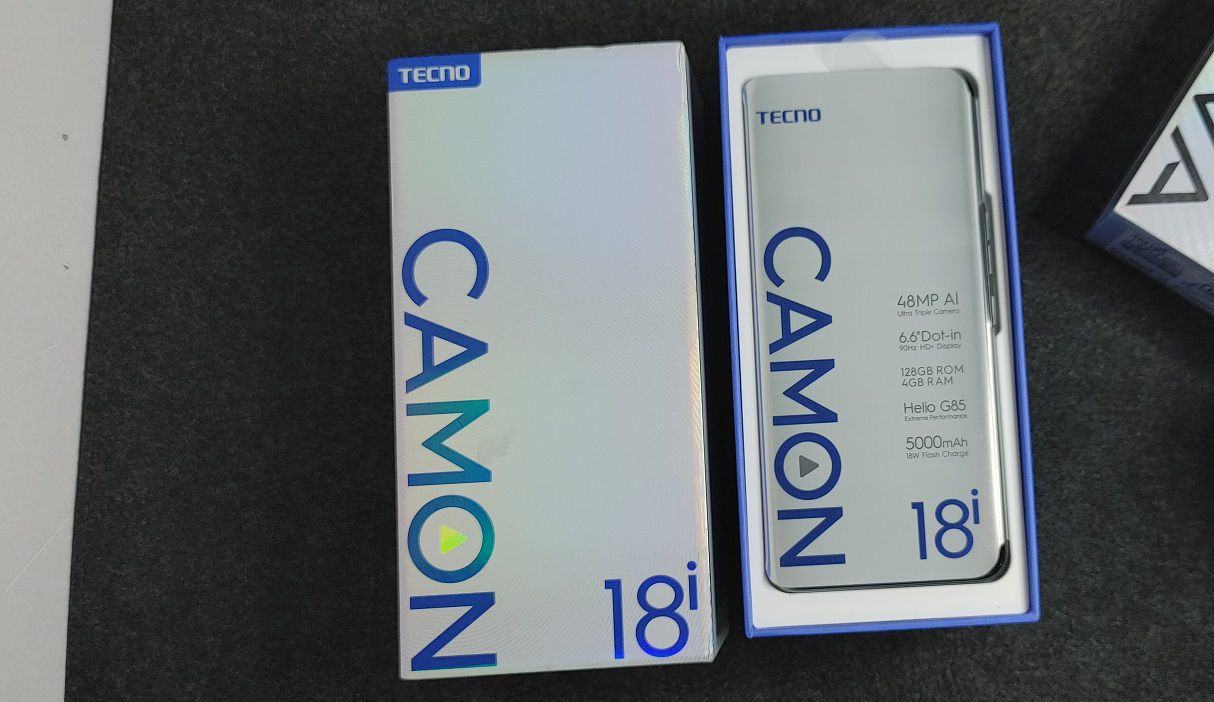
Tecno has silently launched a new smartphone in Nigeria. The all-new Tecno Camon 18i comes after the debut of its siblings Camon 18 and Camon 18P. It comes with a 6.6-inch display, a MediaTek Helio G85 SoC, and a big battery. As per a Nigerian publication, the device is yet to get listed on the company’s website but it is available in the region.
The Tecno Camon 18i is priced at N84,500(~$189) for the sole 4GB RAM and 128GB variant. It is available in various colors but the exact color variants are unknown. It can be purchased across authorised Tecno stores in the country.
1 of 2
The Tecno Camon 18i is apparently a rebadged model of the older Tecno Camon 17. It is also said to pertain to the same model number as the Camon 17. It sports a 6.6-inch display with a 1600 x 720-pixel resolution. It features a triple camera system at the rear with a 48MP main lens and two 2MP sensors.
Under the hood, the device is powered by the MediaTek Helio G85 SoC paired with Mali G52 GPU. It packs a 5,000mAh battery with support for 18W fast charging technology. It comes with 4GB of RAM and 128GB of built-in storage. Tecno has offered a microSD card slot for additional storage expansion. The dual-SIM phone supports 4G connectivity and runs on Android 11 out of the box.
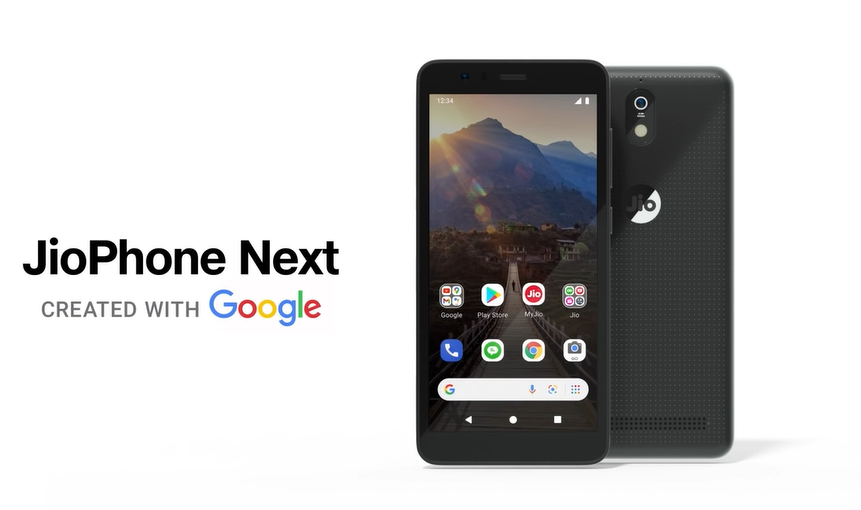
Pragati OS is a new operating system developed by Reliance Jio and Google. The Android-based operating system has made its debut on the JioPhone Next, an entry-level smartphone from Jio. If you are wondering what’s new about this operating system that brings to mind Android Go, then this post should answer the questions you may have.
A short history of Android Go
In December 2017, Google announced Android Oreo Go Edition as a lighter version of Android Oreo built specifically for entry-level smartphones. Since then, the launch of a new Android operating system has brought along a “Go Edition” for entry-level phones. Though we are still waiting for the launch of Android 12 Go Edition.
Following the unveiling of Android Oreo Go Edition, several manufacturers including Nokia, Alcatel, Samsung, Lenovo, and Xiaomi (Redmi), announced phones and even tablets that are powered by this lightweight version of Android. While most of these devices do not have any form of software customization that distinguishes them from one another, a few manufacturers have launched their own Android Go phones with customizations. The Samsung J2 Core and Huawei Y5 Lite (2018) are examples as both phones run Android Go but with a layer of Experience UX and EMUI on top respectively.
This customization brings us to Pragati OS, the operating system that powers the JioPhone Next, an entry-level smartphone made by India’s Reliance Jio in collaboration with Google.
Pragati OS – Android Go(ing) forward
Pragati OS is making its debut on the JioPhone Next, the new entry-level smartphone from India’s telecommunications giant, Reliance Jio. According to a blog post by Google, Pragati OS is an “optimized version of Android” “ customized to deliver a great smartphone experience to users in India.”
While Google and Reliance Jio are touting Pragati OS as a new operating system, the features it brings are directly carried over from Android Go or “optimized” versions of these features. Thus, it won’t be far-fetched to say that Pragati OS is the future of Android Go, going forward, at least for India.
Features of Pragati OS
While Google and Reliance Jio are being careful not to call Pragati OS a customized version of Android (11) Go (Edition), unboxing and early impressions video of the JioPhone Next show that Android Go is pretty much under the hood and even visible on the surface.
Not only does the phone ship with Android Go apps such as Google Go, Assistant Go, Gallery Go, and Camera Go, all of which are apps specially launched for Android Go, its key software features have also been borrowed from Android Go but alongside the apps, they have been fine-tuned for the Indian market.
For example, Google Assistant Go now has support for multiple Indian languages on the JioPhone Next. Users will be able to interact with the phone in multiple supported Indian languages and get a response in the same language.
The Google Go app will also translate supported pages to a supported Indian language and also read them aloud while the Camera Go app has a Snapchat integration with India-centric filters and Google Lens integration for translation. There is also HDR, Night Mode, and Portrait Mode. Since this is a Jio smartphone, there are pre-installed Jio apps too.
Will Pragati OS power non-Jio phones?
Pragati OS is jointly developed by Google and Jio, so it is expected that it will only be found on Jio smartphones.
Conclusion
It is clear that Pragati OS is practically Android Go with extra features for the Indian market even if the manufacturer doesn’t say so. That’s not a bad thing but there are not a lot of features that make this stand out from a regular Android Go phone. So those who opt for an Android Go phone from another manufacturer won’t be missing out on much.
There is the promise of frequent updates for the JioPhone Next, so maybe there is a chance these updates may bring more customizations and exclusive features that will help it further differ from Android Go.
Amazon India under the Great Indian Festival is giving out amazing discounts on various tech products including some of the best earphones in the market. So here’s a curated list of some of the best deals on earphones available at Amazon India right now. Please note that this list is in no specific order but each product offers really good value for money in their price segment.
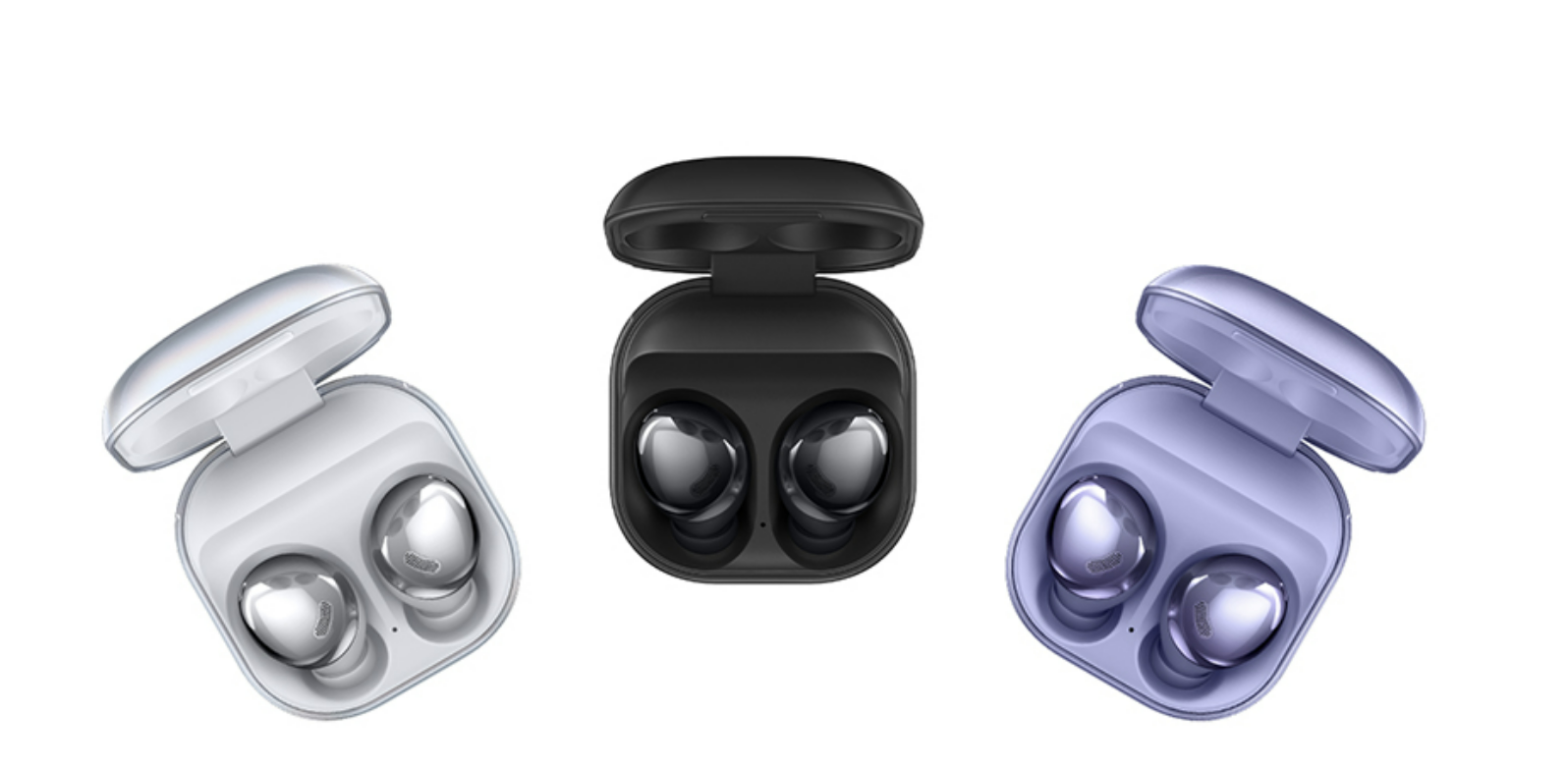
Samsung Galaxy Buds Pro is now available at Amazon India for as low as ₹8990. These classic earbuds come with ANC, voice detection, smart touch control, Dolby head tracking support, etc.
Key Features:
Intelligent ANC
Voice detection
Ambient Sound mode
Active Noise Cancellation
Custom-built two-way speakers – Sound tuned by AKG
Considered as one of the best ANC earbuds in its price range Huawei gives you the complete package deal with Freebuds 4i. A solid and useful upgrade from the Freebuds 3 version, these earbuds bring you the true wireless stereo experience along with top-grade ANC and other ancillary features which make it a pleasure to enjoy your music and conversations on the go anytime and anywhere.
Key Features:
Active Noise Cancellation – AI noise reduction technology
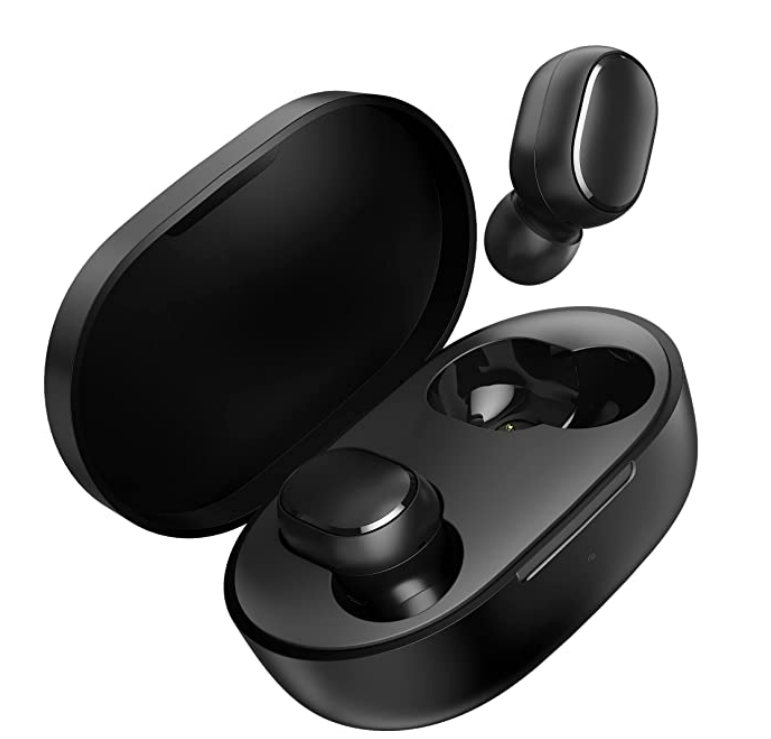
Redmi Earbuds 2C is now available at never before seen price. This is the lowest price offered at Amazon India. For its price range, you get stylish and good-quality earbuds with ENC technology and 12 hrs of battery life.
Key Features:
Sleek and Stylish design
Battery: 4 hrs on a single charge and 12 hrs with case
Supports voice assistant: Alexa/ Google assistant / Siri
IPX4 splash and sweat proof
Improved DSP ENC – clear calls and music with advanced environmental noise cancellation
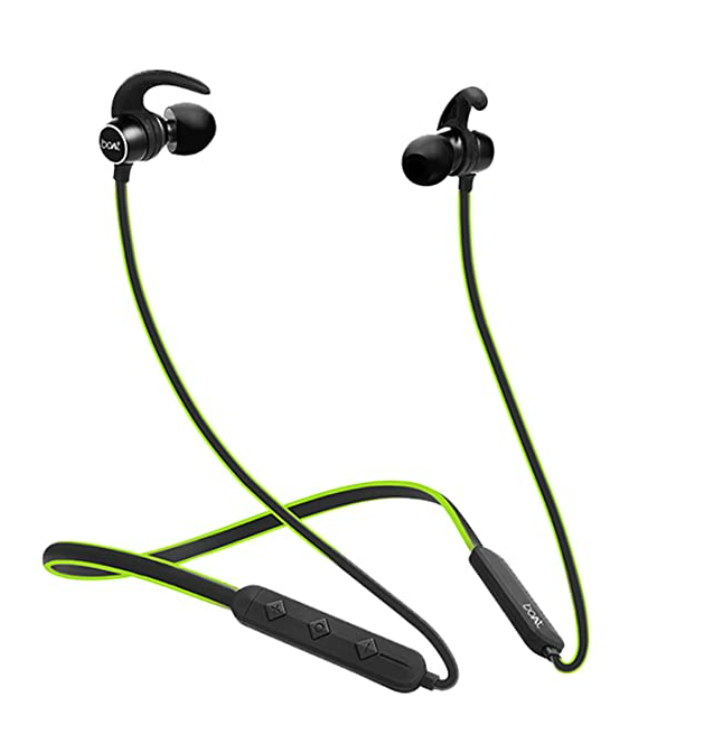
boAt Rockerz 255 in-ear Earphones are now available for the lowest price to date at Amazon India. Available in multiple colors, this earphone is lightweight and easy to carry around, and gives you a powerful sound and deep bass.
These stylish and minimalist earbuds from Sennheiser are now available at the lowest price ever at Amazon India. With features like ANC, deep bass, Smart control APP, customizable EQ, etc, this earbud is a bargain deal at this price.
Key Features:
Minimalist and stylish design
Active Noise Cancellation
High-fidelity sound with deep bass, natural mids, and clear treble
Personalize your music with the smart control app
Internal EQ plus custom presets
Smart touch control
Access Siri and Google assistant
Premium sound quality
Battery life: 7 Hours on a single charge 12hours with the case
JBL C115 Earbuds are True wireless earbuds that work on both mono and stereo mode. Available in multiple colors like Black, White, Mint, and Red, you can now buy these jumbo juiced-up earbuds at never before seen price at Amazon India.
Key Features:
Smart and stylish design
Crystal clear call sound quality
Massive battery backup: 21 hours of playtime with charging case
Quick charge: 1 hour of playback with 15 mins charging
Natural deep bass- undistorted and not artificially boosted
Ergonomic design: comfortable fit over a long period
Instantly connect and reduce latency
Autonomous connectivity: works in both mono and stereo mode
Voice assistant integration
For more information on such exciting deals and offers check out ourdeals hub.
* Please Note: When you buy something using the links in our articles, we may earn a small commission at no cost to you.
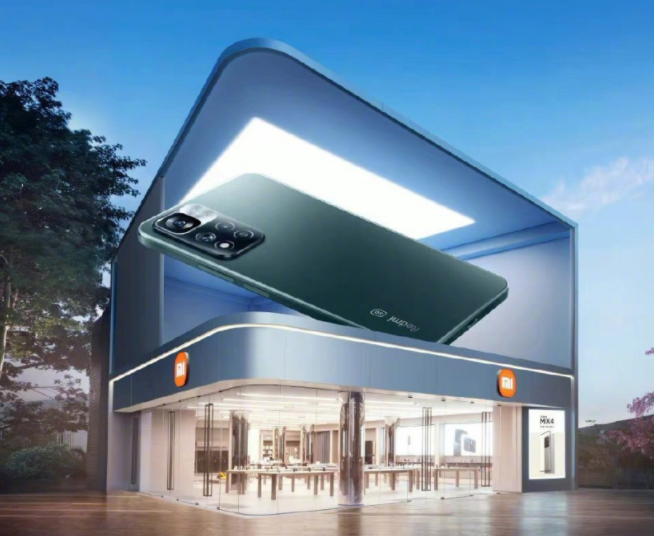
During the launch of the Redmi Note 11 series a few days back, Redmi’s GM and Xiaomi President Lu Weibing had hinted that the tech giant was gearing up to open its record-setting 10,000th Mi Home store in China before the end of October. The 10,000th Mi Store has now been opened right on schedule.
The iconic Mi Home store adopts a unique architectural design that stands out in every sense. It is located in Shenzhen’s Happy Coast and covers an area of more than 600 square meters. The tech giant will be giving the first 1000 buyers at the new store the chance to pay an additional 1 yuan and get the Redmi Buds 3 alongside their purchases. The company also hinted at plans to integrate the Mi Home store and after-sale service center in the future in order to bring the after-sales services closer to fans.
Lu Weibing also hinted at the Redmi Note 11 series launch that the company has already expanded the number of its brick and mortar stores to cover over 2,200 counties. This represents 80% of the entire counties in China. This is in keeping up with the company’s goal of opening at least a Mi Store in every of China’s counties.
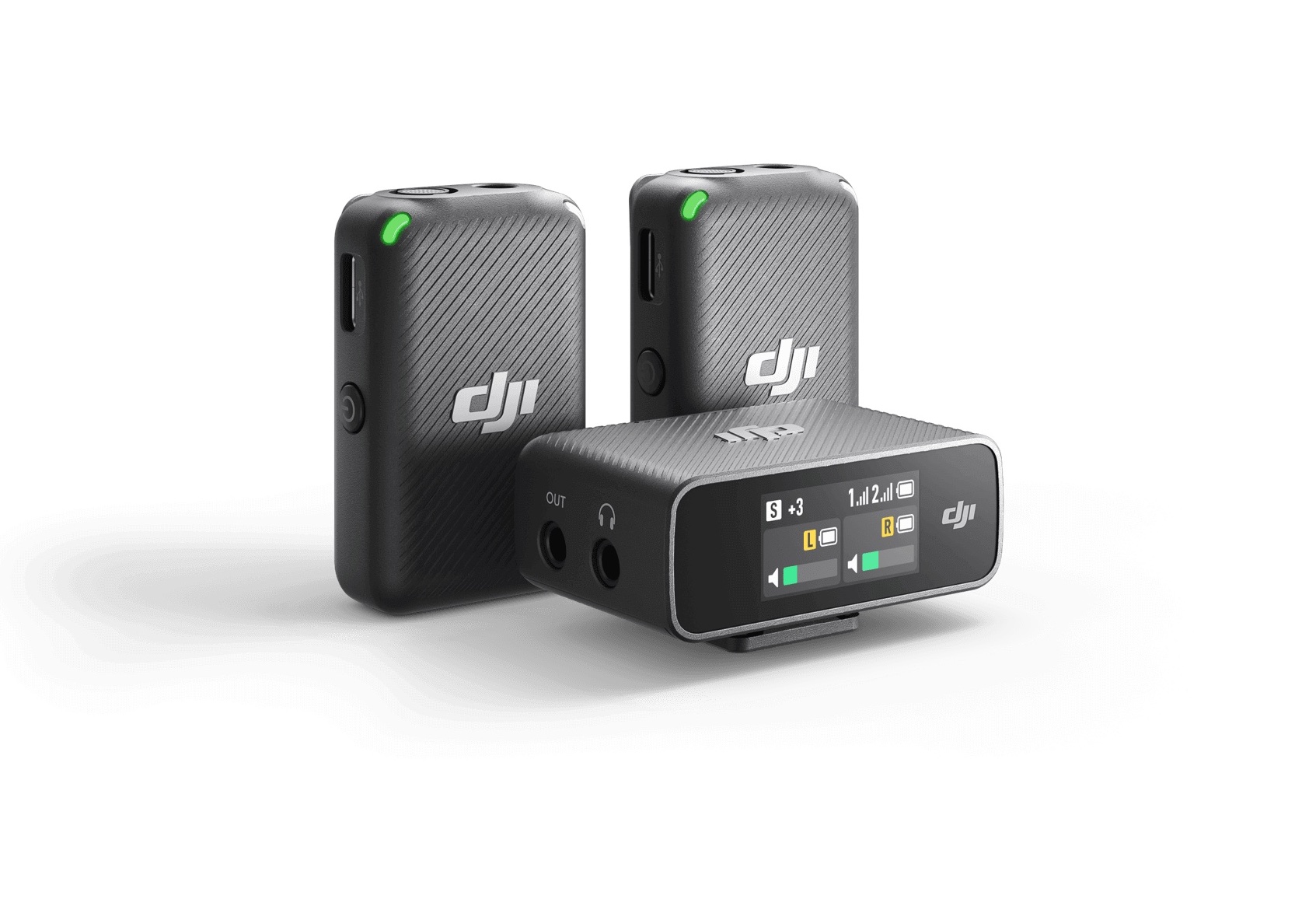
The past couple of weeks has seen a flurry of activities around leading drone maker, DJI. The tech startup was expected to launch three products in the coming weeks with the Mavic 3 drone leading the pack. However, two products are already out – the DJI Action 2 camera and the DJI Cinema Camera. While we await the arrival of the Mavic 3 drone, the Chinese drone-maker has now announced a fourth product, the DJI Mic. The portable microphone is priced at $329 and can only be reserved right now.
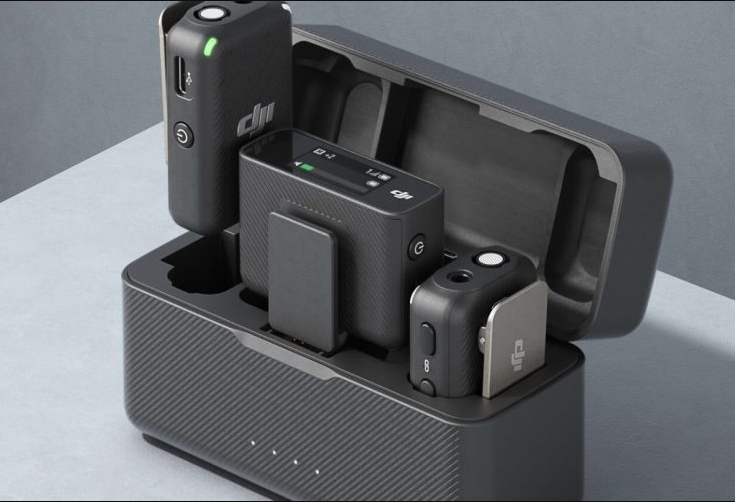
The DJI Mic offers some impressive features and functionalities. It provides exceptional sound quality, dual-channel recording at distances of up to 228 meters (750 feet) according to DJI. The DJI Mic is portable and is capable of providing up to 14 hours of onboard memory, while its battery can last up to 15 hours. With the DJI Mic, you can record high-fidelity, studio-grade audio separately on each of its channels. You can also combine the audio recordings during post-production, offering greater flexibility.
The DJI Mic has a powerful anti-interference transmission system especially useful in busy and densely populated urban areas. It has USB-C, Lightning, and TRS ports on its receiver, hence it can be used with smartphones, cameras, and laptops. The receiver has a touchscreen display to enable a quick tweaking of the input/output settings. The DJI Mic supports wireless connectivity, allowing you to move freely while recording audio.
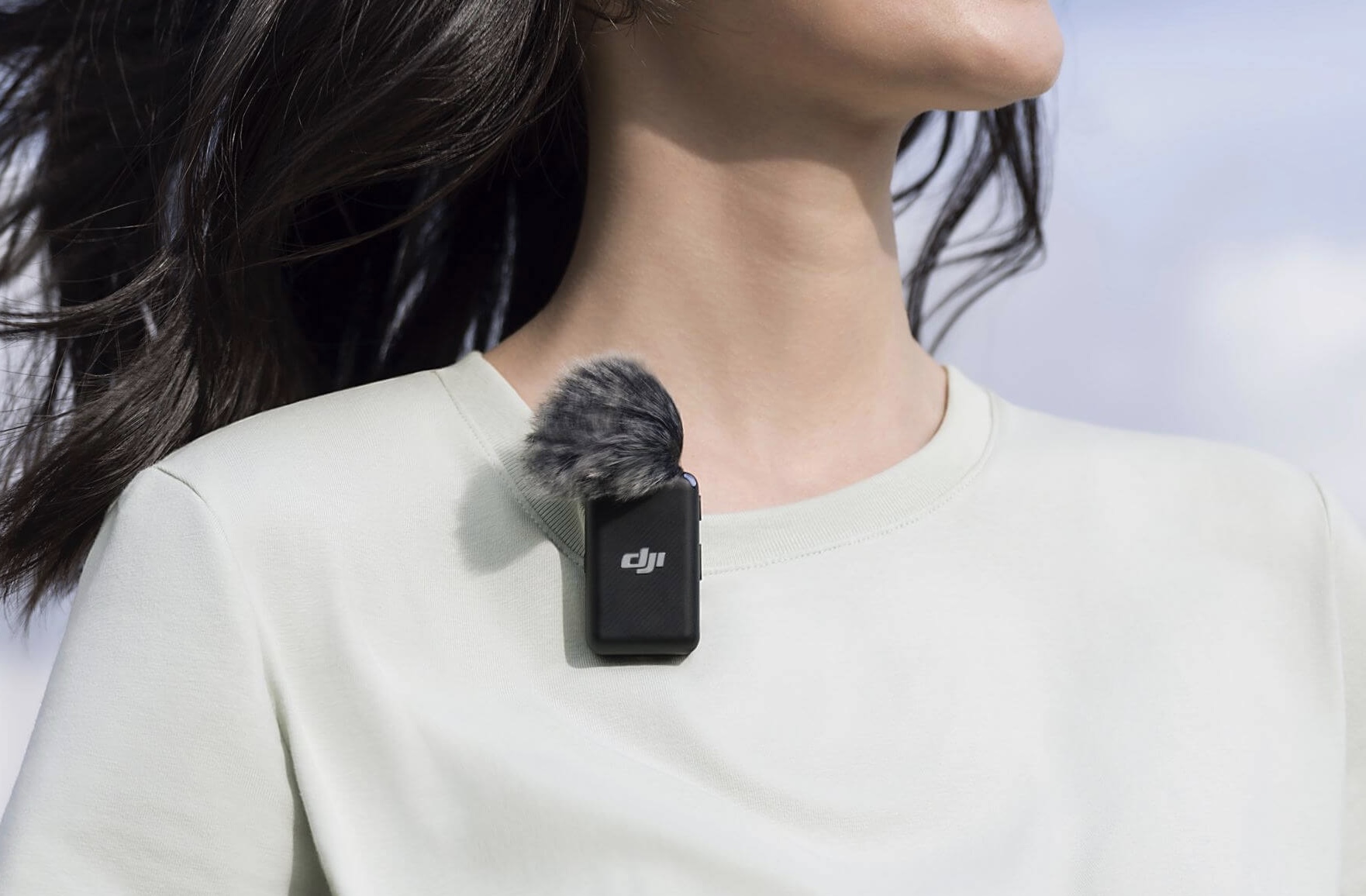
The portable microphone can be outfitted with a windscreen for a better recording experience. It can also be worn on clothing with the integrated back clip or with the magnetics clips. It is a lightweight device, weighing about 30 grams. It comes with a Charging Case, which can quickly restore power to the device. While the Charging Case can be charged within 160 minutes, the receiver and transmitter of the DJI Mic can be charged fully in 70 minutes.
Global availability and actual shipping dates for the DJI Mic are not known at this time.
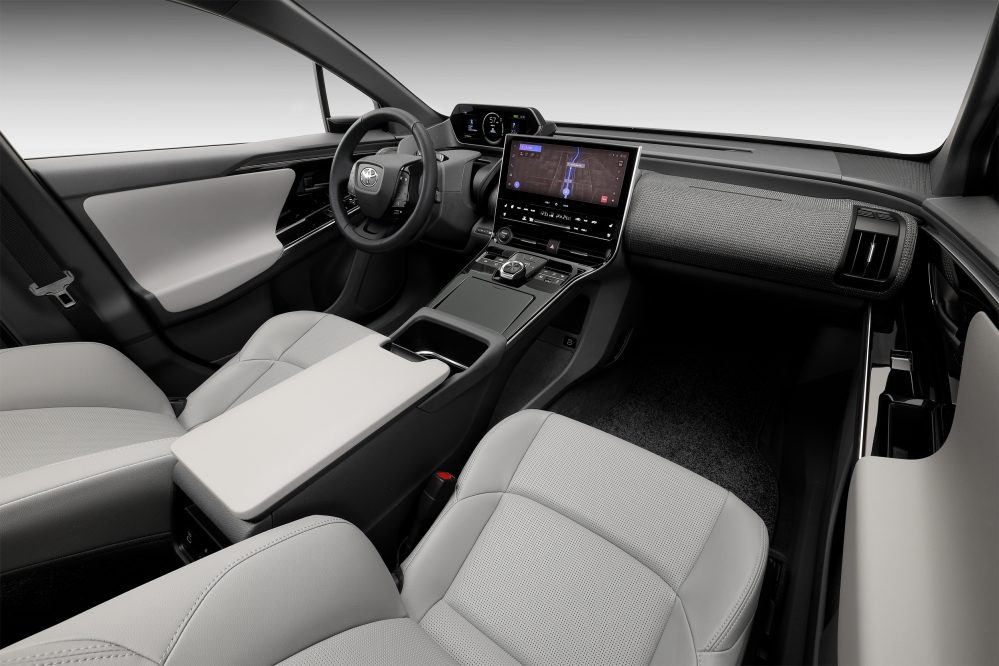
Japanese automaker Toyota is finally in the band of traditional automakers now diversifying to electric vehicle manufacturing. It had previously released the concept all-electric car but has now gone one step further by unveiling its first all-electric car, called the bZ4X. During the Shanghai Motor Show earlier this year, Toyota had showcased the bZ4X as a concept car although not much was known about the car back then. Toyota has now provided better illumination, specs-wise, of the new all-electric SUV, the bZ4X. It is noted that Toyota has offered all-electric vehicles in China previously, the bZ4X is its first battery-electric vehicle with a BEV-dedicated platform and made for the global market.
As reflected during the concept unveiling, the “bZ” stands for beyond zero, which is Toyota’s electrification strategy and a sub-brand for its upcoming lineup of EVs. The bZ4X is not much different from what we saw on the concept version. It has only a few updated features and still features some sharp lines and aggressive design. The vehicle is equipped with a 71.4 kWh battery pack, with a range of 500 km (310 miles) for the front-wheel-drive version and 460 km (286 miles) for the all-wheel-drive version of the SUV. The front-wheel-drive version has a single 150 kW motor while the all-wheel-drive version has an 80 kW motor on each axle to offer more power.
Toyota has packed the bZ4X with a lot of impressive features. The car is capable of bidirectional charging for vehicle-to-home capacity. An optional solar roof adds some wonderful options for the bZ4X. Toyota says the solar roof can generate electricity equivalent to 1,800 km of driving distance per year. Putting this in perspective, it means that the solar panel offers the equivalent power of at least three batteries in terms of the driving range.
Another optional feature in the bZ4X is the wing-shaped steering wheel for improved visibility. It has a steer-by-wire system enabling one motion grip, according to the carmaker. Lock-to-lock is set at around 150 degrees, for greater width and control of the steering wheel.
The bZ4X system controls tire movement to ensure stability in difficult driving situations and uneven roads or when Lane Tracing Assist is activated. The One-motion grip feature provides more legroom and makes it easy for entry and exit.
The bZ4X electric SUV will first be released in Toyota’s home market by mid-2022. More details about the pricing and global availability of the bZ4X are expected to be released subsequently.
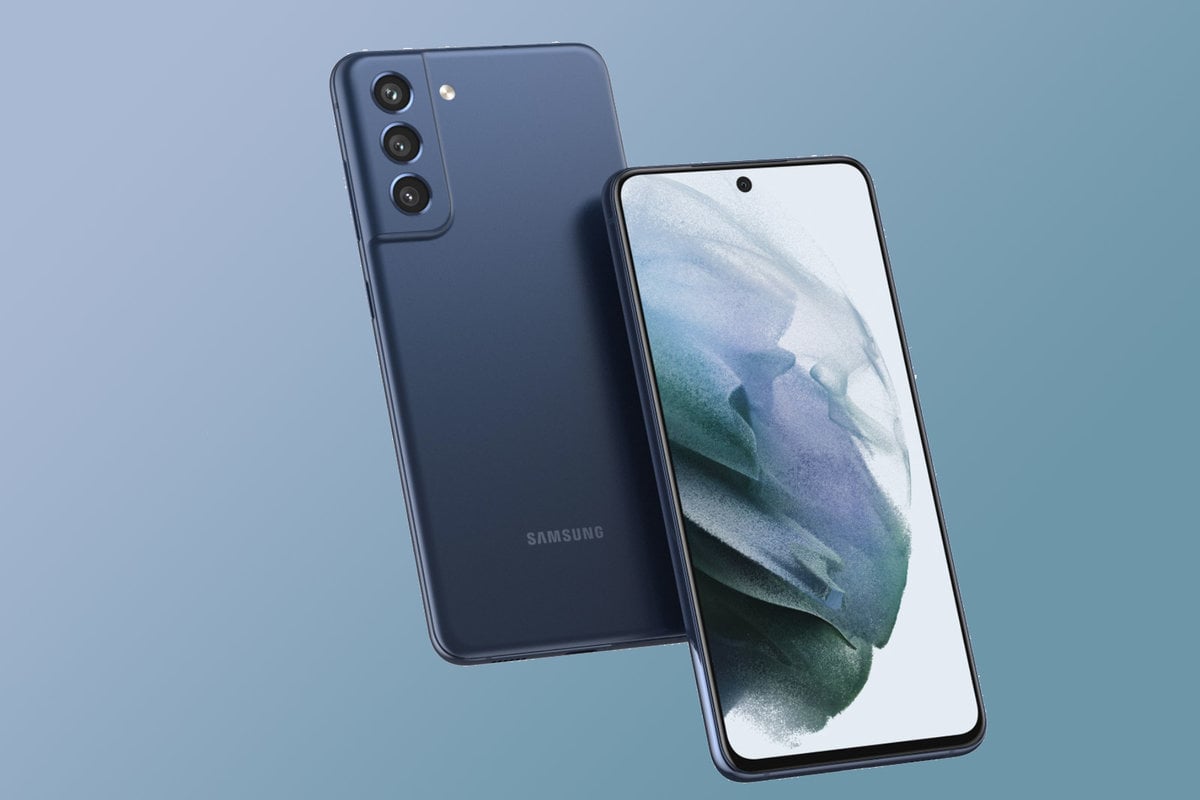
The Samsung Galaxy S21 FE has been delayed numerous times. The phone was expected to go official in the summer but after delaying the launch several times, there were rumors about the phone getting canceled. However, recent reports have indicated that the phone is still getting launched but has been delayed till January 2022.
Now, we are getting to know the potential launch dates for the upcoming Fan Edition smartphone. As per the latest report, the Samsung Galaxy S21 FE could launch during CES 2022 which will happen in January 2022.
Samsung Galaxy S21 FE
The Consumer Electronics Show (CES) 2022 is scheduled from 5th January to 8th January and will take place in Las Vegas. If the reports are to be believed, then the Galaxy S21 FE could go official in the initial days of CES. This contradicts previous rumors suggesting 11th January as the launch date.
Samsung doesn’t usually announce its smartphones at CES. Even when the company announced its Galaxy S21 lineup in January last year, the South Korean giant hosted its own Galaxy Unpacked event a few days after CES. However, the company showcases some of its gadgets and appliances at the Consumer Electronics Show.
With the Samsung Galaxy S21 FE launching at CES, there’s a possibility that the South Korean giant could move the launch of its next-generation S-series flagship, the Galaxy S22 lineup, to its usual timeframe of Galaxy Unpacked event in February.
As for the specifications, the Galaxy S21 FE is expected to feature a 6.4-inch FHD+ AMOLED display with a 120Hz refresh rate. The display holds a punch-hole design to house the 32-megapixel selfie camera. It is also expected to pack a triple camera setup and come powered by a 4,500mAh battery with support for 25W fast charging.
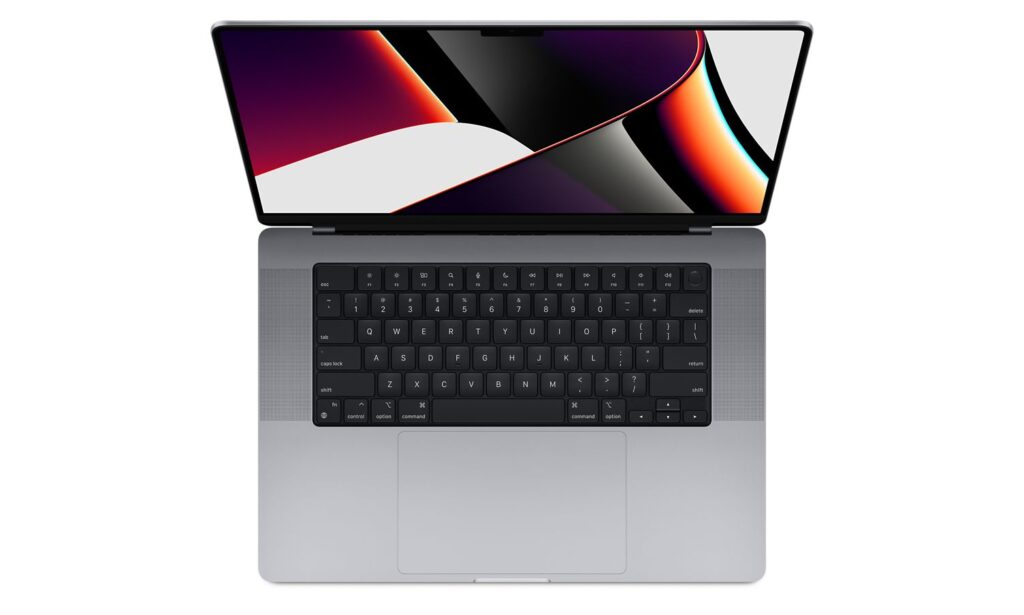
Apple executives in an interview with The Wall Street Journal have finally given a reason for Apple once again giving a miss on Face ID and touch screen support with the latest MacBook models.
Lack of Face ID is perhaps one of the biggest criticisms of MacBook. Many have wondered if the tech would ever make it to the Macs following its debut with the iPhone X. There had been talks about the feature arriving in the future but fans were in for a disappointment with the latest 14 and 16-inch MacBook Pros.
16-inch MacBook Pro 2021
Both models featured notches very similar in looks to the one found on the iPhones but continued to lack Face ID. Apple’s Tom Boger, vice president of iPad and Mac product marketing, said the reason behind this was that Touch ID is more convenient on a laptop since your hands are already on the keyboard (via MacRumors).
Another topic of debate about the Macs has been touch screen support. People have speculated that it has been kept this way so that Macs don’t cannibalize iPad sales. John Ternus, Apple’s senior vice president of hardware engineering, implies this is true:
“We make the world’s best touch computer on an iPad. It’s totally optimized for that. And the Mac is totally optimized for indirect input. We haven’t really felt a reason to change that,” he said.
Image: MacRumors
Boger and Ternus also addressed queries about missing upgradable RAM support on the latest Macs. Both Apple silicon 14-inch and 16-inch MacBook Pros feature deeply integrated RAM modules that can’t be upgraded at all – a bummer for those looking for extra memory following purchase.
The reason behind this was stated to be Apple silicon’s “unified memory architecture” that enables higher memory performance on Macs with ARM-based chips. Similar performance levels cannot be achieved if UMA is done away with just to make way for expandable RAM.
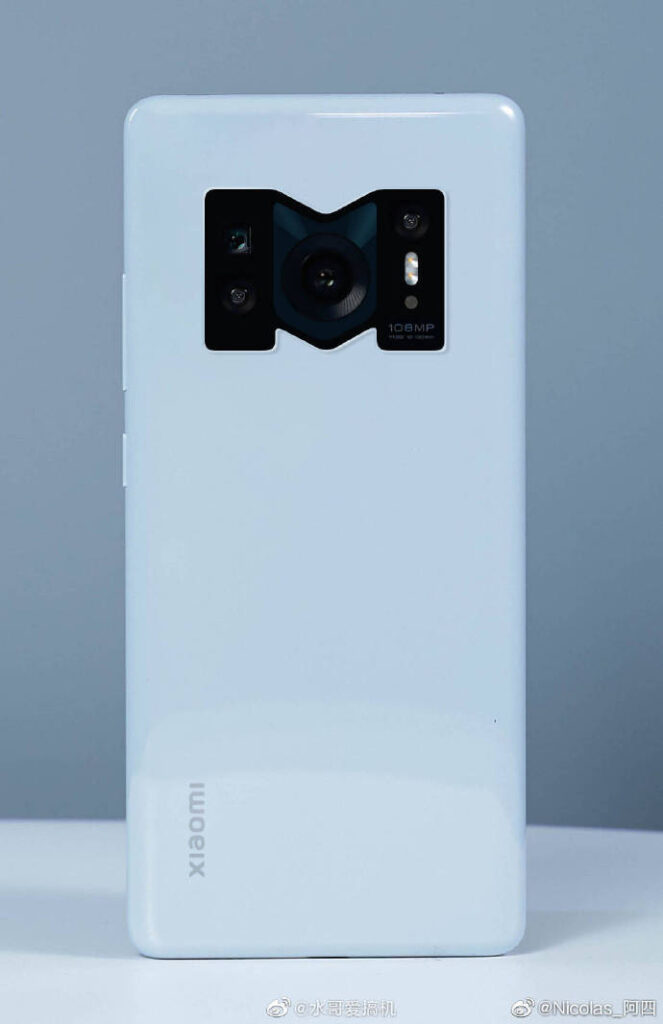
The Xiaomi 12 was allegedly spotted in action in a subway and this could be our first-ever look at the upcoming flagship phone.
Tipster Mukul Sharma has shared a couple of images from Weibo showing the device in action. Not much is visible about the phone really due to it being covered by an odd-looking case, but it does seem to have an unusually tall display. Or it could just be the angles playing tricks.
The Xiaomi 12 was earlier tipped to feature a smaller punch-hole design and a high screen-to-body ratio along with a slight curvature of the sides. But these improvements, unfortunately, are near impossible to spot thanks to the pitch-black content being displayed on the phone in the leaked images.
Nonetheless, a Xiaomi 12 launch was imminent considering that its predecessor – the Mi 11 Ultra – is already being phased out in countries like India. The device reportedly also received Indian BIS certification, further confirming an upcoming release soon. Rumors have pointed towards an early-2022 release date but that hasn’t been officially confirmed yet.
Xiaomi 12 concept
What is known is that the Xiaomi 12 will be one of the first devices to feature the Qualcomm Snapdragon 898 chipset that will be manufactured using a 4nm process. It may pack up to 12GB LPDDR5x RAM and up to 512GB UFS 3.1 storage. 120W wired and 50W wireless charging may also be supported.
We use cookies on our website to give you the most relevant experience by remembering your preferences and repeat visits. By clicking “Accept”, you consent to the use of ALL the cookies.
This website uses cookies to improve your experience while you navigate through the website. Out of these, the cookies that are categorized as necessary are stored on your browser as they are essential for the working of basic functionalities of the website. We also use third-party cookies that help us analyze and understand how you use this website. These cookies will be stored in your browser only with your consent. You also have the option to opt-out of these cookies. But opting out of some of these cookies may affect your browsing experience.
Necessary cookies are absolutely essential for the website to function properly. This category only includes cookies that ensures basic functionalities and security features of the website. These cookies do not store any personal information.
Any cookies that may not be particularly necessary for the website to function and is used specifically to collect user personal data via analytics, ads, other embedded contents are termed as non-necessary cookies. It is mandatory to procure user consent prior to running these cookies on your website.








 The left edge of the device appears barren, while the right side features a volume rocker and a power key. A microphone is placed on the top edge of the device, whereas its bottom edge features a SIM slot, a microphone, a USB Type-C port, and a speaker grille. The device lacks a 3.5mm audio jack.