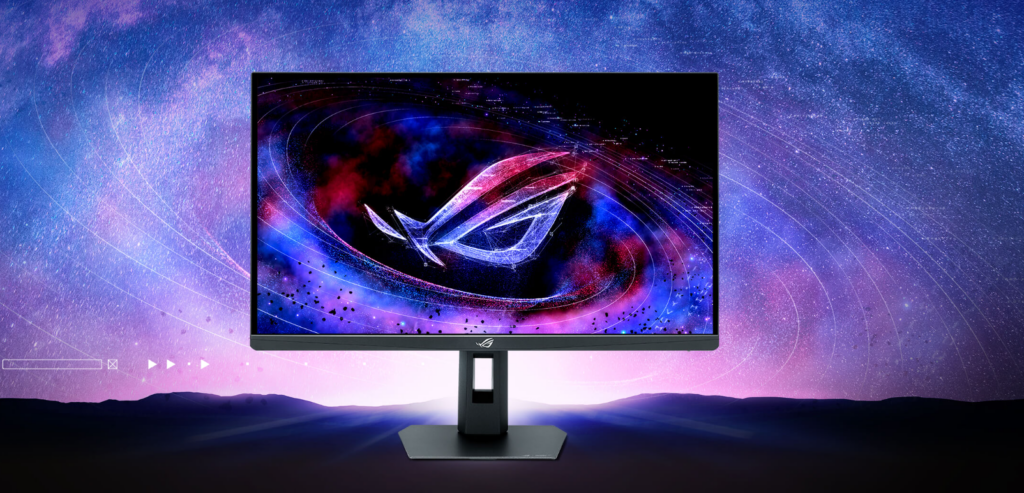
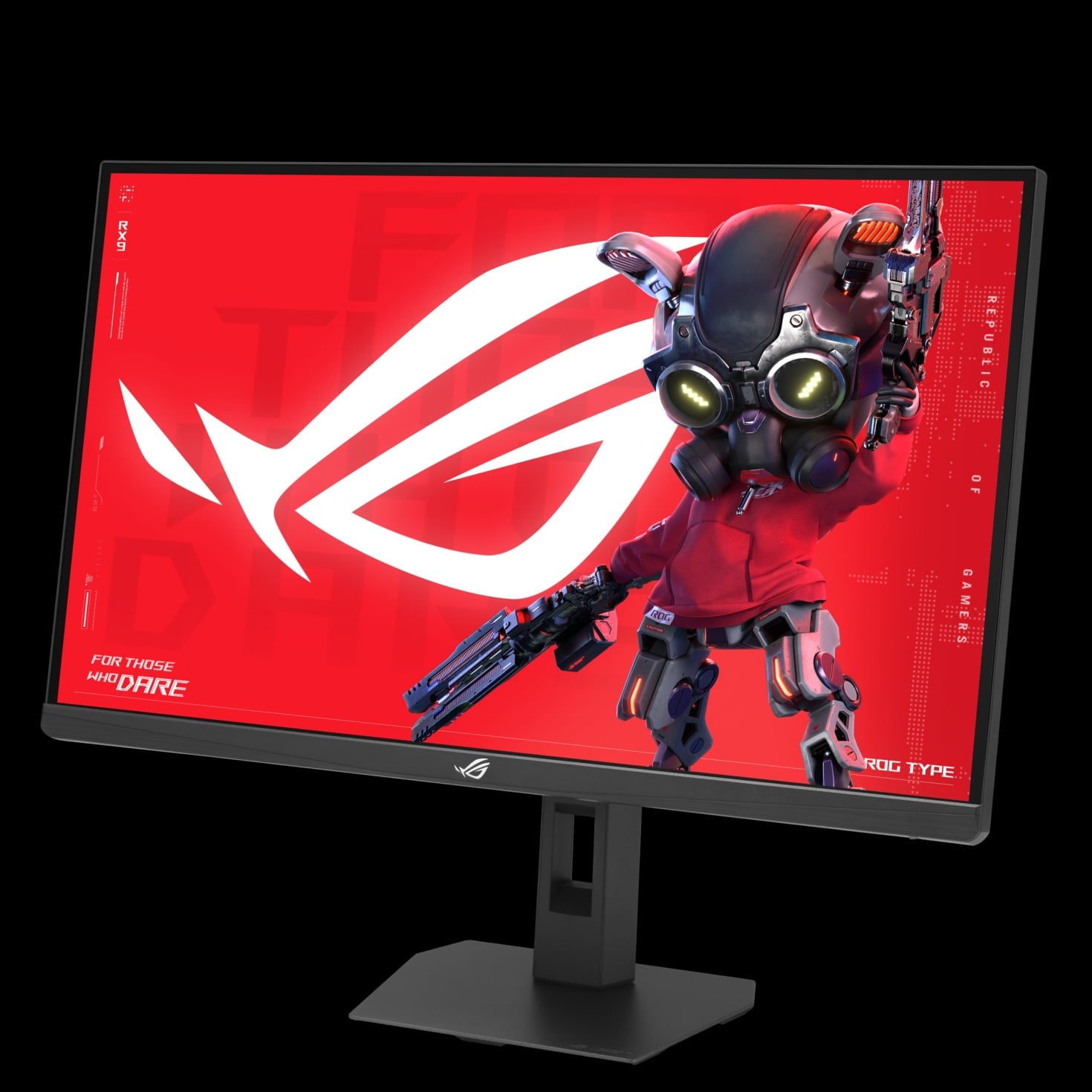
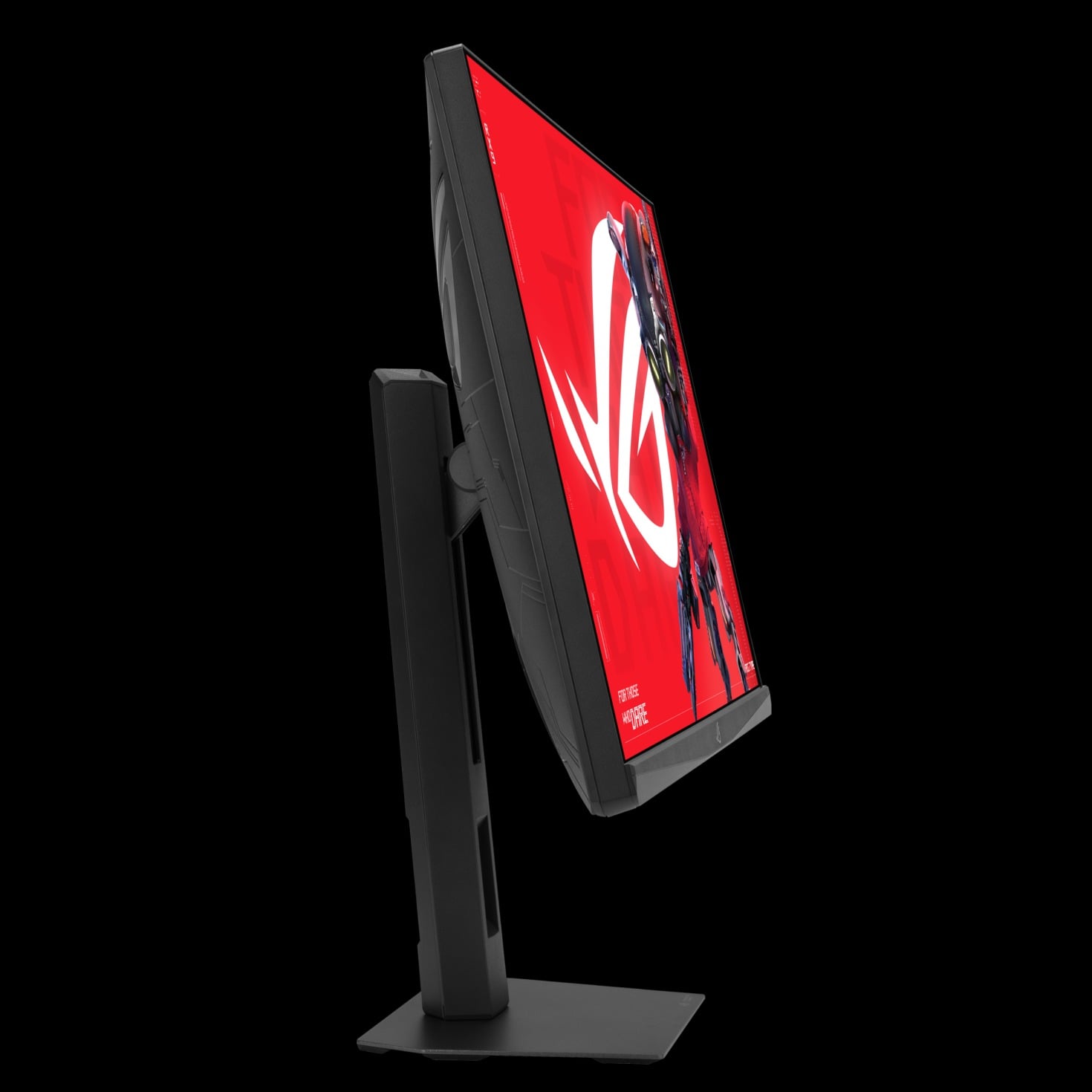
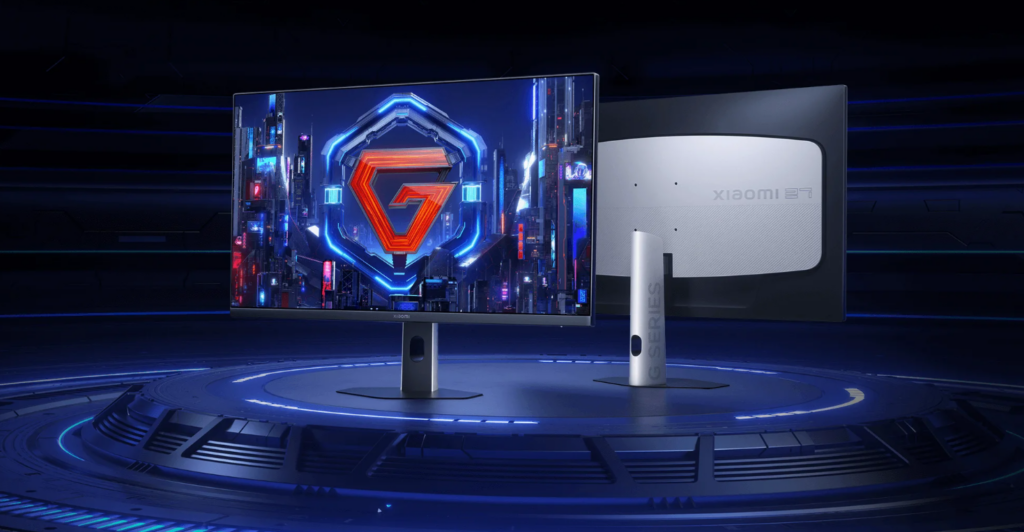
Asus has launched the ROG Strix XG27JCG in North America, entering the limited 5K gaming monitor market with a 27-inch display targeting users seeking high-resolution performance for gaming and productivity.
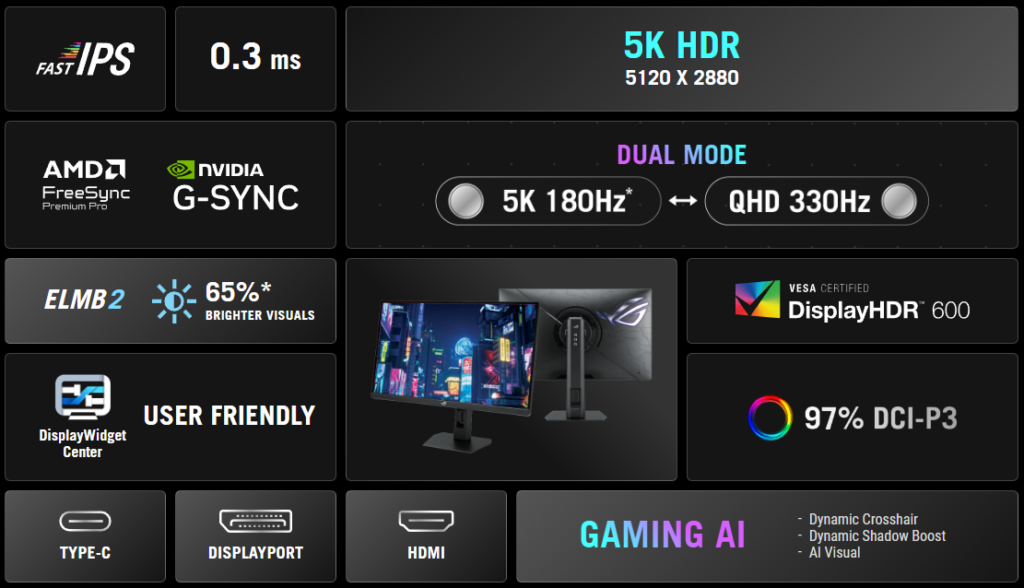
The XG27JCG features a Fast IPS panel delivering 5120 x 2880 resolution at 218 PPI with 0.116 mm pixel pitch. The 16:9 display covers 97 percent of DCI-P3 color space and comes factory calibrated below Delta E 2. Standard brightness measures 350 nits, reaching 600 nits peak for HDR content with VESA DisplayHDR 600 certification. The panel supports 10-bit color depth with 1.07 billion colors and maintains a 1500:1 contrast ratio.
Gaming capabilities include native 180 Hz refresh with overclocking support and 0.3 ms GTG response time. A frame rate boost mode switches from 5K at 180 Hz to QHD at 330 Hz when maximum frame rates matter more than resolution. FreeSync Premium Pro and G-SYNC compatibility ensure tear-free gaming, while ELMB 2 and Trace Free Technology handle motion clarity.
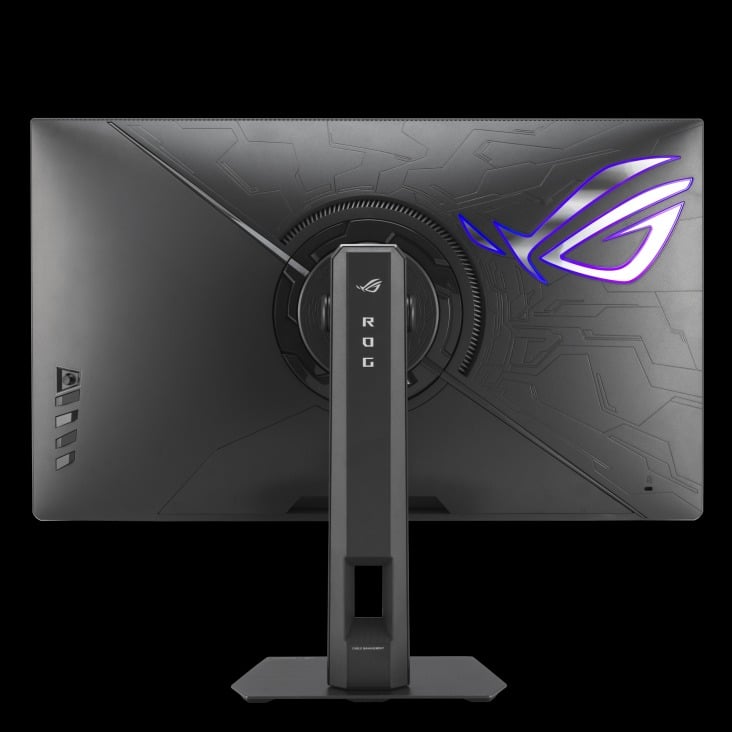
Connectivity provides DisplayPort 1.4 with DSC, dual HDMI 2.1 ports, and USB-C with DisplayPort Alt Mode offering 15 W power delivery. A USB 3.2 Gen 1 hub and headphone jack round out the options, though no speakers are included. HDCP 2.3 support handles protected content.
The ergonomic stand adjusts through +20 to -5 degree tilt, 40-degree swivel, 90-degree pivot, and 110 mm height range. VESA 100 x 100 mounting accommodates aftermarket stands. Additional features include Aura Sync RGB lighting and Kensington lock compatibility.
The monitor includes DisplayPort and power cables, a USB cable, and a three-year Rapid Replacement warranty that provides cross shipping for defective units.
The monitor sells for $849 USD through Asus’s direct store and CA$1,199 in Canada via Amazon.
Nothing appears to be gearing up for the release of its next mid-range smartphone series. The Nothing Phone (4a) and Nothing Phone (4a) Pro have just surfaced in another leak, which has hinted at their release being right around the corner. So here’s what we know.
Nothing Phone (4a) & Phone (4a) Pro Could Be Just Weeks Away
According to a known tipster Yogesh Brar, the brand might be planning an early March release for its new mid-range duo. He also shared a tentative global launch date, which is 5th March 2026. So the affordable devices could be just a month away from their official announcement. This launch strategy would mirror last year’s timing for the Phone (3a) series, which debuted around the same time last year, and helped Nothing solidify its presence in the mid-range segment.
Nothing Phone (3a) and Nothing Phone (3a) Pro
In a recent announcement, Nothing confirmed that there will be no Phone (4) flagship model launching this year, but has already confirmed the Phone (4a) lineup. This might be indicative of the brand’s focus on enhancing the 4a series with meaningful upgrades in design and performance. In the tweet, the tipster did reveal some of these updates, including a faster UFS 3.1 storage instead of the older UFS 2.2, which should result in faster app load times and improved responsiveness.
Both variants are also likely to use Snapdragon 7 series chipsets, although the exact models have yet to be confirmed. This should offer capable performance for day-to-day use and efficient power management. Nothing could bring a marginal battery capacity bump in both models. Apart from this, the upcoming devices are expected to get a refreshed design and a higher price tag.
For more daily updates, please visit our News Section.
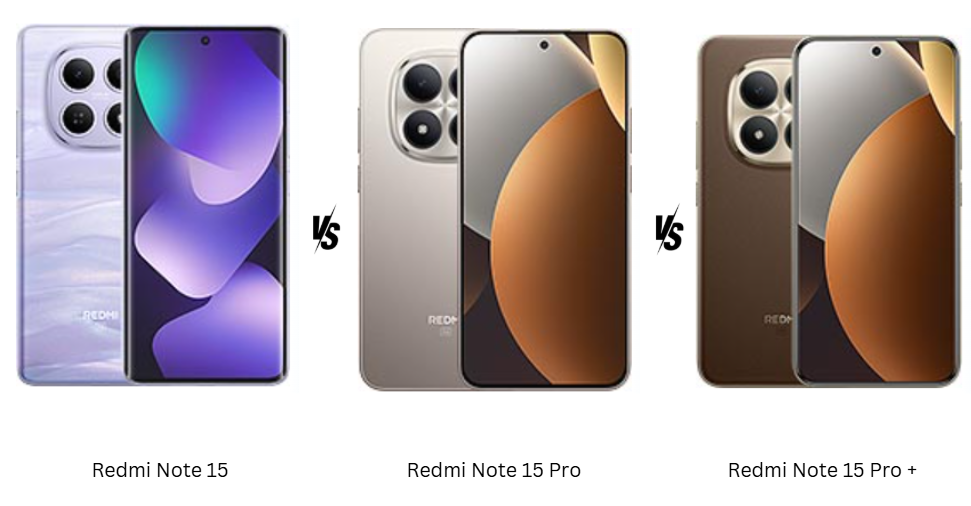
The Redmi Note 15 series marks a clear shift in strategy. Instead of offering small spec bumps, Redmi now uses features to clearly separate value, premium, and near-flagship users. All three phones share AMOLED displays, Android 15 with HyperOS 2, and modern connectivity, but the experience changes meaningfully as you move up the lineup. Understanding which features matter actually is the key to making the right choice.
The Redmi Note 15 focuses on toughness with IP66 water resistance, drop protection, and MIL-STD-810H compliance. It feels purpose-built for everyday reliability rather than visual flair.
The Note 15 Pro upgrades to IP68/IP69K protection, Gorilla Glass Victus 2, and stronger drop resistance, making it far more reassuring for long-term use.
The Pro+ keeps the same high-end protection but adds better material finishes, giving it the most premium feel in the series.
Display features scale similarly. The Note 15 offers a 120Hz AMOLED panel with HDR10+ and very high peak brightness.
The Pro and Pro+ upgrade to higher resolution panels, Dolby Vision, and better HDR tuning, making streaming content noticeably richer and sharper. The difference feels most obvious during video playback and gaming.
Verdict: Durability improves with the Pro, while display clarity and HDR quality peak with Pro and Pro+.
2. Performance, Battery, and Charging Features
Performance upgrades are driven by chipset choice. The Snapdragon 6 Gen 3 in the Note 15 is efficient and smooth for daily use.
The Dimensity 7400 Ultra in the Pro offers higher sustained performance, faster multitasking, and better gaming stability.
The Snapdragon 7s Gen 4 in the Pro+ introduces a newer CPU architecture and a stronger GPU, making it the most future-ready option.
Battery capacity increases with the Pro and Pro+, but charging features create the real separation. Both Note 15 and Pro support 45W fast charging with reverse wired charging.
The Pro+ jumps to 100W fast charging, delivering a full charge in roughly 40 minutes, which fundamentally changes daily usage habits.
Verdict: Choose the Pro for better performance, or the Pro+ for maximum speed and convenience.
3. Camera and Imaging Features
Camera hardware clearly differentiates the lineup. The Note 15’s 108MP OIS camera delivers sharp daylight photos and reliable stabilization.
The Pro and Pro+ upgrade to a 200MP OIS sensor, offering better detail retention, improved HDR, and more flexibility for cropping.
Video features also improve, with higher frame-rate options and better stabilization on the Pro models.
Selfie features scale upward as well. The Note 15’s 20MP camera is adequate, the Pro improves tuning and frame-rate options, and the Pro+ upgrades to a 32MP front camera, delivering sharper selfies and better video clarity.
Verdict: Casual photography works on Note 15, but Pro and Pro+ are clearly better for content creation.
4. Pricing and Buyer Fit:
Redmi Note 15 (~$200 / ₹23,000): Best for users who want AMOLED, OIS camera, solid durability, and long battery life at the lowest price.
Redmi Note 15 Pro (~$350 / ₹30,000): Justified by upgrades like IP69K protection, 200MP camera, stronger chipset, and sharper display.
Redmi Note 15 Pro+ (~$450 / ₹38,000): Targets power users with 100W charging, top-tier performance, advanced connectivity, and better selfie hardware.
Disclaimer: Prices are approximate and may vary based on country, region, and applicable taxes.
5. Final Verdict:
The Redmi Note 15 series is now clearly segmented by features, not just pricing. The Note 15 covers the essentials extremely well. The Note 15 Pro is the most balanced upgrade, adding premium protection, camera, and performance features. The Note 15 Pro+ is for users who value speed, charging technology, and long-term performance. Choosing the right model depends on which features will actually be used every day.
Leaks are hitting the web as we approach its official launch, and they give us our best look yet at what Samsung’s next flagship will offer in terms of finishes. After images from a Russian retailer briefly surfaced online, the Galaxy S26 Ultra will arrive in four main color options, so let’s check it out.
Samsung Galaxy S26 Ultra Colorways Revealed
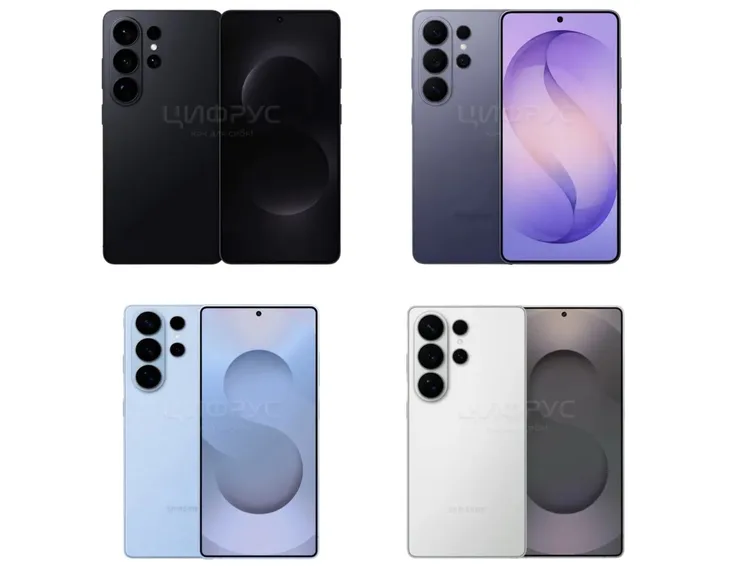
Earlier this week, a fresh listing from a Russian retailer confirmed two of the color options for Samsung’s next top flagship smartphone. The Galaxy S26 Ultra was spotted in a new Cobalt Violet and Black colorways. But now, the latest leak has also revealed two more variants. Sky Blue is a soft blue tone, for a more subtle splash of color, and White is another classic, which adds a clean and minimal touch.
Samsung Galaxy S26 Ultra spotted in Black, White, Sky Blue, and Cobalt Violet.
These colors appeared in leaked product renders from retailer listings, and while some of those listings were quickly taken down, the same lineup has been confirmed by reputable tech news sites and leakers. While these four colors seem set to be widely available through carriers and retailers, rumours suggest additional shades like Silver Shadow and Pink Gold could also launch later on. Some of these might also be exclusive to Samsung’s official website or new limited editions.
Aside from color options, recent renders have also highlighted a slightly refreshed design for the S26 Ultra, including an updated quad-camera layout on the rear and slimmer bezels on the front. Apart from this, Samsung’s new flagship likely retains an S Pen slot. Samsung is set to unveil the Galaxy S26 Ultra with a new Privacy Display feature as well.
For more daily updates, please visit our News Section.
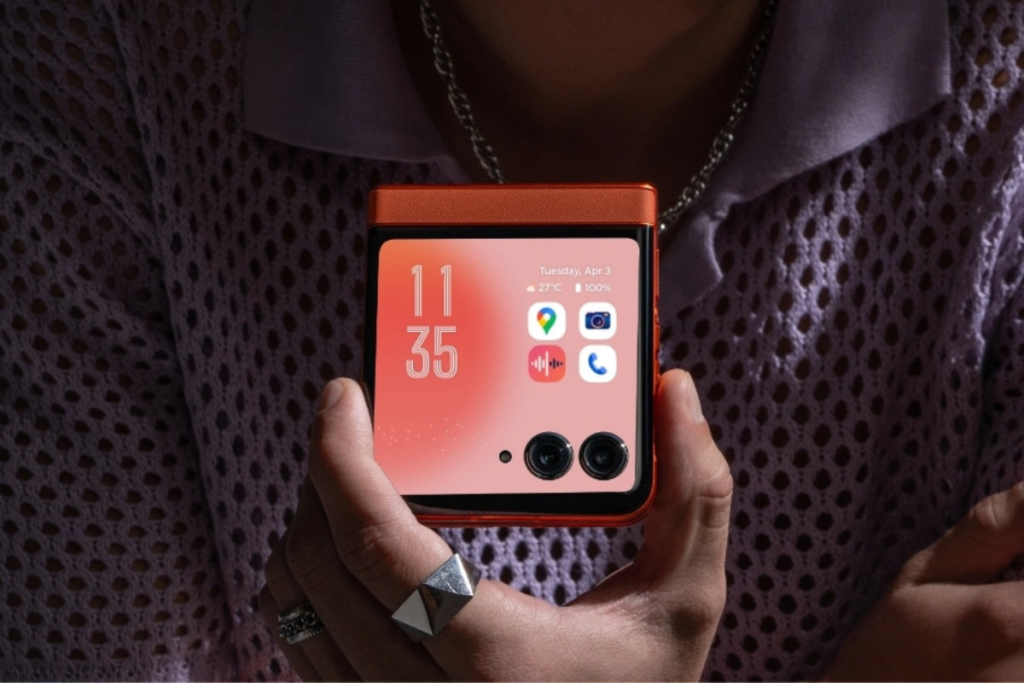
Motorola is working on the successor to the Razr 60 foldable flip phone, and a fresh certification sighting hints that its release might be near. The upcoming Razr 70 has been spotted on the UAE’s Telecommunications and Digital Government Regulatory Authority (TDRA) certification database, so here’s what we know.
Motorola Razr 70 Launching Soon
Looking at the listing, Motorola’s new clamshell folding phone carries the XT2657-8 model number. This official approval in the United Arab Emirates suggests that Motorola is preparing to launch the next-gen Razr flip phone in the global market soon. While Motorola hasn’t revealed an official timeline or specifications yet, regulatory sign-offs like the TDRA often happen just weeks ahead of an official announcement.
Motorola Razr 60
The certification doesn’t reveal any finer details like its specs and features either, but industry sources does offer some hints. Motorola’s new Razr 70 might sport a tall 6.9-inch LTPO foldable screen, which is coupled with a 3.63-inch cover display on the rear. Under the hood, it is expected to be equipped with the MediaTek Dimensity 7400X SoC. A 4,500mAh battery pack could power this device, which likely offers fast charging support.
For photography, the rear will likely still offer a dual camera setup. Given Motorola’s recent smartphone launches, we could see upgrades in cover display size, hinge design, camera performance, and battery efficiency. In related news, the Razr 60 Ultra recently received the Android 16 OS update with various new features and bug fixes, while the Motorola Razr Fold debuted as the brand’s first notebook style folding phone.
For more daily updates, please visit our News Section.
While the public One UI 8.5 beta has remained exclusive to the Galaxy S25 series so far, Samsung has been actively testing the latest build internally on other Galaxy devices. In recent weeks, One UI 8.5 test builds have been spotted on Samsung’s test servers for dozens of Galaxy devices. We’ve prepared a list of those Galaxy devices below.
These internal One UI builds are not accessible to the public for testing. If your Galaxy device is on the list, it means Samsung is working on the One UI 8.5 build for your device, not that the update will arrive soon. That said, here’s the complete list.
Samsung is internally testing One UI 8.5 on these Galaxy devices
The list will grow as we get closer to the stable release, which is expected to debut alongside the Galaxy S26 series in February. Additionally, internal One UI 8.5 builds have been spotted on test servers for several upcoming smartphones, including the Galaxy S26 series, Galaxy A57, and Galaxy A37.
If your Galaxy device isn’t on the above list, it may still be eligible for the One UI 8.5 upgrade. Click here to explore the complete list of eligible devices, along with the exciting features and rollout details. To recap, One UI 8.5 is packed with a host of visual upgrades and exciting new features, including a more customizable Quick Panel, revamped icons with a bit of 3D effect, iOS-inspired liquid glass effects, Audio Broadcast, and plenty of AI upgrades. So, there’s a lot to explore once you have the software on your Samsung device.
To ensure you’re not missing out on the latest updates, check back the Samsung section on this website once in a while. Alternatively, you can join our Telegram channel to get instant notifications about the latest One UI updates, along with all the biggest tech headlines.
OnePlus has shared its OxygenOS FAQ for January 2026, addressing common user questions related to bugs, feature behavior, and update timelines. The post focuses on display issues, screen casting performance, battery charging logic, AI tools, and changes coming with the latest system build.
Display and Performance Issues
One issue raised by users involves screen flickering, green screens, or colored lines during WhatsApp video calls. OnePlus confirmed that the cause has been identified and reported to the app developer. Any fix will depend on updates from the WhatsApp side.
Another common complaint is frame rate drops when using phone screen casting for live streaming. OnePlus says the issue affects some devices and that an optimization plan is already in place. A fix will arrive in a future update. Until then, users can reduce the problem by using the game casting feature in Game Assistant. This allows casting through O+ Connect by either scanning a QR code or connecting the phone to a PC using a USB cable. Once connected, the PC switches to game casting mode for better stability.
Live wallpapers were also clarified. OnePlus confirmed that certain models do not support live wallpapers. There is currently no plan to add compatibility for those devices, and users are advised to watch official channels for any future updates.
Battery Charging Explained
The company also explained why battery usage time does not reset even when the charging icon shows 100 percent. Charging happens in three stages: fast charging, constant charging, and trickle charging. The system shows 100 percent before the battery is fully saturated. Trickle charging takes about 20 minutes and restores capacity lost due to self-discharge. Only after this stage is complete does the system reset usage time since the last full charge.
Feature Improvements
On the feature side, AI Enhance can be used by opening Notes, tapping the plus icon, selecting Scan document, and then choosing AI Enhance. Private Safe search has also been improved. Users can now search private images, videos, audio files, documents, and other files through Settings, Security and privacy, and Private Safe.
System Update Timeline
Lastly, OnePlus confirmed that the OxygenOS B30P01 update began rolling out on January 19, 2026, and will complete by February 5. The update mainly improves search functions inside Private Safe.
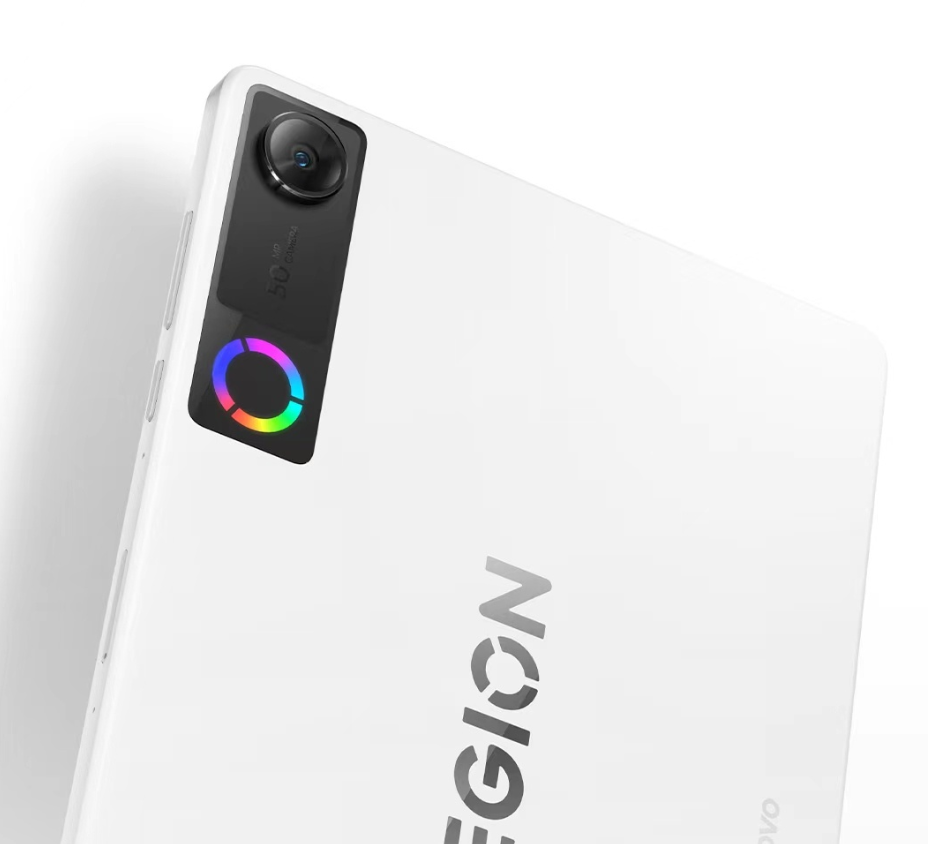
Lenovo has officially started teasing its next-generation Legion Y700 gaming tablet, confirming the device’s existence in a short promotional video shared on Chinese social media platforms. While full specs and pricing haven’t been revealed yet, the Legion Y700 Gen 5 teaser confirms the brand’s push towards performance, portability and versatility again with this fifth iteration.
New Lenovo Legion Y700 Gen 5 Gaming Tablet Teased
The Chinese brand’s brief promo emphasises the elements that made the earlier Legion Y700 lineup of gaming tablets successful, which are compact design, portability, dual USB Type-C ports, and support for bypass charging that lets you play without battery drain while plugging and overheating the device. These practical features appear likely to carry over into the Gen 5 model, making it familiar yet refined for fans of the series.
Lenovo Legion Y700 (2026)
The video also confirms that the next Legion Y700 will include a single 50 MPrear camera, similar to its predecessor, but Lenovo hasn’t yet said whether this sensor will match the same hardware or be upgraded. Early leaks have suggested that the upcoming tablet will be powered by Qualcomm’s Snapdragon 8 Elite Gen 5 chipset, a flagship grade SoC that powers premium Android phones such as the OnePlus 15. That would mark a notable performance upgrade compared with older Legion tablets.
Other unofficial tips point to an 8.8-inch display, which likely supports up to 165Hz refresh rate and 3K resolution, and a 9,000mAh battery pack. Lenovo hasn’t confirmed an official release date yet, but the video trailer hints that the official announcement might be right around the corner. Earlier this week, the company also confirmed two color options namely White and Black.
For more daily updates, please visit our News Section.
While Motorola has already released the Android 16 update to dozens of eligible devices, some high-end smartphones are still awaiting their turn. The Razr 2024 was also one of them, and it has now started receiving the Android 16 update, which brings a host of useful upgrades.
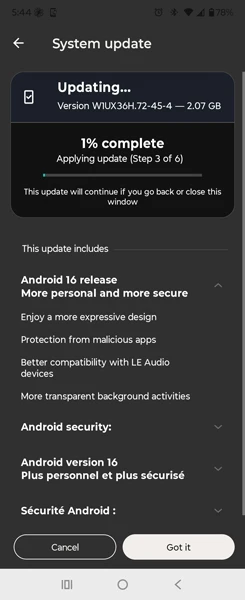
The latest update for Motorola Razr 2024 (also known as Razr 50) has been spotted rolling out in Canada with the firmware version W1UX36H.72-45-4. It’s a big upgrade with a download size of about 2GB. Android 16 is the second major OS update for the Razr 2024, and will receive another upgrade sometime next year as the final one. The device will, however, continue to receive security updates for a while.
As the initial release, the update is available in Canada, and soon, it will start rolling out to other regions. To check if the update is available on your Motorola smartphone, go to Settings > System updates > Check for updates. Once the update reaches your device, ensure that it has sufficient storage and is charged to at least 40% for a smooth upgrade to Android 16.
Here’s the complete Android 16 changelog, detailing every single change:
Feature improvements After upgrading, you’ll see the following improvements to the Android operating system and other apps.
Find modes in one place Now you can find these modes in Settings > Modes:
– Do Not Disturb – Bedtime – Driving
You can also create custom modes to fit any situation where you want to choose a different set of people or apps who can interrupt you.
Toggle these modes on or off in quick settings.
Connect to Wi-fi and hotspot with one tap If your phone and device you want to connect to its hotspot are using the same Google account, you no longer need to enter a password to connect.
Better support for low-energy audio hearing aids You can now choose to use either your hearing aid’s built-in microphone or your phone’s microphone during voice calls. Additionally, you can adjust the volume of ambient sound captured by the hearing aid’s microphones. These options help enhance call clarity, especially in noisy environments or when your hearing aid’s battery is running low.
Other improvements Android system updates add more than new features. Using the latest Android update provides other improvements such as: – Enhanced security and protection to defend against evolving threats like malware, phishing, and data breaches – App compatibility with newer apps, which often require the latest Android version to function correctly – Performance improvements that optimize your phone’s operating system for smoother performance, better stability, and, in some cases, longer battery life – Bug fixes and stability enhancements to resolve known issues and improve overall reliability and stability
You can regularly visit the Motorola section on Gizmochina to stay up-to-date with the latest news and developments. Or, if you prefer instant updates, don’t forget to join our Telegram channel.
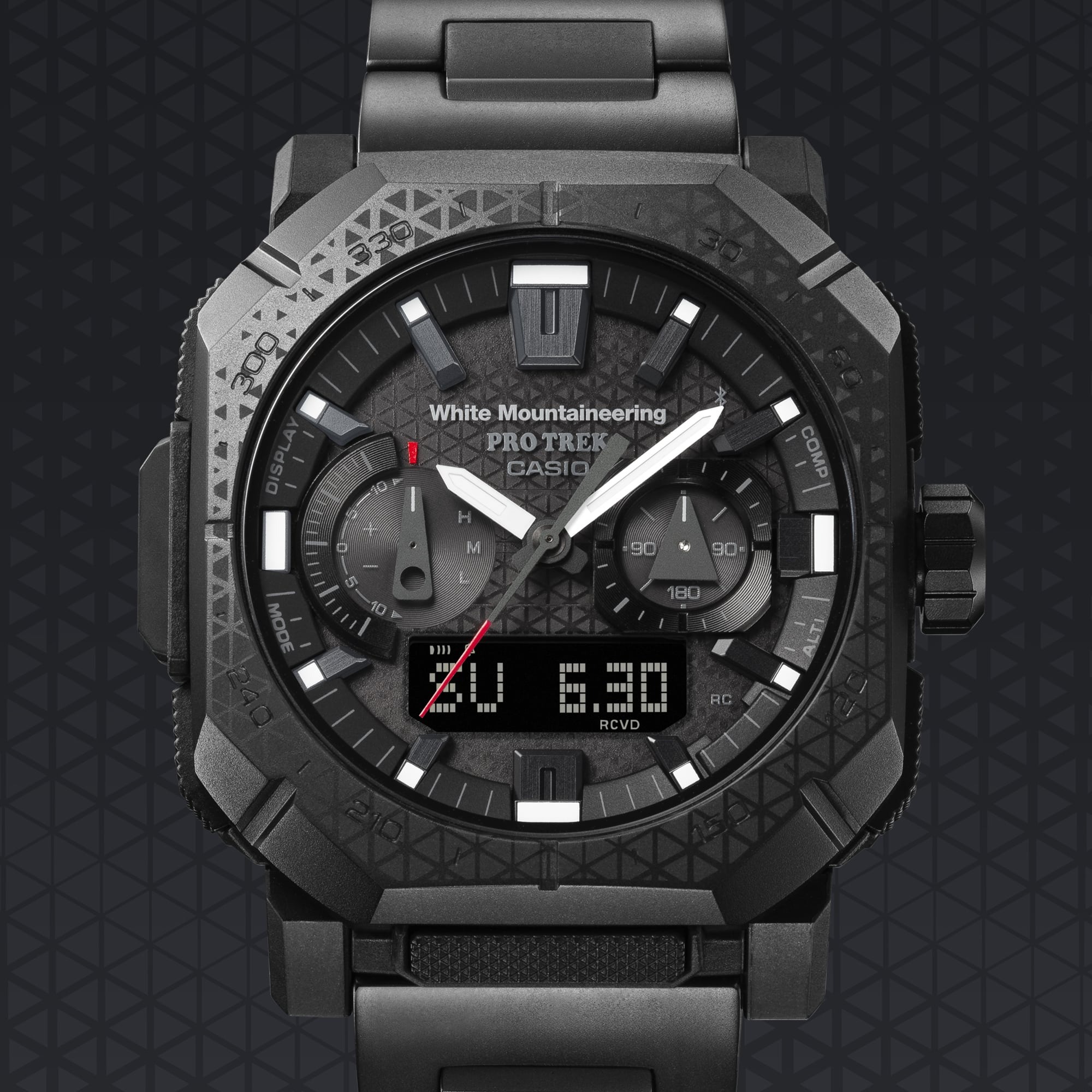
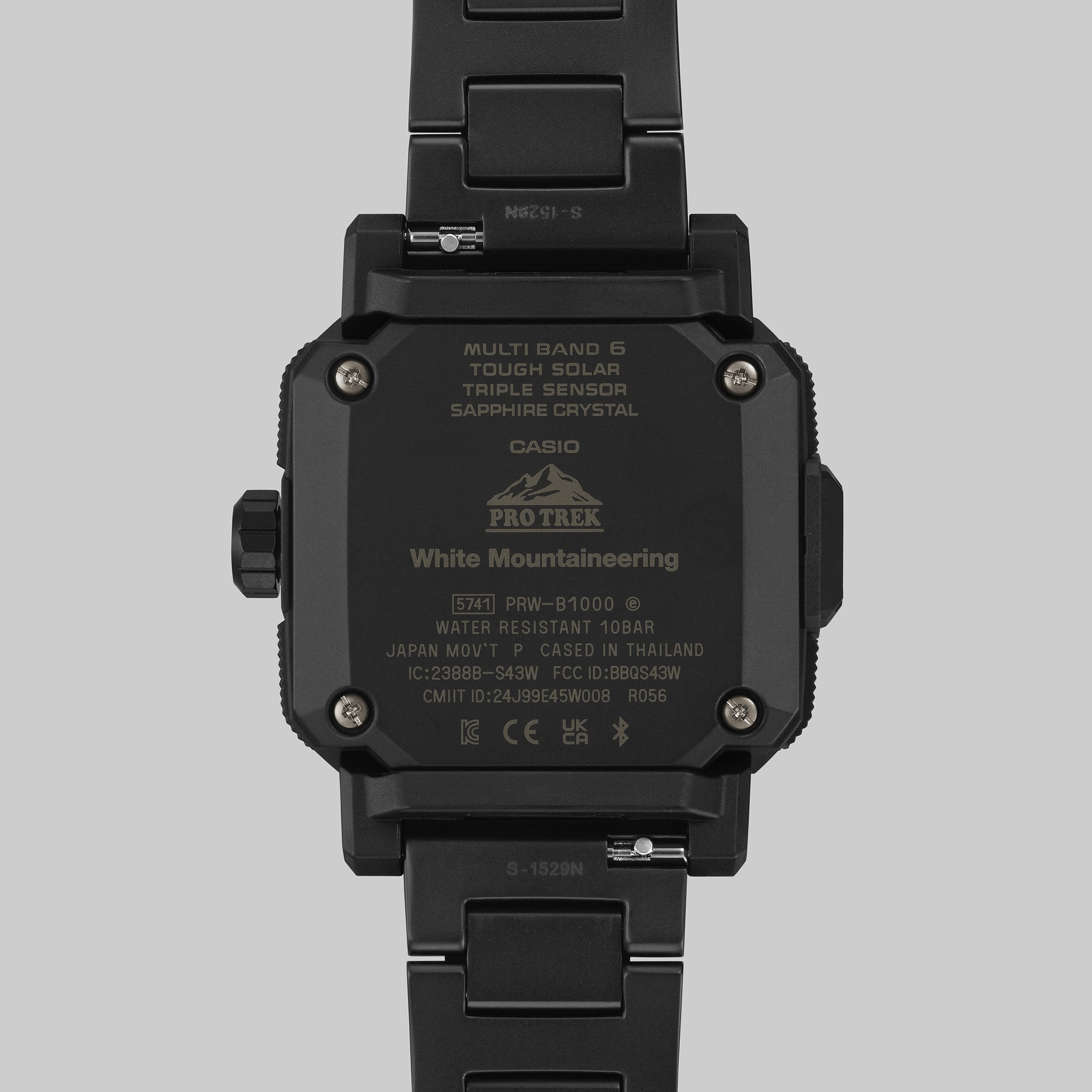
Casio has confirmed the February 2026 launch of its second collaboration with Japanese fashion label White Mountaineering. The new model is called the Pro Trek PRW-B1000WM-1 and sits at the high end of Casio’s outdoor watch lineup.
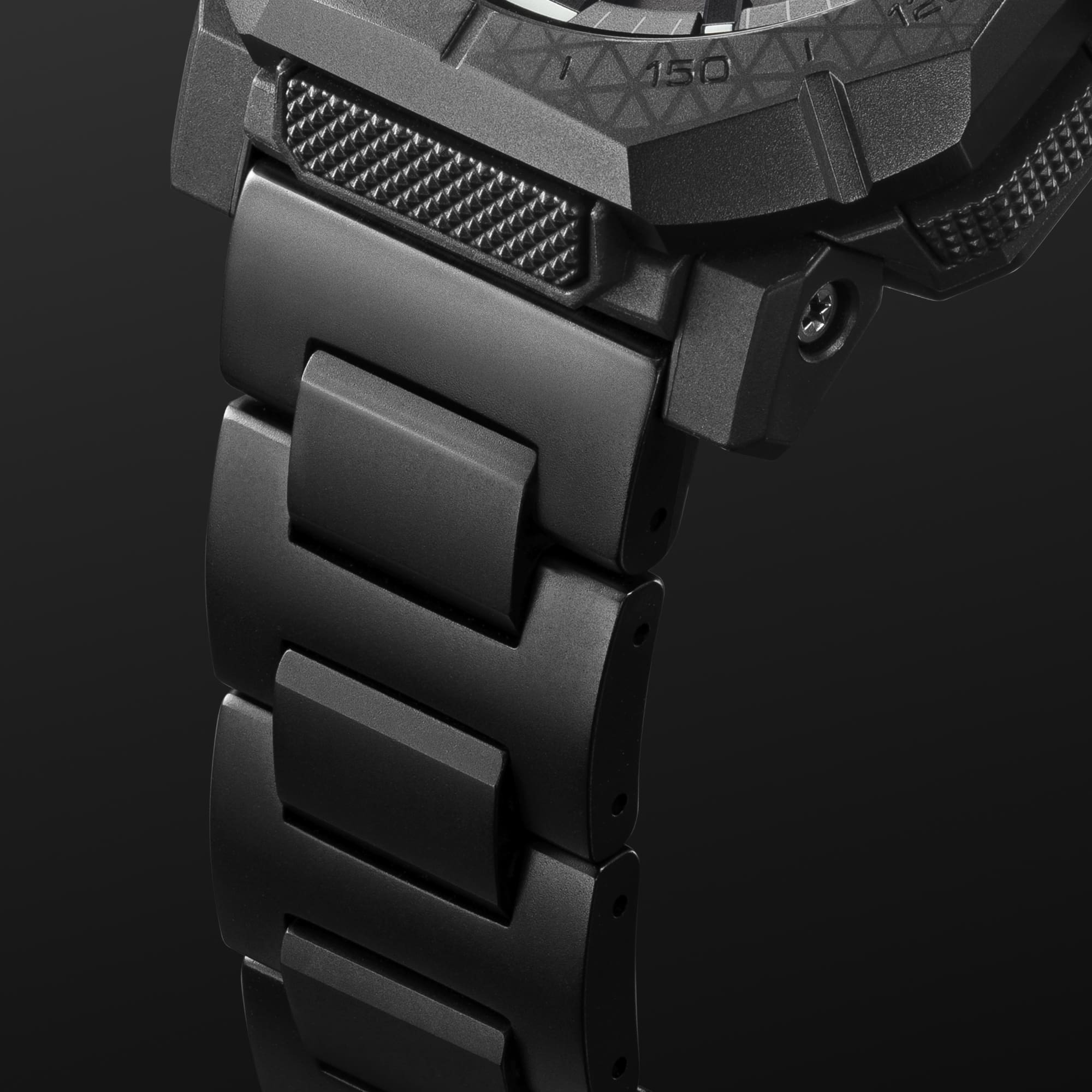
The watch features a complete titanium construction with a black ion-plated H-link bracelet and a stainless steel bezel. The 50.8 × 45.8 × 14.9 mm case combines flame-retardant bio-based resin with metal components, weighing 120 grams. Design elements include matte black dial with phosphorescent white indexes, red seconds hand, and White Mountaineering’s signature triangular pattern printed on the dial and etched into the bezel.
The titanium bracelet uses a slide-adjustable three-fold clasp accommodating wrist sizes 150-205 mm. Technical specifications include 100-meter water resistance, −10°C temperature rating, and sapphire crystal with anti-reflective coating.
Power comes from Tough Solar charging, delivering six months of runtime under normal use or 24 months in power-saving mode. Timekeeping relies on Multiband 6 radio calibration and Bluetooth connectivity, maintaining ±15 seconds monthly accuracy without synchronization.
Casio’s Triple Sensor provides comprehensive environmental data: compass bearing across 16 directions with memory function, altitude measurement from −700 to 10,000 meters including trend graphs, barometric pressure monitoring (260-1,100 hPa) with alerts, and temperature readings between −10°C and 60°C.
Additional functionality includes world time across 38 zones, calculated sunrise/sunset times, stopwatch, countdown timer, five daily alarms, and double LED Super Illuminator for dial and digital display visibility. The screw-lock crown enhances durability.
Both brand logos appear on the case back. Casio packages the watch in recycled materials. The PRW-B1000WM-1 targets outdoor enthusiasts seeking premium materials and advanced sensors in a tactical aesthetic matching White Mountaineering’s design philosophy. The watch retails for ¥140,800, approximately $900.
Samsung’s next flagship chip is starting to show up more often in benchmarks, with numbers that are hard to ignore. The Exynos 2600 has now posted a strong result in Geekbench’s Vulkan GPU test, putting it right next to Qualcomm’s best.
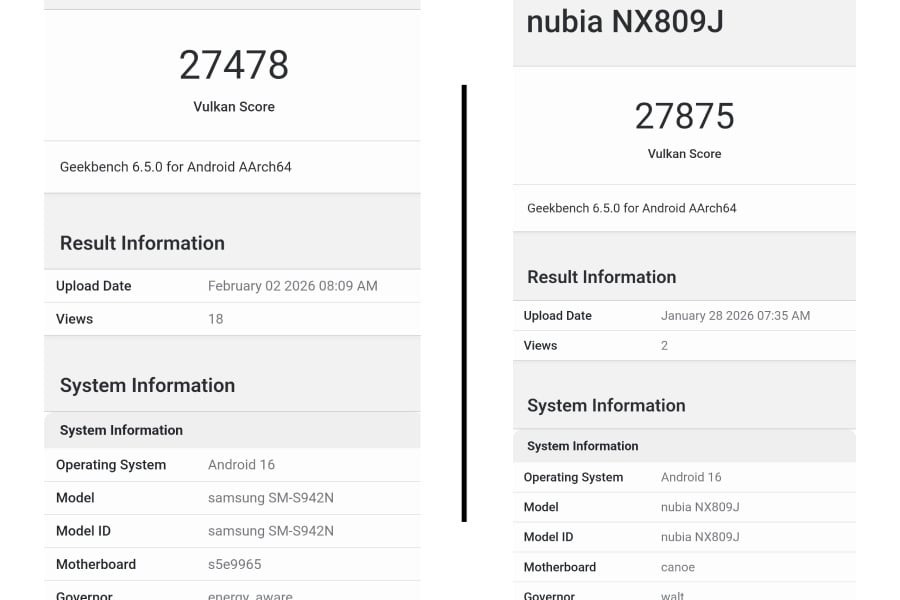
According to the latest Geekbench 6 Vulkan benchmark, the Exynos 2600 scored 27,478 points. That’s surprisingly close to Snapdragon 8 Elite Gen 5, which scores 27,875 points in the same test. The gap is small enough that, on paper at least, most users wouldn’t notice a difference.
Exynos 2600 (left) | Snapdragon 8 Elite Gen 5 (Right)
This isn’t the first time the Exynos 2600 came closer to its Snapdragon counterpart. Back in January, the chip scored 25,460 points in Geekbench’s OpenCL test. Again, it had a marginal difference from Qualcomm’s 25,971 points on the same benchmark.
Exynos 2600 matches Snapdragon 8 Elite Gen 5 performance on OpenCL and Vulkan
Both OpenCL and Vulkan benchmarks are designed to measure GPU compute performance, but they focus on slightly different things. OpenCL is more about traditional general-purpose parallel computing, which is relevant to tasks like image processing and some AI workloads.
Vulkan, on the other hand, is a modern, low-overhead API built for high-efficiency graphics and compute tasks. It’s especially relevant for gaming, advanced visuals, and machine learning on mobile devices. Strong Vulkan scores usually hint at better performance in modern games and graphics-heavy apps.
Woah, Exynos 2600 GPU just hit Snapdragon 8 Elite Gen 5 scores in OpenCL on Geekbench! pic.twitter.com/DBVhXwTGUI
Part of this improvement likely comes down to how the Exynos 2600 is built. It’s Samsung’s first mobile chip made using a 2nm gate-all-around (GAA) process. This approach wraps the transistor gate around the channel on all four sides using vertically stacked nanosheets, which helps improve efficiency and performance while reducing power leakage.
On the graphics side, the chip features the Xclipse 960 GPU based on a custom version of AMD’s RDNA 4 architecture. It’s designed specifically for high-performance gaming.
Samsung is also trying to tackle heat with Fan-Out Wafer-Level Packaging (FOWLP) along with a Thermal Block (HPB) design. By placing a copper heatsink directly in contact with the chip die, Samsung says it has reduced thermal resistance by 16 percent, which should help maintain performance under sustained loads.
Of course, benchmarks don’t tell the whole story. Real-world performance, battery life, and thermals in actual Galaxy S26 phones will matter far more. But these numbers suggest the Exynos 2600 could finally be competitive in a space Qualcomm has dominated for years.
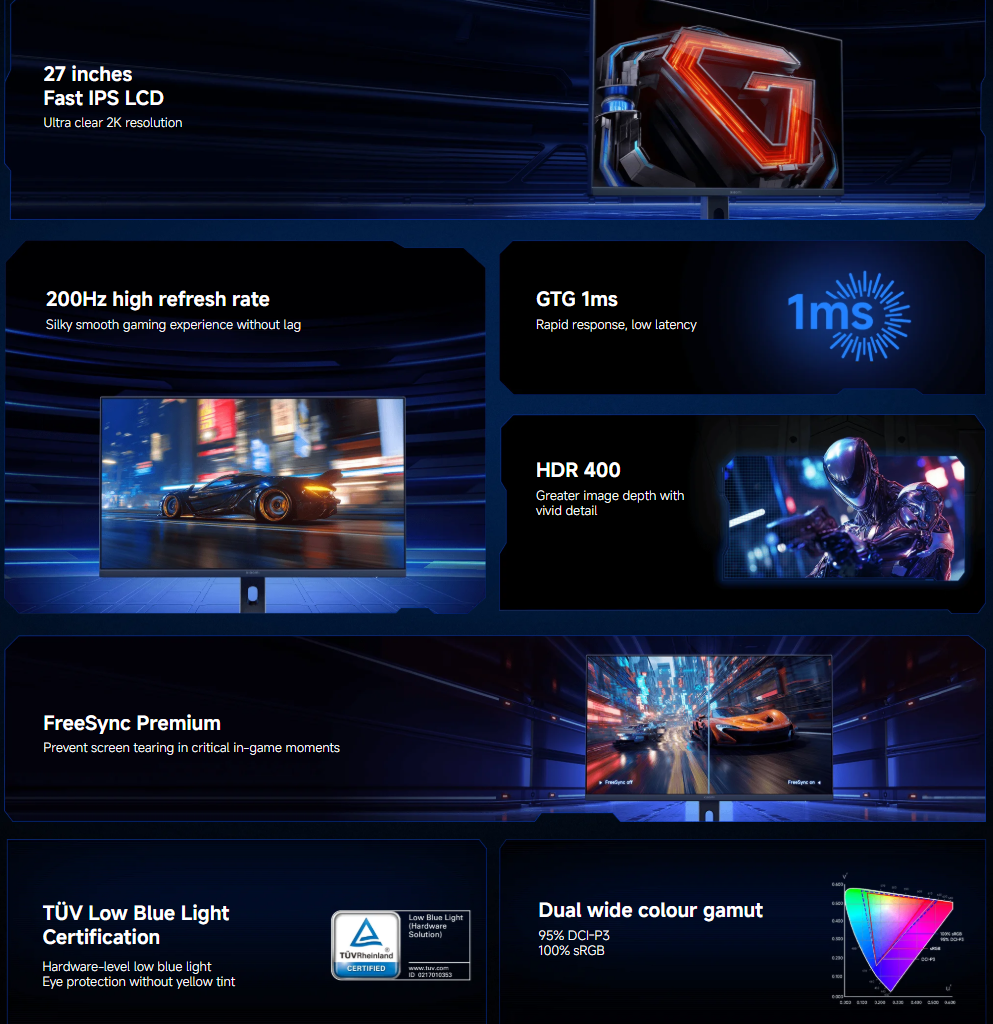
Xiaomi has released its G27Qi 2K Gaming Monitor in Australia, upgrading the 2025 model’s 180Hz refresh rate to 200Hz. The monitor is currently available at AUD 289 (~$203), discounted 28% from its AUD 399 retail price.
The 27-inch Fast IPS panel delivers 2560 x 1440 resolution with a 1ms GTG response time to minimize motion blur. AMD FreeSync Premium support synchronizes frame rates between GPU and display, reducing screen tearing and stutter during gameplay.
The monitor holds HDR 400 certification with 400 nits peak brightness and a standard 1000:1 contrast ratio. While not targeting high-end HDR applications, it offers improved contrast in varied lighting conditions.
Color accuracy is a standout feature. The display covers 95% of DCI-P3 and 100% of sRGB, with 10-bit color depth for smooth gradients. Factory calibration achieves a Delta E below 2, making it viable for gaming, media viewing, and entry-level creative tasks. TÜV-certified hardware blue light filtering cuts harmful emissions by 50% while maintaining color accuracy during extended use.
The design incorporates slim bezels on three sides and a rear joystick for settings control. Connectivity options include two DisplayPort 1.4 ports, two HDMI 2.0 ports, an audio jack, and DC power input. The stand adjusts between -5° and +15° tilt, while a 75 x 75 mm VESA mount enables wall installation.
At 4.15 kg with stand and 48W maximum power consumption, the monitor balances portability with performance specifications tailored for competitive gaming and general multimedia use.
Xiaomi has not announced launch dates or pricing for other regions. The Australian release marks the first confirmed market for the 2026 model, which appeared on Xiaomi’s global website in late 2025 before gaining retail availability.
In related news, Xiaomi has also started the global rollout of the Gaming Monitor G27i 2026, a 27-inch Full HD Fast IPS display aimed at budget-conscious gamers, offering up to a 200Hz refresh rate in supported modes (165Hz listed officially) and a 1ms GTG response time to reduce motion blur.
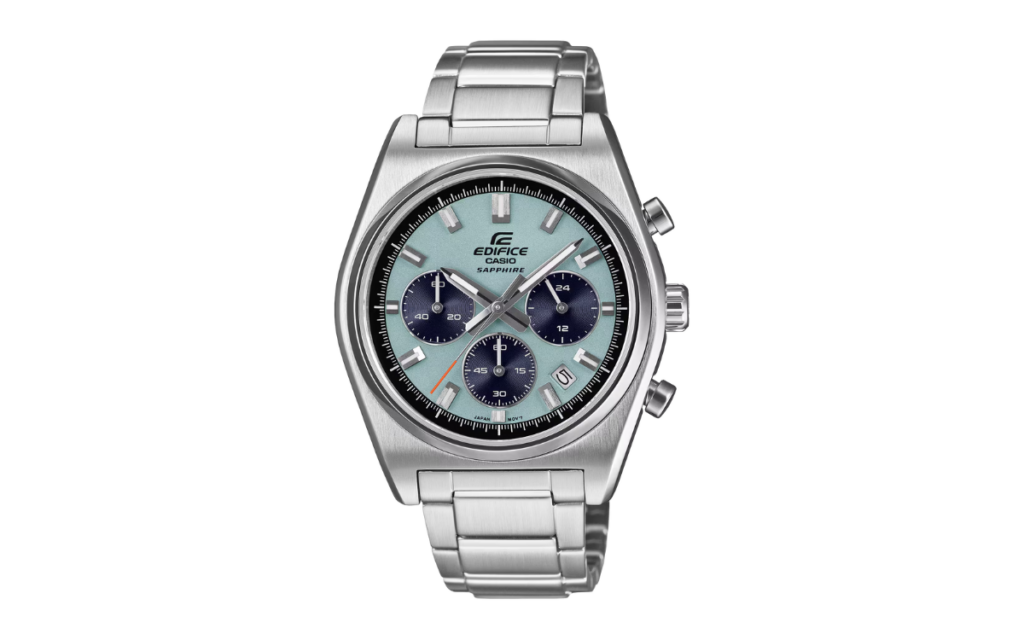
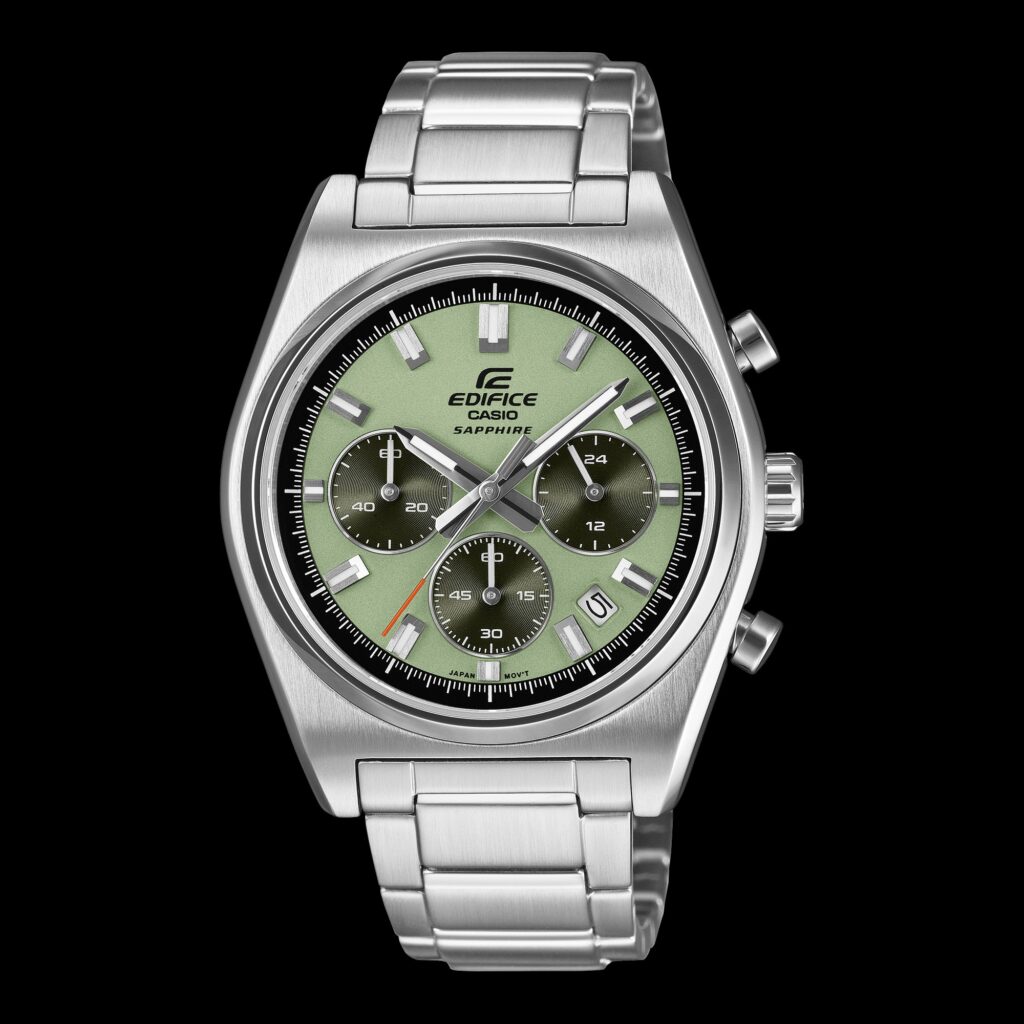
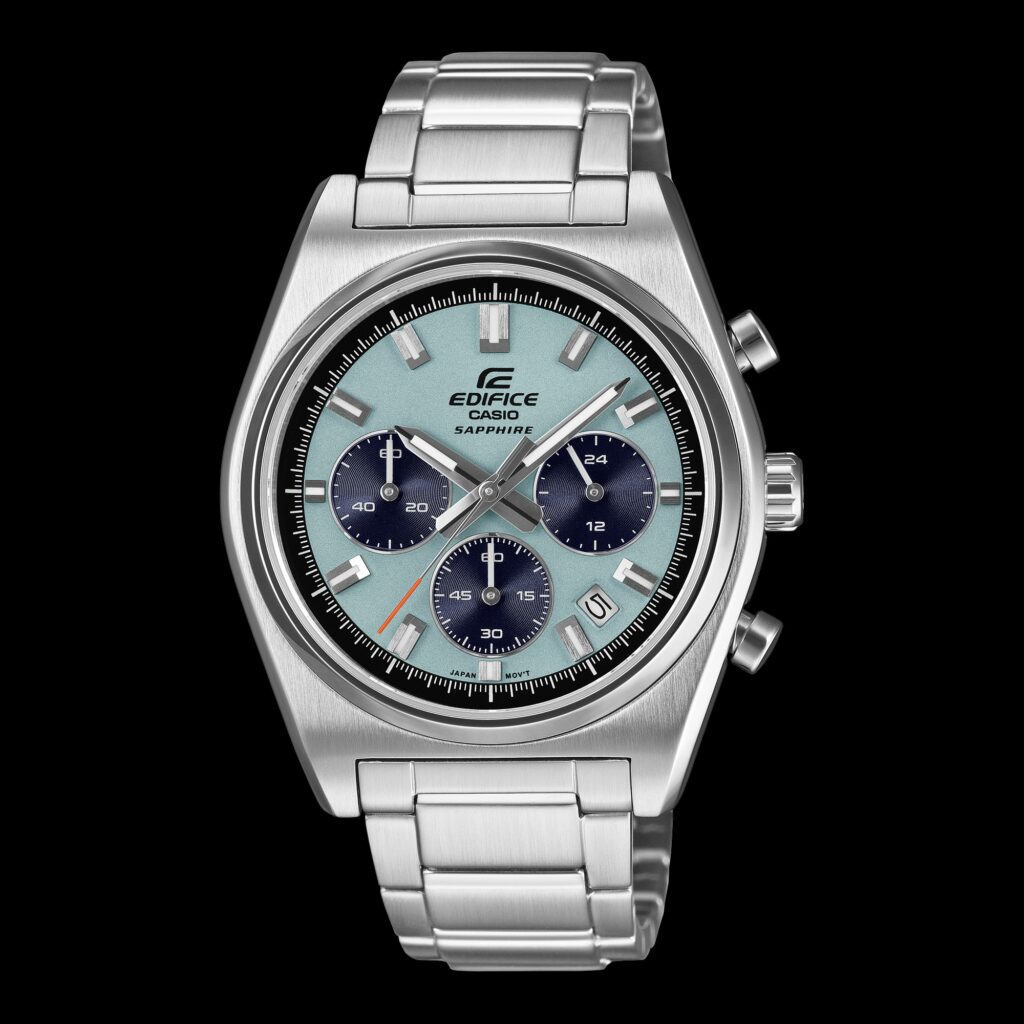
Casio has launched two new Edifice EFB730D chronograph watches in the United States. Both models are now available through Casio’s US store, priced at $165.
Casio EFB730D-2BV Specifications
The EFB730D-2BV features a light mint green dial with dark navy blue subdials. It comes with a silver stainless steel case and bracelet. The EFB730D-3AV includes an olive green dial with darker green subdials, a black minute track, and the same stainless steel case and bracelet. Both watches reflect a sporty aesthetic inspired by classic sportscar dashboards.
Casio has equipped both watches with a 3-6-9 inset chronograph layout. The case size measures 47 x 40 x 11 mm, and each watch weighs 136 grams. Casio uses sapphire crystal for the glass and a screw-lock back for added durability. The watches offer 100-meter water resistance, making them suitable for daily use and light swimming.
The EFB730D series supports a 1-second stopwatch with a maximum measuring capacity of 59 minutes and 59 seconds. It includes split-time and 1st-2nd place measurement modes. The battery life is rated for approximately three years using the SR920SW cell.
Both models come with a one-touch three-fold clasp and a bracelet designed to fit wrist sizes between 150 mm and 205 mm. Casio equipped the watches with traditional analog timekeeping, featuring three hands and three subdials for 24-hour, stopwatch minutes, and stopwatch seconds functions, along with a date display.
Casio describes the new Edifice EFB730D watches as everyday chronographs that can suit both casual and formal settings. The design uses clean lines, subtle contrasts, and a smaller case diameter to deliver a refined take on the sporty chronograph format.
In March, Oppo is expected to unveil two new Find X9 series phones for the Chinese market. One of them has just received a major go-ahead from the country’s SRRC authority. This device is believed to be the Find X9s Pro.
Oppo Find X9s Pro SRRC certified
Oppo Find X9s Pro SRRC certified
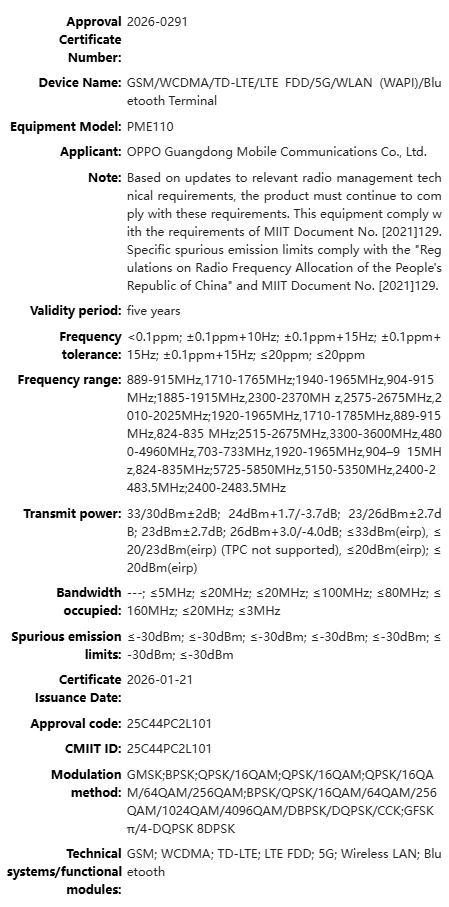
As can be seen above, the SRRC authority has approved an Oppo phone with model number PME110, indicating clearance for its wireless and radio communication features in China. However, the device is still awaiting 3C and TENAA certifications before it can move closer to an official launch.
Previous reports claimed that this device was the Find X9s, but newer reports have revealed that it will be called the Find X9s Pro when it hits the Chinese market. Speculation is rife that the device will be released in the global market in the second quarter of this year.
Oppo Find X9s Pro specifications (rumored)
Oppo Find X9s Pro
Recent reports have revealed that the Oppo Find X9s Pro will feature a 6.32-inch OLED LTPS screen delivering a 1.5K resolution and a 120Hz refresh rate. It will be the only compact phone to feature dual 200-megapixel cameras backed by the Samsung HP5 sensor. These primary and periscope telephoto cameras will be accompanied by a 50-megapixel ultra-wide lens. For selfies, it will have a 50-megapixel front-facing camera.
The Find X9s Pro is said to feature the Dimensity 9500 and a massive battery of around 7,000mAh capacity. It is expected to support 80W wired and 50W wireless charging.
For more daily updates, please visit our News Section.
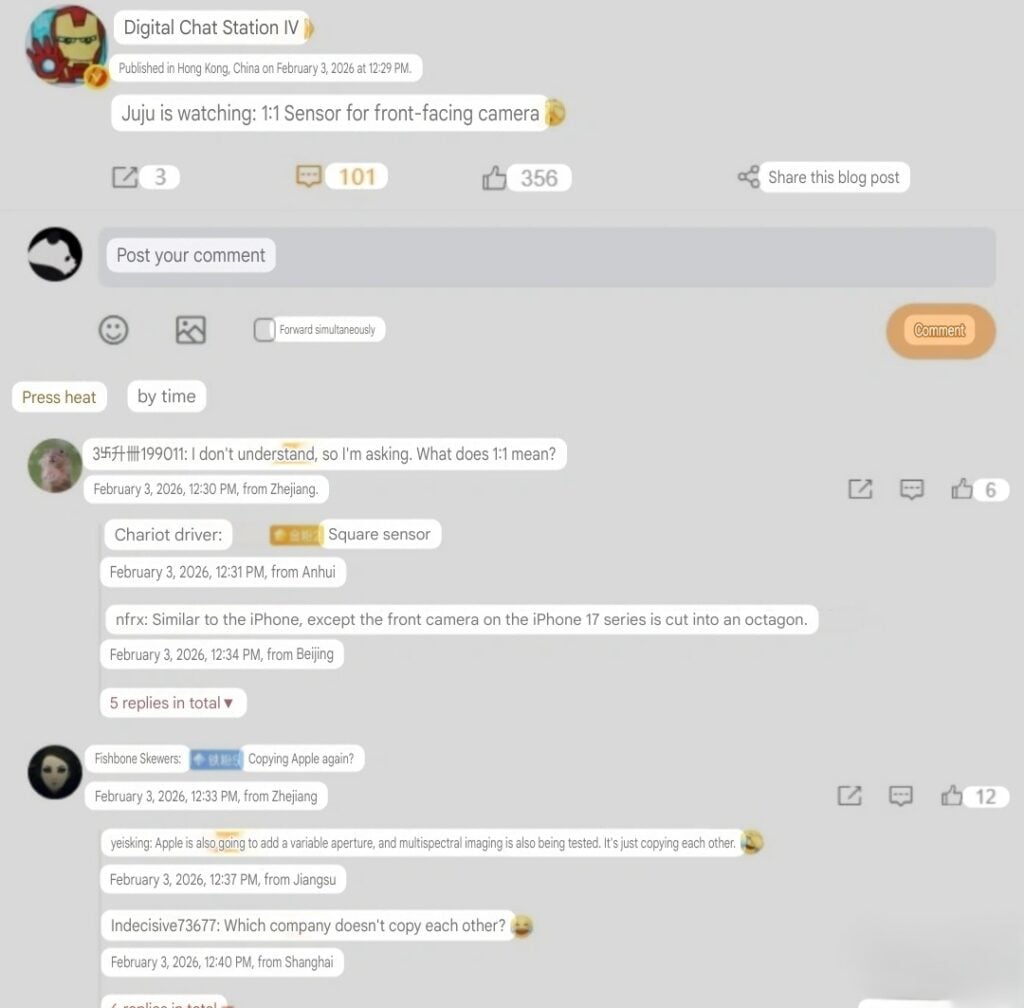
Huawei may be experimenting with a different approach to front cameras, and it could quietly solve a few everyday annoyances in the process. According to a new tip shared by Digital Chat Station on Weibo, the company is exploring the use of a 1:1 square sensor for selfie cameras in future smartphones.
On the surface, a square sensor doesn’t sound dramatic. But the idea behind it is fairly practical. Unlike traditional rectangular sensors, a 1:1 sensor captures a more balanced image area, giving software more room to crop, reframe, or rotate shots without cutting too much out of the frame. That could be especially useful for group selfies, video calls, and social content where orientation changes often lead to awkward framing or lost detail.
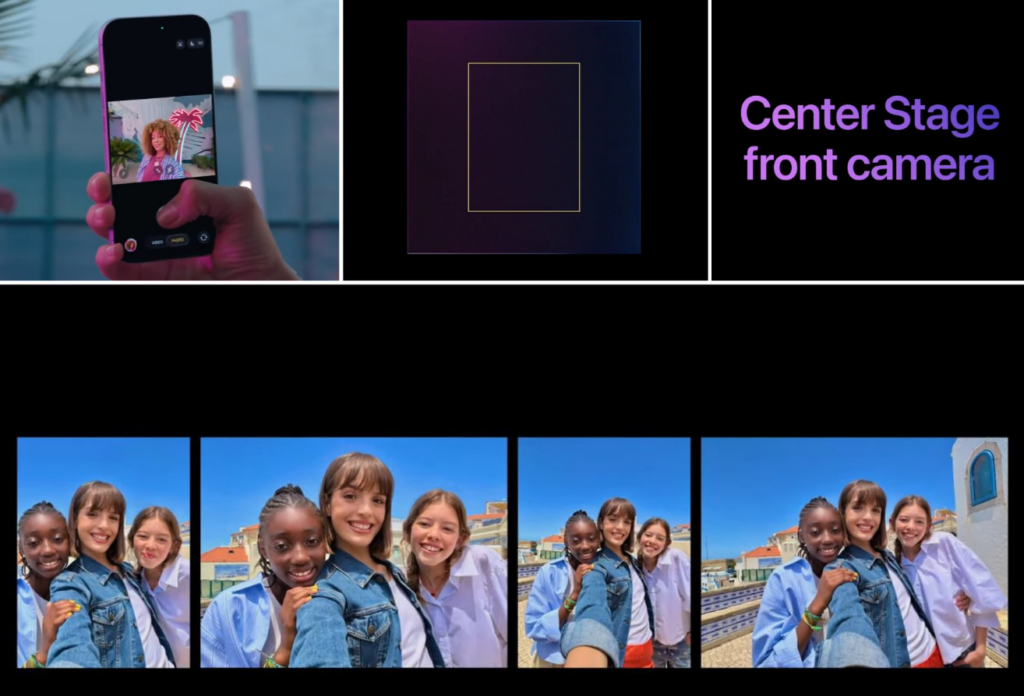
The idea isn’t entirely new. Apple moved in a similar direction with the iPhone 17 series, where its updated Center Stage front camera relies on a square sensor to enable features like auto-framing, smooth orientation switching, and subject tracking during video calls. The hardware allows the software to do more without forcing users to constantly adjust how they hold the phone.
If Huawei adopts the same sensor layout, it could unlock similar benefits on the Android side: cleaner framing in both portrait and landscape, more flexibility during video recording, and fewer compromises when switching formats. This would matter most for users who rely heavily on the front camera for calls, vlogging, or social media. There’s no confirmation yet on resolution, timing, or which phones might get the feature first.
For now, this remains an idea under evaluation, not a locked-in product feature. Still, it highlights how front cameras are becoming a real area of hardware innovation again. If Huawei moves forward, the square sensor could quietly become one of those changes users appreciate every day.
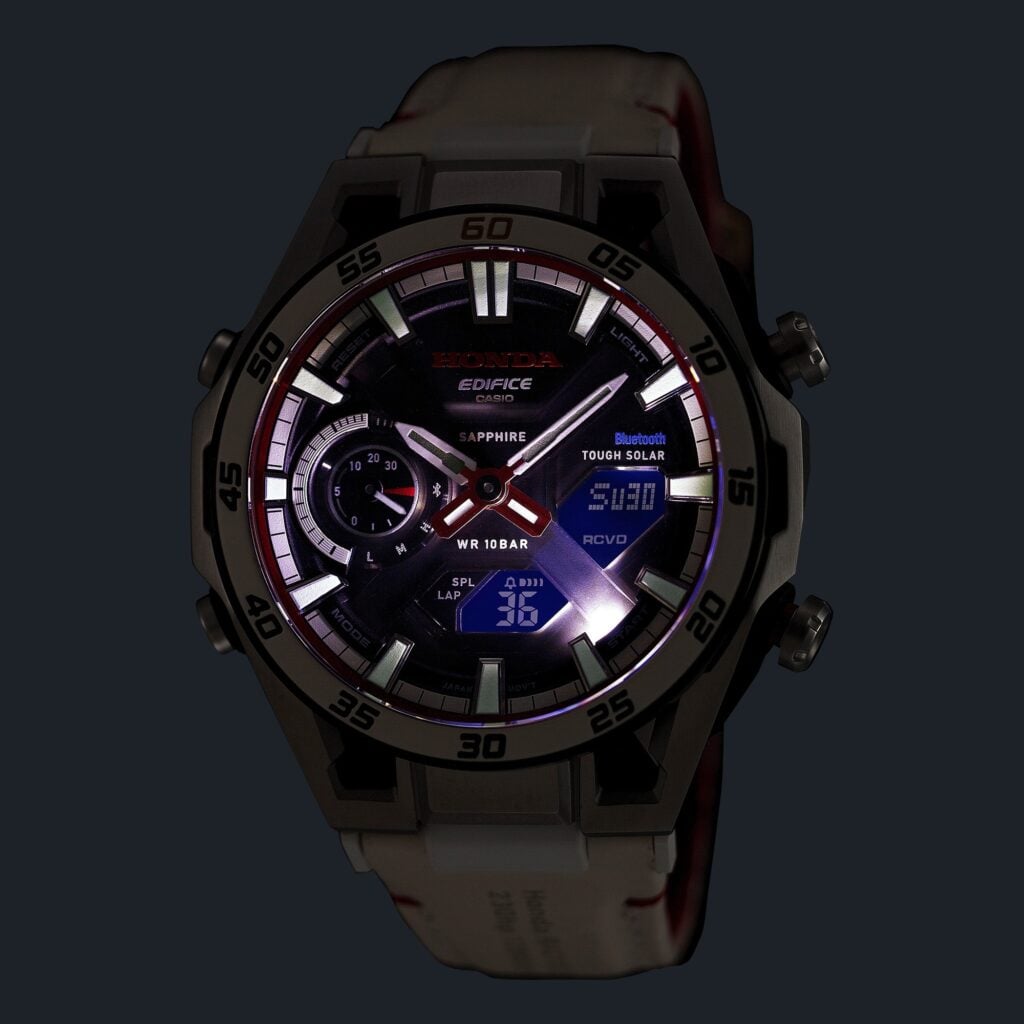
Casio has announced a special edition Edifice watch to commemorate the 60th anniversary of Honda’s first Formula 1 victory. The new model, ECB-2300HR-1AJR, celebrates the historic 1965 Mexican Grand Prix win with a design that draws heavily from the RA272 racecar that secured Honda’s first F1 checkered flag.
Pricing and Availability
The watch is listed on Casio’s official Japanese store with a price tag of ¥66,000 including tax, which converts to approximately $424. It is scheduled for a March 2026 release in Japan. Casio has not confirmed pricing for the European market, but the watch is expected to launch in the region soon.
Design Details
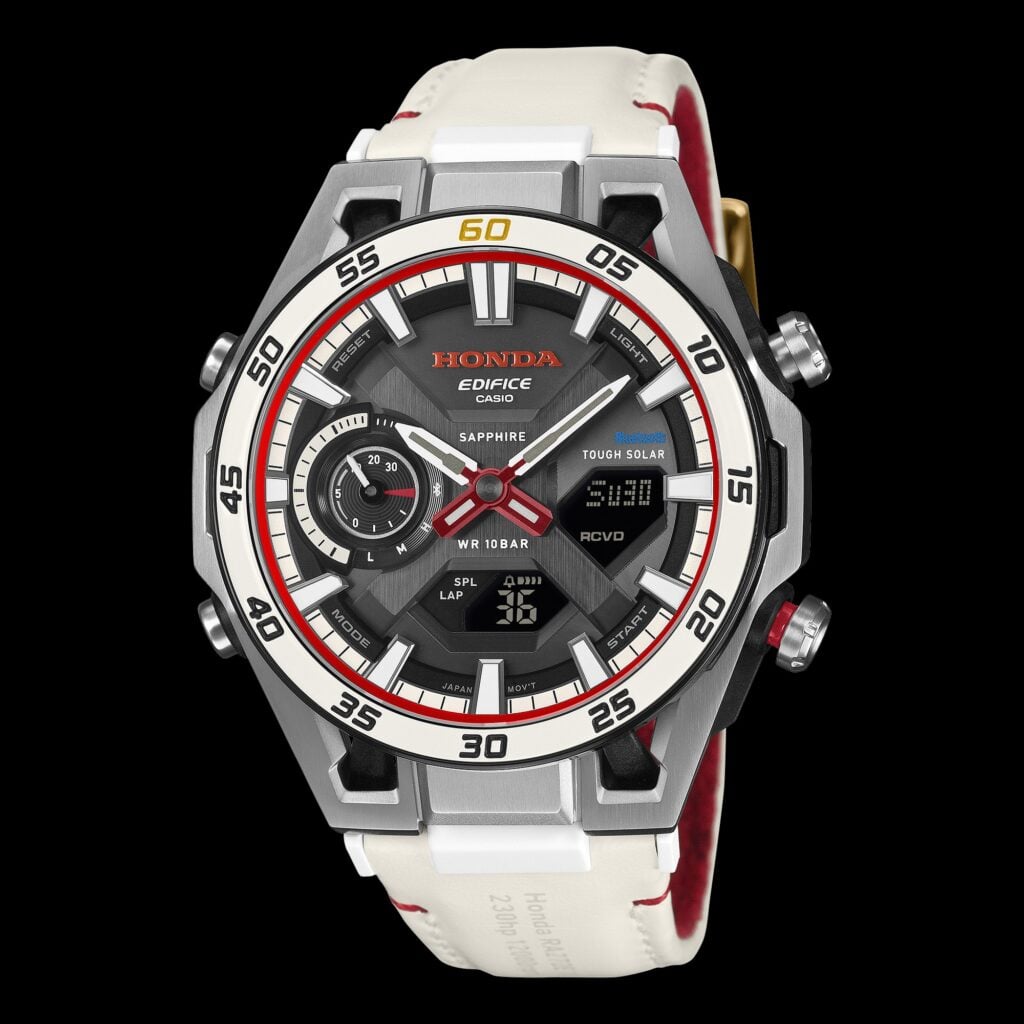
The Edifice design team collaborated with Honda to infuse the watch with elements inspired by the iconic RA272. The bezel features the same Championship White paint used on the original Formula 1 car, while a red ring on the dial echoes the Hinomaru flag design found on its body. The 60-minute marker carries a gold-engraved “60,” symbolizing precision and heritage.
The leather strap features laser-etched engine blueprints from Honda’s 1.5-liter V12 engine, which powered the RA272 to victory. The band loop includes the Latin phrase Veni, Vidi, Vici, referencing a message from Honda’s team leader Yoshio Nakamura. The 9 o’clock sub-dial recreates the original car’s tachometer with detailed scale markings and a redline.
Casio uses a hybrid construction for this model, combining carbon-reinforced resin and stainless steel. The watch includes a sapphire crystal with anti-reflective coating and offers 100-meter water resistance. It supports Casio’s Tough Solar charging and connects to smartphones via Bluetooth for time synchronization, world time, alarms, and phone finder functionality.
The case back displays Honda’s official 60th anniversary logo, and the watch comes in commemorative packaging.
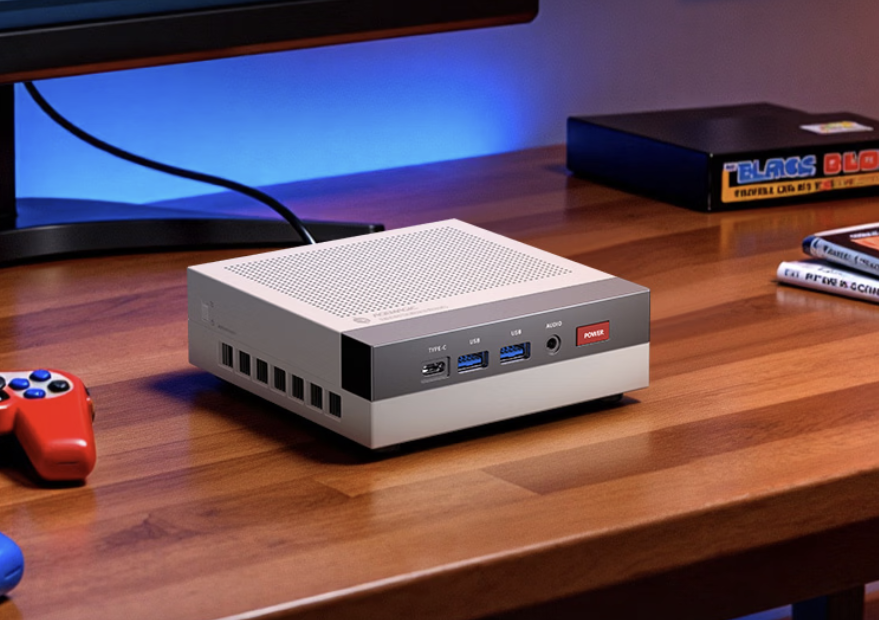
Acemagic has launched the Retro X3 mini PC, a compact desktop powered by the AMD Ryzen 7 H 255. It retains the Nintendo Famicom-inspired retro design of the earlier Retro X5 while adopting a more affordable configuration, and is now available on JD.com priced at 1,899 yuan ($273).
Acemagic Retro X3 Specifications
The Retro X3 comes in a compact square body measuring 128.2 x 128.2 x 44 mm and weighing 406 grams. It features a red, black, and grey color scheme with a sandblasted metal finish, a red toggle-style power button on the front, and a tool-free side panel that makes memory and storage upgrades quick and hassle-free.
Inside, the Retro X3 is powered by an AMD Ryzen 7 H 255 processor built on the 4nm Zen 4 architecture. It offers 8 cores and 16 threads with a maximum boost clock of 4.9GHz and includes 16MB of L3 cache. The chip integrates Radeon 780M graphics based on the RDNA 3 architecture with 12 compute units and a GPU frequency of up to 2.6 GHz.
The system supports up to 128GB of DDR5-5600 memory through two SO-DIMM slots. For storage, it includes two M.2 2280 NVMe SSD slots using PCIe 4.0 x4, with a maximum capacity of 4TB. The device does not support SATA SSDs.
For connectivity, the mini PC includes Wi-Fi 6, Bluetooth 5.2, and a 2.5GbE Ethernet port. It supports up to three external displays via HDMI 2.1, DisplayPort 2.0, and a USB4 Type-C port that also supports 40 Gbps data transfer.
The front panel includes two USB-A 10Gbps ports, a USB4 port, and a 3.5 mm audio jack. The rear offers four USB-A 5Gbps ports, a 2.5GbE LAN port, HDMI, DisplayPort, a DC power input, and a Kensington lock slot.
The system ships with Windows 11 Pro. It uses the brand’s latest Cooling System 3.0, which combines a large fan, dual copper heat pipes, and three-sided airflow to maintain stable thermals during extended workloads.
In related news, Minix has recently introduced the Neo Z95, a pocket-sized mini PC that is smaller than most smartphones, while Gmktec has launched the NucBox K13 featuring an Intel Core Ultra 7 256V processor, 115 TOPS of AI performance, and USB4 connectivity.
For more daily updates, please visit our News Section.
The Dimensity 9400 is a true flagship chipset from MediaTek, featuring an all-big-core CPU design that aims to deliver high peak and sustained performance. It’s powerful enough to rival Qualcomm’s Snapdragon 8 Elite, even if it trails in a few areas, as noted in our detailed comparison. That makes the Snapdragon 8 Gen 5 an interesting opponent.
Announced in November 2025, the Snapdragon 8 Gen 5 sits just below the Snapdragon 8 Elite and therefore is an exciting matchup against the Dimensity 9400. The big question is: can Qualcomm’s sub-Elite flagship hold its ground against MediaTek’s all-big-core powerhouse?
Let’s begin with the spec sheet:
Dimensity 9400
Snapdragon 8 Gen 5
Announced
October 2024
November 2025
Process node
TSMC’s 3nm (N3E)
TSMC’s 3nm (N3P)
CPU
1 x 3.62GHz — Cortex-X925 3 x 3.3GHz — Cortex-X4 4 x 2.4GHz — Cortex-A720
2 x 3.8GHz — Oryon (3rd gen) 6 x 3.32GHz — Oryon (3rd gen)
GPU
Mali-G925 Immortalis MP12 Ray tracing support MediaTek HyperEngine Gaming Technology
Adreno 840 ray tracing support Snapdragon Elite Gaming features
NPU
MediaTek NPU 890 Agentic AI support
Qualcomm Hexagon NPU Agentic AI support
Memory
LPDDR5x, up to 5.3GHz
LPDDR5x, up to 4.8 GHz
Storage
UFS 4.0 + MCQ
UFS 4.1
Camera
MediaTek Imagiq 1090 ISP up to 320MP single camera up to 8K/60fps video recording supports real-time semantic segmentation
Qualcomm Spectra triple AI ISP (20-bit) up to 320MP single camera up to 108MP single camera with zero shutter lag, 30fps up to 48MP triple cameras with zero shutter lag, 30fps real-time semantic segmentation (limitless) up to 4K/120fps video recording
Dimensity 9400 vs Snapdragon 8 Gen 5: Benchmark score
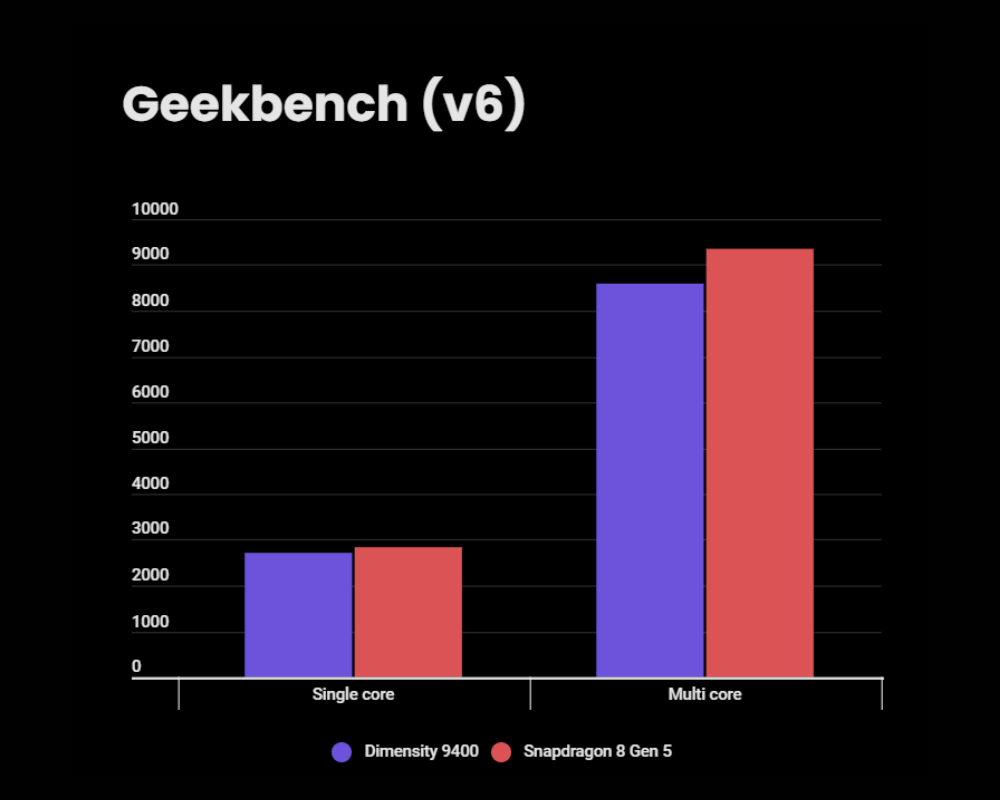
Note: The benchmark tests were performed on the Vivo X200 Pro (powered by Dimensity 9400) and the OnePlus 15R (powered by Snapdragon 8 Gen 5).
Geekbench score
The single-core scores are pretty close, but Qualcomm holds a slight 4.5% lead. The gap widens in multi-core performance, where the Snapdragon 8 Gen 5 posts a 9% higher score than the Dimensity 9400.
Geekbench scores suggest higher peak performance for the Snapdragon 8 Gen 5. In everyday tasks like browsing the internet, scrolling through your social app feeds, and watching movies, you’d hardly be able to spot a difference.
Dimensity 9400
Snapdragon 8 Gen 5
Single core
2,713
2,837
Multi core
8,592
9,352
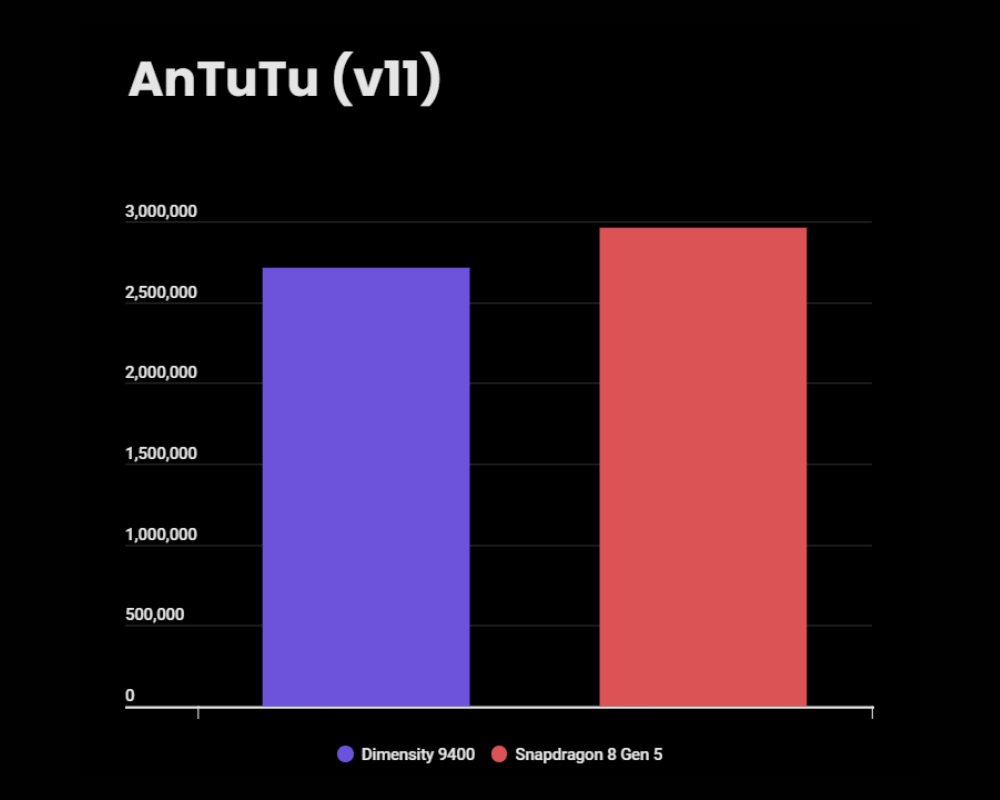
AnTuTu score
On the AnTuTu benchmark, the Snapdragon 8 Gen 5 scores nearly 3 million, while the Dimensity 9400 reaches 2.7 million. That’s about a 9% higher score for the Snapdragon chip.
The Snapdragon 8 Gen 5 consistently outperforms the Dimensity 9400 across every AnTuTu test, though the difference is not significant. The CPU score is 7% higher, and the GPU score is 5% higher. The memory and UX scores also favor the Snapdragon chip.
Dimensity 9400
Snapdragon 8 Gen 5
AnTuTu score
2,713,650
2,961,236
CPU
853,995
914,878
GPU
927,892
974,402
Memory
355,391
382,729
UX
576,372
689,228
The benchmarks favor Snapdragon 8 Gen 5 over the Dimensity 9400 in terms of performance, but they don’t provide insights into the capabilities of connectivity, camera, and other important aspects of the chips. So, let’s dig further to uncover the real-world differences between the two high-end chips.
Dimensity 9400 vs Snapdragon 8 Gen 5: Key differences
Both Dimensity 9400 and Snapdragon 8 Gen 5 are manufactured using TSMC’s 3nm process, but the latter uses the N3P node, which offers slightly better performance and power efficiency over the N3E node used for the Dimensity 9400.
Furthermore, the chips differ greatly in terms of CPU architecture. The Dimensity 9400 has a 1+3+4 layout, featuring one Cortex-X925 prime core, three Cortex-X4 performance cores, and four Cortex-A720 performance cores. In contrast, the Snapdragon 8 Gen 5 features a 2+6 CPU layout with two Oryon prime cores and six Oryon performance cores.
Notably, the Snapdragon 8 Gen 5 features third-generation Oryon cores, the same CPU cores from the top-tier Snapdragon 8 Elite Gen 5 chipset. They offer better performance and power efficiency than those inside the Dimensity 9400. Plus, they run at higher speeds, offering an additional performance boost.
For graphics rendering, the Dimensity 9400 relies on the Mali-G925 Immortalis MP12 GPU, while the Snapdragon chip uses the Adreno 829 GPU with the new Sliced architecture. Both chips offer ray tracing capabilities, along with their own set of gaming features: Snapdragon Elite Gaming on the Snapdragon 8 Gen 5 and MediaTek HyperEngine Gaming Technology on the Dimensity 9400.
The Snapdragon 8 Gen 5 also maintains an edge in imaging capabilities, as it borrows the triple 20-bit ISP from the Snapdragon 8 Elite Gen 5 with strong “always-sensing” camera support. The Dimensity 9400 features an Imagiq 1090 ISP with emphasis on HDR video across the zoom range and AI-assisted zoom features.
Both chipsets offer robust connectivity features, although the Snapdragon chip may have some advantage here, thanks to mature modem and better carrier-integration in some regions. Furthermore, the chip supports mmWave, UWB, and dual-way satellite connectivity, which are not mentioned on the official Dimensity 9400 page.
Dimensity 9400 vs Snapdragon 8 Gen 5: Conclusion
The Snapdragon 8 Gen 5 holds an upper hand in almost every aspect over the Dimensity 9400. It offers better CPU and GPU performance, a more powerful ISP with greater capabilities, and advanced connectivity features.
That said, the Dimensity 9400 is still a capable high-end chipset with strong performance and robust connectivity. Plus, you’ll likely get a device powered by this chip at a lower price than one powered by Snapdragon 8 Gen 5. That makes it a sweet deal for those looking for a high-performance device at an affordable price. For the absolute best of the two, the Snapdragon 8 Gen 5 is clearly the better choice.
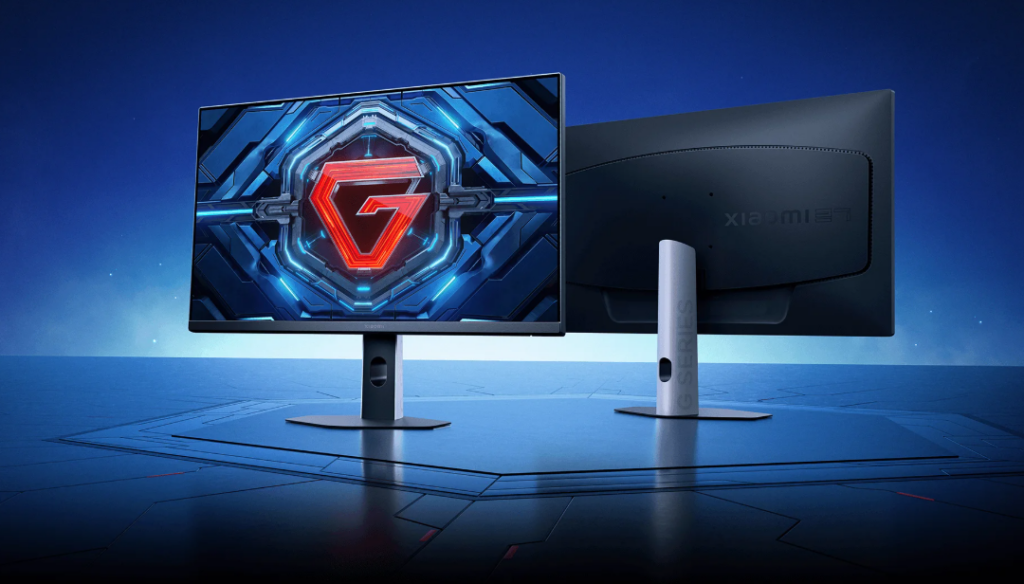
Xiaomi has started the global rollout of its Gaming Monitor G27i 2026, a new 27-inch display aimed at gamers. It follows the recent release of the Mini LED Gaming Monitor G Pro 27Qi 2026 and focuses on high refresh rates, fast response times, and accurate colors at a lower price point.
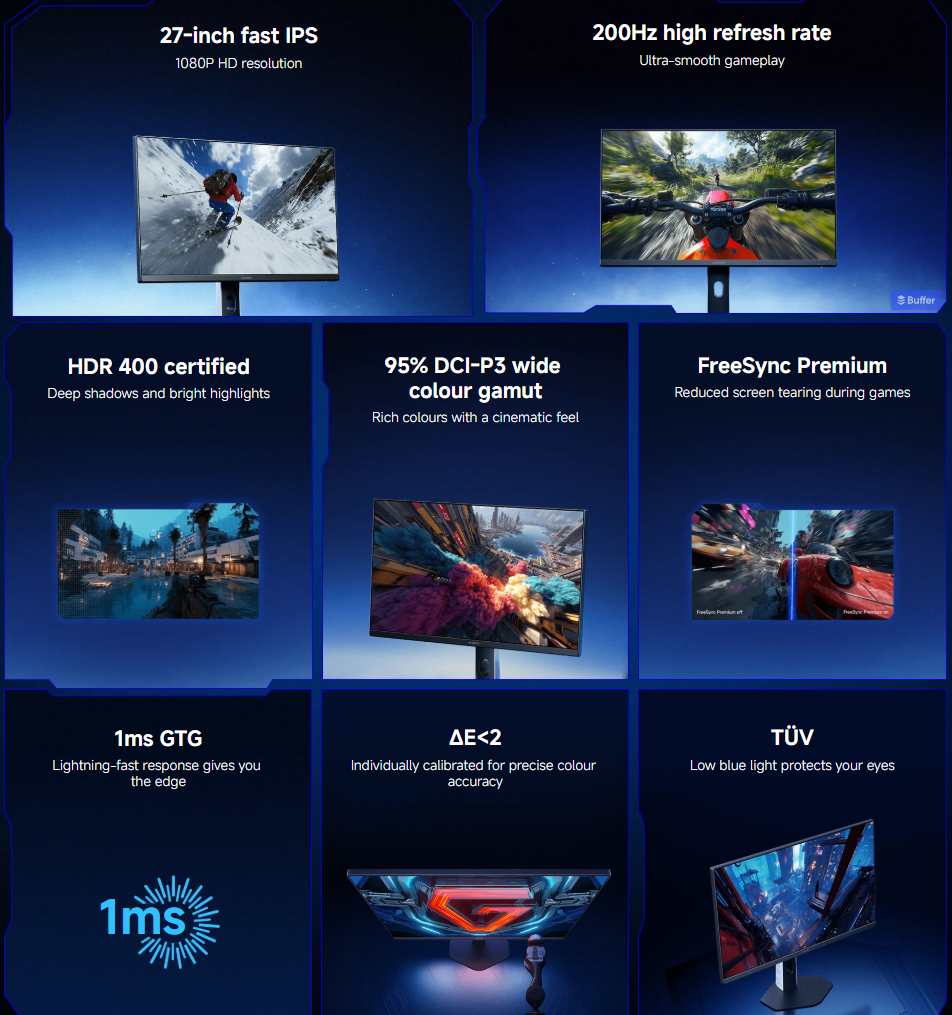
The G27i 2026 uses a 27-inch Fast IPS LCD panel with a Full HD resolution of 1920 × 1080 pixels and a 16:9 aspect ratio. It supports a 200Hz refresh rate in supported modes, along with a 1ms GTG response time when set to the Ultrafast option. Xiaomi states this combination helps reduce ghosting and motion blur in fast-moving scenes. In the official specification sheet, the panel refresh rate is listed at up to 165Hz, which suggests that 200Hz may depend on specific settings or inputs.
The panel offers wide 178-degree viewing angles and a typical brightness level of 250 nits. Peak brightness reaches up to 400 nits, allowing the monitor to meet VESA DisplayHDR 400 certification. This improves contrast between bright and dark areas, helping details remain visible during gameplay. The static contrast ratio is rated at 1000:1.
Color performance is a key focus, as the monitor comes with factory calibration to achieve Delta E values below 2. The monitor supports 100 percent sRGB and 95 percent DCI-P3 color gamut coverage, along with 8-bit color depth capable of displaying 16.7 million colors. This makes it suitable for gaming, video playback, and general content creation.
The G27i 2026 supports FreeSync Premium and is also listed as G-Sync compatible. This helps reduce screen tearing and stuttering when frame rates fluctuate. Eye comfort features include TÜV Low Blue Light certification and DC dimming to reduce flicker during long sessions.
The monitor features an ultra-narrow bezel design and a tilt-adjustable stand with a range of minus 5 degrees to plus 15 degrees. It also supports 75 × 75 mm wall mounting. Physical controls are handled through a joystick button. Connectivity includes one DisplayPort 1.4, one HDMI 2.0 port, a 3.5 mm audio jack, and a DC input. The monitor consumes up to 36W of power and weighs 3.6 kg with the stand.
Pricing & availability
The Gaming Monitor G27i 2026 is priced at SGD 199 (~$157) in Singapore.
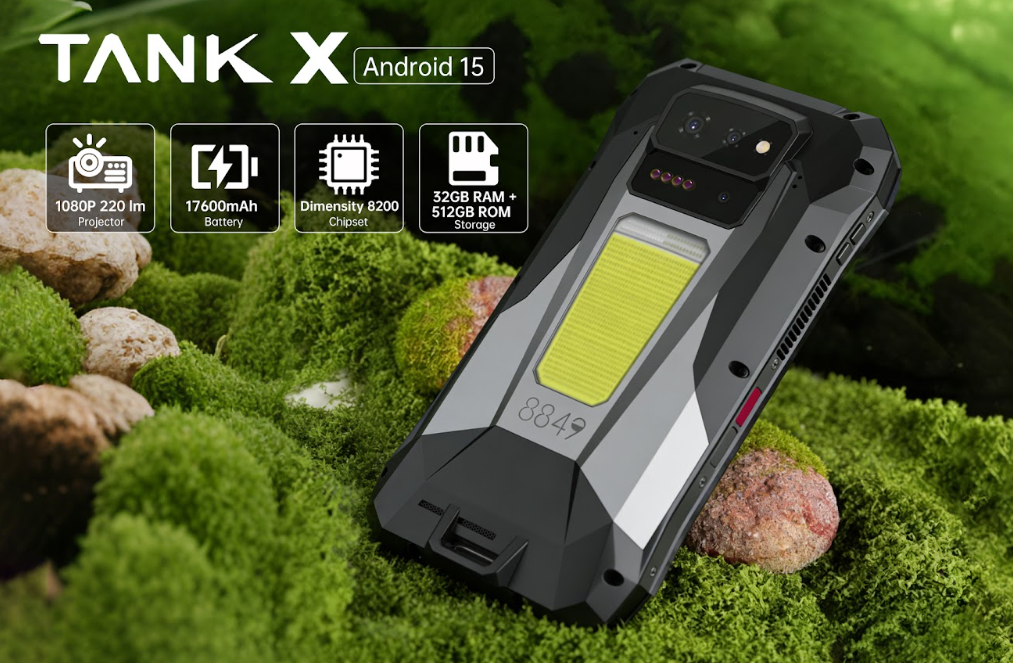
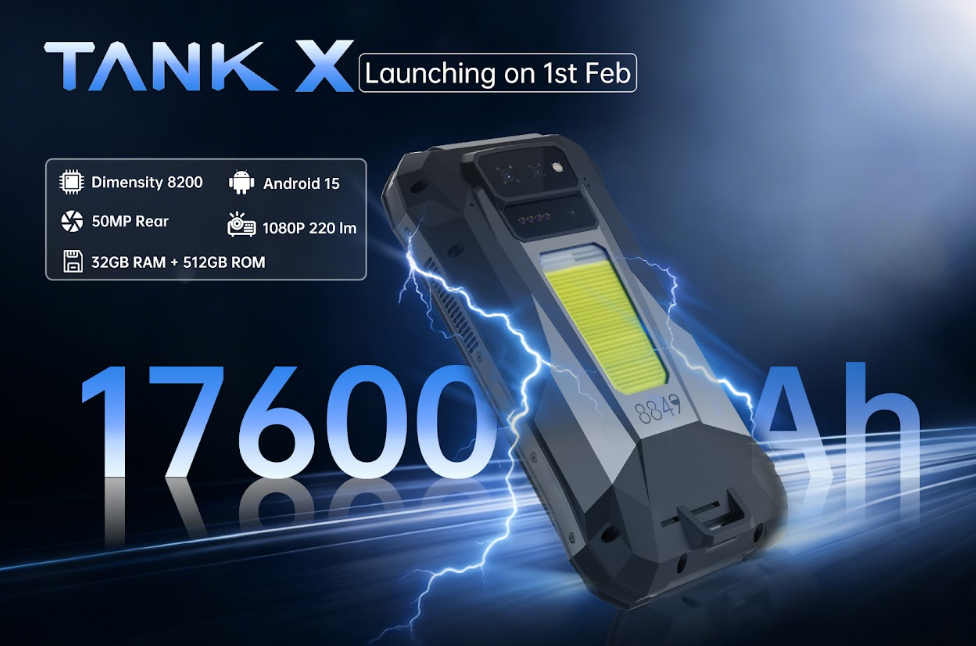
8849 TANK X enters the rugged smartphone segment with a feature set unlike anything currently on the market. Designed for industrial users, outdoor professionals, and extreme-condition environments, it combines a high-lumen DLP projector, ultra-large battery, and advanced connectivity inside a reinforced 5G chassis. This is not a generic lifestyle phone but a strong, purpose-built hardware.
Industrial-Grade Design and Durability
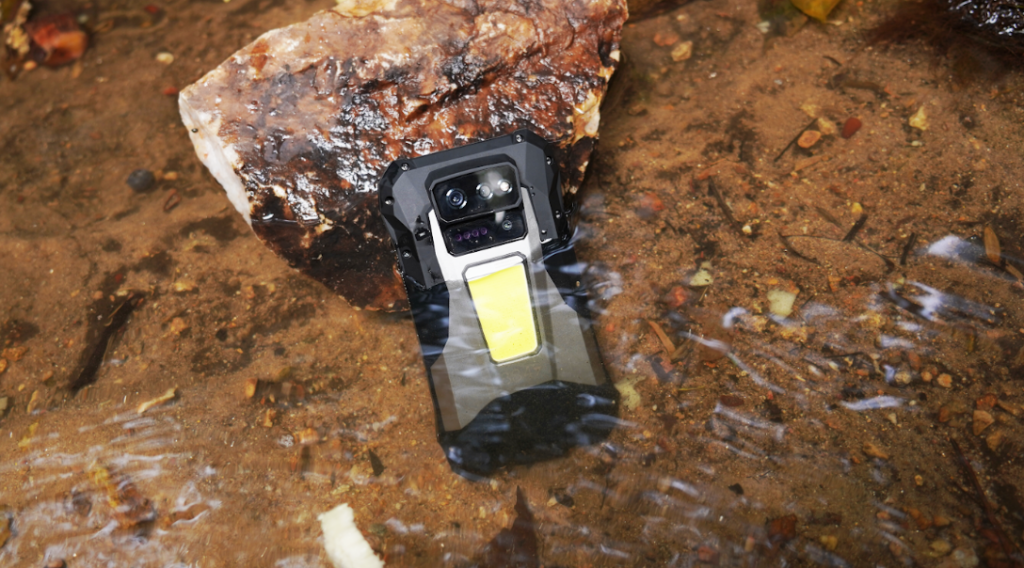
The TANK X uses a half-board, double-sided internal layout to accommodate its projector, dual-cell battery, and thermal controls. With IP68 and IP69K certification, the device is resistant to water immersion, dust ingress, and high-pressure wash environments. Its reinforced construction targets field engineers, emergency responders, and expedition users who require reliability over portability.
Display Optimized for Field Visibility
The device features a 6.78-inch FHD+ LCD panel with a 120Hz adaptive refresh rate and peak brightness of 750 nits. The PWM-free backlight design reduces eye strain during extended usage, making it suitable for long shifts, navigation tasks, and outdoor operations under direct sunlight.
Integrated 1080p DLP Projector System
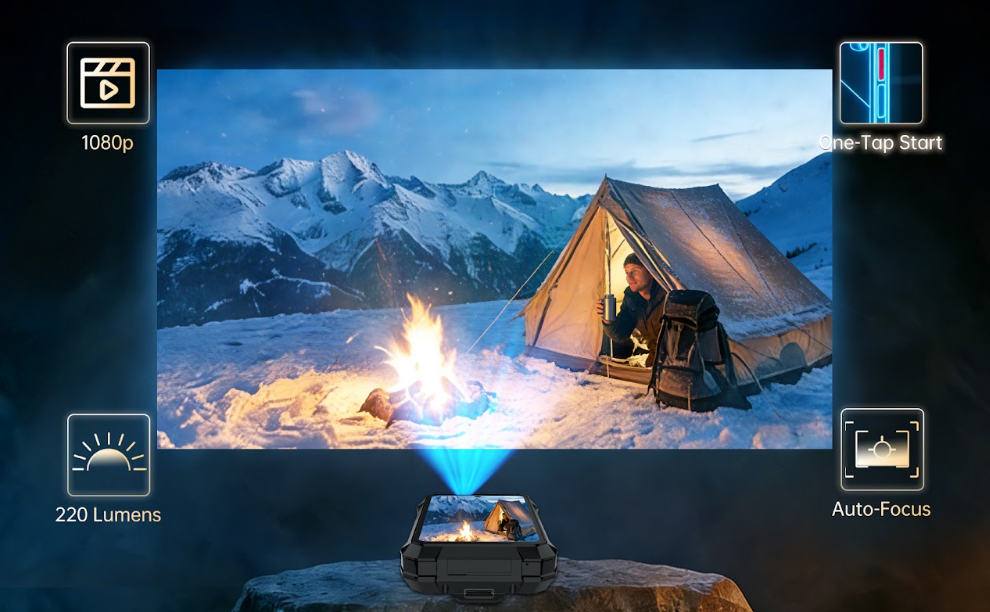
The standout feature is the built-in DLP projector, capable of projecting content at up to 1920×1080 resolution with 220 lumens brightness. Laser auto-focus, ±40° keystone correction, and one-key activation allow quick deployment. The projector supports multiple power modes, delivering up to six hours of use, making it viable for field briefings, training, or outdoor entertainment without additional equipment.
Performance and Storage
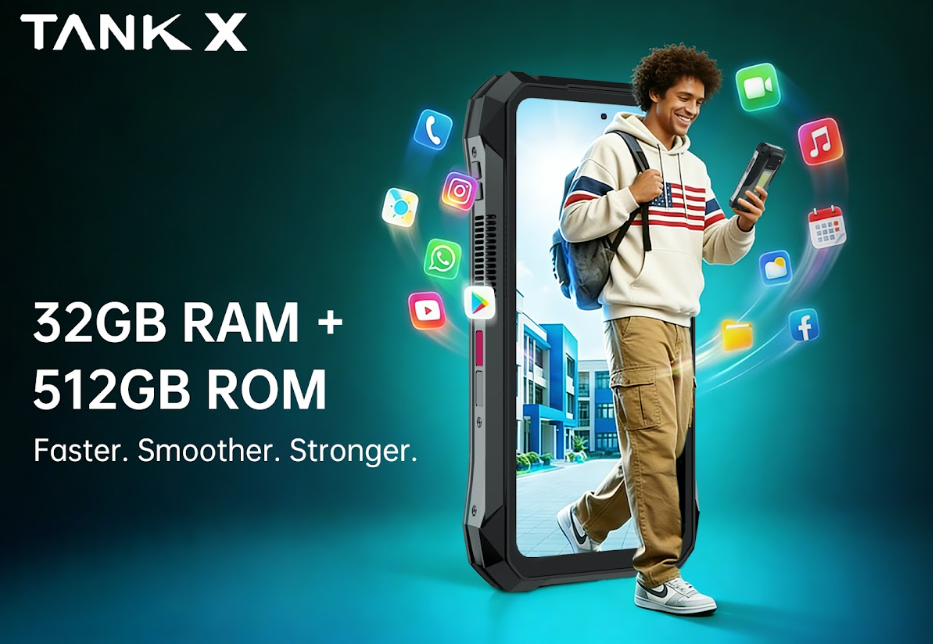
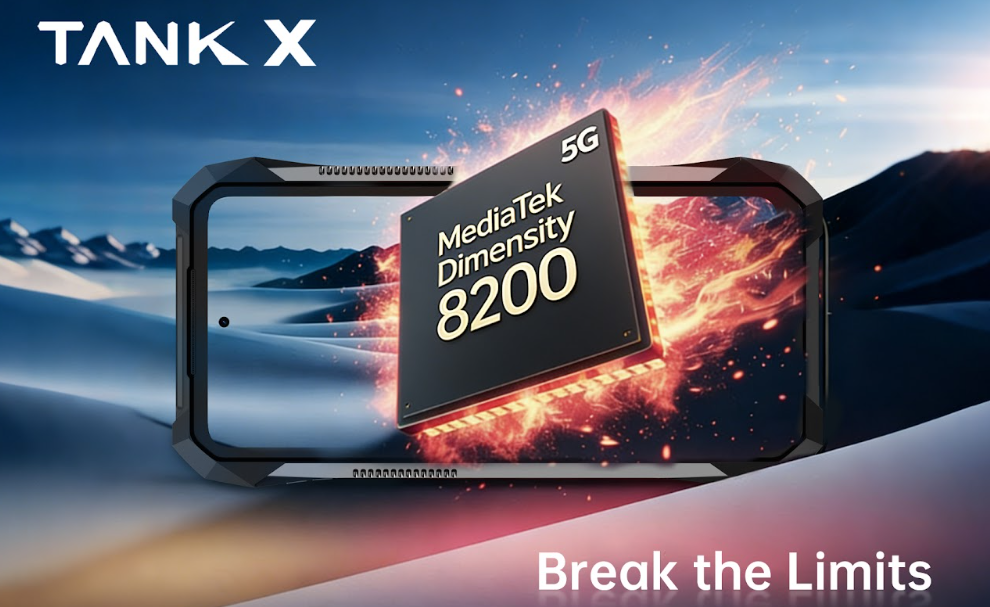
Powered by the MediaTek Dimensity 8200 (4nm) chipset, the TANK X delivers flagship-level efficiency with strong sustained performance. Paired with 16GB LPDDR5 RAM, up to 16GB virtual memory, and 512GB UFS 3.1 storage, it supports heavy multitasking, AI applications, and large offline datasets. Storage expansion up to 2TB via microSD further enhances its utility for professional workflows.
Advanced Imaging and Night Vision
The camera system is tuned for both documentation and surveillance. A 50MP Sony IMX766 main sensor handles standard imaging, while a 64MP infrared night vision camera with quad IR LEDs enables visibility in complete darkness. A 3× optical telephoto lens adds flexibility for inspection and distance capture.
Extreme Battery Capacity and Charging
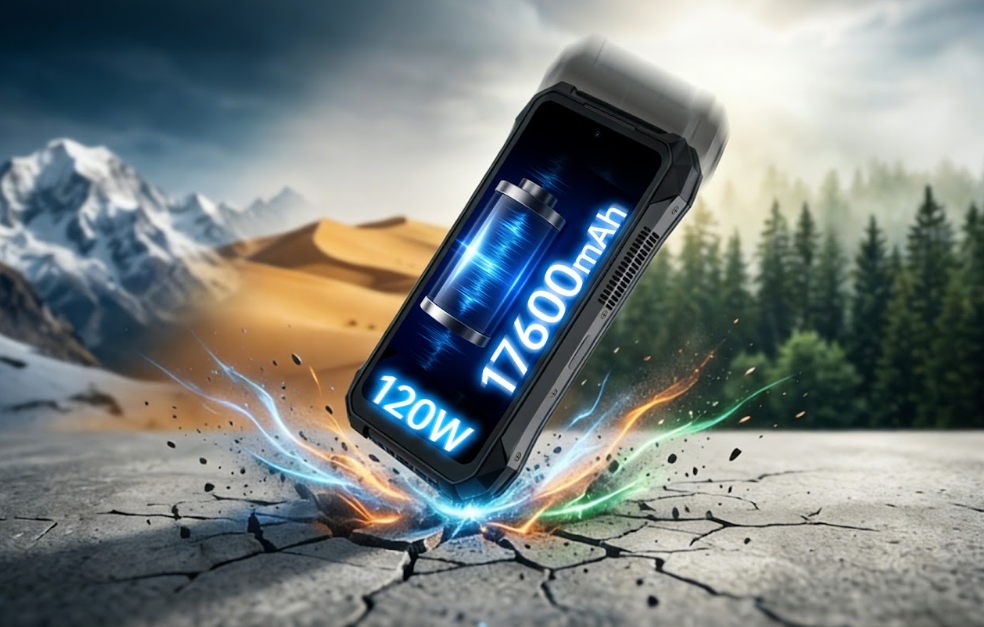
A defining advantage is the 17,600mAh dual-cell battery, engineered for multi-day endurance. Despite the capacity, 120W wired fast charging delivers a full charge in approximately 70 minutes. Reverse wired charging allows the device to function as a portable power source in the field.
Connectivity, Tools, and Emergency Systems
The TANK X supports global 5G bands, Wi-Fi 6, Bluetooth 5.4, dual-band GNSS with meter-level accuracy, NFC, IR remote control, and a comprehensive digital toolbox. High-output camping lights, emergency RGB warning lights, programmable PTT keys, and SOS features position it as a multifunctional operational device.
Pricing and Availability
8849 Tank X is now available for an early bird price of $549.99, significantly reduced from its regular price of $1049.99. Pre-orders are live, with global shipping beginning March 1 from multiple international warehouses. The 8849 TANK X sets a new benchmark for rugged smartphones by merging projection, power, and durability into a single professional-grade platform.
We use cookies on our website to give you the most relevant experience by remembering your preferences and repeat visits. By clicking “Accept”, you consent to the use of ALL the cookies.
This website uses cookies to improve your experience while you navigate through the website. Out of these, the cookies that are categorized as necessary are stored on your browser as they are essential for the working of basic functionalities of the website. We also use third-party cookies that help us analyze and understand how you use this website. These cookies will be stored in your browser only with your consent. You also have the option to opt-out of these cookies. But opting out of some of these cookies may affect your browsing experience.
Necessary cookies are absolutely essential for the website to function properly. This category only includes cookies that ensures basic functionalities and security features of the website. These cookies do not store any personal information.
Any cookies that may not be particularly necessary for the website to function and is used specifically to collect user personal data via analytics, ads, other embedded contents are termed as non-necessary cookies. It is mandatory to procure user consent prior to running these cookies on your website.