Advertisement

Moto g57 and g57 Power go official with 120Hz display, Snapdragon 6s Gen 4 chip & up to 7000mAh battery

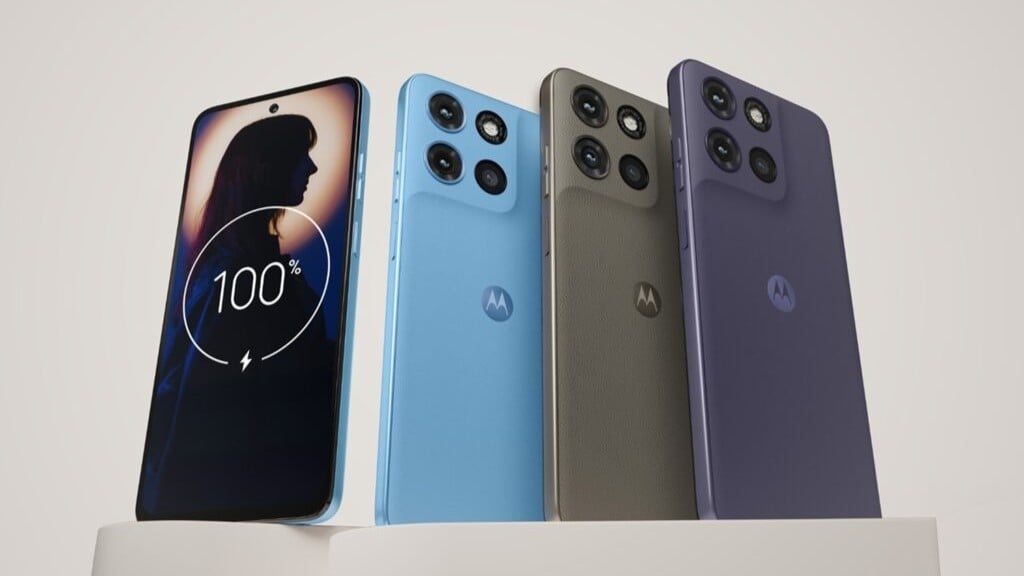
Motorola has launched the moto g57 and moto g57 Power, two new mid-range 5G smartphones in its g series lineup. These are the first phones powered by Qualcomm’s new Snapdragon 6s Gen 4 Mobile Platform.

Both phones feature a 6.72-inch Full HD+ LCD display with a 120Hz refresh rate and up to 1050 nits peak brightness, protected by Corning Gorilla Glass 7i. The display has a punch-hole cutout for the 8MP front camera. On the back, both models have a 50MP main camera with a Sony LYT-600 sensor (1/1.95″) and f/1.8 aperture, along with an 8MP ultra-wide lens with f/2.2 aperture.

The phones run Android 16 and come with 8GB LPDDR4x RAM and 256GB UFS 2.2 internal storage. They support Dual SIM (1 Nano SIM + 1 eSIM) and include a side-mounted fingerprint scanner. Connectivity options include 5G, 4G VoLTE, Wi-Fi 6, Bluetooth 5.1, GPS + GLONASS, NFC, and a USB Type-C port. There is also a 3.5mm audio jack, stereo speakers, and Dolby Atmos sound.

Moto G57 Power

Both models are IP64 rated for dust and splash resistance and come with MIL-STD 810H certification for added durability.

The moto g57 has a 5200mAh battery, while the g57 Power comes with a 7000mAh silicon-carbon battery. Both support 30W TurboPower fast charging. The g57 Power measures 166.23 x 76.50 x 8.60 mm and weighs 210g.

Pricing & availability

The moto g57 is available in PANTONE Regatta, PANTONE Pink Lemonade, PANTONE Corsair, and PANTONE Fluidity colors. It is priced at €249 (USD 285) and is now on sale in the Middle East.

The moto g57 Power comes in PANTONE Meteorite, PANTONE Pink Lemonade, PANTONE Corsair, and PANTONE Regatta colors. It is priced at €279 (USD 320) and is now available in Europe.

In other news, Motorola has also launched the the Edge 70 globally, rebranded from the Moto X70 Air. It features a 6.67-inch Super HD pOLED display (2712×1220) with 120Hz refresh rate, HDR10+, 10-bit color depth, and up to 4500 nits brightness, protected by Gorilla Glass 7i. Powered by the Snapdragon 7 Gen 4 chipset, it has a triple rear camera setup with a 50MP main sensor (OIS), a 50MP ultra-wide with macro support, and a 3-in-1 light sensor, while the front houses a 50MP selfie camera with 4K recording and AI-powered features.

(Source)

Xiaomi launched a minimalist smart hub that’s packed with automation features

Xiaomi has introduced a new product under its smart home ecosystem, the Xiaomi Smart Control Screen (Standard Edition). The device is priced at 399 yuan ($56), with a crowdfunding price of 369 yuan ($52). Crowdfunding will begin on Xiaomi Youpin on November 10 in China.

Xiaomi Smart Control Screen

Xiaomi Smart Control Screen Specifications

The Smart Control Screen is designed to serve as a central hub for home automation. It features a vertically oriented 8:16 full-screen display and supports both white and dark gray finishes. The panel fits standard 86 mm wall boxes without requiring modification.

Xiaomi has built the screen using V-0 grade flame-retardant materials and included safety features like over-temperature and overload protection. It also includes three built-in relay channels that allow direct control of up to three lighting circuits through touch.

Xiaomi Smart Control Screen

The device runs on HyperOS with a built-in large-model AI engine. Through the XiaoAi assistant, it supports multi-turn and multi-command voice control, allowing commands like “turn off the lights, close the curtains, and turn on the air conditioner” to be executed at once. XiaoAi also answers queries about health, lifestyle, and daily routines.

Xiaomi has equipped the screen with its Mesh 2.0 gateway for improved connectivity with Bluetooth and Mesh-enabled smart home devices. It supports dual-band Wi-Fi (2.4GHz and 5GHz) and is compatible with more than 5,500 smart home devices. Each screen can manage up to 48 devices, organized across 12 customizable layout pages in the Mi Home app.

Xiaomi Smart Control Screen

The Smart Control Screen doubles as a security hub, showing live feeds from Xiaomi cameras, locks, and doorbells. It supports voice access for specific views and uses a 24 GHz millimeter-wave radar with an ambient light sensor for smart wake and adaptive brightness.

The screen offers touch, voice, and smartphone app control, allowing quick access to personalized shortcuts like Home and Sleep Mode directly on the main display. It includes 45 screen saver styles with options such as animated weather, photo albums, and text tags. The device also supports Xiaomi’s Family Broadcast, sending voice messages across all connected home devices.

In related news, Xiaomi recently introduced a premium sterilizer priced under $150 that can clean a variety of items. The company also unveiled a smart foot spa that heats, massages, sterilizes, and folds for easy storage.

For more daily updates, please visit our News Section.

Stay ahead in tech! Join our Telegram community and sign up for our daily newsletter of top stories! 💡

(Xiaomi Youpin)

[Update] Honor 500 powered by Snapdragon 8s Gen 4 appears on Geekbench

Update: An Honor engineer has hinted that the Honor 500 has the Snapdragon 8s Gen 4 chip, while rumors suggest the Honor 500 Pro will feature the Snapdragon 8 Elite.

The title of this post has been updated accordingly.

Original post continues…

A new Honor smartphone bearing the model number MEY-AN00 has appeared on Geekbench, and the details that have surfaced through it suggest that it could be the upcoming Honor 500 Pro. The device was previously spotted on the 3C certification platform, hinting at fast charging capabilities. Its Geekbench entry reveals the chipset powering the phone, effectively ending earlier rumors that it would feature the Snapdragon 8 Elite.

Honor 500 Pro Geekbench listing

The Geekbench listing shows that the Honor MEY-AN00 phone is equipped with the Qualcomm SM8735 chip with four clusters, including a prime core clocked at 3.21GHz, along with Adreno 825 GPU. These details confirm that the device is powered by the Snapdragon 8s Gen 4 rather than the Snapdragon 8 Elite. Since Honor is known for using the Snapdragon 8-series chip for the Pro model, the MEY-AN00 appears to be the Honor 500 Pro.

The listing further reveals 16GB RAM and Android 16 out of the box. In performance tests, the device records 2113 in single-core and 6539 in multi-core scores on Geekbench 6.3.

Honor 500 Pro specifications (rumored)

Honor 500 series design leak
Honor 500 series design sketch by DCS

According to recent reports, the Honor 500 Pro is expected to feature a 6.5-inch flat OLED display with a 1.5K resolution, along with a refreshed design featuring a horizontal camera bar on the back.

The camera module will include a 200-megapixel main camera with OIS, an ultra-wide lens, and a 64-megapixel OmniVision OV64B periscope telephoto lens for enhanced zoom. It may arrive with a substantial battery with 100W charging support.

The standard Honor 500, which is said to have the MEP-AN00 model number, is rumored to include the same display, a 200-megapixel dual-camera setup, 100W charging, and a Snapdragon 7-series chipset, which could be the Snapdragon 7 Gen 4.

Both models are expected to launch in China later this month. There is no confirmation yet on whether the Honor 500 series will be released in global markets.

For more daily updates, please visit our News Section.

Stay ahead in tech! Join our Telegram community and sign up for our daily newsletter of top stories.
(via)

Motorola Edge 70 launched with 5.99mm slim body, 1.5K 120Hz pOLED & Snapdragon 7 Gen 4

Motorola has officially launched the Edge 70 for global markets, following its debut in China as the Moto X70 Air. Let’s check out its key specs and pricing.

Motorola Edge 70

Motorola Edge 70 Specifications

The Edge 70 features a 6.67-inch Super HD pOLED display with a resolution of 2712×1220 pixels, 446 ppi pixel density, and 10-bit color depth. The panel supports HDR10+, boasts Pantone SkinTone and Colour validation, covers 100% DCI-P3, and reaches a peak brightness of 4500 nits. It also offers a 120Hz refresh rate and up to 300Hz touch sampling, protected by Corning Gorilla Glass 7i.

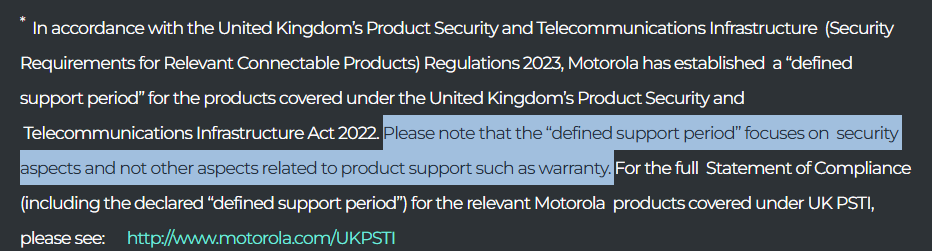
The device is powered by the Snapdragon 7 Gen 4 SoC built on a 4nm process, paired with the Adreno 722 GPU. It ships with 12GB LPDDR5X RAM and 512GB of storage. The Edge 70 runs on Android 16 out of the box and is guaranteed to receive security updates for over five years, until June 2031.

Motorola Edge 70

In terms of optics, the Edge 70 features a triple rear camera setup led by a 50MP main sensor with an f/1.8 aperture, optical image stabilization, and Ultra Pixel technology. It is accompanied by a 50MP ultra-wide lens offering a 120° field of view that also supports macro photography.

It also features a third module that functions as a 3-in-1 light sensor. On the front, the device houses a 50MP selfie camera capable of 4K video recording, along with adaptive stabilization, autofocus tracking, and face retouching features.

The camera software adds Moto AI enhancements and features like Action Shot, Night Vision, Dual Capture, Portrait Mode with three focal lengths (24mm, 35mm, 50mm), Adobe Scan integration, and Magic Editor tools via Google Photos.

Motorola has equipped the Edge 70 with a 4800mAh silicon-carbon battery, promising up to 50 hours of usage. It supports 68W TurboPower wired charging and 15W wireless charging. Motorola claims the phone can deliver hours of usage with just 15 minutes of charging.

Motorola Edge 70

The device has IP68 and IP69 ratings for water and dust resistance and meets MIL-STD 810H military-grade durability standards. Its chassis is made from aircraft-grade aluminum, with a nylon-inspired silicone rear and a Type-C (USB 2.0) port. It lacks a headphone jack but supports Dolby Atmos through dual stereo speakers.

For security, it includes an on-screen fingerprint reader, face unlock, and ThinkShield protection. It also supports dual SIM (Nano + eSIM), Wi-Fi 6E, Bluetooth 5.4, and NFC.

The device measures just 5.99mm thick and weighs 159g, combining an ultra-slim profile with flagship-level hardware. It is available in three Pantone-validated finishes: Lily Pad, Gadget Grey, and Bronze Green.

Motorola Edge 70

Pricing & Availability

The Motorola Edge 70 is priced at €799 ($918) and £700 in the UK. It is already rolling out in the UK and will expand to several countries across Europe and the Middle East starting this week, with plans to reach more global markets in the near future.

For more daily updates, please visit our News Section.

Stay ahead in tech! Join our Telegram community and sign up for our daily newsletter of top stories! 💡

How the Self‑Revive Kit Is Killing the Essence of PUBG Mobile

PUBG Mobile was never just another battle royale. It built its legacy around raw tension, tactical teamwork, and the razor-thin line between survival and death. But with the introduction of the Self-Revive Kit, a mechanic that lets players get back up without any squadmate interaction, PUBG Mobile or BGMI is slowly bleeding out its soul.

Pubg Mobile Self AED

1. Mechanic That Rewrites the Rules

Originally meant to offer players a second chance in intense fights, the Self-Revive Kit now feels like a gameplay exploit disguised as a feature. The issue isn’t just about balance. It’s about how this single item breaks the fundamental rhythm of PUBG’s core loop.

Picture this: you’re a skilled solo player diving into a squad match. You outmaneuver and knock an enemy. You see them crawling, only to realize, yep, they have a Self AED. You can’t push in time because they’ll get up behind cover. You adapt and shift targets, knock another enemy. Same story. Another Self AED.

You’ve now knocked two players, played the situation tactically right, but they both live. Meanwhile, you’ve burned through your ammo, taken some hits, and now the same players, whom you should’ve eliminated, regroup and push you with the upper hand. This isn’t just frustrating. It’s demoralizing. The better player is being punished for playing better.

2. Solo Player’s Death Sentence

What used to be a fair 1v4 situation, difficult but winnable with sharp aim and smart movement, has become a war of attrition against second chances. Self-Revives reward players for being knocked. They stretch fights unnecessarily, deny deserved kills, and push smart solo or duo players out of the meta entirely.

This is worse than dying to a camper. At least the camper is playing by the rules, holding an angle, setting a trap. Self AEDs are like get-out-of-jail-free cards that ignore the high-stakes nature of the game. PUBG always thrived on its brutal consequences. The Self-Revive Kit sterilizes that tension.

3. Breaking the Game’s Identity

Team dynamics suffer too. Why rush to revive your teammate when he can pick himself up? Why stick together when everyone’s packing their own lifeline? The squad cohesion crumbles. The sweaty, adrenaline-packed moments of risk, when you peek a corner to save your last man, are replaced with passive, solo-reliant gameplay.

When recall systems were introduced, some players had similar concerns, but recalls still required risk, coordination, and timing. To bring a teammate back, you had to survive and often fight your way through pressure-filled scenarios. It demanded skill and awareness, and most importantly, it followed the game’s logic. Self-revive, on the other hand, shortcuts all of that tension. It turns a squad-based shooter into a string of solo recoveries that erode the very reason to play as a team.

4. Final Thoughts

This isn’t just about one feature. It’s about philosophy. PUBG Mobile’s brilliance came from its punishing realism and emotional highs. Every knock mattered. Every revive was a gamble. The Self AED flattens those stakes. It prioritizes casual forgiveness over competitive integrity.

If this continues, the players who made PUBG what it is, the ones who enjoy the grind, the clutches, the 1v3s, will walk away. And what’s left behind will be a shell of a game, full of second chances but devoid of the stakes that once made it great.

If the Self AED must exist, it should be limited strictly to solo matches, where a second chance feels more justified. There’s no teammate to revive you, no recall system to fall back on. In that context, the mechanic can offer meaningful redemption without disrupting the game’s core team-based dynamics. Anywhere else, it simply doesn’t belong.

In related news, check out the 5 most anticipated upcoming games, including GTA 6, Marvel’s Wolverine, 007: First Light, and more.

For more daily updates, please visit our News Section.

Stay ahead in tech! Join our Telegram community and sign up for our daily newsletter of top stories! 💡

POCO vs Redmi: Key Differences You Should Know

You’ve likely heard of Redmi and POCO, which are two Xiaomi-family brands. But while both sit under the umbrella of Xiaomi, people often wonder whether both are basically the same. However, they follow distinct strategies and have their own identities in the market. So here’s a look at exactly how POCO differs from Redmi, and which type of buyer each brand suits best.

1. Brand Positioning & Strategy

POCO F8 Pro

Xiaomi created Redmi way back in 2013, while POCO is a relatively new brand that spun off back in 2018. Ever since its inception, Redmi has played the role of Xiaomi’s value focused brand. It serves smartphones across the entry level and mid range segments, with the aim of making capable smartphones more accessible. A typical Redmi phone would offer a decent battery size, balanced specs, and a price tag that caters to a broader market audience.

POCO, on the other hand, started as a sub-brand of Xiaomi and has evolved into a semi-independent brand. While the brand also offers some affordable devices, POCO’s main focus is performance-driven smartphones for price-sensitive users. The brand’s messaging often centres on “flagship-level hardware at affordable cost” or “performance first” rather than feature-rich luxury. So POCO models are often a popular choice for mobile gaming enthusiasts.

2. Features & Price Trade-Offs

Redmi K90 Pro Max
Redmi K90 Pro Max

While both brands share supply chains, hardware, firmware and manufacturing infrastructure with Xiaomi, there are notable differences in how they allocate resources and differentiate themselves. For example, POCO phones often push higher refresh rate displays, near flagship level processors, performance oriented cooling systems, while making trade offers such as fewer camera refinements or a slightly less premium build quality.

In contrast, Redmi devices offer a stronger balance between performance and features. You’ll often find less aggressive pricing than POCO’s bottom line strategy. This could have you see compromises on “high-end performance” to maintain better margins or have wider availability and distribution.

3. Target Audience & Positioning

Redmi K90 in purple

POCO is positioned more towards performance-centric users, especially those who care about high refresh displays, larger RAM/storage, faster chipsets, and are somewhat willing to accept trade-offs (in build materials, camera tuning, etc.) for value.

Meanwhile, Redmi targets a broader mass market audience. Top notch specs isn’t the focus here, just a good value for money smartphone that offers great features and decent design. Redmi often appeals to those who want balanced features across camera, battery, software and value.

4. Final Thoughts

Poco-C85-Specs-Launch-Price
POCO C85

In the decision between POCO and Redmi, the key is understanding what you prioritize. If you want blistering hardware, maximum value and you’re comfortable with a few trade-offs, then POCO is likely the better fit. If you prefer a more balanced smartphone experience with good performance, better cameras, and stronger ecosystem support, then Redmi is the more sensible choice.

Unfortunately, the lines between the two brands have blurred in the recent past as Redmi also releases high powered smartphones, while POCO also makes budget flagship phones and entry level devices now. You’ll often find both companies launching the same smartphone under different rebrands, with the key difference sometimes being just the design and look.

For more daily updates, please visit our News Section.

Don’t miss a thing! Join our Telegram community for instant updates and grab our free daily newsletter for the best tech stories!

Sharp AQUOS Sense 10 debuts with OLED display, 50MP camera, and 5000mAh battery

Sharp has announced its new AQUOS Sense 10 smartphone, a follow-up to last year’s AQUOS Sense 9. The phone will go on sale in Japan on November 13, followed by launches in Taiwan, Indonesia, and Singapore.

Sharp AQUOS Sense 10

The AQUOS Sense 10 runs on the Snapdragon 7s Gen 3 processor, which delivers about 20% better CPU performance, 40% stronger GPU output, and 30% faster AI processing compared to the previous Snapdragon 7s Gen 2. It features a 6.1-inch Pro IGZO OLED display with FHD+ resolution, a 120Hz refresh rate, a variable refresh rate of up to 240Hz, and a peak brightness of 1500 nits.

Sharp AQUOS Sense 10

Powering the device is a 5000mAh battery, which Sharp claims can last up to two days with ten hours of daily use on a full charge. It runs Android 16 and comes in two configurations: 6GB RAM with 128GB storage, and 8GB RAM with 256GB storage.

On the back, the phone has a 50.3MP standard and wide-angle camera. The front camera is a 32MP sensor for selfies and video calls. Sharp has added new AI features that help improve image quality and voice clarity during calls.

Sharp AQUOS Sense 10

Other features include NFC, facial recognition, fingerprint authentication, Bluetooth 5.2, dual box speakers, and eight new Photo Style filters. The phone meets the MIL-STD-810H military durability standard and has IPX5, IPX8, and IP6X ratings for water and dust resistance.

Pricing & availability

The AQUOS Sense 10 will be available in six colors: Denim Navy, Khaki Green, Pale Pink, Pale Mint, Full Black, and Light Silver. Sharp will also release matching silicone cases for each color. In addition, there are special edition cases made with Japanese brands SPINGLE, KOJIMA GENES, and BLUE SAKURA, including models crafted from denim fabric. The 6GB/128GB variant is priced at 62,700 yen, while the 8GB/256GB version costs 69,300 yen. Orders will open on November 10, and shipping will begin on November 13.

For more daily updates, please visit our News Section.

Stay ahead in tech! Join our Telegram community and sign up for our daily newsletter of top stories.
(Source)

Portronics Apollo 30 Bluetooth Speaker with RGB Lighting & Karaoke Mic Launched for Rs 2,299

Portronics has introduced the Portronics Apollo 30, a feature-rich Bluetooth speaker. The company’s latest audio product is built with parties in mind, bringing bright LED lighting, a wireless mic for karaoke, and much more. So here are all the details.

New Portronics Apollo 30 Debuts in India

The brand’s new Apollo 30 has just been announced with a portable form factor. While the speakers look like a compact square boom box, the rear has a handle support that makes it convenient to carry around. It houses a 30W audio output with RGB ring LED lighting. The top also houses a control panel for quick access to playback, lighting, volume levels, and more.

Portronics Apollo 30 Bluetooth Speakers

Portronics’s new Apollo 30 connects via Bluetooth 5.4 and even comes with a wireless karaoke microphone. So the speakers don’t just play music, but also offer an interactive party experience. The new Bluetooth speakers promise to offer up to 5 hours of audio playback, which charges via a USB Type-C port. Other notable features include echo control, a full black body, and sync for LED lighting.

The company has just announced the Portronics Apollo 30 Bluetooth Speaker with a year long warranty. This model carries a Rs 2,299 price tag, which is roughly about 26 US Dollars. It is available for purchase via the brand’s official website, leading offline retail stores, Amazon India, and Flipkart. The brand just released the Portronics Beem 550 smart LED projector with autofocus and Android TV support, and the Portronics Toad Ergo 4 vertical wireless mouse.

For more daily updates, please visit our News Section.

Tech enthusiast? Get the latest news first! Follow our Telegram channel and subscribe to our free newsletter for your daily tech fix! ⚡

Realme UI 7 Introduced with Android 16: New Features, Rollout Schedule, & Eligible Devices

Realme has officially announced its latest custom skin that is based on the new Android 16 OS. The Realme UI 7.0 brings various new features, more AI powered tools, and various other enhancements. So here’s everything you need to know about the new changes, rollout schedule, and eligible devices list.

Realme UI 7.0-
Realme UI 7.0

1. New Interface & Visual Enhancements

Realme UI 7 arrives with Android 16’s Material 3 design language along with various visual changes. The major software update brings Light Glass Design inspired by iOS 26’s Liquid Glass. So you get new transparency, depth, and glass-like textures. The UI is also getting improved with smoother animations, more dynamic theme,s and deeper home screen customization.

The update also introduces features such as a refreshed control centre, adaptive dark mode, improved icon layouts and lock-screen depth effects, creating a more immersive and modern user interface. All of this is a part of Realme’s Flux Theme 2.0, which brings support for live photos, video wallpapers powered by AI, dynamic depth of field, and new fingerprint animations along with newer widgets, icons, and more. But these aren’t just cosmetic changes, as the visual upgrades come with improved performance as well.

2. Smarter Tools, Better Performance

With the new Flux Engine, Realme UI 7 improves responsiveness by 15 percent. Daily performance is also getting a 22 percent bump, while app scrolling is noticeably smoother as well. Animations are more seamless and are built to be more fluid. Overall, the focus is to deliver a faster, cleaner experience that is felt in everyday use and productivity.

Furthermore, Realme UI 7 adds a bunch of new features like desktop style windowing (floating apps), auto grouped notifications, better alerts, and finer control. On the security side, Android 16 introduces Android Protection features such as scam-call detection, online threat blocking and improved permission controls, and realme has confirmed these will come as part of the update.

3. New AI Tools & Ecosystem Integration

Just like HyperOS 3 and other Android 16 based skins, Realme UI 7 is also getting improved cross platform integration with Apple products. So connecting with an Apple Watch or iPhone is more seamless. This allows calls, messages, health data, and more details to sync better.

AI is another big focus in the update. Among the various AI powered tools, users also get AI Notify Brief for notification summarization, AI Framing Master to help improve photography, and an AI gaming coach that can analyze their patterns to optimize users’ gameplay through helpful insights.

4. Rollout Schedule & Eligible Devices

The Realme UI 7 will make its global debut with the brand’s flagship Realme GT 8 Pro. However, older smartphones will start receiving this update starting from this month. The Chinese brand has even shared the Q4 2025 Realme UI 7 beta roadmap, so check to see which smartphone models are eligible for this update:

  • Realme GT 7
  • Realme GT 7 Pro
  • Realme GT 7 Dream Edition
  • Realme GT 6T
  • Realme GT 6
  • Realme P3
  • Realme 14T
  • Realme 15 Pro
  • Realme P4 Pro
  • Realme P4
  • Realme 14 Pro+
  • Realme 14 Pro
  • Realme P3 Pro
  • Realme P3 Ultra
  • Realme 15
  • Realme 13 Pro
  • Realme P2 Pro
  • Realme P1 Pro
  • Realme C75
  • Realme 13 Pro+
  • Realme 13 Pro
  • Realme P3x
  • Realme Narzo 80 Pro
  • Realme Narzo 80x
  • Realme Narzo 80 Lite
  • Realme 12 Pro+
  • Realme 12 Pro
  • Realme 12
  • Realme Narzo 70x
  • Realme 12x
  • Realme Narzo N65
  • Realme C63
  • Realme 13
  • Realme C73
  • Realme 14x
  • Realme C65

For more daily updates, please visit our News Section.

Don’t miss a thing! Join our Telegram community for instant updates and grab our free daily newsletter for the best tech stories!

Amazfit T-Rex 3 Pro 44mm Launches Globally: Rugged Design in a Smaller Form

Amazfit has just launched its premium rugged smartwatch in a smaller new variant. The Amazfit T-Rex 3 Pro 44mm has finally been released globally as a new compact model. But despite its tinier form factor, it still offers the same high end features and rugged design. So let’s check it out.

Amazfit’s Compact 44mm T-Rex 3 Pro Smartwatch Goes Global

The popular smart wearable maker first unveiled the smaller model of the T-Rex 3 Pro in the Chinese market. Now, the 44mm version of the Amazfit T-Rex 3 Pro is arriving in the global market. To recall, Amazfit’s original flagship T-Rex 3 Pro model came with a 48mm body. So the compact smartwatch gets a smaller 1.32-inch AMOLED display that has a resolution of 466 x 466 pixels, 353 ppi, and a peak brightness of 3,000 nits.

Amazfit T-Rex 3 Pro (44mm)
Amafit T-Rex 3 Pro 44mm

Unfortunately, the smaller casing also means that the smartwatch houses a smaller 640mAh battery capacity as well. Amazfit claims that this model promises to offer up to 17 days of battery life on a single full charge. This model also has a rugged design that uses a fiber-reinforced plastic case, a Grade 5 titanium bezel and buttons, and 10ATM water resistance. You also get SpO2 blood oxygen monitoring, heart rate tracking, skin temperature mapping, and stress levels monitoring.

Other notable features include WiFi (2.4GHz), Bluetooth 5.2 BLE, Bluetooth calling, Zepp Flow, support for over 187 sports modes, Zepp app, Strava, BioTracker 6.0 PPG, a six-satellite system for GPS, and built in flashlight. The Amazfit T-Rex 3 Pro 44mm version is available in the UK, France, and Germany. It is available in Black Gold version and Arctic Gold for £399.90 and €399.90.

For more daily updates, please visit our News Section.

Tech enthusiast? Get the latest news first! Follow our Telegram channel and subscribe to our free newsletter for your daily tech fix! ⚡

OPPO Find X9 Pro vs Samsung Galaxy S25 Ultra: The $800 Phone That Beats a $1300 Flagship

OPPO Find X9 Pro and Samsung Galaxy S25 Ultra represent the pinnacle of Android innovation in 2025. Both are flagship devices aimed at power users who demand excellence in design, camera technology, and performance. This comparison is crucial because it pits OPPO’s most advanced MediaTek-powered phone against Samsung’s Snapdragon-driven productivity beast, revealing which one truly delivers the ultimate flagship experience.

Key Features:

FeatureOPPO Find X9 ProSamsung Galaxy S25 UltraWinner
Battery & Charging7500 mAh, 80W wired, 50W wireless5000 mAh, 45W wired, 15W wirelessOPPO
Display & Brightness6.78″ AMOLED, Dolby Vision, 3600 nits6.9″ AMOLED 2X, HDR10+, 2600 nitsOPPO (better HDR & color)
Camera SystemTriple lens, 200 MP periscope, Hasselblad tuningQuad lens, dual telephoto, 200 MP mainSamsung
Performance & FeaturesDimensity 9500 (3 nm), ColorOS 16Snapdragon 8 Elite (3 nm), DeX, S PenSamsung
Value for Money~$800 ~$1300 premium pricingOPPO

1. Design and Display

Build and Feel:
Both phones embrace premium craftsmanship, but they differ in character. The Find X9 Pro’s aluminum frame and curved glass body exude elegance and comfort, making it ideal for users who prioritize a sleek, ergonomic feel. In contrast, the Galaxy S25 Ultra’s titanium frame feels more robust and industrial, appealing to those who value durability and luxury. OPPO’s slightly thicker design houses a larger battery, while Samsung’s S Pen slot adds a practical edge. The Find X9 Pro feels more futuristic and fluid, while the S25 Ultra leans toward professional utility and resilience.

Display Quality:
The Find X9 Pro features a 6.78-inch LTPO AMOLED panel with Dolby Vision, HDR10+, and up to 3600 nits peak brightness, an outstanding setup for media lovers. Samsung counters with a larger 6.9-inch Dynamic LTPO AMOLED 2X display with 2600 nits brightness, superior anti-reflective coating, and crisper QHD+ resolution. While Samsung wins on resolution and clarity, OPPO’s color tuning with HDR Vivid and Dolby Vision support gives it an edge for cinematic visuals. The Find X9 Pro offers a warmer, richer experience, whereas the S25 Ultra delivers precision and sharpness suited for creators.

Verdict:
Both displays are world-class, but they cater to different preferences. The OPPO Find X9 Pro shines for immersive content and rich contrast, while the Galaxy S25 Ultra dominates in brightness and clarity. 

For pure media enjoyment, OPPO feels more visually engaging; for productivity and accuracy, Samsung takes the lead.

2. Specifications

Performance:
The Find X9 Pro’s Dimensity 9500 chipset holds its own against Samsung’s Snapdragon 8 Elite, but the latter still leads in raw performance. The Oryon CPU cores and Adreno 830 GPU in the S25 Ultra offer unmatched gaming and multitasking power, especially for demanding apps. However, OPPO’s chipset is highly efficient and delivers smoother thermal management. The Find X9 Pro provides exceptional day-to-day responsiveness, but the Galaxy S25 Ultra edges ahead in benchmark consistency and AI-driven optimizations. Samsung’s DeX and UWB features also extend its practical power in professional workflows.

Battery and Charging:
OPPO pulls ahead decisively here. Its 7500 mAh silicon-carbon battery outlasts Samsung’s 5000 mAh pack by a wide margin. Combined with 80W wired and 50W wireless charging, the Find X9 Pro sets a new standard for battery endurance. Samsung’s 45W wired and 15W wireless speeds feel modest in comparison, though its efficiency and adaptive power management are excellent. OPPO’s battery technology not only charges faster but also retains capacity longer over time, ideal for heavy users or travelers.

Verdict:
The Galaxy S25 Ultra is a powerhouse for pure performance, but OPPO’s Find X9 Pro wins in energy innovation. 

For users valuing battery life and charging speed, OPPO’s engineering advantage makes it a more practical everyday flagship

3. Camera

Main and Secondary Lenses:
The Find X9 Pro combines a triple-camera system with Hasselblad tuning for authentic color science, while Samsung uses a quad-lens setup that focuses on versatility. The S25 Ultra’s dual telephoto lenses—3x and 5x—give it a zooming edge, while OPPO’s 200MP periscope delivers sharper portraits and detail at mid-range. OPPO’s 50MP ultrawide lens also produces cleaner edges and better HDR processing in low light. The S25 Ultra excels in zoom range and video recording (up to 8K), whereas the Find X9 Pro impresses with cinematic tone mapping and Dolby Vision HDR recording.

Selfie Camera:
OPPO’s 50MP front camera dwarfs Samsung’s 12MP shooter in resolution and detail, producing superior clarity for vlogs and high-resolution selfies. Samsung, however, uses HDR10+ and better facial tone mapping, delivering more balanced and natural results under harsh lighting. OPPO’s front-facing PDAF system gives it faster focus and crisp detail in motion.

Verdict:
The Galaxy S25 Ultra remains the more versatile camera phone overall, especially for zoom and professional-grade shooting. Yet, the Find X9 Pro produces more cinematic results and excels in front-camera performance. 

For creators who prioritize color and dynamic range, OPPO feels more expressive; for zoom and precision, Samsung reigns.

4. Pricing

The Find X9 Pro is priced around $800, while the Galaxy S25 Ultra starts near $1300, a significant $500 gap. This difference reflects Samsung’s additional features like the S Pen, DeX mode, and longer software support. However, OPPO delivers nearly the same level of innovation at a much lower cost, making it a tremendous value proposition.

Verdict
The Galaxy S25 Ultra is the ultimate all-rounder, but its premium cost may not justify the incremental advantages for most users. The OPPO Find X9 Pro, offering flagship-level performance, superior charging, and exceptional cameras, stands out as the smarter buy for users seeking flagship power at a reasonable price.

5. Conclusion 

Both flagships bring distinct strengths: Samsung’s S25 Ultra doubles as a productivity tool with S Pen, DeX, and UWB support, while OPPO’s Find X9 Pro pioneers next-gen battery tech and Dolby Vision video recording. OPPO also integrates satellite connectivity on higher variants, hinting at a future-ready design.

Verdict:
The Galaxy S25 Ultra is the choice for professionals and creators who need versatility, stylus control, and unmatched zoom performance. The OPPO Find X9 Pro, meanwhile, feels more balanced, offering incredible battery life, an elegant design, and stunning color science at a lower price. 

For most users, OPPO’s Find X9 Pro delivers flagship brilliance without the flagship price tag.

Read More:

Xiaomi is Skipping the HyperOS 3.1 Update for These Smartphones & Tablets

Xiaomi has finally started rolling out the HyperOS 3 update globally after quite a bit of waiting. But while we’re getting the major software upgrade, the company is also gearing up to introduce the HyperOS 3.1 update. However, not every model will receive this new update. So here’s a quick list of all smartphones and tablet models that won’t be receiving HyperOS 3.1.

Here’s Why These Xiaomi Devices Won’t Get HyperOS 3.1

The Chinese tech giant is finally releasing the HyperOS 3 update, arriving on various models already. Following up on the major update that upgrades the Android iteration, Xiaomi is getting ready to release the HyperOS 3.1 update as well. The beta program recruitment for HyperOS 3.1 is already live in the brand’s home market of China. However, HyperOS 3.1 will be limited to smartphones that receive the Android 16 update.

Xiaomi HyperOS 3 global rollout timeline

For those unaware, HyperOS 3.1 brings an updated recent apps drawer along with the Hyper Island feature, which is inspired by Apple’s Dynamic Island. Apart from this, the new recents drawer will also be included with refined memory management. There are also improvements to animations, faster app startup time, and much more. Unfortunately, devices that get the Android 15 version of the HyperOS 3 custom skin will be missing out on the HyperOS 3.1 update.

So there are around 20 older smartphones and tablets which will skip this update, so here’s the list of all models:

  • Xiaomi 12
  • Xiaomi 12 Pro
  • Xiaomi 12S
  • Xiaomi 12S Pro
  • Xiaomi 12S Ultra
  • Xiaomi 12T
  • Xiaomi 12T Pro
  • Xiaomi Civi 3
  • Xiaomi Mix Fold 2
  • Xiaomi Pad 6 Max 14
  • Redmi 13C
  • Redmi K50 Ultra
  • Redmi K60
  • Redmi K60 Pro
  • Redmi Note 12 Turbo
  • Redmi Note 12T Pro
  • Redmi Note 13 5G
  • Redmi Note 13R Pro
  • Poco F5 5G
  • Poco F5 Pro
  • Poco M6 Pro
  • Poco X6 Neo

For more daily updates, please visit our News Section.

Don’t miss a thing! Join our Telegram community for instant updates and grab our free daily newsletter for the best tech stories!

Huawei Mate 70 Air pre-orders to begin tomorrow; Leak reveals 6.6mm, 208g body, and more

Recent reports have revealed that Huawei is gearing up to launch an ultra-thin phone called the Huawei Mate 70 Air in China. According to a tech blogger, the company will begin its pre-orders tomorrow (Nov. 6) and make it available for purchase starting Nov. 11. At the same time, a new Weibo post has revealed several details about the said device.

Huawei Mate 70 Air specifications (rumored)

HuaweI Mate 70 Air key details

According to the tipster, the Huawei Mate 70 Air has a 6.9-inch display with a single punch-hole and an 18.8:9 aspect ratio. Previous reports have revealed that it features a quad-curved screen, offering a highly immersive viewing experience for multimedia and gaming.

The ultra-thin device measures only 6.6mm and is a bit hefty, weighing around 208 grams. This is because it packs a 6,000mAh+ battery, but a previous leak revealed that it houses a 6,500mAh battery. Speaking of the battery, the device will have support for 66W fast charging, ensuring quick power refills even for heavy users.

As per previous reports, the Mate 70 Air is expected to ship with Harmony OS 5.1 and soon be treated with the latest Harmony OS 6.0 upgrade. It is expected to arrive in two configurations, such as 12GB+256GB and 12GB+512GB, but a recent leak claimed that it may also come in a 16GB RAM option for power users.

The Huawei Mate 70 Air’s processor is still under wraps. There is some uncertainty about whether the device is a 5G or 4G LTE model. The Mate 70 Air is expected to arrive in shades like Golden Black, Feather White, and Silver Brocade. However, there is no information about the device’s price yet.

In related news, Huawei is expected to announce the next-generation Mate 80 series of flagship phones later this month in China. Likely, the brand may unveil the Mate X7 foldable phone alongside it, expanding its premium device lineup for 2025.

For more daily updates, please visit our News Section.

Stay ahead in tech! Join our Telegram community and sign up for our daily newsletter of top stories.
Moto G67 Power Launched in India: Big Battery, Solid Specs, & Affordable Pricing

Motorola has just announced a new budget phone in the Indian market. The Moto G67 Power arrives with capable specs, including a massive battery pack, for an affordable price tag. So here’s everything you need to know about its features, availability, and other key details.

Moto G67 Power Lands in India with 7,000mAh Battery & Snapdragon 7s Gen 2

The company’s brand new Moto G67 Power sports a tall 6.7-inch LCD panel with an FHD+ resolution, a 120Hz refresh rate, Corning’s Gorilla Glass 7i for protection, and up to 1050 nits of peak brightness. Under the hood, this model is equipped with the Qualcomm Snapdragon 7s Gen 2 SoC, which is paired with 8GB of LPDDR4X RAM and 128GB of UFS 2.2 storage.

Moto G67 Power
Moto G67 Power in Pantone Parachute

One of the key highlights of this device is the gigantic 7,000mAh battery pack, which supports 33W wired fast charging. This device brings a 50MP Sony LYT600 main camera on the rear along with an 8MP ultra wide angle lens. For selfies and video calls, the front houses a 32MP shooter. Other notable features include a side mounted fingerprint scanner, Android 15 OS out of the box, a 3.5mm audio jack, stereo speakers with Dolby Atmos support, MIL-STD 810H certification, and an IP64 rating for water and dust resistance.

Motorola has just unveiled the Moto G67 Power in India in multiple color options. This includes Pantone Cilantro, Pantone Curacao Blue, and Pantone Parachute Purple. It is available in just a single storage configuration, 8GB + 128GB, which costs 15,999 INR. You can buy this model from the brand’s official website, offline retailers, and Flipkart. First sales kick off on 12th November 2025 with a 1,000 INR bank discount for SBI and Axis card holders and a 1,000 INR exchange bonus.

Lava Agni 4 color variants, rear design completely revealed

On Nov. 20, Lava will take the covers off the much-awaited Lava Agni 4. The recent teasers released by the brand have only given glimpses of the phone’s design. The poster rolled out today gives a clear look at its rear design. Additionally, it confirms the two color variants in which it will be available.

Lava Agni 4 design revealed

Lava Agni 4 design
Lava Agni 4 design

As can be seen, the most striking change on the Lava Agni 4 is the inclusion of a new horizontal camera module with two cameras and a dual-LED flash, completely different from the Agni 3’s design, which featured a secondary rear display apart from a triple camera setup. However, the new phone’s build is more premium than before as it features an aluminium frame.

The poster confirms that the Lava Agni 4 will be available in two shades, such as Lunar Mist and Phantom Black. A closer look at the phone’s right edge reveals that it features an additional button apart from the volume rocker and power key.

The said button could be a shutter camera key, which could be configurable to launch other functions or apps. With around two weeks remaining for the launch, the brand is expected to confirm more details in the coming days.

According to reports, the Lava Agni 4 will arrive with a 6.78-inch AMOLED screen offering an FHD+ resolution along with a 120Hz refresh rate. It is expected to draw power from the Dimensity 8350 chip, UFS 4.0 storage, and a 7,000mAh battery. For photography, it may feature dual 50-megapixel cameras on the back.

What are your thoughts about the Lava Agni 4’s renewed design? Share your views by posting your comments below.

For more daily updates, please visit our News Section.

Stay ahead in tech! Join our Telegram community and sign up for our daily newsletter of top stories.
JBL Unveils the Junior Free: Open-Ear Wireless Earbuds Built for Kids

JBL has stepped into the kids’ audio space with the launch of the Junior Free. These are a pair of new open-ear TWS earbuds that are designed specifically for younger listeners. For parents looking for an audio solution that brings safe sound levels for children, these earbuds might be perfect. So here are all the details.

Introducing JBL Junior Free: Open-Ear TWS Designed for Kids

The known audio brand is known for offering powerful bass on its hearables, but with the JBL Junior Free, the brand is offering a safer listening option for growing kids. These are a pair of new open-ear TWS that have a volume level limiter that keeps the sound under 85 decibels to protect hearing. Thanks to its open design, kids can also be aware of their surroundings while listening to music.

JBL Junior Free Open-Ear TWS

Furthermore, it also arrives with features for parents, allowing them to monitor the usage of the wireless earphones via the JBL Headphones app. This can track both volume levels and time with the earbuds, which can help the parents map out the volume levels and control them from the app itself. On a single full charge, the JBL Junior Free can offer up to 10 hours of audio playback, with a quick 10 minute charging offering 3 hours of battery life.

Other notable features include an IPX4 rating for splash resistance, physical buttons for easier control, and a looped headband that surrounds a kid’s head for a secure fit. The JBL Junior Free has just been announced in Europe for 69.99 Euros. It is available in multiple bright color options, namely Purple, Teal, and Peach.

For more daily updates, please visit our News Section.

Tech enthusiast? Get the latest news first! Follow our Telegram channel and subscribe to our free newsletter for your daily tech fix! ⚡

Redmi Turbo 5 Pro key specs leak reveals Dimensity 9-series chip, 9,000mAh battery, 100W charging, and more

Redmi is preparing the Redmi Turbo 5 series of smartphones, which may include two models: the Turbo 5 and Turbo 5 Pro. The company recently adopted the Redmi K90 Pro Max instead of the Redmi K90 Pro moniker for its newly unveiled K90 series, and there’s a possibility that the Pro variant in the Turbo 5 lineup may adopt the Redmi Turbo 5 Pro Max name. While this is an assumption, a new leak, courtesy of tipster Digital Chat Station, has revealed the key specifications of this device.

Redmi Turbo 5 Pro key specifications (rumored)

Redmi Turbo 5 Pro key specs by DCS

According to the tipster, the Redmi Turbo 5 Pro is a mid-range performance-focused smartphone driven by a MediaTek Dimensity 9-series chip. This is a stark contrast to Redmi using the Qualcomm Snapdragon 8s Gen 4 to power the Redmi Turbo 4 Pro.

The leak reveals that the Redmi Turbo 5 Pro will feature a 1.5K LTPS flat display integrated with an ultrasonic fingerprint sensor. The screen will have large, rounded corners, complemented by a metal mid-frame. For durability, it will offer full-level water resistance. Like the previous generation, it will continue to sport a minimalist design.

The Turbo 5 Pro is said to be equipped with symmetrical dual speakers. It will draw power from a huge battery of around 9,000mAh capacity and offer 100W charging. The rest of its details are under wraps.

Redmi Turbo 4 Pro
Redmi Turbo 4 Pro

The Redmi Turbo 5, which has already bagged the 3C certification in China, is expected to launch before the end of this year. However, there is no information about the launch timeframe of the Turbo 5 Pro. It remains to be seen whether the Turbo 5 Pro will debut in its usual expected launch timeframe of Q2 2026 or earlier than its previous generation.

For more daily updates, please visit our News Section.

Stay ahead in tech! Join our Telegram community and sign up for our daily newsletter of top stories.
Alleged Poco Pad X1 spotted on Geekbench with Snapdragon 7+ Gen 3

There have been reports that Poco is working on a new tablet with the model number 25099RP08G for the global market. The said device was recently spotted on the Indonesian TKDN certification platform, and now it has appeared in the database of the Geekbench benchmarking platform. Rumors are rife that this tablet could be called the Poco Pad X1 when it hits the market. As usual, the listing has revealed the chipset of the device, sparking rumors that it could be a rebranded version of an existing Xiaomi tablet.

Poco Pad X1 Geekbench listing

The above screenshot reveals that Poco’s 25099RP08G tablet has appeared on Geekbench. The CPU and GPU details revealed show that it is powered by the Snapdragon 7+ Gen 3 chip. The listing also reveals that the Poco Pad X1 will have 8GB of RAM and Android 15.

Generally, most of the Poco devices are rebranded versions of existing Redmi / Xiaomi devices. So, there’s a possibility that the Poco Pad X1 (tentative name) could be a rebranded version of the Xiaomi Pad 7, which is also powered by the Snapdragon 7+ Gen 3.

The Xiaomi Pad 7v has an 11.2-inch IPS LCD screen that offers a 3.2K resolution and a 144Hz refresh rate. It is packed with up to 12GB of RAM, up to 256GB of UFS 4.0 storage, and an 8,850mAh battery with 45W charging. It is equipped with an 8-megapixel camera on the front and another camera on the back with the same megapixel count. Its other features include four speakers, an aluminium front and back, and stylus and keyboard support.

Xiaomi Pad 7
Xiaomi Pad 7

In related news, Poco is also working on the launch of the Poco F8 Pro and F8 Ultra, as these devices have bagged multiple certifications, hinting at an imminent launch. Likely, the Poco Pad X1 may debut alongside these F8 series phones in the coming days.

For more daily updates, please visit our News Section.

Stay ahead in tech! Join our Telegram community and sign up for our daily newsletter of top stories.
(via)

Oppo K15 Turbo Pro to feature Snapdragon 8 Gen 5, larger battery

Oppo entered the gaming phone market by announcing the Oppo K13 Turbo and K13 Turbo Pro in July in China. Later, both phones were also made available in India. Now, the brand is said to be working on the K15 Turbo series for China. A fresh leak released by reliable tipster Digital Chat Station has revealed key details about the K15 and K15 Turbo Pro.

Oppo K15 Turbo series details leaked

Oppo K15 Turbo series leak by DCS

According to DCS, Oppo is currently testing next-generation K-series phones with Snapdragon 8-series chipsets. While the previous generation offered a 6.8-inch screen on the K13 Turbo and K13 Turbo Pro, the new leak suggests that their successors will have different screen sizes.

The leak suggests that the Oppo K15 Turbo will have a smaller 6.59-inch display and the Snapdragon 8s Gen 4. On the other hand, the K15 Turbo Pro will feature a larger 6.78-inch LTPS display with a 1.5K resolution. This device will feature the upcoming Snapdragon 8 Gen 5 chip.

While the Oppo K15 Turbo aims to balance performance and size, targeting users who prefer a more compact design, the larger model is said to come with a bigger battery and focus on high performance with a large display. The other details of the series, including its launch timeframe, are currently under wraps.

Snapdragon 8 Gen 5 details, upcoming phones

According to reports, the Snapdragon 8 Gen 5, built on TSMC’s N3P process with Oryon CPU architecture, will feature 2x 3.8GHz and 6x 3.32GHz cores alongside an Adreno 840 GPU running at around 1.2GHz. It scores about 3.3 million on AnTuTu and 3000/10,000 on Geekbench 6, with roughly 100 fps in the Aztec 1440p test. Performance matches the 8 Elite in CPU but slightly trails in GPU power, offering improved efficiency and stability.

The OnePlus Ace 6 Pro Max will be the first phone to feature the Snapdragon 8 Gen 5 chip. It is also expected to power the Vivo S50 Pro Mini (Vivo X300 FE for the global market) and Moto X70 Ultra.

For more daily updates, please visit our News Section.

2026 entry-level MacBook to feature iPhone chip, 13.6-inch display, lowest price

Apple is testing a cheaper MacBook with an iPhone chip, as per a report by Bloomberg’s Gurman. It claims that the notebook is in an early production stage and that Apple plans a launch in the first half of 2026. It also mentions the display and the expected pricing of the device.  

2026’s entry-level MacBook’s key details emerge

Apple-MacBook-Air-M4-Design-and-Display
Apple MacBook Air M4

According to the report, this new notebook with internal codename J700 will run on an A-series iPhone processor instead of Apple’s usual M-series chips. It will use a lower-end LCD screen that’s slightly smaller than the current 13.6-inch MacBook Air. Designed mainly for casual users, students, and business customers, the laptop is aimed at those who rely on their computers for web browsing, document work, and light multimedia tasks.

The model is expected to sell for well under $1,000, positioning it as a direct rival to Chromebooks and entry-level Windows laptops. While the exact name of the device is not known yet, it could end up as a MacBook Air series product.

Earlier speculation by analyst Ming-Chi Kuo suggested that the machine could feature Apple’s A18 Pro chip, the same one used in the iPhone 16 Pro. If true, performance levels could be comparable to the older M1 MacBook Air, offering capable everyday performance with improved efficiency. The report adds that Apple may adopt less-advanced components to keep costs down while maintaining the signature Mac experience.

A lower-cost MacBook could signal a major shift in Apple’s strategy, broadening its reach into the entry-level computing segment that has so far been dominated by Chromebooks. It could also appeal to users who find iPads too limited but are unwilling to spend on the MacBook Air. If Apple launches the device through its own retail channels, it may mark a rare instance of the company offering a genuinely budget-friendly product in its core lineup.

For more daily updates, please visit our News Section.

Stay ahead in tech! Join our Telegram community and sign up for our daily newsletter of top stories.
(source)