Advertisement

Samsung Galaxy Z TriFold surfaces in new video with 10-inch display, dual-hinge design

Samsung’s upcoming tri-folding smartphone has surfaced again, this time in detailed videos from South Korea. The footage, shared by SBS News and Omokgyo Electronics, gives a much closer look at the device’s overall construction, folding design, and physical features. Although Samsung has not officially confirmed its name, it is widely expected to launch as the Galaxy Z TriFold.

Galaxy Z TiFold: Dual-hinge design and display layout

Samsung Galaxy Z TriFold

According to the video, the Galaxy Z TriFold features two hinges positioned on both sides of the device, enabling it to fold twice to form a compact shape. When unfolded, it expands into a 10-inch display, while the external cover screen measures around 6.5 inches.

Unlike Huawei’s tri-fold model, which has an outward folding section, Samsung’s design folds both panels inward to protect the display when closed. The phone’s sides show one hinge with a shorter radius and another with a longer curve to accommodate the inner folding section.

Despite its dual-hinge structure, the TriFold appears impressively slim when fully opened. Early observations also suggest that Samsung has maintained a balanced weight distribution across its panels to ensure better grip and handling when folded or unfolded.

At the back, the Galaxy Z TriFold seems to share its triple-camera setup with the Galaxy Z Fold 7, reportedly including a 200-megapixel primary camera, 12-megapixel ultrawide lens, and 10-megapixel telephoto sensor with 3x optical zoom and 100x digital zoom. Both the inner and outer displays include punch-hole front cameras.

Samsung Galaxy Z TriFold

The device also features dual speakers, multiple microphones, and side-mounted power and volume buttons, with the fingerprint scanner integrated into the power key. The bezels appear thicker than on the Fold 7, likely due to its complex hinge mechanism.

Samsung has not disclosed specifications or pricing yet, but reports suggest an official launch later this year, with a possible limited release in select markets. If the Galaxy Z TriFold debuts successfully, it could mark a major milestone in Samsung’s foldable journey, setting the stage for a new category of multi-fold smartphones designed for productivity and entertainment.

For more daily updates, please visit our News Section.

Stay ahead in tech! Join our Telegram community and sign up for our daily newsletter of top stories.

The Huawei Foldables You Can Actually Buy Right Now

Huawei continues to expand its foldable portfolio with an aggressive push across form factors, including clamshells, tri-fold designs, and even laptops with flexible OLED displays.

While many of these devices are China-exclusive, they reflect how far the company has come in design, materials, and software integration. Here’s a detailed look at all the Huawei foldables currently available for purchase in 2025.

1. Mate XTs | Ultimate Design

Huawei-Mate-XTs-launch-specs-price

Huawei introduced the Mate XTs Ultimate Design as a follow-up to last year’s Mate XT. The device retains its tri-fold design that transitions from a 6.4-inch smartphone into a 10.2-inch tablet, with an intermediate 7.9-inch mode. The display uses COE pixel super light-transmitting technology, cutting power consumption by 13%.

The phone includes M-Pen 3 stylus support, a reinforced Tiangong hinge system, and aerospace-grade materials. The outer and inner hinge strengths have increased by 23% and 16% respectively, and the screen’s impact resistance has improved by 30%. The Kirin 9020 processor replaces the older Kirin 9000, improving performance by 36%.

On the camera front, Huawei keeps the 50MP variable aperture main sensor, upgrades the ultra-wide to 40MP with a 2.5cm macro mode, and adds a 1.5MP multispectral sensor. The Mate XTs continues to use a 5600mAh silicon-carbon battery with support for 66W wired and 50W wireless charging.

Price: Starts at 17,999 yuan (~$2520)

2. Pura X

Huawei Pura X

Huawei launched the Pura X as a high-end flip phone with a taller-than-usual 6.3-inch inner OLED screen in a 16:10 aspect ratio and a 3.5-inch square outer display. Both screens support LTPO 2.0 with 1-120Hz adaptive refresh and 1440Hz PWM dimming.

The rear cameras include a 50MP RYYB main sensor, a 40MP ultra-wide with macro capability, and an 8MP 3.5x telephoto lens. Huawei also adds a 1.5MP multispectral sensor. The phone supports IPX8 waterproofing, satellite communication, and a titanium alloy frame with a basalt hinge.

It runs on the Kirin 9020 chipset and packs a 4720mAh dual silicon-carbon battery that supports 66W wired and 40W wireless charging.

Price: Starts at 7,499 yuan (~$1050)

3. Mate X6

Huawei Mate X6

The Mate X6, launched last year, uses a 7.93-inch internal foldable screen and a 6.45-inch outer display, both with LTPO panels, 120Hz refresh, and high brightness levels up to 2500 nits. The second-generation Kunlun Glass protects the external panel, while a carbon fiber plate reinforces the inner display.

Huawei equips the Mate X6 with a 50MP main camera with a physical aperture ranging from f/1.0 to f/4.0. The setup also includes a 40MP ultra-wide lens, a 48MP 4x periscope telephoto lens, and a 1.5MP Ultra Chroma spectral sensor for improved color accuracy.

It skips 5G in the global variant. Under the hood, a 5110mAh battery powers the device, with 66W wired and 50W wireless charging support.

Price: AED 4999 (~$1,360)

4. Nova Flip S

Huawei Nova Flip
Huawei Nova Flip

Huawei introduced the Nova Flip S as the most affordable foldable in its lineup. The phone features a 6.94-inch inner OLED panel with a resolution of 2690 x 1136 and a 2.14-inch square external screen. The display supports LTPO refresh from 1-120Hz.

The design remains similar to the original Nova Flip, weighing 195g and measuring 6.9mm thick when unfolded. Huawei added new color options and a set of software enhancements for the external display, including pinned widgets and live info tiles.

It uses a 4400mAh battery with 66W wired charging. The camera setup consists of a 50MP main sensor, an 8MP ultra-wide lens, and a 32MP front camera. Huawei did not disclose the chipset, but ships the device with HarmonyOS 5.1.

Price: Starts at 3,488 yuan (~$490)

5. MateBook Fold Ultimate Design

Yes, this is a foldable laptop, and yes, it’s just as ridiculous as it sounds, in the best way possible. The laptop unfolds into an 18-inch 3.3K OLED panel. When closed, it offers a 13-inch display with a 3:2 aspect ratio. The laptop weighs 1.16kg and has a thickness of 7.3mm at its slimmest point.

The screen features LTPO technology, 1600 nits peak brightness, and 1440Hz PWM dimming. Huawei uses a basalt waterdrop hinge with a three-stage shaft for precision and strength. Internally, it features a 32GB RAM setup with up to 2TB PCIe SSD storage and runs HarmonyOS 5.

The device supports HarmonyOS ecosystem features across phones, tablets, watches, and other Huawei devices. It uses a 74.69Wh battery with 140W USB-C fast charging.

Price: Starts at 23,999 yuan (~$3360)

For more daily updates, please visit our News Section.

Stay ahead in tech! Join our Telegram community and sign up for our daily newsletter of top stories! 💡
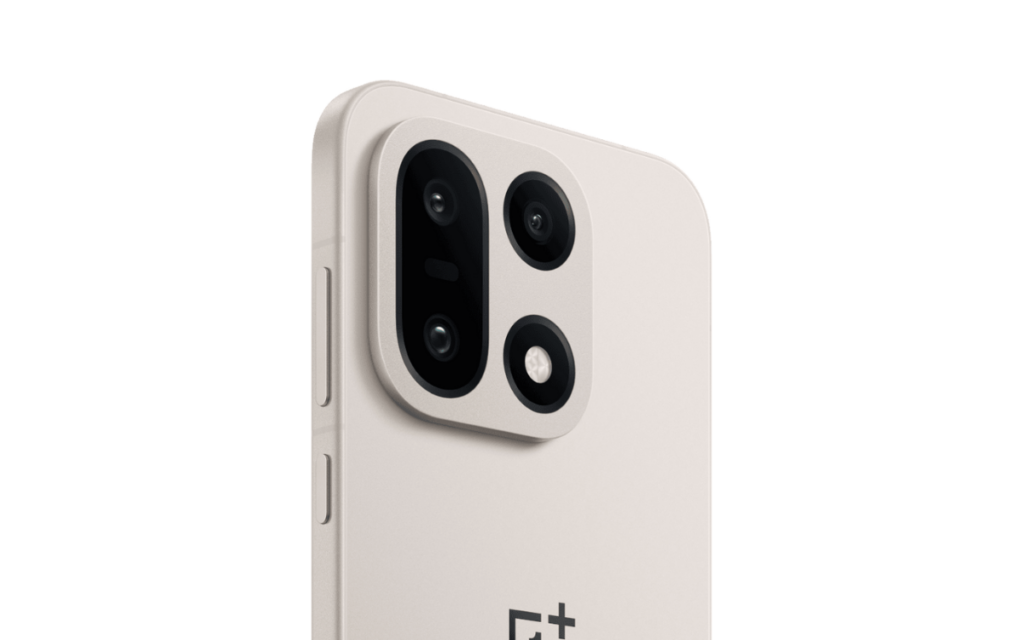

OnePlus Ace 6 Pro Max RAM, storage details emerge, launching soon

A retail box image that surfaced yesterday revealed that OnePlus may soon launch a new phone called the OnePlus Ace 6 Pro Max in China. Today, tipster Smart Pikachu released a Weibo post revealing the RAM and storage details of the device. Here’s a look at the details shared by the tipster.

OnePlus Ace 6 Pro Max memory configurations tipped

OnePlus Ace 6 Pro Max memory configurations tipped by Smart Pikachu

The tipster claims that the OnePlus Ace 6 Pro Max series is on the way, hinting that the lineup may include more than one smartphone. He revealed that the Ace 6 Pro Max will come equipped with the upcoming Snapdragon 8 Gen 5 chipset.

The SoC will be paired with 12GB / 16GB of LPDDR5x Ultra RAM and 256GB / 512GB / 1TB of UFS 4.1 storage. The device will be available in three shades: Flash Black, Electric Purple, and Shadow Green.

The other phone expected to feature the Snapdragon 8 Gen 5 is the upcoming Vivo S50 Pro Mini, which is rumoured to launch by the end of this month. Considering that the Ace 6 Pro Max may debut as the world’s first phone with the said chip, it appears that this device may go official before the S50 Pro Mini this month.

According to recent reports, the OnePlus Ace 6 Pro Max (previously known as OnePlus Ace 6 Turbo) is expected to feature a 6.7-inch OLED 1.5K 165Hz display with a flat design. It is expected to pack an 8,000mAh battery with 100W charging and run on ColorOS 16-based Android 16.

The Ace 6 Pro Max may feature a 32-megapixel front-facing camera and a rear-facing dual-camera setup featuring an OIS-assisted 50-megapixel primary camera and an 8-megapixel ultra-wide lens. It may also offer other features such as an enhanced camera system.

It is expected to come with other features such as ColorOS 16-based Android 16, dual speakers, an X-axis linear motor, an ultrasonic in-screen fingerprint scanner, NFC, a metal middle frame, and weigh around 216 grams. Apart from the colour options mentioned above, the phone may also arrive in a special edition version.

For more daily updates, please visit our News Section.

Stay ahead in tech! Join our Telegram community and sign up for our daily newsletter of top stories.

Redmi Turbo 5 3C certified, expected to launch soon with Dimensity 8500, 9,000mAh+ battery

There have been reports that Redmi is gearing up to launch the Redmi Turbo 5 in China. This device is expected to debut as the world’s first phone powered by the upcoming Dimensity 8500 SoC. Its arrival seems to be drawing near, as it has received the vital 3C certification in China.

Redmi Turbo 5 3C certified

Redmi Turbo 5 3C certified

The above screenshot shows that a new Redmi phone bearing the model number 2511FRT34C has been approved by China’s 3C certification platform. This device was spotted in the country’s radio certification database last month. These certifications indicate that the device may go official soon in China.

According to reports, the above device will be called the Redmi Turbo 5 when it hits the market. The 3C listing reveals that the device may ship with an MDY-18-EW charger, which supports up to 100W charging. It does not include any information about the other specifications of the device.

Redmi Turbo 5 specifications (rumored)

The Redmi Turbo 5 is expected to feature an OLED LTPS screen that supports a 1.5K resolution. Under the hood, the device is expected to feature the upcoming Dimensity 8500 chipset, which may be marketed as the Dimensity 8500 Ultra.

The Turbo 5 is expected to pack a massive 9,000mAh+ battery with 100W charging support. It is also expected to come with other features such as Android 16 with HyperOS 3, an ultrasonic in-screen fingerprint sensor, a metal middle frame, and IP68/69-level dust and water resistance.

In related news, Poco is said to be working on the Poco X8 Pro for the global market. This device may arrive as a rebranded version of the Redmi Turbo 5.

For more daily updates, please visit our News Section.

Stay ahead in tech! Join our Telegram community and sign up for our daily newsletter of top stories.

DJI Avata 360 leak points to direct challenge against Insta360’s first drone

DJI may be preparing a surprising shift in its FPV lineup. Instead of the long-rumored Avata 3, new leaks suggest that the company is working on something more unconventional—one that could shake up the emerging 360° drone segment. And with Insta360 gearing up for its own drone debut, the timing is anything but coincidental.

Reports now indicate that DJI’s next FPV-style release will arrive as the DJI Avata 360, designed to directly counter Insta360’s Antigravity A1, the company’s first drone expected to launch in January next year. This marks a notable departure from expectations built over the last six months, which pointed toward a traditional third-generation Avata.

DJI Avata 360

Rumors of the Avata 3 began circulating earlier this year, around the same period leaks hinted at the Neo 2 and Mini 5 Pro. Both of those drones have since materialized in one form or another, and the Neo 2 itself may be approaching a wider global rollout soon. But while many were waiting for DJI to follow up with a refined Avata 3, alleged prototypes that surfaced since May told a different story.

Photos showcased a drone that looked nothing like the Avata 2. Instead of the compact, rounded FPV frame, the prototypes revealed a flatter, more unconventional layout. That unusual design suddenly makes sense in light of the new claim: DJI isn’t refining the Avata formula; it’s repurposing it.

According to leaker Igor Bogdanov, who now claims to have received direct confirmation, DJI will introduce Avata 360, a drone aimed squarely at the 360° aerial capture market. This positions it as a direct competitor to Insta360’s upcoming Antigravity A1—a bold strategic move, considering Insta360’s dominance in immersive imaging.

Pricing speculation suggests a starting point around $1,099, though no supporting evidence has been shared yet. If accurate, DJI’s decision signals a pivot toward immersive FPV filmmaking at a time when the 360° drone niche is just beginning to heat up. The Avata 360 could be the opening shot in a new competitive chapter.

Don’t miss a thing! Join our Telegram community for instant updates and grab our free daily newsletter for the best tech stories!

For more daily updates, please visit our News Section.

(Sources: The New Camera, Igor Bogdanov)

Xiaomi Smart Door Lock M40 Pro launched with AI palm vein recognition, 5-inch screen & HyperOS

Xiaomi has launched the new Smart Door Lock M40 Pro, a high-end security product designed for smart homes in the Chinese market. The device is now available for pre-order at a discounted price of 3,229.15 yuan ($453). The official retail price is set at 3,799 yuan ($533).

Xiaomi M40 Pro

Xiaomi M40 Pro Specifications

The M40 Pro integrates AI-powered palm vein, 3D structured-light facial, and fingerprint recognition. The palm vein system uses near-infrared light to read subcutaneous patterns for secure, contactless access. Its facial recognition meets BCTC financial-grade standards with live detection, while the fingerprint sensor employs a self-learning algorithm that enhances accuracy over time.

The M40 Pro features a dual-camera panoramic peephole with a 3MP main sensor (175°) and a 2MP auxiliary lens (128°), offering a 190° field of view. Its AI system detects people, packages, and unusual activity. Inside, a 5-inch HD interior display shows real-time footage, which can also stream to Xiaomi TVs, smartphones, and the SU7 car.

The M40 Pro supports 12 unlocking methods, including palm vein, AI 3D structured-light facial recognition, fingerprint, Bluetooth, NFC, passcodes, Mi Home remote unlock, and physical keys. It uses a direct-insert C-grade lock cylinder with through-body construction for stronger physical security, and sensors monitor whether the door is ajar, forcibly opened, or left unlocked.

Xiaomi M40 Pro

The device supports a dual power supply system. It uses an 8000mAh rechargeable lithium battery that can last up to 4.5 months, while four AA alkaline batteries serve as a backup for up to 6 months. It includes both internal and external Type-C ports for emergency power and supports reverse wireless charging from compatible smartphones.

For connectivity, it includes Wi-Fi 6, Bluetooth 5.3, and NFC. It integrates with Xiaomi’s HyperOS ecosystem, allowing automation features like triggering lights, climate control, or surveillance systems upon unlocking. The lock supports app-based alerts for low battery, tampering, and abnormal temperature.

Xiaomi also includes WeChat support for video and voice intercom to enable smooth two-way communication. The lock comes in a brushed metal finish with an ergonomic layout that combines durability and comfort.

In related news, Xiaomi recently launched a new sterilizer that offers a premium design, all-in-one cleaning, and a price under $150. The company has also introduced a smart foot spa that heats, massages, sterilizes, and folds for easy storage.

For more daily updates, please visit our News Section.

Stay ahead in tech! Join our Telegram community and sign up for our daily newsletter of top stories! 💡
(Xiaomi JD)

Should You Buy a Nothing Product? Here’s Who It’s Made For and Why You Might Want It

You’ve likely heard of Nothing as a tech brand over the last couple of years. The company doesn’t want to be known as just another tech brand, and its products have stood out from the typical mold. This is true for its various smartphones and hearable products like earbuds and headphones. But who should actually consider buying a Nothing device? The brand is clearly not for everyone, so here’s a look at the type of users who can get the most value from Nothing.

Design-First and Style-Oriented Users

Right from the get-go, Nothing was clear in its vision of offering products with an emphasis on design. Their gadgets aren’t just made to stand out, but also aim to offer a premium, well-thought-out look from the inside and out (software and hardware). With its first couple of products, like the Nothing Ear (1) and Nothing Phone (1), the brand had established a unique visual design and personality.

Nothing Ear (3)

The company employed transparent panels for its smartphones, headphones, and TWS earbuds. Furthermore, the Phone series also got the Glyph interface, which originally used LED lighting and now also includes a Dot matrix screen with its latest flagship. So a minimalist aesthetic with a distinctive material/finish language helped these devices stand out from the typical smartphone.

If you already like Nothing as a brand, then the design clearly appeals to you. So for those who care about how their device looks just as much as how it works, Nothing offers a unique option. Those who want their phone or earbuds to reflect style, rather than just function, may find Nothing particularly compelling.

Please Note: When you buy something using the links in our articles, we may earn a small commission at no cost to you.

Nothing's CMF Headphone Pro
Nothing’s CMF Headphone Pro

Mid-Range Enthusiasts Seeking Clean Software & Value

Nothing also appeals to users who don’t want to spend flagship-level money but still expect a refined experience. The company’s CMF series was built for those on a budget, while the Nothing Phone (a) series brings premium design elements to mid range phones. A regular mid range phone is built for function over form, with very little thought put into its overall design. However, Nothing brings a flagship level feel to its affordable phones as well, with its capable specs and recognizable yet minimalist software.

Nothing Phone (3a) Lite

Audio Lovers Who Appreciate Design & Branding

On the audio front, models like the Nothing Headphone (1) and the Ear (3) have solid designs and features at accessible pricing. Even with premium audio products, design isn’t an immediate priority. You can find better earbuds and headphones on the market, but none have such a distinct look.

Nothing Headphone (1)

There’s a recognisable shaping, finish, branding, and even sound profile. If you’re an audio enthusiast who also cares about “wearable design” and how your earbuds look in real life, Nothing hearables are a fun option to experience Nothing’s audio tuning and head turning design.

Please Note: When you buy something using the links in our articles, we may earn a small commission at no cost to you.

Why You Might Pause Before Buying

However, Nothing may not be the best fit for everyone. If you prioritise absolute flagship performance, premium grade cameras, and cutting edge hardware, other brands may still deliver more for the same price. Also, while the ecosystem is improving, it’s still smaller than large legacy brands, meaning accessories, service centres and software might lag in some regions.

For more daily updates, please visit our News Section.

Don’t miss a thing! Join our Telegram community for instant updates and grab our free daily newsletter for the best tech stories!

Apple finally offers a web interface for its App Store

Apple just made a long-requested change to how users discover apps — and while it doesn’t radically alter how you install them, it does make finding what you need a whole lot easier. The company has quietly rolled out a fully redesigned, browser-based version of the App Store, transforming what was previously a collection of isolated app pages into a proper, searchable hub.

Now, heading to apps.apple.com no longer dumps you onto a plain landing page with minimal information. Instead, you’re met with a refreshed interface that mirrors the App Store experience on iPhones, iPads, and Macs. It’s clean, organized, and, for the first time, useful for browsing.

You still can’t download apps directly from the web — something Apple continues to reserve for its devices — but the new site lets you open an app listing on your Apple device instantly or share it via link. For many users, that’s enough: a simple way to look up apps when you’re away from your iPhone or want to send a recommendation to someone else.

One of the biggest upgrades is the ability to switch between platforms. A menu at the top lets you jump between app categories for iPhone, iPad, Mac, Apple Watch, Apple TV, and Vision Pro. You can also browse by category — productivity, entertainment, adventure, and more — or check out curated recommendations on the familiar Today tab.

Search is finally functional, too. Previously, Apple’s web-based app pages existed, but finding them required a direct link or a lucky Google search. With the new App Store on the web, you can type in any app name and get an organized result instantly.

While the lack of direct downloads may disappoint some users hoping for a more flexible experience, the new web interface still fills a long-standing gap. It makes the App Store easier to explore, easier to share, and much more accessible across devices.

Apple hasn’t said what comes next, but even in this limited form, the web-based App Store marks a welcome step toward a more open — or at least more convenient — ecosystem.

Don’t miss a thing! Join our Telegram community for instant updates and grab our free daily newsletter for the best tech stories!

For more daily updates, please visit our News Section.

(Via)

2nm Exynos 2600 outscores Snapdragon 8 Elite Gen 5 in Geekbench by a significant margin

Update:

There is growing debate around the authenticity of the leaked Exynos 2600 benchmark scores referenced below. There’s a chance that the 13,000+ multi-core result may have been fabricated. At least one source claims the numbers were intentionally created in response to earlier questionable leaks. Given the uncertainty, these figures should be treated as unverified and potentially inaccurate.

Original story:

Samsung’s next flagship chipset may have just delivered its strongest hint yet that the Galaxy S26 series could see a major performance shake-up. New Geekbench 6 scores from an alleged Exynos 2600 engineering sample suggest Samsung’s first 2nm GAA chip isn’t just competitive — it’s pulling ahead of the Snapdragon 8 Elite Gen 5 in raw CPU power by a surprisingly large margin.

According to numbers shared by X user @lafaiel, the Exynos 2600 posted 4,217 (single-core) and 13,482 (multi-core). For context, the Snapdragon 8 Elite Gen 5 — Samsung’s alternative chip for the S26 lineup in regions like the US and China — scored 3,824 and 12,402 in the same benchmark on the iQOO 15. That’s a sizeable jump of ~10% in single-core and ~8% in multi-core for the Exynos, at least in these early tests.

The leaked Exynos 2600 sample was clocked aggressively. The deca-core CPU ran in a 1 + 3 + 6 configuration, with the prime core hitting 4.20GHz, performance cores at 3.56GHz, and efficiency cores at 2.76GHz. Samsung is clearly probing the limits of its first 2nm chip — though it’s unclear whether these speeds will make it into retail units.

There is one twist: when checking Geekbench’s database directly, the listing could not be found. That either means it was removed or the numbers were altered before circulating. Still, if the scores are accurate, the Exynos variants of the Galaxy S26 series could not only close the gap but also outperform their Snapdragon counterpart in raw power.

And we still have no idea about the power draw. As impressive as these results look, they’re still just benchmarks. Exynos chips have a long history of shining in early tests but falling behind Snapdragon variants once real-world thermals and sustained performance come into play. Engineering samples can also be tuned aggressively or tested with cooling setups that never make it into consumer phones. Until we know the test conditions — and until retail units arrive — it’s best to see these numbers as promising, but far from final.

Don’t miss a thing! Join our Telegram community for instant updates and grab our free daily newsletter for the best tech stories!

For more daily updates, please visit our News Section.

(Sources; 1, 2)

Google’s Pixel 9a Drops by Rs 10,000 in India: Here’s How

If you’ve been eyeing a new Google Pixel phone, but don’t have the budget for its latest flagship phones, this deal for its latest mid range model might be perfect for you. The Pixel 9a has just received a sizeable discount worth Rs 10,000, so here’s how you can avail this deal.

How to Buy the Google Pixel 9a for Rs 10,000 Off?

As of right now, the discount is available for customers shopping on Flipkart. The Pixel 9a originally debuted for a starting price tag of around Rs 49,999, but it currently has its base price slashed by Rs 5,000, which brings its effective starting cost to just Rs 44,999. Apart from this, HDFC card holders can avail an additional Rs 5,000 discount via credit card EMI transactions.

Google Pixel 9a
Google Pixel 9a

Google’s Pixel 9a was definitely quite expensive for a mid range phone in the Indian market on launch, but with the recent discount, it is a lot more approachable now. To recall, the device offers a compact 6.3-inch AMOLED display with a FHD+ resolution, a 120Hz refresh rate, 2700 nits of peak brightness, and Corning’s Gorilla Glass 3 for protection. Under the hood, this model is equipped with the Tensor G4 chipset, while a sizeable 5,100mAh battery pack powers this model.

Photography is typically the strong suit of a Pixel phone, and the Pixel 9a delivers with Google’s capable imaging system. The rear has a 48MP main camera and a 13MP ultra wide angle lens. Meanwhile, the front houses a 13MP shooter for selfies and video calls. So, for a mid range model, images are still solid on this phone.

Please Note: When you buy something using the links in our articles, we may earn a small commission at no cost to you.

For more daily updates, please visit our News Section.

Tech enthusiast? Get the latest news first! Follow our Telegram channel and subscribe to our free newsletter for your daily tech fix! ⚡

Motorola launches budget Moto G and Moto G Play (2026) in the West

Motorola has just announced two new phones in its budget ‘G’ lineup. Called the Moto G and Moto G Play, both carry the 2026 suffix as well. The announcement comes late in 2025, which might explain why Motorola’s already stamping next year’s date on them.

Don’t go by the names, though. These are classic Motorola slabs built for the basics.

Moto G (2026) and G Play (2026) Specifications

The two phones share most of the essentials, including a 6.7-inch display with 120Hz refresh rates, up to 1,000 nits of peak brightness, and, for the first time on a Play model, 5G support. 

On the camera front, the Moto G 2026 sports a 50-megapixel main sensor with Quad Pixel processing and a 32-megapixel selfie camera. The Play version keeps things simpler with a 32-megapixel rear shooter and an 8-megapixel front camera.

Of course, no phone in 2025 is skipping the AI hype. Motorola’s adding a few light AI photo tricks here, like Night Vision and auto-smile detection, which should come in handy for casual shooting.

Power comes from a 5,200mAh battery that Motorola claims can last up to two days. However, the Moto G supports faster 30W wired charging, while the Play is capped at just 18W.

Both devices get Gorilla Glass 3 protection on the front and IP52 water resistance, meaning they’ll survive the occasional splash but not much more.

Motorola isn’t saying much about what’s powering these phones under the hood, but on the software side, they ship with Android 16, Motorola’s usual software extras, and baked-in Google Gemini tools. 

Price and Availability

The Moto G 2026 will sell for $199.99 in the U.S. starting December 11, first through Motorola’s website and later through major retailers and carriers.

The Moto G Play 2026 launches earlier, on November 13, for $169.99, and will also roll out across multiple retail and carrier channels. Both phones will arrive in Canada around the same time.

For more daily updates, please visit our News Section.

Stay ahead in tech! Join our Telegram community and sign up for our daily newsletter of top stories!

(Source)

ASUS Unveils World’s First AI-Powered WiFi 7 Router for Gaming and Smart Homes

ASUS Republic of Gamers has launched the ROG Rapture GT-BE19000AI, the world’s first AI-powered router. First shown at CES 2025, the router combines hardware intelligence, strong performance, and advanced automation for gaming, streaming, and smart home setups.

ROG Rapture GT-BE19000AI

The ROG Rapture GT-BE19000AI is the first router to feature a built-in neural processing unit. It runs on a quad-core CPU with 4GB of DDR4 RAM and 32GB of onboard storage. This setup allows it to handle heavier workloads and run Docker applications directly. The integrated system provides dedicated resources for AI tasks and automation without needing a separate computer or server.

ASUS ROG Rapture GT-BE19000AI

The router includes an integrated Docker Engine with CLI and Compose support. It can run containerized applications such as AdGuard, Frigate, or smart home assistants directly from the router. This allows users to manage automation, AI services, and IoT devices in one place. It can filter ads, improve browsing safety, and act as a central hub for smart devices.

WiFi Insight is another key feature. It scans for interference across all WiFi and non-WiFi channels, shows clear reports on network health, and automatically adjusts to keep connections stable. AI Game Boost adds intelligent traffic management by detecting devices and prioritizing data in real time. In ASUS’s internal tests, AI Game Boost reduced latency by up to 34 percent.

The GT-BE19000AI supports tri-band WiFi 7 with 320MHz channels and 4096-QAM, offering speeds up to 19Gbps. It has two 10G Ethernet ports and four 2.5G ports, with a total wired capacity of up to 31Gbps. It also supports 20Gbps link aggregation for high-demand use.

Cooling is handled by a 30 percent thicker aluminum plate and a nanocarbon coating, improving heat dissipation by 18 percent. The router includes an energy-saving mode for better efficiency. AiProtection provides enterprise-grade security, while Guest Network Pro supports up to five SSIDs for gaming, IoT, VPN, or guest access, each with its own permissions and bandwidth control.

Key Specifications:
Network standards: IEEE 802.11a/b/g/n/ac/ax/be, IPv4, IPv6
Wireless throughput: 2.4GHz 4×4 up to 1376Mbps, 5GHz 4×4 up to 5764Mbps, 6GHz 4×4 up to 11529Mbps
Memory: 4GB DDR4 RAM, 32GB eMMC flash
Chipsets: BCM4916, BCM6726, BCM67263
Ethernet ports: 2x 10G, 4x 2.5G, 1x 1G
USB ports: 1x USB 3.0, 1x USB 2.0
Antennas: 8 external non-detachable
Dimensions: 35.41 x 350.41 x 220.6mm
Weight: 2kg

For more daily updates, please visit our News Section.

Stay ahead in tech! Join our Telegram community and sign up for our daily newsletter of top stories.

(Source)

AOC launched a 260Hz IPS gaming monitor with pro-grade color for under $100

AOC has launched a new gaming monitor in China under the model name 24G51Z. The monitor is priced at 649 yuan ($91) and is now available on JD.com. It targets budget-conscious gamers who want high refresh rates and accurate color reproduction without breaking the bank.

AOC 24G51Z monitor

AOC 24G51Z Specifications

The AOC 24G51Z features a 23.8-inch Fast IPS panel with QD (Quantum Dot) film backlight technology, delivering vibrant colors and wide color coverage. The panel supports a native 240Hz refresh rate, which users can overclock to 260Hz via the OSD menu. It also offers a 1ms GTG response time and a 0.3ms MPRT mode for improved clarity during fast-paced scenes.

The monitor supports Adaptive Sync and AOC’s MBR Sync, which inserts black frames between images to reduce motion blur without lowering brightness. It reaches 400 nits peak brightness and carries VESA DisplayHDR 400 certification, enabling improved contrast and highlight details in supported content.

AOC claims the panel achieves Delta E < 2 (sRGB) color accuracy. It covers 96% of the DCI-P3 color space and 93.8% of Adobe RGB, making it suitable for both gaming and color-sensitive tasks. The display also supports hardware low-blue-light filtering and DC dimming to reduce eye strain during long sessions.

The 24G51Z includes AOC’s custom Overdrive tuning, optimized for 3.74ms response time with just 6% overshoot, helping reduce ghosting and trailing effects. The monitor also comes with gaming features such as on-screen crosshairs, an FPS counter, dark field control, and several preset gaming modes. These settings can be adjusted and customized through the AOC G-Menu software.

In terms of connectivity, the monitor includes DisplayPort 1.4, HDMI 2.0, and a 3.5mm audio jack. The body supports −5° to +23° tilt adjustment and is compatible with 100×100mm VESA wall mounts. It weighs 2.49kg with the stand and 2.25kg without it.

In related monitor news, Skyworth recently launched the G27Q Max gaming monitor featuring a 2K resolution, 250Hz refresh rate, and 1800-nit HDR brightness. HKC has also introduced the 27-inch UG27EQ monitor with a 400Hz refresh rate, 0.5ms response time, and USB-C connectivity.

For more daily updates, please visit our News Section.

Stay ahead in tech! Join our Telegram community and sign up for our daily newsletter of top stories! 💡
(Source)

Redmi K80 Ultra Drops to Just $349: Unbelievable Flagship Deal

Searching for a flagship smartphone that offers blazing performance, breathtaking visuals, and ultra-fast charging, all without breaking the bank? The Redmi K80 Ultra is now up for grabs at a special deal price of just $349 (down from $499), exclusively on Giztop with global shipping options. This limited-time offer makes it one of the best value deals of 2025.

Powerful Performance with Dimensity 9400+

Under the hood, the Redmi K80 Ultra is powered by the MediaTek Dimensity 9400+ processor, ensuring smooth multitasking and gaming performance. Paired with 12GB or 16GB LPDDR5X RAM and up to 1TB of UFS 4.0 storage, it handles anything you throw at it with ease, from heavy apps to high-end games.

Immersive Display and Premium Design

Experience vibrant visuals on the 6.83-inch 1.5K LTPS OLED display with a 144Hz refresh rate and 3200-nit peak brightness. The AMOLED panel supports 68.7 billion colors and a P3 color gamut, ensuring sharp contrast and cinematic color accuracy.

Triple 50MP Cameras for Pro-Level Shots

Capture your world with the triple 50MP rear camera system, featuring a Light Hunter 800 main sensor with OIS, a telephoto lens, and an ultra-wide sensor. Whether it’s 8K videos or ultra-stable photos, Xiaomi’s AI-based AISP platform ensures exceptional clarity and dynamic range.

Massive Battery & Hyper OS Experience

The 7410mAh battery supports 120W fast charging and 50W wireless charging, giving you hours of power in minutes. Running on Xiaomi’s latest Hyper OS, the Redmi K80 Ultra ensures a smooth, fast, and connected experience for productivity and entertainment.


Read More:

OPPO Find X9 (Black, 12GB+256GB) Now Available at a Discount: Only $699 at Giztop

If you’re searching for a premium smartphone that delivers flagship performance and exceptional camera capabilities, the OPPO Find X9 is now up for grabs at a special discounted price of $699 (originally $749) exclusively on Giztop with global shipping options. This limited-time deal is the ideal chance to experience OPPO’s latest powerhouse without paying full price.

Flagship Performance with Dimensity 9500

At the heart of the OPPO Find X9 is the MediaTek Dimensity 9500 processor, paired with 12GB of LPDDR5X RAM for lightning-fast multitasking and ultra-smooth performance. Whether you’re gaming, streaming, or running multiple apps, this setup ensures seamless operation every time.

Immersive 2K AMOLED Display

Experience visual brilliance on a 6.82-inch LTPO 2.0 AMOLED 2K display with 3216×1440 resolution and a 120Hz adaptive refresh rate. With HDR10+ support, 10-bit color depth, and 100% DCI-P3 coverage, the screen delivers stunning detail and color accuracy, perfect for movies, games, or creative work.

Pro-Grade Quad Camera Setup

Capture every moment in incredible detail with the quad-camera system led by the 50MP Sony IMX988 sensor, alongside ultra-wide, 3x telephoto, and 10x periscope lenses. For selfies and video calls, the 32MP Sony IMX615 front camera ensures crisp, natural results.

Long Battery Life & Super-Fast Charging

The 5700mAh battery keeps you powered throughout the day, while 100W SuperVOOC wired charging and 50W wireless AirVOOC get you back to full in no time.


Read More:

OriginOS 6 Update for India: Vivo and iQOO Devices to Get Android 16 Starting November 2025

Vivo has officially shared the Indian rollout plan for OriginOS 6, following its global debut. The new system update focuses on better performance, smoother animations, and a refreshed interface. The rollout will take place in multiple phases, starting November 2025 and continuing into mid-2026.

Rollout Schedule:

Vivo OriginOS 6 Indian launch schedule
  • Early November 2025
    • X Series: X200 Pro, X200, X200 FE, X Fold5
    • V Series: V60
    • Note: Some users of the X200 Pro and V60 have already received the update ahead of the official timeline.
  • Mid November 2025
    • X Series: X100 Pro, X100, X Fold3 Pro
  • Mid December 2025
    • V Series: V60e, V50, V50e
    • T Series: T4 Pro, T4 Ultra
  • First Half of 2026
    • X Series: X90 Pro, X90
    • V Series: V40 Pro, V40, V40e, V30 Pro, V30, V30e
    • T Series: T4 5G, T4R 5G, T4x 5G, T3 Ultra, T3 Pro 5G, T3 5G
    • Y Series: Y400 Pro 5G, Y400 5G, Y300 5G, Y300 Plus 5G, Y200 Pro 5G, Y200e 5G, Y58 5G, Y39 5G, Y31 Pro 5G

Since iQOO is a sub-brand of Vivo, it has also announced its OriginOS 6 rollout timeline for India.

iQOO Rollout Schedule:

  • Early November 2025: iQOO 13
  • Mid November 2025: iQOO 12
  • Mid December 2025: iQOO Neo 10, iQOO Neo 10R, iQOO Neo9 Pro
  • First Half of 2026: iQOO 11, iQOO Z10 5G, iQOO Z10R 5G, iQOO Z10x 5G, iQOO Z9 5G, iQOO Z9s Pro 5G, iQOO Z9s 5G

For more daily updates, please visit our News Section.

Stay ahead in tech! Join our Telegram community and sign up for our daily newsletter of top stories.

(Source)

Redmi Turbo 4 Pro Now Just $269: Flagship Power on a Budget

Redmi Turbo 4 Pro packs flagship-level performance and premium features at an affordable price, making it a top pick for budget-conscious users. With its sleek design, powerful processor, and stunning display, it delivers incredible value for money.

Discount and Availability

The Redmi Turbo 4 Pro is now available at an unbeatable price of $269.00, down from its original $349.00, making it one of the best budget smartphone deals right now. This limited-time discount is exclusively available at Giztop, with global shipping offered so users worldwide can grab this powerful device at a great price.

Powerful Performance with Next-Gen Chip

The Redmi Turbo 4 Pro is built for those who want flagship-level performance without spending a fortune. It runs on the advanced 4nm Dimensity 8400-Ultra processor, an octa-core chip that delivers lightning-fast speeds, smooth multitasking, and excellent AI processing. Combined with 12GB LPDDR5X RAM and 256GB UFS 4.0 storage, this phone ensures seamless app performance, quick load times, and plenty of space for your files, photos, and videos.

Vibrant 120Hz AMOLED Display

Enjoy a stunning viewing experience with the 6.67-inch 1.5K AMOLED display. It supports 120Hz refresh rate, 3200 nits peak brightness, and HDR10+ with Dolby Vision, offering bright, crisp, and color-accurate visuals whether you’re gaming, streaming, or browsing.

High-Quality Cameras

Capture every moment in detail with the 50MP Sony IMX882 main camera featuring OIS (Optical Image Stabilization) and an 8MP ultra-wide lens for scenic shots. The 20MP front camera ensures clear and vibrant selfies every time.

Long Battery Life with Fast Charging

Stay powered all day with the 6550mAh battery, and when it’s time to recharge, the 90W Fast Flash Charge gets you back to 100% in no time.

Smart Features and Cooling

The phone includes a LiquidCool 4.0 cooling system to prevent overheating during heavy use and a side-mounted fingerprint sensor for quick and secure unlocking. Running on Xiaomi HyperOS 2.0, it provides a fast, smooth, and user-friendly experience.

Overall, the Redmi Turbo 4 Pro is a complete package offering flagship-grade performance, display, and battery life, all at a budget-friendly price.


Read More:

Rollme Edge smartwatch debuts with 1.95″ AMOLED display and Bluetooth calling at $29.99

Rollme has launched its latest smartwatch, the Rollme Edge, priced at just $29.99. The device is now available in Black and White color options through Rollme’s official store. The Edge targets budget-conscious consumers who want a stylish, feature-packed smartwatch without paying a premium.

Rollme Edge smartwatch

Rollme Edge Specifications

The Rollme Edge features a unique octagonal metal frame that sets it apart from traditional round or square designs. The chassis gives the smartwatch a futuristic yet minimal look that works across casual and formal settings. Rollme has equipped the watch with a 1.95-inch AMOLED display that offers a 460×460 resolution, 99.5% Adobe RGB color coverage, and 178° viewing angles for better readability under sunlight.

The smartwatch runs on the AB5691 processor and comes with Bluetooth 5.4 support. You can make and receive calls right from your wrist, access your call history, and sync contacts for easy dialing. It also handles voice assistant commands and pushes notifications in real time.

Rollme has focused on health and fitness tracking with features such as heart rate monitoring, blood oxygen tracking, advanced sleep tracking, and breath training. The watch supports over 100 sports modes and displays detailed metrics including distance, steps, calories burned, and heart rate.

The smartwatch carries a 380mAh battery. It takes about 2 to 3 hours to charge and delivers up to 10 days of usage or 30 days on standby. The device supports magnetic charging and uses a lithium polymer battery. Rollme has rated the watch IP68 for water and dust resistance, making it suitable for daily wear in various environments.

The smartwatch supports Android 5.0 and iOS 10.0 or later, offering customizable watch faces and several UI layouts. It includes everyday tools like sedentary reminders, weather forecasts, menstrual tracking, and health alerts for a more convenient experience.

In related news, Coros recently launched the Apex 4 outdoor smartwatch featuring a titanium body, dual-band GNSS, and up to 24 days of battery life. Amazfit has also unveiled the 44mm T-Rex 3 Pro, equipped with an AMOLED display and 10 ATM water resistance.

For more daily updates, please visit our News Section.

Stay ahead in tech! Join our Telegram community and sign up for our daily newsletter of top stories! 💡
Dobot’s New $1,000 Robot Dog Might Be the Smartest Pet You Can Buy

Dobot is bringing factory-grade robotics into your living room with the launch of the Rover X1, the world’s first household intelligent robot priced at 7,499 yuan ($1,053). But this isn’t just another quadruped that does a cute dance on command; it’s designed to be a full-fledged smart assistant that can patrol your home, teach your kids to code, follow you through the woods, and carry your groceries.

Dobot Rover X1

Dobot Rover X1 Specifications

The Rover X1 runs on a dual-vision tracking system that gives it omnidirectional perception. It constantly maps and analyzes its surroundings in real time, making autonomous decisions without relying on manual commands. That makes it smarter than most home robots currently stuck in reactive mode. Its hybrid wheel-leg design lets it scale small slopes, move across grass, and handle hardwood floors while carrying actual cargo.

Dobot Rover X1

Dobot envisions the Rover X1 not as a toy but a multipurpose platform. You can mount a camera on its back for autonomous filming, let it patrol your home while streaming real-time footage to your phone, or turn it into a programmable learning tool. The open system supports both drag-and-drop visual coding and syntax-based programming, making it an ideal entry point for kids exploring robotics.

Dobot Rover X1

The robot can also function as an emotional companion. It follows voice commands, trails its owner around the house, lights up expressively, and even hauls small items like school bags or water bottles. In a world filled with smart speakers and AI bots stuck in a corner, the Rover X1’s mobility and modularity give it a distinct edge.

Dobot Rover X1

Detailed specs and an official product page are still under wraps, but if Dobot can back this up with durable hardware and usable software, the Rover X1 could redefine what it means to have a smart companion at home.

In related news, OpenAI-backed 1X Technologies has unveiled Neo, a $20,000 humanoid robot designed for home use, set to ship in 2026 with AI-driven task automation and remote assistance capabilities.

For more daily updates, please visit our News Section.

Stay ahead in tech! Join our Telegram community and sign up for our daily newsletter of top stories! 💡

(Via)

Xiaomi Robot Vacuum S40 Goes Global, Bringing Smart Home Cleaning

The cleaning robot market just got a brand new entry with the Xiaomi Robot Vacuum S40. Xiaomi just released its latest robot vacuum cleaner in the global market, with the smart home appliance being released in Europe. So here’s everything you need to know.

Xiaomi Robot Vacuum S40: What does it offer?

The Chinese tech giant’s new robot vacuum has officially released in the UK and Europe. It brings advanced cleaning features, however, there is no advanced base station for self cleaning functionality or automatic vacuuming. So the base station is purely for charging the Xiaomi Robot Vacuum S40 model. Talking about the cleaning robot itself, you get a high suction power of 10,000 Pa.

Xiaomi Robot Vacuum S40

This promises consistent cleaning on floors and carpets. You also get a special brush on the Xiaomi Robot Vacuum S40 for effective cleaning, and it can even prevent hair from getting entangled. There is even a mop, although this mop doesn’t rotate and only gets dragged with the robot vacuum cleaner. Furthermore, the Xiaomi Robot Vacuum S40 has a total capacity of 520ml for its dust bin.

On a single full charge, the smart home appliance can run for up to 180 minutes thanks to its 5,200mAh battery pack under the hood. The Xiaomi Robot Vacuum S40 is available for purchase in European regions and the UK. It is priced at £169.99 in the UK and €199.99 in markets like Germany. Shipping is free in both regions, and buyers can also return the gadget within two weeks for a full refund. This model was just released after the brand released the Xiaomi Robot Vacuum S40C in Europe back in August 2025.

For more daily updates, please visit our News Section.

Don’t miss a thing! Join our Telegram community for instant updates and grab our free daily newsletter for the best tech stories!