JBL T180A In-Ear Earphone which generally retails for $25 is now available at a discounted price of $14.26 only at AliExpress. This deal ends on 9 September.
Generally retailing for $25 you can now buy JBL T180A In-Ear Earphone at a discounted price of $14.26 only at AliExpress. This deal ends on 9 September. So place your order asap.
For more information on such exciting deals and offers check out ourdeals hub.
* Please Note: When you buy something using the links in our articles, we may earn a small commission at no cost to you.
Recently, You must have seen that there’s hardly much difference in features and functions among mobile gimbals.
But what if I tell you that a mobile gimbal can be smart and can do much more than good stabilization. And today we bring you such a creative gimbal, the Hohem iSteady V2. It’s the second-generation model in the Hohem iSteady series, mainly focused on the mobile video shooting market. The main selling point of the iSteady V2 is the built-in AI tracking sensor, which can independently achieve face tracking and gesture tracking without software assistance. With this creative hardware design, the iSteady V2 gimbal is very likely to become one of the most popular mobile gimbals in the market.
So Let’s check out what we get on this iSteady V2.
From the gimbal’s design, we’re pretty sure that the brand Hohem knows exactly how a mobile gimbal should be. The iSteady V2’s design seems to be inspired by the success of the iSteady X gimbal.
Although they share a similar design with each other, the V2 gimbal improves the build quality of the gimbal body and adds an AI vision module on the top of the gripper. The light and compact design of the gimbal brings users great convenience during travel. Especially with the unique foldable form, the gimbal can be easily carried in your small bag or even your pocket without occupying much space.
For better stabilization performance, Hohem upgraded the 3-axis anti-shake algorithm on the iSteady V2. The 3-axis mechanical gimbal stabilization is much better than the electronic image stabilization or even the phone camera’s optical stabilization in avoiding footage quality being damaged or cropped.
Hohem iSteady V2 Review: Fit & Performance
In actual use, the Roll and Pan motors can be rotated up to a maximum range of 320°, while the Tilt motor supports a controllable range of 60°. And the Gimbal has pretty good load capacity. It can provide excellent stabilization for almost all the phones in the mainstream market. But you still need to pay attention to your phones’ camera position. If your camera module is too close to the central area of the phone, the motor may be shown in the shooting image. One such example is the Mi 10.
However when compared to most other gimbals, the V2 gimbal has done much better to avoid this issue. Even for the Mi 11 Ultra which has a large camera module, the motor design perfectly avoids the blocking issue.
Now, let’s check out how it works with some footage that was shot on the Mi 11 Ultra.
During our stabilization test, we found an interesting detail of the gimbal. The V2 gimbal can immediately switch to low-angle shooting by turning it upside down. Such specialized camera movement and extreme low-angle shooting can probably inspire your creation when you need a different perspective.
In addition to the reliable traditional features of the V2 as a mobile gimbal, its AI Tracking powered by the vision sensor should be the most surprising feature. Unlike most gimbals that support face tracking through software control, the V2 gimbal creatively features a sensor that provides face tracking and gesture tracking independently without the exclusive app. Whether it is using the phone camera app or the Hohem App, the tracking functions can work well all the time with only one gesture. Since most gimbal apps cannot perfectly adapt to different phones’ native cameras, the AI tracking sensor is a significant addition to the gimbal. Now, those who want face-tracking motion sensing can get it even when they are using the native camera app.
Besides facing tracking, the iSteady V2 also supports independent simple gesture control, such as an OK gesture for shutter, a palm gesture for AI tracking, and thumb gestures for filming direction switch.
In our actual test, the auto-rotating speed of tracking is just right for achieving flexible tracking. But if the object moves too fast, it’s likely to cause tracking failure, which requires filmmakers to leave enough distance between the subject and the gimbal.
Meanwhile, we also commend its Bluetooth connection. Once you connect the gimbal to the phone, almost all the essential buttons on the gimbal work well via most phones’ default camera app, such as zoom-in or zoom out with the pusher button or the shutter button.
And speaking of the Hohem’s exclusive app for the iSteady V2 gimbal, although most common shooting can be performed without it, we still found some special shooting modes in the Hohem app, such as inception, Dolly zoom and smart motion Time-lapse.
In addition to the AI face tracking, the LED fill flash is another reason why we thought the V2 is an excellent gadget for live streamers and Vloggers. The gimbal comes with built-in LED light with adjustable brightness to better handle low-light conditions.
Hohem iSteady V2 Review: Battery Life & Reverse Charge
Hohem also upgrades the battery life of the iSteady V2, which can continuously work for around 9 hours. And at the same time, the long battery life also can turn into an emergency power bank for the phone. It’s so versatile that it not only plays a role as an important accessory for shooting outdoors but also guarantees a long working time for the shooting device as well.
After we experienced it for over a week, we are pretty sure that such a built-in AI vision sensor is going to be popular in the mobile gimbal industry. The biggest benefit of the gimbal’s AI tracking is that there is no software limitation to activate it. And it performs much better with more accurate recognition and quicker tracking. Not to mention that the iSteady V2 as a mobile gimbal has reliable stabilization for mobile devices.
So that’s all about the Hohem iSteady V2 gimbal. If you are interested in this creative gimbal with Ai sensor, you can visit their official website for more information or check out its Hohem official shop.
Baseus Retractable 100W One for Three Data Cable which generally retails for $25 is now available at a discounted price of $19.24 only at AliExpress. This deal ends on 9 September.
Compatible with mainstream fast charging protocols
Input Interface: Type C
Output Interface: Type C + Apple + Micro USB
Durable flexible flat cable
Baseus core charging technology
Colors: Black, Blue, Green, Lavender
Generally retailing for $25, you can now buy Baseus Retractable 100W One for Three Data Cable at a discounted price of $19.24 only at AliExpress. Please note that this deal ends on 9 September. So place your order asap.
For more information on such exciting deals and offers check out ourdeals hub.
* Please Note: When you buy something using the links in our articles, we may earn a small commission at no cost to you.
Earlier today, Nubia’s REDMAGIC line announced a new gaming smartphone in China. The new REDMAGIC 6S Pro comes with significant upgrades such as the more powerful Snapdragon 888 Plus processor, a higher touch sampling rate, and an improved cooling system. Now, the manufacturer has announced when the phone will get a global launch date.
As seen on the official website, the REDMAGIC 6S Pro will be announced on Monday, September 27. Ahead of the launch, REDMAGIC has revealed key details such as the price of the phone. International buyers will be able to pick up the phone in the three variants listed below:
12GB RAM + 128GB = $599/€599/£519
16GB RAM + 256GB = $699/€699/£609
16GB RAM + 256GB (Ghost) = $729/€729/£629
The Ghost Edition is the model with a see-through back panel that allows you to see the internals including the cooling fan and its LED lights.
REDMAGIC is giving buyers $10/€10 if you subscribe to the REDMAGIC newsletter. It is also running a giveaway in partnership with the game accessory maker, GameSir. The winner will get a REDMAGIC 6S Pro: Ghost and a GameSir X2 Controller.
The REDMAGIC 6S Pro will have a 6.8-inch AMOLED screen with a 165Hz refresh rate, a 720Hz touch sampling rate, and a 7.4ms response rate. There is a Snapdragon 888+ chipset under the hood and it draws juice from a 4500mAh battery with support for 120W fast charging. There is a possibility the global version will come with a bigger battery capacity but slower charging speed just like the manufacturer did with the REDMAGIC 6 Chinese and global variants.
The phone will also come with 64MP triple rear cameras, stereo speakers, an audio jack, NFC, and its proprietary ICE 7.0 multi-dimensional cooling technology. It will run Android 11 out of the box.
Motorola seems to be gearing up for the launch of a new smartphone dubbed Moto G Pure. The upcoming smartphone is expected to be an entry-level offering in the Moto G lineup. The G Pure recently popped up on GeekBench, revealing some key specifications of Moto’s upcoming budget-oriented smartphone.
Source: GeekBench
The Moto G Pure was spotted on GeekBench with Mediatek’s Helio G25 chipset. The upcoming smartphone would be coming with atleast 3GB of RAM and will be running Android 11 out of the box. The Moto G Pure managed to score 135 in the single-core tests and 501 points in the multi-core tests. The upcoming smartphone would be quite an affordable offering from Motorola targetted towards developing markets considering the hardware.
1 of 4
The upcoming smartphone from Motorola also appeared in a couple of certifications last month. The smartphone appeared on REL Canada certification bearing the model number XT2163-4. Later, the smartphone was spotted on FCC and Wi-Fi alliance certification, revealing that the Moto G Pure would be running Android 11 out of the box.
The Moto G Pure was also spotted on TUV certification, revealing some key specifications of the smartphone. As per the certification, the smartphone would come with a 4,000mAh battery. Apart from this, there’s not much known about the Moto G Pure, but we expect more details to follow soon as the launch seems imminent.
In related news, Motorola recently announced another G series smartphone, the Moto G50. The Moto G50 comes with a 6.5-inch LCD with an HD+ resolution and a refresh rate of 90Hz. The smartphone is powered by Mediatek’s Dimensity 700 chipset paired with 4GB of RAM and 128GB of internal storage. It comes with a triple rear camera setup consisting of a 48MP main camera, 2MP macro camera and 2MP depth sensor. The smartphone comes with a 5,000mAh battery with support for 15W fast charging. It runs Motorola My UX on top of Android 11. The Moto G50 retails for AUD 399 (~$289).
Lenovo is doubling down on mid-range and premium Android tablet categories in China. The company’s new Xiaoxin Pad Pro 2021 offers a much better value than its predecessor, which was released just a year ago. An executive of the firm now teases yet another tablet for the market.
Lenovo Xiaoxin Pad Pro 2021
A product manager at Lenovo who goes by the name of Lin Lin on Weibo shared a close-up image of a display showcasing its pixel arrangement on Saturday (September 5). When a netizen enquired about the device, the exec revealed that the screen belongs to a new tablet.
When another netizen asked whether the display is by Samsung, the exec simply replied an emoji suggesting the same. So whatever this tablet is, we can expect it to flaunt a Samsung panel.
This is not the first time Lin Lin has teased a product months before release. He shared the Settings page screenshot of Xiaoxin Pad Pro 2021 in March, while the product went official only at the end of May.
Hence, this upcoming Lenovo tablet could also be months away from the official launch. During this period, we expect to learn more about this device via leaks, certifications, and teasers.
That being said, it is interesting to note that the Lenovo executive uses an OPPO Find X3 Pro to share his Weibo posts instead of a Motorola or Lenovo-branded smartphone. The picture of the display posted by him comes from the microscope camera of OPPO’s 2021 flagship smartphone.
Games made for the PlayStation 5 console might soon become more expensive. The rise in cost could be due to the rising cost of production of new video games, as per a former PlayStation executive.
According to Shawn Layden (via TechTimes), an ex official of Sony PlayStation, the cost of making video games of for new platforms doubles with every console generation. He stated that the cost of developing a game for the latest PS5 would be around 200 million US Dollars. While this a sizeable sum already, Layden believes that this figure is expected to rise further. Furthermore, he stated that major game development studios and even some indie studios would have to deal with this by implementing a new strategy, which he called “de-risk.”
In other words, most companies would be more incentivized towards making sequels to already established titles rather than creating new IPs from scratch. In an interview with Bloomberg, Layden shared his thoughts on the future of gaming and that he believes that the PS5 and the games for the console will evolve for the entirety of its life cycle. As of right now, the PS5 is barely a year into its service and Sony has already planned out big budget sequels for certain franchises.
This includes the upcoming “Horizon Forbidden West,” “Gran Turismo 7” and the yet to announced God of War sequel. While rising budgets for gaming ensures that new titles would be capable of taking full advantage of the new and powerful hardware of current gen consoles. It remains to be seen if the rising cost would be justified with the new games.
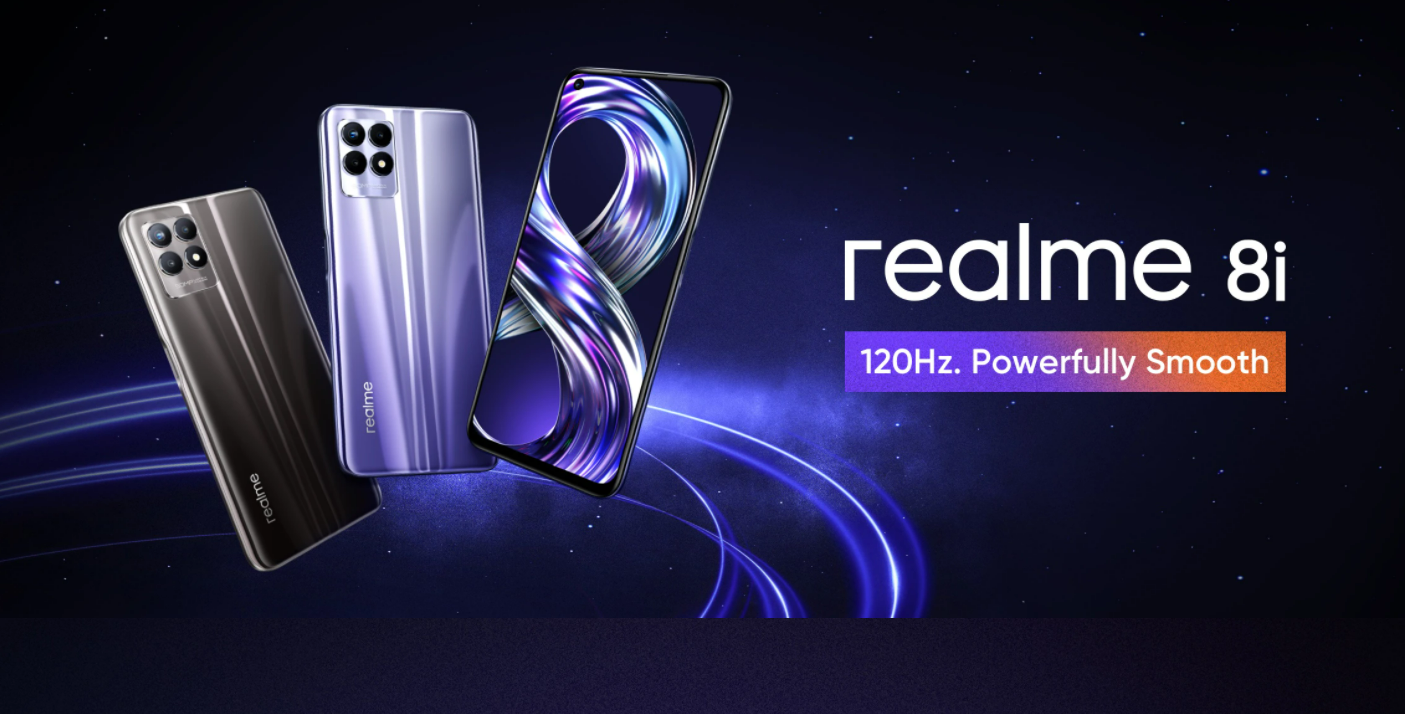
Realme is billed to hold a launch event in India on September 9 where the realme 8s, realme 8i, and the much-anticipated realme Pad have been confirmed to launch. The Chinese tech start-up has now officially confirmed the arrival of two additional new products on that same day.
A series of teaser posters released by Realme has confirmed the company will launch the Realme Pocket 3W Bluetooth speaker and Cobble 5W Bluetooth speaker. The event is expected to hold at 12.30 pm on September 9.
The Realme Cobble was first launched in Malaysia in May this year as the brand’s first portable speaker. The speaker is shaped like cobble and comes in Metal Black and Electric Blue. The portable speaker weighs just 113g and is equipped with a 3W Dynamic Boost Driver. The speaker also comes with an IPX5 water-resistant build and packs a 1500mAh battery with support for 6 hours of playback. It charges via a USB-C port.
On its part, the Realme Pocket was also launched in May this year. It comes with Bluetooth 5.0 which gives it a transmission range of up to 10 meters. The battery life is said to last up to six hours of continuous playback on a single charge. It also charges via a USB Type-C port. The Pocket is available in Desert White and Classic Black colours.
We’ll have to wait until the launch date to find out the prices of the speakers.
Smartphone brands have been working on innovative ways to make their handsets offer a full screen experience. While we have seen pop up cameras and in display cameras, Vivo might be working on a detachable camera solution.
According to a LetsGoDigitalreport, the Chinese smartphone maker filed a new patent with the WIPO (World Intellectual Property Organization). While the device resembles a usual modern day smartphone from the front, its unique aspect of a removable camera module. The module in question sports a touch enabled display on one side, while the other sports a dual cameras along with a flash in between the two image sensors.
This removable module is housed on the top center of the smartphone’s notch area and is magnetically held in place. Furthermore, the patent also describes three modes, with the first having the secondary display faces the front. This smaller display would have a pixel density, resolution, and refresh rate similar to the primary screen. So, when oriented towards the front it allows the device to offer a full screen experience. In the second mode, this module is placed on the other way around.
This would have the camera face the front and act as a selfie shooter while the display can be seen on the back. In other words, the smartphone’s selfie shots would also be able to offer a high quality experience. The module is attached by 10 connectors that are divided into two rows of 5 contact points. Arriving at the final mode, the module is separate from the main body of the handset and would allow users to place it anywhere to take pictures remotely. Keep in mind that this is still a patent and we have no way of knowing if the company is actually working on such a device.
BMW has just offered us a glimpse of the future with another new concept car. This time, the company showcased the new i Vision Circular concept vehicle that is completely recyclable.
During the Munich Auto Show, the German automobile giant revealed the i Vision Circular concept that is meant to be a electric city car that is made from reusable materials and is 100 percent recyclable as well. As per the company, the battery used in the car is an all solid state battery, which is “100% recyclable and manufactured almost entirely using materials sourced from the recycling loop.” To make sure it is completely recyclable, the brand doesn’t use any paint, leather, chrome, or any other materials that cannot be reused.
Furthermore, the BMW i Vision Circular also “avoids bonded connections or composite materials and uses intelligent types of connection, such as cords, press studs and quick-release fasteners.” In other words, this means that the vehicle houses various parts that are easily detachable and replaceable, which could theoretically be dismantled with “just one single tool.” As of right now, the viability of such a vehicle, especially in regards to road safety standards is questionable, but this car is apparently an imagination of automobiles in 2040.
The design of the new concept car is quite unique but still retains some of the iconic designs that the company is known for. Additionally, the body is made largely of gold anodized recycled aluminum and the color at the rear is “created by the heat treatment process used for the steel.” Even the slightly transparent tires are made from “sustainably cultivated” natural rubber.
Vivo was working on its self-developed Image Signal Processor (ISP) chip which was recently leaked online. Soon after that, the company’s Executive Vice President Hu Baishan officially confirmed that the company is indeed gearing up to launch the Vivo V1 ISP chip.
Today, the Chinese company has officially launched its first self-developed chip, named Vivo V1 which is an Image Signal Processor. It has also been confirmed that the upcoming Vivo X70 series smartphones will come equipped with this new chip.
For launching this new Vivo V1 chip, a team of over 300 people worked for more than 24 months for Research & Development as well as the Chinese company had in-depth cooperation with smartphone processor manufacturers. This is to ensure that the Vivo V1 ISP works smoothly with the main processor without any compatibility issues.
The company claims that the new V1 chip offers high computing power, low latency, and low power consumption. Along with processing complex calculations at high speed, it can also complete parallel processing of data like GPU and DSP. However, the company adds that Vivo V1 has massive improvement in energy efficiency ratio compared to DSP and CPU even when faced with a large number of complex operations.
Vivo has optimized the data storage architecture as well as the high-speed read and write circuits inside the chip to maximize simultaneous processing capacity. It is able to achieve an equivalent of 32MB large cache with on-chip storage.
The company claims that it surpasses current flagship desktop processors when it comes to low-latency real-time noise reduction and frame insertion. When processing tasks with the same amount of calculation at high speed, the dedicated algorithm in Vivo V1 reduces the power consumption of the hardware circuit by about 50 percent.
Vivo also worked with the Zeiss team to over technical limitations like process and yield and the glass lenses can now offer high light transmittance, ultra-low dispersion, and thermal stability. The AOA dynamic optical calibration process is used to adjust the sharpness reduction by lens thickness errors and lens eccentric errors.
The China-based company has also introduced SWC coating technology which ensures that the reflected light is fully suppressed, and the reflectivity is reduced to a minimum of 0.1%, which greatly improves the quality.
Vivo and Zeiss also worked through 140 color card performance and 3D color mapping matrix algorithms to adjust 262,144 parameters to make the hue more accurate and the saturation processing more refined. As a result, the hue accuracy ΔE is increased by approximately 15.5%, bringing more natural colors.
As noted, the Vivo V1 ISP chip will be equipped in the upcoming Vivo X70 series smartphones that are set to be officially launched in the Chinese market on 9th September at 19:30 local time. Soon after the China launch, the smartphone lineup is expected to have its global launch.
Last month. OPPO was tipped to launch OPPO Enco Buds and OPPO Enco Air in India soon. A few weeks later, the company has now officially confirmed to announce the former product in the country this Wednesday.
The OPPO Enco Buds will launch in India on September 8. This new pair of truly wireless earphones is already being sold in other markets. It is the successor to the OPPO Enco W11 from last year.
The latest entry-level TWS product from OPPO is near-identical to its predecessor in terms of design. However, it is an upgrade when we talk about features.
The OPPO Enco Buds not only feature Bluetooth 5.2 connectivity but also support quick pairing with devices running ColorOS. The buds feature 8mm dynamic drivers and come with 80ms low latency game mode as well as ENC (Environmental Noise Cancellation) for calls.
Like any other pair of truly wireless earphones, they also have touch gesture controls. The earbuds are IP54-rated for dust/water resistance and they only weigh 4g each.
Last but not least, OPPO claims that the buds offer 6 hours of music playback time on a single charge and up to 24 hours with the USB Type-C equipped charging case.
Since the OPPO Enco W11 debuted at under ₹3,000 in India, its successor OPPO Enco Buds will probably cost the same in the country.
There have been reported about Huawei planning to launch its next-generation Nova series smartphone — Huawei Nova 9. Now, the Chinese company has officially confirmed that the device will be launched on 23rd September.
The poster shared by the company shows that the phone’s back panel which is consistent with what we’ve heard so far. There’s a gradient finish for the smartphone and the camera module is placed in the top-right corner.
Huawei usually faces availability issues for its smartphones but that won’t be the case this time as the Chinese technology giant reportedly has prepared sufficient stocks for the Nova 9 series. Apparently, the stock is more than the Huawei P50 series which was previously launched by the company.
The smartphone was recently certified by 3C as well as TENAA, revealing some key specifications and features. The phone, which carries model number RTE-AL00, features an OLED display with an in-display fingerprint sensor.
It is likely to come powered by the Qualcomm Snapdragon 778G SoC. The device is said to have support for only 4G LTE connectivity and not the latest 5G. But, there’s a possibility that the company may launch a 5G variant at a later date.
Coming to the camera department, the device will have a quad-camera setup on the back while the front-facing snapper will be housed in a pill-shaped cutout on top of the screen. As for the software department, the smartphone has been confirmed to come running the company’s own HarmonyOS, likely with support for Android apps.
The Huawei Nova 9 is said to be powered by a 4,500mAh battery while the Pro variant in the lineup will reportedly pack a 4,000mAh battery. The device is also expected to ship with a 66W fast charging support. We expect to know more about the phone’s specifications and features in the coming days, as the launch date nears.
The news arrives from Weibo tipster @肥威 who stated that the upcoming next generation flagship Dimensity 5G SoC will be quite power efficient since it will be based on TSMC’s latest 4nm process node. He further added that the specifications of this chip will be notable thanks to its ARM V9 architecture, which will enable it to offer better performance over the previous generation.
On the other hand, we had also reported on a new rumor Known tipster Digital Chat Station that stated that the Snapdragon 895 or 898 is expected to be based on the 4nm process from Samsung. The South Korean tech giant will manufacture the base variant while TSMC will reportedly make its Plus variants later on. Although, keep in mind that these are still unconfirmed reports so take it with a pinch of salt for now.
However, MediaTek has been gaining grounds in the smartphone processor market in recent times. It is now a notable contender in multiple segments and through the upcoming chip might seek to better rival Snapdragon processors in the high end market, which has been dominated by Qualcomm. So stay tuned for more, as we will be providing updates when additional information is available.
REDMAGIC, the sub-brand of ZTE has launched yet another gaming smartphone in China. The new model called REDMAGIC 6S Pro is a slightly upgraded version of the RedMagic 6 Pro from earlier this year. The company also announced a new budget smartwatch dubbed as REDMAGIC Watch Vitality Edition and other accessories. Let’s take a look at what this new phone has to offer.
REDMAGIC 6S Pro Specifications and Features
The REDMAGIC 6S Pro is almost identical to the older RedMagic 6 Pro in terms of features. There are only a few differences between them. The new handset is powered by a Qualcomm Snapdragon 888+ chipset instead of a vanilla Snapdragon 888. Further, in addition to two touch sensors on the back, the device’s software, cooling system, and touch sampling rate get an upgrade.
On the front, the phone sports a 6.8-inch AMOLED display with a resolution of 2400 x 1080 pixels, 165Hz refresh rate, and 720Hz touch sampling rate. The screen has a 1000000:1 contrast ratio and an under-display fingerprint sensor with support for heart rate monitoring. This SGS-certified (low smear/blue-light) screen also supports DC Dimming.
As mentioned earlier, a Qualcomm Snapdragon 888+ SoC runs this smartphone. The silicon is paired with up to 18GB LPDDR5 dual-channel RAM and 512GB UFS 3.1 storage. To keep the thermals down, the device uses ICE7.0 multi-dimensional cooling system consisting of composite graphene, aluminum middle frame, 20,000 RPM fan with RGB lights, VC heat sink, thermal conductivity gel, and more.
Like any other gaming smartphone, the cameras on this are also mediocre, at least on paper. It features the same 64MP (wide) + 8MP (ultra-wide) + 2MP (macro) triple rear camera setup and an 8MP front-facing camera like its forerunner.
On the connectivity front, the handset supports dual-SIM, 5G, WiFi 6E, Bluetooth 5.1, NFC, GNSS (GPS, BeiDou, GLONASS), USB 3.0 Type-C, and a 3.5mm headphone jack. It has all the essential sensors like an accelerometer, proximity sensor, compass, ambient light sensor, and gyroscope.
The phone runs the new REDMAGIC OS 4.5 based on nubia UI with Android 11 as base layer. The software comes with new and improved features like REDMAGIC Projection (wired/wireless display output), Super Base (game library and new virtual assistant), and Game Assistant (gaming-related tweaks). There are also new custom themes based on games like Honor of Kings and Game for Peace.
Other features of the REDGMAGIC 6S Pro include dual stereo speakers with support for DTS: X Ultra, capacitive shoulder buttons, 4,500mAh battery, and 120W fast charging. Last but not least, it measures 169.86 x 77.19 x 9.5mm in dimensions and weighs 215g.
REDMAGIC 6S Pro Price and Availability
The REDMAGIC 6S Pro arrives in three color options, namely Shining Black, Star White, and Transparent Edition. The black color comes in both 8GB and 12GB RAM variants, while the White is limited to 12GB RAM. Whereas, the transparent model can be bought in either 12GB, 16GB RAM, or 18GB versions. Additionally, there’s also a Tencent Games Battlefield Camouflage Limited Edition package with some accesssories.
Having said that, the REDMAGIC 6S Pro will retail for the following price tags in China.
Shining Black / Star White
8GB + 128GB – ¥3,999 ($619)
12GB + 128GB – ¥4,399 ($681)
12GB + 256GB – ¥4,799 ($743)
Transparent Edition
12GB + 128GB – ¥4,499 ($697)
12GB + 256GB – ¥4,899 ($759)
16GB + 256GB – ¥5,399 ($836)
18GB + 512GB – ¥6,399 ($991)
Tencent Games Battlefield Camouflage Limited Edition
18GB + 512GB + Accessories – ¥6,999 ($1,084)
The handset is already up for pre-order in China. The first sale for the device is scheduled for September 9.
Like the RedMagic 6 Pro, the REGMAGIC 6S Pro will likely get a global launch in the coming days.
Samsung Electronics has just sold its 1.6 percent stake in China’s BYD, which is worth around 1.5 trillion Won (roughly 1.3 billion US Dollars). The move arrives as a surprise considering how many consumer electronic brands are racing to develop electric and self driving cars.
According to a KedGlobalreport, the South Korean tech giant has stated that its remaining stake at the Chinese automobile maker is now at 0.3 percent as of the end of the first quarter. In other words, it previously held a total 1.9 percent stake that was worth 1.7 trillion won at the time. The world’s largest smartphone brand had bought the stake back in 2016 as an effort to strengthen its bond with the Chinese electric car and battery manufacturer.
Furthermore, it was also to boost its automotive chip business as well. Although, the company selling its stake has puzzled many since various tech giants are moving towards next generation vehicles. So selling its stake at an established automobile brand would seem like a step in the opposite direction. As per some, the company decided to sell the BYD share to make profit as BYD’s shares have risen significantly in the past few years.
Although other stated that Samsung doesn’t have any major reason to sell off its BYD stake since the company already has a sizeable cash reserve of its own that amounts to around 100 billion US Dollars. On the other hand, the firm is also currently aiming on investing 17 billion US Dollars to build a new chip plant close to its existing factory in Austin, Texas.
Nubia has just held a new launch conference in which it announced its Red Magic 6S Pro smartphone. However, the company also unveiled a series of new accessories and peripheral products as well along with its new Red Magic Watch Vitality Edition.
Earlier this year, the Chinese smartphone maker had released its first smartwatch alongside the launch of the Red Magic 6 series. Now, the brand has launched a new variant of its wearable product. It is the Red Magic Watch Vitality Edition, which will be smaller and more affordable than the Red Magic Watch. Similar to the previously launched variant, it also features a round display with a metallic case and two buttons. Furthermore, its arrives in two color variants, namely black and silver.
It sports a smaller 1.19 inch screen compared to the 1.39 inch screen of the Red Magic Watch. Although, it still offers an AMOLED panel with AOD (Always On Display) support. The new version is also lighter, weighing 23 grams over the 30 grams of the Red Magic Watch. Like most modern smartwatches, it arrives with support for multiple sports modes along with sensors to monitor health metrics as well.
Apart from the new smartphone and smartwatch, the brand also launched a number of accessories and peripheral products. This includes its new Red Magic themed T Shirts, Figurines, and Face Masks, as well as electronic peripherals like a new magnetic power bank that is themed after Minions and another Red Magic branded power bank that has a massive 10,000mAh capacity. Meanwhile, it has also released a new 65W four port GaN3 gallium nitride charger along with a 20W and 30W chargers and a new Red Magic G1 Controller. While the pricing for these products is currently unavailable, stay tuned as we will provide an update for their price tags and availability.
Realme will be announcing the Realme 8s 5G smartphone in India on Sept. 9. It will be debuting as the world’s first Dimensity 810 powered handset. It appears soon after its announcement, the company may unveil another Dimensity 810 phone in China. It has been found that the Realme phone with RMX3381 model number, which was certified by the TENAA authority last month, will become equipped with the said chipset.
The Realme RMX3381 smartphone has been spotted at the Geekbench benchmarking site (via. Nashville Chatter Class). The listing reveals that the device is powered by the MediaTek MT6833V/PNZA chip, which includes six CPU cores working at 2.00GHz and the remaining two cores clocking at 2.4GHz.
It appears that the RMX3381 is powered by the Dimensity 810 chipset. The listing further reveals that it has 8 GB of RAM, and it runs on Android 11 OS. In the single-core and multi-core tests of Geekbench, the handset scored 609 and 1803 points, respectively.
Recent reports have revealed that the RMX3381 will feature a 6.5-inch FHD+ LCD display that offers a 90Hz refresh rate. It has a front camera of 16-megapixel, and its rear camera setup has a 48-megapixel + 2-megapixel + 2-megapixel triple camera unit.
Realme RMX3381
The RMX3381 offers up to 8 GB of RAM and up to 256 GB of internal storage. It offers other features such as a 5,000mAh battery, fast charging support, Android 11 OS, and a side-facing fingerprint scanner.
It is speculated that the Realme RMX3381 may debut as a V-series smartphone. The specification of the RMX3381 is similar to the Realme 8s 5G. It appears that the only major difference between RMX3381 and Realme 8s 5G will be in the camera department. Reports have revealed that the 8s will be equipped with a 64-megapixel + 2-megapixel + 2-megapixel triple camera unit.
Google is expected to release Android 12 stable this month. Certain partner OEMs are also anticipated to drop new versions of their mobile software based on the latest version of Android following that. One such company is OPPO and it has officially started teasing its next major release called ColorOS 12.
The official ColorOS Weibo account of ColorOS shared a teaser image for ColorOS 12 earlier today. The picture shows the ColorOS Clock icon showing 12 o’clock. The post reads that the company will share more information in detail tomorrow (September 7).
We believe OPPO will be announcing the date for ColorOS 12 launch event tomorrow, which was recently leaked – September 13. For those who don’t know, OPPO held a dedicated event for ColorOS 11 last year after Android 11 hit the stable channel.
Hence, the same could happen this year. This means Android 12 Stable could get announced as early as today or some other day before the OPPO event.
As of now, we only know a few tidbits regarding ColorOS 12 based on Android 12. The new OPPO software is said to come with a new feature called ‘Cross Screen Interconnection’, which is nothing but a clone of HUAWEI Multi Screen Collaboration. The company is also tipped to implement features and design languages from various other Chinese Android skins like MIUI, Flyme, Smartisan OS, and HydrogenOS.
ColorOS 12 will not only be found on OPPO smartphones but also on OnePlus and realme. That’s because OnePlus phones sold in China run ColorOs for OnePlus, whereas in international markets, the same software with some tweaks is called OxygenOS. Lastly, it is a known fact that realme UI is nothing but ColorOS with certain changes.
A known tipster has just revealed that Redmi is working on a smartphone, although, this upcoming device will apparently still feature the Qualcomm Snapdragon 870 SoC and offer 120Hz refresh rate as well.
According to a Weibo post, a Chinese microblogging website, from @数码闲聊站, the brand is working on a new handset that features the Snapdragon 870 processor. Furthermore, the tipster added that this model will sport a 6.7 inch OELD display with a FHD+ (2400x1080px) resolution along with a 50 megapixel primary camera on the rear. While it is unclear which series the new phone will fall under, it is speculated that it might a new variant of the K40 lineup and could be called the K40S or might even be a part of the upcoming K50 series.
The leak also revealed the model number of this smartphone, which is SM8250. Unfortunately, finer details regarding this device is currently unknown and we have no way of confirming if this Redmi smartphone is even in the works. The tipster believes that this model will be available in the market sometime next year, but take this report with a pinch of salt for now and stay tuned for more, as we will be providing updates when additional information is available regarding this matter.
We use cookies on our website to give you the most relevant experience by remembering your preferences and repeat visits. By clicking “Accept”, you consent to the use of ALL the cookies.
This website uses cookies to improve your experience while you navigate through the website. Out of these, the cookies that are categorized as necessary are stored on your browser as they are essential for the working of basic functionalities of the website. We also use third-party cookies that help us analyze and understand how you use this website. These cookies will be stored in your browser only with your consent. You also have the option to opt-out of these cookies. But opting out of some of these cookies may affect your browsing experience.
Necessary cookies are absolutely essential for the website to function properly. This category only includes cookies that ensures basic functionalities and security features of the website. These cookies do not store any personal information.
Any cookies that may not be particularly necessary for the website to function and is used specifically to collect user personal data via analytics, ads, other embedded contents are termed as non-necessary cookies. It is mandatory to procure user consent prior to running these cookies on your website.