Redmi has today officially launched its latest smartphone in the Indian market — Redmi Note 10 in its home market. Along with that, the brand has also launched the Redmi Note 10 Pro in China.
The smartphone features a 6.5-inch Full HD+ LCD display with 2400 x 1080 pixels screen resolution and support for a 90Hz refresh rate. Underneath, the device is powered by the MediaTek Dimensity 700 processor.
It comes packed with up to 8GB of LPDDR4x RAM and 256GB of UFS 3.1 internal storage. The device has managed to score over 690,000 points in the AnTuTu benchmark, claims the company. As for the cameras, the phone comes with a 48-megapixel primary sensor, a 2-megapixel secondary sensor.
On the front side, the device features an 8-megapixel front-facing snapper. Other features on the device include USB Type-C audio, Stereo speakers, Dolby Atmos, and Hi-Res Audio. Connectivity options on the device include 5G SA/NSA, Dual 4G VoLTE, Wi-Fi 6 802.11 axes, Bluetooth 5.2, GPS/GLONASS, and USB Type-C.
The phone runs the Android 11 operating system out-of-the-box with MIUI 12.5 user interface and is powered by a 5,000mAh battery with support for fast charging technology.
The Redmi Note 10 with 4GB RAM with 128GB storage is priced at 1,099 yuan ($172), 6GB RAM with 128GB storage costs 1,199 yuan ($188), 8GB RAM with 128GB storage is priced at 1,399 yuan ($219), and 8GB RAM with 256GB storage is priced at 1,599 yuan ($250). It comes in three colors — Phantom Blue, Moon Soul, and Star Shade.
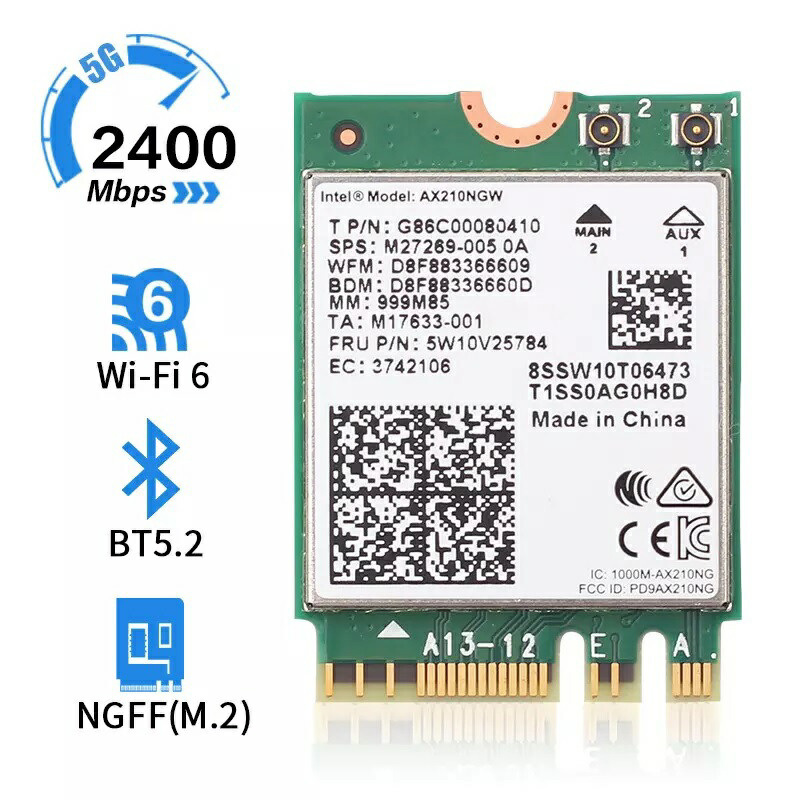
Due to a shortage of wireless networking cards, upcoming laptops from Lenovo might ship with the older Wi-Fi 5 standards. The news arrives from an online post on Weibo, a Chinese microblogging website, by a company official.
According to @林林-一枝小白兔, Product Director at Lenovo, the company is facing an issue with supply as newer wireless network cards are out of stock. Just earlier this week, the known PC brand released a number of new products, including notebooks, tablets, and even peripheral accessories. Now, the company’s executive said that the shortage of networking-related components may lead to some models being downgraded to Wi-Fi 5 standards.
Although, the Product Director also added that the products that use the smaller network cards are limited to only certain models and that the company will notify its customers in advance if it downgrades as a last resort. For those unaware, the world is currently facing a major shortage of semiconductors at the moment. This has impacted various industries including, smartphones, home appliances, automobiles, and even the PC market as well.
This coupled with the world’s largest contract chipmaker, TSMC, facing water and power cuts has caused issues with chip production. This further adds to the problem of semiconductor shortage that has even spread to the field of wireless network cards as well. Unfortunately, it is unknown whether the company would actually have to downgrade the Wi-Fi cards for its upcoming products so stay tuned for more updates.
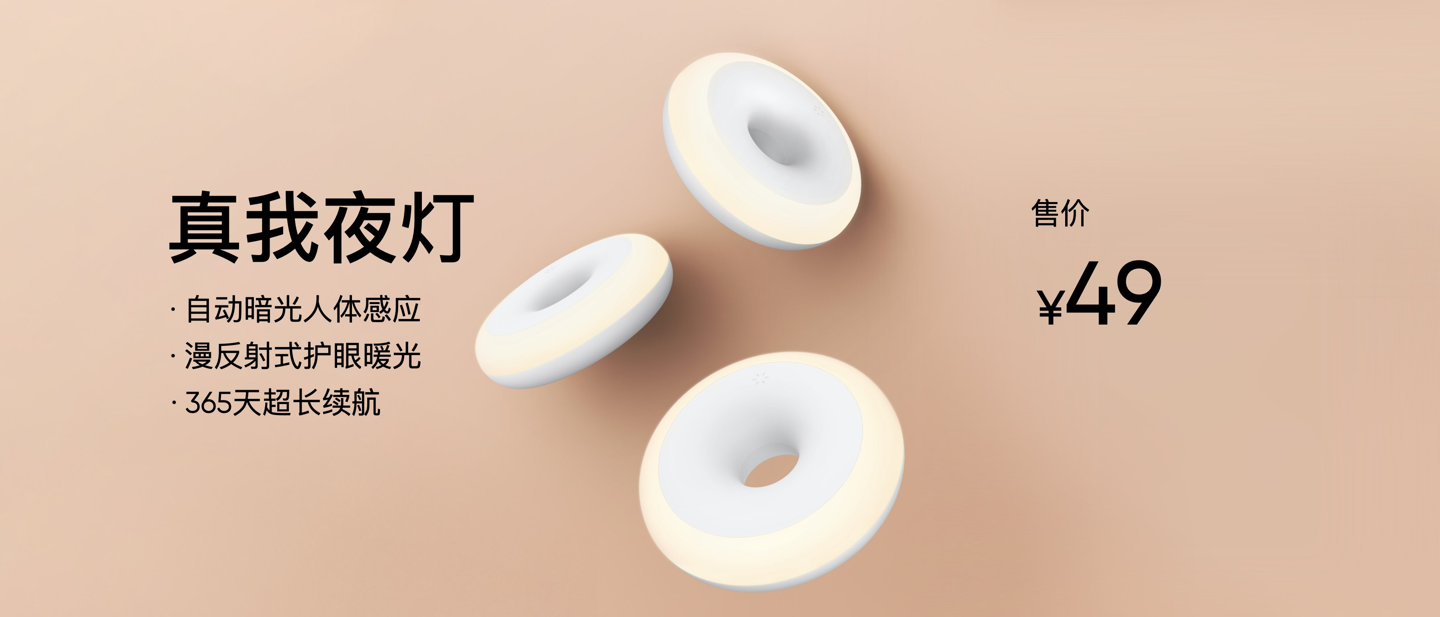
Earlier this week, Realme released a new product during the 618 press conference. During this event, the company launched a new Night Light, which is shaped like a donut and is priced at 49 Yuan (roughly 8 US Dollars).
The new night light features a perfectly symmetrical round design, with a donut like shape. This device is built with precision sensors with five different kinds of custom Fresnel special patterns. The night light from the Chinese tech giant features a magnetic base beneath its hollow ring like design. The magnetic base enables the product to placed anywhere in the users’ homes.
Furthermore, the Realme night light also houses a built in infrared sensor that detects users’ presence as well along with a photosensitive sensor as well. The sensor on the device also has a 120 degree wide angle, which enables it to measure the ambient lighting to offer automatic brightness adjustment. As per official notes, the device offers 365 days of ultra long battery life. Unfortunately, the smartphone manufacturer has yet to announce the official launch date of this night light, but has announced its price tag of 49 Yuan.
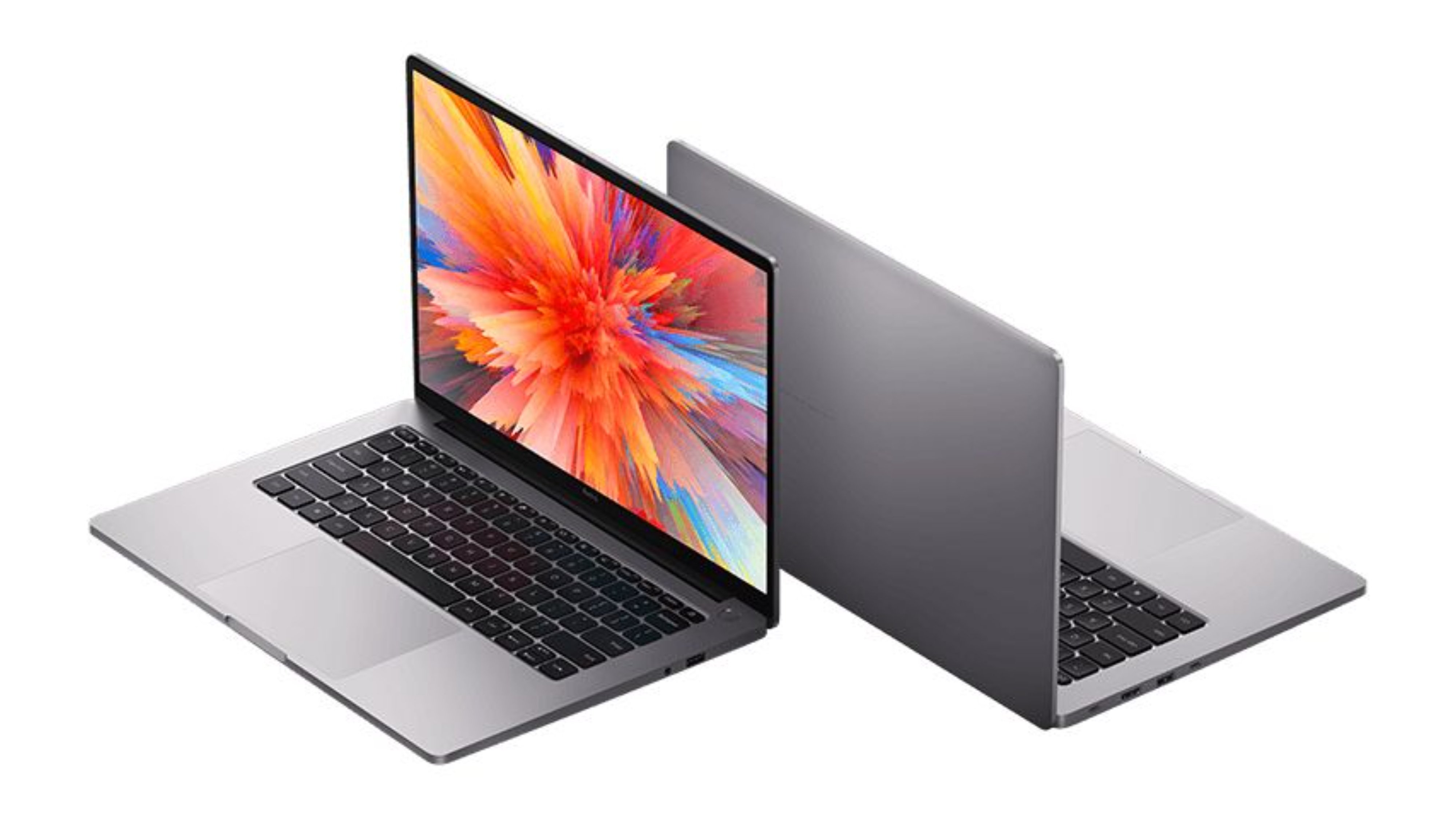
Back in late February, Redmi launched the RedmiBook Pro 14 and RedmiBook Pro 15 at the Redmi K40 series launch event in China. Three months later, the sub-brand of Xiaomi has released the Ryzen Edition of these two laptops. As the name suggests, the new notebooks from the brand are powered by AMD Ryzen processors instead of Intel chipsets like the original models.
RedmiBook Pro 14 Ryzen Edition
The newly launched RedmiBook Pro 14 Ryzen Edition and RedmiBook Pro 15 Ryzen Edition are identical to the original RedmiBook Pro 14/15 from three months back. Hence, we will be only discussing the differences between them in this article.
The RedmiBook Pro 14 and RedmiBook Pro 15 come with 11th-gen Intel Core i5-11300H and Core i7-11370H. On the other hand, the Ryzen Edition of these notebooks features not two but four different AMD processors.
RedmiBook Pro 14 Ryzen Edition Variants and Price
AMD Ryzen 5 5500U – ¥4,299 ($672)
AMD Ryzen 7 5700U – ¥4,699 ($735)
RedmiBook Pro 15 Ryzen Edition Variants and Price
AMD Ryzen 5 5600H – ¥4,799 ($751)
AMD Ryzen 7 5800H – ¥5,299 ($829)
Anyway, despite sporting different processors, they feature the same 16GB 3200MHz DDR4 RAM and 512GB PCIe SSD.
Another difference is that due to the presence of AMD processors, the RedmiBook Pro 14/15 Ryzen Edition does not come with a Thunderbolt 4 USB Type-C. However, one of the two USB Type-C ports is said to support video output, as per the official website. Hence, we think this port includes DisplayPort 1.4 standard although it’s not officially mentioned.
Apart from the above-mentioned dissimilarities, the RedmiBook Pro 14 Ryzen Edition and the RedmiBook Pro 15 Ryzen Edition are exactly the same as the original RedmiBook Pro 14 and RedmiBook Pro 15.
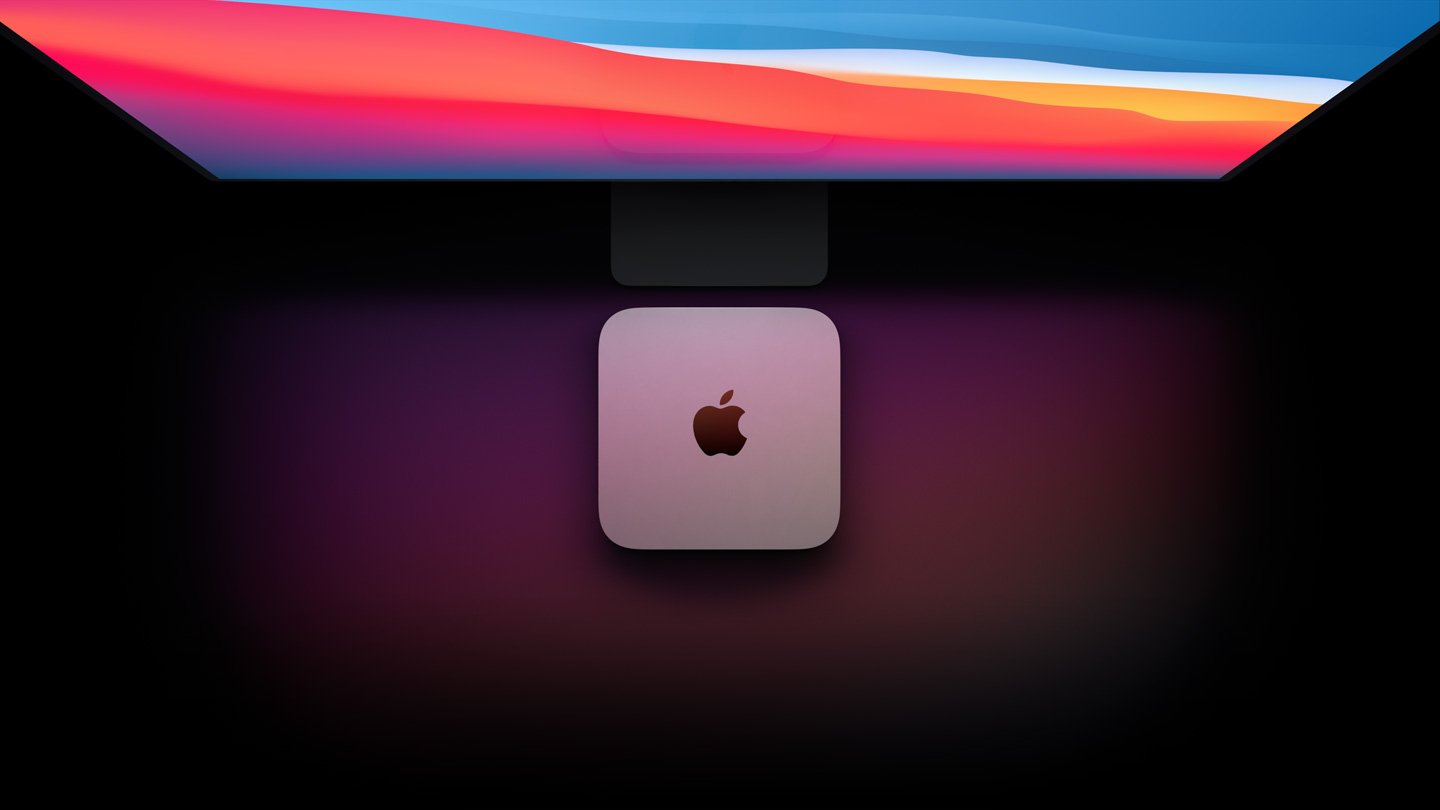
The upcoming Apple Mac mini that would feature the new M1X chipset will reportedly arrive with a redesigned thinner chassis along with the new iMac‘s magnetic power connector as well.
M1 Mac Mini
According to a new video from Jon Prosser (Via 9To5Mac), the upcoming Mac mini with the next gen M1X chipset will introduce a new generation of industrial design for the company’s standalone Mac. In the video, Prosser claims that the 2021 Mac mini will feature a new chassis with a “plexiglass like” reflective surface on the top, which is a departure from the traditional aluminum enclosure. This model is apparently set to replace the higher end space grey Intel Mac mini in the lineup, while the M1 Mac mini will be the entry level model.
Notably, while the M1 Mac mini had a lack of ports due to limitations of the first gen Apple Silicon, the M1X will be able to offer a full lineup of ports. This includes four USB4/ Thunderbolt 3 ports, along with two USB Type A, Ethernet, and HDMI out ports as well. Furthermore, the Cupertino based giant will also be offering the magnetic power connecter that the company first introduced with its M1 iMacs.
M1 chipset
Prosser added that the iPhone maker might offer a two tone color range with the new glass like finish on the M1X Mac mini, which will be similar to the new and colorful iMacs. Unfortunately, this is still an unconfirmed report and speculation at the moment, so take this report with a pinch of salt and stay tuned for more, as we will be providing updates when additional information or notable developments surface regarding this device.
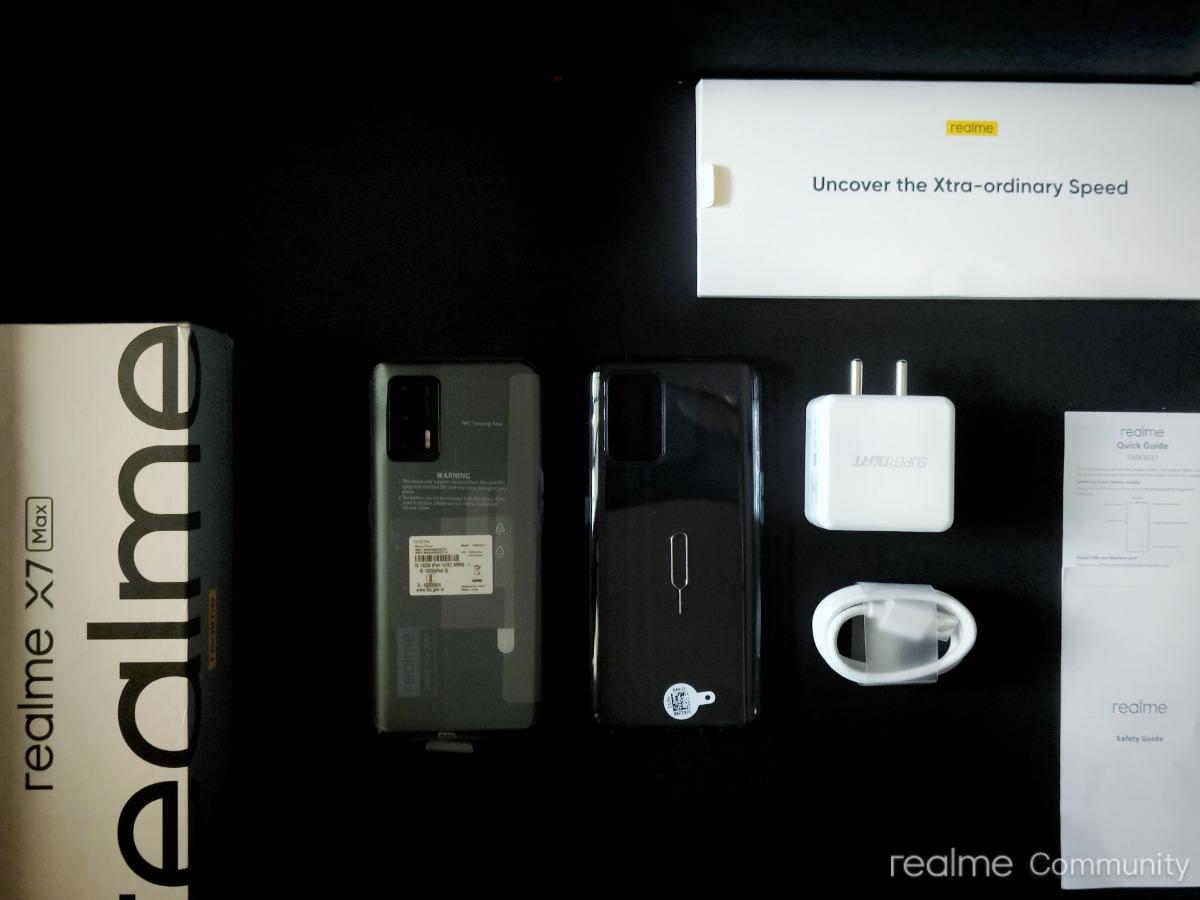
The unboxing images show that the Realme X7 Max 5G will be available in a white-colored retail package. The other contents that are found inside the retail box include a TPU case, a Quick Start Guide, a SIM ejector tool, a 50W Dart charger, and a charging cable. The community moderator claimed that she will be revealing more details of the smartphone on a daily basis before its official announcement.
Realme X7 Max 5G unboxing image from Realme Community
The landing page of the Realme X7 Max 5G available on Realme India’s website has also revealed some of its key specs. It states that the phone features a Super AMOLED screen with a punch-hole design, which offers FHD+ resolution, a 120Hz refresh rate, a 360Hz touch sampling rate, up to 1000nits brightness, 100 precent DCI-P3 color gamut, and an 8,000,000:1 contrast ratio.
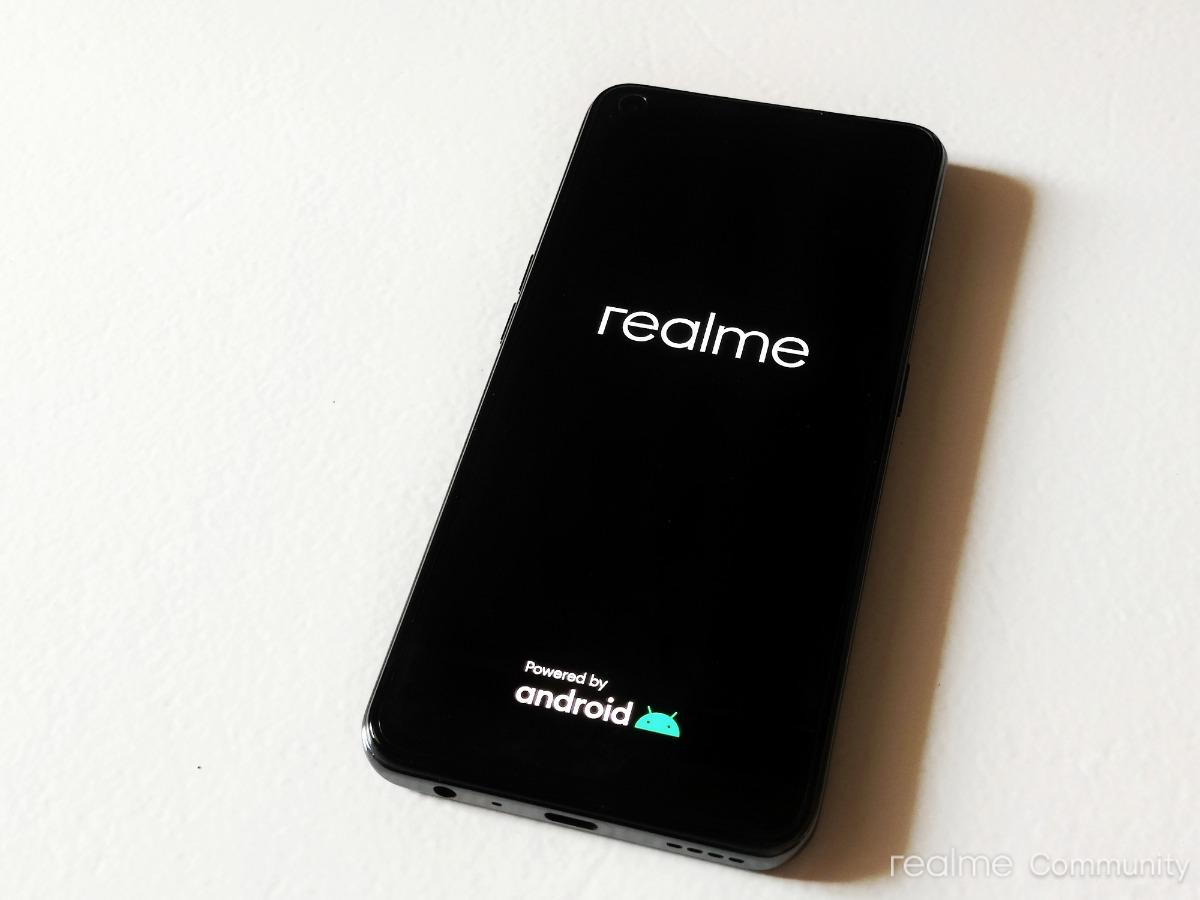
Realme X7 Max 5G unboxing image from Realme Community
The Realme X7 Max 5G features the Dimensity 1200 chipset. Its battery size is not mentioned, but its 50W charging tech can allow the phone to gain 50 precent battery power in just 16 minutes. Its rear camera setup has a 64-megapixel primary camera, an 8-megapixel secondary lens, and a 2-megapixel macro sensor. The handset weighs 179 grams, and it has a slim profile of 8.4mm. It also features a 3.5mm audio jack and a USB-C port.
The Realme X7 Max 5G may come in options like 8 GB RAM + 128 GB and 8 GB RAM + 256 GB storage and it may start at Rs 28,999 (~$399). Speculations are rife that it will arrive as a rebranded version of the Realme GT Neo, which was announced last month in China.
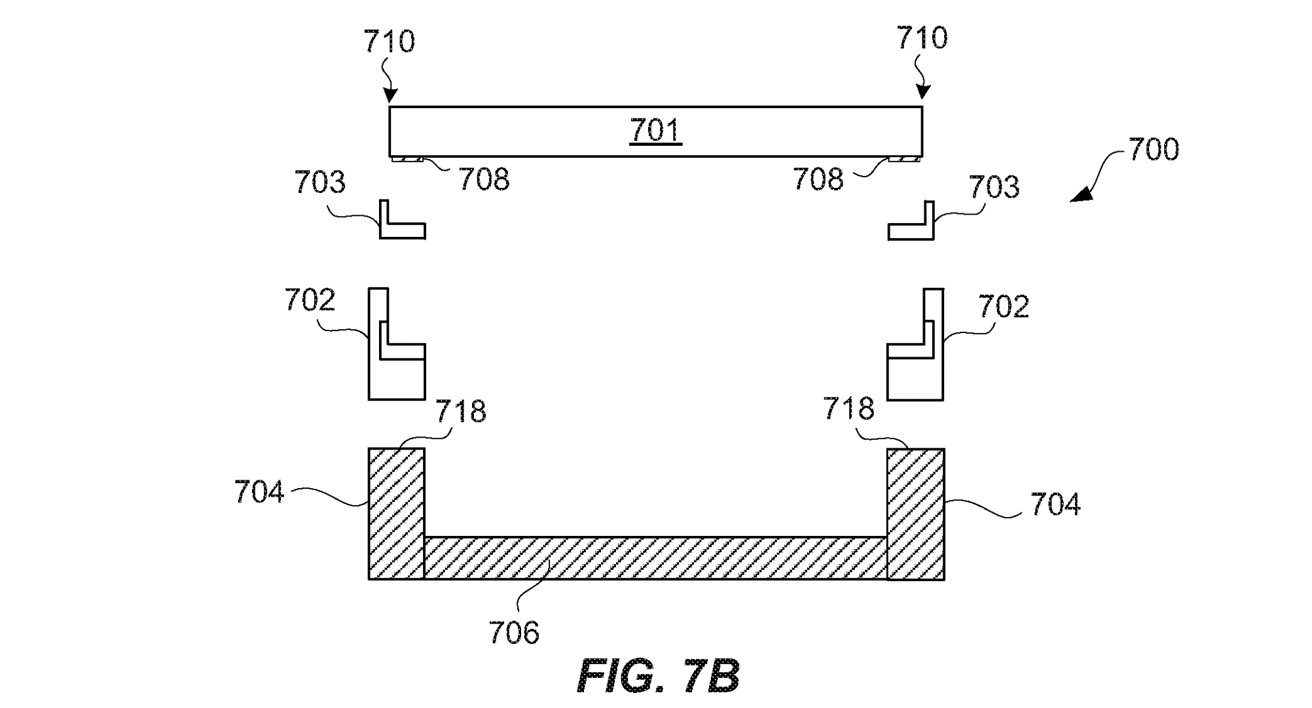
Apple is apparently researching a method to make the glass on the front of an iPhone thinner and stronger. The company aims to achieve this by making a special support structure that will be used around the edges, which will also be made of glass.
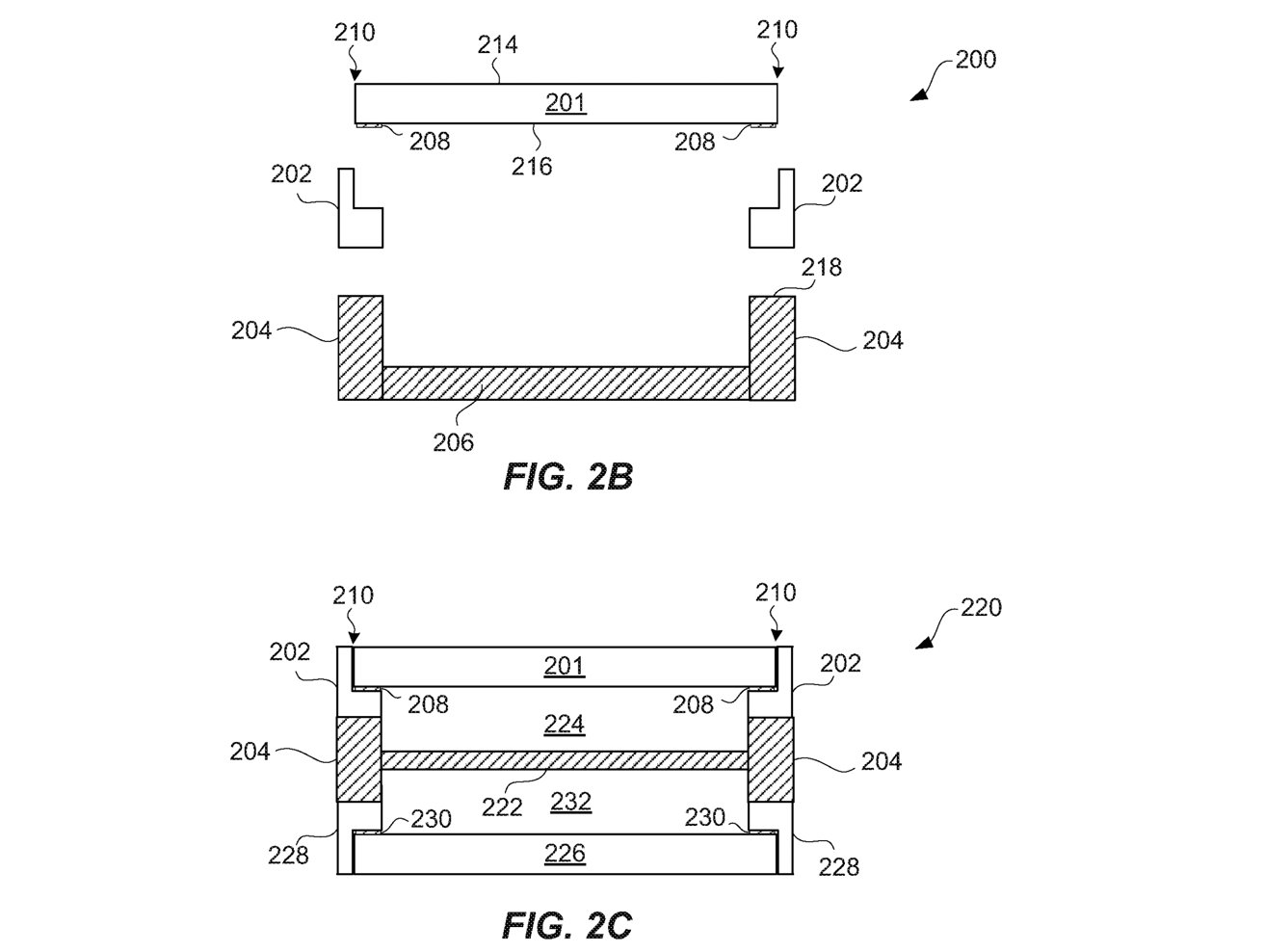
The Cupertino based giant filed a patent with the US Patent and Trademark Office (Via AppleInsider), which was titled “Insert molding around glass members for portable electronic devices.” For those unaware, smartphones and other mobile devices, or even larger displays uses glass panels on the front of the actual displays. This panel serves the primary function of protecting the screen on the inside from direct impact and scratches. It is often used in a manner to make the display fit seamlessly with the design of any device.
Now, the new patent from Apple states that it will have the same glass cover stick out from the rest of the enclosure, similar to curved displays, although it aims to maintain the thinness of the main glass sections overall. In simpler terms, while the glass might stick out from the design, it won’t add to the girth of the device as it will be thinner. However, thinness usually compromises on strength, but the iPhone maker seeks to employ a solution that has it adopt a glass structure around the edges of the glass cover.
This glass structure will act as an intermediary between the primary enclosure and the thin glass cover. It will also have a lip on the outside edge surrounding where the glass cover will be placed. Unfortunately, this is still a patent and it is unclear if the company is actually planning on incorporating this solution into its future products. So stay tuned for more updates.
As scheduled, Redmi, the sub-brand of Xiaomi has launched the Redmi Note 10 5G series in China. The lineup includes two devices, namely Redmi Note 10 5G and Redmi Note 10 Pro 5G. Let us take a detailed look at the Redmi Note 10 Pro 5G in this article.
Redmi Note 10 Pro 5G Specifications and Features
The Redmi Note 10 Pro 5G is totally different from the Redmi Note 10 Pro / Pro Max sold outside China. This new device has a different design and better features than its 4G counterpart. However, all of these come with a sacrifice of the AMOLED display found on the 4G variants of the Redmi Note 10 series.
The handset comes in three colors – Magic Green, Moon Soul, and Star Yarn. The first two color variants (Green/Blue, White) feature a ‘3D stereoscopic texture’. This pattern is similar to that of Mi 11 Lei Jun Signature Edition. Whereas, the third one (Back) has shining particles that mimic starry night.
The smartphone is IP53-rated for splash resistance. It measures 163.3 x 75.9 x 8.9mm in dimensions and weighs 193g. But still, it is backed by a 5,000mAh battery with support for 67W fast charging and battery health management system. Redmi claims this phone can be charged fully within 42 minutes. The device ships with a Xiaomi Mi 67W charger, which supports both USB PD (Power Delivery) and Qualcomm QC (Quick Charge).
On the front, the handset flaunts a 6.6-inch LCD panel with a resolution of 2400 x 1080 pixels (FHD+), 120Hz refresh rate, 240Hz touch sampling rate, and centered punch-hole. The screen supports a six-stage refresh rate function. This means the display refreshes at either 30Hz, 48Hz, 50Hz, 60Hz, 90Hz, or 120Hz based on the content.
Further, the panel supports the DCI-P3 color gamut and has a typical brightness level of only 450 nits. However, unlike other phones in the segment, the display of the Redmi Note 10 Pro 5G is protected by Corning Gorilla Glass Victus.
Under the hood, the smartphone features a MediaTek Dimensity 1100 SoC coupled with up to 8GB LPDDR4x RAM and 256GB UFS 3.1 storage. To keep the thermals down, the handset comes with a ‘quadruple cooling system’ consisting of VC (Vapor Chamber), graphite, thermally conductive gel, and copper foil to offer a heat dissipation area of 16370mm².
As for photography and videography, the phone uses a 64MP (wide) + 8MP (120° ultra-wide) + 2MP (macro) triple camera setup on the back and a 16MP camera on the front. This camera system clearly falls behind the one present on the Redmi Note 10 Pro / Pro Max.
On the connectivity front, the smartphone supports dual-SIM, 5G, WiFi 6, Bluetooth 5.2, NFC 3.0, and GNSS (GPS, A-GPS, BeiDou, GALILEO, GLONASS, QZSS). It sports all the essential ports and sensors, such as USB Type-C, side-mounted fingerprint sensor, accelerometer, 360° ambient light sensor, gyroscope, ultrasonic proximity sensor, compass, and infrared sensor. But unfortunately, the device lacks the two fan favorites – 3.5mm headphone jack and MicroSD card slot.
The Redmi Note 10 Pro 5G runs MIUI 12.5 based on Android 11. It features Hi-Res-certified JBL-branded dual stereo speakers with support for Dolby Atmos, 3 microphones, X-axis linear vibration motor, and a RAZER keyboard just like the Redmi K40 Gaming Edition.
Redmi Note 10 Pro 5G Price and Availability
The Redmi Note 10 Pro 5G will retail for the following price tags in China.
6GB + 128GB – ¥1,599 ($250)
8GB + 128GB – ¥1,799 ($281)
8GB + 256GB – ¥1,999 ($313)
The phone’s first sale is scheduled for June 1. On that day, the base variant will be sold at a discounted price tag of ¥1,499 ($234).
As of now, there’s no official word on this handset’s availability outside mainland China.
Earlier this week, a US court issued a ruling that had Xiaomi removed from the US sanction list, lifting the Department of Defense’s designation of CCMC or a Communist Chinese Military Company.
In other words, the Chinese tech giant has been removed from the government’s trade blacklist, which had placed restrictions on the buying or holding of stocks by any person in the US. The brand also shared that “The US District Court for the District of Columbia issued a final order vacating the US Department of Defense’s designation of the company as a CCMC.” This order was made back on Tuesday (25th May 2021).
The brand’s founder and CEO Lei Jun also added that “The Company is grateful for the trust and support of its global users, partners, employees, and shareholders. The Company reiterates that it is an open, transparent, publicly traded, independently operated and managed corporation.” For those unaware, the company had been facing pressure from the US government, similar to Huawei, which has faced a trade ban that has even disrupted its supply chain.
Notably, the ruling also arrives as a reversal of the previous President’s, Donald Trump, final jabs against Beijing by the Biden administration. The court filing adds that the smartphone maker and the US government will now agree to resolve their ongoing litigation and bring an end to this controversial feud between Xiaomi and Washington.
Earlier today (26th May 2021), Redmi held a launch conference in which it launched the Redmi Note 10 Pro 5G. Along with the mid range smartphone, the company also launched the new AirDots 3 Pro true wireless earphones.
The AirDots 3 Pro is the latest hearables from the Chinese tech giant and arrives with the popular ANC feature (active noise cancellation). As per official notes, the earbuds supports 35d noise reduction and even offers ultra low latency of 69ms, which is another great addition as it helps in online mobile gaming. Notably, the device can also be connected to two smartphones at once, making it capable of switching between different handsets seamlessly.
Looking at the design, the charging case features a tall oval shape while earbuds themselves resemble the AirDots designs that we have seen in past versions. The charging case houses a USB Type C port on the bottom for a quicker charge, while it even supports Qi wireless charging as well.
The AirDots 3 Pro has just been launched in China and is priced at 349 Yuan (roughly 55 US Dollars. Although, the company is offering the new truly wireless earphones for a discounted initial price of just 299 Yuan (roughly 47 US Dollars). The earphones will officially go on sale starting from 11th June 2021.
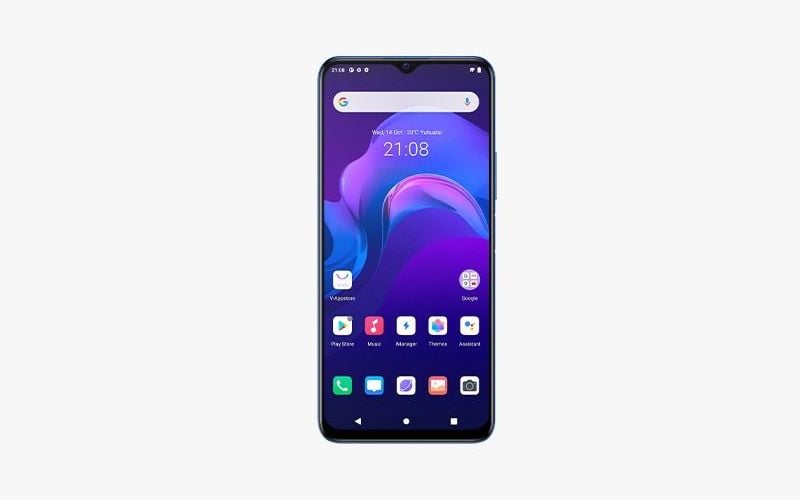
A new Vivo smartphone with model number V2059 has appeared at the Google Play Console and IMEI database (via. 91mobiles). The latter has revealed that the device may release in the market with Vivo Y32 2021 moniker, whereas the former has its key specifications and images.
The Vivo Y73 2021’s image shows that it has a teardrop notch display with a noticeable bottom bezel. The handset seems to be featuring a volume controller and a power button, which is integrated with a fingerprint scanner.
Vivo Y73 2021
The display supports a Full HD+ resolution of 1080 x 2400 pixels and 440ppi pixel density. The handset runs on Android 11 OS and it has 8 GB of RAM. The device is driven by the MediaTek Helio G90 chipset, which is mentioned with its MT6785 model number in the listing. The other details of the smartphone are not known yet.
Recently, the Vivo Y53s handset was also seen at the Google Play Console. The listing revealed that it has a Full HD+ display, Helio G80 chipset, 8 GB of RAM, and Android 11 OS. Yesterday, the configurations and color editions of the Y53s were spotted at a Chinese retailer site. The listing revealed that it will be available in models like 8 GB RAM + 128 GB storage, 8 GB RAM + 256 GB storage, and 12 GB RAM + 256 GB storage and it may sell in colors like Classic Orange and Deep Ocean Blue in China.
The Google Play Console listing of the Y73 2021 indicates that it may go official soon. Speaking of Play Console, the upcoming Vivo V21e 5G was spotted with key specs earlier today. The listing revealed that it has a Full HD+ waterdrop notch display, Dimensity 700 chipset, 8 GB of RAM, and Android 11 OS.
In April, Vivo announced the Vivo V21, Vivo V21 5G, and Vivo V21e smartphones in Malaysia. The V21 5G also made it to India after Recent reports have revealed that there could be a 5G version of the V21e. Last week, the V21e 5G was spotted at the Geekbench benchmarking site and it has emerged at Google Play Console (via. My Smart Price) with key specifications.
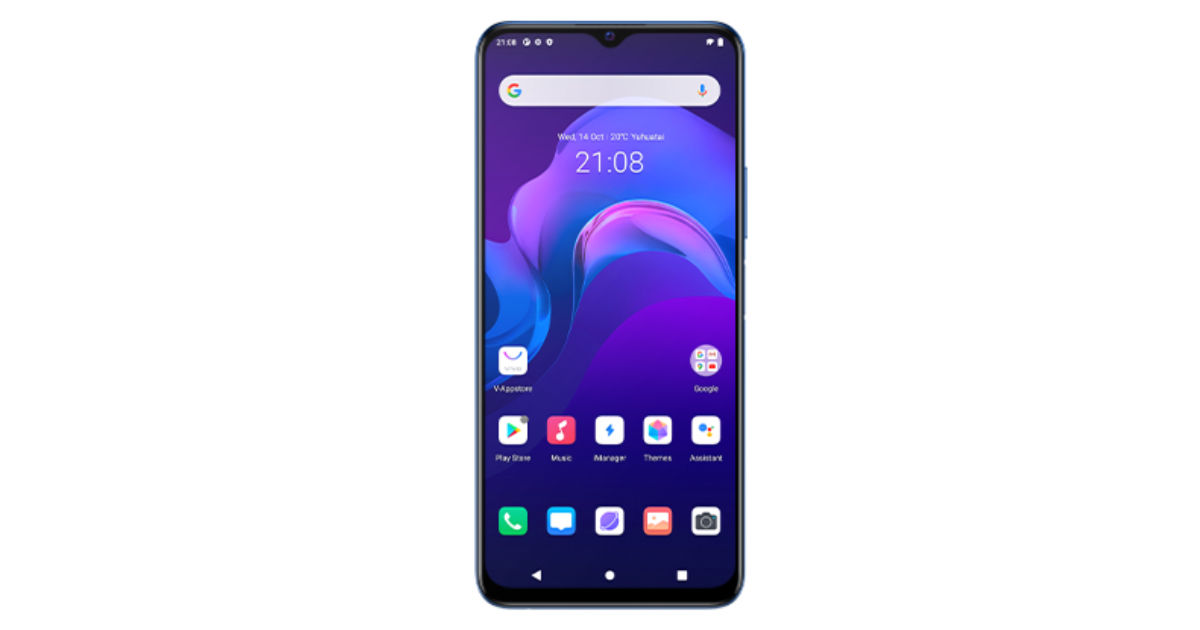
The Google Play Console listing shows that the Vivo V21e 5G supports a Full HD+ resolution of 1080 x 2400 pixels. The front image of the device available has a waterdrop notch and a slightly thick chin. Its right edge has a volume rocker and a power key.
Vivo V21e 5G image at Google Play Console
The Dimensity 700 chipset which is mentioned with MT683V model number powers the Vivo V21e 5G. The handset has 8 GB of RAM and it runs on Android 11 OS. The other details of the smartphone are under wraps. It is expected to arrive in India soon as it was spotted at the Bureau of Indian Standards (BIS) recently.
Vivo V21 5G specifications
The Vivo V21 5G features a 6.4-inch AMOLED display that offers an FHD+ resolution, a 90Hz refresh rate, and an in-display fingerprint scanner. The Dimensity 800U chipset powers the device with 8 GB of RAM. It comes in 128 GB and 256 GB internal storage choices and it has a microSD card slot for more storage.
The V21 5G has an OIS-enabled front camera of 44-megapixel and its rear camera system has a 64-megapixel primary lens with OIS support, an 8-megapixel superwide sensor, and a 2-megapixel macro camera. It houses a 4,500mAh battery that supports 33W fast charging. In India, it carries a starting price of Rs 29,999 (~$413).
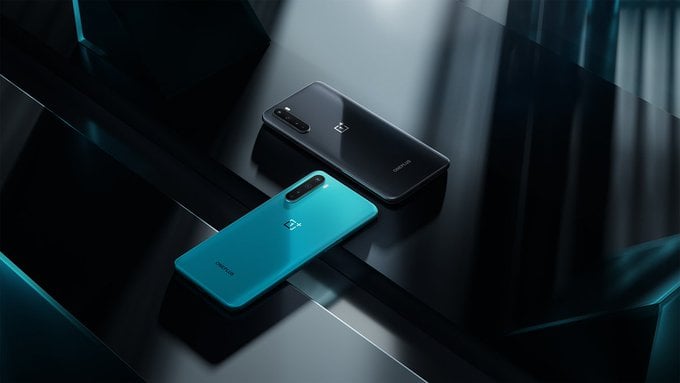
The OnePlus Nord, which debuted in July last year is one of the well-received phones from the brand. Recent reports have claimed that the Chinese brand is working on its successor edition. Fresh information reveals that its successor will be called OnePlus Nord2, and it may launch in Q3.
OnePlus is running a new promo for select EU nations such as the U.K. France, and Germany. The new offer allows buyers of smartphones like the OnePlus 9, OnePlus 9 Pro, OnePlus 8T, and OnePlus Nord to get a free Stadia Premium edition game controller and Chromecast Ultra bundle. The offer is valid until Sept. 30.
OnePlus Nord2 moniker spotted in FAQs of a new promo
While the offer is available for the above-mentioned smartphones, the FAQ section of the promo reveals that even buyers of the unannounced OnePlus Nord2 take advantage of it. This indicates that Nord2 will break cover before Sept. 30 in European markets.
Last year, the OnePlus Nord was announced in July. Hence, there is a possibility that the Nord2 may go official around the same time. Rumors surrounding it have revealed that it is codenamed Denniz and its model number is DE2118.
It is speculated that the OnePlus Nord2 could be equipped with the Dimensity 1200 chipset and it may continue to sport an FHD+ display with a punch-hole design. The device is expected to continue to support a 90Hz refresh rate. It may come with a 32-megapixel front camera and a 50-megapixel primary rear camera. It could be backed by a 4,500mAh battery.
OnePlus Nord
The OnePlus Nord came with specs like a 6.44-inch FHD+ 90Hz AMOLED display, a 32-megapixel + 8-megapixel dual selfie cameras, and a 48-megapixel + 8-megapixel + 5-megapixel + 2-megapixel quad cameras. It includes other specs like Snapdragon 765G chip, up to 12 GB of RAM, up to 256 GB of storage, and a 4,115mAh battery with 30W charging support.
The Realme Narzo 30 5G has 162.5 x 74.8 x 8.5mm dimensions and weighs 185 grams. It houses an IPS LCD panel of 6.5 inches, which features a punch-hole at the upper-left corner. The screen delivers an FHD+ resolution, 405ppi pixel density, a 90Hz refresh rate, a 180Hz touch sampling rate, and a maximum brightness of 600 nits. According to the brand, it offers a screen space of 90.5 percent.
Realme Narzo 30 5G
The Dimensity 700 is at the helm of the Narzo 30 5G and it is accompanied by 4 GB of RAM. The handset offers 64 GB / 128 GB of storage and it has a microSD card slot for additional storage. The Narzo 30 5G has a 5,000mAh battery that promises around 114 hours of music playback and 16 hours of video playback. It supports 18W fast charging through USB-C. The handset runs on Realme UI 2.0 based Android 11 OS.
It has a 16-megapixel selfie camera and a 48-megapixel (main) + 2-megapixel (macro) + 2-megapixel (depth) triple cameras on the back. It offers photography features like super nightscape, panoramic view, time-lapse, portrait mode, AI scene recognition, AI beauty, filters, UIS video stabilization, 720p 30fps slow-motion video shooting, and 1080p 30fps video recording. The handset offers other features such as dual SIM 5G, Wi-Fi 802.11ac, Bluetooth 5.1, GPS, a dedicated microSD card slot, a side-facing fingerprint reader, and a 3.5mm audio jack.
Realme Narzo 30 5G pricing and availability
The Realme Narzo 30 5G is available exclusively through AliExpress in Europe. It comes in Space Black and Space Blue shades and it carries a pricing of 189 euros (~$232).
Realme is also planning to launch the Realme GT 5G n Europe, which has been available only in China since its launch. The Realme GT 5G is expected to arrive in European markets in June.
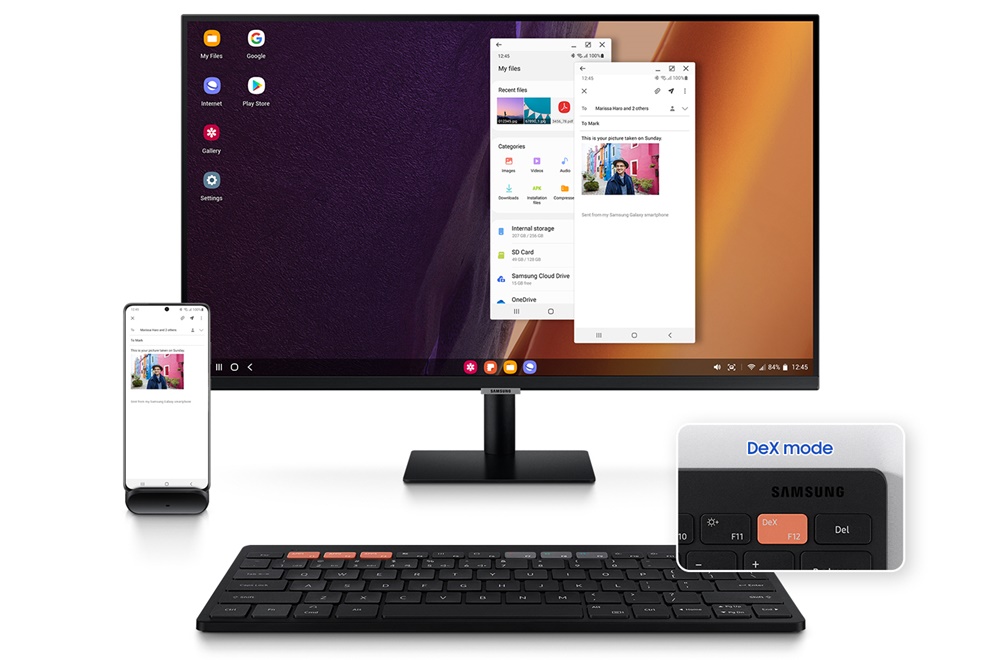
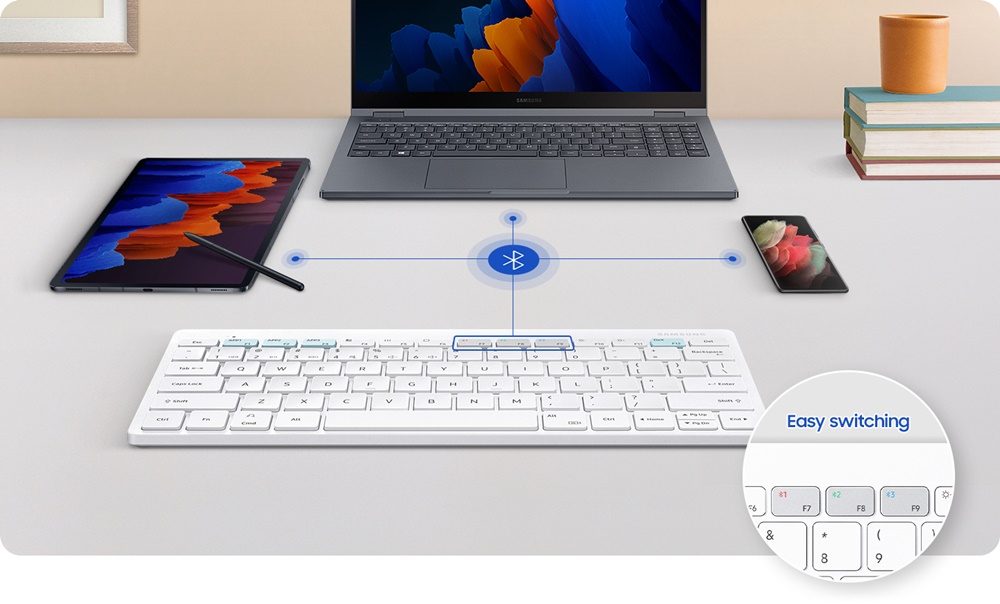
Last month, Samsung had listed a smart wireless keyboard dubbed the Samsung Smart Keyboard Trio 500 on its website. At the time, there were speculations that it would be unveiled alongside the Galaxy Book series. That didn’t happen but the tech giant has now launched the Smart Keyboard Trio 500 in South Korea.
The concept of a wireless keyboard is to provide an efficient way of enhancing work performance and learning using this device. The Smart Keyboard Trio is a slim and compact device that be easily carried from place to place like a mobile connectivity device. It comes at an affordable price and is capable of seamless connectivity to compatible devices.
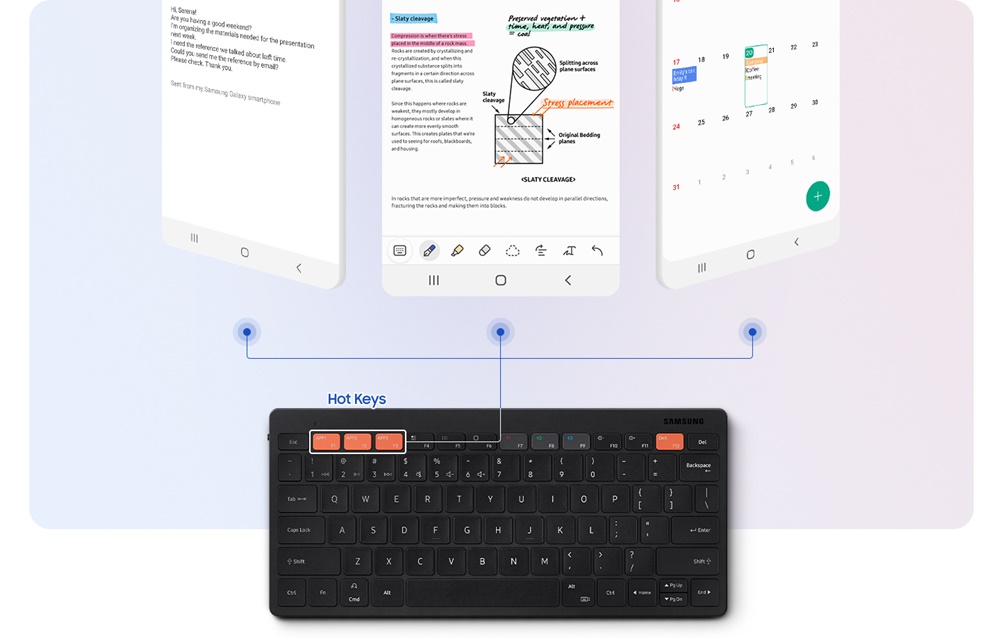
The Samsung Smart Keyboard Trio 500 can be linked to three different devices via Bluetooth. And for each connected device, it is possible to open frequently used apps at the click of a button when you have put these as shortcuts in the wireless keyboard. Compatible devices that can be registered on the wireless keyboard include smartphones, tablets, and similar gadgets. It is also possible to switch quickly from one device to the other by the press of the related device’s Bluetooth key.
The Smart Keyboard Trio 500 also has support for connectivity to other smart devices via the Samsung DeX app. It can thus enable connectivity of your Galaxy device to your smart TV to get a more excellent feel of work in comfort using a larger screen.
The device is already on sale in select Samsung and other outlets across South Korea and is priced at 49,000 won (about $44). Samsung Korea is also giving up to a 20% discount when the device is purchased at Samsung’s Digital Plaza and a few open markets until the end of May 2021. We expect a global rollout of the Smart Keyboard Trio 500 in the coming days.
Recent reports have spilled a lot of information about the Samsung Galaxy A22 4G and Galaxy A22 5G. A fresh leak courtesy of DealnTechhas revealed the pricing of the Galaxy A22 5G for the European markets.
The publication claims that it spotted the Galaxy A22 5G on a European retailer site with a pricing of 185 euros (~$226). The listing has no information on the specs of the phone, but it mentions that the pricing belongs to its 64 GB variant.
The 185 euros is without a VAT rate, which indicates that the phone could be priced as low as 199 euros (~$249) with VAT included. It may sell for as high as around 229 euros (~$280) with VAT in some other regions of Europe. By this, it is set to debut as the most affordable 5G phone from the brand.
Samsung Galaxy A22 5G renders by 91mobiles
Samsung Galaxy A22 5G specifications (Rumored)
The Galaxy A22 5G is expected to feature an IPS LCD panel of 6.4 inches. It could be powered by the Dimensity 700 chipset and 6 GB of RAM. It may house a 5,000mAh battery that supports 15W fast charging. For security, it has a side-facing fingerprint scanner.
There is no information on the front camera of the Galaxy A22 5G. Its rear camera setup may include a 48-megapixel primary camera, a 5-megapixel secondary lens, and a 2-megapixel sensor. It has a thickness of 9mm and weighs around 205 grams. It is rumored to arrive in shades like white, black, purple, and green.
The Galaxy A22 5G is likely to debut in June. Its 4G edition is also likely to get around the same time.
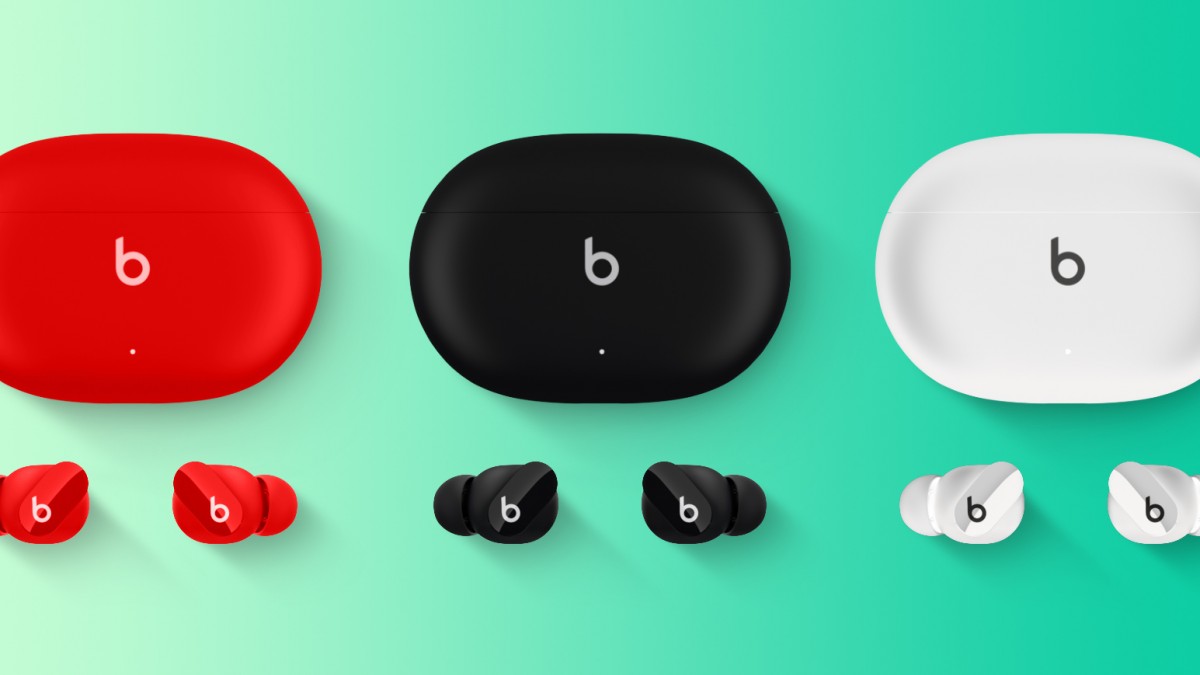
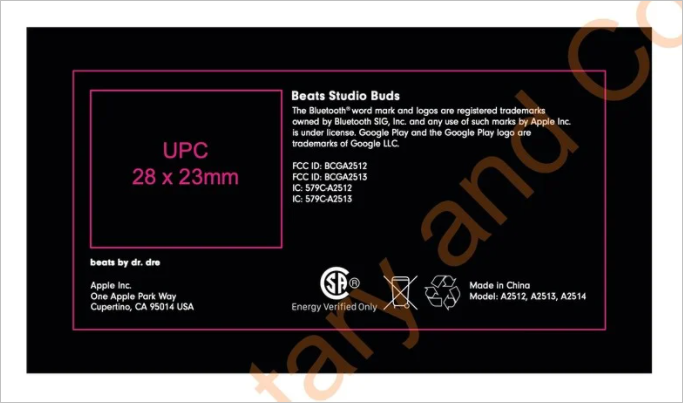
Apple may be preparing for a release of another of its very successful earbuds, tagged the Beats Studio Buds. Two devices with model numbers A2512 and A2513 have been spotted under filings in the United States Federal Communications Commission (FCC) database with the name Beats Studio Buds. The FCC listing does not reveal much outside what has already been known about the Beats Studio Buds. However, the listing could indicate a release of the device may be imminent.
The photos highlighted that the device could be quite different from previous Apple earbuds due to some innovative enhancements. The device will come without the stems that we have come to know Apple earbuds. It will also feature Active Noise Cancellation (ANC) technology for better call quality. The Beats Studio Buds will also be truly wireless (TWS) earbuds.
Apple continues to carve a niche for itself in the earbuds segment of the accessories market. It has shown innovation and cutting-edge technology deployment in the evolution of its earbuds, from the Apple AirPods to the Beats Studio Buds. We expect more details about the Beats Studio Buds to become available as we progress to its impending launch by Apple. Until then, we cannot say anything about the battery performance, pricing, and other key details about the device.
An indication of the degree of acceptance in the use of driverless vehicles in Germany is the new legislation presently passed in the Bundestag, Germany’s lower house of parliament, that would allow driverless vehicles to ply public roads across the country from next year, 2022.
All-electric ID. BUZZ shall be the first vehicle in the Volkswagen Group to also drive autonomously.
This new legal framework backing commercial operations of autonomous vehicles would undoubtedly be attractive to companies involved in autonomous commercial car-hailing and logistics services, fast-growing across the world. The new legislation, when passed, will allow autonomous vehicles to operate without the hitherto mandatory safety driver behind the wheels. Germany had seen some degree of autonomous vehicle testing with a safety driver behind the steering.
The proposed legislation will only become law after it is passed in Germany’s upper house of parliament. The details of the bill show that autonomous vehicles without a safety driver could be allowed to ply public roads after satisfying all the safety requirements for such operation. The bill also includes proposed initial applications for driverless cars on public roads, including passenger transport, logistics, company shuttles, and business and supply trips between medical facilities and retirement homes.
There are specific requirements from companies intending to enter the business to ensure safety and security. Few companies already carrying out autonomous testing in Germany may have gotten a head start when the law is eventually passed.
This year has seen a steep rise in the number of permits for self-driving cars on public roads in different parts of the world. China and the US have seen a substantial deployment of these autonomous vehicles in some cities. AutoX is currently deploying its robotaxis in several countries with a reasonable degree of success.
It is expected that the upper chamber of parliament also passes the regulation for it to become law in Germany.
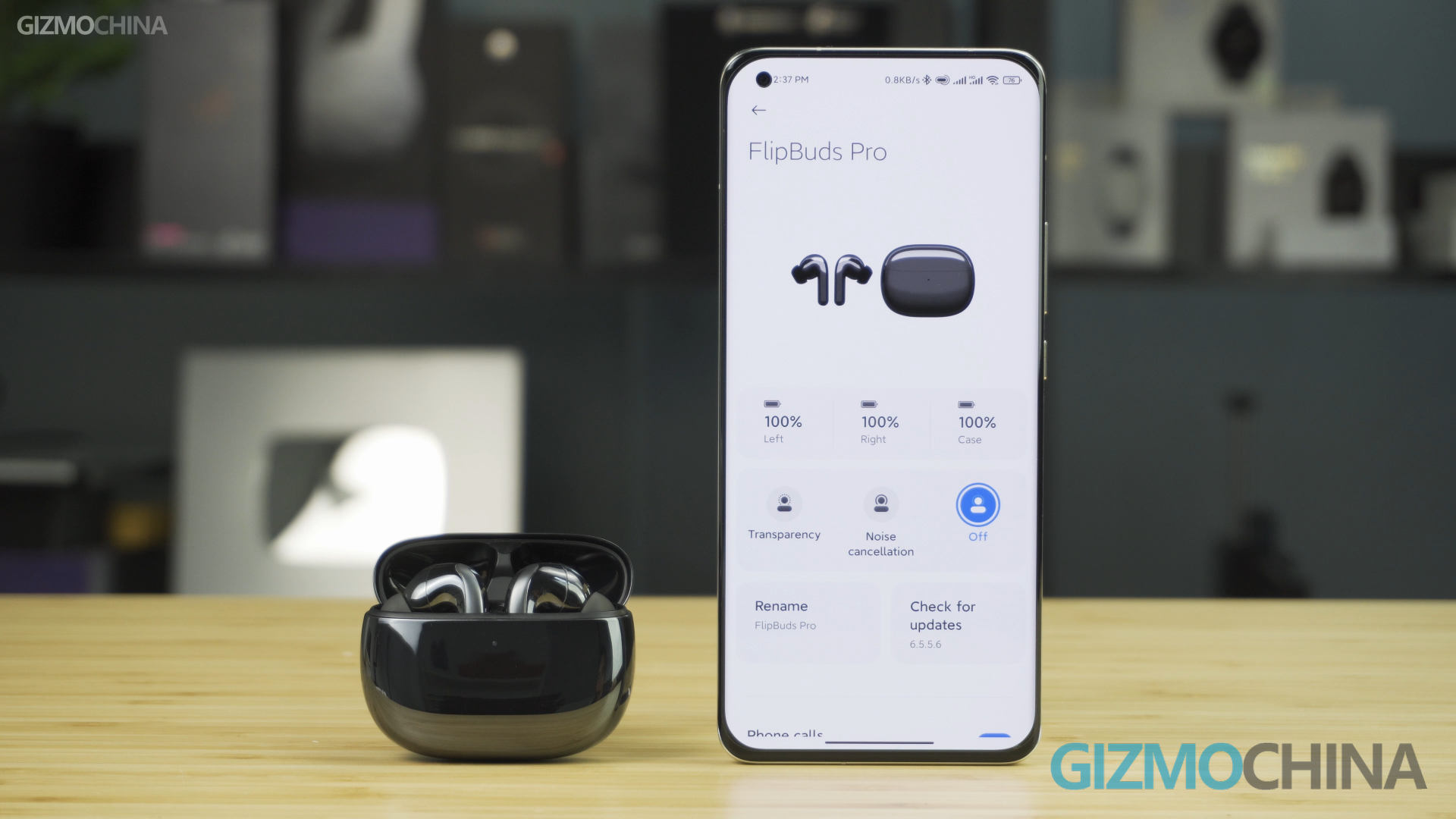
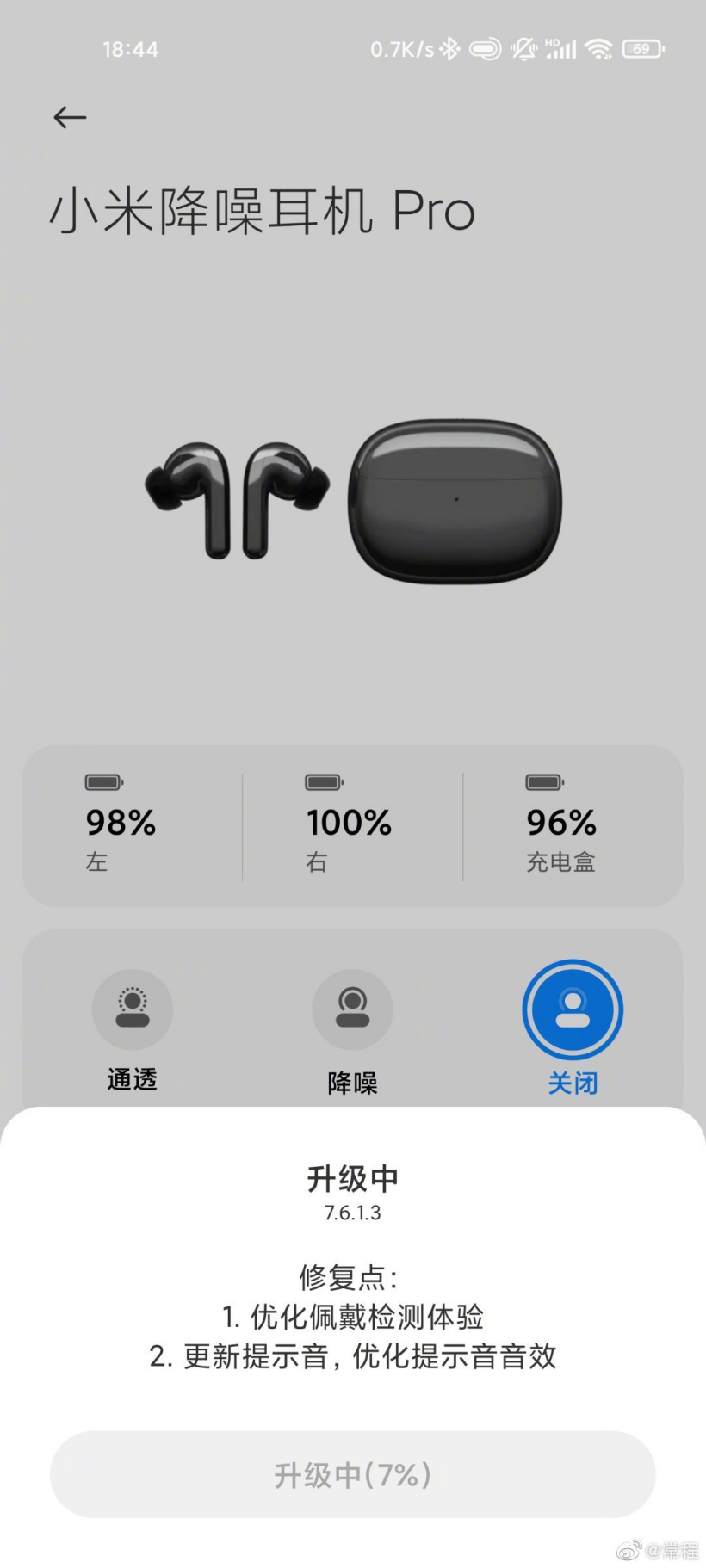
Xiaomi Group VP Chang Cheng has announced via his Weibo page that the recently released Xiaomi Flipbuds Pro has received a new firmware update. This comes barely two weeks after the portable earbuds model that is equipped with active noise cancellation (ANC) was launched.
The new firmware version 7.6.1.3 introduces a few upgrades to the new earbuds, one of which is an enhanced wear detection experience. The new update equally delivers an upgraded notification sound and also optimizes the notification sound effect.
Xiaomi FlipBuds Pro’s main feature is the Active Noise Cancellation (ANC) which it claims can block up to 40dB of noise at its peak level. There are three levels of ANC – daily, office, and travel. The intensity of the ambient noise will determine the ANC level that would be ideal.
The headset settings can be assessed directly from the MIUI pop-up settings menu on Xiaomi phones and via the XiaoAI app on all Android smartphones. The Flipbuds Pro is powered by Qualcomm’s QCC5151 ultra-low power audio chip along with 11mm ultra dynamic sound drivers. It equally features support for Bluetooth 5.2, aptX Adaptive dynamic codec protocol, and support for low-latency activities like gaming.
In terms of battery life, TWS earbuds is capable of providing up to 7 hours of playback without ANC but when ANC is activated, the battery life comes down to 5 hours. The battery life extends up to 28 hours with the charging box in the mix (without ANC). When active noise cancellation is turned on, the total battery life reduces to 22 hours.
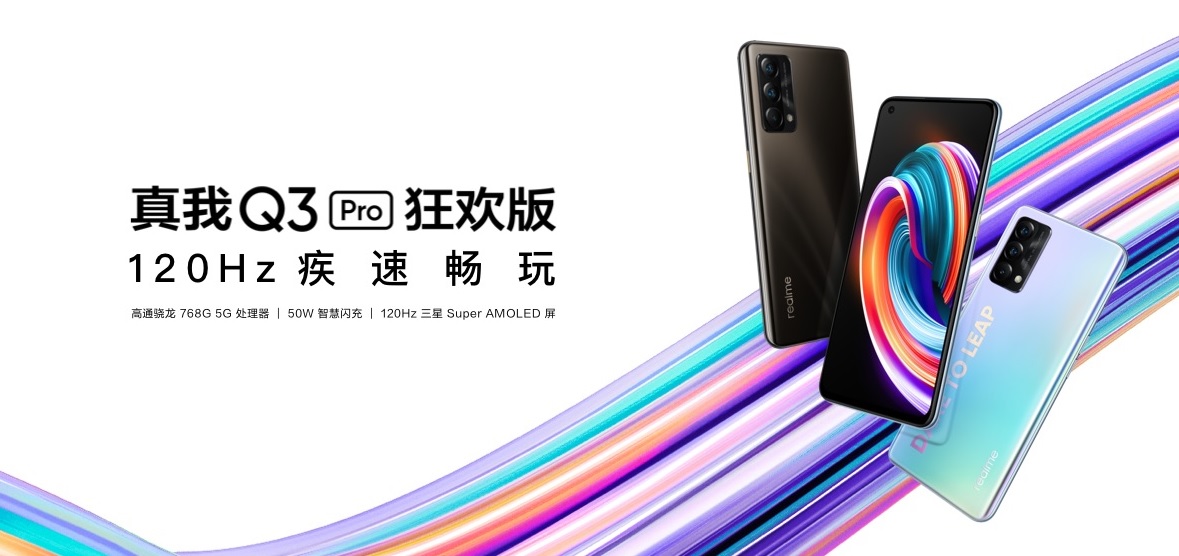
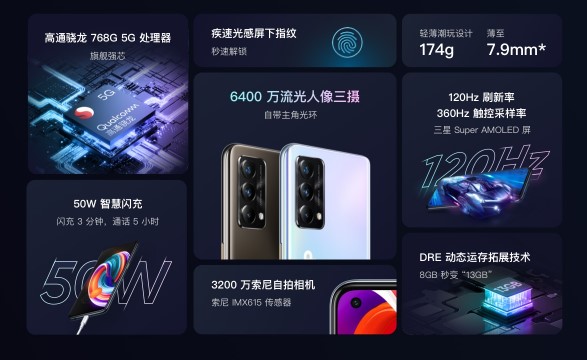
Realme announced the Realme Q3 Pro Carnival Edition today in China. The new phone differs from the Realme Q3 Pro with its chipset and support for a faster charge technology. It also comes in two new colorways.
The original Realme Q3 Pro was announced last month and it launched with a Dimensity 1100 processor and support for 30W fast charging. The Carnival Edition swaps it for a Snapdragon 768G processor and also comes with support for 50W fast charging.
Alongside these new additions, Realme has also announced the new variant in two new colors, Black Forest and Sky Castle, the latter of which has a gradient finish. The phone is available in a single configuration – 8GB RAM and 128GB of storage and is priced at ¥1799 (~$281). It is already available for pre-order and those who pre-order get a discount of ¥300, a free pair of realme Buds Classic Edition, a bag, and a one-year extended warranty.
The Realme Q3 Pro has a 6.43-inch AMOLED display with a hole at the top left corner of the screen for a 16MP camera. There is a 64MP main camera on the rear along with an 8MP ultrawide angle camera, and a 2MP macro camera. Other features are stereo speakers, an audio jack, an in-display fingerprint scanner, and a 4500mAh battery under the hood. It runs Android 11 out of the box.
We use cookies on our website to give you the most relevant experience by remembering your preferences and repeat visits. By clicking “Accept”, you consent to the use of ALL the cookies.
This website uses cookies to improve your experience while you navigate through the website. Out of these, the cookies that are categorized as necessary are stored on your browser as they are essential for the working of basic functionalities of the website. We also use third-party cookies that help us analyze and understand how you use this website. These cookies will be stored in your browser only with your consent. You also have the option to opt-out of these cookies. But opting out of some of these cookies may affect your browsing experience.
Necessary cookies are absolutely essential for the website to function properly. This category only includes cookies that ensures basic functionalities and security features of the website. These cookies do not store any personal information.
Any cookies that may not be particularly necessary for the website to function and is used specifically to collect user personal data via analytics, ads, other embedded contents are termed as non-necessary cookies. It is mandatory to procure user consent prior to running these cookies on your website.