Advertisement

Realme P4s 5G launch date, key specifications confirmed: Dimensity 7400 Ultra, 144Hz display, 8,000mAh battery

Realme is expanding its P-series lineup in India with a new mid-range 5G phone that’s set to arrive later this month. The company has officially confirmed that the Realme P4s 5G will launch on August 26. Ahead of the event, Realme has already shared some key specs, putting the focus on gaming performance, battery life, and durability.

Under the hood, the P4s 5G runs on the MediaTek Dimensity 7400 Ultra chipset paired with a dedicated HyperVision+ AI chip. Realme says this dual-chip setup can deliver up to 144fps in supported games. To dissipate heat during long gaming sessions, there’s a 7,000 mm² vapor chamber.

The screen is a Samsung M14 LTPS OLED panel measuring around 6.78 inches. It has a 144Hz refresh rate, a 1,272 × 2,772 resolution, and peak brightness that can hit 6,500 nits. It supports HDR10+ and Netflix HDR, and Realme claims 26% better luminous efficiency, 50% longer lifespan, and near-lossless 2K video playback.

Battery capacity is a big 8,000 mAh, paired with 80W fast charging. On the camera side, you get a 50MP main sensor with optical image stabilization (OIS) and an 8MP ultrawide lens. Durability looks solid too, with IP69, IP68, and IP66 ratings for dust and water resistance.

Other highlights include an “AI Gaming Partner” feature and a design that was co-created with Pearl Academy. Teasers so far have shown the phone in green and beige-brown colour options.

Pricing and the exact RAM/storage configurations haven’t been announced yet. Once it launches, the Realme P4s 5G will be available on Realme’s official website, Flipkart, and other major e-commerce platforms. It joins the existing P4 series models and is being positioned as a high-endurance option for people who want strong battery life in the mid-range segment.

Don’t miss a thing! Join our Telegram community for instant updates and grab our free daily newsletter for the best tech stories!

For more daily updates, please visit our News Section.

(Source: Realme)

Nokia 125 4G 2nd Edition revealed: 2.4-inch LCD, S30+ operating system

HMD looks to be preparing another refresh of its classic Nokia feature-phone lineup, with a new model quietly showing up online. According to tipster smashx_60, the HMD Nokia 125 4G 2nd Edition is on the way. Its specs are very close to the earlier Nokia 210 4G.

It’ll come in two colors: dark blue and silver. Up front is a 2.4-inch LCD screen with a basic 320 × 240 resolution. Both the front and rear cameras are listed at 0.3 MP (300,000 pixels), and the rear one has an LED flash. They’re nothing fancy by today’s standards; they are designed for simple photos or the occasional video call on a feature phone.

Inside, you get 64 MB of RAM and 128 MB of storage, which can be expanded with a microSD card. It runs the lightweight S30+ operating system that powers a lot of recent Nokia and HMD feature phones. Power comes from a 1450 mAh battery, the kind that usually lasts several days on standby in this class of device.

No official price, launch date, or full connectivity details have been shared yet. The leak just confirms that HMD is still iterating on its durable, affordable 4G feature phones under the Nokia brand. These phones remain popular in markets where people mainly want reliable calling, messaging, and basic multimedia without the complexity or cost of a full smartphone.

The Nokia 125 4G 2nd Edition sticks to the same simple formula that has kept HMD’s feature-phone range relevant: compact design, essential 4G support, long-lasting battery, and a focus on doing the basics well. Once more details come out, it’ll be clearer exactly where this model sits in HMD’s growing lineup of 4G-enabled feature phones.

Don’t miss a thing! Join our Telegram community for instant updates and grab our free daily newsletter for the best tech stories!

For more daily updates, please visit our News Section.

(Source: @smashx_60)

LG RONi vs Roborock S9 MaxV Ultra: Which robot vacuum should you buy?

Robot vacuums have become far more capable than the simple floor-cleaning machines they once were. Today’s premium models can map your home, recognize objects, avoid obstacles, vacuum and mop at the same time, and even wash and dry their own mops when they’re done. The latest LG RONi and Roborock S9 MaxV Ultra take that hands-free approach even further, but they focus on different parts of the cleaning experience.

LG RONi vs Roborock S9 MaxV Ultra(1)

LG RONi puts its biggest bet on 100°C steam cleaning, with the robot and its dock designed to use high-temperature steam to tackle dirt and keep the mops clean. Roborock’s S9 MaxV Ultra is built for performance, combining 22,000Pa suction, advanced obstacle avoidance, and a more aggressive mopping system. 

Both are built to handle most of the work on their own, but the better choice depends on whether you care more about deep mopping and hygiene or all-around cleaning performance.

1. Design

LG Roni
LG RONi

The biggest difference between the two is their design. 

LG designed RONi to disappear when it’s not in use. The company offers two versions of it. One with a Hidden Station that fits under a kitchen sink cabinet and stands just 15cm tall. It also supports automatic water supply and drainage, so you don’t need to make major changes to your kitchen.

And another Object Station version, which looks more like a small side table and can be placed anywhere in the home.

Both stations have a front door that opens when the robot enters or leaves. When cleaning is complete, the door closes, hiding the robot and its camera. The RONi also has a Privacy by Design certification, and the camera stays behind the closed station door when the robot is not in use.

Meanwhile, the Roborock S9 MaxV Ultra doesn’t try to hide its hardware. Its RockDock Ultra sits openly in the room and handles tasks such as emptying the dustbin, washing the mop, and drying by itself.

Roborock S9 MaxV Ultra

The robot measures 350 x 353 x 79.8mm, allowing it to get under most furniture. The dock can also be connected directly to water and drainage systems for automatic refilling and draining.

2. Cleaning

The two robots also take different cleaning approaches. The RONi has 30W of suction, mop pads that spin at up to 180rpm, and a side brush that extends around 46mm to reach corners. But suction isn’t its biggest selling point. LG is focusing heavily on hygiene instead. 

The RONi is the first robot vacuum to use 100°C steam to clean both the robot and its station. LG says the steam system can eliminate 99.99% of four types of bacteria from the mop pads and station.

Roborock takes a more traditional performance-focused approach with the S9 MaxV Ultra. It offers up to 22,000Pa of suction, more than twice the suction power of the company’s S8 MaxV Ultra. Its VibraRise 4.0 mopping system vibrates 4,000 times per minute and uses 80°C hot water to wash the mop. The dock then dries it after cleaning.

The robot can lift its brush by 18mm when it detects carpet and can climb thresholds up to 4cm. The dock is also 7.98cm tall, which Roborock says makes it the shortest in its class.

If you care most about suction and picking up dirt from floors, the S9 MaxV Ultra has the stronger numbers. But if keeping the mop and dock clean is a greater concern, the RONi’s 100°C steam system offers an alternative.

3. Navigation and obstacle detection

Both robots use AI to navigate around the home and avoid objects. LG’s RONi uses eight sensors and can recognize more than 120 types of objects, including cables, flower pots and pet waste. If something blocks its path, the robot can notify you through the LG ThinQ app. It can then return to the area and clean it once the obstacle has been removed.

The RONi can also change its cleaning settings depending on the room. For example, it can use stronger cleaning settings in areas such as the kitchen.

Roborock’s S9 MaxV Ultra uses Reactive AI 3.0 and can identify 108 types of objects. It also uses LiDAR to map the home and plan cleaning routes.

Roborock has an advantage when it comes to remote monitoring. Features such as Pet Snap and Video Cruise allow owners to check on pets remotely. The RONi doesn’t offer the same kind of pet-monitoring features.

4. Price and availability

LG launched the RONi in South Korea for 2.19 million won, or around $1,420. Both the Hidden Station and Objet Station versions have the same starting price.

The company has not yet confirmed plans to bring the RONi to other markets. LG also offers an optional appliance subscription that includes service visits, regular steam maintenance, and replacement parts such as mop pads and batteries.

The Roborock S9 MaxV Ultra is more widely available. It is listed at $1,799.99 in the US and is also sold in markets such as the UAE and Egypt. In South Korea, it costs around 1.41 million won, making it cheaper than the RONi at local prices.

5. Which one should you choose?

The LG RONi makes more sense if you don’t want a large robot vacuum dock sitting in the middle of your kitchen or living room. Its hidden design and steam-cleaning system also make it a better fit if hygiene is more important to you than maximum suction power.

The Roborock S9 MaxV Ultra is the better choice if you want strong suction, advanced navigation, and more mature smart features. Its wider availability and pet-monitoring tools are also useful advantages.

Neither robot is clearly better than the other. They are built around different ideas. LG is trying to make the robot vacuum disappear into your home. Roborock is trying to make it as powerful and capable as possible. Which approach works better depends on whether you care more about keeping the hardware out of sight or getting the most cleaning power and smart features from your robot vacuum.

For more daily updates, please visit our News Section.

Stay ahead in tech! Join our Telegram community and sign up for our daily newsletter of top stories!
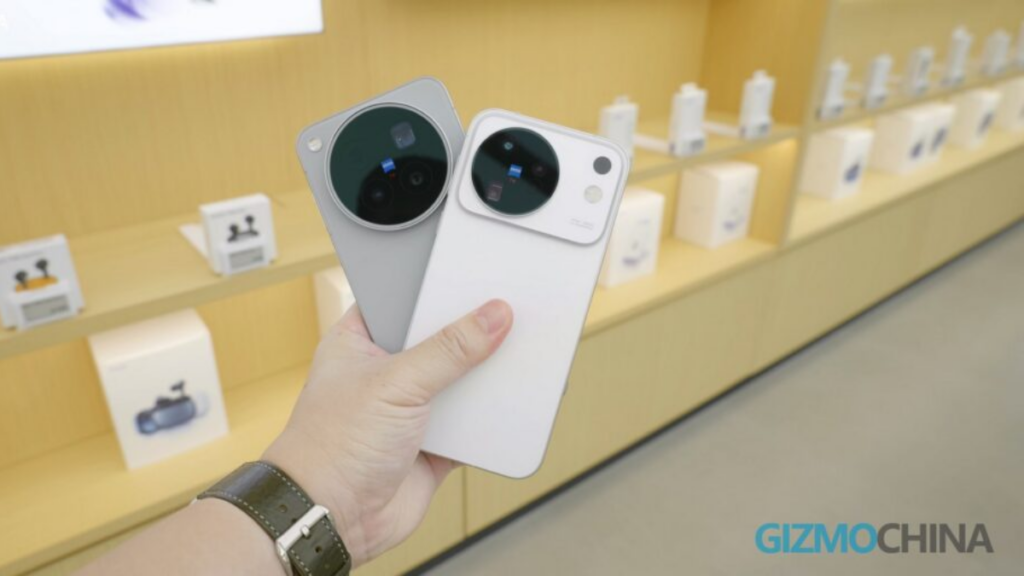
AOC launches new 49-inch 240Hz QD-OLED ultrawide curved monitor with 90W USB-C charging

AOC has released the AGON 7 Max AGP497UCZD, a 49-inch curved ultrawide monitor aimed at PC gaming and productivity setups. The display is currently available in China through JD.com for 6,999 yuan ($1,038).

AOC AGON 7 Max AGP497UCZD

AOC AGON 7 Max AGP497UCZD Specs

The monitor is built around a QD-OLED panel with a 5120 x 1440 DQHD resolution, a 32:9 aspect ratio, and an 1800R curve. Because it uses OLED technology, the panel provides a 1,500,000:1 contrast ratio and deep black levels without the backlight blooming typical of LCD monitors. To help with ambient room lighting, AOC applied a Black AR mirror anti-reflection coating.

The display supports DisplayHDR True Black 400 and can reach a peak brightness of 1,000 nits. It also covers 99% of the DCI-P3 color gamut and 98% of Adobe RGB, and ships with a factory calibration targeting a Delta E of less than 1.

AOC AGON 7 Max AGP497UCZD

For gaming, the AGP497UCZD features a 240Hz refresh rate and a 0.03ms gray-to-gray response time. It carries VESA’s ClearMR 13000 certification, a metric used to indicate low motion blur during fast-moving scenes. If a 32:9 aspect ratio is too wide for certain competitive games, the monitor’s built-in controller allows users to scale the display down to a standard 27-inch 2560 x 1440 format or a 4:3 ratio.

To mitigate the risk of OLED burn-in from static UI elements, AOC is using a graphene cooling solution to pull heat away from the panel. The monitor also includes standard OLED maintenance software features, such as pixel orbiting, pixel refresh cycles, and an automatic taskbar dimmer.

AOC AGON 7 Max AGP497UCZD

In terms of ports, it features DisplayPort 2.1 with UHBR20 and up to 80Gbps bandwidth, two HDMI 2.1 ports with 4K/120Hz support, a USB-C port with DisplayPort Alt Mode and 90W power delivery, a secondary 15W USB-C port, three USB 3.2 Gen 1 Type-A ports, and a built-in KVM switch.

🔌 You’ll NeedThe monitor’s USB-C port delivers 90W to charge a laptop, but many stock cables cap out well below that. Check 100W USB-C PD cable price on Amazon →

The monitor also features dual 8W speakers with DTS Virtual:X support, a height-adjustable ergonomic stand, and a retractable headphone hanger. It supports Windows 11 Dynamic Lighting, allowing users to synchronize the rear RGB lighting directly through the operating system without requiring third-party software.

In related news, BenQ has recently launched a new 240Hz gaming monitor with a 27-inch 1440p QD-OLED panel, while Lenovo has launched an affordable 34-inch curved gaming monitor with a 240Hz WQHD VA panel.

For more daily updates, please visit our News Section.

Stay ahead in tech! Join our Telegram community and sign up for our daily newsletter of top stories!
(JD)

Xiaomi reveals which devices will receive the HyperOS 4 Soft Light Glass effect

HyperOS 4 Liquid Glass UI (Soft Light Glass)

Xiaomi has published a list of devices that are eligible to receive the new Soft Light Glass UI effect as part of the upcoming HyperOS 4 update. The list has been released for the Chinese market, but since it’s based on the chipset capabilities rather than market preference, equivalent global models should also receive the new feature.

The Soft Light Glass effect is heavily inspired by Apple’s Liquid Glass UI. Since it requires complex graphics rendering and interactive lighting effects, only select Xiaomi devices that meet the processing requirements will receive the feature with the HyperOS 4 update.

List of Xiaomi devices planned to receive the Soft Light Glass UI design

Xiaomi says the Soft Light Glass effect will not be available to all devices during the beta phase. The brand says this UI element needs further optimization; therefore, it will initially be available on devices with the Snapdragon 8 Elite or higher, the Dimensity 9500 or higher, and the Xring O1 or higher.

The good part is that the company plans to implement it on devices beyond those in the first phase of the beta rollout, including older models like the Redmi K70, Xiaomi 13, and Xiaomi MIX Flip.

Check the complete list below.

Xiaomi MIX series

  • Xiaomi MIX Fold 4
  • Xiaomi MIX Fold 3
  • Xiaomi MIX Fold 2
  • Xiaomi MIX Flip

Xiaomi flagship phones

  • Xiaomi 17 series
  • Xiaomi 17T series
  • Xiaomi 15 series
  • Xiaomi 14 series
  • Xiaomi 13 series

Xiaomi Civi series

  • Xiaomi Civi 5 Pro

Redmi K series

  • Redmi K100 Pro series
  • Redmi K90 series
  • Redmi K80 series
  • Redmi K70 series (except K70E)

Redmi Turbo series

  • Redmi Turbo 5 Max
  • Redmi Turbo 5
  • Redmi Turbo 4 Pro

Xiaomi Pad series

  • Xiaomi Pad 8 Pro
  • Xiaomi Pad 8
  • Xiaomi Pad 7 Ultra
  • Xiaomi Pad 7S Pro

Redmi K Pad series

  • Redmi K Pad 2
  • Redmi K Pad

The Soft Light Glass UI effect is already rolling out to Xiaomi devices included in the first batch of the HyperOS 4 beta rollout. Currently, the beta program is limited to China, but global availability shouldn’t be far off.

We’ll keep updating you with the latest details in our HyperOS 4 section. You can visit the page regularly or join our Telegram channel to stay updated.

source/via: Notebookcheck

Realme hikes prices of C100x, C83, 16T, 16, 16 Pro, and 16 Pro+ in India again

Realme has once again raised the retail prices of several smartphones in India, continuing a pattern of upward revisions that has been hitting buyers throughout the year.

The latest changes, which took effect on August 18, cover the C100x, C83, 16T, 16, 16 Pro, and 16 Pro+ models. The hikes range from ₹1,000 to ₹4,000 depending on the variant.

In the budget range, the Realme C100x 4G (4GB + 64GB) has jumped from ₹14,999 to ₹16,999. The C83 5G sees increases of ₹1,000–₹2,000: the 4GB + 64GB version is now ₹18,499, the 4GB + 128GB hits ₹21,499, and the 6GB + 128GB model costs ₹24,499.

Mid-range phones also got more expensive. All three variants of the Realme 16T 5G went up by ₹1,000, putting the 6GB + 128GB at ₹30,999, the 8GB + 128GB at ₹32,999, and the 8GB + 256GB at ₹35,999. The regular Realme 16 5G followed the same ₹1,000 pattern: the 8GB + 128GB is now ₹36,999, the 8GB + 256GB is ₹39,999, and the 12GB + 256GB sits at ₹42,999.

The biggest jumps hit the Pro models. The Realme 16 Pro 5G base 8GB + 128GB variant climbed ₹4,000 to ₹44,999, while its higher storage options rose by ₹3,000 each. The Realme 16 Pro+ 5G followed a similar pattern: the 8GB + 128GB jumped ₹4,000 to ₹53,999, with the other two variants up by ₹3,000.

The Realme 16 series has already gone through several price adjustments since launch, in May, June, and early July. The base 16 Pro alone has accumulated roughly ₹9,000 in increases before this latest change. Similar hikes have also been seen from OnePlus, POCO, and iQOO around the same time.

Some models are still available at older prices

Flipkart was quick to update the prices, but Amazon, as has happened before, still has several models listed at the older rates. If you’re looking at any of the phones mentioned in this article, it’s worth checking Amazon before those listings get updated.

As of writing, the Realme C83 5G 4GB + 64GB is still showing ₹17,499, the 4GB + 128GB is at ₹19,499, and the 6GB + 128GB is available for ₹21,599 on Amazon (Flipkart has the same 6GB + 128GB variant at ₹23,999).

For the Realme 16T 5G, the 6GB + 128GB and 8GB + 128GB are still listed on Amazon at ₹26,999 and ₹31,999 respectively, while the 8GB + 256GB sits at ₹34,999.

On the regular Realme 16 5G, Amazon currently shows the 8GB + 128GB at ₹34,999, the 8GB + 256GB at ₹37,999, and the 12GB + 256GB at ₹39,999.

Don’t miss a thing! Join our Telegram community for instant updates and grab our free daily newsletter for the best tech stories!

For more daily updates, please visit our News Section.

(Sources: Smartprix | Amazon | Flipkart)

Timex launches three new 36mm chronograph watches with 1970s-inspired racing vibes

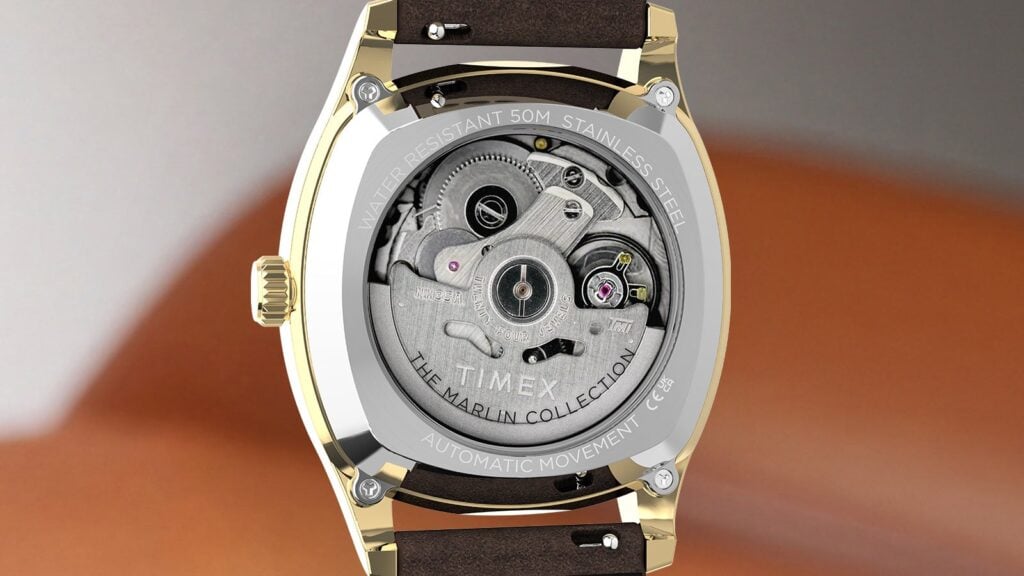
Timex has expanded its Q Timex line in the US with the release of the Continental Chronograph. The new quartz watches lean into the current industry shift toward smaller case sizes, dropping the standard 40mm-plus dimensions usually seen on chronographs in favor of a compact 36mm stainless steel case.

Timex Q Timex Continental Chronograph

Design Details

The watches measure 43mm lug-to-lug and are 11.5mm thick. It is a size that closely matches the hardware proportions of watches from the 1970s. The cases are made of stainless steel with a mix of brushed and polished finishes. They also have a fixed tachymeter bezel, which you can use with the watch’s built-in stopwatch function to calculate average speed over a set distance.

Timex Q Timex Continental Chronograph

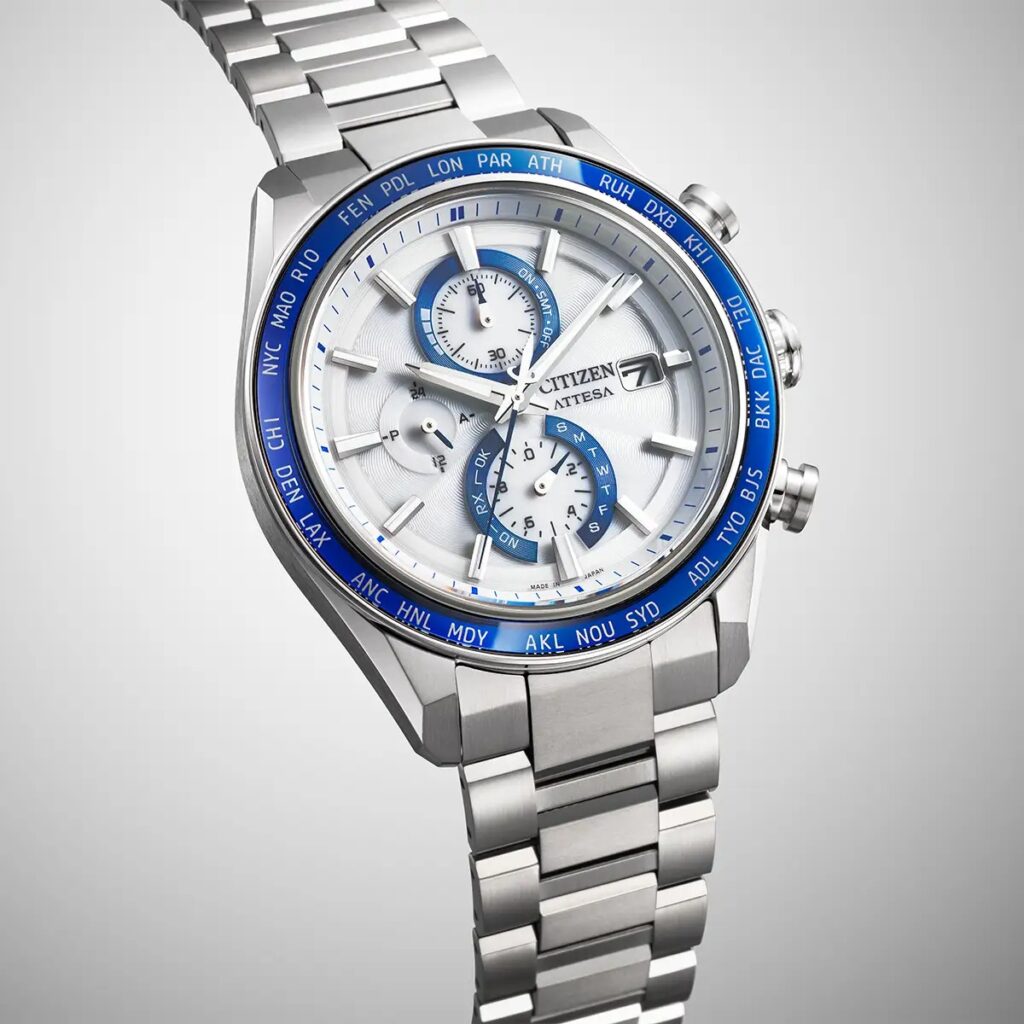
There are three specific models available at launch. For $259, you can get the TW2Y93200, which has a black dial with silver sub-dials and a red stopwatch hand. Also at $259 is the TW2Y92400, featuring an ice blue dial with black sub-dials. Both of these come on a standard silver-tone stainless steel bracelet. For $279, there is a two-tone silver and gold version (TW2Y92300) with a champagne dial and brown sub-dials.

All three models share the same basic dial layout. These have a textured finish, faceted metallic hour markers, and glow-in-the-dark paint on the hands and markers so you can read the time in low light. The glass covering the dial is a flat mineral crystal. This material is standard for watches at this price point, though it does scratch more easily than the sapphire crystal used on more expensive watches.

Timex Q Timex Continental Chronograph

The watches run on a battery-powered quartz movement, which keeps time accurately without the maintenance required by mechanical watches. These come with an integrated stainless steel bracelet featuring an 11mm lug width and a deployant clasp. Timex says the band can be adjusted to fit wrists between 142mm and 205mm (about 5.6 to 8.1 inches).

These are water-resistant up to 50 meters. Timex says this is fine for light swimming, but these are not built for snorkeling or diving. The company also warns against pressing the chronograph buttons while the watch is submerged. The Q Timex Continental Chronograph series is available now for purchase from the Timex US website.

In related news, Timex has recently introduced three new Automatic E Line watches featuring a retro square case, alongside its latest vintage Quartz E Line watches, which showcase elegant sunray dials.

For more daily updates, please visit our News Section.

Stay ahead in tech! Join our Telegram community and sign up for our daily newsletter of top stories!

Timex launches two new stylish motorsport-inspired watches in the US

Timex has launched two new Waterbury Heritage Chronograph watches in the US. Both models are priced at $319 and share the same motorsport-inspired design and movement, with different colorways offering distinct looks.

Timex Waterbury Heritage Chronographs

Design Details

The watches use a meca-quartz movement that combines battery-powered quartz timekeeping with a mechanical chronograph module. It features a smoothly sweeping chronograph seconds hand, instant reset-to-zero action, and runs on a standard SR936SW battery.

Both watches share the same case dimensions. Timex is using a 39mm brushed and polished stainless steel case with a 46mm lug-to-lug distance and a thickness of 13.5mm. The front of the watch features a fixed black tachymeter bezel, which can be used alongside the chronograph to calculate average speed.

The dial is covered by a double-domed K1 mineral glass crystal with an anti-reflective coating. K1 glass is a step up from standard mineral glass in terms of impact resistance, though it will still scratch more easily than sapphire crystal.

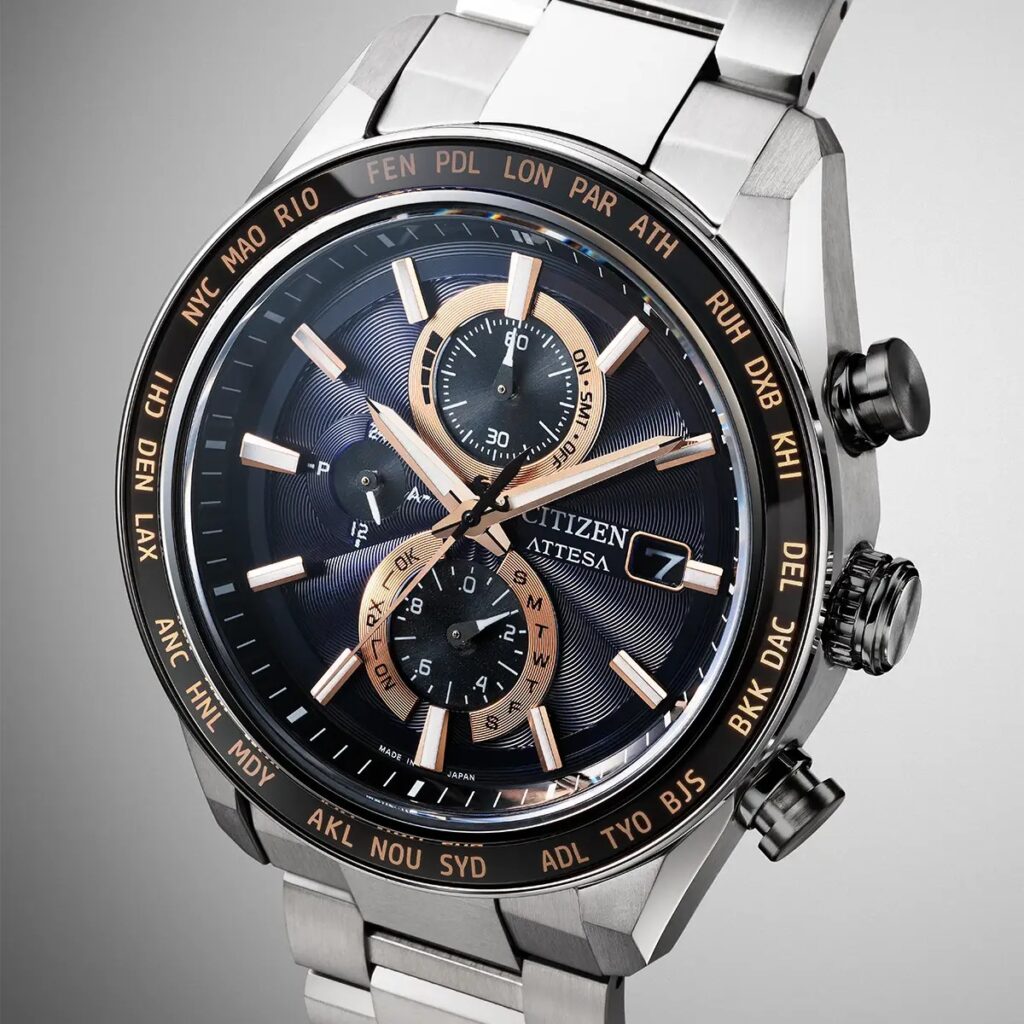
Timex is offering two distinct colorways. The first version (TW2Y93300) has a black dial with silver sub-dials and comes on a black perforated leather strap. The second version (TW2Y93400) features a black dial with gold-tone accents, black sub-dials, and a red perforated leather strap.

Both models include a red anodized pusher at the two o’clock position to operate the chronograph, as well as luminous material on the hands and hour markers for visibility in the dark.

Timex Waterbury Heritage Chronographs

For everyday wear, the watches come with 20mm quick-release spring bars, making it easy to swap out the leather straps without tools. They are rated for 50 meters of water resistance, which means they can handle rain and light splashes, but they aren’t built for swimming or diving.

Both versions of the Waterbury Heritage Chronograph are available to purchase now on the Timex US website.

For more daily updates, please visit our News Section.

Stay ahead in tech! Join our Telegram community and sign up for our daily newsletter of top stories!

(Timex 1,2)

🔌 You’ll NeedQuick-release spring bars make it easy to swap in a new 20mm leather strap without tools. Check leather watch strap price on Amazon →

Xiaomi launches new Smart Pet Water Fountain with UV-C sterilization, four-stage filter, 3L tank

Xiaomi has quietly added another smart pet accessory to its Mijia lineup for cat and dog owners. The Mijia Smart Pet Water Fountain 2 Sterilization Edition is now listed on JD.com and goes on sale for the first time on August 25 at 199 yuan (roughly $30).

It measures 190 × 230 × 180 mm, has a clear window so you can easily check the water level, and a tilted drinking dish that should be more comfortable for pets’ necks. The main body and dish form a smooth, rounded design with a quick-release system that makes cleaning simple. It’s also IPX7 waterproof, so once you close the charging-port plug, you can rinse the whole unit under the tap.

The fountain holds 3 liters of water, enough to last a single cat roughly 10 to 15 days on a full fill. Inside is a UV-C sterilization pump that Xiaomi claims kills 99% of bacteria, paired with a four-stage filter that includes high-density microporous PP cotton, activated-carbon granules, mixed ion-exchange resin, and antibacterial cotton. These layers catch hair, debris, and other impurities while purifying the water. As a safety feature, the pump automatically shuts off if the water level gets too low.

Noise is kept down thanks to a wall-mounted water-flow design that only produces about 30 dB while running. A 4000 mAh battery inside gives up to 90 days of use on a single charge, so there’s no need for a constant power cord and you can place it pretty much anywhere. You can pick from three modes, sensor-activated, intermittent, or continuous flow (the last one needs to be plugged in), depending on what your pet prefers.

It connects to the Xiaomi Mi Home app, which sends notifications about water level, battery status, and when the filter needs changing. It can also work with other Mi Home devices through scene automation. Overall, this Sterilization Edition builds on Xiaomi’s earlier pet fountains by adding stronger disinfection while keeping the cordless design and multi-layer filtration that already made the series popular with pet owners who want low-maintenance hydration.

Don’t miss a thing! Join our Telegram community for instant updates and grab our free daily newsletter for the best tech stories!

For more daily updates, please visit our News Section.

(Source)

Android 17 beta finally rolls out to Motorola Edge 50 Ultra

Motorola Edge 50 Ultra

After a long four-month wait since the Android 17 beta registration went live for the Edge 50 Ultra, Motorola is finally pushing the beta build to users. That update package has a massive download size of 5.24 GB, and that means users can expect to see some major upgrades.

A Motorola Edge 50 Ultra user on Reddit confirmed the rollout. The update comes with the firmware version A171UVH.42, which also includes the August 2026 security patch, besides core Android 17 features and upgrades.

The update is rolling out to Edge 50 Ultra users who previously signed up for the Android 17 beta program. If you’re among them, the update should arrive on your device at any moment. You can manually check for updates from the System update section in the Settings app.

What’s new in Android 17 beta for Motorola devices?

The changelog is unfortunately thin on details, as you can see in the screenshot above. However, we already know pretty much everything that Android 17 beta offers on Motorola devices. The update introduces new icons for the status bar, a new Classic Control Center, Landscape Stereo, Enhanced HDR Brightness, and Battery health. The Live Updates feature is now integrated into the camera cutout in the middle (previously, it appeared on the left side), similar to Apple’s Dynamic Island.

The lock screen receives new clocks with expanded typography and style options, but without the depth effect feature. Motorola has made it a lot easier to take screenshots (now a three-finger swipe-down gesture) and enable split-screen (now a three-finger swipe-down gesture).

The Android 17 beta brings many more useful changes, including fixing the overlapping network icons, a new volume interface, stronger haptics, a new Moto assistant, and new customization options. The update brings many more changes, which you can read on this page.

Stay tuned with us for the latest updates. You can visit our Motorola section regularly or join our Telegram channel to receive instant alerts.

Oppo’s wide-screen phone camera specs leak, features a flagship setup

Oppo has long been rumored to be working on a wide-screen phone, and a fresh leak today reveals its possible camera setup. 

According to tipster Digital Chat Station, the phone is likely a flagship model with camera specs to back that up. It reportedly features a 200MP main sensor plus a periscope telephoto lens.

Oppo wide smartphone camera leak

The tipster further adds in comments that the device could debut alongside the upcoming Find X10 series. The smartphone in question could be the Oppo Reno X, a wide-screen phone that’s previously been tipped to arrive alongside the Find X10 series later this year.

The former report already reveals some details about the display. It’s said to have a 6.3 to 6.4-inch flat screen with ultra-narrow bezels that match on all four sides, along with a 1.5K LTPO panel. But contrary to the new leak, it was tipped to feature a triple-camera system with a 50MP main sensor and a periscope telephoto lens.

It could be that Digital Chat Station is sharing revised parameters, but the word isn’t clear. For the record, though, we know that a wide-screen smartphone from Oppo could soon be a real thing. 

For a sense of what this phone might actually look like, the Huawei Pura X is a decent reference point. It’s a foldable with a 6.3-inch, 16:10 screen at 2120×1320 resolution, and it measures 143.2mm by 91.7mm by 7.15mm when unfolded. Oppo is exploring a similar design and dimensions, minus the fold. 

Huawei Pura X2
Huawei Pura X

Huawei has said the wider aspect ratio helps with watching video, gaming, and browsing — you get more of the frame visible at once compared to a standard tall screen, whether that’s a movie, a game, or a page of photos.

None of this is confirmed by Oppo yet. And specs and timing can still shift before an official announcement.

For more daily updates, please visit our News Section.

Stay ahead in tech! Join our Telegram community and sign up for our daily newsletter of top stories!

OnePlus 16’s BOE X4 display to bring 165Hz system-wide refresh rate and enhanced gaming experience

Tipster Digital Chat Station has been consistently sharing details about the OnePlus 16’s display. Yesterday, he revealed that OnePlus and BOE have jointly developed a new X4 light-emitting material for the phone, which is expected to bring lower power consumption and a longer lifespan. Now, he is back with more details about what to expect from its advanced screen.

OnePlus 16 display could bring 165Hz across the system

According to the tipster, the OnePlus 16 will feature a new-generation BOE Oriental Screen with support for a 165Hz refresh rate across the system. This is different from simply offering a 165Hz panel, as the higher refresh rate is reportedly being extended to more system and application scenarios instead of being mainly restricted to specific use cases. The OnePlus 15 already features a 165Hz display, making the broader implementation a more notable upgrade for its successor.

The new panel is said to use an X4 light-emitting material jointly developed by OnePlus and BOE. OnePlus previously claimed that the material performs better than Samsung’s M-series material in internal testing while also offering lower power consumption and a longer lifespan. The OnePlus 16 is also expected to retain a flat screen with extremely narrow bezels on all four sides.

OnePlus-15-display
OnePlus 15’s display

Gaming could push the refresh rate even higher, with the OnePlus 16 reportedly capable of reaching 185Hz in supported games. OnePlus has also confirmed upgrades to its gaming technologies, including its high-refresh-rate technology, Fengchi Gaming Core and e-sports triple-core technology.

The phone is expected to ship with ColorOS 17 in China, with new system-level animations designed to make transitions feel smoother on the high-refresh-rate display. Under the hood, it is tipped to feature the forthcoming 2nm Snapdragon 8 Elite Gen 6 Pro chip.

Other rumored specifications of the OnePlus 16 include a 200-megapixel main camera with a 1/1.4-inch sensor, a 50-megapixel ultrawide camera and a 50-megapixel 3.5x periscope telephoto camera. It is expected to launch in October, although the company has yet to confirm its specifications or launch date.

For more daily updates, please visit our News Section.

Stay ahead in tech! Join our Telegram community and sign up for our daily newsletter of top stories!

Motorola Moto G Max vs Redmi Note 17 Pro: Specs, Price and Features Compared

Motorola Moto G Max and Redmi Note 17 Pro take very different approaches to the mid-range smartphone battle. Both are powered by the Snapdragon 6s Gen 4, but the Redmi pushes further with an AMOLED display, faster charging, stronger protection and more advanced camera features. The Moto G Max counters with a huge battery, expandable storage and a much lower price. So, which phone offers the better overall package? 

Note: The Redmi Note 17 Pro Global has not yet been officially announced, so its listed global specifications and pricing should be treated as provisional.

Major Features:

CategoryMotorola Moto G MaxRedmi Note 17 ProWinner
Display6.72-inch 120Hz IPS LCD, 1050 nits6.83-inch 120Hz AMOLED, Dolby Vision, 3500 nits peakRedmi — AMOLED and higher brightness
ProtectionGorilla Glass 7i, IP64, MIL-STD-810HGorilla Glass Victus 2, IP68/IP69KRedmi — stronger protection
PerformanceSnapdragon 6s Gen 4, up to 6GB RAMSnapdragon 6s Gen 4, up to 12GB RAMRedmi — more memory
StorageUp to 256GB, microSD supportUp to 512GB, no microSDRedmi — higher capacity
Main Camera50MP + 8MP ultrawide50MP OIS + 8MP ultrawideRedmi — OIS
VideoUp to 1440pUp to 4KRedmi — 4K recording
Selfie Camera32MP16MPMotorola — higher resolution
Battery7000mAh8340mAhRedmi — larger capacity
Charging30W67WRedmi — faster charging
AudioStereo speakers, 3.5mm jackStereo speakers, no 3.5mm jackMotorola — headphone jack
ConnectivityWi-Fi 5, Bluetooth 5.1, no NFCWi-Fi 6, Bluetooth 5.4, NFC, IRRedmi — broader connectivity
Price/ValuePriced around $290 / ₹23,000Priced around $500 / ₹46,000Motorola — much lower price
OverallStrong battery and practical featuresMore advanced display, camera and hardwareRedmi — stronger overall package
Disclaimer: Redmi Note 17 Pro specifications and pricing are based on rumors and leaks and may change upon official launch.

1. Design and Display

Build and Feel

The Motorola Moto G Max uses a glass front with Gorilla Glass 7i, a plastic frame, IP64 protection, and MIL-STD-810H compliance. The Redmi Note 17 Pro takes a more premium approach with Gorilla Glass Victus 2, IP68/IP69K protection, enhanced water resistance and protection against drops of up to 2.5m. The Redmi looks better equipped for demanding everyday use.

Display Quality

The Moto G Max features a 120Hz IPS LCD reaching 1050 nits in high-brightness mode. The Redmi Note 17 Pro steps up to a 120Hz AMOLED panel with HDR10+, Dolby Vision, 3840Hz PWM and up to 3500 nits peak brightness. Its higher resolution, deeper blacks and stronger HDR support should make movies, games and photos considerably more immersive.

Verdict

Redmi wins comfortably with its AMOLED panel, superior brightness, richer contrast and substantially stronger protection. Motorola remains perfectly adequate for everyday viewing, but the Redmi offers a much more premium display experience.

2. Specifications Including Battery

Performance

Both smartphones use the Snapdragon 6s Gen 4, built on a 4nm process with four Cortex-A78 performance cores and four Cortex-A55 efficiency cores. The Moto G Max comes with up to 6GB RAM and 256GB storage, while the Redmi Note 17 Pro can reach 12GB RAM and 512GB storage. The Redmi therefore has greater headroom for multitasking and demanding apps.

Battery and Charging

Motorola gives the Moto G Max a substantial 7000mAh battery with 30W wired charging. The Redmi goes further with an 8340mAh cell, 67W charging, and 22.5W reverse wired charging. That combination should provide excellent endurance while also reducing charging downtime. The larger capacity particularly suits users who spend long hours away from a charger.

Verdict

Redmi takes the win despite both phones sharing the same chipset. Its larger battery, faster charging, and significantly higher memory ceiling create a more complete hardware package for demanding users.

3. Camera

Main and Secondary Lenses

The Moto G Max pairs a 50MP main camera with an 8MP ultrawide lens. The primary camera supports PDAF and video recording up to 1440p, but lacks optical stabilization. The Redmi Note 17 Pro also features 50MP and 8MP cameras, but adds OIS, gyro-EIS and 4K video recording. Those additions should make the Redmi more dependable for handheld photography and video.

Selfie Camera

Motorola has the advantage on paper with a 32MP front camera capable of 1080p video. The Redmi uses a 16MP selfie camera, although it supports 1080p recording at both 30fps and 60fps. Higher megapixels do not automatically guarantee better selfies, but Motorola’s specification will appeal to users who frequently shoot with the front camera.

Verdict

Redmi is the stronger camera phone overall thanks to OIS, 4K recording and better stabilization. Motorola retains an interesting advantage for selfie enthusiasts with its higher-resolution front camera.

4. Pricing

The Motorola Moto G Max is priced around $290, or approximately ₹23,000, based on the supplied pricing. The Redmi Note 17 Pro Global is expected to be priced around $500, or approximately ₹46,000. Since the global launch and final pricing are still pending, that figure could change. The higher international price can also reflect import duties, local taxes, distribution expenses and regional marketing costs.

Is the Price Justified?

The Redmi costs substantially more, but it also brings a stronger display, larger battery, faster charging, better protection, OIS, 4K recording and higher memory configurations. Even so, the shared Snapdragon 6s Gen 4 makes the price gap harder to justify for performance-focused buyers. The Moto G Max offers considerably stronger value for straightforward everyday use.

Verdict

Motorola wins on value because it delivers comparable core performance at a much lower price. Redmi justifies its premium mainly through its display, camera, battery, durability, and broader feature set.

5. Conclusion

The Moto G Max focuses on practicality with its 7000mAh battery, microSD card support, 3.5mm headphone jack, 32MP selfie camera and stereo speakers with Dolby Atmos. The Redmi Note 17 Pro counters with a more feature-rich package, including an AMOLED display, Dolby Vision, IP68/IP69K protection, OIS, 4K video, NFC, an infrared port, up to 12GB RAM and an 8340mAh battery.

Verdict

Redmi is the more advanced smartphone, offering meaningful upgrades across the display, camera, charging, durability and memory. Motorola remains the smarter budget choice for users prioritizing battery life, expandable storage and everyday practicality.


FAQs

1. Which phone has the better camera?
The Redmi Note 17 Pro offers the more versatile camera setup, particularly for stabilized photography and higher-resolution video.

2. Which phone is faster for everyday use?
Both use the Snapdragon 6s Gen 4, so everyday performance should be broadly similar.

3. Which phone offers better battery life?
The Redmi Note 17 Pro has the larger battery, giving it the edge for extended usage between charges.

4. Is the Redmi Note 17 Pro worth the extra money?
It can be, especially for buyers who prioritize the display, camera system, faster charging and premium features.

5. Which phone is the better overall buy?
The Redmi Note 17 Pro is the stronger all-rounder, while the Moto G Max offers better value at its lower price.

Disclaimer: The information in this comparison is based on specifications and pricing available at the time of writing. While the Motorola Moto G Max specifications are based on available product information, details for the Redmi Note 17 Pro Global are yet to receive official confirmation and may change before launch. Pricing and availability may also vary depending on the market. 

Read More:

Xiaomi EOL List: These Xiaomi devices will no longer receive software updates

Xiaomi EOL device list 2026

This week, Xiaomi has updated the list of devices that have stopped receiving software maintenance support, and it includes some new models, including the popular Xiaomi 12S Pro and Redmi Note 12R.

Xiaomi devices added to the end-of-life (EOL) list do not receive any software updates, including HyperOS updates and monthly security patches. However, if a severe security vulnerability is found, Xiaomi may release necessary security fixes even if the device is outside its software support window.

Here’s a list of new Xiaomi devices that have been added to the EOL list (via IT Home):

  • Xiaomi 12S Pro
  • Xiaomi 12 Lite
  • REDMI Pad SE
  • REDMI Note 12R
  • REDMI 12R
  • REDMI 12 5G

Review the complete updated EOL list in the attached images below:

Xiaomi August 2026 EOL List

Xiaomi updates the EOL list regularly to highlight devices that are no longer eligible for software updates. The devices should still work just fine, but they won’t have patches against the new security vulnerabilities. Plus, it won’t receive the latest features that come with HyperOS updates.

If your device is on the EOL list, it’s best that you start looking for an upgrade. Check out the list of Xiaomi devices that promise five major OS updates and find out the one that fits your needs. It may be the right time for an upgrade as Xiaomi is preparing to release HyperOS 4 (based on Android 17) with significant visual upgrades and plenty of new features.

We’ll continue to track changes to Xiaomi’s EOL list and update you on this blog. You can visit our Xiaomi section or join our Telegram channel to stay updated.

iQOO 16, Neo 12 tipped to bring 2K displays with up to 185Hz refresh rate

By the end of September or early October, iQOO may unveil two new flagship phones in China. The iQOO 16 is expected to debut with the upcoming Snapdragon 8 Elite Gen 6 Pro, while the Neo 12 could have the Snapdragon 8 Elite Gen 5 onboard. Before the expected launch, reliable tipster Digital Chat Station has shared display details of both phones.

iQOO 16, Neo 12 display specifications (rumored)

According to DCS, iQOO is preparing two new displays for its mid-range and high-end smartphone lineup, with both panels moving to 2K resolution. The iQOO 16 is reportedly being tested with a 6.85-inch display featuring a 2K resolution and a 165Hz refresh rate. The panel is said to be supplied by Samsung Display Corporation (SDC), suggesting that iQOO could be targeting a high-end panel for its upcoming flagship.

The iQOO Neo 12, meanwhile, is reportedly being tested with a slightly smaller 6.83-inch display supplied by Visionox. It is said to feature a 2K resolution and could support either a 165Hz or 185Hz refresh rate.

iQOO 16, Neo 12: What’s known so far

The iQOO 16 is expected to feature the Snapdragon 8 Elite Gen 6 Pro and could pack an 8,500mAh battery with 100W wired charging and wireless charging. Other rumored specifications include a dedicated display chip, 3D ultrasonic fingerprint recognition, dual speakers, an X-axis linear motor, IP68 and IP69 ratings, USB 3.2 connectivity and an AR coating.

The iQOO 16 is also rumored to feature a triple rear camera setup with three 50-megapixel sensors, including a 1/1.3-inch primary camera, a 50-megapixel ultrawide lens, and a 50-megapixel periscope telephoto camera.

The Neo 12 is expected to use the Snapdragon 8 Elite Gen 5 and may feature a battery exceeding 9,000mAh, along with 100W charging, a dedicated display chip and an ultrasonic fingerprint scanner. At present, there is no information about the Neo 12’s camera setup.

For more daily updates, please visit our News Section.

Stay ahead in tech! Join our Telegram community and sign up for our daily newsletter of top stories!

AirPods 5 codenames spotted in macOS; new H3 chip expected

Fresh clues about Apple’s next entry-level earbuds have shown up in software code, suggesting the company is already working on a successor to the AirPods 4.

According to MacRumors, the macOS 26.7 Tahoe update contains two internal device codes: B868M and B868E. These line up closely with the ones used for the AirPods 4 (B768M and B768E), which came out in September 2024. The similar naming strongly points to the AirPods 5 and a version of the AirPods 5 that includes active noise cancellation.

Reports so far say the AirPods 5 should get Apple’s new H3 chip. That upgrade is expected to bring better sound quality and lower latency compared with the H2 chip in the AirPods 4 and the recent Pro models.

For context, AirPods 4 offers up to 5 hours of listening on a single charge, 4 hours with ANC enabled, and around 30 hours total with the case. The higher-end AirPods Pro 3, which launched last year, also sticks with the H2 chip. It offers a continuous playback of 8 hours with ANC on (thanks to larger batteries in the earbuds) and about 24 hours total with the case, while adding a sealed in-ear design, stronger noise cancellation, and extras like heart-rate sensing.

The same macOS update also mentions an unreleased Beats Solo Buds model, showing that Apple is still developing products under the Beats brand as well. These kinds of software references are pretty typical for Apple and often appear months before anything is officially announced.

For now, the B868 codes are the clearest sign yet that work on the regular AirPods lineup is moving forward. As Apple gears up for its usual fall product cycle, more details on the AirPods 5, whether they show up later this year or in 2027, will probably surface through additional software finds, supply-chain leaks, or an official reveal.

Don’t miss a thing! Join our Telegram community for instant updates and grab our free daily newsletter for the best tech stories!

For more daily updates, please visit our News Section.

(Source)

Japan-exclusive Arrows Alpha 2 gets its price and launch date revealed

Fujitsu has confirmed pricing and a release date for the Arrows Alpha 2, following up on the flagship’s unveiling in June. The Arrows Alpha 2 goes on sale in Japan on August 27, and it starts at 94,900 yen, or roughly $595, for 8GB of RAM and 256GB of storage. Step up to 12GB of RAM and 512GB of storage, and the price rises to 118,800 yen, about $745.

The Arrows Alpha 2 replaces the original Arrows Alpha while retaining the same rugged build. The phone went through 23 tests under the MIL-STD-810H standard, and carries IPX9, IPX8, and IPX6 water resistance ratings, plus IP6X dust resistance. The company claims you can wash it with hand sanitizer or wipe it down with alcohol without worry.

Arrows Alpha 2 Specifications

The Alpha 2 has a 6.4-inch screen with 1200×2670 resolution. It’s an LTPO OLED panel with a flat design, a 144Hz refresh rate, and peak brightness that hits 3000 nits. Corning Gorilla Glass Victus 2 covers the display, and the side bezels come in at about 1.35mm, with the bottom bezel at roughly 1.5mm.

On the camera side, you get a 50MP Sony LYT-710 (also listed as IMX917) main sensor with a 1/1.56-inch size and optical image stabilization, paired with a 50MP ultra-wide lens. The front camera also uses a 50MP sensor.

The phone has a battery capacity of 5370mAh, which supports 90W of wired charging. This can take the phone from 0 to 100% in about 40 minutes. Compared to the predecessor with a 5000mAh cell, the thickness has dropped from 8.8mm to 8.6mm, height falls from 156mm to 155mm, and weight is down by 1g to 187g.

Powering the Arrows Alpha 2 is a MediaTek Dimensity 8350 Extreme chipset, with storage expandable up to 2TB. Rounding things out, you get an AI control key, a USB 3.1 port, bypass charging, Wi-Fi 6E, Bluetooth 5.4, NFC, FeliCa, and eSIM support. The phone ships with Android 16 and Arrows AI on board, backed by three years of system updates and five years of security patches.

For more daily updates, please visit our News Section.

Stay ahead in tech! Join our Telegram community and sign up for our daily newsletter of top stories!

iQOO TWS 5e launches in China with 11mm drivers, 11.5h/50h battery life, fast charging

iQOO has just expanded its budget audio lineup with a new pair of true wireless earbuds aimed at everyday listening and gaming.

iQOO TWS 5e specifications

The main highlights are intelligent active noise cancellation system and a power efficient wireless chip that delivers up to 50 hours of total battery life with the case. You also get up to 11.5 hours of continuous playback on a single charge with ANC turned off. They also support fast charging: just 10 minutes plugged in gives you up to 3.5 hours of playback.

On the connectivity side, they support Bluetooth 5.4 and can connect to two devices at once for easy switching. An upgraded Bluetooth protocol and audio codec bring end-to-end latency down to 42ms for gaming, paired with “Monster Sound” e-sports audio effects that try to create a more immersive battlefield feel.

The 11mm driver units use a “biomimetic composite cashmere bio-fiber diaphragm” combined with the flexibility of PU material to keep distortion low. There’s also an enhanced spatial audio algorithm for different sound fields.

It uses specialized software algorithms to reduce background noise during calls. The earbuds themselves are lightweight at just 3.8g each, with an IP54 dust and water resistance rating, so they should be comfortable for all-day wear or workouts.

Price and availability

iQOO TWS 5e launched in China last night in two colors, Electric White and Sharp Yellow, with a retail price of 149 yuan (~$22) and a special introductory offer of 129 yuan. They are already up for sale on the company’s official website and other e-commerce platforms.

Overall, the TWS 5e look like a practical choice in the crowded entry-level segment, balancing battery life, comfort, and basic features. They’re available now, and the lower introductory price is clearly meant to pull in early buyers.

Don’t miss a thing! Join our Telegram community for instant updates and grab our free daily newsletter for the best tech stories!

For more daily updates, please visit our News Section.

(Source)

🔌 You’ll NeedWith an IP54 rating and all-day wear in mind, a spare set of ear tips helps keep the seal snug for workouts. Check silicone earbud tips replacement set price on Amazon →

Xiaomi 18 Pro, 18 Pro Max receive 3C certification, fast charging speed revealed

Xiaomi appears to be preparing its next major flagship launch, with the Xiaomi 18 Pro series now moving closer to its expected debut. The latest development has revealed some key connectivity and charging details, while more hardware upgrades are also expected.

Xiaomi 18 Pro series 3C certified

Xiaomi 18 Pro series 3C
Xiaomi 18 Pro series 3C certified

As can be seen above, Xiaomi smartphones carrying model numbers M154FF and M311AD have received China’s 3C certification, with the listing revealing support for 100W wired charging. It appears that the above-mentioned devices are likely part of the Xiaomi 18 Pro series.

These could be the rumored Xiaomi 18 Pro and 18 Pro Max. The previously seen SRRC certifications for these models have revealed support for the N79 5G band and UWB technology.

The Xiaomi 18 Pro series is expected to arrive as the first phones powered by Qualcomm’s next-generation 2nm flagship chipset, reportedly called the Snapdragon 8 Elite Gen 6 Pro. The new processor is expected to bring improvements in performance and power efficiency, with the 2nm manufacturing process offering a higher transistor density than the current 3nm generation.

The Xiaomi 18 Pro is expected to feature a 200-megapixel main camera paired with a 200-megapixel telephoto macro camera. The Pro Max could go a step further with a 200-megapixel LOFIC main sensor alongside another 200-megapixel telephoto macro camera and an ultrawide camera.

The larger model is also tipped to pack an 8000mAh-class battery. Like the previous-generation models, the Xiaomi 18 Pro and 18 Pro Max are expected to feature a rear display, which will be more versatile than before.

The Xiaomi 18 Pro and 18 Pro Max are expected to launch in September, while the standard Xiaomi 18 may arrive later in December. Xiaomi has not officially confirmed the launch date or specifications yet.

For more daily updates, please visit our News Section.

Stay ahead in tech! Join our Telegram community and sign up for our daily newsletter of top stories!

Xiaomi launches new Mijia range hood with top and side suction and AI cruise mode

A few days after launching the European-style Smart Hood 3, Xiaomi announced a new Mijia Smart Range Hood 3 Dual Suction in China today. 

Unlike the European model, the cooktop hood has both top-and-side dual-suction layout. The side suction pulls smoke directly off the pan while you’re cooking, while the top has a 24-inch rectifier plate to handle smoke spreading out across a wider area. 

Xiaomi Mijia Smart Range Hood 3

The Range Hood has a DC inverter motor and a widened impeller, giving it a peak airflow of 30 m³/min for stir-frying, dropping to 16 m³/min on lower settings. There’s also an AI cruise mode that checks wind resistance in the shared exhaust duct and adjusts itself, up to a maximum static pressure of 1400 Pa. It is meant to handle apartment buildings specifically, where smoke can get pushed back into the kitchen depending on which floor you’re on.

It is priced at 2469 yuan (around $345).

Xiaomi Mijia Smart Range Hood 3 Dual Suction Specifications

The hood has a space gray metal body and measures 895 x 375 x 887 mm, weighing 27.0 kg. At 375 mm deep, Xiaomi says it can sit flush with most kitchen cabinets. The front panel uses nano-oil-resistant glass, so you can wipe off grease and oil stains without much effort.

Xiaomi Smart Range Hood 3 Design

The range hood also works with a matching cooktop via stove-hood linkage. That is, turn the stove on, and the hood switches on itself. On the control panel, Xiaomi has added air gesture sensing, so you can turn the hood on or off, or change the fan speed, by waving your hand near it instead of touching it with oily fingers.

For noise, Xiaomi says it worked on four different parts of the hood: reducing noise at the motor itself, rounding out the volute shape, widening the impeller by 24%, and adding a double layer of sound-absorbing cotton. 

All this effort, according to Xiaomi, brought noise down to 58 dB(A). The impeller also has an oleophobic coating and a self-cleaning dry mode, so it spins at high speed periodically to strip off built-up grease.

Xiaomi Smart Range hood 3 Suction

This isn’t the first side-suction hood Xiaomi has put out either. The Mijia Smart Range Hood 3C, launched earlier this year, offered similar gesture controls and cooktop linkage at a lower 24 m³/min suction rating. The Range Hood 3 pushes that formula a bit further with more airflow and a lower noise ceiling.

For more daily updates, please visit our News Section.

Stay ahead in tech! Join our Telegram community and sign up for our daily newsletter of top stories!
(Via)