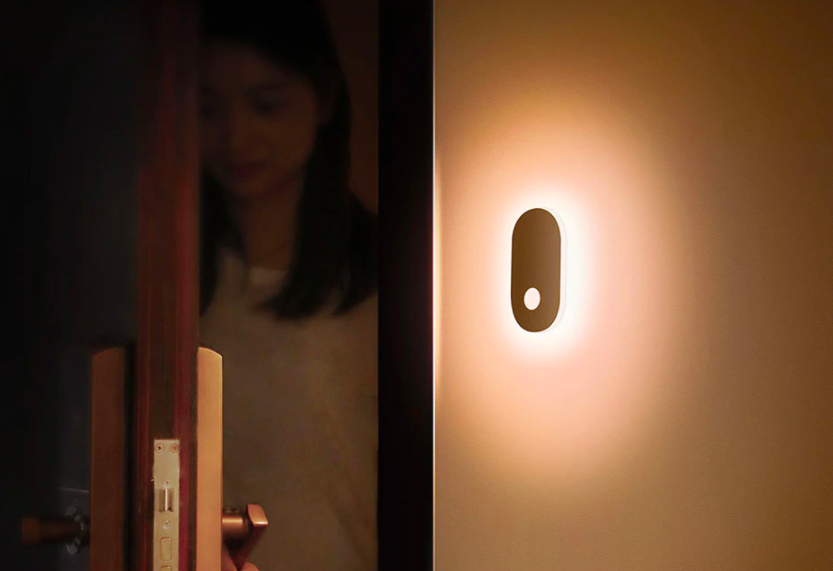
AliExpress is giving this amazing deal on the Baseus Sunshine Series Human Body Induction entrance light. The PIR sensor-enabled light which usually retails for $25 is now available for $15.78 only.
Baseus has designed the ultimate entrance light by combining the dual technology of PIR and Human Body Induction. As soon as you open the door, this entrance lamp greets you with warm and cozy light and the specific backlighting design cuts off any direct light thereby protecting your eyes from a sudden bright and dazzling glare. The dual induction technology brings you a highly accurate sensor that lights up the lamp as soon as you open the door.
A low-power-consuming design combined with a large battery gives you almost 5 months of charge on induction mode. Thereafter you can quickly charge the lamp using a USB plug. The lamp is not directly mounted on the wall but instead firmly attached to a custom-made magnetic base which means you can easily remove the light at will and carry it around as per your need.
Though designed to be used as an entrance light, Baseus Sunshine Series Human Body Induction light can be easily used as a night lamp as it gives you a warm yet dim light, perfect for your bedside, bathroom, or even aisle use.
For a limited period, AliExpress is selling this light for a discounted price of $15.78.The light is available in two variants viz: Natural light and White light and comes with free shipping to the US when ordered from the China Warehouse. Additional new user coupon is also available on this device. So go grab this amazing deal before it expires.
Ever since Lenovo bought Motorola, we haven’t really come across a smartphone that was both powerful and exciting for regular consumers. Especially in China, we have been waiting for an interesting model for a while. But this year, that wait ended with the launch of the new Motorola Edge S. As the first Snapdragon 870 smartphone, the brand is trying to regain its footing in the mobile industry. So let’s see how good the Motorola Edge S in real life.
Motorola Edge S Review: Box Contents
Although it comes in a compact box, Motorola has, thankfully, decided to still include a charger and cable inside the box. It is worth mentioning that the Edge S’ case did not come separately in the box, rather it was already installed on the phone. I guess this should be the secret of how it is possible to make the box so small when there is a charger included.
Motorola Edge S Review: Design
If there was one word to describe the hands-on experience, it would be “Rough”.
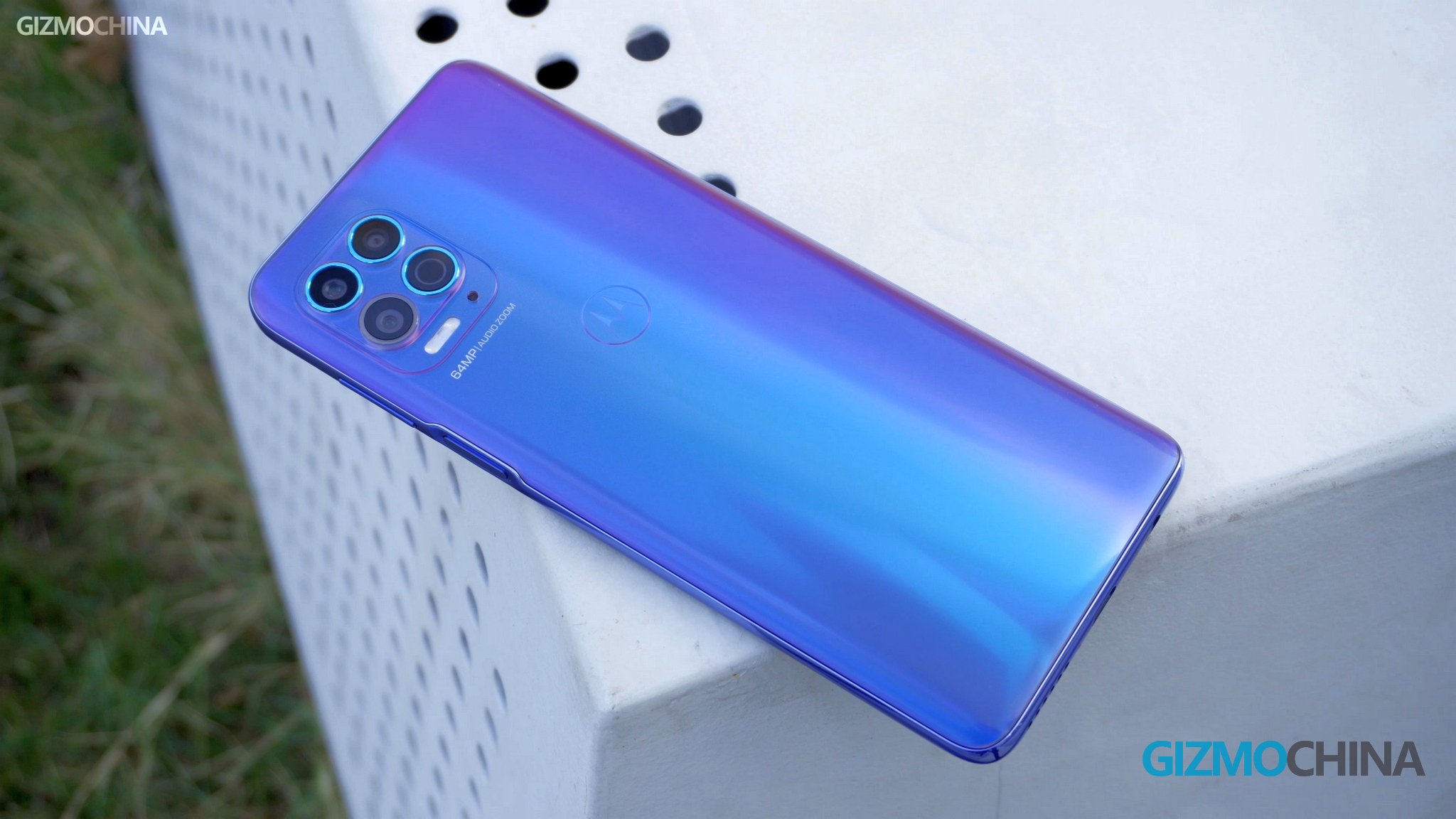
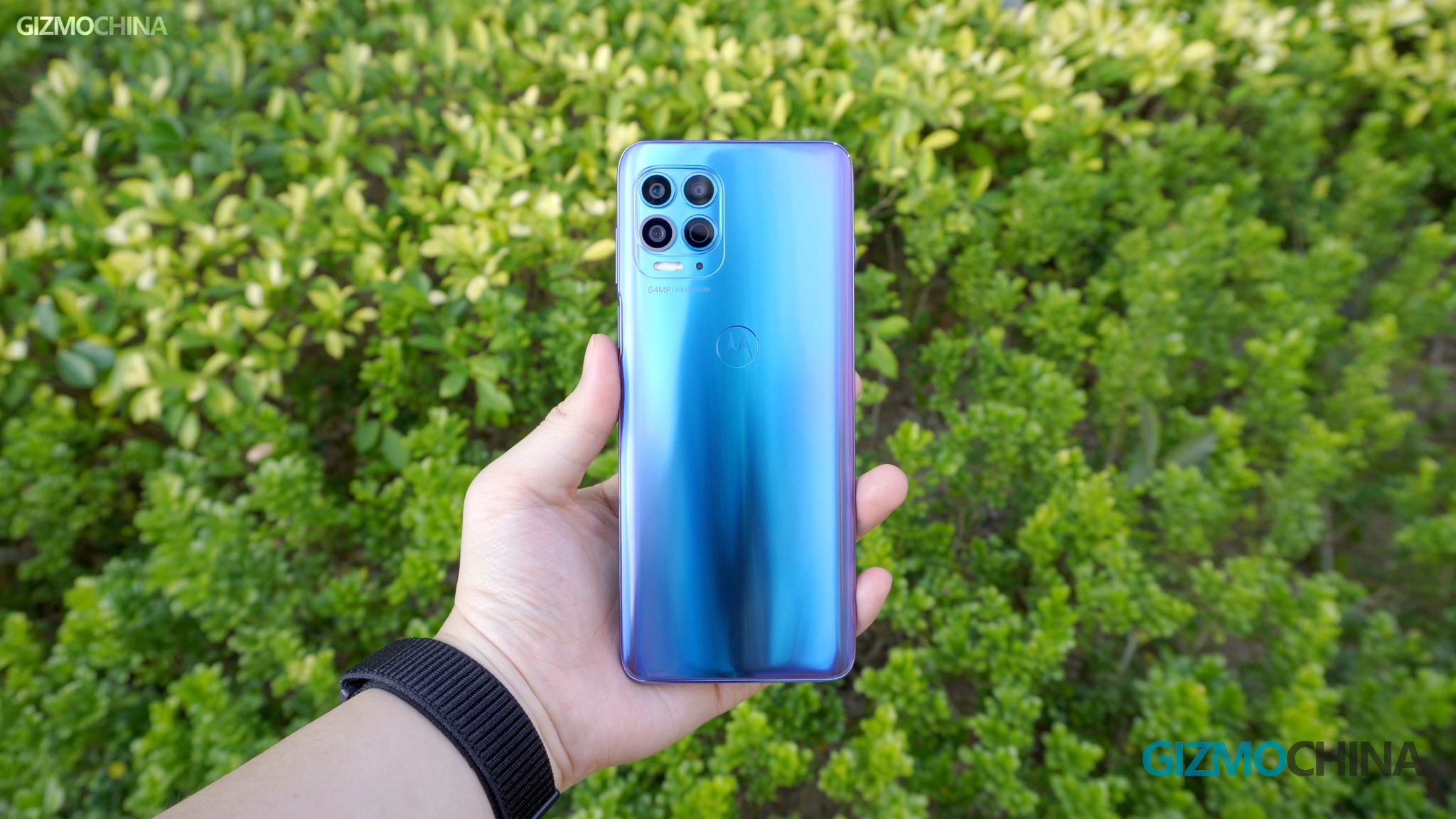
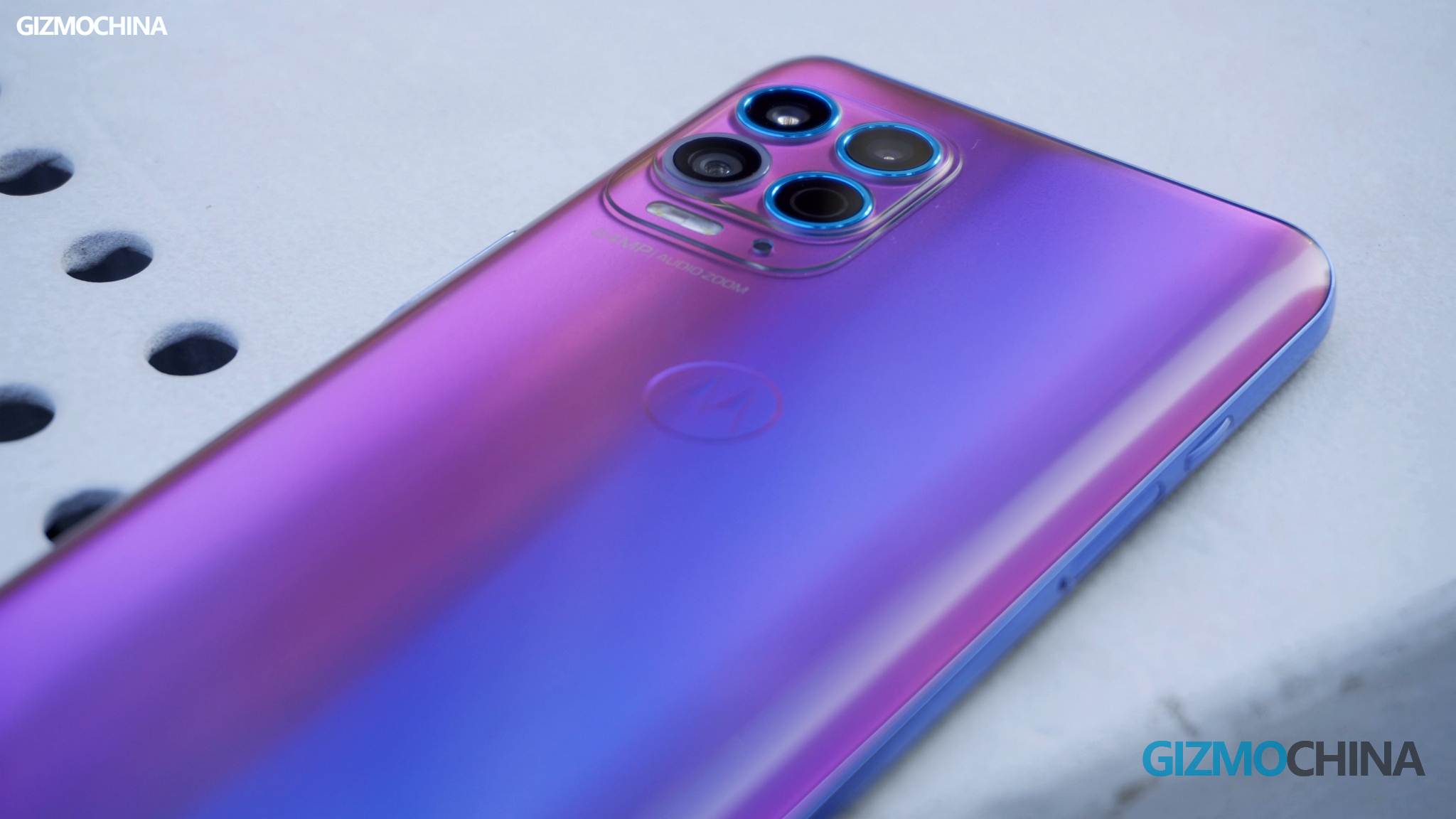
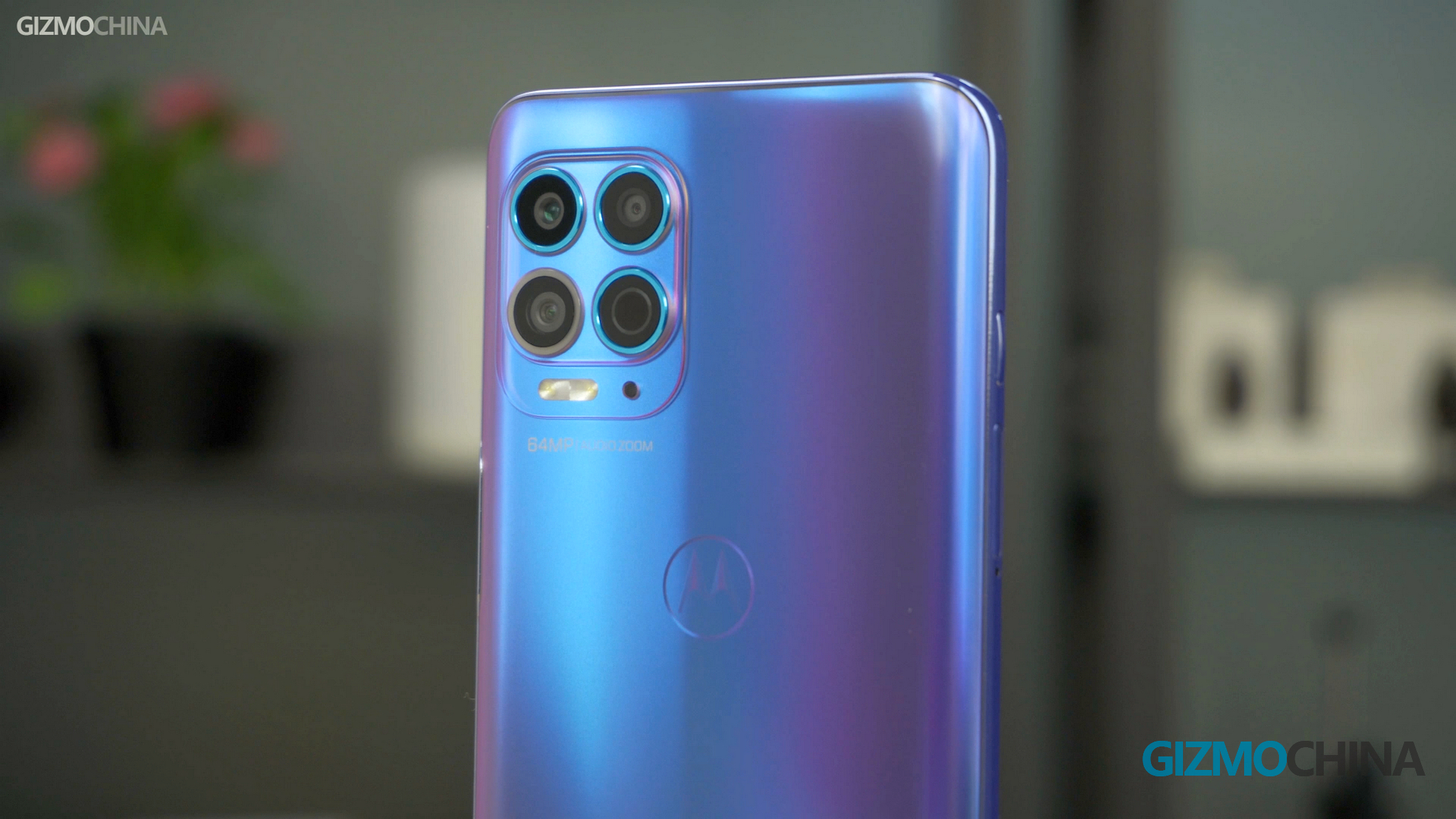
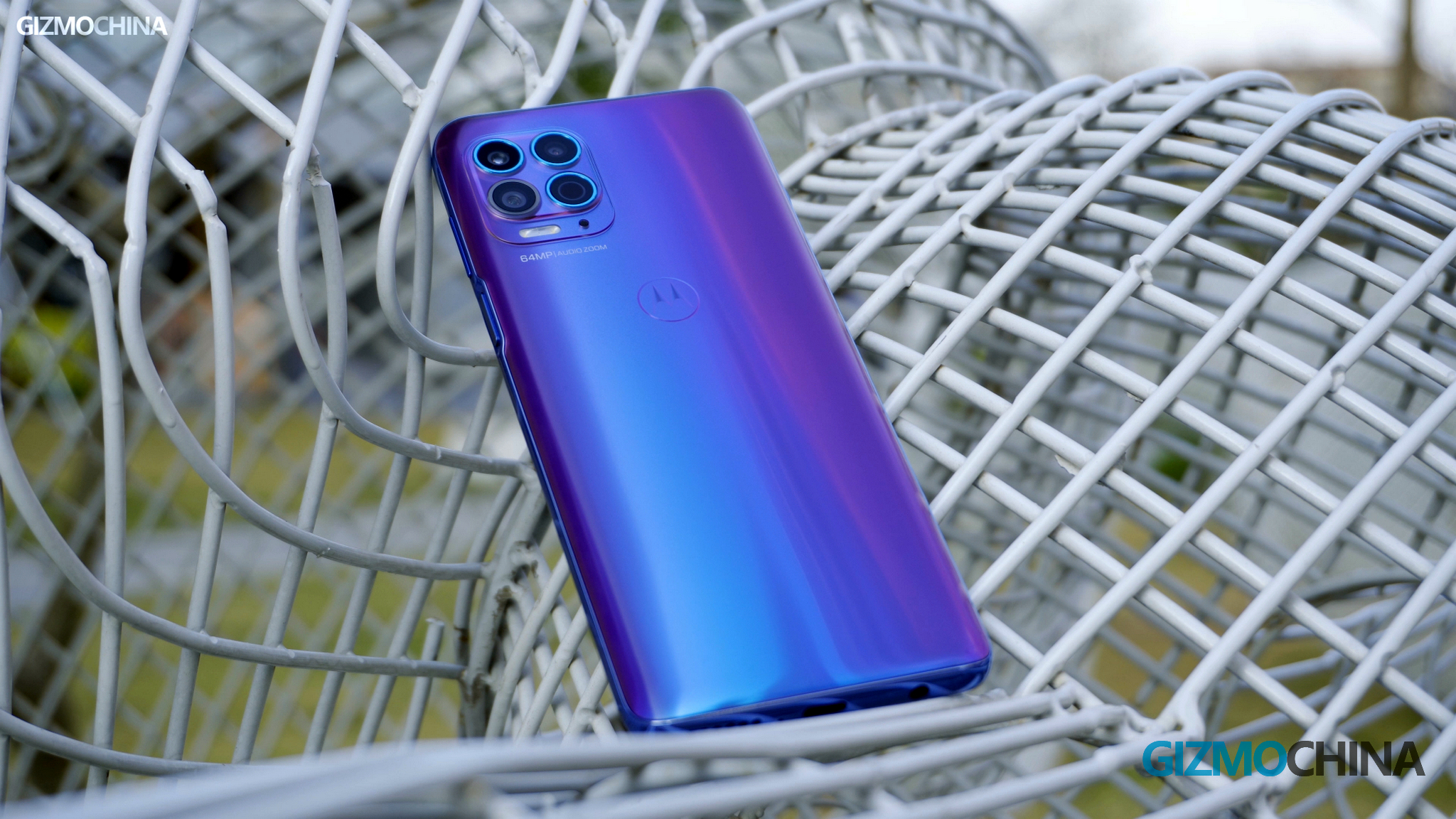
The phone weighs 215 grams and is 9.69mm thick. Add a 6.7″ screen to this and the phone feels very bulky. The good thing is that the screen aspect ratio is 21:9, so it’s not particularly hard to grip. On the front, you’ll find a 1080p dual hole-punch screen with a 90hz refresh rate. It is rare that the two holes are not combined into one oval shape. The back cover reflects purple or blue light when viewed at different angles. It looks like glass but is actually plastic. There is a fingerprint sensor on the side and even a headphone jack, which was surprising.
And there is an additional multifunction button. It can be customized to open programs with one click. Double tapping on the fingerprint sensor can also trigger a similar function.
However, some details of the Edge S are not quite good enough. For example, the screen protector is smaller than the screen size, resulting in the edges not being covered. There is almost no oleophobic layer on the screen and back cover. So the entire phone will be covered in fingerprints after a few hours of handling, which makes the display very shabby. The top and bottom bezels are also very wide.
Yes, I agree it retails for a cheap price tag but there are plenty of phones in its price range that are more refined than this. Unfortunately, if you are someone who wants a phone that feels premium, the Edge S may not live up to your expectations.
That said, I know that users who actually get this phone will be for its processor. This year’s Snapdragon 888 was too powerful resulting in overheating issues.
So can the Edge S with Snapdragon 870 give us a satisfactory performance?
Motorola Edge S Review: Snapdragon 870 Gaming & Performance
On Antutu Benchmark the phone scored a respectable 640,000 while in 3DMARK it got around 4900. Compared to the Mi 11’s Snapdragon 888 the gap is still very obvious. But Benchmark tests only show their peak performance, and gaming is the only real way to check the true level of sustained performance output for a smartphone.
So let’s play some games on the device.
PUBG naturally goes without saying, ran almost always at 60 fps. Genshin Impact was better optimized for the Snapdragon 888 chip after a recent update. We compare this to the re-tested Mi 11. The Edge S has an average frame rate of only 47 fps. Whereas the Mi 11 can reach 53 fps.
The Edge S averaged 48 fps in BrightRidge while the Mi 11 averaged 52 fps. So there is a visible difference in performance in terms of numbers. But in terms of real-world experience, the Snapdragon 870 still has the edge. The Snapdragon 888’s frame rate plummets when it overheats, which can be noticeably felt. But the Snapdragon 870 is largely immune to this phenomenon.
And the Edge S tops out at around 50°C. However, the Mi 11 can reach up to 55°C. It’s already hard to hold the phone when you are gaming. So if the Edge S is used as a phone dedicated to gaming, I think it’s still good.
Motorola Edge S Review: Camera
Main Camera
Next, we put the focus on the Camera system of the Motorola Edge S. Let’s start with the Edge S’ camera setup. The four rear cameras consist of a 64mp main camera, a 16MP ultra-wide-angle lens, a 2MP portrait depth of field lens, and a TOF lens. The daytime performance of the main camera is relatively good, with natural colors. Apart from the highlights and purple-fringing issue, which were not so well controlled, the camera quality was quite satisfactory for a phone at this price point.
Night Camera Samples
The nighttime performance is not as good as the daytime. Highlights overflow, details in dark are lost and noise is noticeable. Turning on night mode only improves the exposure imbalance, but the other shortcomings remain the same.
64MP Mode
At night, it’s fine for recording. But note that you can’t expect much from its video performance in low light. We also tested the Ultra-Resolution mode. This mode outputs 64MP photos. But the difference in sharpness compared to the straight-out 16MP photos is not very noticeable.
Ultra Wide Camera
The ultra-wide camera performs similarly when compared to the main camera, although the purple-fringing issue is much worse in the daytime. In low light, the performance of the ultra-wide camera is worse than the main camera, and there is no night mode for the ultra-wide camera. So it’s best to stick to brighter places if you want to take pictures with an ultra-wide camera.
Macro Camera
The ultra-wide camera can also take macro photos. The photos are good. But because there is no OIS, you need to keep your hand very steady when you shoot.
Motorola Edge S Review: Battery
The back cover is made of plastic, so you must be wondering why the phone is still so heavy? The reason is that it comes with a huge 5000mAh battery. But the battery life is not just about battery capacity, it’s also about optimizations. One hour of 1080p internet video consumes 14%, one hour of web browsing consumes 11%, half an hour of Genshin Impact consumes 12% and 20 minutes of BrightRidge consumes 13%. A day without charging should not be a problem.
However, the maximum charging power is limited to 20 Watts. You only get 37% charge in half an hour and 68% in one hour. A full charge takes close to two hours, which is a long time of waiting. If you forget to charge it before going to bed, it’s still a pain to get the Edge S completely charged.
Motorola Edge S Review: Verdict
So after looking at all the configurations, do you think the Motorola Edge S is worth buying?
Well, it’s not great in a lot of areas. But with the Snapdragon 870 and 5000mah battery, and a very cost-effective price, it makes for an excellent gaming smartphone. If you’re on a budget and want a gaming phone, you should definitely consider it.
The launch of the Meizu 18 series is just around the corner. The device is set to launch tomorrow (3rd March 2021) and the company just released new teaser for its upcoming flagship earlier today (2nd March 2021).
In the new teaser, the Chinese smartphone maker showcases its devices camera system. The Meizu 18 features SMA (shape memory alloy motor) optical image stabilization, which is similar to the one found in the Huawei Mate 30 Pro and P40 Pro flagships. This OIS system is designed for smartphones with multiple camera system. Its a compact OIS system, which is helpful in saving internal space in smartphones.
Furthermore, the company also teased the sensor on its high end Pro variant as well. The Meizu 18 Pro will arrives with the Samsung GN1 50 megapixel image sensor, which arrives with various optimization for low light photography. The new sensor supports Dual PD and Tetracell technology with 1.2μm pixels and a pixel size of 1/1.3 inch. It is also capable of quad binning to output images in 12.5 megapixel, making a single pixel 2.4μm.
While the new lineup launches tomorrow, a few specifications have been already been leaked. The 18 Pro will be featuring a 6.2-inch curved edge OLED display with a punch-hole placed at the top-center. It is likely to support a Full HD+ resolution. On the other side, the Meizu 18 Pro could be housing a larger screen with a QHD+ resolution and a 120Hzz refresh rate support. Under the hood, it will house the Snapdragon 888 mobile platform, LPDDR5 RAM, and UFS 3.1 storage.
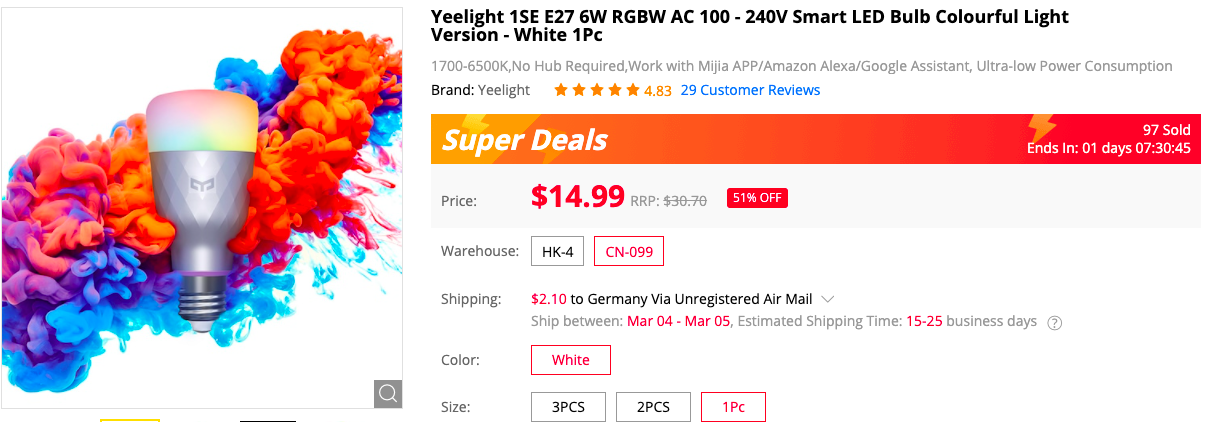
Gearbest is giving out this fantastic deal on Yeelight 1SE Smart LED Bulb. This smart bulb which usually retails at $20 is now available at Gearbest for $14.99 only.
Yeelight 1SE Smart LED Bulb is a one-stop solution for your lighting needs. The 6W compact bulb comes with 16 million color options and a color temperature adjustment function. This means you will always find a color that suits your mood and the smart bulb can adjust the texture and temperature of your light thereby creating different environments as per your need. For eg: The cool bright white light can be used for studying or work and the warm yellow light with its different tones can be used to set up a cozy and relaxing evening environment.
The advanced voice control function enables you to switch on and off the bulb from the comfort of your seat. All you need is a Google Assistant, Alexa, Samsung Smart Things, or Mijia App. The smart bulb is compatible with all of the above devices and can be controlled with a simple voice command.
Another cool function is the color picking ability wherein when you point the scanner ( from the app) to a particular object, the bulb changes its color to that of the object, in real-time. This means you can easily change your smart bulb color to match your background by simply pointing at any background object. Additional features like the music sync function and the moonlight mode for your sleep make this smart bulb a must for your home.
The low-power-consuming Yeelight 1SE Smart LED Bulb usually retails at $20. But only for the next 30 hours, Gearbest is giving this smart bulb at $14.99. This offer is applicable only on shipments from China Warehouse and additional shipping charges may be applicable.
So order your smart bulb before the offer expires.
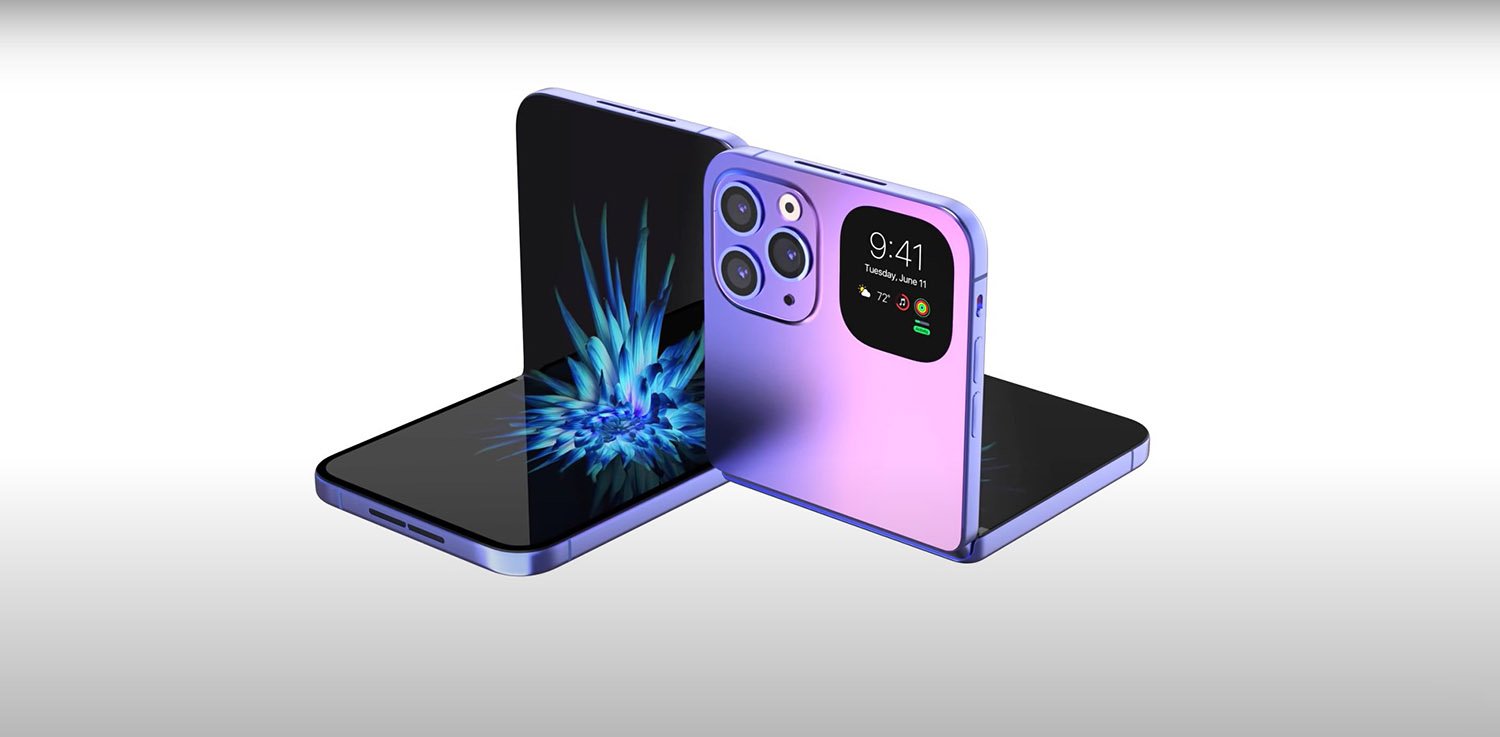
Apple has been rumored to be working on a foldable iPhone for months. Now, a new note known analyst Ming-Chi Kuo has stated that the company might be launching such a device by 2023.
According to a 9To5Macreport, the analyst also added that this foldable iPhone from the Cupertino based giant could launch along with the 2023 iPhone lineup and may feature a display size of “7.5 to 8 inches.” Previously, it was rumored that the company might be launching its first foldable handset in 2022, while another report stated that work has already began but the company has yet to decide on an official release schedule.
Furthermore, Kuo also made predictions for Apple iPhones. Apparently, the first truly full screen iPhone with no notch would also appear during this time. Although, this forecast is also heavily tied with whether Apple’s “development goes smoothly.” However, Kuo states that the company could launch its first iPhone without a notch or punch hole by 2023. This could also mean that we may even see an in display fingerprint scanner and periscopic camera lens as well.
Kuo also added that Apple might discontinue the iPhone 11 by the end of 2022, and will be replacing the device for a new model that could launch in the first half of 2023 and will be priced under 600 US Dollars. This device could include Face ID and have a similar 11 inch display along with 5G support. Unfortunately, this is still an unconfirmed report, so take it with a pinch of salt and stay tuned for more as we will be providing updates when additional information is available.
According to an EEOreport, a source close to the smartphone chipset industry has stated that there is no extreme shortage of mobile chips for handset manufacturers. In other words, there is not risk of smartphones being out of stock due to shortages in semiconductor supply. Previously, we had reported on chip supply issues affecting chip makers Qualcomm and their supply to OEMs like Realme and Xiaomi. However, it seems that despite supply issues, these brands are still able to manufacture their smartphone offerings.
Earlier this week, Oppo said that its current supply of chips and related raw materials from its supply chain is tight, but with its current inventory, it can still guarantee production of its smartphones. As per the source, the market condition at the moment has various components of SoCs (Systems on Chip) also being in short supply, including the main chip, the RF, power, Bluetooth, and other crucial components of the processor.
Meanwhile, Huawei, which is the largest smartphone maker in China, has been seeing a sharp decline in the market share within its home country. This is primarily due to US sanctions that have cut out its chip supply, causing rival Chinese brands fighting to steal its market share in China. Unfortunately, the global chip shortage is expected to last till at least the second half of the year and could likely also stretch to the next year as well. So stay tuned for more updates.
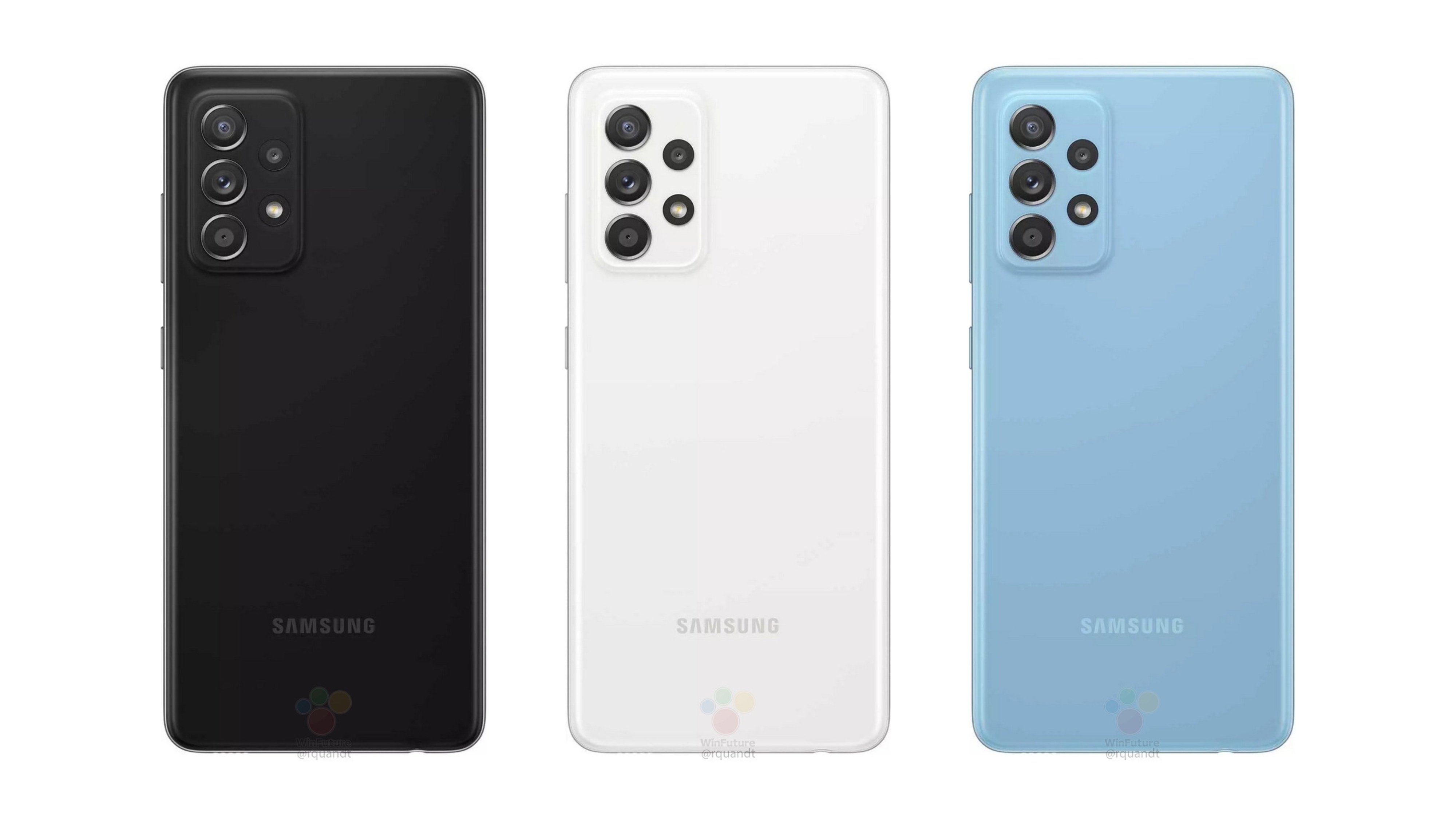
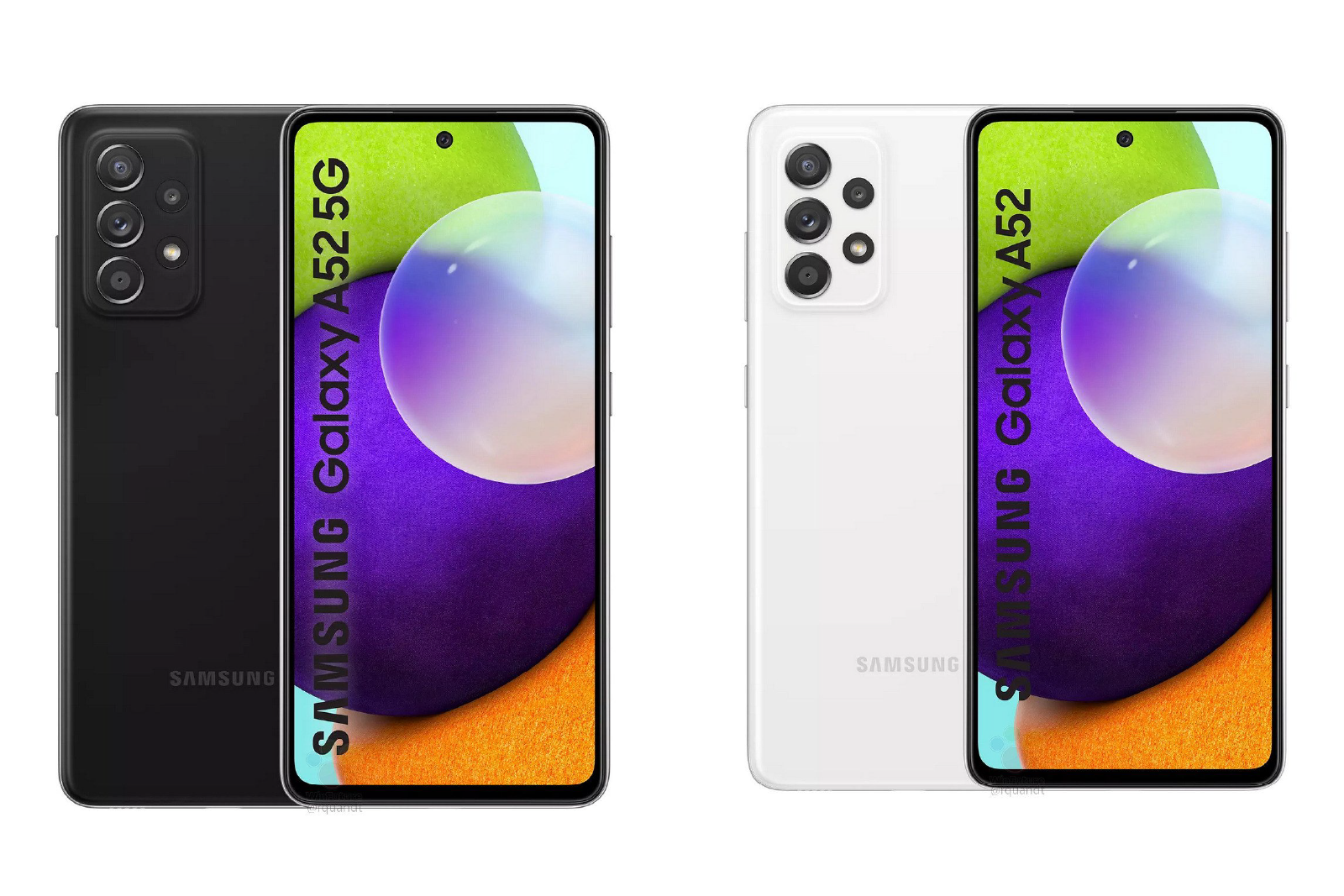
The Galaxy A52 and the Galaxy A72 are probably the most leaked smartphones of 2021 so far. We know everything about these Samsung mid-range smartphones ahead of their official announcement. This includes specs, design, and pricing too. Now, once again, the camera and display specs of Galaxy A52 leak but in more detail.
When Roland Quandt of WinFuture shared the spec sheet and renders of Galaxy A52 and Galaxy A52 5G last month, he did not go into detail about the display and camera parameters of these handsets. Hence, he has now revealed those missing data on Twitter.
According to him, the standard 4G version of the device will flaunt a 90Hz screen, whereas the 5G model will be equipped with a 120Hz panel. However, the FHD+ (2400 x 1080 pixels) Super AMOLED display on both will measure 6.5-inch and will feature a peak brightness level of 800 nits.
Talking about optics, the duo will sport a quad-camera setup on the back. The primary sensor will be of 64 megapixels with a pixel size of 0.8 µm, 81° lens, and OIS (Optical Image Stabilization). For those unaware, the presence of OIS in select 2021 Galaxy A series smartphones was first reported in July 2020.
Further, the setup will include an 8MP sensor with 1.12 µm pixel size as well as a 123° ultra-wide-angle lens, and two 5MP sensors with 1.12 µm pixel size but with a 78° macro lens and an 85° lens (depth) respectively.
As far as other specifications are concerned, the 4G variant will be powered by Qualcomm Snapdragon 720G SoC while the 5G version will come with Qualcomm Snapdragon 750G chipset. The duo will feature 6GB/8GB RAM, 128GB/256GB internal storage, 32MP selfie camera, IP67 certification, 3.5mm headphone jack, MicroSD card slot, NFC, Android 11 (One UI 3.x), 4,500mAh battery, and 25W fast charging.
Last but not least, the Galaxy A52 will be available in four colors ( Awesome White, Awesome Black, Awesome Blue, Awesome Violet) and will start at €349 and €429 for 4G and 5G variants respectively.
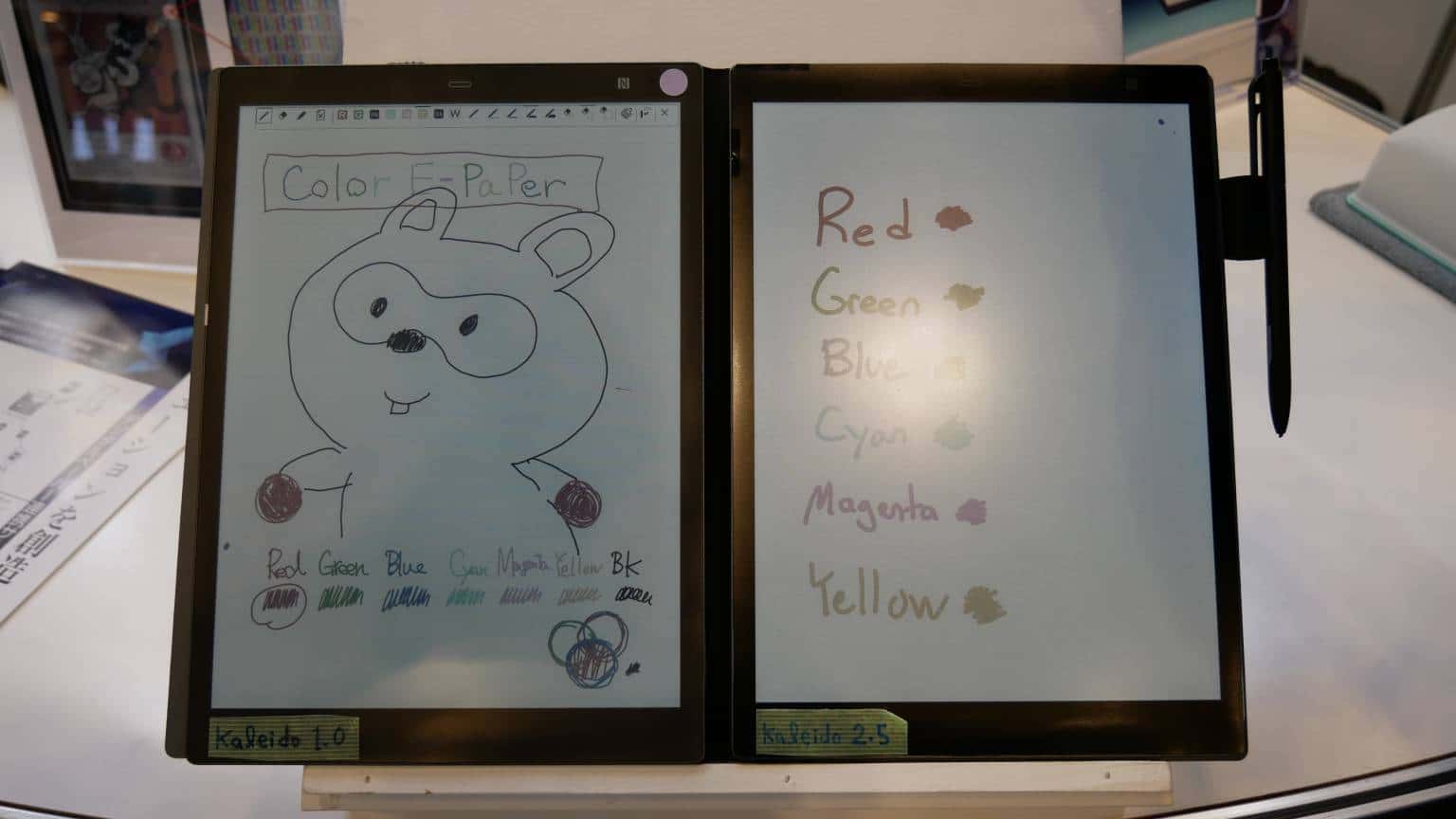
Sony has unveiled a new digital paper color dubbed Sony Digital Paper DPT-CP1 Version 2. The device is a digital note-taking device that has a coloured display instead of the traditional e-ink screen. This is n’t tthe first of suchbut is a second version and it deploys E INK Kaleido 2.5, which is a new technology that Sony is yet to announce.
The new display technology brings the color filter array closer to the e-paper display. This results in richer and deeper colors. The diisplay is also touted to be the first of such products that utilizes E INK Carta 1250, a faster ink which speeds up flipping through pages and accelerates the pen input.
In terms of the main hardware, the Sony Digital Paper DPT-CP1 Color version 2 packs a 10.3-inch E INK Carta 1250 and e-ink Kaleido 2.5 color filter array. The B&W resolution is 1404 x 1872 at 227 PPI but the colour resolution has not been revealed as well as the parts per pixel. With the previous gen Kaleido 2, a screen is capable of displaying 4,096 colors at 100 PPI and so, this should be an improved version.
The device also comes with a new WACOM layer which is compatible with almost all Wacom pen in the market. This is an imrovement over the previous model which has a custom pen that charges via microUSB.
Under the hood, the Sony Digital Paper is powered by a Cortex A53 Quad-core 1.8 GHZ processor. The device comes with 32GB of internal storage, a USB-C port, and Bluetooth 5.0. It runs Android 9.0 Pie out of the box which isn’t bad by e-book standards. There are some customized apps onbard but you can’t sideload other apps. The Digital Paper also comes with an internet browser, so you can surf the web, check email or read news websites. The browser is the standard webkit-based one which gives users control over images and javascript.
Sony is yet to disclose details of the pricing and availability. The product will first be released in Japan.
The ASUS ROG Phone 5 is set to launch on 10th March 2021 and will be the latest flagship gaming device from the company. And now, it has just been spotted on Geekbench revealing its sizeable 18GB of RAM.
According to a MySmartPricereport, the ROG Phone 5 was spotted on the popular benchmarking platform, where its massive RAM offering was revealed. At the moment, the device is expected to launch across the globe in various markets, with pre orders already beginning in China, through JD.com. Although, the listing on the Chinese website does not reveal any finer details regarding the upcoming gaming smartphone.
However, it is known that the ROG Phone 5 will feature Qualcomm’s high end Snapdragon 888 SoC. Looking at the scores, the device scores 1,113 points in single core and 3,468 poitns in multi core tests. Furthermore, this listing also reveals that it would house 18GB of RAM under the hood, running Android 11 OS out of the box. As per previous reports, the device will sport a 6.7 inch FHD+ display with a minimum of 12GB of RAM and 128GB of internal storage.
Additionally, it is also expected to launch in a 16GB RAM variant as well, along with 256GB of internal storage. The ASUS ROG Phone 5 will be powered by a large 6,000mAh battery pack. Unfortunately, we will have to wait for an official company announcement to know for sure. So stay tuned for more, as we will be covering the launch and offer updates when additional information was available.
The rumor mill has already leaked a lot of information about the Xiaomi Redmi Note 10 smartphone. The vanilla model will feature a 6.43-inch AMOLED screen, Snapdragon 678 chipset, a 5,000mAh battery with 33W fast charging support. An Indian YouTuber Sistech Banna has now shared a retail box image of the Redmi Note 10 Pro. The plastic film on the device has revealed the key specifications of the smartphone.
The YouTuber claims that he received an image retail box image of the Redmi Note 10 Pro from an unspecified source. The image reveals that the phone has a selfie camera cutout at the top-center position of the display.
As far as specs are concerned, the Note 10 Pro has a 6.53-inch AMOLED screen with Full HD+ resolution support. It is powered by the Snapdragon 732G chipset. The device is packed with a 5,000mAh battery that will carry support for 30W fast charging.
It is still unclear whether the Redmi Note 10 Pro has a 64-megapixel or 108-megapixel quad-camera system. There is a possibility that the 108-megapixel lens could be reserved for the highest model called the Redmi Note 10 Pro Max.
The YouTuber claims that the Redmi Note 10 Pro may also come in a 5G version. It could be powered by Qualcomm’s 5G chip. Other features that are expected to be available on the Note 10 Pro include a 3.5mm audio jack and an IR blaster. It is expected to arrive with sub-Rs 20,000 pricing (~$272). Past reports have revealed that it could be coming in three options such as 6 GB RAM + 64 GB storage, 6 GB RAM + 128 GB storage, and 8 GB RAM + 128 GB storage. It could be coming in colors like blue, black, and bronze. The base model of the device is expected to cost $279.
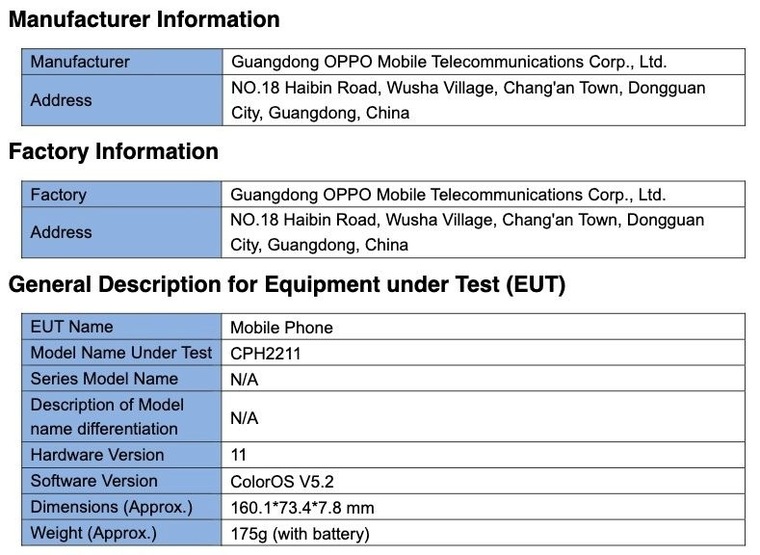
Last year, OPPO launched a smartphone named OPPO Reno4 Z in global markets. Recent reports have revealed that its successor edition dubbed Reno 5Z could be arriving soon. The handset was recently certified by Norway’s NEMKO, Singapore’s IMDA, GCF, and Bluetooth SIG certification platforms. The handset has now received approval from the FCC authority of the US (via. Simran Pal).
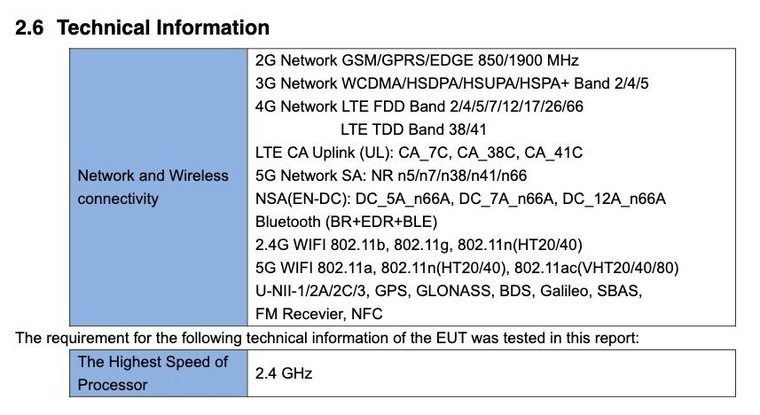
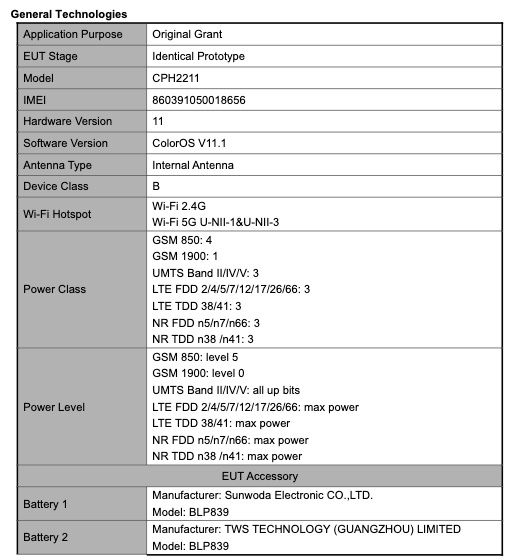
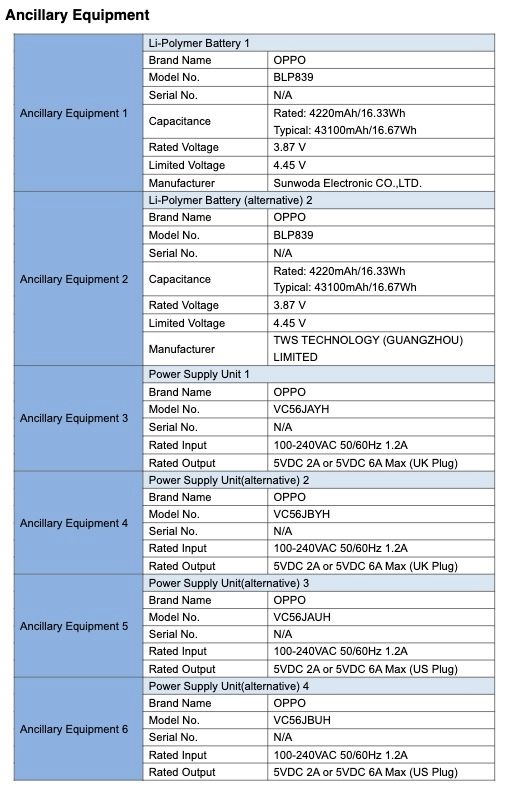
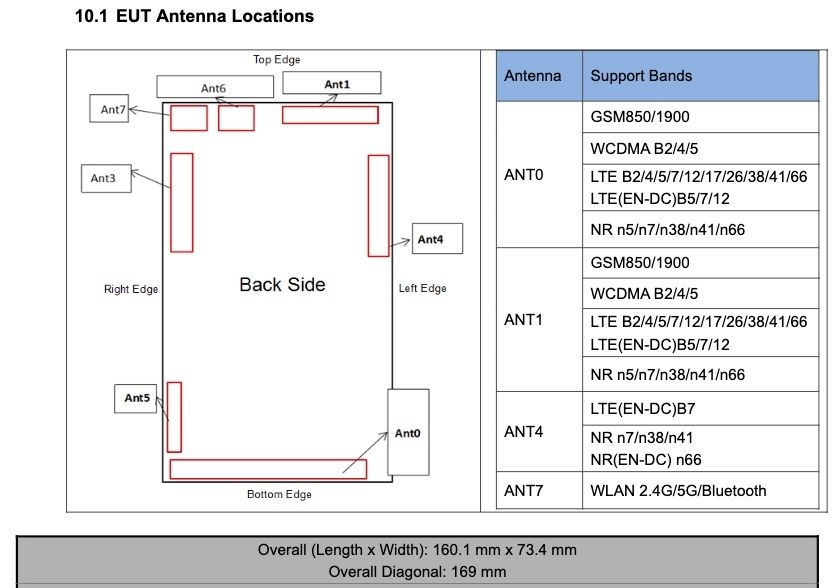
The Reno 5Z has appeared with its CPH2211 model number at FCC. The listing reveals that it measures 160. 1 x 73.4 x 7.8mm and it weighs 175 grams with the battery. Speaking of battery, the FCC documents mention that the device is powered by a 4,220mAh battery (model number BLP839). The phone may ship with a VC56JAYH charger that supports up to 30W charging.
1 of 6
OPPO Reno5 Z FCC
OPPO Reno5 Z FCC
OPPO Reno5 Z FCC
OPPO Reno5 Z FCC
OPPO Reno5 Z FCC
OPPO Reno5 Z FCC
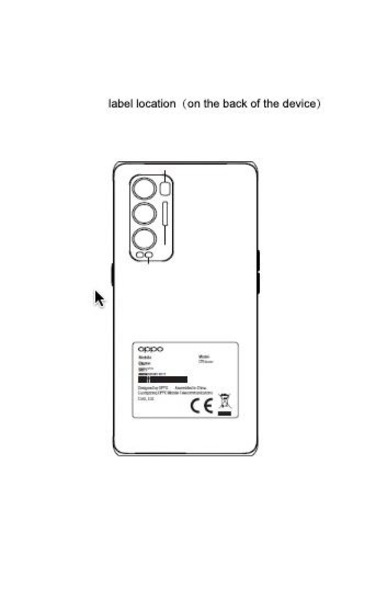
It also states that the Reno5 Z is powered by a 2.4GHz processor. The handset supports dual SIM 5G, Wi-Fi 802.11ac, GPS, NFC, FM receiver, and Bluetooth 5.2. A schematic showcasing the rear side of the device shows that it has a rectangle-shaped camera module that seems to house four cameras, an LED flash, and some other sensors. The specifications of the Reno5 Z are under wraps.
In related news, an OPPO phone with model number CPH2219 was approved by China Quality Certification Center (CQC). It revealed that the device may arrive with support for 33W fast charging.
The handset was also spotted at other certification sites such as Wi-Fi Alliance, BIS (India), TKDN (Indonesia), EEC (Europe), and NBTC (Thailand). The CPH2219 has been approved by the NBTC authority as the OPPO A74 4G. Another phone with model number CPH2197 has been certified as the OPPO A74 5G by the same entity.
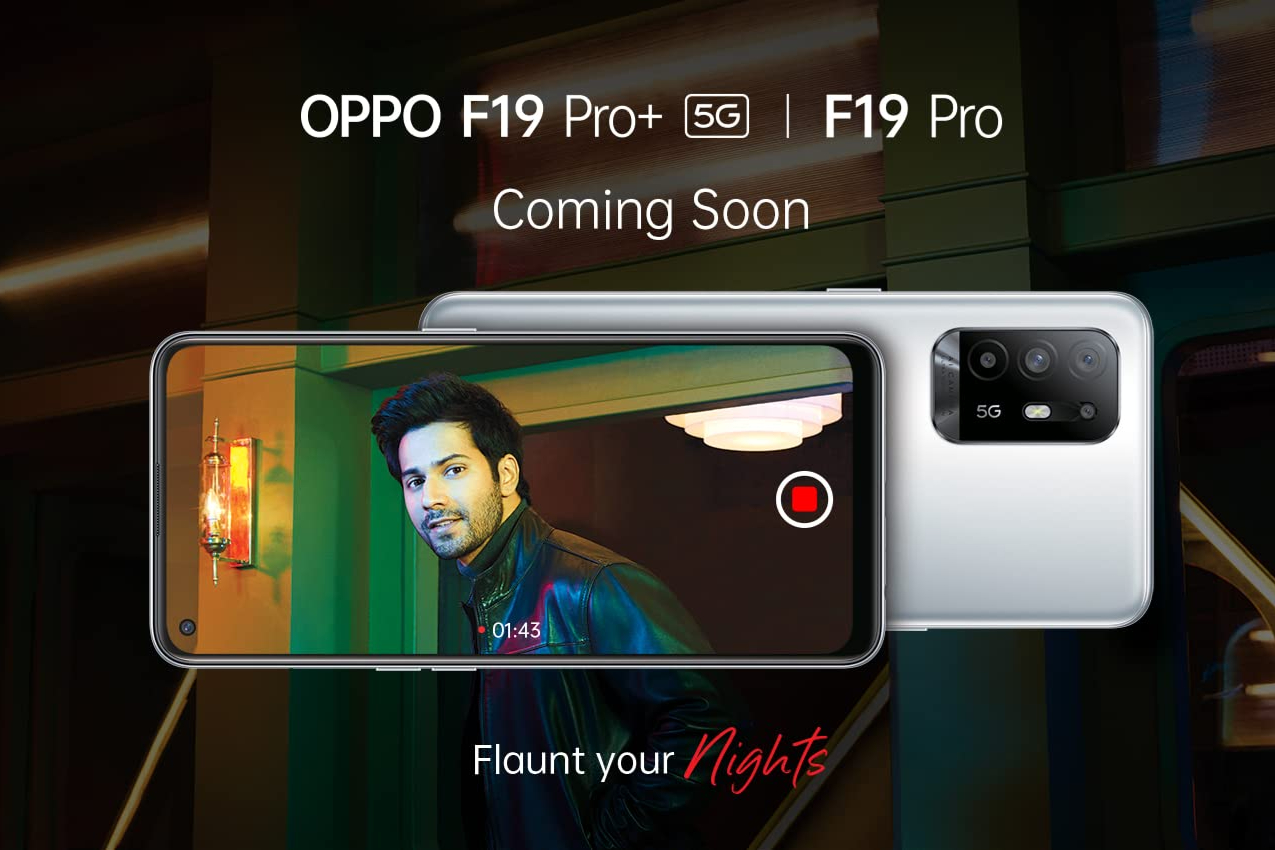
OPPO is confirmed to launch the OPPO F19 series of smartphones very soon. The lineup is expected to include three models, namely OPPO F19, OPPO F19 Pro, and OPPO F19 Pro+ 5G. The design and specs of these handsets have already leaked. Now, the Pro+ device has also been spotted on Geekbench.
Yesterday, a teaser page for the OPPO F19 series went live on Amazon India. At the same time, a tipster spilled out the key specifications of the OPPO F19 Pro and OPPO F19 Pro+ 5G. Today, the same teaser page has been updated with a new picture (above), which suggests that the vanilla OPPO F19 may come later to India.
Coming to the Geekbench listing, which was spotted by 91Mobiles, the OPPO F19 Pro+ 5G will bear the model number CPH2213. The listing reveals the phone to be powered by MediaTek Dimensity 800U SoC paired with 8GB RAM and Android 11. This goes in line with yesterday’s leak.
As far as scores are concerned, the handset can get around 596 points and 1767 points in single-core and multi-core tests respectively.
Talking about other features, the OPPO F19 Pro+ 5G is tipped to arrive with a 6.4-inch FHD+ AMOLED display, 64MP quad-camera setup, 32MP selfie camera, 128GB internal storage, 4,5000mAh battery, and 30W fast charging. Last but not least, the device could cost around ₹25,000 ($341).
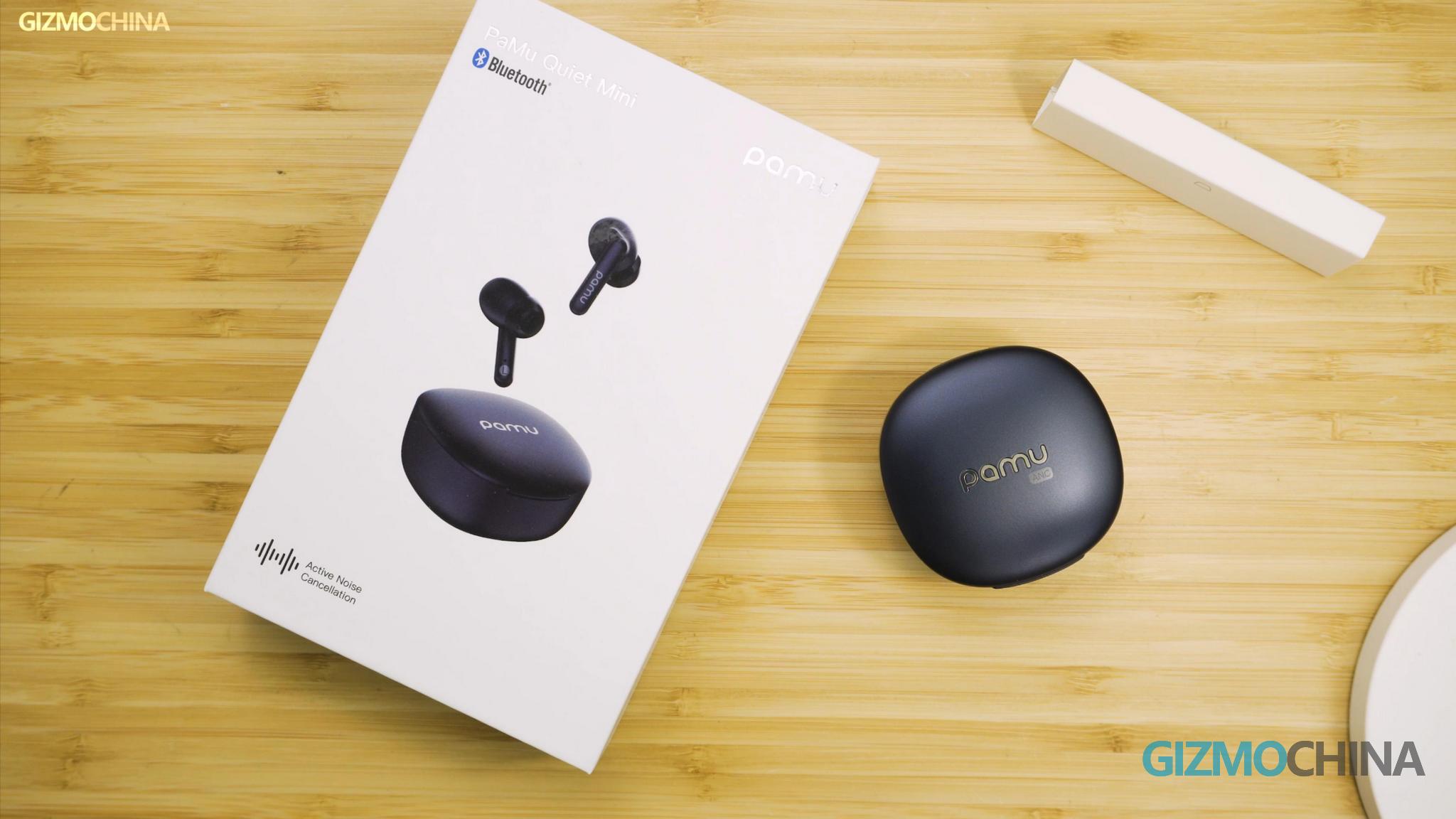
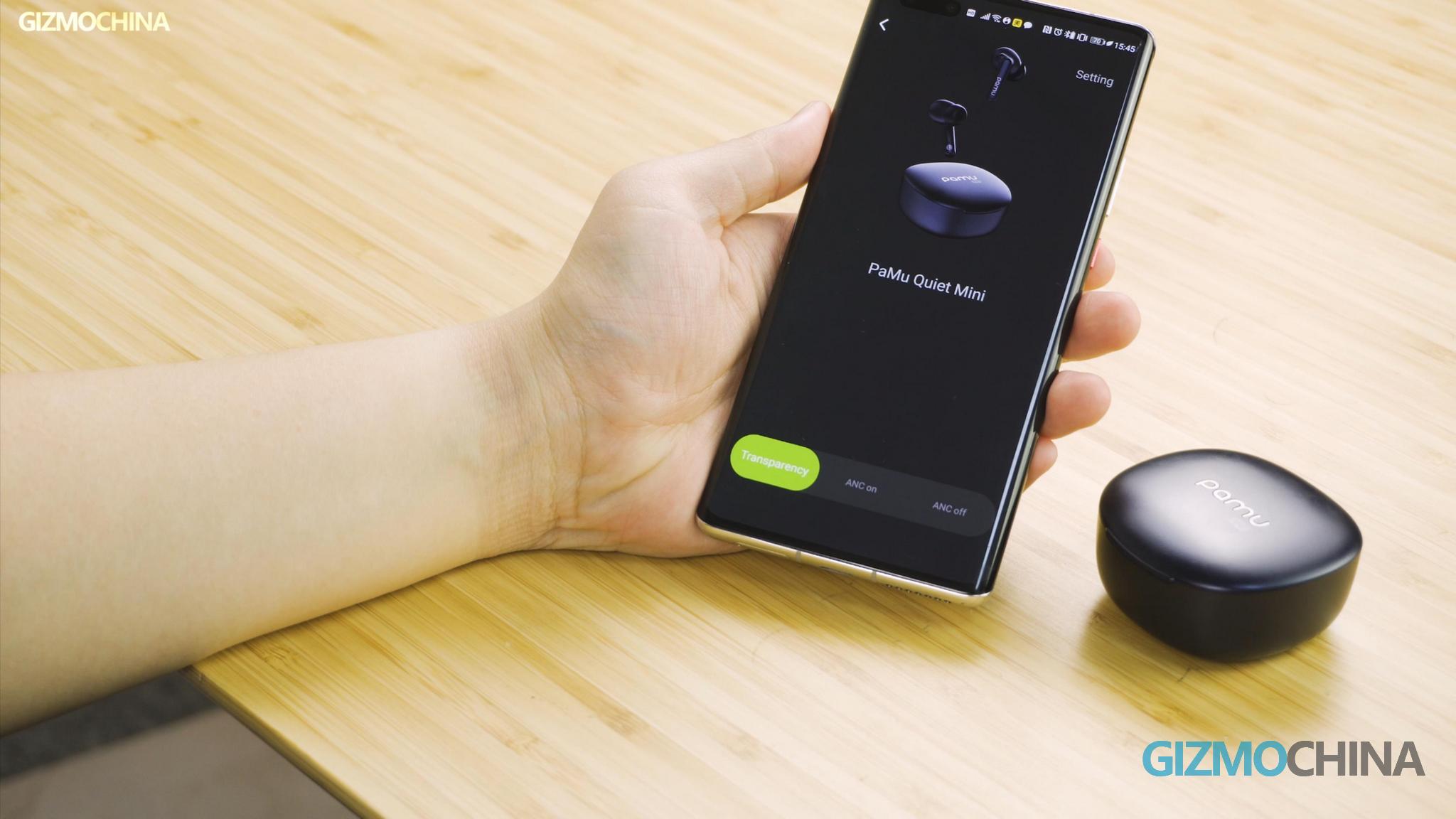
We’ve talked a lot about wireless earbuds in our previous reviews. And today the new buds that we want to share with you is the Pamu Quiet Mini. You may have not heard of the brand Pamu before this. It’s a new company that focuses on affordable performance headsets with good design for the global market. And the first thing that attracts you about the Pamu Quiet Mini is its design.
Pamu Quiet Mini earbuds Review: Design
To be honest, with so many brands focused on bringing out alternatives to the Apple Airpods, it’s hard to differentiate between their products and the Apple earbuds. Therefore, we are glad to have found Pamu, a brand that is not simply copying Apple’s design when it comes to wireless earbuds.
So let’s start with its design. Looking at the Pamu Quiet, it’s quite clear that the lineup focuses on delivering good active-noise-canceling performance with an identifiable design.
The charging case is slightly bigger than other earbuds in the market, but fortunately, it has got good build quality with excellent weight control. Indeed, the charging case is not as ingenious as what we have for the Pamu Quiet standard version, but surprisingly, the mini reserved almost all the essential features from the standard Quiet version and even upgraded it with the Bluetooth 5.2 connection and earbud separated connection.
Coming back to the charging case, once we take out the buds, we can see that the mini also comes with an in-ear design, much like its competitors in the market. Each bud only weighs around 5g, which is almost unperceivable when you wear them even for a long period of time. Besides the default size, Pamu offers 2 more sizes for the ear tips. So once you choose the right tip size, the earbuds will fit your ears pretty well and will guarantee passive noise blocking. Another good detail is that the earbuds support IPX4-rated waterproofing, the same as the AirPods Pro. So wearing it for a sweaty exercise or on a rainy day is pretty safe.
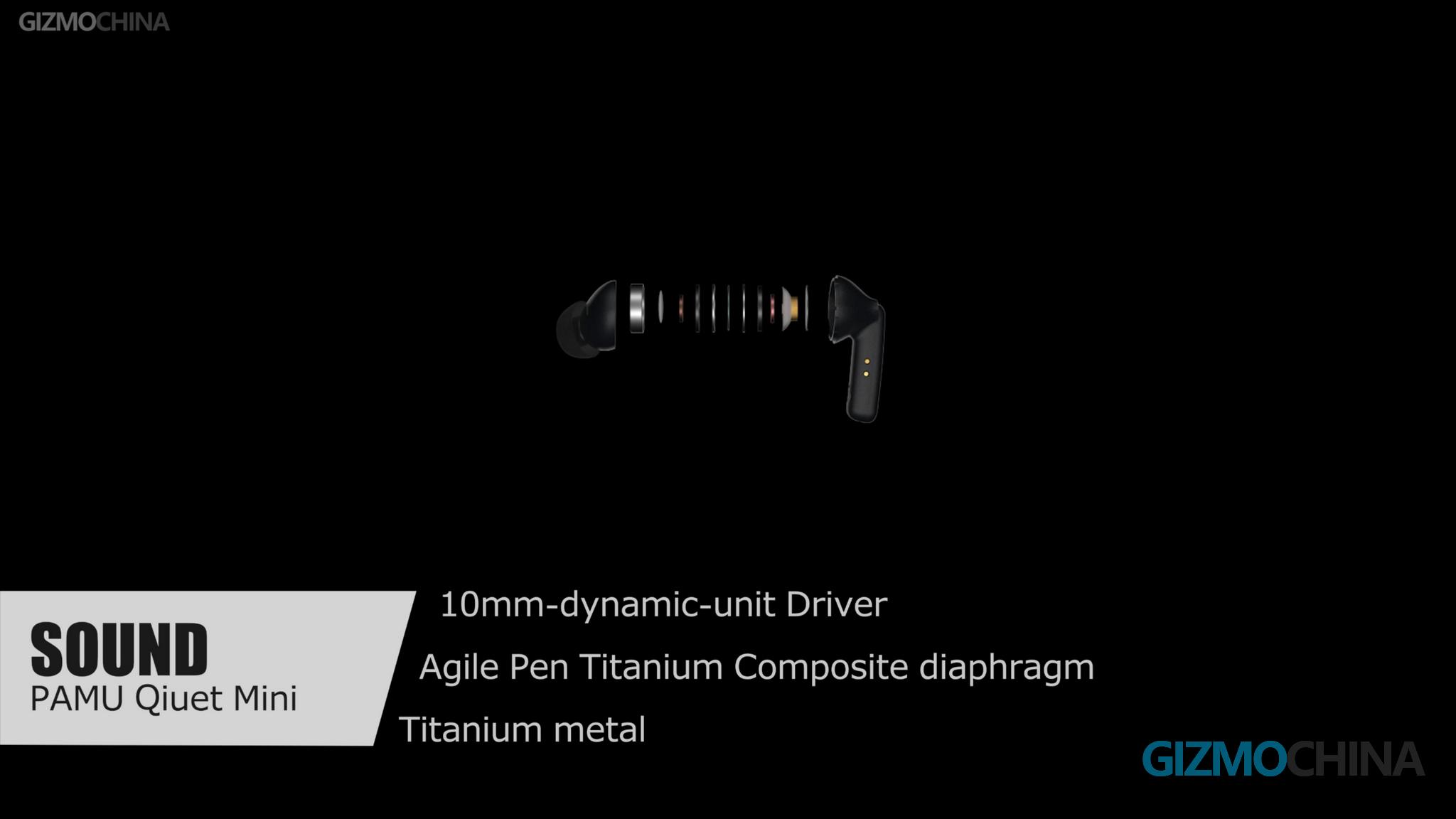
As for the sound quality, the Quiet Mini offers excellent sound output. Each Mini earbud features a 10mm-dynamic-unit driver for enhancing the depth of bass and uses Agile Pen Titanium composite diaphragm for good ductility. And in theory, the titanium metal is also able to produce better sound quality at higher frequencies.
So how does it actually sound?
Pamu Quiet Mini earbuds Review: Sound Quality & Performance
Well, the bass is the part that sounds the most impressive on the Quiet Mini, which is one of the richest and deepest bass that we’ve heard on wireless earbuds. However, the high frequencies are a bit weaker than its performance in the lower end. The buds still surprised us with a good dynamic response and clear gradation in a wide range of frequencies. So generally, it achieves a bright and balanced vibe with a good presentation of instruments, but it may be not so delightful when you focus on the vocals, especially when it comes to a high-pitched female voice. However, we feel the rich bass exceeded our expectations and that kind of set the bar for the high frequencies as well. Overall, I still quite enjoy the sound quality of the Quiet Mini.
Another feature that impressed us was its noise-canceling. To be honest, we are confused as to how a budget wireless earbuds can have such a good noise-canceling effect. Previously, good active noise cancellation was only available on high-end earbuds which cost over 150 USD. However, the Pamu Quiet Mini brings pretty good noise cancellation at only around 60 to 70 USD, which is quite amazing. Pamu claims that the mini reduces noise up to 40dB, which is almost the best figure on paper for most ANC wireless earbuds. In actual tests, the Quiet Mini was capable of handling a wide range of frequencies in most noisy scenarios. After comparison, the de-noised sounds processed by the Quiet Mini is pretty close to what we got on the AirPods Pro. Noticing that the AirPods Pro were much more expensive than the Quiet Mini, such performance from the Mini version is really amazing.
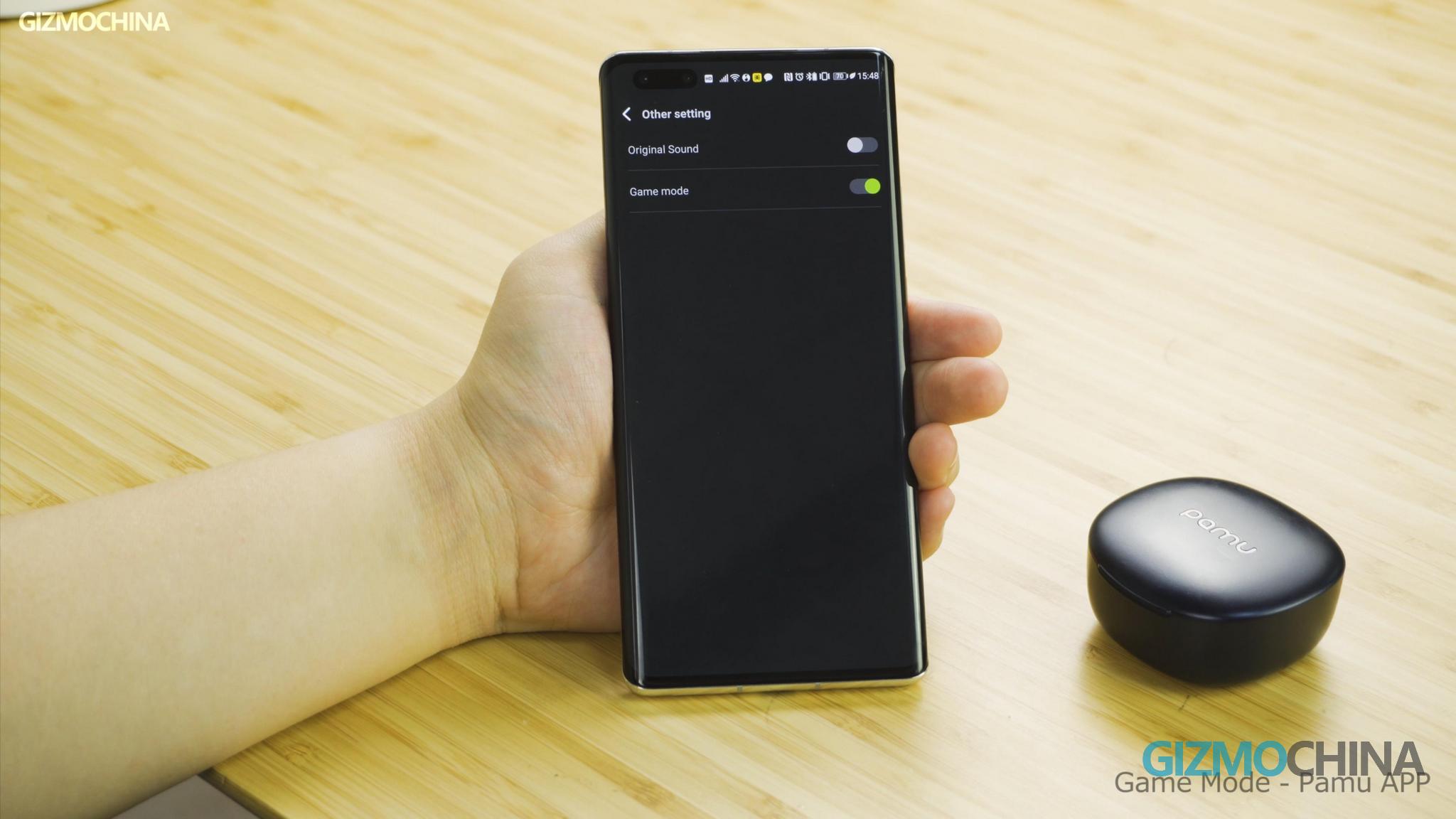
Meanwhile, the Pamu Quiet Mini supports Bluetooth 5.2 connection, which allows the earbuds to deliver sounds with extremely low latency. In actual use, the sound latency was almost unperceivable for us. In addition, Pamu offers a game mode option in their official App, which allows gamers to enjoy immersive gaming sound with a stable connection and extremely low latency. But in the game mode, the sound quality could be affected.
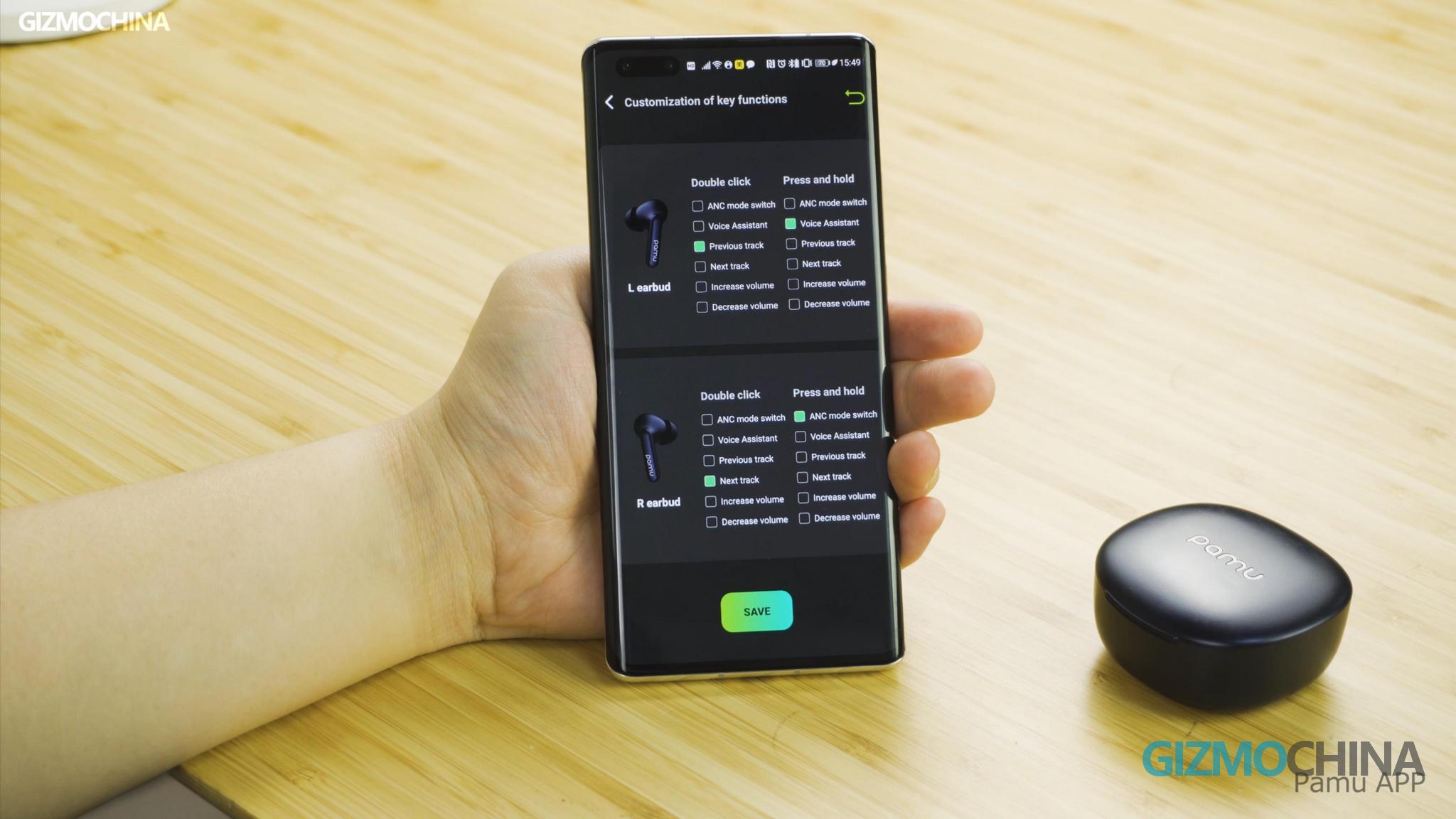
The official app is pretty easy to operate with a very simple interface. You can customize all the buds’ operations on the App and get more information about the earbuds.
Another useful feature is the Dual Master technology. Each bud of the Quiet Mini has independent connectivity and can be used separately, which means that each earbud can connect with two different devices for dual-channel transmission. So if you had issues switching sounds between two devices, it’s definitely going to save you a lot of trouble, as it did for me.
Pamu Quiet Mini earbuds Review: Battery Life
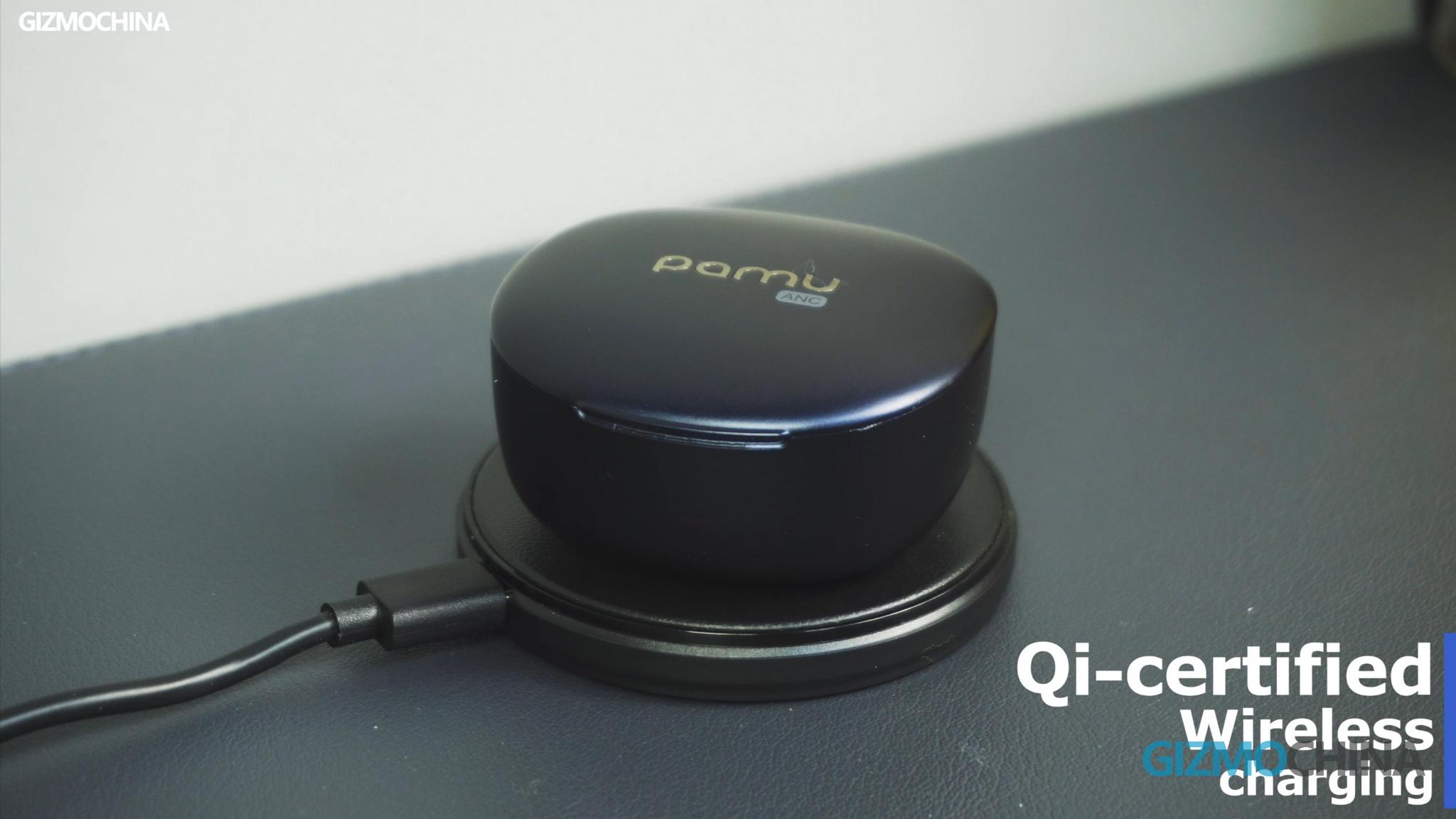
Compared to the Quiet standard version, the Mini also brings better battery performance. The playback time of the Mini can last about 5 hours. And the charging case offers 3 additional full charges for the earbuds. Besides wired charging, the case also supports Qi-certified wireless charging, which is not common for such budget wireless earbuds.
So that’s all about the latest Pamu Quiet Mini earbuds. The Quiet Mini is an impressive option with excellent value, especially considering the price and the performance that it delivers.
So how do you like the Pamu Quiet Mini? If you have any questions or ideas you want to share with us, please leave them down below.
Also, our Samsung Galaxy Buds Pro review will be up very soon. So stay tuned for that in the next couple of days.
Earlier this week, Ni Fei, President of Nubia, shared a new post on his official Weibo account, a Chinese microblogging website, where it showcased its upcoming Red Magic 6 gaming smartphone’s RAM boost technology support.
According to the senior official of the Chinese smartphone maker, the Red Magic 6 will arrive with Magic Write 2.0. This is the company’s fast storage read and write technology and is a part of the Red Magic Arc Reactor performance engine. It combines the Tencent Solar Core game engine along with intelligent scheduling of CPU, GPU, and memory. In simpler terms, the smart optimization of the device’s hardware enables shorted cold starts of mobile games, slashed load times in game, and faster in game click response.
Furthermore, the President of Nubia also added that the RAM boost technology allows the Red Magic 6’s 12GB of RAM to be used “just like 18GB of memory.” In other words, it supports rapid virtual expansion technology that enables the software memory boost. This would further boost the device’s gaming capabilities to offer smoother gameplay experience, faster response time and more. Unfortunately, we are not exactly sure how the company achieves this, but it is likely that it boosting the RAM’s speed to offer higher performance or using its boost engine to perform processes equivalent to a 18GB RAM module.
Talking about the specs of the device, the Red Magic 6 may launch in two versions, Red Magic 6, Red Magic 6 Pro. The devices are expected to arrive with an OLED display with a refresh rate up to 165Hz and a touch sampling rate up to 480MHz. The company is already teasing shoulder touch buttons for gaming. Additionally, it will also sport a Snapdragon 888 chipset with a battery capacity of 4,500mAh and a 120W fast charging under the hood.
Xiaomi India launched the Mi 10T series in October as its cheapest flagship smartphone series of 2020. The lineup consists of three models, namely Mi 10T, Mi 10T Pro, and Mi 10T Lite. But the company only brought the former two to its largest market outside China. Now, a little over four months after their debut in the country, the vanilla Mi 10T gets its first permanent price cut.
The Chinese smartphone maker Xiaomi released the Mi 10T in India in two storage configurations – 6GB + 128GB and 8GB + 128GB. These variants were priced at ₹35,999 and ₹37,999 respectively.
With the new ₹3,000 price drop, the Mi 10T can be now purchased for either ₹32,999 or ₹34,999 respectively. Interested customers can get it in Cosmic Black or Lunar Silver color option from online as well as offline channels. Buyers can even make use of available bank offers to further lower the price.
Talking about the specs, the Mi 10T features a 6.67-inch 144HZ FHD+ LCD panel with a centered punch-hole, Qualcomm Snapdragon 865 SoC, LPDDR5 RAM, UFS 3.1 storage, 64MP (wide) + 13MP (ultra-wide) + 5MP (macro) triple camera setup, 20MP selfie camera, 5,000mAh battery, 33W fast charging, and MIUI 12 based on Android 10.
Lastly, it is worth noting that Xiaomi started rolling out the Android 11 update for this phone earlier last month.
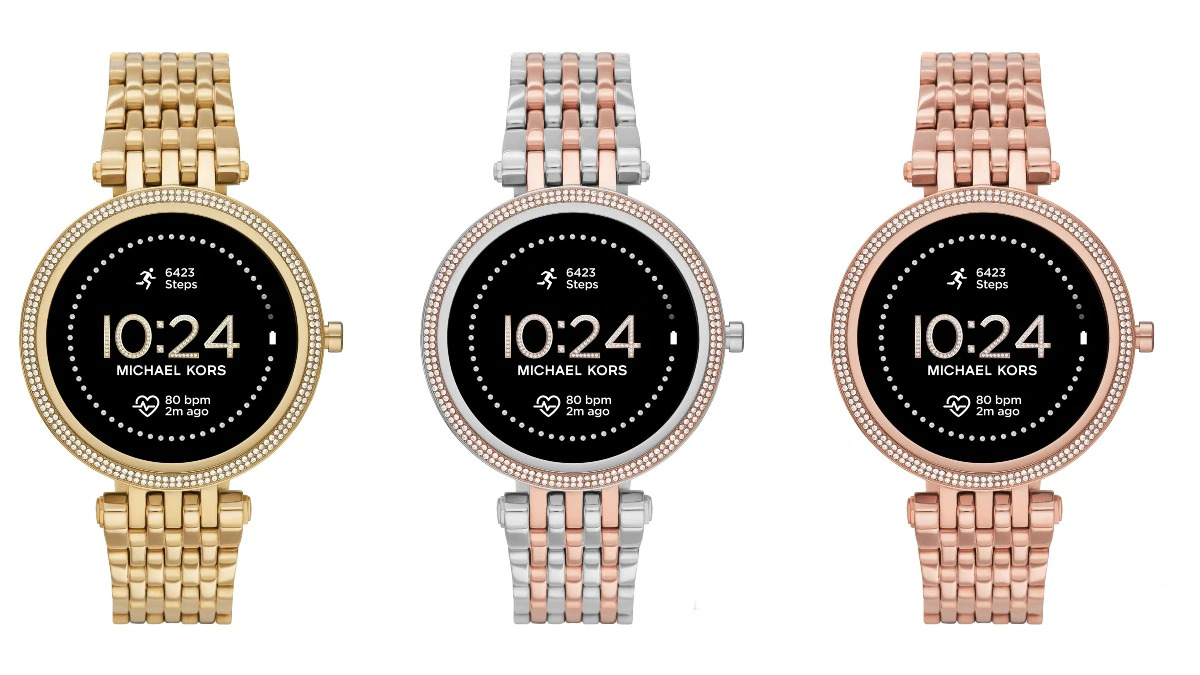
Michael Kors, the company known for making luxury watches, has announced that its smartwatch — Michael Kors Access Gen 5E Darci is now available for purchase in India. For those who are unaware, the device was first announced at CES 2021 in January this year.
It is priced at Rs 25,995 which roughly converts to $354 and can be purchased through online marketplace Amazon. The device is being offered in three color options — Gold, Rose Gold, and Silver.
The Michael Kors Access Gen 5E Darci smartwatch features top ring and a 7-link bracelet. There’s a 1.19-inch touchscreen display with 390 x 390 pixels screen resolution. It is powered by Google’s Wear OS and works with both Android and iOS devices.
As for the connectivity, the device comes with support for Bluetooth 4.2 LE, NFC, and Wi-Fi. It also supports Bluetooth-based calling and there’s a speaker which allows users to converse through Google Assistant or to play music.
It also comes with a new Wellness App that monitors real-time metrics and optimizes battery life by shifting power consumption off the main processor. The company says that it also packs an optimized activity tracker and thus the smartwatch can track heart rate, pace, distance, steps, and sleep.
There is a multi-day battery mode that allows users to choose between four battery settings as per their preferences. It comes with a magnetic USB rapid charger that is claimed to juice up the smartwatch to up to 80 percent 50 minutes.
The Xiaomi Redmi Note 10 series will be announced globally on March 4. A new leak has appeared today to reveal the pricing of the base model of the Redmi Note 10 Pro.
It was revealed in January that the Redmi Note 10 Pro could be arriving in variants like 6 GB RAM + 64 GB storage, 6 GB RAM + 128 GB storage, and 8 GB RAM + 128 GB storage. It is now speculated that the 6GB+64GB edition of the Note 10 Pro may carry a price tag of $279.
Unfortunately, there is no information available on the pricing of the other variants of the Redmi Note 10 Pro. It may arrive in color editions such as bronze, blue, and gray.
Redmi Note 10 Pro specifications (Rumored)
The Redmi Note 10 Pro is speculated to arrive with a punch-hole display that offers a 120Hz refresh rate. It is unclear whether the phone has an LCD or AMOLED display. It is likely to feature a massive battery of 5,050mAh capacity and it is expected to arrive with support for fast charging.
The Note 10 Pro will run on MIUI 12 based Android 11 OS. It may draw power from the Snapdragon 732Ght, which was first seen on the POCO X3 phone that debuted last year. For photography, the handset may flaunt a 64-megapixel quad-camera system. The other specs of the smartphone are yet to be revealed.
In related news, the Redmi Note 10 is expected to arrive with key specs like AMOLED display, 48-megapixel quad-cameras, and Snapdragon 678 SoC. On the other hand, the Redmi Note 10 Pro Max may feature a 120Hz display, a 108-megapixel quad-camera, and Snapdragon 768G chip.
A recent report by the New York Times details how the New York police have been using robot dogs to aid crime fighting in the city. The latest story is that of two men who were kidnapped in an apartment in the Bronx area. The two kidnappers had entered the apartment pretending to be plumber but soon took the occupants hostage and tied them up for several hours. One of the victims successfully escaped from the armed men and then contacted the police.
When the police arrived the scene, because they were not sure if the gunmen were still inside the apartment,they deployed a robotic dog named Digidog. The robot is equipped with a camera and lights and allows the police to remotely view the scene through two-way communication. The police team also disclosed that the robot dog can see clearly in the dark thanks to night vision camera.
In the Bronx case, the police used Digidog to understand that the room was empty as the gunmen had fled the scene. They are still searching for the two robbers who stole a mobile phone and $2,000 in cash and burned one of the victims with a soldering iron.
In an unusual manner, the case has generated some concerns bothering on privacy. Democratic Rep. Alexandria Ocasio-Cortez called Digidog a mobile monitor on Twitter.
Jay Stanley, a senior policy analyst at the American Civil Liberties Union, said that allowing robots to do police work would have an impact on prejudice, mobile surveillance, hacking, and privacy issues. Others worry that robots may cooperate with other technologies as weapons.
“We have seen that many police stations have not explained the situation to the communities they serve when adopting powerful new surveillance technologies and other technologies, let alone soliciting opinions from the public.” He said, “So openness and transparency are of the utmost importance.”
While these concerns raised shows what the emerging robotics technology may face in the future, we can’t throw away the fact that they bring immense benefits. Keith Taylor once served in the SWAT team and currently teaches at the John Jay College of Criminal Justice. He said that a mobile device that can collect intelligence remotely in unstable situations “has great potential” to reduce the number of casualties.
“It is important to question the police, but the benefits of this matter seem obvious,” he said. “Its purpose is to help the police obtain the information they need without a fatal exchange of fire.”
The New York Police Department is one of the three police stations in the United States where this robot dog is deployed. The robot in question is Boston Dynamics’ Spot robot which went on sale last year. New York Plolice chose to name theirs Digidog. nitor. “It’s very noisy and it shines.” He said, “It’s easy to get people’s attention.”
We expect the use of robots to prevent police officers from getting into dangerous situations to become a routine in the near future.
In 2016, the police confronted a gunman who killed five police officers in Dallas and eventually killed him with a robot.
In 2015, a man with a knife threatened to jump off a bridge in San Jose, California. The police used the robot to provide him with a mobile phone and a pizza, and finally arrested him.
The previous year, after a gunman locked himself in a motel room, Albuquerque police used robots to “deploy chemical weapons” and eventually subdued him.
Since the past couple of years, chipset makers have been making their flagship chips based on the 5nm process. However, manufacturers have been working on a more advanced process, using 3nm and 2nm nodes.
Now, it appears that TSMC, the world’s largest contract manufacturer of chips, will start mass production of 3nm chipsets from next year. As per the report, the company will start production in the second half of 2022 with a capacity to process 30,000 wafers.
It further adds that because of the order commitment from Apple, TSMC will expand the monthly production capacity of its 3nm process to 55,000 units in 2022 and within a year after that, it plans to expand the production to 105,000 units a month.
Compared to the current 5nm process, the new 3nm process reduces power consumption by 30 percent and increases performance by 15 percent. Even with orders for 3nm chips, the company will continue to focus on 5nm chips as well.
In this year, TSMC will be expanding its production capacity for the 5nm chips to meet the increasing demand. Currently, it has a capacity of manufacturing 90,000 units a month but in the first half of this year, it will be increased to 105,000 units. By the end of this year, it plans to further expand the manufacturing capacity to 120,000 units.
By the year 2024, the production capacity of TSMC’s 5nm chips is expected to reach 160,000 units. Apart from Apple, the company’s major clients for the 5nm process include AMD, MediaTek, Marvell, Broadcom, and Qualcomm among others.
However, TSMC has allocated most of its resources for Apple as the company is gearing up to launch its iPhone 13 series which will be powered by the A15 chipset, manufactured using the 5nm+ or N5P process. It is basically a performance enhanced process of 5nm node which also brings power efficiency.
Apple recently launched its iPhone 12 lineup and the devices have been well-received in the market. The company is now working on its successor, the iPhone 13 series, which will be officially launched around September this year.
While it is still a long time before we get this new iPhone lineup, some details about the iPhone 13 series have started surfacing online. In the latest report, the upcoming device’s screen details have been revealed.
The report claims that the iPhone 13 Pro will come with a 120Hz refresh rate LTPO OLED display. We expect the company to continue with the same display size as the existing models but the report says that the notch on top of the screen will be smaller.
The company is also rumored to include an in-display fingerprint in the iPhone 13 models, along with support for Wi-Fi 6E. However, a recent report claims that the prototype of the upcoming phones doesn’t include in-display sensor.
It is also reported that Apple could launch a 1TB storage variant of the iPhone 13 Pro this year. This is twice the storage capacity when compared to the highest capacity model in the current iPhone 12 lineup.
It is not confirmed if the company plans to increase the storage capacity in the base model, which is currently at 128GB. A recent report revealed that the company is planning to use the Qualcomm Snapdragon X60 5G modem for the upcoming lineup.
The iPhone 13 Pro models are also expected to feature an upgraded Ultra Wide camera lens with a wider ƒ/1.8 aperture and autofocus, compared to ƒ/2.4 on iPhone 12 models. The devices may be a bit heavier as Apple plans to add higher capacity battery.
We use cookies on our website to give you the most relevant experience by remembering your preferences and repeat visits. By clicking “Accept”, you consent to the use of ALL the cookies.
This website uses cookies to improve your experience while you navigate through the website. Out of these, the cookies that are categorized as necessary are stored on your browser as they are essential for the working of basic functionalities of the website. We also use third-party cookies that help us analyze and understand how you use this website. These cookies will be stored in your browser only with your consent. You also have the option to opt-out of these cookies. But opting out of some of these cookies may affect your browsing experience.
Necessary cookies are absolutely essential for the website to function properly. This category only includes cookies that ensures basic functionalities and security features of the website. These cookies do not store any personal information.
Any cookies that may not be particularly necessary for the website to function and is used specifically to collect user personal data via analytics, ads, other embedded contents are termed as non-necessary cookies. It is mandatory to procure user consent prior to running these cookies on your website.