Realme will be unveiling the Realme GT on March 4 in China. Ahead of the upcoming launch, the smartphone has appeared at the Geekbench benchmarking platform (via). At that same time, the former OPPO VP Brian Shen has shared an image of the retail box of the smartphone.
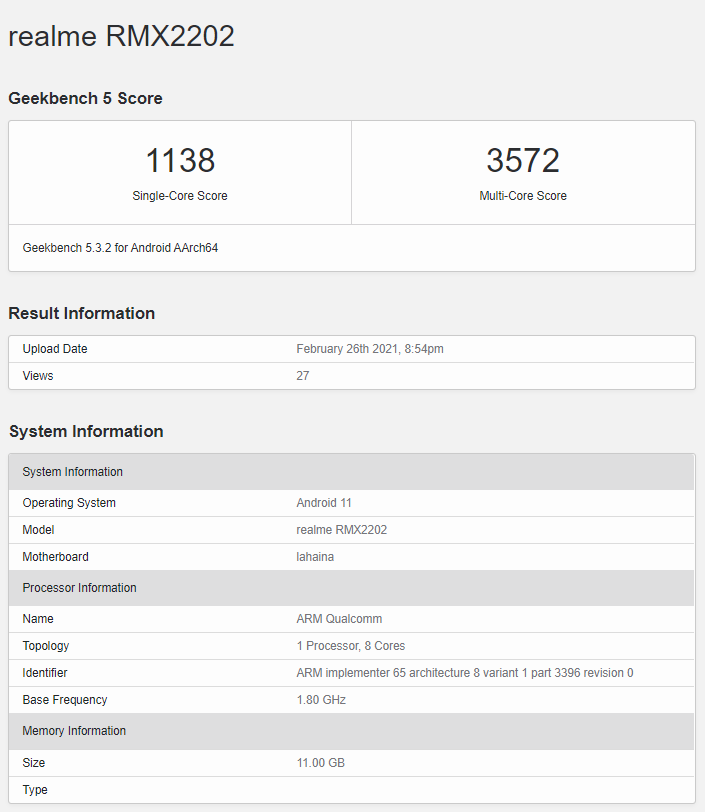
At Geekbench 5, the Realme GT 5G has appeared with an RMX2202 model number. The listing reveals that the Snapdragon 888 powered phone is equipped with 12 GB of RAM and Android 11 OS. It scored 1138 and 3572 points in the single-core and multi-core tests, respectively.
The handset had previously appeared at AnTuTu with specs like a 120Hz refresh rate, 12 GB of LPDDR5 RAM, 256 GB of UFS 3.1 storage, SD888, and Android 11 OS. Other reports have revealed that the phone will be sporting a 64-megapixel + 13-megapixel + 13-megapixel triple camera system. It is expected to arrive with support for 65W fast charging. It also features a 3.5mm audio jack.
Brian Shen shared two mages through its Weibo handle. The first one shows the Realme GT smartphone’s Bumblebee leather edition in reality, whereas the image showcases its retail box. The Realme GT will come in a black-colored retail package with a big Realme branding. And apart from the leather variant, the handset will also come in a glass back version.
The Realme GT 5G will be priced less than 2,999 Yuan (~$463). In terms of pricing and specs, it will be rivaling the Redmi K40 Pro that debuted earlier this week with a starting price of 2,799 Yuan (~$432). The Realme GT 5G is expected to receive a stupendous response from the audience as it was reported on Thursday that its reservations have exceeded the 1 million mark.
The demand for electric scooters has seen an upward spike in recent years, accentuated by several factors including a desire for an increasing number of persons to embrace green choices by reducing their carbon footprint, the chaotic traffic situation in many cities, and the COVID-19 crisis. These e-scooters, though come with their own challenges on the road, especially collisions with pedestrians, leading to injuries for both the rider and pedestrian.
In response to the sometimes rising incidence of collisions, e-scooter manufacturers are now embracing artificial intelligence (AI) technology to essentially transform the e-scooter into a smart and responsive scooter. A Swedish company called Voi, in collaboration with Luna from the Republic of Ireland, is developing a system of cameras and sensors that uses AI to correctly identify what surface a scooter is riding on, as well as the presence of nearby pedestrians. It then uses the information in real-time to alert the rider or even take some actions to prevent the impending collision. It could slow down the speed, make an audible sound prompt, and so on.
Vio has begun trials of the Luna technology fitted e-scooters in parts of England and the outcome has been quite impressive. The company hopes to scale up the trial process to cover more cities, as it insists that the AI algorithm is capable of being adapted to new cities.
It should be noted that Vio is not the only company developing smart solutions to the problem of e-scooter collisions. However, experts believe that incorporating such technology into the micro-mobility systems as the e-scooters come with their challenges including prohibitive costs that may make the e-bike unaffordable for a huge segment of its present users.
The development of systems to make the e-scooter responsive to threats within its environment remains however a great leap in their development.
It is not uncommon to hear stories of exploding batteries in smartphones, laptops, and other electronic gadgets. These stories serve as reminders of the need to use the device properly and also that having such gadgets with or around us might imply playing with a bomb waiting to explode. Here’s a story about an exploding headphone!
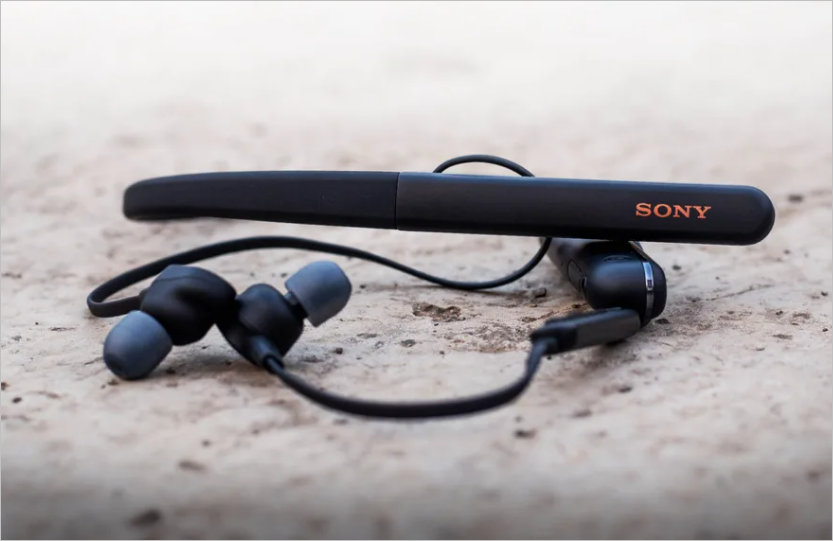
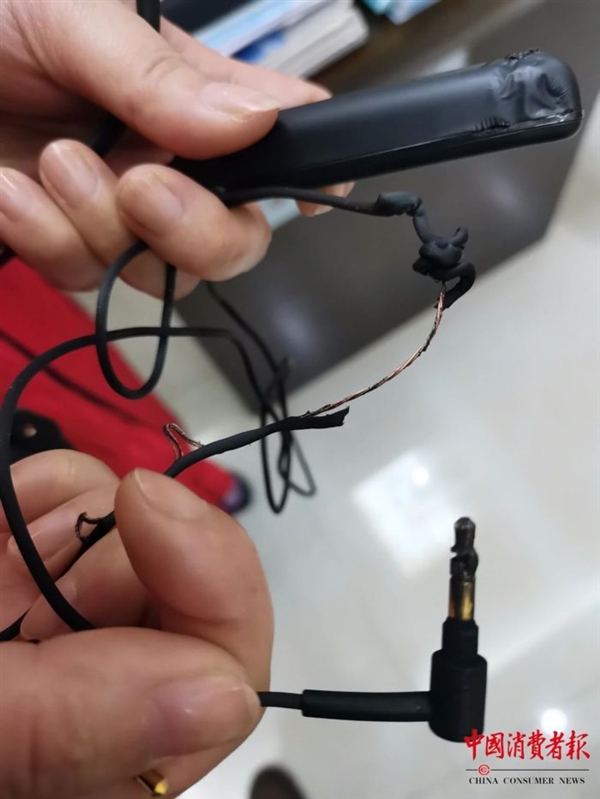
Before you go picturing a situation of having the ears ripped off by a headphone explosion, that didn’t happen. According to the news, a consumer in Wuhan, China had her Sony WI-1000XM2 burnt after it exploded when she mistakenly plugged the in-flight adapter into the AC power unit. The victim identified as Ms. Liu is reported to have bought the Sony headset for 2,300 yuan (around $355) on Febraury 17.
When she reached home that night wanted to charge the headset, instead of using an adapter, her son used the in-flight plug adaptor in the box and this caused the headset to explode and go up in flames. The burning headset left the boy with some degrees of burns in his right hand.
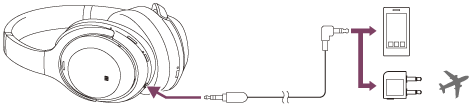
The in-flight plug adaptor lets you enjoy balanced sound from the in-flight entertainment system while travelling in a plane. Sony included a warning on its website that the adaptor “is NOT MEANT to charge your device. Plugging the in-flight adaptor into a AC Power Socket to charge the headphones will cause severe damage to the device”.
When Ms. Liu returned to lodge a complaint at the merchant store but the merchant believes that the acident was caused by the improper operation of the device but the consumer and was unwilling to take responsibility. Indeed, it was caused by improper operation by the consumer but we must point out the in-flight plug adaptor looks very much like a two pin adaptor. After the news break o ut, there have been series of reports about similar incidence by consumers in China despite the in-flight adaptor having a warning that reads “please do not plug into the power socket”.
In this regard, the Hubei Provincial Consumer Council reminded that operators should do their best to remind and adequately inform users of the hidden dangers that may endanger consumers’ personal safety.
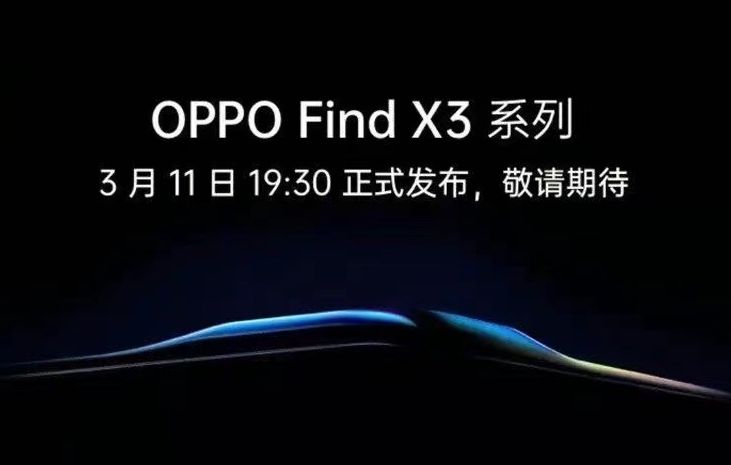
A leaked poster that is now being circulated on Weibo states that the OPPO Find X3 series will go official on March 11 in China. It appears that the company will be announcing the Find X3 and Find X3 Pro smartphones in the home market.
The poster states that the OPPO Find X3 series launch event will take place at 7:30 PM (local time) on March 11. Reports have revealed that the Find X3 series also includes two other phones such as Find X3 Neo and Find X3 Lite. These phones are said to be rebadged versions of the Reno5 Pro+ 5G and Reno5 5G phones that went official in China in December 2020. It is likely that the company may hold a separate launch event to announce the Find X3 series for global markets.
Reports have revealed that the TENAA and 3C certified phones such as OPPO PEEM00 and PEDM00 will be arriving in the Chinese market as the OPPO Find X3 Pro and Find X3. The former is said to be powered by the Snapdragon 888 mobile platform, whereas the latter is likely to come with Snapdragon 870 SoC.
Both phones are said to be equipped with 6.7-inch OLED panels that will offer QHD+ resolution of 14440 x 3216 pixels. The Pro version is said to support 10-bit color depth and an adaptive refresh rate of 10Hz to 120Hz.
The Find X3 Pro is said to house a 4,500mAh battery that supports 65W SuperVOOC charge support and 30W AirVOOC wireless charging. There is no word on its front camera. Its rear camera setup is said to include quad cameras such as a Sony IMX766 50-megapixel main lens, a Sony IMX766 50-megapixel ultrawide lens, and a 13-megapixel telephoto snapper with 2x optical zoom, and a 3-megapixel macro camera with 25x zoom support.
The Galaxy XCover 5 is expected to be Samsung’s next rugged smartphone. This device is in the news for quite a while now. This handset’s last leak revealed its entire specifications along with price. Almost two weeks later, we now get to see its front design for the very first time.
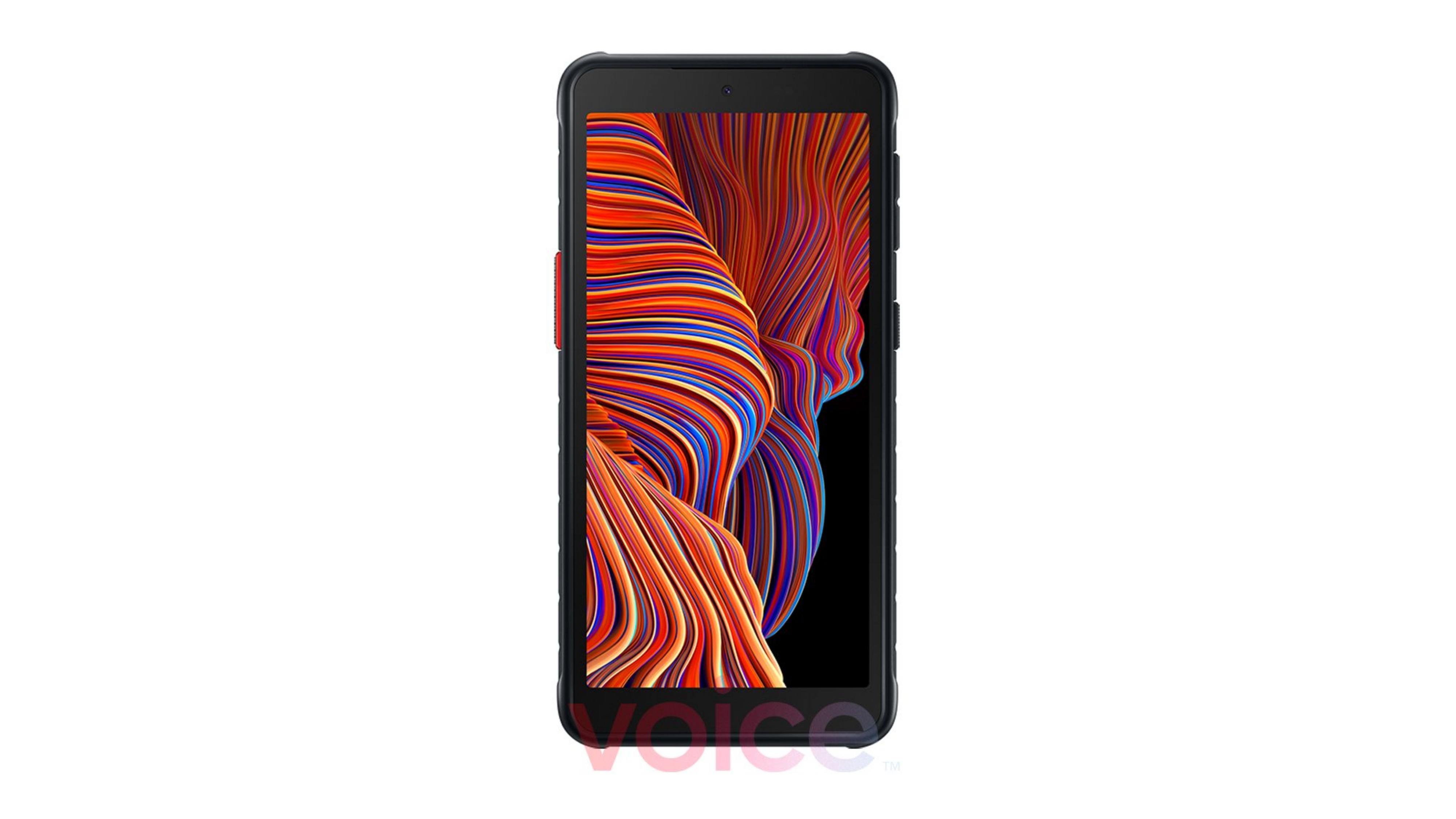
The front render of the upcoming Samsung Galaxy XCover 5 was shared by popular leaker Evan Blass. As per the image, the handset will feature no notch or punch-hole like modern smartphones. Instead, it will come with a huge forehead and a chin.
Further, the render also reveals this forthcoming phone to sport the useful red-accented programmable XCover key on the left side. Whereas, the usual power and volume keys will be located on the right side. Lastly, the front-facing camera will be housed at the top centre.
According to previous reports, the Galaxy XCover 5 will flaunt a 5.3-inch TFT LCD panel with a resolution of 1600 x 720 pixels (HD+). The device will be powered by Exynos 850 SoC paired with 4GB RAM and 64GB internal storage.
For photography and videography, the phone will feature a single 16MP sensor with an F/1.8 aperture lens on the back and a 5MP sensor on the front with an f/2.2 aperture lens. Further, this 4G-only smartphone will run One UI 3.x based on Android 11 and sport features like a MicroSD card slot, 3,000mAh battery, 15W fast charging, NFC, Samsung Pay, and Samsung Knox.
Last but not least, the MIL-STD-810G and IP68-certified Samsung Galaxy XCover 5 rugged smartphone for durability as well as dust and water resistance will retail for €300 in Europe. Initially, it will be only available for businesses.
Huawei has struggled to cope with the stringent restrictions placed by the US government that has made it impossible for the Chinese company to get supplies from its US suppliers for critical components of its production process and 5G rollout. This has led the firm to sell off its Honor smartphone brand, and it continues to pursue investments in other areas like pig farming, mining, home electronics production, and much more.
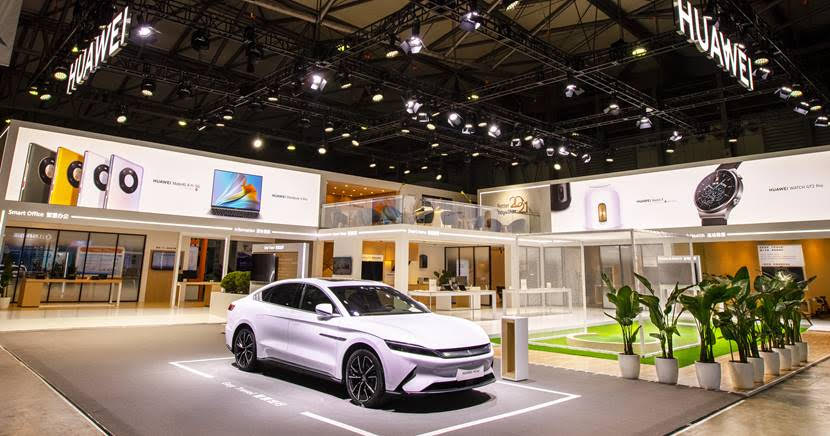
Sources now say that the company may have plans to foray into the EV market by pursuing investment in that direction. The world’s largest tech equipment maker is believed to be in talks with China-based Changan Automobile and a few others on producing EVs in their plants, while also in talks with another company to manufacture the EVs on its behalf.
However, there is no official confirmation yet for this new investment model for the company. On the contrary, it has specifically stated that it had no plans to produce Huawei branded EVs, neither is it in talks with automakers in that regard.
With the rising demand for firm action in fighting the global challenge of climate change, the demand for electric vehicles and other green choices in mitigating the effects of Greenhouse gas emissions has been on an increase in recent years. A few countries across the world have set firm targets in phasing combustion-driven vehicles, some as early as within a decade. This policy has therefore encouraged EV makers to expand their capacity to meet the growing demand while new entrants are also coming into the space to have a piece of the pie. This may be Huawei’s vision, a pie of the EV pie.
While the US sanctions have had a very negative effect on the company, Huawei continues to develop in other areas and is slated to release a couple of high-end 5G smartphones this year, with its in-house operating system – HarmonyOS.
A few years back, Samsung was known for a poor update track record when compared to other Android OEMs. But thankfully, that’s not the case anymore. The company has not only promised three generations of Android updates to its flagships and mid-rangers but also at least four years of security updates for almost its entire lineup. Apart from longer support, it is now also faster in rolling out the builds. How fast you may ask? The answer is the firm has already started seeding the March 2021 security update to some of its devices when February is yet to end.
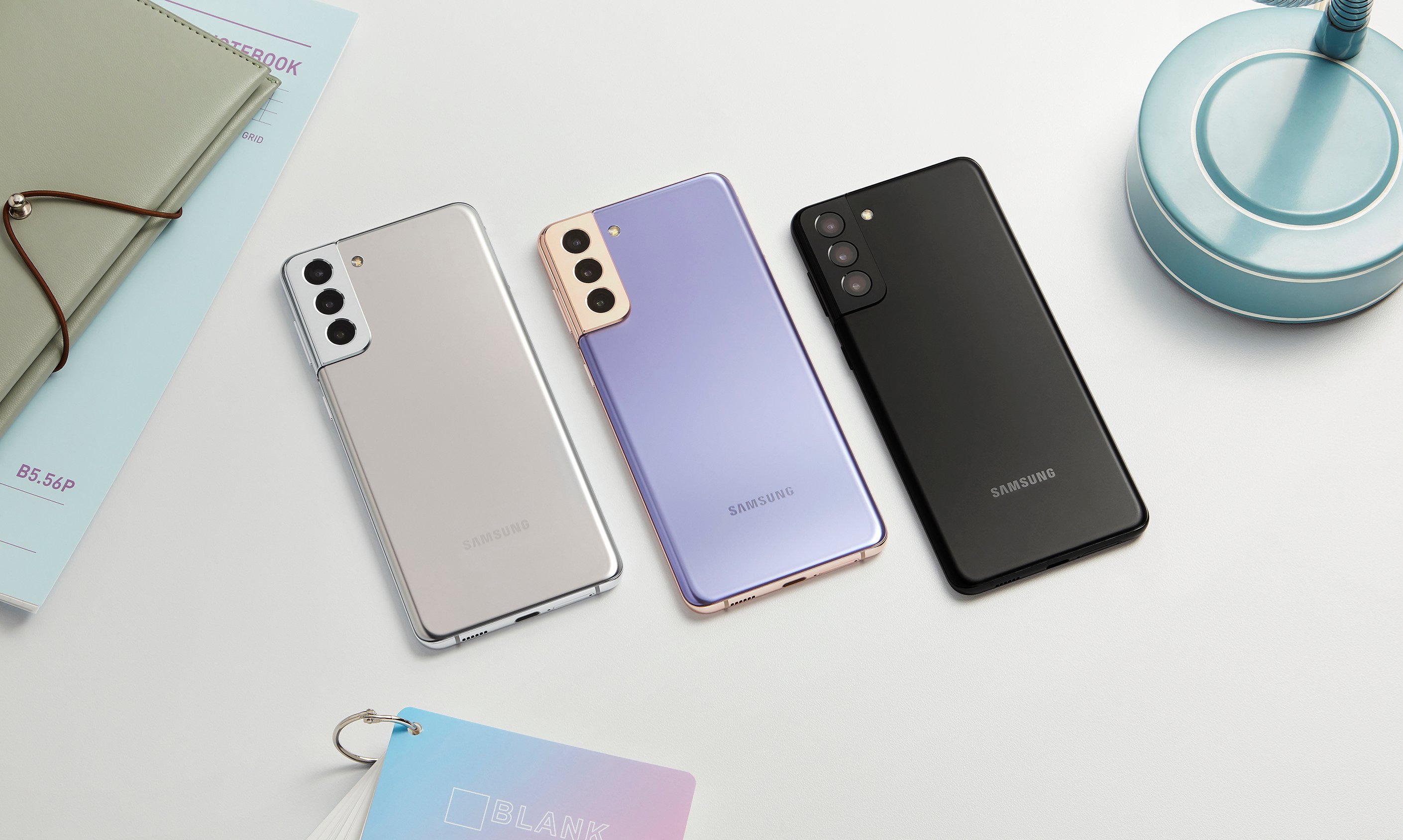
For the Galaxy A8 (2018), the latest security update for this handset is currently live in the UAE with firmware version A530FXXSICUC1. Whereas, the same update for the Galaxy S21 series is being seeded in Taiwan with firmware version G99x0ZHU1AUB7 weighing 387MB.
Users of these four handsets in the above-mentioned regions can head over to Settings > Software update > Download and install to check whether their phone has received the OTA release.
Anyway, it is worth noting that though the March 2021 update is live for the mentioned handsets in the respective regions, it may take time to reach every unit as it is being pushed in batches. Similarly, customers in other markets should also get this update in the coming days.
The US ban on Huawei has had wide ramifications both in the telecommunications and auto industries. It has contributed to the global shortage of semiconductors stalling the work of many production plants and significantly affecting growth forecasts. The decision by the US government to block the use of Huawei‘s advanced 5G technology in critical areas also affected Huawei’s standing in several European countries who also banned the company from participating in certain critical contracts.
In addition, India had been seen in many quarters to have unfairly targeted Chinese companies with the ban of hundreds of apps mainly from China. However, Huawei has now publicly reaffirmed its confidence that the Indian government does not have any negative attitude towards the company as it continues to make its contributions towards boosting local capacity via the production-linked incentive (PLI) scheme. Huawei’s vice president in charge of the Asia-Pacific region, Jay Chen, disclosed this during the Mobile World Congress 2021, held virtually due mainly to the coronavirus pandemic.
Huawei is indeed pursuing investment in expanding local capacity to meet rising network demands across the Indian subcontinent and shed reliance on imports. This fundamentally keys into the overall plans by the government in encouraging local production across all segments of the economy.
But the views of Huawei may be a positive outlook that may be at variance with the reality on the ground amidst rising tensions and potential flashpoints in the relationship between the Indian and Chinese governments.
There had been both covert and overt moves by the Indian government to shut out foreign firms from participating in the 5G rollout contracts in the country and Huawei may not be left out from those restrictions.
The company insists that it had no plans to exit the Indian market and would continue to pursue investments in this direction, and hopes the government will take correct decisions for the development of the telecoms industry. Plans are underway to commence 5G trials and it is hoped they go smoothly according to plans.
Xiaomi launched a new line-up of flagship killers containing three of the most affordable flagship smartphones in the world. We are talking about the K40 series composed of the Redmi K40, the Redmi K40 Pro, and the Redmi K40 Pro+. All of these phones were launched in the Chinese market with incredibly affordable prices and an incredibly high value for money. But which differences you get between each variant and which one is worth buying in 2021? It is not an easy question, especially for those who do not know all the specifications of these phones in detail. This is a comparison between the specifications of Redmi K40, K40 Pro, and K40 Pro Plus which will shed some light.
Xiaomi Redmi Redmi K40 vs Xiaomi Redmi K40 Pro vs Xiaomi Redmi K40 Pro Plus
Xiaomi Redmi K40
Xiaomi Redmi K40 Pro
Xiaomi Redmi K40 Pro Plus
DIMENSIONS AND WEIGHT
163.7 x 76.4 x 7.8 mm, 196 grams
163.7 x 76.4 x 7.8 mm, 196 grams
163.7 x 76.4 x 7.8 mm, 196 grams
DISPLAY
6.67 inches, 1080 x 2400p (Full HD+), Super AMOLED
6.67 inches, 1080 x 2400p (Full HD+), Super AMOLED
6.67 inches, 1080 x 2400p (Full HD+), Super AMOLED
Triple 48 + 8 + 5 MP, f/1.8 + f/2.2
20 MP front camera
Triple 64 + 8 + 5 MP, f/1.8 + f/2.2
20 MP front camera
Triple 108 + 8 + 5 MP, f/1.8 + f/2.2
20 MP front camera
BATTERY
4520 mAh, fast charging 33W
4520 mAh, fast charging 33W
4520 mAh, fast charging 33W
ADDITIONAL FEATURES
Dual SIM slot, 5G
Dual SIM slot, 5G
Dual SIM slot, 5G
Design
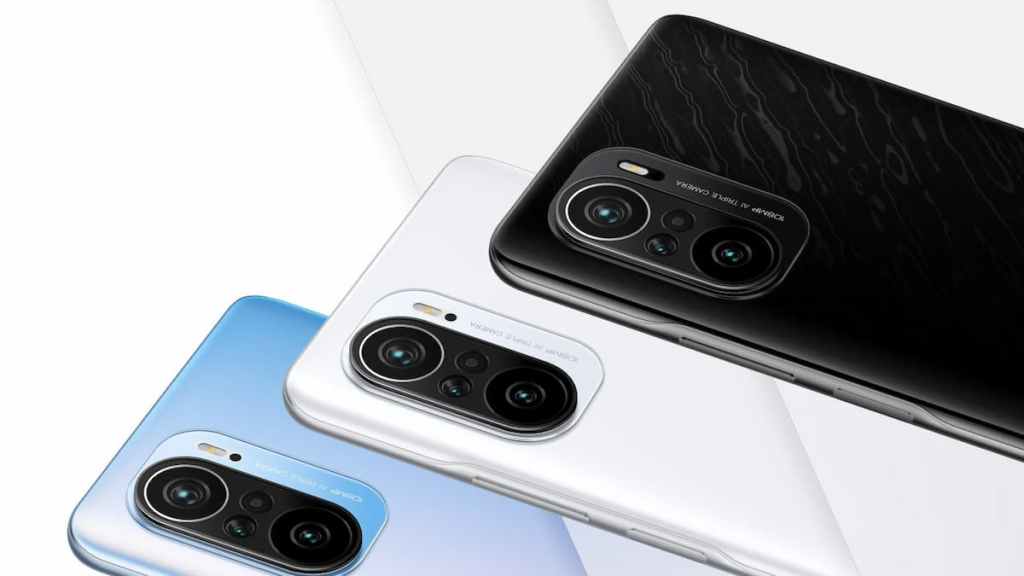
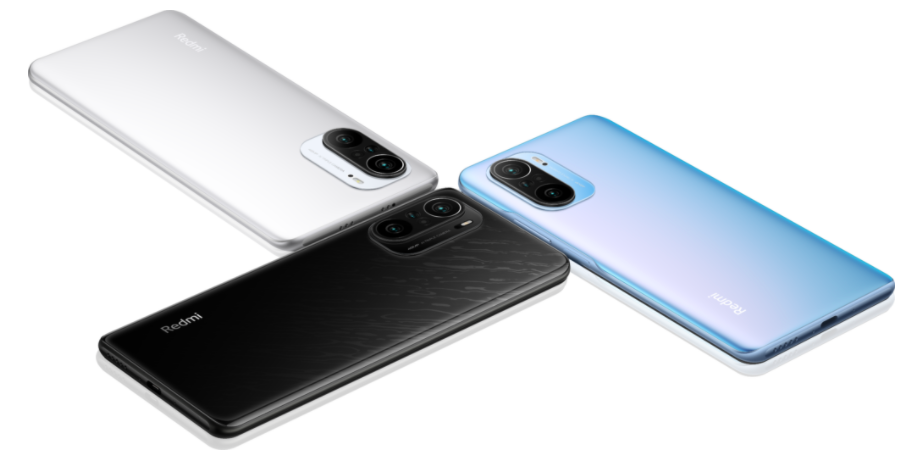
You do not have to make a choice when it comes to the design, since the Redmi K40, the Redmi K40 Pro, and the Redmi K40 Pro Plus have exactly the same aesthetics. They come with a punch-hole display with a hole placed at the center, a camera module similar to the one of the Xiaomi Mi 11, and a side-mounted fingerprint scanner despite they come with an OLED display. They are pretty thin with their 7.8-mm thickness and they all weigh 196 grams. All the phones are available in three color variants: Black, White, and Aurora. The Aurora version is a gradient color variant. Note that Redmi K40 Pro and K40 Pro Plus have the IP53 certification providing protection against splashes and dust, while the vanilla Redmi K40 does not.
Display
Just like the design, even the display of the Redmi K40, K40 Pro and K40 Pro Plus is exactly the same. These phones share a 6.67-inch AMOLED panel with a Full HD+ resolution, a 120 Hz refresh rate, the HDR10+ certification, and a peak brightness of 1300 nits. We are talking about amazing displays, not the best ever, but very nice panels. And in each case, you get the Gorilla Glass 5 protection: again, not the best, but it is good protection for a smartphone glass. The display is flat and provides a screen-to-body ratio superior to 85 percent.
Hardware/Software
The hardware department is where the differences between these three handsets start to surface. While the Redmi K40 Pro and the Redmi K40 Plus are powered by the top-tier Snapdragon 888 mobile platform, the vanilla Redmi K40 is based on the lower-end Snapdragon 870 which is actually an upgrade of the Snapdragon 865+. In each case, you get flagship-class performance, but the Snapdragon 888 is actually better than the Snapdragon 870 from every point of view. Between Redmi K40 Pro and K40 Pro Plus, the difference is the memory configuration: the former offers 8 GB of RAM (there is a 6 GB RAM version of the K40 Pro as well), while the latter has 12 GB of RAM.
Camera
Redmi K40, K40 Pro, and K40 Plus have the same camera setups with the exception of the main rear camera sensor which is also the most important one. The Redmi K40 has a 48 MP main camera, the K40 Pro has a 64 MP sensor that sits in the middle, and the Redmi K40 Plus sports a great 108 MP main sensor. Naturally, the best one is the Redmi K40 Plus since the 108 MP camera is able to provide better photo quality and a higher level of detail. But you should not think that Redmi K40 Pro Plus is a top camera phone just because of that sensor. It lacks OIS, a telephoto sensor, a periscopic sensor, and more features you can usually find on the best camera phones out there.
Battery
Redmi K40, Redmi K40 Pro, and Redmi K40 Plus have the same battery with a capacity of 4520 mAh and they even share the same 33W fast charging technology. The 4520 mAh battery should allow good battery life to everyone, but given that the phones just went official, no one had the chance to test it.
Redmi K40, K40 Pro and Pro+: Price
Redmi K40 has a starting price tag of about €255/$310 in China, Redmi K40 Pro starts from €360/$434 for the configuration with 6 GB RAM and 128 GB of internal storage, and Redmi K40 Plus costs €475/$573. At the moment, the phones are only available in the Chinese market. It is rumored that the series will hit the global market under the POCO brand. The best one is obviously the Redmi K40 Plus , but if you do not need that 108 MP camera, the Redmi K40 Pro is definitely enough for your needs. With the Redmi K40, you get a slightly inferior chipset and camera, but also a very affordable price.
Ulefone is commonly known for its rugged smartphones, but this time the company introduced a new Night Vision external Camera. The new camera is designed to capture quality photos even in the dark using infrared sensors. It can be used as an accessory with a smartphone via the USB Type-C Interface.
The Ulefone Night Camera carries a Sony Starvis IMX307 ultra-light-sensitive CMOS sensor. It is efficient enough to capture quality photos and videos even in a low-light environment. Precisely, it can record 1080p Full HD video with a 116-degree ultra-wide-angle.
The new camera can be used as an external accessory with any smartphone tablet or any other portable devices. It is quite easy to control the camera via a specific app. Ulefone Night Camera is a smart, compact and portable camera carrying some excellent features. It easily fits in the pocket, around your collar or any other nifty place where you get a better frame.
Ulefone Night Vision Camera is retailing via the Ulefone Official Website. More information about the device is now available via the website.
OPPO has a big manufacturing plant in India where it not only makes its own but does make a lot of other devices of realme, OnePlus. For instance, the recently launched Narzo 30 Pro 5G is manufactured at its factory in Greater Noida, Uttar Pradesh. Now, National Geographic is going to give us a deep look into the Manufacturing Plant of OPPO on February 27.
National Geography Television Network runs a popular show where it showcases what goes inside popular companies’ factories across various sectors. The program focuses more on the state-of-the-art facilities that have helped factories transform their productivity.
On February 27 at 7 PM IST, the network is airing a special premiere of the OPPO Manufacturing Plant in India. In a short teaser that National Geographic posted on Twitter, we get a glimpse of what’s coming tomorrow on the Superfactories: OPPO premiere show.
#DidYouKnow that Oppo India’s manufacturing unit is more than twice the size of Eden Gardens? Sneak a peek inside one of India’s largest smartphone producers on Superfactories: Oppo, premieres 27th Feb, 7 PM, on National Geographic. #NatGeoIndia#OppoIndiapic.twitter.com/7ZMTicrRaC
As per the video teaser, OPPO is making an average of 50 million smartphones in the factory every year. This factory, which is located the South Asian country, spans for 110 acres. This is twice the size of the Eden Gardens which is about 50 acres in Kolkata.
One can only imagine the amount of stress that goes inside a a factor like this, which also runs contract manufacturing for brands like OnePlus, realme. We saw an example of productivity snag during the pandemic last year when shuttered OPPO factory affected the sales of the above brands.
Anyway, we are excited to know what goes inside the factory and its everyday functions. If you are equally curious, you can catch the show premiering live on February 27 at 7 PM IST (GMT+ 05:30) on the National Geographic Channel.
Backache used to be a challenge for the elderly but in recent times, with the widespread use of smartphones, young and middle-aged persons now come down with back pain. Data shows that patients with cervical spondylosis under the age of 30 account for nearly 40%. Xiaomi Youpin has now launched the LEGA AI Smart Cervical Massage Sleep Pillow which is design to help people fight back pains. The product carries a crowdfunding price of 299 yuan (~$46).
This pillow is a dual-purpose pillow as it is shaped like an ordinary home pillow. It has been tested for multiple times to optimize the curvature of the man-machine to make the pillow curve more suitable for the shape of the Chinese head and neck. At the same time, it also has a professional deep stretching function, massage and sleep in one step.
It supports four massage modes (deep stretching, neck massage, relaxing sleep, and wake up in the morning) , allowing people to deeply relax the cervical spine while trying to sleep as well as massage the neck, and add the most suitable temperature to make people sleep better.
Among them, the deep stretch mode has 4 levels of adjustable height. The airbag is inflated to a certain height and the head strength is used for natural stretching, which promotes the natural reverse C curve of the cervical spine.
The neck massage mode has 5 levels of adjustable height. After the airbag is inflated to a certain height, it is slowly retracted, and the cervical spine is stretched freely by cyclic stretching.
It also has an early morning wake-up function. Users can set the wake-up time for the smart pillow in the Mijia app. The pillow starts the morning wake-up program on time, and gently wake up the user through the up and down movement of the airbag, inspiring a full day of vitality.
LEGA AI smart cervical spine massage sleeping pillow can be connected to the Mijia app. It also supports XiaoAi voice control.
Chinese smartphone maker OPPO has been delivering Android 11-based ColorOS 11 update to its devices worldwide since its announcement in September 2020. Earlier this month, the company shared ColorOS 11 update timeline for February 2021. Following the schedule, the firm has now opened beta registrations for OPPO A91 in Indonesia.
For those unaware, OPPO A91 went official in late December 2019 with ColorOS 6.1 based on Android 9.0 Pie. The handset was later updated to Android 10-based ColorOS 7. Now, the company has started recruiting beta testers for ColorOS 11 (Android 11).
As of now, the OPPO A91 ColorOS 11 Beta program is only live in Indonesia. Interested users in the country can head over to Settings > Software Update > Gear Icon > Apply for Beta Version > Update Beta Version and follow the on-screen instructions. In order to apply, their unit should be on firmware version C.51.
That said, it is worth noting that not all applicants will be getting the update. Because the firm is only allocating limited seats. However, the announcement post does say that there will be another round in the future.
Anyway, users of OPPO A91 should start receiving ColorOS 11 stable update sometime later next month. It should be the last-ever major update for this handset. After that, it may get necessary fixes and security patches for a while.
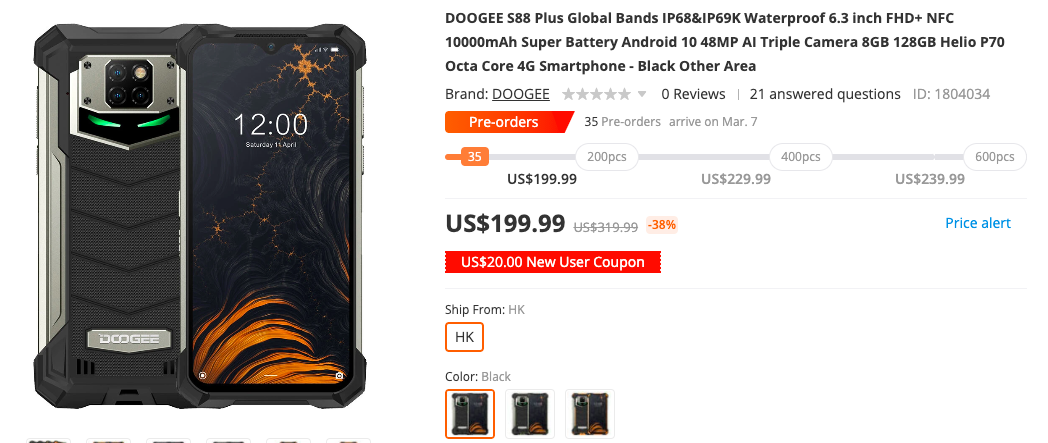
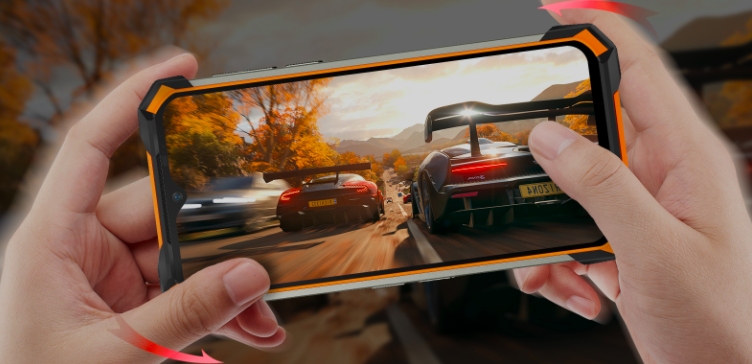
Doogee S88 plus is now available for pre-order for global customers at Banggood. The EU version and other versions both are available for $199.99 only. Known for its strength and endurance this ultra-cool smartphone comes with the much-coveted Iron man style multicolor eye which changes its color according to its function. Known as the Real Power Soldier, this rugged smartphone is powered by an Helio P70 chipset and 8GB RAM and 128GB ROM. Add on a massive 10000mAh battery and you get a smartphone powerful enough to impress the extreme user.
The impressive triple rear camera setup with a 48MP main cam and two 8MP wide-angle and portrait cameras, give out high-resolution images and 4K videos, even in dim light conditions. Moreover, the 16MP selfie cam with an 80 degree wide-angle, captures minute details and churns out sharp images.
With IP68 / IP69K certification Doogee S88 Plus is water, dust, and shockproof and can survive extreme and hazardous environments. A strong body and indestructible design makes this smartphone a must for every outdoor traveler and adventure sports enthusiast.
Doogee S88 Plus Global Bands is available in three color variants viz: Black, Green, and Orange and can be pre-ordered at $199.99 from Banggood. Additional shipping charges may apply for global shipments from the HK warehouse.
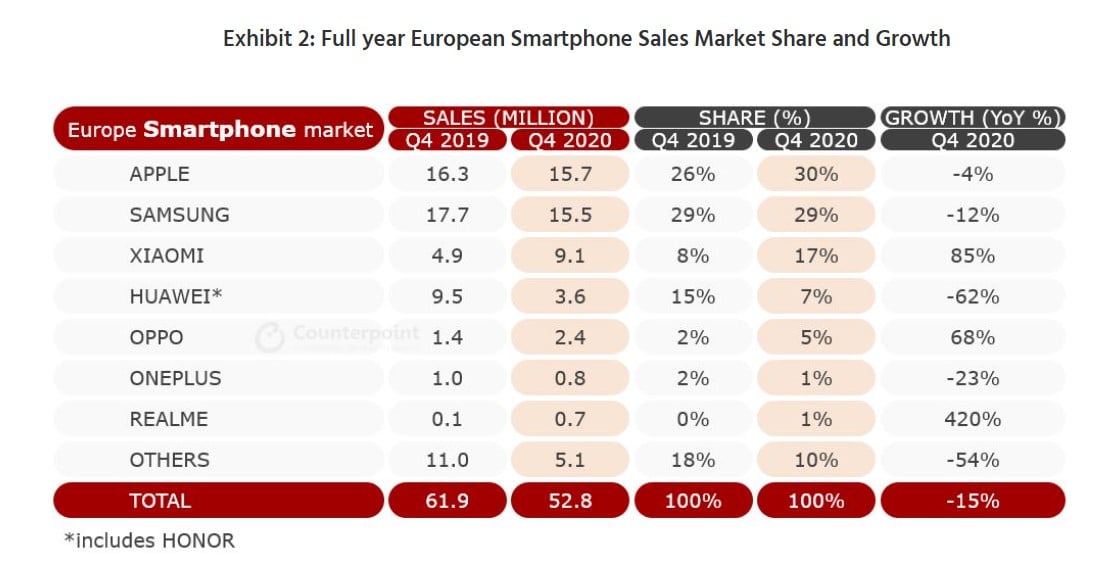
Xiaomi began the year 2020 by growing about 145% YoY in Europe. Cut back to 2021, a report by Counterpoint Research says that the company gained the most as the European market plummeted overall last year. realme was the fastest-growing brand in Europe with a ten-fold increase in sales.
According to the report, the European market plummeted overall by 14% in 2020 as compared to the year before. The market was worst affected by the COVID-19 as the disease first hit in April and came back in September to haunt the region. Among giants like Samsung, Apple, Xiaomi benefited the most in Europe.
Although Samsung was the top vendor in Europe in Q3 as per Canalys, the report says that Xiaomi managed to outsmart Samsung by growing about 90% annually. Speaking of which, Samsung reportedly didn’t manage to grab the void left by Huawei to a greater extent.
The company’s mid-rangers like Galaxy A51, and A71, and rivals’ Redmi Note 9 Pro outsold its flagships in early 2020. And amongst an army of Chinese companies rising in the region, Apple’s arrival in Q3 with iPhone 12 meant its game got spoilt more. With Galaxy S21, prospects are good for the Korean giant in 2021 but it has a lot of work to do.
Huawei’s market share dropped to 5% by December and the tussle with the US really affected them. As for the other Chinese brands, thanks to carrier partnerships OPPO grew as big as 68% in Q4. realme, on the other hand, saw a whopping 420% YoY growth in Q4 and remained the fastest-growing brand.
Last but not the least, despite getting a sluggish start, Apple had its budget iPhone SE pickup the sales in 2020. Later in the year, it launched the iPhone 12 devices and got a huge reception. In fact, the report says that the 2020 flagships helped Apple gain a whopping 30% of share in Q4.
Moving into 2021, Research Analyst, Ankit Malhotra says that the market is craving for 5G devices. As a result, sales of Galaxy S21, iPhone 12 along with those from Chinese vendors should help drive the market in Q1 2021.
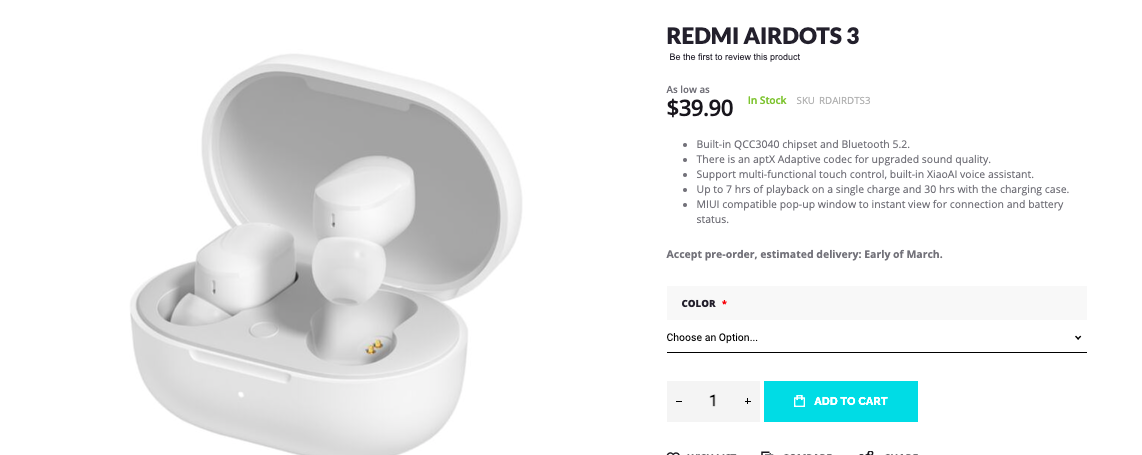
Xiaomi Redmi Airdots 3 is now live for pre-booking at Giztop. This budget-friendly earphone is available for $39.90 only.
Redmi Airdots is powered by a QCC3040 chipset and Bluetooth 5.2. This means faster and stable connections with a high speed and data transmission rate. The deep bass and high-quality stereo audio make it a pleasure to listen to your favorite tunes on Xiaomi Redmi Airdots 3. The multi-functional touch control can easily navigate through your music as well as pick up and hang calls and activate the built-in XiaoAI voice assistant.
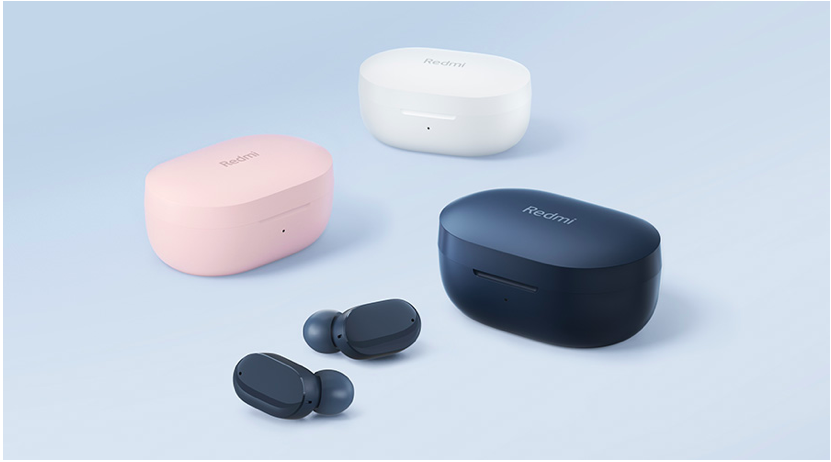
The 600mAh battery gives you 7 hours of non-stop music with a single charge and up to 30 hours of music time, with the charging case. Available in three color variants viz: white, blue, and pink this next-generation earbud is selling at Giztop for $39.90 only. For all global customers, the estimated time of delivery will be around early March and additional shipping charges may apply.
So pre-order your Redmi Airdots 3 ASAP from Giztop and enjoy your music anywhere and everywhere with this stylish and budget-friendly earbud.
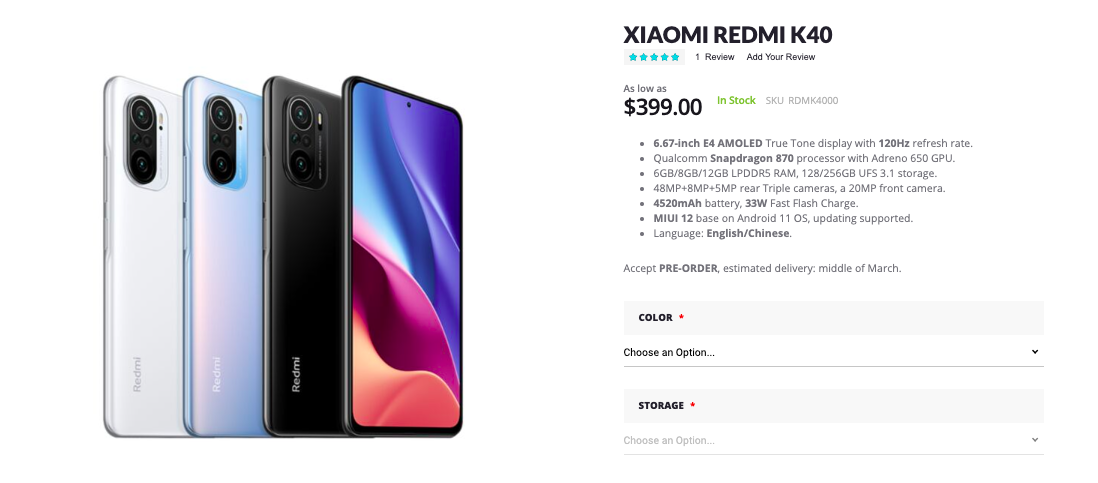
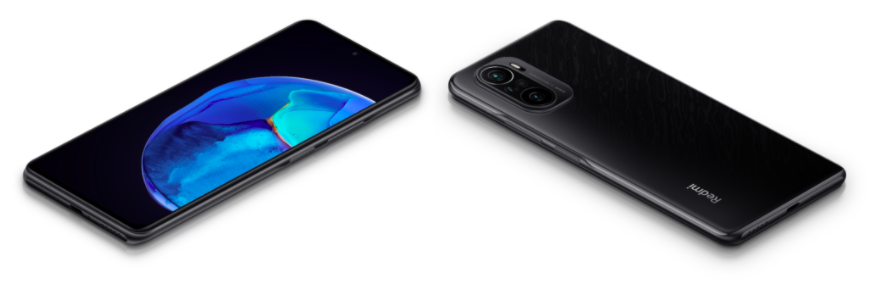
Great news for all global Xiaomi lovers. The most anticipated Xiaomi Redmi K40 is now available for pre-order at Giztop.
This budget flagship from Xiaomi comes with a 6.67 inch super AMOLED display and Corning Gorilla Glass 5 Protection. Designed to satisfy your creative needs, the smartphone comes with a powerful triple rear camera setup with a 48MP wide, main camera, and an 8MP ultra-wide and 5MP macro camera. The 20MP selfie camera is more than adequate to churn out sharp and clear images.
Powered by Snapdragon 870 5G and an Octa-Core processor, Xiaomi Redmi K40 has a 4520 mAh battery and 33W fast charge which charges your phone to 100% in just 52 minutes. For more detailed information and comparisons, you can check out this article on Gizmochina.
Giztop is now allowing to pre-book Xiaomi Redmi K40 for all its global customers. Please note that this smartphone is of the Chinese Edition but comes with the Global Version software (pre-installed) and the Google Play Store. Also, the smartphone supports OTA updates and multiple languages like English, Spanish, Portuguese, Russian, Italian, etc.
Xiaomi Redmi K40 is now available for pre-booking at Giztop for the following price :
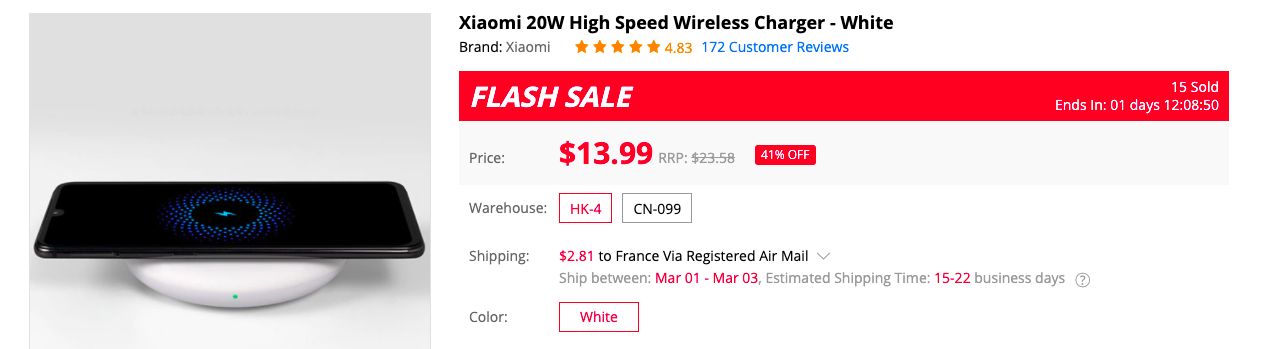
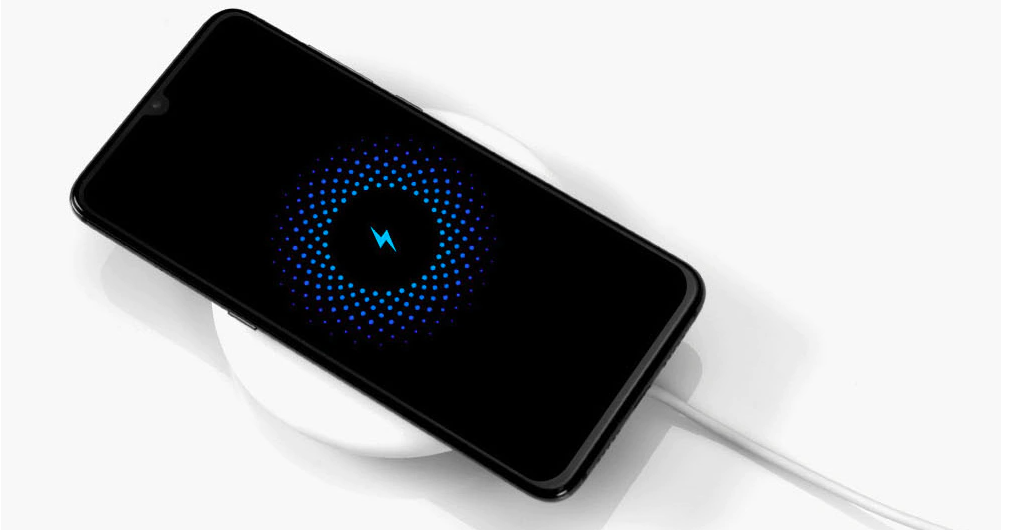
Gearbest is giving out this amazing deal on Xiaomi 20W High-Speed Wireless charger. The wireless charger which generally retails at around $30, is available for a heavily discounted price of $13.99 only.
Xiaomi 20W high-speed wireless charger is compatible with all the devices that meet Qi Wireless charging standards. The 20W peak power gives you fast and high-speed charging without the hassle of cables or adaptors. A super silent cooling fan and the heat sink and heat dissipation system make it almost undetectable while in use. So you can charge your device without worrying about heating or noise issues. The charger which is designed for convenience as well as aesthetic pleasure comes with an advanced Foreign Object Detection Function. Thus if you accidentally place a metal object on your charger or if the charger starts to heat up, it will automatically power off to save you from potential fire hazards.
This super deal where Xiaomi 20W high-speed wireless charger is available for $13.99 is live only for the next 24 hours. The deal is only applicable for orders from the Hong Kong warehouse and additional shipping charges may be applicable.
So go grab your super deal before it expires tomorrow.
Back in August 2020, Gionee had launched the Gionee Max in India with a ₹5,999 price tag. Now, it looks like the company is bringing a successor under the name Gionee Max Pro.
Gionee is bringing a new device to India on March 1, at 12 PM IST(GMT+ 05:30) and it is called the Gionee Max Pro. A Flipkart teaser page has gone live and it reveals key features of the upcoming budget smartphone.
According to the teaser page, Gionee Max Pro will feature a huge 6.52-inch HD+ display. To compare with the Gionee Max, this display has a v-shaped notch instead of a dewdrop and is about 0.42 inches bigger.
Gionee Max Pro- What we Know so far
Considering it’s still an HD+ display, the resolution should be around 1600×720 pixels. Moving on, the device will feature a bigger 6,000mAh battery as compared to the 5,000mAh on the predecessor.
The Gionee Max Pro also gets upgrades in the RAM and storage departments. Accordingly, the company says that the device will come with 3GB RAM and 32GB onboard storage. Since we are yet to know the processor, we can’t comment on the type of storage yet.
Gionee is trying to market the higher display for content viewing and bigger battery for longer usage. The significance of both these features will obviously depend on what chip runs the device from the inside.
As for price and other features like the camera, we don’t have enough info yet. Hence, let’s wait for official info from the company as we approach the launch next week.
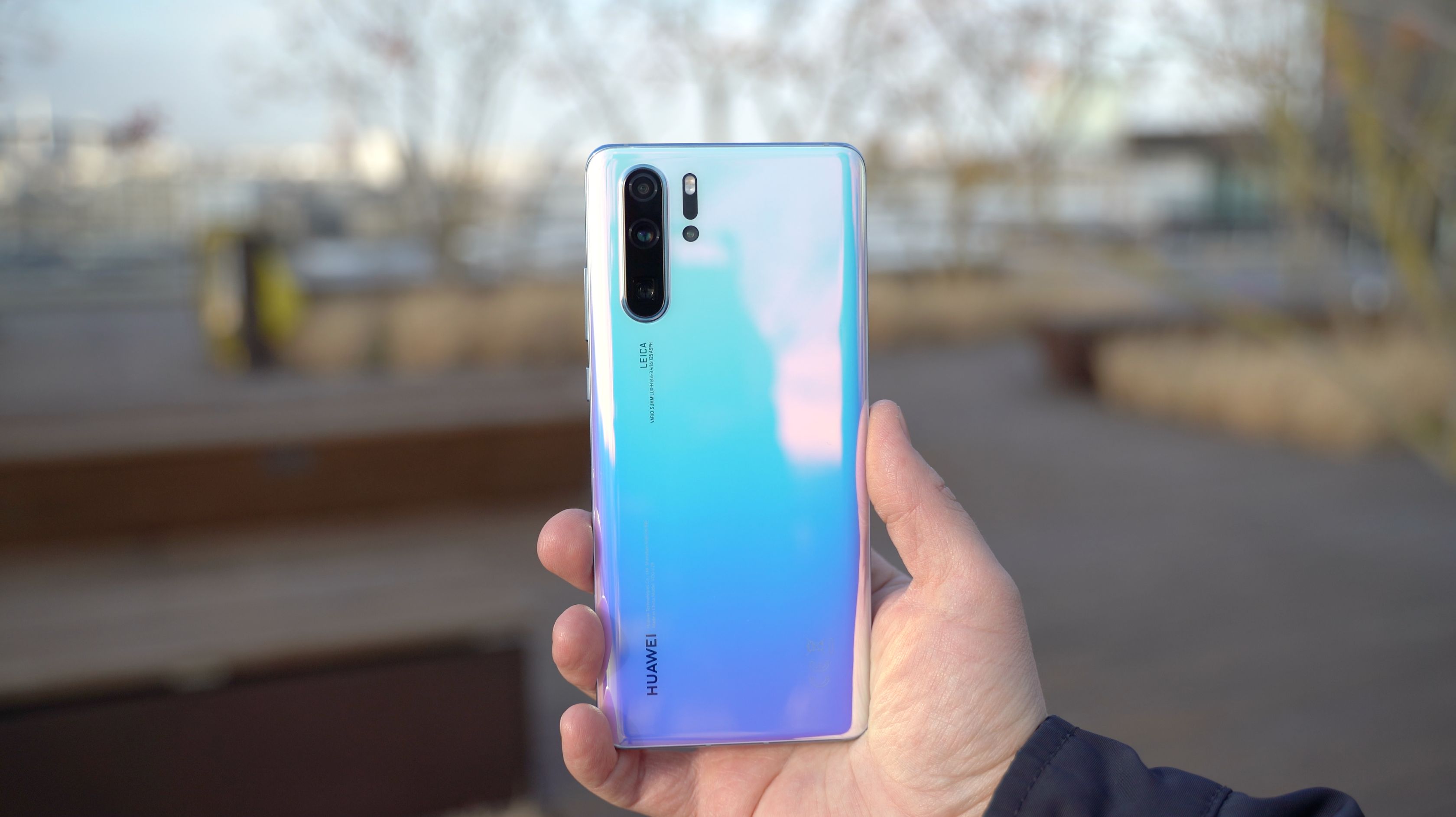
The HUAWEI P30 and HUAWEI P30 Pro were the company’s last flagship smartphones to launch with GMS (Google Mobile Services) The handsets debuted with EMUI 9.1 based on Android 9.0 Pie. They were later updated to EMUI 10.0 as well as 10.1 based on Android 10. Now, these phones have finally started receiving the much-awaited EMUI 11 in global markets.
HUAWEI unveiled EMUI 11 at the HUAWEI DEVELOPER CONFERENCE 2020 in September. Due to the US ban, the underlying Android version is still 10 but it brings some new useful features.
The firm has been delivering beta and stable builds of EMUI 11 worldwide since its announcement. Following the official timeline, the company has now finally started pushing the stable update to HUAWEI P30 and HUAWEI P30 Pro in global markets.
That said, the EMUI 11 Global Stable update for the HUAWEI P30 series is currently being seeded out in batches worldwide. Hence, it may take time to reach your unit.
Anyway, you can navigate to Settings > System & updates > Software update > Check for updates to check whether your device has received the OTA update. Optionally, interested users can update from the Support app by heading over to the Service tab > update > Check for updates > download and install.
We use cookies on our website to give you the most relevant experience by remembering your preferences and repeat visits. By clicking “Accept”, you consent to the use of ALL the cookies.
This website uses cookies to improve your experience while you navigate through the website. Out of these, the cookies that are categorized as necessary are stored on your browser as they are essential for the working of basic functionalities of the website. We also use third-party cookies that help us analyze and understand how you use this website. These cookies will be stored in your browser only with your consent. You also have the option to opt-out of these cookies. But opting out of some of these cookies may affect your browsing experience.
Necessary cookies are absolutely essential for the website to function properly. This category only includes cookies that ensures basic functionalities and security features of the website. These cookies do not store any personal information.
Any cookies that may not be particularly necessary for the website to function and is used specifically to collect user personal data via analytics, ads, other embedded contents are termed as non-necessary cookies. It is mandatory to procure user consent prior to running these cookies on your website.