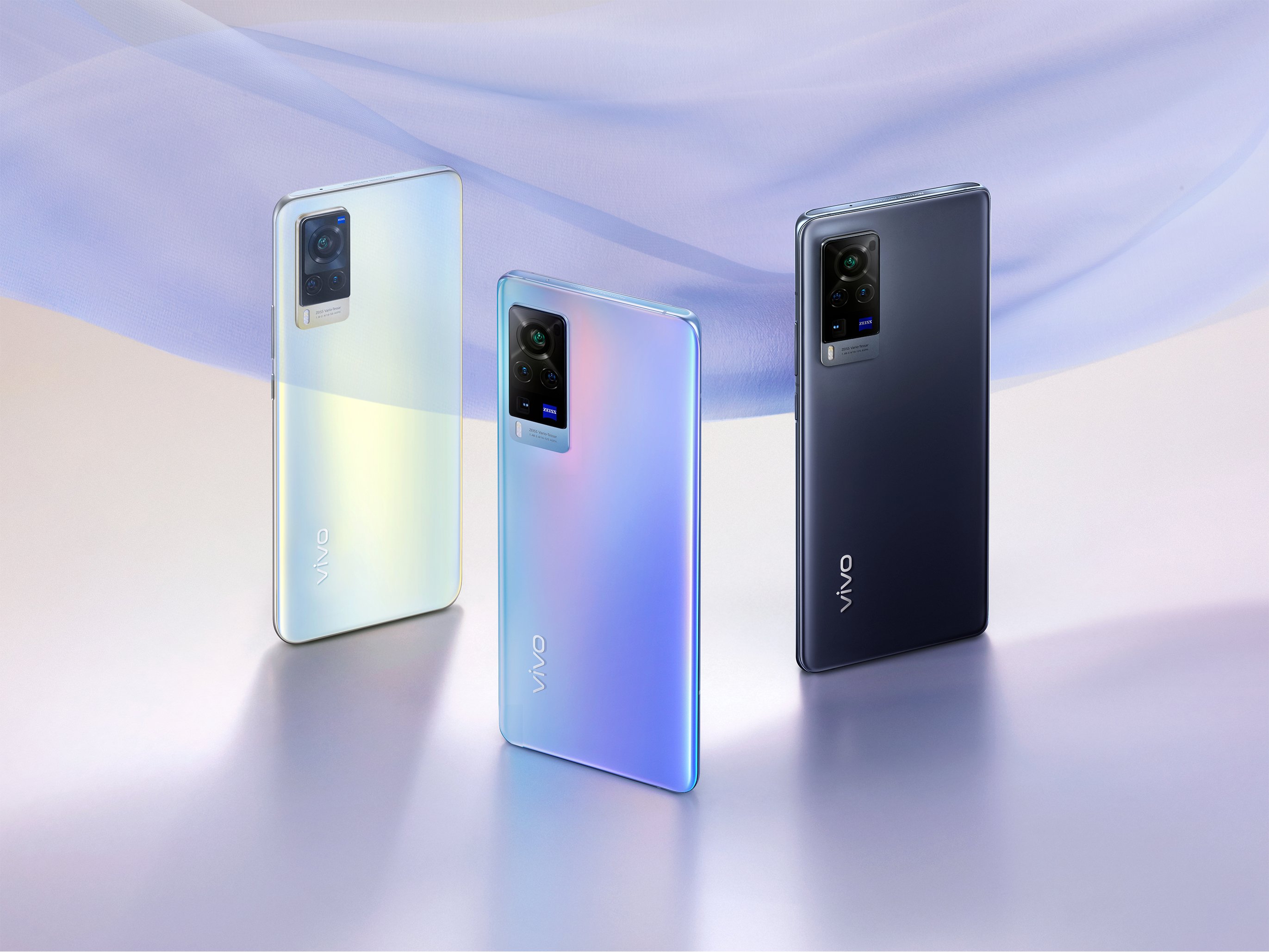
Yesterday, Vivo X60, X60 Pro Global versions were spotted on several certification websites. They are expected to launch in Europe, India, and SEA markets like Indonesia. Ahead of the launch, the Google Play listing hints that the devices could get a Qualcomm Snapdragon chipset instead of Samsung’s Exynos.
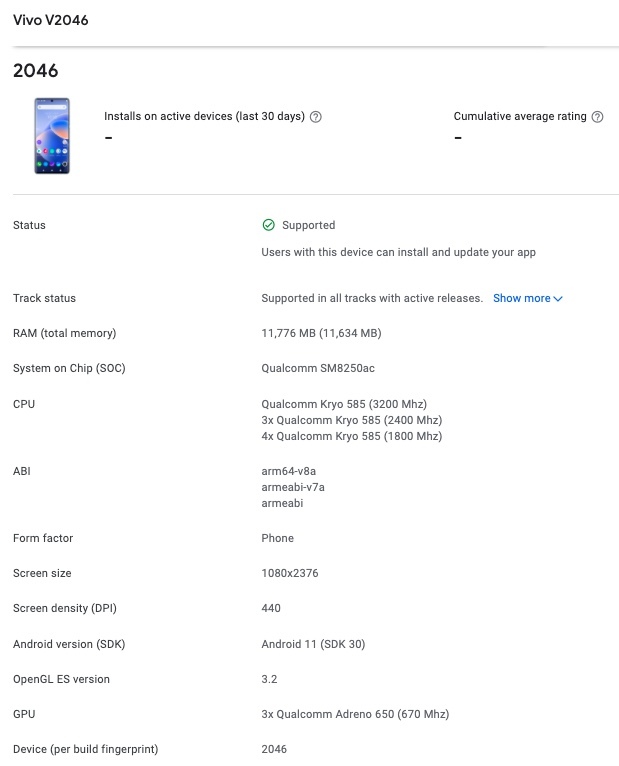
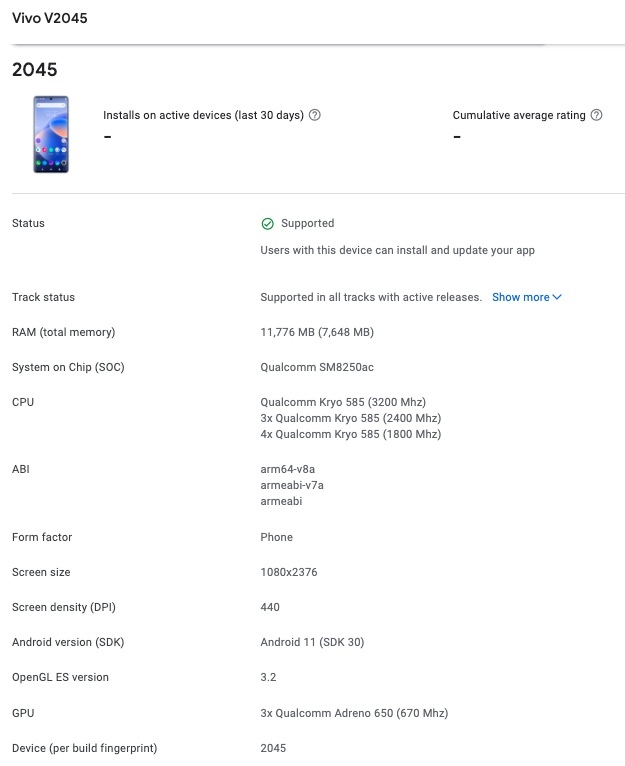
According to the Google Play Console listings spotted by MySmartPrice, two Vivo devices bearing the model numbers V2045 and V2046 appear on it. We already know that these belong to the Vivo X60, Vivo X60 Pro respectively. The Chinese giant had already launched it in its home country towards the end of last year.
In China, they both feature the Samsung Exynos 1080 chipset. However, the Console listing suggests that the devices could get Snapdragon 870(Qualcomm SM8250ac) chipset Globally. Besides, Vivo’s spin-off brand is already preparing a device called iQOO Neo5 with the same chipset for China.
Anyway, the listing shows that the devices will feature a display with 2376×1080 pixel resolution, 12GB RAM, and run Android 11 OS. Considering Vivo’s recent plan, these devices should get the Funtouch OS version of the UI and not OriginOS.
1 of 3
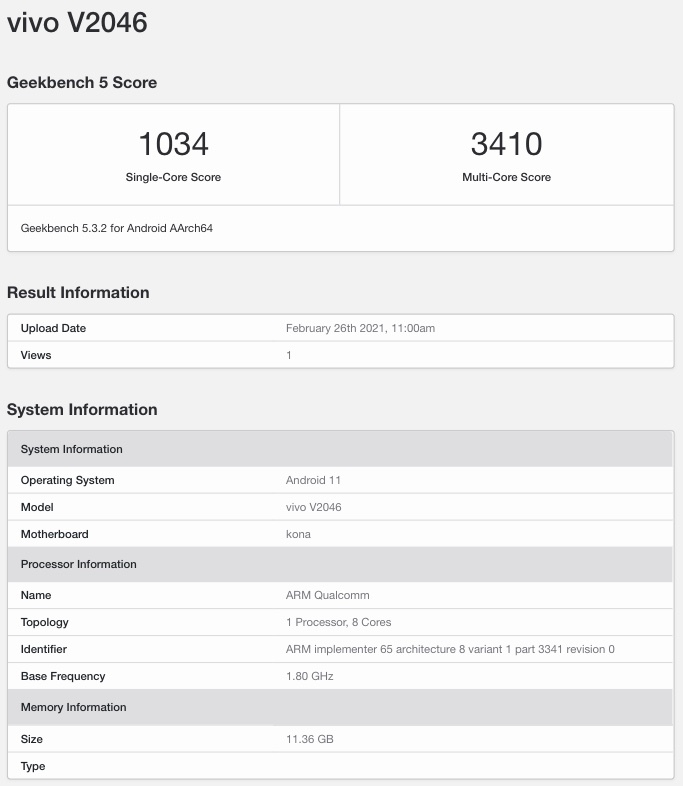
To affirm this further, the model number V2046(Vivo X60 Pro) also appears on a Geekbench listing with ‘kona’ motherboard which corresponds to the Qualcomm Snapdragon 870 chipset.
Apart from the chipset, if Vivo were to maintain the other specs same on the Vivo X60, X60 Pro, the devices will share a lot of specs like the 6.56-inch FHD+ 120Hz AMOLED display, 32MP selfie camera, 33W fast charging but differ in rear camera and battery.
Accordingly, the non-Pro will get a 48MP main lens, 13MP ultra-wide, 13MP Telephoto with 2X optical lenses while the X60 Pro will get another 8MP periscope lens in addition to the above setup. Similarly, the X60, X60 Pro will have 4,300mAh and 4,200mAh batteries respectively.
Huawei and Goodix have recently been sued by a small UK based technology company. The lawsuit is over an apparent patent infringement by the two China based firms, with the company launching legal proceedings against both Chinese firms.
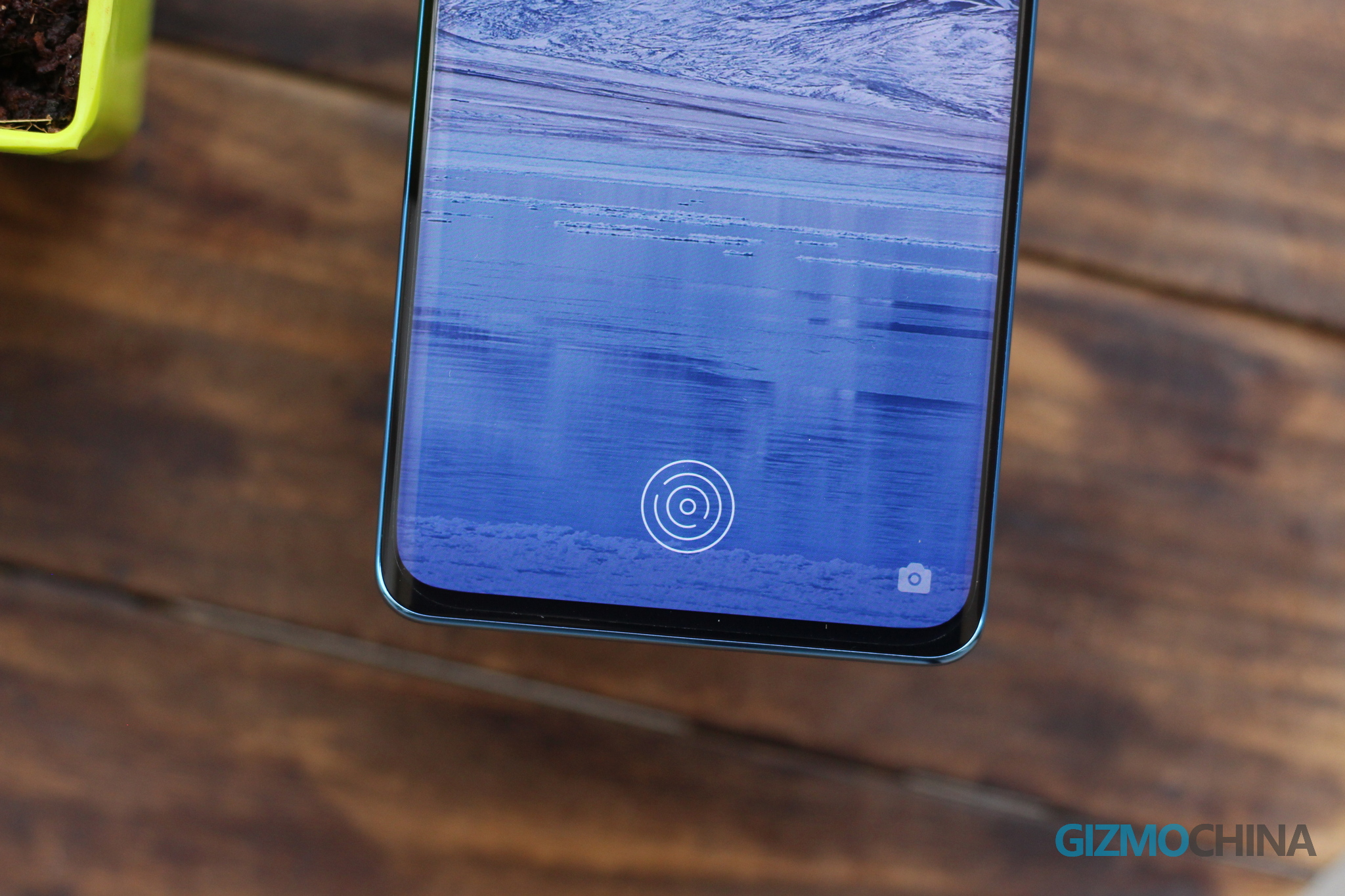
According to a FinancialTimesreport, WaveTouch, a British based brand, has filed claims against the two Chinese tech giants. These claims have been filed in the District Court of Düsseldorf, one of the main European patent courts. For those unaware, Goodix is China’s largest developer of smartphone fingerprint sensors. WaveTouch has alleged that a system that it had developed to improve the accuracy of fingerprint sensors underneath the smartphone displays has been used by Goodix for a range of ultra thin chips.
Furthermore, this technology has since been shipped in millions of smartphones. Similarly, it also alleged that the Huawei has also used this chip technology into a number of its smartphones, like the Mate 40 and P40 series. Unfortunately, Huawei and Goodix have decliend to comment on the matter at the moment. Additionally, both companies have until the end of March 2021 to file a defence to the claim.
Jørgen Korsgaard Jensen, founder of WaveTouch told Financial times that he has “always been very much in favor of establishing [a] close and good cross border relationship between Europe and China as I think the mix of different backgrounds and cultures can create innovative solutions and ideas. Today, the majority of employees in WaveTouch are employed in our Shenzhen based subsidiary and in this light it saddens me even more to see this kind of behavior disrespecting intellectual property rights.”
In late October 2019, a new Moto 360 smartwatch was unveiled by a Motorola brand licensee called eBuyNow. This company is now all set to introduce not one but three new Moto-branded smartwatches later this year. These wearables will be different from each other in terms of design and could be targeted at a different set of consumers.
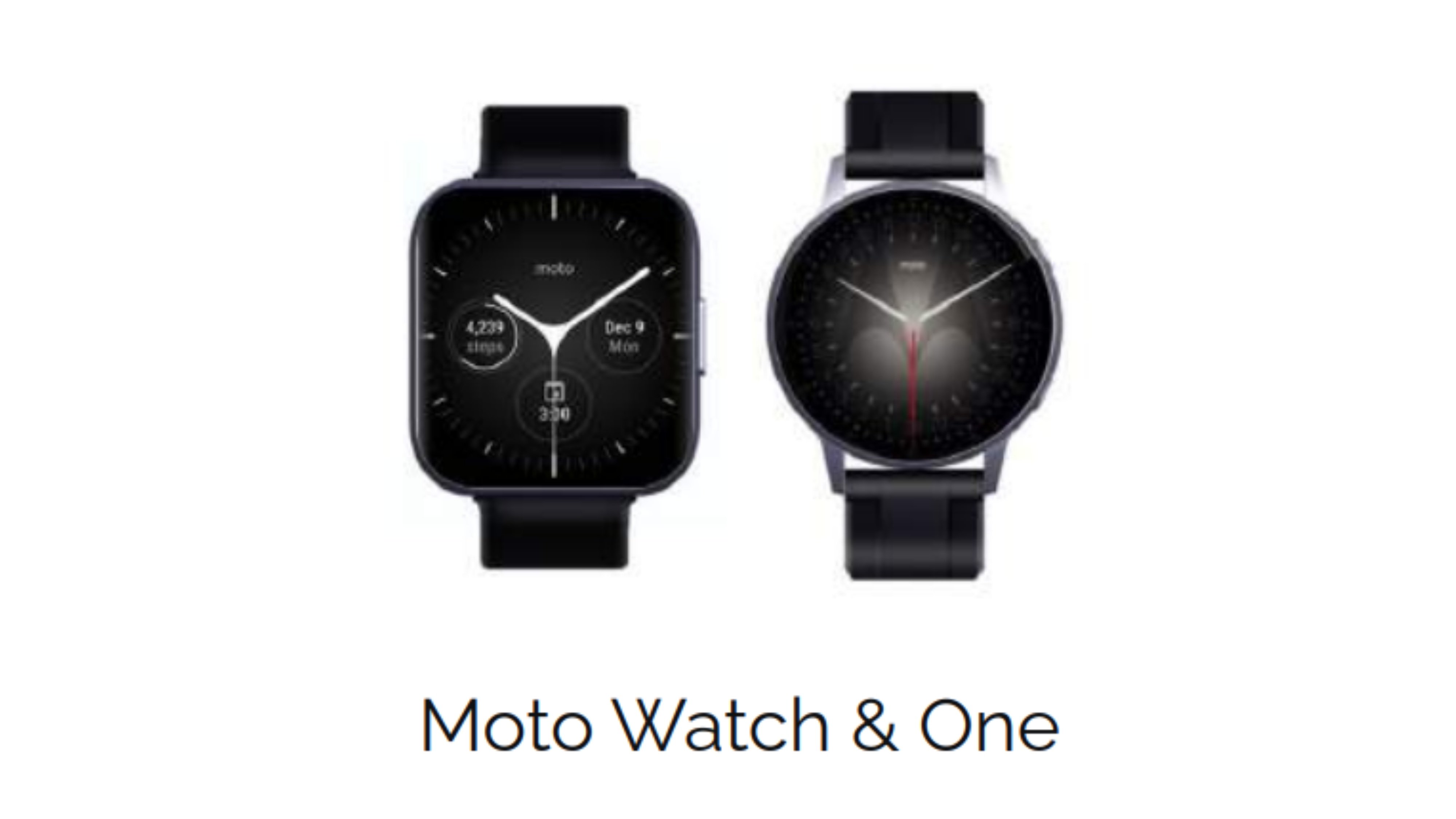
According to a sales presentation PDF file acquired by Twitter user Felipe Berhau, eBuyNow will be soon releasing the following three Motorola-branded smartwatches.
Moto Watch
Moto Watch One
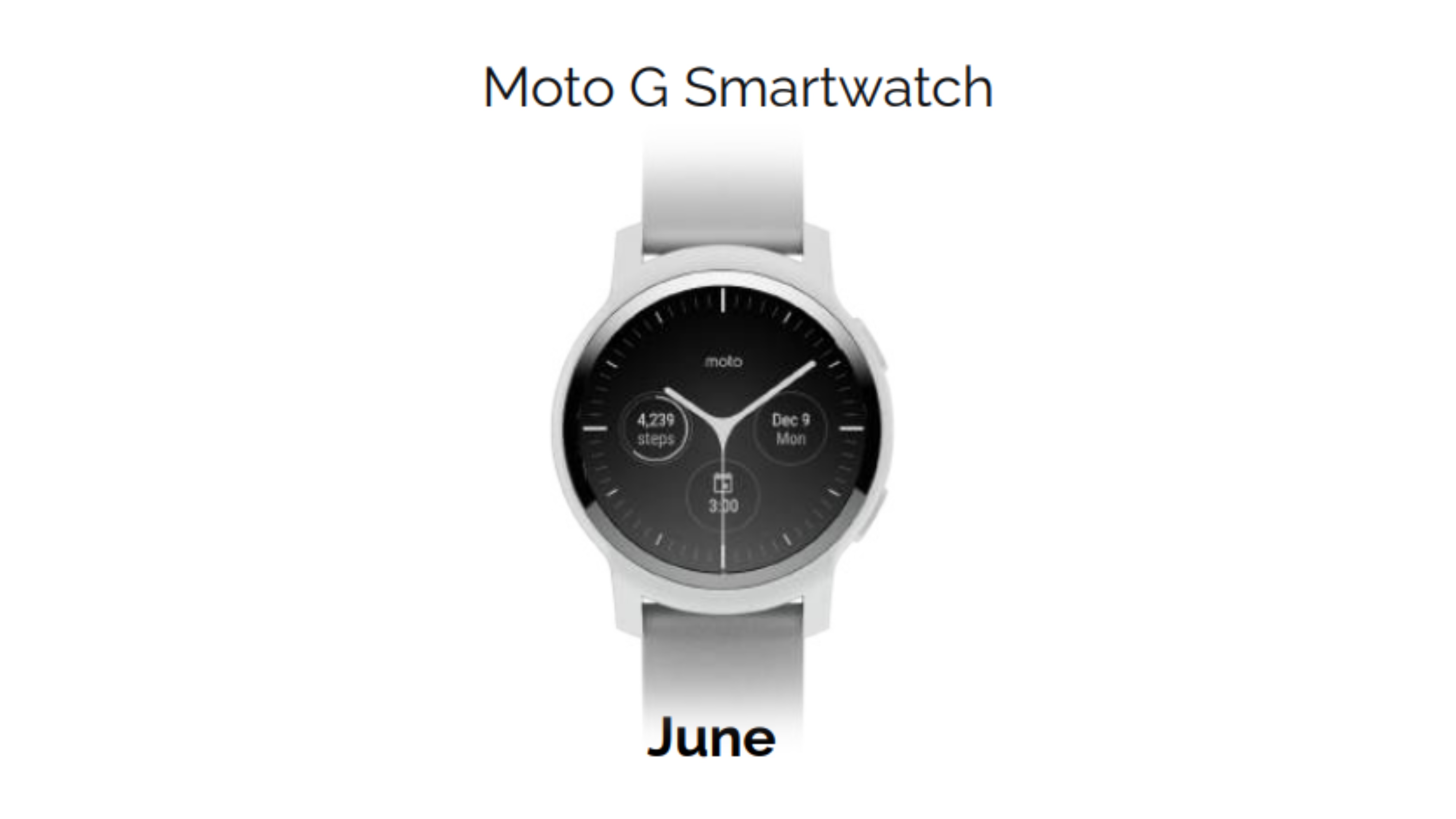
Moto G Smartwatch
The screenshots shared by the person also reveal the design of these three upcoming wearables.
First and foremost, the Moto Watch will be identical to the Apple Watch and thus, it will be the first Motorola-branded smartwatch with a square dial. Whereas, the Moto Watch One and Moto G Smartwatch will sport a circular dial, just like the previous Moto 360 watches. However, the former will feature a classic design, while the latter will be sporty in looks.
Unfortunately, their specifications are a mystery but we can expect them to arrive with GoogleWear OS like the previous watches from Motorola. Anyway, it is possible that the Moto G Smartwatch, which we think will be the most affordable of the three, could come with different internals and software to keep the price down.
That’s because the Moto G lineup of smartphones is known for affordability. The devices in the series offer basic specs at a cheaper price tag. Anyway, this is merely speculation from our end and therefore, we could be wrong.
Last but not least, as per the PDF file, the Moto Watch and Moto Watch One will launch in July 2021. On the other hand, the Moto G Smartwatch will release a month earlier in June 2021.
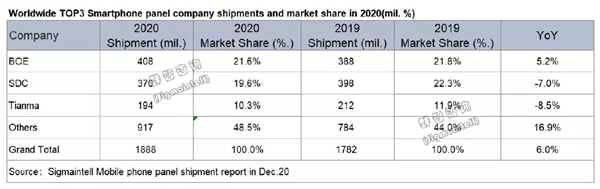
A Chinese market research firm Qunzhi Consulting has released a market research data which detailed the performance of the major display panel manufacturers globally in 2020. The report shows that 2020, the total shipment of global smartphone panel was 1.888 billion, representing a year-on-year increase of 6%.
Chinese display maker BOE ranks as the world’s No. 1 panel manufacturer with 408 million units shipped during the period. Thus, the Chinese firm controls a 21.6% share of the market, a year-on-year increase of 5.2%.
In addition to BOE, Samsung and Tianma ranked second and third with shipments of 370 million and 194 million respectively.
Among them, Samsung’s market share 19.6%, down 7% year-on-year, and Tianmwasa’s share was 10.3%, down 8.5% year-on-year. The report also shows that the top three on the list occupy at most 50% of the total market share.
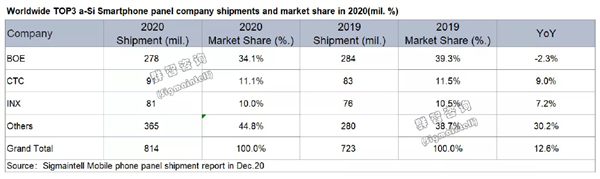
According to the data, BOE’s shipments mainly rely on a-Si panels, with a total shipment of 278 million pieces, accounting for about 70% of BOE’s smartphone panel shipments.
However, although JD.com surpassed Samsung to become the world’s largest smartphone panel supplier, 70% of its shipments rely on a-Si panels.
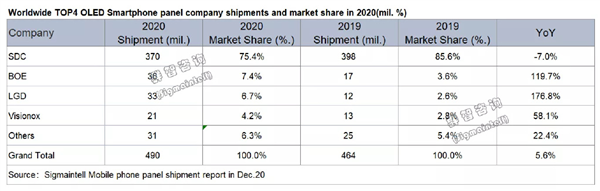
In the most profitable OLED panel market, Samsung has become the number one with 370 million shipments, maintaining a dominant position.
The rise in shipments of display panels is against the tide of a reduction in chip shipment as a result of the scarcity.
In this regard, Qunzhi Consulting believes that due to the gradual recovery of the chip market, phone manufacturers are increasing their efforts to pull goods for low-end products. In addition, manufacturers are believed to have placed a large number of orders to prepare panels in advance in order to prevent subsequent shortages of parts.
Nubia is gearing up to launch the Red Magic 6 in China on March 4. Ahead of the launch, the company has been teasing the gaming-centric features of the device. Now, we get an official first look at the rear design.
Red Magic 6
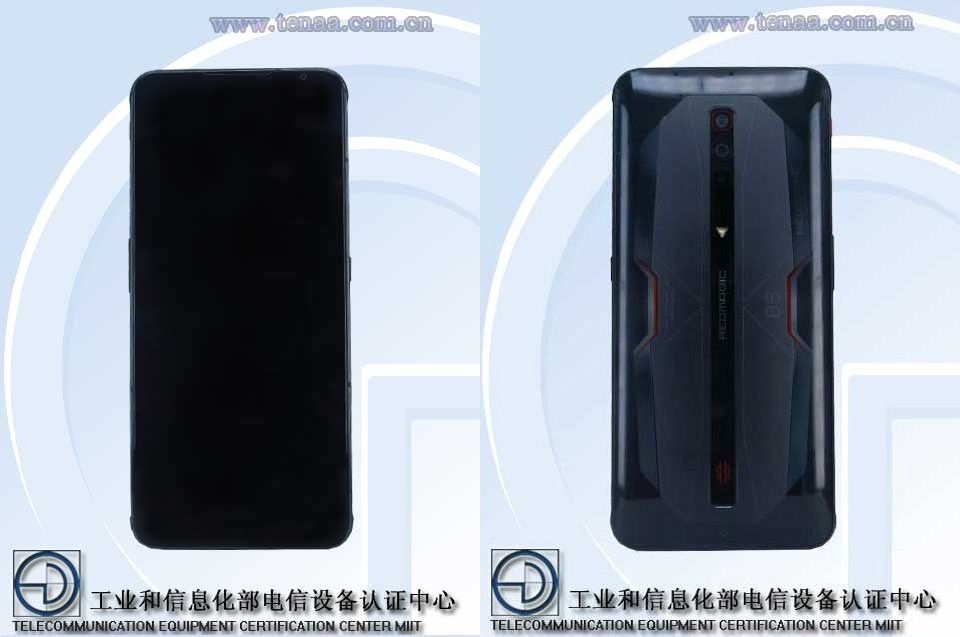
Ni Fei, the President of Nubia Technologies, has posted the rear image of the Nubia Red Magic 6. This comes a few hours after the images of two Nubia models appeared on China’s TENAA certification. Anyway, we can see that the device has Triple-cameras, ‘Tencent Games’ logo.
If you recall, Nubia recently partnered with Tencent Games with a view of improving the Gaming smartphone experience. In line with that, expecting a Tencent Games edition of the upcoming Red Magic 6 couldn’t be more pronounced. That said, this Purple and Blue color on the rear is quite different from the one leaked so far.
1 of 3
Red Magic 6
Red-Magic-6 TENAA
The official image shows Triple-cameras on a Black strip that runs vertically at the center to hold ‘Red Magic’ and its logo along the way. The ‘Tencent Games’ etching appears on the side this time.
Thanks to the TENAA listings(via Playfuldroid) we also get a look at the front of the device. It seems to have thin bezels on the top and bottom with a selfie camera located to the top right.
The Red Magic 6 may launch in two versions- Red Magic 6, Red Magic 6 Pro. The devices are expected to darn the OLED display with a refresh rate up to 165Hz and a touch sampling rate up to 480MHz. The company is already teasing shoulder touch buttons for gaming.
As a gaming flagship, the device will feature a Snapdragon 888 chipset with a battery capacity of 4,500mAh and a 120W fast charging. More teasers are about to come our way as we approach the launch next week.
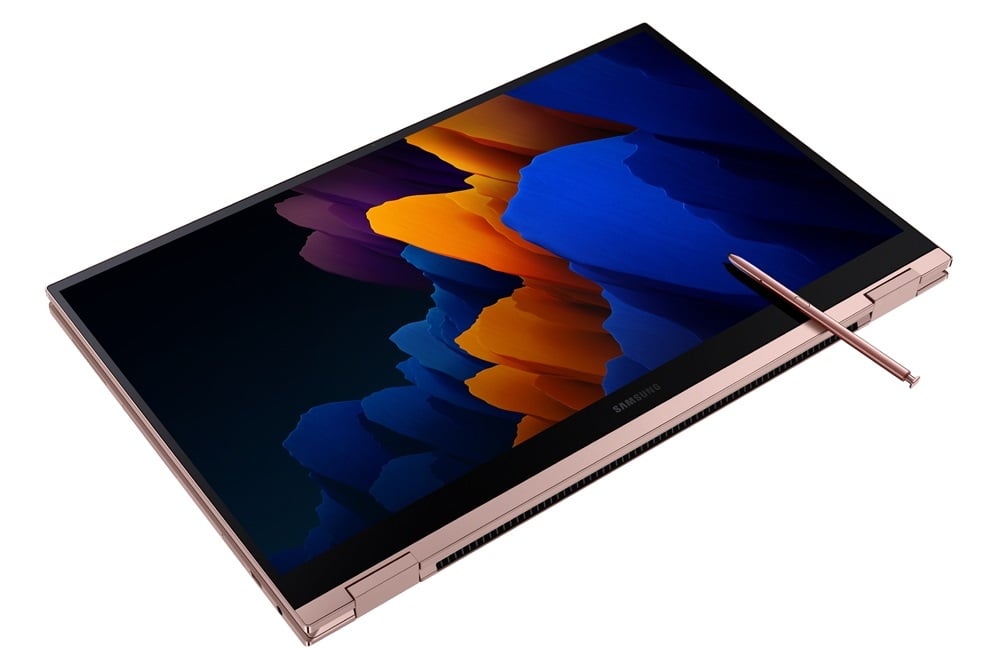
Samsung Electronics is reportedly working on a new Windows 10 PC. This PC is unique since it will be powered by an Exynos custom chip, which would feature integrated AMD graphics.
According to a ZDNetreport, this chipset has been tentatively dubbed as the Exynos 2200, which will feature an AMD graphics. With this new PC, the South Korean tech giant aims to secure price competitiveness while also differentiating itself from Qualcomm‘s Snapdragon. The company reportedly seeks to achieve this by synchronizing memory, display, and NAND flash to APs. For those unaware, Qualcomm has virtually monopolized APs for ARM Windows 10 PCs since 2018.
Furthermore, the report from major component suppliers and partners also stated that Samsung is preparing to launch the Windows 10 PC with the new Exynos 2200 in the second half of this year. While the exact date of the launch is unknown, it is expected to launch sometime in the third quarter of 2021, following the release of the upcoming Galaxy Note 21 series. Unfortunately, finer details regarding the Windows PC is also currently unknown.
Galaxy Book Flex 2
As per an anonymous official, “Currently, Samsung Electronics is reviewing to install the Exynos AP on a slim notebook similar to the Galaxy Book S released last year.” At the moment, the information regarding an Exynos PC is still unconfirmed so take this report with a pinch of salt and stay tuned for more, as we will providing updates when additional information is available.
Earlier today (26th February 2021), the Meizu 18 series was teased again. In the image poster, the company showcased the Qualcomm Snapdragon 888 SoC for the Pro variant, while also teasing the new OneMind.
In the Weibo posts (a Chinese microblogging website), the brand shared two image teaser. The first one showcased the flagship Snapdragon 888 chipset for the 18 Pro, which will also be paired with UFS 3.1 storage and LPDDR5 memory as well. In the second teaser, the company teased the “OneMind 8XX” as well. The Pro variant will feature top notch specs while the base variant is expected to arrive with the Snapdragon 870 SoC.
For those unaware, the OneMind is a platform-level AI capability that enables services to fully utilize AI. This basically server three purpose, namely, analysis, decision making, and evolution. This will also record the users’ daily use habits for intelligent decision making. Unfortunately, finer details regarding both devices are currently unknown, although, it is known that the Pro variant will arrive with a 6.2 inch curved 2K resolution.
Meanwhile, the base variant will feature a 6.2 inch display with a punch hole selfie camera on the front. Furthermore, the new lineup is also expected to arrive with Flyme 9 OS, which is an operating system that is focused on privacy and user data security. The Meizu 18 series is set to officially be announced on the 3rd of March 2021.
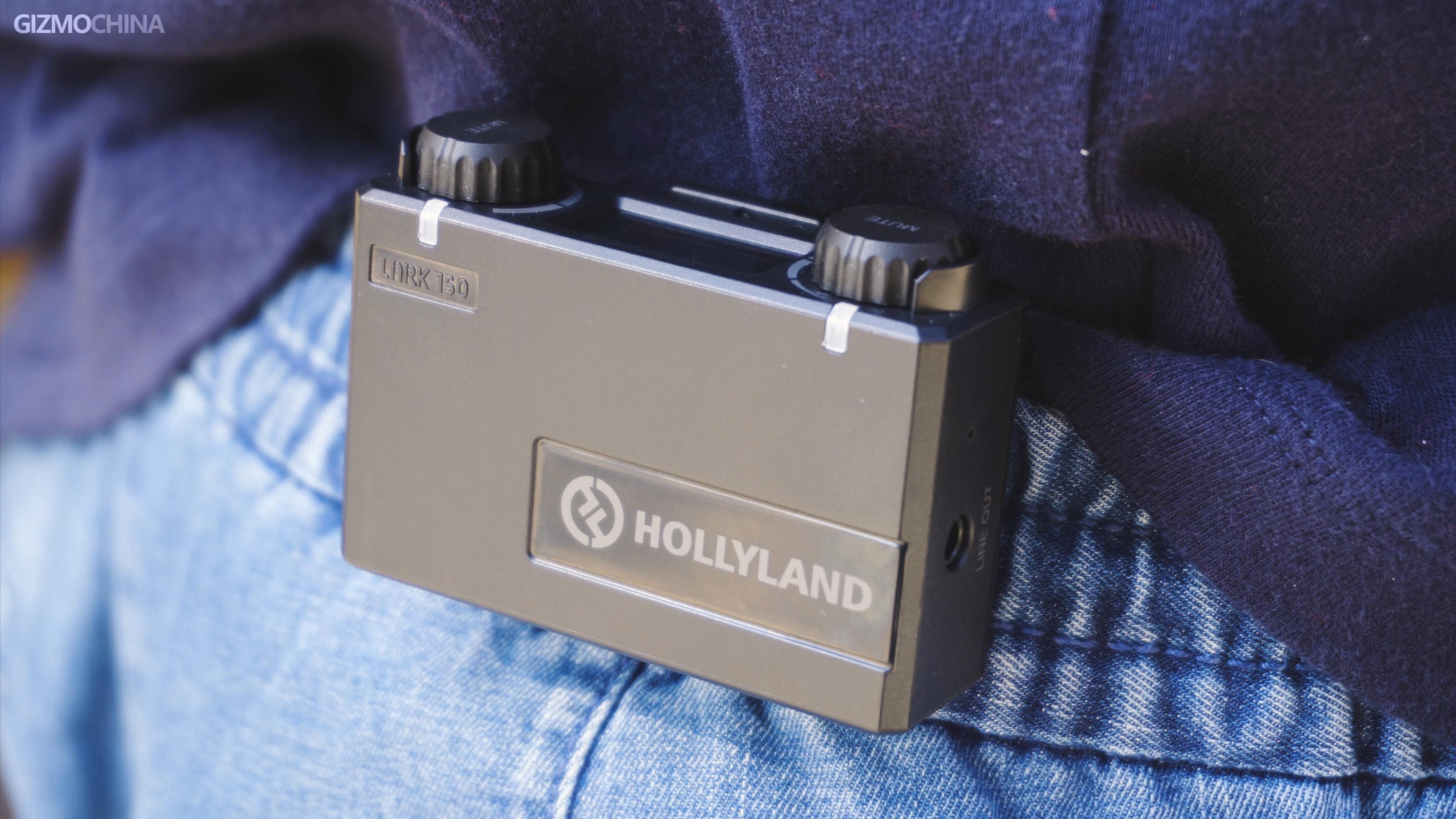
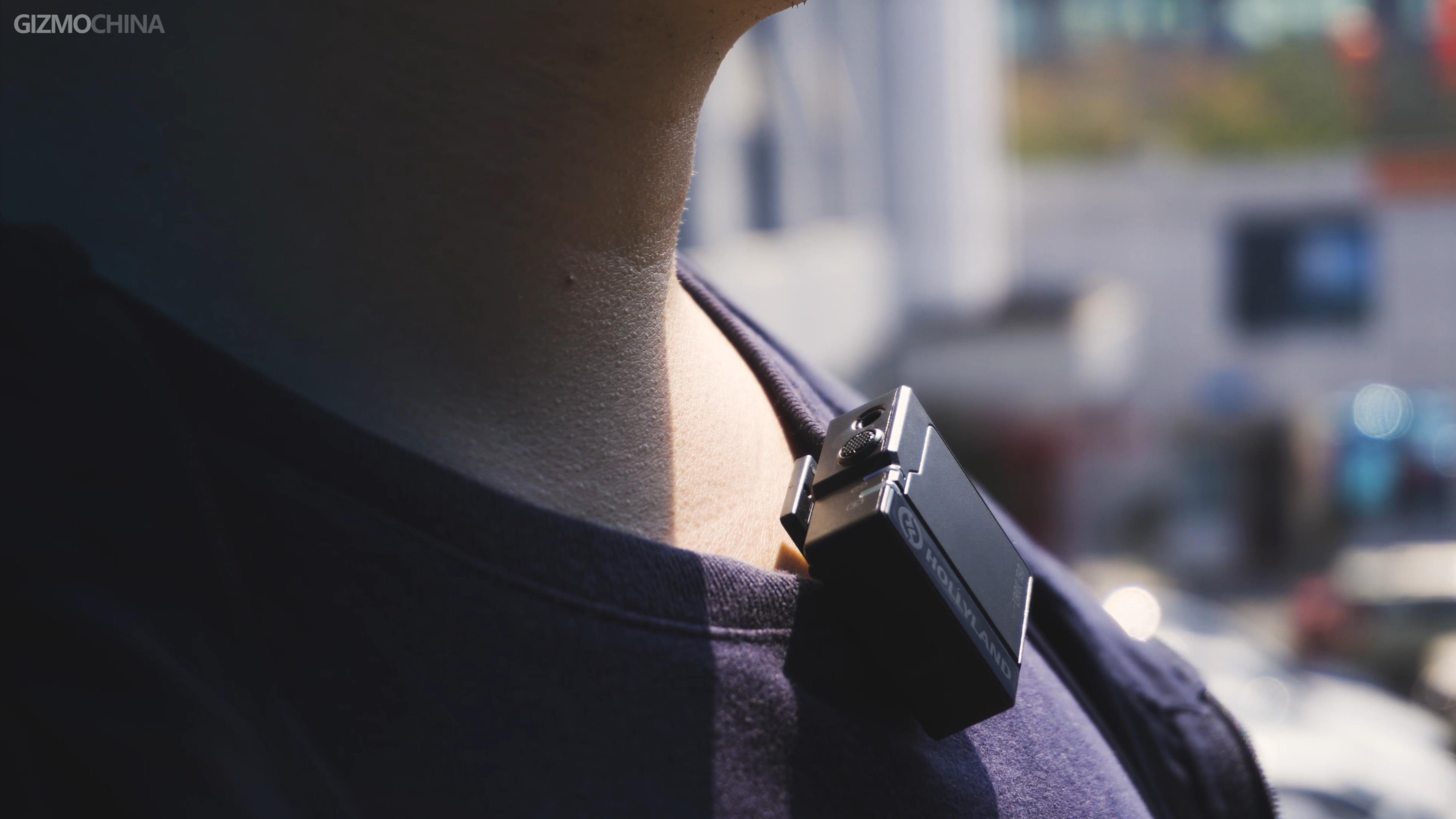
A few weeks ago, we got an interesting accessory for our video shooting, the HollyLand Lark 150 wireless microphone system. Well, to be honest, we weren’t really fond of using wireless microphones since most of them were practically unreliable. You guys may have heard of the famous portable Rode wireless GO, which is one of the best professional choices for vloggers and studios. However, it was just too expensive for us. So wireless microphones were not exactly on our wish list until we saw the HollyLand Lark 150 — one of the smallest and lightest wireless microphone systems in the market. Unlike the Rode wireless GO that features a single transmitter, the Lark 150 has two wireless transmitters to construct dual-channel audio. Therefore, users can have three audio output modes, including a standard mono track, a stereo track, and another creative safety track
HOLLYLAND Lark 150 Wireless Microphone System Review: Design
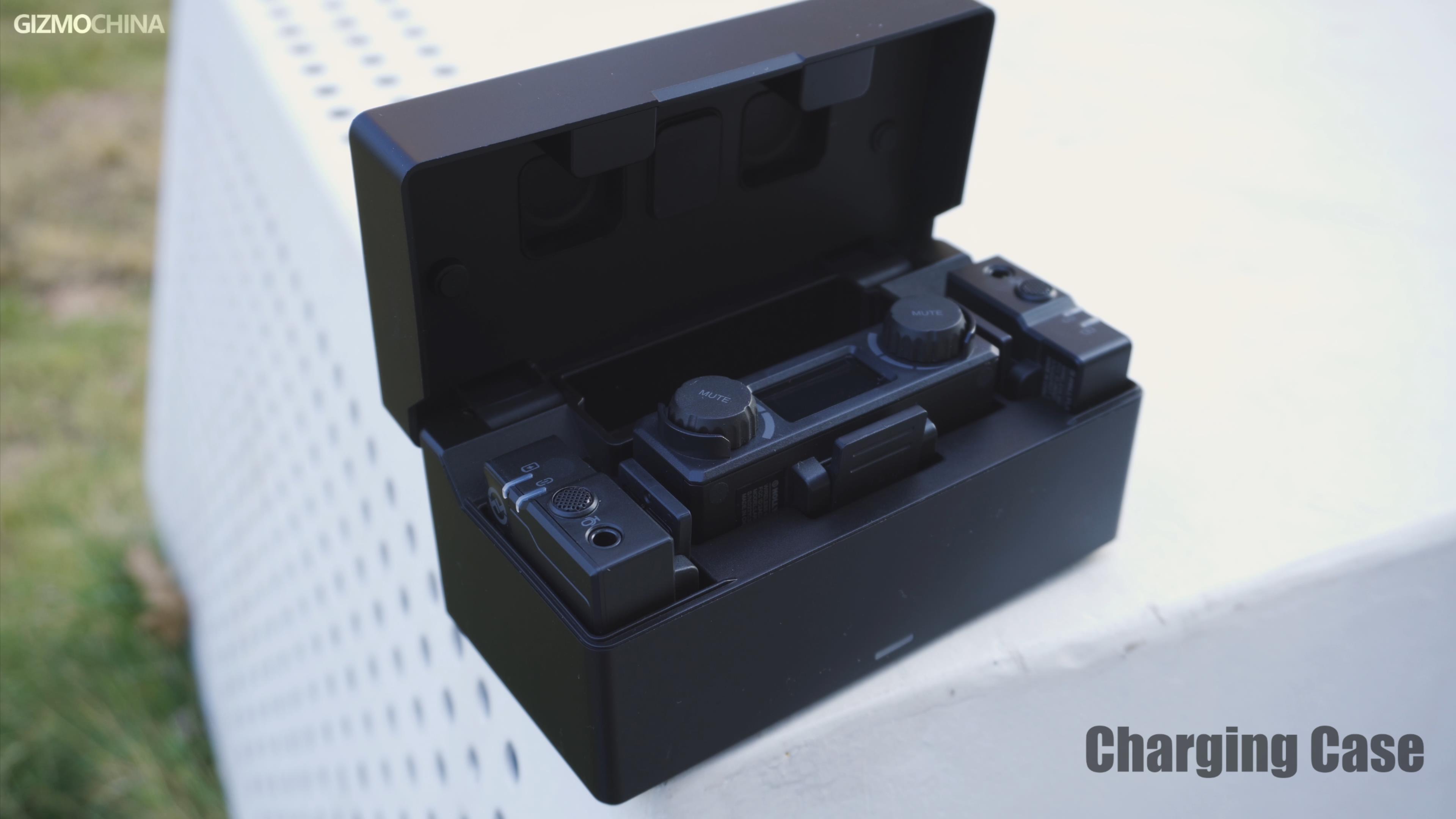
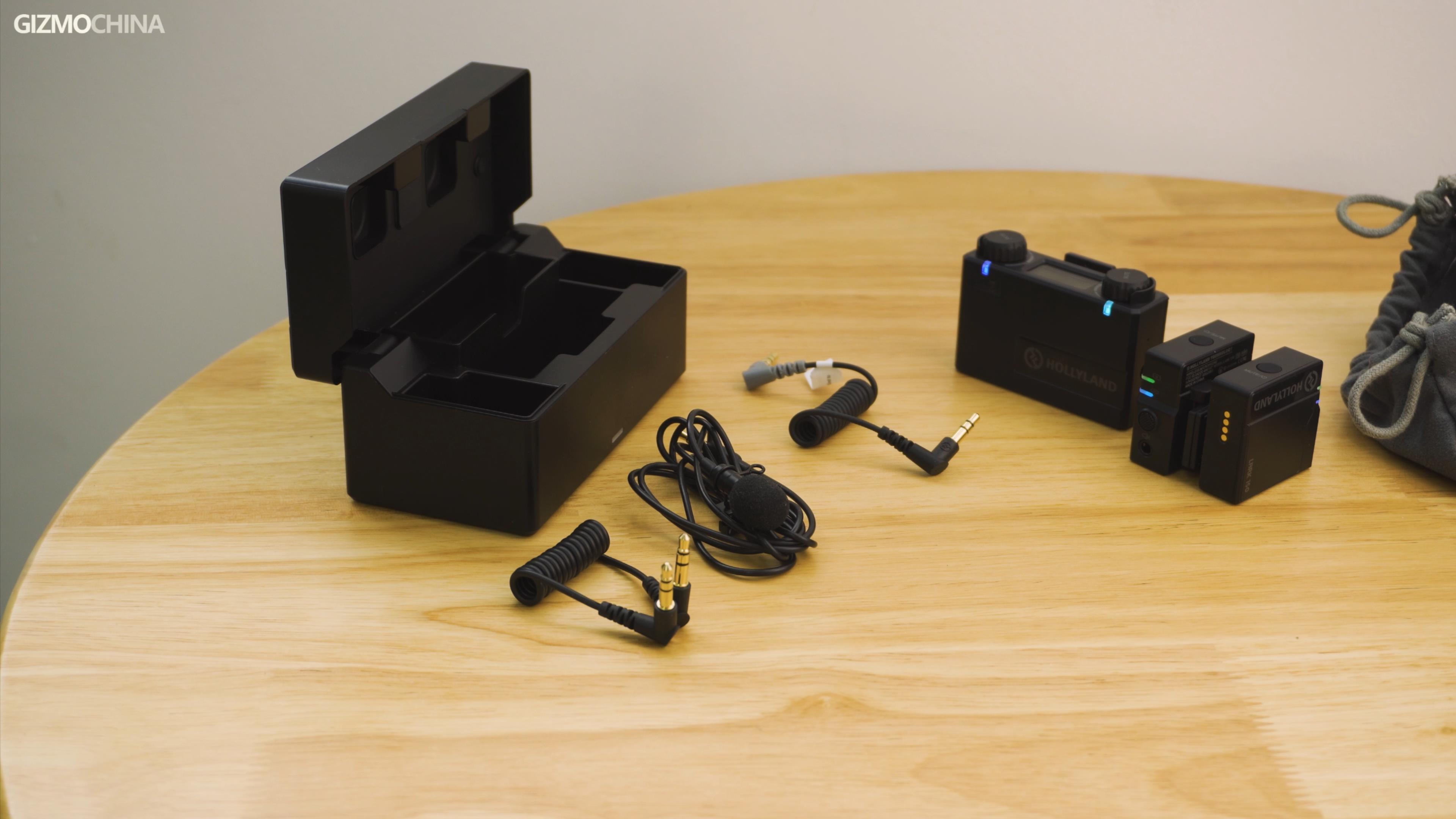
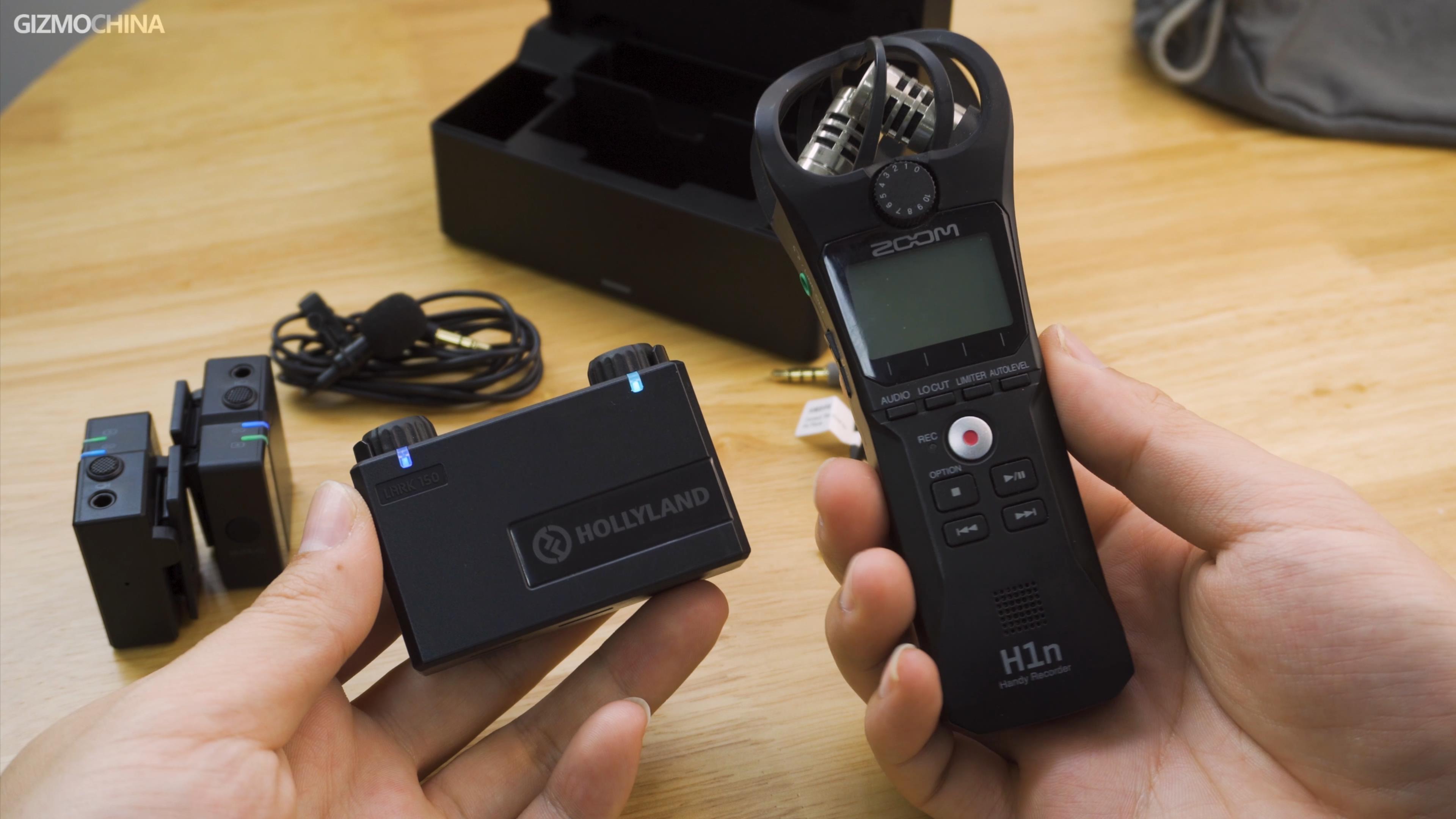
Let’s look at its design first. Well, now we know the reason why it is considered a system. In addition to the two transmitters and a receiver, the charging case (that btw has a good build quality) has a smart design for storage and protection.
The versatile combo is comprised of two transmitters and one receiver, and additionally, the standard packing includes two lavalier microphones for a better fit in different uses. You also get a TRS cable, a 3.5mm user-friendly windshield, and a storage bag that works as the most ideal microphone system for vlogging, YouTubing, interviews, on-stage talk shows, live streaming, and other types of content creation.
Coming back to the compact charging case, the case makes sure that users have a convenient experience while traveling. And more importantly, it can provide easy charging for longer battery life similar to an earbuds’ charging case. All the modules are super compact and well-arranged inside the case. And all the modules are held firmly with its magnetic suction.
In addition to the basic module, it even reserves a slot for storing the cables you need. In full-charged states, the transmitters can last for about 4 hours, while the receiver can last for over 7 hours. And if you want more power, the charging case can charge them anytime and anywhere, which is definitely an amazing feature for those who do a lot of filming outdoors.
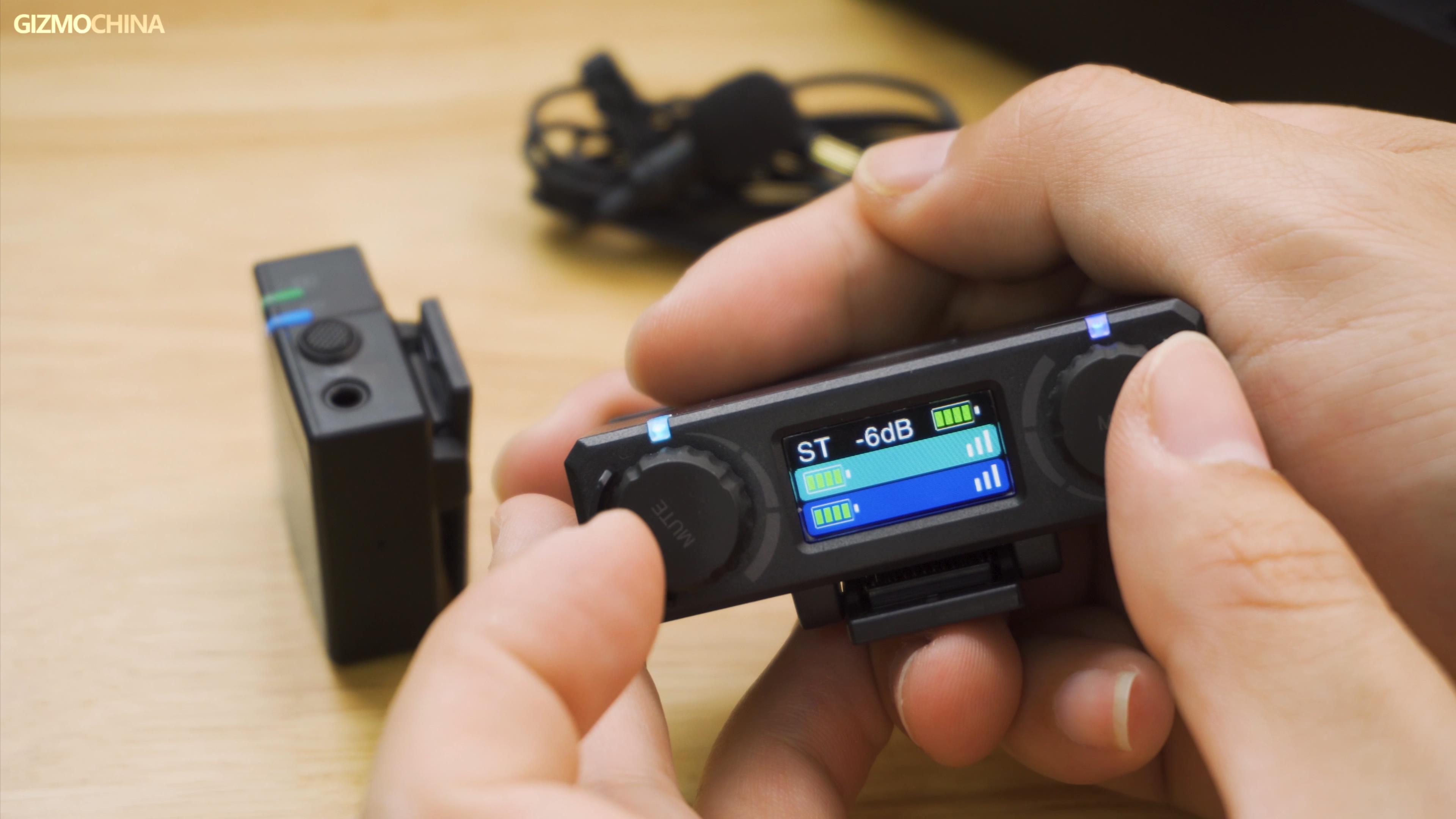
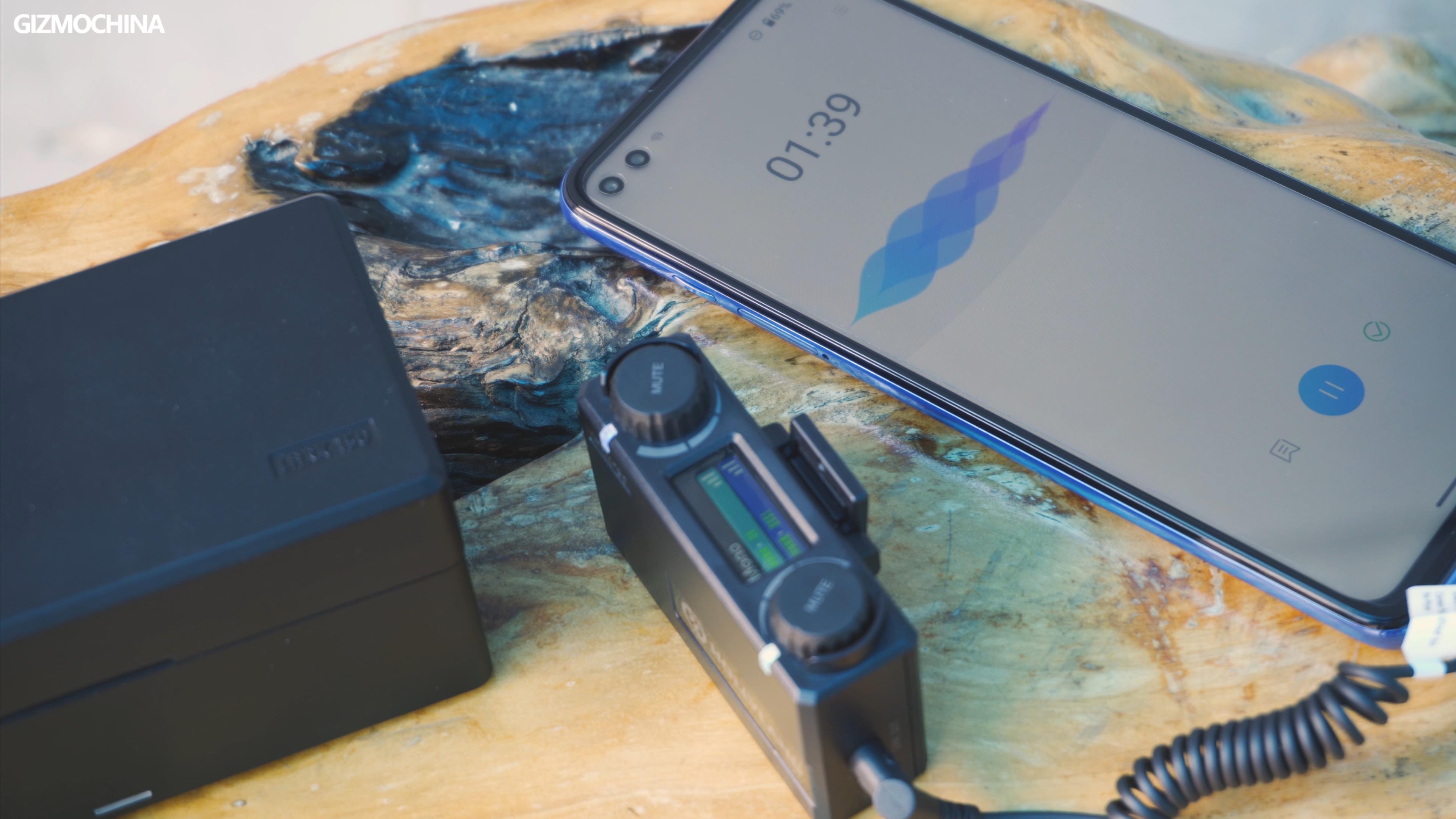
The operation of the transmitters and the receiver is pretty easy. On each transmitter, there is one power button to mute and activate the channel and a 3.5mm TRS audio input. On the receiver, there are two volume knobs on both sides of the screen to adjust the volume of the dual-channel mode. Long press the left one to switch the recording mode, and click once to mute the left channel. Long press the right one to switch the channel to the stereo mode and click once to mute the right one. There are two 3.5mm audio ports, one is a headphone monitoring port and another one is for audio output.
So, that’s all you need to know before you use it for professional recording.
Now let’s check out its sound quality. Well, we are going to show how the three audio output modes work, and then we will subject it to multiple scenarios with different background noises. This will show us how HollyLand’s intelligent noise cancellation works in real-time.
Make sure to check our video review to hear the audio test samples.
The first mode is the standard Mono mode, which is the most basic mode that’ll be used by most users.
The second mode is the stereo mode, which is the most anticipated feature among the three. Thanks to the dual transmitters, we can use them to construct a dual-channel audio input to represent the stereo sound.
The last mode is the safety mode, which is designed to handle microphone popping issues. The Left Channel is Mixed Audio from Both transmitters while the Right Channel is the Same Mixed Audio with 6dB down.
We also brought another popular audio recorder for reference namely the Zoom H1. We tested the two in several scenarios and analyzed how the wireless Lark 150 performs in the audio quality comparison.
During the entire testing process, the LARK 150 worked very well, and more importantly, it was really easy to operate. Basically, we didn’t have to worry about sound. The paring process was always smooth and seamless when we picked them up from the charging case. Although the transmitters were wirelessly connected, the latency was not perceivable at all. HollyLand claims that there is less than 5ms latency and 100m stable wireless audio transmission. And in our actual use, it was able to work stably even at a really far distance which was far enough for our actual shooting needs. And unlike the other two rivals we picked, as a wireless microphone system, the Lark 150 supports dual-channel audio recording, which is the ideal choice for dual-host vlogging, interviews, and so on. And remember, it’s cable-free!!
But at the same time, we also realize that although it can record a clear voice under most situations, the best feature of the LARK 150 is its portability and ease of use rather than its sound quality. If you need a recording device that is extremely professional for audio processing, this is probably not the best choice. However, having the Lark 150 as a backup for special conditions is still recommended. And if you are an individual or working in a small studio, no doubt it can save you a lot of trouble while shooting your video recordings.
Huawei is apparently hoping to hold talks with the Biden administration to address its current trade ban. The company wishes to talk “separately” from Beijing in an effort to resolve the US export ban that it is currently facing.
According to a NikkeiAsiareport, the reason for the talks would also discuss the detention of the Chinese tech giant’s CFO Meng Wanzhou. As per Tim Danks, vice president of risk management and partner relations at Huawei Technologies USA, “We want to have a discussion [with the U.S. administration] separately from the Chinese government. We don’t want to be lumped into that discussion.” At the moment, the company has yet to speak with the new Biden administration but hopes to hold discussions soon.
For those unaware, the Trump administration had placed the Chinese brand into an export blacklist called Entity List over security risk allegations. This essentially cut off its ability to buy crucial components from American firms. But now, the company is hoping for “adjustments and issuing of temporary general licenses,” which will allow US based companies to continue selling to the Chinese brand.
Tim Danks further added that “In the near term, selling in the U.S. is not a priority for Huawei. Our priority is the supply chain.” However, Biden’s nominee for secretary of commerce, Gina Raimondo had previously stated that she “would use the full tool kit at my disposal to protect America and our networks from Chinese interference or any back-door influence in our network, whether that be Huawei, ZTE or any other company.” So it remains to be seen what stance the new administration would take, even if the talks are held with Huawei.
Yesterday, Redmi held a launch event in China to announce the Redmi K40 series. The Snapdragon 870 powered Redmi K40 phone with M2012K11AC was announce with an enticing starting price tag of 1,999 Yuan (~$309). A variant of the same device with model number M2012K11AG was approved as a POCO phone back in December 2020. Hence, the Redmi K40 speculated to get rebranded as a POCO phone in some markets. The M2012K11AG has bagged multiple certifications in recent weeks. Now, it has appeared in the database of Indonesia Telecom database.
The Indonesia Telecom listing of the M2012K11AG has no information on its specs. Previously, the handset has been spotted at certification platforms like Singapore’s IMDA, Indonesia and TKDN.
The M2012K11AG was also seen as a POCO device at the TUV Rheinland certification. The Indian variant of the device with M2012K11AI model number received BIS approval earlier this month. It is likely that the Redmi K40 may get rebranded as an F-series flagship phone by the POCO brand. It remains to be seen whether the device arrives as the POCO F2 or POCO F3.
Redmi K40 specifications
The Xiaomi Redmi K40 5G has a 6.67-inch AMOLED FHD+ punch-hole screen with a 120Hz refresh rate support. The Snapdragon 870 SoC fuels the device with up to 12 GB LPDDR5 RAM and up to 256 GB of UFS 3.1 storage. It has a 4,520mAh battery that supports 33W fast charging.
Redmi K40
The Redmi K40 has a front camera of 20-megapixel. Its rear camera setup has a 48-megapixel primary camera, 8-megapixel ultrawide lens, and a 5-megapixel telephoto macro camera. It has a side-facing fingerprint sensor.
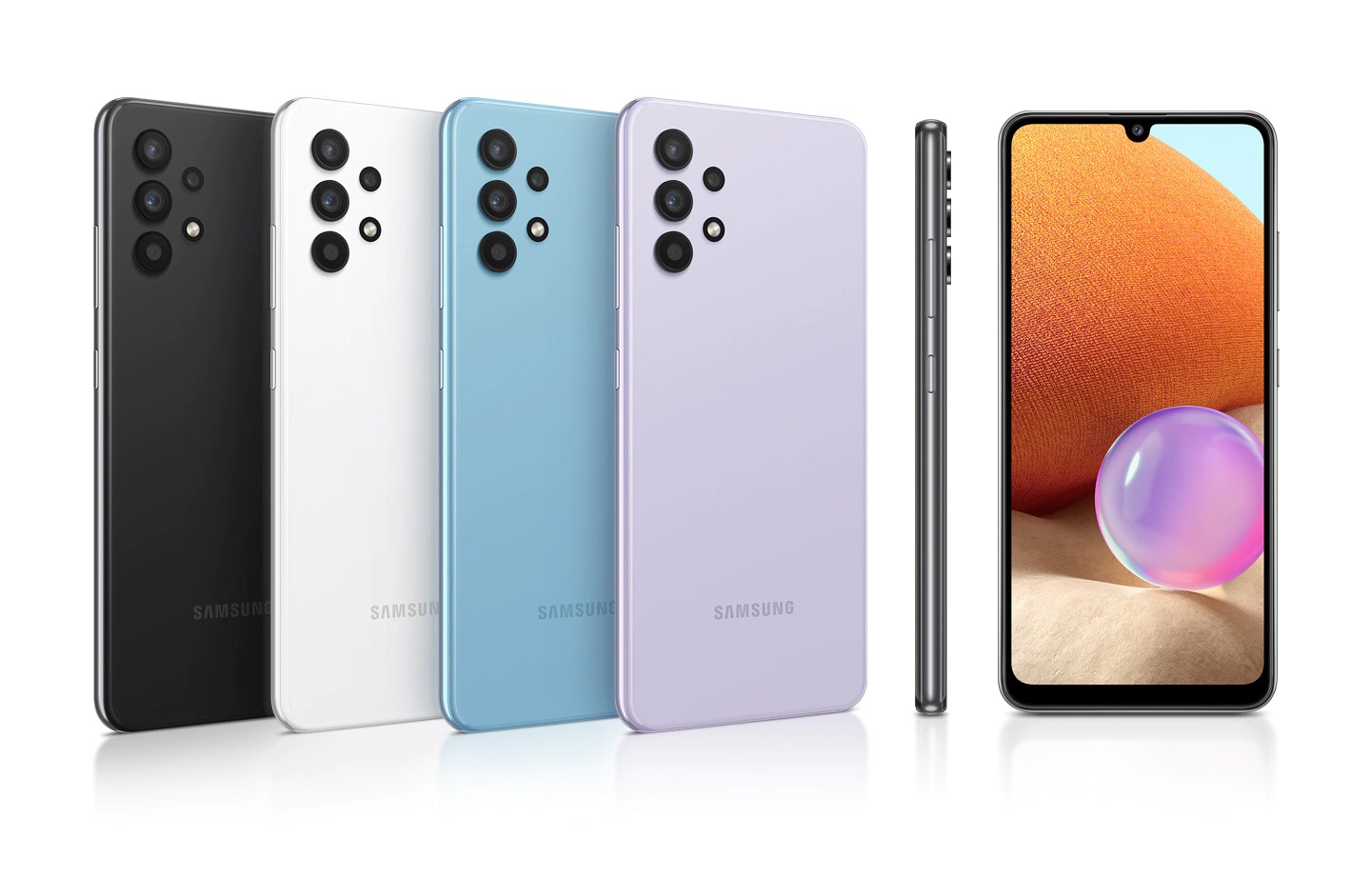
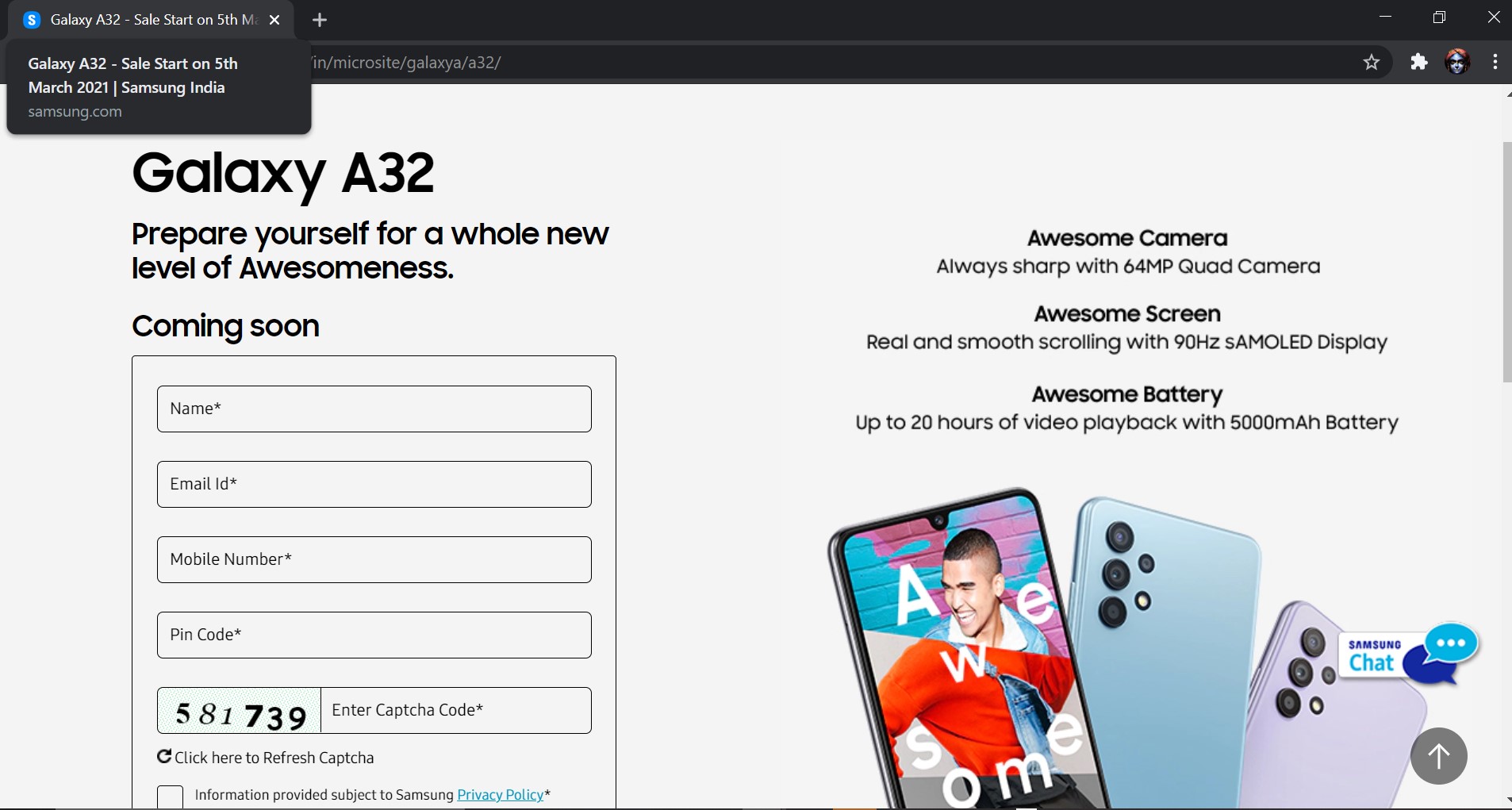
Just hours ago, Samsung launched the Galaxy A32 4G variant in markets like Russia. And as tipped, the company has started teasing the device’s launch in India. Ahead of the price reveal, the company has revealed the official specs and sale date.
Samsung Galaxy A32 4G India- Memory Variants, Colors, Sale date
The Galaxy A32 4G is basically coming with the same specs at which it launched in Russia. And as per this microsite on the Samsung India website, the sales of the device are said to begin on March 5, 2021. This means the company should unveil the pricing anytime soon.
As for the specs, the company’s official listing of the Galaxy A32 4G so far reveals that unlike Russia, the Indian variant will come with 6GB RAM, 128GB storage. In case you don’t know, the Russian variant has 4GB RAM, and 64/128GB storage.
As for colors, the device in India will be available in Awesome Violet, Awesome Black, Awesome Blue, and Awesome White options.
Samsung Galaxy A32 4G India Specifications and Features
Samsung Galaxy A32 4G features a 6.4-inch Super AMOLED FHD+ Infinity-U display. The display has a resolution of 2400×1080 pixels, 90Hz refresh rate, 800 nits brightness, SGS certification for low blue light.
Under the hood, the device features a MediaTek Helio G80 chipset courtesy of Samsung Russia. This chipset is paired with 6GB RAM and 128GB storage. You can also expand the storage via a microSD card slot up to 1TB.
For Cameras, the device has a Quad-camera setup on the back with 64MP f/1.8 main lens, 8MP f/2.2 123-degree ultra-wide lens, a pair of f/2.4 5MP Macro and depth sensors. Upfront, you get a 20MP selfie shooter.
Other features include a 5,000mAh battery with 15W charging, USB-C & 3.5mm audio jack ports, in-display fingerprint sensor, 4G LTE, Wi-Fi 5GHz, Bluetooth 5.0, GPS, Samsung’s Knox Security, and One UI. (as per the Russian website it should be One UI 3)
The Realme 8 series might be launching in India very soon. The company had recently shared a teaser image on Twitter, hinting at its 108 megapixel camera, and now, the device was recently spotted in the hand’s of the company’s brand ambassador Salman Khan.
According to a 91Mobilesreport, an unknown smartphone was spotted being used by the Bollywood actor. Previously, the Indian icon had also promoted the Realme 6 and 7 series as well in the past. So, it is likely that the Chinese tech giant approached him again for its latest series. As per the report, the device in Salman Khan’s hand is likely to be the Realme 8 Pro, which features a unique camera module on the rear.
Looking at the image, we can observe that the upcoming device will feature a shiny and premium finish on the rear. The back panel features a blue color finish along with a quad camera setup as well. At the moment, the finer details of the series are still unknown. The 7 Pro that was launched previously arrived with a Qualcomm Snapdragon 720G chipset, along with 65W fast charging, a Super AMOLED panel with a high refresh rate as well.
Hence, we can expect similar upper mid range specifications from the upcoming lineup. Currently, only the 108 megapixel primary rear lens is confirmed, however, other key specifications are still at large. However, it was previously reported that the Realme 8 might feature the MediaTek Dimensity 720 5G chipset. Unfortunately, this still is an unconfirmed so take it with a pinch of salt for now and stay tuned for more updates.
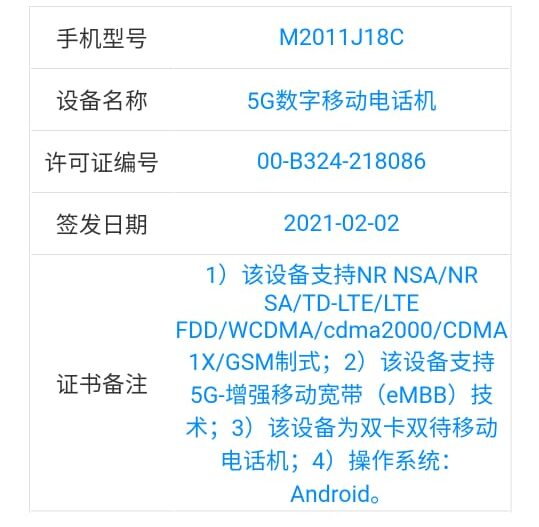
Leaked information that appeared earlier this month revealed that the first foldable phone by Xiaomi has a model number M2011J18C. Today, the device received certification from the TENAA authority of China. The TENAA certification (via) is a good hint that its launch may not be far away.
At present, the TENAA listing of the M2011J18C phone has no information on its specifications. Also, its images have not appeared in the listing. It only reveals that the device carries support for 5G connectivity.
Xiaomi M2011J18C at TENAA
Rumors are rife that the first foldable phone by Xiaomi is driven by the Snapdragon 888 mobile platform. The M2011J18C foldable phone is expected to feature a 120Hz refresh rate display. Also, it is likely to feature a 108-mgeapixel primary camera. It is speculated that the device will be running on a modified version of the MIUI 12 designed for the foldable form factor.
It was reported in December that Xiaomi may launch three kinds of foldable phones in 2021. It was revealed by display analyst Ross Young that Xiaomi may launch foldable smartphones with out-folding, in-folding, and clamshell designs.
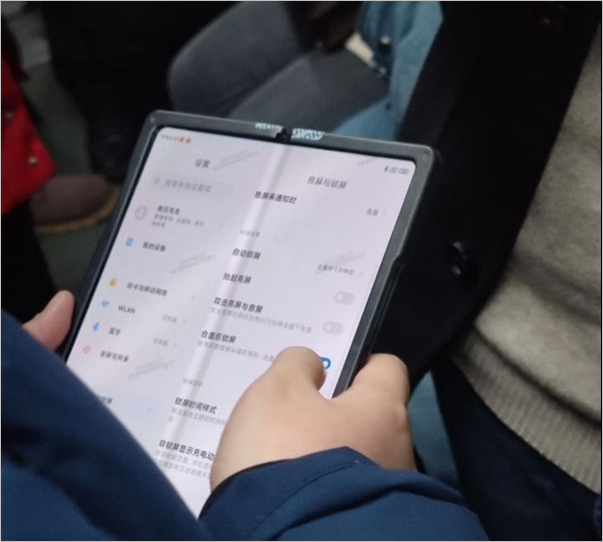
The out-folding device could be featuring a display of around 8 inches and it could be larger than its in-folding foldable phone. Shown-above is a leaked shot of a called foldable phone from Xiaomi with an in-folding design. It is speculated that one of the foldable phones from the company is codenamed Cetus and it is equipped with Snapdragon SoC and a 108-megapixel camera.
On Christmas Day 2020, we reported that OPPO had patented a rollable smartphone concept design in collaboration with Tom Ford, a popular American fashion designer and filmmaker. Now, a couple of months later, it turns out that the Chinese tech company has actually infringed the intellectual property of Tom Ford.
LetsGoDigital was the first to spot this patent. As per the publication, Guangdong OPPO Mobile Telecommunications filed this concept design patent with the CNIPA (China National Intellectual Property Administration) on February 24, 2020. This means the company filed the patent two weeks after the announcement of Galaxy Z Flip Thom Browne Edition.
A few days after LetsGoDigital’s article went live, Tom Ford International LLC filed a claim with the publication to take down all the images. The fashion firm issued the following statement.
“There is no collaboration between Tom Ford and OPPO. There is no such product being developed. In addition, the images include improper and misleading use of the TOM FORD trademark.”
Interestingly, even OPPO gave a similar statement.
“We can confirm that there is no collaboration between OPPO and Tom Ford.”
This begs the question, Why did then OPPO use the ‘TOM FORD’ trademark? Our guess is that the company might have gone ahead and patented the design even before initiating the talks on partnership. The firm might have considered this decision seeing the popularity of Samsung’s collaboration with Thom Browne.
Additionally, the images in the patent documentation also use iPhone 11’s official wallpaper with minute changes in colors. This was yet another red flag in the patent and we wonder why OPPO decided to submit a patent with both Apple and Tom Ford’s intellectual properties.
What are your thoughts on OPPO infringing Tom Ford’s intellectual property? Do let us know in the comment section below.
A shortage of semiconductor have affected various industries across the globe. However, despite the issue of supply, the stock value of chip makers have reached a record high during this time.
As per Maribel Lopez, principal analyst at Lopez Research, the semiconductor industry is facing a “perfect storm” of demand and supply at the moment, which is unlikely to be resolved anytime soon. Lopez further added that “Unless we have a major economic meltdown, which is obviously possible, one of the things that’s happening right now is that almost anything you buy is going to have a chip in it. You can’t buy a dumb product.”
Furthermore, while the demand for mobile chipsets for smartphones were expected to rise last year, the surge in demand for PC based chips were not. In recent times, the semiconductor industry has been working to fit chips into areas they never fit before, so the manufacturing process became more complex over time. After which, the pandemic added new levels of volatility on the supply chains and even manufacturing practices while dealing with them.
An analyst stated that “We don’t see any major correction on the horizon, given ongoing supply constraints as well as continued optimism about improving demand in 2H21. We remain more concerned with continued supply disruptions, and increased materials costs, than we do an imminent multi-quarter inventory correction.”
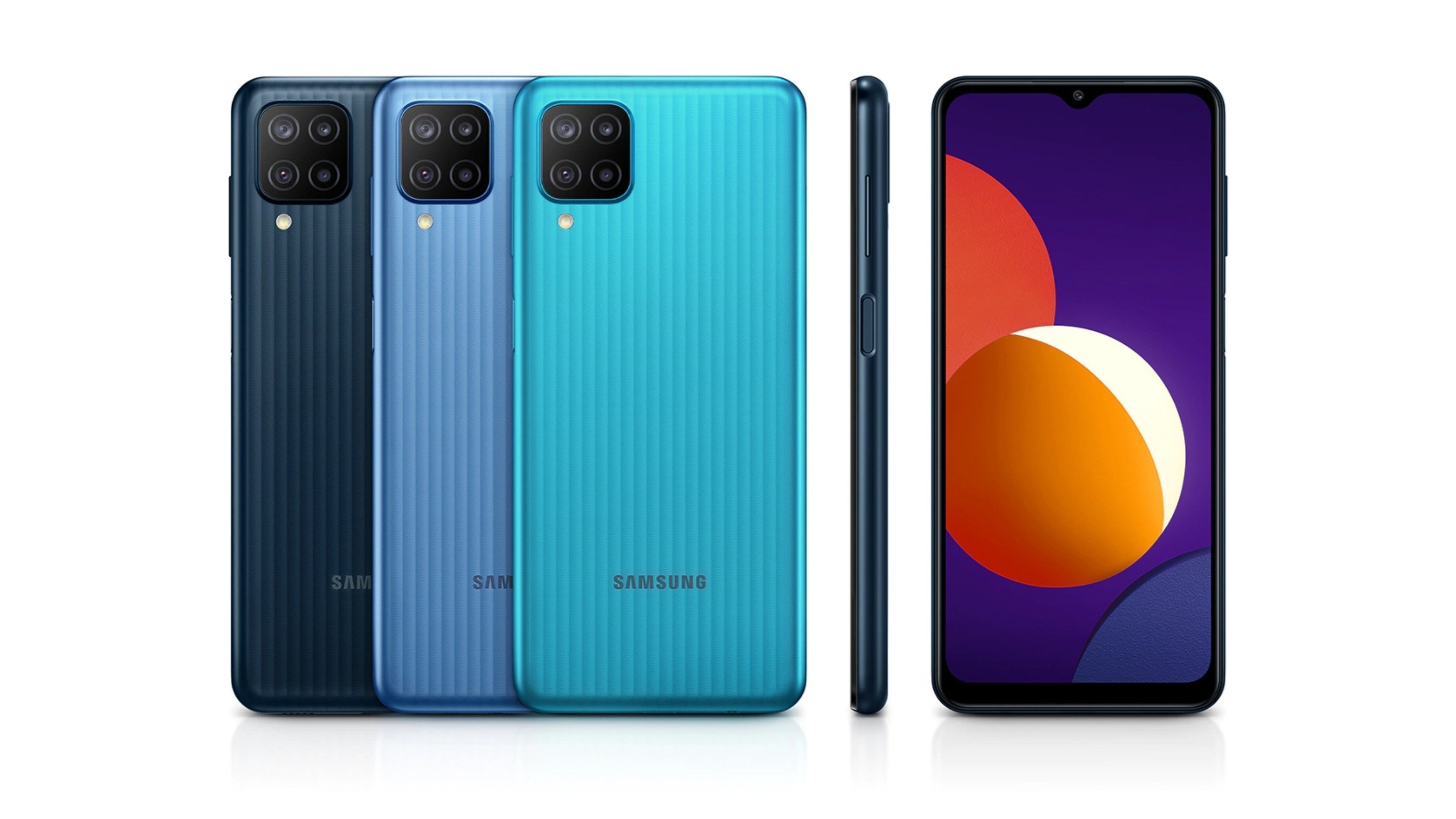
Samsung recently listed its all-new Galaxy M12 smartphone in Vietnam and now it seems that the company is set to soon launch the same smartphone in the Indian market.
While the launch timeline is not yet known, leakster ‘@stufflistings’ has revealed that the device is expected to be priced under Rs 12,000, which is roughly $164. As the phone was recently listed on Samsung Vietnam website, it’s full specifications are already known.
Samsung Galaxy M12
The new Samsung Galaxy M12 features a 6.5-inch PLS TFT LCD display panel that offers a screen resolution of 720 x 1600 pixels, 90Hz refresh rate, and there’s an Infinity-V notch on top. Under the hood, the device is powered by the Samsung Exynos 850 8nm chipset.
As for the memory configuration, it comes in three variants — 3GB/4GB/6GB RAM and 32GB/64GB/128GB internal storage. There’s also a microSD card slot that enables users to further expand the storage up to 1TB.
In the camera department, there’s a quad-camera setup on the back which consists of a 48MP primary sensor, 1 5MP ultra-wide sensor, a 2MP macro lens, and a 2MP depth sensor. On the front side, there’s an 8MP sensor for taking selfies and video calling.
The phone is running the latest Android 11 operating system out-of-the-box with the company’s own One UI 3.0 on top. It is powered by a 6,000mAh battery and comes with support for 15W fast charging technology.
Anatel, the telecom regulator of Brazil, has just recently approved the rules for a spectrum auction for 5G networks earlier this week. The auction will be set sometime later this year, and will not exclude Huawei Technologies.
For those unaware, the Chinese tech giant is a major brand in the telecommunications industry and is one of the largest suppliers of telecom equipments as well. However, it had been facing various allegations over the past year, which led it to face a ban in multiple regions across the globe. Last year, even the Brazilian President Jair Bolsonaro, had criticized the company and was also under pressure from the former Trump administration regarding a ban on the Chinese telecom provider from the nation’s 5G market.
But as per a Reutersreport, the company will not face any ban in the region, despite previously being accused of being a security risk. Notably, the telecom operators in Brazil had been advocating for a free market, stating that banning Huawei would cost the companies billion of dollars to replace the equipment provided by the Chinese equipment supplier. At the moment, about 50 percent of the entire 3G and 4G networking infrastructure is supplied by Huawei.
The rules of the auction will also arrive with costly conditions, requiring telecom operators to migrate to more advanced technology with standalone networks and not based on their current technology. Furthermore, the companies will also be required to cover the bast northern Amazon region with a broadband connectivity, through the use of optic fiber cables that will be laid in rivers, and also building a separate and secure network for the federal government.
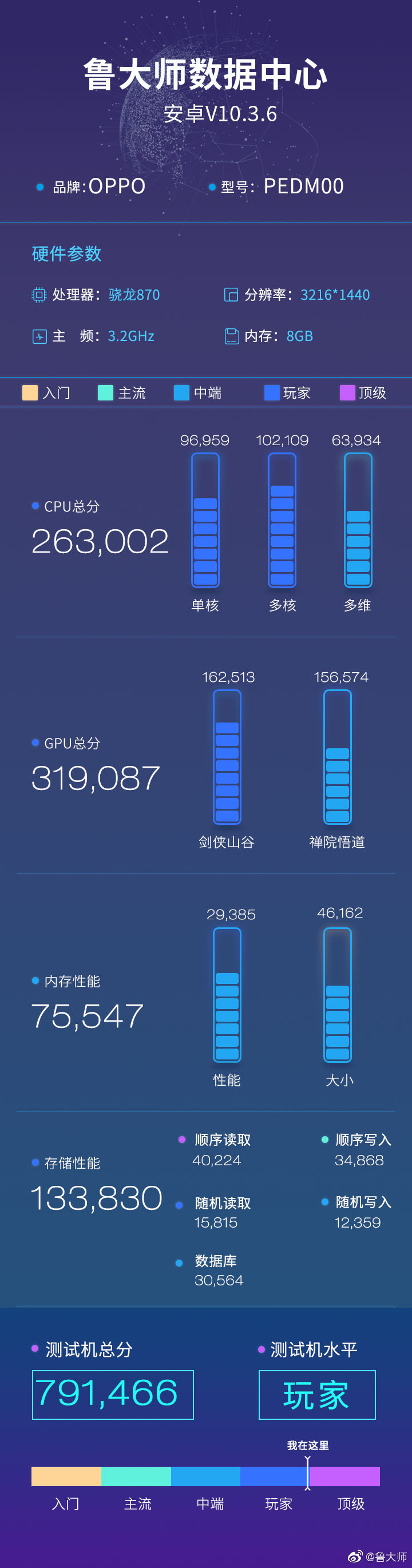
OPPO’s upcoming Find X3 smartphone has been spotted at benchmarking sites like AIDA64, AnTuTu, and Geekbench in recent weeks. The Snapdragon 870 SoC powered phone has appeared in Master Lu benchmarks now. The listing has revealed the key details of the smartphone.
It is already known that the OPPO Find X3 has a model number of PEDM00. Its Master Lu appearance has revealed that it is fueled by a 3.2GHz processor. According to Master Lu and previous findings, the Find X3 is equipped with the Snapdragon 870 mobile platform. It also reveals that the device has 8 G of RAM, 128 GB of native storage, and a screen that offers a QHD+ resolution of 1440 x 3216 pixels.
The OPPO Find X3 scored 263,002 in the CPU test, 319,087 in the GPU test, 75,547 in the memory test, and 133,830 in the storage test of Master Lu. It achieved a total score of 791,466. Such a score ranks the device as a high-end smartphone at Master Lu.
It was found through the TENAA listing of the device that it has a 6.78-inch. The handset seems to feature an OLED with a punch-hole design. It is expected to arrive with support for a 120Hz refresh rate. Its battery size is not known yet. However, its 3C certification suggested that it may ship with a 65W fast charger.
Other benchmarking platforms have revealed that the Find X3 may also arrive in a 256 GB storage version. Its triple camera system is expected to feature a Sony IMX766 50-megapixel primary camera.
The OPPO Find X3 Pro, Find X3 Neo and Find X3 Lite are expected to debut in Europe on March 11. While it is unclear whether the vanilla Find X3 will be released in Europe, it is certainly heading to Chinese markets in the coming month.
The Huawei P40 4G (ANA-AL00 model number) measures 148.9 x 71.06 x 8.5mm and it weighs 175 grams. It has an OLED panel of 6.1 inches that produces FHD+ resolution. It supports a traditional refresh rate of 60Hz. It is equipped with an in-screen fingerprint and face unlock support. The Huawei P40 4G is an IP53 rated device.
Huawei P40 4G Dark Blue
The pill-shaped camera cutout on the screen serves as a home for its 32-megapixel dual selfie camera setup. The Leica engineered rear camera setup has a 50-megapixel SuperSensing primary camera, a 16-megapixel ultrawide lens, and an 8-megapixel telephoto snapper with OIS support. The P40 4G promises 30x digital zoom support.
The Huawei P40 4G is powered by the Kirin 990 4G. The battery size is not mentioned in the JD listing. It appears that the phone could be featuring the same 3,800mAh battery that was made available in its 5G version. The device carries support for 22.5W fast charging.
Huawei P40 4G Frost Silver
The exact version of the Android OS that is available on the Huawei P40 is not known yet. The phone has 8 GB of RAM and 128 GB of storage. For more storage, it has a NM card slot. It appears that the only difference between the P40 4G and 5G is that the latter comes with a 5G version of Kirin 990, whereas the former has Kirin 990 4G.
Huawei P40 4G pricing
The Huawei P40 4G is priced at 3,988 Yuan (~$525), which makes it 500 Yuan (~$77) cheaper than its 5G variant. The phone comes in two colors such as Dark Blue and Frost Silver.
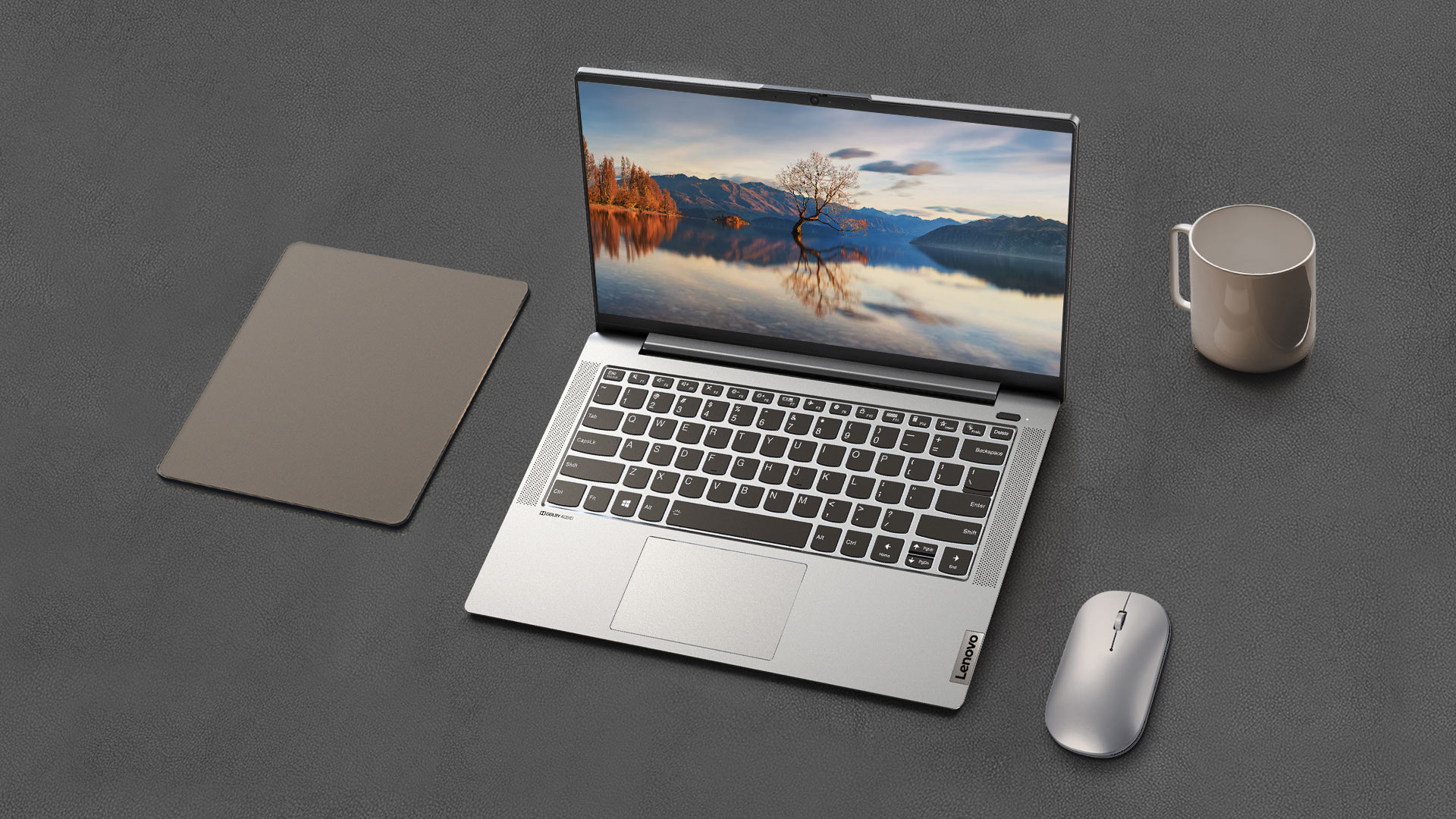
Last year, in the month of October, Lenovo had launched three new laptops in its home market China — Xiaoxin Air 14, Pro 14, and Air 15 2021. All three of them are powered by the 11th generation Intel processors and now the company has launched a new variant.
Lenovo has now officially launched the Xiaoxin Air 14 2021 Ryzen Edition and the company has already started taking reservations for the same. However, the device is scheduled to go on sale from 2nd March.
Coming to the configuration, the Lenovo Xiaoxin Air 14 2021 Ryzen Edition features a 14-inch display with 1920 x 1080 pixels screen resolution, 100% sRGB color gamut, 300nit brightness, and DC Dimming.
Under the hood, the device is powered by the AMD Ryzen R5 5500U processor, coupled with 16GB of RAM and 512GB SSD. The keyboard has a 1.3mm travel and supports backlight. There’s also fingerprint sensor embedded into the power button. The device comes pre-installed with Windows 10 operating system. It is powered by a 56.5Wh large capacity battery.
As for the pricing, the Lenovo Xiaoxin Air 14 2021 Ryzen Edition is priced at 4,499 yuan, which is approximately $696. However, for the initial sale, the company will be selling it for 4,099 yuan (~$643) but those who pre-order the device can get it for 3,999 yuan (~$618).
We use cookies on our website to give you the most relevant experience by remembering your preferences and repeat visits. By clicking “Accept”, you consent to the use of ALL the cookies.
This website uses cookies to improve your experience while you navigate through the website. Out of these, the cookies that are categorized as necessary are stored on your browser as they are essential for the working of basic functionalities of the website. We also use third-party cookies that help us analyze and understand how you use this website. These cookies will be stored in your browser only with your consent. You also have the option to opt-out of these cookies. But opting out of some of these cookies may affect your browsing experience.
Necessary cookies are absolutely essential for the website to function properly. This category only includes cookies that ensures basic functionalities and security features of the website. These cookies do not store any personal information.
Any cookies that may not be particularly necessary for the website to function and is used specifically to collect user personal data via analytics, ads, other embedded contents are termed as non-necessary cookies. It is mandatory to procure user consent prior to running these cookies on your website.