Advertisement

Xiaomi crowdfunds MIJIA Smart Wall Socket for ¥49 ($7)

Apart from smartphones, Xiaomi is well-known for its ecosystem products. The company sells a wide variety of IoT products with its own branding as well as products from other brands on its platform. That said, it is now crowdfunding a new device called MIJIA Smart Wall Socket in its home country China.

Xiaomi MIJIA Smart Wall Socket Featured

As the name suggests, the new MIJIA Smart Wall Socket is meant for converting any non-smart device into a smart one. To do so, users will have to replace any traditional wall socket in their homes with this product.

Talking about the design, it is elegant, minimalistic, and comes in a single white color option. Also, it is worth noting that this design is identical to Aqara Smart Wall Socket. For those unaware, Aqara is one of the many ecological brands of Xiaomi.

Some of Xiaomi’s self-branded (Mi, MIJIA, Redmi) products are manufactured by its ecological brands. Hence, there’s nothing to be surprised about here. Anyway, this smart wall socket seems to be a different product altogether despite featuring a similar design.

Because this one uses Bluetooth Mesh networking, instead of Zigbee like the Aqara Smart Wall Socket. Also, it features all the basic functions like scheduler, option to see power statistics, voice controls (uses Xiaomi’s Xiao AI voice assistant), and can be connected with other Xiaomi IoT platform devices.

Last but not least, Xiaomi is crowdfunding the MIJIA Smart Wall Socket for ¥49 ($7) on Mi.com in China. After the campaign, it will retail for ¥59 ($9).


HTC Desire 21 Pro 5G goes official in Taiwan for TWD$11,990($428)

Earlier today, we saw a leak on the HTC Desire 21 Pro 5G with Snapdragon 690 SoC. Soon after that, the company has gone forward and made it official in Taiwan for NT$11,990.

HTC Desire 21 Pro 5G Price, Availability

HTC Desire 21 Pro 5G comes in a single 8GB RAM and 128GB storage variants. You have two color options to choose from- Star Blue, and Fantasy Purple. This single memory variant is priced at NT$11,990($428).

Currently, the device is up for pre-orders. Regular shipments will start from January 21(Star Blue) and February 4(Fantasy Purple). HTC also mentions that the current price is an early bird discount that is valid from January 13- February 28, 2021.

If you are a user in Taiwan, you are eligible for a 10% discount via the HTC website too. And People who pre-order their devices can expect their gifts and package to start arriving on January 16.

HTC Desire 21 Pro 5G Features

The HTC Desire 21 Pro 5G has a centered punch-hole display up front and a Quad-Camera layout on the back. This rounded rectangle layout is similar to the realme and Redmi Phones that are launching these days.  Anyway, you get the volume rockers and power button-cum-fingerprint sensor on the right.

Talking about specs, the device as a whole measures 167.1×78.1×9.4 mm and weighs 205g. It features a 6.7-inch FHD+ LCD display with a resolution of 2400×1080 pixels. This is a 20:9 aspect ratio screen and also has a 90Hz refresh rate.

Under the hood, you get the Snapdragon 690 5G SoC paired with 8GB RAM, 128GB storage. You also get a MicroSD slot for further expansion of storage. For cameras, there is a 48MP f/1.8 main, 8MP f/2.2 ultra-wide with 118-degree FOV, and two 2MP f/2.4 sensors. You also get a 16MP sensor in the front inside the punch-hole for selfies.

Other features include a 5,000mAh battery with 18W charging, USB-C port, 5G NR, 4G LTE, NFC, Bluetooth 5.1, Wi-Fi 2.4/5GHz, GPS, BeiDou, GLONASS, Galileo, and Android 10.


Apple patents new iPhone case, which can house and charge AirPods

Apple has just been granted a patent for a new and interesting iPhone case. This case is unique as it can both house and charge AirPods. The company was granted the patent by the USPTO (the United States Patent and Trademark Office).

Apple

According to a PatentlyApple report, the Cupertino based giant has patented a new iPhone case that features built in AirPods receptacle and charger. Apple has applied for multiple different designs and types of cases for the iPhone. Variants of the new charging case can have the AirPods carrier and charging area located either on the top of the device, on the rear, and even on the inside of a flip cover in one particular case. While it may sound simple, the patent describes in detail the technology behind it.

An example being the version in which the charging component and AirPods carrier is placed on the top, the sides give away to the cavity in which the TWS earbuds are housed. Furthermore, the insides of the case can house a magnet, a possible display panel for the rear, internal circuitry, a battery pack, and even magnets that support the case. Another version has the AirPods charging mount on the rear.

Apple

One of the versions includes a flip cover, with the external portion of the flip having a screen, which displays notifications and other essential information. In other words, aside from just offering an integrated charging solution for two of its products, Apple is also considering expanding the functionality of the iPhone case. This would make carrying the AirPods even more convenient for users, who would no longer need to carry the charging case as well.


Amazfit GTR 2 vs GTS 2 vs GTS 2 Mini vs GTR 2e vs GTS 2e: Review & Comparison

Smartwatches have been a popular topic recently given how this small gadget has managed to improve our life experience and change our lifestyle instead of just being an expensive piece of decoration in our hands. We’ve seen a lot of watch products in the past few months with specific features but not all of them are suited for everyone, as different individuals’ have different preferences.

Over the course of the past few years, we have even reviewed and recommended a lot of watches, but it’s hard to find out the BEST smartwatch suited for you, without an in-depth comparison between them. 

Amazfit GTR GTS comparison (14)

So today, we are finally bringing a much-requested story for you guys – a detailed comparison of the Amazfit GTR 2 and the GTS 2 series. In this Gizmochina review & comparison of the Amazfit GT series, we compare all the watches from the GTR 2 and GTS 2 series, which is an excellent lineup of fully-functional watches in 2020. 

The brand Amazfit is one of the most professional smartwatch manufacturers in the market right now. Unlike other tech companies that have expensive wearable options, Huami’s watches have always offered great value for money with an excellent build quality. In 2020, they have put in a lot of effort in expanding their smartwatch lineups to offer modern features across multiple models, targeted at different groups of consumers. So you’ll definitely find at least one smartwatch that’s perfect for you.

Amazfit official offers 3 GTS 2e smartwatches as Giveaway gifts to our readers, the winners will be picked by Gleam randomly(Only Gizmochina Youtube channel subscribers will be selected as winners):

Giveaway: win 3 units Amazfit GTS 2e Smartwatches

Amazfit GTR 2 vs GTS 2 vs GTR 2e vs GTS 2e vs GTS Mini

And recently Amazfit expanded these two product lineups with their own cheaper models, the GTR 2e and the GTS 2e, both retaining the Essential core functionality from their more expensive siblings. The affordable variants come with stable endurance and a similar design. And instead of saying that the E-edition is the cheaper version, it’s better to call them the ‘Essential version’. Because most of the important features are reserved from the original standard version, and the E editions even add a temperature sensor that was absent on the Standard models. In addition to the E editions, Amazfit released an even cheaper model, the GTS 2 mini, which is also one of the highlights of the series updates, and an LTE version for the GTR 2, which adds LTE function to offer an independent phone-free experience to its users.

Amazfit GTR GTS featured smartwatch comparison (7)

So in this review, let’s find out how exactly the 4 versions differ from each other (and also the GTS 2 Mini) and which one should be your pick. Before we start, it’s worth mentioning that the Amazfit GT series is likely the world’s most extensive smartwatch series right now. Among the models available in the lineup, there’s going to be at least one ideal smartwatch for you. 

GTR 2 vs GTS 2 Design

First, let’s look at the GTR 2 and the GTS 2. The original Amazfit GTR 2 and GTS 2 shared almost all the same functions except for their appearances and the battery life. 

Amazfit GTR 2 vs GTS 2 comparison (11)

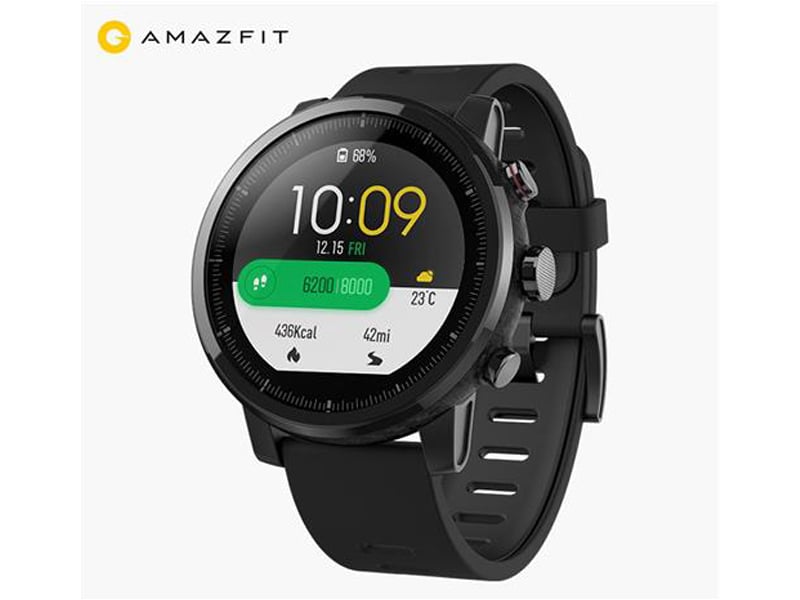
The Amazfit GTR 2 comes in two versions – Classic and Sports. The Classic version has a stainless steel case and leather straps while the Sports version has an aluminum alloy case and silicone straps. Both are covered with 3D curved glass that fuses with the frame at the edges. As for the GTS 2, it only comes in one version which is similar to the sport version of the GTR 2, featuring an aluminum alloy case and silicone straps with 3D curved glass covered.

The display is the biggest difference between the GTR 2 and the GTS 2. The GTR 2 features a 1.39-inch round AMOLED display with a decent resolution, while the GTS 2 has a 1.69-inch rectangular one with a 341ppi resolution. Both of them support a plethora of sports modes – 90 modes and features almost all the latest sensors for a smartwatch, no matter for health or daily life uses. And their biggest highlight should be the blood-oxygen monitoring solution. While features like Wi-Fi connectivity and the storage functions mainly for music playback are absent on the E version. 

The GTR 2e and GTS 2e are like the twins of the GTR 2 and GTS 2, and their almost identical looks could make it hard to tell what the difference is. 

What do they sacrifice for their cheaper prices and also what do they retain? 

Amazfit GTS 2 vs 2e

As you can see, at first glance, from the dial shape and size to the strap, the 2 and the 2e are really almost identical in appearance. If we had to nitpick the differences in their appearances, note that the 2e has a black bezel that’s closer to a silver color, while the GTR 2 model looks closer to solid black. And the GTR2 dial has a little more scale than the 2e around the dial edges. 

Smartwatch featured GTS 2

If you don’t look at their specs on paper, you won’t even notice that the GTS 2e is 0.15mm thicker than its big brother, the GTS 2. The only difference that can be seen at a glance is perhaps the material of the bezel. Although the frame is made of the same aluminum alloy, its bezel is not as stunning as the glossy bezel of the golden version of GTS 2, which is a bit like the design of the new iPhone. But not all the GTS 2 models have glossy processing. The other two colors apply a similar matte finish as what we saw on the 2e. 

GTR 2 vs 2e

A design comparison between GTR 2e and GTR 2 also reveals a similar situation. The GTR 2 that I have in my hand is the sports edition, having a metal frame with a matte finish. Compared to GTR 2, the GTR 2e’s size in all dimensions increases by 0.1mm. Other than that, there is no visible difference. As for the watch display, the GTS 2e and the GTR 2e are covered with 2.5D glass, so their front faces are actually a bit flatter than their more expensive siblings. But still the same, it’s not easily perceivable to the naked eyes.

Amazfit GTR GTS comparison (9)

So you don’t have to worry about the ‘2e’ editions compromising in terms of design or build quality.

GTR 2e & GTS 2e: Changes

Since there are no major changes in appearance, let’s talk about what’s missing from the 2Es compared to the GTR and GTS 2. 

The 2e models remove the speaker and consequently, cannot have independent music playback. But you can still control your phone’s music playback on the 2e watches. Also, it doesn’t support Bluetooth calls without the speaker and only offers call alerts. Other than that, the 2e models have all the features on the series 2. Even when you look at the sensors equipped on the 2e models, you will find that in addition to all the sensors that were equipped on the GTR and GTS 2 models, like the blood-oxygen sensor, acceleration sensor, gyroscope sensor, geomagnetic sensor, ambient light sensor, and air pressure sensor, the 2E models in fact come with an additional temperature sensor. 

Amazfit GTR 2e GTS 2e comparison (16)
Amazfit GTR 2e GTS 2e

It’s the first time that we are seeing such a temperature sensor on a smartwatch product. Both the GTR 2e and the GTS 2e can measure the temperature of the contact area. For example, place the watch in the air to measure the current ambient temperature, or wear the watch on the wrist to measure the wrist-skin temperature. And in order to obtain a more accurate temperature value, make sure that the watch continues measuring the contact area for more than 15 minutes. 

Amazfit GTR GTS 2e temperature comparison (15)


However, it should be noted that the temperature of the skin isn’t the same as body temperature and is also easily affected by external conditions, so the measurement results are for reference only and not for medical purposes. Just remember that it still cannot replace your medical thermometer. 

GTR/GTS 2e models have a Long Battery life

Another advantage of the “E” models should be their battery performance. Both 2e models can last twice as long as their predecessors with the same battery capacity. Specifically, under typical usage scenario, the GTS 2e can last for 14 days, while the GTR 2e can last for even 24 days. And under basic usage scenarios where we only use the watch to check the time, the GTR 2e can have up to a 45-day battery on a single charge, which is still 7 days longer than the GTR 2’s maximum life. For the GTS 2e, due to the size limits, the smaller 341mAh battery still can run for 24 days. Considering its compact design, the results are not bad at all. Amazfit GTR GTS comparison (18)

And even now, it’s really impressive that both the 2e models have been working effectively without running out of power since the unboxing several days ago. For the review, it should be known that we turned on almost all the essential features and tested the watches to simulate our daily uses.  

With the two advantages of longer battery life and a new temperature measuring sensor, the cheaper GTS 2e and the GTR 2e can even be recommended over the standard 2 series models for certain users. 

Amazfit GTR 2, GTS 2, GTR 2e, GTS 2e: Features 

Now let’s come back to the features that are shared by the whole family of GTR 2 and GTS 2 SERIES. On lighting-up the watch, a changeable watch face is shown up with a decent resolution. Right now, Amazfit offers over 50 watch faces and over 30 patterns of Always-on-display for each watch, and Amazfit has promised that more watch faces will be available on its store in the future. And for always-on-display, Users are allowed to switch off this feature for longer battery life, or just turn on the smart mode that switches off AOD when it detects a sleeping state or when it’s not worn on the wrist.

Amazfit GTR GTS comparison (13)

Amazfit GT family: User Interface

The operation UI is the same for all four watches. Take the GTS 2e as an example.

Swipe down to call out the menu bar, swipe up to call out the notification center, and left and right are for customized features pages. The feature pages are able to be customized through the official App on the phone. And let’s follow all these pages to see what common features that Amazfit has given to all the GTR and GTS 2 watches. The first page shown on the dial has tri-color-circles, which represent your progress of the daily goals for steps and calories. When the watch pairs to the mobile app it will let you set the target value of your health goals, with which you can monitor your daily activities to make sure that you get good exercise every day. And you can check more health data through your phone and set up a target as a way to motivate yourself to exercise hard every day. 

Amazfit GTR GTS comparison (12)


A dedicated page in the UI shows the real-time heart rate data. And then if you swipe down from that page, there is more information showing the heart rate zone, which is more intuitive, helping you maintain your exercise states with your heart rate. For example, if you just want to lose weight, you can manage your heart rate to stay in the states of Fat Burning and Aerobic between 120 and 150. 

And then it’s the music page. For the GTR 2 and the GTS 2, you could slide down to view music lists and choose the audio source whether to play music independently or to play the music on your phone. Meanwhile, the exclusive speaker allows the watch to play audio without connecting wireless earbuds, which, however, consumes more power. For music playback, connecting to wireless earbuds is recommended. 

Amazfit GTR GTS comparison (3)

Without the function of independent music playback (no internal storage) like the GTR 2 and the GTS 2, the 2e models can only control the volume and song switch on your smartphone, but to be honest, under most conditions, it doesn’t affect the experience at all. Then swipe again to the weather page, which shows today’s weather, temperature, humidity, and so on. And sliding down you will see brief weather forecasts for the next few days.

PAI Indicator

And the next page is Amazfit’s special PAI indicator, a health assessment system that has been in place since the first generation of the GTR and the GTS series. PAI is a personal physiological activity indicator based on heart rate data, daily activity intensity, and other health data. All the complicated information is converted into an intuitive PAI value to help you easily understand your health conditions. High PAI values indicate that users are more likely to live a healthy lifestyle which can effectively reduce the risk of heart diseases.Amazfit GTR GTS comparison (20)

The last page that can be reached directly by sliding from the watch face to the left is an integrated shortcut interface. It shows all the basic data that we mentioned above. You can jump to the page shown on the shortcuts with just one click. 

Blood Oxygen Measurement & Stress Index

There is another important feature that we haven’t mentioned, which is blood oxygen saturation detection. It’s one of the latest features for smartwatch products. For those who stay indoors for a long period or work with high intensity, the results of Oxygen saturation detection could help determine whether you should take a break.


Another health index that is available in the Amazfit watches is the stress index. It’s calculated by the change in heart rate variability values, which indicates your real-time stress level as a reference. And accordingly, you may need proper rest if you have a high-stress index. 

Sports Modes & GPS

So far, all the four watches have supported up to 90 sports modes monitoring, which should be enough for most people. As a smartwatch, the built-in GPS is an important feature that can significantly improve user experience during exercise monitoring. Both the watches can provide a decent accuracy while running.

Amazfit GTR GTS comparison (10)

In addition to the regular exercise features, I believe most of you are concerned about its waterproofness. For the entire GTR and GTS series, the 5ATM water-resistance allows users to wear it for swimming. But just pay attention to the strap you use. Genuine leather or leather straps cannot be worn for swimming and always remember to wear the watch with the included silicone strap when swimming.

Amazfit GTR GTS comparison (23)

After figuring out their similarities and differences among the GTR families, I believe that you guys should already know which version is suitable for you. 

No doubt that the 2e models exceed our expectations especially since we initially considered them as cheaper models without some features from the standard models. Instead, they’re more like upgraded models that remove some inconsequential features without affecting essential experience, featuring improved battery performance and also a new temperature sensor.

If you are still confused about whether to buy a GTR 2e or GTS 2e, how about asking yourself a question: A lighter square dial with shorter battery life or a round dial with longer battery life? Other than that, there is no more difference between the GTR 2e and the GTS 2e.

Amazfit GTR 2 vs GTS 2 comparison (11)

Since the emergence of smartwatches led by the Apple watch, square watches have also started to become a mainstream design. It represents technological sense and fashion, while the round design is more classic and easier to match your outfit. And as you can see, Amazfit offers the best of both worlds to users. So there’s no need to be confused about their functionalities. As smartwatches, all these four watches’ effective performance is really impressive. All you need is to follow your own taste.   

Amazfit GTS 2 Mini

If you are still searching for a multi-functional smartwatch for a lower price, there’s a new model that joined the GTS family recently, which is the GTS 2 Mini. For the GTS 2 mini, you still can enjoy almost all the essential features we mentioned. Compared to the GTS 2, the mini slightly size-down the display to 1.55 inches with a relatively lower resolution. And consequently, it only weighs 19.5g. gts 2 miniAlthough the battery capacity is reduced even further, we still can have better battery life performance than the GTS 2 since it has removed some features. Other than that, it’s almost the same as what the GTS 2e offers. What’s surprising is that it’s the only model among the whole series that has a feature of women’s health tracking. So to be honest, for those female users who don’t want a smartwatch for heavy-use, the mini is the most recommended.  

Amazfit GTR GTS LTE comparison (1)


So far we’ve introduced the most recommended 5 models of the GTR 2 and GTS 2 family. But there is one more version that we haven’t talked about, the GTR 2 LTE. It’s a special version that was developed for those who require LTE calls on the watch. Other than that, all the features are almost the same as the GTR 2. 

So that was our Amazfit GTR & GTS 2 family comparison. We hope this video helps you to make a decision about which Amazfit model to pick. 

Where to Buy
Official shop:
GTS 2e
GTR 2e

AliExpress: 
GTR 2E
coupon code: 2021AMAZFIT 3USD off

Amazon:
GTS 2e
GTR 2e

RELATED: 

Black Shark 4 scores the highest on AnTuTu, achieves 788,505 points

Earlier this week, the Black Shark 4 was confirmed by the company, which will feature a 4,500mAh battery pack that supports up to 120W fast charging. Now, the company’s CEO has revealed the AnTuTu benchmark scores of the device running on the Qualcomm Snapdragon 888 SoC.

Black Shark

Earlier today (13th January 2021), the Chinese company’s CEO shared a new post on Weibo, a Chinese microblogging website. In the post, the senior executive revealed the score achieved by its upcoming flagship device. The social media post shared an image of the score, which reached 788,505 points. This is the highest ever AnTuTu benchmark scores ever seen on the platform. In comparison, devices like the Xiaomi Mi 11 with the same chipset scores around 700,000 to 710,000 points.

In other words, Black Shark has put extra efforts into optimizing the device to squeeze out every ounce of performance from the new Snapdragon 888 processor. Notably, the CEO also added he is not satisfied with the current results despite the impressive scores achieved by the Black Shark 4. Furthermore, he won’t be content either till the premium grade flagship breaks past the 800,000 marks on the AnTuTu benchmark.

Black Shark 4 key specs

At the moment, it seems that the company is gearing up for the handset’s launch with teaser trailers and promotional campaigns being underway. Hence, we can assume that the launch of the device is just a couple of weeks away from now. Unfortunately, finer details regarding the device are still unknown, although, recent leaks have pointed at it sporting an OLED panel with a 2400x1080px resolution and support for high refresh rate as well.


Motorola Edge S could feature an unannounced Snapdragon 800 series chip

On Monday, the General Manager of Lenovo China teased the arrival of a new Motorola smartphone powered by Snapdragon 8xx SoC. He did not reveal its name but his Weibo post exposed the phone’s branding to be Motorola Edge S. Now, today, a well-known Chinese tipster suggests that this handset will be powered by a yet to release Qualcomm Snapdragon 800 series SoC and not Snapdragon 888 or 865.

The Motorola Edge S could be a rebranded version of the upcoming Moto G device featuring Snapdragon 800 series SoC, which has been in the news for a while as Motorola Nio (XT2125). This smartphone is reported to flaunt an FHD+ (1080 x 2520 pixels) display with a dual punch-hole cutout and an unusual 105Hz refresh rate.

According to a Geekbench listing, it will be powered by Qualcomm Snapdragon 865 chipset paired with 8GB RAM. This suggests that the unannounced Snapdragon 800 series chip could be based on last year’s flagship SoC. Also, since there’s already an overclocked version in the form of Snapdragon 865+, the new chipset could be an underclocked variant.

Whatever it turns out to be, it will be debuting first in the Motorola Edge S aka Motorola Nio (XT2125), as per Digital Chat Station. That said, as Qualcomm announced the Snapdragon 865+ out of the blue, we can expect the same thing for this underclocked Snapdragon 865 SoC.

Other leaked specs of this device include a 64MP (primary) + 16MP (ultra-wide) + 2MP (depth) triple rear camera setup, a 16MP (primary + 8MP (ultra-wide) dual front camera setup, 8GB/12GB RAM, 256GB internal storage, and Android 11.


GM unveils a futuristic self driving Cadillac that can fly

Earlier this week, GM (General Motors) unveiled a new futuristic self driving car. This was a new Cadillac imagined by the automobile maker, which is even capable of flying and can carry a passenger through the skies.

GM

According to a Reuters report, the new flying Cadillac is autonomous and can even land and take off vertically. As per a senior executive from the company, the new concept vehicle is a “reimagining the future of personal transportation.” The flying Cadillac from GM can only carry a single passenger and is technically more akin to a VTOL drone (Vertica Take off and Landing). It will be capable of flying from one urban rooftop to another and can reach speeds of up to 55 miles per hour as well.

The vehicle is fully autonomous and all electric and is powered by a 90KW motor. This battery is a GM Ultium battery back, which is housed in an ultra lightweight body with pairs of motors. The company unveiled the new concept car in a video as a part of its virtual keynote presentation, which had Chief Executive Mary Barra reveal the futuristic flying car along with a family friendly Cadillac electric shuttle.

GM

Back in 2020, the senior executive had revealed that GM is exploring alternative methods of transportation, which included aerial taxis. GM design chief Mike Simcoe further added that “VTOL is key to GM’s vision for a multimodal future,” and he believes that the vehicle can be “the Cadillac of urban air mobility” as well. At the moment, no finer details regarding the vehicle are currently known, but the company did state that it is “arriving soon” with lounge like seating, biometric sensors, voice controls, and hand gesture support as well.


Zhiyun Crane-2S gimbal officially launched at CES 2021 for $599

Zhiyun is well-known for making smartphone gimbals and now, at the CES 2021, the company has launched its new Crane-2S gimbal, aimed at videographers, and can handle some of the largest pro cameras.

The company says that the product has a load capacity high enough to carry premium DSLRs and mirrorless cameras such as Canon EOS 1DX Mark II, Nikon D850, and others. To keep the weight low, it has opted for carbon fiber material to keep the design strong.

Zhiyun Crane 2S Gimbal

EDITOR’S PICK: Redmi K30 Ultra’s successor confirmed to feature upcoming 6nm MediaTek Dimensity SoC

It comes with ninth-generation Instune Algorithm image stabilization and powerful motors for overall improved responsiveness. The company adds that it has been comprehensively tested to ensure reliable performance even in the most challenging environments.

The Zhiyun Crane-2S comes with a 0.96-inch OLED screen that enables users to easily navigate through the menu and swiftly switch modes. As for the battery life, it is claimed to last for around 12 hours on a single charge and has support for backup batteries.

The device is priced at $599 and is now available for purchase in the United States. The combo of gimbal, batteries, and grip cost $649 while the Zhiyun Crane-2S Pro Kit with a smartphone cradle, a stand, and other attachments is priced at $849.


Global smartphone shipments declined by 8.8% in 2020: Report

The global shipments of smartphones saw a noticeable decline of 8.8 percent in 2020 as per a new report. During this period, handset shipments only reached 1.24 billion units with the primary cause of the decline being the Coronavirus pandemic.

2020

According to a DigiTimes report, the viral outbreak had seemingly crippled the market. Although, despite the overall decline of smartphone shipments, the 5G enabled handsets saw a significant rise, reaching 280 to 300 million units in shipments last year. This is up from just 20 million units from back in 2019, marking an upwards of ten fold growth in a single year.

During the first quarter of 2020, smartphone shipments worldwide fell by over 20 percent year on year. The double digit decline fell rapidly by the second quarter and the market recovered further in the third, which only faced a single digit dip in shipments. Notably, the fourth and final quarter saw a single digit rise in shipments, marking the pent up demand for smartphones from consumers from across the globe.

2020

The DigiTimes research report also added that in 2020, the top six major brands in the market included Samsung Electronics, Apple, Huawei Technologies, Xiaomi, Oppo, and Vivo. Between all of these OEMs, Apple and Xiaomi managed to raise their respective shipments by over 10 percent on a year on year basis. On the other hand, brands like Samsung and Huawei faced a double digit decline in shipments during the same period.


Redmi K30 Ultra’s successor confirmed to feature upcoming 6nm MediaTek Dimensity SoC

A few days back, MediaTek scheduled an event for January 20 to unveil its latest flagship mobile chipset. This silicon is expected to be the 6nm Dimensity series SoC, which the company teased back in November 2020. Now, ahead of its official announcement, Redmi’s GM has confirmed a smartphone powered by this chip.

Redmi K30 Ultra Featured

Recently, Lu Weibing, the General Manager of Redmi, confirmed the arrival of the Redmi K40 series powered by Qualcomm Snapdragon 888. Listing some key specs, he also revealed that the brand’s latest flagship smartphone series will debut in February.

Earlier today, he surprised his followers on Weibo by confirming another high-end Redmi smartphone powered by the upcoming 6nm MediaTek Dimensity SoC. His post notes that Redmi K30 Ultra featuring MediaTek Dimensity 1000+ has now reached its end of life. Therefore, a new device featuring the latest Dimensity chip will replace it in 2021.

Since he does not mention the specific time period for the launch of this handset, we believe it may only debut in the second half of the year just like the Redmi K30 Ultra. Hence, it is safe to assume that the upcoming Redmi K40 and Redmi K40 Pro will be powered by a Qualcomm Snapdragon 700 series chip and Snapdragon 888 SoC.

Anyway, there’s still a chance for a third device featuring this new MediaTek chip in the Redmi K40 series that is set to launch next month.

That said, according to a leak, the forthcoming flagship Dimensity chip will bear the model number MT6893. It will be an octa-core processor built on a 6nm fabrication process. Its CPU will consist of 1 x ARM Cortex-A78 clocked at 3.0GHz, 3 x ARM Cortex-A78 clocked at 2.6GHz, and 4 x ARM Cortex-A55 clocked at 2.0GHz. As for GPU, it will come with ARM Mali-G77 MC9.


iQOO 7 is now up for pre-order in China; price starts at 3,798 yuan ($588)

A couple of days ago, Vivo’s sub-brand iQOO launched its latest flagship smartphone in its home market China — iQOO 7. With that, it became the second smartphone to come powered by the Qualcomm Snapdragon 888 chipset, after Xiaomi Mi 11.

Now, the smartphone is up for pre-orders in China in two variants — 8GB RAM + 128GB storage and 12GB RAM + 256GB storage, costing 3,798 yuan (~$588) and 4,198 yuan (~$650) respectively. The devices are offered in two colors — Black Mirror and Latent Blue. The devices are set to go on sale from 15th January.

iQOO 7
iQOO 7

Coming to the specifications, the smartphone features a 6.62-inch AMOLED Full HD+ display that offers a 120Hz refresh rate, 6000000:1 contrast, supports HDR 10+ content, 1000Hz instant touch sample rate, and 300Hz touch report rate.

Under the hood, the device is powered by the Snapdragon 888 chipset, coupled with up to 12GB of DDR5 RAM and 256GB of UFS 3.1 internal storage. For cooling, iQOO says the device has a 4096 sq. mm head spreader inside and an L-shaped VC cooling plate.

EDITOR’S PICK: OPPO teases March launch event; expected to launch Find X3 flagship smartphone lineup

In the camera department, the phone features a triple-camera setup that includes a 48MP f/1.79 main sensor with OIS and dual 13MP sensors. One is an f/2.2 120-degree ultra-wide-angle lens whereas the other one is an f/2.46 Portrait camera with a 50mm focal length. On the front, there’s a 16MP snapper for taking selfies and video calling.

The smartphone is running Android-based OriginOS and is powered by a 4,000mAh battery. It comes with support for 120W FlashCharge technology which the company claims can fully charge the device within 15 minutes. The company is also offering a standard 120W charger in the box.


Lenovo Legion lineup of gaming laptops to feature AMD Ryzen 5000 series chips

During the CES 2021 event, Lenovo took the stage to unveil its new Legion lineup of gaming laptops that arrive with a refresh of its internal specifications. The new laptops feature AMD’s latest Ryzen 5000 series processors, paired with NVIDIA’s second gen RTX series GPUs.

Legion 7

In the event, the company announced the Lenovo Legion 7, which is its series’ flagship gaming laptop. The laptop has been upgraded to a 16 inch display with a 16:10 aspect ratio with a 2560 x 1600px resolution and a high refresh rate of 165Hz and a response time of just 3ms. Furthermore, the display can output 500 nits of brightness and is also HDR 400 certified with Dolby Vision support and NVIDIA G Sync as well. This makes the laptop a great option for both gaming and creative work.

Lenovo

Under the hood, the Lenovo Legion 7 is powered by Team Red’s latest Ryzen 5000 series of laptop processors, which is based on the 7nm Zen 3 architecture. Users can choose up to a high end Ryzen 9 chip, although, the lower configurations and options are currently unknown. Alongside the powerful chipset is an NVIDIA RTX series graphics card, which is most likely to be the new RTX 3000 series GPUs. For memory, the company is also offering up to 32GB of 3200MHz DDR4 RAM and 2TB of M.2 NVMe PCIe SSD storage. The laptop will be launched in June 2021 with a price tag of 1,699.99 US Dollars.

Legion Slim 7

For those that are leaning more towards portability and accessibility, the company has also unveiled the new Lenovo Legion Slim 7. This laptop is a lighter and thinner gaming notebook, which is even slimmer and weighs lesser than the previous model which weighed around 1.9 kilograms. According to the company, the Legion Slim 7 is the thinnest and lightest Legion gaming laptop ever made. It sports a 15.6 inch display with up to a 4K panel with a 60Hz refresh rate or an FHD panel with a 165Hz refresh rate. Unfortunately, the company has yet to reveal the pricing for the laptop, but we do know that it will launch in May 2021, as per TheVerge.

Lenovo Legion Slim 7 Gaming Laptop

Legion 5 series

Lastly, the company also announced its Lenovo Legion 5 series of gaming laptops. The lineup consists of two variants of the Legion 5, both the 15 and 17 inch versions, along with the Legion 5 Pro gaming laptop. All three models will begin shipping in March 2021 and will be the first from the 2021 Legion family to hit the markets. The Legion 5 Pro starts from 999 US Dollars and offers a display that is similar to the Legion 7. The primary difference between the two series is the internal specs, with Legion 5 Pro topping out with a Ryzen 7 chip and just 16GB of RAM.

Lenovo

On the other hand, the Legion 5 starts from 769 US Dollars and will also arrive with up to a Ryzen 7 chip as well. However, it can be configured with up to 32 GB of RAM alongside 2TB of SSD storage. This laptop also sports the Ryzen CPU and NVIDIA GPU combo, with the only difference being the size of the display. the 15 inch variant arrives with an FHD panel with 60Hz, 120Hz, and 165Hz while the 17 inch offers just a 144Hz and 60Hz option.


Lenovo ThinkPad X1 Carbon and X1 Yoga gets updated display, processor, and Dolby Voice

At the CES 2021, Lenovo updated two of its top-tier devices — Lenovo ThinkPad X1 Carbon and Lenovo X1 Yoga. Both the devices are now powered by the 11th generation Intel processors with vPro support.

The devices also come with an updated display panel. This time, the company has opted for a 16:10 aspect ratio screen with a reduced bottom bezel. It also supports Dolby Vision for display and Dolby Atmos for audio. For the first time, these laptops come with support for Dolby Voice for online meetings.

Lenovo ThinkPad X1 Carbon

Lenovo ThinkPad X1 Carbon (Gen 9)

The laptop features a 14-inch display with a 16:10 aspect ratio and comes with Full HD+ resolution as well as UHD+ resolution support and the brightness on the device can reach a peak value of 500nits.

Along with the Intel 11th generation processor, the device packs Intel Xe graphics, promising better overall performance compared to the previous generation models. It packs up to 32GB of LPDDR4x RAM and up to 2TB SSD.

It comes with an optional 4G LTE or 5G connectivity option. Running the Windows 10 operating system, the device supports Windows Hello IR with a privacy shutter. It is powered by a 57WHr battery and should offer more battery life than its predecessor.

EDITOR’S PICK: AMD announces Ryzen 5000 mobile processors based on its 7nm Zen 3 architecture at CES 2021

Lenovo ThinkPad X1 Yoga

Lenovo ThinkPad X1 Yoga (Gen 6)

This is the latest convertible offering from the company. It comes with a detachable keyboard with TrackPoint system and has an integrated pen that makes it easier for the users to take notes or markup a document.

As for the specifications, the configuration is similar to the one found in the Lenovo ThinkPad X1 Carbon. This one too comes with support for 4G or 5G connectivity, making it a good choice for productivity tasks.

Coming to the pricing and availability, the Lenovo ThinkPad X1 Carbon is priced at $1,429 while the Lenovo ThinkPad X1 Yoga costs $$1,569. Both the devices will be up for sale in the United States from next month.


Tesla registers its Indian unit ahead of its launch in the country

With Tesla gearing up for its upcoming launch in India later this year, the company is making new moves to prepare for its entry into the region. As per a recent regulatory filing, it has been revealed that the EV maker has registered a new company in the country.

tesla logo

According to a Reuters report, Tesla Motor India and Energy Private Limited have just been incorporated as of 8th January 2021. The company has registered its office in Bengaluru, a southern city in the state of Karnataka, which is also known as the IT Hub of India as various global tech based firms have their headquarters in the same region. As per the filing, the Indian arm of Tesla has three directors, which includes David Feinstein, who is already a senior executive of the automobile manufacturer.

In an interview with a local newspaper, India’s transport minister, Nitin Gadkari, stated that the US based electric car maker will first sell its offerings in the region and would then consider local assembly and manufacturing as well. Over the course of the last year, Tesla CEO and Founder Elon Musk had stated that the company is planning on entering the Indian market, so registering its brand in the country was an expected move for the brand that aims at launching its cars later this year.

Tesla Model S
Tesla Model S

Notably, Tesla’s launch in India also arrives as the country’s Prime Minister Narendra Modi is promoting the production and use of electric vehicles to reduce the nation’s dependency on oils to lower pollution. Although, the lack of investment in supporting infrastructure like charging stations has caused stagnation in the industry’s growth. However, the government has planned incentives worth over 4 billion US Dollars to companies that are setting up advanced battery manufacturing facilities in India.


AMD announces Ryzen 5000 processors based on 7nm Zen 3 architecture

AMD has been gaining momentum in the market and in a bid to capture more market share, the company has announced its new Ryzen 5000 mobile CPUs during its keynote at the virtual CES 2021.

While making the announcement, Lisa Su, CEO of AMD claimed it to be the “most powerful PC processors ever built.” Some models of the new chipset are based on 7nm “Zen 3” architecture while some are based on the older Zen 2.

AMD Ryzen

The company has divided the processors into two categories — H-series which is aimed at gaming and content creation, and U-series which is aimed at ultrabooks. The H-series models are based on Zen 3 architecture while the U-series have Zen 2 architecture.

Both the categories have four chipsets — Ryzen 3, Ryzen 5, Ryzen 7, and Ryzen 9. The high-end offering in the H-series is the AMD Ryzen 9 5980HS that has eight cores and 16 threads, offering a 3.0GHz clock speed that can be boosted up to 4.8GHz.

EDITOR’S PICK: OPPO teases March launch event; could announce OPPO Find X3 flagship smartphone lineup

The company has also introduced new HX chips in the lineup, aimed at “serious gamers.” The Ryzen 9 5900HX has 45W+ TDP and will power 2021’s best gaming notebooks but has not revealed more information about the upcoming hardware.

The top-end offering in the U-series is the Ryzen 7 5800U, an eight-core, 16-thread CPU with a 1.9GHz clock speed that can be boosted up to 4.4GHz. It is claimed by the company to deliver up to 17.5 hours of general-usage battery life and 21 hours of movie playback.

AMD’s CEO Lisa Su says that the company is expected over 150 Ryzen 5000 series laptops to get launched in the market this year. The first devices powered by these new chipsets are expected to be available for purchase from next month.


CES 2021: Alcatel 1S, 1L, and 3L phones and Alcatel 1T 7 tablet announced

At this year’s CES 2021, TCL announced a wide range of devices such as TCL 20 series, rollable OLED screen, scrollable display, and more. In addition, the company took off covers from three Alcatel branded smartphones such as Alcatel 3L (2021), Alcatel 1S (2021), and Alcatel 1L (2021). The company also announced the Alcatel 1T 7 Wi-Fi tablet.

Alcatel 1S (2021) and Alcatel 1L (2021) specifications and features

The Alcatel 1S (2021) has a 6.52-inch IPS LCD HD+ display with a waterdrop notch. It has a 5-megapixel front camera and a 13-megapixel + 2-megapixel + 2-megapixel rear camera system. The MediaTek SoC powered device has 3 GB of RAM and 32 GB of built-in storage. The 4,000mAh battery of the Alcatel 1S (2021) can be charged through microUSB.

Alcatel 1S
Alcatel 1S

The Alcatel 1L (2021) has a 6.1inch LCD HD screen with a teardrop notch. While the Alcatel 1S (2021) runs on Android 11 OS, the 1L is equipped with Android 11 (Go edition). The quad-core MediaTek chip powered device has 2 GB of RAM and 32 GB of storage. It has a 3,000mAh battery and it features a 13-megapixel + 2-megapixel dual camera setup. Both phones have rear-mounted fingerprint scanners and microSD card slots.

Alcatel 1L
Alcatel 1L

The Alcatel 1S (2021) is priced at 109 euros and will go on sale in February, while the Alcatel 1L (2021) is priced at $135 and will be available for purchase in March. Both smartphones come in two colors like Elegant Black and Twilight Blue.

Alcatel 3L (2021) and Alcatel 1T 7 specifications and features

The Alcatel 3L (2021) brings a 6.52-inch FHD+ LCD panel with a teardrop notch. The 1.8GHz MediaTek octa-core processor fuels the device along with 4 GB of RAM. It has a 64G GB built=in storage and it runs on Android 11 OS. The 4,000mAh battery of the phone can be charged through microUSB.

Alcatel 3L
Alcatel 3L

For photography, the Alcatel 3L (2021) has an 8-megapixel front camera and a 48-megapixel + 2-megapixel + 2-megapixel triple camera setup. It also features a rear-positioned fingerprint sensor and a microSD card slot. The Alcatel 3L (2021) will on sale in March with a price tag of 149 euros. Its color variants are Jewelry Black and Jewelry Blue.

Alcatel 1T 7
Alcatel 1T 7

The Alcatel 1T 7 Wi-Fi tablet’s entire specs are not known yet. Its 16 GB and 32 GB editions are priced at 59 euros and 69 euros, respectively. The family-oriented tablet runs on Android 10 (Go edition) and comes with a Kids Mode. Its sales will begin later this month and it can be bought in colors like green and black.


OPPO teases March launch event; could launch Find X3 flagship lineup

Chinese smartphone maker OPPO is reportedly working on its upcoming flagship smartphone lineup — the OPPO Find X3 series. While the device has been leaked a few times, the company is yet to officially confirm anything related to it.

Now, it seems that the company might have teased its arrival timeline. OPPO has today shared a new post on Weibo which says “Impossible Surface, See you in March,” revealing that it has planned a launch event in March.

OPPO Find X3 March Launch Teaser

While details about the launch event have not been revealed, it is believed that the company is teasing the launch of OPPO Find X3 series smartphones. This would be in line with the previous launches as the Find X2 was also launched in March last year.

Recently, Evan Blass shared the render of the Find X3 Pro smartphone which showcases that the phone has a curved display panel and a quad-camera setup on the back. It hints that the phone could come in four color options — Black, Blue, Orange, and White.

EDITOR’S PICK: OnePlus Band for Rs 2,499 (~$34) launched with AMOLED display, 14-day battery life, fitness tracking sensors, and more

OPPO Find X3 Pro featured

The smartphone is expected to feature a 6.7-inch 1440p display that could offer a refresh rate of 120Hz. For the front-facing camera, the phone will have a punch-hole cutout. As for the rear camera setup, it will have two 50MP Sony sensors, a 13MP telephoto lens, and a 3MP macro lens with 25x zoom support.

We expect the phone to be running the latest Android 11 operating system with the company’s own ColorOS 11 on top. The OPPO Find X3 Pro is expected to be powered by a 4,500mAh battery with support for SuperVOOC 2.0 fast charging technology that includes 65W wired charging and 30W wireless charging.


RedmiBook Pro 15 and Pro 15S specifications appear at Geekbench, may launch soon

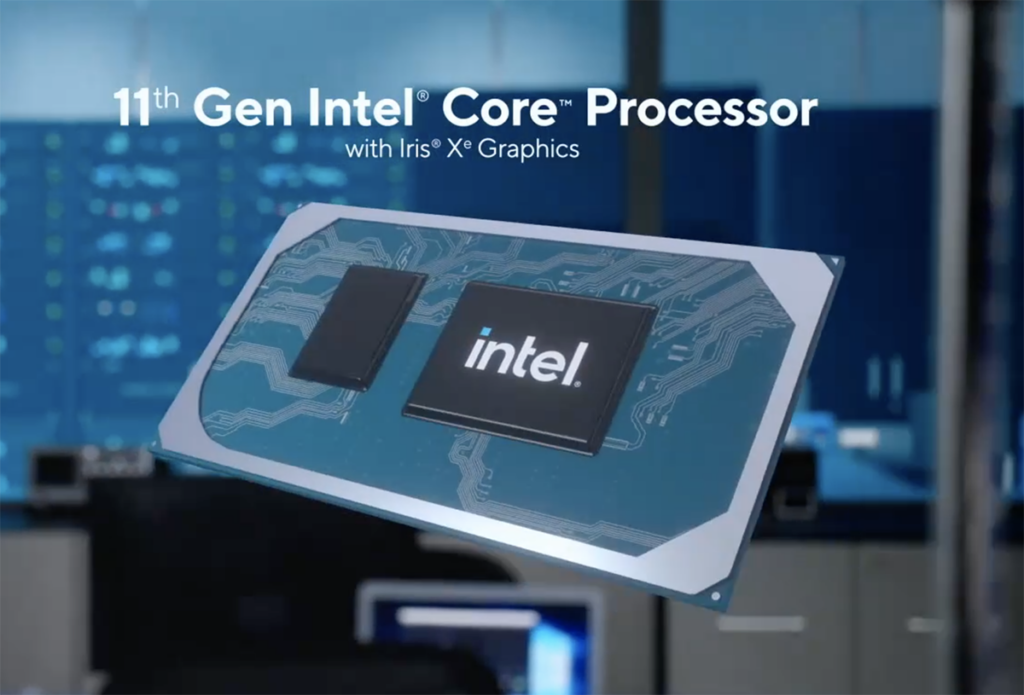
At the Consumer Electronics Show (CES) 2021 tech exhibition, intel announced the all-new 11th Gen Tiger Lake H35 chipset. Soon after its announcement, Xiaomi took to Weibo to reveal that the upcoming RedmiBook Pro will be equipped with the newly announced H35 processor. In addition, new laptops from the brand named as RedmiBook Pro 15 and RedmiBook Pro 15S have emerged at the Geekbench benchmarking platform.

As can be seen in the screenshots below, the 11th gen Intel Core i5 and Core i7 editions of the RedmiBook 15 Pro have surfaced on Geekbench 5. Both models are equipped with 16 GB of RAM and they are preinstalled with Windows 10. The Core i5-11300H model scored 1545 and 4902 in the single-core and multi-core tests of Geekbench, respectively. The Core i7-11370H variant scored 1447 in the single-core test and 4885 in the multi-core test.

The AMD Ryzen 5 5600H edition of the RedmiBook Pro 15S has 8 GB / 16 GB of RAM, whereas the Ryzen 7 5800H version has 16 GB of RAM. Both models are running on Windows 10 OS.

The Ryzen 5 5600H variant with 8 GB RAM recorded 1322 and 5793 points in the single-core and multi-core tests of Geekbench, respectively. Its 16 GB RAM version scored 1311 and 5787 in the single-core and multi-core tests, respectively. On the other hand, the Ryzen 7 5800H model scored 1197 and 6865 in both tests. The RedmiBook Pro 15S notebooks are equipped with Radeon graphics. Since Xiaomi has already started teasing the arrival of the new notebook, the RedmiBook Pro 15 and Pro 15S may launch soon.


[Update] HTC Desire 21 Pro 5G likely to feature Snapdragon 690

Update: A few specs of the HTC Desire 21 Pro 5G is now known through its Google Play Console listing (via). It reveals that the phone’s screen offers a Full HD+ resolution of 1080 x 2400 pixels and it has 8 GB of RAM.

HTC Desire 21 Pro 5G Google Play Console listing

Original story continues…

Last year, HTC announced the HTC U20 5G as its first 5G-ready smartphone. The handset was fueled by the Snapdragon 765G chipset. The next 5G phone from the Taiwanese brand could be the Desire 21 Pro 5G. Last week, the unannounced phone appeared in several live shots. Fresh information reveals that the Desire 21 Pro 5G could be fueled by the Snapdragon 690 SoC.

According to XDA Developers’ Mishaal Rahman, the HTC Desire 21 Pro 5G midrange phone could be equipped with the SD690 chip. At present, there are only a few phones such as the Sharp Aquos Sense 5G, OnePlus Nord N10, and LG K92.

HTC Desire 21 Pro 5G live shots

Coming back to the Desire 21 Pro 5G, nothing much is known about its other specs. Its live shots revealed that it is a dual SIM phone, and its model number is 2QAG100. Also, the device was found to be running on Android 10 OS.

The real images of the Desire 21 Pro 5G revealed that its display has a centered punch-hole. Probably, the screen carries support for Full HD+ resolution. Except for a slightly thick chin, the handset was seen with slim bezels. The device seems to be equipped with a side-mounted fingerprint sensor.

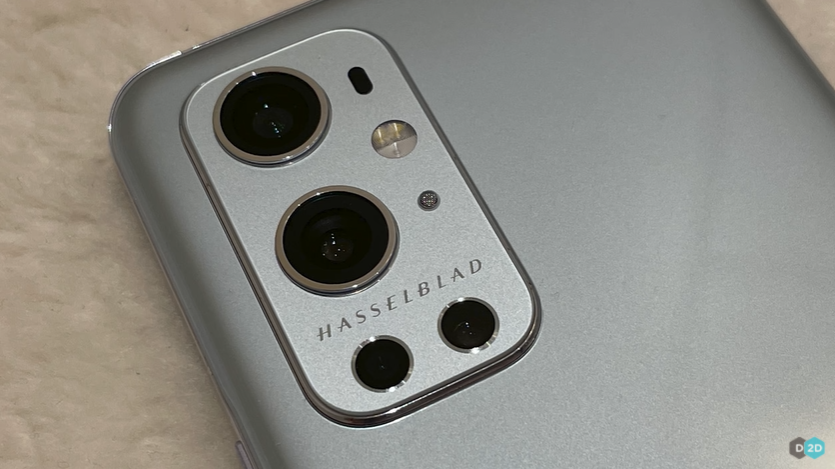
The rear side of the Desire 21 Pro 5G has a quad-camera setup and a dual-LED flash unit housed inside a rectangle-shaped camera module. The setup is led by a 48-megapixel camera. The other details of the smartphone are yet to appear.

It will be arriving as the successor to the Desire 20 Pro smartphone from last year. At present, there is no word on its launch timeframe and pricing.


Samsung Galaxy F62 panel images appear to reveal design

For a couple of weeks, the rumor mill has been gradually leaking information about an upcoming F-series Samsung phone called the Galaxy F62. It was reported last month by 91mobiles that the South Korean company has started the production of the Galaxy F62 and it may launch in Q1 2021. It had recently shared live shots of the phone’s rear shell. The publication is back with some new shots of the Galaxy F62’s panel to shed some information on its design.

The images reveal that the Galaxy F62 could be sporting a square-shaped camera module. There seems to be a cutout for the camera housing, which suggests that it could be flaunting a quad-camera system.

The image also shows the presence of a 3.5mm audio jack and a USB-C port on the bottom frame of the Galaxy F62. It appears that the phone could be equipped with an in-screen fingerprint reader. Hence, there is a possibility that the phone may sport an AMOLED panel. The smartphone could be available in teal color.

Recent reports have revealed that the model number of the Samsung Galaxy F62 is SM-E625F. The handset was recently certified by the Bureau of Indian Standards (BIS). In December, the Galaxy F62 had surfaced at the Geekbench benchmarking platform. The listing revealed that the phone is driven by the Exynos 9825 SoC that fueled the Galaxy Note 10 and Note 10+ in 2019. It further revealed that the F62 has 6 GB of RAM and Android 11 OS.

One of the above-shown images also shows ‘F62’ etched on the panel. However, a contradictory report from last month suggested that the phone may debut as the Galaxy E62.